Breaking News
‘Very, very strict action’: Aviation minister vows to ‘set an example’ after IndiGo fiasco; what he said in Rajya Sabha | India News


'Very, very strict action': Aviation minister vows to 'set an example' after IndiGo fiasco; what he said in Rajya Sabha

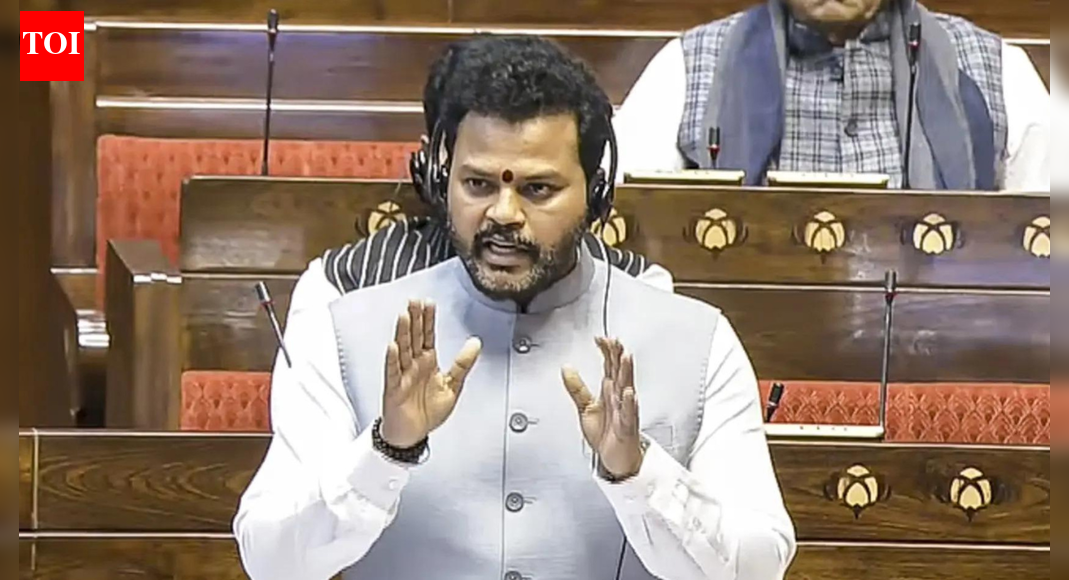
NEW DELHI: The aviation minister K Rammohan Naidu vowed in Rajya Sabha on Monday that the government will take “very, very strict action” against Indigo over the recent fiasco to “set an example” across the industry.Speaking during question hour, Naidu said the disruption was a result of IndiGo’s internal lapses. Blaming the carrier for failing to manage its crew and duty roster, the minister said, “We are not taking this situation easily. We are doing an inquiry. We will take very, very strict action not only for this situation but also as an example.”

Aviation Meltdown Escalates As IndiGo Cancels 400 Flights And Government Enforces Fare Controls

Responding to a query from Congress MP Pramod Tiwari, who sought to know whether the cancellations stemmed from a malfunction in the automatic message switching system (AMSS) – the glitch that hit flight operations in early November 2025 – Naidu clarified that the two incidents were unrelated. The IndiGo crisis, he said, arose from “anomalies and mismanagement” in the airline’s crew roster system.The minister also outlined the timeline of the revised flight duty time limitations (FDTL), introduced after a high court order in April 2025. Of the 22 guidelines, 15 were implemented on July 1 and the remaining seven on November 1. He stressed that multiple consultations were held with all stakeholders, including IndiGo, and that the rules had to be followed “without any compromise on safety.” Naidu said the directorate general of civil aviation has been in continuous discussions with airlines since FDTL came fully into force, and had granted limited exemptions based on operational variations and safety assessments. Noting that the crisis erupted “almost one whole month” after the final phase of FDTL implementation, he pointed out that IndiGo did not flag any imminent issues during a meeting with the ministry on December 1.“This is a day-to-day operation – something that Indigo should have maintained. Indigo was supposed to manage the crew, roaster through its day-to-day operations,” he said.Reiterating that accountability is non-negotiable, Naidu added: “If there is any mis-compliance, non-compliance, non-adherence for any single person, entity and organisation, or any operator functioning in this civil aviation, we will take very, very strict action so that we set an example in the industry.”

Indigo crisis enters seventh day

Indigo’s operational crisis entered into its seventh consecutive day of chaos on Monday. With more 500-large scale flight cancellations continuing across major airports. According to the civil aviation ministry, IndiGo is scheduled to operate 1,802 flights across 137 of its 138 destinations on Monday. The ministry also said the airline has already returned around 4,500 misplaced bags to passengers and aims to deliver the remaining 4,500 within the next 36 hours.Separately, the Supreme Court refused to entertain a petition seeking judicial intervention over the large-scale flight cancellations, noting that the matter did not warrant its involvement at this stage.(With inputs from agencies)


Source link

How bhadralok Dharmendra had a strong Bengali connection |


How bhadralok Dharmendra had a strong Bengali connection

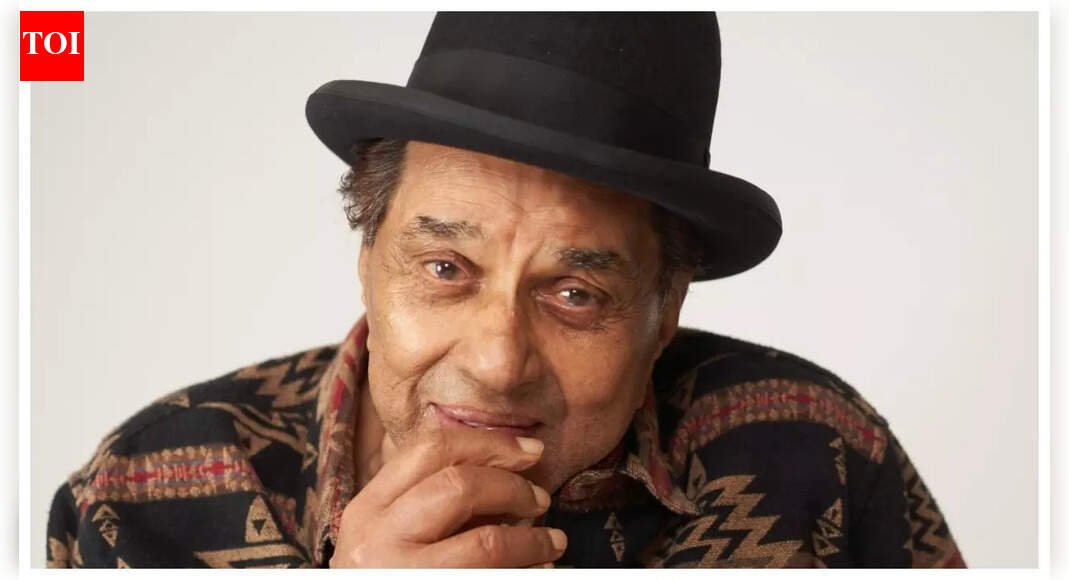
They called him the He-Man. Most of his major solo hits – ‘Phool Aur Patthar’ (to a lesser extent), ‘Ankhen’, ‘Mera Gaon Mera Desh’, ‘Jugnu’, ‘Pratigya’ – were breathless action yarns. These movies made Dharmendra a star of the masses. Audiences would stand in queues for hours to watch him snarl and scream, “Ek ek ko chun chun kar maroonga.” Dialogues like these became a template repeated over countless movies in a career that spanned nearly six and a half decades.It is, therefore, quite interesting that Bollywood’s action hero also played a range of genteel and refined characters, especially in the first two decades of his career. And one is not referring only to botany professor Parimal Tripathi in Hrishikesh Mukherjee’s ‘Chupke Chupke’ (1975), or, for that matter, the Sanskrit teacher who teaches Kalidas’ Abhigyan Shakuntalam in Basu Chatterjee’s ‘Dillagi’ (1978) — a rare film in which Dharmendra gets beaten up by the bad guys. Director Basu da once told this reporter that distributors were nervous at the film’s release because in the posters, Dharmendra held a rose, not a gun.

Dharmendra’s Ashes Immersed In Ganga At Haridwar!

There are many other films where Dharmendra didn’t play a cop or an outlaw. Instead, he played a poet, a writer, a trade unionist or a journalist. A majority of these films were directed by Bengali filmmakers.In 1966, Dharmendra played a struggling poet in Hrishikesh Mukherjee’s Anupama. At the time, the image of a celluloid poet was largely defined by Guru Dutt’s Vijay in ‘Pyaasa’ — hungry, unshaven and pessimistic. Dharmendra too described himself as one of “khoon, pasina aur aansoo” (blood, sweat and tears). But he looked the exact opposite. At one point, the script in ‘Anupama’ even provided an explanation for his well-nourished body. If you compare the picturization of “Jaane woh kaise log thhe jinko” (Pyaasa) with “Ya dil ki suno duniya walon” (‘Anupama’), there are distinct stylistic similarities. Both are filmed in an indoor mehfil. Guru Dutt is dressed in dhoti-kurta with a shawl, while Dharmendra wears kurta-pyjama with a shawl. Both songs are rendered by Hemant Kumar, and both create a similar mood.In Shahid Lateef’s ‘Baharen Phir Bhi Aayengi’ (1966), the Punjab da puttar played a conscientious journalist. This was originally a Guru Dutt project. After the maker of Pyaasa and Kaagaz Ke Phool passed away, many thought Dev Anand would step in — but it was Dharmendra who did. The film is largely forgotten now, though songs such as “Aap Ke Haseen Rukh Par” (singer: Mohd Rafi; music: O.P. Nayyar; lyrics: Anjaan) are appreciated to this day.Dharmendra’s tryst with literary characters continued in the Seventies. In Pramod Chakraborty’s ‘Naya Zamana’ (1971), he was a morally upright writer who believes that books can change the world. The poet in Devendra Goel’s ‘Ek Mahal Ho Sapnon Ka’ (1975) is unable to sell his work. When he finally does, it is at the cost of his identity — much like Vijay in ‘Pyaasa’.The audience was first introduced to a celluloid version of the bhadralok Dharmendra in Bimal Roy’s ‘Bandini’ (1964). His portrayal of the kind-hearted doctor earned Dharmendra notice as an actor of promise. Another Bengali director, Phani Majumdar, cast him as a trade union leader in ‘Akashdeep’ (1965). And he was a college professor in Asit Sen’s romantic drama, ‘Sharafat’ (1970).Interestingly, Bengali directors also cast him in mainstream masala films. For example, ‘Jugnu’ (1973) was directed by Pramod Chakraborty and ‘Pratigya’ (1975) by Dulal Guha.Few know that Dharmendra also wrote poetry. During an interview with TOI, he once recited a few lines from his poem “Main Kaun Hoon”: “Pyar, mohabbat, duayein aapki sejte hain jazbaat mere / Isi liye aaj bhi jawan hoon main / Khata agar ho jaye, baksh dena yaaron /Galtiyon ka putla aakhir ek insaan hoon main.” (“Your love, affection and prayers nurture my emotions / That’s why I’m still young / Please forgive me if I’ve ever erred / After all, I am only human.”)Dharmendra also played the male lead in ‘Dulhan Ek Raat Ki’ (1970), a romantic tragedy based on Victorian writer Thomas Hardy’s evocative novel, ‘Tess of the D’Urbervilles’.


Source link

2017 abduction and rape case: Kerala actor Dileep acquitted; Pulsar Suni among 5 found guilty | Kochi News


2017 abduction and rape case: Kerala actor Dileep acquitted; Pulsar Suni among 5 found guilty

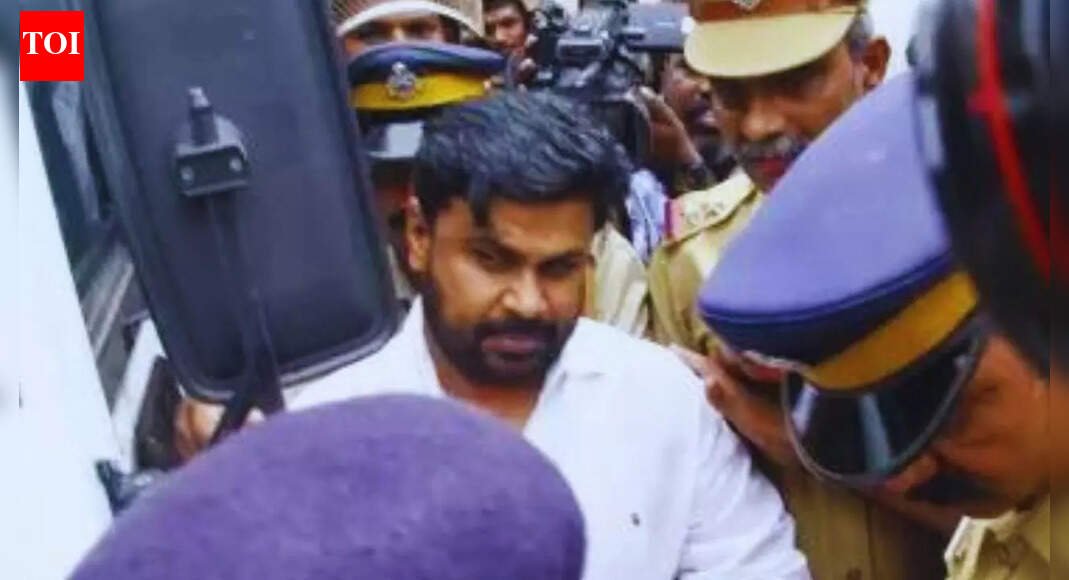
KOCHI: The Ernakulam principal sessions court on Monday acquitted Actor Dileepin the high-profile 2017 abduction and rape case.The court found six others, including the prime accused Sunil N S, popularly known as Pulsar Suni, guilty for directly committing the crime.The court also acquitted three other persons in the case. The verdict was delivered by Ernakulam Principal Sessions Judge Honey M Varghese, who had concluded the hearing in the prolonged trial on November 25. The 2017 assault on the actress, who has appeared in Tamil, Telugu, and Malayalam films, shook Kerala’s society. She was allegedly abducted in her car for two hours, during which several persons forced their way into the vehicle before escaping in a crowded area. The ten accused who faced trial were Sunil N S alias Pulsar Suni, Martin Antony, Manikandan B, Vijesh V P, Salim H, Pradeep, Charly Thomas, actor Dileep (real name P Gopalakrishnan), Sanil Kumar alias Mesthri Sanil, and G Sarath. Police arrested several accused soon after the incident and filed the first chargesheet against seven individuals in April 2017. During the ongoing investigation, Dileep was arrested on July 10, 2017, after authorities alleged that Suni had sent him a letter from jail. He was later granted bail on October 3, 2017.The actress-victim, who has appeared in Tamil, Telugu, and Malayalam films, was abducted and allegedly molested in her car for two hours on the night of February 17, 2017, while traveling from Thrissur to Kochi.


Source link

Goa Nightclub Manager Arrested: Manager Bharat held from Delhi; Luthra brothers still absconding | Goa News


Goa nightclub fire: Manager Bharat held from Delhi; Luthra brothers still absconding

NEW DELHI: Police on Monday detained another manager linked to the tragic Birch by Romeo Lane nightclub fire in Goa that claimed 25 lives.The accused was identified as Bharat. According to police, he used to run daily operation of Birch by Romeo Lane at the club.

Crowd Grooving To ‘Mehbooba’ As Flames Engulf Goa Nightclub, Video Goes Viral

Owner still abscondingThe owner of Birch by Romeo Lane, Saurabh Luthra, remains absconding following the devastating fire at his Arpora nightclub on Saturday night, which claimed 25 lives and injured six others. Until last year, Luthra had aimed to launch 50 restaurants across India, but his weekend property turned into the site of one of Goa’s worst nightlife tragedies.

-

Saurabh Luthra

Luthra’s LinkedIn profile lists him as ‘Chairman at Romeo Lane, Birch and Mama’s Buoi’. Activist Tahir Noronha described him as “like a ghost,” saying he rarely stays in Goa and often avoids legal proceedings, sending representatives in his place.“He is out of touch with the impact of his ventures,” Noronha said. Socialites and staff also described him as aloof; Jayesh Diukar, a kitchen staffer who survived the fire, said Luthra visited the club only once a month and rarely interacted with employees.At least 100-200 persons were on the dance floor of a nightclub in North Goa when a fire broke out there, and in an attempt to escape, some of them ran downstairs to its kitchen where they got trapped along with the staff.While the state police said the blaze occurred at the nightclub due to a cylinder blast after midnight on Sunday, some of the eyewitnesses claimed the fire started on the club’s first floor, where tourists were dancing.Most of the dead were the club’s kitchen workers, and included three women, chief minister Pramod Sawant said. There were “three to four tourists” among those killed, he added.“There was a sudden commotion as the flames started erupting. We rushed out of the club only to see that the entire structure was up in flames,” Fatima Shaikh, a tourist from Hyderabad, told PTI at Arpora in the wee hours of Sunday.


Source link

Time to prep for South African conditions: India’s urgent ODI overhaul for 2027 World Cup | Cricket News


Time to prep for South African conditions: India's urgent ODI overhaul for 2027 World Cup
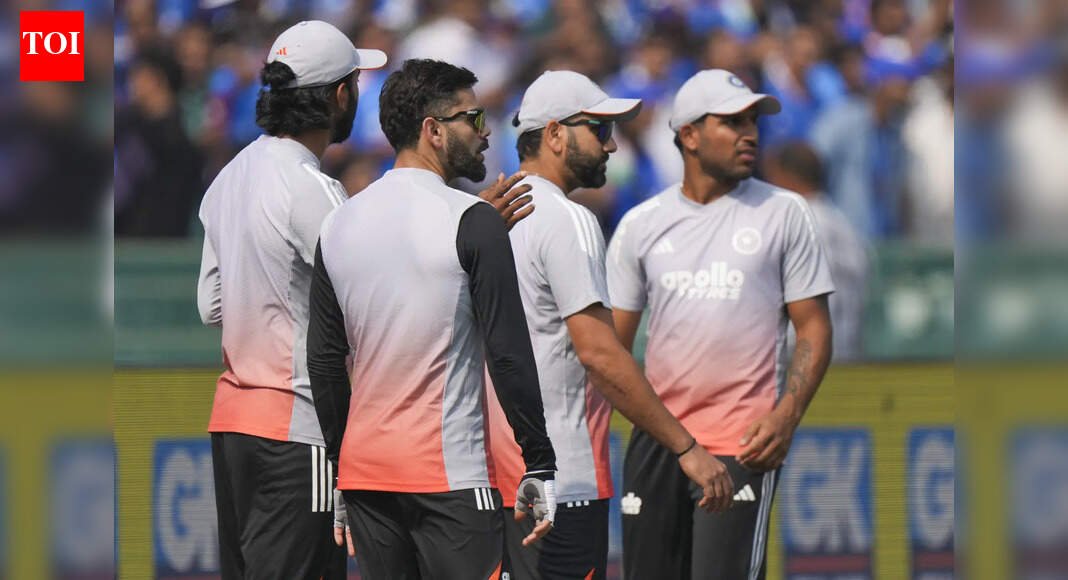
L-R: KL Rahul, Virat Kohli, Rohit Sharma and Dhruv Jurel (PTI Photo)

India have played most of their ODI cricket in subcontinental pitches over the last 18 months. With very few ODIs to be played before the 2027 World Cup in South Africa, team management knows it will have to rethink its combination. TOI looks at a few points…Winning an ODI series at home is usually routine for India. That said, the emphatic win in Vizag on Sunday must have soothed the bruised egos in the Indian dressing room after an ODI series loss in Australia and then enduring a whitewash in a home Test series against South Africa.Go Beyond The Boundary with our YouTube channel. SUBSCRIBE NOW!Thus, it was not surprising to see ever-combative head coach Gautam Gambhir retort to the critics after sealing the series. He is usually ultraprotective of the way his team plays its cricket. For once, he alluded to the fact that the ODI team is yet to take its absolute shape looking ahead to the 2027 ODI World Cup. There are another three ODIs scheduled at home this season before the team management gets in full swing to prepare for the mega event in South Africa in Oct-Nov in 2027 once the T20 World Cup in Feb-March is over. Hence, Gambhir made it a point to highlight that the conditions in the World Cup will be distinctly different.

Gautam Gambhir Press Conference: Team India head coach heaves fire after 2-1 ODI series win over SA

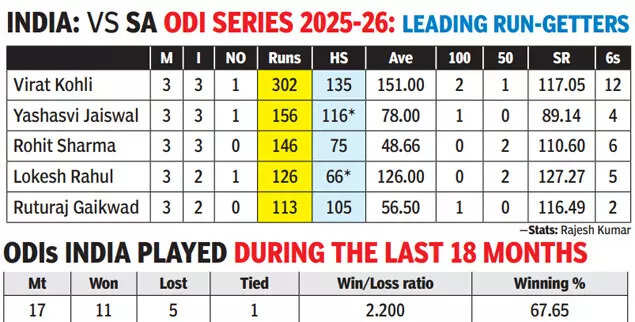
Rohit-Kohli success, lower middle-order balance issuesOver the last six ODIs, Virat Kohli and Rohit Sharma have done enough to establish that they still make for the strong core of this ODI setup. Demonstrating an insatiable appetite for runs, the two seniors have said why it won’t be easy to move on from them in the immediate future.If one has to put a finger on a glaring issue in this ODI setup, it would be a relatively unsettled lower middle-order. India’s lack of firepower in the backend of the innings has been evident. Ravindra Jadeja and Washington Sundar’s powerhitting has been questionable.The experiment with Ruturaj Gaikwad batting at No. 4 in place of an injured Shreyas Iyer may have paid off, but the propensity to shuffle batters in different positions appears a bit unsettling at the outset. Gambhir maintained that set batting orders are over-hyped in white-ball cricket.

IND vs SA

Former national selector Devang Gandhi warned the consequences could be very harsh much like it happened in the 2019 World Cup. “As long as Kohli and Rohit are around, the planning has to revolve around them. The management must stick to a pool of not more than 20 players now. Leading up to the 2019 World Cup, no one was given enough chances to settle down at No. 4. When the top order imploded in the semifinal, no one was ready. The same happened in the 2023 World Cup, when the team management was forced to play Suryakumar Yadav who didn’t have a good ODI record,” Gandhi told TOI.“Someone like Rishabh Pant has not played a match. If KL Rahul suffers an injury during the World Cup, Pant or any other wicketkeeper must have enough game time. In 2019, Pant came in with the experience of just five ODIs. If there is a scope to play both Pant and Rahul together, there’s no harm in it. And if they have identified Gaikwad as Iyer’s backup, then it should remain that way,” he added.Balancing the allrounders and finding an extra pacerGambhir’s tenure as head coach has seen India play most of their ODIs in sub-continental conditions. Prasidh Krishna’s inconsistency was becoming a major talking point until he was able to come back strongly in the last ODI. Jasprit Bumrah aside, the pace reserves lack experience at the moment. Mohammed Siraj’s omission did raise eyebrows. Harshit Rana has become important to firming up a plan. “That’s one of the reasons why we are trying to develop someone like Harshit, who can contribute at No. 8. That’s how we need to find the balance, because in South Africa, we would be needing three seamers,” Gambhir said.Former India wicketkeeper Deep Dasgupta feels depending heavily on Hardik Pandya could be risky. “If Hardik is around, he will solve a lot of problems. But you have to be prepared for a situation where Hardik isn’t fit. Someone has to be groomed to handle the middle overs with as much impact with the bat,” Dasgupta reckoned. “Till now they were playing with three spinners and three pacers with a spinner batting up the order. Now they have to prepare for an attack of six bowlers with four seamers. Maybe they can try Siraj as backup pacer,” he added.Gandhi concurred with Dasgupta. “In South Africa, you will need a proper batter in top 5 on bouncier pitches. That’s why I feel someone like Rahul should bat a little higher. Kohli was comfortable with five solid bowling options in 2019.”


Source link

Rera to builders in Karnataka: Insure common areas or pay for disaster repairs; tribunal flags mandatory coverage | Bengaluru News


Rera to builders in Karnataka: Insure common areas or pay for disaster repairs; tribunal flags mandatory coverage

BENGALURU: Builders must insure common areas or risk footing the bill for disaster repairs – that is the message from Karnataka Real Estate Regulatory Authority (K-Rera).In a recent order, the authority directed the developers of an apartment complex on Kanakapura Road to furnish all insurance documents for the project within 30 days, while partly allowing a complaint linked to a fire that damaged the clubhouse of Block 4.The case arose from a fire on Jan 30, 2024, when resident Dhananjaya noticed smoke coming from the clubhouse. The blaze destroyed the ladies’ washroom and sauna facility. He told the tribunal that no repair or restoration work was taken up despite repeated requests.

Rera to builders in Karnataka

He further said that although all blocks were ready, the promoter had not formed the association of allottees or transferred the common areas as required under Rera. They also alleged that the promoter had not shared any insurance details under Section 16, raising concern about whether the clubhouse had any cover at all. Dhananjaya filed a complaint on May 4, 2024, seeking directions to restore the damaged clubhouse and hand over all insurance documents to the association.Insurance must for common areas: PanelThe builders rejected all claims. They said the clubhouse and shared amenities were handed over to the apartment owners’ association on Nov 2, 2019. Once that transfer was completed, responsibility for safety and maintenance rested with the association, not the promoter.The builders relied on an inquiry commissioned by the association, which found that the fire was caused by overheating of the sauna heater and not by any structural or electrical defect. They pointed out that the complainant had not named the association as a party to the case despite its role in day-to-day upkeep.After examining the submissions, the tribunal accepted the findings of the inquiry report and held that the promoter cannot be directed to carry out repairs for an incident that occurred years after handover.However, the panel drew a firm line on the insurance lapse. It noted that the promoter had not submitted any insurance policies, premium receipts, or records showing transfer of insurance benefits to the association, all of which are mandatory under Section 16 of Rera. It observed that “insurance for common areas is mandatory under Rera”, adding that residents cannot be left to bear losses that should have been insured against.


Source link

Palash Muchhal deletes proposal video and World Cup victory celebration clip, while Smriti Mandhana removes all photos with him after calling off their wedding |


Palash Muchhal deletes proposal video and World Cup victory celebration clip, while Smriti Mandhana removes all photos with him after calling off their wedding

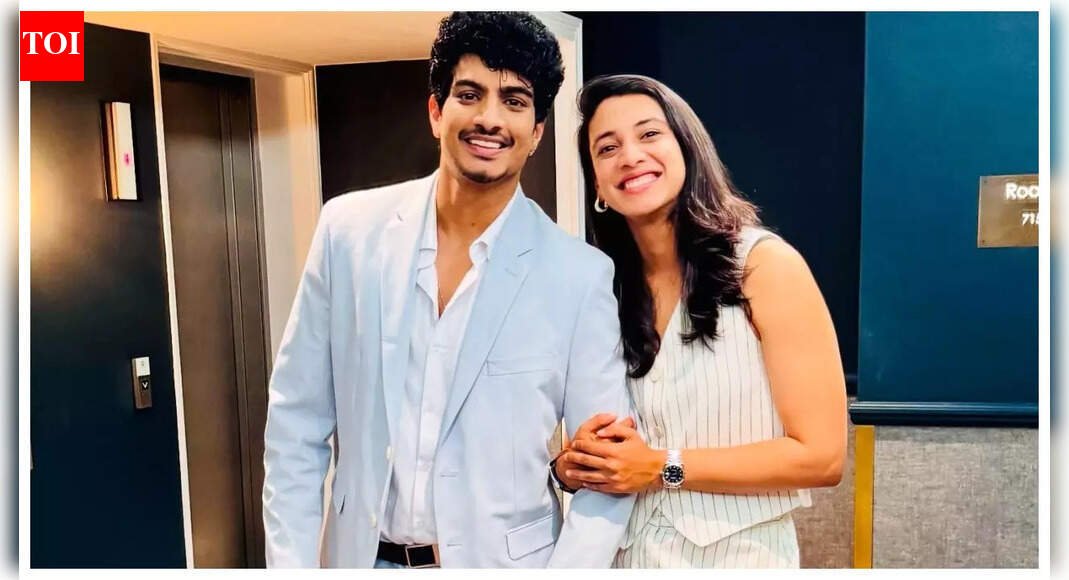
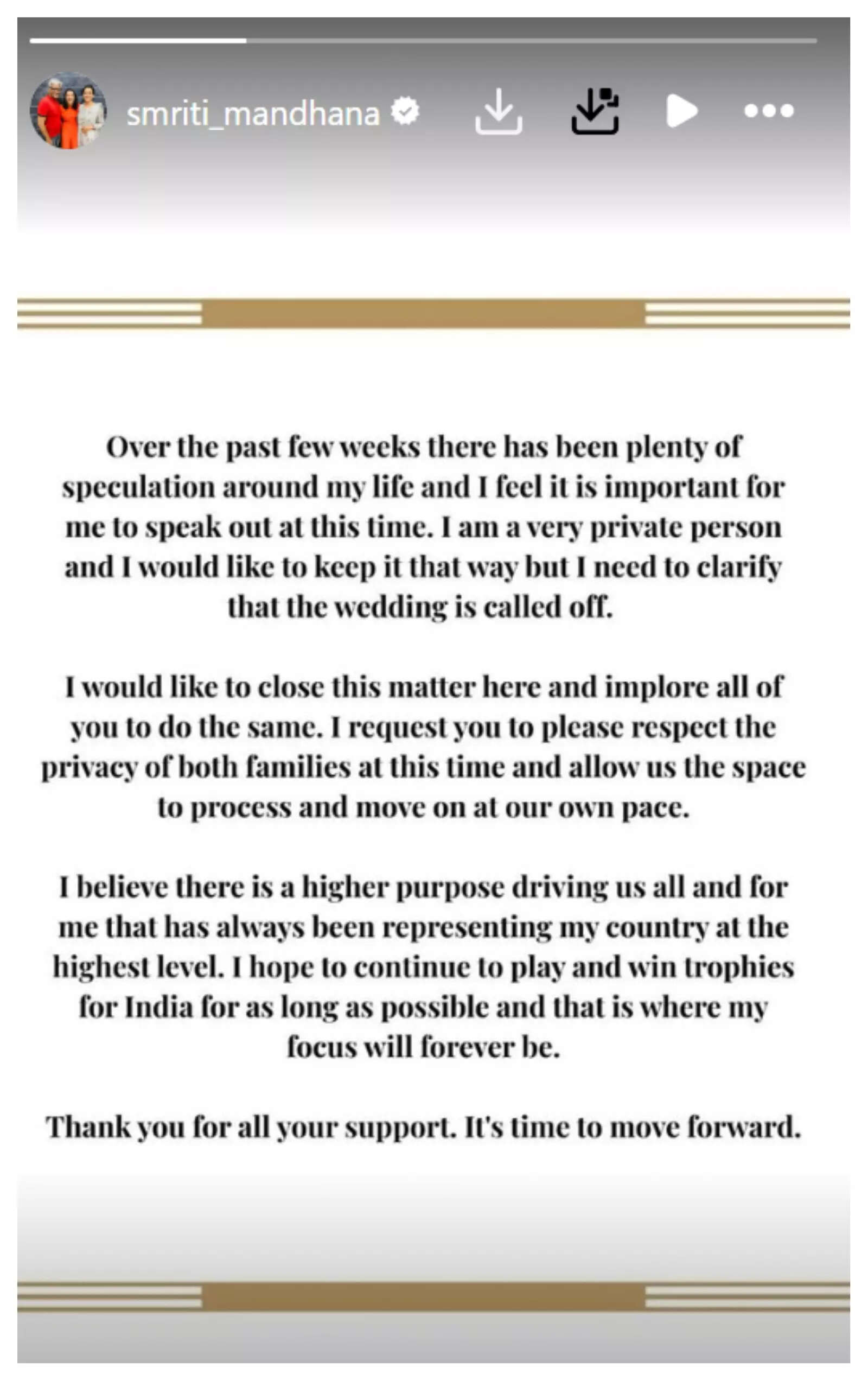
Music composer Palash Muchhal and cricketer Smriti Mandhana were supposed to get married on November 24, 2025. However, just a few hours ahead of the wedding, the ceremony was postponed, as Smriti’s father had a health scare and was hospitalised. A day later, Palash was also hospitalised, reportedly owing to chest pain and trouble breathing. For days, several speculations were circulating regarding whether there would be a wedding or not. On Sunday, in separate statements, both Palash Mucchal and Smriti Mandhana clarified that their wedding has been called off. Following the clarification, the composer Palash Muchhal has deleted the proposal video from his social media handle.

Palash Muchhal deletes the proposal video and the World Cup-winning celebration video with Smriti Mandhana

After releasing the statement that the wedding has been called off, Palash Muchhal and Smriti Mandhana unfollowed each other on social media. Smriti deleted all pictures and clips of their pre-wedding festivities, along with the proposal video and other posts. And now, Palash Mucchal has deleted posts with Smriti Mandhana – the proposal video and the World Cup victory celebration clip. However, he hasn’t removed all the posts as of now. The composer has been receiving hate from the netizens in the comment section of the posts that are still available on his account.

Palash Muchhal-Smriti Mandhana Wedding Row – New Twist?

Palash Muchhal and Smriti Mandhana’s wedding called off – Official statements

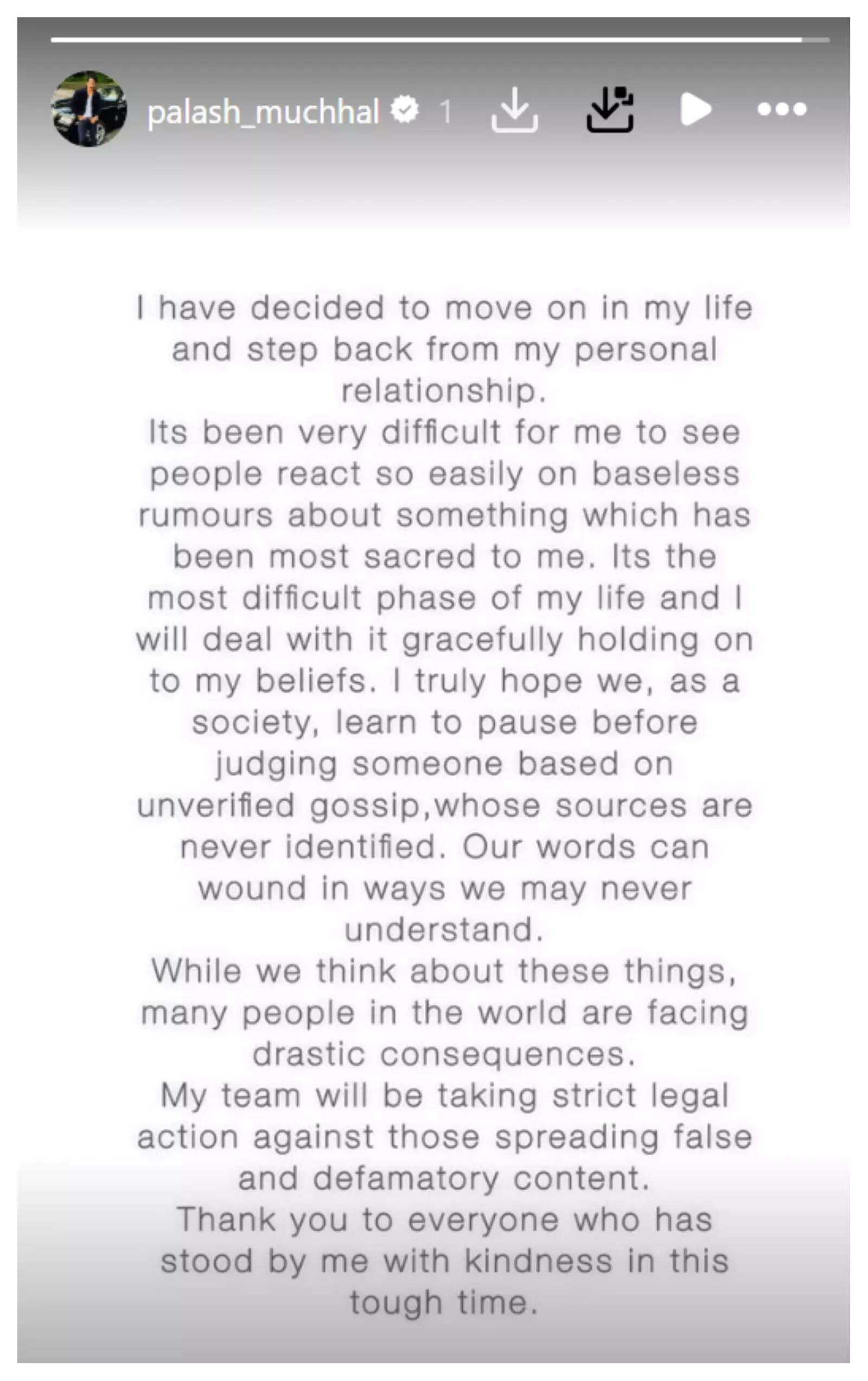
Putting a rest to all the rumours surrounding their marriage, Palash Muchhal on Sunday shared a statement on social media that read, “I have decided to move on in my life and step back from my personal relationship.”

Palash Muchhal's statement

“It’s been very difficult for me to see people react so easily on baseless rumours about something which has been most sacred to me. It’s the most difficult phase of my life, and I will deal with it gracefully, holding on to my beliefs. I truly hope we, as a society, learn to pause before judging someone based on unverified gossip, whose sources are never identified. Our words can wound in ways we may never understand,” he concluded.Smriti also shared a statement confirming that the wedding has been called off. She wrote, “Over the past few weeks, there has been plenty of speculation around my life, and I feel it is important for me to speak out at this time. I am a very private person, and I would like to keep it that way, but I need to clarify that the wedding is called off.” “I would like to close this matter here and implore all of you to do the same. I request you to please respect the privacy of both families at this time and allow us the space to process and move on at our own pace,” she added.

Smriti Mandhana's statement

“I believe there is a higher purpose driving us all, and for me, that has always been representing my country at the highest level. I hope to continue to play and win trophies for India for as long as possible, and that is where my focus will forever be. Thank you for all your support. It’s time to move forward,” she concluded.


Source link

25 killed in Goa nightclub inferno; police team in Delhi to arrest owners | India News


25 killed in Goa nightclub inferno; police team in Delhi to arrest owners
Goa nightclub inferno (Picture credit: PTI)

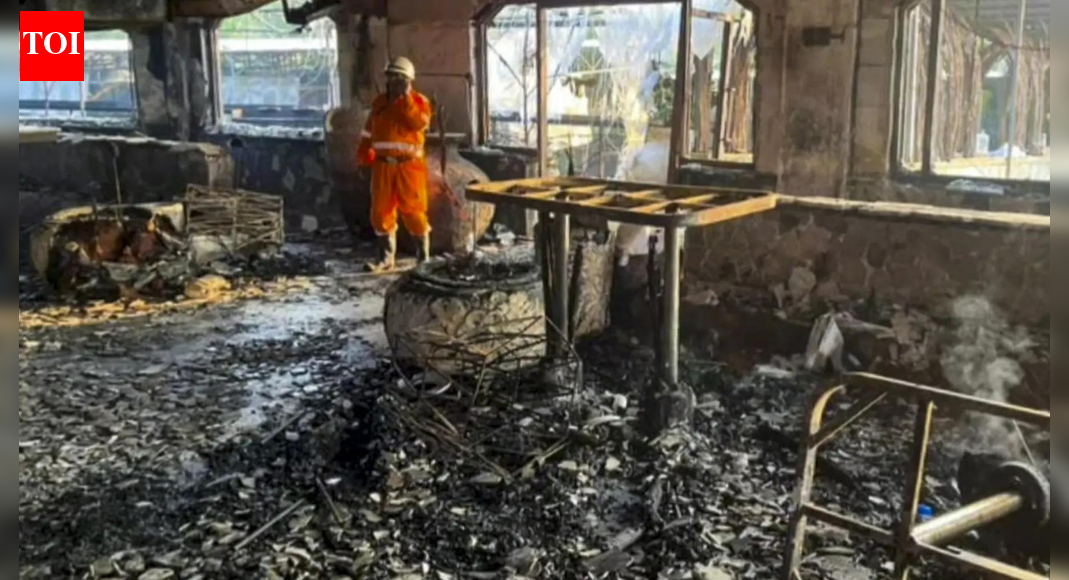
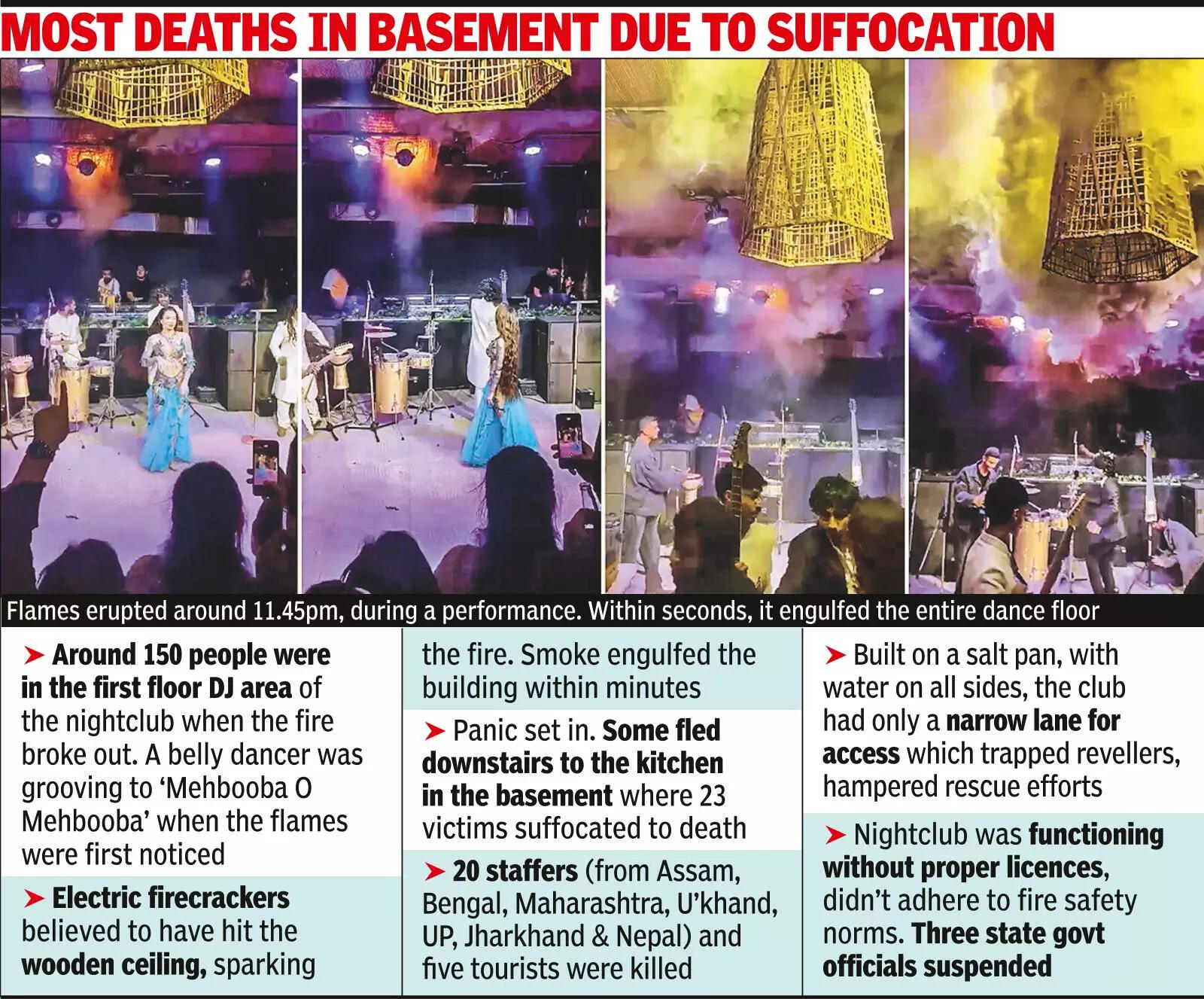
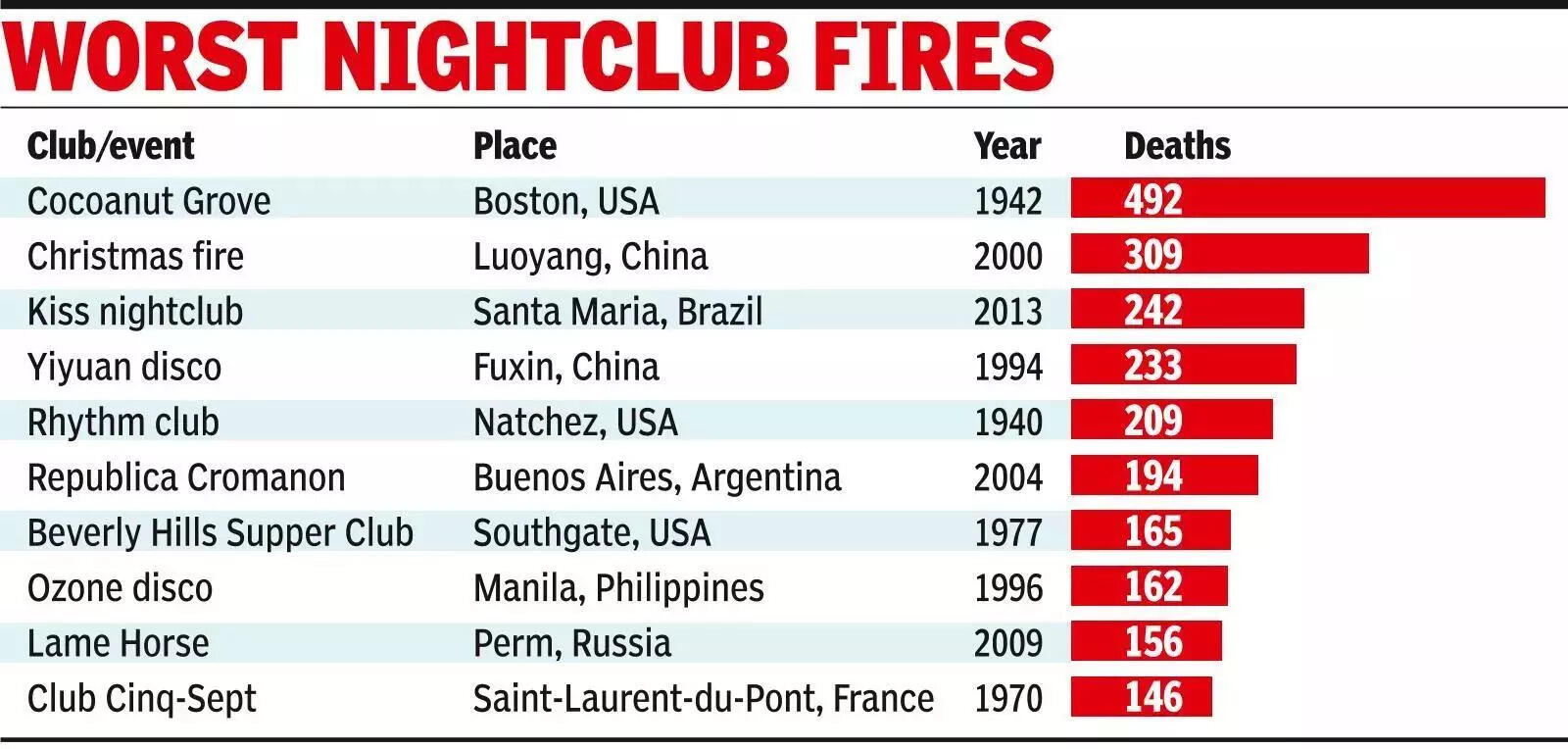
PANAJI: Tragedy struck Goa’s popular after-hours party scene just before midnight on Saturday, killing 25 people – five of them tourists – and injuring six inside a nightclub in Arpora that turned into a fireball within seconds of electric firecrackers hitting the wooden ceiling of the first floor as a belly-dancer performed.The victims in the blaze at Birch by Romeo Lane, 16km from Panaji, included four of a family from UP’s Ghaziabad. Of the injured, five are being treated at Goa Medical College and Hospital. Police said 150 guests were at the club for the weekend event.DGP Alok Kumar said four club staffers – chief general manager Rajiv Modak, gate manager Priyanshu Thakur, bar manager Rajveer Singhania, and general manager Vivek Singh – were arrested. Goa Police registered an FIR against the club’s Delhi-based owners, Saurabh Luthra and Gaurav Luthra, charging them with culpable homicide not amounting to murder. A police team is in Delhi with a warrant to arrest the duo.

Most deaths in basement due to suffocation

CM Pramod Sawant said his government instituted a magisterial inquiry to find out the lapses that resulted in the tragedy and submit a report within a week.The BJP govt also suspended three officials – ex-director of panchayats Siddhi Halarnkar, ex-state pollution control board member secretary Shamila Monteiro, and former Arpora-Nagoa panchayat secretary Reghuvir Bagkar – for allegedly allowing the nightclub to function without adhering to safety norms.The blaze occurred around 11.45 pm, with a portion of the ceiling catching fire. As flames coursed through the roof overhead, the guests and performers bolted. While most of them were able to step out of the club, those trapped inside reached the basement after the exit caught fire.23 died in basement ‘due to suffocation’, 2 bodies found on stairsCM Pramod Sawant said the chief secretary and DGP Alok Kumar would initiate disciplinary action against the suspended officials. The CM dismissed initial suspicion of a cylinder blast, saying a preliminary investigation by police and fire services department suggested electric firecrackers triggered the blaze. “The fire spread quickly because of the wooden ceiling,” he said.Of the victims, 23 died in the basement of suspected suffocation. Police found the bodies in a pile. Two charred bodies were on the staircase. The basement does not have ventilation.

Worst nightclub fires

Sawant said except for the five tourists who died, the deceased were employees of the club – from Assam, Bengal, Jharkhand, Maharashtra, Uttarakhand, UP and Nepal. Postmortem was conducted on 17 bodies by evening; five were handed over to families. State government sealed Romeo Lane at Vagator, a nightclub belonging to the same owners, after an inquiry revealed inadequate fire-safety measures.PM Narendra Modi announced Rs 2 lakh in ex gratia to the next of kin of each of the deceased, and Rs 50,000 each to the injured.CM Sawant separately declared Rs 5 lakh in compensation for each death and Rs 50,000 to the injured.


Source link

Mitch Marner’s net worth in 2025: A look into his career earnings, endorsements, contract details, and more | NHL News


Mitch Marner’s net worth in 2025: A look into his career earnings, endorsements, contract details, and more
Golden Knight’s right-winger Mitch Marner (Image Via Twitter)

Mitch Marner is one of the most promising right-wingers who has solidified his place and has quickly established himself as a dynamic force on the ice, who is now busy showcasing his professional skills with the Vegas Golden Knights since July 1, 2025.Known for his speed, creativity, and competitiveness despite a smaller frame, Marner reached several milestones: a Maple Leafs record 23-game point streak in 2022, 500 career points in just 467 games, and a career-high 99 points in 2022-23, which earned him a Selke Trophy nomination for his defensive play.Marner surpassed the 100-point mark for the first time in 2024-25. His decade-long run in Toronto ended when he was traded to the Vegas Golden Knights on July 1, 2025, where he signed an eight-year, $96 million contract after posting a career-best 102 points.Apart from his successful career, he has also earned significant wealth over the years. Let’s take a look at the details of his net worth in 2025, brand deals, endorsements, and life after moving to Vegas.

Mitch Marner’s net worth in 2025

According to Sportskeeda, Mitch Marner estimates a net worth of between $20 million and $25 million. After serving the Toronto Maple Leafs, his recent move to the Vegas Golden Knights has increased his value and recognition in the league. As per reports, Marner signed an eight-year, $96 million extension with Vegas, which is an average annual value of $12 million, adding to his annual net worth.

Mitch Marner’s career earnings in 2025

Reports suggest that Mitch Marner’s career earnings are rapidly climbing, and it is expected to exceed $83 million by mid-2025. His career earnings are going to be fueled by his massive 8-year, $96 million contract signed with the Vegas Golden Knights in 2025, including his earlier deals as well. According to Puckpedia, it is estimated that his total career earnings are around $97.65 million by late 2025, including his significant contracts.

Mitch Marner’s Top 10 Career Highlights

Mitch Marner’s endorsements

As Marner continues to reign in the hockey league, over the years he has signed good endorsement deals. Marner has signed an endorsement and is associted with world-famous brands like Nike, Beats by Dre, RedBull, Amazon Canada, Oakley, and Intact Insurance.

Mitch Marner’s contract details

Star winger Mitch Marner has been traded from the Toronto Maple Leafs to the Vegas Golden Knights in a blockbuster deal ahead of the 2025 NHL free-agency window in July, 1, 2025. The team secured Marner via trade, locking him into an eight-year contract worth whopping $96 million, with an average annual value of $12 million, making him one of the highest-paid wingers in the history of the league.Also read: Nikita Kucherov’s net worth: What are the current earnings of the Tampa Bay Lightning right-winger in 2025? | NHL News – The Times of India


Source link

150 years of Vande Mataram: Why BJP and Congress are fighting over its ‘missing stanzas’ — explained | India News


150 years of Vande Mataram: Why BJP and Congress are fighting over its ‘missing stanzas’ — explained
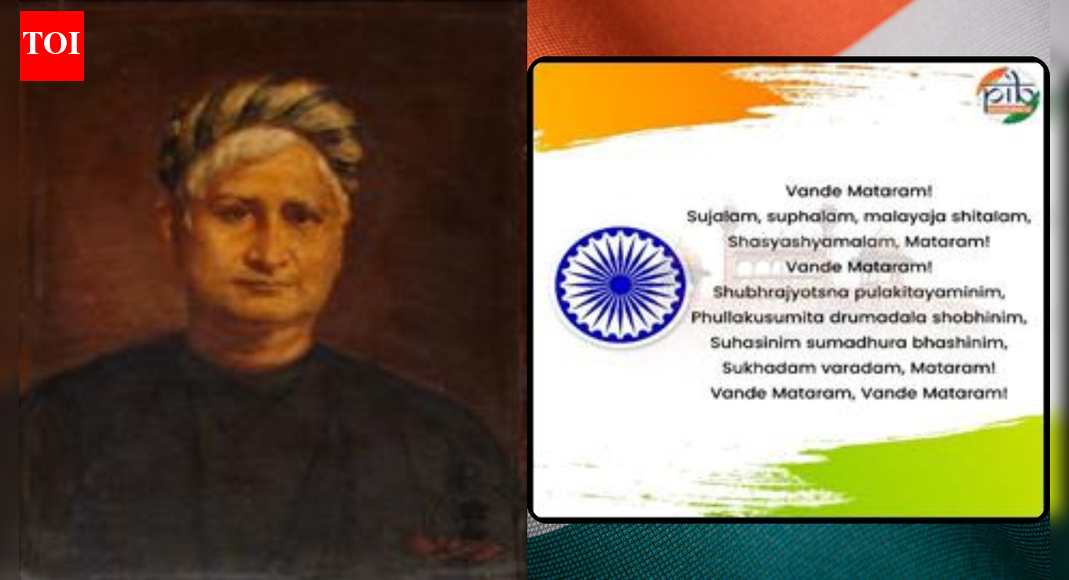
Bankim Chandra Chatterjee (Image credit: PIB)

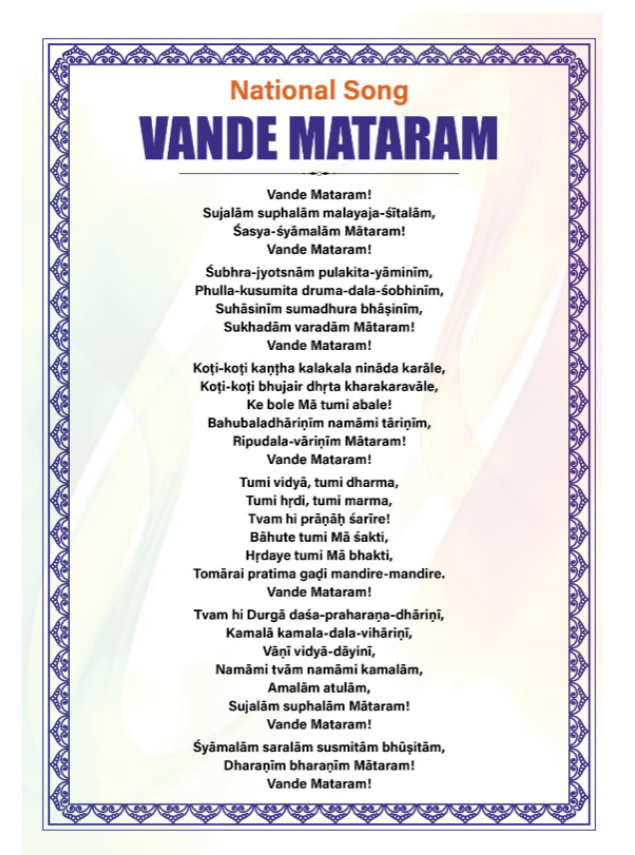
Parliament will begin a special discussion in the Lok Sabha on Monday to commemorate 150 years of Vande Mataram, a song that remains one of the most debated symbols of India’s freedom struggle.Prime Minister Narendra Modi will open the debate, with defence minister Rajnath Singh scheduled to conclude it. The BJP has been given three hours in the Lok Sabha, the total debate will span nearly ten hours. The Rajya Sabha will hold its discussion the next day, to be opened by Union home minister Amit Shah.The commemoration is not merely ceremonial. It arrives amid renewed political sparring over the song’s historical evolution, religious imagery, and the choices made by India’s pre-independence national leadership. What began as a patriotic hymn in a Bengali novel is once again a focal point of fierce political messaging, competing historical narratives, and questions about national identity.This explainer traces the 150-year journey of Vande Mataram—from its birth in Bankimchandra Chattopadhyay’s writing to its role in nationalism, the Congress’s 1937 decision to officially use only its first two stanzas, and its recognition in the Constituent Assembly as having “equal honour and status” with the National Anthem.

Why it’s in the news now

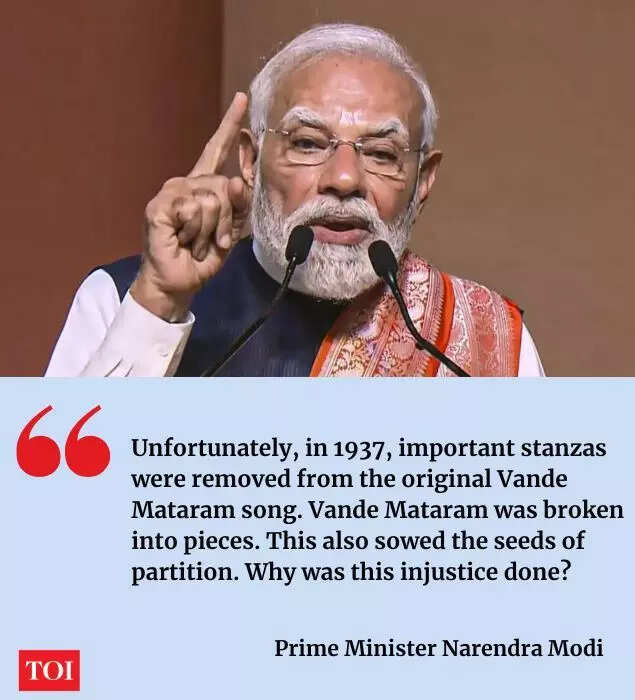
The upcoming debate is part of a special parliamentary focus on the legacy of Vande Mataram. But the political temperature was raised last month, during the commemoration event of 150 years of the national song, when Prime Minister Modi accused the Congress of having “removed important stanzas” from the original song during its 1937 Faizabad session, claiming this decision “sowed the seeds of partition.”According to the Prime Minister, the Congress’s move amounted to breaking the national song into pieces—an act that abandoned its original spirit and undermined unity. He has framed the issue within his broader narrative of ‘Viksit Bharat’, tying cultural heritage to national development.

-

The Congress hit back immediately. Citing The Collected Works of Mahatma Gandhi (Vol66, p46), the party argued that the 1937 decision was not an act of division, but a sensitive accommodation recommended by a Working Committee that included Mahatama Gandhi, Jawaharlal Nehru, Sardar Patel, Subhas Chandra Bose, Rajendra Prasad, Abul Kalam Azad, Sarojini Naidu, and other iconic leaders. The CWC noted that the first two stanzas were already the only widely sung and nationally recognised part, while the remaining contained religious imagery that some citizens objected to.The Congress also emphasised that the decision drew from the advice of Rabindranath Tagore, who had himself sung Vande Mataram at the 1896 Congress session.In its rebuttal, the party accused the prime minister of attacking the legacy of India’s freedom movement while avoiding present-day issues such as unemployment, inequality, and foreign policy challenges.This political exchange has made the upcoming parliamentary debate all the more charged.

Origins of Bande Mataram (1870s–1880s)

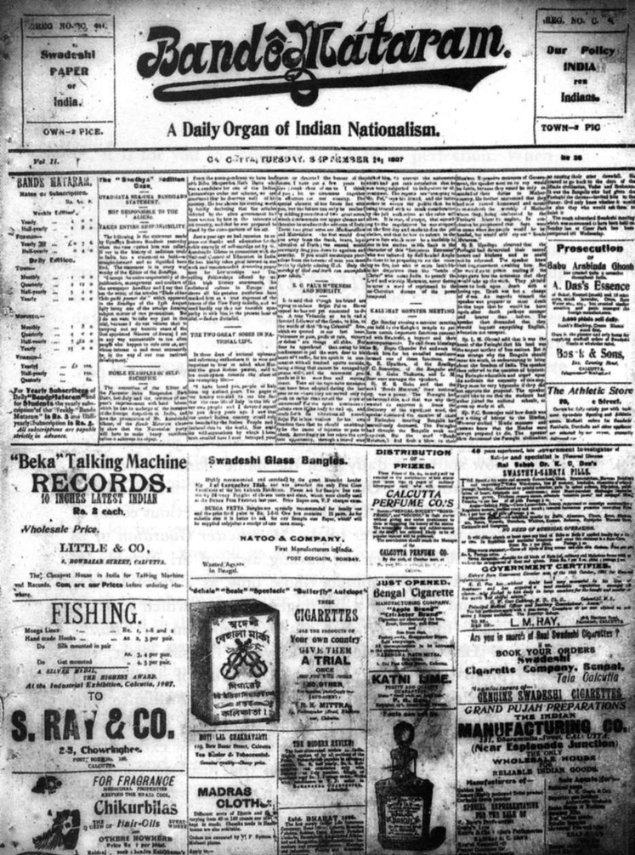
The PIB’s historical account helps clarify the origins of the song. According to Sri Aurobindo’s writing in the English daily Bande Mataram (16 April 1907), Bankimchandra Chattopadhyay composed the song around 1875. It was published more widely when Bankim’s novel Anandamath began serialization in the Bengali magazine Bangadarshan in March–April 1881.Song’s literary context: AnandamathAnandamath is built around a group of ascetic warriors, the Santanas, who dedicate themselves to freeing the motherland from oppression. Their devotion is entirely to Bharat Mata, envisioned not as a religious deity but as a personified motherland.In the temple of the Santanas stand three images of the Mother:

  1. The Mother that was – glorious and mighty
  2. The Mother that is – suffering and oppressed
  3. The Mother that will be – restored to strength and glory

For Aurobindo, the hymn embodied the essence of “the religion of patriotism.”Many later critics, however, would argue that the imagery—particularly in the later stanzas—draws from Hindu goddess symbolism that may not be inclusive of all communities.

-

From song to slogan: Birth of a nationalist cry (1900–1910)

By the early 20th century, Vande Mataram had escaped its literary origins and become one of the most electrifying symbols of Indian nationalism.Swadeshi and anti-partition movementAfter Lord Curzon’s 1905 partition of Bengal, the song became the rallying cry for:

  1. Boycott movements
  2. Protest marches
  3. Newspapers and political groups carrying its name

In 1906, at Barisal, more than 10,000 Hindus and Muslims together marched shouting Vande Mataram—a testament to its early cross-communal appeal.Figures who popularised it included:

  • Rabindranath Tagore
  • Bipin Chandra Pal
  • Sri Aurobindo

Aurobindo’s writings in Bande Mataram (the newspaper) turned the phrase into a political and spiritual exhortation for self-rule.

-

British repressionAlarmed by its galvanising effect, the colonial government tried repeatedly to suppress it through:

  • Fines for students
  • Police lathi-charges
  • Bans on marches
  • Threats of expulsion from schools and colleges

From Bengal to Bombay Presidency, chanting Vande Mataram became synonymous with nationalist defiance.In 1907, Madam Bhikaji Cama unfurled the first tricolour abroad—in Stuttgart—with the words Vande Mataram emblazoned across it.

The song and the Indian National Congress

The Congress adopted Vande Mataram not just culturally, but ceremonially.1896 —First Congress rendition: At the Calcutta session, Rabindranath Tagore sang the song, giving it national prominence.1905 — Nationwide adoption: At the Varanasi session, the Congress formally adopted Vande Mataram for all-India occasions. This was during the peak of the Swadeshi struggle, when the song had become the soundtrack of political awakening.

1937 CWC decision: Were the stanzas removed?

Yes.By the 1930s, debates around the song’s religious imagery had become politically relevant. India’s nationalist leadership wanted to keep the movement inclusive, and Muslim leaders raised objections to certain stanzas that invoked Hindu goddesses.

Did it ‘sow seeds of partition’?

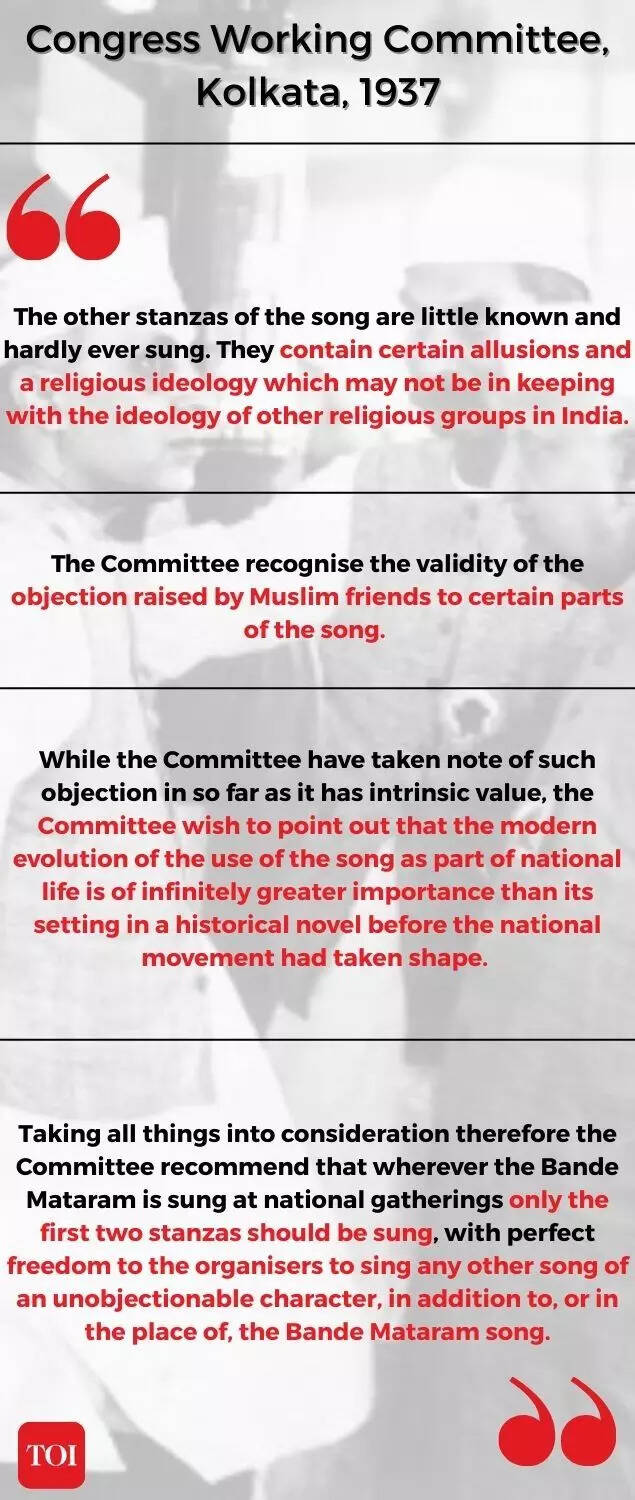
No.The CWC’s decision was more inclusive than divisive in nature.The eventual decision to restrict Vande Mataram to its first two stanzas drew directly from this history of selective popular usage. As the Committee noted, only the opening verses — celebrating the land’s beauty and abundance in gentle, inclusive imagery — had organically acquired national significance over the decades. The remaining stanzas were scarcely known, rarely sung, and contained religious allusions and ideological references that many felt were inconsistent with the beliefs of other communities. The CWC explicitly acknowledged the “validity of the objections raised by Muslim friends” to those portions. While emphasising that the song’s modern, unifying role in national life mattered far more than its origins in a historical novel, the committee concluded that only the first two stanzas should be sung at national gatherings. This, they argued, preserved the unifying spirit the song had come to embody while avoiding elements that could alienate sections of India’s diverse society.What the 1937 CWC actually saidThe CWC’s statement, issued between October 26–November 1 in Kolkata, recorded:

  • The first two stanzas had become widely used and carried no controversial imagery.
  • The remaining stanzas contained “allusions and a religious ideology” inconsistent with the beliefs of other religious groups.
  • Only the first two stanzas should be sung at national gatherings.
  • Organisers were free to choose additional songs if they wished.

The committee explicitly said that the modern national use of the first two stanzas was more important than the song’s original placement in a religiously infused novel.Tagore had long argued that when a cultural symbol is used nationally, it must not exclude or alienate. His views shaped the committee’s decision and remain central to the Congress’s defence today.

-

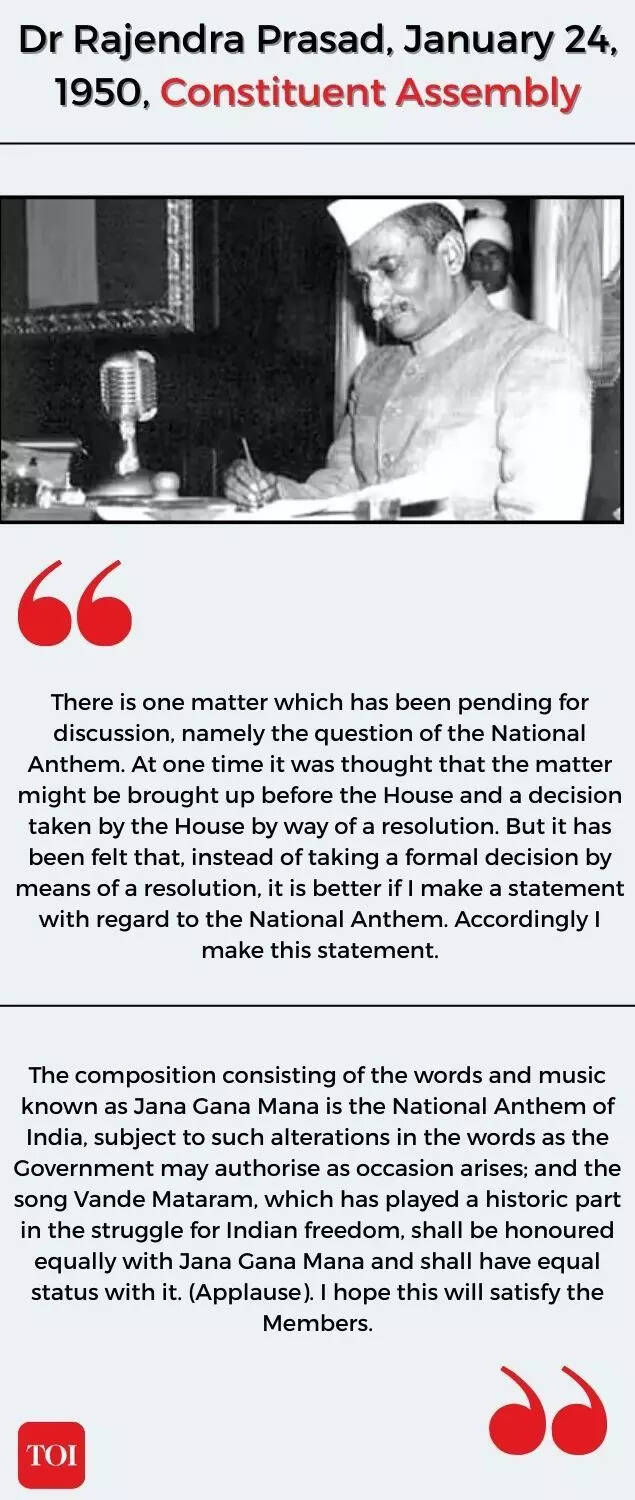
Constituent assembly: Equal honour, equal status (1950)When the Constituent Assembly met to choose India’s national symbols, there was no dispute between Jana Gana Mana and Vande Mataram.In his statement on January 24, 1950, DrRajendra Prasad, President of the Assembly, declared:Jana Gana Mana would be the national anthem.Vande Mataram, because of its historic role, would be honoured equally and accorded equal status.There was applause; no member raised objections.This dual recognition was meant to preserve both inclusivity and historical memory: the anthem would represent national unity, while Vande Mataram’s legacy would be canonised as part of India’s freedom story.

-

The debate today

Why is the BJP reviving the issue?For the ruling party, Vande Mataram is a civilizational invocation that predates partisan politics. The BJP frames the 1937 Congress decision as overly accommodative, even compromising, and often ties this critique to a larger argument about “appeasement.”In the government’s view, celebrating 150 years of the song is part of a project to reaffirm cultural pride and national self-confidence.Why is the Congress defensive?The Congress insists it is the party that first elevated the song, sang it at historic moments, and fought the British under its banner. It argues that:

  • The 1937 decision was guided by inclusivity, not division.
  • The BJP is weaponising history to distract from contemporary governance failures.
  • Tagore and the freedom movement need protecting from political revisionism.

What Jamiat Ulama-i-Hind has to say

The Jamiat Ulama-i-Hind, led by Maulana Mahmood Madani, has taken a clear and consistent position on the Vande Mataram debate: it accepts the first two stanzas as historically validated for national use but firmly rejects the remaining verses on theological grounds. Madani argued that the full composition contains imagery — particularly the depiction of the motherland as the goddess Durga — that conflicts with Islamic monotheism, making it impermissible for Muslims to recite.“He stated that Vande Mataram in its complete form is rooted in shirkiya aqaaid (polytheistic beliefs). Particularly, in the remaining four stanzas, the motherland is depicted as the goddess Durga and addressed with words of worship — concepts that clearly conflict with the Islamic belief in the oneness of God. ‘Muslims believe in one God and worship Him alone,’ Maulana Madani said. ‘Therefore, singing verses that ascribe divinity to anyone other than Allah goes against our faith and conscience,'” a statement by Jamiat said.

Source link