Breaking News
‘Hisab liya jayega’: PM Modi slams Didi in Kolkata rally | India News


‘Hisab liya jayega’: PM Modi slams Didi in Kolkata rally
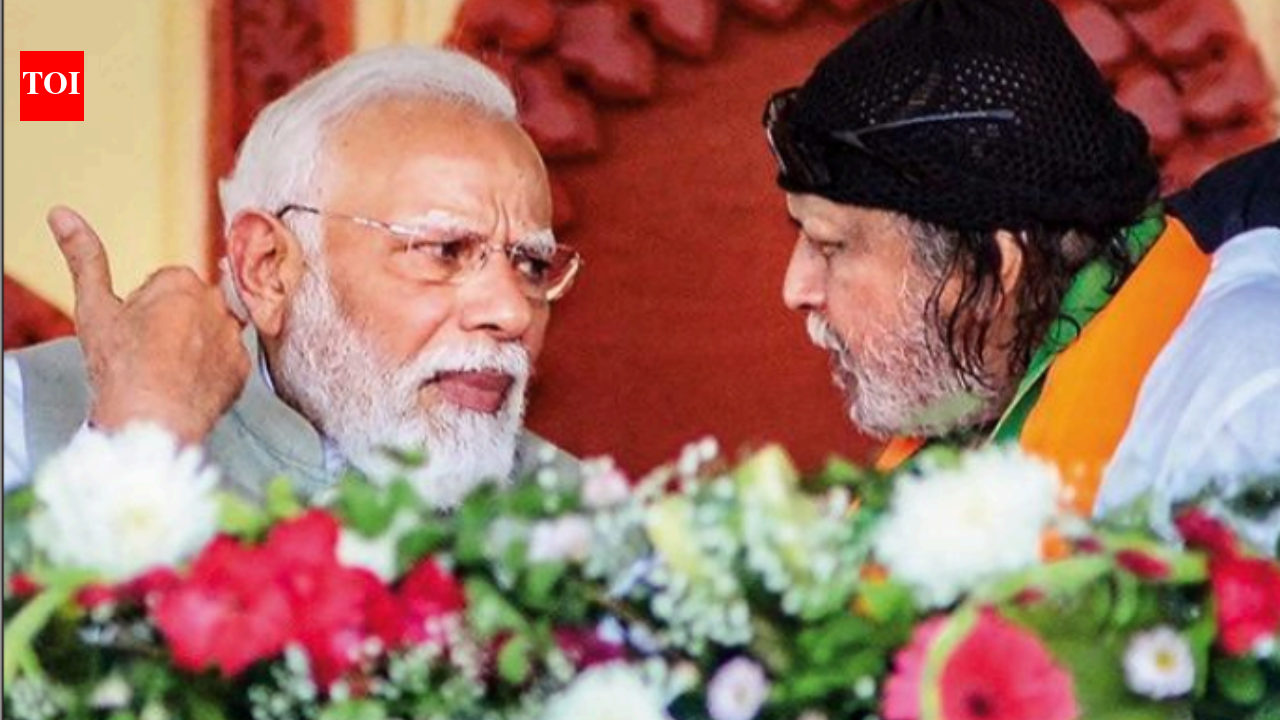
PM Modi with BJP’s Mithun Chakraborty during a rally in Kolkata on Saturday

KOLKATA: Chun-chun ke hisab liya jayega (One by one, everyone will be held accountable),” PM Modi said at BJP’s Brigade Parade Ground rally here on Saturday, calling for “change” at state secretariat Nabanna in upcoming polls. He touched on BJP’s key themes, “demographic change, lack of security for women and nirmam sarkar’s (cruel govt’s) violence and corruption”.Creators of ‘maha jungle raj’ in Bengal will pay, says PM ModiPM Modi’s speech laid out the template for the party’s poll campaign in a state it wants to add to its showcase of spectacular election victories since 2014. Saturday’s rally was also probably the last to be addressed by the BJP’s biggest vote-catcher before the EC’s likely announcement of the poll schedule next week. “The countdown has started for those who have brought maha jungle raj to Bengal. Those who flout the law and torture people will not be spared. We will make them pay for their crimes. BJP will bring development if voted to office. Sabka hisab liya jayega (We will make everyone accountable),” he said in his 49-minute speech. “Intimidation and threats have become TMC’s weapon. It is running with the help of goons,” he said. “This nirmam sarkar will not be able to stop change this time. BJP has the blessings of Mahishashurmardini (Durga),” he added, mentioning several of Bengal’s icons, including Rishi Bankim Chandra, Rabindranath Tagore, Ramakrishna Paramahamsa, and Swami Vivekananda, to undercut Trinamool’s narrative of BJP being a “party of outsiders” in Bengal. PM Modi then focused on what he described as “demographic change happening in Bengal” and Trinamool’s alleged role in it. “Bengal’s roti, beti and mati (bread, daughter and soil) are under threat now. Their land is being grabbed by infiltrators. The demography of the state has changed and has made Bengal unsafe. Bengali Hindus are being made a minority,” he said. “Criminals have a free run. Seven and eight-year-olds and tribal women are being raped and the nirmam sarkar is protecting the rapists. It is the same mentality that has caused the highest number of acid attacks in Bengal,” PM Modi alleged, adding that BJP will make Bengal safe for women. “This is PM Modi’s guarantee.” PM Modi then used the recent exchange between the state administration and President Droupadi Murmu to question Trinamool’s “attitude towards tribals”. “Dalits are the most deceived people in the state. A few days ago, the state administration was responsible for the mismanagement of President Murmu’s visit to Bengal. Trinamool could never accept a tribal woman in such a high position,” he alleged, adding: “Murmu is known for her simplicity and she expressed her pain. It was an insult to thousands of Dalit women and the Indian Constitution. Bengal will give a befitting reply.” Murmu’s criticism about the way she was treated at a Siliguri event earlier this week had prompted CM Mamata Banerjee to accuse BJP of using President’s office for politics. PM Modi also referred to Banerjee’s recent remarks about a community. “People are being threatened. It is being said that members of a specific community will kill them. How can anyone holding a constitutional position make a comment like that,” he asked, attributing Trinamool’s opposition to the SIR of electoral rolls as another example of its “vote-bank politics”. He also slammed TMC for trying to stop people from attending his rally. “Those coming to this rally were abused as ‘thieves’. But the people of Bengal know who the real thief is. This nirmam sarkar stopped vehicles and blocked bridges but could not stop the deluge of people. This crowd reflects the mood of Bengal.” PM Modi accused TMC of blocking several central schemes and being “anti-development”. “This administration has cursed the youth with migration. Bengal’s youths are talented and hardworking but are forced to go to other states for work. Development has taken a back seat. Investments have stopped and industries shut down. Jobs are being sold here. It is PM Modi’s guarantee to give jobs to the youth of Bengal,” he added. Before his rally, PM Modiinaugurated infrastructure projects worth Rs 18,680 crore.


Source link

Panun Kashmir expels its chairman for links with US-based ‘ISI agent’ | India News


Panun Kashmir expels its chairman for links with US-based ‘ISI agent’

JAMMU: Panun Kashmir has expelled its chairman, Ajay Chrungoo, for alleged links with US-based separatist lobbyist Ghulam Nabi Fai, a proclaimed agent of Pakistan’s ISI, and has named Tito Ganju as its new chief.The prominent organisation representing displaced Kashmiri Pandits said in a statement on Saturday that senior office-bearers met Chrungoo earlier in the day to inform him about their concerns, including the purpose and sponsorship of his foreign visits. However, Chrungoo didn’t reply to any queries.Chrungoo is accused of “anti-organisational conduct, deviation from ideological principles, and character assassination of senior activists through proxies”, besides attempts “to dissolve the organisation in cahoots with ISI without the consent and mandate of the leadership”.The statement added, “In view of the seriousness of the allegations and the continued absence of clarification, it was resolved that Ajay Chrungoo stands expelled from the organisation with immediate effect.”


Source link

Cian Shields to make Formula E debut with Cupra Kiro at Madrid Rookie Test | Formula – E News


Cian Shields to make Formula E debut with Cupra Kiro at Madrid Rookie Test
Cian Shields to drive for Cupra Kiro at Madrid Rookie Test (Image credit: Instagram)

Days after confirming Bianca Bustamante for the Madrid Rookie Test, Cupra Kiro has announced another rookie, Cian Shields, for the test. Shields will be making his Formula E debut at the Circuito del Jarama. He previously took part in a Free Practice session during the Abu Dhabi Grand Prix. The Madrid Rookie Test will take place soon after the Madrid E-Prix on 22 March.

Formula 2 driver Cian Shields to test Formula E car with Cupra Kiro in Madrid

Speaking about Cian Shields’ racing career, the 21-year-old is currently competing in Formula 2 with AIX Racing. He has also competed in the GB3 Championship, where he secured one victory and three podium finishes in his rookie season. Shields later finished runner-up in the Euroformula Open Championship and went on to race in Formula 3 as well.Delighted to join Cupra Kiro, Cian Shields said, as quoted by Formula E, “I’m delighted to be joining Cupra Kiro for the upcoming Rookie Test in Madrid. The test will be my first experience of driving a Formula E car, so it’s a very exciting opportunity to learn, adapt and understand what makes this championship so unique. In motorsport, rookie tests are becoming increasingly important, and with more teams giving young drivers opportunities, it’s a great platform not only to develop but also to show what you can do.”“Formula E is completely new territory for me, and I’m looking forward to working with and learning from Dan [Ticktum], Pepe [Martí], and Bianca [Bustamante] across the weekend,” he added.

Cupra Kiro on Cian Shields’ Formula E debut

Sharing his thoughts on selecting Cian Shields, Cupra Kiro Team Principal Russell O’Hagan said, “I’m excited to welcome Cian to the team for his first experience of Formula E. As a fully electric category, Formula E is a uniquely demanding championship, but I’m very confident that the opportunity to experience the GEN3 Evo will be hugely beneficial for his development, giving him a new perspective to complement his recent single-seater experiences.“The upcoming test is an important opportunity for us as a team, and while we’re eager to maximise it, we’re also very excited to extend this chance to Cian and support his progression. I can’t wait to see how he gets on,” he added.All the other Formula E teams have also announced their rookies for the Madrid Rookie Test, including Juju Noda and Bryce Aron for Jaguar TCS Racing. Theo Pourchaire and Joshua Durksen will be driving for Citroen Racing during the test.Also read: Madrid Rookie Test: Theo Pourchaire back in Formula E car, Joshua Durksen set for debut

Banner Insert


Source link

Army JCO dies after fall during anti-terror operation in J&K’s Poonch | India News


Army JCO dies after fall during anti-terror operation in J&K’s Poonch
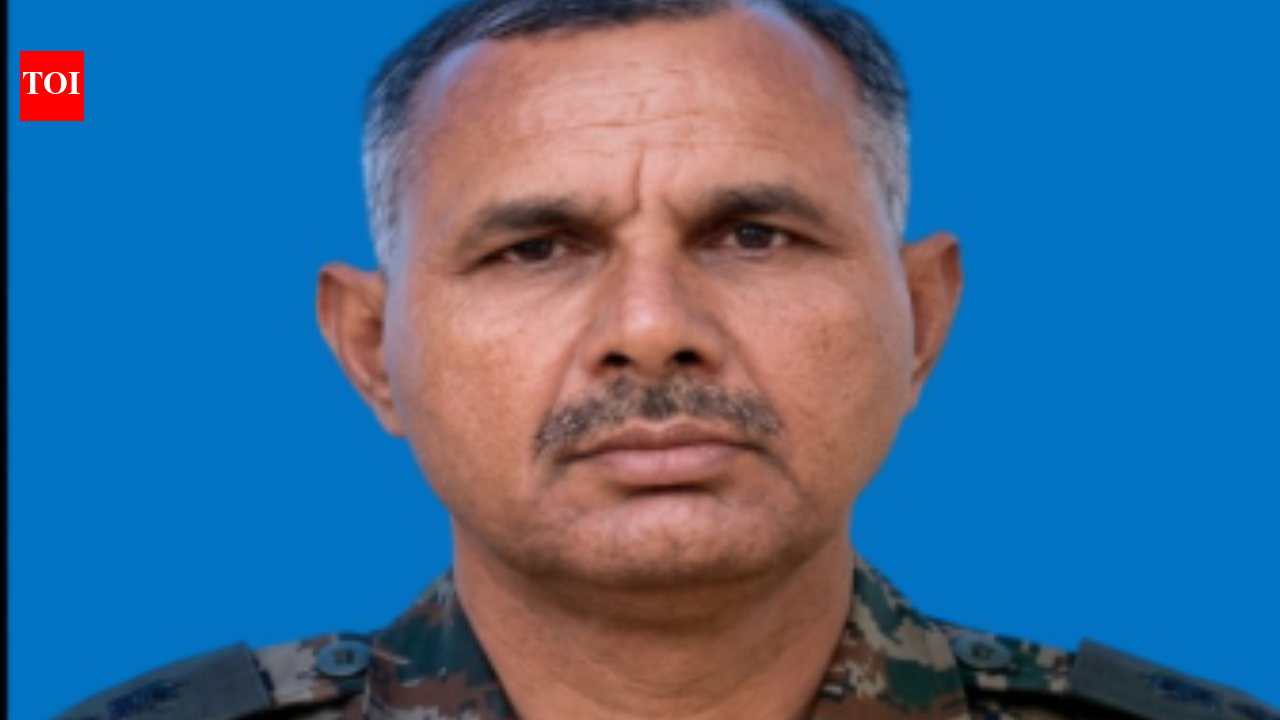
Subedar Sandeep Kumar Dhaka

NEW DELHI: A junior commissioned officer (JCO) died on Saturday afternoon during an anti-terrorist operation in J&K. The JCO Sandeep Kumar Dhaka died in Poonch district after he slipped and fell while operating in a rough terrain.“While operating in the challenging and rugged terrain during prolonged operations in the general area of Poonch, as part of Operation Sheri Kalan, today at about 2.30 pm, Subedar Sandeep Kumar Dhaka slipped and fell on ground and subsequently became unresponsive. He was immediately evacuated to Military Hospital at Potha. Despite determined medical efforts to revive him, the gallant JCO lost his life in the line of duty,” said the Army’s White Knight Corps unit.Further paying tribute, it added, “White Knight Corps pays solemn tribute to the unwavering courage, steadfast devotion and selfless service of the departed soldier. In this moment of profound grief, we stand firmly with the bereaved family and honour the memory of a warrior who served the nation till his last breath.”


Source link

‘Yet another act of aggression’: India condemns Pakistan air strikes in Afghanistan | India News


'Yet another act of aggression': India condemns Pakistan air strikes in Afghanistan

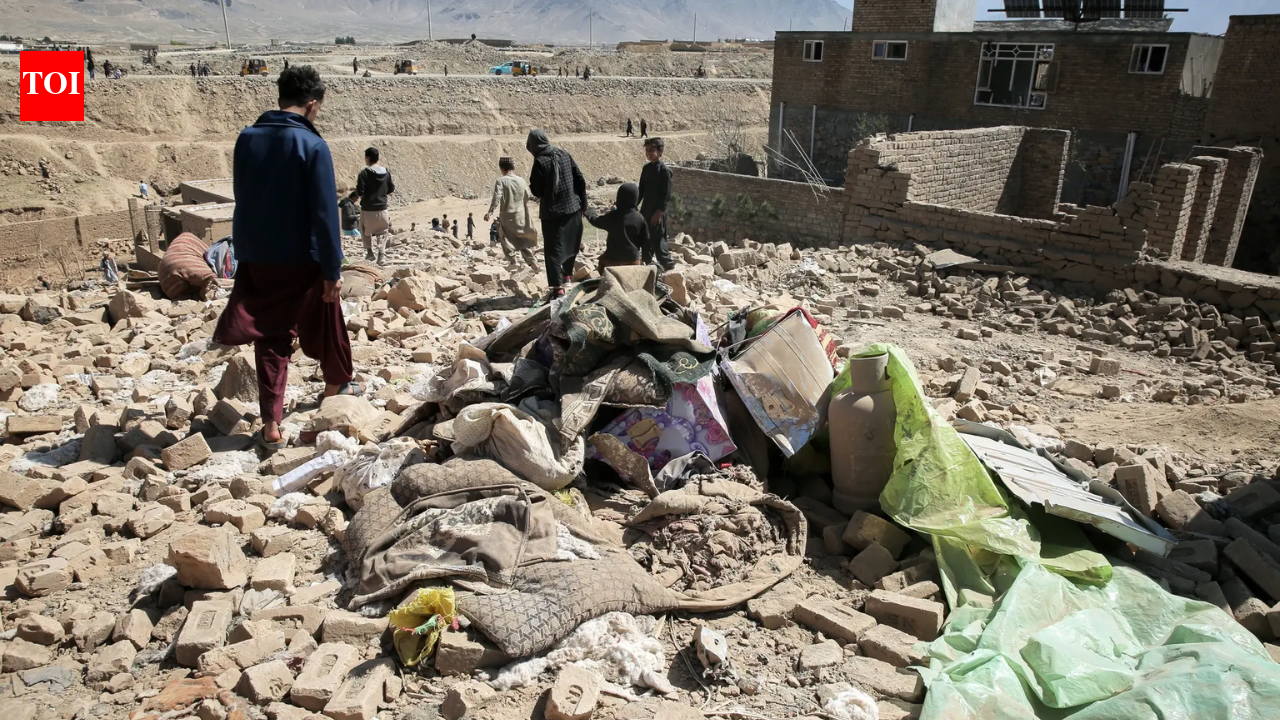
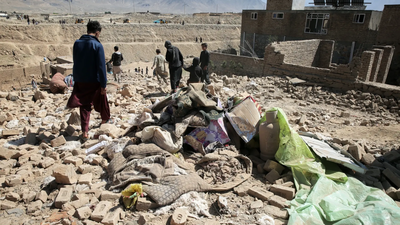
NEW DELHI: India on Saturday strongly condemned recent airstrikes by Pakistan in Afghanistan, which reportedly caused civilian casualties and damage to infrastructure. Ministry of external affairs official spokesperson Randhir Jaiswal said that the strikes constitute “yet another act of aggression by a Pakistani establishment that remains hostile to the idea of a sovereign Afghanistan” and reaffirmed India’s stance that Afghanistan’s sovereignty and territorial integrity must be respected.Addressing a media query, Jaiswal shared the statement on X saying, “India condemns the airstrikes by Pakistan in Afghanistan’s territory, leading to the death of several civilians and destruction of civilian infrastructure. This is yet another act of aggression by a Pakistani establishment that remains hostile to the idea of a sovereign Afghanistan. India reiterates that Afghanistan’s sovereignty and territorial integrity should be fully respected.”The remarks came after the Afghan Taliban government accused Pakistan on Friday of conducting airstrikes in Kabul and other areas in eastern Afghanistan, claiming at least six civilians were killed and 15 others injured.Hours later, Kabul said its air force responded by targeting military installations near Islamabad and in northwestern Pakistan.According to AP, Pakistan denied targeting civilians, stating that its operations focus on Pakistani Taliban militants and their support networks. Islamabad has described the conflict as an “open war,” raising concerns among the international community about regional stability amid the ongoing US-Israeli war with Iran in the Middle East.Afghan government spokesman Zabihullah Mujahid said Pakistani aircraft also struck fuel depots belonging to the private airline Kam Air near the airport in Kandahar, which supplies civilian and UN flights.Pakistan accuses the Afghan Taliban government of harboring Pakistani militant groups, mainly the Pakistani Taliban, that cross the porous border to attack Pakistani forces and of allying with its archrival, India. Kabul denies harboring militant groups.


Source link

Amit Shah Punjab Elections 2027: Punjab: Amit Shah rules out Akali alliance revival, says BJP will fight 2027 polls to form own government | India News


Punjab: Amit Shah rules out Akali alliance revival, says BJP will fight 2027 polls to form own government

NEW DELHI: Virtually ending speculation over any revival of the Bharatiya Janata Party’s alliance with the Shiromani Akali Dal, Union home minister Amit Shah on Saturday declared that the BJP will contest the 2027 Punjab Assembly elections on its own and seek to form its own government in the state.Addressing the party’s “Badlav” rally at Killi Chahlan village in Moga, Shah said the BJP had effectively launched its campaign for the Punjab polls, due early next year, and appealed to voters to give the party a chance after supporting the Congress, the Akalis and the Aam Aadmi Party (AAP).“Whenever we came before you, we came in the role of a younger brother. We could not have formed the government (on our own),” Shah said, referring to the BJP’s past alliance with the Shiromani Akali Dal.“Magar aaj mein keh kar jaata hu 27 (2027) kay chunav mein, Bharatiya Janata Party apni sarkar banane kay liye chunav ladne ja rahi hai (The BJP is now going to fight the 2027 election to form its government in Punjab),” he said, reported news agency PTI.

BJP sounds poll bugle from Moga

Shah said Punjab had given multiple chances to the Congress, the Akalis and the AAP, and should now give the BJP an opportunity.“We will bring change in Punjab,” he said.Shah claimed the BJP had secured 19 per cent of the vote in the 2024 Lok Sabha elections in Punjab and argued that wherever the party reached that mark, it eventually went on to form the government.“In 2024, the BJP got 19 per cent of the votes. And it is our track record, where the BJP gets 19 per cent of the vote, the next government formed there is of the BJP. And this happened in Odisha, Assam, Manipur, Tripura, Uttarakhand, and now it is the turn of Punjab,” he said.The BJP unsuccessfully contested all 13 parliamentary seats in Punjab in 2024, but its vote share rose from 9.6 per cent in 2019 to nearly 19 per cent.

Sharp attack on Mann government

Using the broader “Badlav” rally to target the Bhagwant Mann-led AAP government, Shah accused it of presiding over a breakdown in law and order and failing to tackle drugs, corruption and unemployment.“Today, Punjab has been destroyed due to debt, drugs, religious conversions, corruption and terror of gangsters,” Shah alleged.Shah also claimed the Mann government had become an “ATM” for AAP chief Arvind Kejriwal and said the chief minister was merely acting as Kejriwal’s “pilot”.“There is no government in this state. Had there been a government, the law and order situation would not have been so; the state would not have been reeling from the drug menace and farmers would not have been suffering…. Mann has only been acting as Kejriwal’s pilot,” he said.He also promised that if the BJP comes to power, it would eliminate the drug trade in Punjab within two years.“Give us your blessing in February, and we will root out the drug trade in Punjab within two years,” Shah said, reported PTI.

Religious conversion pitch also surfaces

While the main thrust of Shah’s speech was the BJP’s solo 2027 push, he also raised the issue of religious conversions in Punjab. Shah said that if the BJP forms the government in 2027, it will bring a law to check religious conversions in the state.“All of Punjab is facing the issue of religious conversions. I am saying this to all Hindu and Sikh brothers and sisters, you form the BJP government once, we will bring a Bill to check religious conversions,” he said.

Akali split backdrop

Shah’s remarks are politically significant because they strongly suggest the BJP is not looking to revive its long-standing partnership with the Shiromani Akali Dal.The SAD had ended its 24-year-old alliance with the BJP in September 2020 over the now-repealed farm laws.Before the split, the two parties had jointly contested elections for years, with the BJP usually fighting 23 Assembly seats and the Akalis contesting 94. The alliance formed governments in Punjab in 1997-2002, 2007-12 and 2012-17.The BJP currently has two MLAs in the 117-member Punjab Assembly.


Source link

Pakistan employees face the heat: PM Shehbaz Sharif approves up to 30% salary cuts in state firms amid fuel crisis


Pakistan employees face the heat: PM Shehbaz Sharif approves up to 30% salary cuts in state firms amid fuel crisis

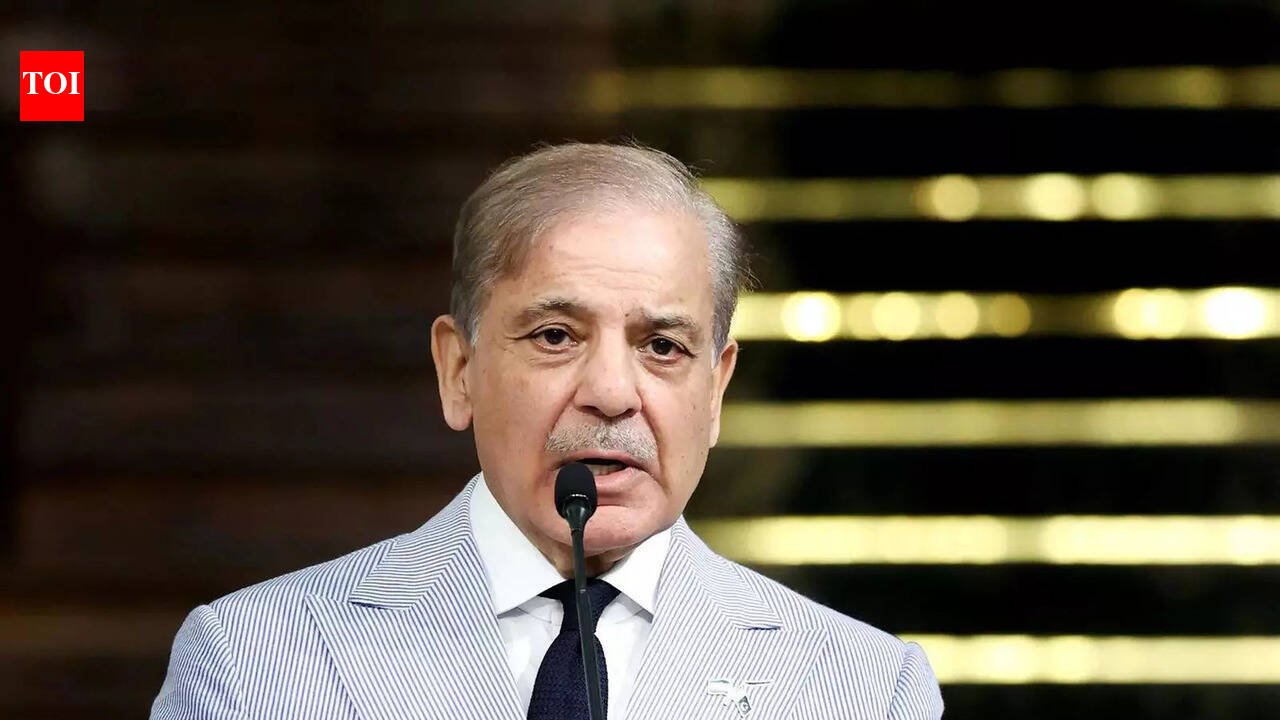
Pakistan Prime Minister Shehbaz Sharif on Saturday approved salary cuts ranging from 5 to 30 per cent for employees of state-owned enterprises and autonomous institutions as part of a wider austerity drive to address the economic fallout of the ongoing fuel crisis.The decision was taken during a high-level review meeting chaired by the prime minister to assess austerity and savings measures announced earlier this week after the sharp rise in fuel prices linked to the ongoing US-Israel-Iran conflict.According to a statement issued by the Prime Minister’s Office, the meeting reviewed the impact of fuel price fluctuations and steps taken by the government to reduce expenditure.“It was decided in the meeting that, like government employees, there will be a 5-30 per cent cut in the salaries of employees of state-owned enterprises and autonomous institutions under government patronage,” the statement said.The government said the funds saved through these austerity measures would be used “only for public relief”.Officials at the meeting were also informed that a third-party audit would supervise a 50 per cent reduction in fuel allocations for government vehicles, while 60 per cent of these vehicles will be taken off the roads over the next two months.The government also decided that representatives serving on the boards of corporations and institutions will no longer receive participation fees, which will instead be counted as part of the savings.“The meeting was also briefed on the implementation of the government’s complete ban on the purchase of new vehicles and the ban on all other government purchases,” the statement said.Under the austerity plan, the next two months’ salaries of cabinet members, ministers, advisers and special assistants will also be “used as savings for public welfare”.“The complete ban on foreign visits of government officers, ministers, ministers of state and special assistants will remain in place,” the statement said, quoting the prime minister.Pakistan has already begun feeling the economic impact of the conflict in the Middle East. Petroleum prices were increased by Rs 55 per litre last Friday, prompting the government to introduce measures to curb fuel consumption.Earlier steps included a 50 per cent reduction in fuel allocations for official vehicles for two months, removing 60 per cent of government vehicles from the roads during this period and introducing a four-day work week for government offices.(With inputs from PTI)


Source link

PCB to probe into Babar Azam, Fakhar Zaman after T20 World Cup exit | Cricket News


PCB to probe into Babar Azam, Fakhar Zaman after T20 World Cup exit
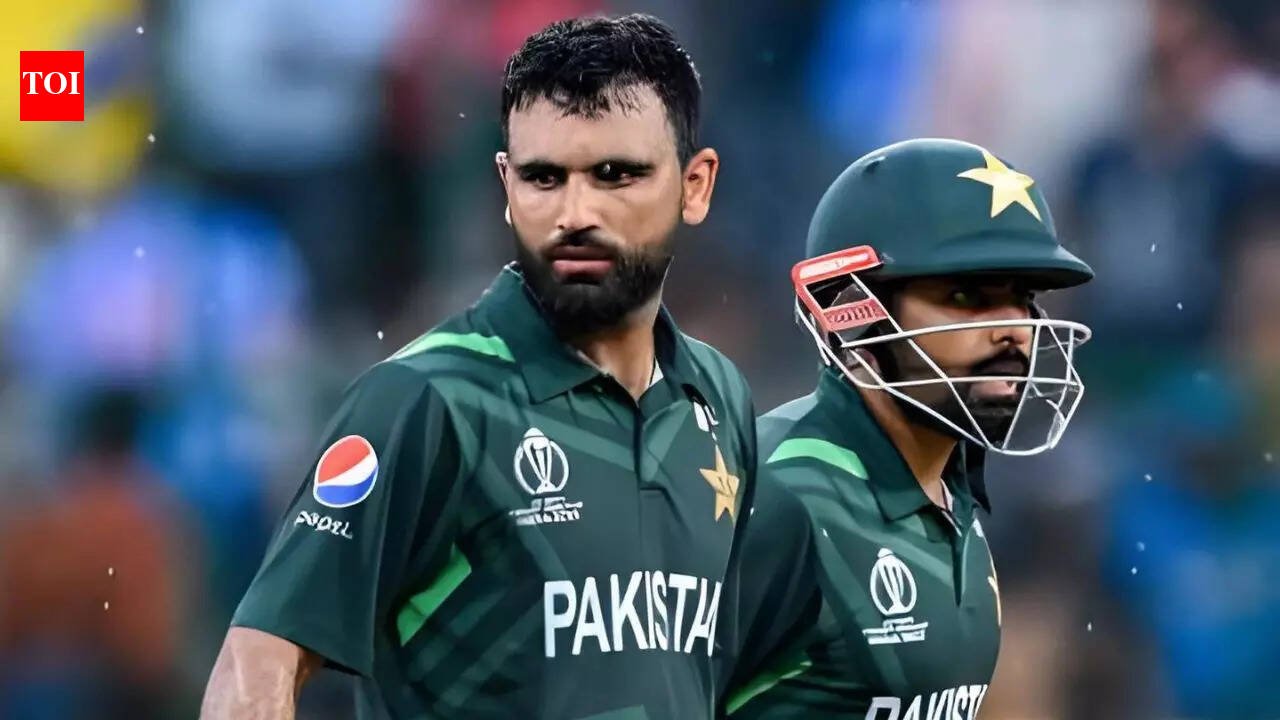
Fakhar Zaman and Babar Azam (AFP Photo)

The Pakistan Cricket Board is set to conduct an inquiry into the injuries of star batters Babar Azam and Fakhar Zaman after concerns emerged over their fitness following the recent ICC Men’s T20 World Cup.Pakistan selector and former fast bowler Aaqib Javed revealed during a press conference that the selection committee had requested the PCB to investigate how both players sustained injuries and why the issue only came to light after the tournament.

Selectors raise concerns over injury updates

Speaking alongside fellow selection committee members Misbah-ul-Haq, Sarfaraz Ahmed and Asad Shafiq, Aaqib Javed said the selectors were unaware that Babar Azam and Fakhar Zaman were carrying injuries during the World Cup.The selectors have now asked the PCB to review the circumstances surrounding the injuries and whether proper fitness updates were communicated during the tournament.“Fakhar is also injured – on this, we have also requested the cricket board for an inquiry. How can it be that Fakhar is also unfit and we only found out after the World Cup ended?” Aaqib said.“When you go to a World Cup, whatever health or injury issues there are, your head coach and physio should keep everyone updated. As selectors, we should know these things.”

Babar Azam ruled out of Bangladesh series

Aaqib Javed also clarified why Babar Azam was not included in Pakistan’s squad for the ongoing ODI series against Bangladesh national cricket team. According to the selector, the former Pakistan captain is currently dealing with an injury that has prevented him from participating in both the Bangladesh series and the domestic National T20 Cup.“Babar Azam is facing an injury, which is why he wasn’t included against Bangladesh. He also wanted to play the National T20 Cup, but his health condition didn’t allow him,” Aaqib explained.“Whether it was visible to you or to me is not important. But if a player gets injured in practice or a match, how it happens and when it happens should be known.”Aaqib even questioned whether the players would have been declared fit had Pakistan progressed further in the tournament.“Today the situation is that Babar Azam is not fit to play and Fakhar Zaman is not fit to play. If we had made the semifinal, would they have suddenly become fit? That is the question.”

Young players given opportunities

Aaqib also revealed that the team management had already planned to send a younger squad for the Bangladesh series following the World Cup. The selection committee has been experimenting with emerging players in recent bilateral series, similar to the approach used during Pakistan’s tour of Zimbabwe in 2024.“We had already decided before the World Cup that we would not send a full-strength squad here. We wanted to give opportunities to younger players so we have more options going forward,” he said.

Banner Insert


Source link

PAK vs BAN: Salman Ali Agha reprimanded after controversial run-out in 2nd ODI | Cricket News


PAK vs BAN: Salman Ali Agha reprimanded after controversial run-out in 2nd ODI
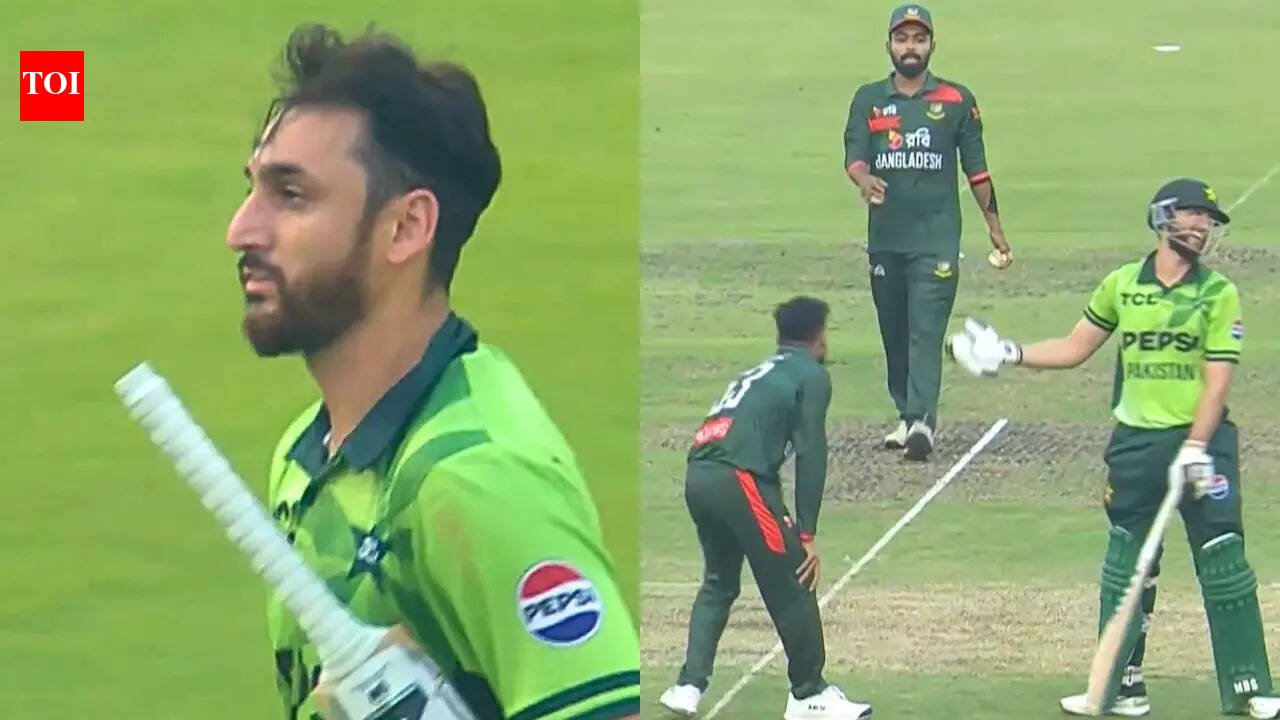
Salman Ali Agha during 2nd ODI (Screengrabs)

NEW DELHI: After the second ODI between Pakistan and Bangladesh at Sher-e-Bangla National Cricket Stadium in Mirpur on Friday, Pakistan batter Salman Ali Agha was officially reprimanded for showing frustration after being run out. The incident happened in the 39th over of Pakistan’s innings when Agha was dismissed following a quick reaction from Bangladesh captain Mehidy Hasan Miraz.The moment unfolded when Mohammad Rizwan pushed a delivery from Miraz toward the bowler. Miraz stopped the ball with his boot while Agha was standing nearby and outside his crease.

Amritsar erupts as Abhishek Sharma’s family celebrates India’s T20 World Cup triumph

As the ball slowed near them, Agha tried to pick it up to return it to the bowler. However, Miraz reacted faster, grabbed the ball and underarmed it into the stumps, catching Agha short of his ground.On-field umpire Tanvir Ahmed sent the decision upstairs, where third umpire Kumar Dharmasena confirmed the ball was still live and that Miraz’s run-out attempt was valid. Agha, who had scored 64 from 62 balls, appeared frustrated with the ruling. As he walked off the field, he exchanged words with Bangladesh wicketkeeper Litton Das and tossed his gloves in anger.That reaction led to disciplinary action. Match referee Neeyamur Rashid charged Agha for abusing cricket equipment. “The specific incident involved abusing cricket equipment on the ground while leaving the field. Regarding Salman Agha, he has no previous history of such behaviour. We have to maintain neutrality when we judge. Consequently, we have issued a reprimand and a demerit point,” Neeyamur told The Daily Star.He also clarified that the verbal exchange with Litton Das would not lead to further punishment, adding, “We also considered the law, our training and playing conditions. We discussed the matter with the ICC before making the final decision. From a neutrality standpoint, we delivered the judgement.”The offence was classified as a Level 1 breach under Article 2.2 of the International Cricket Council Code of Conduct, which covers the misuse of equipment during a match. Despite the controversy, Pakistan won the game by 128 runs via the DLS method, keeping the series alive ahead of the deciding final ODI at the same venue.

Banner Insert


Source link

India’s Nobel Prize paradox: A long gap for laureates and why Mahatma Gandhi remains the most famous non-winner | India News


India’s Nobel Prize paradox: A long gap for laureates and why Mahatma Gandhi remains the most famous non-winner

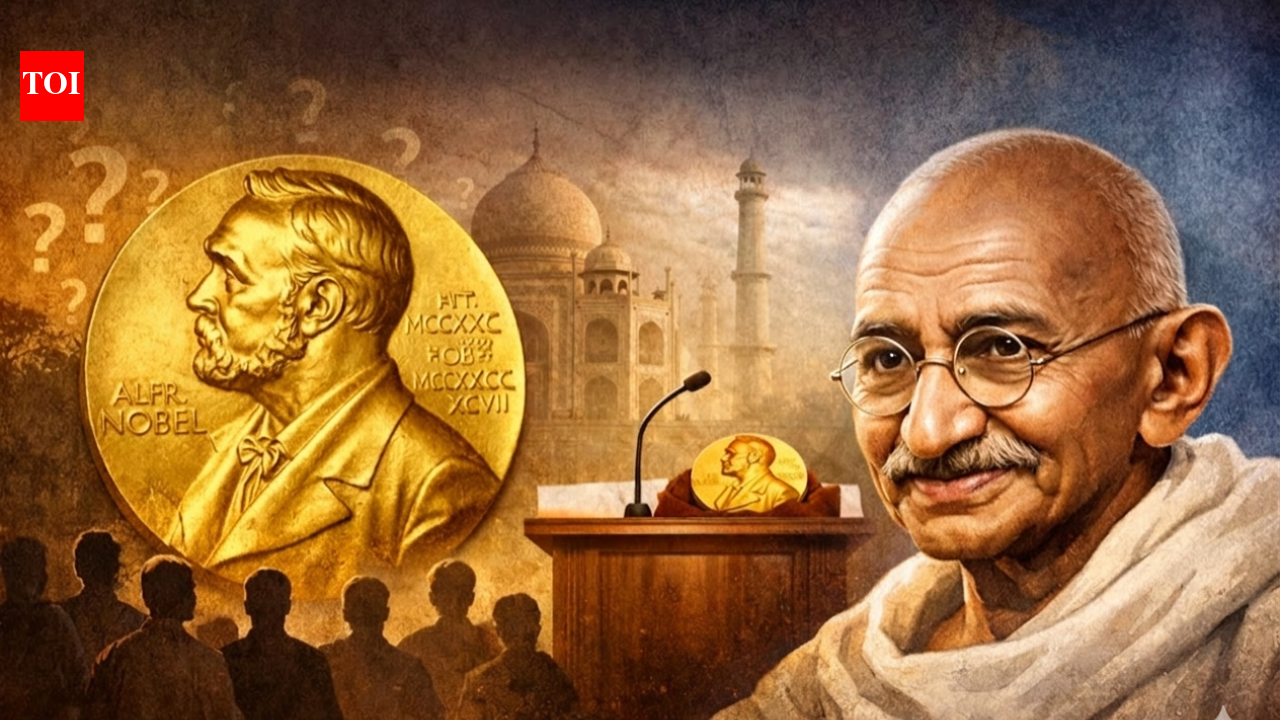
Almost 130 years after Alfred Nobel’s death, the prize named after him continues to be among the world’s most coveted honours, recognising extraordinary achievements in fields such as physics, chemistry, medicine, literature, peace, and economic sciences.A widely recounted, though sometimes disputed, story about the Swedish businessman, chemist, and inventor of dynamite suggests that the idea of the Nobel Prize may have been born out of an unusual moment of introspection. In 1888, a French newspaper mistakenly published Alfred Nobel’s obituary, confusing him with his deceased brother, and reportedly described him as the “merchant of death” who had made a fortune “by finding ways to kill more people faster than ever before.” Disturbed by the prospect of leaving behind such a legacy, Nobel is believed to have reconsidered how he wished to be remembered.When Alfred Nobel died in 1896 in San Remo, Italy, his will directed that the bulk of his fortune be used to establish prizes for those who had “conferred the greatest benefit to humankind.” Since 1901, the Nobel Prizes have been awarded annually by institutions such as the Royal Swedish Academy of Sciences, the Karolinska Institute, the Swedish Academy, and the Norwegian Nobel Committee.Yet, despite its long and celebrated association with intellectual excellence, India has seen relatively few Nobel laureates in recent decades. While individuals of Indian origin continue to appear on the global stage, the country itself has experienced long gaps between Nobel recognitions.

India’s history at Nobel stage

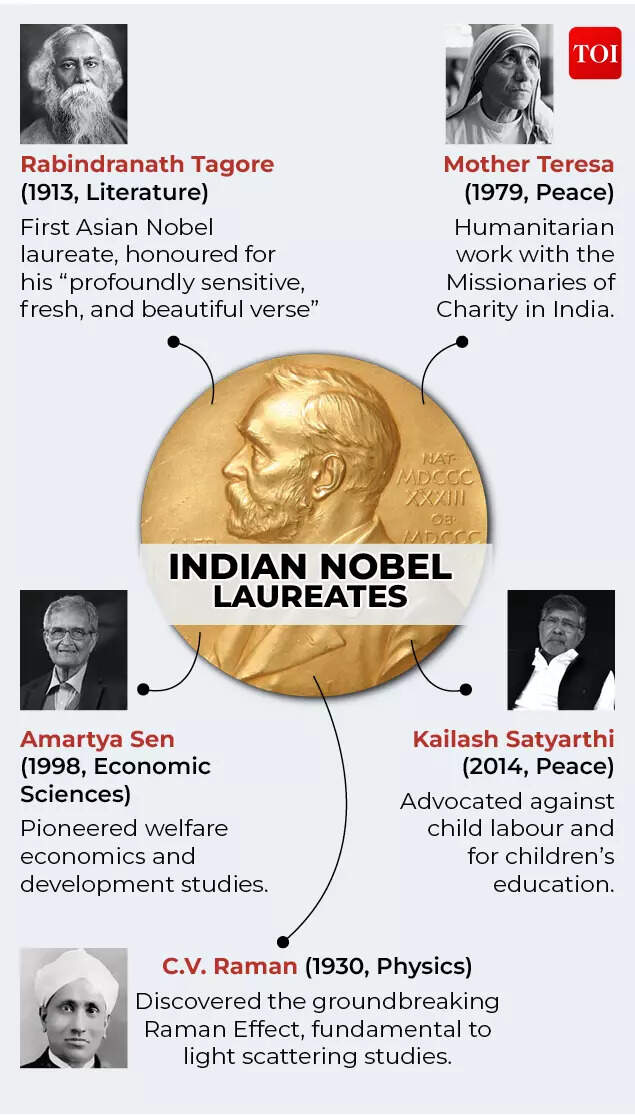
India’s first Nobel Prize was awarded in 1913 to Rabindranath Tagore for Literature. Rabindranath Tagore became the first Asian Nobel laureate, honoured for his “profoundly sensitive, fresh, and beautiful verse.” In science, C.V. Raman won the Physics Nobel Prize in 1930 for discovering the Raman Effect, a groundbreaking insight into light scattering.

Indian Nobel laureates

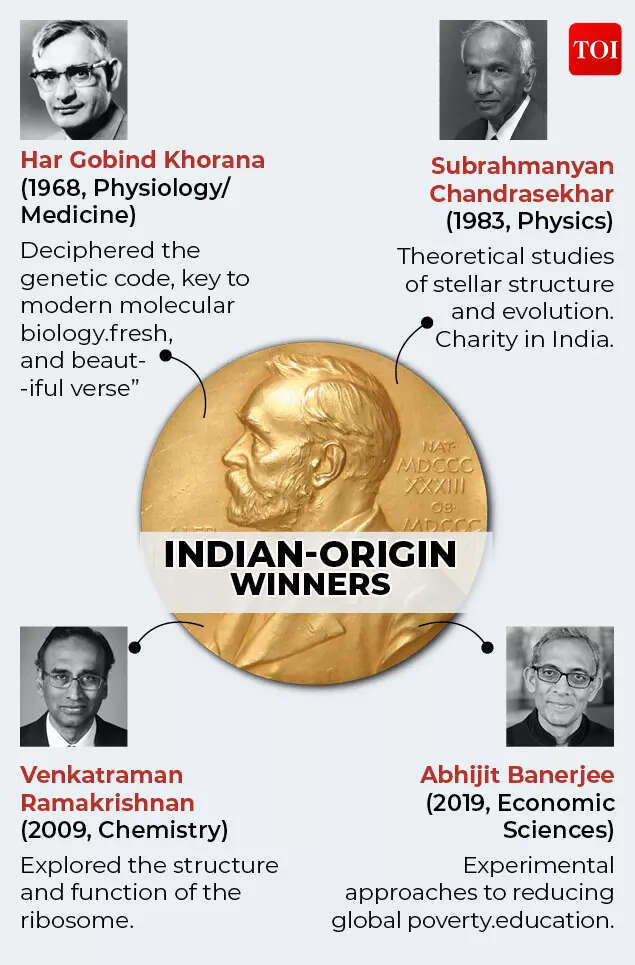
Hargobind Khorana (Physiology/Medicine, 1968), Venkatraman Ramakrishnan (Chemistry, 2009), and Kailash Satyarthi (Peace, 2014) are among other laureates who have brought global recognition to India. In addition, several Indian-origin scholars like Amartya Sen (Economics, 1998) and V.S. Naipaul (Literature, 2001) have been honoured for their contributions while affiliated abroad. Together, these achievements highlight India’s rich intellectual tradition.However, the intervals between such recognitions have often been long, prompting debate about the country’s research ecosystem, institutional support for fellowship, and the pathways through which groundbreaking work gains global visibility.
Nobel prize-Gfx2 (1) (1)

.

India’s last Nobel Prize in a science category was C.V. Raman in Physics, 1930. From 1930 to 2026, that makes it 96 years without a Nobel in Physics, Chemistry, or Physiology/Medicine.

Why Mahatma Gandhi remained the missing laureate – A case study

However, the prize seems to hold complex layers beyond recognizing achievement alone, as the story of Mahatma Gandhi illustrates. Widely revered as the most powerful symbol of non-violence in the 20th century, Gandhi pioneered satyagraha, a philosophy of peaceful resistance, first in South Africa and later during India’s struggle for independence.Mahatma Gandhi, affectionately known as Bapu, was nominated for the Nobel Peace Prize five times- in 1937, 1938, 1939, 1947, and shortly before his death in January 1948. Yet he was never selected for the recognition. Historians and Nobel scholars point to several reasons. Committee members admired him personally, but they were cautious about awarding the prize amid complex political conflicts, particularly the communal violence surrounding India’s partition. Some advisers questioned whether Gandhi’s efforts were primarily nationalist rather than universally applicable, while others interpreted statements he made in 1947 as less than strictly pacifist. Up to 1960, the Nobel Peace Prize was awarded almost exclusively to Europeans and Americans, and Mahatma Gandhi did not fit the traditional profile of laureates of that era.After his assassination, the Nobel Committee seriously considered a posthumous award, which was allowed under the rules at the time, but ultimately decided against it, citing that there was “no suitable living candidate.” Øyvind Tønnesson, Peace Editor from 1998–2000, wrote in his piece “Mahatma Gandhi: The Missing Laureate” that nobody had ever been awarded the Nobel Peace Prize posthumously. However, according to the statutes of the Nobel Foundation in force at that time, the prizes could, under certain circumstances, be awarded posthumously. This means it would have been possible to give Gandhi the prize.Mahatma Gandhi left no organization, property, or will, which complicated the practicalities of awarding the prize. Later, members of the committee publicly regretted his omission, and his legacy has often been invoked as a moral benchmark. When the Dalai Lama was awarded the Peace Prize in 1989, the committee chairman described it as “in part a tribute to the memory of Mahatma Gandhi.” Nelson Mandela also referred to Gandhi’s ideals as a guiding force in his own struggle against apartheid.

Why has India not produced frequent Nobel winners?

It is important to note that the absence of frequent Nobel wins does not necessarily translate into a lack of scientific or literary excellence or merit. However, it does raise a deeper and important question: why do some countries consistently produce Nobel laureates while others, despite immense intellectual potential, experience prolonged gaps?

How Someone Actually Wins a Nobel Prize | The Secret Selection Process Explained

To understand this pattern, it is worth examining the structural, institutional, and cultural factors that may shape the journey from promising research to Nobel-winning discovery and external factors that might be at play. Nobel nominations are kept secret for years – The Norwegian Nobel Committee keeps all nominations confidential for 50 years, including details about who nominated them, how many people, and the names of all who were shortlisted. This means we often don’t know who was proposed or considered, making it impossible to judge how close India’s scholars or leaders came to winning in many cases. Mahatma Gandhi, for instance, was nominated multiple times before his death, but the public only came to know the details decades later from archival research.The Rule of Three – A Nobel Prize can be shared by up to three individuals, which excludes research teams, laboratories, or entire collaborative groups. Many groundbreaking discoveries can be the result of large team efforts, making it difficult to single out a few individuals as having made the highest contribution. As a result, many achievements by large research groups or think tanks may remain underrepresented. This is one reason why some major contributions from India or Indian-origin scientists may not have led to a Nobel Prize despite their significance. However, this rule does not apply to the Nobel Peace prize.
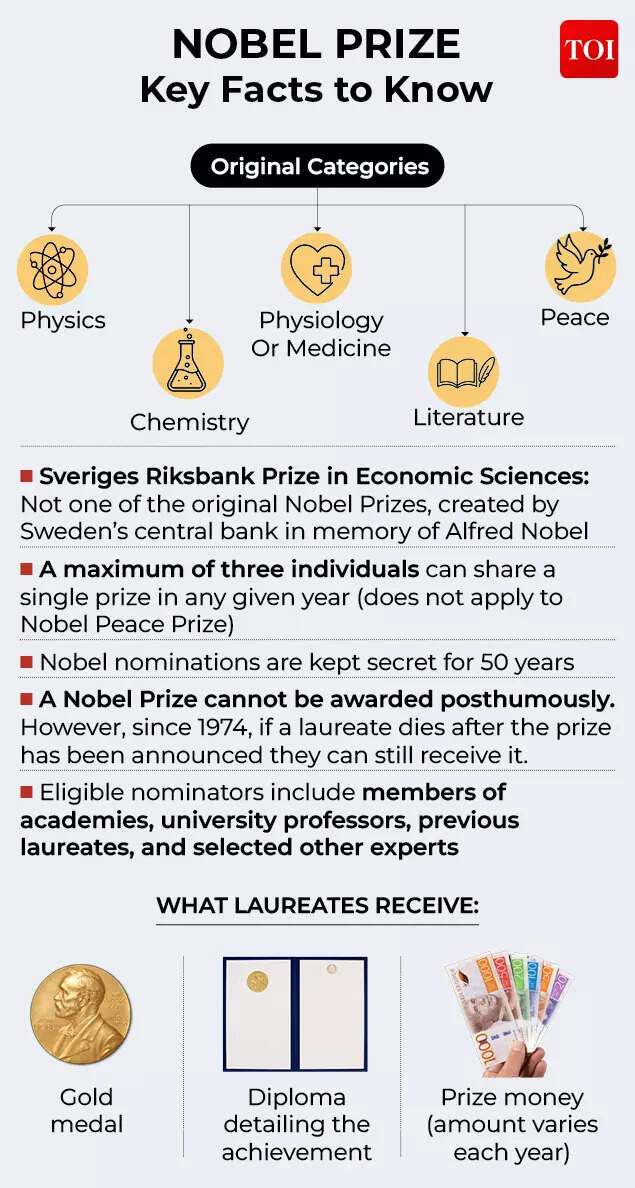
Nobel prize-Gfx3 (1)

Brain drain – According to a 2024 study by A. Shaji George and Dr. T. Baskar on brain drain in India, many skilled professionals are leaving the country due to limited opportunities and better prospects abroad. India has seen a steady exodus of talented researchers and scientists, many leaving in search of better funding, modern labs, and opportunities to collaborate internationally. With R&D investment at only ~0.64% of GDP and a limited number of academic positions, talented individuals often face difficult choices between pursuing their research dreams or seeking stability abroad. Overseas institutions appear to provide greater resources, better fellowships, access to global networks, and recognition, which can be felt to some as hard to achieve at home. Strengthening domestic research support and infrastructure could help retain this talent, allowing India’s brightest minds to thrive while boosting the country’s global scientific impact.The social safety with conventional career options – Choosing research as a career in India often comes with institutional and social concerns. PhD scholars have reported facing limited job opportunities, uncertain career paths, and modest funding or fellowships. In addition, parental or societal pressure for more stable employment can weigh heavily. Researchers also experience pressure to publish for placement rather than long-term innovation, which can compromise the pursuit of groundbreaking work. These challenges create a perception of instability, influencing career choices and sometimes prompting talented individuals to pursue more conventional or secure paths in other fields.Historical trend: Euro-American dominanceUp to 1960, most Nobel Prizes were awarded to Europeans and Americans. Early breakthroughs in physics, chemistry, medicine, and literature were concentrated in Western institutions, while research from countries like India had limited access to international networks and global visibility. The Nobel Peace Prize during this period was almost exclusively awarded to Western laureates, frequently raising questions about whether the horizon of the Norwegian Nobel Committee was too narrow to recognize contributions from non-Western and post-colonial nations.Excessive focus on publicationsDespite being globally ranked 3rd in research publications, it is paradoxical that India has seen a long gap in Nobel recognitions. PhD scholars in India often report that the work culture prioritizes publications, particularly in high-impact journals, over long-term innovation. As Bhargav Jyoti Bora and Anshid, two PhD scholars in chemistry, told TOI:“Here, the work is mainly focused on the publication. People are looking for better impact factor journals so that they can get jobs. Otherwise, there is no option for placement.”This pressure to publish for career survival can limit the pursuit of novel or risky ideas, which are often the foundation of globally recognized research. He contrasts this with the approach of many Nobel laureates:“If you look at people who have got the Nobel Prize, their entire career is based on one topic, or several aspects of one topic. All their students work on similar topics, which helps them create novel or Nobel-worthy ideas” they added.This focus on immediate career needs often limits deep, long-term exploration of a single research area.Limited funding and R&D expenditureLimited funding and infrastructure remain major bottlenecks. Tushar Goyal, a JRF researcher at Jawaharlal Nehru University, said while speaking to TOI that these challenges continue to hinder high-quality research.“Without financial support, many scholars become dependent on part-time jobs and gigs to meet their basic needs. It hampers their academic focus and research quality. India’s R&D expenditure is approximately 0.64% of GDP, significantly lower than in many research-intensive economies.The Non-NET fellowship, which provides Rs 8,000 per month for PhD students in central universities, was last revised in 2012. Despite significant increases in the cost of living, the fellowship amount has remained unchanged for the last 14 years,” he added.Another factor contributing to India’s relatively low R&D spending is the limited participation of the private sector. According to a written reply to a parliamentary question in the Rajya Sabha in 2025 by Jitendra Singh, minister of state (independent charge) for science and technology, the private sector accounts for only about 36% of India’s Gross Expenditure on Research and Development (GERD), whereas in several advanced economies, private industry contributes over 70% of total R&D spending.Anshid, a PhD scholar in chemistry, adds that “It is very difficult for faculties, especially new ones, to get funding. The research infrastructure is minimal in universities or institutes. Students have to struggle to get access to instruments or labs, wasting valuable research time.”Other students often face similar frustrations, making it harder to complete ambitious projects or pursue high-impact research.Collaboration often driven by resourcesAnother issue that emerged from conversations with researchers is the nature of research collaborations. They further highlighted how research-based collaborations, which should ideally foster shared knowledge and innovation, are often pursued for material support instead. Bhargav Bora observes:“Most collaborations are not for knowledge or field similarity, or even for gaining insights. The main purpose is access to instruments and funding. Ideally, collaboration should help in better understanding the field, then it will be beneficial for a better idea.”This practical approach can limit intellectual exchange, which is often essential for groundbreaking discoveries.Career uncertainty and societal pressureResearch in India can often feel like a precarious career choice. Limited job opportunities and uncertain career paths make it difficult for young researchers to plan long-term.PhD scholars also opened up on the societal and parental expectations that favour more stable professions. “There is pressure to choose a secure job,” one scholar said, adding that many researchers feel compelled to prioritise publications for placements rather than pursuing long-term innovative work.Together, these factors contribute to a sense of instability within the research ecosystem, shaping career choices and sometimes pushing talented individuals toward more conventional career paths.Cinema, often called the mirror of society, has also explored how the lives of scientists intersect with institutional and social pressures. Films like Ek Doctor Ki Maut (1990), a masterpiece of parallel cinema, directed by Tapan Sinha, portray how groundbreaking research can be met with apathy, indifference, and sheer skepticism. The film follows Dr. Dipankar Roy (played by Pankaj Kapur), who discovers a cure for leprosy but is ridiculed by the medical association and the scientific community for his claim that, as a side effect, the vaccine could treat women’s infertility. Bureaucratic hurdles further stall his work, and his passionate devotion to the discovery comes at the cost of neglecting other aspects of his life. In the film, he has set up a lab within his own home, highlighting his obsessive devotion to research and how such dedication can blur the line between professional pursuit and personal life and how bureaucratic, social, and institutional pressures can stifle scientific inquiry and groundbreaking discoveries.Outdated coursework and limited global exposure Many PhD programs in India still rely on outdated coursework, which may not fully align with current global debates or modern research methodologies. Tushar Goyal, JRF researcher at JNU and media educator, highlights another challenge, “Limited opportunities for international exposure and collaborations restrict integration into global academic networks. Without such exposure, even high-quality research can remain under-recognized internationally.Updating curricula and creating more pathways for international collaboration could help researchers gain skills, perspectives, and networks essential for achieving global visibility.The role of translation in global recognitionDitsa Mandal, a research scholar in Liberal Arts at IIT Hyderabad, observes that translation infrastructure also plays a crucial role in determining whether literary works gain global recognition. She notes, “Translation infrastructures are the most important criteria determining a work’s capability to travel—publishers willing to invest in certain kinds of works and languages, the presence of skilled translators, grants, representation in international book fairs, and academic promotion abroad all affect visibility. Literary works with limited translation funding may remain locally visible but not globally celebrated.”This insight underscores how structural support, not just literary merit, shapes the reach and recognition of works on the international stage.

Global recognition: How awards reflect research ecosystems

Awards like the Nobel Prize not only honor individual scholars but also signal the strength of a country’s research ecosystem. Tushar Goyal notes that such recognition lends credibility to both the researcher and their institution, reflecting long-term support, funding, and intellectual freedom. Factors like media coverage, translation, and international collaborations also play a critical role. Research published in widely accessible languages or circulated through global networks is more likely to be cited, discussed, and nominated for prestigious awards, highlighting the importance of international exposure and academic partnerships.

The road ahead

Who receives a Nobel Prize, and who does not, often remains a matter of speculation, as the Nobel Committee keeps nominations confidential for 50 years and many factors may shape the final decision. The decisions are complex and not always predictable. India’s journey with the Nobel Prize reflects a complex interplay of history, institutional structures, and global visibility. Yet it is not a story of failure; intellectual excellence continues to thrive through persistent inquiry, innovation, and resilience. From the literary contributions of Rabindranath Tagore to C. V. Raman’s discoveries on the scattering of light, India has produced thinkers whose work has had global impact. The country has long produced minds that have shaped global thought. Strengthening research ecosystems, maintaining robust scientific infrastructure, fostering meaningful collaboration, and valuing long-term dedication can help ensure that future Nobel-worthy discoveries reflect not only individual brilliance but also the country’s systemic strength on the global stage.

Source link