Breaking News
CBI coerced key witness in Dera chief case: HC | India News


CBI coerced key witness in Dera chief case: HC

CHANDIGARH: Punjab and Haryana high court’s exoneration of jailed Dera Sacha Sauda chief Gurmeet Ram Rahim on March 7 in the 2002 murder of journalist Ram Chander Chhatrapati comes with a scathing indictment of CBI’s investigation – coercion of a key witness, failure to cross-examine the police officer who recorded the victim’s dying declaration and a conspiracy angle built on evidence that couldn’t stand scrutiny.Journalist may have been murdered by some followers of the Dera head: HCThe division bench of Chief Justice Sheel Nagu and Justice Vikram Aggarwal said Chhatrapati may have been murdered by some followers of the Dera head, noting that it wasn’t uncommon for people driven by “excessive and single-minded zeal” to “cross legal boundaries in the name of faith”. “The trial court should have closely examined whether there was overwhelming evidence directly implicating the Dera chief, or whether the crime could have been carried out independently by some of his staunch followers,” states the 113-page order, made public Monday on the court’s website.In its hurry to wrap up the case, CBI forced the witness mentioned in the order — Ram Rahim’s former driver Khatta Singh — into making a statement that compromised the integrity of the probe, the bench said.It also flagged the absence of Haryana Police SI Ram Chander from the witness stand as a glaring example of the prosecution’s questionable “methodology”. The officer had recorded Chhatrapati’s statement at PGI-Rohtak on Oct 26, 2002, before he died of gunshot wounds. “It is extremely strange that this very important witness was given up =by the prosecution as being unnecessary,” the order states. “In the opinion of this court, he was the most important witness… In so far as Ram Rahim is concerned, since the charge is only that of criminal conspiracy, the version of SI Ram Chander would be of extreme importance.The judges said the intention may have been to implicate the Dera chief in the journalist’s murder, which “was not being fulfilled with the statement recorded by SI Ram Chander”. “In any case, doubt is created in the mind of the court once such an important statement is not brought on record, and such an important witness is not examined. The benefit of the doubt necessarily must go to the accused,” states the acquittal order.Conflicting statements by Khatta Singh, too, cast doubt on Ram Rahim’s involvement in the murder, the bench said. “He (Khatta) chose to remain silent for a number of years and then kept tossing from one side to the other like a ping-pong ball. Even on Dec 26, 2006, when he opened up for the first time, he did not implicate the Dera chief and talked only about the Ranjit Singh murder case,” the order states. “If he was under threat, it is not understood why he was under threat only in this case and not in the Ranjit Singh case, in which he stated that a conspiracy had been hatched by Dera chief.Overturning the special court’s life sentence against Ram Rahim, the verdict acknowledges that being “a prominent public personality with both supporters and detractors” could influence the narrative surrounding criminal allegations against that person. There is a “greater possibility” that those convicted of “executing” the killing – Krishan Lal, Nirmal and Kuldeep Singh – acted on their own rather than on instructions of the Dera head, it states.

Source link

Biological Aging: Stressful, toxic people in your life may make you age faster, say researchers | India News


Stressful, toxic people in your life may make you age faster, say researchers

NEW DELHI: The company you keep may shape your life – and if it includes stressful or toxic people, it could even make you age faster.A new international study suggests that difficult or persistently stressful people in one’s social circle may quietly accelerate biological ageing and affect overall health.Researchers analysing social network data and biological samples from more than 2,600 adults found that individuals who reported having people in their lives who frequently caused stress or emotional strain showed signs of faster biological ageing. The findings have been published in peer-reviewed journal Proceedings of the National Academy of Sciences (PNAS).The study described such individuals as “hasslers” – people who regularly create tension or emotional strain. Nearly three in 10 participants reported having at least one such person in their social network.Researchers measured biological ageing using saliva samples and DNA methylation patterns known as epigenetic clocks, which estimate how quickly the body is ageing at the cellular level.The analysis found that each additional stressful relationship was linked to about 1.5% faster biological ageing. On average, individuals reporting such ties were found to be roughly nine months biologically older than people of the same age who did not report them.A lead author of the study Byungkyu Lee advises being mindful about relationships, avoiding people who bring persistent negativity and stress, and distancing yourself if needed, though such decisions can be difficult. In many cases, however, completely cutting off “hassler” relationships may not be practical, especially when they involve family or ties that also bring some positive aspects.Dr V Mohan, chairman of Dr Mohan’s Diabetes Specialities Centre in Chennai, said persistent stress increases oxidative stress and free radicals in the body, which can shorten telomeres – protective caps at the ends of chromosomes – speeding up cellular ageing. Stress hormones such as cortisol, epinephrine and norepinephrine also remain elevated during prolonged stress, triggering inflammation, insulin resistance and damage to blood vessels, he said. Dr Rajesh Sagar, professor of psychiatry at AIIMS Delhi, said when stressful relationships repeatedly activate the brain’s fight-or-flight response, the body remains in a prolonged state of alertness. “This sustained stress response keeps cortisol levels high and can affect metabolic and cardiovascular systems over time, making the body biologically older than its chronological age,” he said.Participants with more stressful relationships also reported poorer physical health, higher anxiety and depression levels, and higher body mass index.Doctors said persistent emotional strain can manifest through headaches, digestive problems, sleep disturbance, fatigue and difficulty concentrating – signs that the body is struggling to cope with chronic stress.


Source link

97% of employers say English proficiency key now: Report


97% of employers say English proficiency key now: Report

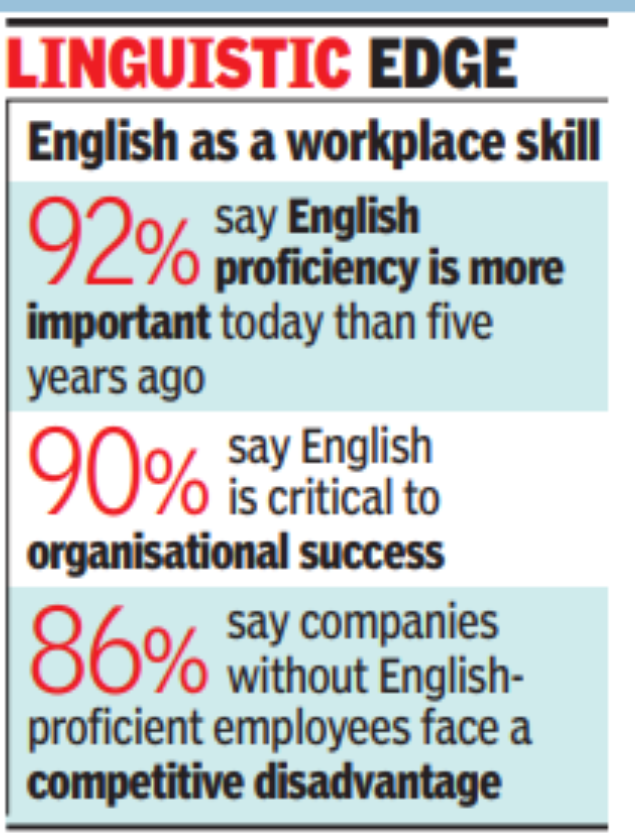
NEW DELHI: Nearly 97% of employers in India say English proficiency among employees is more important today than it was five years ago, while 87% believe the rapid adoption of AI is increasing the need for English skills at workplace, according to a global survey by ETS (Educational Testing Service), the organisationwhich is behind the TOEIC English assessment.The findings come from the Global English Skills Report, based on a survey of 1,325 HR decision makers across 17 countries, including India. The research was conducted by The Harris Poll between Sept and Oct 2025 and covered employers across sectors such as manufacturing, finance, services and technology.Globally, the survey found 92% of employers agree that English language proficiency among employees is more important now than it was five years ago, indicating a widespread shift in workplace skill expectations.The report noted that AI is not reducing the importance of language skills as many had expected. Instead, it is increasing reliance on English. “Workers must be fluent in English to effectively interact with AI and fully capitalise on its benefits,” the report stated, adding that organisations see language proficiency as central to using AI tools, generating prompts and validating AI-generated outputs.

-

Across industries, employers say the language remains the backbone of cross-border collaboration. “English, as the lingua franca of international business, is the standard medium for multinational team meetings, email exchanges and project management,” the report noted, underlining the role of English in coordinating global teams and partnerships.The growing importance of English is also reshaping hiring practices. In India, 80% of companies already use English assessments during hiring or candidate screening, slightly above the global average of 78%, suggesting that language ability is becoming a routine evaluation parameter in recruitment. Assessments are increasingly integrated across employee development cycles as well. The survey showed 76% of organisations in India use English assessments before training programmes, while 66% conduct post-training evaluations, indicating that companies are embedding language proficiency into workforce development strategies.Seventy-eight per cent of organisations globally use English tests for hiring, 71% for pre-training evaluation and 66% for promotion readiness, reflecting the growing role of language testing in talent management. Employers expect this shift to intensify as competition for skilled talent grows.


Source link

Fuel shortage fear grips Pakistan: Sharif orders school shutdown, four-day workweek amid Mideast conflict


Fuel shortage fear grips Pakistan: Sharif orders school shutdown, four-day workweek amid Mideast conflict

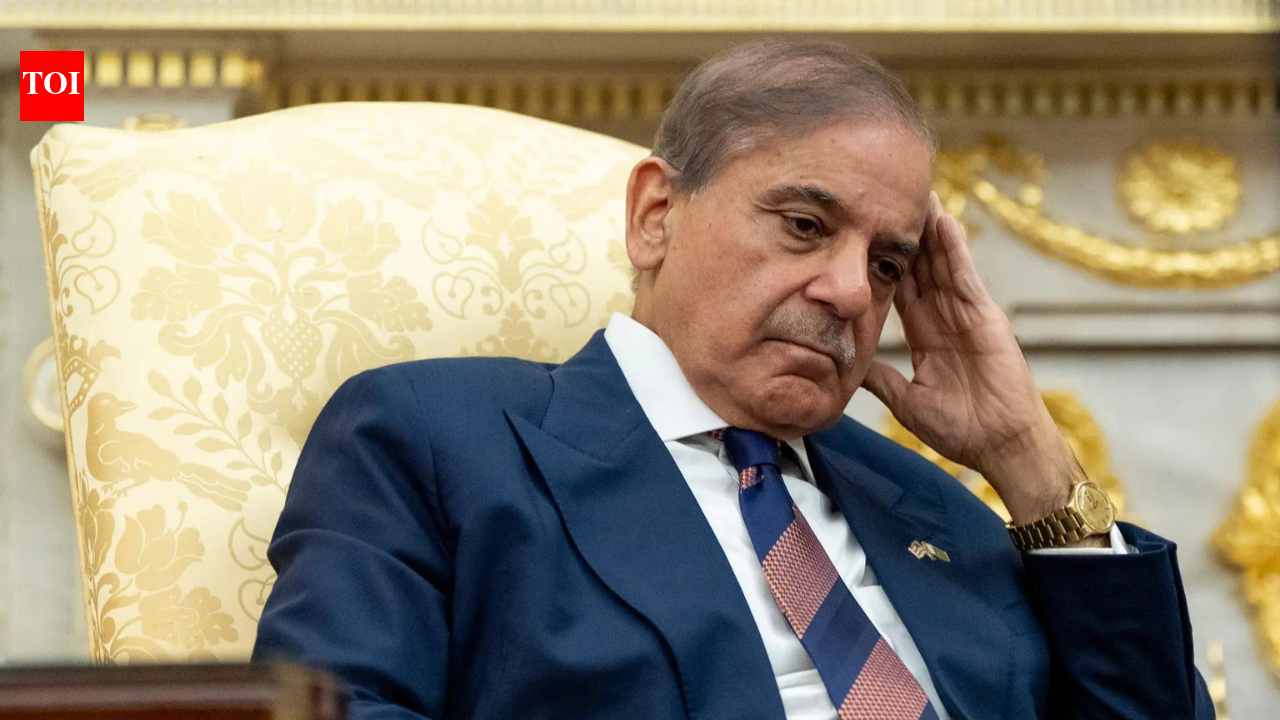
Pakistan on Monday announced a series of austerity measures aimed at reducing fuel consumption, including temporary school closures, reduced government fuel allowances and a four-day workweek for public offices, as the ongoing conflict in the Middle East threatens energy supplies.Pakistan’s prime minister Shehbaz Sharif said the measures were being introduced to conserve fuel and manage potential supply disruptions linked to the regional conflict, according to Reuters.In a televised address, Sharif announced that all schools across the country would remain closed for two weeks starting March 16, while universities and other higher education institutions would shift to online classes immediately.The government will also reduce fuel allowances for government departments.“In the next 2 months, government departments will get a 50% cut in fuel allowances,” Sharif said.To further reduce fuel use, the government will allow half of its employees to work remotely.“Government offices will operate four days a week to save fuel, and the decision would exclude banks,” Sharif said.Under the plan, 50% of government staff will work from home, while public offices will operate four days a week, with banks exempt from the arrangement.According to Reuters, the measures are part of Pakistan’s effort to curb fuel consumption as the conflict in the Middle East threatens to disrupt global energy flows and drive up oil prices.Pakistan relies heavily on imported fuel, making it particularly vulnerable to global energy shocks. The government’s latest steps are intended to reduce domestic demand and manage fuel supplies during the ongoing regional crisis.


Source link

NFL Trade News: Atlanta Falcons linked to $124M Miami Dolphins quarterback | NFL News


NFL Trade News: Atlanta Falcons linked to $124M Miami Dolphins quarterback
NFL Trade News: Atlanta Falcons linked to $124M Miami Dolphins quarterback (Image via Getty: Atlanta Falcons logo and Miami Dolphins logo)

ESPN’s Marcel Louis-Jacques reports the Miami Dolphins will release their longstanding quarterback, Tua Tagovailoa, after the start of the new league year [March 11 at 4:00 PM ET]. The move will result in an NFL record $99M in dead money against the salary cap.According to Spotrac, the 28-year-old signal caller signed a four-year contract worth $212M with Miami in 2024, which included a $42M signing bonus and $167M in guaranteed money. For the 2026 season, the quarterback was projected to earn a base salary of $39M, a $15M signing bonus, and a $250,000 workout bonus, while carrying a cap hit of $56M and a dead cap value of $99M. As of this publication, his career earnings are $124M.This blockbuster move leaves Tagovailoa with three landing spots: the Atlanta Falcons, the Minnesota Vikings, and the New York Jets. For now, it’s the QB room with the expected official release of $100M backup Kirk Cousins.

Falcons projected QB Tua Tagovailoa cost Miami $99M in dead money

A week before Tagovailoa’s blockbuster release announcement, ESPN’s Dan Graziano predicted that it would happen. Miami tried to negotiate trade talks with other NFL teams, but Graziano was skeptical. He was expecting the Dolphins to release the QB by the third day of the league year [when $3M of his 2027 salary would be fully guaranteed]. He predicted Miami would designate him as a post-June 1 release to help defray $99.2M in dead money. They released him two days before the start of the league year. This move cost Miami an NFL-record $99.2M in dead money.The Dolphins told NFL Insider Adam Schefter that the signal-caller’s release would be designated post-June 1, giving the franchise the opportunity to split the dead money over two years: $67.4M dead hit in 2026 and $31.8M dead hit in 2027.Now that he’s been released two days prior. This gives the Atlanta Falcons a green signal in case they want to sign him as backup.

Watch for Dolphins QB Tua Tagovailoa in Atlanta Falcons

ESPN’s Jeremy Fowler’s notebook contains, “Something an NFL head coach said to me, unsolicited: Watch for Tua in Atlanta.” The Falcons are set to release Kirk Cousins on the first day of the new league year, GM Ian Cunningham confirmed in February at the NFL Combine. Cousins is now an unrestricted free agent. Anyhow, this leaves an empty space for a quarterback looking to revamp his image after a 15-interceptions season. Having played for the same team for six seasons, he carries extensive experience. If he brings his lessons to a team needing to revamp its 8-9 record, their shared goals could turn the 2026 season into a year of redemption.But what would be his role there?

Tua Tagovailoa could become a bridge quarterback for Michael Penix Jr in Atlanta

Heavy Sports’ Shane Shoemaker reports Atlanta could be looking for a backup to Michael Penix Jr. or an eventual replacement, even if that comes on a short-term deal. Penix is currently rehabbing from ACL surgery.As per his recovery timeline, the 25-year-old Indiana alumnus is projected to return by Week 1 of the 2026 season. If he is not cleared, the Dolphins QB can serve as a bridge quarterback and play the first few games in place of Penix, then, when the 25 YO signal caller is cleared, he can step in and take over the starter QB’s role.CBS Sports’ John Breech reports that Penix is left-handed and so is Tagovailoa. So, bringing in another left-hander for a QB competition would be a plus for the Falcons. They would not have to make any major changes on the offensive side.

Kevin Stefanski may decide who the starting quarterback will be for the Atlanta Falcons

Atlanta’s President of Football, Matt Ryan, told CBS Sports that new head coach Kevin Stefanski, who coached the Cleveland Browns in 2025, would be choosing the starting quarterback for 2026. “Kevin’s responsibility is to be the head coach of the football team, and he’s going to let you know who our starters are and who our starters are not. It’s not my place to go in there,” Ryan said during Super Bowl week. So, if they sign Tagovailoa, Stefanski may have to decide between Penix and the Miami QB.The Alabama alumnus recorded 2,660 passing yards, 20 touchdowns, and 15 interceptions in the 2025 season. He has one Pro Bowl selection [2023].What remains to be seen is whether the Falcons sign him…


Source link

From apology to choosing Mojtaba Khamenei: The growing rift between Iranian leadership


From apology to choosing Mojtaba Khamenei: The growing rift between Iranian leadership

As the conflict involving the United States, Israel and Iran enters its second week, Iran’s leadership is showing visible signs of internal strain, even as officials continue to publicly reject calls from Washington for an “unconditional surrender” and vow to continue fighting.The divisions have come into sharper focus after the death of Iran’s supreme leader Ayatollah Ali Khamenei in a joint US-Israeli strike on February 28, an event that triggered a leadership transition and competing responses within Tehran’s political and security establishment.

Iran Issues Chilling Warning As Mojtaba Khamenei Takes Power; ‘IRANIANS MAY FACE…’ | Watch

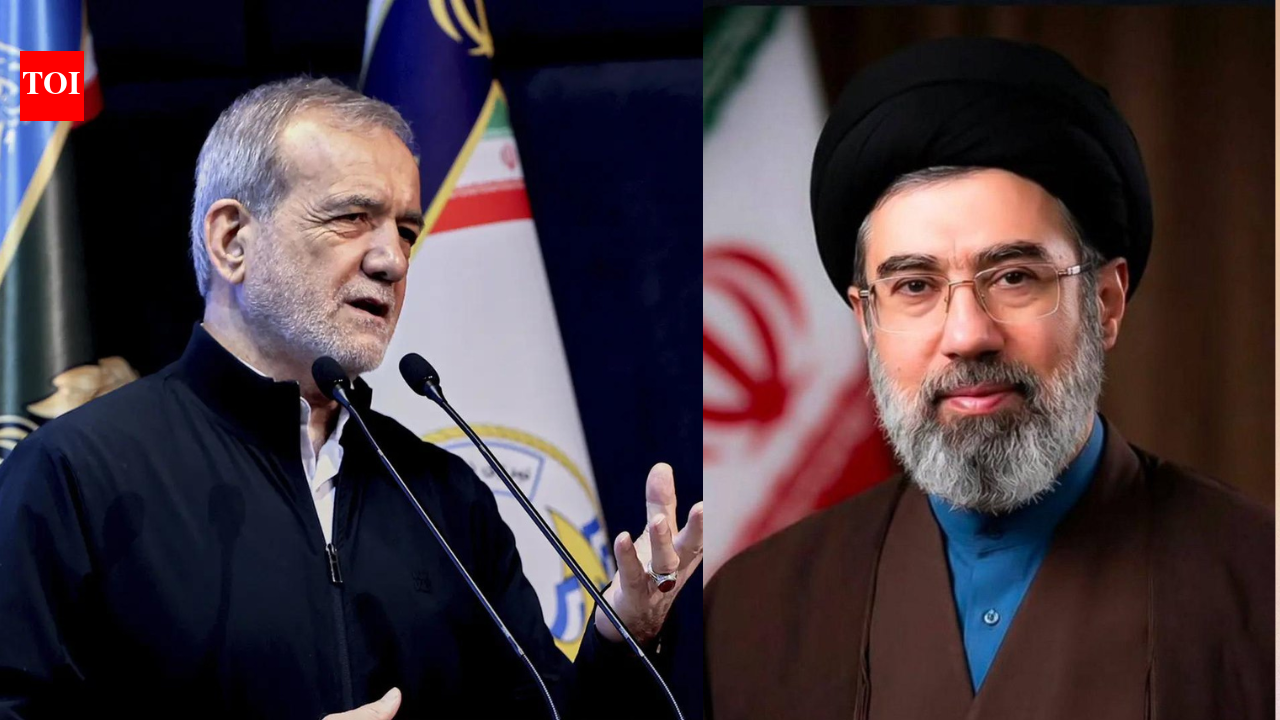
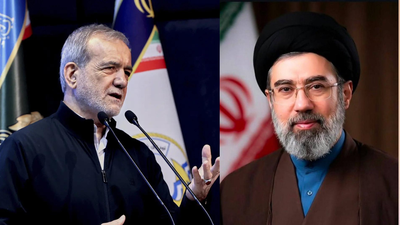
Three developments in the days since, Iranian President Masoud Pezeshkian’s apology to neighbouring countries, the appointment of Mojtaba Khamenei as the new supreme leader, and the growing influence of the Islamic Revolutionary Guard Corps, have highlighted the emerging fault lines between moderates, clerics and hardline security factions.

Apology that triggered backlash

Following Khamenei’s assassination, Iran formed a three-member interim leadership council under constitutional provisions to exercise supreme authority until a successor was selected. The council included Pezeshkian, judiciary chief Gholam-Hossein Mohseni-Ejei and senior cleric Ayatollah Alireza Arafi, according to AP. The leadership initially promised swift retaliation and launched missile and drone attacks on Israeli and American targets, as well as infrastructure such as airports, oil refineries and hotels in Gulf countries including Bahrain, Qatar, Saudi Arabia and the UAE.Divisions surfaced publicly on March 7 when Pezeshkian issued a pre-recorded state television address apologising for strikes that hit neighbouring states.“I personally apologise to neighbouring countries that were attacked by Iran. Our commanders, leaders and loved ones lost their lives due to the brutal aggression that took place,” he said. “We didn’t intend to violate neighbouring countries. As I have said many times, they are our brothers,” according to Reuters.The remarks prompted immediate criticism from hardliners and security officials.Parliament speaker Mohammad Bagher Ghalibaf said on X that “as long as the presence of US bases in the region continues, the countries will not enjoy peace.” Lawmaker Hamid Rasaei called Pezeshkian’s stance “unprofessional, weak and unacceptable,” arguing that countries hosting US bases should apologise instead.Mohseni-Ejei also contradicted the president, stating that regional states had allowed their territory to be used for attacks on Iran and declaring that “heavy strikes on those targets will continue.”The Revolutionary Guards issued their own warning that if “hostile actions continue, all military bases and interests” of the US and Israel across the region would be Iran’s “primary targets,” according to the Financial Times.Facing the backlash, Pezeshkian quickly revised his position. Later on March 7 he wrote on X that Iran “had not attacked our friendly and neighbouring countries; rather, we have targeted US military bases, facilities, and installations in the region.”In another state television appearance on March 8, he said his earlier remarks had been “misinterpreted by the enemy that seeks to sow division with neighbours.”

Mojtaba Khamenei’s appointment

A day later, Iran’s leadership transition took another contentious turn with the selection of Mojtaba Khamenei as the new supreme leader.According to The Economist, the move was strongly backed by hardline clerics and the IRGC but faced resistance from reformist and moderate figures who argued that the younger Khamenei lacked the senior clerical standing and political experience usually expected of the position.Critics also warned that elevating the son of the former leader contradicted the ideals of the 1979 Islamic Revolution, which overthrew the hereditary Pahlavi monarchy and rejected dynastic rule.Some figures within Tehran’s establishment had argued against quickly appointing a successor at all. Mohsen Sazegara, a founding member of the IRGC who later went into exile, told Bloomberg that a faction led by security council chief Ali Larijani preferred extending the interim council’s authority rather than rushing the succession process.

IRGC’s expanding role

Despite the objections, Mojtaba Khamenei’s longstanding ties with the Revolutionary Guards proved decisive. Bloomberg reported that he had built deep influence within IRGC command networks, including involvement in shaping senior appointments and security decisions.The war has also strengthened the Guards’ position within the political system. The Economist reported that the organisation is operating with unprecedented autonomy, in some cases overshadowing the traditional clerical leadership in directing military strategy.Reuters reported that senior ayatollahs urged the 88-member Assembly of Experts to accelerate its decision-making after Khamenei’s death, while Iran International said IRGC pressure on members intensified during emergency meetings.The outcome, analysts say, underscores where real authority lies during the conflict. “Wartime tends to clarify power structures, and in this case the decisive voice is not that of the civilian leadership but of the IRGC,” Middle East Institute fellow Alex Vatanka told Reuters.

Uncertain leadership during wartime

Even as Iran’s leadership remains united in rejecting US and Israeli demands, the debates over regional attacks, the leadership succession and the expanding role of the Revolutionary Guards suggest growing differences over how the war should be fought.With Iran continuing to face sustained military pressure from the US and Israel, Mojtaba Khamenei’s immediate challenge will be consolidating authority while navigating a conflict that has already exposed deep divisions within Tehran’s leadership structure.


Source link

PM Modi speaks with Nepal’s newly elected youth leader Balendra Shah, Rabi Lamichhane | India News


PM Modi speaks with Nepal's newly elected youth leader Balendra Shah, Rabi Lamichhane

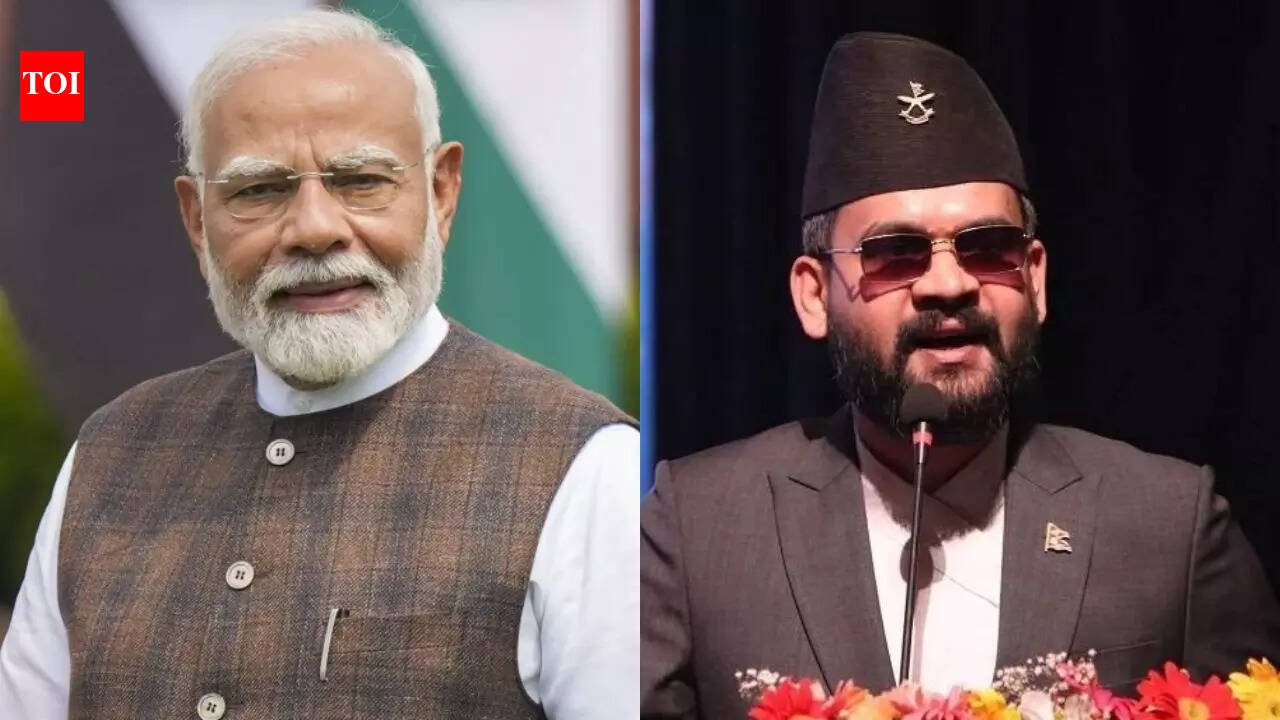
NEW DELHI: Prime Minister Narendra Modi on Monday spoke with Nepal’s newly elected leader Balendra Shah, who is set to become the Himalayan nation’s youngest Prime Minister.“Had warm telephone conversations with Mr. Rabi Lamichhane, Chairman of the Rastriya Swatantra Party (RSP) and Mr. Balendra Shah, Senior Leader of the RSP,” wrote PM Modi on X.PM Modi said he convyed India’s “commitment to work with them for mutual prosperity, progress and well-being of our two countries”. “Congratulated both leaders on their electoral victories and RSP’s resounding success in the Nepal elections. Conveyed my best wishes for their forthcoming new Government and India’s commitment to work with them for mutual prosperity, progress and well-being of our two countries. I am confident that with our joint endeavours, India and Nepal relations will scale new heights in the years ahead,” PM Modi further wrote.

Nepal Poll Results: India Watches Closely As Border Dispute And ‘Big Brother’ Charge Loom

Nepal’s political landscape witnessed a dramatic transformation, as newly elected youth leader Balendra “Balen” Shah unseated veteran politician and former Prime Minister KP Sharma Oli from his parliamentary stronghold. A structural engineer by profession who first rose to prominence as the mayor of Kathmandu, Shah has now made history four years later by becoming the youngest person ever to claim Nepal’s Prime Ministership.Contesting from Jhapa-5, the former rapper and capital city mayor defeated his long-time rival Oli by a resounding margin, the Election Commission of Nepal announced.Shah, a senior leader of the Rastriya Swatantra Party (RSP), secured 68,348 votes, nearly four times more than the 18,734 votes garnered by the 74-year-old Marxist leader.


Source link

2020 Delhi riots case: Court grants 10-day interim bail to Sharjeel Imam | India News


2020 Delhi riots case: Court grants 10-day interim bail to Sharjeel Imam

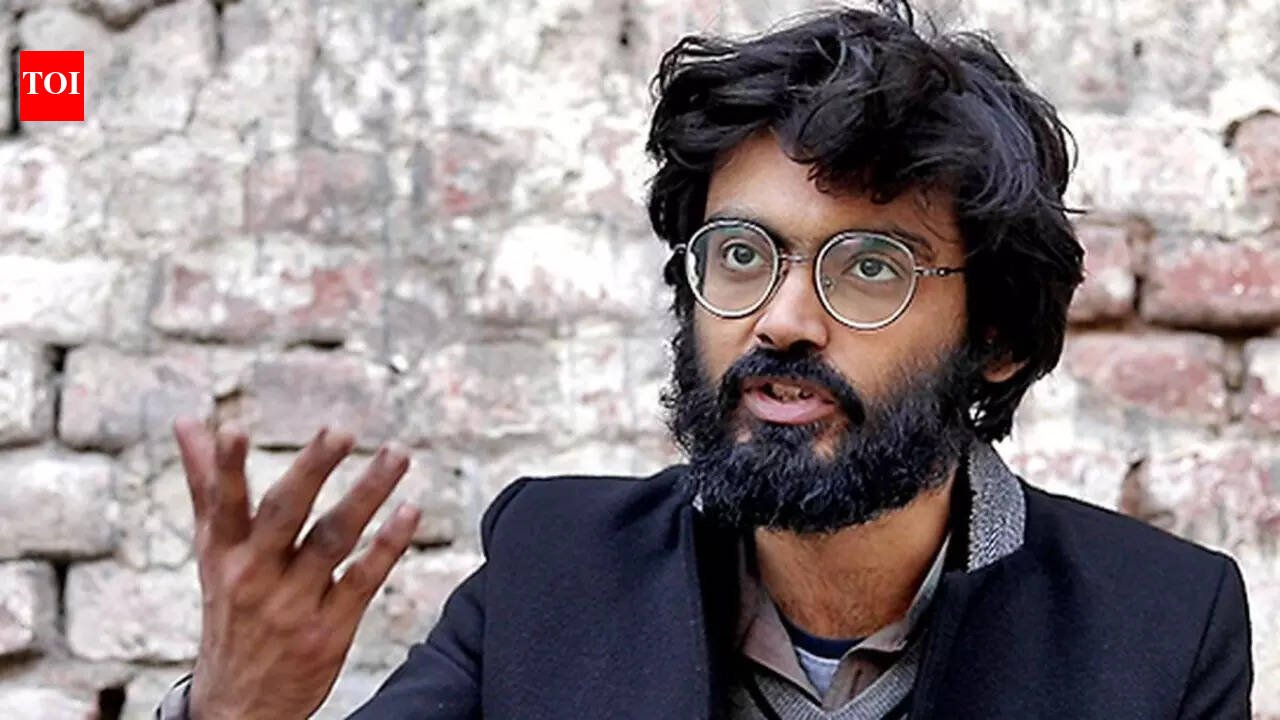
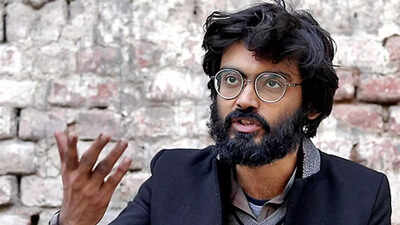
NEW DELHI: A Delhi court on Monday granted 10-day interim bail to Sharjeel Imam in a case linked to the 2020 Delhi riots, for attending his brother’s wedding.Additional Sessions Judge Sameer Bajpai was hearing the interim bail application filed by Imam, seeking relief for six weeks to attend the marriage scheduled this month. The court granted interim bail from March 20 to 30.Imam is an accused in the case pertaining to the February 2020 riots in northeast Delhi that left 53 people dead and more than 700 injured. The interim bail comes months after the Supreme Court of India rejected Imam’s regular bail plea in January this year. At the time, the top court had refused bail to Imam and fellow student activist Umar Khalid in the Delhi riots conspiracy case.In its January 6 order, the Supreme Court said that delay in trial and long incarceration cannot be a “trump card” to secure bail in cases registered under the stringent Unlawful Activities (Prevention) Act. The court observed that while personal liberty is important, it cannot be the sole factor when allegations involve serious offences affecting public order and national security.The bench of Justices Aravind Kumar and N V Anjaria rejected the bail pleas of Khalid and Imam but granted relief to five co-accused in the case. Those granted bail included Gulfisha Fatima, Meeran Haider, Shifa-ur-Rehman, Mohd Saleem Khan and Shadab Ahmad.The court said Khalid and Imam stood on a different footing compared with the other accused due to the “hierarchy of culpability”. Both activists have spent more than five years in jail in connection with the case.The riots erupted in February 2020 during protests against the Citizenship (Amendment) Act, 2019, leading to communal clashes in parts of northeast Delhi during the visit of then US President Donald Trump to India.The Supreme Court had said the two accused could apply for bail again after one year or after all protected witnesses in the trial had been examined, whichever occurs earlier.The top court also said that the mere passage of time cannot automatically justify bail in cases involving offences under special statutes such as UAPA. It stressed that courts must balance constitutional protections under Article 21 with Parliament’s intent behind stricter bail conditions in laws dealing with national security related offences.


Source link

Sam Altman replies to Nvidia CEO Jensen Huang’s expanded ‘Like Mad’ for OpenAI comment on stage; says ‘very …’


Sam Altman replies to Nvidia CEO Jensen Huang’s expanded 'Like Mad' for OpenAI comment on stage; says ‘very …’

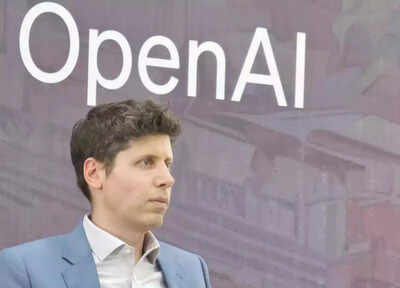
OpneAI CEO Sam Altman has publicly thanked Nvidia CEO Jensen Huang after the Nvidia CEO revealed the aggressive efforts to expand computing capacity for ChatGPT-maker OpenAI across multiple cloud platforms. In a post shared on social media platform X (formerly known as Twitter) Altman wrote, “Very grateful to Jensen for working to expand Nvidia’s capacity at AWS so much for us!” The remakes made by Altman came shortly after Huang confided that Nvidia will invest $30 billion in OpenAI, describing it as one of the last opportunities to back a ‘consequential company’ before it goes public. Huang made the comments earlier this month at the Morgan Stanley Technology, Media & Telecom Conference, where he emphasized Nvidia’s role in scaling AI infrastructure.

Expanding across clouds

CEO Jensen Huang also explained that Nvidia has been working ‘like mad’ in order to ramp up OpenAI’s computing power not only on Microsoft Azure, but also on Amazon Web Services (AWS) and Oracle Cloud Infrastructure. This expansion is made is make sure that OpenAI has the GPU resources required to support its rapidly growing AI systems.

‘Biggest Mistake Young People Make…’: OpenAI CEO Sam Altman Shares Blunt Take On AI At IIT Delhi

Beyond OpenAI, Nvidia is also expanding infrastructure support for other leading AI companies, including Anthropic and Meta Platforms, as competition intensifies to secure the computing backbone for next-generation AI models.

Nvidia is reportedly planning new chip for OpenAI

Nvidia is said to be working on a new processor that will be built specifically for AI inference computing – a type of processing that allows AI models to respond to user queries – specifically for OpenAI. Reportedly, the announcement is expected at Nvidia’s GTC developer conference in San Jose next month, and ChatGPT-maker has already agreed to become one of its largest customers.According to a report by The Wall Street Journal, this essentially marks marking one of the most significant shifts in the Nvidia’s business strategy since the start of the AI boom. This is because Nvidia has long dominated the market for GPUs – specialised chips used for training AI models. These include its Hopper, Blackwell and Rubin GPU series, and reportedly most analysts estimate Nvidia controls over 90% of the GPU market.But GPUs were designed with training in mind, and now the AI industry is shifting from building models to actually running them, essentially limiting their use. The new processor is designed around inference computing rather than training. Nvidia will incorporate technology from Groq, a chip startup it acquired in a roughly $20 billion deal late last year.


Source link

When will the Iran war end? Trump hints at ‘mutual’ decision with Netanyahu


When will the Iran war end? Trump hints at 'mutual' decision with Netanyahu

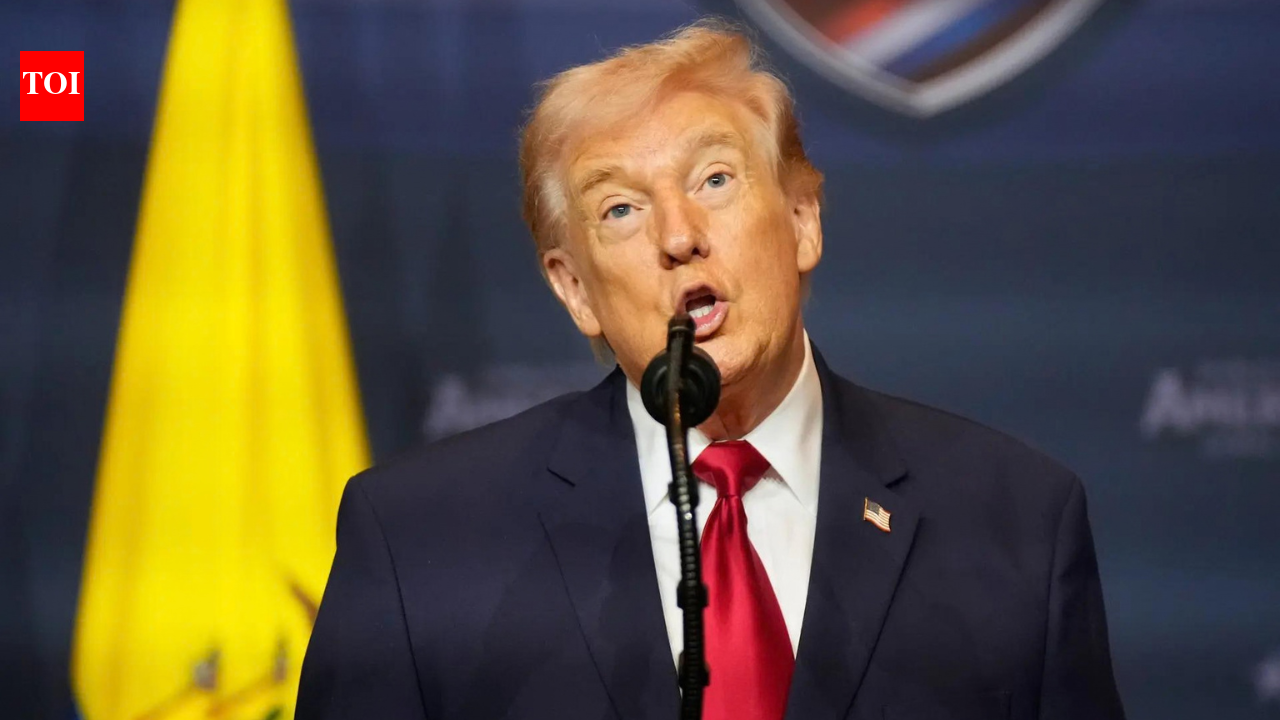
When will the Iran war end? The crisis in the region scaled-up after heavy joint military strikes by the United States and Israel on Iran, which killed Iran’s longest-serving Supreme Leader Ayatollah Ali Khamenei in the initial strikes of a Donald Trump designed operation and backed by Israeli Prime Minister Benjamin Netanyahu.Speaking to The Times of Israel on Sunday, US President Trump said the decision to end the war with Tehran would be taken “mutually” in consultation with Netanyahu, one of Washington’s closest allies in the Middle East.

Qatar Emir Makes ‘URGENT CALL’ To Trump, Warns Of ‘DANGEROUS ESCALATION’; ‘IRAN WAR CAN GO…’

In the brief telephonic interview, Trump also claimed that the Islamic Republic under Khamenei would have destroyed Israel if he and Netanyahu had not intervened.“Iran was going to destroy Israel and everything else around it… We’ve worked together. We’ve destroyed a country that wanted to destroy Israel,” he said.“I think it’s mutual… a little bit. We’ve been talking. I’ll make a decision at the right time, but everything’s going to be taken into account,” he responded, indicating that while Netanyahu will have input, the US president will make the final decision.When asked whether Israel could continue the war against Iran even after the US decides to stop its strikes, Trump avoided discussing the possibility and said, “I don’t think it’s going to be necessary.”Trump has also avoided giving a clear timeline for how long the war will continue. However, White House press secretary Karoline Leavitt said on Friday that Washington expects the conflict to last between four and six weeks.Trump’s remarks in the telephonic interview suggested that Israeli Prime Minister Benjamin Netanyahu could have major influence on his decision-making during the war. The US and Israel launched the joint military operation on February 28 with strikes that killed Iran’s Supreme Leader Ali Khamenei.Trump’s comments came hours after Iran announced that Ali Khamenei’s son, the hardline cleric Mojtaba Khamenei, would succeed him as the new leader of the Islamic Republic.


Source link