For a young cricketer, there are moments that shape belief forever. For India’s Under-19 World Cup-winning captain Ayush Mhatre, one such unforgettable chapter unfolded in Mumbai when none other than Sachin Tendulkar handed him a deeply personal gift — a signed Test jersey worn by the legend during his final international series. It was not just a meeting of generations, but a powerful passing of the torch.
Sachin Tendulkar gifts signed jersey from his last Test series to Ayush Mhatre
Fresh from leading India Under-19 cricket team to their sixth U19 World Cup title in Zimbabwe, Mhatre returned home to widespread admiration. India had outplayed England Under-19 cricket team in a high-pressure final, with Mhatre’s calm leadership and tactical maturity standing out throughout the tournament.
While accolades poured in from fans and experts alike, nothing compared to the personal recognition that awaited him. Tendulkar, a name synonymous with Indian cricketing dreams, chose to honour the teenager in a way that words alone never could.
What made the gesture extraordinary was the story stitched into the fabric. Tendulkar revealed that the jersey he gifted was one he wore during his final Test series for India — a symbol of closure for one journey and the beginning of another. Along with the jersey came a handwritten note, simple yet profound, encouraging Mhatre to stay grounded and focused amid growing attention.
“Keep working hard. Focus. Don’t get carried away by people. Keep practising,” Tendulkar advised in the video shared online.
“There will be plenty of distractions, whatever they may be. Dear Ayush, wishing you all the success in your career,” added the former India skipper.
For Mhatre, the moment went beyond celebration. It was a reminder that success at the junior level is only the first step in a long and demanding journey. Tendulkar’s message underlined values that defined his own career — discipline, humility, and relentless preparation. Those close to Mhatre say the young captain was visibly moved, aware that the jersey carried decades of Indian cricketing history. In a country where Tendulkar remains an eternal benchmark, receiving such a gift is both an honour and a responsibility.
In a staggering display of modern T20 power-hitting, New Zealand sent a clear message to the rest of the cricketing world at the M.A. Chidambaram Stadium. During the 11th match of Group D in theICC Men’s T20 World Cup 2026, the Black Caps orchestrated a clinical 10-wicket demolition of the United Arab Emirates, chasing down a competitive target with nearly five overs to spare.
UAE puts up a competitive total against New Zealand
The evening began with a sense of optimism for the UAE. After electing to bat, the Associate nation put forth a spirited performance that momentarily silenced the Chennai crowd. Led by a resilient Muhammad Waseem, who remained unbeaten on 66 off 45 balls, the UAE navigated the New Zealand pace attack with surprising composure. A crucial 100-run partnership for the second wicket between Waseem and Alishan Sharafu (55 off 47) laid a solid foundation.
Despite a late flurry of wickets—with Matt Henry claiming 2/37 and Mitchell Santner strangling the middle order with an economical 1/23—the UAE managed to post a formidable 173/6. Against most sides, a total north of 170 in Chennai offers a fighting chance. However, the “Chepauk” surface, known for its spin, played unexpectedly true, setting the stage for a Kiwi masterclass.
New Zealand storm past UAE as Tim Seifert and Finn Allen unleash batting mayhem
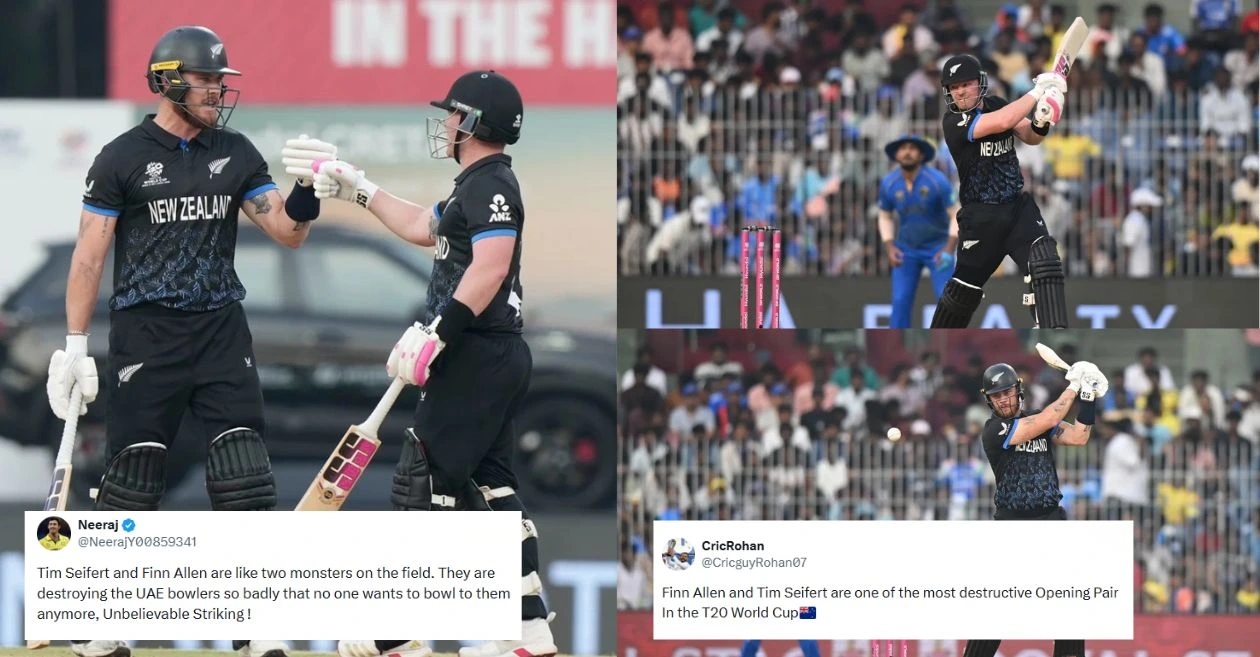
What followed the innings break was not a chase, but a total eclipse. New Zealand openers Tim Seifert and Finn Allen transformed the second innings into a highlight reel, treating the UAE bowling attack with utter disdain. The duo utilized the Powerplay to perfection, racing to 78/0 within the first six overs—the highest of the tournament thus far.
Tim Seifert was the primary aggressor early on, reaching his half-century in just 23 deliveries. His unbeaten knock of 89 off 42 balls was a clinic in innovative stroke play, peppered with 12 boundaries and 3 towering sixes. At the other end, Finn Allen provided the brute force. Allen’s 84 off 50 balls featured five massive sixes that cleared the boundary with ease, leaving the UAE bowlers like Muhammad Rohid (0/51) and Junaid Siddique (0/47) with no answers.
The match flow was entirely one-sided. New Zealand crossed the 100-run mark in just 8.3 overs, effectively ending the contest before the second drinks break. A desperate DRS review by the UAE in the 7th over against Seifert returned an umpire’s call, symbolizing a night where nothing went the way of the underdogs.
Fans took to social media to celebrate the “New Zealand Hurricane,” noting that the 10-wicket win (with 28 balls remaining) is a massive boost to the Black Caps’ Net Run Rate. This victory firmly establishes New Zealand as the team to beat in Group D, while the UAE will look to take heart from their batting effort as they head into their next fixture.
Kiwis on fire at Chepauk! Finn Allen & Tim Seifert smash a blistering opening stand, putting NZ firmly in control chasing UAE’s competitive total in #T20WorldCup2026. Captain Waseem’s gritty fifty gave UAE their highest WC score, but stunning fielding (that Chapman-Mitchell relay… pic.twitter.com/PnsvKv2SWN
Tim Seifert and Finn Allen are like two monsters on the field. They are destroying the UAE bowlers so badly that no one wants to bowl to them anymore, Unbelievable Striking !#T20WorldCup#NZvsUAEpic.twitter.com/e91ynmdVR1
The landscape of international cricket is shifting. Once seen as mere participants, Associate Nations have evolved into genuine giant-killers, particularly in the shortest format of the game. As the ICC Men’s T20 World Cup 2026 unfolds across the historic grounds of India and Sri Lanka, the narrative of “minnows” is being replaced by one of tactical brilliance and high-octane performance.
For many years, these nations fought for a seat at the table; now, they are the ones setting the menu. From the clinical professionalism of the Netherlands to the fearless aggression of Scotland, Associate teams have racked up an impressive tally of victories, often at the expense of established Test-playing nations.
Top 5 Associate teams with most wins in the T20 World Cup
While some of these teams have recently attained Full Member status (like Afghanistan), their legacy and a significant portion of their win tally were built during their years as Associate members, serving as a blueprint for the rising tide of global cricket.
1. Netherlands (11 Wins)
(Image source: X)
Netherlands currently sit at the pinnacle of Associate success in the T20 World Cup. Following their recent seven-wicket victory over Namibia at the Feroz Shah Kotla in Delhi, the Dutch have officially recorded 11 wins in the tournament’s history.
Their journey is defined by a “total cricket” philosophy. Perhaps their most iconic moment remains the 2009 opening match at Lord’s, where they stunned England on the final ball. Since then, they have become a model of consistency. In the 2022 edition, they famously defeated South Africa, a result that dumped the Proteas out of the tournament and paved the way for Pakistan’s final run. Led by tactical captains like Scott Edwards and bolstered by all-rounders like Bas de Leede, the Netherlands have transformed from an underdog into a side that no Full Member can afford to take lightly.
2. Scotland (8 Wins)
(Image source: X)
Scotland have rapidly ascended the ranks, particularly in the last five years. Following their historic 2026 performance at Eden Gardens, where they became the first Associate nation to cross the 200-run mark in a World Cup innings (207/4 against Italy), their win tally has reached 8.
The Scots play a brand of cricket that is both aggressive and technically sound. Their “Golden Generation,” featuring players like George Munsey, Richie Berrington, and Michael Leask, has consistently pushed the boundaries. Their 2021 campaign was a watershed moment, as they topped their group by defeating Bangladesh, Oman, and Papua New Guinea to reach the Super 12s. This success isn’t accidental; it is the result of a robust domestic structure and a fearless approach to the powerplay overs.
3. Afghanistan (5 Wins as Associate)
(Image source: X)
While Afghanistan is now a Full Member and a legitimate semifinalist, their initial impact on the world stage was forged as an Associate powerhouse. During their tenure as an Associate nation, they secured 5 key wins in the T20 World Cup.
The Afghan story is one of the most romantic in sports history, rising from refugee camps to the upper echelons of the ICC rankings. Their early victories against the likes of Hong Kong, Zimbabwe, and Scotland laid the foundation for the world-class spin attack they boast today. Players like Rashid Khan and Mohammad Nabi first announced themselves during these Associate years, proving that talent knows no boundaries. Their transition from “top Associate” to “Full Member threat” was arguably the fastest in the history of the sport.
The Eagles of Namibia are the newest heavyweights on this list, but their impact has been immediate. With 5 wins across their recent World Cup appearances, Namibia has proven to be an incredibly disciplined unit.
Their debut in 2021 was nothing short of a fairy tale. Under the leadership of Gerhard Erasmus and the all-round excellence of David Wiese, they defeated Ireland and the Netherlands to qualify for the Super 12 stage in their very first attempt. Namibia’s strength lies in their bowling variations and their ability to stay calm under pressure. Their win against Sri Lanka in the 2022 opener remains one of the greatest upsets in the history of the competition, proving that on their day, they can dismantle even the most seasoned batting lineups.
5. Ireland (3 Wins as Associate)
(Image source: X)
Ireland are often credited with starting the Associate revolution. Before they were granted Test status in 2017, they secured 3 significant wins in the T20 World Cup as an Associate side.
The Irish “giant-killing” DNA was established in the 2009 edition when they defeated Bangladesh to reach the Super 8s. While their T20 record as an Associate was slightly overshadowed by their legendary 50-over World Cup exploits, their presence always signalled danger for the established elite. Even after becoming Full Members, they have continued this trend, famously beating England in the 2022 T20 World Cup. Their legacy as an Associate nation provided the roadmap for teams like the USA and Oman to believe that the gap between the “big” and “small” nations is closing.
The 2026 T20 World Cup is proving that Associate cricket is no longer a side-show; it is a vital part of the main event. With teams like the Netherlands and Scotland leading the charge, the era of predictable group stages is officially over.
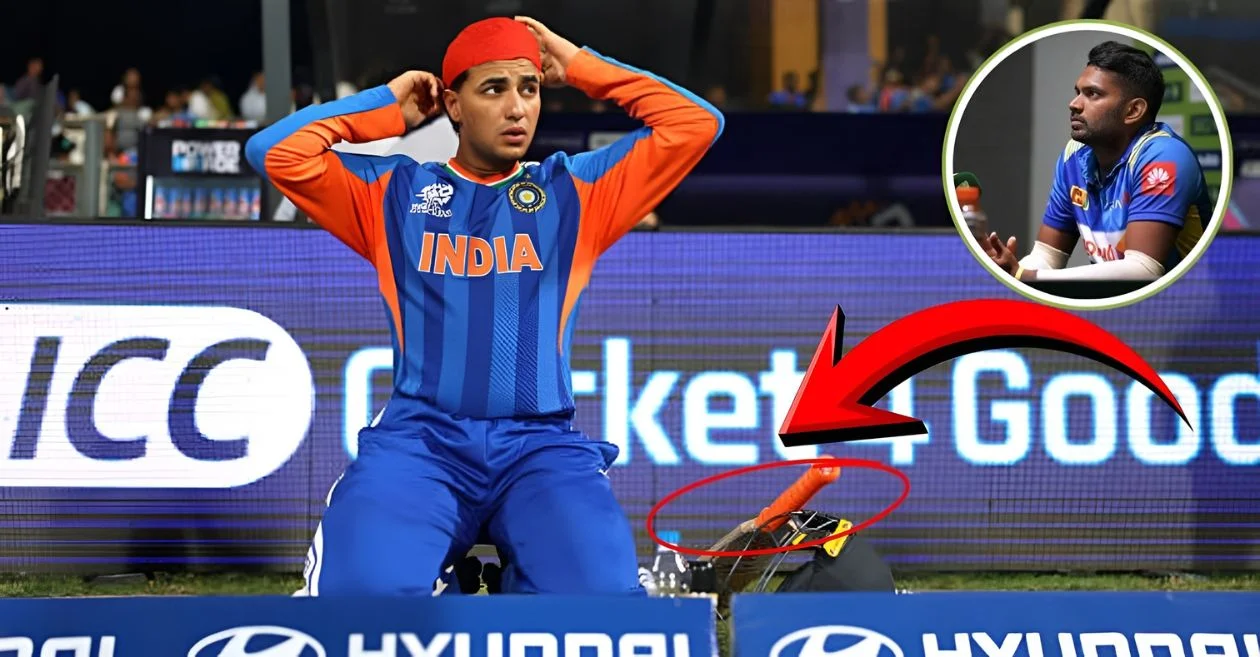
In a T20 World Cup 2026campaign where the co-hosts are looking to reclaim their former glory on home soil, Sri Lanka has made a resounding statement with their clinical efficiency. Under the tactical leadership of Dasun Shanaka, the ‘Lions” have utilized their spin-friendly home conditions in Colombo and Kandy to dismantle early opposition, proving that they remain a formidable force in the shortest format. However the headlines have been dominated by Bhanuka Rajapaksa‘s controversial claims about ‘rubber-layered” Indian bats.
T20 World Cup 2026: Sri Lanka’s Bhanuka Rajapaksa raises concerns over special bats used by Indian players
The controversy reached a boiling point on February 10, 2026, when Rajapaksa suggested in an interview with News Wire that Indian batters are operating with equipment that defies standard physics. Amidst a World Cup where sub-continental pitches are producing high-scoring thrillers, the Sri Lankan power-hitter expressed his disbelief at the ease with which Indian players are clearing the ropes.
“Indian players have bats that are far superior to the best bats we get. It feels as though a layer of rubber has been applied. I can’t imagine how that’s possible. These bats can’t even be bought by others, all players know this,” Rajapaksa claimed.
While the ICC maintains strict standards for all participating nations, these comments have sparked a massive debate over whether the technological gap in bat manufacturing has created an uneven playing field in modern T20 cricket.
“Indian players have bats that are far superior to the best bats we get. It feels as though a layer of rubber has been applied. I can’t imagine how that’s possible. These bats can’t even be bought by others — all players know this,” Bhanuka Rajapaksa said in an interview,… pic.twitter.com/RWaJGbaQ7F
Sri Lanka’s journey in the T20 World Cup 2026 began with a clinical 20-run victory over Ireland on February 8, 2026. The match perfectly illustrated the “Lankan Blueprint”:
The Spin Web:Wanindu Hasaranga and Maheesh Theekshana combined for six wickets, suffocating the Irish batters on a surface that offered significant turn and grip.
The Mendis Partnership: The victory was built on a vital 67-run stand between Kusal Mendis and Kamindu Mendis, with the latter smashing a rapid 44 off 19 balls to propel the score to 163.
Current Standings: Following their opening win, Sri Lanka sits comfortably at the top of Group B with 2 points and a healthy Net Run Rate (NRR) of +1.000.
The co-hosts have shown remarkable adaptability, moving from the humidity of Colombo to the cooler climes of Kandy for their upcoming fixtures. With a well-balanced attack featuring the pace of Matheesha Pathirana and the experience of spinners, Sri Lanka have emerged as a team that knows exactly how to exploit their home advantage.
The BCCI’s 2025-26 central contracts announcement on February 9, 2026, has set a new benchmark for rewarding performance, withJemimah Rodrigues claiming her rightful place among India’s elite. While the roster celebrates the heroes of India’s first-ever World Cup title, it also sends a stern message regarding fitness and availability, as seen in the high-profile omissions of several established stars.
Jemimah Rodrigues joins Harmanpreet Kaur and Smriti Mandhana in elite Grade A tier
Rodrigues has officially ascended to Grade A, joining the upper echelon of Indian cricket alongside captain Harmanpreet Kaur, vice-captain Smriti Mandhana and star all-rounder Deepti Sharma. This promotion is a direct reward for her stunning turnaround in form that anchored India’s successful ODI World Cup 2025 run.
Rodrigues was the tournament’s tactical heartbeat, most notably smashing a semi-final century that knocked out the perennial favorites, Australia. By elevating her to the INR 50 lakh bracket, the BCCI has recognized her transition into a senior leader and a big-match player alongside Harmanpreet and Smriti. Her promotion headlines a broader shift in the squad hierarchy, where consistent impact on the world stage, specifically her 300+ tournament runs, has been prioritized over historical seniority.
Shreyanka Patil and Pooja Vastrakar faces omission from BCCI central contracts 2025-26
In perhaps the most debated move of the cycle, star off-spinner Shreyanka Patil and pace-bowling all-rounder Pooja Vastrakar have been excluded from the central contract list entirely. Both held Grade C retainers last year but spent nearly 14 months combined in rehabilitation following multiple injuries.
Despite Patil’s recent heroics in the WPL, the BCCI has opted for a cautious ‘fitness-first’ approach. This policy showcased a new era of accountability, where players are expected to meet minimum match-count criteria, specifically 10 T20Is or 8 ODIs, to automatically qualify for a retainer. While Patil has already been recalled for the upcoming Australia series, her omission serves as a reminder that the Board is prioritizing sustained availability.
7 new entrants earn maiden BCCI contracts including Pratika Rawal
The 2025-26 cycle marks a generational transition, with seven players earning their first-ever central contracts following India’s global success. The list is dominated by World Cup breakout stars and U19 graduates who have fast-tracked their way into the senior setup.
Pratika Rawal & Kranti Gaud: Secure Grade B and C spots respectively after Rawal’s 300-run World Cup tally and Gaud’s match-winning bowling in England.
Sree Charani: The ‘mystery spinner’ enters Grade C after finishing as India’s second-highest wicket-taker during the World Cup.
G Kamalini & Vaishnavi Sharma: The U19 T20 World Cup-winning duo has been rewarded for their successful senior international debuts in late 2025.
Kashvee Gautam & Tejal Hasabnis: Both have been pooled into Grade C as the BCCI looks to build a wider developmental pool.
Core retainers hold their ground in Grades B and C
Beyond the new promotions and omissions, the BCCI has maintained a core group of ‘strategic regulars’ who provide the team with its backbone. Renuka Singh Thakur, Shafali Verma and Richa Ghosh all retain their Grade B status, serving as the primary power-hitters and pace spearheads for the side. In Grade C, several consistent performers like Radha Yadav, Arundhati Reddy and Amanjot Kaur continue their stay, ensuring depth across all formats.
Notably, Yastika Bhatia has been retained in Grade C despite her ongoing knee surgery rehab, signaling the board’s long-term trust in her wicketkeeping-batting abilities. This group represents the bridge between the veteran Grade A stars and the fresh U19 graduates, forming the 21-member pool that will lead India‘s defense of their titles in 2026.
The South Africa Women vs Pakistan Women T20I series kicks off today, February 10, 2026, at the JB Marks Oval in Potchefstroom. This three-match series serves as a vital preparation ground for both teams ahead of the ICC Women’s World Cup in June.
South Africa’s home dominance meets Pakistan’s fearless transition
South Africa enters the series as favorites, especially playing in home conditions. They recently secured a 2-0 series win against Ireland and boast a powerhouse top order. However, Pakistan has proven to be a “banana skin” opponent in the past; they famously swept the Proteas 3-0 in Karachi in 2023.
The narrative of this series centers on South Africa’s consistency versus Pakistan’s “fearless” transition. South Africa have recalled veteran stars like Marizanne Kapp and Chloe Tryon, while Pakistan are experimenting with fresh pace talent like Humna Bilal and Tasmia Rubab.
Key players to watch
Laura Wolvaardt (SA): The world-class opener is in peak form, recently smashing centuries against Ireland. She is the anchor around which the Proteas build their innings.
Fatima Sana (PAK): The young captain is Pakistan’s most impactful all-rounder. Her ability to take wickets in the powerplay and score quick runs late in the order is crucial.
Marizanne Kapp (SA): Arguably the best all-rounder in the world, her aggressive seam bowling and clinical middle-order batting make her a match-winner in any condition.
Sadia Iqbal (PAK): The left-arm spinner has a fantastic record against South Africa (10 wickets in 6 matches) and will be Pakistan’s primary weapon to stifle the scoring rate.
SA-W vs PAK-W T20I series, complete schedule
Date
Match details
Timings (IST / GMT / Local)
Mon, Feb 10 2026
1st T20I – South Africa Women vs Pakistan Women Potchefstroom, Senwes Park
9:30 PM IST / 4:00 PM GMT / 6:00 PM Local
Fri, Feb 13 2026
2nd T20I – South Africa Women vs Pakistan Women Benoni, Willowmoore Park
9:30 PM IST / 4:00 PM GMT / 6:00 PM Local
Mon, Feb 16 2026
3rd T20I – South Africa Women vs Pakistan Women Kimberley, Diamond Oval
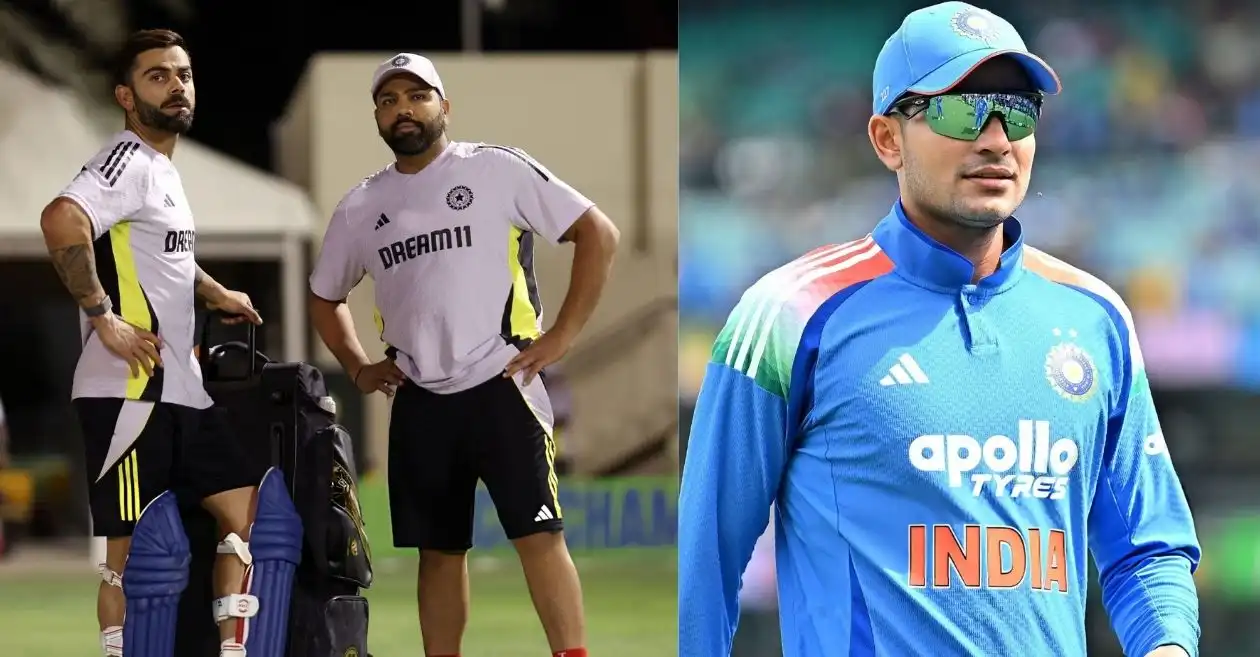
The Board of Control for Cricket in India (BCCI) recently announced the central contract list for the 2025–26 season, ushering in a clear shift in hierarchy within Indian cricket. The updated retainer list has placed senior stalwarts Rohit Sharma and Virat Kohli in Grade B, while Shubman Gill has been elevated to the top Grade A bracket, signalling the board’s growing focus on the next generation.
A+ category scrapped as BCCI reshapes contract structure
In a major structural change, the BCCI has discontinued the A+ category for the upcoming season. With only three brackets now in place — Grade A, B, and C — the revised system reflects a more streamlined evaluation based on recent performances, workload, and long-term planning.
The highest Grade A contract has been awarded to Gill, Jasprit Bumrah, and Ravindra Jadeja, underlining their importance across formats and their consistent influence in high-pressure situations.
Virat Kohli and Rohit Sharma demoted to Grade B
The placement of Rohit and Kohli in Grade B has naturally drawn attention, considering their stature and long-standing legacy in Indian cricket. However, the decision was largely expected, with both stalwarts now active primarily in the ODI format after stepping away from other international commitments. While they continue to be influential figures within the setup, the move reflects the BCCI’s intent to align contract grades with format availability, workload management, and the team’s evolving long-term vision.
They are joined in Grade B by the likes of KL Rahul, Hardik Pandya, Rishabh Pant, Suryakumar Yadav, Shreyas Iyer, and other stars, who have earned a promotion after a solid run.
One of the biggest shocks from the list was the omission of Mohammed Shami, who was part of Grade A last season but now finds himself without a central contract. Injuries and limited appearances appear to have played a role in the decision. Meanwhile, Axar Patel has been pushed down from Grade B to Grade C after an inconsistent year. Further, the likes of Ishan Kishan, Sarfaraz Khan, Rajat Patidar, and Mukesh Kumar have also missed out entirely.
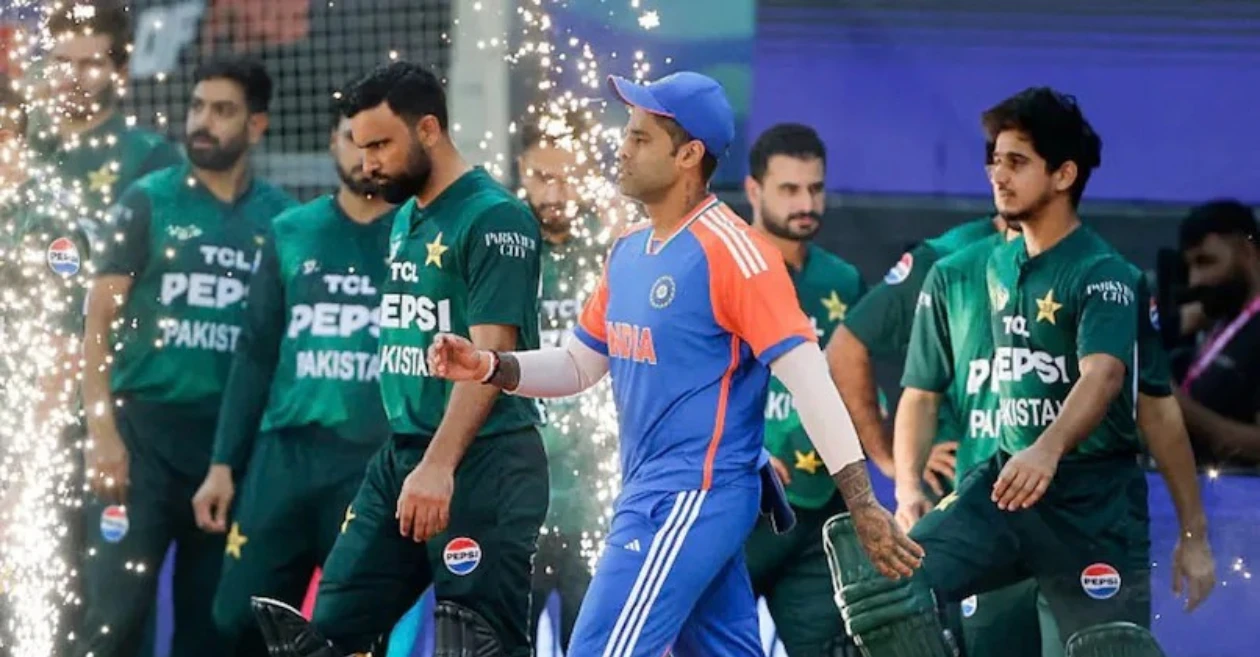
The International Cricket Council (ICC) has put speculation to rest by officially confirming Pakistan’s participation in all its scheduled matches at the ICC Men’s T20 World Cup 2026. This includes the much-anticipated encounter against India, scheduled for February 15 in Colombo.
The announcement, released by the ICC on Monday, comes after days of uncertainty surrounding Pakistan’s involvement amid ongoing administrative discussions. With this confirmation, fans worldwide can now look forward to one of cricket’s most intense rivalries unfolding on the global stage.
ICC emphasizes unity, neutrality and commitment to the game
In its official statement, the ICC highlighted the constructive dialogue held with the Pakistan Cricket Board (PCB), underlining the shared responsibility of all member boards to uphold the integrity of ICC events.
“The dialogue between ICC and PCB took place as part of a broader engagement recognising the need for constructive dealings and being united, committed and purposeful in serving the best interests of the game,” the statement noted. It further stressed values such as integrity, neutrality, and cooperation as essential pillars in ensuring the success of the ongoing tournament.
The ICC reaffirmed that all member nations are expected to respect their commitments under the agreed participation terms, reinforcing stability and trust in global cricket administration.
High-profile India vs Pakistan match set for February 15
The confirmation clears the path for the blockbuster India-Pakistan clash, one of the most-watched fixtures in world cricket. The match will be played in Colombo, a neutral venue, aligning with the ICC’s effort to maintain balance and fairness in hosting arrangements during the tournament.
With millions of viewers expected to tune in, the fixture is anticipated to be a major highlight of the T20 World Cup 2026, adding further momentum to the competition being co-hosted by India and Sri Lanka.
Bangladesh’s absence addressed by ICC and BCB
The ICC statement also addressed the situation surrounding Bangladesh, confirming that the team’s non-participation in the T20 World Cup 2026 will not result in penalties. The clarification followed a meeting involving the ICC, the Bangladesh Cricket Board (BCB) and the PCB.
The ICC reiterated its commitment to supporting cricket’s growth in Bangladesh, describing it as one of the sport’s most vibrant markets with over 200 million passionate fans.
In a significant development, the ICC and BCB jointly confirmed that Bangladesh will be given the opportunity to host an ICC event ahead of the ICC Men’s Cricket World Cup 2031, subject to standard hosting processes and requirements.
This assurance is seen as a confidence-building measure, reinforcing the ICC’s inclusive approach and long-term vision for global cricket development. It also provides Bangladesh with a pathway to reassert its presence on the international stage despite missing the T20 World Cup.
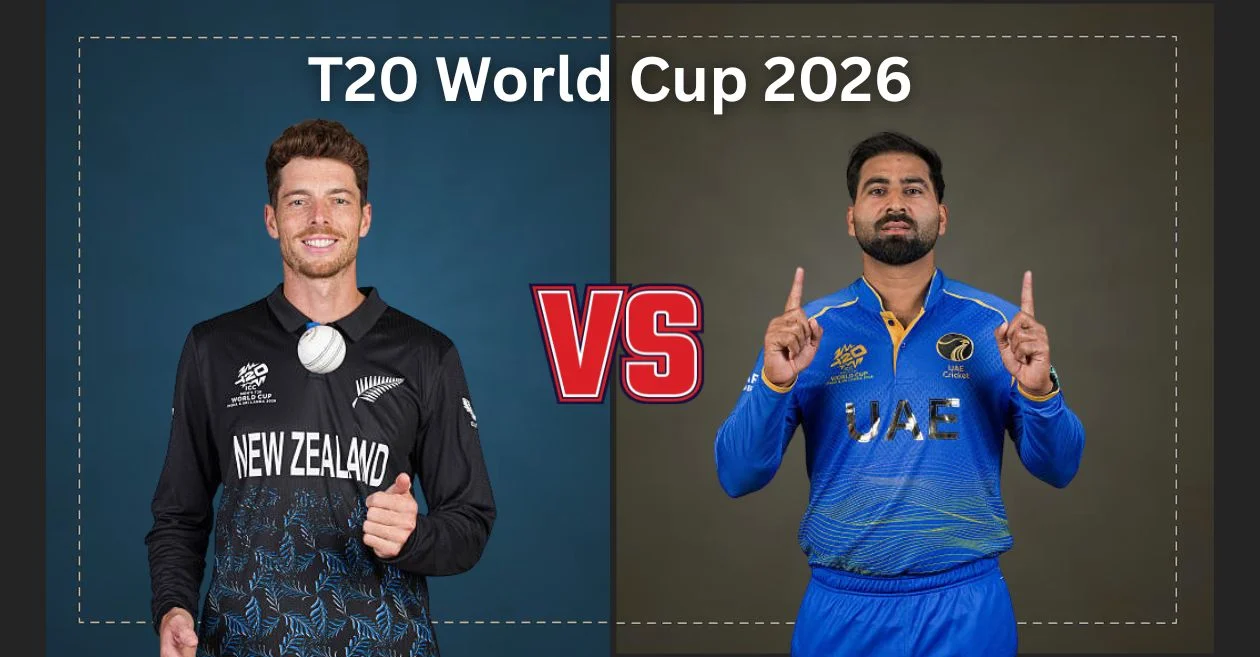
The ICC Men’s T20 World Cup 2026moves to Match 11 as New Zealand takes on the United Arab Emirates (UAE) at the MA Chidambaram Stadium in Chennai. New Zealand enters this contest with high confidence after a clinical 5-wicket victory over Afghanistan in their opener. For the UAE, this marks their first game of the tournament, and they face the daunting task of upsetting a Black Caps side that is perfectly balanced for Chennai’s spin-friendly conditions.
NZ vs UAE, T20 World Cup 2026: Match Details
Date and Time: February 10 (Tuesday); 3:00 pm IST / 9:30 am GMT / 10:30 pm NZDT
The Chepauk surface is traditionally a spin-bowling haven and early games in the 2026 World Cup have reinforced this reputation. The pitch offers significant grip and turn for slow bowlers, which will play directly into the hands of Mitchell Santner and Ish Sodhi. While the track has played slightly better for batters this season, with an average score of around 165-170, the slow nature of the outfield makes boundaries hard to come by if the ball is soft. Given it’s an afternoon start, dew will not be a factor, making the toss slightly less critical, though most captains prefer to bat first and put runs on the board before the surface tires.
Team Dynamics and Key Players
New Zealand: Led by Mitchell Santner, the Kiwis are tailor-made for subcontinental conditions. Tim Seifert is the man in form, coming off a string of high scores, while Glenn Phillips provides the necessary middle-order aggression. Their bowling is their greatest asset at this venue; Santner’s discipline combined with Matt Henry’s ability to bowl effective cutters makes them incredibly difficult to score against.
United Arab Emirates: Under the guidance of coach Lalchand Rajput, the UAE has become a fearless unit. Captain Muhammad Waseem is the lynchpin of their batting; his ability to dominate the Powerplay will be crucial. The UAE will rely heavily on their lead pacer Junaid Siddique for early breakthroughs and the young spinner Aayan Afzal Khan, who has a history of troubling New Zealand batters (taking 3/20 in their 2023 victory).
New Zealand: Mitchell Santner (captain), Finn Allen, Michael Bracewell, Mark Chapman, Devon Conway, Jacob Duffy, Lockie Ferguson, Matt Henry, Kyle Jamieson, Daryl Mitchell, James Neesham, Glenn Phillips, Rachin Ravindra, Tim Seifert, Ish Sodhi
UAE: Muhammad Waseem (captain), Alishan Sharafu, Aryansh Sharma, Dhruv Parashar, Haider Ali, Harshit Kaushik, Junaid Siddique, Mayank Kumar, Muhammad Arfan, Muhammad Farooq, Muhammad Jawadullah, Muhammad Zohaib, Rohid Khan, Sohaib Khan, Simranjeet Singh.
NZ vs UAE, T20 World Cup 2026: Today’s Match Prediction
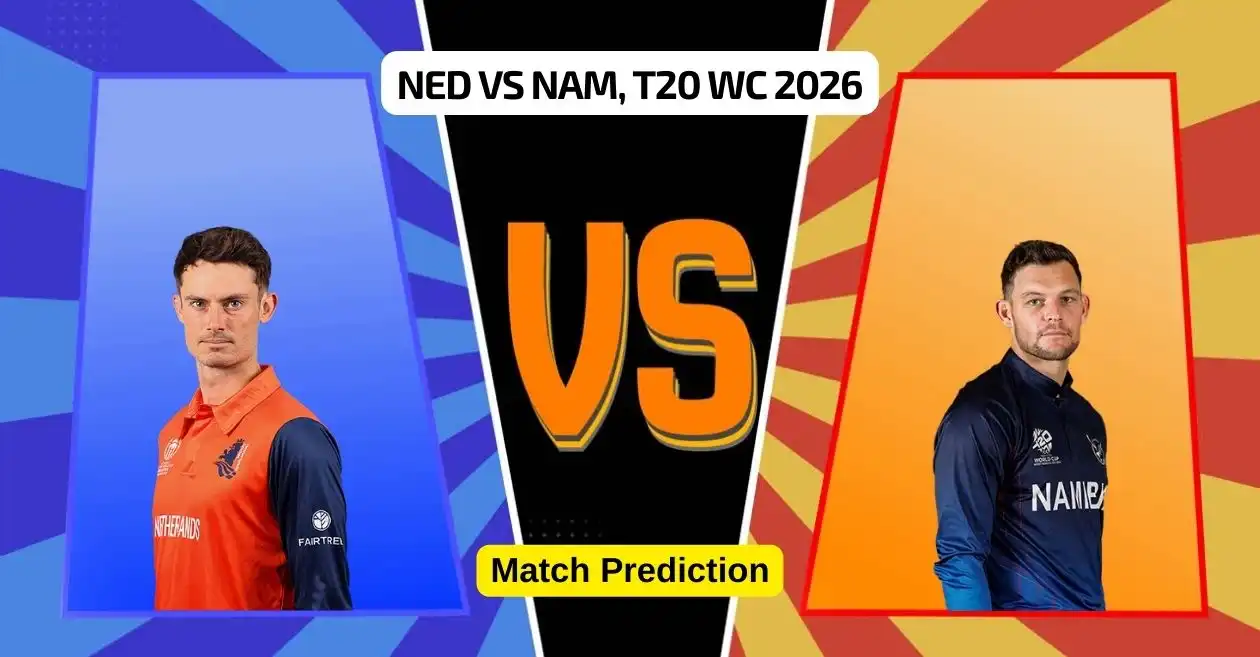
The 10th Match of the ICC Men’s T20 World Cup 2026 features a high-stakes Group A clash between two of the most consistent Associate nations: the Netherlands and Namibia. Both teams see this fixture as their best opportunity to secure two vital points in a group that includes heavyweights like India and Pakistan.
The Netherlands come into this match battle-hardened after a spirited performance against Pakistan. Although they fell short, their bowling unit, led by Logan van Beek and the veteran Roelof van der Merwe, proved they could squeeze world-class batters. Scott Edwards will look to anchor the middle order, but the Dutch will need more explosive starts from Max O’Dowd and Michael Levitt to post a challenging total.
Namibia, on the other hand, are beginning their campaign with the tactical advantage of having legendary coach Gary Kirsten in their corner as a consultant. Under the seasoned leadership of Gerhard Erasmus, the “Eagles” boast a versatile squad. Watch out for Jan Nicol Loftie-Eaton, who holds the record for the fastest T20I century, and the left-arm threat of Ruben Trumpelmann with the new ball.
NED vs NAM, T20 World Cup 2026: Match details
Date and Time: February 10; 11:00 am IST / 5:30 am GMT
The Arun Jaitley Stadium is traditionally known for its low and slow nature, but recent T20 matches have seen a shift toward more batter-friendly surfaces with shorter square boundaries. Since this is an 11:00 AM start, the dew factor will be non-existent. This is a massive boost for the spinners, who will find plenty of grip and turn in the second innings as the sun dries out the surface. With the match starting in the relatively cool Delhi morning (approx. 18-22°C), there might be some moisture trapped under the surface, offering early swing for the likes of Trumpelmann and Paul van Meekeren. As the match progresses, expect Aryan Dutt and Bernard Scholtz to be the most influential bowlers. The pitch tends to hold, making stroke-playing difficult against slower deliveries. A total in the range of 160–170 is expected to be highly competitive here.
Squads:
Namibia: Malan Kruger, Jan Frylinck, Jan Nicol Loftie-Eaton, Louren Steenkamp, Gerhard Erasmus (c), JJ Smit, Ruben Trumpelmann, Zane Green (wk), Jan Balt, Bernard Scholtz, Ben Shikongo, Dylan Leicher, Jack Brassell, Willem Myburgh, Max Heingo
Netherlands: Michael Levitt, Max ODowd, Bas de Leede, Colin Ackermann, Scott Edwards (c and wk), Zach Lion Cachet, Logan van Beek, Aryan Dutt, Roelof van der Merwe, Kyle Klein, Paul van Meekeren, Timm van der Gugten, Saqib Zulfiqar, Fred Klaassen, Noah Croes