Breaking News
Delhi CM Rekha Gupta approves Rs 1,200 cr grant for DTC salaries, pensions and transport modernisation | India News


Delhi CM Rekha Gupta approves Rs 1,200 cr grant for DTC salaries, pensions and transport modernisation

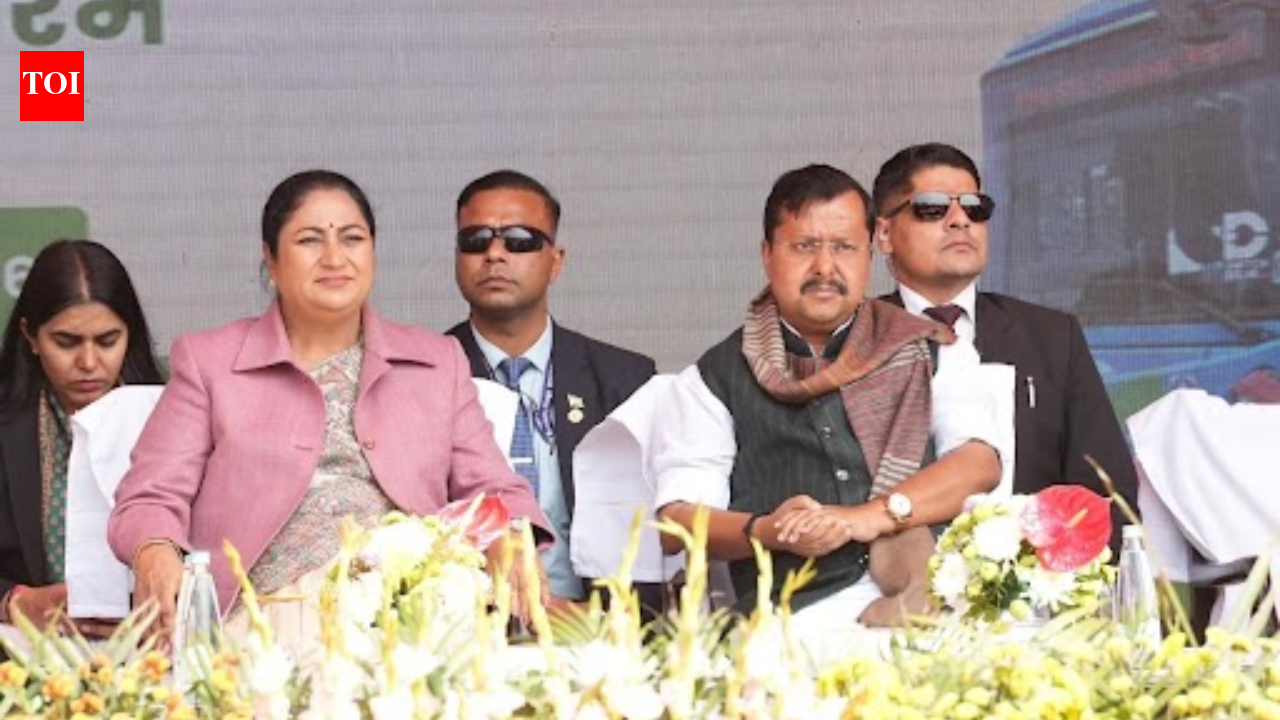
NEW DELHI: The chief minister of Delhi, Rekha Gupta, has approved a grant of Rs 1,200 crore for the Delhi Transport Corporation (DTC), providing major relief to thousands of serving employees and pensioners, while also strengthening technology-driven initiatives to improve traffic management and urban mobility in the Capital.Out of the total allocation released by the Finance Department, Rs 1,100 crore has been earmarked for payment of salaries, pensions and other statutory dues of DTC employees and pensioners. The remaining Rs 100 crore has been allocated to transport modernisation and the adoption of advanced technologies to ensure smoother traffic flow and promote sustainable mobility, according to a release. Speaking on the decision, the chief minister said that the grant reflects the government’s commitment to the dignity and financial security of DTC employees and pensioners. She stated that DTC employees work tirelessly in all conditions to keep Delhi moving, and the government has ensured that senior pensioners and serving staff never have to wait for their rightful dues.The chief minister said that DTC and its workforce are the lifeline of Delhi’s public transport system. Timely payment of salaries and pensions will provide financial stability to employees and their families and reinforce confidence in the system.In addition to employee welfare, the chief minister informed that Rs 100 crore has been allocated for two key strategic initiatives. These include the implementation of an Advanced Traffic System (ATS) to improve traffic flow through modern technology and the development of commercial electric vehicle charging infrastructure under the Scheme for Special Assistance to States for Capital Investment (SASCI).Reiterating the government’s long-term vision, the chief minister said that these initiatives align with the objective of making Delhi a technology-driven, pollution-free city with safe, efficient and world-class public transport facilities, the release noted. She further emphasised that DTC is not merely a fleet of buses, but a system that enables the daily lives of millions of citizens. The government remains committed to strengthening this system while upholding the welfare and dignity of its employees and pensioners.


Source link

Private aircraft crashes in Karnataka: Two injured after plane goes down | India News


Private aircraft crashes in Karnataka: Two injured after plane goes down

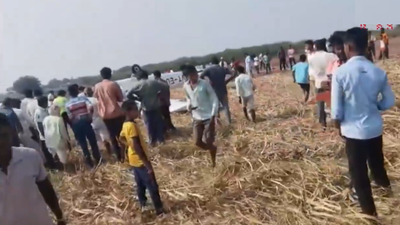
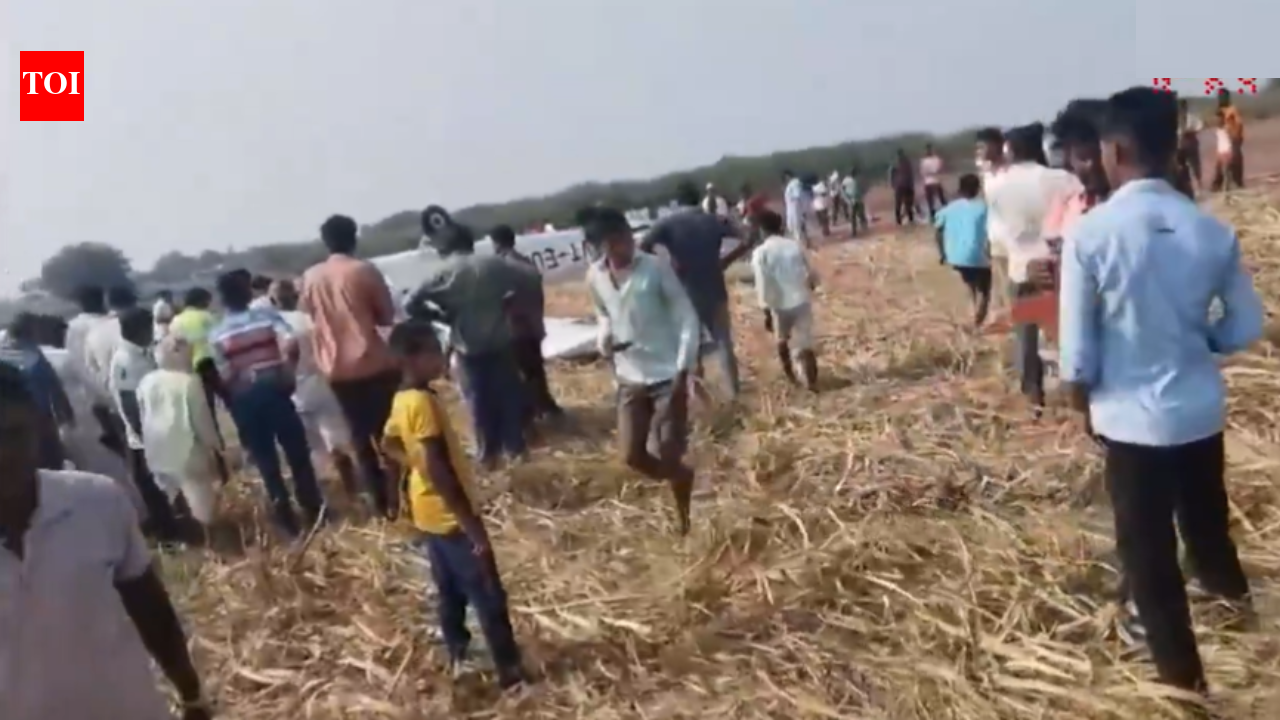
NEW DELHI: A private training aircraft operated by Redbird Flying Training Academy Limited crashed in an open field in Karnataka’s Vijayapura district on Sunday afternoon, police said. as visuals from the spot emerged showing the wreckage.Belagavi Police said that a Red Bird aircraft, which is a two-seater plane went down in Mangaluru village of Babaleshwar taluk. Both occupants, including the pilot, survived the crash and were taken to the hospital with injuries.The Directorate General of Civil Aviation (DGCA) said that the aircraft involved was a Cessna 172 (registration VT-EUC), which was operating as part of a training flight. According to the regulator, the aircraft made a forced landing in a field near Bagalkot, around 100 km east of Belagavi airport.Sources said that the aircraft broke into multiple parts after the crash. The condition of the injured was not immediately known.Visuals from the spot showed the aircraft broken into multiple pieces. Preliminary information suggests the training aircraft was flying from Kalaburagi to Belagavi when the incident occurred.This is a developing story. Further details awaited..


Source link

India begins human trials of new indigenous vaccine for forest fever | India News


India begins human trials of new indigenous vaccine for forest fever

NEW DELHI: India has moved a step closer to strengthening its defence against Kyasanur Forest Disease (KFD), a tick-borne viral infection that has long troubled forest-edge communities in the Western Ghats. The Indian council of medical research (ICMR) has initiated Phase I human clinical trials of a newly developed, fully indigenous vaccine after completing key laboratory and animal studies.The vaccine programme was taken up at the request of the Karnataka government, one of the states most affected by recurring KFD outbreaks. The disease is endemic to parts of Karnataka, Tamil Nadu, Kerala, Goa and Maharashtra, and is associated with high fever, severe weakness and, in some cases, fatal complications.Developed under the Department of Health Research, Ministry of Health and Family Welfare, the candidate vaccine is a collaborative effort involving Indian immunologicals limited and the ICMR- National institute of Virology. It is a two-dose, adjuvanted, inactivated vaccine, with doses administered 28 days apart.Officials said animal challenge and toxicity studies have been successfully completed, and GLP-grade vaccine material has already been produced. Following approval from the national drug regulator, the Central Drugs Standard Control Organisation, the first phase of human trials has now begun to assess safety and early immune response.If the Phase I trial shows the vaccine to be safe and immunogenic, it will progress to larger clinical trials before seeking full regulatory approval. Scientists say the new candidate aims to overcome limitations of the existing KFD vaccine, which requires repeated booster doses and has shown variable effectiveness in the field.The government said it will continue to support state governments in addressing difficult public health challenges, with the KFD vaccine effort seen as part of a broader push to develop solutions for region-specific infectious diseases using indigenous research and manufacturing capacity.


Source link

When three words can shatter a life: How triple talaq robs women of their ‘haq’ | India News


When three words can shatter a life: How triple talaq robs women of their 'haq'

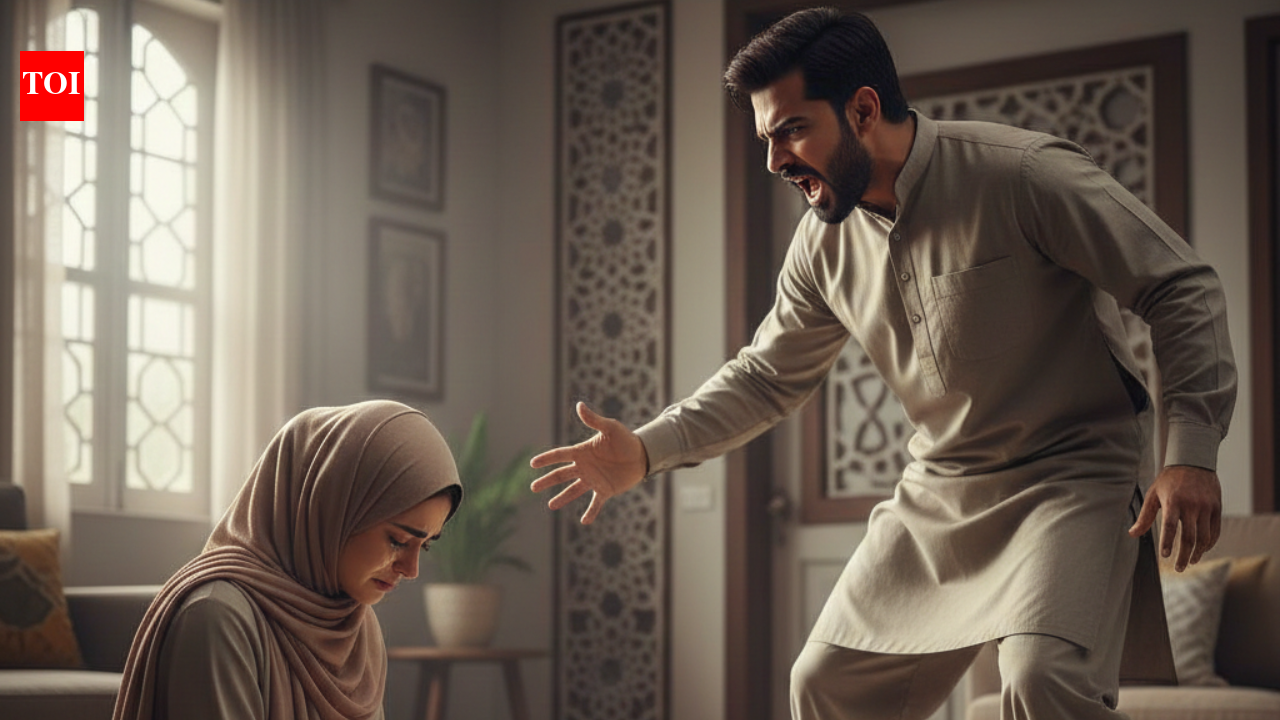
Instant triple talaq isn’t some abstract religious custom — it’s a brutal power play that shatters lives in seconds. A husband utters three words, and a woman loses her home, income, and future. “Some marriages are 6 months old, but some are also 10 years old. It all ended in a moment,” says Nazreen Ansari, national president of Muslim Mahila Foundation. “In one instance, a husband living in Saudi Arabia divorced his wife through an email message. The woman was uneducated and helpless — she had no means of seeking justice.”When a marriage ends impulsively, women bear the full blow. Joint accounts freeze, bills mount, and “adjusting” becomes code for suffering silently to avoid scandal. Even with adult children or parents, support often evaporates. Priyanka Sharma, counselor at Shanti Sahyog, shares: “Who bears the blow of impulsive actions? The woman does. The man can break away, but her family may refuse to remarry her.”The real question isn’t “What does the law say?”—it’s “Where will she go?” and “Who will pay?” This isn’t courtroom theater; it’s a doorstep disaster. Picture a ration list slashed, a landlord pounding for rent, school fees piling up unpaid, and a phone buzzing with sympathy laced with judgment. At the centre of the churn is a simple idea that India has still not made emotionally uncomplicated: maintenance is not charity. It is the legal recognition that unpaid labour, shared households, and dependent lives do not disappear the moment a husband says the marriage is over.Yet time and again, a woman’s survival claim—food, rent, medicines, children’s fees—has been recast as a political dispute about identity, community autonomy and the state’s limits.The topic has forever garnered public attention, but with the release of the movie ‘Haq’, this discourse has yet again found its way to the people’s domain.

A doorstep economy, not a court debate

In separation and divorce, the loss is immediate and material.Women in such disputes often describe a sudden stop in cash flow. The joint account that becomes inaccessible, the monthly expenses that remain stubbornly monthly, and the social pressure to “adjust” because litigation is seen as a public scandal.Even when adult children exist, they are not always economically stable; even when parents exist, they are not always willing or able to take a daughter back.“I remember one case where a woman faced triple talaq in anger. Her husband said it impulsively. Later, her parents insisted she reconcile, but she had suffered a lot. In such cases, women endure the most. They’re pressured by society and family alike,” Priyanka recalls.For many, the marital home is not just a place—it is the only affordable roof.“Who bears the blow of impulsive actions? The woman does, of course. The man in the relationship can break away from the marriage, but in many cases, the girl’s family do not even want her to get married to someone else,” explains Priyanka Sharma, counsellor and community mobiliser at Shanti Sahyog.While some families insist their daughters to reconcile, in other cases, the husband himself has a change of heart. Ansari shares the scenario for women who have to remarry their husbands.“If he later regrets it and wishes to return, the practice of halala becomes another form of exploitation for women,” Nazreen says.She further goes on to elaborate on the other side of the case.“Even after a marriage is ended completely, for how long can the woman sustain herself? Or for how long can her parents look after her and her kids?” Nazreen questions the fate of women who are then left with an uncertain future.That is why maintenance matters. For the woman who has not been earning, or earns too little to restart life overnight, maintenance is what stands between dignity and destitution.The politics begins when this basic safety net is framed not as a welfare-like protection in a modern republic but as an intrusion into personal law.

The conflict

Both Nazreen Ansari and Priyanka Sharma have had encounters with cases of women who had to go through triple talaq. Many cases came after the divorce; however, many also came before the divorce.“We first ask the women what they want—whether they wish to continue living with their families or not. Then, we call both parties for counselling sessions. Many families reconcile and continue living together after such sessions,” Sharma says, “If reconciliation fails, the cases are referred to CAW Cells or legal authorities for divorce proceedings.”Nazreen shares two cases she saw. “In the first case, a woman I knew personally was expecting her first child when her husband stopped speaking to her. His family pressured him to divorce her,” she says.“We intervened and guided her to approach the family court. Over time, the couple reconciled and is now living happily with two children — a son and a daughter,” Ansari shared the story of reconciliation.“In the second case,” she adds, “a woman who was abandoned by her husband had no means to support herself or her child.”In those cases, Ansari’s NGO help women counsel and guide them to get back on their feet.“Initially, she depended on her parents, but that wasn’t sustainable. We counselled her and helped her set up a small shop. Today, she is financially independent and raising her child on her own.”

Why Section 125 became a flashpoint

In the Indian legal system, Section 144 of the Bharatiya Nagarik Suraksha Sanhita (BNSS), earlier Section 125 of the Criminal Procedure Code, has often been described in plain terms as an anti-destitution measure. It is meant to prevent dependents—wives, children, parents—from being left without support.Its logic is secular: the state steps in so that private abandonment does not become public poverty.But when women from religious minorities invoke a provision that looks “uniform” in its application, the argument quickly leaves the home and enters the arena of identity. Critics see it as the state imposing a one-size-fits-all morality; supporters see it as the state finally doing what it is supposed to do—protect vulnerable citizens regardless of faith.The woman, meanwhile, is usually asking for something less philosophical. She asks for a sum that can keep a family afloat.

Shah Bano: One woman, many anxieties

The Shah Bano case became the national turning point because it placed these questions under the harshest light.Shah Bano Begum, an elderly divorced Muslim woman, sought maintenance under Section 125 of the Code of Criminal Procedure. The dispute moved through the courts until it reached the Supreme Court, which ruled in her favour—affirming, in effect, that a religion-neutral maintenance provision could apply and that the prevention of destitution was a constitutional and civic concern.The verdict did more than decide one case. It signalled that the language of equality and welfare could reach into domains governed by religious personal law.For many women’s rights advocates, it looked like overdue justice. For many within the community, it felt like a warning bell: if the state can do this on maintenance, what comes next?Those “what next” anxieties—never purely legal, always political—helped convert a maintenance dispute into a referendum on minority identity and state power.

How politics diluted the judgment

The backlash to Shah Bano was swift and loud.Protests, public mobilisation and political messaging turned the case into a pressure test for the government of the day: stand by a court’s expansive reading of women’s protection, or defuse community anger by narrowing the verdict’s effect.Parliament’s response—the Muslim Women (Protection of Rights on Divorce) Act, 1986—was widely read by critics as a rollback that diluted the Supreme Court’s reasoning. Supporters defended it as necessary to respect Muslim personal law.Courts, over time, tried to interpret the law in ways that did not abandon the goal of preventing destitution.But the damage to the larger idea was already done. It told the country that even the highest court’s gender-justice moment could be politically “managed” into something smaller.

Triple talaq: When a word becomes a weapon

Decades after Shah Bano, the conversation returned through a different door: instant triple talaq—talaq pronounced thrice in one sitting, treated by some as an immediate end to marriage. For women, the complaint was not abstract theology; it was lived harm.A marriage could be terminated abruptly, often without due process, without meaningful negotiation, and with the woman suddenly pushed into economic and social free fall.The moral and political arguments split predictably. Reformers called it arbitrary and cruel. Defenders warned against state interference and majoritarian impulses. But again, the practical issue was urgent: in many cases, the instantness of the divorce multiplied vulnerability—especially where women had limited income, limited family support, and limited access to legal help.

What changed, and when

Legal change came in two steps.First, in 2017, the Supreme Court set aside instant triple talaq, holding that it could not survive constitutional scrutiny in the form it was being defended. In plain terms, the practice was invalidated: a pronouncement could not, by itself, instantly snap a marriage in a way that left women without protection.Second, in 2019, Parliament enacted a law that made the pronouncement of instant triple talaq void and illegal, adding criminal penalties.This is where a new—and politically charged—question emerged.Should a civil vulnerability be addressed through criminal law?Supporters argued that strong deterrence was necessary because women had been ignored for too long. Critics argued that criminalisation could create fresh risks. It could harden family conflict, it could be misused, and it could complicate the very maintenance and support women need by pushing the husband into the criminal justice system.

The unresolved ‘what now’

The law on paper is only the beginning. The lived reality depends on access: whether a woman can find a lawyer, whether she can afford repeated court dates, whether the police station feels like protection or intimidation, whether family pressure forces an out-of-court settlement that leaves her short-changed, and whether a maintenance order is actually enforced.Politically, personal law reform remains high-voltage.Every intervention is interpreted through partisan lenses. Every verdict is packaged into slogans. And every woman who steps into the system is quietly asked to carry the weight of a national argument she did not start.

Back to the doorstep

The country’s big debates—personal law, religious law, minority rights—often arrive at a woman’s home in small, sharp ways: the neighbour’s whisper, the relative’s ultimatum, the landlord’s deadline.The question she lives with is not whether India will one day have uniform family law. It is whether her children will stay in school, whether she can afford medicine, and whether she has a bed to sleep on next month.In India’s personal-law battles, the loudest slogans are rarely the ones that keep a woman housed.

Source link

Congress calls pact a surrender, says something being hidden | India News


Congress calls pact a surrender, says something being hidden

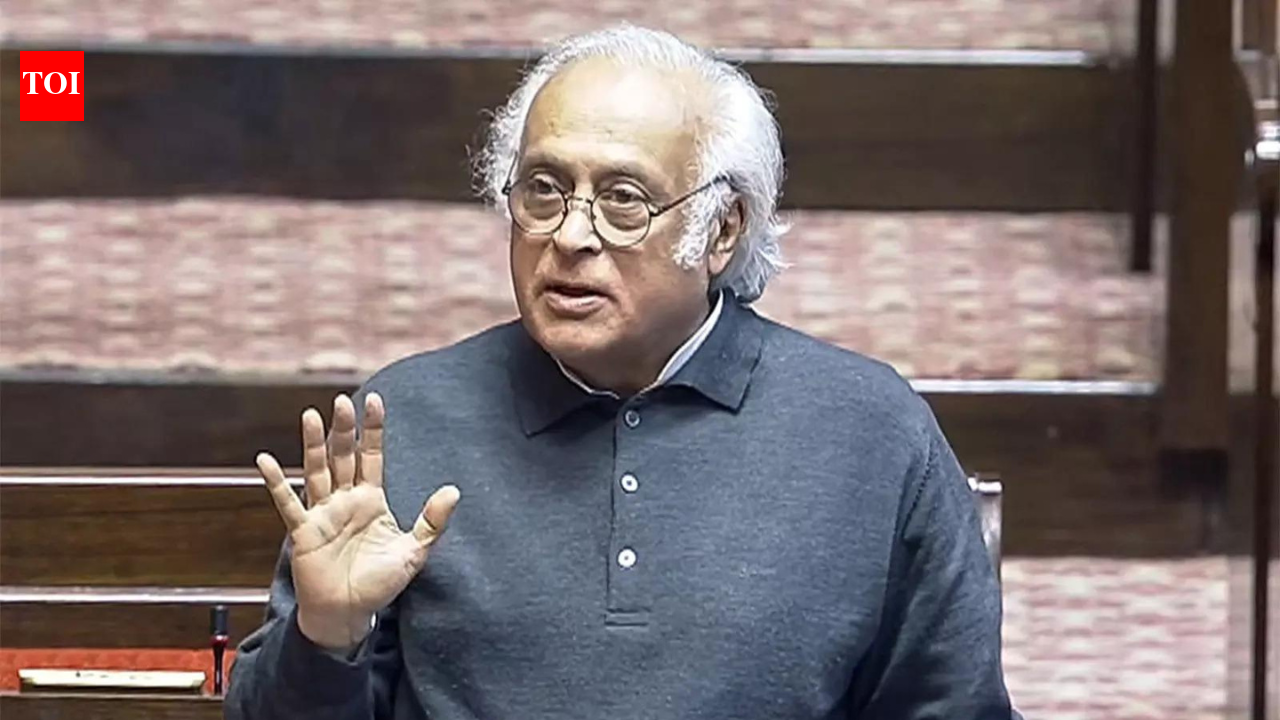
NEW DELHI: Dubbing the India-US trade deal interim framework as a “surrender”, Congress on Saturday said commerce minister Piyush Goyal’s statement on agri imports was “too clever by half” as the joint statement mentions a list of products which India would eliminate or reduce tariffs upon, including “additional products”.Congress MP Jairam Ramesh noted “additional products” were not specified, that the category was “too open-ended and shows that something is being hidden”. He said there would be concerns when more details came to light.Former finance minister P Chidambaram said India and the US had not reached any trade agreement and this wasn’t even an interim agreement, but “framework of an interim agreement”.“One thing is clear: The framework deal is heavily tilted in favour of the US and the asymmetry is obvious,” Chidambaram said.Congress spokesman Pawan Khera alleged the deal would break farmers’ backs in the future.


Source link

US deal boosts India’s growth engine: Amit Shah | India News


US deal boosts India's growth engine: Amit Shah

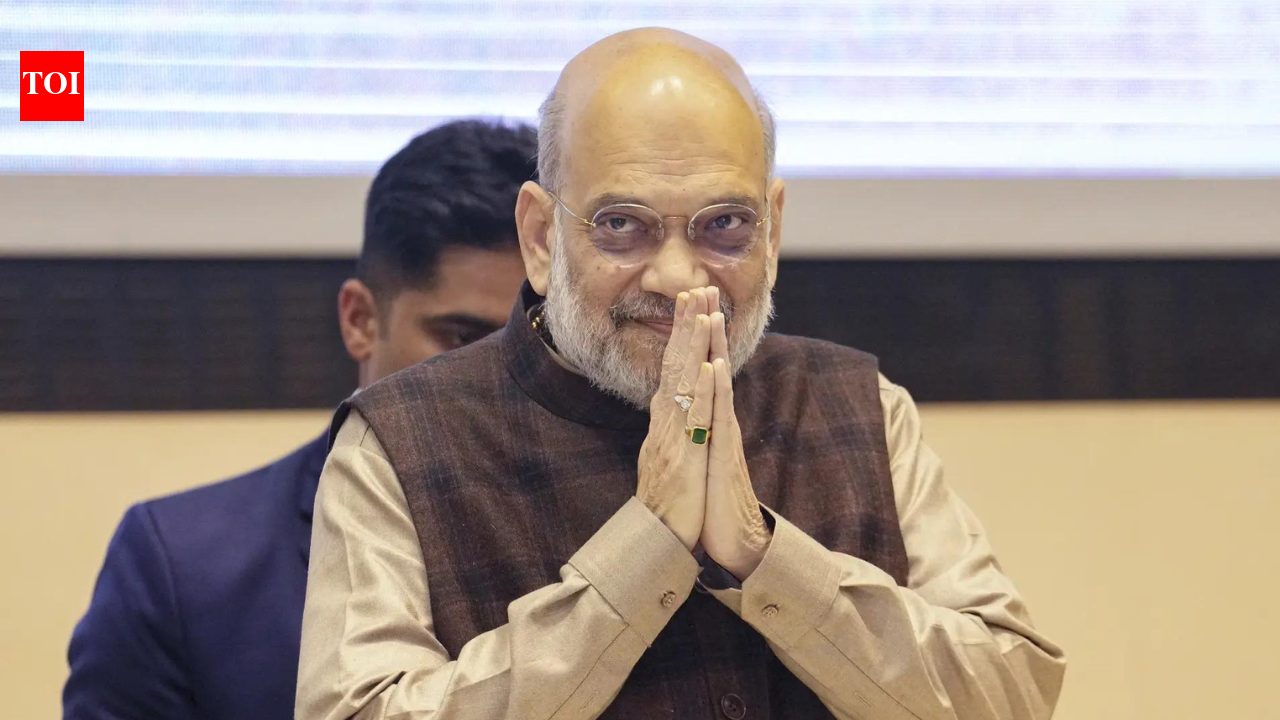
NEW DELHI: The announcement of an interim trade agreement between India and the US was met with warm applause from the BJP and its allies, with home minister Amit Shah saying it will give “another boost to India’s roaring growth engine”. The ruling alliance was dismissive of the opposition’s charge that the agreement harmed farmers, insisting that India had successfully protected its core interests. Shah said, “Translating PM Narendra Modi’s vision of a Viksit Bharat into an inevitable reality, the agreement makes way for a boom for Make in India, hardworking farmers, entrepreneurs, MSMEs, startup innovators, and fishermen while providing employment for youth and women.” Defence minister Rajnath Singh said it will expand export opportunities, strengthen labour-intensive sectors, attract high-quality investments and create large-scale employment.


Source link

Shia Muslims protest in Kashmir over deadly blast at Islamabad mosque | India News


Shia Muslims protest in Kashmir over deadly blast at Islamabad mosque

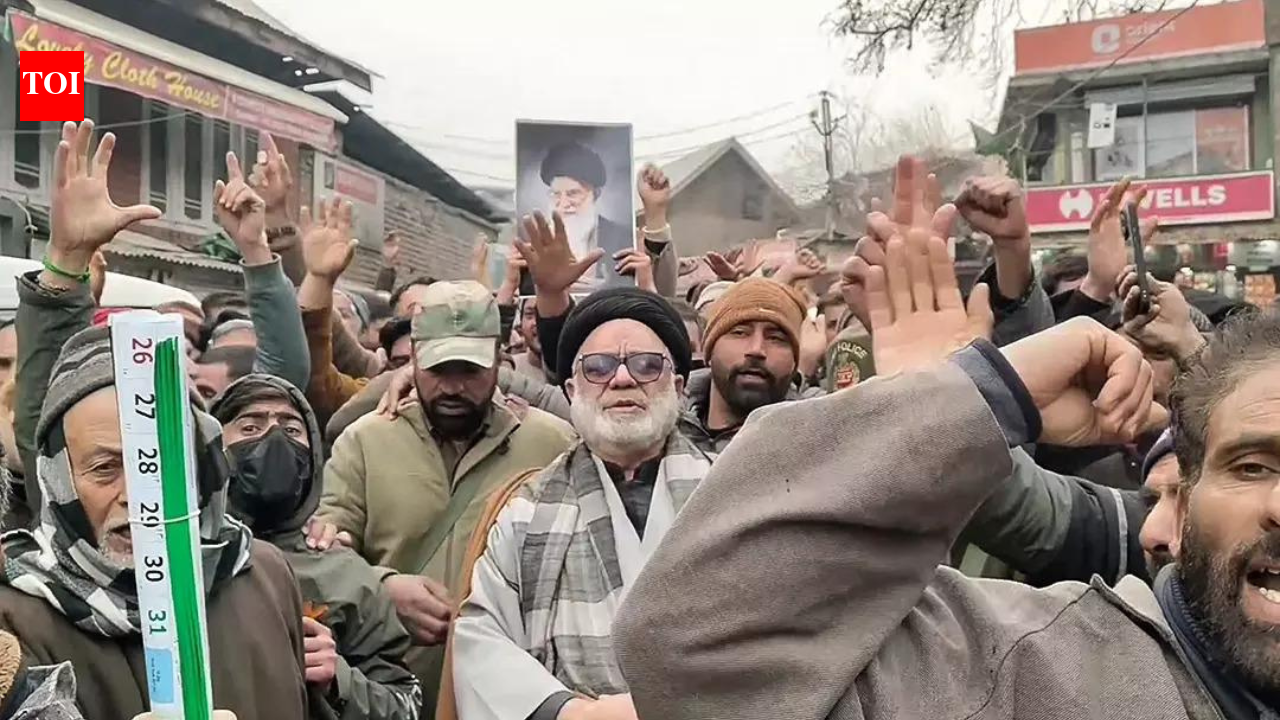
JAMMU: Hundreds of Shia Muslims on Saturday staged spontaneous protests in various parts of Kashmir to condemn a suicide bombing at the Khadija Tul Kubra Mosque in Islamabad that killed at least 31 people and wounded more than 169 others.The attack took place during Friday prayers in Pakistan’s capital city. The attack on a Shia place of worship triggered strong reactions in Kashmir, with demonstrations reported in Srinagar, Baramulla, and Bandipora on Friday and Saturday.

Deadly Blast At Shia Religious Centre In Islamabad Raises Questions On Pakistan’s Security Failures

In Magam town of central Kashmir, women protesters raised slogans against the Pakistani govt and denounced the targeting of Shia Muslims. Some demonstrators raised slogans in support of Syed Hassan Nasrallah, Palestine, and Hezbollah. The protests remained peaceful, with participants expressing solidarity with the victims in Pakistan.“We stand with the victims and we are against the Pakistani govt,” one woman protester said, adding, “We want to ask the Pakistan govt why we are being killed.”All J&K Shia Association Chinabal (Pattan) raised slogans against Pakistan on Friday evening and demanded immediate action against those responsible. They also raised pro-India slogans.In the Sumbal area of Ganderbal district, protesters carrying the Indian tricolor raised anti-Pakistan govt slogans. “Our protest is against the Pakistani administration, which we believe is responsible for such killing,” another protester said. “Shia Muslims are targeted in Pakistan. It is painful to see Muslims being killed inside mosques during prayers. What kind of jihad is this?”In Atoora, Baramulla, protesters carried posters of Iran’s supreme leader, Ayatollah Ali Khamenei. They also raised slogans against Pakistan. Police said the demonstrations passed off peacefully.


Source link

‘Sangh does not seek popularity or power’: RSS chief Mohan Bhagwat | India News


'Sangh does not seek popularity or power': RSS chief Mohan Bhagwat

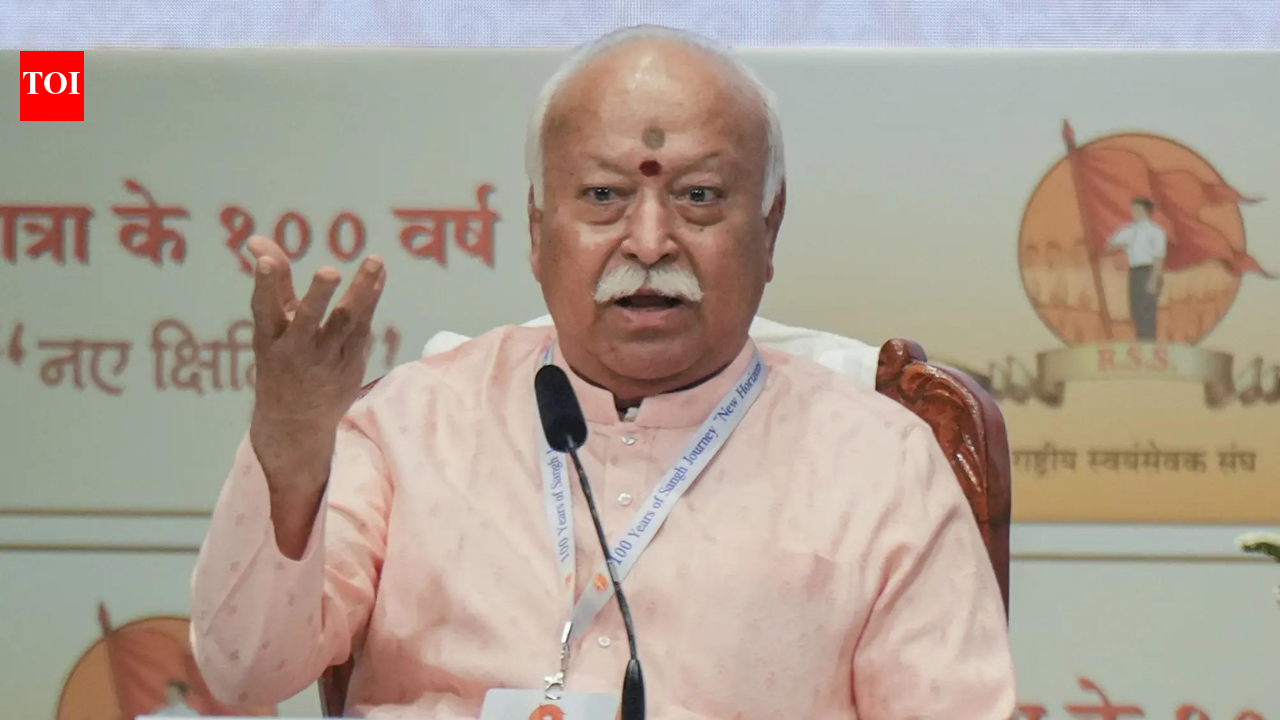
NEW DELHI: Rashtriya Swayamsevak Sangh chief Mohan Bhagwat on Saturday said that Sangh is was not founded as reaction or in opposition to any organisation and it does not seek power or popularity.While speaking at a program held as a part of the RSS centenary celebrations in Mumbai, Bhagwat said that those who want to know about RSS, must come should come within the organisation and observe it from close quarters.“The Sangh has not emerged in competition with any other institution or organization, nor as a reaction or in opposition to anyone. The Sangh does not seek popularity. The Sangh does not seek power. Whatever good deeds are being done in the country—may they be done well; the Sangh exists to help make that happen,” RSS chief said.“If you want to know Sangh, come inside and see it for yourself,” he added.Bhagwat claimed that more than one lakh thirty thousand small and big seva works re carried out by RSS volunteers across the country.“More than one lakh thirty thousand small and big seva works are carried out by Swayamsevaks without taking any government money, spending their own funds with the cooperation of society. In the history of our country, no Sangh like work occurred after Tathagat Buddha,” He said.“The work of the Sangh is meant for the entire nation — Bharatvarsh,” he added.Talking about the situation in the country that preceded the RSS’s birth in 1925, Bhagwat the British founded the Indian National Congress as a “safety valve”, but the Indians transformed it into a powerful instrument in the struggle for independence.Referring to RSS founder Keshav Baliram Hedgewar, Bhagwat described the difficult circumstances of his childhood including the death of both his parents due to the plague at age 13 and the financial hardship he suffered subsequently.Hedgewar actively participated in various movements during the freedom struggle, including the Vande Mataram agitation in his school days, Bhagwat said.When he cleared the matriculation examination with a first class, some people in Nagpur raised funds to send him to Calcutta (Kolkata) for medical education, where he came in contact with revolutionary groups, Bhagwat said.Recalling an anecdote from that period, Bhagwat said Hedgewar operated under the code name “Koken”, inspired by the name of a person called Kokenchandra. Once a police team which had arrived to arrest Kokenchandra instead detained Hedgewar, an incident documented in a book by Rash Behari Bose, he said.During the ceremony, noted guests such as film actor Salman Khan, Subhash Ghai and Prasoon Joshi were also present.The two-day lecture series titled ‘100 Years of Sangh Journey: New Horizons’ seeks to reflect on the journey of RSS, its role in society, and the ideas and perspectives shaping its future.


Source link

‘Blow to stomachs of Indian farmers’: Opposition slams India-US trade framework — who said what | India News


'Blow to stomachs of Indian farmers': Opposition slams India-US trade framework — who said what
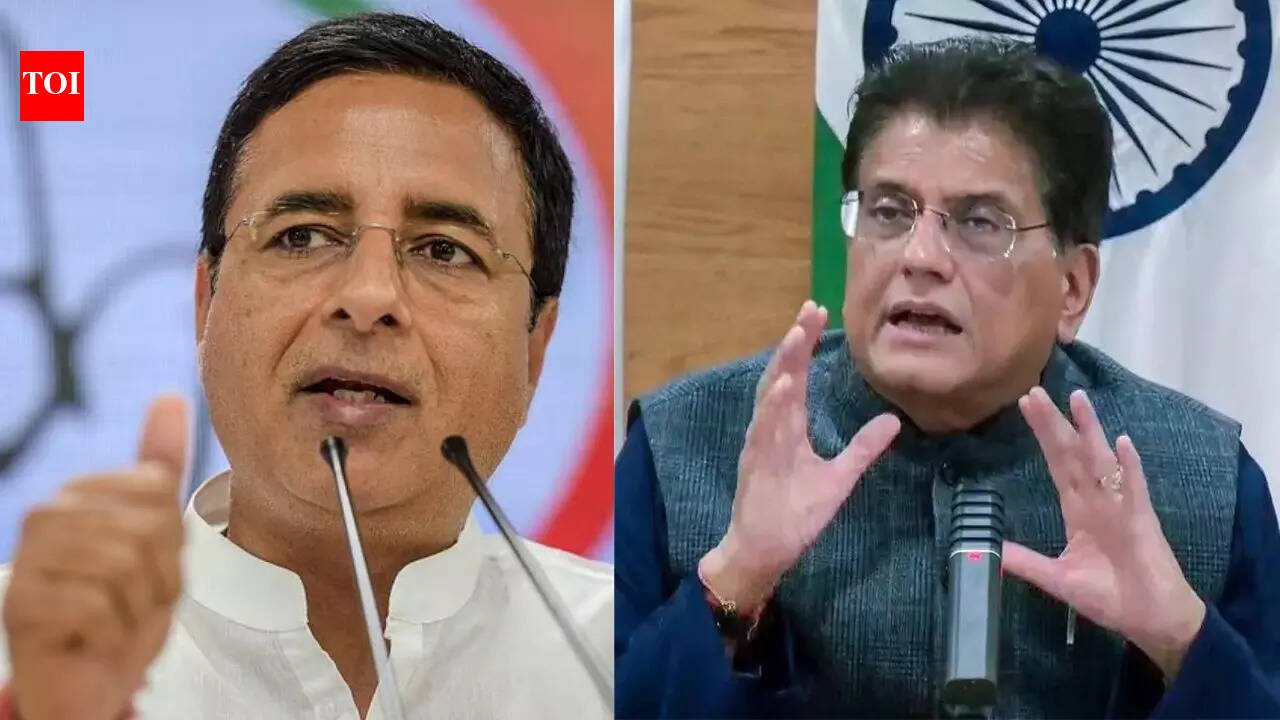
Randeep Surjewala, Piyush Goyal

NEW DELHI: Opposition leaders on Saturday criticised the India-US Interim Trade Agreement framework, accusing the government of compromising India’s interests and raising concerns over its impact on farmers, tariffs, and oil imports.Congress leader Randeep Singh Surjewala warned that the agreement could harm farmers and rural livelihoods. He said, “A blow has been delivered to the stomachs of India’s 720 million farmers. Work has been done to snatch away the livelihood of India’s 720 million food providers, farm labourers, and farmers.”He also raised concerns over agricultural imports from the US. “US corn, US soybeans, US sorghum (jowar), US walnuts, almonds, pistachios, fresh fruits like apples and oranges, processed fruits, and other ‘additional’ agricultural products will all flood the Indian market,” he said.Surjewala questioned the government on possible impacts. “We are already importing $334 million worth of cotton from the US, which has caused cotton prices for Indian farmers to crash. Now, with corn, cotton, sorghum, fruits, processed fruits, and soybeans coming from the US, I ask PM Modi and Piyush Goyal: what will happen to India’s farmers? Where will they go?” he said.Congress leader Pawan Khera also attacked the government over the India-US Interim Trade Agreement, questioning what he called a shift in India’s diplomatic posture. “Where is the India which used to look Nixon, George Bush and Obama in the eye and forge practical relations?” he asked. Khera alleged that the interests of ordinary Indians were being undermined, saying, “This is not an agreement with the US, but a compromise with our self-respect.” He said those projecting the framework as a success were aware of its implications. “This is not a deal, but a surrender,” he said, adding that the opposition was being stopped from raising these issues in Parliament because the government feared scrutiny over the terms of the agreement.RJD MP Manoj Kumar Jha also criticised the tariff changes and accused the government of misleading the public. “On most things, our tariff, in the worst of times and the best of times, was 2.9%. Through threats, it was raised to 50%. Then it was reduced to 18%. Is this something to celebrate? Aren’t you misleading the entire nation?” he said.He warned that the deal could lead to public anger once its full impact is known. “When this takes further shape and comes to the forefront, there will be unrest on the streets,” Jha said.On Saturday, India and the US announced a framework for an Interim Agreement on reciprocal and mutually beneficial trade, as part of broader negotiations on a Bilateral Trade Agreement.


Source link

Message to Pakistan? Amid trade pact, India’s map shared by US trade representative grabs attention | India News


Message to Pakistan? Amid trade pact, India's map shared by US trade representative grabs attention

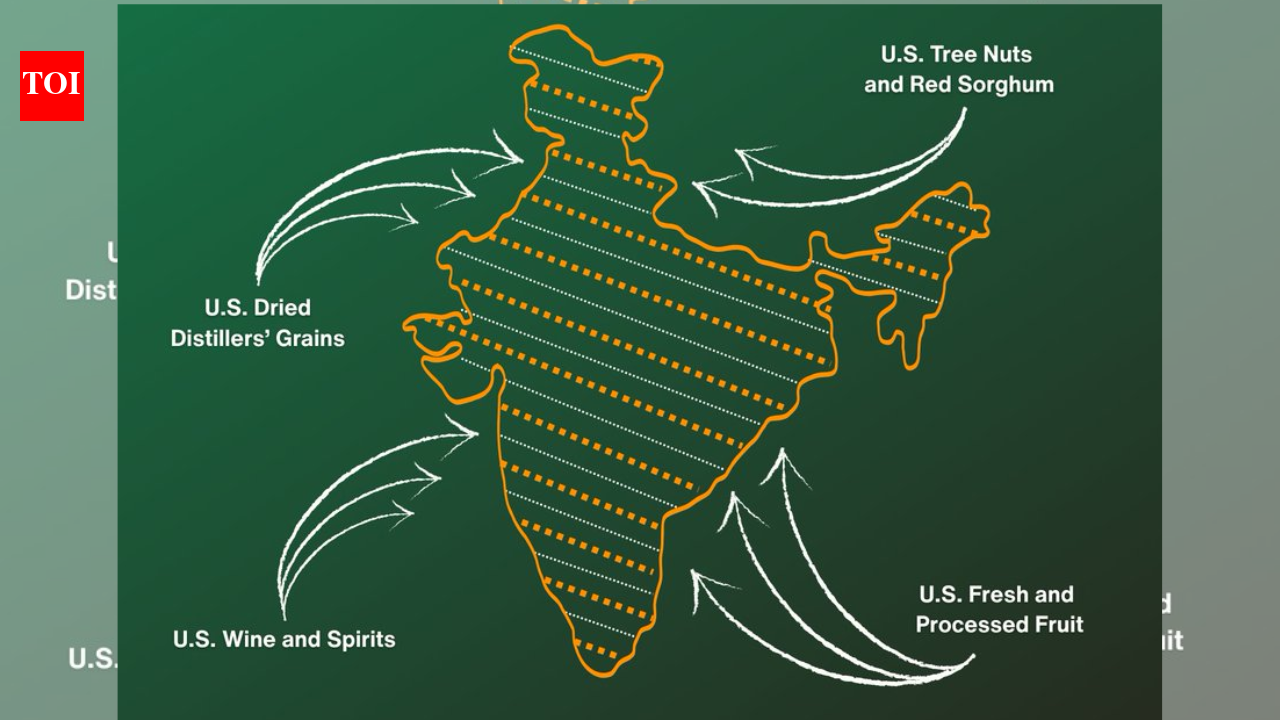
NEW DELHI: As New Delhi and Washington announced the framework for an interim trade agreement on Saturday, a map of India released by the US trade representative’s (USTR) office drew attention.The map, shared alongside details of the trade deal framework, shows the entire Jammu and Kashmir region – including Pakistan-occupied Kashmir (PoK) – as part of India. It also depicts Aksai Chin, a region claimed by China, within Indian territory. China claims the territory and has objected to India’s position, a dispute that has remained a sensitive issue in bilateral ties between New Delhi and Beijing.

India-US Trade Deal Explained: What The White House Says On Tariffs, Markets And Tech Shifts

In a post on X US trade representative said, “From tree nuts and dried distillers’ grains to red sorghum and fresh and processed fruit, the US-India Agreement will provide new market access for American products.While India has consistently maintained that Jammu and Kashmir is an integral part of the country and does not require external validation of its sovereignty, the depiction marks a departure from earlier US government maps, which typically showed the other claims as a part of the map.The timing of the map release is notable, coming as India and the US are moving to better the trade ties following months of speculation.Earlier this year, the Trump administration imposed a 50% tariff on Indian goods, including an additional 25% for Russian oil imports – the highest levied on a US ally – amid stalled trade negotiations. Under the interim framework announced, that tariff is set to be reduced to 18%, one of the lowest among Asian countries.

Signal to Islamabad

Though the USTR did not comment on the map, it comes as an embarrassment for Pakistan, which claims PoK. The release also comes amid sustained diplomatic outreach by Pakistan to Washington in recent months, including multiple visits by Pakistan’s PM Shehbaz Sharif and army chief, Asim Munir, and meetings with President Trump.The interim trade pact, expected to be signed by mid-March, is aimed at easing trade tensions and providing relief to Indian exporters after months of uncertainty.


Source link