Breaking News
184 new crop varieties of 25 crops released to boost productivity and climate resilience, farmers to access it within three years | India News


184 new crop varieties of 25 crops released to boost productivity and climate resilience, farmers to access it within three years

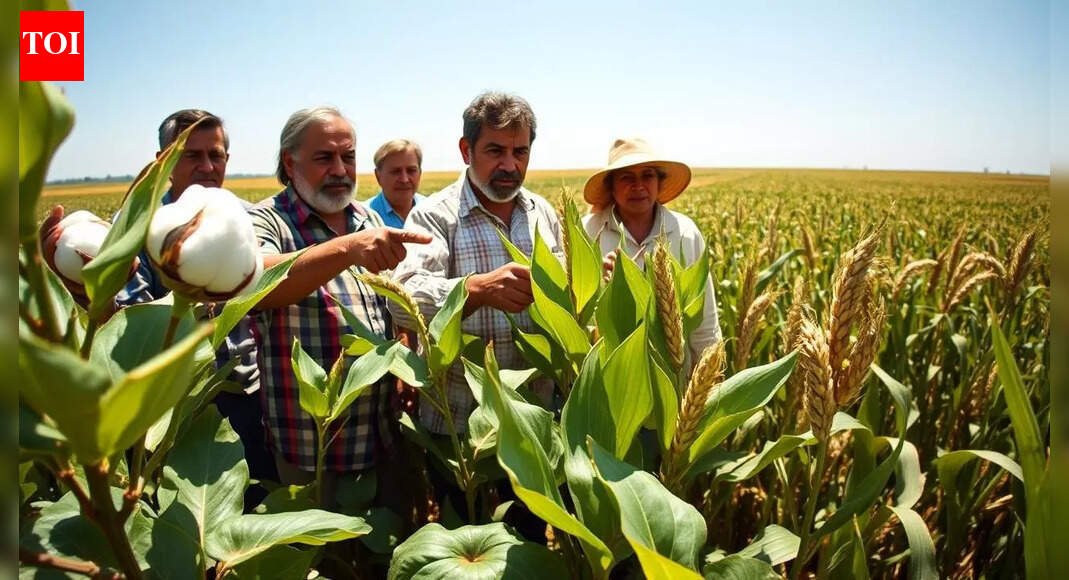
NEW DELHI: Union agriculture minister Shivraj Singh Chouhan on Sunday released 184 new varieties of 25 different crops to increase productivity, reduce input costs and address the challenges of climate change. The new varieties included 122 of cereal crops, 22 of Bt cotton, the only genetically modified crop whose commercial cultivation is allowed in India, and 13 of oilseeds, among others.The new Bt cotton varieties are updated transgenic versions that will not only increase yield but also guard crops against pests, insects and weeds, reducing the overall input cost for farmers.The 184 new varieties, developed by Indian Council of Agricultural Research institutions (60 varieties), state and central agriculture universities (62 varieties) and private seed companies (62 varieties), will reach farmers for commercial cultivation within three years.Among the 122 new varieties of cereal crops, 60 are of rice, 50 of maize, four of sorghum, five of pearl millet, and one each of ragi, small millet and proso millet. More than 50% (62) of the new cereal varieties belong to the coarse grains category, in sync with the govt’s plan to focus more on nutri-cereals and climate-resilient crops.Underlining India’s transformation from “a food-deficit country to a global food provider” over the years, Chouhan noted on the occasion that the country surpassed China in rice production and became the world’s largest producer. He said India’s rice production reached 150 million tonnes while China’s production was 145 million tonnes. “This has also strengthened India’s role as the world’s food supplier,” said the minister.The list of new varieties comprises six of pulses (1 pigeon pea, 2 green gram and 3 black gram); 13 of oilseeds (3 mustard, 4 safflower, 2 sesame and one each of til, groundnut, gobhi sarson and castor); 11 fodder crops (2 each of oats and fodder sorghum, 1 fodder maize and 6 fodder pearl millet); six of sugarcane; 24 of cotton including 22 Bt cotton; and one variety each of jute and tobacco.The release of new varieties of crops continued a “lab to land” approach of the govt so that farmers could get direct benefit of what the country’s farm scientists have been doing in a targeted manner.“Research is meaningful only when its benefits reach fields on time,” said Chouhan, directing officials to ensure that the newly released varieties should reach farmers within three years.The newly developed varieties are climate-friendly, high-yielding and resistant to major pests and diseases. They were developed to tackle challenges such as climate change, soil salinity, drought and other biotic and abiotic stresses, while also supporting natural and organic farming methods.Since the notification of seed varieties began in 1969, a total of 7,205 crop varieties have been notified in the country. Of these, 3,236 varieties were notified in the last 11-12 years alone, including 1,661 varieties in the last five years, showing increasing focus of scientists on developing climate-friendly, high-yielding, and pest and disease resistant varieties suitable for India’s diverse agro-climatic zones.


Source link

Nepal interim PM’s husband to seek treatment in Delhi: Subedi shows no improvement; diagnosis remains unclear | India News


Nepal interim PM’s husband to seek treatment in Delhi: Subedi shows no improvement; diagnosis remains unclear
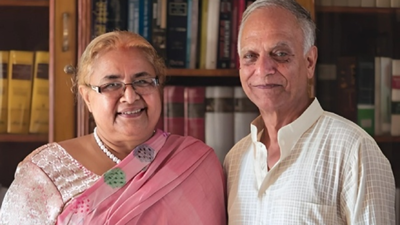
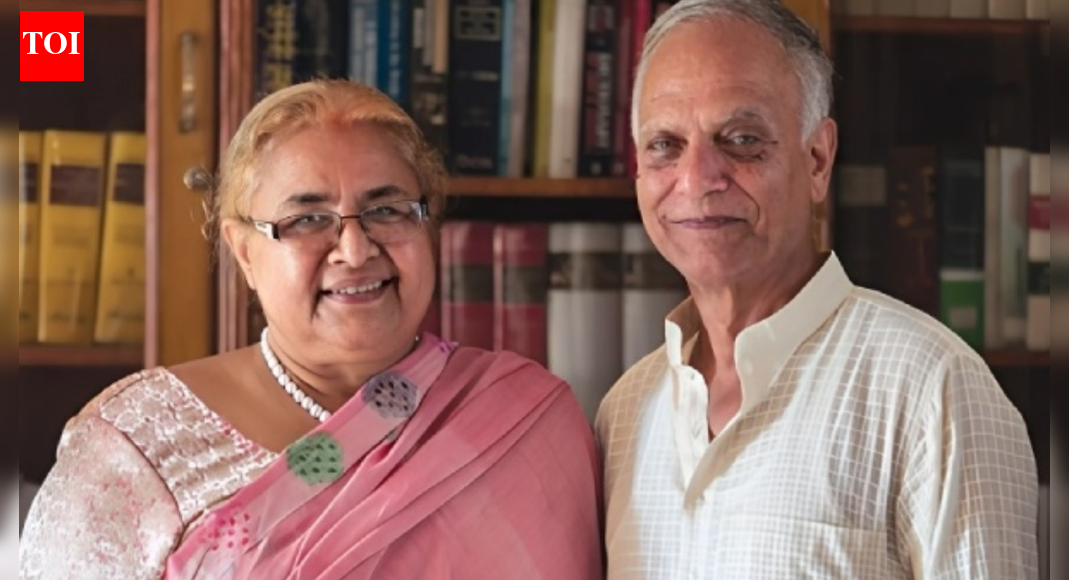
Nepal’s Interim PM Sushila Karki and her husband Durga Prasad Subedi (ANI)

NEW DELHI: Nepal’s Interim Prime Minister Sushila Karki’s husband, Durga Prasad Subedi, is set to be flown to New Delhi for his medical treatment after he was admitted to a government hospital but showed no improvement.Subedi, 74, was admitted to the Tribhuvan University Teaching Hospital last Thursday. Hospital sources confirmed that he showed no significant improvement and is expected to be discharged later this evening before being taken to Delhi.“He was admitted here and has been undergoing treatment since Thursday after experiencing various health problems. Initially, he was diagnosed with a urinary tract infection, low sodium levels, and stomach-related issues,” a doctor at the hospital told ANI on condition of anonymity.Doctors said multiple tests were conducted to determine the cause of his illness, however, no specific condition was detected. “CT scans and MRI tests were also conducted to ascertain the cause of his condition, but no specific problem was detected. We are not aware of which hospital in India he is being taken to, but he has been discharged from here,” another senior hospital doctor confirmed to ANI.Interim Prime Minister Karki’s personal doctor, Man Bahadur KC, said Subedi was discharged after the family decided to seek a second opinion.Subedi is a former youth leader of the Nepali Congress and met Interim Prime Minister Karki while studying at Banaras Hindu University in Varanasi, Uttar Pradesh.He was also involved in Nepal’s first plane hijacking 53 years ago. Subedi was among a group of Nepali Congress cadres who hijacked a Royal Nepal Airlines flight travelling from Biratnagar to Kathmandu on June 10, 1973, to push for political change.Subedi, along with two other party members, seized control of a Canadian-made 19-seater Twin Otter aircraft. The operation was masterminded by former Nepali Prime Minister Girija Prasad Koirala and aimed at raising funds for an armed struggle against the monarchy under King Mahendra.The aircraft was carrying NRs 30 lakh in government funds. After a brief struggle with the crew, the hijackers forced the pilot to land on a grassy strip in Forbesganj, Bihar. Subedi later recounted the incident in his book Biman Bidroha.


Source link

‘Law of Jungle’: Shashi Tharoor, Shaina NC & more speak on Venezuela crisis; what they said after US strike | India News


'Law of Jungle': Shashi Tharoor, Shaina NC & more speak on Venezuela crisis; what they said after US strike
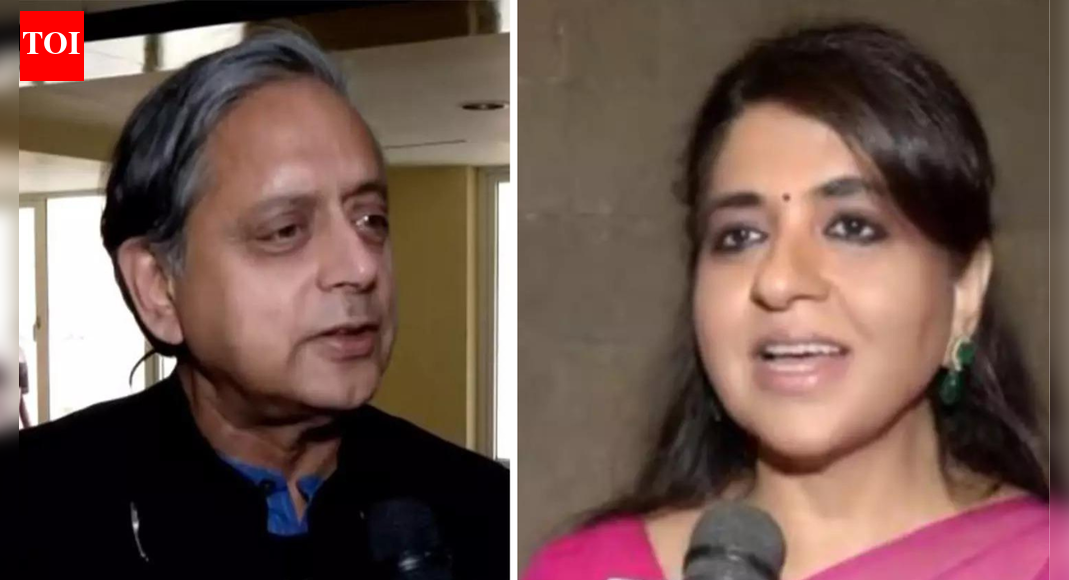
Shashi Tharoor, Shaina NC (File photos)

NEW DELHI: Senior Congress leader Shashi Tharoor on Sunday weighed-in on the US strikes on Venezuela, a day before, calling it “law of the jungle”.The US carried out multiple airstrikes on Venezuela early Saturday, triggering explosions across Caracas and paving the way for the capture of President Nicolás Maduro and his wife, Cilia Flores. The dramatic escalation was confirmed hours later by US President Donald Trump. Venezuelan authorities declared a state of emergency as panic swept the capital following the attacks, which left at least 40 people dead.

‘Lunatic Rulers’: Shashi Tharoor, Singhvi, Owaisi, Other Indian Leaders On US Strikes In Venezuela

Talking about the situation, the chair of the parliamentary committee on foreign affairs, replied to a post by Indian author Kapil Komireddi, saying “International law and the UN Charter have for some years now been honoured in the breach. The Law of the Jungle prevails today. “Might is Right” is the new creed.”Meanwhile, Congress leader and Member of Rajya Sabha Abhishek Manu Singhvi called it “19th-cen imperialism”. “Regime change by cruise missile, democracy delivered by warship, &sovereignty rewritten under self-styled Doctrine? Not leadership, this is 19th-cen imperialism in 21st-cen jargon. If international law matters only to weak, UN should shut shop. world deserves rules, not lunatic rulers.”AIMIM leader Asaduddin Owaisi said that US set an example that India should follow. “”Today we heard that US President Donald Trump’s forces captured Venezuelan President Nicolas Maduro and took him from his country to America. If US President Donald Trump can abduct Venezuelan President Nicolas Maduro from his own country, then you (Prime Minister Modi) can also go to Pakistan and bring back the mastermind of the 26/11 terrorist attacks to India,” he said.In response to Owaisi, BJP MP Gulam Ali Khatana said, talking to ANI, “The entire country has praised the Indian armed forces. The way terrorists were eliminated and neutralised under Prime Minister Modi’s leadership, only Prime Minister Modi’s government could have done this. Were we supposed to bring them here and feed them?”Shiv Sena leader Shaina NC also hit back at the AIMIM leader saying, “”Asaduddin Owaisi, don’t you worry. Under Prime Minister Modi’s leadership, India has become the world’s fourth-largest economy. We have demonstrated unparalleled strength through Operation Sindoor, we have launched missiles, we have eradicated terrorism from Pakistan… we have even secured the extradition of Tahawwur Rana… Unlike you, we do not engage in appeasement politics... You continue with your politics of appeasement, and we will continue doing our work.”Shaina NC also spoke about the escalating situation in Venezuela itself. “India has always maintained cordial relations with Venezuela, with strong diplomatic engagements over the years. This is a matter of grave concern, as ties with Latin America and South America have been carefully nurtured,” she said, while talking to PTI.Further referring to the MEA statement on the crisis she added, “The Ministry of External Affairs has advised that the safety of Indian nationals living there should be prioritised. No country can go around bullying the world; the situation must be viewed holistically. The global community today is worried about such actions, surgical strikes, and, above all, the safety of citizens, which must be seen from a collective global perspective.The ministry of external affairs, in its official statement, reiterated India’s support for the safety of people in Venezuela. “Recent developments in Venezuela are a matter of deep concern. We are closely monitoring the evolving situation,” it said.“We call upon all concerned to address issues peacefully through dialogue, ensuring peace and stability of the region. The Embassy of India in Caracas is in contact with members of the Indian community and will continue to provide all possible assistance,” it added.


Source link

‘Sincerely appreciate’: BNP thanks PM Modi for condolence message on Khaleda Zia’s demise; recalls India ties | India News


‘Sincerely appreciate’: BNP thanks PM Modi for condolence message on Khaleda Zia's demise; recalls India ties

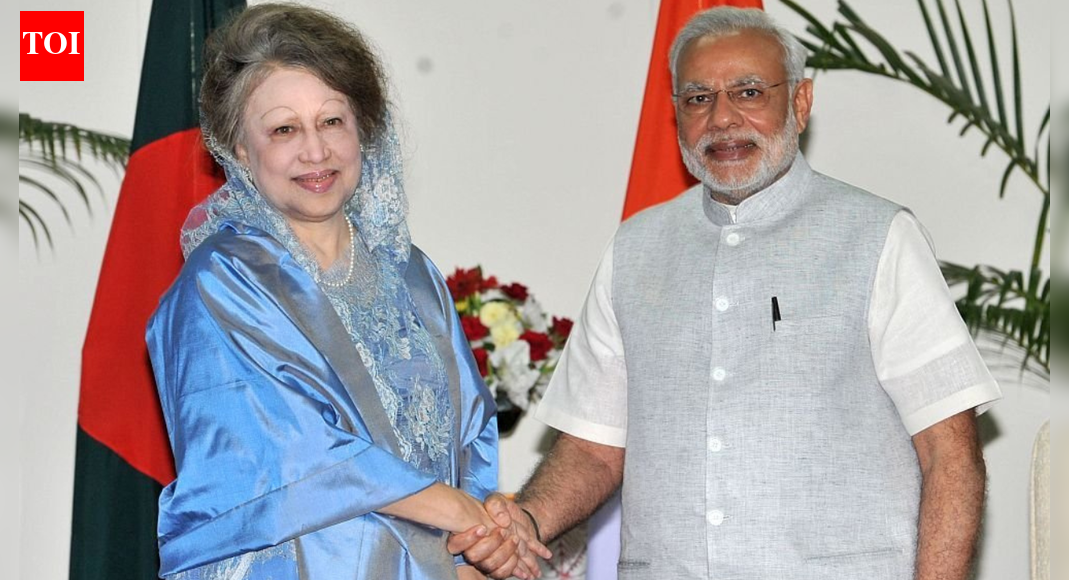
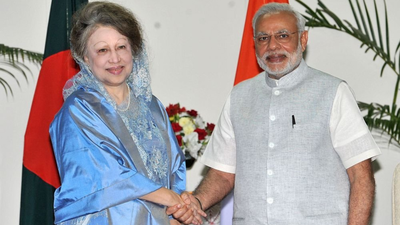
NEW DELHI: The Bangladesh Nationalist Party (BNP) thanked Prime Minister Narendra Modi for his condolence message on the death of former Bangladesh prime minister Khaleda Zia, recalling her role in strengthening India-Bangladesh relations.“We sincerely appreciate your message of condolence and remembrance, Honourable @narendramodi. Begum Khaleda Zia’s contributions to Bangladesh–India relations will be remembered,” the BNP said in a post on X.

From First Woman PM To Fierce Rivalry: Khaleda Zia’s Three Terms That Redefined Bangladesh Politics

Zia, a two-time prime minister and the BNP’s founding leader, died on December 30 after a prolonged illness. External affairs minister S Jaishankar represented India at Zia’s funeral on Wednesday and handed over a letter of condolence from PM Modi to BNP leader and Zia’s son, Tarique Rahman. During his meeting with Rahman, Jaishankar expressed confidence that Zia’s “vision and values” would guide the future development of the partnership between India and Bangladesh. Rahman, the BNP’s acting chairman and Zia’s eldest son, is a front-runner for the prime minister’s post in the parliamentary elections scheduled for February 12.India-Bangladesh relations have faced strain since the ouster of ex-PM Sheikh Hasina and following the installation of an interim government led by Muhammad Yunus. New Delhi has also raised concerns over attacks on minorities, particularly Hindus, in Bangladesh.


Source link

BMC polls: Thackeray brothers unveil joint manifesto ‘Vachan Nama’; vow Mumbai mayor will be ‘Marathi’ | India News


BMC polls: Thackeray brothers unveil joint manifesto ‘Vachan Nama’; vow Mumbai mayor will be 'Marathi'
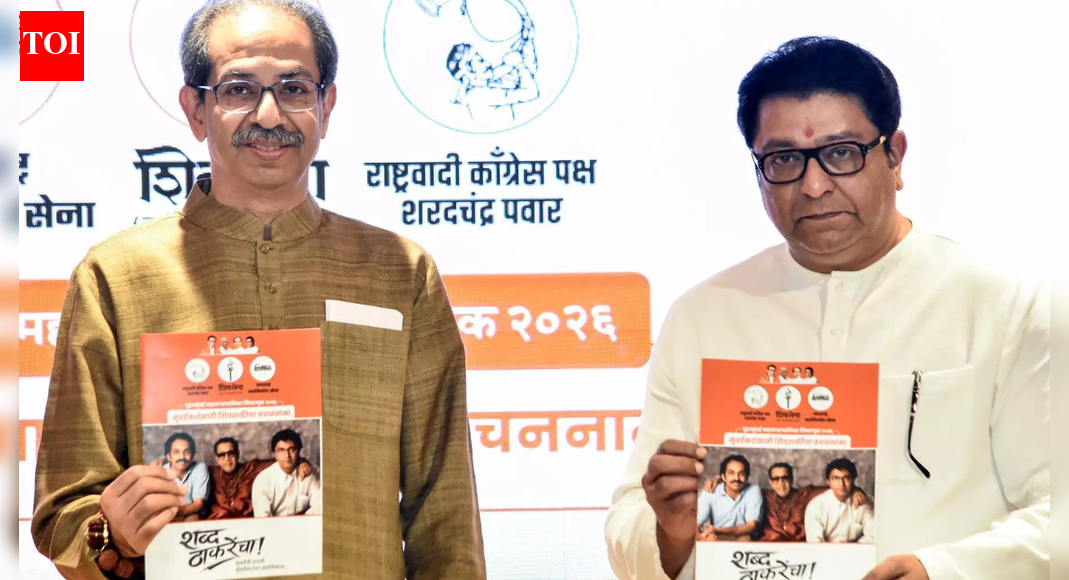
Uddhav Thackeray and Raj Thackeray jointly unveiled their manifesto, ‘Vachan Nama’ (ANI image)

NEW DELHI: Shiv Sena (UBT) chief Uddhav Thackeray and Maharashtra Navnirman Sena (MNS) president Raj Thackeray on Sunday jointly unveiled their manifesto, ‘Vachan Nama’, for the upcoming Brihanmumbai Municipal Corporation (BMC) elections scheduled for January 15. This marks a major step in their renewed political alliance.The manifesto was released at a joint press conference at Shiv Sena Bhawan in Mumbai, a venue Raj Thackeray returned to after nearly two decades. The cover of the manifesto prominently features the Thackeray cousins along with Shiv Sena founder Balasaheb Thackeray.

‘Batenge Toh Katenge’: Uddhav & Raj Thackeray Unite For Mumbai Civic Polls | Shiv Sena (UBT) | MNS

Speaking after the release, Uddhav Thackeray asserted that “Mumbai’s mayor will be a Marathi”. The similar sentiment was also echoed by Raj Thackeray, who said that the mayor of Mumbai and other cities in Maharashtra must be Marathi and that the Marathi language must be respected.The Shiv Sena (UBT)-MNS alliance promised a range of civic reforms, including affordable housing and stronger infrastructure in healthcare, public transport and education. Under the manifesto, women working as domestic help and Koli women will receive a monthly allowance of Rs 1,500 through the proposed Swabhiman Nidhi scheme. The alliance also pledged to reduce the minimum bus fare from Rs 10 to Rs 5, add more buses and routes, scrap property tax on homes up to 700 square fee and ensure one parking space per flat in redeveloped buildings.Both leaders strongly attacked the BJP-led Mahayuti government over candidates winning civic seats unopposed. Uddhav Thackeray demanded that elections in such wards be cancelled and the polling process restarted, alleging that voters were being denied their democratic rights. He claimed that democracy was being undermined. “The atmosphere in the country is like democracy has been taken over by mobocracy,” Shiv Sena (UBT) chief said.Accusing the ruling parties of manipulating the electoral process, Uddhav alleged that after “vote-stealing”, they had now begun “stealing candidates”. The Shiv Sena (UBT) leader further urged the State Election Commission to cancel polls in such wards and restart the election process.“If the SEC has courage, it should cancel elections where candidates were chosen unopposed, initiate poll process again in those wards,” Uddhav said. The former Maharashtra chief minister also alleged large-scale corruption in the functioning of the BMC since his government was removed in 2022. He claimed that while the civic body’s annual expenditure is around Rs 15,000 crore, advance mobilisation payments to contractors amount to nearly Rs 3 lakh crore, calling it a massive scam whose proceeds were allegedly being used to influence elections.Uddhav Thackeray further targeted Maharashtra Assembly Speaker Rahul Narwekar, accusing him of threatening candidates and voters and interfering in the nomination process. He demanded Narwekar’s immediate suspension, alleging violations of the model code of conduct and tampering with CCTV footage linked to the filing of nominations. Narwekar has dismissed the allegations as politically motivated.Raj Thackeray warned the ruling party that power is not permanent and accused the BJP of setting dangerous precedents. He questioned the party’s silence over unopposed victories in Maharashtra, recalling that it had earlier approached the Supreme Court over similar issues in West Bengal.The Maharashtra State Election Commission has sought a detailed report from the BMC chief following complaints that nomination forms were rejected in certain Colaba wards, where relatives of Speaker Narwekar are contesting.Polling for 29 municipal corporations across Maharashtra, including Mumbai, Pune and Pimpri-Chinchwad, will be held on January 15, with counting scheduled for January 16. Elections will be held for 2,869 seats across 893 wards, with Mumbai accounting for 227 seats.Seat-sharing between Shiv Sena (UBT) and the MNS for the BMC polls has been formally finalised. Under the arrangement, Shiv Sena (UBT) will contest 145 to 150 seats, the MNS 65 to 70 seats, while 10 to 12 seats have been allocated to the NCP.


Source link

Industrial leaders meet Uttar Pradesh CM Yogi Adityanath to discuss investment | India News


Industrial leaders meet Uttar Pradesh CM Yogi Adityanath to discuss investment

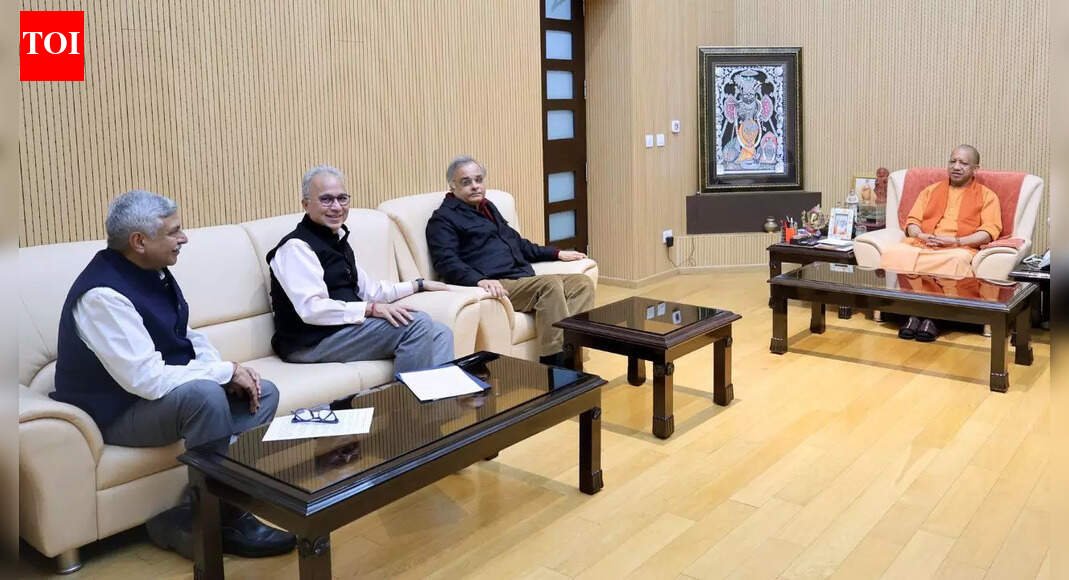
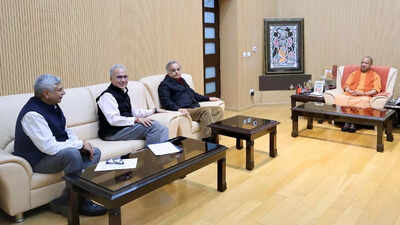
NEW DELHI: Industrial leaders from across India met Uttar Pradesh chief ministry Yogi Adityanath to discuss investment and expansion opportunities, citing improved administrative stability and law and order in the state.A delegation including Rajiv Memani, president of the Confederation of Indian Industry (CII); Umashankar Bhartia, chairman of India Glycols Ltd; and Sunil Mishra held detailed discussions on industrial growth, infrastructure development, and investment facilitation. During the meeting, the representatives said that working on the ground had become more streamlined, with projects progressing in a timely manner compared to previous years.The leaders cited development of expressways, industrial corridors, airports, logistics hubs, basic facilities and law & order for the ease of doing business.The state government’s single-window system, Nivesh Mitra, currently offers more than 525 services across 43 departments. The upgraded Nivesh Mitra 3.0 will be launched soon, incorporating AI and chatbot features.


Source link

A pivotal year beyond Earth: Scientific missions set to redefine space exploration in 2026 | India News


A pivotal year beyond Earth: Scientific missions set to redefine space exploration in 2026

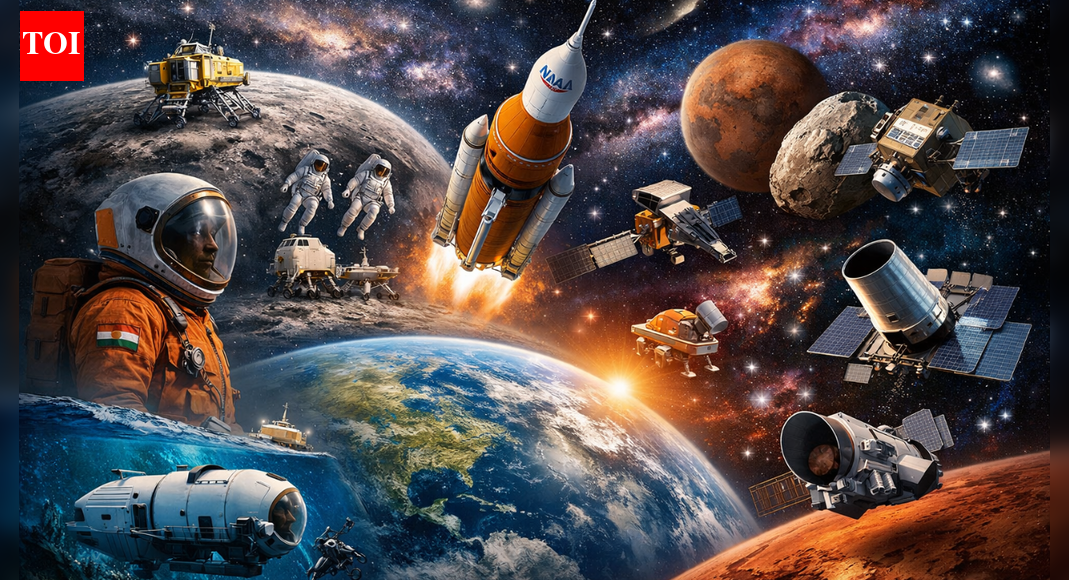
One may easily regard oneself as no more than a speck compared to the universe. Thirteen and eight-tenths billion years after the Big Bang, the universe has expanded to such an extent that light, moving at its absolute speed, requires billions of years to traverse it. There are hundreds of billions of galaxies that shine in our telescopes, and they are all full of stars, planets, and uncountable potentialities. Interestingly, this vastness will no longer find itself being viewed from afar and through imagination. The year 2026 holds great promise for humanity, which will be on the cusp of this great transitional year.The driving force behind this juncture in space exploration is a call to explore and observe space in a way that revisits the best traditions of the 20th century and presses forward into the future.

Image: NASA

Image: NASA

India is pushing on many frontiers all at once. The Gaganyaan program is getting ready for its first test mission of astronauts into low Earth orbit, joining an elite club of countries that can undertake independent human spaceflight. Meanwhile, India’s Samudrayaan mission brings into relief a more holistic approach to exploration-that which reaches not only upwards into space but deep inside the Earth’s oceans.NASA’s Artemis II mission will make history early to mid-2026 as the first time humans will have traveled to the Moon since the Apollo era. Meant to be a 10-day journey, four astronauts will cruise around the Moon and back, testing life-support systems, navigation, and hardware that will be critical for future lunar landings. Artemis II won’t touch down on the Moon’s surface, but the symbolic weight of it is immense: it means humanity goes back to deep space with the dream of staying longer and going farther.Other countries are embarking on equally ambitious missions. China’s mission, Chang’e-7, which is set to launch in August, has set its sights on the mysterious south pole of the Moon, which has a cratered surface and permanent shadows where water ice is believed to be frozen. The ambitious mission to the lunar south pole will consist of an orbiter, a soft-lander, a rover, and a mini-prober. The mission answers one of the most vital questions related to lunar missions.However, after the Moon, focus is shifting towards Mars, with all the secrets it holds. The Martian Moons eXploration (MMX) mission by Japan aims to travel to Phobos, which is one of the irregular moons of Mars that is quite small. The aim of the mission is to retrieve samples from Phobos and bring them back to Earth. If accomplished, it will be the first successful sample return from a Martian moon, which will unlock answers regarding the history of the Red Planet.
Image: NASA

Image: NASA

To the many missions underway are being joined by powerful new telescopic visions of our universe. The PLATO space telescope, being planned by the European Space Agency for the end of 2026, will hunt for Earth-like planets and will concentrate on planets that could potentially support life on their surfaces. The Xuntian space telescope, being planned for orbit around the Tiangong space station, will survey the universe in broad fields of interest such as galaxies and dark matter.Closer home, the solar observatory Aditya-1 L1, launched by India, is expected to offer a unique perspective on the sun, especially when it is at its peak, thereby assisting scientists in gaining a holistic understanding of the solar storm, which may impact life on Earth.Collectively, these missions make the year 2026 far more than a crowded space calendar. It represents a point in time where humanity is reaching out to the stars, back to our own star, and forward to a place in time where exploration, whether it be space or the ocean, is integral in understanding our place within this huge universe we call home.

G1 Mission: India’s acid test for human spaceflight

With the G1 mission, an uncrewed orbital test under the Gaganyaan programme tentatively scheduled for March 2026, India is hoping to take a serious leap forward in human spaceflight. As a full dress rehearsal for crewed missions, G1 will be used to determine whether the systems of India’s spacecraft can safely support astronauts in orbit and bring them back to Earth.This mission is scheduled to be launched aboard ISRO’s human-rated LVM3 rocket, carrying a humanoid robot called Vyommitra. This is intended to simulate astronaut responses and monitor crew-centric systems. Operating on a Low Earth Orbit of around 300-400 kilometres, the spacecraft will put critical technologies through real-flight conditions, including life support functions, communication links, and onboard safety systems.
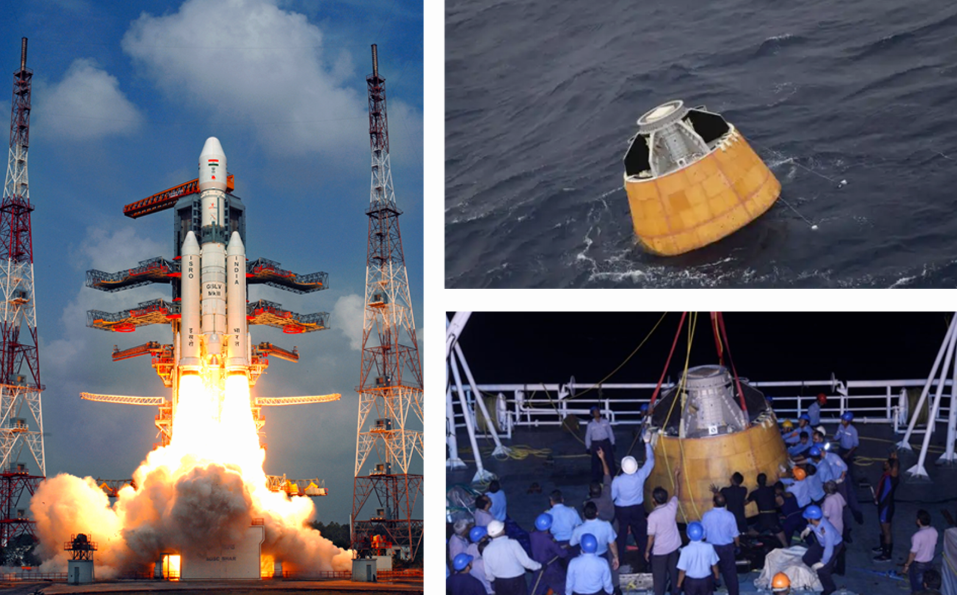
Image: ISRO

Image: ISRO

One of the areas of emphasis of the new spacecraft will be the return to Earth’s atmosphere and the recovery phase, which includes surviving high temperatures in the atmosphere, parachute deployment, and landing in the ocean on schedule. This is one of the most challenging and high-risk areas of human space travel.If successful, the G1 mission would put India on the brink of its maiden manned spaceflight and put the country in a select league of nations with the ability to send humans on their own space vehicles. Notably, the maiden human spaceflight by India represents a crucial point in the country’s space program.

Artemis II: Humanity’s first crewed return to deep space in half a century

NASA’s Artemis project, originally announced as far back as 2017, with the goal of landing men on the lunar surface and ultimately establishing a presence there, has at last reached a crucial moment in its development: its maiden human mission. Scheduled now as potentially happening as early as February, Artemis II cements mankind’s long-overdue presence in deep space.When Artemis II blasted off, it marked the first time that astronauts would journey outside the Low Earth Orbit since Apollo 17 in 1972. More than five decades have passed since humans flew beyond their territorial zone, visiting space via space shuttles and the International Space Station. However, Artemis II marked a turning point as it headed towards the Moon again.
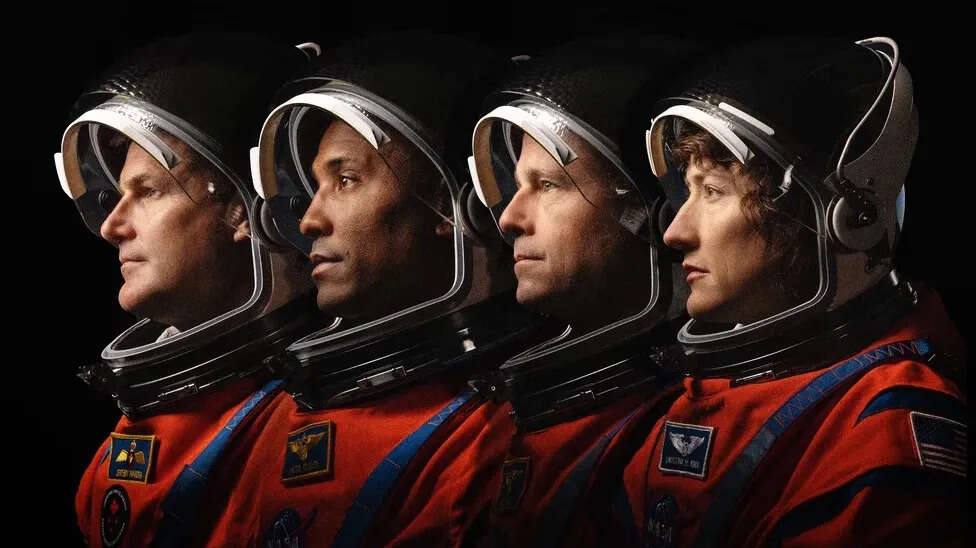
Image: NASA

Image: NASA

Four astronauts will also make the journey as part of the mission, consisting of NASA’s Reid Wiseman, Victor Glover, and Christina Koch, as well as the Canadian Space Agency’s Jeremy Hansen. Together, they will undertake a journey around the Moon, taking a path that is inspired by the adventurous spirit of the historic Apollos, yet also driven by the challenges of the current age. Though they will not go to the surface, the path they are taking is a crucial one for those who will follow.However, returning to deep space after a longer period comes with a lot of challenges. Although NASA has relied on what was learned during the Apollo missions, Artemis is not a repeat program. The objectives are bigger, and the technology is more complex. The Artemis II is not a repeat program but rather a systems-scale test. The mission aims to prove the capability to transport humans far away from Earth.Orion’s orbital profile plays a crucial part in this mission. Instead of flying an orbital profile like the Apollo missions, which took it into a small orbit around the Moon, the Orion spacecraft for Artemis II has a long-sweeping orbit around the Moon. This type of “free return” orbital profile has been designed in such a way that it helps the spacecraft fall back into the orbit of the Earth even in the case of a significant propulsion system failure.When slingshotting back towards the Earth, the crew of the Orion spacecraft will have a historic opportunity to view the Earth’s closest neighbour. This is an opportunity most people have not had. More importantly, the Artemis II mission is not meant to plant a flag or leave a physical mark but pave the way for a mission to not only visit the moon but stay there. Artemis II is not about leaving footprints on the moon, but it’s about preparing for the next step.

Chang’e-7: China targets the water-rich south pole of the moon

The Chang’e-7, finally approved in September of last year, denotes the latest chapter in a continually expanding lunar program, as the Chinese are scheduled to send an orbiting and landing expedition in 2026. The Chang’e-7, based on an extensive series of advances spanning a dozen years, is not a standalone mission but rather an intricate, multi-element expedition specifically focused on the scientifically most fascinating region of the Moon, namely the lunar south pole.
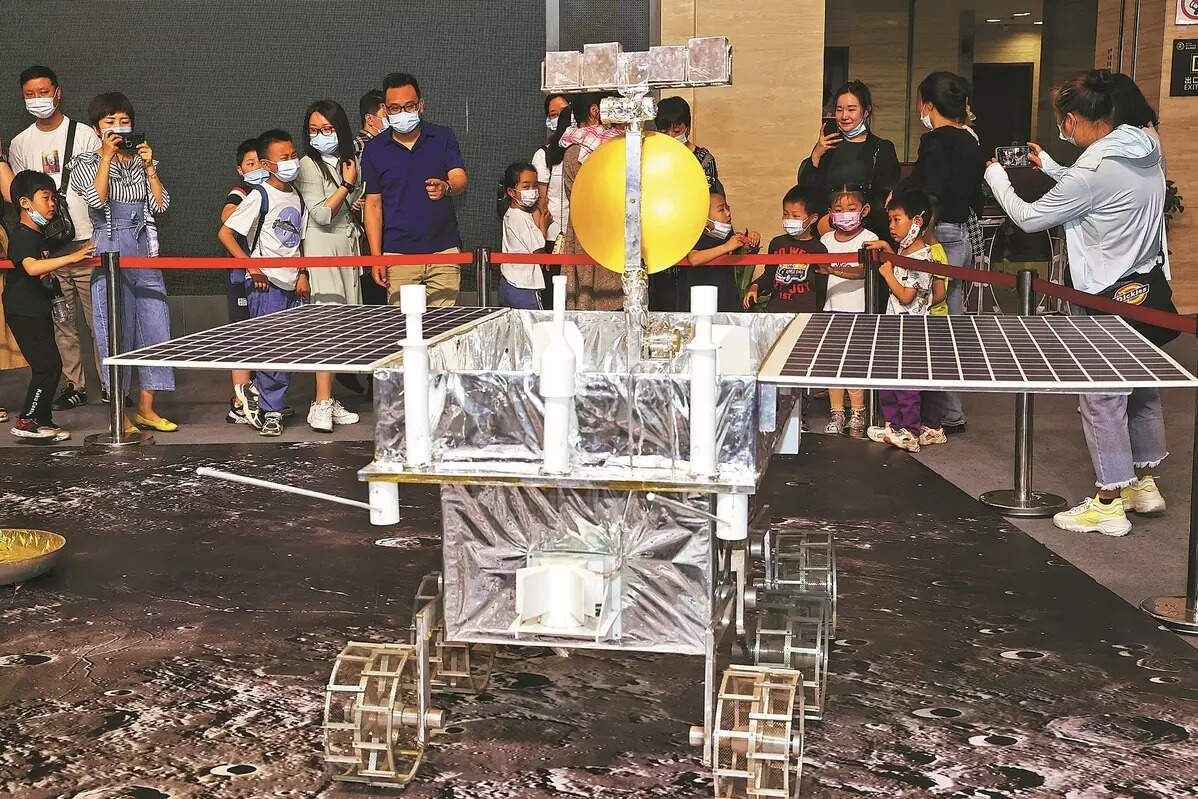
Image: CNSA

Image: CNSA

Weighing around 8,200 kilograms, this spacecraft symbolises the growing maturity of China’s Chang’e series. While previous missions like Chang’e-3 and Chang’e-4 concentrated on precise landings and lunar surface exploration, other missions like Chang’e-5 and Chang’e-6 were equipped with orbiters and ascent vehicles to facilitate return missions from lunar surface samples. For Chang’e-7, it has been decided that the lunar ascending and return to Earth spacecraft would not be included, and this reduction has been utilised to enhance lunar surface exploration.The launch is expected to take place with a Long March-5 heavy-lift rocket, with the spacecraft named Chang’e-7, from Launch Complex 101 at Wenchang Space Launch Site, located on Hainan Island. Currently, the target launch window, as indicated by officials, is August 2026, although this is to be confirmed by readiness in several areas of the launch.

Aditya-L1 and the Sun’s most violent phase

For India’s first space-based solar observatory, Aditya-L1, 2026 promises to be a remarkable year. Although the mission was placed into its operational orbit earlier, it is only now approaching the phase scientists have been waiting for most keenly: observing the Sun at the peak of its activity cycle. This period, known as the “solar maximum”, offers a rare and powerful window into the most violent processes unfolding on our nearest star.The solar maximum occurs roughly every 11 years, when the Sun’s magnetic field undergoes a dramatic reversal—its north and south magnetic poles effectively swap places. During this phase, the Sun shifts from a relatively calm state to one marked by turbulence and instability. Sunspots multiply, solar flares intensify, and the frequency of coronal mass ejections (CMEs) rises sharply. These vast eruptions, which hurl enormous bubbles of superheated plasma from the Sun’s outer atmosphere or corona, can appear like colossal fireballs racing through space.
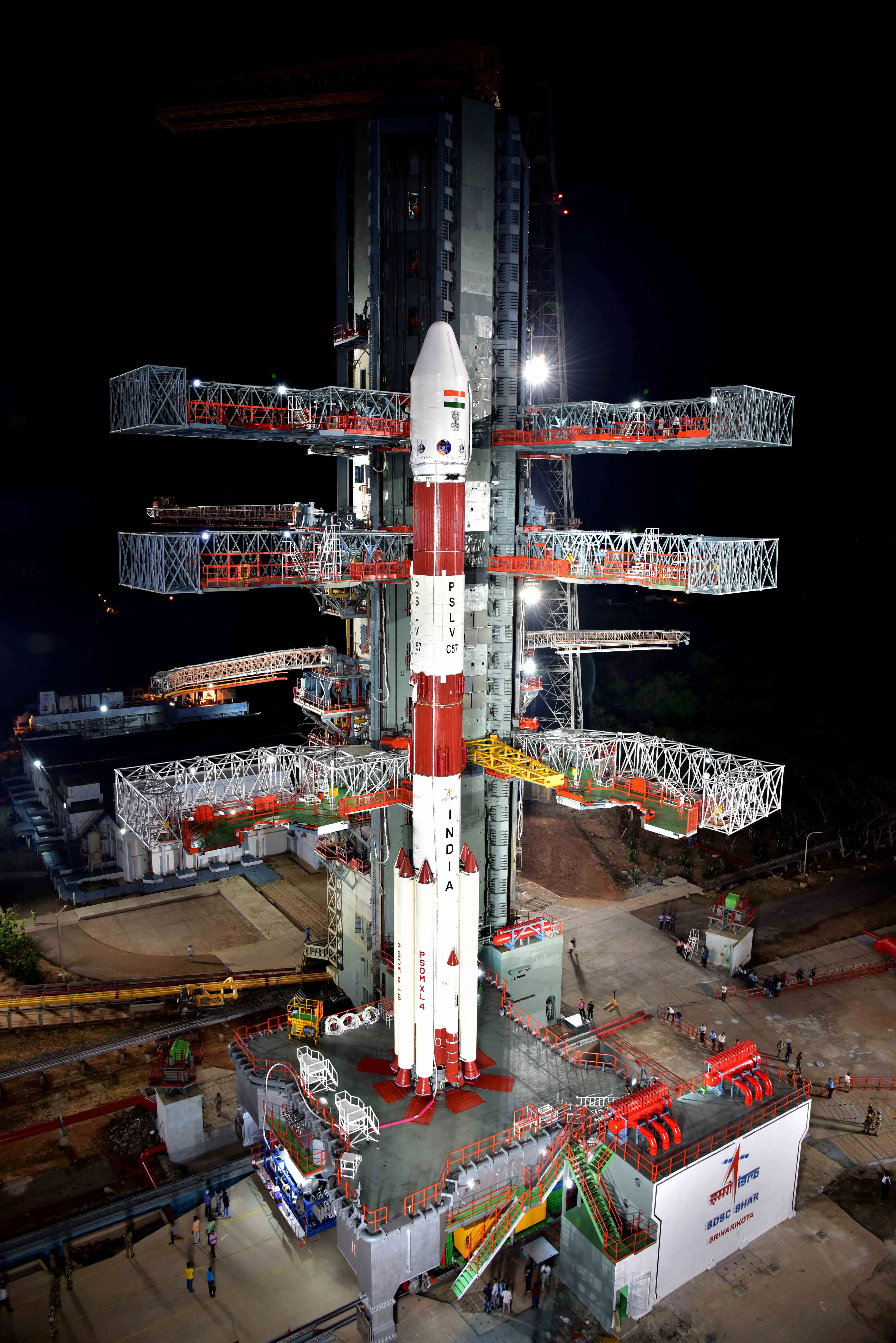
Image: ISRO

Image: ISRO

Understanding CMEs lies at the heart of Aditya-L1’s scientific mission. While CMEs rarely pose a direct threat to human life, their interaction with Earth’s magnetic field can trigger geomagnetic storms that disrupt satellite operations, navigation systems, radio communications, and power grids.The stakes are growing as Earth’s near-space environment becomes increasingly crowded. Nearly 11,000 satellites currently operate in orbit, including more than 130 from India. Disturbances caused by intense solar activity can alter satellite trajectories, degrade electronics, and increase atmospheric drag, shortening mission lifetimes. Reliable data on solar eruptions is therefore not just a scientific pursuit but a practical necessity.What sets Aditya-L1 apart is its unique ability to study solar eruptions in visible light. Its coronagraph can directly observe CMEs close to the Sun and measure their temperature and thermal energy, key indicators of how powerful an eruption might be if it were to travel toward Earth. These observations can help scientists assess the potential impact of solar storms with greater accuracy than before.As the Sun enters its most active phase, Aditya-L1 is poised to deliver insights that could reshape our understanding of solar behaviour while strengthening space weather forecasting. In doing so, the mission places India at the forefront of a field that is becoming ever more critical in an increasingly space-dependent world.

PLATO: Europe’s new eye in search for other Earths

Scheduled to begin operations in late 2026, the European Space Agency’s PLATO mission aims to revolutionise the search for Earth-like planets beyond the solar system. Using an arrangement of 26 cameras, PLATO will monitor around 200,000 stars in the Milky Way, focusing on Sun-like stars that may host rocky planets with conditions suitable for life.The mission will rely on the transit method, detecting tiny dips in starlight as planets pass in front of their host stars. Its overlapping fields of view will allow for long, precise observations, helping scientists identify and characterise extrasolar planets while also studying properties such as age and structure.
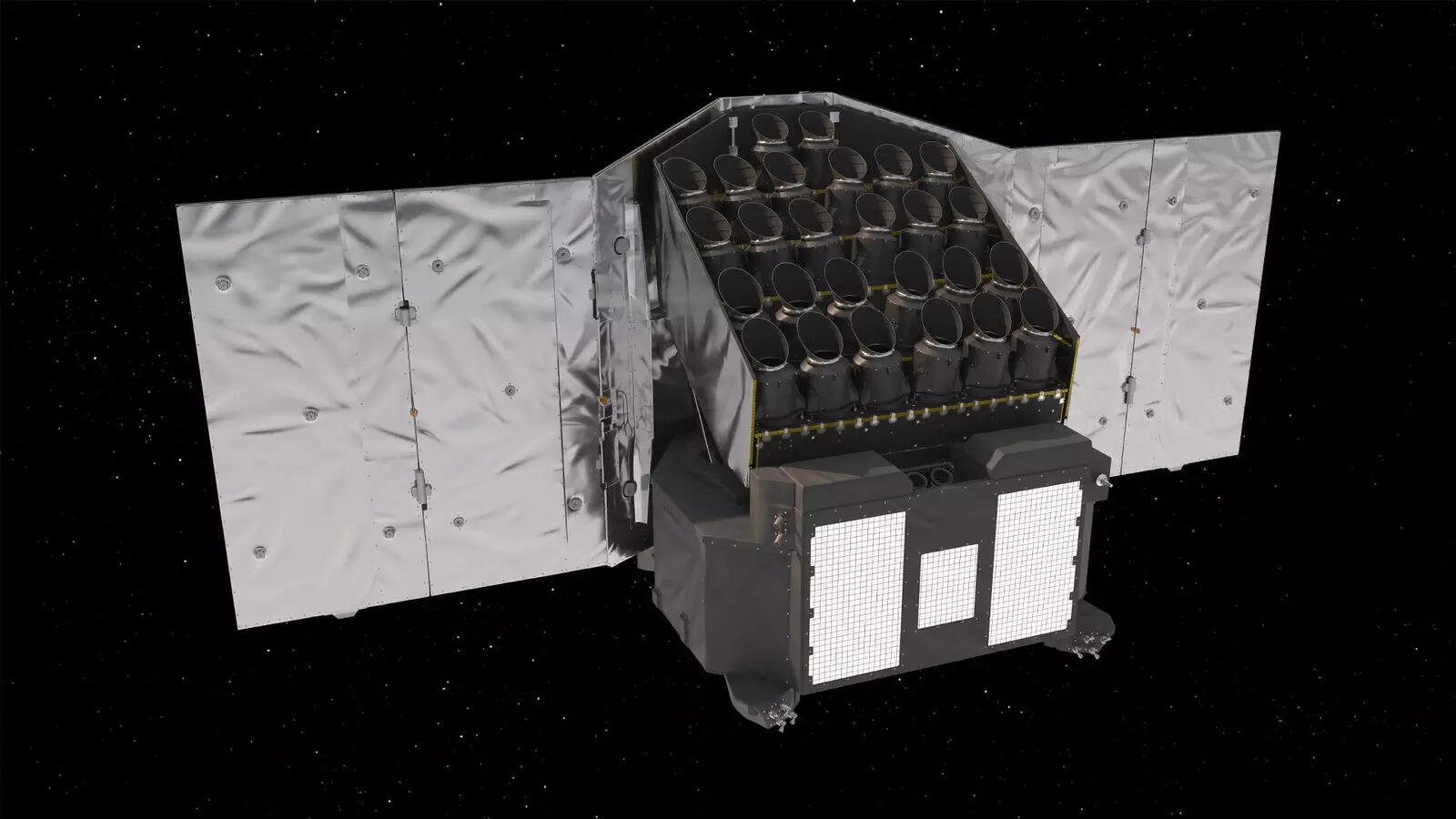
Image: ESA

Image: ESA

PLATO will be the first scientific mission launched aboard Europe’s new Ariane 6 heavy-lift rocket from Kourou. After launch, it will be sent to the Sun–Earth Lagrange point 2, about 1.5 million kilometres from Earth, the same stable region used by the James Webb Space Telescope. Led by Germany’s DLR, the mission is expected to mark a major step forward in Europe’s quest to find worlds beyond our own.

Source link

Buddha’s Piprahwa relics, back in India after 127 yrs, to go on display | India News


Buddha’s Piprahwa relics, back in India after 127 yrs, to go on display

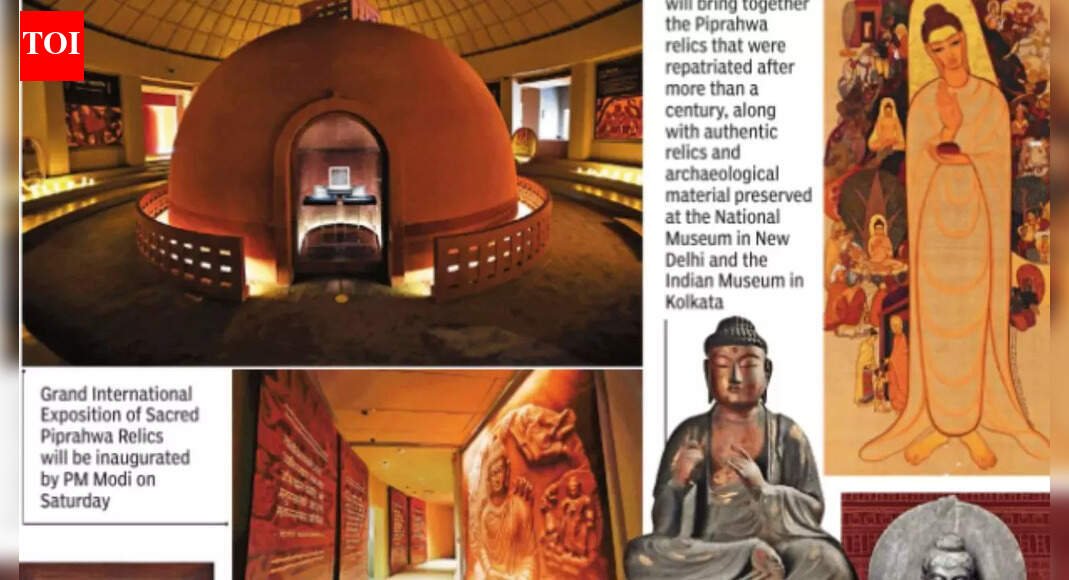
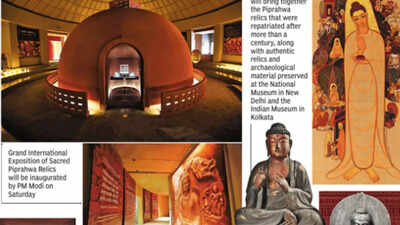
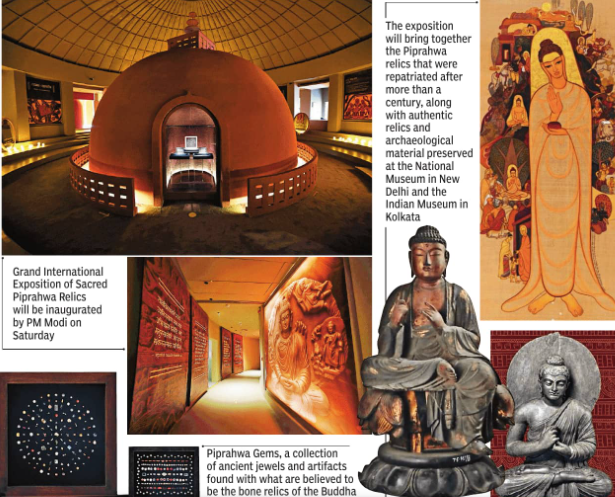
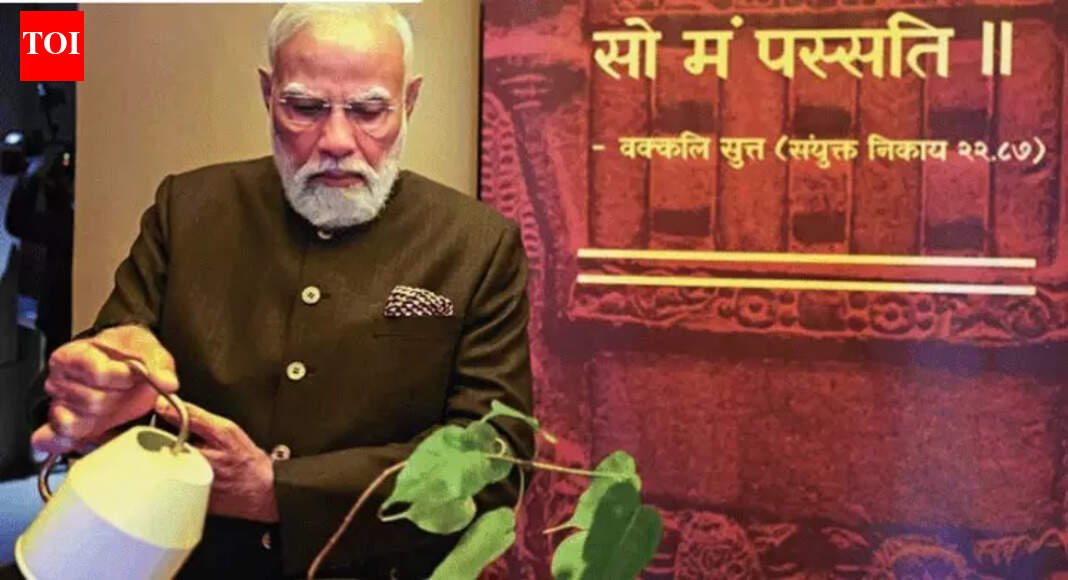
NEW DELHI: India will showcase its soft power to the world on Saturday through what is being cited as a first of its kind landmark exposition of Buddha’s Piprahwa relics, reliquaries and gem relics, recently repatriated to India.Set to be inaugurated by Prime Minister Narendra Modi at the iconic Rai Pithora Cultural Complex in Delhi, the repatriated Piprahwa gem relics constitute the most extensive assemblage of authenticated relics attributed to the Buddha thus far documented. The exhibtion featuring over 80 objects spanning the 6th century BCE to the present, includes sculptures, manuscripts, thangkas, and ritual objects.

‘Slavery Destroys Heritage’: PM Modi’s Big Message After Unveiling Sacred Buddha Piprahwa Relics

Titled ‘Light and the Lotus: Relics of the Awakened One’, the display marks the “reunification of the Piprahwa gem relics of Lord Buddha, repatriated after 127 years, with relics, gem relics, and reliquaries from 1898 and then 1971-1975 excavations at the Piprahwa site,” the govt said in a statement. It highlighted that the exhibit “commemorates the ministry of culture’s successful repatriation of the relics in July 2025, achieved through a public-private partnership, halting an auction at Sotheby’s Hong Kong.

Screenshot 2026-01-04 115430

.

PM Modi said in his post that the inauguration of the “grand international exposition” will mark a very special day for those passionate about history, culture and the ideals of Bhagwan Buddha.”“For the first time since the 1898 excavation, the exposition brings together relics from the 1898 Kapilavastu excavation, treasures from the 1972 excavation, reliquaries and jewelled treasures from the Indian Museum, Kolkata, recently repatriated relics from the Peppé family collection and monolithic stone coffer within which the gem relics and reliquaries were originally found,” the minisry said.At the picturesque Rai Pithora Cultural Complex guests will get to enter through a gateway inspired by the earliest southern torana of Sanchi, celebrated for its Ashokan four-lion capital and intricately carved panels portraying scenes from Buddha’s life in aniconic forms.At the heart of the exhibition, a stupa model features three niches displaying key findings from the Piprahwa excavation: the first displays sacred bone fragments from the National Museum, Delhi, alongside gem relics, an inscribed steatite casket, and a crystal casket with a fish handle from the Indian Museum, Kolkata.The sacred Buddha relics were discovered in 1898 by William Claxton Peppé at the ancient stupa of Kapilavastu. Following their discovery, portions were distributed globally, with one part gifted to the King of Siam, another taken to England, and a third preserved at the Indian Museum, Kolkata.


Source link

Indian Army creates ‘modern warfare force’ with over one lakh drone operatives, new Special Forces Bhairav raised for modern warfare | India News


Indian Army creates 'modern warfare force' with over one lakh drone operatives, new Special Forces Bhairav raised for modern warfare

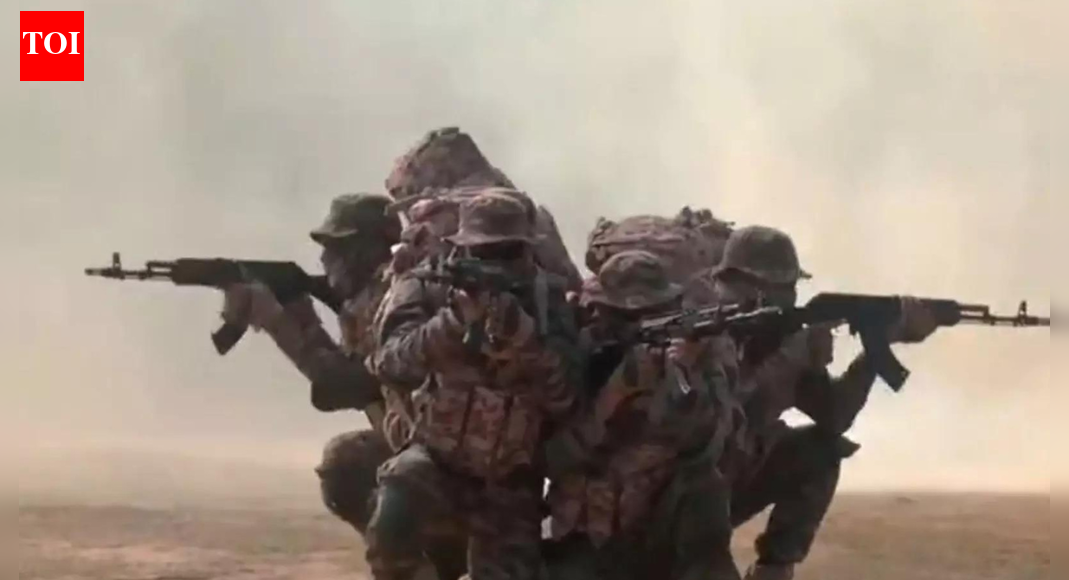
NASIRABAD: At a time when the Centre is pushing for restructuring the defence forces, the Indian Army has carried out one of the biggest ever transformations to meet modern warfare challenges creating a pool of over one lakh drone operatives across the force.Bhairav, the latest Special Force raised by the Indian Army- is being readied to tackle the challenges of modern warfare, as all operatives are capable of handling drones and use them in real operations for targeting bases and formations inside enemy territory.Team visited one of the newly raised Bhairav battalions in the desert sector under the Southern Command, where it witnessed the capabilities of the troops who had been selected from Infantry regiments to raise the Special Force and were being given special training as per the requirements of modern warfare. The Bhairav battalions raised by Army Headquarters with lessons from global and own conflicts in mind, have been created to provide a dedicated force for high-speed, offensive operations to carry out the Special Forces tasking at multiple levels as per requirements.The Indian Army has raised around 15 of these battalions already, and they have been assigned to different formations on both borders and have plans to raise around 25 of them in total in the near future.The Bhairav battalions would also bridge the gap between the Para Special Forces and the regular Infantry battalions. The Bhairav would also be tasked to carry out Special Operations at tactical to operational depth.“Modern warfare is changing at a very rapid pace. The conflicts of today are hybrid in nature, and one needs to be fully equipped with modern technology to be able to deal with the Challenges. The Bhairav battalions have also been created as part of the force restructuring, which have been raised in line with the requirements of modern technology, new thought process and as per the new operational requirements,” Commanding Officer of the 2 Bhairav Battalion told ANI in an exclusive interview.“I am the Commanding officer of the desert Bhairav battalion of the Southern Command of the Indian Army. The desert has its own challenges where special skill sets, endurance and technology are required to be used in the right way. That is why the Bhairav has been raised as a technology-driven system which can operate independently and carry out multi-domain operations in the future,” he added. Explaining about the formation of the unit, the Commanding officer said, “The desert Bhairav Battalion has been raised on the concept of ‘Sons of the Soil’ as the majority of the troops are from Rajasthan who can understand the terrain, language, weather and the area. The battalion has been built upon the legacy of the valour and gallantry of Rajanghan, and that is our biggest strength. We are ready to meet any challenge in the desert sector.The Bhairav battalions have trained very hard in the last five months since their raising, using modern technology and carried out successful operational validation during the Exercise Akhand Prahar, where the troops showcased their readiness in the presence of Southern Army Commander Lt Gen Dhiraj Seth.The Commanding Officer said the force was evolving very strongly and emerging as the “Swift, Capable and Decisive” force of the Southern Command and the Indian Army. The Bhairav battalions would also be part of the India Army’s Army Day Parade at Jaipur to be held on January 15 this year. The 2 Bhairav, also known as the Desert Falcons, would be taking part in the event.The Indian Army has also carried out major force restructuring keeping in mind the operational requirements and created Rudra Brigades, which are all-arms formations that combine infantry, mechanised units, tanks, artillery, special forces, and unmanned aerial systems with dedicated logistics and combat support.The Artillery, Mechanised Infantry and the Armoured Corps are also being equipped with modern warfare equipment like drones and other capabilities to be able to perform tasks more efficiently.


Source link

Sacred Buddha relics inseparable part of our civilisation: PM Modi | India News


Sacred Buddha relics inseparable part of our civilisation: PM Modi

NEW DELHI: Calling India not only the custodian of Lord Buddha’s sacred relics but also the living carrier of his tradition, Prime Minister Narendra Modi on Saturday inaugurated a first-of-itskind international exposition of the Buddha’s Piprahwa relics, reliquaries and gem relics that were recently repatriated to India.Noting that the the departure from India and eventual return of the sacred relics of Buddha are both significant lessons in themselves, PM Modi stressed “slavery is not only political and economic, but it also destroys our heritage”. He remarked that the same happened with the sacred relics of Lord Buddha, which were taken away during colonial rule.

‘Slavery Destroys Heritage’: PM Modi’s Big Message After Unveiling Sacred Buddha Piprahwa Relics

He asserted that “for India, the sacred relics are not merely artefacts; they are a part of our revered heritage and an inseparable part of our civilisation”.PM also reflected on India’s role in spreading the message of Buddha around the world with the sacred relics having travelled from India to different countries with significant Buddhist populations, including Vietnam, Thailand, Mongolia and Russia, “where waves of faith and devotion arose” with people turning up to pay homage in large numbers.Speaking at the function organised at Qila Rai Pithora Cultural Complex where he inaugurated the exposition ‘Light and the Lotus: Relics of the Awakened One’, PM underlined that this “shared heritage of Lord Buddha is proof that India is not connected merely through politics, diplomacy and economy, but through deeper bonds. We are connected through mind and emotions, through faith and spirituality.”On the site of the exhibition which will be open to public from Sunday, PM said the space reflected India’s glorious history, where nearly a thousand years ago former rulers established a city surrounded by strong and secure walls.He recalled that the sacred relics returned to India after more than 125 years at the intervention of govt and the Godrej Group.Highlighting that Buddha’s Abhidhamma, his words, and his teachings were originally in Pali, PM Modi said, “We are striving to make Pali accessible to the common people. For this reason, Pali has been accorded the status of a classical language, which will make it easier to understand and explain the Dhamma in its original essence.”Striking a personal note, Modi said his birthplace, Vadnagar in Gujarat, was a major centre of Buddhist studies and Sarnath near Varanasi, where Lord Buddha delivered his first sermon, was his karmabhoomi . Modi is MP from Varanasi. He also shared that during his travels to China, Japan, Korea, and Mongolia, he carried saplings of the Bodhi tree.


Source link