Breaking News
India tightens digital security with strict rules | India News


India tightens digital security with strict rules

NEW DELHI: India has tightened its digital security framework, mandating stricter compliance for telecom equipment, CCTV systems and data protection, amid heightened concerns over vulnerabilities in surveillance infrastructure and emerging espionage risks flagged by recent investigations.The move comes against the backdrop of long-standing concerns over the widespread use of imported CCTV equipment -particularly from Chinese manufacturers-in critical and public surveillance networks. These concerns have sharpened after security agencies recently stumbled upon Pakistan-linked espionage modules operating within India, raising fresh questions about potential exploitation of unsecured surveillance systems.Global precedents have also underscored the risks. Security experts have pointed to instances such as Israel’s reported targeting of Iranian leadership, where infiltration of urban surveillance networks, including traffic cameras, enabled real-time tracking of high-value targets.Against this backdrop, the govt has notified mandatory Essential Requirements (ERs) for CCTV systems in the Indian market. The rules require disclosure of the origin of critical hardware components such as system-on-chip (SoC), testing against vulnerabilities that allow unauthorised remote access, and certification through accredited labs. So far, 507 CCTV models have been certified under these norms.Govt departments have been barred from procuring CCTV equipment that does not meet these standards, with ministries advised to secure existing video surveillance networks .At a broader level, the legal backbone has been strengthened through the Telecommunication Act, 2023 and the Digital Personal Data Protection Act, 2022. The earlier National Security Directive on Trusted Sources (2021) mandates procurement of telecom equipment only from approved vendors. Officials said it emphasized the growing importance of securing interconnected digital infrastructures .
Source link

Have PNG access but not switched? Govt will stop LPG refills | India News


Have PNG access but not switched? Govt will stop LPG refills

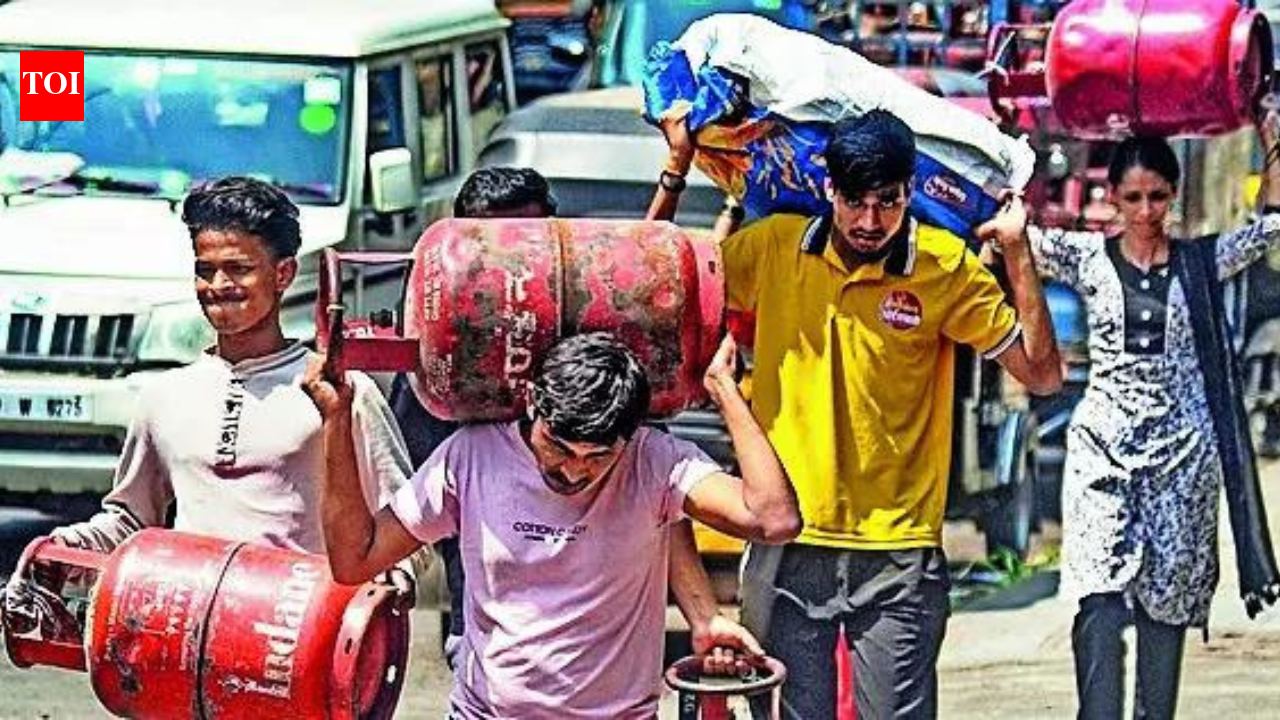
NEW DELHI: In a bid to wean away consumers from LPG, govt has decided to stop after three months the supply of cylinders to households which have access to piped natural gas but have shied away from taking a connection. India imports about 60% of its LPG requirement, with nearly 90% of it coming through the Strait of Hormuz. Though about half of the requirement of LNG – converted into PNG and CNG and also used by industries and power plants – is also imported, officials said its supplies remain comfortable. A senior official said even rented houses where tenants currently use LPG will have to switch. LPG supply will not be stopped if the authorised entity issues an NOC stating providing a PNG connection is technically not feasible. Officials said city gas distribution (CGD) companies will send a communication to LPG consumers who can switch to PNG. Timelines prescribed for grant of right of way or permissions to CGD firmsEyeing quick expansion of the piped gas network, govt has made it mandatory for authorities to grant right of way or permissions to CGD companies within prescribed timelines, failing which approvals will be deemed granted. The order, issued under Essential Commodities Act, focuses on reforms to fast-track approvals for laying pipeline infrastructure and ensuring time-bound permissions.


Source link

PDP MLA’s bill proposing new divisions, districts in J&K faces flak from NC, BJP | India News


PDP MLA’s bill proposing new divisions, districts in J&K faces flak from NC, BJP

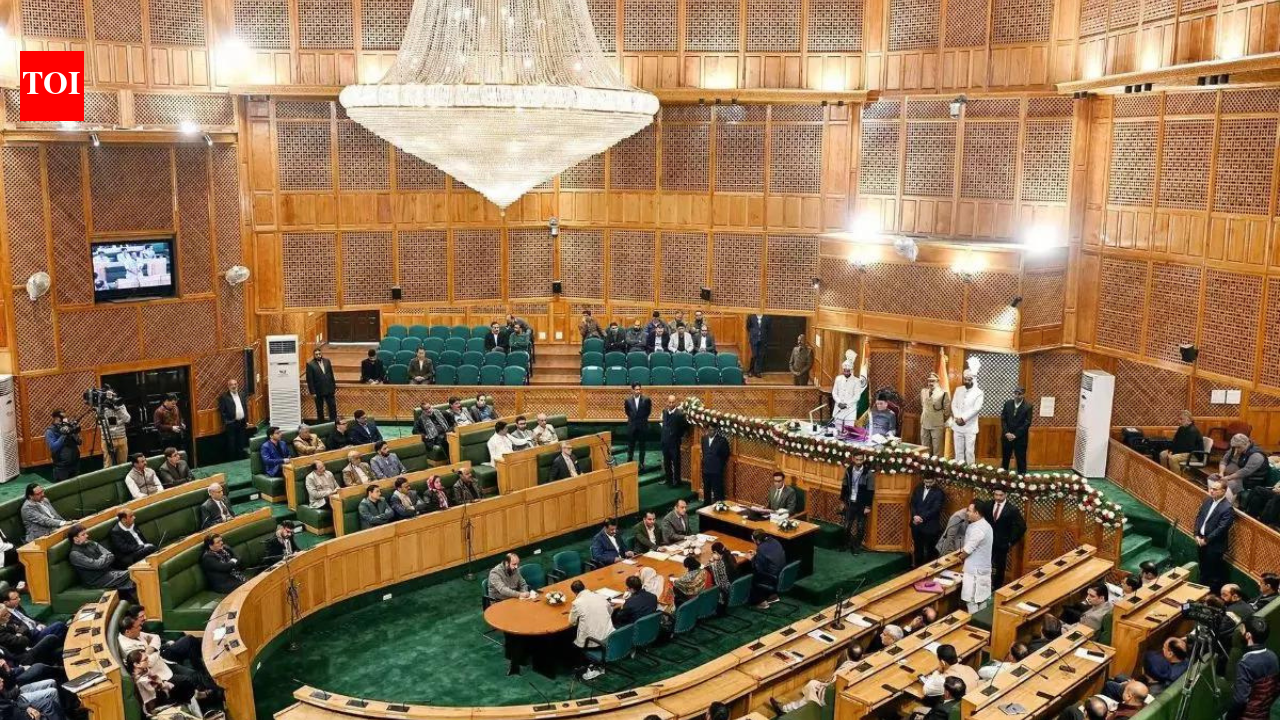
SRINAGAR: PDP legislator Waheed Parra’s private member’s bill proposing the creation of 16 new districts in J&K and two additional divisions in Jammu, has come in for scathing criticism from governing NC as well as opposition BJP, who questioned the intent behind the proposed legislation.NC said the bill was a “deliberate attempt to arouse public opinion and sabotage the govt’s intent to empower sub-regions”. BJP called the proposal divisive, and alleged it was in line with the design of Pakistan and ISI to create a ‘Greater Kashmir’.Parra submitted the Jammu and Kashmir Territorial Administrative Reorganisation Bill to the Assembly secretariat, proposing new administrative divisions and districts across the Union Territory to “improve governance and administrative reach”.The bill seeks the creation of two new divisions in Jammu — Chenab and Pir Panjal. It also proposes carving out eight additional districts each in Kashmir and Jammu. At present, J&K has two divisions, Jammu and Kashmir, each having 10 districts.The bill has gained traction on social media, stirring a debate, forcing political parties to respond. NC spokesperson Imran Nabi Dar said PDP’s move to bring in the proposals even as the govt is working towards empowerment of sub-regions reflected a different intent. It indicated a sabotage attempt, he alleged, questioning why the Mehbooba Mufti-led party was discussing new districts and divisions despite lacking the legislative strength to see the proposals through.During the tenure of PDP-BJP in 2016-17, a similar set of recommendations made by an expert committee was rejected by the govt. “Now when the NC govt is planning to empower sub-regions, the PDP is bringing in such bills to create distrust among people,” he said, terming it a “sabotage bill”.BJP alleged the proposals made in the bill aligned with ISI’s agenda. “The bill proposes two additional divisions for Jammu — one comprising Kishtwar and Doda, and another Rajouri and Poonch. They are referring to these as Chenab Valley and Pir Panjal regions. We do not accept these terms. This was part of ISI design in the 1990s to merge these Muslim majority areas with Kashmir and carve out a ‘Greater Kashmir.’ PDP is working on the same agenda. We will not allow it,” BJP spokesperson Altaf Thakur said.Pointing out that Kashmir has three regions traditionally referred to as Maraz (south Kashmir), Kamraz (north Kashmir), and central Kashmir, he asked: “Why don’t they create three divisions here as well? Why do they only want to break Jammu?”However, Thakur said there could be a case for creating three new districts in Kashmir, and if at all needed, three existing police districts in the Valley could be upgraded into full-fledged districts.


Source link

Transgender Persons Amendment Bill: Parliament passes bill to amend transgender law; two members of council for TG persons quit in protest | India News


Parliament passes bill to amend transgender law; two members of council for TG persons quit in protest

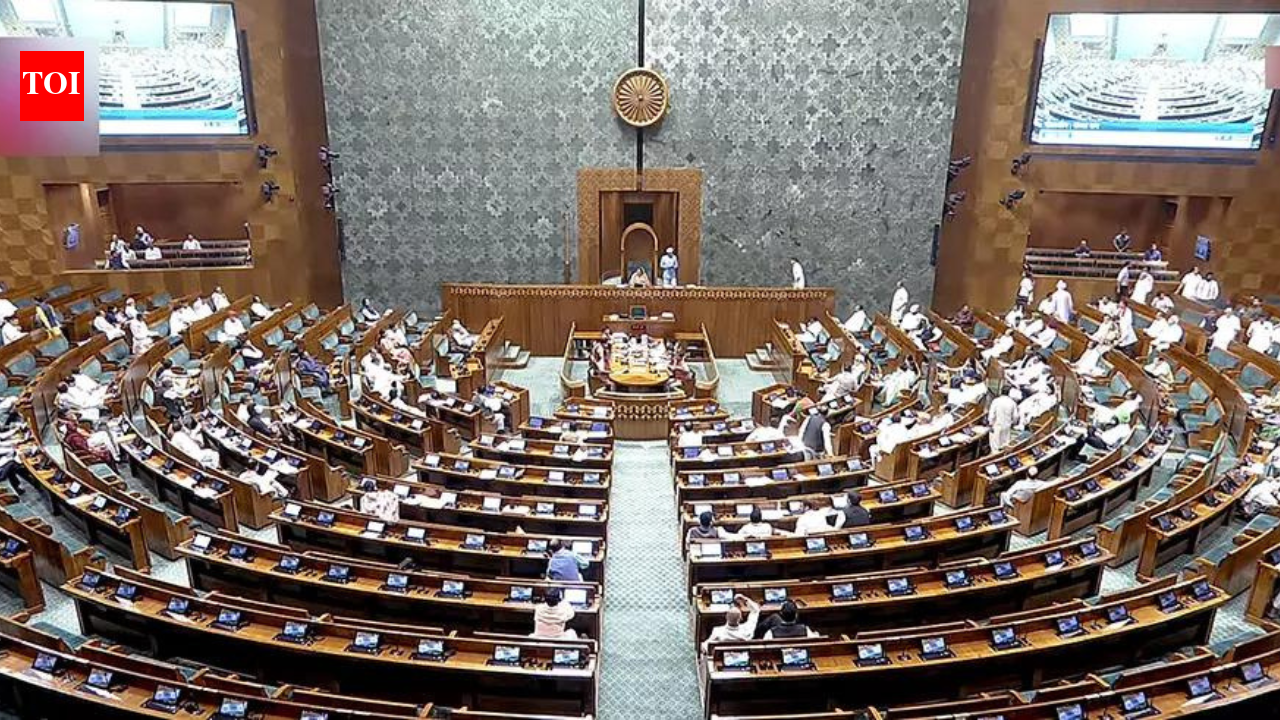
NEW DELHI: On a day Parliament put its stamp of approval on the Transgender Persons (Protection of Rights) Bill 2026 amid demands from opposition MPs that the bill be referred to a standing committee for wider consultation, two National Council for Transgender Persons members from the community sent their resignation to the social justice minister Virendra Kumar to register their strong protest against the bill and lack of consultation. The bill lays out a more precise definition of “transgender persons” making it clear that it will not include persons with “different sexual orientations and self-perceived sexual identities”.“From NCTP, some of us tried to reach out to you as the voice of the community and we felt that we were not heard,” said Rituparna Neog, a member of the council from the northeast region stated in her letter of resignation addressed to Kumar who is the chairperson of the statutory body. The body is supposed to have around 10 members representing the transgender community.The other member to resign, Kalaki Subramaniam, who is the southern region representative, registered a strong protest over lack of consultation with the community that views the bill as “regressive” and as a “step backward for their fundamental rights to self identification and dignity”. “I cannot continue to hold a seat at a table where our collective voice has been silenced,” she added.Transgender Persons (Protection of Rights) Bill, which was passed in Lok Sabha on Tuesday was passed by a voice vote in Rajya Sabha on Wednesday. Congress party’s Renuka Chowdhury opened the discussion putting forth a stirring question – “If no one asks us – men and women to prove our gender before a medical board, then who are we to question the identity of trans people?”At the end of the discussion, minister Virendra Kumar reiterated that the bill aims to provide protection to only those who face severe social discrimination due to their biological condition. He also tried to counter the opposition to the removal of the clause on self – perceived identity and introduction of a medical board by saying that this was aimed at securing the rights of TG persons by removing scope for any ambiguity and enabling benefits reach genuine persons through administrative clarity. BJP members joined the chorus in support.The amendments, which will now become law after the President of India gives her assent, marks a significant departure from the existing law as it omits the clause that allowed “self-perceived gender identity” to be the basis for self-determination and identification for approval for transgender certificate by the district magistrate.A medical board headed by chief medical officer has been introduced, and the district magistrate will going forward issue a certificate of transgender identity, after examining the recommendation of the medical board cited as “authority” to be constituted by the central or state govts.The bill proposes to create specific offences with graded punishments that reflect the gravity of the harm, the irreversibility of the injury, and the particular vulnerability of child victims.DMK’s Tiruchi Siva who had brought a private member bill “The Rights of Transgender Persons Bill, 2014” reflected on the struggles of the community to get their rights and demanded consultation from stakeholders, legal experts, civil society, transgender community as well as a review by the select committee. Manoj Kumar Jha (RJD), Saket Gokhale (TMC), CPI (M) MP John Brittas, NCP-SCP’s leader Fauzia Khan, Jaya Bachchan (SP), Shiv Sena-UBT’s Priyanka Chaturvedi, Sanjay Singh and Sandeep Pathak form AAP, IUML’s Abdul Wahab among others strongly opposed the bill.Even Golla Babu Rao from YSR Congress Party and Subhasish Khuntia from BJD joined the chorus with other opposition members and demanded that the bill be sent to a parliamentary committee for stakeholders consultation.The first signs of a backlash from the community emerged soon after the Bill was passed in Rajya Sabha as the two NCTP members resigned. Also the community members who have been agitating through press conferences and outreach campaigns since the Bill was introduced, now plan to hit the streets through demonstrations across states. In her resignation letter addressed to the social justice and empowerment minister, Kalki Subramaniam said, “until February 2026, my experience working alongside the ministry officials was one of mutual respect and a shared vision for an inclusive India. However, the recent introduction and passage of the Transgender Persons (Protection of Rights) Bill 2026 has created an untenable position for me.”“As a statutory representative, my primary mandate is to advise the govt on legislation affecting our lives. The decision to move this Bill forward without any formal consultation with myself or other community representatives of the NCTP undermines the very purpose for which this Council was established,” she added. Registering her opposition to the Bill passed by Parliament, in her resignation, Rituparna Neog states, “while I understand my responsibility as an NCTP member to represent the voice of my community to the competent authority, however, looking at the current circumstances, I wish not to continue as a member.”On Saturday, four NCTP members Abhina Aher, Vidya Rajput, Raveena Bareeha and Subramaiam, in a meeting hurriedly called by senior officials of the ministry on Saturday, had strongly reiterated that “self-affirmation of transgender identity, as upheld in the NALSA judgment, must remain the foundation of transgender identification”.After the meeting the members had highlighted the absence of the social justice minister Virendra Kumar who they were told would be chairing the meeting. “We were told that the minister was unable to attend due to ill health and a reported family emergency,” Aher said.According to Aher, at the meeting led by joint secretary Yogita Swaroop, Senior Economic Advisor in the ministry, govt officials raised concerns about identifying “genuine” transgender persons and referred to biological markers such as chromosomal combinations (XX/XY). “NCTP members clarified the concept of gender incongruence/dysphoria, mental health aspects, and the impact of stigma, though they felt that a gap in understanding of transgender issues was observed among the officials,” she added.The TG Council members also emphasised at the meeting that the definition of transgender person in the Bill was not inclusive and must explicitly include transgender men and transgender women; use respectful terminology and recognise diverse regional identities like Nupi Manabi and Nupi Manba (Manipur).On the provision in the Bill introducing screening by a medical board, NCTP members initially called for the removal of the provision. “However, considering the govt’s position, members proposed that any assessment should be limited to mental health support, it must not involve invasive physical examinations, and it should uphold dignity and remain aligned with the NALSA judgment,” Aher said. The need for gender-neutral laws to address violence against transgender persons was also raised vociferously.Now with the Bill having been passed in Parliament without paying heed to any of the suggestions made by the NCTP member representatives, the community has announced protests and demonstrations starting from Thursday.


Source link

J&K admin defends ban on books in HC, says ‘secessionist’ in nature | India News


J&K admin defends ban on books in HC, says ‘secessionist’ in nature

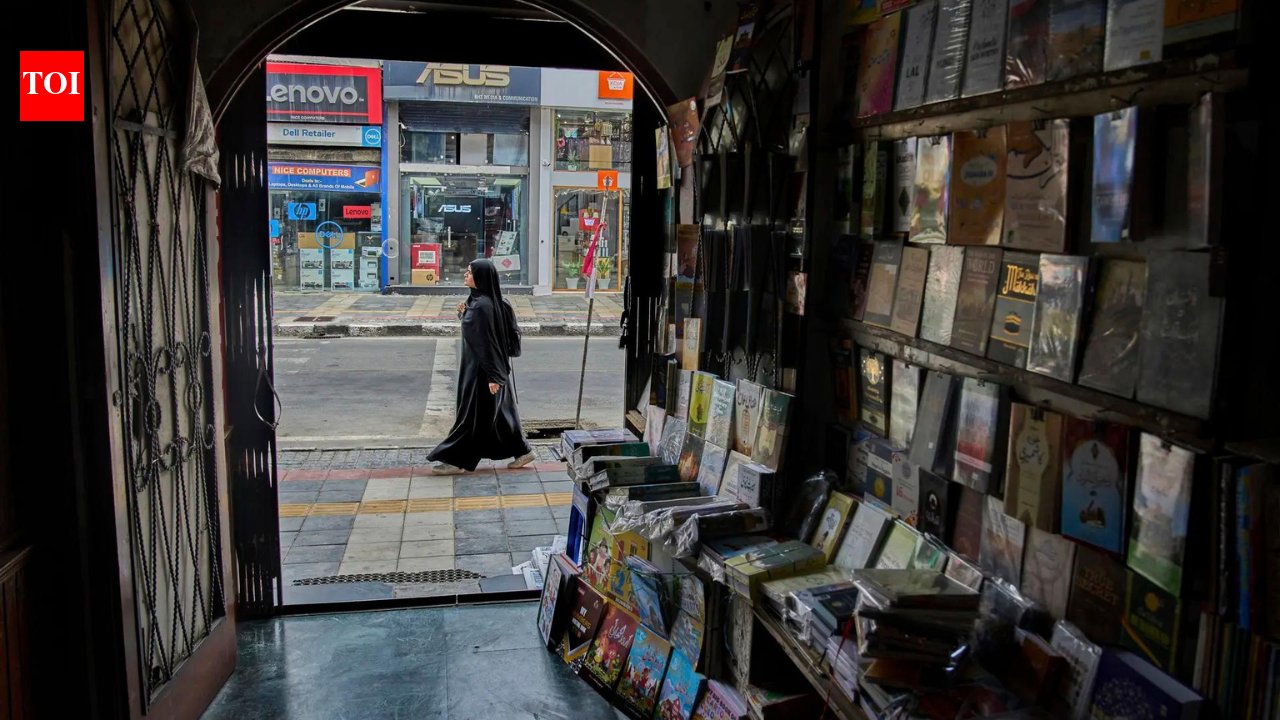
SRINAGAR: The J&K administration has defended its order to ban 25 Kashmir-related books in a reply filed in high court Wednesday on a set of petitions challenging the order.Senior additional advocate general (AAG) Mohsin Qadri told TOI, “We have defended the decision to ban the books on grounds of state security and public order. They (the petitioners) have now been given time to file their rejoinder,” he said.Qadri said the government has also defended the legal provision under the Bharatiya Nagarik Suraksha Sanhita (BNSS) invoked to impose the ban, as the petitioners have challenged its applicability in the case. “We are defending both the ban and legal provision,” he said.The court said the matter will be heard on a date to be fixed after the petitioners’ counsels — Vrinda Grover, Sanjay Hegde and Rakesh Shakdher and others —indicate their availability. The three advocates were present online.The UT administration, under the Lieutenant Governor, is defending the ban while the elected government led by CM Omar Abdullah is not a party to the case as it did not issue the ban order.The HC has constituted a three-judge full bench to hear petitions challenging the move banning books, including Azadi by Booker Prize winner Arundhati Roy.On Aug 5 last year, on the sixth anniversary of abrogation of Article 370, the order by the J&K home department, which functions under Lieutenant Governor Manoj Sinha, banned the publication and circulation of 25 books on Kashmir, saying they promote a “false narrative” and “secessionism” in the Union Territory.The books include Kashmir: The Case for Freedom by Tariq Ali, Pankaj Mishra; Confronting Terrorism, edited by Maroof Raza and written by Stephen P. Cohen, Independent Kashmir by Christopher Snedden, Between Democracy and Nation by Seema Kazi, Contested Lands by Sumantra Bose, In Search of a Future by journalist and author David Devdas, A Dismantled State: The Untold Story of Kashmir After Article 370 by Anuradha Bhasin, Colonizing Kashmir by Hafsa Kanjwal.The order stated that the govt has “credible intelligence which indicate that a significant driver behind youth participation violence and terrorism has been the systematic dissemination of false narratives and secessionist literature by its persistent internal circulation, often disguised as historical or political commentary, while playing a critical role in misguiding the youth, glorifying terrorism and inciting violence against Indian State”.Following the notice, police raided book shops across Kashmir and seized several books.


Source link

12 engineers suspended, action against 26 in UP over lapses in Jal Jeevan Mission works | India News


12 engineers suspended, action against 26 in UP over lapses in Jal Jeevan Mission works

NEW DELHI: The Uttar Pradesh government has taken action against 26 engineers for alleged negligence in the implementation of the Jal Jeevan Mission, with 12 of them suspended, an official statement said Wednesday.The action follows complaints regarding the poor execution of works under the scheme aimed at providing tap water to every rural household. Officials described it as one of the biggest crackdowns against personnel of the state water corporation in recent times.According to the statement, Additional Chief Secretary (Rural Water Supply) Anurag Srivastava ordered the suspension of 12 engineers of various ranks.The engineers include: Avinash Gupta (Lakhimpur Kheri), Soumitra Srivastava (Jaunpur), Mohd Qasim Hashmi (Ghazipur), Amit Rajput (Chandauli), Sitaram Yadav (Chandauli), Akbar Hasan (Bijnor), Anurag Goyal (Auraiya), Kuldeep Kumar Singh (Hathras), Rajendra Kumar Yadav (Azamgarh), Roop Chandra (Bareilly), Avneesh Pratap Singh (Barabanki) and Dharm Prakash Maheshwari (Kushinagar).The government has also ordered departmental inquiries against four engineers, while show-cause notices have been issued to three others over slow progress in project execution. Additionally, seven engineers have been transferred following complaints related to various schemes.Srivastava said the government is working in mission mode to ensure tap water supply to every rural household and any negligence in this regard will not be tolerated.He warned that strict action, including dismissal, could be taken if officials fail to improve their performance.The action comes in the backdrop of a controversy on January 30 when Jal Shakti Minister Swatantra Dev Singh’s convoy was stopped by BJP MLA Brijbhushan Rajput in Charkhari in Mahoba over complaints of roads not being repaired after pipeline work under the scheme, leading to a heated exchange between the two.The controversy involving the ruling party MLA and the minister had hogged limelight with BJP also taking cognisance of the matter.


Source link

‘Desperate to mediate Russia-Ukraine’: Congress takes ‘selective brokering’ jab at Jaishankar over ‘dalaal’ remark | India News


'Desperate to mediate Russia-Ukraine': Congress takes 'selective brokering' jab at Jaishankar over 'dalaal' remark

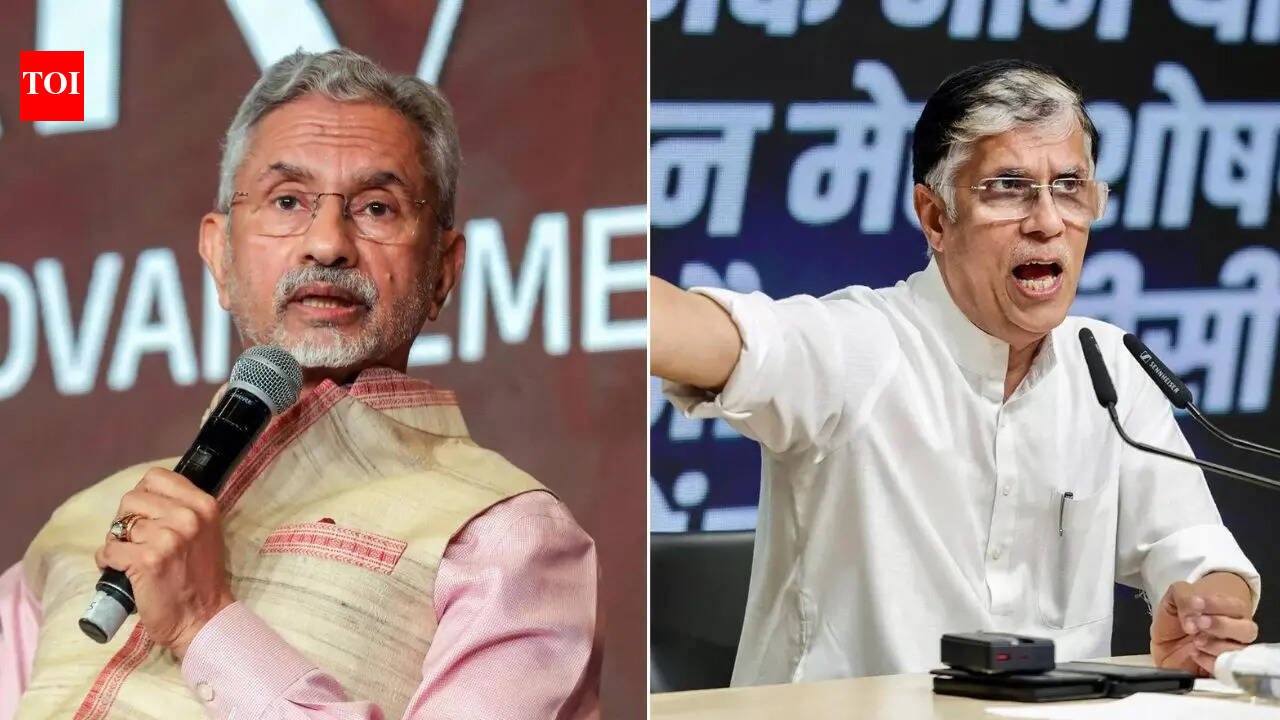
NEW DELHI: Congress on Wednesday took a swipe at Prime Minister Narendra Modi-led central government for their remark that India does not see itself as a “dalaal” (broker) like Pakistan, questioning it’s past diplomatic outreach.Congress leader Pawan Khera, in a post on X, said, “Was India a ‘Broker Country’ when Modi was desperate to mediate between Russia & Ukraine? Selective brokering or selective memory?”His remarks came after external affairs minister S Jaishankar told leaders at an all-party meeting that India does not act as a “dalaal” nation, amid growing reports of mediation efforts in the ongoing Iran conflict.“We are not a dalaal nation,” Jaishankar is learnt to have said during the meeting convened at the Parliament complex to discuss the West Asia crisis. He also noted that there was nothing new in Pakistan’s mediation efforts, adding that the country has been “used” by the United States since 1981, according to PTI sources.The meeting took place as countries such as Pakistan and Turkey have stepped up efforts to act as intermediaries between Washington and Tehran in a bid to de-escalate tensions.The sources added that the government refuted the opposition’s charge that New Delhi was silent on the situation, asserting that “we are commenting and responding”.When the Iran embassy was opened, the foreign secretary visited immediately and signed the condolence book, the government told the parties in response to the Opposition’s charge that India displayed moral weakness in not condoling the death of the Iranian Supreme Leader sooner.The government is also said to have informed the parties that its prime concern is ensuring the security of the Indian diaspora living in the Gulf region and fulfilling domestic energy needs.The Opposition, however, said the answers provided at the meeting by the government were “unsatisfactory” and demanded that a debate be held on the West Asia situation in both Lok Sabha and Rajya Sabha.Lashing out at the government, Congress’s Tariq Anwar said Pakistan is performing the mediator’s role while “we are still mute spectators”.He said there should be a debate on the situation in Lok Sabha under rule 193 and in Rajya Sabha under rule 176.All Union ministers part of the cabinet committee on Security, defence minister Rajnath Singh, home minister Amit Shah, Jaishankar and finance minister Nirmala Sitharaman — represented the government.Union health minister JP Nadda and Parliamentary affairs minister Kiren Rijiju also attended. foreign secretary Vikram Misri made a presentation before the gathering.Tariq Anwar and Mukul Wasnik of the Congress, Dharmendra Yadav of the Samajwadi Party, Sasmit Patra of the Biju Janata Dal (BJD), Sanjay Jha of JD-U, Srikant Shinde of Shiv Sena, Sanjay Singh of Aam Aadmi Party, John Brittas of CPI-M, Supriya Sule of NCP (SP), Arvind Sawant of Shiv Sena (UBT), Asaduddin Owaisi of AIMIM were among the Opposition leaders who attended the meeting, which lasted for nearly two hours.The sources said the government conveyed that there is no need for panic as India has enough stock with more crude oil and gas coming.“We have already done advance order. Diversification of sources of oil and gas has been undertaken and now we are procuring from 41 countries,” the government told the meeting.


Source link

West Bengal polls: RG Kar victim’s mother Ratna Debnath gets BJP ticket from Panihati | India News


West Bengal polls: RG Kar victim’s mother Ratna Debnath gets BJP ticket from Panihati

NEW DELHI: The BJP on Wednesday named Ratna Debnath, mother of the RG Kar Medical College rape and murder victim, as its candidate from Panihati in its third list of nominees for the upcoming West Bengal Assembly elections, formally bringing the bereaved mother into the electoral fray.In a press release, the party said its Central Election Committee had approved a third list of 19 candidates for the Assembly polls, with Ratna Debnath fielded from Assembly constituency number 111, Panihati.Her candidature had been widely speculated in recent days after she publicly expressed willingness to contest on a BJP ticket. As per the BJP’s official list released on Wednesday, that possibility has now been formalised.

Move follows her public call to enter politics

Earlier, Ratna Debnath had said she wanted to contest the election to “secure justice” for her daughter and fight for women’s safety in West Bengal.“A long time has passed since the brutal killing of my daughter. Despite prolonged movements and struggle, we are yet to get justice. I have decided to contest the election on a BJP ticket to secure justice for her,” she had said the previous week.Her husband had also indicated that preliminary talks had taken place with BJP leaders over her possible candidature and said she was prepared to enter politics directly over the justice issue.

Political and protest backlash had followed

Ratna Debnath’s demand had triggered sharp reactions from some faces associated with the ‘Reclaim the Night’ protest movement that had emerged after the RG Kar case, with several activists and public figures calling the decision “unfortunate” and expressing concern over the political turn,Some protest voices said they understood the family’s frustration over delayed justice but questioned the decision to join electoral politics. Others said the prolonged wait for accountability may have pushed the family towards a more direct political route.The BJP’s official announcement on Wednesday, however, confirms that the party has gone ahead with her candidature from Panihati.

BJP’s third list features 19 names

Apart from Ratna Debnath in Panihati, the BJP’s third list includes candidates for constituencies such as Coochbehar Dakshin, Raiganj (SC), Islampur, Hemtabad (SC), English Bazar, Santipur, Howrah Madhya, Uttarpara, Singur, Chandannagar, Chunchura, Haripal, Tamluk, Medinipur, Purbasthali Dakshin, Katwa, Saithia (SC) and Nalhati, as per the party’s release.Ratna Debnath’s candidature is likely to draw significant political attention in the coming days, given the emotional weight of the RG Kar case and the wider debate it had sparked around women’s safety and justice in West Bengal.


Source link

‘Peddling lies and frivolous narratives’: India rejects Pakistan remarks on banned terrorist organisation | India News


'Peddling lies and frivolous narratives': India rejects Pakistan remarks on banned terrorist organisation

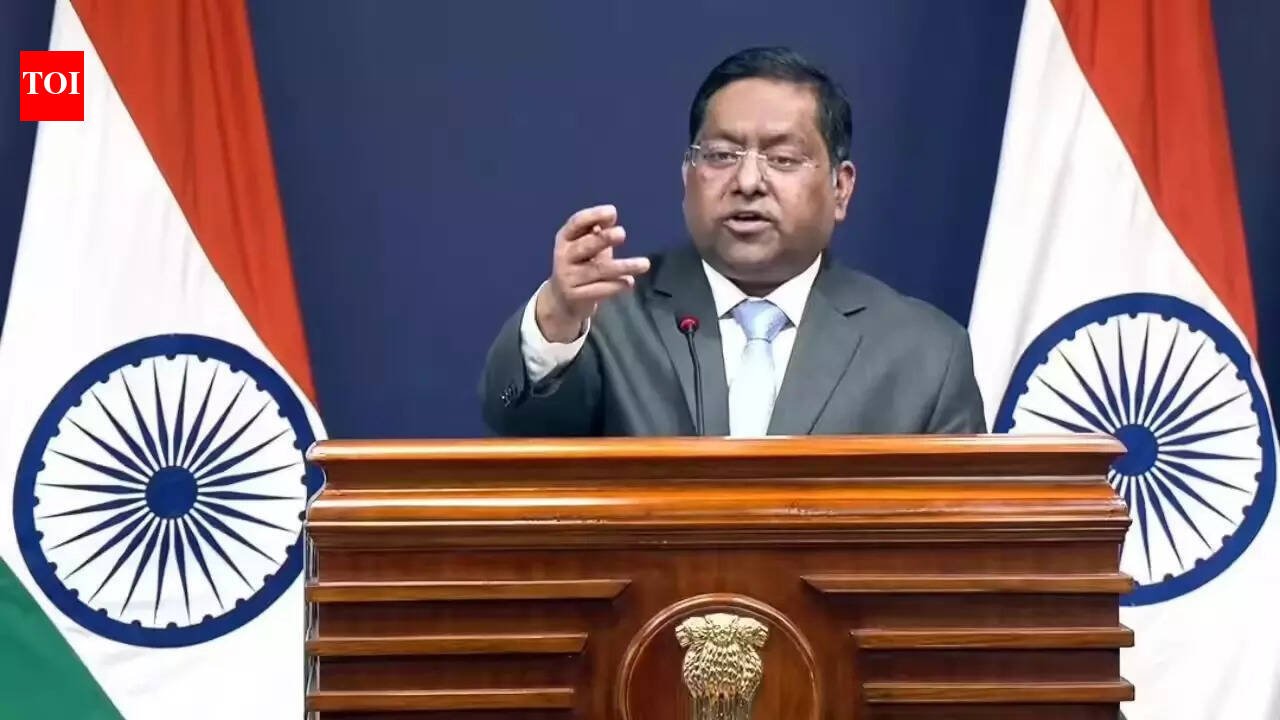
NEW DELHI: India on Wednesday strongly rejected Pakistan’s statement backing a banned terrorist organisation, asserting that Islamabad has “no locus standi” to comment on the country’s internal matters. He urged it to ‘introspect on the systematic human rights violations” it continues to perpetrate instead of “peddling lies and frivolous narratives.Responding to media queries, ministry of external affairs (MEA) spokesperson Randhir Jaiswal said, “We categorically reject the statement issued by Pakistan in support of a banned terrorist organization and its members. Pakistan has no locus standi to comment on matters internal to India or its judicial processes.”He added that such remarks were not surprising given Pakistan’s record. “However, one is not surprised that a country, which has long been sponsoring terrorism, has come up with such a statement condoning violence and killing of innocent people,” Jaiswal said.“Instead of peddling lies and frivolous narratives, Pakistan should introspect on the grave and systematic human rights violations it continues to perpetrate,” he added.The response comes after Pakistan issued a statement on judicial proceedings in India related to a banned terror outfit. Earlier on Tuesday, Delhi court sentenced Kashmiri separatist and Dukhtaran-e-Millat chief Asiya Andrabi to life imprisonment in an Unlawful Activities (Prevention) Act (UAPA) case. Her two associates, Fehmeeda and Nasreen, were also sentenced to 30 years in prison in the same case.In its detailed 286-page order, the court held that Andrabi and her associates “hatched a conspiracy for the secession of Kashmir from India.”The court relied on videos and social media posts submitted by the National Investigation Agency, which showed the accused repeatedly claiming that Kashmir belonged to “Pakistan and was under Indian occupation.”“Kashmir should be freed from Indian occupation so that it can become part of Pakistan. The material on record is rife with such speeches as well as various posts by all the accused, especially of accused 1 (Andrabi),” the court order stated.The court observed that Andrabi, through speeches and interviews, openly sought Pakistan’s support and propagated that “Kashmir was never a part of India.”India has consistently maintained that matters related to its internal security and judicial actions are sovereign issues, and has repeatedly called on Pakistan to end support for terrorism and cross-border activities.Also read: ‘Hatched conspiracy to secede Kashmir from India’: Why J&K separatist Asiya Andrabi got life term in UAPA case


Source link

Tamil Nadu polls 2026: AIADMK unveils constituency-wise NDA seat-sharing formula – see full list | India News


Tamil Nadu polls 2026: AIADMK unveils constituency-wise NDA seat-sharing formula - see full list

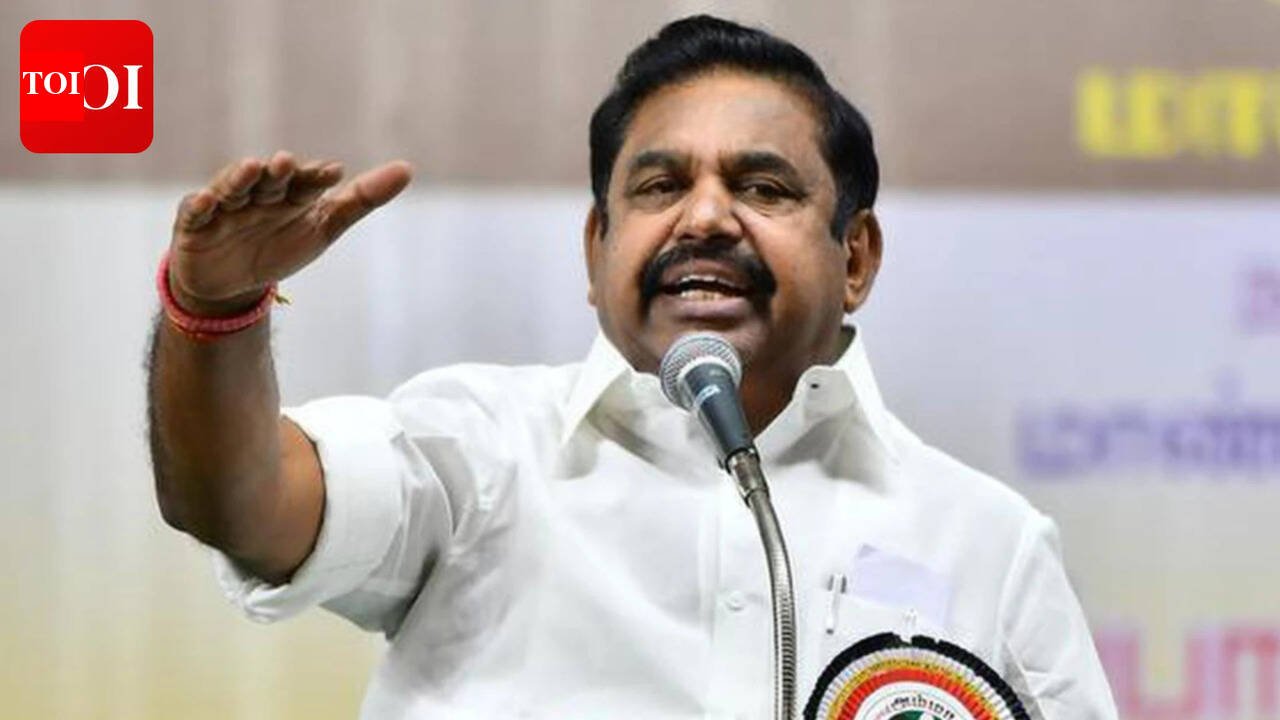
NEW DELHI: The AIADMK on Wednesday released the full constituency-wise seat-sharing list for its NDA allies in Tamil Nadu, formally spelling out which party will contest where in the April 23 Assembly election, while confirming that seven alliance partners have been allotted a combined 65 seats and the Edappadi K Palaniswami-led party will fight the remaining 169 constituencies.In a detailed release issued in Chennai, the All India Anna Dravida Munnetra Kazhagam (AIADMK) said it had concluded seat-sharing agreements with seven parties for the Tamil Nadu Legislative Assembly General Election 2026.

Watch

Tamil Nadu Politics Is More Casteist Than UP And Bihar, Vijay’s Impact Is Waning: Yashwant Deshmukh

The announcement not only confirmed the seat tally for each ally but also published the complete constituency-wise allocation, marking the formal consolidation of the AIADMK-led National Democratic Alliance (NDA) ahead of polling.

BJP gets 27 seats, PMK 18, AMMK 11 in key alliance formula

Under the final formula announced by the AIADMK, the Bharatiya Janata Party (BJP) has been allotted 27 constituencies, the Pattali Makkal Katchi (PMK) 18, the Amma Makkal Munnetra Kazhagam (AMMK) 11, the Tamil Maanila Congress (TMC) 5, the Indhiya Jananayaka Katchi (IJK) 2, the Tamilaga Makkal Munnetra Kazhagam (TMMK) 1, and Puratchi Bharatham 1.That takes the total number of seats allotted to allies to 65, leaving the AIADMK to contest 169 constituencies on its own symbol as the senior partner in the alliance.The party said the completion of these agreements marks the formal consolidation of the AIADMK-led National Democratic Alliance (NDA) in Tamil Nadu ahead of the April 23 election.

AIADMK release lists full constituency-wise allocation

As per the AIADMK’s official release, the BJP’s 27-seat share includes a mix of urban, western, delta and southern constituencies, including Mylapore, Aavadi, Thiruvannamalai, Thanjavur, Thiruvarur, Madurai South, Ramanathapuram, Nagercoil, Colachel and Padmanabhapuram.The PMK’s 18-seat allocation includes Dharmapuri, Pennagaram, Salem West, Salem North, Vikravandi, Sholingur, Thirupporur, Uthiramerur, Perambur and Ambattur, among others, reflecting its spread across northern and western pockets.The AMMK has been allotted 11 seats, including Mannargudi, Karaikudi, Nanguneri, Tiruchirappalli West, Saidapet and Poonamallee (R).The TMC has received five seats — Ottanchatram, Erode West, Ranipet, Kiliyur and Kumbakonam — while the IJK will contest Pallavaram and Kunnam.The TMMK has been allotted Rajapalayam, and Puratchi Bharatham has received Keezhvaithinankuppam (R).

Alliance arithmetic sharpens AIADMK’s anti-DMK strategy

The seat-sharing announcement is significant as it gives the AIADMK-led NDA a clear electoral structure ahead of what is expected to be a high-stakes contest against the ruling DMK-led alliance.The AIADMK’s announcement comes a day after party general secretary Edappadi K Palaniswami (EPS) unveiled the party’s election manifesto, signalling that the party is now moving from alliance-building to full campaign mode.Palaniswami on Tuesday released a manifesto carrying 297 promises, with welfare measures at the centre of the campaign.Among the headline promises, the AIADMK pledged a monthly assistance of Rs 2,000 for female heads of households under the proposed ‘Kula Vilakku Scheme’, to be credited directly into bank accounts of women in ration card-holding families.The party also promised a special assistance of Rs 10,000 for every family, saying the measure was aimed at easing the burden of rising prices and higher taxes under the ruling DMK government.Tamil Nadu will vote in a single phase on April 23, with counting scheduled for May 4.


Source link