Breaking News
NCB marks 41st Raising Day with nationwide youth programmes promoting a drug-free India | India News


NCB marks 41st Raising Day with nationwide youth programmes promoting a drug-free India

The Narcotics Control Bureau on Tuesday observed its 41st Raising Day, marking over four decades of dedicated service in combating drug trafficking and substance abuse across the country.To commemorate the occasion, nationwide youth mobilisation programmes for a Drug-Free India were organised at nearly 40 locations, including Delhi, Lucknow, Jodhpur, Raipur, Chandigarh, Ahmedabad, Mumbai, Ranchi, Bengaluru, Chennai and Agartala.The programmes featured anti-drug pledges, awareness sessions, rallies and heritage walks, focusing on preventing substance abuse, promoting a drug-free lifestyle, strengthening institutional partnerships and directly engaging with youth. Day-long activities highlighted the health, psychological, social and legal consequences of drug abuse, along with preventive strategies, early warning signs, recovery pathways and available support systems.Participants were sensitised to the harmful effects of drug abuse, its social and legal implications, and the importance of making informed, healthy life choices. Students and educators were also encouraged to actively promote the NCB’s MANAS Helpline (1933) for reporting information and seeking assistance related to drug abuse and trafficking.At a programme held at Sri Venkateswara College in Delhi, a large number of students took a pledge against drug abuse. Fitness influencer Ankit Bayanpuriya addressed the gathering, highlighting the importance of health and fitness and motivating students to stay away from drugs.In Jodhpur, under the ‘Nasha Mukt Bharat Abhiyan’, a heritage walk involving around 400 participants was organised at the iconic Ghanta Ghar to raise awareness against drug abuse and promote a healthy lifestyle. In Chandigarh, an awareness programme was held at the Chandigarh Institute of Hotel Management with participation from around 250 students.A meditation session in collaboration with Sri Ramchandra Mission was organised at Sher-e-Kashmir University of Agricultural Sciences and Technology. In Bengaluru, around 5,000 students participated in a walkathon and awareness programme at Rajarajeswari Medical College and Hospital, which included a walkathon and sessions on the ill effects of drug consumption.


Source link

Delhi CM Rekha Gupta attends ‘Nari Utsav’ at Nirmal Chhaya | India News


Delhi CM Rekha Gupta attends 'Nari Utsav' at Nirmal Chhaya

Delhi CM Rekha Gupta attends ‘Nari Utsav’ at Nirmal Chhaya

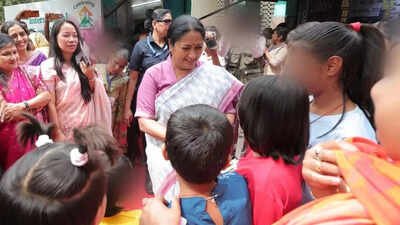
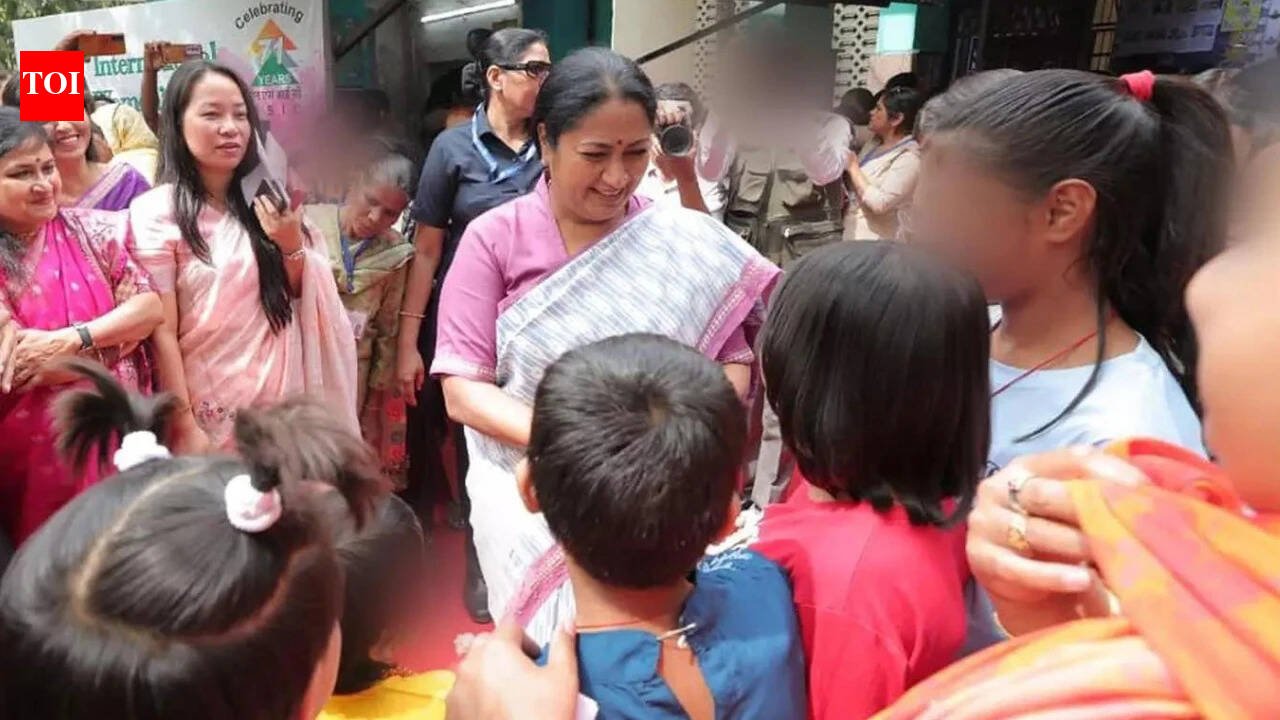
NEW DELHI: Delhi chief minister Rekha Gupta on Tuesday attended the ‘Nari Utsav’ programme held at the Nirmal Chhaya Complex, where she paid tribute to the strength and contribution of women in nation-building. She said women, through their dedication, selfless service and sense of duty, are playing a leading role across sectors and driving the country towards the goal of Viksit Bharat 2047.During her visit, the Chief Minister toured the Nirmal Chhaya campus and reviewed various schemes, services and facilities. She also launched and assessed several initiatives of the Department of Women and Child Development, reiterating the Delhi government’s commitment to the holistic empowerment of women and children.CM Gupta noted that under Prime Minister Narendra Modi’s leadership, women are scaling new heights–from rural industries to corporate sectors, and from politics to the armed forces–and said the Delhi government is working in the same direction to make women more empowered and self-reliant.Emphasising safety, dignity and self-reliance as the three pillars of women’s empowerment, Gupta said every woman deserves a secure environment, respect in all circumstances, and opportunities to become financially independent.She also announced that the upcoming Delhi Budget, to be presented on March 24, will include key initiatives for women and girls. Highlighting the importance of Self-Help Groups (SHGs), she said women in Delhi will be provided employment and entrepreneurship opportunities through small group-based models. She also stressed the need to expand platforms like ‘Mahila Haat’ to help women showcase and sell their products.The Chief Minister said the government’s focus is not just on launching schemes, but on ensuring their effective implementation so that benefits reach every needy individual. She underlined the shared responsibility of society in ensuring that no one is left hungry, unemployed or neglected.After the event, Gupta conducted a detailed inspection of the Nirmal Chhaya Complex. She visited the After Care Home for Women, Balika Grih and Bal Niketan to ensure that residents are receiving proper care, safety and facilities. She interacted with children, distributed bags and essential items, and reviewed arrangements related to safety, nutrition and overall care, issuing necessary directions to officials.Rekha Gupta also visited the Sankalp Hub, where activities related to women’s safety, awareness and empowerment under Mission Shakti were showcased. At the SHG-run ‘Mahila Haat’, she reviewed local products and exhibitions, including nutritious millet-based dishes.Interacting with women trained under the WCD-DSEU programme, the Chief Minister appreciated the launch of SHG-run canteens at 10 locations, calling it a strong model for promoting women’s entrepreneurship.Gupta further inspected the ‘Samarth Anganwadi’, where upgraded infrastructure, multi-dimensional activities, and health and wellness services were on display. She reviewed preventive health check-ups, wellness counselling, and menstrual hygiene awareness programmes for women.During the programme, the Chief Minister launched several key initiatives, including a compendium of schemes related to women and children and the WCD newsletter. She also distributed health mix kits to pregnant and lactating mothers, provided incentives to Anganwadi workers, and launched the Juvenile Justice Management Information System (JJMIS) portal to improve child-centric service delivery.Under the ‘Give to Gain’ initiative, she called for stronger collaboration between the government and the private sector to enhance Anganwadi centres and child care institutions. The initiative will support the installation of sanitary napkin vending machines, infrastructure upgrades, expansion of mobile health services, and new programmes for women and children, along with creating livelihood opportunities for women and SHGs.The chief minister reaffirmed that the government remains fully committed to empowering women, ensuring a safe and supportive environment for children, and uplifting vulnerable sections of society. She added that when women are empowered, both society and the nation grow stronger–and Delhi is moving firmly in that direction.


Source link

Supplying weapons, aiding drone ops: Inside US citizen Matthew Van Dyke’s Myanmar plot | India News


Supplying weapons, aiding drone ops: Inside US citizen Matthew Van Dyke’s Myanmar plot

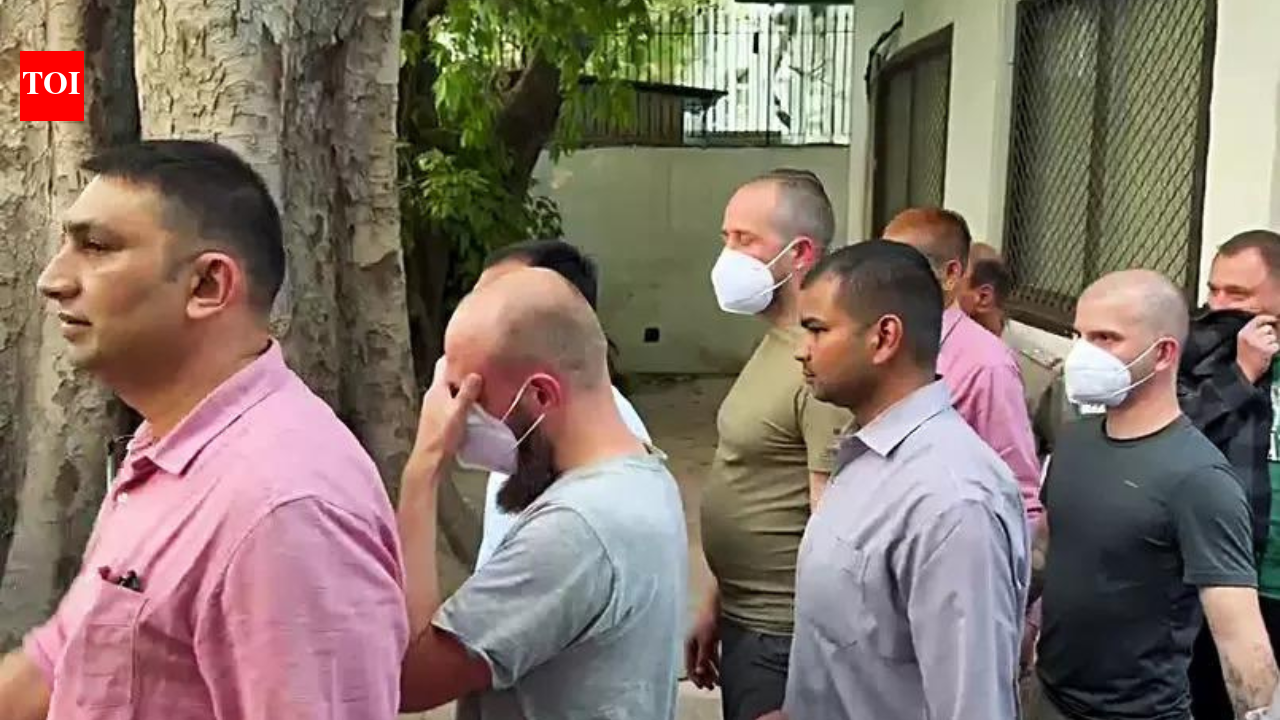
NEW DELHI: A Delhi court on Monday granted 11-day police custody to six Ukrainians and a US citizen arrested for illegally entering Myanmar via India and contacting ethnic war groups.This comes after the National Investigation Agency arrested three Ukrainians from Delhi, three from Lucknow, and one US citizen from Kolkata.According to the investigative agency, the accused — namely Matthew Aaron Van Dyke, Hurba Petro, Slyviak Taras, Ivan Sukmanovskyi, Stefankiv Marian, Honcharuk Maksim, and Kaminskyi Viktor — were in direct touch with, and abetted, terrorists carrying AK-47 rifles.The agency also said the accused, linked with ethnic armed groups, were supporting certain proscribed Indian insurgent groups by supplying weapons, terrorist hardware, and training them.How do they reach Myanmar?According to news agency AFP, the group first illegally entered Mizoram without an official permit. The seven then allegedly passed from Mizoram into neighbouring Myanmar.It is also alleged that they brought a huge consignment of drones from Europe via India. However, the type of drones or their countries of origin is not clear yet.Myanmar descended into civil war after a junta seized power in a 2021 coup, with pro-democracy guerrillas and ethnic-minority armed groups fighting for control of large parts of the country.New Delhi has been suspicious of certain Myanmar factions that share ethnicity with populations on the Indian side of the border, fearing a spillover of violence and unrest.Who is Matthew Aaron Van Dyke?Matthew Aaron Van Dyke is not new to controversies. The American adventurer-turned-filmmaker has gained attention for embedding himself in conflict zones and aligning closely with rebel movements.According to The Guardian, Van Dyke first came into the spotlight during the 2011 uprising in Libya, where he fought alongside anti-Gaddafi rebels.During the Libyan conflict, Van Dyke was captured and detained for six months in Tripoli’s Abu Salim prison before escaping after the fall of the regime.Van Dyke describes himself as a “freedom fighter” and documentarian. He later surfaced in Syria during the uprising in Aleppo, where he said he was filming a documentary on the rebel movement.However, he also admitted to advising fighters on weaponry based on his experience in Libya, blurring the line between observer and participant.His activities and self-presentation have drawn criticism from some observers, who accuse him of being a reckless thrill-seeker rather than a neutral storyteller.Critics argue that his involvement in combat situations undermines journalistic integrity and puts others at risk.Van Dyke has actively used social media and crowdfunding platforms to promote his projects, aiming to create viral content that could draw global attention to conflicts like Syria and generate support for rebel groups. Despite setbacks — such as the suspension of his Kickstarter campaign — he has continued pursuing his work in high-risk environments.He maintains that his efforts are driven by a belief that conflicts like Syria’s are underreported and that impactful storytelling can influence public opinion and support on the ground, even as he acknowledges the significant personal risks involved.What the court said?The court noted that the FIR contains serious allegations that the accused travelled to prohibited areas in Mizoram, illegally crossed into Myanmar, and established links with ethnic armed groups and proscribed insurgent organisations. It also took note of allegations that the accused were involved in supplying weapons, imparting training, and assisting in drone-related operations.Observing that these aspects “definitely affect national security and interests of India,” the court held that the matter cannot be treated as routine in nature.The order was passed by Additional Sessions Judge Prashant Sharma at Patiala House Courts on March 16, in a case being investigated by the National Investigation Agency (NIA).Upon perusal of the case diary, the court observed that the investigation is still at a nascent stage but has shown progress in recent days. While reiterating that custody orders should not be passed mechanically, the court found that sufficient material exists to justify further police custody in the present case.Allowing the NIA’s plea, the court held that custodial interrogation is necessary to unearth the larger conspiracy, identify accomplices, trace funding sources, and analyse digital evidence, including mobile phones and social media accounts. It also noted that disclosures made during initial interrogation indicate a wider conspiracy involving cross-border activities and links with insurgent groups.In a significant observation, the court stated that there is “no ground to have suspicion over the manner in which FIR is registered or the manner in which investigation is being done.”The court concluded that, given the gravity of the allegations — particularly those involving national security and cross-border links — continued custodial interrogation is justified at this stage, while rejecting all objections raised by the defence.


Source link

Congress: Rajya Sabha polls: Congress alleges BJP tried ‘vote chori’ in Haryana, warns cross-voters of strict action | India News


Rajya Sabha polls: Congress alleges BJP tried ‘vote chori’ in Haryana, warns cross-voters of strict action

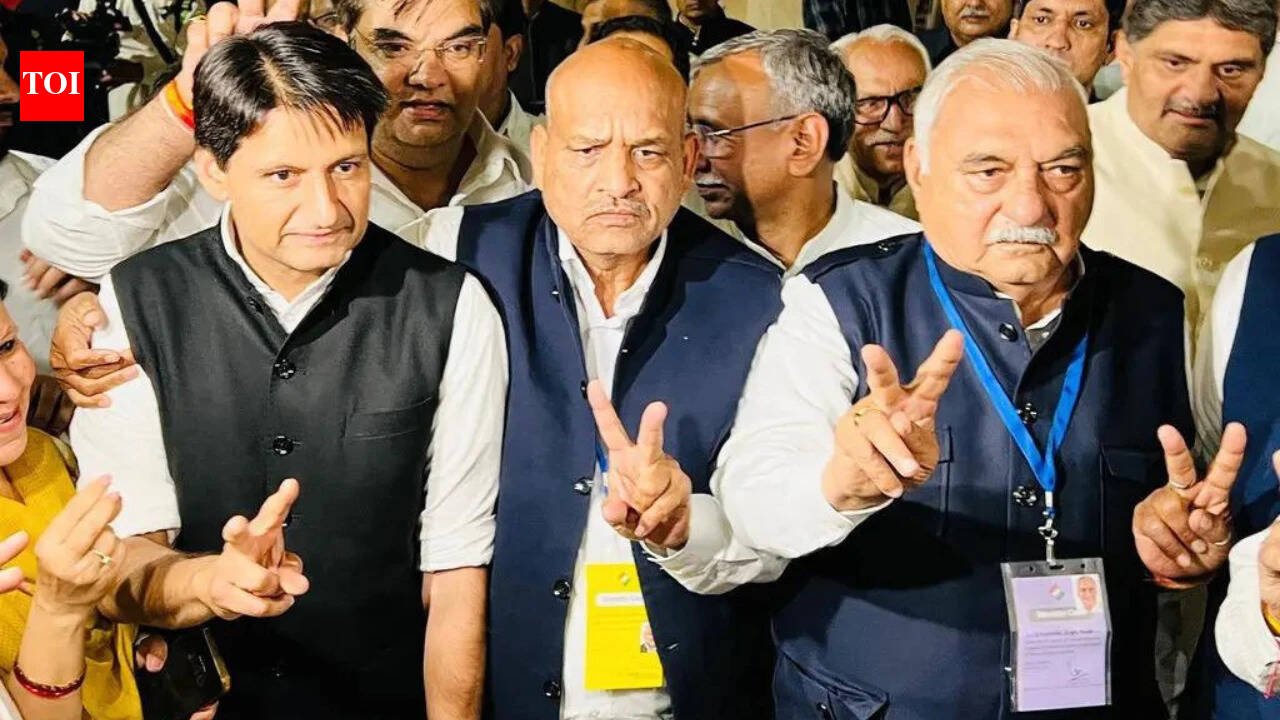
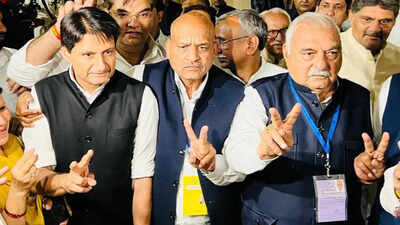
Former Haryana chief minister Bhupinder Singh Hooda, with Karamvir Singh Boudh, who was elected as Rajya Sabha MP from Haryana

NEW DELHI: The Congress on Tuesday accused the BJP of attempting “vote chori” and “murdering democracy” in the Haryana Rajya Sabha elections, even as the party asserted that it would take the “strictest possible action” against its own MLAs who allegedly cross-voted.The sharp attack came hours after a dramatic and closely watched Rajya Sabha contest in Haryana ended past midnight, with the BJP and Congress winning one seat each after allegations of violation of vote secrecy, invalidation of ballots and cross-voting roiled the election.

One seat each for BJP and Congress after tense overnight count

BJP’s Sanjay Bhatia and Congress’s Karamvir Singh Boudh were elected to the Rajya Sabha from Haryana.Bhatia, a former Lok Sabha MP from Karnal, won the first seat comfortably with 39 first-preference votes. Boudh, a retired Haryana government employee and a prominent Dalit activist currently serving as the coordinator of the Congress’s National Scheduled Castes Department, secured the second seat with 28 votes.Independent candidate Satish Nandal polled 16 votes, making it a narrow contest for the second seat after cross-voting dented what had otherwise been a comfortable arithmetic for the Congress.Under the Rajya Sabha election formula, the quota required to win one seat was 2,767 vote value, and both Bhatia and Boudh crossed that mark, leaving no room for further transfer of votes.

Deepender Hooda alleges ‘vote chori’, says BJP tried to ‘murder democracy’

Addressing a press conference in Delhi, Congress MP Deepender Singh Hooda congratulated the party leadership and hailed Boudh’s win, but launched a blistering attack on the BJP over the manner in which the poll was conducted.“In Haryana, under the cover of darkness at night, the BJP tried to murder democracy and indulge in vote chori,” Hooda alleged, according to PTI.He claimed the BJP had “no faith in democracy” and only wanted to “seize power”, but said Congress MLAs and workers stayed vigilant and ensured victory for Boudh, whom he described as someone who works for social justice.As quoted by news agency ANI, Hooda said that the BJP resorted to “every possible tactic” and that “such unethical politics for just one Rajya Sabha seat would never have been seen anywhere in the entire country before today.”

Congress alleges horse-trading, bias by returning officer

Hooda alleged that the BJP tried “all sorts of tactics”, including encouraging cross-voting and attempting to win the seat through horse-trading.He further claimed that when this did not succeed, the BJP “activated its B-team INLD”, alleging that the Indian National Lok Dal did not clarify its stand until polling day.“When more than 30 votes had already been cast in favour of the Congress, INLD fled from voting,” Hooda alleged.He then accused the BJP of influencing the Election Commission and alleged bias by the Returning Officer.“The Returning Officer showed bias and cancelled our four votes, even though all of them were valid. This was done after another election official had already placed the same votes in the valid tray. This shows that the BJP was indulging in ‘vote chori’ in the Rajya Sabha elections,” Hooda said.Further, Hooda added, “The 4 votes that were declared invalid during our counting are all valid… This is the victory of democracy.”

Congress admits cross-voting, says ‘strictest action’ coming

Even while attacking the BJP, the Congress acknowledged that some of its MLAs had cross-voted.Hooda said some Congress legislators in Haryana had engaged in cross-voting and warned that action would follow.“Those of our MLAs who have sold their conscience and integrity—not just them, but even their next generations will be held accountable by the people of Haryana. The Congress Party is going to take the strictest possible action against those MLAs,” he said.Hooda also said the public would not forgive those MLAs, while those who remained loyal to the party despite “temptations and pressures” had earned greater respect among the people.

Five votes invalid, INLD abstains

The election saw several twists.Two legislators of the Indian National Lok Dal (INLD) abstained from voting, reducing the number of valid votes to 88 in the 90-member Haryana Assembly at the beginning of polling.INLD leaders Abhay Singh Chautala and Aditya Devi Lal said the party had decided to abstain “keeping people’s sentiments in view”.Later, five votes were declared invalid — four of the Congress and one of the BJP, officials said.After both the Congress and the BJP approached the Election Commission alleging violation of vote secrecy, the poll body declared Congress MLA Paramvir Singh’s vote invalid.The invalidation of ballots became a major flashpoint, with Congress alleging selective targeting and procedural bias.

Boudh calls it a win despite ‘illegal cancellation of votes’

Congress winner Karamvir Singh Boudh also questioned the cancellation of votes after his victory.ANI quoted Boudh as saying, “Votes were illegally cancelled, but I received the blessings of the Congress party and the people. I received love from the Congress’s top leadership.”Congress leaders projected his win as politically significant, especially after BJP leaders had dismissed him as a “weak candidate”.Hooda said those who called a social worker weak had been given a “befitting response” and described the result as a “victory of the Constitution”.Congress Scheduled Castes Department chief Rajendra Pal Gautam, who accompanied Hooda at the press conference, said he was “absolutely delighted” that the party had nominated “a true Ambedkarite” for the Rajya Sabha, PTI reported.

Fresh assembly flashpoint

The Rajya Sabha result also spilled into the Haryana Assembly on Tuesday.In a separate development, Congress MLAs staged a walkout from the Assembly, alleging that democratic values were being undermined.Congress MLA Geeta Bhukkal claimed the House had turned into a “market where things are bought and sold” and alleged that ministers had openly admitted to “buying” MLAs.“The Constitution has been strangled, and that is why we are boycotting,” she said, as quoted by ANI.

BJP hits back

The BJP, however, rejected the Congress’s allegations and turned the cross-voting issue back on the opposition.BJP winner Sanjay Bhatia said the Congress was upset because its own legislators had not stayed united.“Congress’s responsibility was to unite its workers and MLAs, now they are putting allegations on us for the cross-votes of their own workers, which is not right,” Bhatia said.Haryana minister Mahipal Dhanda also dismissed the Congress charge, saying the Independent candidate had every right to seek votes and alleging that the Congress had “held their workers hostage”.

A narrow escape for Congress

With five Congress MLAs allegedly cross-voting, Independent candidate Satish Nandal could have potentially matched Boudh’s tally if he had also secured BJP candidate Bhatia’s 11 second-preference votes and if one more Congress MLA had cross-voted in his favour.That arithmetic underlined just how close the Congress came to losing a seat it was expected to win comfortably.In the end, despite cross-voting, invalid ballots and bitter allegations of horse-trading, the Congress managed to secure one of the two seats — but the result has opened a fresh internal crisis over dissident MLAs even as it fuels a new political battle with the BJP over the conduct of the poll.


Source link

Evening news wrap: Israel claims Iran’s security chief killed; Centre calls LPG supply ‘matter of concern’ & more | India News


Evening news wrap: Israel claims Iran's security chief killed; Centre calls LPG supply 'matter of concern' & more
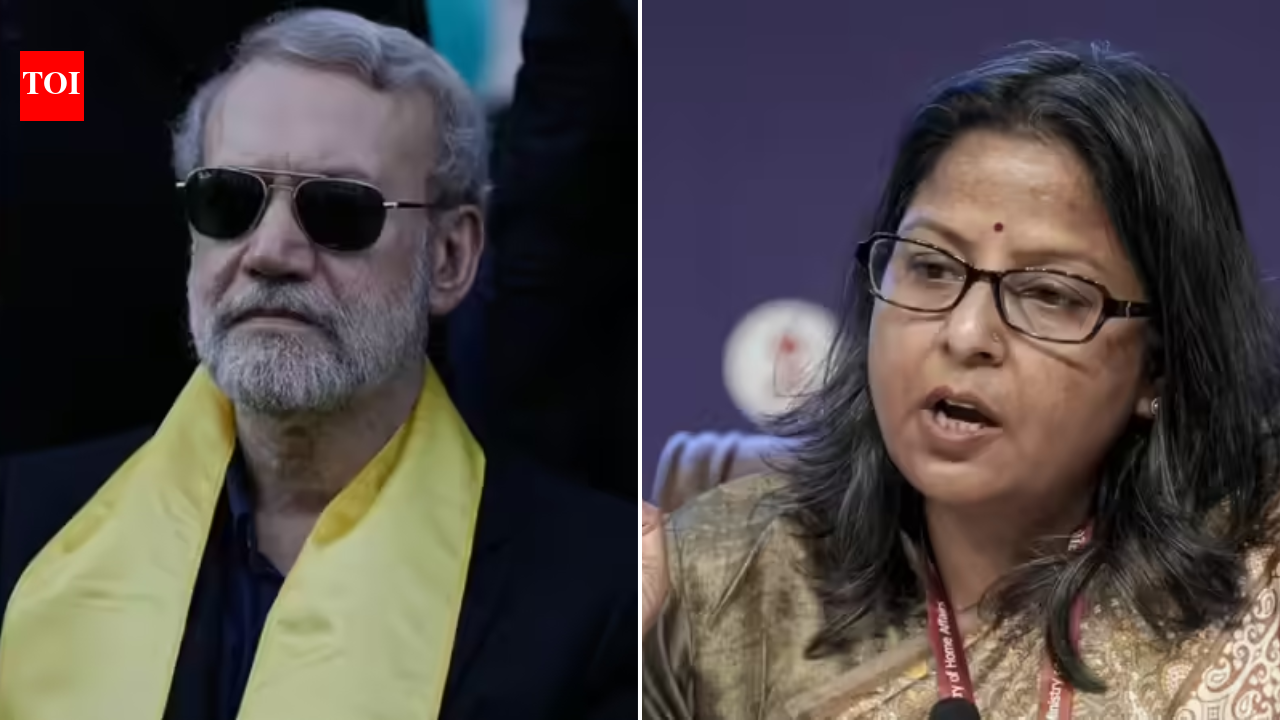
  • Israel has claimed that senior Iranian official Ali Larijani was killed in an overnight airstrike, but there is no confirmation from Iran and his fate remains unclear.
  • The Centre said the energy situation remains a concern, but assured that LPG supply will continue without disruption, urging consumers not to panic, use it wisely, and consider shifting to PNG.
  • India strongly condemned Pakistan’s alleged airstrike on a Kabul hospital, calling it a “massacre dressed as a military operation” and a violation of Afghanistan’s sovereignty and regional peace.
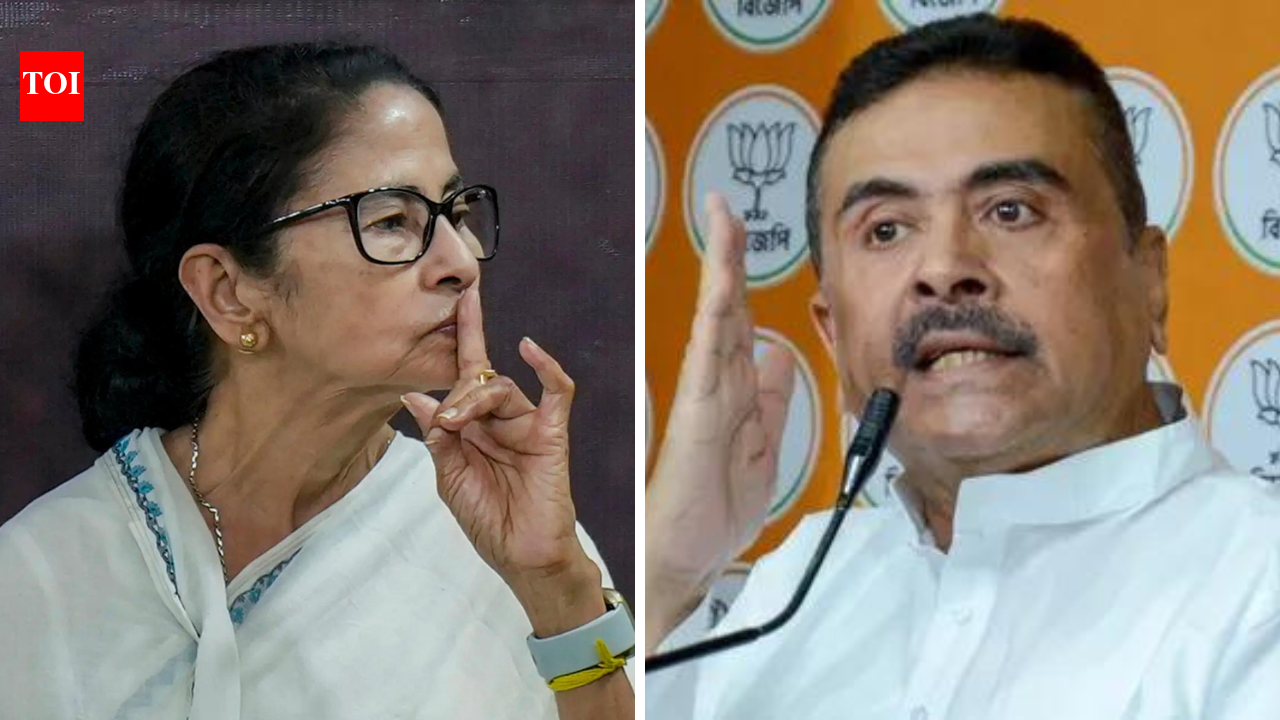
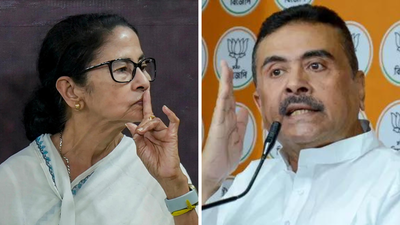
  • The All India Trinamool Congress released its candidate list for the West Bengal Assembly elections, fielding CM Mamata Banerjee against BJP’s Suvendu Adhikari in Bhabanipur.
  • The Supreme Court ruled there is “no rationality” in the Social Security Code, 2020 provision that limits maternity leave to adoptive mothers of children under three months, calling it “contentious.”

Here are the top 5 news of the day:

Israel claims Iran’s key military commander dead; fate of Mojtaba’s aide unclea

Israel’s defence minister Katz has claimed that Iran’s top security official Ali Larijani was killed in an overnight airstrike, but Iran has not confirmed the claim and his fate remains unclear. Reports said Iranian state media released a handwritten message attributed to Larijani for the funeral of sailors killed in a recent US strike. In the note, Larijani described the sailors’ deaths as part of the sacrifices of the Iranian nation. However, according to The Times of Israel, the message does not disprove Israel’s claim that Larijani was killed in an Israeli strike overnight. Follow live updates

‘Use LPG wisely’: Centre says supply ‘matter of concern’; advises consumers not to panic

The Centre has said that India’s energy situation remains a concern amid the ongoing Middle East conflict but assured that LPG supplies for domestic consumers are continuing without disruption and no distributor is facing a shortage. During an inter-ministerial briefing, petroleum ministry official Sujata Sharma advised judicious LPG use and consumers to not panic, while encouraging a shift to PNG, especially for commercial consumers. She also noted that petrol and diesel are sufficiently available. She said online LPG bookings have reached about 94% and delivery authentication has improved to 76%, with commercial LPG supplies partially restored after an initial halt. The government also warned against hoarding and black marketing, reporting thousands of raids across states, seizures of cylinders, and arrests to ensure smooth distribution. Read full story

‘Trying to dress up massacre as a military op’: India slams Pakistan’s airstrike on Afghanistan hospital that killed over 400

India strongly condemned Pakistan’s alleged airstrike on a Kabul hospital that Afghanistan says killed over 400 people and injured around 250, calling it a “massacre dressed as a military operation” and an unjustifiable attack on civilians. Afghanistan said the strike destroyed the Omid Addiction Treatment Hospital and largely affected patients, while Pakistan denied the allegation, maintaining that its operations targeted only military and “terrorist” infrastructure. Afghan authorities termed the attack a violation of sovereignty and an inhumane act, as Pakistan rejected the claims as false and linked its actions to cross-border militant threats. Read full story

TMC releases candidate list ahead of West Bengal polls; stage set for Suvendu vs Mamata in Bhabanipur

The All India Trinamool Congress, led by West Bengal CM Mamata Banerjee, announced its candidates for the West Bengal Assembly elections, stating it will contest 291 of the 294 seats, while the remaining three in the Darjeeling hills will be fought by ally Bharatiya Gorkha Prajatantrik Morcha led by Anit Thapa. Banerjee will contest from Bhabanipur against BJP’s Suvendu Adhikari, while the party has fielded Pabitra Kar against Adhikari in Nandigram. Other key candidates include Chandrima Bhattacharya, Madan Mitra, Firhad Hakim, Kunal Ghosh, and Shashi Panja. Read full story

SC rules adoptive mothers can’t be denied maternity leave if child is older than 3 months

The Supreme Court has ruled that Section 60(4) of the Code on Social Security, 2020, which limited 12 weeks of maternity leave for adoptive mothers to those adopting children under three months of age, is “contentious,” unconstitutional, and violates the Right to Equality. A bench of Justices JB Pardiwala and R Mahadevan held that there is no rational basis for restricting leave based on the child’s age, describing the provision as contentious. The Apex court observed that maternity benefits are inherently linked to motherhood and that adoptive mothers, regardless of the child’s age, require time for bonding, caregiving, and adjustment. Read full story


Source link

West Bengal polls: TMC releases list of 291 candidates; stage set for Suvendu vs Mamata in Bhabanipur | India News


West Bengal polls: TMC releases list of 291 candidates; stage set for Suvendu vs Mamata in Bhabanipur

NEW DELHI: The All India Trinamool Congress on Tuesday announced its list of candidates for the upcoming West Bengal Assembly elections. Party supremo and chief minister Mamata Banerjee declared that the party will contest 291 of the 294 seats in the state. The remaining three seats in the Darjeeling hills will be contested by Anit Thapa-led Bharatiya Gorkha Prajatantrik Morcha (BGPM).Mamata has decided to contest the election from Bhabanipur against BJP’s Suvendu Adhikari. Meanwhile, the TMC has also fielded Adhikari’s former loyalist Pabitra Kar against him in Nandigram.Additionally, Chandrima Bhattacharya has been fielded from the Dum Dum Uttar seat, Madan Mitra from the Kamarhati seat, Firhad Hakim from the Kolkata Port seat, Kunal Ghosh from the Beleghata seat, and Dr Shashi Panja from the Shyampukur seat.“We will contest 291 of the 294 seats. The remaining three seats will be contested by our ally, Anit Thapa-led BGPM, in the Darjeeling hills,” Banerjee said while announcing the names of candidates, flanked by the party’s national general secretary Abhishek Banerjee and state president Subrata Bakshi.Among the TMC’s 291 candidates for the West Bengal polls, 52 are women, 95 are from SC/ST communities, and 47 are minorities.See full listMamata expressed confidence that the TMC would retain power with a comfortable majority in the 2026 Assembly elections.“We will win more than 226 seats in the 2026 Assembly polls,” she asserted.The chief minister also sought to reassure party leaders and workers who could not find a place in the candidate list, saying they would be accommodated in the organisation.Earlier on Sunday, the Election Commission announced that the Assembly polls in West Bengal will be held in two phases on April 23 and April 29.While announcing the poll schedule for four states and one Union Territory, Chief Election Commissioner Gyanesh Kumar said that reducing the number of phases was necessary to make elections convenient for everyone.The counting of votes for the West Bengal Assembly elections 2026 will take place on May 4, along with that of Assam, Kerala, Puducherry, and Tamil Nadu. In the 2021 Bengal elections, the Mamata Banerjee-led Trinamool Congress secured 215 seats, while the Bharatiya Janata Party became the official opposition with 77 seats.


Source link

Passive euthanasia: How Harish Rana’s case revived memories for Aruna Shanbaug’s long, silent fight for dignity in death | India News


Passive euthanasia: How Harish Rana's case revived memories for Aruna Shanbaug's long, silent fight for dignity in death
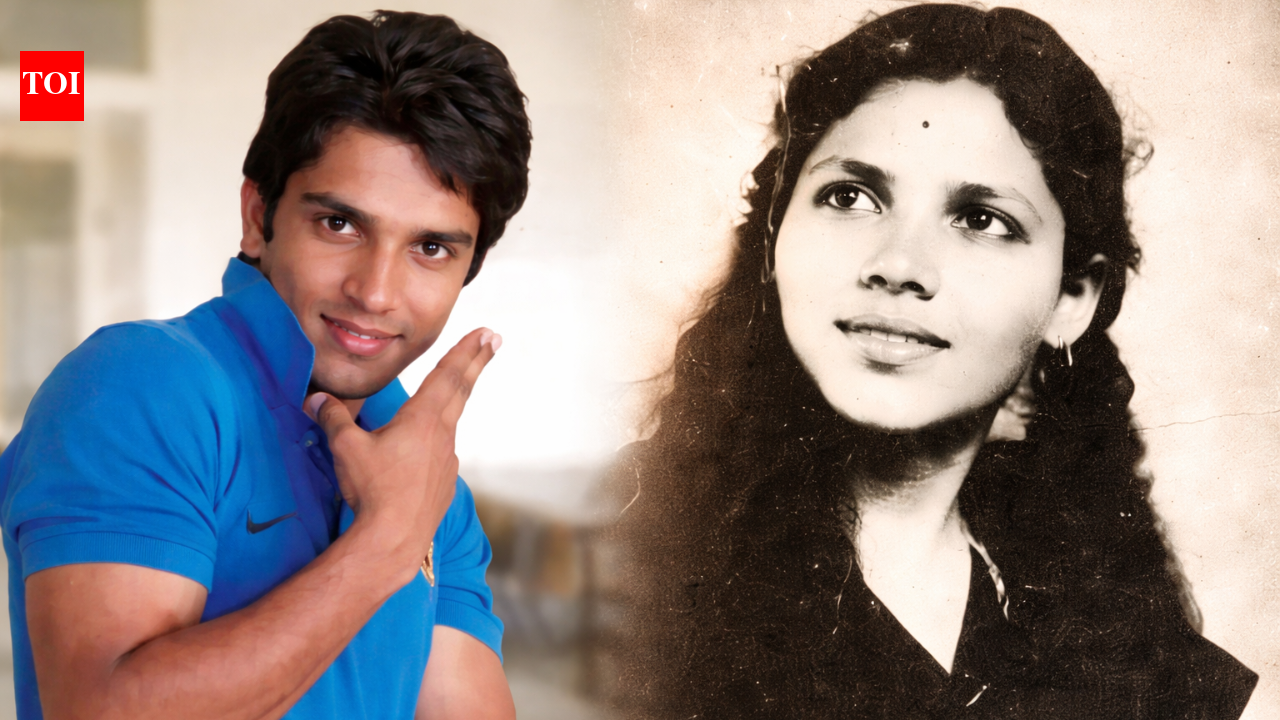
Harish Rana (L) and Aruna Shanbaug (R)

NEW DELHI: “To be, or not to be: that is the question,” William Shakespeare’s famous soliloquy aptly captures the tragic dilemma surrounding Harish Rana’s life and death, who has struggled for over a decade in a vegetative condition. Invoking the Shakespearean tragedy of Hamlet, the Supreme Court announced a historic verdict allowing passive euthanasia for the young man from Ghaziabad.The top court granted the first-ever approval of passive euthanasia in such a case, permitting the withdrawal of medical treatment and life support for the 32-year-old, who has remained between the thin line of life and death for over 13 years due to irreversible and non-progressive brain damage. The decision effectively paves the way for nature to take its course, while bringing an end to the prolonged agony of parents who have endured the pain of witnessing their son’s suffering every day.

-

The “difficult decision” came from a bench of Justices JB Pardiwala and KV Viswanathan, based on the recommendations of two medical boards, as per the amended Euthanasia framework of 2018, and after personally interacting with Harish’s parents. The judgment observed that the continuation of medical treatment was no longer in the patient’s best interest.With its first verdict of this kind, the court granted Harish Rana the possibility of a “dignified death,” allowing him to exercise the “right to die with dignity”, a choice that Aruna Shanbaug had sought but never received during the four decades she spent suspended between life and death.

From Ghalib to Constitution: The legal journey of euthanasia in India

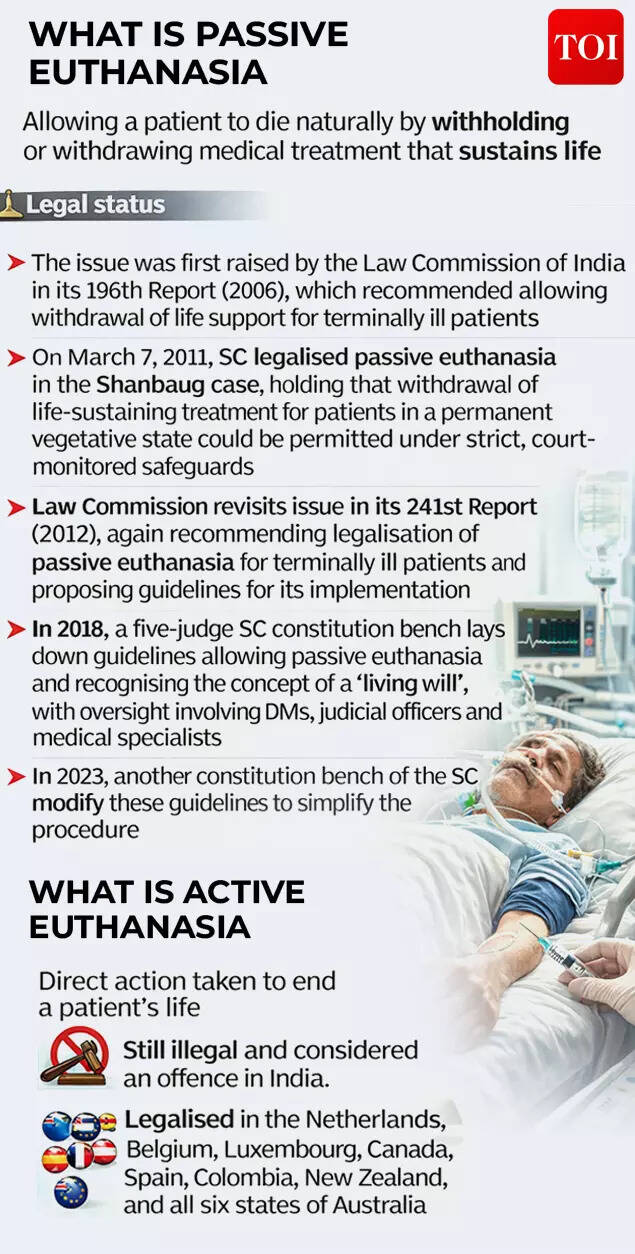
When the Supreme Court heard Shanbaug’s case in 2011, it turned to the existential lines of Mirza Ghalib: “Marte hain aarzoo mein marne ki, maut aati hai par nahin aati.” loosely translated as, “We perish with the wish to die; death approaches, yet never arrives.”In that landmark ruling, the topmost court laid down the legal framework permitting passive euthanasia in India, later detailed procedural guidelines established in 2018. Years later, that precedent has now found its first full expression in the case of Harish Rana, turning a long-debated principle into a lived judicial decision.In its Wednesday verdict, the court also directed AIIMS Delhi to admit Harish Rana to its palliative care centre and initiate steps for the withdrawal or withholding of medical treatment. At the same time, the bench underlined that such a decision must not translate into neglect. “The resultant effect must not be the abandonment of the patient,” it observed.

harish rana

Separated by more than a decade, the cases of Aruna Shanbaug and Harish Rana together add deeper meaning to the evolving role of India’s judiciary and the expectations placed upon it.When life recedes and death refuses to arrive, when consciousness fades and existence is confined to a hospital bed, the question of dignity becomes unavoidable.As Friedrich Nietzsche once wrote, “He who has a why to live can bear almost any how.” The court’s decision, in many ways, confronts the painful reality of what remains when that “why” disappears.

Harish Rana: A life halted, a family’s long wait

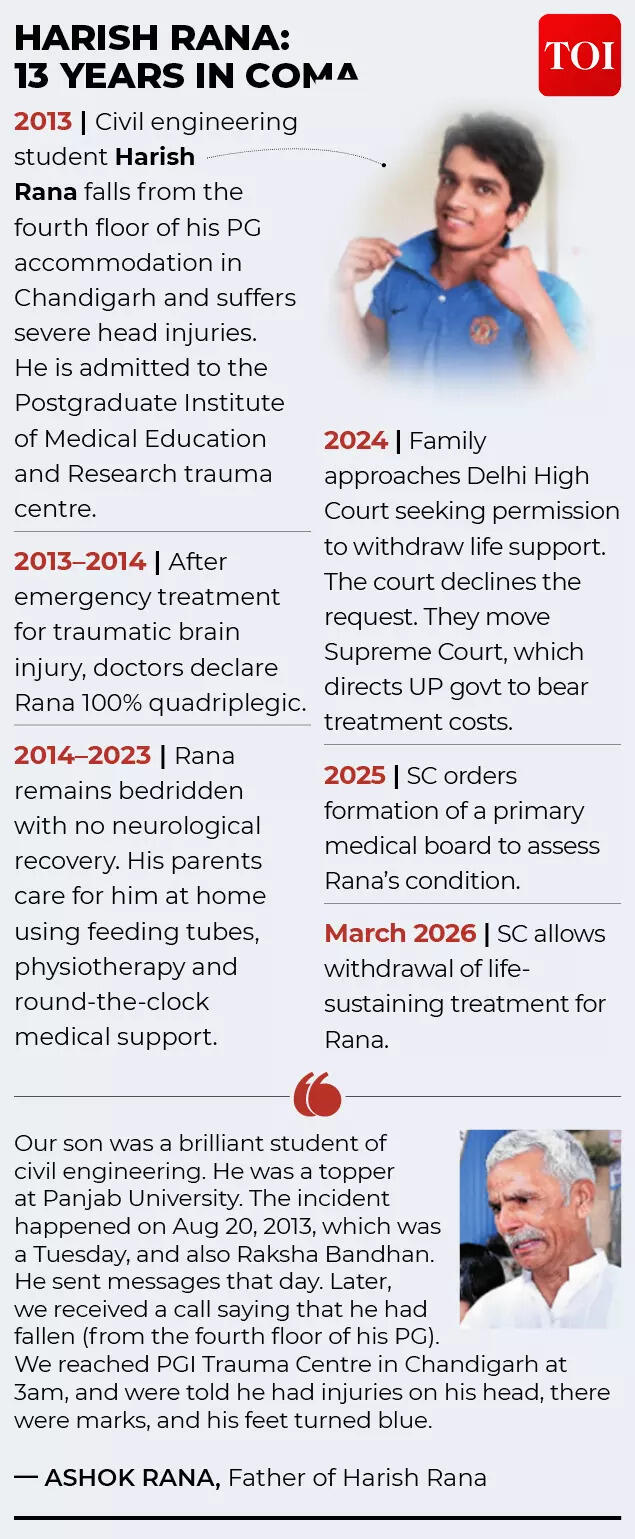
Tragedy struck Harish Rana when he was just 20, a bright engineering student at Panjab University with a promising future ahead. In August 2013, during the final semester of his BTech in civil engineering, a fall from the fourth floor of his paying guest accommodation in Punjab’s Kharar changed everything.The accident left him with severe brain injuries, including diffuse axonal injury, a devastating form of traumatic brain damage, and resulted in complete quadriplegia. Despite treatment at leading institutions such as PGI Chandigarh, AIIMS Delhi, Ram Manohar Lohia Hospital and Lok Nayak Hospital, Harish never recovered. He has remained in a permanent vegetative state since the fall, bedridden and entirely dependent on life support.He can open his eyes and blink, but there is no awareness, no response to sound, touch, voice or pain.Years of immobility have left him with severe bedsores, adding to his suffering.For his family, the passage of time has only deepened the pain.

-

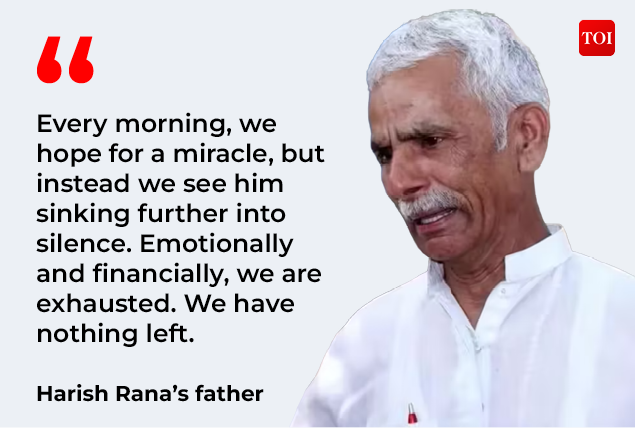
“How does it feel to see your own child lying in bed for years, without any eye contact, any communication or movement?” asked his father, Ashok Rana, his voice breaking months ago in 2025. “Every morning, we hope for a miracle, but instead we see him sinking further into silence. Emotionally and financially, we are exhausted. We have nothing left.”Pausing to steady himself, he added, “When I look into his eyes, there is nothing, no recognition. He cannot even turn his head. As parents, it is unbearable. We cannot see him like this anymore.”The memories of who Harish once was remain vivid.“Our son was a brilliant student. He was a topper in civil engineering at the university. The incident happened on Aug 20, 2013, which was a Tuesday and also Raksha Bandhan. He had sent us messages. Later in the day, we received a call saying he had fallen. When we reached the PGI trauma centre at 3am, he had injuries on his head and his feet had turned blue,” Ashok said.His brother, Ashish Rana, recalled how the family clung to hope for years. “We kept believing he would wake up someday, talk again, walk again,” he said.But hope came at a heavy cost.The family said they were forced to sell their home in Dwarka to continue his treatment. Monthly medical expenses alone run between Rs 24,000 and Rs 30,000, covering tubes, medicines and life-support equipment.

-

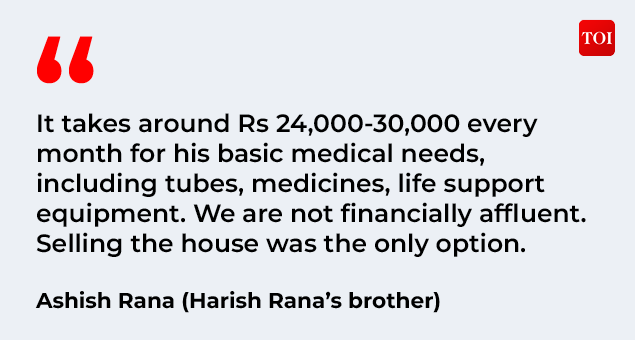
“It takes around Rs 24,000-30,000 every month for his basic medical needs, including tubes, medicines, life support equipment. We are not financially affluent. Selling the house was the only option,” Ashish said.For the Ranas, their plea was never about giving up, it was about dignity.“We just want him to be at peace,” his father said quietly. “No child deserves to suffer like this, and no parent deserves to watch it.”

What court said: ‘Best interest’ and right to dignity

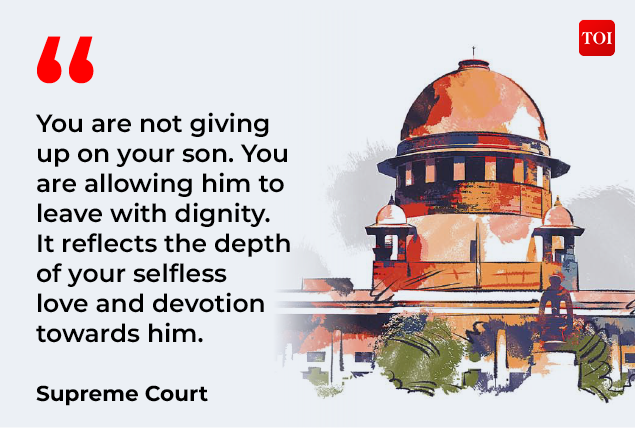
The top court’s landmark ruling permitting passive euthanasia for the first-ever time has brought renewed focus to a critical legal doctrine, the “best interest of the patient.”The decision by the two-judge bench described it as the delicate intersection of “love, loss, medicine and mercy”.“You are not giving up on your son. You are allowing him to leave with dignity. It reflects the depth of your selfless love and devotion towards him,” the Supreme Court told the parents.

-

At the heart of the ruling was the case of 32-year-old Harish Rana, who had remained in a persistent vegetative state for nearly 13 years, with irreversible and non-progressive brain damage. Applying the “best interest” principle, the court permitted passive euthanasia, allowing the withdrawal of all life-sustaining treatment, including ventilators and feeding tubes.In doing so, the bench undertook an extensive examination of the doctrine, drawing from the landmark 2018 Constitution Bench ruling in Common Cause vs Union of India, as well as international practices on end-of-life decision-making.On January 24, 2023, a Constitution bench eased the 2018 passive euthanasia guidelines, mandating primary and secondary medical boards to approve withdrawal of life support for patients in a vegetative state.This marks the first time the apex court has applied its own 2018 guidelines on passive euthanasia in a specific case.“The famous literary Shakespeare quote ‘To be or not to be’ is now being used for judicially interpreting the ‘Right to Die,” Justice Pardiwala noted at the beginning of the judgment.The bench described its decision as a “difficult” one, taken after relying on reports from two medical boards, which had approved the withdrawal of life support after personally interacting with Rana’s parents.It concluded that the continuation of medical treatment was not in his “best interest”.The court directed AIIMS Delhi to admit Rana to its palliative care centre and initiate the process of withdrawing or withholding treatment, while specifying that “the resultant effect must not be the abandonment of the patient”.“Due focus must be given to the comfort of the patient through pain and symptom management,” the court said.Reaffirming constitutional principles, the bench described dignity as the most sacred possession of a human being. It held that the right to live with dignity under Article 21 inherently includes the right to die with dignity.“Temporarily keeping alive a terminally ill patient who is brain dead or in PVS (persistent vegetative state), solely because doctors are able to leverage the technological advancements in medicine, and compelling such patients to endure a slow, agonising death, cannot fully be compatible with the constitutional ideal of dignity. There would arise a point of precipice where such prolonged medical treatment would stand as an affront to basic human dignity,” the bench said.

Aruna Shanbaug: The case that began it all

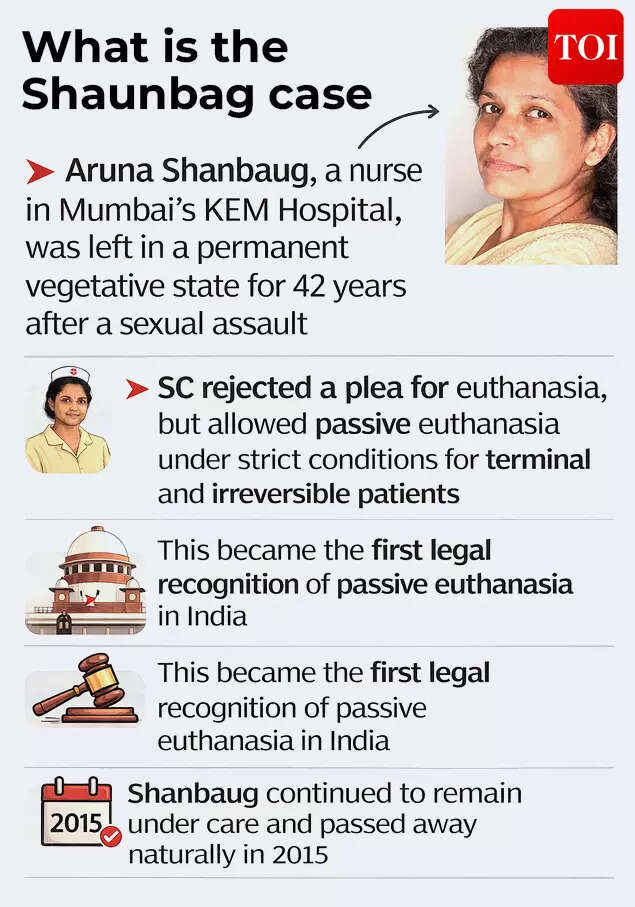
November 27, 1973.Decades before Harish Rana’s birth, a young nurse’s routine night shift in Bombay would turn into one of India’s most haunting medical-legal cases. Aruna Shanbaug, just 26, had spent the day caring for patients at King Edward Memorial Hospital, unaware that the night ahead would alter the course of her life, and the country’s legal history, forever.“November 27, 1973. Aruna Shanbaug, 26, is almost at the end of a tiring day. As nurse at Bombay’s King Edward Memorial Hospital, she’s been busy dealing with adulterated mithai poisoning cases, particularly children. It’s far too late to go home; she will spend the night at the nurses’ quarters…At last it’s time for bed. Aruna Shanbaug walks towards the cardio-vascular thoracic centre (CVTC) in the basement for her purse. That’s the last time in her life she walks. Or talks.

-

…At around eight the next morning, Matron Belimal gets frantic messages. A sweeper went to the CVTC and saw a woman with white clothes torn and thrown all around her. She has been identified as nurse Aruna Shanbaug. And there is a dog’s chain around her neck,” euthanasia activist and journalist Pinki Virani recounted.That night changed everything.A young nurse known among colleagues for her spirited personality and warmth, Shanbaug had been preparing to change from her uniform into a rose-pink sari to meet her fiancé, a doctor. Instead, she was brutally attacked in the hospital basement by sweeper Sohanlal Bharta Walmiki.She was discovered nearly 11 hours later, her heart still beating. But survival came at a devastating cost.The lack of oxygen had caused severe and irreversible brain damage. Shanbaug slipped into a persistent vegetative state, conscious only of pain, unable to speak, move or communicate.
-

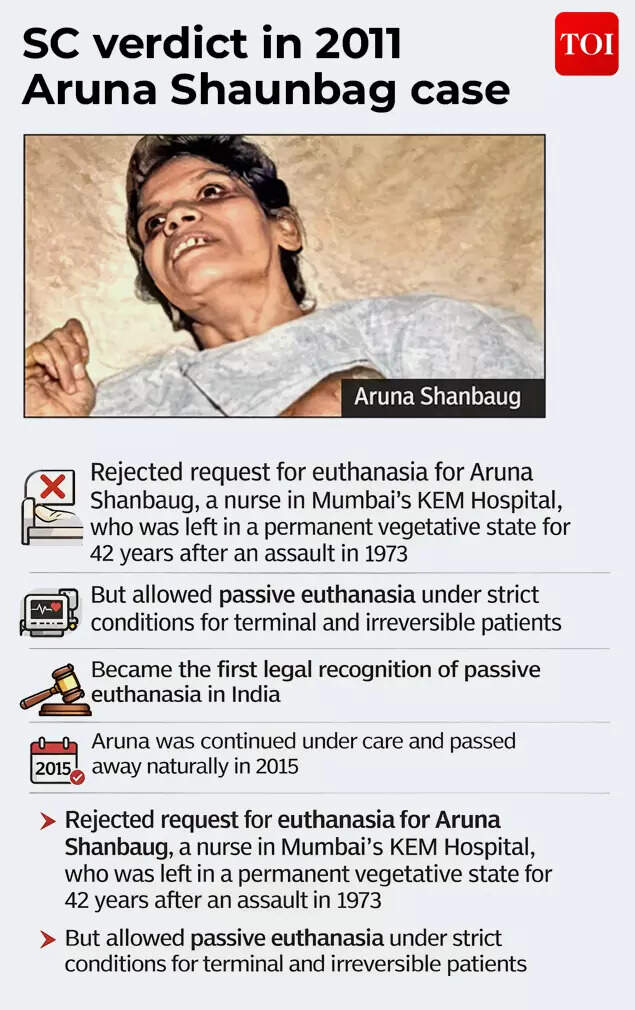
SC verdict in 2011 on Aruna Shanbaug’s case

His freedom stood in stark contrast to Shanbaug’s condition.Confined to a hospital bed at KEM, she remained in a vegetative state for decades.Ultimately, despite laying the foundation of legal framework for passive euthanasia under strict conditions, the topp court denied Aruna Shanbaug the ‘right to die.’In the end, Aruna Shanbaug’s case laid the foundation. Years later, that legal pathway would finally be invoked in the case of Harish Rana.

But as a nation, we must remember that we gave her nothing. We let Aruna down.

Pinki Virani

For decades, Aruna Shanbaug lay silent in a hospital ward, her story a haunting reminder of violence, neglect and the long struggle for dignity in life and death.

‘To be, or not to be’ finds an answer

Meanwhile, the long agony of Harish Rana and his family edges toward an end that resists the binaries of joy or grief.At Delhi’s AIIMS, doctors have initiated the protocol for passive euthanasia following the top court’s order, a process expected to implement over the next two to three weeks, officials told PTI.In a video that has circulated widely, the young man from Ghaziabad lies still, eyes open yet distant, as relatives gather in quiet prayer.A member of the Brahma Kumaris based in Mount Abu, gently places a tilak on his forehead and whispers, “Sabko maaf karte hue, sabse maafi mangte hue, so jaao theek hai… (Forgiving everyone and asking forgiveness from everyone. Now sleep. It’s okay).”A struggle that spanned more than a decade has now reached a form of closure. As John Keats once wrote, “Half in love with easeful death,” the line lingers over Rana’s final passage.Through a legal path first carved in the case of Aruna Shanbaug, he has been granted what she never was.In that quiet, difficult distinction lies the weight of both justice, and time.

Source link

West Bengal elections: EC transfers 19 senior police officers in fresh reshuffle ahead of polls | India News


West Bengal elections: EC transfers 19 senior police officers in fresh reshuffle ahead of polls
The IPS officers were transferred as ordered by the Election Commission of India.

NEW DELHI: The Election Commission of India (ECI) on Tuesday ordered the transfer of 19 senior police officers in West Bengal, marking the third consecutive day of such reshuffles in the poll-bound state.The poll body replaced the ADG/IGPs of the south and north Bengal regions, the police commissioners of Howrah, Barrackpore, Chandannagar, and Asansol-Durgapur, as well as 12 superintendents of police (SPs) and a deputy commissioner (DC) across 13 districts.The first round of transfers was carried out in the state’s top bureaucracy just hours after the ECI announced the assembly election schedule on Sunday for four states, including West Bengal, and the Union territory of Puducherry.The second round of transfers took place on Monday afternoon within the senior ranks of the West Bengal Police. The ECI is empowered to transfer officers directly involved in elections under Article 324 of the Constitution. Under it, the poll body has the power of “superintendence, direction, and control” over the entire poll machinery in a state or Union territory during elections.However, the transfers drew sharp criticism in Parliament from the Trinamool Congress (TMC), which governs West Bengal. TMC MP Derek O’Brien announced a day-long walkout by party MPs from the Rajya Sabha to protest what he called “transfers made by the ECI in the middle of the night.” Parliamentary affairs minister Kiren Rijiju, however, emphasised that the poll panel was exercising its constitutional mandate and accused the TMC of “routinely attacking constitutional bodies.All 294 assembly constituencies in West Bengal will be held in two phases – April 23 and 29 – with voting for 152 and 142 seats, respectively. The counting will be held on May 4.


Source link

Your phone is rewiring your brain. | India News


How Endless Reels Are Rewiring Your Brain and Destroying Your Focus

IT’S TIME TO TAKE CONTROLFrom scrolling addiction to memory problems, science reveals what over four hours of daily screen time does to your brain and what you can do about it.Think you’re just bad at focusing? Blame your brain’s built-in superpower — and your smartphone.

How Endless Reels Are Rewiring Your Brain and Destroying Your Focus

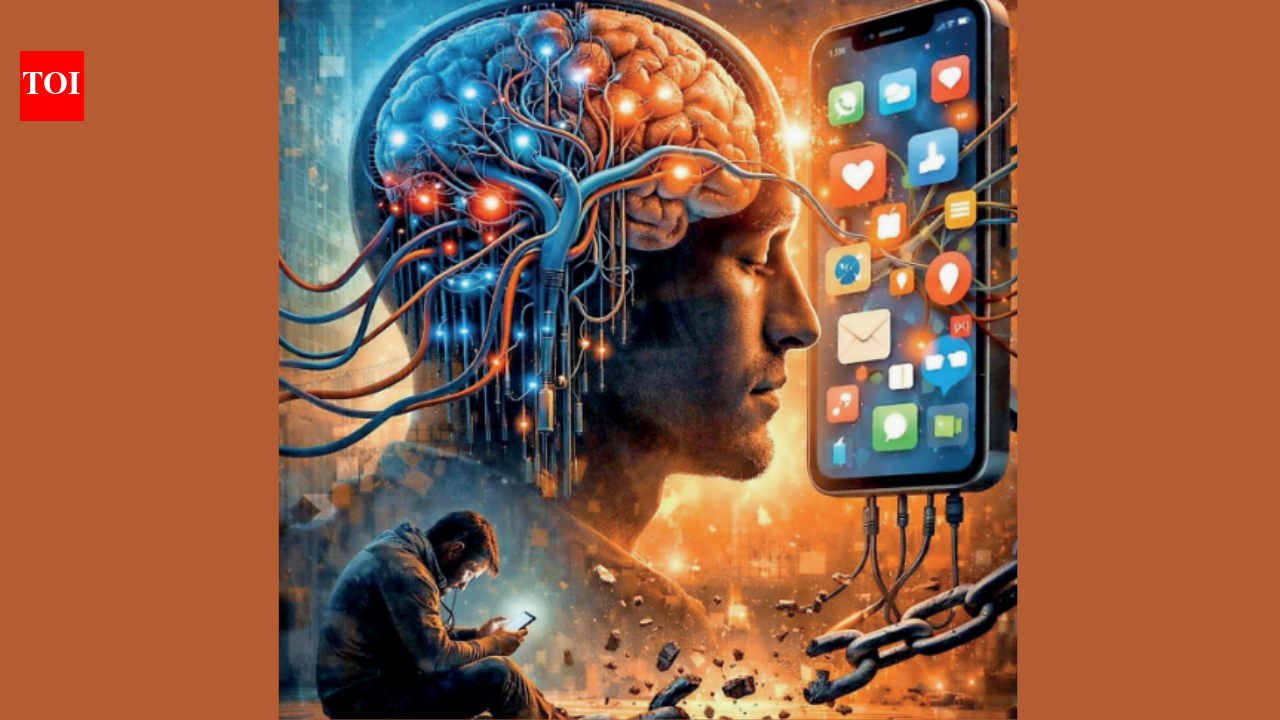
Your brain isn’t a computer with fixed programming. It’s more like Play-Doh — constantly being reshaped by everything you do. Scientists call this neuroplasticity, and it’s how you learn to ride a bike, speak a new language, or remember your best friend’s birthday.

-

But here’s the catch: every swipe, click, and scroll is also a training session for your brain. And with people globally spending over four hours a day on their phones, we’re running a massive, uncontrolled experiment on our own minds.The results? Not pretty.When ‘Just One More Video’ Becomes A Brain ProblemFor some, the internet has stopped being a tool and has become a trap. Digital addiction, officially called Internet Addiction, is now recognised as a real behavioural condition affecting over 7% worldwide. Teens are especially vulnerable.

-

This isn’t about weak willpower or being ‘too attached to your phone.’ It’s science. Your brain is doing exactly what it’s designed to do — learn from repetition. The problem? Compulsive scrolling is teaching it all the wrong lessons.Think of it this way: practising piano strengthens the pathways for music. Compulsive phone use strengthens pathways for craving more screen time — while weakening the circuits for self-control and deep focus.


Source link

‘Trying to dress up massacre as a military op’: India slams Pakistan’s airstrike on Afghanistan hospital | India News


'Trying to dress up massacre as a military op': India slams Pakistan's airstrike on Afghanistan hospital
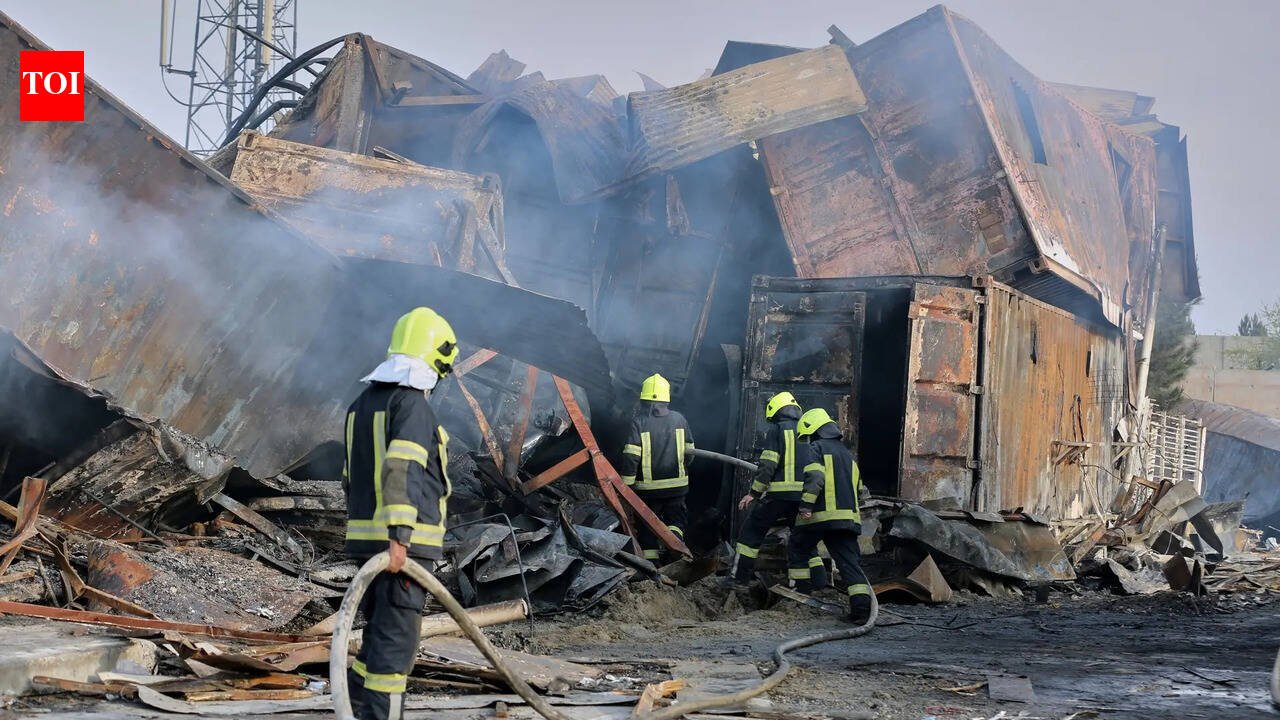
Firefighters work at the site of a late-Monday airstrike at a drug rehabilitation hospital in Kabul, Afghanistan, Tuesday, March 17, 2026. (AP Photo/Siddiqullah Alizai)

NEW DELHI: The Ministry of External Affairs (MEA) on Tuesday strongly condemned Pakistan’s strikes on a hospital in Kabul, describing them as a “massacre dressed as a military operation.“This is a cowardly and unconscionable act of violence that has claimed the lives of a large number of civilians in a facility that can by no means be justified as a military target. Pakistan is now trying to dress up a massacre as a military operation,” the MEA said in an official statement.“This heinous act of aggression by Pakistan is a blatant assault on Afghanistan’s sovereignty and a direct threat to regional peace and stability. It reflects a persistent pattern of reckless behaviour and repeated attempts to externalise internal failures through increasingly desperate acts of violence beyond its borders,” the MEA added. The statement also noted that the strikes were carried out during the holy month of Ramzan, making the attack “even more reprehensible.” It called on the international community to hold those responsible accountable and ensure that Pakistan’s targeting of civilians in Afghanistan ceases without delay.“India extends its deepest condolences to the bereaved families, wishes a swift recovery to those injured, and stands in solidarity with the people of Afghanistan in this tragic moment. We also reiterate our unwavering support for the sovereignty and territorial integrity of Afghanistan,” the statement read.Multiple fatalitiesHamdullah Fitrat, deputy spokesperson of the Taliban regime in Kabul, said in a post on X that the death toll from the Pakistani military’s strike has risen to 400, while 250 people were injured.“The Pakistani military regime carried out an airstrike at approximately 9:00 PM this evening on the Omid Addiction Treatment Hospital, a 2,000-bed facility dedicated to the treatment of drug addiction. As a result of the attack, large sections of the hospital have been destroyed,” Fitrat wrote.


Source link