Breaking News
Deregulation push may dilute critical fire safety provisions in NBC | India News


Deregulation push may dilute critical fire safety provisions in NBC

NEW DELHI: Govt has asked Bureau of Indian Standards (BIS) to do away with and amend some key provisions of the National Building Code (NBC) by April end. These include changes to sections dealing with fire safety, which experts said will “water down” conditions key to public safety.TOI has learnt that the changes are being made following directives from the deregulation cell under Cabinet Secretariat, which had flagged that regulations governing land and buildings are state subjects and state govts and urban local bodies deal with these issues. People aware of the development said the cell is also of the view that fire safety and its regulation fall within state authority and the provisions of NBC, along with requirements of consultants, push up costs.Recently, the Cabinet Secretariat intervened to withdraw the revised 2025 BIS seismic zoning map after housing and urban affairs ministry flagged the increase in cost of Metro rail projects, technical complexity and lack of stakeholder consultation. Sources said that there was a directive to BIS from Cabinet Secretariat to “immediately” withdraw the draft standards.“In the case of NBC, most changes sought by the deregulation cell have been proposed in the updated NBC. However, submissions are also being made over why there is a need to continue with the provisions dealing with fire safety since it is directly linked to life and public safety. There is no scientific data to prove that any dilution is required in this area. There is scope for improvement rather than dropping the entire chapter, which is an easy reference point for all authorities and stakeholders,” said a member of the technical committee dealing with the subject.He added that the revised NBC, which was ready for printing around June last year, was prepared with the involvement of over 1,300 professionals. “How many urban local bodies and municipalities have the capacity to come up with a detailed code? Withdrawing it suddenly will force them to go to the drawing board,” said another member.Several members of the committee said the revised NBC was prepared after more than two years’ work and just when it was about to be published, the Cabinet Secretariat wrote to all chief secretaries stating that it is not mandatory to follow the NBC. This was followed by directives to BIS to delete some parts of the NBC 2016, including the ones that deal with “integrated approach”, “administration” and “fire safety”.


Source link

Rashtriya Swayamsevak Sangh: ‘In supreme interest of nation’: RSS backs Centre’s decisions amid Middle East turmoil; calls for peace | India News


'In supreme interest of nation': RSS backs Centre's decisions amid Middle East turmoil; calls for peace

RSS backs Centre’s decisions amid Middle East turmoil

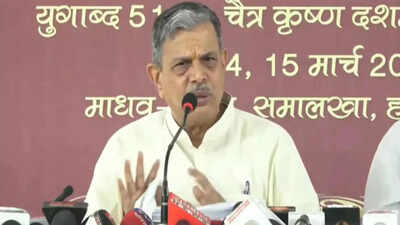
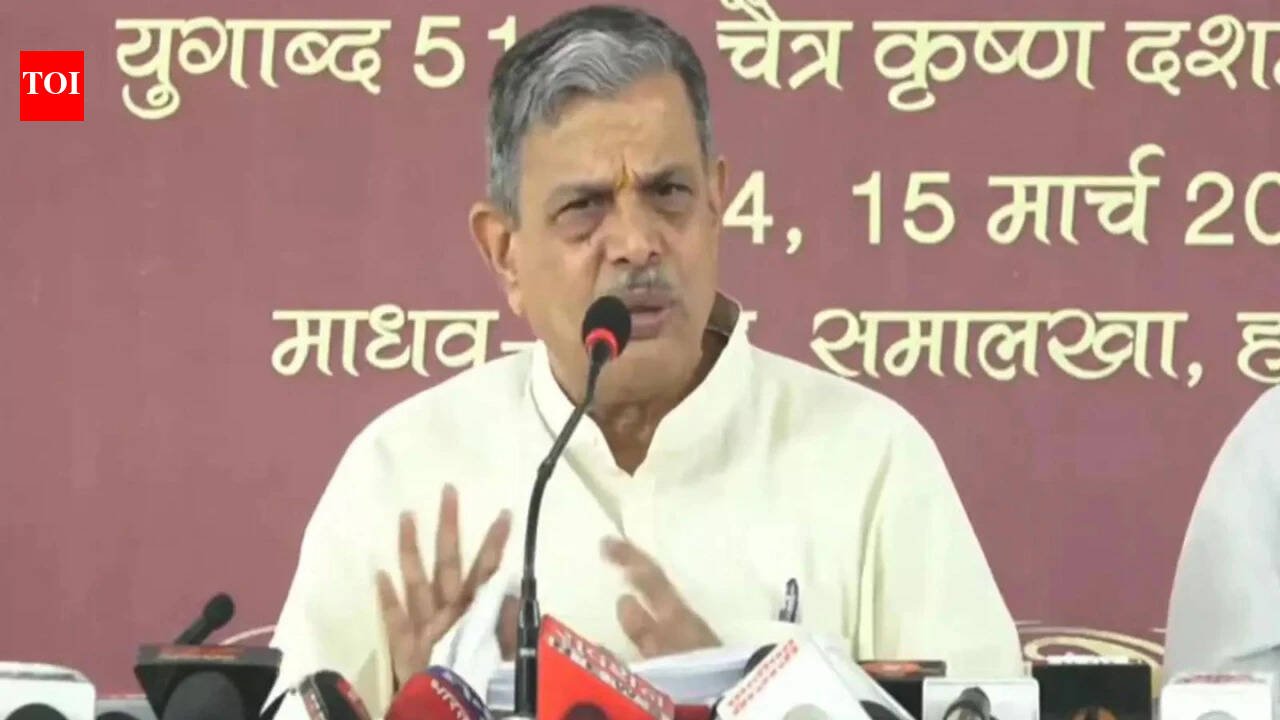
Amid the ongoing conflict in the Middle East, the Rashtriya Swayamsevak Sangh (RSS) on Sunday called for peace and said the war should end as soon as possible, while also backing the Union government’s response, saying it was acting in the “supreme interest of the nation”.Speaking at a media briefing during the three-day Akhil Bharatiya Pratinidhi Sabha (ABPS) meeting in Panipat, RSS general secretary Dattatreya Hosabale said the Sangh wanted the conflict involving Iran, the US and Israel to end swiftly so that ordinary people could return to normal life.

‘We want peace in the world

Replying to questions on the Middle East conflict, which has entered its third week, Hosabale said the RSS’s position was rooted in its broader worldview of global peace.“We want peace in the world,” Hosabale said, according to news agency PTI.“Our vision is world peace. Wars arise from a multitude of causes; therefore, in the context of this particular conflict, we too desire that it comes to an end as swiftly as possible, and that the lives of ordinary people return to a state of happiness and peace without delay,” he said.He, however, declined to comment on the reasons behind the war.

RSS backs Centre’s response

Hosabale also strongly defended the Centre’s handling of the crisis, saying the government was taking all necessary steps in the national interest.“What is in the supreme interest of the nation, they (the Indian government) are doing that. What they are doing is right,” he told reporters.The remarks come as the Indian government continues to monitor the fallout of the Middle East conflict, which has had implications for energy supplies, trade routes, aviation and Indian nationals in the region.

On protests after Khamenei’s killing

Asked about protests reported from some parts of India following the killing of Iran’s Supreme Leader Ayatollah Ali Khamenei, Hosabale said expressions of grief were natural, but any such response must remain peaceful and should not disturb communal harmony.“If such things happen, they should be done peacefully. It should not be against any sect or community,” he said.He added, “According to Indian tradition, one can be a person’s enemy till he is alive, but after one dies, no one remains an enemy. So, after death, if anyone expresses grief, there is nothing wrong in it. But when this is done, it should be seen that it does not cause disturbance to peace.”

Refuses comment on UGC row, speaks on Muslims and Hindutva

On the controversy surrounding the UGC regulations, which have been stayed by the Supreme Court, Hosabale said it would not be appropriate to comment on a matter that is sub judice.“When a decision comes, after going through it, the Sangh will comment,” he said.Replying to another question, Hosabale said RSS founder Dr Keshav Baliram Hedgewar did not create the organisation to oppose Muslims.“When Dr Keshav Baliram Hedgewar founded the RSS, he did not say that the organisation had been formed to oppose Muslims,” he said, as quoted by PTI.He also referred to a historical debate during British rule in the Central Provinces, saying a Muslim leader had defended the RSS against restrictions, arguing that the organisation and Hedgewar were not communal.Hosabale reiterated a long-held RSS position, saying, “We have said this from the start that the ancestors of all people of India were Hindus.”

Message to Indians abroad

Referring to a recent event in Hyderabad attended by NRIs and people of Indian origin from 71 countries, Hosabale said the Sangh had urged them to work for the welfare of the countries they live in as well.“We conveyed a message to the delegates from 71 different countries… that the country where you live and eat, you should do good for that country. Because it is the vision of Hindutva: Vasudhaiva Kutumbakam — the entire world is one family,” he said.“It is not like you are only with India. You have the duty to be with the society there,” he added.

ABPS meet ends with organisational push

The three-day ABPS meeting, which began in Pattikalyana in Panipat on March 13, was inaugurated by RSS chief Mohan Bhagwat and Hosabale, and concluded on Sunday with a resolve to expand organisational work, strengthen social harmony and encourage participation of “positive forces” in national interest.Hosabale said the number of RSS shakhas had increased by nearly 6,000 over the past year and had now crossed 88,000, while the number of places where shakhas are held had grown to over 55,000, PTI reported.He also said the Sangh’s outreach had expanded into remote areas including Andaman, Arunachal Pradesh, Leh and tribal regions, and that a total of 96 training camps would be organised in the coming year.


Source link

Arvind Kejriwal: AAP’s Arvind Kejriwal, Manish Sisodia move Supreme Court after Delhi HC rejects plea to transfer excise policy case | India News


AAP’s Arvind Kejriwal, Manish Sisodia move Supreme Court after Delhi HC rejects plea to transfer excise policy case

AAP’s Kejriwal, Sisodia move Supreme Court after Delhi HC rejects plea to transfer excise policy case

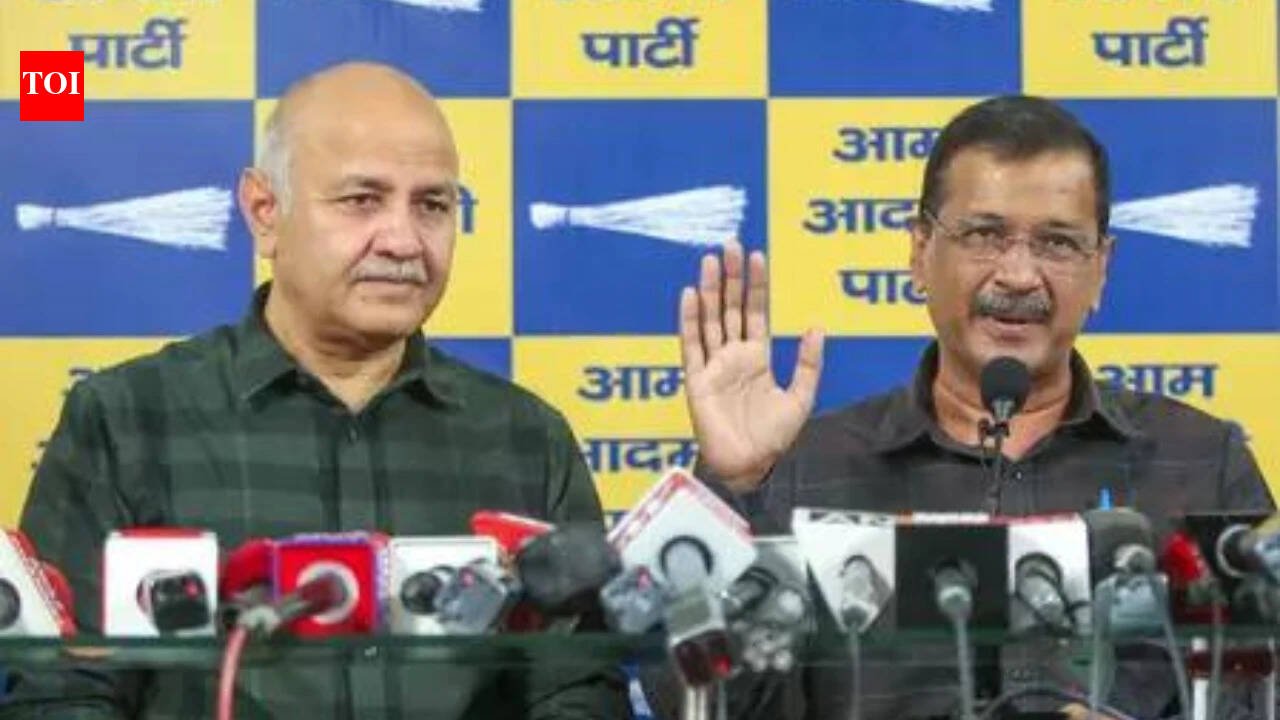
NEW DELHI: Aam Aadmi Party (AAP) convener Arvind Kejriwal and senior party leader Manish Sisodia have approached the Supreme Court after the Chief Justice of the Delhi high court rejected their request to transfer the CBI’s plea against their discharge in the excise policy case from the bench of Justice Swarana Kanta Sharma to another judge, the party said on Sunday.The development comes a day before the CBI’s petition challenging the discharge order is scheduled to come up for hearing before Justice Sharma.

Delhi HC Chief Justice declines transfer request

As per news agency PTI, Delhi high court Chief Justice D K Upadhyaya declined the request made by former chief minister Kejriwal and other accused to transfer the matter on the administrative side.According to sources cited by PTI, the Chief Justice took the view that Justice Swarana Kanta Sharma was hearing the CBI’s petition in line with the roster allocation, and that there was no reason to pass an order of transfer.Following that rejection, the AAP said Kejriwal and Sisodia have challenged the decision in the Supreme Court.

Why did Kejriwal seek transfer?

On March 11, Kejriwal, Sisodia and other accused in the excise policy case submitted a representation to the Delhi high court Chief Justice seeking transfer of the CBI’s plea from Justice Sharma to another “impartial” judge.Kejriwal said in his representation that he had a “grave, bona fide, and reasonable apprehension” that the hearing in the matter would not be impartial and neutral.The CBI has moved the Delhi high court against the order of the trial court that discharged Kejriwal and other accused in the excise policy case.

What happened in the high court?

While issuing notice to all 23 accused, including Kejriwal, Justice Swarana Kanta Sharma had observed that certain findings and observations made by the trial court at the stage of framing of charges prima facie appeared erroneous and required consideration.That observation appears to have triggered the apprehension raised by the AAP leaders.Earlier, Kejriwal’s representation argued that the high court, at the very first short hearing on March 9, not only issued notice but also, ex parte and without hearing the discharged accused, recorded a prima facie view that the trial court’s detailed order was “erroneous”.Representation also objected to the high court staying the trial court’s directions and observations against the investigating officer, including proposed departmental action, without spelling out the specific perversity that justified such interim interference.According to the representation, such relief at the threshold stage and without hearing the discharged accused strengthened the apprehension that the revision plea may not be heard with the required judicial detachment.

Trial court had discharged Kejriwal, Sisodia and others

Arguments on charges in the excise policy case began in December 2025, and on February 27, the special CBI court passed a detailed order discharging Kejriwal, Sisodia, AAP Rajya Sabha MP Sanjay Singh and all other accused in the matter.Kejriwal had been arrested in June 2024 in connection with the case and chargesheeted in July 2024.The CBI’s petition challenging the discharge is now listed for hearing before Justice Swarana Kanta Sharma on Monday.


Source link

‘A civilisational battle’: BJP, DMK, AIADMK, Congress welcome EC’s poll dates announcement for 4 states, one UT; TMC questions move | India News


'A civilisational battle': BJP, DMK, AIADMK, Congress welcome EC's poll dates announcement for 4 states, one UT; TMC questions move

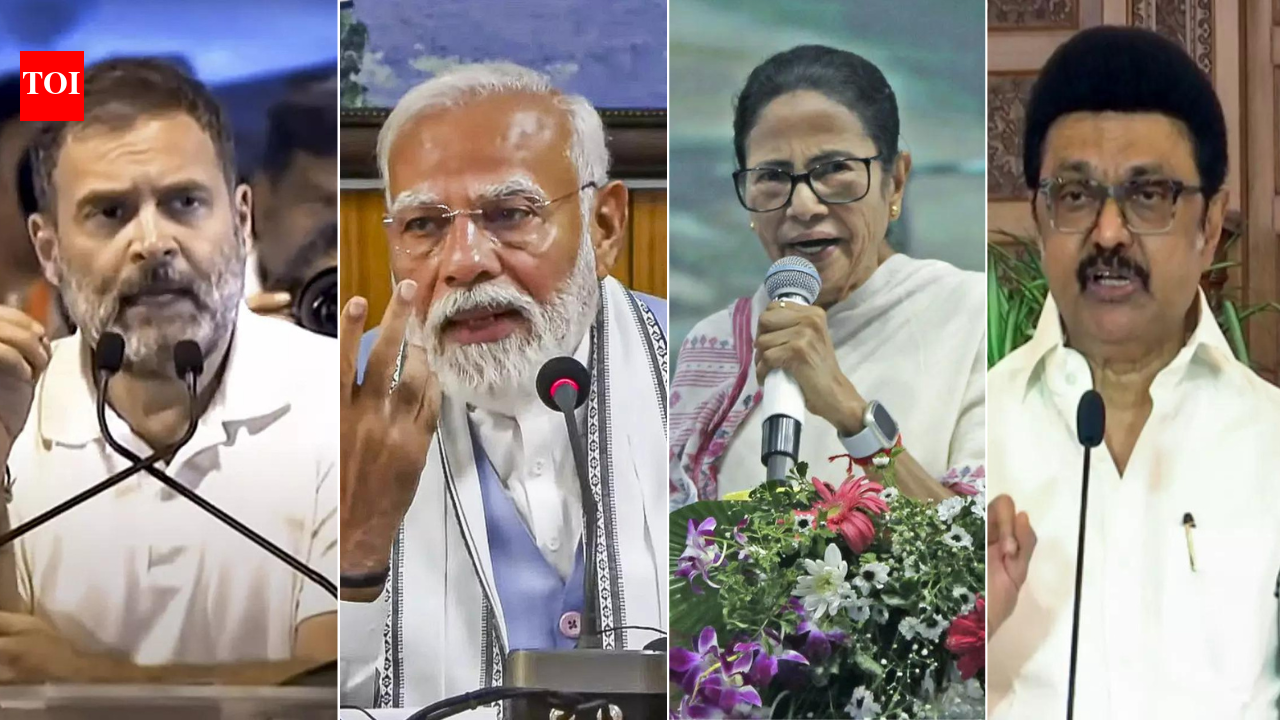
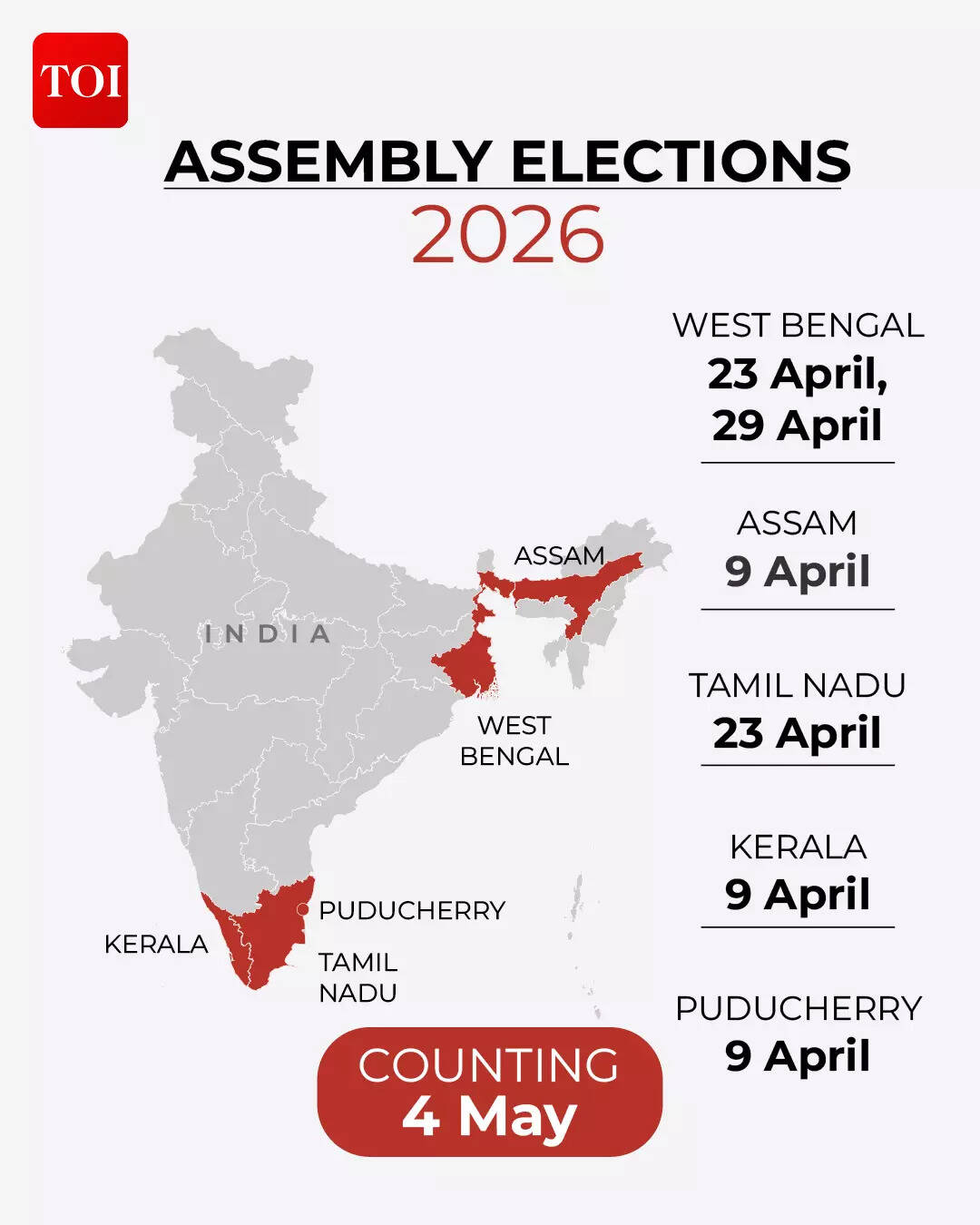
NEW DELHI: Political parties on Sunday welcomed the Election Commission’s poll dates announcement for 4 states and one Union Territory. West Bengal will vote in two phases starting April 23, while Kerala, Assam and Puducherry will go to the polls on April 9, and Tamil Nadu on April 23; results for all will be declared on May 4.In 2021, West Bengal voted across eight phases and Assam in three. Tamil Nadu, Kerala, and Puducherry may see single-phase polling, while West Bengal and Assam are likely to have multiple phases due to larger electorates.

-

Welcoming the EC’s move to conduct Bengal elections in two phases, the West Bengal unit of the Bharatiya Janata Party called it a “civilisational battle”. Congress too welcomed EC’s move to conduct polls in 2 phases in the state, however TMC said that the number of phases was just a “reflection of what the BJP wants”.

ECI Announces Assembly Election Dates For West Bengal, Assam, Tamil Nadu, Kerala & Puducherry

The poll panel earlier announced that Assembly elections to the 294 seats in West Bengal will be held in two phases on April 23 and April 29, with the counting of votes scheduled for May 4.Political parties in Tamil Nadu, including the ruling Dravida Munnetra Kazhagam (DMK), the main opposition All India Anna Dravida Munnetra Kazhagam (AIADMK), and others welcomed the announcement by EC to conduct a single-phase voting in the state.

How BJP reacted

Welcoming the move, BJP voiced confidence in winning polls in West Bengal saying the “countdown to the end of Mahajungle Raj has begun”, referring to TMC government in the state.“This is not merely an election, it is a civilisational battle. On 23rd and 29th April, the people of West Bengal will cast their vote in two phases to reclaim their future. The countdown to the end of Mahajungle Raj has begun. 50 days to go — 4th May will mark a new dawn for Bengal,” the Bengal BJP unit of Bengal said in a post on X.

How TMC reacted

The All India Trinamool Congress played down the EC’s decision to conduct the Bengal elections in two phases, alleging that the poll schedule was determined based on the “requirements of its political masters.”The party also questioned what it termed the commission’s “duality”, pointing out that the 2021 assembly elections in the state were held in eight phases despite high Covid-19 infections, whereas the upcoming polls have been limited to just two phases.“The number of phases is solely a reflection of what the BJP wants and the Election Commission has only adhered to the requirement of its political masters,” TMC spokesperson, Arup Chakraborty said.“Else, how can one justify conducting eight-phase polls in the state in 2021 when people were dying of Covid infections and deciding to hold the polls in two phases now when there is no such bug. The number of polls doesn’t matter, people will demolish the BJP irrespective of that,” Chakraborty added.

How Congress reacted

Congress hailed EC’s announcement that elections will be held in Assam, Kerala, Puducherry and Tamil Nadu in one phase and that elections will be held in West Bengal in two phases.“I welcome the announcement that elections will be held in Assam, Kerala, Puducherry and Tamil Nadu in one phase and that elections will be held in West Bengal in two phases. I am glad that the number of phases has been compressed to one phase/two phases,” P Chidambaram said in a social media post. Senior Congress leader Pradip Bhattacharya welcomed the decision to conduct assembly elections in West Bengal in two phases, but expressed concern over whether voters would be able to exercise their franchise freely and without intimidation.The former chief of the West Bengal Pradesh Congress Committee said he had raised the issue of alleged voter intimidation during his interaction with the full bench of the Election Commission of India during its recent visit to the state.“I welcome the Election Commission’s move to hold the polls in West Bengal in two phases. But my only concern is that the electors can cast their votes freely and without any fear,” Bhattacharya told PTI. “I have seen many elections when voters could not cast their votes even when there were six or seven phases of elections,” he added.

How DMK, AIADMK reacted

The Dravida Munnetra Kazhagam (DMK) and the main opposition All India Anna Dravida Munnetra Kazhagam (AIADMK), along with other political parties in Tamil Nadu, on Sunday welcomed the announcement of the Assembly election schedule by the Election Commission of India and expressed confidence of winning the April 23 polls.A DMK office-bearer, Salem Dharanidharan, said that since party president and chief minister MK Stalin assumed office, his focus has remained on governance and public welfare, adding that the state government’s schemes are now being replicated across the country.He also said the party’s preparations for the polls effectively began the day Stalin took charge as chief minister. “The DMK would secure a huge victory in the polls…it will be a sweep; winning more than 200 seats out of the 234,” he said.Meanwhile, AIADMK spokesperson Kovai Sathyan said, “Our party chief Edappadi K. Palaniswami has already covered campaign in nearly 200 constituencies. We are ready to face polls even tomorrow and whenever it is held we are going to win.” He added that people are backing the AIADMK and expressed confidence that the party and its allies in the National Democratic Alliance—including the Bharatiya Janata Party, Amma Makkal Munnetra Kazhagam and Pattali Makkal Katchi—would secure a major victory and form the next government in the state.


Source link

West Bengal polls: Why EC opted for two-phase assembly elections | India News


West Bengal polls: Why EC opted for two-phase assembly elections

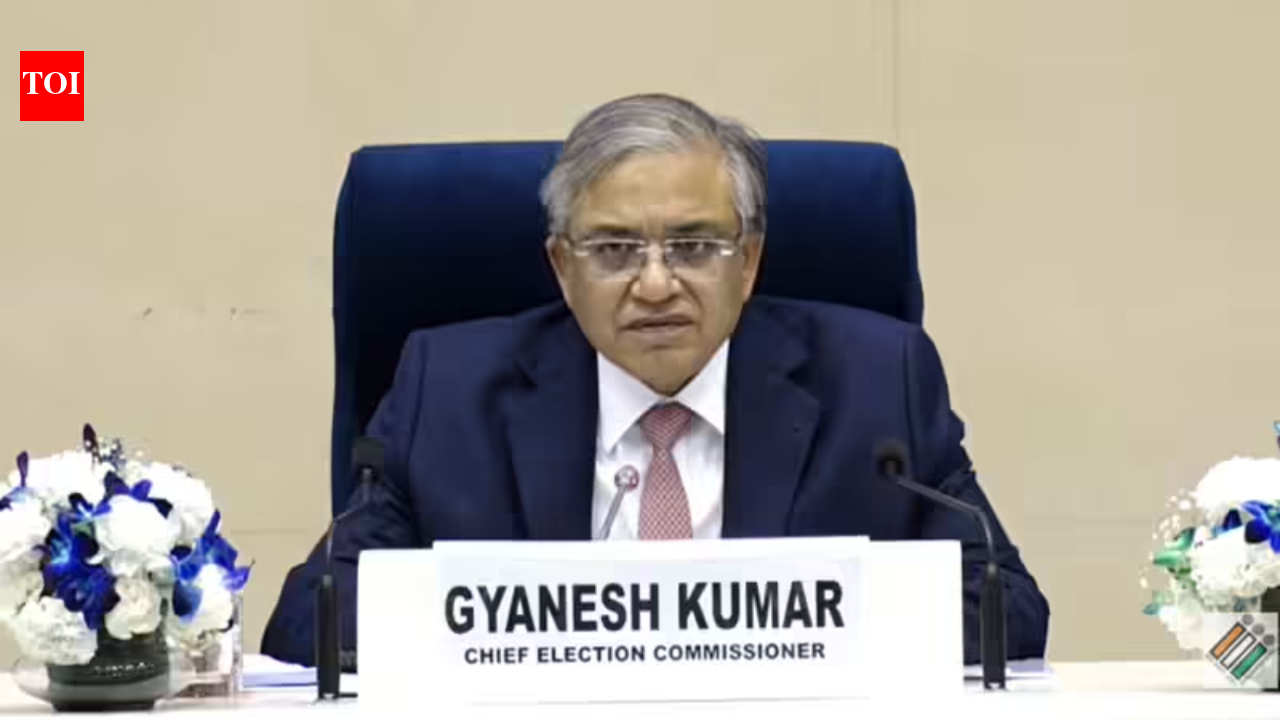
NEW DELHI: The Election Commission on Sunday announced that the assembly polls in West Bengal will be held in two phases on April 23 and April 29 — unlike the eight-phase polling conducted in 2021.While announcing the poll schedule of 4 states and one Union territory, Chief Election Commissioner Gyanesh Kumar said that the reduction of phases were found necessary to make elections convenient to everybody.“With regards to the West Bengal elections to be held in two phases instead of eight phases earlier, the Commission has held detailed deliberations and in its considered opinion, it was found necessary to reduce the number of phases and bring it down to an extent where it is convenient for everybody,” Kumar said.The Chief Election Commissioner also addressed the concerns over poll violence and said that necessary action shall be taken on police offers who were found to be involved in earlier polls.“With regards to the police officers who were involved in the violence in earlier elections, the list has been sought, as is known to the media during our visit to West Bengal, and necessary action as per law shall be taken. With regards to the supplementary list, as per the orders of the Supreme Court, the learned judges working under the directions of the High Court of Calcutta would be bringing out this supplementary list and as and when the supplementary list of names is coming out, they shall be included in addition to the existing electors,” he added.The EC announced election dates for the four poll-bound states — Assam, Kerala, Tamil Nadu and West Bengal — and Puducherry, a Union territory, on Sunday. Track all updates from the Election Commission press conference here.The counting of votes for the West Bengal assembly elections 2026 will take place on May 4, along with that of Assam, Kerala, Puducherry and Tamil Nadu.Meanwhile, the Bharatiya Janata Party and TMC hailed the poll body’s decision to hold a two-phase poll in West Bengal.In a post on X, BJP West Bengal said voters will cast their ballots in two phases on April 23 and April 29.“This is not merely an election, it is a civilisational battle. The countdown to the end of Maha Jungle Raj has begun,” it added.Referring to the counting date of May 4, the BJP said, “Fifty days to go — May 4 will mark a new dawn for Bengal.”Responding to the poll announcement, TMC state general secretary Kunal Ghosh said the people of the state are firmly behind the ruling party.“People of Bengal are with TMC. This was again shown in the massive turnout of youth in Yuva Sathi camps held by the Mamata Banerjee government,” he added.In the 2021 Bengal elections, the Mamata Banerjee-led Trinamool Congress secured 215 seats, while Bharatiya Janata Party became the official opposition with 77 seats.


Source link

Kerala Election 2026 schedule: Voting in one phase on April 9, results on May 4; check full details | India News


Kerala Election 2026 schedule: Voting in one phase on April 9, results on May 4; check full details
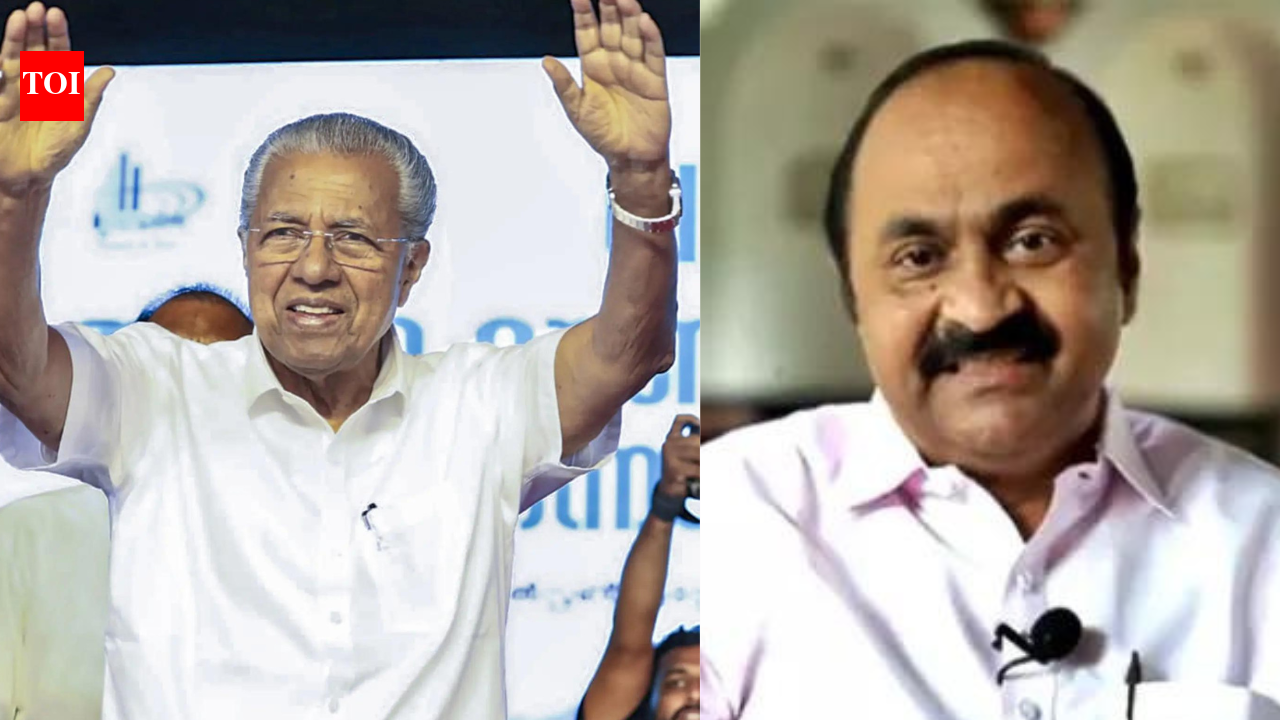
Kerala CM Pinarayi Vijayan, leader of opposition VD Satheesan

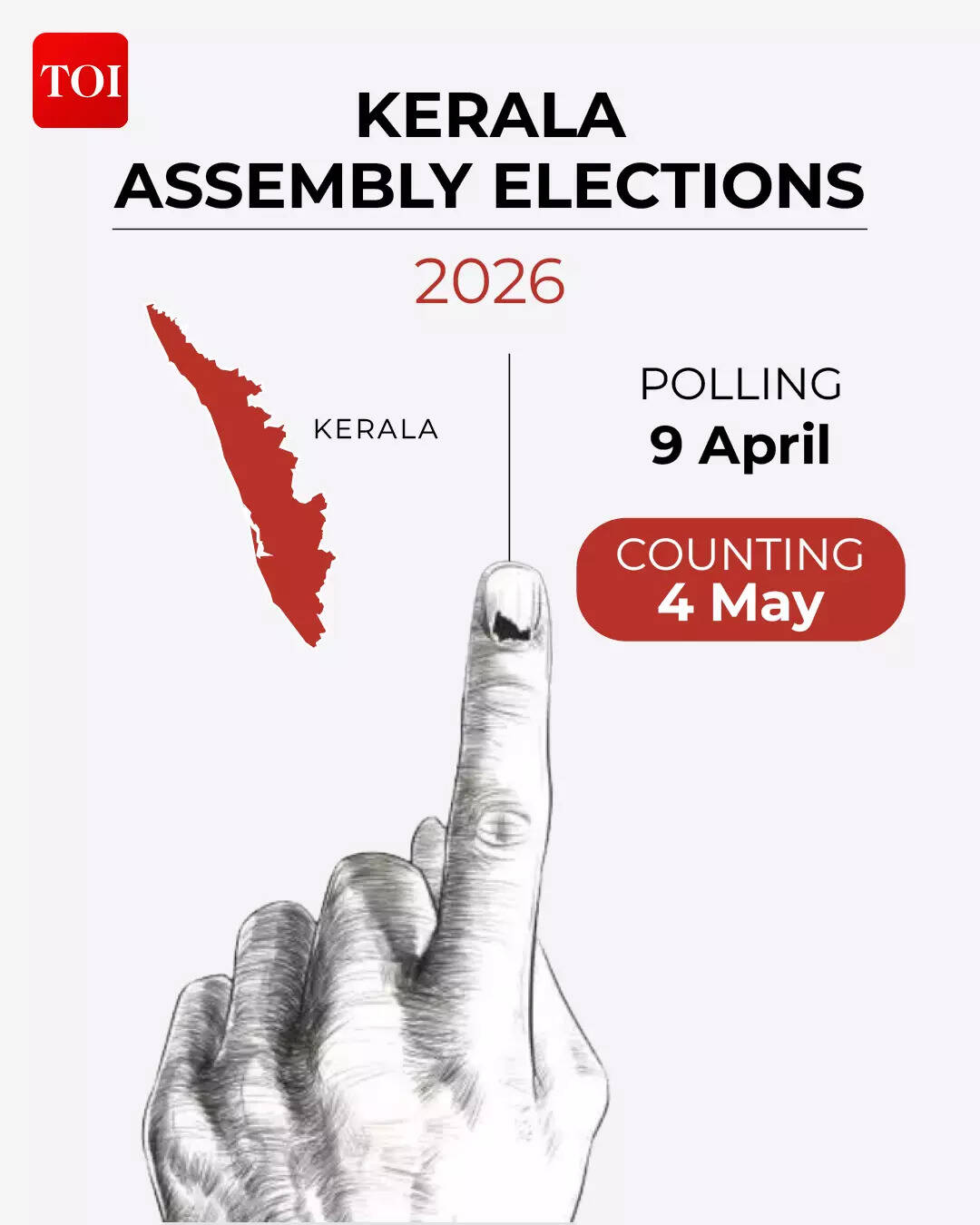
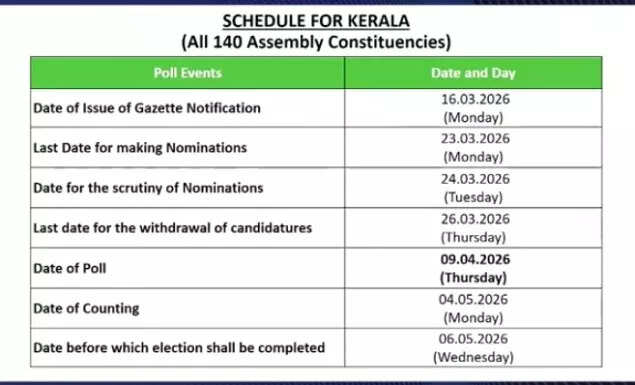
The Election Commission on Sunday announced the election dates for Kerala. The state will undergo polling in one phase on April 9. The counting of votes will be on May 4.

election announcement

Elections will be held for all 140 seats of the Kerala Legislative Assembly, with the ruling Left Democratic Front (LDF) led by chief minister Pinarayi Vijayan seeking third consecutive term in office, after a thumping re-election in 2021.

.

The LDF is expected to face a strong challenge from the opposition United Democratic Front (UDF) led by the Indian National Congress, while the Bharatiya Janata Party-led National Democratic Alliance (NDA) will also be in the fray, attempting to expand its presence in the state and trying every bit to turn the contest in a three cornered fight.In the 2021 Kerala Assembly elections, the LDF secured a historic second consecutive term, winning 99 seats, while the UDF won 41 seats. The BJP failed to open its account in the Assembly that year. The state recorded a voter turnout of 74.06 per cent.In the 2016 Assembly elections, the LDF had returned to power with 91 seats, defeating the then ruling UDF which secured 47 seats. The BJP had opened its account in the Kerala Assembly for the first time by winning the Nemom constituency, while the voter turnout stood at 77.35 per cent.The upcoming elections are expected to see a direct contest primarily between the LDF and the UDF, with the BJP-led NDA trying to make inroads and turn the contest into a three-cornered fight in several constituencies.Meanwhile, the Election Commission of India reviewed poll preparedness in West Bengal, Tamil Nadu, Kerala, Assam and Puducherry earlier this month. As part of the preparations, the Commission appointed Central Observers under the plenary powers conferred by Article 324 of the Constitution and Section 20B of the Representation of the People Act, 1951, to assist in the conduct of free and fair elections and oversee the management of the electoral process at the field level.


Source link

Mamata Banerjee raises monthly honorarium for priests, muezzins by Rs 500 ahead of EC’s poll schedule announcement | India News


Mamata Banerjee raises monthly honorarium for priests, muezzins by Rs 500 ahead of EC's poll schedule announcement

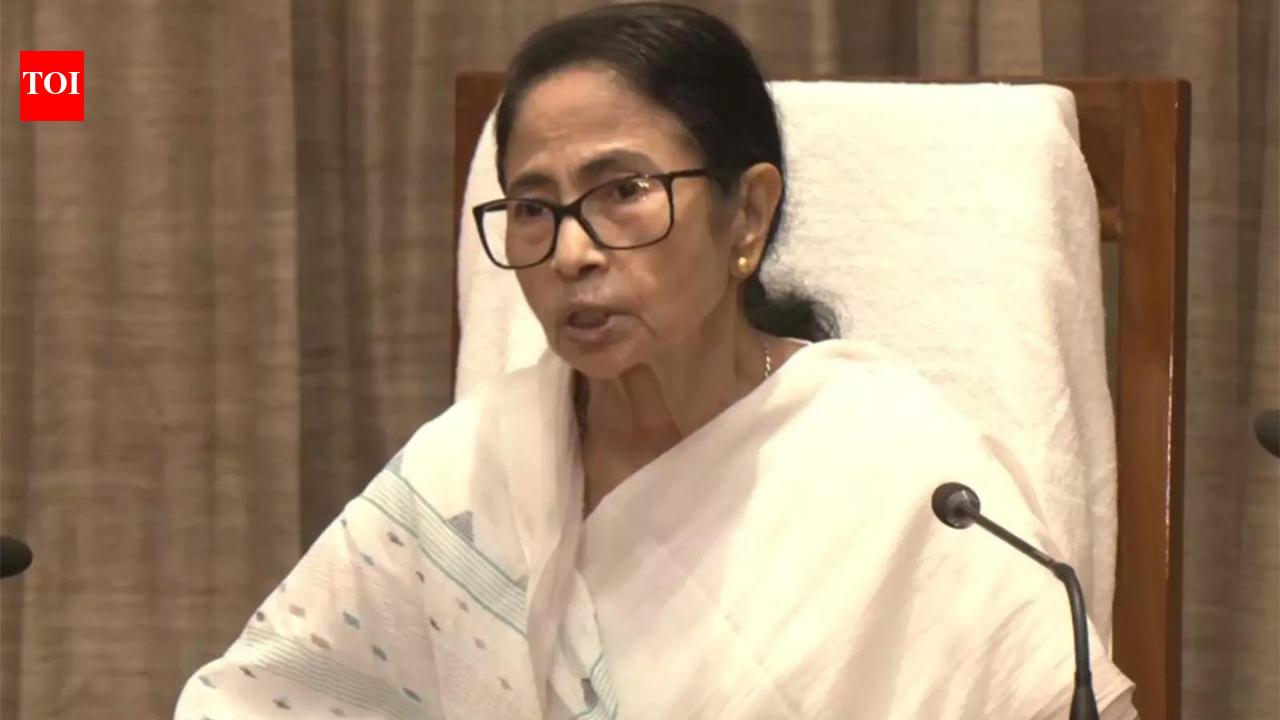
NEW DELHI: Bengal chief minister Mamata Banerjee on Sunday announced a Rs 500 increase in the monthly honorarium for priests and muezzins in West Bengal, hours before the Election Commission is scheduled to announce the poll dates for assembly elections in four poll bound states and the Union Territory of Puducherry. She also announced the approval of all fresh applications by the AITC led state government.The announcement came ahead of the enforcement of the Model Code of Conduct, which comes into effect once the election schedule is declared and which will bar governments from making new policy announcements or financial commitments that could influence voters.In a post on X, Banerjee said the state government had decided to increase the monthly honorarium for priests (purohits) and muezzins by Rs 500.“I am pleased to announce an increase of Rs 500 in the monthly honorariums extended to our purohits and muezzins, whose service sustains the spiritual and social life of our communities. With this revision, they will now receive Rs 2,000 per month.At the same time, all fresh applications that have been duly submitted by purohits and muezzins have also been approved by the State Government”, the West Bengal CM wrote in a post on X.With the revision, the monthly payment for both groups will increase to Rs 2,000. The chief minister further added that all new applications submitted by priests and muezzins seeking the honorarium have been approved by the state government.Banerjee said the move reflects the government’s commitment to recognising the role played by religious functionaries in society.“We take pride in nurturing an environment where every community and every tradition is valued and strengthened,” she wrote, adding that the government’s endeavour is to ensure that those who safeguard the state’s spiritual traditions receive due recognition and support”, she wrote.Mamata Banerjee also announced in a separate post that the West Bengal government will begin disbursing pending dearness allowance (DA) arrears under ROPA 2009 to employees and pensioners from March 2026. In a post on X, the West Bengal chief minister said the decision fulfils a commitment made by the state government to its employees as well as staff of educational and other grant-in-aid institutions. “I am happy to announce that our Ma-Mati-Manush government has delivered on its promise to all its employees and pensioners, and to lakhs of teachers and non-teaching staff of our educational institutions, as well as employees/pensioners of our other grant-in-aid institutions like panchayats, municipal bodies, other local bodies etc,” she wrote. She added that the payments will begin from next month in line with the modalities notified by the state finance department. “They will start receiving their ROPA 2009 DA arrears from March 2026 onwards as per the modalities detailed out in the Notifications issued by our Finance Department.”The announcements came shortly before the poll panel, led by chief election commissioner Gyanesh Kumar and comprising election commissioners Sukbir Singh Sandhu and Vivek Joshi, is expected to announce the schedule for the assembly elections in Tamil Nadu, West Bengal, Kerala, Assam and Puducherry at a press conference in New Delhi at 4 pm.


Source link

‘Rahul Gandhi defaming India’: Amit Shah on Youth Congress’ shirtless protest at Delhi AI summit | India News


'Rahul Gandhi defaming India': Amit Shah on Youth Congress' shirtless protest at Delhi AI summit
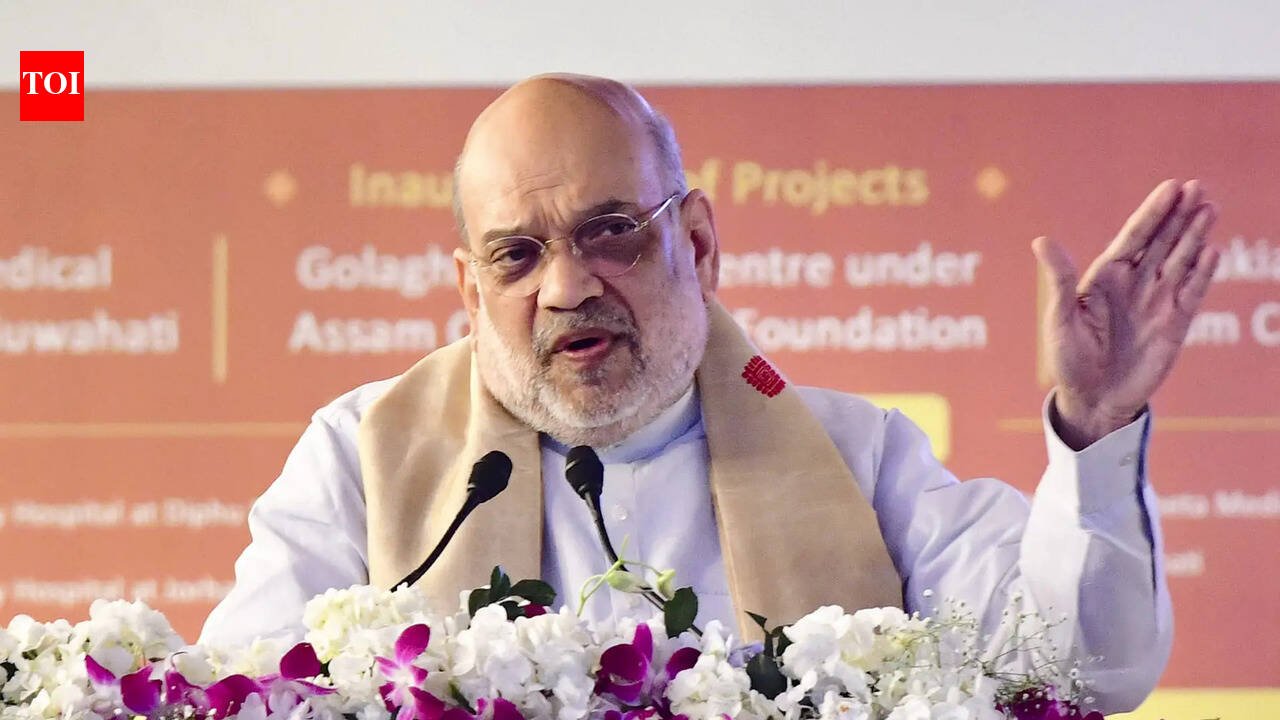
Guwahati: Union Home Minister Amit Shah addresses the gathring during inauguration of Pragjyotishpur Medical College and Hospital, in Guwahati. (PTI Photo)

NEW DELHI: Union home minister Amit Shah on Sunday accused the Congress of “defaming” India, as he lashed out at the opposition party over its youth wing’s shirtless protest at the AI Impact Summit in New Delhi last month. Shah claimed that Rahul Gandhi, Congress MP and Lok Sabha leader of opposition, has “started opposing India” in his opposition to Prime Minister Narendra Modi and the BJP. “Congress has tried to defame the country by removing clothes at the AI Summit. We were also in opposition, but there’s a place for it. You made the summit a platform for personal politics, while the whole world gathered to see India and invest in India,” he said at a rally in Guwahati. He added that instead of apologising, Gandhi called the protesting In Youth Congress workers “lion-hearted,” a stance he described as “irresponsible.” Shah further challenged the Congress to oppose the BJP vigorously but criticised their demonstration for “narrowing the possibilities of Indian youth on a global platform.” “He (Gandhi) is defaming India and its democracy in front of the world. You can oppose us with all your might, but you run away in Parliament. When the world comes to see India’s youth strength, you are narrowing their possibilities. India’s public will not forgive you,” the senior BJP leader remarked.Shah praised Assam chief minister Himanta Biswa Sarma for making the state “self-sufficient” in healthcare. “He (Sarma) wants Assam to be a state where no patient has to go outside for treatment. Patients who previously travelled to Chennai, Mumbai, Karnataka, and Delhi for cancer treatment will now receive care closer to home,” the home minister stated. Shah inaugurated the newly constructed Pragjyotishpur Medical College & Hospital and the Golaghat and Tinsukia cancer centres in Guwahati. He also virtually laid the foundation stones for super-speciality hospitals at Diphu, Jorhat, and Barpeta Medical College & Hospitals, as well as the Swasthya Bhawan and the Abhayapuri District Hospital. The Election Commission of India willannounce the schedule for the Assam assembly elections at 4 pm. The BJP has been in power here since 2016, when it first came to power in the state.


Source link

From Bridgerton balls to fake shaadis: How theme parties are the new rage | India News


From Bridgerton balls to fake shaadis: How theme parties are the new rage

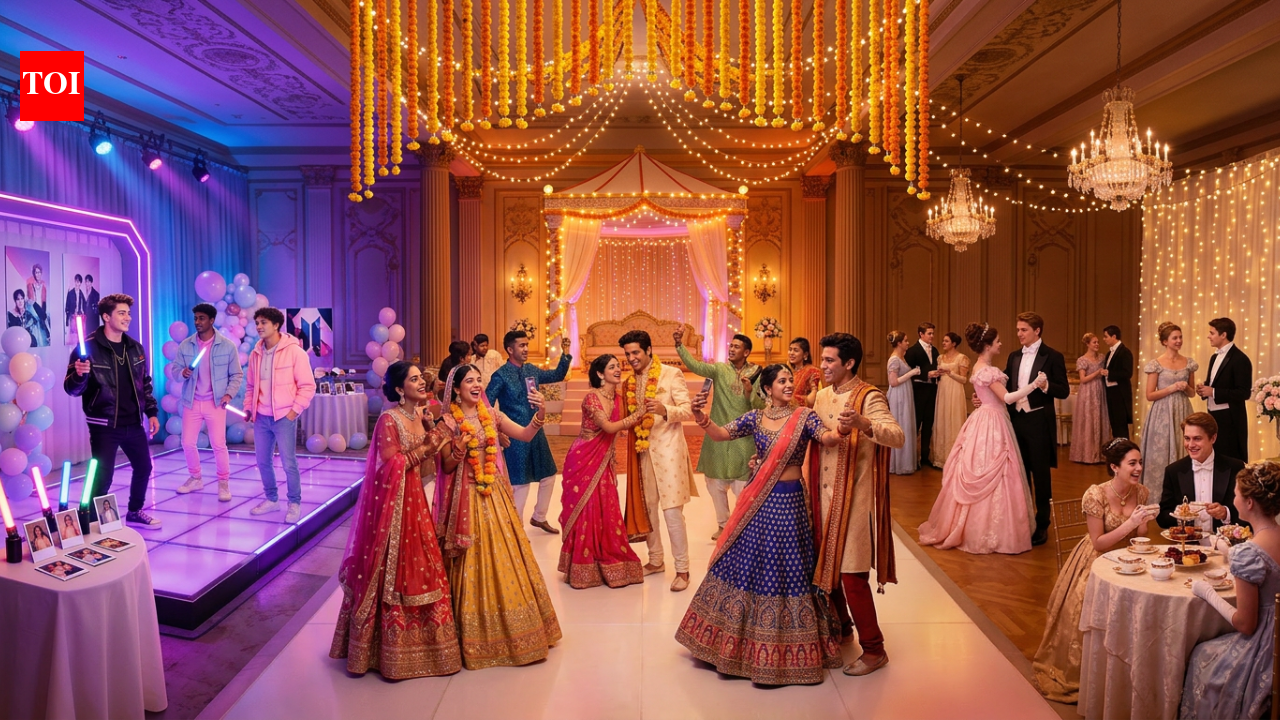
The modern social scene has undergone a seismic shift and theme parties have begun dominating the plains. It is not just an evening anymore; it is Bridgerton evening or a Swiftchella now.There is seldom a party invite that does not follow a theme. On the flip side, there are also hardly any popular themes that are not followed in the parties. It is turning out to be an ecosystem that is mutual, co-dependent and either way, widely popular.But what led to theme parties even becoming a thing? What is making these parties so popular? And why are more and more people driven to become a part of these events?

First, the basics: what are theme parties?

At its core, a theme party is a gathering built around one clear idea – and that idea dictates everything from the dress code and décor to the music, menu and even how guests behave through the night. Unlike a regular house party where the vibe is left to chance, a themed evening arrives pre-scripted.You decide in advance whether the room will feel like a Bridgerton ball, a Squid Game arena, a fake wedding, or a “I don’t have anywhere to wear this.”The stress of overdressing or underdressing gets replaced with the joy of dressing as a specific character or aesthetic, which is oddly more liberating than turning up as yourself.Ultimately, theme parties have become a more domesticated version of Met Gala but cheaper, closer and more personal.The same world-building and cosplay energy that once required large venues and official passes is now happening in living rooms, neighbourhood bars and small venues, driven by fans rather than studios.

How did theme parties become a rage?

The immediate answer is social media, but the fuller story sits in a humble collaboration of technology, psychology and marketing strategy. Event designers and marketers have been moving steadily towards designing the core themes to be immersive, personalised and “Instagrammable”.From the brand side also, this is not accidental, but a deliberate move to let the audience get involved to the best extent possible.As Prerna Bansal, Founder of Zero2One Marketing, points out, “The theme party boom isn’t a trend that happened to brands. For the smartest ones, it’s a trend they engineered. The modern consumers don’t want to be advertised to, they want to participate,” and theme parties are the clearest expression of that.People aren’t just watching Bridgerton or The White Lotus, they’re becoming them, right down to the colour palette, playlist and menu.Seeing this from the experiential marketing perspective, agencies observed that themed events deliver higher recall and stronger emotional engagement than regular campaigns.As Bharat Subramanian of Big Trunk Communications puts it, “When a party or event is designed around a clear narrative whether it is a film launch, a streaming show, or even a product category it allows audiences to step into the brand’s universe rather than just see an advertisement.”Divya Aggarwal of Impresario Entertainment notes,”Formats like Fake Shaadi nights, Bollywood Shaadi celebrations, or even Taylor Swift listening parties work because they transform passive fandom into collective participation. It allows people to inhabit a moment together, dress the part, sing along, and recreate the world they love.”

The psychology: why do people love them?

Underneath the glitter and props is a set of very real psychological needs that theme parties quietly meet.Social platforms have bridged the gap between what was once the great divide of fans and celebs. We now see the artists daily in our feeds, share in their private jokes, and receive carefully curated behind-the-scenes access.As trainee clinical psychologist Yukta Sharma says, “Because you can see them in a similar fashion to a close friend online, you can trick your brain into thinking they actually are just as close as a friend.”For mentally adding the audience to the artist’s “closer circle,” themed fan events or cup-sleeve gatherings just add to that. When you walk into a themed party full of people who share that same friendship-like bond with an artist, the connection suddenly feels validated and real.Social identity theory helps explain the rest.Sharma during her research on fandom interactions found how the “in-group effect” kicks in when you are no longer just an individual, but part of the “we”. “There is also this high, in a way, people get at these events called collective effervescence. It’s like that feeling of electricity or energy or a group buzz that happens when everyone focuses on the same thing, like singing the same lyrics at the same time,” Sharma says.She further adds, “There is actual research that proves that when people experience a live event together, their brainwaves actually start to sync up, especially when they are focused on the same music or movements.”The freebies, food and drinks are a bonus, but the real draw is that they transform a one-sided bond into “a giant oneness.”For attendees like Rini, the appeal is both emotional and developmental.She says theme parties are about “new experiences, meeting new people and learning new things,” and believes they “help me do better as a person and for society” by shifting her perspectives on others.“Because I don’t wanna miss anything,” she says about her preference to attend the large ticketed events and adds that she is willing to pay even for unofficial ones as long as they are safe, seeing them as experiences that “make new changes” in her life.

The marketing brain behind the décor

From a marketer’s eye, theme parties are not just cute fan moments but also unpaid campaigns. The principle at play is the experience economy where consumers are paying in money, time and creative effort to inhabit a brand world voluntarily.When Bridgerton designs its lavender-and-gold palette, or Squid Game designs instantly recognisable green tracksuits, they are, in Bansal’s words, “creating ready-made party blueprints.”Communication professional Tonmoyee Kashyap describes how campaigns are now built to be “themeable.” From the first mood-board, teams choose strong identities, distinct colour palettes and recognisable icons specifically so they can be remembered and recreated later in fan content.User-generated content (UGC) becomes the engine.“When people restage a campaign shot in their own homes or parties and post it on social media, they ultimately end up using certain keywords, either about the brand or while recalling the campaign or event. Social listening tools then pick up the spikes in conversation, hashtags and keyword mentions, allowing brands to measure how much “voice of share” is coming from these organic recreations,” Kashyap says.She adds, “This, in turn, helps extend the campaign’s life cycle. While every campaign has a defined timeline. But such organic conversations keep it relevant and present in people’s minds for longer.”This is where ROI thinking comes in.Kashyap points out that in brainstorming rooms, marketers are constantly asking what the return will be, in terms of reach, engagement, conversions. Themeable experiences make that math compelling.Earned media from themed gatherings doesn’t require ad spends yet delivers credibilityKashyap says, “When you pay for something, say, an influencer promoting it, you get visibility. But when people organically post about a party you’ve organised, such as a team gathering where attendees share their own stories, it carries far more credibility. In that sense, earned media builds greater trust. That’s one of the key reasons why these kinds of team parties are raging right now.”Data from themed parties feeds back into strategy.Bansal highlights, every hashtag, product purchase and Pinterest board tells studios which characters, aesthetics and story elements have the deepest lifestyle resonance. That shapes everything from merchandise lines and sequel strategies to how marketing budgets are allocated. For digital-first creators, the logic is similar.Filmmaker and creator Hrutul Patel sees projects like immersive shows, not as one-off performances, but as “larger IP ecosystems.”“The idea is to create a space where music, storytelling, philosophy and immersive visuals come together to form a larger narrative world. The audience is surrounded by the story from all six sides, making them feel like participants inside the narrative rather than spectators watching a performance,” he says.Brands are also investing in the last mile: local organisers. Patel notes how his immersive concert adapted as it travelled from Ahmedabad and Surat to Mumbai, Bengaluru and soon Pune and Delhi. The core narrative stayed intact, but the stage and experience were tweaked for each city’s venue and audience rhythm.Collaboration with local teams ensured “creative integrity” while making the show accessible.The result was not just strong turnouts but deeper engagement and word-of-mouth that helped the universe he’s building feel less like a product and more like a movement.

Keeping the conversation alive between seasons

For streaming platforms and sports leagues, the months between releases or matches are a dangerous quiet zone: subscribers drift, attention splits, and competitors move in.Strategists like Neelima Burra from Luminous says when brands collaborate with communities and local organisers, “evolve from events into shared cultural experiences that sustain engagement long after the headline moment has passed.”This keeps conversations alive between big tentpole events and turns the d-days or season drops into just one high point in a longer arc of engagement. In other words, the show that exists only on a screen risks being forgotten; the show that also lives in someone’s living room, bar, or wedding-themed party sticks longer.For independent creators like Patel, the same principle holds. His long-running music challenge created a continuous dialogue with listeners. Between chapters of his concerts, the themes continue to circulate through songs, philosophical ideas and fan conversations.

Where does this go next?

Theme parties are becoming the new norm. It is not just a passing trend but a deeper shift in how fans interact with entertainment. It is also becoming the focal point of how marketing is being designed.Now promotions are not designed after the release but are actively integrated in the concept design. It builds worlds that are easy to inhabit, and trust that fans will do much of the amplification themselves.Brands now invest in building worlds that can be brought to life and experiences that are emotionally rich but also reproducible – in outfits, in playlists, in recipes, in ritualsPsychology attributes it to para-social bonds and fandom communities becoming more than hobbies, they are evolving as the new support systems.And for fans, it means that the distance between screen and street keeps shrinking. What was once a poster on a bedroom wall is now a full room transformed for a night, a friendship circle built on shared emotional investment, and a party that doesn’t end when the credits roll. At this point, the stronger question may not be “Why are theme parties such a rage?” but “Which world will you be stepping into next – and who will you bring along?”

Source link

Pakistani terrorist killed in joint Army–J&K police operation in Uri sector | India News


Pakistani terrorist killed in joint Army–J&K police operation in Uri sector

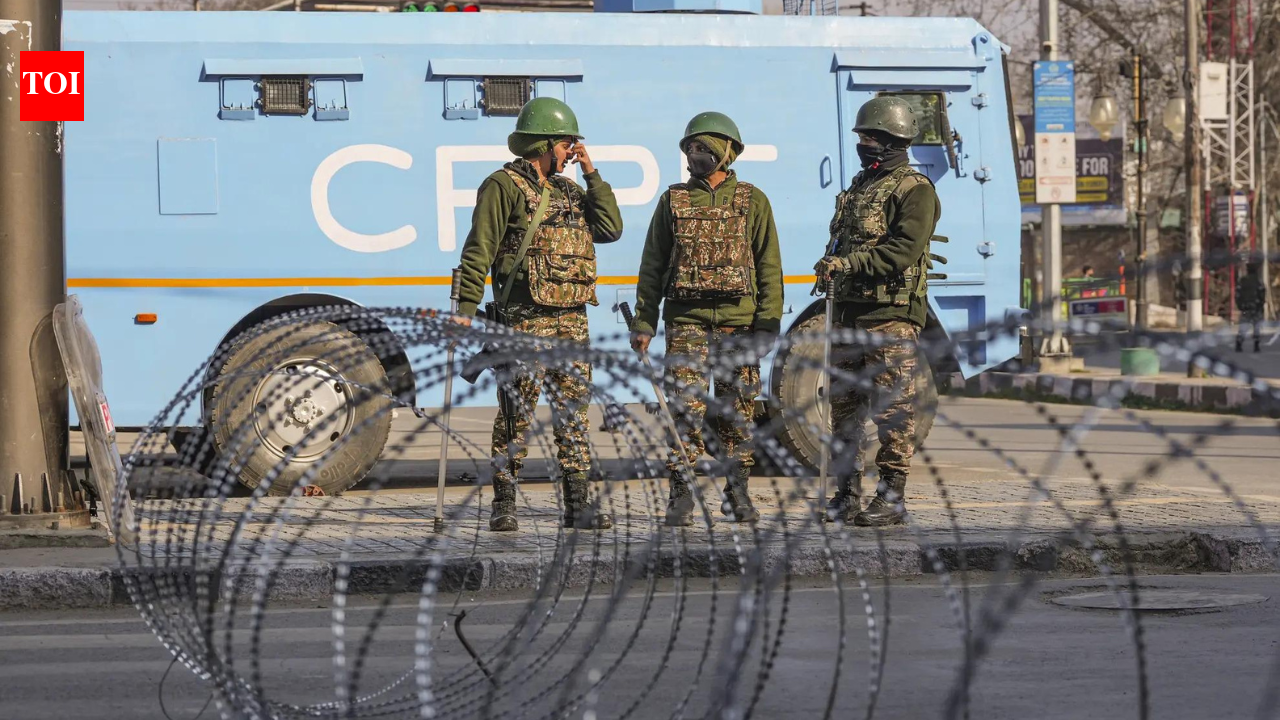
NEW DELHI: A Pakistani terrorist was killed in a joint operation carried out by the Army and Jammu and Kashmir Police in the Buchhar area of the Uri sector, officials told news agency ANI on Sunday.According to the Army, the operation was launched during the intervening night of March 14–15 following specific intelligence inputs from J&K Police about a possible infiltration attempt in the region.“Based on a specific intelligence input provided by J&K Police regarding an infiltration attempt, a joint operation was launched on intervening night of 14–15 Mar 26 in general area of Buchhar, Uri sector,” the Army said in a statement.Troops deployed in the area noticed suspicious movement in a thicket and repositioned their ambush to intercept the suspect. When challenged by security forces, the terrorist opened indiscriminate fire, triggering a brief exchange of gunfire.“In the contact, a Pakistani terrorist was eliminated,” the Army said.Security forces recovered warlike stores from the site, including an AK rifle, pistols and a large quantity of ammunition.Officials said the search operation in the area is still under way to ensure that no other militants are present in the vicinity.


Source link