Breaking News
David Sacks on reports linking Anthropic ban to Pentagon CTO Emil Michael’s stake in Aravind Srinivas’ Perplexity AI; says: There is no …

[ad_1]

David Sacks on reports linking Anthropic ban to Pentagon CTO Emil Michael's stake in Aravind Srinivas' Perplexity AI; says: There is no ...

Venture capitalist David Sacks has now pushed back against the reports linking Pentagon chief technology officer Emil Michael’s investment in Perplexity AI to the government’s move against Anthropic. According to a report by Bending, speaking on the All-In Podcast, Sacks called the allegations a ‘smear campaign’, arguing that Perplexity is not a direct competitor to Anthropic and does not sell to the Pentagon. He further added that Michael’s holdings had been cleared by ethics regulators. “It reminds me of what happened to me… all of a sudden there was that hit piece,” Sacks said, suggesting the timing of the report was politically motivated.

Sacks accused Anthropic of political maneuvering

Sacks also accused the AI giant Anthropic of running a political operation in Washington. “They’ve hired a number of very seasoned… political operatives,” he said, adding that the company can be “quite ruthless” despite its image as a safety-focused AI firm. The remarks from Sacks came days after US District Judge Rita Lin granted a preliminary injunction blocking the Pentagon from designating Anthropic as a “supply chain risk”. The court also found the designation likely unlawful and potentially retaliatory, enabling Anthropic to continue working with defense contractors. Pentagon CTO Emil Michael has also criticised the ruling on social media platform X (formerly known as Twitter) calling it “a disgrace” and claiming it contained “dozens of factual errors” rushed out during a time of conflict. He argued the decision undermines presidential authority and disrupts military operations. “There are dozens of factual errors in the 42 page judgment rushed out in 48 hours DURING A TIME OF CONFLICT that seeks to upend the @POTUS role as Commander in Chief and disrupt @SecWar full ability to conduct military operations with the partners it chooses. A disgrace,” wrote Michael.

AI policy clash intensifies

At the heart of the dispute is Anthropic’s refusal to deploy its AI in autonomous weapons or mass surveillance, positions that have put it at odds with defense officials. Backed by Amazon and Google, Anthropic now sits at the center of a high-stakes debate over how AI should be used in national security.Sacks, who recently stepped down as Trump’s AI and crypto czar after completing his 130-day term, will continue to influence policy as co-chair of the President’s Council of Advisors on Science & Technology.

[ad_2]

Source link

The battle beyond the battlefield: Narrative warfare and mind games in the US-Iran conflict

[ad_1]

The battle beyond the battlefield: Narrative warfare and mind games in the US-Iran conflict

War beyond kinetics: The cognitive battlespace

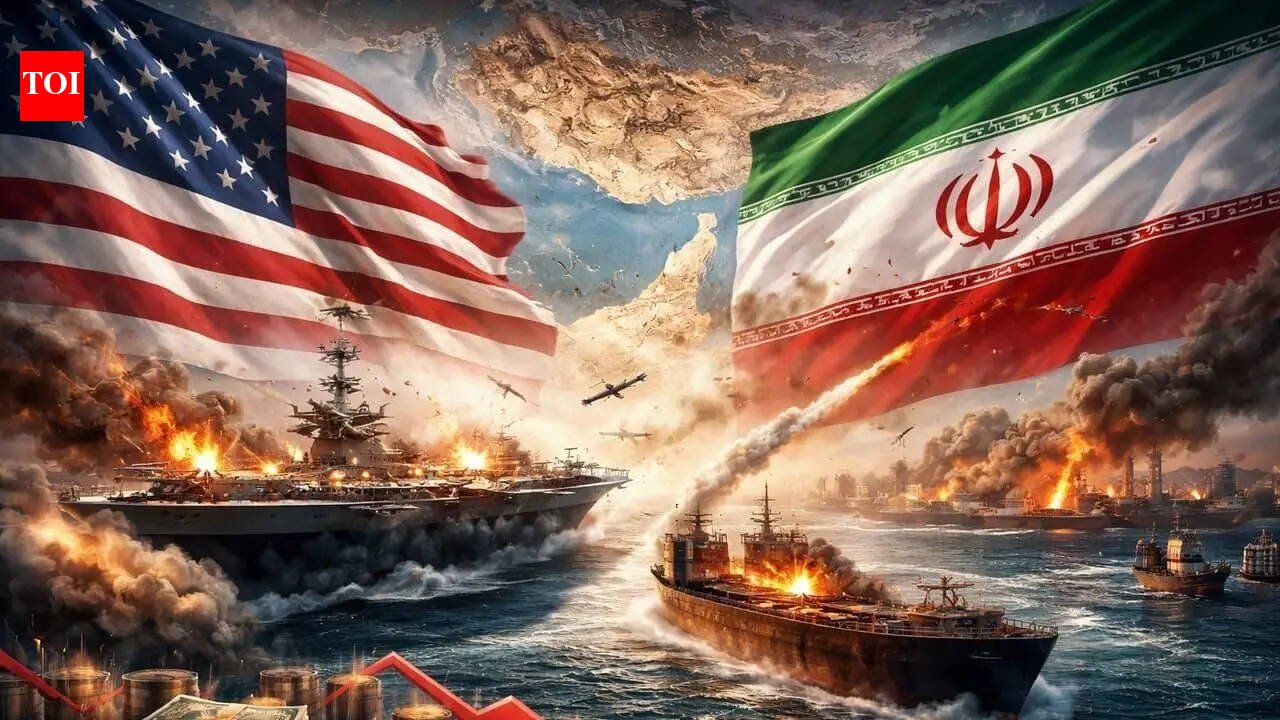
The ongoing confrontation between the United States and Iran is no longer defined solely by missiles, drones, or precision strikes. It has evolved into a far more complex contest—one that is being fought simultaneously in the cognitive, informational, and psychological domains. While the physical battlefield remains active, the decisive struggle is unfolding in the realm of perception, where narratives, signalling, and calculated mind games shape the trajectory of conflict.This transformation reflects a deeper shift in the nature of warfare. As Carl von Clausewitz observed, war is fundamentally political. In the contemporary context, that political dimension is increasingly executed through strategic communication and perception management, turning narratives into operational weapons.

Narrative warfare: Competing realities

At the heart of the U.S.–Iran conflict lies a clash of narratives. Each side is not merely reporting events—it is constructing a version of reality designed to influence audiences at multiple levels.The United States projects a narrative of controlled escalation and operational dominance. Its messaging emphasizes precision strikes, degradation of Iranian capabilities, and a posture of strategic restraint combined with readiness for negotiation. This framing is intended to reassure allies, maintain domestic confidence, and signal inevitability to Tehran—that continued resistance will only deepen its strategic disadvantage.Iran, by contrast, advances a narrative rooted in resistance and endurance. It portrays itself as a victim of aggression while simultaneously demonstrating its capacity to retaliate through sustained missile and drone operations. The emphasis is not on immediate victory but on survival, resilience, and moral legitimacy. In this framing, the mere ability to continue fighting becomes a form of strategic success.These competing narratives are not static; they are continuously adapted in response to battlefield developments, international reactions, and domestic pressures. The result is a dynamic contest to define the meaning of events, rather than just the events themselves.

Strategic Communication as a force multiplier

Strategic communication has emerged as a critical instrument in amplifying or mitigating battlefield outcomes. It operates through carefully calibrated messaging that integrates political objectives with military actions.The United States employs coercive communication, combining demonstrations of capability with signals of diplomatic openness. This dual approach is designed to create psychological pressure—projecting strength while leaving space for negotiation.Iran, on the other hand, leverages asymmetric communication, emphasizing its ability to absorb damage and continue operations. This approach seeks to undermine the credibility of U.S. claims and shift the narrative from dominance to stalemate.As Sun Tzu famously noted, “All warfare is based on deception.” In the current conflict, deception is not limited to battlefield manoeuvres; it is embedded within the very structure of communication.

Mind Games: The invisible battlefield

Beneath the visible layer of narrative warfare lies a more subtle and decisive dimension—the domain of strategic mind games. These are deliberate efforts to manipulate the adversary’s perception, distort decision-making processes, and influence strategic choices without direct confrontation.Mind games are not improvised tactics; they are structured instruments designed to shape how the opponent interprets reality. Their effectiveness lies in their ability to operate below the threshold of overt conflict, influencing outcomes without triggering escalation.In the U.S.–Iran context, mind games manifest in multiple forms, each targeting specific psychological vulnerabilities.

Perception engineering and the construction of reality

One of the primary mechanisms of mind games is perception engineering—the deliberate construction of a reality that serves strategic objectives. Both sides selectively highlight successes, downplay setbacks, and frame events in ways that reinforce their narratives.For the United States, this involves projecting technological superiority and operational control. For Iran, it involves demonstrating resilience and continuity of capability. The objective in both cases is to influence not just what the adversary knows, but how the adversary interprets what it knows.When perception is successfully engineered, it begins to shape decision-making. The adversary responds not to objective reality, but to the constructed version of reality presented to it.

Strategic ambiguity and psychological pressure

Another critical element of mind games is strategic ambiguity. By withholding clarity and introducing uncertainty, actors create psychological pressure on their opponents.Ambiguous troop movements, unexplained political statements, and partial disclosures generate a state of cognitive tension. Decision- makers are forced to operate under uncertainty, constantly reassessing risks and intentions. This uncertainty can lead to hesitation, overreaction, or miscalculation—all of which can be exploited.In the current conflict, both sides have used ambiguity as a signalling tool, ensuring that the adversary remains uncertain about thresholds, intentions, and next moves.

Controlled escalation: Calibrated psychological stress

The pattern of escalation in the U.S.–Iran conflict reflects a deliberate strategy of calibrated pressure. Rather than pursuing full-scale confrontation, both sides engage in limited, targeted actions designed to signal capability without crossing critical thresholds.This creates a cyclical pattern of tension and release, maintaining constant psychological pressure. The adversary is never allowed to settle into a stable equilibrium, and the risk of escalation remains ever- present.Such controlled escalation serves as a mind game by: Keeping the opponent off balance, sustaining uncertainty about future actions and reinforcing perceptions of capability and resolve.

Information saturation and cognitive overload

The modern information environment amplifies mind games through sheer volume. The conflict is accompanied by a continuous barrage of statements, images, analyses, and counter-claims.This information saturation produces cognitive overload, making it difficult for both decision-makers and the public to distinguish between signal and noise. In such conditions, perception becomes more susceptible to manipulation, and narratives gain influence over facts.The result is a battlespace where control of attention becomes as important as control of territory.

Targeting leadership psychology

Mind games are ultimately aimed at influencing leadership decisions. By manipulating perception, actors seek to alter how their adversaries assess risk, timing, and strategic options.This involves: Inflating perceived risks to deter action, creating uncertainty to delay decisions, imposing time pressure to force errors and raising reputational stakes to constrain choices.In high-stakes conflicts, leaders operate under significant psychological stress. Mind games exploit these conditions, turning cognitive limitations into strategic vulnerabilities.

Game theory and the logic of the standoff

The US–Iran confrontation can be understood through the lens of game theory, particularly the Game of Chicken, where two actors move toward collision and the one who yields first loses credibility. However, mind games complicate this framework. Each side uses signalling, ambiguity, and narrative construction to influence the other’s perception of payoffs and risks. The objective is not just to avoid collision, but to compel the opponent to yield without appearing to do so.Narratives act as commitment devices, locking actors into positions that are difficult to reverse. This increases the cost of de-escalation and prolongs the standoff.

The escalation trap and risks of miscalculation

While mind games provide strategic advantages, they also introduce significant risks. Misinterpretation of signals can lead to unintended escalation. Overconfidence in one’s narrative can distort strategic judgment. And once narratives become entrenched, they can limit the flexibility needed for de-escalation.In the current conflict, both sides are navigating a narrow path— seeking psychological advantage without triggering uncontrollable escalation. The margin for error is minimal, and the consequences of miscalculation are severe.

Domestic audiences and narrative constraints

Narratives are not directed solely at adversaries; they are equally important for domestic audiences. Public perception shapes political legitimacy and constrains leadership choices.In the United States, the narrative emphasizes control and precision to avoid perceptions of another prolonged conflict. In Iran, the narrative of resistance reinforces national unity and legitimizes continued engagement.These domestic narratives act as both force multipliers and constraints, limiting the ability of leaders to alter course without incurring political costs.

Winning the mind game

Victory in the current conflict will depend not only on military outcomes but on cognitive dominance—the ability to shape perceptions, maintain credibility, and influence decision-making. This requires: Consistent and coherent messaging, alignment between narrative and action, adaptability to changing conditions and strategic patience. The side that successfully imposes its narrative framework onthe conflict will gain a decisive advantage, shaping both immediate outcomes and long-term perceptions.

Conclusion: The silent decider

The US–Iran conflict underscores a fundamental reality of modern warfare: the decisive battle is often invisible. It is fought not with weapons alone, but with ideas, perceptions, and psychological strategy. Mind games have become central to this contest, influencing how decisions are made, how risks are assessed, and how outcomes are interpreted. They operate silently but powerfully, shaping the course of conflict in ways that are not immediately apparent.As Sun Tzu observed, “The supreme art of war is to subdue the enemy without fighting.” In today’s strategic environment, that subjugation may occur not through decisive military victory, but through the gradual dominance of one narrative over another.Until then, the conflict remains a test of endurance—not just of military capability, but of psychological resilience. And in that test, the ultimate question persists:Who will win the mind game—and who will blink first?

[ad_2]

Source link

West Bengal Assembly Elections 2026: Cash, care and constant connect: How the ‘Didi model’ is shaping Bengal’s ballot | India News

[ad_1]

Cash, care and constant connect: How the 'Didi model' is shaping Bengal’s ballot

Cash, care and constant connect: How the ‘Didi model’ is shaping Bengal’s ballot

The welfare architecture of Mamata Banerjee’s government in West Bengal has emerged as a defining feature of its governance, combining large-scale social support programmes with significant political implications as the state heads toward the 2026 Assembly elections.As the state prepares for the first phase of polling on April 23, the “Didi Model” of governance is not only acting as key social welfare schemes that have redefined rural economics, but has also served as the ultimate political insurance for Mamata Banerjee’s enduring grip on power.

Lakshmi in every home

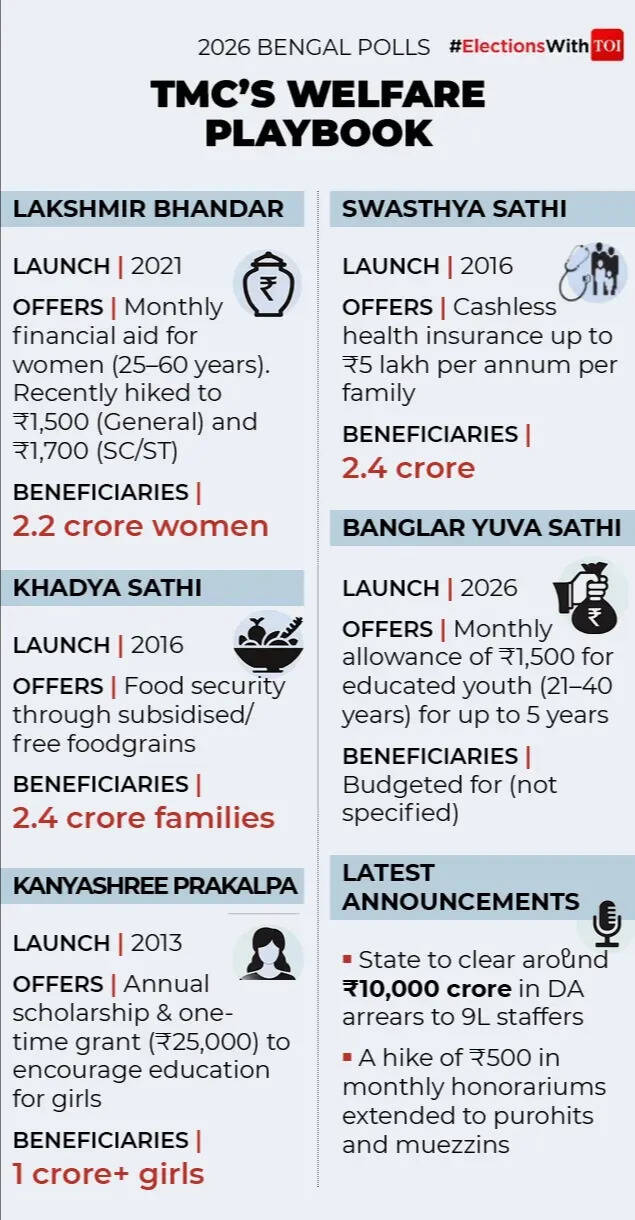
At the centre of this model is the Lakshmir Bhandar scheme, launched in 2021 to provide monthly financial assistance to women aged roughly 25 to 60. Regardless of the marital or employment status, this scheme covers all women residents of Bengal.Currently, beneficiaries receive Rs 1,000 per month, while women from Scheduled Caste and Scheduled Tribe communities receive Rs 1,200. Designed to cover household expenses and improve financial security, the scheme has gained widespread acceptance and is increasingly viewed not as a “freebie” but as an economic entitlement.The scheme has also become a major political talking point, with the ruling All India Trinamool Congress (TMC) promising to raise the assistance by Rs 500 if re-elected.However, implementation challenges persist. In a recent case from East Midnapore, around 7,000 women reportedly did not receive payments for nearly five months, prompting the Calcutta High Court to seek a report. Despite such issues, the scheme continues to expand, with approximately 1.25 lakh new beneficiaries added to an existing base of 2.2 crore women.

No one sleeps hungry

Food security remains another cornerstone of the state’s welfare strategy through the Khadya Sathi programme, launched in 2016. The scheme provides rice and wheat at subsidised rates of around Rs 2 per kilogram and currently covers nearly 9 crore people.Eligible beneficiaries are categorised based on their ration card. This constitutes the “poorest of the poor”, including landless labourers, marginal farmers, rural artisans, and households headed by widows or terminally ill persons. Families living below the poverty line (BPL) or in the economically weaker section (EWS) are also the beneficiaries of this scheme.With expenditure exceeding Rs 1 lakh crore, it is among the largest such initiatives in the country.It is complemented by the Duare Ration initiative, which delivers food grains directly to households, reaching about 7 crore people at a cost of over Rs 1,700 crore.The state government claims that these combined efforts have helped lift around 1.7 crore people above the poverty line by 2023, reinforcing its narrative of inclusive growth driven by welfare spending.

mamata populist schemes gfx

.

Cash for classroom over ‘Chhadnatola’

In education and gender empowerment, the Kanyashree Prakalpa remains a flagship programme. Launched in 2013, it provides Rs 1,000 annually to girls aged 13 to 18 who remain in school and unmarried, along with a one-time grant of Rs 25,000 at age 18 for those continuing education or training.With over 7 crore cumulative enrolments, the programme is one of the largest conditional cash transfer schemes for girls globally and was recognised with the UN Public Service Award. However, challenges remain in ensuring awareness, documentation, and sustained participation beyond eligibility.

Healthcare without bills

Healthcare coverage has been expanded through the Swasthya Sathi scheme, introduced in 2016. It offers cashless treatment up to Rs 5 lakh per family per year and covers nearly 9 crore people across 2.5 crore families.Notably, smart cards are issued in the name of the female head of the household. The scheme has recorded over 1 crore hospitalisations, with government spending exceeding Rs 13,000 crore. While it boasts one of the highest coverage rates in India, estimated at around 74.5 per cent, concerns persist regarding hospital participation, claim settlements, and out-of-pocket expenses in private healthcare facilities.

The unemployment cushion

Most recently, the government has turned its attention to unemployment with the launch of Banglar Yuva Sathi, announced in the 2026 Interim Budget. The scheme provides Rs 1,500 per month to educated unemployed youth aged 21 to 40 for up to five years or until they secure employment.Targeting Madhyamik-qualified individuals not covered under other programmes, it was fast-tracked with initial payments released on March 7, 2026. Backed by an allocation of around Rs 5,000 crore, with projections going up to Rs 15,000 crore, it is positioned as a key intervention to address unemployment ahead of the elections.Together, these schemes form the backbone of the TMC’s welfare-driven governance model, blending direct benefit transfers, food security, healthcare, and social empowerment. While the scale and reach of these programmes have drawn both national and international attention, their long-term sustainability and implementation efficiency remain under scrutiny as political stakes rise in West Bengal.

[ad_2]

Source link

One month in, new front opens as Yemen’s Houthis enter Iran-Israel war

[ad_1]

One month in, new front opens as Yemen’s Houthis enter Iran-Israel war

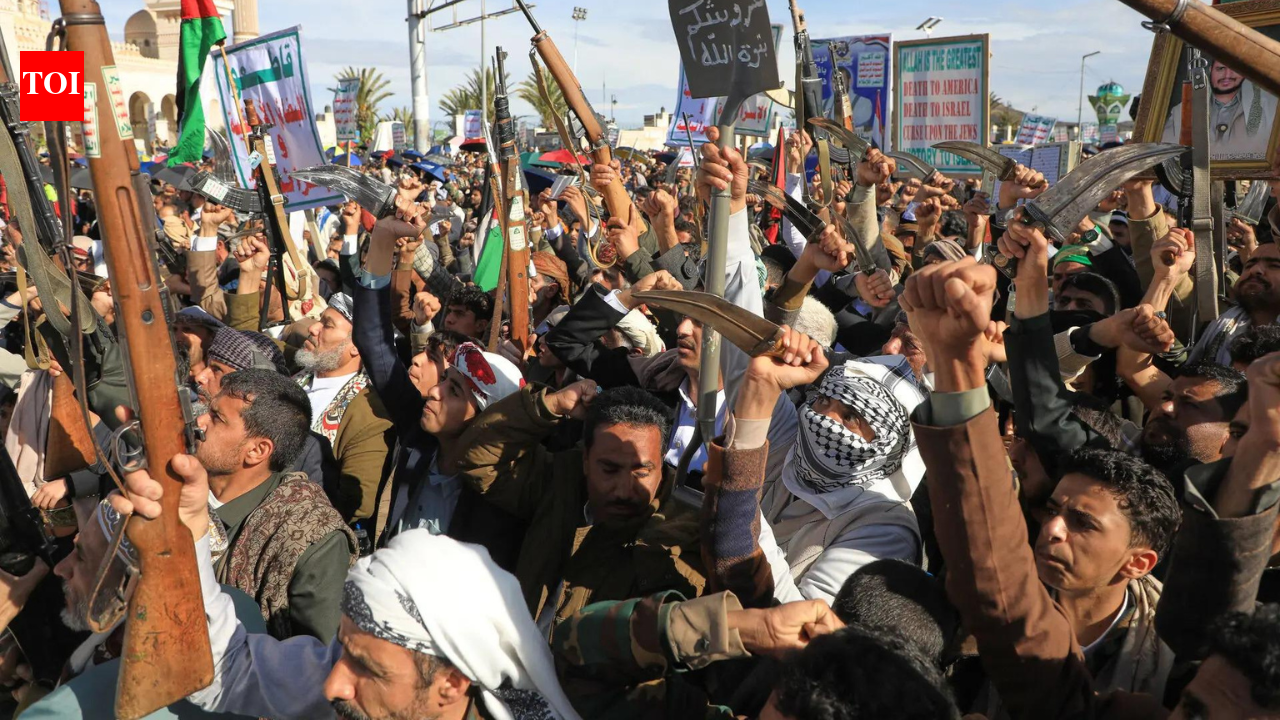
The Iran-Israel war has entered a new phase on Saturday with Yemen’s Houthi rebels launching their first strike on Israel since the conflict began. The move opens a fresh front in a war that has already spread across multiple countries and disrupted global trade and energy markets.The attack comes as the conflict marks one month, with fighting intensifying between Israel and Iran and their regional allies. Analysts warn that the Houthis’ entry could further widen the war, particularly if key shipping routes in the Red Sea are drawn into the crisis.

Houthis open new front with missile barrage

Houthi military spokesman Yahya Saree announced the operation on the group’s Al-Masirah television, claiming a barrage of ballistic missiles targeting “sensitive Israeli military sites” in southern Israel. He warned that strikes would continue until what he described as “aggression” against allied groups across the region ends.Air raid sirens sounded in Beersheba and near key Israeli installations, while explosions were reported in Tel Aviv as Iran and Hezbollah also continued overnight attacks. Israeli emergency services said they were responding to multiple impact sites.The Houthis’ involvement is seen as highly consequential. The group had previously targeted Israel during the Gaza war and attacked shipping in the Red Sea, disrupting a route through which roughly $1 trillion in goods pass annually. Their leadership has now hinted at further escalation, including the possibility of targeting vessels linked to Israel or even attempting to close the Bab al-Mandeb Strait.Experts warn such a move could severely impact global trade, especially when combined with existing tensions in the Strait of Hormuz. One regional analyst described the scenario as “a nightmare on top of a nightmare” for international shipping.

Regional conflict deepens as Iran and Israel escalate

The Houthi strike comes amid intensified hostilities between Israel and Iran. Israeli forces have recently targeted key nuclear-linked facilities, including sites associated with uranium processing and heavy water production. Tehran has vowed retaliation, with strikes already reported on regional military bases.One of the most serious incidents involved repeated attacks on Prince Sultan Air Base in Saudi Arabia, where more than two dozen US personnel have reportedly been wounded over the past week. Missiles and drones struck the base in multiple waves, damaging aircraft and infrastructure.Meanwhile, cross-border violence has expanded. In Lebanon, fighting between Israeli forces and Hezbollah has intensified, with hundreds reported killed since the war began. Israeli cities, including Tel Aviv, have faced repeated missile alerts, underscoring the widening scope of the conflict.Despite brief signs of diplomatic progress — including Iran allowing limited humanitarian shipments through the Strait of Hormuz — the latest developments suggest the war is moving further away from de-escalation.

Global trade and military risks rise sharply

The Houthis’ entry could have far-reaching implications beyond the battlefield. The Red Sea, a critical artery for global commerce, may once again become a target. During earlier conflicts, Houthi attacks forced shipping companies to reroute vessels around Africa, significantly increasing costs and transit times.There are also growing concerns over military escalation at sea. The potential redeployment of the USS Gerald R. Ford into the Red Sea could expose US naval forces to sustained attacks, similar to earlier confrontations involving other American carriers in the region.The Houthis, who have controlled Sanaa since 2014, had maintained an uneasy ceasefire with Saudi Arabia in recent years. Their decision to join the conflict now risks reigniting broader regional tensions, particularly along key maritime routes.

[ad_2]

Source link

One month of Iran war: Tehran’s defiance turns Trump’s regime-change dream into nightmare

[ad_1]

One month of Iran war: Tehran's defiance turns Trump's regime-change dream into nightmare

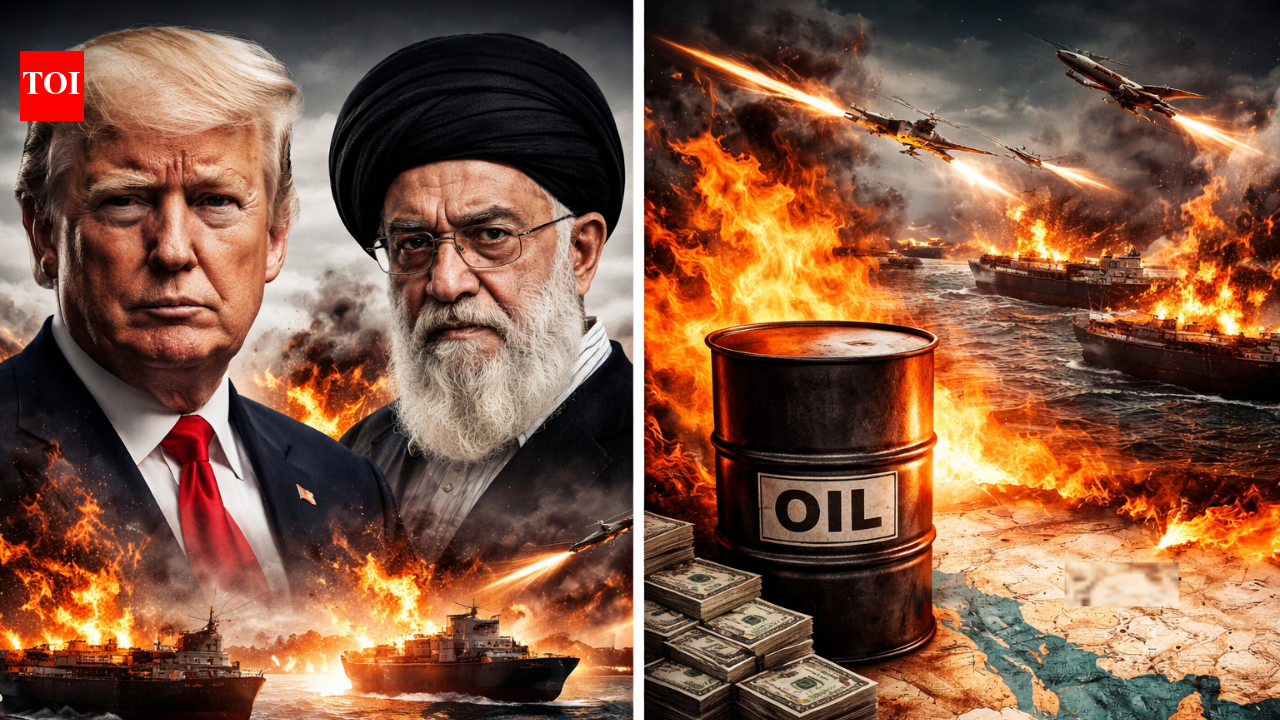
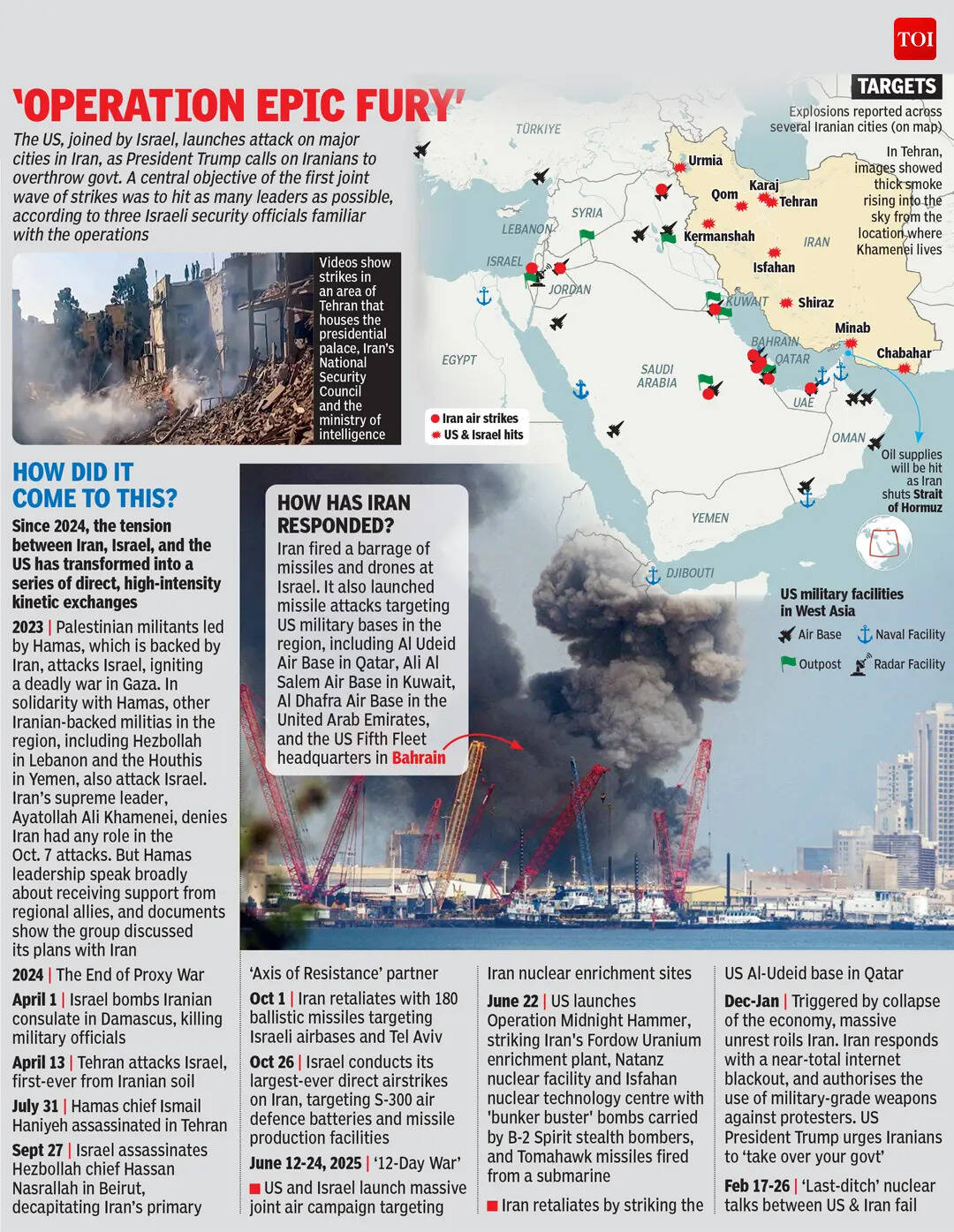
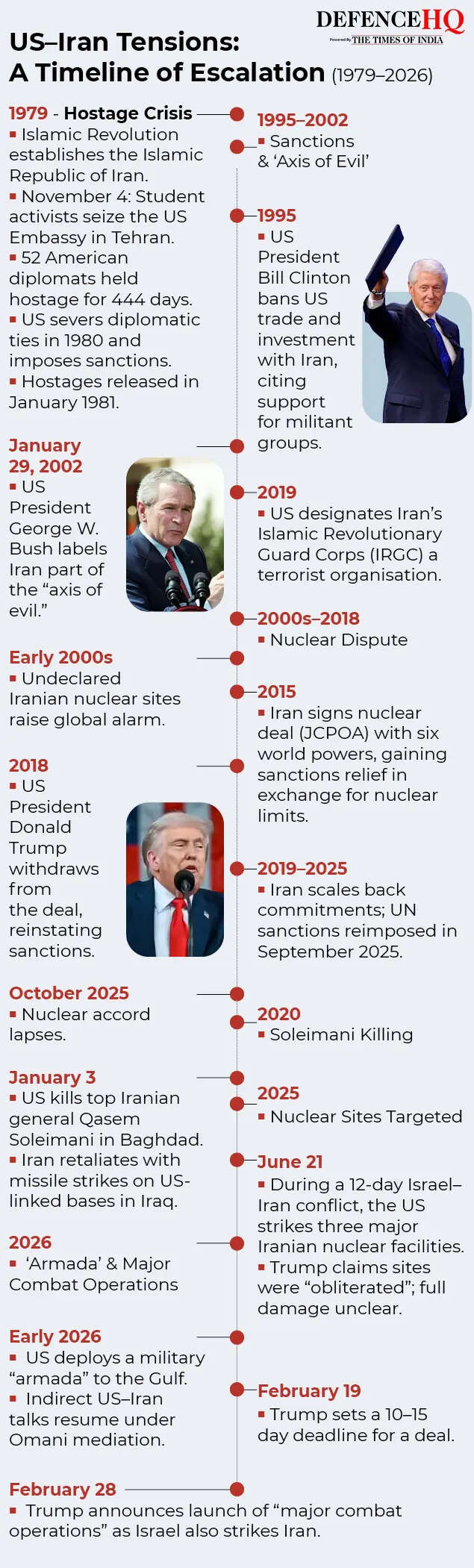
On February 28, what began as Donald Trump’s “dream” project to topple Iran’s regime under Ali Khamenei now appears to have shifted into a pressing push for a “deal”, a term the US president frequently invokes, aimed at reopening the vital oil chokepoint, the Strait of Hormuz.The narrow waterway in Gulf had been effectively choked off by raging Tehran after American-Israeli strikes that also eliminated Khamenei, the country’s longest-serving Supreme Leader on day 1.Not long ago, in February only, Trump said regime change in Iran is “the best thing that could happen”, marking one of his clearest endorsements of replacing the clerical establishment.“For 47 years, they’ve been talking and talking and talking. In the meantime, we’ve lost a lot of lives,” he said.Uncle Sam’s Operation Epic Fury has, in the end, left Donald Trump increasingly frustrated and furious. Despite a grand showcase of American military power and close coordination with Benjamin Netanyahu’s Israel, the campaign has struggled to deliver decisive results.

-

Facing pushback from Ali Khamenei’s son and successor Mojtaba-ruled Islamic Republic, MAGA supremo also sought support from Nato allies to counter Iran’s chokehold over the Strait of Hormuz. However, with little appetite for deeper involvement, allies largely stayed on the sidelines, leaving Washington to confront the crisis largely on its own.

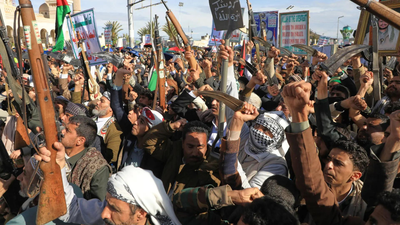
Operation Epic Fury: Trump and Netanyahu strike Iran

A month ago, Donald Trump orchestrated a bold and highly ambitious military campaign, known as Operation Epic Fury, in close coordination with his longtime ally, Israeli Prime Minister Benjamin Netanyahu. Israel joined the offensive with its own Operation Roaring Lion, launching the first joint strikes on February 28.The campaign’s high-value objectives were achieved, as Iran’s supreme leader and Shia icon, Ayatollah Ali Khamenei, who had ruled the country’s for more than three decades, was killed.The conflict began with a massive strike on Iran, which the Pentagon described as wielding twice the firepower of the 2003 “shock and awe” campaign that marked the invasion of Iraq.

-

According to a Financial Times report, Israel had been tracking Khamenei’s movements for years, keeping him under constant surveillance. In its effort to monitor the Iranian leader, Israeli intelligence reportedly employed even unconventional methods, including using traffic lights to follow his movements.Another report suggested that Israel played a decisive role in pushing the Trump administration toward a military strike on Iran. These claims were echoed by Donald Trump’s former aide, Joe Kent, who resigned as director of the US National Counterterrorism Center.Kent strongly claimed that Israel had effectively drawn the United States into the conflict, while also dismissing reports that Iran was expanding its nuclear ambitions or plotting “9/11-style” attacks on American soil.

Tehran strikes back before smoke clears

A leaderless Iran retaliated with full force. Its arsenal lit up the skies as strikes targeted key American bases in the Gulf, while missiles and other attacks rained down on Israeli cities.The back-and-forth exchanges soon turned the region into a tense theatre of constant threat and unrest. Among Iran’s losses were top leaders, including the supreme leader’s wife.Soon, the Tehran regime escalated its campaign, launching aggressive missile and drone strikes on American bases across Qatar, Saudi Arabia, and Iraq. But its assault did not stop there.The attacks spread across the Gulf, targeting Bahrain, the UAE, Oman, and Yemen, as Iran sought to assert its reach and retaliate against its adversaries. Lebanon-based Hezbollah, grieving the loss of the Shia leader Khamenei—joined the fray, striking at Israel in a bid for revenge.The region was rapidly engulfed in a new wave of conflict, with skies streaked by missiles and tensions spiralling across multiple fronts.

Gulf states on high alert

Gulf countries have raised concerns over the prospect of attacks by Iran-backed militias and proxy armed groups in the region, fearing they could destabilise regimes and escalate the war further. In a joint statement this week, Qatar, Kuwait, the United Arab Emirates, Bahrain, Saudi Arabia, and Jordan condemned Iranian attacks on their soil, both as strikes carried out directly from Iran and “through their proxies and armed factions they support in the region.Earlier, Kuwait said it had foiled a plot to kill state leaders, arresting six suspects believed to be associated with Iran’s most powerful proxy group,Hezbollah. For decades, Iran has used proxy militias as a pillar of its foreign and security policy, employing them to export its revolution, expand regional influence, and destabilise enemy countries. The most prominent examples include Hezbollah in Lebanon and the Houthis in Yemen, but other brutal and influential Iran-backed militias also operate in Iraq and Syria.

‘Safe haven’ of Dubai under fire

The safe haven of Dubai, long regarded as a symbol of prosperity and stability, has not escaped the conflict. The sail-shaped Burj Al Arab hotel, perched on Dubai’s Gulf coast, has long embodied the city’s opulence and ambition.Residents were aghast as hundreds of drones and missiles targeted the UAE, including the capital Abu Dhabi, as well as US Gulf allies Oman, Kuwait, Qatar, and Bahrain—countries long considered refuges from regional conflict—on the first weekend after the war began.Explosions rattled windows of Dubai apartment towers, and the city’s bustling international airport was damaged, leaving four people injured.Over the course of the conflict, Iran has repeatedly struck Dubai, the so-called “Pearl of the Gulf,” a city known for its skyscrapers, luxury cars, bustling malls, and thriving business world. The attacks have raised stark questions about security and vulnerability, even as the UAE government continues to insist that the city’s skyline and infrastructure remain resilient.Millions of tourists visit Dubai each year, but in recent weeks, the city has stood on high alert, battered by missile and drone strikes from a vengeful Tehran.

Kharg Island and the oil lifeline

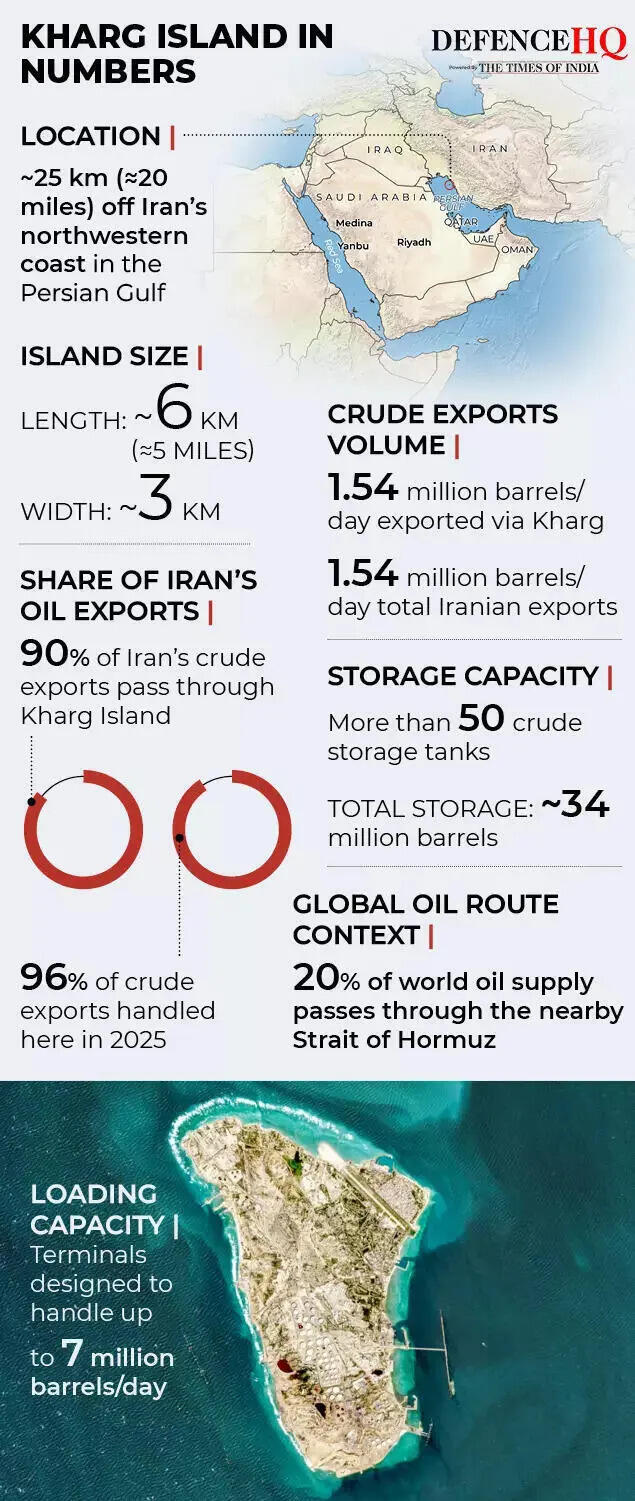
The conflict intensified further when the United States struck Kharg Island, Iran’s economic lifeline and a strategic defence point in the Persian Gulf. US forces conducted heavy airstrikes on military installations, including missile storage areas and other defence sites, while largely sparing the oil export infrastructure itself.

-

In an interview with NBC News, Trump said previous US strikes had “totally demolished” most of the island’s oil infrastructure. He added, “We may hit it a few more times just for fun.” US Senator Lindsey Graham posted on X, “He who controls Kharg Island controls the destiny of this war.”Kharg’s strategic importance lies in its proximity to the Strait of Hormuz, a narrow maritime passage that connects the Persian Gulf to the Gulf of Oman and the wider Indian Ocean. Roughly 20% of the world’s oil supply passes through this chokepoint every day, making the island and strait a critical factor in global energy security.

The Strait of Hormuz: A high-stakes chokepoint

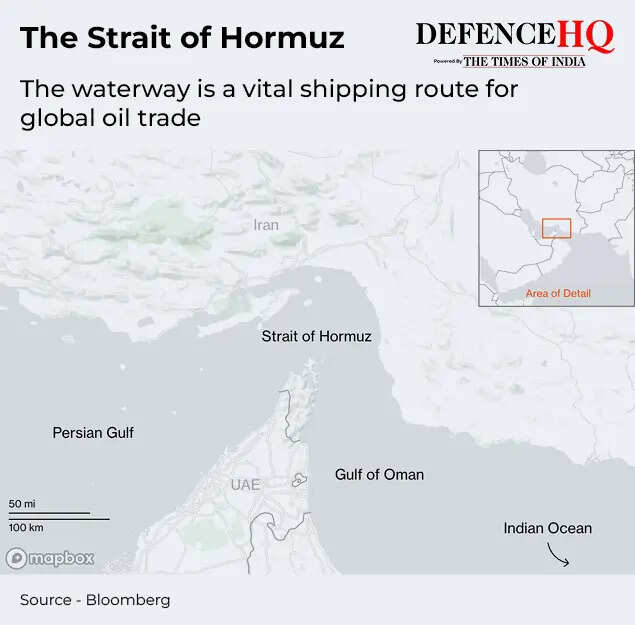
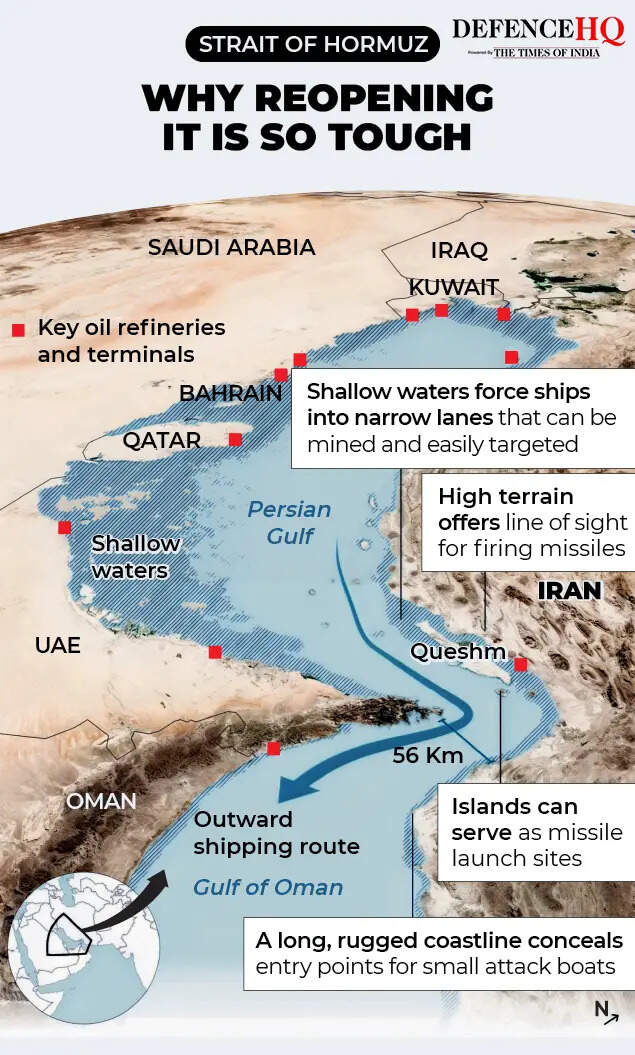
The Strait of Hormuz has become more than a shipping route—it is a strategic pressure point in a widening Middle East conflict. Narrow and shallow, the waterway forces ships within striking distance of Iran’s rugged Musandam Peninsula coastline, a terrain tailor-made for asymmetric warfare.

-

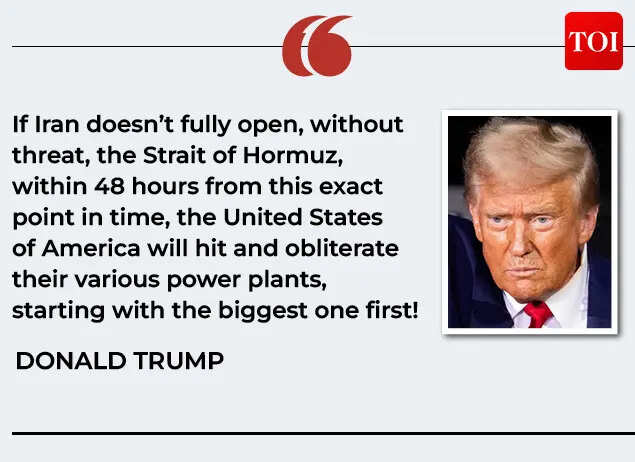
Tankers carrying crude from Saudi Arabia, Iraq, Kuwait, Qatar, and the UAE transit the strait en route to global markets. While Iran itself accounts for only 3–4% of global oil supply, its geographic position allows it to threaten far larger shares of worldwide energy flows.Despite Trump proposing joint control of the strait with Iran’s leadership, most viable solutions rely on military force. Mines, drones, and missile threats make the waters dangerous, while mine-clearing operations could take weeks, exposing crews to constant risk and keeping global supply chains on edge.Days ago, Trump issued a stern warning, giving Iran a 48-hour ultimatum: “If Iran doesn’t fully open, without threat, the Strait of Hormuz, within 48 hours from this exact point in time, the United States of America will hit and obliterate their various power plants, starting with the biggest one first!”

-

Paused strikes?

Now, however, Trump has adopted a more measured approach. While continuing to post in all caps, his tone appears softened. He has paused military strikes on Iran’s energy infrastructure for five days, describing ongoing talks with Tehran as “productive.”In a Truth Social post, he wrote in all caps:“I am pleased to report that the United States of America, and the country of Iran, have had, over the last two days, very good and productive conversations regarding a complete and total resolution of our hostilities in the Middle East. Based on the tenor and tone of these in-depth, detailed, and constructive conversations, which will continue throughout the week, I have instructed the Department of War to postpone any and all military strikes against Iranian power plants and energy infrastructure for a five-day period, subject to the success of the ongoing meetings and discussions.However, the strikes show no sign of letting up. Jets, missiles, and drones continue to crisscross the region’s skies, targeting airports, embassies and critical infrastructure, while the airspace above much of the Middle East — especially over Iran and Iraq — remains tense and highly volatile. The persistent threat of missile activity and ongoing military operations has disrupted civil aviation, forcing airspace closures and rerouted flights as authorities work to keep commercial aircraft clear of conflict zones.

Major oil facilities hit leading crisis worldwide

Iran expanded the conflict by directly targeting oil infrastructure across the Gulf, aiming to disrupt supplies and raise economic costs for its adversaries. Instead of limiting its response to military sites, Tehran focused on critical oil production, storage and export facilities.Among the key targets were installations linked to Saudi Aramco in Saudi Arabia, underscoring Iran’s ability to strike at the core of one of the world’s largest oil producers. These attacks heightened fears over the security of global oil supplies.The campaign also hit the UAE’s vital oil hub at Port of Fujairah, one of the region’s largest oil storage and export facilities. Drone strikes on oil tanks and infrastructure triggered fires and temporarily halted loading operations, exposing the vulnerability of a key alternative export route.Iran further broadened its energy offensive by striking major facilities such as the Ras Laffan liquefied natural gas plant in Qatar and an oil refinery in Israel, demonstrating its capacity to target oil and energy assets across multiple fronts.By focusing on oil infrastructure, Iran has sought to tighten pressure on global markets, disrupt supply chains and drive up prices — turning energy into a central lever in the conflict while amplifying its economic impact far beyond the region.

Trump called for help, allies said ‘not our war’

Strait 15-days into the war, Trump invited several countries to send warships to reclaim Hormuz. Much to his disappointment, none did.“This is not our war. We have not started it,” Germany said.Trump had hoped for China, France, Japan, South Korea and the UK among others to reclaim Hormuz. “Hopefully China, France, Japan, South Korea, the UK, and others, that are affected by this artificial constraint, will send Ships,” Trump said in a March 14 post.“Nobody is ready to put their people in harm’s way in the Strait of Hormuz,” European Union foreign policy chief Kaja Kallas said.Roughly one-fifth of global oil supply passes through this route. Oil prices have climbed worldwide, prompting several Asian nations to introduce fuel-saving measures, but participating in a US-Israel initiated war is not on the cards.Trump did not shy away from expressing his dissatisfaction with Nato. “They just weren’t there. We spend hundreds of billions of dollars a year on Nato, hundreds, protecting them, and we would have always been there for them, but now, based on their actions, I guess we don’t have to be, do we?” he said.

Why allies stayed away

Many US partners were wary of joining what they see as a war initiated by Washington and Israel, with little prior consultation. Officials and analysts noted that several countries felt sidelined in the run-up to the conflict, leaving little appetite to step in once it escalated.There is also lingering resentment over Trump’s treatment of allies since returning to power. From trade disputes to sharp rhetoric, relations with key partners have been strained, weakening the trust needed to quickly build a coalition in a crisis.Beyond politics, the risks on the ground are significant. Sending naval forces into the Strait of Hormuz would make those countries direct targets for Iran, a step many are unwilling to take. As security experts point out, there is little incentive for nations to expose their personnel to missile and drone attacks in a volatile war zone.Military strategy is another factor. Former officials argue the US has not yet established sufficient control over the strait to reassure allies. Without a clear security umbrella led by Washington, countries are hesitant to deploy their own ships into contested waters.

-

While many nations — including those heavily dependent on Gulf oil — are feeling the economic fallout, they appear to prefer absorbing higher energy costs over entering a direct confrontation. For them, the risks of escalation outweigh the benefits of intervention.In short, strained alliances, lack of prior coordination, and the high danger of becoming a combatant have combined to keep US allies on the sidelines — despite mounting global pressure to reopen one of the world’s most critical oil routes.

Mediation efforts falter amid deep divides

As the war drags on, tentative diplomatic efforts are beginning to take shape, but with little clarity on whether they can succeed. Donald Trump has put forward a sweeping 15-point ceasefire framework, reportedly delivered to Tehran through intermediaries like Pakistan, which has offered to host talks. While Washington insists “productive conversations” are underway, Iran has flatly denied any negotiations, dismissing the claims as the US “negotiating with itself.The proposed plan outlines an ambitious roadmap: a temporary ceasefire followed by far-reaching demands on Iran’s nuclear programme, missile capabilities and regional activities, in exchange for sanctions relief and limited civilian nuclear support. It also calls for reopening the Strait of Hormuz — a key global chokepoint — underscoring how central the waterway has become to both military and economic calculations.But the gap between the two sides remains stark. For Washington and its allies, the priority is long-term security guarantees – curbing Iran’s nuclear ambitions, limiting its missile arsenal and ending its support for regional proxies. Tehran, however, is focused on sovereignty and survival. Its leadership has demanded recognition of its rights, reparations for war damage, binding guarantees against future attacks and the lifting of all sanctions.There are also more contentious demands from Iran, including the closure of US military bases in the region and formal control over traffic through the Strait of Hormuz — conditions that are likely to be unacceptable to Washington.Even within Iran, signals are mixed. While political leaders have hinted at openness to talks under the right conditions, hardline elements such as the Islamic Revolutionary Guard Corps appear determined to continue the fight, viewing the conflict as existential.With both sides holding firm and trust in short supply, mediation efforts remain fragile. Analysts say that while backchannel contacts may be underway, any meaningful breakthrough will require significant compromises — something neither side has yet shown willingness to make.

Who is winning the cost war

The financial toll of the conflict is rapidly becoming a critical battleground, and it is one where Trump’s United States appears to be at a disadvantage.Washington is estimated to be spending up to $1 billion a day on the war, with total costs already soaring into the tens of billions, DW reported. Pentagon assessments indicated more than $11 billion was spent within the first six days alone, and analysts now believe the overall bill has likely exceeded $18 billion — with no signs of slowing.A major driver of this imbalance is the stark difference in military costs. Iran is deploying low-cost drones priced at around $20,000, while the US is countering them with interceptor missiles costing between $1.3 million and $4 million each — often using multiple missiles per target. This mismatch is steadily increasing the cost burden on Washington.Meanwhile, Iran is managing to offset some of the economic strain. By effectively controlling the Strait of Hormuz, it remains the only country able to move oil through the vital passage, benefiting from rising global prices. Its oil revenues have climbed to roughly $139 million per day in March, while exports have stayed close to prewar levels of about 1.6 million barrels per day.Tankers continue to load at Kharg Island and transit the strait, even as Tehran blocks ships linked to rival nations — tightening its grip on a key global energy route.The contrast is striking – while the US is incurring massive costs to sustain its military campaign, Iran is pursuing a far cheaper, asymmetric strategy while still generating steady oil income. In economic terms, the balance of the war may be tilting in Tehran’s favour.

[ad_2]

Source link

IPL 2026: MS Dhoni out for 2 weeks, Sanju Samson to open; big changes as ex-CSK star reveals Playing XI | Cricket News

[ad_1]

IPL 2026: MS Dhoni out for 2 weeks, Sanju Samson to open; big changes as ex-CSK star reveals Playing XI
MS Dhoni and Sanju Samson (Image credit: CSK/IPL)

Chennai Super Kings have been dealt a major blow after their talismanic player MS Dhoni was ruled out for the first two weeks of IPL 2026 due to a calf strain.“MS Dhoni is currently undergoing rehabilitation for a calf strain. As a result, he is likely to miss the first two weeks of IPL 2026,” the franchise said in a statement.

Watch

Greenstone Lobo predicts IPL 2026 winner

Soon after Dhoni was ruled out, former India cricketer Ravichandran Ashwin, who has also represented CSK in the past, picked his strongest playing XI with Impact Player options for the five-time champions.Ashwin selected Sanju Samson as the wicketkeeper-batter and also named him as an opener alongside captain Ruturaj Gaikwad.The former CSK player slotted three attacking batters in the next positions – Urvil Patel at No. 3, Dewald Brevis at No. 4, followed by India’s T20 World Cup 2026 all-rounder Shivam Dube at No. 5.Ashwin provided two options for the No. 6 spot – Sarfaraz Khan as his first choice, with India U19 World Cup-winning captain Ayush Mhatre as the alternative. He overlooked Prashant Veer and picked Kartik Sharma for the No. 7 position.In the bowling department, Ashwin chose Akeal Hosein and Noor Ahmad as the main spinners, with Hosein also offering batting depth at No. 8.For the pace attack, he went with Matt Henry and Khaleel Ahmed. Ashwin also listed four Impact Player options – Anshul Kamboj, Shreyas Gopal, Ramakrishna Ghosh, and Rahul Chahar.Ashwin’s CSK playing XI:Sanju Samson (wk), Ruturaj Gaikwad (c), Urvil Patel, Dewald Brevis, Shivam Dube, Sarfaraz Khan/Ayush Mhatre, Kartik Sharma, Akeal Hosein, Noor Ahmad, Matt Henry, Khaleel AhmedImpact Player: Anshul Kamboj/Shreyas Gopal/Ramakrishna Ghosh/Rahul ChaharCSK will begin their IPL 2026 campaign against Rajasthan Royals on March 30 at Baraspara Stadium in Guwahati.The 19th edition of the tournament is set to begin on Saturday, with defending champions Royal Challengers Bengaluru hosting Sunrisers Hyderabad in the curtain-raiser at the M. Chinnaswamy Stadium in Bengaluru.

[ad_2]

Source link

IndiGo flight makes safe emergency landing at IGIA after engine failure

[ad_1]

IndiGo flight makes safe emergency landing at IGIA after engine failure

New Delhi: A 15-year-old Boeing 737 with about 170 people on board operating IndiGo flight 6E 579 from Vizag to Delhi made a safe emergency landing at IGIA on Saturday morning after suffering an engine failure. IndiGo has wet leased (hired with operating crew) the aircraft (TC-COR) from Corendon Airlines of Turkey. The emergency was declared at 10.39 am after which and DIAL made all emergency arrangements as per protocol. The aircraft landed safely on single engine at 10.54 am on IGIA’s runway 28.

[ad_2]

Source link

Apple says no iPhone has been hacked when this feature is turned on

[ad_1]

Apple says no iPhone has been hacked when this feature is turned on

Nearly four years after introducing its most extreme security feature, Apple says Lockdown Mode has yet to be successfully breached. As per a report by Tech Crunch, no iPhone has been breached even by sophisticated government-grade spyware.The company confirmed it has not observed a single case where an iPhone or other Apple device running Lockdown Mode was compromised. “We are not aware of any successful mercenary spyware attacks against a Lockdown Mode-enabled Apple device,” Apple spokesperson Sarah O’Rourke told TechCrunch.

Watch

Apple’s Foldable iPhone is Coming, Here’s Why it Matters

What is Lockdown Mode

The feature, launched in 2022, was designed specifically to protect high-risk users—journalists, activists, and officials—from advanced surveillance tools.Lockdown Mode works by aggressively restricting certain device functions often exploited by attackers. It limits message attachments, disables some web technologies, and blocks incoming invitations or connections from unknown sources—essentially shrinking the attack surface.The threat it’s built to counter is serious. Spyware developed by firms like NSO Group, Intellexa, and Paragon Solutions has been used globally to target individuals through so-called “zero-click” attacks—requiring no user interaction.Independent research appears to back Apple’s claims. Investigators at Amnesty International and Citizen Lab say they have not found any instance where spyware successfully breached a device with Lockdown Mode enabled. In some cases, researchers observed attacks being actively blocked—including attempts using Pegasus and Predator spyware.There’s even evidence attackers avoid such devices altogether. Researchers at Google have noted that certain spyware tools will abandon attempts if Lockdown Mode is detected — likely to reduce the risk of exposure.Apple has also stepped up its efforts to notify users of potential attacks, sending alerts to individuals across more than 150 countries, including India, in recent years. While the company hasn’t disclosed exact figures, the scale suggests a persistent and global threat landscape.

How to turn on Lockdown Mode on iPhone

Remember, Lockdown Mode needs to be turned on separately for your iPhone, iPad and Mac. When you turn on Lockdown Mode for your iPhone, it’s automatically turned on for your paired Apple Watch.When you turn on Lockdown Mode for one of your devices, you get prompts to turn it on for your other supported Apple devices. When Lockdown Mode is turned on, you may receive notifications when an app or feature is limited. A banner in Safari indicates that Lockdown Mode is on.

  • Open the Settings app.
  • Tap Privacy & Security.
  • Scroll down, tap Lockdown Mode, then tap Turn On Lockdown Mode.
  • Tap Turn On Lockdown Mode.
  • Tap Turn On & Restart, then enter your device passcode.

[ad_2]

Source link

Middle East war: 5 Indians injured in Abu Dhabi as fire breaks out after missile interception

[ad_1]

Middle East war: 5 Indians injured in Abu Dhabi as fire breaks out after missile interception

Five Indian nationals were injured in UAE on Saturday after debris fell following the interception of a ballistic missile near the Khalifa Economic Zones Abu Dhabi (KEZAD).According to Abu Dhabi media office the incident occurred in the vicinity of KEZAD after air defence systems successfully intercepted the incoming missile, leading to falling debris in the area. Officials confirmed that five individuals were injured in the aftermath, sustaining injuries ranging from minor to moderate. “As part of the ongoing follow-up to the previously reported incident in the vicinity of Khalifa Economic Zones Abu Dhabi – KEZAD caused by falling debris following the successful interception of a ballistic missile by air defence systems, authorities confirm that the incident has resulted in injuries ranging from moderate to minor sustained by five individuals of an Indian nationality,” the statement said.Authorities urged the public to rely only on verified information and avoid circulating rumours. “The public is advised to obtain information only from official sources and to avoid spreading rumours or unverified information,” the statement added.No further details on the condition of the injured or additional damage were immediately available.

[ad_2]

Source link

Things in India that just makes sense…Canadian tourists lists out ‘normal daily things’ that they found fascinating |

[ad_1]

Things in India that just makes sense…Canadian tourists lists out ‘normal daily things’ that they found fascinating

Travel has a tendency to alter your perspective on large things: landscapes, cultures, history. Yet, more often than not, it is small, mundane things that stay with you. Things you did not plan for, did not read about in depth, but things you find yourself noticing over and over. They seep into your daily life when you are on the road, and before you know it, they start to seem…logical. As if they should be a part of every place.This was evident in Nick and Raychel’s stay in India. The Vancouver-based couple, who are documenting their journey on Instagram, did not simply move from one place to another. They noticed how things worked in daily life, how people ate, how they traveled, how they cleaned up after themselves, and even how they finished a meal. And somewhere down the line, they started noticing things that, in their words, “just make sense.

Fennel seeds or saunf

Fennel seeds or saunf

Fennel seeds – the perfect end to a meal

It was often offered at the end of a meal. Many restaurants, just as they were about to leave, would have a small dish of fennel seeds mixed with sugar on the table. Initially, they might have thought it was just a nice touch, something to look at, perhaps even optional. But after a few attempts at eating it, they realized it wasn’t just about the flavor. It was refreshing, good for digestion, and finished the meal in a nice way.

Train travel in India

Train travel in India

Trains – They take you everywhere

Traveling through the country also made them realize the interconnectedness of things. India’s railway system was not only vast; it had also become an integral part of the people’s lives. Whether it was a short trip between two towns or a longer trip between two or more states, trains seemed to go anywhere. For Nick and Raychel, this would be a change of pace from what they were accustomed to back home. Instead of constantly planning flights or long drives, they could rely on trains to get them from one place to another, often while watching the landscape slowly change outside their window. It wasn’t just efficient—it felt accessible.

Indian thali

Indian thali

Trying thalis – Because, why not?

Of course, food is an integral part of their experience, but not in the way they had imagined. Indian thalis with their well-organized selection of food had caught their attention right from the beginning. It seemed like a lot—multiple bowls of different textures, colors, and flavors all in one single dish. But as they began eating the thalis, they saw the structure of the food. Each had its own space and balance with the other foods. They did not have to overthink the food they would choose or whether the meal would be complete or not; it already was.

Hand wash stations – Yes

Some observations were even more immediate. In many restaurants, especially casual ones, they saw the presence of hand-washing stations in plain sight. Not in the washroom, but in plain sight, so that one could wash their hands before or after a meal. It was practical, especially in a culture where eating with hands was the norm.

Kulhad chai

Kulhad chai

Kulhad Chai – Yes

Their tea breaks also got them used to one of the simplest yet most memorable aspects of the experience: clay cups. Chai was not just tea; it was hot tea in small clay cups called kulhads. It was different from the very first sip. There was a flavor to it, a flavor that would not be present in paper or plastic cups. But that was not the most memorable part. Once the tea was done, the cup was not going to be thrown away in a landfill or reused in a manner that would harm the environment. It would go back to the earth it was made of.

Leaf plates

Leaf plates

Leaves for plates

Street food, which they had approached with a mix of excitement and caution, had shown itself to possess its own logic. One of the things they had observed was that many of the street food vendors were serving their snacks on plates made of dried leaves. It was something they observed over the course of their travels. It was definitely not something they had seen with labels of being eco-friendly; it was simply something that was a part of the system.

Vegetarian-friendly travel

Even something as simple as reading the menu was made simpler than they had imagined. One of the things they observed while traveling through different places was the way in which vegetarian food were clearly marked on the menu. It was something that had removed any sort of confusion that they might have faced while eating something new. It was something they had not actually been looking for but observed and it made a difference. What connected all these events together was not only how useful they were, but how they fit so neatly into the way life was lived. There was nothing in them that seemed put in place to impress or cater to visitors. They were just processes and behaviors that had built up over time, based on cultural influences, usefulness, and perhaps an attitude towards life.As Nick and Raychel reflected on their journey, it was not just where they went that mattered. It was not just these little interactions they had over and over again. The end of a meal, taking a train, drinking tea, making a quick stop to use a hand-washing service – they were not individually significant. But they come together to create an idea of a place where many things were done in an unassuming way.And it was this, perhaps more than anything else, that they took away.

[ad_2]

Source link