Breaking News
Jasjeet Sekhon joins Google DeepMind as Chief Strategy Officer; gets a welcome note from CEO Demis Hassabis; says I feel a moral obligation to …

[ad_1]

Jasjeet Sekhon joins Google DeepMind as Chief Strategy Officer; gets a welcome note from CEO Demis Hassabis; says I feel a moral obligation to ...

As Google takes on ChatGPT-maker OpenAI and Anthropic in the artificial intelligence market, company’s AI unit, DeepMind, has hired Jasjeet Sekhon as its new chief strategy officer. Sekhon will work directly with Google DeepMind CEO Demis Hassabis to drive the company’s AI innovation and R&D efforts. He has previously held professorships at some of the world’s top universities, including Harvard; University of California, Berkeley; and most recently as a data and political science professor at Yale. Sekhon announced he is joining Google DeepMind in posts on X, formerly Twitter and LinkedIn. “I’m excited to share that I will be joining @demishassabis and @GoogleDeepMind as Chief Strategy Officer! I feel a moral obligation to shepherd AGI into the world responsibly, benefiting everyone. I am looking forward to doing this with the team at DeepMind,” he wrote. Hassabis replied to his post, saying: Thrilled to welcome Jas Sekhon to @GoogleDeepMind as Chief Strategy Officer! The path to AGI requires exceptional thoughtfulness and foresight – Jas’ incredible experience as former Chief Scientist & Head of AI at Bridgewater makes him uniquely suited to advise us on the mission.

Jasjeet Sekhon’s ‘joining announcement’ on LinkedIn

I am excited to announce that I am joining Google DeepMind as Chief Strategy Officer, partnering directly with Demis Hassabis to lead cross-cutting strategic initiatives spanning research, commercialisation, and policy.AGI will be a world-changing technology without precedent, accelerating science, medicine, and human productivity in profound ways. I am committed to shepherding this technology responsibly to benefit everyone. I am joining Google DeepMind because I believe it is the frontier lab best positioned to develop AGI safely to empower humans.In 2023, I co-founded AIA Labs at Bridgewater alongside co-CIO Greg Jensen. I was drawn to developing AI for markets because markets are the ultimate game: they cannot be solved, and their benchmarks cannot be saturated. Today, AIA Labs manages billions of dollars and generates alpha in global markets. Being Bridgewater’s Chief Scientist and Head of AI has been a privilege, and I am honored to join the Bridgewater board.I am deeply grateful to everyone at Bridgewater, Yale, Berkeley, and people across the AI community who have made the last several years so meaningful. I look forward to my next chapter at Google DeepMind.”Google DeepMind co-founder and CEO Demis Hassabis’ welcome note for Jasjeet SekhonHassabis welcomed Jasjeet Sekhon in a LinkedIn post. He wrote, “We started DeepMind back in 2010 because even then we believed Artificial General Intelligence (AGI) would be the most transformative technology ever invented. It has the potential to be the ultimate tool to accelerate science and medicine, and improve productivity. The impact will be profound, but the challenges and complexities are also enormous.Thoughtfulness and foresight will be critical as we seek to steward this technology safely into the world to benefit everyone. As part of our contribution to that effort, I’m thrilled to welcome Jasjeet Sekhon to Google DeepMind as Chief Strategy Officer to partner with me on strategy cutting across research, commercialisation, policy and more. Jas is uniquely experienced for this role, having served as Chief Scientist and Head of AI at Bridgewater Associates, where he now joins the board.Super excited to be working with Jas to accelerate this important work at such a critical time for this technology.”

[ad_2]

Source link

Has oil crisis Trumped US? Inside the war-time paradox of fighting Iran and funding its crude

[ad_1]

Has oil crisis Trumped US? Inside the war-time paradox of fighting Iran and funding its crude

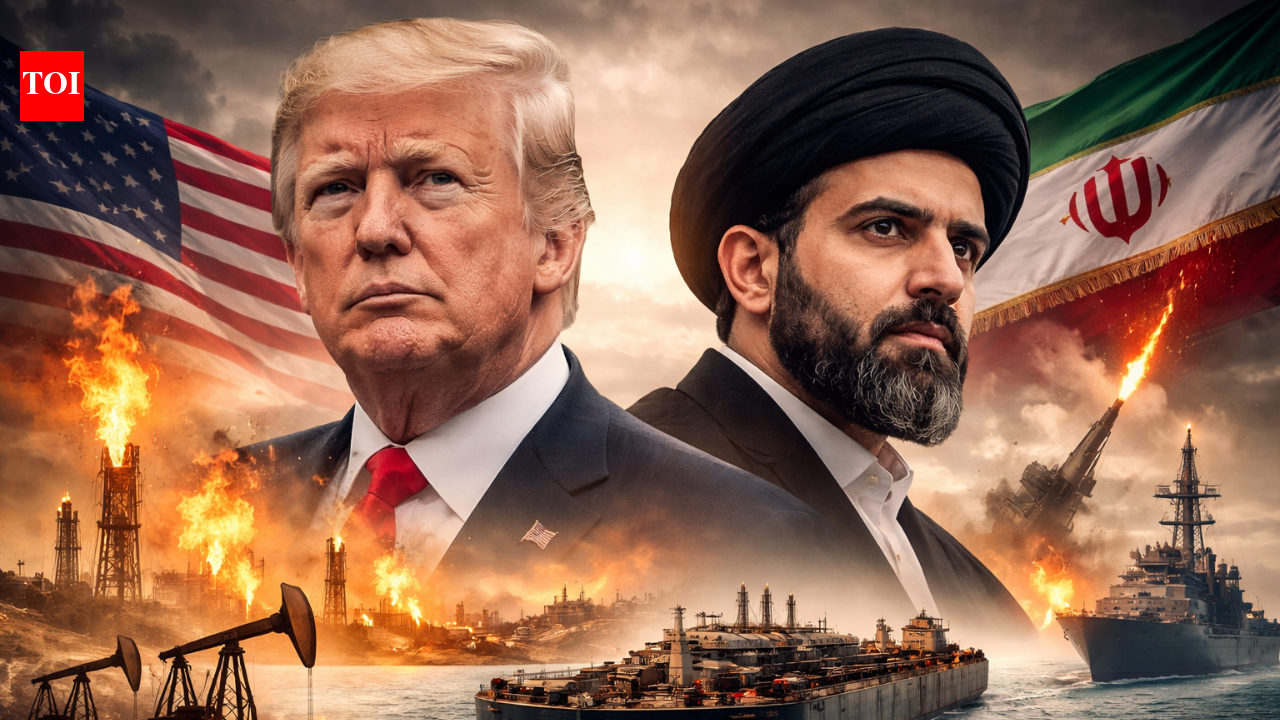
The United States is fighting Iran on the battlefield, and turning to its oil to keep the global economy afloat. As war in the Middle East chokes supplies through the Strait of Hormuz and sends prices soaring, the Donald Trump administration has begun easing restrictions on Iranian crude, allowing allies to buy the very resource that funds Tehran. For a president who came to power vowing to avoid “stupid” wars, the moment is especially fraught, a conflict he helped set in motion now risks slipping beyond his control, both on the battlefield and in its economic fallout.The move lays bare a stark war-time paradox — in trying to weaken Iran, Washington is being forced to rely on it.Though the move has been framed as “very temporary”, Mike Waltz, speaking at a CNN town hall, defended it as necessary to counter Iran’s strategy of driving up global energy prices.Even the administration’s messaging has been mixed — de-escalation in rhetoric, escalation in action. Trump said he was considering “winding down” military operations in the Middle East, even as the United States deployed three more amphibious assault ships and roughly 2,500 additional Marines to the region. Moreover, it attacked Iran’s nuclear facility Natanz again, even as Tehran has clearly warned against any attacks on its energy infrastructure, else bear oil shocks. Then what explains this sanctions shift?

World’s energy lifeline hit

Three weeks into the war with Iran, the United States is confronting a supply disruption of a scale few policymakers had anticipated. The near-total shutdown of the Strait of Hormuz has choked one of the world’s most critical oil arteries, sending shockwaves through global markets.The crisis has been compounded by direct attacks on critical energy infrastructure across the region. Strikes on Iran’s South Pars gasfield, part of the world’s largest natural gas reserve, were followed by missile attacks on Qatar’s Ras Laffan LNG facilities, causing extensive damage to one of the world’s biggest gas export hubs. Additional targets have included refineries in Saudi Arabia, Kuwait, and the UAE, raising fears of a broader energy war. With some of these facilities expected to take three to five years to fully repair, the disruption is no longer temporary — it threatens to lock in a prolonged global supply crunch. Brent crude, the international benchmark, has surged to around $106 per barrel, up sharply from roughly $70 before the conflict, underscoring how rapidly the crisis has escalated and how tightly global prices are tied to Middle East stability. Inside the administration of Donald Trump, officials are scrambling for solutions that can meaningfully ease supply pressures. A newly announced pause in sanctions applies only to Iranian oil already loaded on ships and is set to expire by April 19, limiting its immediate impact. Crucially, the move does not increase actual production, a central factor behind soaring prices, and much of Iran’s oil was already finding its way to buyers despite sanctions. That reality mirrors earlier steps, including a temporary pause on restrictions on some Russian shipments, which critics said offered only modest relief while exposing the limits of Washington’s options.

Policy levers pulled with little effect

Washington has already deployed nearly every conventional mechanism to cushion the blow. Hundreds of millions of barrels have been released from strategic reserves, sanctions on Russian oil have been partially eased, and domestic crude flows have been accelerated in an effort to boost supply. Yet these measures have barely dented rising prices. Global benchmarks continue to surge, and US consumers are feeling the impact at the pump. Officials privately acknowledge that the tools at their disposal are either insufficient in scale or too slow to counter the immediacy of the crisis, exposing the limits of state intervention in a tightly wound global oil market. The strain is also evident in Washington’s shifting diplomatic posture. After initially insisting the US did not need Nato’s help to secure the Strait of Hormuz, Donald Trump publicly urged allies to “step up” and help reopen the vital route. The appeal has met a muted response, with many countries reluctant to be drawn into a conflict they did not start, further complicating efforts to stabilize the situation and underlining the limits of US leverage even among its partners.Trump has criticized Nato countries as “cowards” for refusing to assist while insisting the campaign is unfolding according to plan, even declaring the battle “militarily won.” Yet those claims sit uneasily against the reality of a defiant Iran continuing to choke off Gulf energy flows and launch missile strikes across the region, underscoring the widening gap between rhetoric and conditions on the ground.

Finally, turning to enemy’s oil

With options dwindling, the administration has turned to a controversial stopgap: allowing allies to purchase Iranian oil already at sea. The move is designed to inject roughly 140 million barrels into a market starved of supply, offering short-term relief even as the broader conflict rages on. Officials argue that this oil would have likely been sold regardless, particularly to countries willing to bypass sanctions. Redirecting those flows to US allies, they contend, helps stabilize markets without fundamentally altering the pressure campaign against Tehran. Still, the decision lays bare an uncomfortable truth, that immediate economic needs are forcing Washington into choices that cut against its own strategic posture.

But is it enough to solve the energy crisis?

Even with Iranian barrels entering the market, the relief is expected to be fleeting. The additional supply amounts to barely a day and a half of global consumption, underscoring how limited the impact will be if disruptions persist. Energy experts warn that without a reopening of key shipping routes, the imbalance between supply and demand will continue to widen. That leaves the administration facing a stark choice: find a way to restore passage through the Strait of Hormuz or brace for prolonged economic fallout. For now, officials appear to be managing rather than resolving the crisis, navigating a war where the battlefield extends far beyond missiles and troops, deep into the fragile mechanics of the global economy.

Will the war end?

Beyond the immediate energy crisis, the conflict is pushing Donald Trump toward a deeper strategic crossroads. Analysts say the administration now faces a narrowing set of choices under what it has called Operation Epic Fury, with no clear indication of which path it is prepared to take, Reuters reported. One option is escalation — intensifying the offensive, potentially targeting critical infrastructure such as Iran’s oil hub at Kharg Island or expanding the US military footprint along Iran’s coast to neutralize missile threats. But such a move risks drawing Washington into a prolonged conflict, one that could face significant resistance from an American public wary of another long war in the Middle East. The alternative is to claim victory and scale back operations. Yet that, too, carries risks. It could leave Gulf allies exposed to a weakened but still defiant Iran, capable of disrupting shipping lanes and projecting power across the region. With diplomacy stalled and neither side showing signs of backing down, the administration is left navigating a conflict where every option deepens the very uncertainty it is trying to contain.

[ad_2]

Source link

Nvidia CEO does not agree with Anthropic CEO’s ‘doomsday AI layoffs’ prediction; but sees science fiction-like future for humans

[ad_1]

Nvidia CEO does not agree with Anthropic CEO's 'doomsday AI layoffs' prediction; but sees science fiction-like future for humans

Nvidia CEO Jensen Huang has now dismissed the prediction about massive AI-driven unemployment countering warnings from tech leaders like Anthropic CEO Dario Amodei and AI pioneer Geoffrey Hinton. According to a report by Fortune, speaking in a December interview with podcast host Joe Rogan, Huang mentioned that he does not foresee a sudden spike in AI-related layoffs, though he acknowledged that the technology will reshape the job market. “If your job is just to chop vegetables, Cuisinart’s gonna replace you,” Huang remarked, suggesting that routine, repetitive tasks are most vulnerable. But he argued that roles requiring interpretation, judgment, or creativity—such as radiologists—will remain resilient.

Jensen Huang believes AI will create new industries

While rejecting ‘doomsday’ scenarios, Huang also revealed his vision of a future where AI will create completely new industries. Huang speculated about jobs like robot tailors, who design apparel for AI-powered robots. “You’re gonna have robot apparel, so a whole industry of—isn’t that right? Because I want my robot to look different than your robot,” he said. Huang added that new roles will emerge to build and maintain AI assistants, alongside industries that are difficult to imagine today.

Watch

India’s AI Rise Gets Global Push As UN Chief Praises Leadership, Nvidia CEO Predicts Job Surge

AI as a trillion-dollar market

At Nvidia’s GPU Technology Conference (GTC) this week, Huang emphasized that “physical AI,” particularly robotics, represents the company’s next trillion-dollar-plus market. His comments align with broader industry ambitions: Tesla CEO Elon Musk has made the Optimus robot central to Tesla’s future, predicting that work could become optional within 10 to 20 years as robotic labor drives the cost of work to zero.AI disruption is already measurable. A recent MIT study estimated that AI could adequately perform tasks equivalent to 12% of U.S. jobs, representing more than 151 million workers and over $1 trillion in wages at risk.Still, Huang believes the evolution of work will be gradual and transformative rather than catastrophic. Even his imagined role of robot clothesmaker, he admitted, may eventually be automated: “Eventually. And then there’ll be something else.”

[ad_2]

Source link

US names Colombian President Gustavo Petro as ‘priority target’ – what is the DEA case against him?

[ad_1]

US names Colombian President Gustavo Petro as 'priority target' - what is the DEA case against him?

Colombian President Gustavo Petro has been named a ‘priority target’ by the US Drug Enforcement Administration (DEA) as federal prosecutors in New York examine his alleged links to drug traffickers, according records seen by news agency Associated Press.DEA records show Petro has appeared in multiple investigations since 2022, many based on interviews with confidential informants. The issues under review include possible dealings with Mexico’s Sinaloa cartel, claims that his ‘total peace’ plan may have been used to benefit traffickers who supported his presidential campaign, and suggestions that law enforcement channels were used to move cocaine and fentanyl through Colombian ports.The ‘priority target’ label is used for individuals the DEA believes could have a ‘significant impact’ on the drug trade. In recent months, prosecutors in Brooklyn and Manhattan have questioned drug traffickers about their links to Petro. They are also examining claims that representatives linked to him may have sought bribes to block extradition of traffickers to the United States. A person familiar with the inquiry said it is not clear whether prosecutors have linked Petro to any crime.Part of the investigation is focused on allegations that such offers were made inside Colombia’s La Picota prison in exchange for protection from extradition.This follows earlier claims by Donald Trump, who called him an “illegal drug leader”, and sanctions imposed by the US Treasury in late 2025 over alleged links to the trade. Petro has said his government targets major cartels while taking a more lenient approach towards small coca farmers.Separately, members of Petro’s family have faced scrutiny. His son, Nicolas Petro, was charged in 2023 with seeking illegal campaign contributions from a convicted drug trafficker. His brother, Juan Fernando Petro, has also been linked to alleged talks with jailed traffickers over possible protection from extradition in exchange for disarmament.

[ad_2]

Source link

Inside Qeshm: How Iran turned a holiday island into a strategic missile hub

[ad_1]

Inside Qeshm: How Iran turned a holiday island into a strategic missile hub

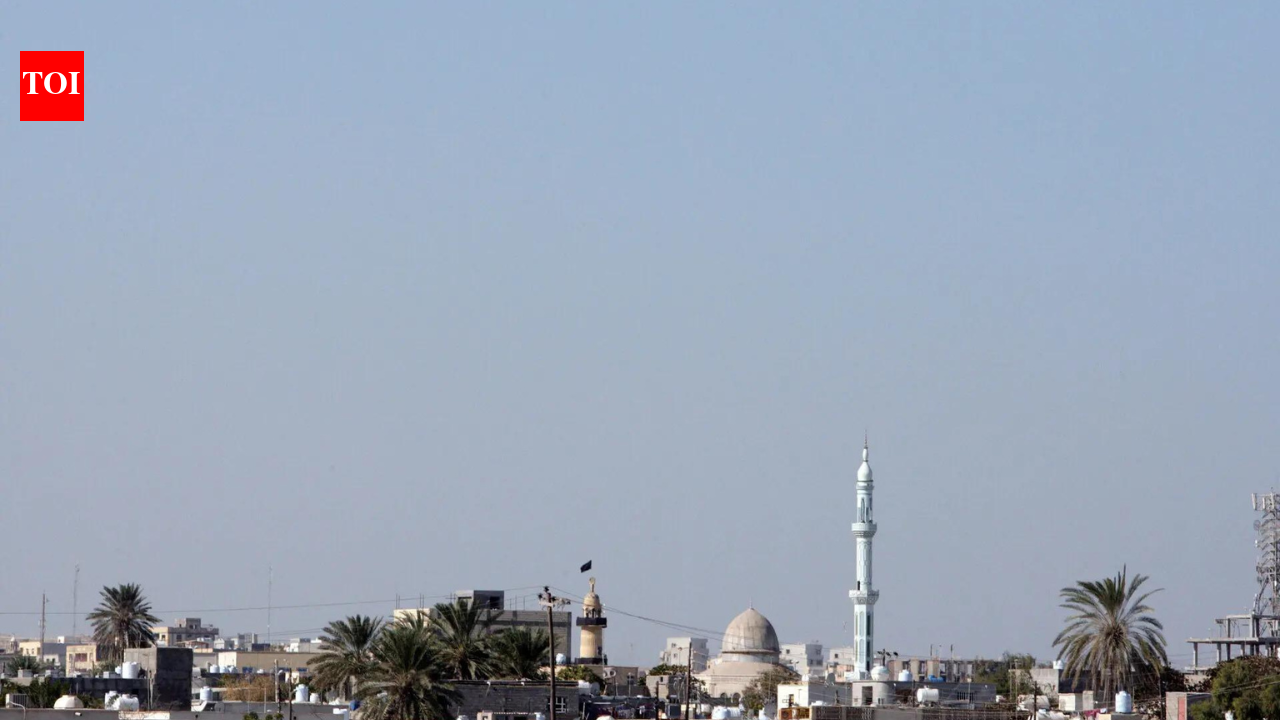
As the US-Israel war escalates, once tourist-dominated Qeshm Island in the Strait of Hormuz has now become an ‘underground missile city’.Beneath its salt caves and emerald mangrove forests lies a network of military installations that have transformed the island from a free-trade and tourist hub into a strategic fortress.Qeshm once attracted visitors for its surreal rock formations and coral reefs. Today, the world’s attention is now focused on the Iranian forces stationed there, according to Al-Jazeera. The island’s size, approximately 1,445 sq km (558 sq miles) allows it to control the entrance to the Strait of Hormuz, a vital route for global oil and gas transport.The island has a population of 148,000 residents, who are primarily Sunni Muslims speaking the Bandari dialect. However, military escalation has placed their daily routines under growing pressure.

Strategic importance of Qeshm

Qeshm’s free trade-industrial zone comprises vast underground silos, missile facilities and fast-attack boats intended to dominate the Gulf.The island is located 22 km south of Bandar Abbas. The island is central to Iran’s “asymmetric” naval strategy, enabling Tehran to threaten or halt shipping through the strait.Retired Lebanese Brigadier-General Hassan Jouni described Qeshm as housing “striking Iranian capabilities” designed for the sole purpose of controlling the Strait of Hormuz. Shipping traffic was effectively halted last week after Iran threatened to strike vessels attempting to pass, forcing countries to negotiate safe passage for oil and gas tankers while the US plans a naval convoy to reopen the route.The escalation has already had civilian consequences. On March 7, US airstrikes targeted a desalination plant on the island, cutting off freshwater to 30 surrounding villages. In retaliation, the Islamic Revolutionary Guard Corps (IRGC) struck US forces at Bahrain’s Juffair base.

Historical significance of Qeshm island

The island, known in Arabic as Jazira-al-Ṭawila (‘the Long Island’), has a layered history of strategic importance. Greek explorer Nearchus called it Oaracta. By the ninth century, Islamic geographers referred to it as Abarkawan, later called Jazira-ye Gavan or “Cow Island.”In 1301, Hormuz rulers relocated their court to Qeshm to escape Tartar attacks. The Ottomans raided it in 1552, Portuguese built a fort in 1621 and a year later, Persian and English forces expelled them. The British later maintained a naval base at Basidu until 1863, demonstrating the island’s enduring military significance.Despite militarisation, Qeshm remains ecologically vital. Its Hara mangrove forest is a breeding ground for migratory birds, while the Qeshm Geopark, UNESCO-recognised in 2006 preserves the island’s geological treasures

[ad_2]

Source link

Petrol and diesel price today: Premium petrol price hiked; how much fuel costs in your city today? Check list

[ad_1]

Petrol and diesel price today: Premium petrol price hiked; how much fuel costs in your city today? Check list

As the Middle East conflict continues to boil and oil continues to soar, consumers are growing concerned about the cost of petrol and diesel. State-run oil marketing companies have raised prices of premium petrol variants by more than Rs 2 per litre, while keeping retail rates of regular petrol and diesel unchanged. The hike affects high-performance fuels such as BPCL’s Speed, HPCL’s Power and IOCL’s XP95, with increases ranging between Rs 2.09 and Rs 2.35 per litre. Despite the revision in these premium offerings, there has been no change in the price of regular petrol, according to ANI.At the same time, industrial consumers are facing a steep rise in diesel costs. The price of bulk diesel was increased by around Rs 22 per litre on Friday, mirroring the surge in global crude oil prices amid the ongoing Middle East conflict. In the national capital, the price of bulk diesel has been revised upwards from Rs 87.67 per litre to Rs 109.59 per litre.

Watch

Premium Petrol Prices Hiked By Up To ₹2.35 Per Litre In India Amid West Asia Conflict

In contrast, retail fuel prices remain steady, with normal diesel still priced at Rs 87.67 per litre and petrol at Rs 94.77 per litre. At a media briefing, Sujata Sharma, joint secretary, ministry of petroleum and natural gas, assured that there is no increase in prices of normal petrol and diesel.Here’s how much petrol and diesel cost in your city today:

City Petrol (Rs/litre) Diesel (Rs/litre)
New Delhi 94.77 87.67
Mumbai 103.54 90.03
Kolkata 105.45 92.02
Chennai 100.84 92.3
Jaipur 104.72 90.21
Bengaluru 102.96 90.99
Ahmedabad 94.49 90.17

The divergence between stable retail fuel prices and rising industrial fuel costs comes as global oil markets remain volatile. Crude prices climbed to $119 per barrel on Thursday amid the intensifying Iran war, before easing to around $108 per barrel.The ongoing Iran conflict has significantly disrupted global energy dynamics, particularly around the Strait of Hormuz, a key transit route for nearly 20% of global energy supplies. Heightened attacks on energy infrastructure by both sides, Iran and Israel-US, along with concerns over shipping disruptions, have pushed crude prices above $100 per barrel, with peaks nearing $120.India’s dependence on imported crude makes it particularly vulnerable to such disruptions. The country sources about 85–90% of its crude oil from overseas, with roughly 40–50% passing through the Strait of Hormuz. Any disturbance in this route raises freight and insurance costs, increases the overall import bill and heightens the risk of supply constraints.Analysts caution that even a $10 increase in crude oil prices can significantly expand India’s import bill and fuel inflationary pressures. The effects are already visible, with pressure on the rupee, foreign investor outflows, and growing concerns over rising fuel and LPG costs.

[ad_2]

Source link

Is US‑Iran war ending soon? Donald Trump considers ‘winding down’ military efforts, lists 5 objectives

[ad_1]

Is US‑Iran war ending soon? Donald Trump considers 'winding down' military efforts, lists 5 objectives

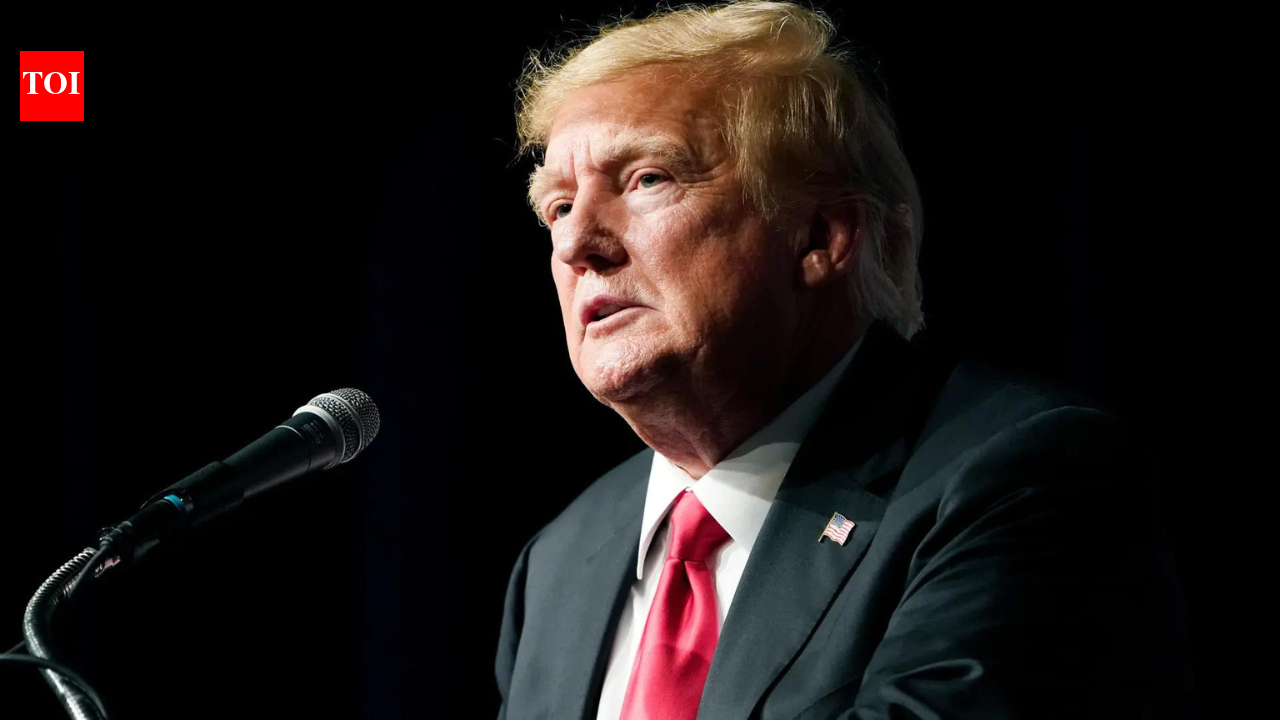
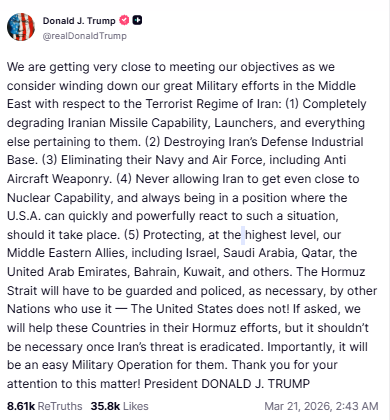
US President Donald Trump on Friday suggested ‘winding down’ US military operations in the Middle East as he listed the ‘5 objectives’ that Washington is nearing to achieve in its war in the Middle East, ruling out the possibility of a ceasefire. The announcement comes as Iran’s new Supreme Leader Mojtaba Khamenei claimed victory over the US and Israel.In a post on his social media platform Truth Social, Trump wrote that the United States was close to achieving its military objectives while ruling out a ceasefire.“We are getting very close to meeting our objectives as we consider winding down our great Military efforts in the Middle East with respect to the Terrorist Regime of Iran,” he said.

What are the 5 objectives listed by Trump?

Trump further listed five main objectives that Washington aims to achieve in its war with Iran.

  1. Completely degrade Iran’s missile capabilities, launchers and related systems
  2. Destroy Iran’s defense industrial base
  3. Eliminate the Iranian Navy and Air Force, including anti-aircraft weaponry
  4. Prevent Iran from achieving nuclear capability while remaining ready to respond quickly if necessary
  5. Protect Middle Eastern allies, including Israel, Saudi Arabia, Qatar, the UAE, Bahrain, Kuwait, and others

He also indicated that responsibility for securing the Strait of Hormuz should shift to other nations using it, with the US providing assistance.

.

.

Speaking at the White House alongside Senator Marco Rubio, Trump rejected calls for a ceasefire. “I don’t want to do a ceasefire. You know you don’t do a ceasefire when you’re literally obliterating the other side,” he said. Trump further said, “I think we have won.”The remarks came as the United States deployed additional Marines to the Middle East, signalling a potential expansion of military options, though Washington maintained there are no current plans to send ground troops into Iran.

‘Enemy has been defeated’: Khamenei claims victory in ongoing war

Responding to the ongoing conflict, Mojtaba Khamenei claimed victory in a message marking the Persian New Year, Nowruz.“At the moment, due to the particular unity that has been created between you our compatriots, the enemy has been defeated,” he said.Khamenei described US and Israeli attacks as an illusion aimed at overthrowing Iran’s government and accused them of plotting attacks in Turkey and Oman to sow divisions among regional nations. “We share with neighboring countries the creed, the interests, and the confrontation against the forces of global arrogance,” he said, commending Iranians for creating strongholds across cities, neighbourhoods, and mosques.The Supreme Leader has yet to appear publicly since being named successor to his father Ali Khamenei, who was killed in a US-Israeli airstrike at the start of the war. Earlier on Friday, Iran released a video showing Mojtaba Khamenei teaching religious studies to students.Since the conflict began, more than 1,300 people have died in Iran. In Lebanon, Israeli airstrikes have killed over 1,000 people and displaced more than a million, while Iranian missile attacks in Israel have claimed at least 15 lives. The United States has reported at least 13 military deaths in the ongoing hostilities.

[ad_2]

Source link

US sends over 2500 marines to Middle East: Which 3 warships are carrying them?

[ad_1]

US sends over 2500 marines to Middle East: Which 3 warships are carrying them?

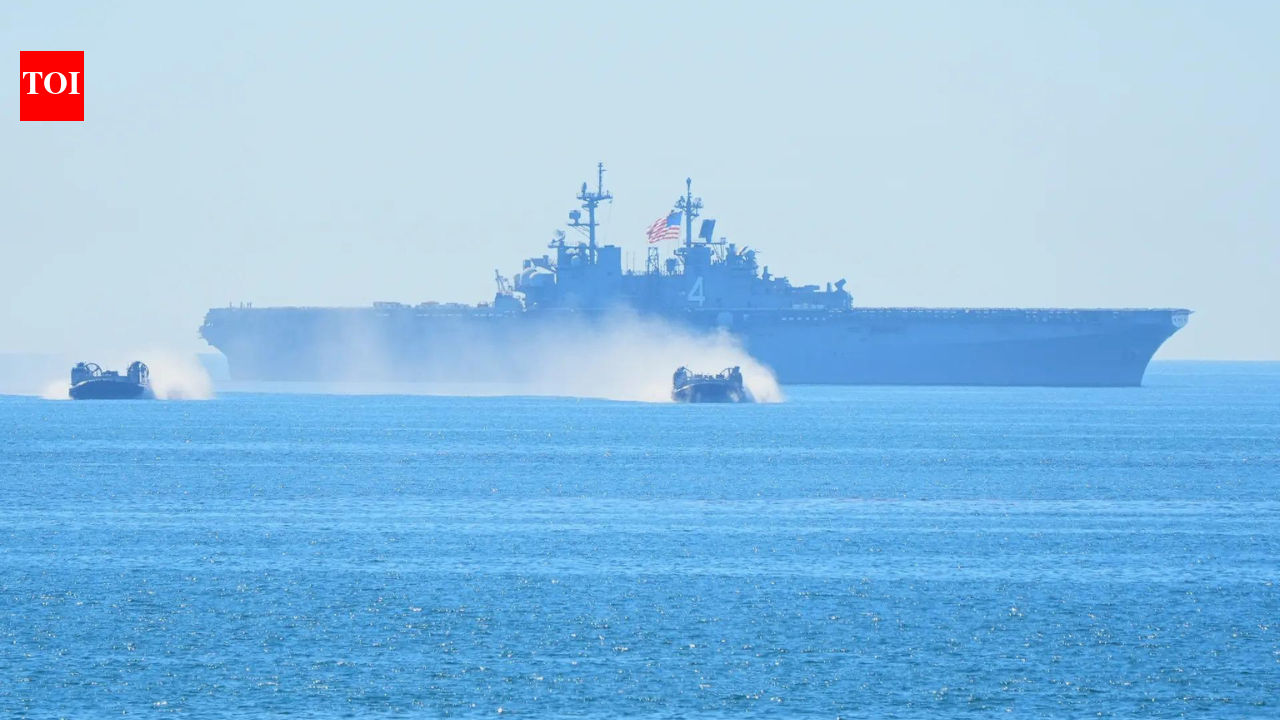
The United States is rapidly increasing its military presence in the Middle East, deploying thousands of Marines and multiple warships in the region as tensions with Iran continue to rise during the ongoing war.Around 2,200–2,500 Marines from the 11th Marine Expeditionary Unit (MEU) are being deployed aboard the USS Boxer Amphibious Ready Group, according to Associated Press. This could take the number of additional US forces in the region to several thousand, on top of the nearly 50,000 troops already stationed in the Middle East.

Why is the US increasing its deployment?

The deployment comes nearly three weeks after the US and Israel launched a large-scale air campaign against Iran. Both sides have attacked one another with drone and missile attacks, including disruption in the functioning of the Strait of Hormuz.US officials say the additional forces are meant to boost operational readiness and provide options for future missions, including evacuation operations, securing sea routes or potential ground action if required.There are also discussions within the US administration about pressuring Iran by targeting key oil infrastructure.

USS Boxer: Floating assault base with air power

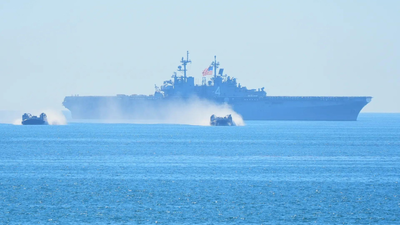
The USS Boxer, a Wasp-class amphibious assault ship, is the lead vessel in this deployment and serves as a floating military base. Often described as a small aircraft carrier, it can operate F-35B stealth fighter jets, attack helicopters and MV-22 Osprey aircraft, giving it strong airstrike capability.Beyond aviation, its core role is to support amphibious assaults, allowing Marines to be deployed directly onto hostile shores, according to the war zone. The ship carries over 2,000 troops, along with equipment, landing craft and command systems, making it capable of launching and sustaining combat operations independently.

USS Portland: Troop transport and logistics backbone

The USS Portland, a San Antonio-class amphibious transport dock, plays a key role in moving troops, vehicles and supplies. It is designed to carry more than 800 Marines along with heavy equipment and features a large flight deck that supports helicopters and tilt-rotor aircraft like the MV-22 Osprey, MH-605 Seahawk helicopters and CH-53-E Super Stallion heavy-lift aircraft.The ship also includes a well deck to launch landing craft and amphibious vehicles, enabling forces to move from sea to shore efficiently. Its primary role is to act as a logistics and transport hub, ensuring sustained operations during extended missions.

USS Comstock: Landing support and amphibious operations

The USS Comstock, a Whidbey Island-class dock landing ship, is focused on enabling amphibious landings. It is equipped to launch and recover landing craft, air-cushion vehicles and amphibious assault equipment, making it crucial for operations near coastlines.The vessel supports both combat and humanitarian missions and plays a vital role in delivering troops and supplies during operations. Its capabilities allow the US military to establish a strong foothold in coastal areas.The presence of these three ships together forms a powerful Amphibious Ready Group, capable of carrying out airstrikes, troop deployments and ground operations.Apart from the Boxer group, the US has also deployed the USS Tripoli, another amphibious assault ship carrying the 31st Marine Expeditionary Unit from the Indo-Pacific region.The Strait of Hormuz is one of the world’s most critical energy chokepoints, handling nearly 20% of global oil trade. Any disruption in this region can have a major impact on global oil prices and energy security.

Which ships has been earlier deployed?

As part of the growing US military presence amid the conflict involving the United States, Israel and Iran, several warships have been deployed in the Middle East.At the center of deployment comes USS Tripoli. It is an amphibious assault ship capable of transporting landing and supporting ground troops and their equipment on hostile or foreign shores.In addition to these amphibious vessels, the United States has also maintained a broader naval presence that includes aircraft carriers and other naval assets supporting operations in the region.

.

.

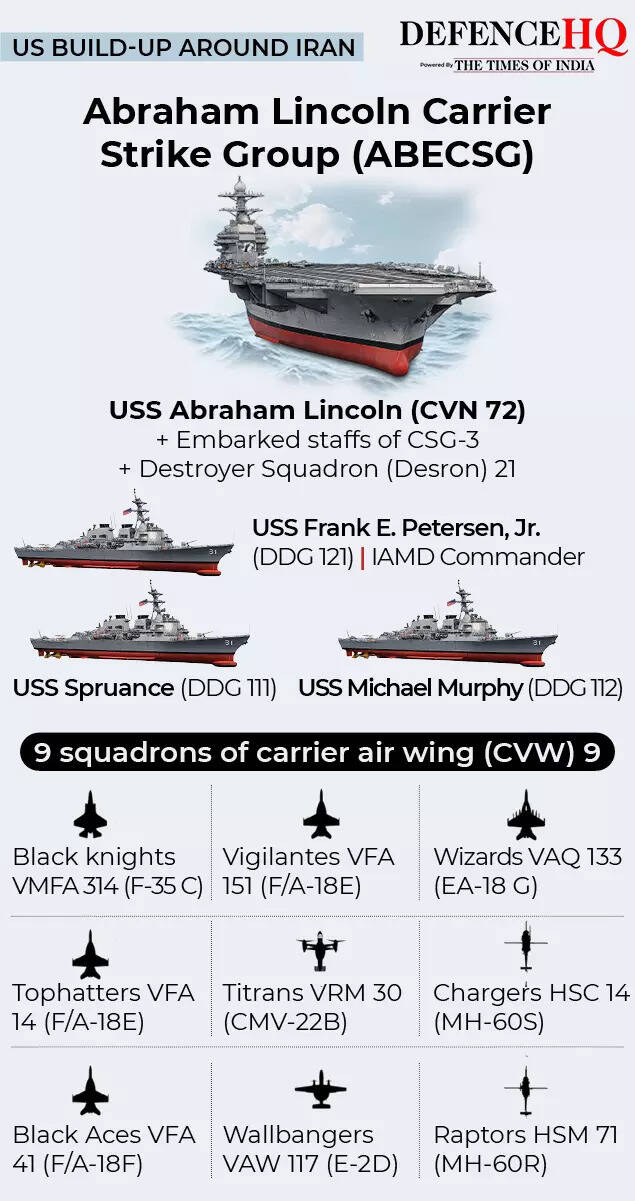
The USS Abraham Lincoln carrier strike group has been active in the Arabian Sea and the aircraft carrier USS Gerald R Ford has been operating in adjacent waters in support of ongoing military actions.

[ad_2]

Source link

Delhi Temperature: Dense fog engulfs Delhi-NCR; IMD forecasts more rain | Delhi News

[ad_1]

Dense fog engulfs Delhi-NCR; IMD forecasts more rain

NEW DELHI: Dense fog enveloped parts of the national capital on Saturday morning following rainfall the previous evening. Similar conditions were reported in Ghaziabad and Noida, where a light layer of fog hovered over the cities.The India Meteorological Department (IMD) has forecast another spell of rain on March 23. While temperatures are expected to rise gradually from Saturday, the maximum temperature is likely to hover between 26 and 28 degrees Celsius. According to the IMD’s early warning system, the Air Quality Index (AQI) is also expected to remain in the ‘moderate’ category.The sudden shift in weather began around March 18, when moisture-laden winds, coupled with high temperatures, led to the formation of convective clouds. These clouds later interacted with an active western disturbance, triggering widespread rainfall across Delhi-NCR.As a result, the city experienced a sharp drop in temperature, with continuous rain since Wednesday evening bringing a noticeable chill. On Friday, the maximum temperature was recorded at 21.7 degrees Celsius—around 10 notches below normal and significantly lower than 26.8 degrees Celsius a day earlier. This also marked the lowest maximum temperature recorded in March in six years, comparable to March 8, 2020, when the temperature stood at 21.2 degrees Celsius.Rain and thunderstorms lashed several parts of North India on Friday, prolonging the cooling effect in Delhi and prompting residents to switch off air conditioners. However, the impact is expected to be temporary, with temperatures likely to rise and conditions gradually returning to normal in the coming days.

[ad_2]

Source link

Dhurandhar 2 Full Movie Collection: ‘Dhurandhar: The Revenge’ box office collection day 2: Ranveer Singh’s spy thriller misses the Rs 230 crore mark by a whisker |

[ad_1]

‘Dhurandhar: The Revenge’ box office collection day 2: Ranveer Singh’s spy thriller misses the Rs 230 crore mark by a whisker

In December 2025, ‘Dhurandhar’ made a roar at the box office, and in March 2026, ‘Dhurandhar: The Revenge’ is carrying out the legacy. Starring Ranveer Singh as Humza Ali Mazari, the Indian secret spy, infiltrating the underworld of Lyari and rising to be its king, ‘Dhurandhar: The Revenge’ has been making quite a buzz from the word go. However, the film shattered records from its preview shows and witnessed a drop in numbers on day 2 of its official theatrical release. Nevertheless, it made an impact at the box office by crossing the Rs 200 crore mark in just two days.‘Dhurandhar: The Revenge’ Review Scroll down to know more about the box office performance of ‘Dhurandhar: The Revenge’

‘Dhurandhar: The Revenge’ box office collection day 2 update

On March 18, 2026, the makers of ‘Dhurandhar 2’ treated the audience with paid preview shows. Though due to some technical difficulties, shows were delayed across India, and many were even canceled, the film garnered an impressive number. According to Sacnilk, it recorded Rs 43 crore from its premiere, followed by a collection of Rs 102.55 crore on day 1. It was almost a 60 percent rise from the preview shows. However, on day 2, the movie saw a dip in business. With a drop of 21.3 percent, the film collected Rs 80.72 crore net in India on Friday.With this, the net collection of ‘Dhurandhar: The Revenge’ in India stands at Rs 226.27 crore. The gross collection, on the other hand, stands at Rs 269.39 crore.

‘Dhurandhar: The Revenge’ box office collection day 2: A breakdown across languages

Aditya Dhar catered to a larger audience this time by releasing the movie in not just one but five languages. In the tally, the collection from the Hindi version is Rs 78.94 cr, Kannada is Rs 0.03, whereas the Malayalam language added Rs 0.01 cr. Coming to the Tamil version, it earned Rs 0.44 cr, while Telugu recorded big with Rs 1.30 cr.

‘Dhurandhar: The Revenge’: Occupancy

On March 18, Wednesday, the movie had 11,294 shows for previews with an occupancy rate of 64.8%. On Thursday, the number of shows was increased to 21,633, and the occupancy stood at 67.8%. On day 2 of the official release, i.e., Friday, the movie had 20,125 shows with 62.6% occupancy rate.

‘Dhurandhar: The Revenge’

‘Dhurandhar 2’ not only shows how Hamza paves his way to lead Lyari and collect the best of intel. It also gives a background of his character as Jaskirat Singh Rangi. Packed with high-octane action sequences, woven in a gripping storyline, this film is being lauded by critics and audiences alike.DISCLAIMER: The box office numbers and data in this article are compiled from diverse public and industry sources. All figures are approximate unless explicitly mentioned, offering a fair representation of the movie’s box office performance. These totals may change as official studio data is updated or as additional international market reports are finalized. This data is provided by us for informational and entertainment purposes only.

[ad_2]

Source link