Breaking News
No gas, no problem: Ready-made meals and frozen foods take over Indian homes

[ad_1]

No gas, no problem: Ready-made meals and frozen foods take over Indian homes

The Middle East conflict continues to boil, sending ripples through global oil supplies. As concerns rise over liquified petroleum gas (LPG) shortages, Indian households are increasingly relying on ready-to-cook meals, frozen snacks, and no-cook foods. Retailers report a sharp rise in demand, with sales climbing up to 20% month-on-month as consumers seek alternatives to traditional cooking.“Categories such as ready meals, frozen snacks, instant noodles and ready-to-cook products have seen strong traction, leading to about a 10-12% rise in this segment. While the surge appears temporary, we are proactively stocking these categories to ensure adequate availability,” Karan Ahuja, spokesperson at premium grocery retailer Le Marche told ET.The shortage intensified last week due to the ongoing Gulf War, causing severe disruption in gas cylinder supplies for restaurants, factories, corporate and school cafeterias, and households alike.

LPG Crisis Sparks Rajya Sabha Clash As Kharge Targets Govt And Nadda Hits Back In Parliament

“Our Thai curry ready-to-cook pastes are seeing the highest consumer sales for the first time since launch in two years. This may also lead to a long-term shift in consumer behaviour towards adapting ready-to-eat pastes even when things normalise,” said Deb Mukherjee, founder of Asian packaged ready-to-eat foods and condiments label Moi Soi.Brands are responding with heightened promotions. Mother Dairy revived advertising for its frozen vegetable range over the weekend, while Swiggy Instamart has begun promoting ‘induction-friendly’ cookware.“We are consistently seeing significant traction for our ready-to-eat and ready-to-cook range. Moreover, if the shortage and uncertainty continue over the coming weeks or more, we expect the ready-to-eat category to see higher sales offtake,” said a spokesperson for LT Foods, the maker of Daawat ready-to-cook biryani kits and rice mixes.Analysts note that the adoption of ready-to-cook and frozen foods, which had surged during Covid-19 lockdowns before stabilising to single-digit growth, may now become a long-term trend as households seek alternatives to gas cooking.“Products such as protein oats and millet muesli are witnessing strong traction, making them particularly popular among working professionals and health-conscious individuals,” said Ankit Jha, founder and chief marketing officer at health and nutrition brand Doctor’s Choice.Despite the ministry of petroleum and natural gas prioritising domestic LPG supplies from March 5, shortages persist, with some households reporting cylinder price hikes of up to 30%. The disruption has also driven demand for electric cooking alternatives.“We have observed a sharp and immediate uptick in demand for induction cooktops over the past few days with our average daily run rate having surged to nearly three times the usual levels,” said Shibashish Roy, managing director at Infiniti Retail, which operates the Croma electronics and appliances chain.

[ad_2]

Source link

Red Sea alternative to Strait of Hormuz? Saudi Arabia’s offer to oil buyers amid supply crunch

[ad_1]

Red Sea alternative to Strait of Hormuz? Saudi Arabia's offer to oil buyers amid supply crunch

As the Middle East crisis escalate and Iran continues to choke Strait of Hormuz, Saudi Arabia has moved to pitched another option to its long-term oil buyers. The kingdom is offering long-term buyers the choice to receive their April crude shipments through its Red Sea port of Yanbu, amid ongoing disruptions in the Strait of Hormuz. Traders familiar with the plan said customers opting for Yanbu will get only part of their monthly allocation because the pipeline feeding the port cannot carry full volumes. Alternative route is to still take oil from the Persian Gulf, but risk receiving nothing if the strait remains blocked, Bloomberg reported.Before Iran effectively blocked the strait, Saudi Aramco, the world’s largest oil exporter, shipped 7.2 million barrels last month, mostly from its Gulf terminals at Ras Tanura and Juaymah. Saudi Arabia’s 5 million barrel-per-day pipeline to the Red Sea provides an alternative route, though Yanbu’s export capacity may be lower.Most of Saudi Arabia’s oil is sold via long-term contracts, primarily to Asian buyers. In response to supply concerns, China’s Sinopec has cut refinery run rates by 10%, while Japan has begun releasing crude from national reserves.The options reflect uncertainty over the conflict’s duration and when the Strait of Hormuz may reopen. Traders noted that if the war continues, oil shipped from Yanbu to Asia could be sold on a delivered basis, with Aramco handling transport, rather than the usual loading basis, where customers organise shipping themselves. Only the Arab Light grade is being offered from Yanbu.

Trump Humiliated? Australia, Japan Refuse Warships Deployment Against Iran’s Hormuz Blockade

Since the war began nearly three weeks ago, Aramco has increased shipments through Yanbu and has, unusually, offered crude via spot market tenders. However, this is the first time contracted supply is being offered from the Red Sea terminal.Some European refiners are also facing reduced allocations. One major processor reported receiving no volumes for next month, while another was allocated less than requested.

[ad_2]

Source link

High speed alone cannot establish rash driving: Why Karnataka High Court acquitted man in fatal road accident case

[ad_1]

High speed alone cannot establish rash driving: Why Karnataka High Court acquitted man in fatal road accident case
The accused also took the defence that the deceased was under the influence of alcohol and had ridden the motorcycle in a haphazard manner. (AI image)

The Karnataka High Court has set aside the conviction of a man for offences under Sections 279 and 304A of the Indian Penal Code (IPC), holding that mere allegation of “high speed” cannot by itself establish rash or negligent driving in the absence of cogent evidence.Allowing a criminal revision petition, Justice Rajesh Rai K held that the prosecution failed to establish the essential ingredients of rash and negligent driving required to sustain conviction for causing death by negligence.Background of the CaseThe case arose from a road accident that occurred on 14.04.2018 near Ullala Bridge on NICE Road.According to the prosecution, the complainant (PW-1) and the deceased B.T. Dilip Kumar were returning to Bengaluru from Mysuru on a motorcycle after distributing housewarming invitation cards.At around 3:55 PM, they allegedly stopped their motorcycle on the extreme left side of the road to attend nature’s call. While PW-1 stepped away, the deceased remained seated on the motorcycle. At that moment, a Maruti Suzuki Celerio car allegedly driven by the accused collided with the rear portion of the motorcycle, causing the deceased to be thrown off the vehicle. Due to this, the deceased sustained grievous injuries and was taken to Victoria Hospital, where he later succumbed to the injuries.A complaint was subsequently lodged by PW-1 before Tavarekere Police Station, leading to registration of an FIR under Sections 279 and 304A IPAfter investigation, a charge sheet was filed against the accused.During trial before the Chief Judicial Magistrate, Bengaluru Rural District, the prosecution examined five witnesses and relied on documentary evidence including the complaint, FIR and post-mortem report.The trial court found the accused guilty of rash and negligent driving and convicted him under Sections 279 and 304A IPC.Accordingly, the accused was sentenced to:

  1. Fine of Rs.1,000/- for the offence under Section 279 IPC, with 15 days’ simple imprisonment in default
  2. Two months’ simple imprisonment and fine of ₹5,000 under Section 304A IPC, with further imprisonment in default

The accused challenged the conviction before the VI Additional Sessions Judge, Bengaluru Rural District, but the appellate court dismissed the appeal and affirmed the conviction. The accused thereafter approached the High Court through a criminal revision petition.Arguments Before the High CourtThe petitioner argued that both the trial court and the appellate court had failed to properly appreciate the evidence on record. It was argued that PW-1, the complainant and alleged eyewitness, was not actually present at the scene of the accident.During cross-examination, PW-1 admitted that:

  • He reached the hospital after receiving a call from the accused.
  • The accused himself had taken the injured to the hospital not present during the spot mahazar.
  • His signature on the mahazar was obtained at the police station

Based on these admissions, the defence argued that PW-1’s presence at the scene was doubtful and that he appeared to be a planted witness. It was also submitted that the prosecution failed to establish that the accused was driving the vehicle in a rash or negligent manner, which is an essential ingredient for offences under Sections 279 and 304A IPC.State’s SubmissionsOpposing the revision petition, the State argued that the trial court and the appellate court had carefully examined the evidence before recording conviction. The prosecution submitted that PW-1 was an eyewitness and that his testimony, along with medical evidence and other witness statements, clearly established that the accident occurred due to the accused’s rash driving.The State further argued that the post-mortem report confirmed that the deceased died due to injuries sustained in the road accident.High Court’s AnalysisAfter examining the evidence on record, the High Court noted that the fact of the accident and the death of the victim was not disputed. The post-mortem report indicated that the death occurred due to head injury and fractures sustained in the accident. However, the crucial question was whether the accused alone was responsible for the accident due to rash and negligent driving.The Court observed that the prosecution relied primarily on the testimony of PW-1, who was projected as the sole eyewitness. However, several aspects of his testimony created serious doubts about his presence at the spot.Justice Rajesh Rai K observed that PW-1 admitted he went to the hospital after receiving a call from the accused, who had himself taken the injured victim for treatment.The Court noted that PW-1 was also not present during the preparation of the spot mahazar and had signed the document at the police station.In these circumstances, the Court held that little evidentiary value could be attached to his testimony as an eyewitness.The Court observed:“In such circumstances, much credence cannot be attached to the evidence of PW-1 though an alleged eyewitness to the incident as per the prosecution.”The Court further noted that no other eyewitnesses had been examined by the prosecution.The accused also took the defence that the deceased was under the influence of alcohol and had ridden the motorcycle in a haphazard manner immediately before the accident.The High Court observed that the post-mortem report indicated the presence of strong traces of alcohol in the stomach contents of the deceased.In light of this medical evidence, the Court held that the defence version could not be ruled out and appeared reasonably probable.The Court also examined the prosecution’s allegation that the accused was driving the car at high speed. However, the Court observed that no evidence was placed on record to establish what “high speed” meant in the context of the accident.Referring to the Supreme Court decision in State of Karnataka v. Satish (1998) 8 SCC 493, the Court reiterated:“Merely because the truck was being driven at a ‘high speed’ does not bespeak of either ‘negligence’ or ‘rashness’ by itself.”The Court emphasised that in criminal trials, the burden of proving rash or negligent driving lies entirely on the prosecution.The High Court also explained the legal concept of negligence and rashness. The Court observed that negligence involves a breach of duty of care, while rashness implies reckless conduct coupled with conscious disregard of duty.Justice Rajesh Rai K noted that the determination of rashness and negligence depends heavily on the facts and circumstances of each case.The Court further observed that determination of negligence must be assessed in light of the “principle of foreseeability and proximity”, referring to Lord Atkin’s formulation in Donoghue v. Stevenson (1932 AC 562). The Court noted that liability for negligence arises where a person fails to exercise the level of care that a prudent person would adopt in similar circumstances. In the present case, since the accused was driving on the correct side of the road, it could not be reasonably anticipated that the deceased would suddenly appear before the vehicle.The Court also examined the spot sketch placed on record, which indicated that the accident had occurred on the left side of the road and the car was found positioned in the correct direction of travel. This circumstance further weakened the prosecution’s claim that the accused was driving rashly or negligently.Applying these principles, the Court held that the prosecution had failed to produce cogent evidence showing rash or negligent driving by the accused.Court’s DecisionThe High Court concluded that both the trial court and the appellate court had erred in convicting the accused without sufficient evidence establishing rash and negligent driving.Accordingly, the Court allowed the criminal revision petition and set aside the judgments of the courts below.The Court ordered:“The judgment of conviction dated 29 July 2019 passed by the Chief Judicial Magistrate, Bengaluru Rural District, and the appellate judgment dated 30 January 2021 passed by the VI Additional Sessions Judge were set asideThe petitioner was acquitted of offences under Sections 279 and 304A IPC, and the fine amount, if already deposited, was directed to be refunded.CRIMINAL REVISION PETITION NO. 1004 OF 2021 – Harish vs State of Karnataka (Vatsal Chandra is a Delhi-based Advocate practicing before the courts of Delhi NCR.)

[ad_2]

Source link

US forced labour probe: China urges Trump to ‘immediately correct erroneous’ trade practices

[ad_1]

US forced labour probe: China urges Trump to 'immediately correct erroneous' trade practices

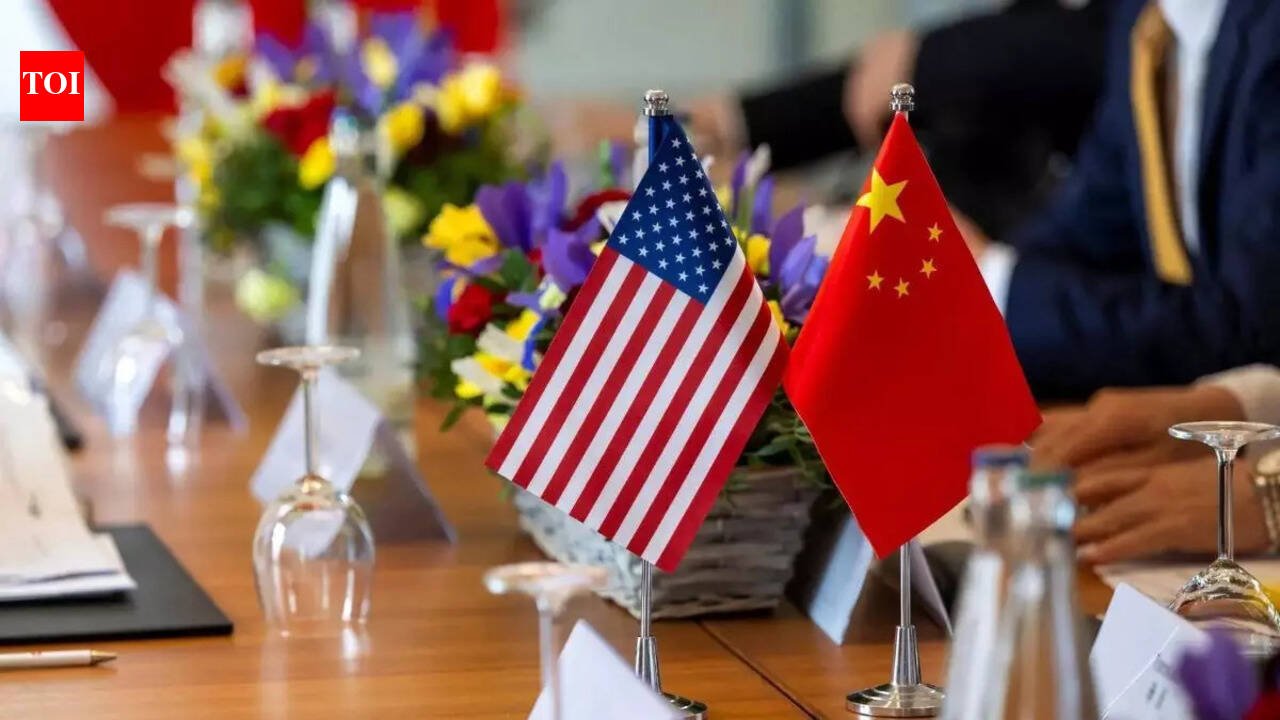
China on Monday pushed back against the United States over a new set of trade investigations launched last week, saying that it has “lodged representations” with Washington and calling on the US to “correct its erroneous ways.” The response comes as trade negotiators from the two countries gather in Paris for talks. The latest US investigations are aimed at 60 economies, including China, and will examine alleged “failures to take action on forced labor” and whether such practices place a burden on or restrict American commerce. These probes were announced a day after Washington opened a separate investigation focusing on excess industrial capacity among 16 trading partners, including China. Beijing’s foreign ministry criticised that move, describing it as “political manipulation.” In a statement, China’s commerce ministry urged Washington to take a different approach, saying: “We urge the US side to immediately correct its erroneous ways, meet China halfway… and resolve issues through dialogue and negotiations.” The ministry also criticised the forced labour investigations, describing the move as “extremely unilateral, arbitrary and discriminatory” and accusing the US of “attempting to construct trade barriers.” Chinese officials said they have formally “lodged representations” with the United States over the latest probes. The developments come as trade representatives from both countries met in Paris on Sunday, with Washington indicating the discussions would continue for two days. Concerns around forced labour in China’s western Xinjiang region have been raised by human rights groups and United Nations experts, particularly over alleged exploitation of minority communities. Beijing has consistently rejected the allegations, calling them “fabricated.” The two investigations announced by Washington are expected to take several months to conclude. Their findings could potentially support the introduction of new tariffs, especially after the US Supreme Court in February struck down sweeping tariffs imposed by President Donald Trump. Meanwhile, Washington has said that Donald Trump plans to visit China between March 31 and April 2, though Beijing has yet to confirm the proposed dates. Trump told the Financial Times that the meeting might be delayed, noting that the planned summit could be postponed because of the Middle East war.

[ad_2]

Source link

Iran’s Sejjil-2 ‘dancing missile’ used for first time in this war: The solid-fuel weapon that can strike 2,000 km away

[ad_1]

Iran’s Sejjil-2 ‘dancing missile’ used for first time in this war: The solid-fuel weapon that can strike 2,000 km away
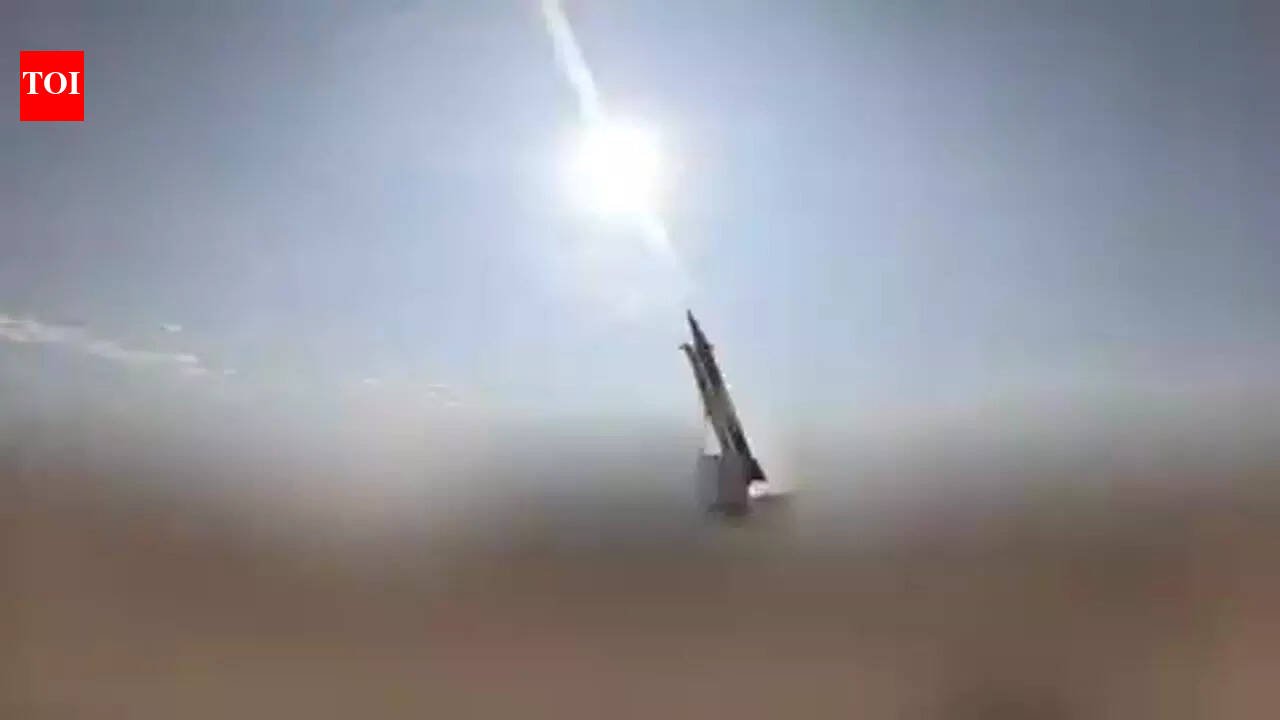
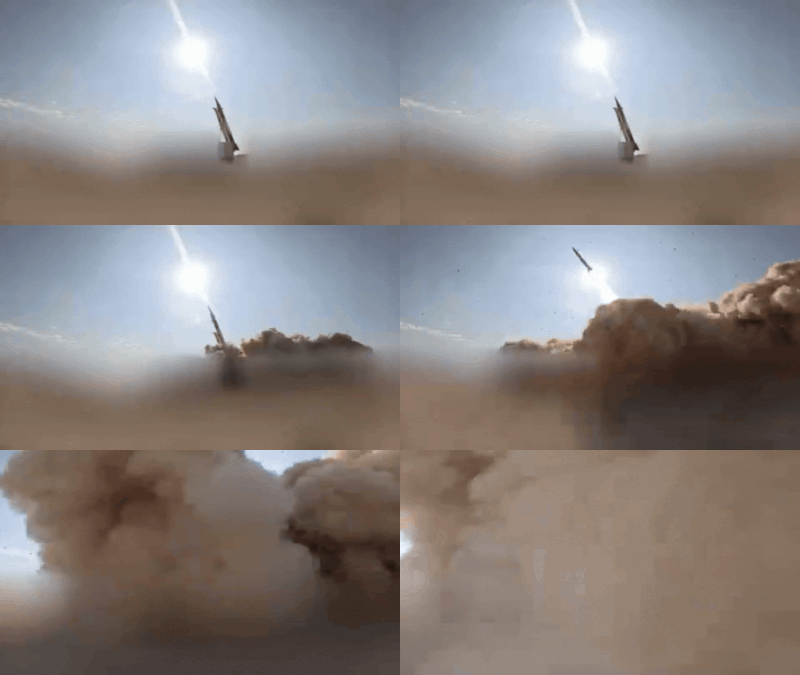
Sejjil missile launched by Iran towards Israel (Video/X@MOSSADil)

The Islamic Revolution Guard Corps (IRGC) on Sunday carried out a new round of missile strikes against Israeli targets. For the first time, Tehran launched Sejjil-2 missiles since the outbreak of the US-Israeli war that started on February 28.IRGC carried out the latest wave of retaliatory strikes as part of its ongoing military campaign against Israel, saying that the attacks targeted strategic and military locations inside Tel Aviv.The group further said that the attacks were part of the 54th wave of missile strikes carried out under ‘Operation True Promise 4’, according to state news agency Islam Times. In a statement, the IRGC’s Public Relations Office said that the latest barrage included a mix of ballistic missiles such as Khorramshahr, Khaybar-shekan, Qadr and Emad, along with the strategic Sejjil missile.According to the statement, the Khorramshahr missile, which carries a warhead weighing around two tonnes was also used in the strikes. Iranian officials said the missiles targeted locations linked to Israeli military operations and decision-making infrastructure.The IRGC claimed that sites connected to Israel’s defence industries and areas where Israeli forces were gathered were among the targets hit during the attacks.The missile got its nickname ‘dancing missile’based on its high‑maneuverability and ability to evade defence systems. The missile launch comes amid the ongoing war involving the United States, Israel and Iran that began after large-scale strikes were launched inside Iran.Iran has said the conflict began after American and Israeli forces carried out a military campaign following the killing of the country’s Supreme Leader Ali Khamenei along with several senior military commanders and civilians.The attacks reportedly included air strikes on both military and civilian sites across Iran, causing heavy damage and casualties.In response, Iran has launched several waves of missiles and drones targeting Israeli territory and US military positions across the region.

What are Sejjil missiles?

The Sejjil missile is one of Iran’s most advanced ballistic missile systems. It is a two-stage, solid-fuel medium-range ballistic missile (MRBM) developed domestically by Iran.The missile has a reported range of about 2,000 kilometres, allowing it to reach targets across much of the Middle East. It can carry a single warhead weighing around 700 kilograms, according to the Centre for Strategic and International Studies (CSIS). One of the key advantages of the Sejjil system is its solid-fuel propulsion. Unlike liquid-fuel missiles that need to be refuelled before launch, solid-fuel missiles can be launched more quickly, making them harder to detect or destroy before firing.The missile is also road-mobile, meaning it can be transported and launched from mobile platforms.

Sejjil missile development and history

Development of the Sejjil missile started in the late 1990s, building on earlier Iranian missile programmes such as the Zelzal short-range ballistic missile.The first successful test launch took place in 2008, followed by another test in 2009 aimed at improving the missile’s guidance and navigation systems.Several additional tests were conducted in the following years, including one that reportedly flew nearly 1,900 kilometres.Iran has displayed the missile publicly during military parades alongside other systems such as the Shahab-3 and Ghadr-1 missiles.After about a decade of inactivity, the Sejjil resurfaced in 2021 when Iran launched it as part of the January Great Prophet 15 military exercises.

[ad_2]

Source link

Why Kharg Island matters: The oil lifeline Trump just put in his crosshairs

[ad_1]

The Kharg Secret: Why Iran Could Set Gulf Oil Fields On Fire To Protect This ‘Forbidden Island’

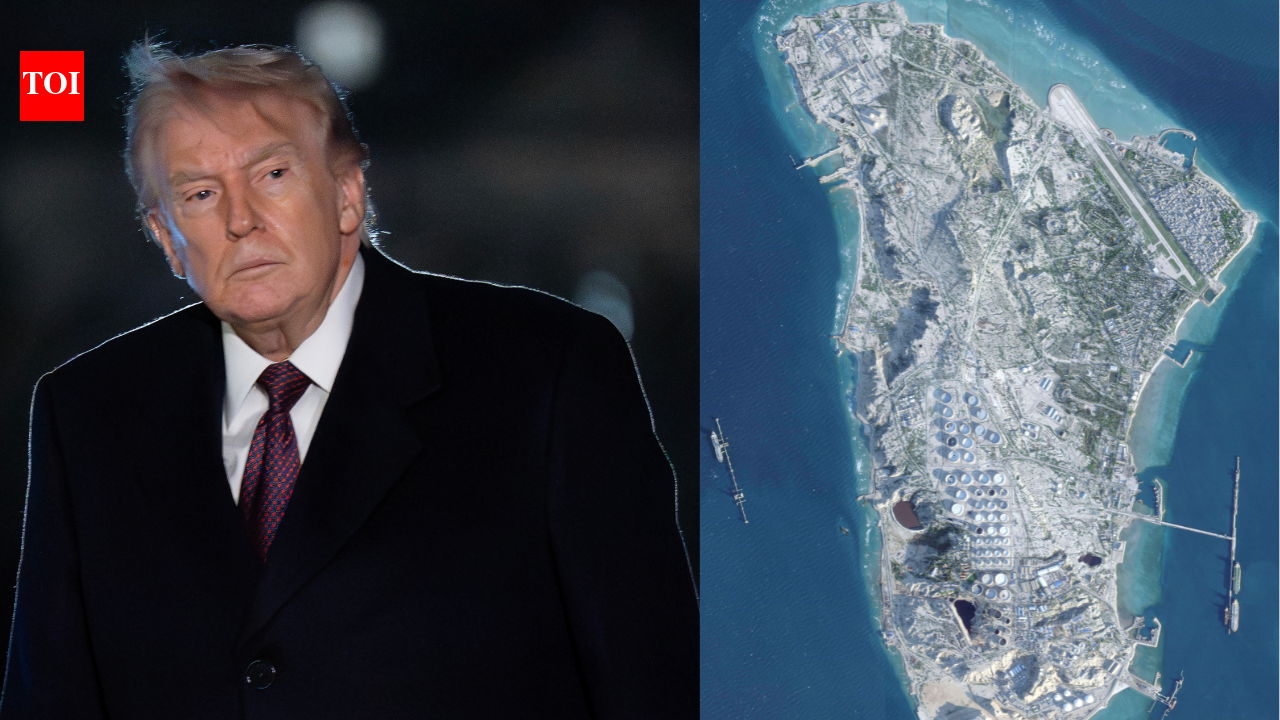
Iran’s economic jugular: Why Kharg Island is a key target for Trump. (AP images)

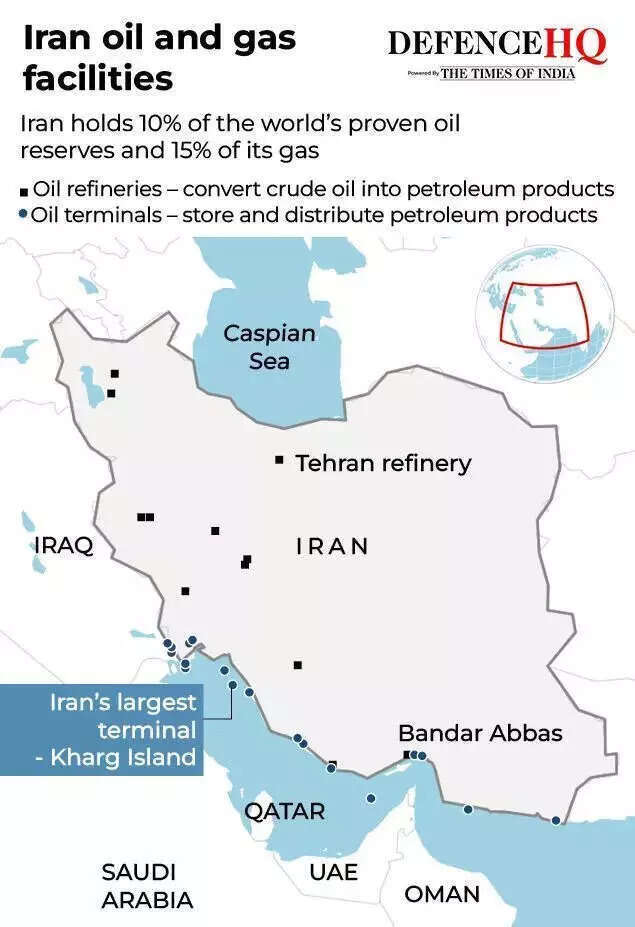
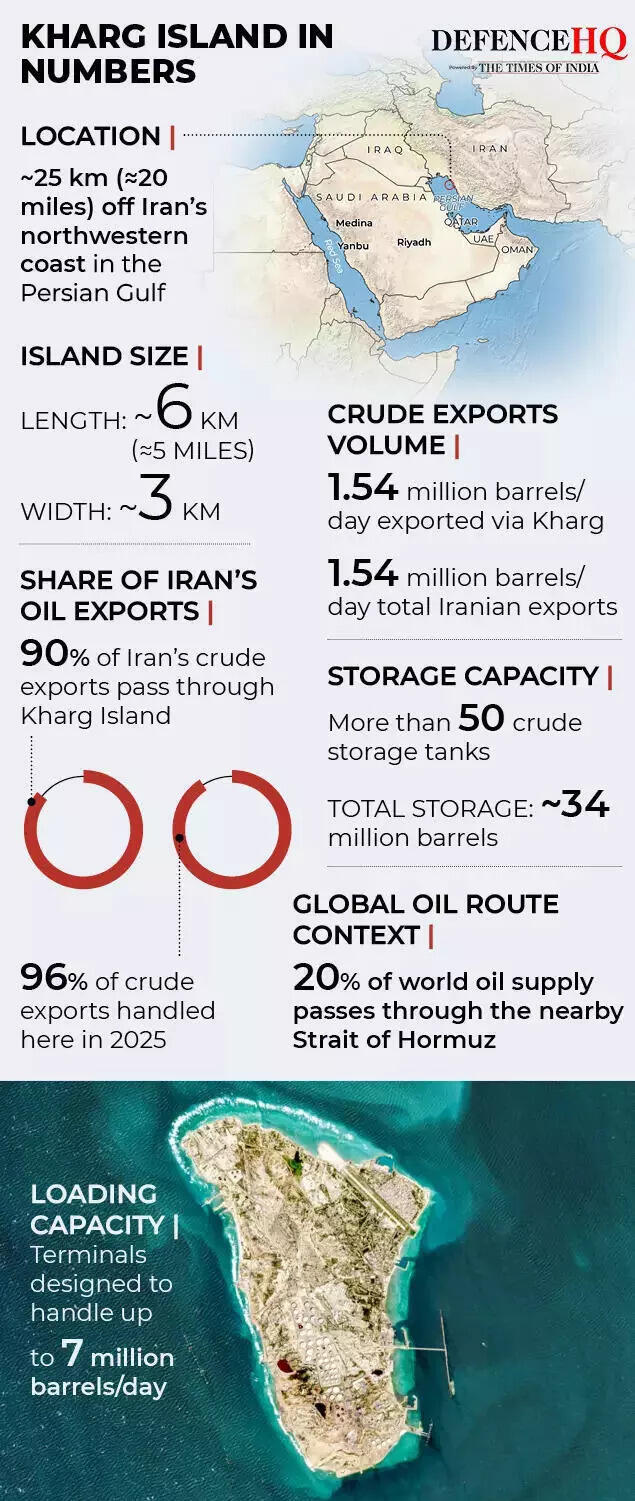
A small rocky island in the Persian Gulf has suddenly become central to the escalating tensions between the United States and Iran.Kharg Island — located just 15 nautical miles (about 24 km) off Iran’s southern coast — may be tiny in size, but it is one of the most strategically important points in the country’s economy and energy infrastructure.

The Kharg Secret: Why Iran Could Set Gulf Oil Fields On Fire To Protect This ‘Forbidden Island’

According to Axios, US President Donald Trump is working to assemble a coalition of countries to reopen the Strait of Hormuz and is hoping to announce it later this week.Why Kharg Island mattersDespite its modest geography, Kharg Island functions as the heart of Iran’s oil export system.Roughly 90% of Iran’s crude oil exports move through a massive oil terminal on the island. Pipelines transport crude from mainland Iran to Kharg, where it is loaded onto huge tankers.The island’s coastline sits close to deep waters in the northern Gulf, allowing very large crude carriers to dock at its long jetties and load tens of millions of gallons of oil. According to BBC, these tankers then sail south through the Gulf and pass the crucial maritime chokepoint of the Strait of Hormuz before heading mainly to Asia — particularly China, the largest buyer of Iranian oil.Because of this role, analysts often describe Kharg Island as Iran’s economic lifeline. The oil revenue flowing through the terminal also provides a key financial stream for the powerful Islamic Revolutionary Guard Corps (IRGC).

jpeg

Why Trump targeted the islandAccording to Donald Trump, US forces struck military installations on Kharg Island, including missile storage sites, naval mine facilities and other defence infrastructure.The strikes were carried out by the US regional command, United States Central Command, which said more than 90 military targets were hit while oil facilities were deliberately spared.Strategically, hitting Kharg’s military assets sends a powerful message without immediately crippling Iran’s economy. Targeting the island is often compared to aiming at Iran’s economic jugular — a signal that the US could severely disrupt the country’s oil exports if tensions escalate.Trump himself warned that the decision not to strike oil infrastructure could change if Iran interferes with shipping in the Strait of Hormuz, one of the world’s most critical energy corridors.Why the oil terminal wasn’t bombedDestroying Kharg Island’s oil facilities would represent a dramatic escalation.A strike on the export terminal could cut off the majority of Iran’s oil revenue, but it could also send global oil prices soaring and trigger retaliatory attacks across the Middle East.Iran has already warned that if its energy infrastructure is targeted, it would respond by attacking oil and energy facilities belonging to companies working with the US.Tehran also retains the ability to launch large numbers of drones and missiles at Gulf infrastructure and shipping routes — raising fears that the conflict could expand far beyond Iran’s borders.

jpeg (1)

The bigger pictureBy striking military sites but sparing the oil terminal, Washington appears to be signalling both restraint and leverage.Kharg Island’s central role in Iran’s oil exports means it remains a powerful pressure point in the conflict — one that could rapidly escalate the economic and geopolitical stakes if the island’s energy infrastructure becomes a target.

[ad_2]

Source link

‘Fabrication of clips using AI’: UAE orders action against 19 Indians over misleading posts amid Iran war

[ad_1]

'Fabrication of clips using AI': UAE orders action against 19 Indians over misleading posts amid Iran war
Source: Emirates news agency WAM

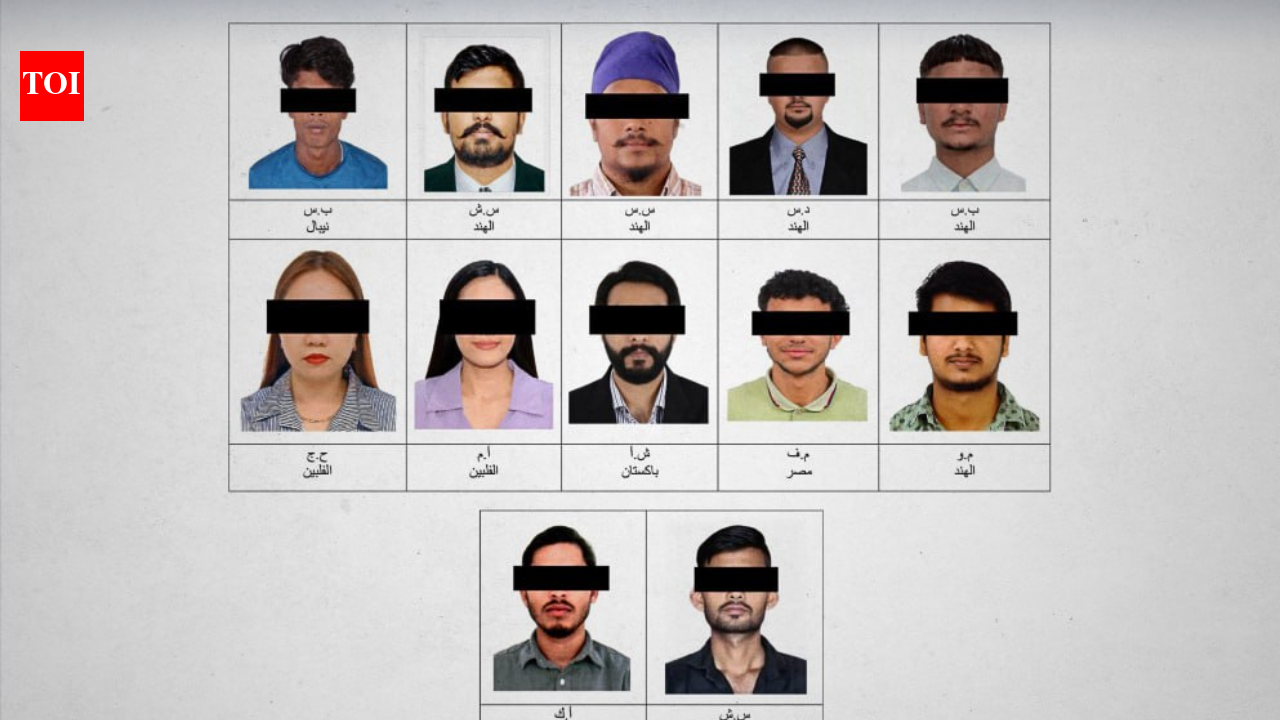
The UAE, grappling with continued strikes from Tehran, on Sunday ordered the arrest of 35 individuals, including 19 Indians, for allegedly publishing video clips on social media containing misleading and fabricated content using AI amid rising regional tensions due to the Israel-US-Iran war.The accused have been referred for an expedited trial, according to a report by the United Arab Emirates’ official news agency, WAM.The move comes as Iran’s strikes continue to keep key UAE cities, Dubai, Sharjah, and the capital Abu Dhabi, within their potential target range.The individuals of various nationalities have been charged with filming videos of incoming missiles and drones, including their passage and interception, and circulating them online with added commentary and sound effects that authorities said created panic and heightened public anxiety.The latest list includes 25 individuals of various nationalities, among them 17 Indians, booked under different sections. This is separate from the earlier case involving 10 people, including two Indians, who were named and ordered to be arrested on Saturday.According to a statement issued by attorney-general Hamad Saif Al Shamsi, the action followed intensive monitoring of digital platforms to curb the spread of fabricated information and artificial content aimed at inciting public disorder and undermining stability.“Investigations and electronic monitoring revealed that the defendants were divided into three groups that committed various acts. These included the publication of real clips related to current events, the fabrication of clips using AI, and the promotion of a state practising acts of military aggression while glorifying its leadership and military actions,” the statement said.The first group, comprising 10 accused, allegedly published and circulated authentic video clips showing the passage and interception of missiles in the country’s airspace or the resulting impact. They also filmed gatherings of people watching these developments and added commentary and sound effects suggesting active aggression, which authorities said could incite public anxiety and panic.Officials said such footage risked exposing the country’s defensive capabilities and enabling hostile accounts to push misleading narratives. This group includes five Indians, one Pakistani, one Nepali, two Filipinos and one Egyptian.The second group shared fabricated visual content generated using AI or recirculated footage of incidents from outside the UAE while falsely claiming they occurred within the country. The clips depicted synthetic scenes of explosions and missile strikes, often including national flags or specific dates to make the false claims appear credible.This group consists of seven individuals, five Indians and one each from Nepal and Bangladesh.The third group, comprising six accused, allegedly published content glorifying a hostile state and its political and military leadership, portraying its regional military aggression as achievements. Authorities said the posts praised leaders of that state and amplified propaganda narratives harmful to national interests.Five of the six accused in this group are Indians, while one is Pakistani.In addition, two other individuals, both Indians, are also facing charges for similar offences, the statement added.Earlier on Saturday, a report by the UAE’s official news agency WAM said the public prosecution had begun interrogating the 10 defendants and ordered their remand in custody.Attorney-General Shamsi said such acts constitute offences punishable by imprisonment of at least one year and a minimum fine of AED 100,000.“Such events have been exploited to disseminate misinformation intended to deliberately mislead the public while undermining national security, order and stability,” he said.Shamsi added that some of the accused circulated AI-generated footage falsely suggesting explosions, attacks on prominent landmarks, or massive fires with smoke rising across various parts of the UAE.“The incidents also involved exploiting children’s emotions in videos falsely implying security threats. Other clips claimed the destruction of military facilities within the country or attributed foreign incidents to locations in the UAE, with the aim of misleading public opinion and spreading anxiety,” he said.

[ad_2]

Source link

Major fire breaks out at Dubai International Airport after drone strike; flights suspended — Watch

[ad_1]

Major fire breaks out at Dubai International Airport after drone strike; flights suspended — Watch
Fire at Dubai International Airport

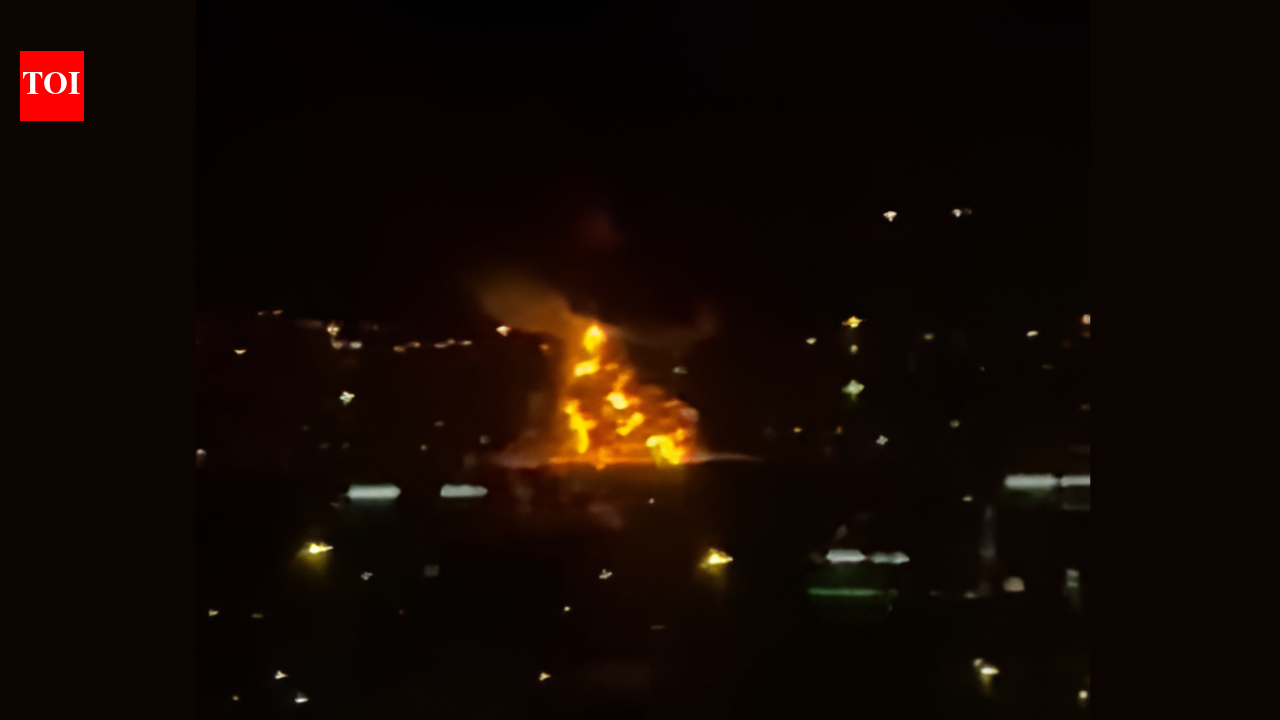
A major fire erupted at Dubai International Airport early Monday as Iran continued missile and drone attacks across Gulf states in retaliation for the war initiated by the US and Israel a fortnight ago, further rattling the region.Flight operations were temporarily halted amid the disturbance and heightened security concerns in the region.However, there was no injuries reported and the civil defence team “successfully contained” the fire, avoiding the chances to impact a fuel tank in the vicinity.Videos circulating after the drone attack show massive flames and thick smoke billowing from parts of the airport complex.The blaze reportedly followed Iranian drone strikes near one of the world’s busiest airports and a major global financial hub, with Tehran’s escalating attacks increasingly threatening key Gulf cities such as Dubai and Abu Dhabi.Meanwhile, regional powers including Qatar and Saudi Arabia condemned the Iranian strikes across the Gulf.

[ad_2]

Source link

Dhurandhar 2: ‘Dhurandhar: The Revenge’ advance booking Day 1: Ranveer Singh-led thriller earns a gross of over a massive Rs 22 crore | Hindi Movie News

[ad_1]

'Dhurandhar: The Revenge' advance booking Day 1: Ranveer Singh-led thriller earns a gross of over a massive Rs 22 crore
As excitement builds for ‘Dhurandhar: The Revenge’, the numbers speak volumes. Advance ticket sales have crossed 600,000 in India, bringing in over Rs 14 crore on Day 1. The premiere night was a blockbuster success, netting Rs 37 crore. With international markets buzzing, pre-sales are surpassing Rs 110 crore globally, hinting at a formidable challenge in the box office arena. Read on to know more in detail.

‘Dhurandhar: The Revenge’ is set to arrive in theaters in just two days. There is a massive hype around the film, which is already reflecting in its box office numbers. The advance booking numbers across India and overseas show that the film is set for a massive opening. After advance booking for its regular shows began in India recently, the movie has over 6 lakh tickets sold for Day 1.

Dhurandhar: The Revenge’ advance booking collection Day 1

According to the Sacnilk report, over 6 lakh tickets have been sold for Day 1 (Thursday). With that, it has earned a gross of Rs 14.39 crore. Meanwhile, including blocked seats, the advance booking number rises to Rs 22.9 crore.

Dhurandhar 2‘ advance booking breakdown (India)

For the premiere show (March 18), the movie has raked in Rs 37.11 crore through advance bookings. Meanwhile, for Day 1 (Thursday, March 19), the earnings have crossed Rs 22 crore. With that, the combined total currently stands at Rs 59.81 crore (with block seats). Mumbai, Delhi-NCR, Bengaluru, and Pune are the major cities contributing to this massive number. The movie is set to challenge major opening records, considering the buzz and the advance bookings for the film.

‘Dhurandhar 2’ overseas advance booking numbers

As per the report, the film has raked in around USD 5 million (Rs 46 plus crore gross) for its first weekend in North America, which includes approximately USD 2.5 million for the opening day and preview shows. The overall overseas collection is around Rs 60 crore for the opening weekend. As of now, the worldwide pre-sales have crossed Rs 110 crore gross.

More about ‘Dhurandhar: The Revenge’

Directed by Aditya Dhar, the film stars Ranveer Singh as an Indian spy who infiltrates the terror groups of Lyari Town in Pakistan as Hamza Ali Mazari. The movie also features Arjun Rampal, Sanjay Dutt, R Madhavan, Rakesh Bedi, and Sara Arjun. It is slated to hit theaters on March 19, 2026.

DISCLAIMER: The box office numbers and data in this article are compiled from diverse public and industry sources. All figures are approximate unless explicitly mentioned, offering a fair representation of the movie’s box office performance. These totals may change as official studio data is updated or as additional international market reports are finalized. This data is provided for informational and entertainment purposes only.

[ad_2]

Source link

Trump plans global coalition to escort ships in Strait of Hormuz amid Iran tensions: Report

[ad_1]

Trump plans global coalition to escort ships in Strait of Hormuz amid Iran tensions: Report

US President Donald Trump is preparing to announce the formation of an international coalition to escort commercial vessels through the Strait of Hormuz as tensions with Iran escalate.US officials told the Wall Street Journal that the White House’s announcement could come as soon as this week. It is not yet clear whether the escort missions will begin before a possible agreement between the Trump administration and Iran ends the ongoing conflict, which has claimed the life of Iran’s supreme leader, caused thousands of Iranian casualties, and resulted in the deaths of 13 US service members.Members of the administration have said the US Navy will support commercial vessels navigating the strait, a strategic waterway off Iran’s coast. Iran has restricted passage using sea mines and small vessels, a move that has put pressure on oil markets. Approximately 20 percent of the world’s daily oil supply passes through the Strait of Hormuz.In an earlier post on Saturday, Trump called on other nations to help, saying, “Many Countries, especially those who are affected by Iran’s attempted closure of the Hormuz Strait, will be sending War Ships, in conjunction with the United States of America, to keep the Strait open and safe.” He added that he hoped China, France, Japan, South Korea, Britain, and others would send ships to the area.His appeal to nations, however, brought no commitments.Later on Saturday, Trump posted again, urging, “The countries of the World that receive Oil through the Hormuz Strait must take care of that passage, and we will help — A LOT!” He added, “The US will also coordinate with those Countries so that everything goes quickly, smoothly, and well.”Since US operations began two weeks ago, global oil prices have surpassed $100 per barrel, and US gas prices have risen by more than 70 cents per gallon. Republicans in Congress have urged the White House to act to prevent a short-term economic shock at the start of an election year.Despite these pressures, Trump and some party members have resisted calls to end the war quickly, aiming to avoid longer-lasting supply issues.

[ad_2]

Source link