Breaking News
Man diagnosed with cancer during office health checkup asked to resign: Corporate manager shares shocking workplace experience

[ad_1]

Man diagnosed with cancer during office health checkup asked to resign: Corporate manager shares shocking workplace experience

Santosh Patole who worked as senior manager in a multinational company went for a mandatory health check up organised by his organisation in May 2025. His reports were haywire and when he consulted the doctor, he got the shock of his life-he had thyroid cancer. The tumour had been silently building up in his body since last one-and a half years. His treatment began and he went for an immediate surgery. Thankfully, his treatment was covered by the company’s medical insurance policy.However, while Santosh was processing the diagnosis and was undergoing a difficult line of treatment, he was accosted with another sock. His employer asked him to leave in July 2025. “It came as a shock to me! I did not know what went wrong as I had a strong professional track record with consistent outstanding performance, multiple promotions, bonuses, and recognition awards during my tenure.”

Image: Santosh Patole

Santosh, who was already struggling with the shock of his cancer diagnosis, was devastated by this new development. After taking three to four days to process everything, he finally wrote an email to the company asking them to state the reasons for his termination. When he did not receive any reply for almost a month, he sent a legal notice. “I was then called to the office and told that there were some anomalies in my work, but they were not able to give any concrete evidence or explanation. My question was: why was I not informed about it earlier, and was I the signing or approving authority? They did not have any concrete answers.”“All I wanted was for the company to take me back because I really needed the job at that point, and I was in a position to work. But despite my several pleas, they did not budge. When I posted on my LinkedIn that I intended to go on a hunger strike, they contacted me again—but only to stop the strike from happening. They were not willing to give me any written assurance.”

Image: Santosh Patole

“There seemed to be no end to my miseries. I went on the hunger strike, but on the third day I had to forcibly end it because of my deteriorating health.”However, his protest gained public attention and media coverage, and it highlighted a serious gap in workplace protection laws in India concerning medical discrimination against employees suffering from critical illnesses such as cancer.“It reflects a systemic gap in Indian labour and employment laws, where there is no clear statutory mechanism addressing discrimination against employees undergoing serious medical conditions such as cancer or other critical illnesses. While India has enacted the Sexual Harassment of Women at Workplace (Prevention, Prohibition and Redressal) Act, 2013 which created an internal complaint mechanism (POSH) to address workplace harassment, no similar institutional mechanism exists to address medical discrimination at workplaces.” says Santosh.

Image: Santosh Patole

Employees suffering from serious illnesses often face sudden termination, forced resignations, lack of grievance redressal mechanisms in private organizations which often arbitrarily take action. A serious legislative intervention is required to ensure job and social security for employees working in private sector.Santosh, despite struggling with joblessness and cancer is fighting another battle. He is putting in all his efforts to introduce a Private Member Bill addressing medical discrimination at workplaces in the Maharashtra Legislative Assembly and Parliament of India. He sincerely feels that legislators should raise the issue through a Zero Hour question to highlight the urgent need for policy reform. The proposed legislative approach seeks to establish a POSH-like institutional mechanism to: Prevent discrimination against employees undergoing serious medical treatment provide a structured grievance redressal process Ensure fair employment practices and protection of livelihood during medical crises dignity and health protection.

Image: Santosh Patole

Santosh Patole’s story highlights the misery of many white-collar professionals who spend years strengthening the backbone of corporations, only to be treated with ruthless indifference when they are no longer considered convenient. In many cases, employees are pushed out for cheaper replacements or at moments when they are most vulnerable—such as during serious medical emergencies. It is a troubling narrative that exposes the imbalance of power between corporations and their workers. Stories like Santosh’s raise important questions about accountability, employee protection, and corporate ethics—issues that policymakers and governments must address to ensure that dignity and security at the workplace are not just promises, but realities.

Workplace Anxiety Linked to Rising Health Issues Among Employees

[ad_2]

Source link

China Yj-12 Missile: Iran almost bought China’s supersonic ‘aircraft-carrier killer’: How it could have changed the Middle East war

[ad_1]

Iran almost bought China’s supersonic ‘aircraft-carrier killer’: How it could have changed the Middle East war

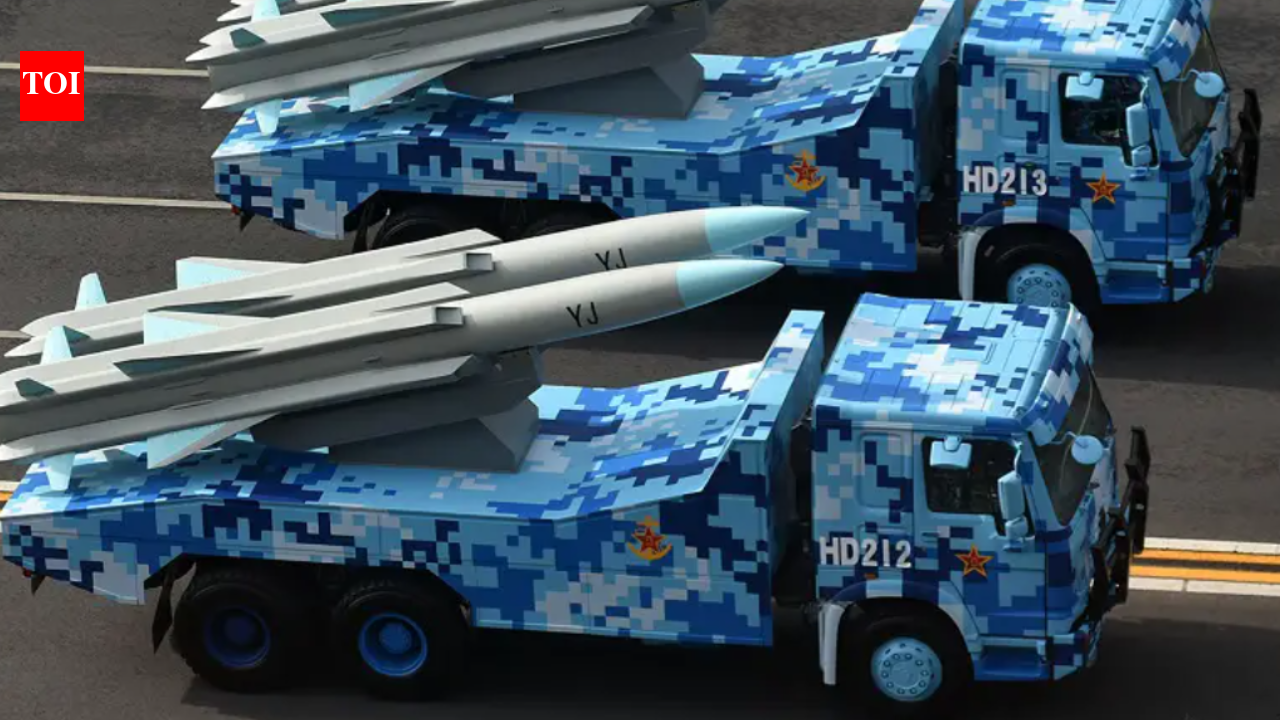
As the war between Iran, the United States and Israel intensifies across the Middle East, attention has turned to the weapons that could shape the naval balance in the region. During the intial phase of ‘Operation Epic Fury’ the United States used its naval might including two aircraft carriers to target key sites across Iran. One report suggested that just days before the conflict escalated, Iran had been close to acquiring one of China’s most feared anti-ship weapons, a missile described as an “aircraft-carrier killer”.

Iran War: Putin Steps In As China Demands Ceasefire After Trump’s New Threat To Tehran

According to reporting cited by the South China Morning Post, a deal involving the CM-302 anti-ship cruise missile, the export version of China’s YJ-12 was reportedly nearing completion before Beijing publicly rejected the claim. The report, originally published by Reuters, cited multiple sources who said the sale could have significantly strengthened Iran’s ability to threaten US naval forces in the Persian Gulf.China’s foreign ministry quickly denied the report, calling it “not true”. But the discussion has drawn renewed attention to the missile itself a supersonic weapon designed specifically to target large surface warships, including aircraft carriers.If Iran had acquired the missile and deployed it along its coastline, analysts say it could have changed the military balance in the narrow waters of the Gulf.

What is China’s YJ-12 ‘aircraft-carrier killer’?

The YJ-12 is a Chinese supersonic anti-ship cruise missile designed to strike large naval vessels at long range. Developed by the China, it entered service around 2015 and forms part of Beijing’s growing anti-ship strike capability.The missile is primarily air-launched, most notably from the Xian H-6K strategic bomber. Once released, the YJ-12 uses a booster and ramjet propulsion system to accelerate to speeds of up to Mach 3, allowing it to cover distances of roughly 400–500 km before striking its target. It carries a high-explosive fragmentation warhead of about 500 kg and relies on inertial navigation combined with active radar homing for terminal guidance.One of the missile’s defining features is its ability to perform high-speed evasive manoeuvres during the final phase of flight, making interception more difficult. Variants such as the YJ-12A can be launched from naval platforms, while export versions like CM-302 and CM-400AKG offer similar capabilities for foreign buyers.Designed primarily to attack large naval targets, the missile travels at extremely high speeds, reaching roughly Mach 3 to Mach 4 depending on the variant. That velocity dramatically reduces the time available for enemy warships to detect and intercept it.The missile is powered by a rocket booster that accelerates it after launch before a ramjet engine takes over, pushing the weapon to sustained supersonic speeds. During the final stage of flight, the missile can descend to very low altitude and perform sharp manoeuvres, making interception difficult.Its warhead — typically around 200 kilograms of semi-armour-piercing explosives is designed to punch through the hulls of large warships before detonating. Combined with its speed and manoeuvrability, this capability is what earned the missile the label “carrier killer”.

The CM-302 export missile and why Iran wanted it

The weapon reportedly discussed with Iran was not the standard Chinese military version but its export variant, known as the CM-302 anti-ship cruise missile.To comply with international arms-control rules, the export model has a shorter range than the Chinese domestic system. While the YJ-12 can reportedly strike targets up to 400–500 kilometres away, the CM-302’s range is believed to be around 280–290 kilometres.

Could such missiles actually sink a US aircraft carrier?

The idea of a single missile destroying a modern aircraft carrier is often exaggerated. The United States’ newest carrier, the USS Gerald R. Ford (CVN-78), displaces about 100,000 tonnes and is designed with extensive damage-control systems and compartmentalised hull sections to prevent catastrophic flooding.Even powerful anti-ship missiles would be unlikely to sink such a vessel with a single strike. Modern carriers are built to absorb damage, contain fires and continue operating after an attack.

Critical technologies on Ford-Class aircraft carrier

However, anti-ship missiles like the YJ-12 could still pose a serious threat. A successful hit might disable flight operations, damage radar systems or temporarily reduce combat capability. Military planners worry more about coordinated “saturation attacks”, where multiple missiles are launched simultaneously to overwhelm defences.US carriers rarely operate alone. They typically sail within a carrier strike group protected by destroyers, submarines and layered missile-defence systems designed to intercept incoming threats long before they reach the carrier itself.

[ad_2]

Source link

India ‘great partner’ in maintaining stable oil prices: US envoy Sergio Gor on Russian imports amid Iran war

[ad_1]

India 'great partner' in maintaining stable oil prices: US envoy Sergio Gor on Russian imports amid Iran war

NEW DELHI: The United States on Wednesday again hailed India as a “great partner”, praising New Delhi’s purchase of oil from its old ally Russia and crediting it as an effort to maintain stable oil prices around the world.The US envoy to India, Sergio Gor, wrote on X, “India has been a great partner in maintaining stable oil prices around the world. The United States recognizes ongoing purchases of Russian oil are a part of this effort.”He added, “India is one of the largest consumers and refiners of oil and it is essential for the United States and India to work hand in hand for market stability for Americans and Indians.”Earlier in the day, the United States repeated its stance on the temporary waiver “allowing” India to buy limited quantities of Russian oil, citing the evolving situation in the oil-rich Middle East. Washington said the waiver for New Delhi was aimed at easing pressure on global energy supplies during the crisis.White House press secretary Karoline Leavitt said the move was intended as a short-term measure to stabilise markets as disruptions linked to Iran and rising tensions in the region continue to affect supply routes.Responding to a question about the waiver issued last week, Leavitt said the decision reflected India’s earlier cooperation with Western sanctions on Russia. “They came to this decision because our allies in India have been good actors and have previously stopped buying sanctioned Russian oil,” she said. “So as we work to appease this temporary gap of oil supply around the world because of the Iranians, we have temporarily permitted them to accept that Russian oil and this Russian oil was already at sea.She added that the shipments involved crude that was already in transit and would not significantly boost Russia’s revenues. “It was already out on the water. So this short term measure, we don’t believe it will provide significant financial benefit to the Russian government at this time,” Leavitt said.The clarification comes as the administration of US President Donald Trump faces questions over the decision to ease restrictions months after imposing punitive measures on India for purchasing Russian crude.

[ad_2]

Source link

North Korea backs Iran’s supreme leader Mojtaba Khamenei, slams US-Israel for ‘destroying regional peace’

[ad_1]

North Korea backs Iran's supreme leader Mojtaba Khamenei, slams US-Israel for 'destroying regional peace'

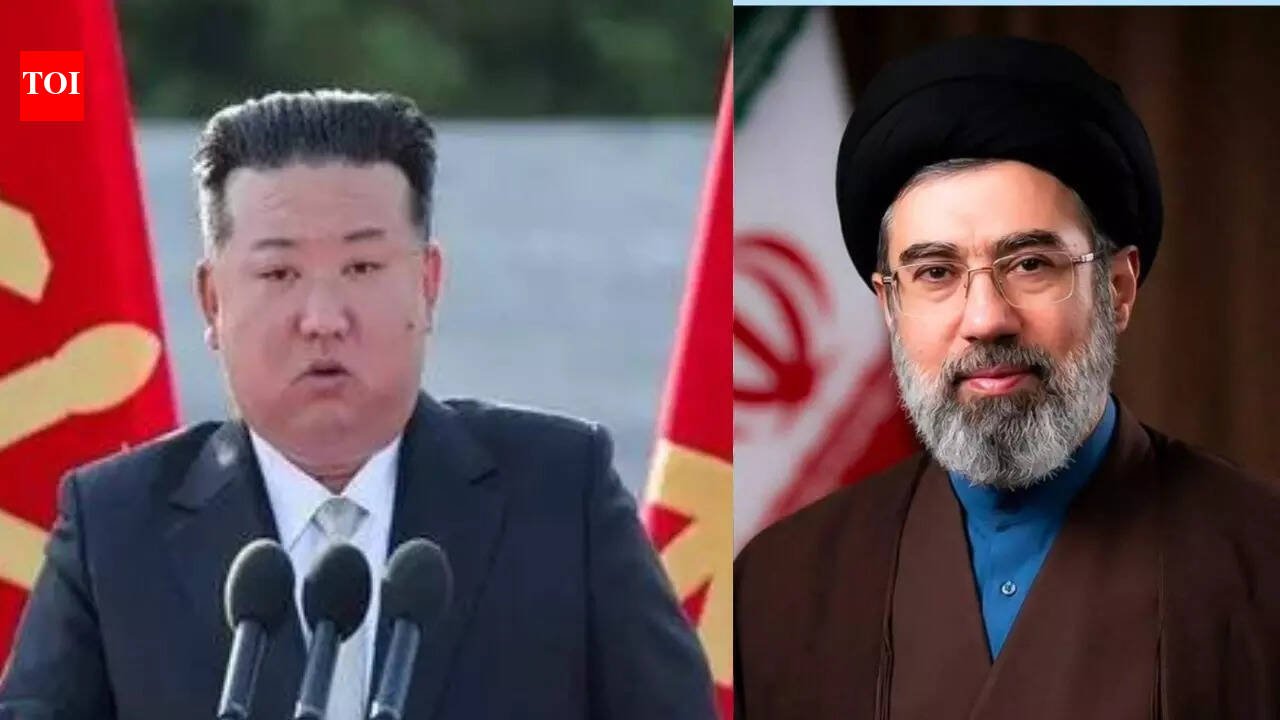
North Korea has expressed support for the appointment of Mojtaba Khamenei as the new supreme leader of Iran, while condemning what it described as the “illegal” military attack by the United States and Israel that killed Iran’s previous leader. A spokesperson for North Korea’s foreign ministry said on Wednesday that Pyongyang respected Tehran’s decision to appoint Mojtaba Khamenei, the son of the late Ali Khamenei.“Regarding the recent official announcement that the Iranian Assembly of Experts has elected a new leader of the Islamic Revolution, we respect the right and choice of the Iranian people to elect their Supreme Leader,” quoted Aljazeera, citing KCNA. The spokesperson also criticised the US and Israel for launching what it called an unlawful attack on Iran. “We express grave concern and strongly condemn the aggression of the United States and Israel, which, by launching an unlawful military attack against Iran, are undermining the foundations of regional peace and security and increasing instability in the international landscape,” the spokesperson said.The statement added that such actions undermined “the political system and territorial integrity of a country”, which was unacceptable and “must be condemned and rejected by the entire world.” The conflict began after a US-Israeli strike on February 28 that killed Iran’s supreme leader Ali Khamenei, triggering the ongoing war in the region. North Korea had earlier criticised the offensive, describing it as “gangster-like conduct”.Separately, North Korean leader Kim Jong Un oversaw another test-firing of strategic cruise missiles from the country’s newest destroyer, the Choe Hyon destroyer. During the launch, Kim spoke about the need to maintain and expand a nuclear deterrent. Aljazeera said he referred to the strategic task of “maintaining and expanding a powerful and reliable nuclear war deterrent”. The test marked the second missile launch from the destroyer overseen by Kim, who recently praised the move to arm the country’s navy with nuclear weapons.The United States has long sought to dismantle North Korea’s nuclear programme, while Pyongyang has argued that its weapons are necessary to deter potential threats from South Korea and its allies in Washington. In recent months, however, the administration of US President Donald Trump has indicated a willingness to revive high-level talks with North Korea, while Kim has suggested the two countries could “get along” if Washington recognised Pyongyang’s status as a nuclear power.

[ad_2]

Source link

‘Our hearts were shaking’: Tehran residents recall night of heaviest bombing since Iran war began

[ad_1]

‘Our hearts were shaking’: Tehran residents recall night of heaviest bombing since Iran war began

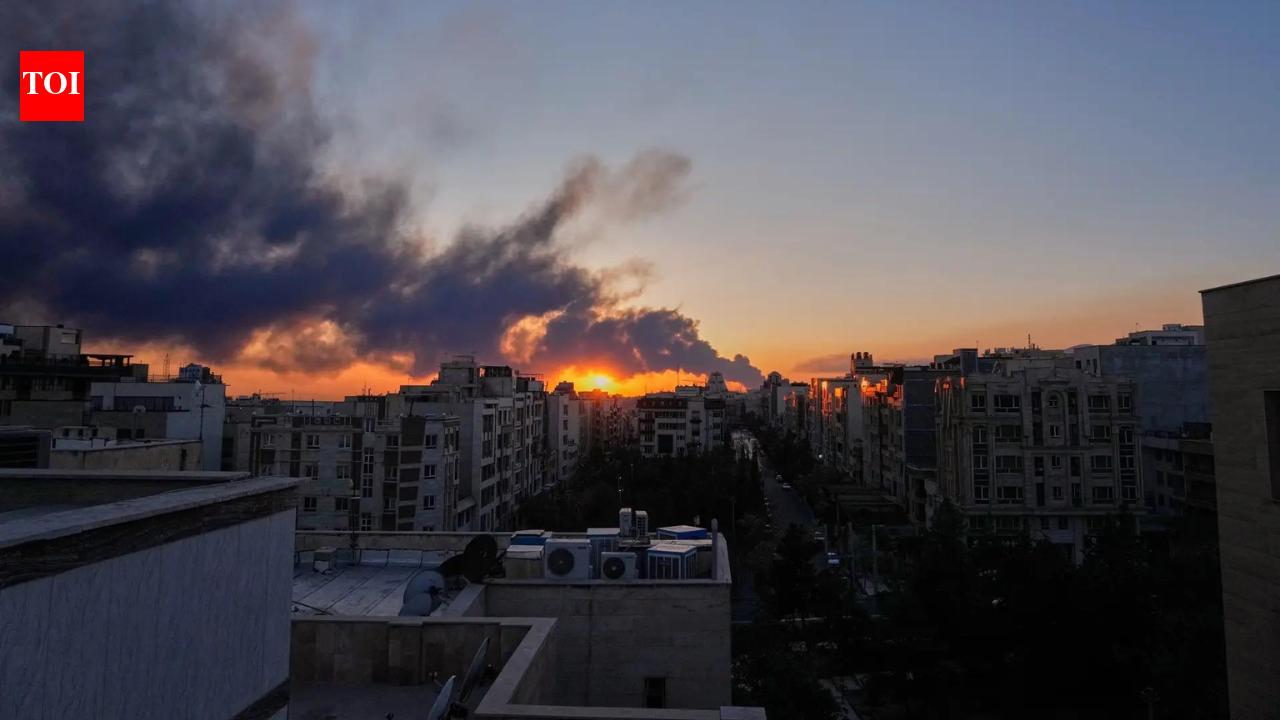
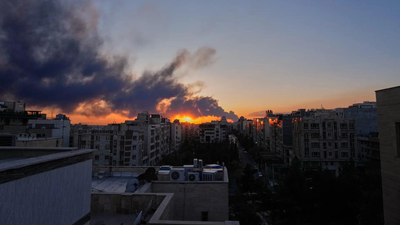
Residents in Tehran have described one of the most intense nights of bombing since the start of the war between Iran, the United States and Israel, recalling how explosions shook buildings and lit up the night sky as waves of strikes hit the capital.The conflict, which began with US–Israeli attacks on Iranian targets on February 28, has entered its second week with both sides escalating military operations across the region. In Tehran, civilians said the bombardment overnight into Tuesday was among the heaviest they had experienced since the fighting began.Israel-US-Iran war – follow live updatesSima, a 38-year-old resident of western Tehran, described the moment the strikes began. Speaking anonymously to Al Jazeera, she said the noise of aircraft and explosions lasted for long stretches.“It felt like tens of fighter jets were flying right above our heads for 15 minutes straight at first, then a few minutes of pause before the next rounds of strikes came in,” she said.“The ground and the windows and our hearts were shaking, but we took shelter in our bathroom and got through it.”According to reports, multiple Iranian cities were hit during the same wave of attacks, including Isfahan and Karaj. US Defence Secretary Pete Hegseth had earlier warned that Tuesday would be “our most intense day of strikes inside Iran”.Several residents said the bombardment briefly turned night into day. Bright flashes from the aerial attacks illuminated large parts of the city, prompting some people to rush to rooftops or balconies to record the strikes despite the danger.Others focused on finding somewhere safe in a city that lacks formal air raid shelters.Alireza, a 25-year-old living in central Tehran, said he kept the front door of his apartment unlocked throughout the night in case he needed to run quickly to the building’s underground parking area.“I’m going crazy with how many times I’ve had to communicate with friends and family in Tehran and other cities through endless phone calls and text messages to see where and what was hit,” he said.“There’s hardly any information in this internet shutdown.”Tehran residents say the absence of early warning systems has made the situation more frightening. Iran’s capital, like much of the country, does not have extensive civilian shelters or siren systems comparable to those in Israel. Many residents instead rely on basements, parking garages or interior rooms of their homes.The strikes in Tehran came as the war expanded across the wider Middle East. Iranian forces launched what state broadcaster IRIB described as the “most intense and heaviest” missile barrage of the conflict, targeting Israeli cities including Tel Aviv and Haifa.Iranian missiles and drones were also reported heading towards American and allied facilities across the Gulf. Air defences were activated in several countries, including Saudi Arabia and the United Arab Emirates, which said it intercepted multiple incoming threats.Meanwhile, the US military reported destroying 16 Iranian mine-laying boats near the Strait of Hormuz after warnings that Tehran could attempt to block the critical oil shipping route.

[ad_2]

Source link

Viral video shows UAE F-16 shoot down Iranian drone over Dubai beach

[ad_1]

Viral video shows UAE F-16 shoot down Iranian drone over Dubai beach
UAE F-16 firing missile at Iranian drone

Beachgoers in Dubai witnessed a dramatic moment up close as a fighter jet chased down and shot an Iranian drone right above them.According to reports, a UAE Air Force F-16 fired what appeared to be an AIM-9X Sidewinder missile to destroy the UAV, reportedly a Shahed-136 attack drone.

Turkey ‘Weighs F-16 Deployment’ To Northern Cyprus As Iran War ‘Reshapes’ Mediterranean Security

The Sidewinder is a heat-seeking air-to-air missile designed for close-range engagements.The location was said to be Dubai’s Al Mamzar Beach.In one of the footages, a person—presumably Indian or Pakistani—can be heard narrating the interception.“Just spotted live drones… one was intercepted, not this one,” he can be heard saying. When the F-16 appeared, it was initially mistaken for another drone before the person corrected the others.The fighter jet then pursued the UAV, fired the missile, and shot down the drone.“It’s been hit, wow! Live fight—this is a live fight, man, oh my God! This was insane, live action,” he added, before later assuring someone else not to worry as the “action is over.”Iran has launched attacks on several Gulf states hosting United States military bases in retaliation for the joint US–Israeli strikes on Iran that marked the beginning of the Middle East conflict on February 28. As a result, the UAE has also been drawn into the conflict.The Islamic Republic’s missiles and drones have targeted multiple locations across the Gulf, including sites in the UAE that host US forces, prompting widespread interceptions by regional air defence systems.

[ad_2]

Source link

Real Estate Investments: What are plotted developments and 10 tips for investing in this kind of real estate

[ad_1]

What are plotted developments and 10 tips for investing in this kind of real estate

Plotted developments have become one of the most closely watched areas in India’s real estate market. What used to be seen as a long-term, patient play is now attracting both end users and investors who want more freedom, lower costs of entry, and clearer land ownership. The increase in supply in new corridors, on the other hand, means that not every planned project will have the same result. In 2026, being disciplined about evaluations is more important than being excited.What are plotted developments?Plotted development, as the name suggests, is an area of land that has a planned, gated, or managed residential layout. This land is divided into smaller, legally approved plots for sale. In these areas the basic infrastructure is provided by the developers, like water, sewage management, and electricity, and individuals have the freedom to make homes as per their preference. Rahul Agarwal, Founder, Avani Ventures by RASA Group shared with Times of India ten useful investment tips that serious buyers should remember.1. Begin with clean paperworkLegal hygiene is always the first filter. Before looking at the potential for appreciation, investors need to make sure they have a clear title, the right land conversion if necessary, and all the necessary local approvals. In plotted developments, legal problems can stay hidden for years and only show up when the property is sold or built. If the paperwork is clear and can be checked, a slightly higher entry price is often fair.2. Look at the micro marketCity growth headlines can be distracting. Plot values move on hyper-local triggers. Look at road upgrades, nearby employment hubs, civic infrastructure, and the volume of competing supply within a few kilometres. Locations with multiple demand drivers tend to hold value better.

Image: Canva

3. Evaluate access qualityOn paper, a project may look close to a highway, but the last mile is what really matters for usability. Investors should go to the site and look at the approach roads, the access width, the traffic jams, and the potential right-of-way risks in the future. Bad last-mile connections can slow down both price discovery and the use of the product by end users.4. Prefer structured layouts over fragmented land parcelsOrganised plotted communities generally perform better than loosely cut land parcels. Defined internal roads, drainage lines, utilities, and open spaces make a real difference over time. They also make resale and financing easier. Unplanned layouts may look cheaper initially but often face friction later.5. Check development phasing and delivery disciplineNot all plotted projects move forward at the same speed. Investors need to know if the developer has a clear plan for how to build the project in phases, including internal roads, street lights, water systems, and defining the boundaries. Early delivery of infrastructure makes buyers more confident and helps the secondary market move.6. Look for real demandIn some corridors, planned launches are mostly based on what investors think will happen. A healthier sign is that people are interested in the end user, that residential areas are growing nearby, and that home construction is slowly picking up. Areas where homes start to be built usually see more stable long-term value growth than areas where people are just buying and selling homes for fun.7. Know the risk of future supplyOne of the most common mistakes is not thinking about how much land that competes with yours might come on the market. Nearby large undeveloped land banks can keep values from going up for years. To get an idea of how much supply pressure there will be in the future, investors should look at zoning patterns and ownership concentration in the nearby micro market.8. Check out the liveabilityEven investors who only want to make money can benefit from projects that are truly viable. Basic planning factors like drainage, tree cover, internal mobility, and utility readiness can affect how quickly a home sells. End users are the ones who ultimately determine how deep the plotted market goes, so projects that make living in the future more comfortable tend to do better.

Image: Canva

9. Be realistic about how long you can holdPlotted investments often take longer than ready apartments. Some new corridors move quickly, but many plots take longer to find their true value. Investors in 2026 should think about the medium to long term instead of expecting quick flips unless the project is in a proven high absorption zone.10. Keep a close eye on policy and infrastructure signalsDo not rely on announcements alone. Land values move when roads are actually built, utilities are laid, and industrial projects start taking shape. Visit the corridor, see the progress for yourself, and check whether timelines are being met. Locations where infrastructure work is visibly moving usually carry far less risk than those driven mainly by future promises. Plotted developments in 2026 offer genuine opportunity, but the easy gains phase is largely behind us. As the segment grows, results will depend more and more on the quality of the projects, the strength of the micro market, and the credibility of the execution, rather than on general excitement about buying land.For investors willing to do careful groundwork, plotted assets can still deliver a compelling mix of flexibility and long-term value. But the discipline needed today is more like evaluating institutional real estate than the opportunistic land buying cycles of the past. In the future, the people who make the most money from plotted investments will not be the ones who buy first, but the ones who do the best research.

[ad_2]

Source link
Oil ‘permission’: US repeats India ‘good actors’ claim, says ‘short term measure’ won’t benefit Russian govt

[ad_1]

Oil 'permission': US repeats India 'good actors' claim, says 'short term measure' won't benefit Russian govt

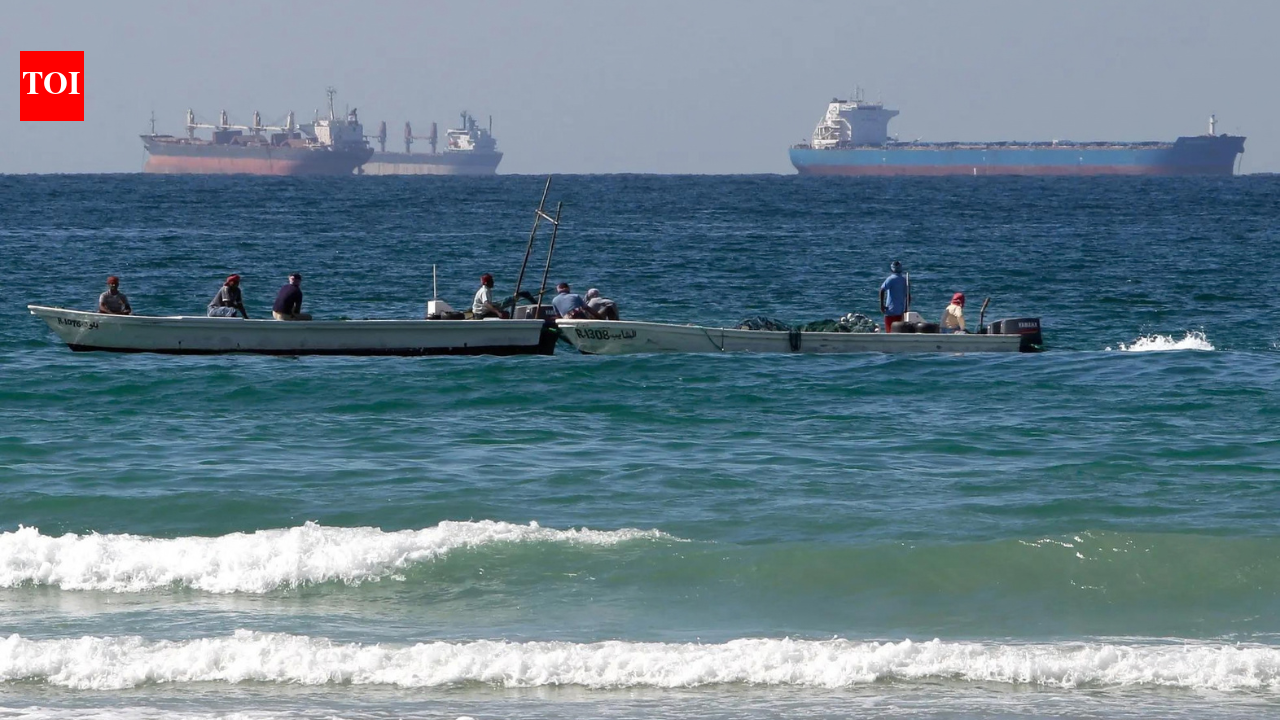
The United States said on Wednesday that its decision to allow India to buy limited quantities of Russian oil is a temporary step aimed at easing pressure on global energy supplies during the ongoing Middle East crisis.White House press secretary Karoline Leavitt said the move was designed as a short-term measure to stabilise markets as disruptions linked to Iran and tensions in the region continue to affect supply routes.Responding to a question on the waiver issued last week, Leavitt said the decision reflected India’s earlier cooperation with Western sanctions on Moscow.“They came to this decision because our allies in India have been good actors and have previously stopped buying sanctioned Russian oil,” she said. “So as we work to appease this temporary gap of oil supply around the world because of the Iranians, we have temporarily permitted them to accept that Russian oil and this Russian oil was already at sea.”She added that the shipments involved crude already in transit and would not meaningfully boost Russia’s revenues.“It was already out on the water. So this short term measure, we don’t believe it will provide significant financial benefit to the Russian government at this time,” Leavitt said.The clarification comes as the administration of US President Donald Trump faces questions over the decision to ease restrictions months after imposing punitive measures on India for buying Russian crude.Earlier, US Treasury Secretary Scott Bessent said Washington had agreed to allow Indian refiners to purchase Russian oil that was already loaded on ships and stranded at sea, describing it as a way to quickly inject supply into the market.“The Indians had been very good actors. We had asked them to stop buying sanctioned Russian oil this fall. They did,” Bessent said in an interview with Fox Business. “But to ease the temporary gap of oil around the world, we have given them permission to accept the Russian oil.”US Energy Secretary Chris Wright also described the step as a practical move to stabilise prices while markets adjust to disruptions in the region.“We have implemented short term measures to help keep oil prices down. We are allowing our friends in India to take oil that is already on ships, refine it, and move those barrels into the market quickly,” Wright wrote on X.Washington has made clear that the waiver is limited in scope. The US Treasury issued a 30-day authorisation allowing Indian refiners to purchase Russian crude that had already been loaded onto vessels before March 5, provided it is delivered to Indian ports by early April.Officials have repeatedly said the measure does not represent a shift in the US sanctions policy towards Russia. Instead, they argue it is a stop-gap aimed at keeping global oil flowing and preventing further price spikes as the conflict involving Iran threatens supply routes such as the Strait of Hormuz.

[ad_2]

Source link

Karur Stampede Case: Thalapathy Vijay says ‘I don’t have anything left other than politics’ amid major update in Karur Stampede probe | Tamil Movie News

[ad_1]

Thalapathy Vijay says 'I don’t have anything left other than politics' amid major update in Karur Stampede probe
Actor-politician Vijay’s emotional declaration of sacrificing everything for politics has ignited public debate. While some fans express concern and others question his narrative, his final film ‘Jana Nayagan’ faces delays. Meanwhile, Vijay is also navigating a CBI investigation, with his request for a 15-day postponement rejected.

Actor-politician Vijay has sparked widespread discussion after making an emotional statement about his political journey. The Tamil star, who recently stepped away from his acting career, spoke about the sacrifices he claims to have made to focus on politics.As reported by Filmibeat, during a recent interaction Vijay said, “I have left everything for politics.”The actor-politician further stated, “I don’t have anything left now, other than politics.” The comments come at a time when the star is already facing multiple challenges, including controversies surrounding his political career and developments related to his personal life.

Fans and netizens react to Vijay’s words

Vijay’s statement triggered a wave of reactions from fans and social media users. Many supporters expressed concern about the actor’s emotional condition as one fan wrote, “Not able to see my man like this . Better He could have stayed in cinema.”Another comment questioned the narrative surrounding sacrifice. The user wrote, “Sympathy card being played ? What happened to all his money ? Whom has he given that to ?.”Some reactions were also critical of the statement. One comment read, “I have given up everything” bro really? You’re not given up everything, everyone were given up on you..”At the same time several fans defended the actor’s commitment to public service. One supporter wrote, “When a man burns his bridges for a cause, that’s not sacrifice… that’s commitment. Leaving everything behind for people and politics takes courage. Respect.”

Final film ‘Jana Nayagan’ faces delay

Vijay’s final film ‘Jana Nayagan’ has also been facing delays. The film was originally expected to release earlier but has now been postponed. Many fans are eagerly waiting for the film’s release, seeing it as the star’s farewell to cinema. Some fans even referenced the film in their reactions online to Vijay’s recent statement. One comment read, “One Last Dance… One Last Movie… #JanaNayagan….”

CBI rejects Vijay’s 15-day request

Meanwhile, Vijay is also dealing with legal scrutiny related to the stampede incident in Karur. The case is currently being investigated by the Central Bureau of Investigation.The investigation team recently summoned the actor-politician for a third round of questioning. Vijay was initially asked to appear before investigators on March 10, 2026.However, the ‘Jana Nayagan’ actor had reportedly requested 15 days of time before appearing for questioning. According to recent reports from Filmi Beat, the CBI rejected this request but offered a shorter extension instead.According to reports, the agency has given Vijay five additional days and issued a fresh notice asking him to appear for questioning on March 15, 2026.Vijay had also asked investigators to conduct the questioning in Chennai or nearby locations, citing his election campaign schedule. The investigation team is yet to respond to that request.On the work front, Vijay’s ‘Theri’ was re-released recently and it did a decent box office business.

[ad_2]

Source link

‘Reh jaati hain yaadein’: Yuzvendra Chahal’s post goes viral – Watch | Cricket News

[ad_1]

'Reh jaati hain yaadein': Yuzvendra Chahal's post goes viral - Watch

NEW DELHI: India spinner Yuzvendra Chahal grabbed attention on social media after sharing an emotional post following India’s triumph in the ICC Men’s T20 World Cup 2026. Though Chahal was not part of the squad this time, he joined teammates during the celebrations and shared a nostalgic message online.Posting a video that showed Shivam Dube and Kuldeep Yadav joining him during the victory celebrations, Chahal wrote on X: “Zindagi mein kuch haseen pal yun hi guzar jaate hain, reh jaati hain yaadein aur yaar saath reh jaate hain. (Some beautiful moments in life pass by just like that, but the memories remain, and true friends stay with you).”

Yash Dhull Exclusive: Heart surgery, recovery and senior World Cup dream

The post reflected on the memories and friendships built through cricket.Chahal was part of the Indian squad that won the T20 World Cup in 2024. That moment made the latest triumph another proud moment for the team he once represented in the tournament.Following the victory, the Board of Control for Cricket in India (BCCI) announced a Rs 131 crore cash reward for the squad and support staff. According to to a report from news agency PTI, the reward will be shared among the 15 players, coaching staff and other support members who contributed to the successful campaign. Watch Yuzvendra Chahal’s celebration with Team India:It is understood that each player is expected to receive Rs 6 crore, while the remaining Rs 41 crore will be distributed among the support staff based on their roles. The amount is slightly higher than the Rs 125 crore reward given to the team led by Rohit Sharma after the 2024 title win.BCCI secretary Devajit Saikia congratulated the team and said, “The Board congratulates the players, support staff and selectors once again on this historic achievement and wishes them continued success in the future.”India sealed the title with a 96-run victory over New Zealand national cricket team in the final at Narendra Modi Stadium in Ahmedabad on Sunday. The win made India the first team to successfully defend the T20 World Cup and the first to win the tournament three times.

[ad_2]

Source link