Breaking News
OpenAI CEO Sam Altman makes it clear to employees at Townhall: You do not get to choose how…

[ad_1]

OpenAI CEO Sam Altman makes it clear to employees at Townhall: You do not get to choose how…
OpenAI CEO Sam Altman asserted employees have no say in US military operations, even after a Pentagon deal for classified AI deployment. The move followed rival Anthropic’s blacklisting, sparking internal and external criticism over timing and optics. Altman emphasized the Pentagon respects OpenAI’s safety measures but retains operational control, while also acknowledging competitors might offer fewer restrictions.

OpenAI CEO Sam Altman had a blunt message for his employees this week: when it comes to US military operations, the company simply does not get a vote. “So maybe you think the Iran strike was good and the Venezuela invasion was bad,” Altman told staff at an all-hands meeting on Tuesday, according to a partial transcript reviewed by CNBC. “You don’t get to weigh in on that.”The meeting came four days after Altman announced, late on a Friday evening, that OpenAI had struck a deal with the Pentagon to deploy its AI models on classified networks—a deal that landed just hours after rival Anthropic was formally blacklisted by the Department of Defense and hours before the US and Israel launched strikes on Iran.

OpenAI’s Pentagon deal drew immediate backlash—inside and outside the company

The timing could not have been more loaded. Anthropic had just been designated a “supply chain risk to national security” by Defence Secretary Pete Hegseth—an unprecedented label for an American company—after it refused to drop guardrails against AI being used for mass domestic surveillance of Americans or fully autonomous weapons. OpenAI stepped in almost immediately, announcing its own classified deployment deal before the dust had even settled.The optics weren’t great. Altman himself admitted as much. “We shouldn’t have rushed to get this out on Friday,” he said in a post on X over the weekend. “The issues are super complex, and demand clear communication.” In the all-hands, he acknowledged it looked “opportunistic and sloppy,” according to WSJ reporting on the meeting.

‘Biggest Mistake Young People Make…’: OpenAI CEO Sam Altman Shares Blunt Take On AI At IIT Delhi

The backlash was real. Some OpenAI employees publicly criticised the move. Dozens had, just days earlier, signed an open letter standing in solidarity with Anthropic’s red lines. The AI safety community was alarmed. And critics pointed out that OpenAI’s contract language, while it included prohibitions on domestic surveillance and autonomous weapons in principle, ultimately deferred to the legal framework—a framework that, post-Snowden, many argue has already been stretched to accommodate mass surveillance programs like PRISM.

Altman says Pentagon respects OpenAI’s safety stack—but operational calls belong to Hegseth

Still, Altman drew clear lines at Tuesday’s meeting. He told employees that the Pentagon respects OpenAI’s technical expertise, wants input on where its models are a good fit, and has agreed to let the company build and maintain the safety stack it deems appropriate, according to a person familiar with the matter who spoke to CNBC on condition of anonymity. Cleared OpenAI engineers will be embedded with government teams, and safety researchers will remain in the loop.But Altman was equally clear that day-to-day military decisions are not OpenAI’s to make. Secretary Pete Hegseth runs those calls—not Sam Altman.He also addressed a competitive reality that few at the company wanted to hear. “I believe we will hopefully have the best models that will encourage the government to be willing to work with us, even if our safety stack annoys them,” Altman said. “But there will be at least one other actor, which I assume will be xAI, which effectively will say ‘We’ll do whatever you want.'”

Altman now eyeing NATO classified networks as OpenAI doubles down on defence

And OpenAI is already looking beyond the Pentagon. The WSJ reported that Altman told staff the company is now exploring a contract to deploy on all NATO classified networks—a move that would make OpenAI a foundational AI provider for the Western military alliance. Apple received NATO clearance for its consumer devices just last month, but a full classified deployment of frontier AI models would be a different proposition entirely.Meanwhile, Anthropic’s Claude was reportedly used in the Iran strikes over the weekend and in the January operation that resulted in the capture of ousted Venezuelan leader Nicolás Maduro—suggesting the classified handoff from Anthropic to OpenAI and xAI is still very much a work in progress.Altman has said he reiterated to the Pentagon that Anthropic should not be labelled a supply chain risk, and that the same deal terms should be made available to all AI companies. Whether that offer leads anywhere—or whether the standoff ends in court—remains to be seen.

[ad_2]

Source link

Rupee hit by Middle East crisis: Currency falls to new low of 92.18 against US Dollar

[ad_1]

Rupee hit by Middle East crisis: Currency falls to new low of 92.18 against US Dollar

Rupee tumbled 69 paise on Wednesday, sliding to hit a record low of 92.18 against the US dollar amid surging oil prices and a pullback from riskier assets. Analysts have cautioned that the currency could remain under strain until tensions in the Middle East subside.Ongoing tensions in the Middle East have sent shockwaves through global markets, strengthening the dollar and driving crude oil to around $85 per barrel. These developments have pushed inflation fears higher and posed risks for economies like India that rely heavily on energy imports.So far this year, rupee has already lost more than 2%, after shedding almost 5% in 2025. Although a recent US-India trade deal briefly boosted foreign inflows and provided some relief, the resurgence of conflict across the Middle East quickly erased these gains. The currency had suffered significant losses earlier this week. On Monday, it dropped 41 paise to settle at 91.49 against the dollar, following intensified US and Israeli attacks on Iran. According to forex traders, Rupee was under pressure due to massive selling in domestic equity markets and withdrawal of foreign funds. Meanwhile, Dalal Street was also trading in red. In early trade, Nifty50 fell below 24,400, standing at 24,380.45 at 9:16 AM, down 485 points or 1.95%. BSE Sensex dropped 1,644 points, or 2.05%, to 78,594.94, reflecting investor concerns over escalating Middle East tensions and the widening US-Israel-Iran conflict. Global financial markets moved into risk-off mode as concerns over rising inflation rattled stocks and bonds across the world.“Global equities slid as disruptions to Middle East energy supplies threatened to reignite price pressures. Crude oil gained around 5 per cent, while European wholesale natural gas surged a punishing 40%,” said Devarsh Vakil, Head of Prime Research at HDFC Securities. “Prolonged tensions among the United States, Israel, and Iran are mounting pressure on India across its current account, inflation outlook, and currency stability. Elevated crude prices stand to raise the country’s import bill, widen its current account deficit, weaken the rupee, stoke inflation, and trigger foreign capital outflows,” the expert further told ANI.

[ad_2]

Source link

World’s largest scorpion from India looks terrifying at 9 inches long but is shockingly harmless |

[ad_1]

World’s largest scorpion from India looks terrifying at 9 inches long but is shockingly harmless

Scorpions are creatures that can make anyone stand frozen after a single glance. These creatures look intimidating, with their spiked tails and large pincers. However, it is interesting to note that not all scorpions are harmful. The giant forest scorpion is a prime example of a harmless scorpion. These scorpions can grow up to nine inches in length, almost the size of a standard ruler. Experts have noted that the venom of the scorpions is mild and is used to hunt insects, not humans. In fact, people consider them pets too. These scorpions have been around since before the dinosaurs, making them ancient creatures. These ancient creatures have come up with some incredible adaptations to survive in their environments. These scorpions glow under ultraviolet light, have an intricate mating dance, and use their pectines to sense their surroundings. There is more to scorpions than meets the eye, and their behaviour is a testament to their complex life.

World’s largest scorpion from India hunts in the dark and is kept as a pet

Scorpions are creatures that can make people stand frozen by simply looking at them. These creatures are very scary, especially because of the spikes at the end of their tail and the large pincers they have. However, not all scorpions are scary, and the giant forest scorpion is a clear example of this. It has the ability to grow up to nine inches long, almost the size of a standard ruler. It would be expected that such a large creature, especially an arachnid, would be very aggressive, but it seems that these creatures, despite their size, are very docile. It has even been noted by experts that the venom of the giant forest scorpion is very mild and is only used for hunting insects, not for harming humans, and people even keep them as pets. These scorpions are native to India and usually inhabit tropical forests. They do not always stay in their own burrows. Experts say that they often occupy crab holes, termite mounds, and rat burrows. Giant forest scorpions are nocturnal and spend their nights searching for insects and other small prey. These scorpions have been around since before the dinosaurs. Despite this, they have managed to evolve some amazing adaptations. They have the ability to glow in the dark, have an intricate mating dance, and have pectines to sense vibrations and chemical changes in their environment. There is a lot more to these scorpions than what the eye can see, and this is reflected in their behavior.

How the giant forest scorpion senses its surroundings at night

One distinctive feature of the giant forest scorpion is that it has pectines. These comb-like features on the underside of the scorpion’s body may look aesthetically pleasing, but they are vital to its survival. These features help the scorpion detect vibrations, chemicals, and its surroundings. These features help the scorpion make up for its very poor eyesight. The hairs on its body also help the scorpion detect movements and obstacles. Experts have said that this scorpion is very aware of its surroundings because of these features and its hairs.

How the giant forest scorpion balances caution and care in its world

It may sound strange, but the giant forest scorpion is considered one of the most docile scorpion species. It defends itself when threatened, usually using its claws first and only resorting to its stinger if necessary. Its venom is rarely dangerous to humans, which is why some enthusiasts keep it as a pet. Observing its slow and deliberate movements, one can see a calmness and confidence that is unusual for such a large arachnid. Its gentle behaviour makes it fascinating to watch, despite its fearsome appearance.Giant forest scorpions have remarkable mating behaviours. Male scorpions reportedly perform an elaborate dance before copulation. They grip the female’s claws and move together across the ground to decide where to deposit the sperm sac. The female carries her young until they are ready to survive on their own. Observing these behaviours, it becomes clear that even creatures with intimidating looks have a surprisingly complex social life.

[ad_2]

Source link

Rashmika Mandanna’s sindoor and mangalsutra grab attention post-wedding to Vijay Deverakonda |

[ad_1]

Rashmika Mandanna's sindoor and mangalsutra grab attention post-wedding to Vijay Deverakonda

After tying the knot last month, Rashmika Mandanna was seen showing off her mangalsutra (thali) and sindoor as she walked hand in hand with her husband, Vijay Deverakonda. The couple had just returned from a visit to Vijay’s native village in Telangana.Ever since their wedding on February 26 in Udaipur, the newlyweds have been stealing the spotlight with their loved-up appearances and PDA filled outings.

Rashmika Mandanna and Vijay Devarakonda’s style

The actress kept up with bridal colours, donning a beige printed saree with a striking red border. She styled it by wearing her hair in long, soft curls and a set of gold chains layered along with her mangalsutra. Vijay, on the other hand, coordinated his look by opting for a white floral print kurta paired with white pyjama.

Post-wedding rituals

Soon after getting married in Udaipur, Rashmika and Vijay performed a Satyanarayana Swamy Vratham and held a gruhapravesam (housewarming ceremony) at their newly built home in Thummanpet. The couple who wed in a traditional nuptial, stuck to tradition and customs as they began their married life.

Tirumala Tirupati Devasthanams temple

Up until their wedding, the couple and co-stars kept their public spottings to the minimum. However, since tying the knot, the two have been inseparable, while also enjoying marital bliss. After returning from Udaipur, they also visited the Tirumala Tirupati Devasthanams temple in Hyderabad, where they distributed sweets and shared their happiness with other devotees, the media and their fans.

Wedding reception

The wedding celebrations are set to continue with a grand reception in Hyderabad on March 4. However, the couple has decided to keep the event strictly invitation-only due to security reasons..

Rashmika Mandanna and Vijay Deverakonda Spark Buzz at Udaipur Airport

[ad_2]

Source link

World Cup exit sparks row in Pakistan cricket: Mohammad Amir blasts PCB over PKR 50 lakh fine on players | Cricket News

[ad_1]

World Cup exit sparks row in Pakistan cricket: Mohammad Amir blasts PCB over PKR 50 lakh fine on players

Former Pakistan fast bowler Mohammad Amir has criticised the Pakistan Cricket Board (PCB) after reports that the board fined players following the team’s exit from the Super 8 stage of the 2026 T20 World Cup. According to media reports, the PCB imposed a fine of PKR 50 lakh on each member of the squad for not meeting performance expectations in the ICC event. The reported fine was not linked to discipline but to results. Pakistan won their final Super 8 match against Sri Lanka, but the victory margin was not enough to go past New Zealand’s net run rate, leading to elimination. Earlier, their match against New Zealand was washed out and they also lost narrowly to England. Speaking on the Pakistani show Haarna Mana Hai, Amir criticised the PCB’s decision and urged chairman Mohsin Naqvi not to target only players. He said selectors and administrators should also be held responsible and even face stricter penalties. “If fines are the solution, apply them to everyone — from selectors to the administration. Players weren’t forced at gunpoint. Hold selectors accountable for wrong combinations. Double the fine for them. Stop scapegoating players. This isn’t the real solution. Why do players have to suffer all the time?” Amir said. Amir also questioned whether all players should be fined, mentioning Sahibzada Farhan, who set the record for most runs in a single T20 World Cup edition with two centuries, and Fakhar Zaman, who played only two matches. “If you can’t pick the right combination, the ones who selected the squad and chalked out the plans must answer. Will you fine Fakhar Zaman as well, who played just two games? What about Sahibzada Farhan?” he asked. He added that if the PCB is unhappy with certain players, leaving them out of the team would send a stronger message than financial penalties. Amir said players who underperform should be asked to prove themselves in domestic cricket for at least two years before being considered again. “Fines aren’t the solution. I’ve said it from day one — invest in domestic cricket. That is where you will find quality players. If you are angry with someone, don’t fine them; drop them and tell them to perform consistently for two years in domestic cricket. The biggest punishment for a player is being left out of the team,” he added.

[ad_2]

Source link

Flames, black smoke rise near US Consulate in Dubai after drone strike; no injuries reported — watch video

[ad_1]

U.S. Embassy In Kuwait 'BOMBED' By Iranian Forces; Explosion, Black Smoke After Drone Strike

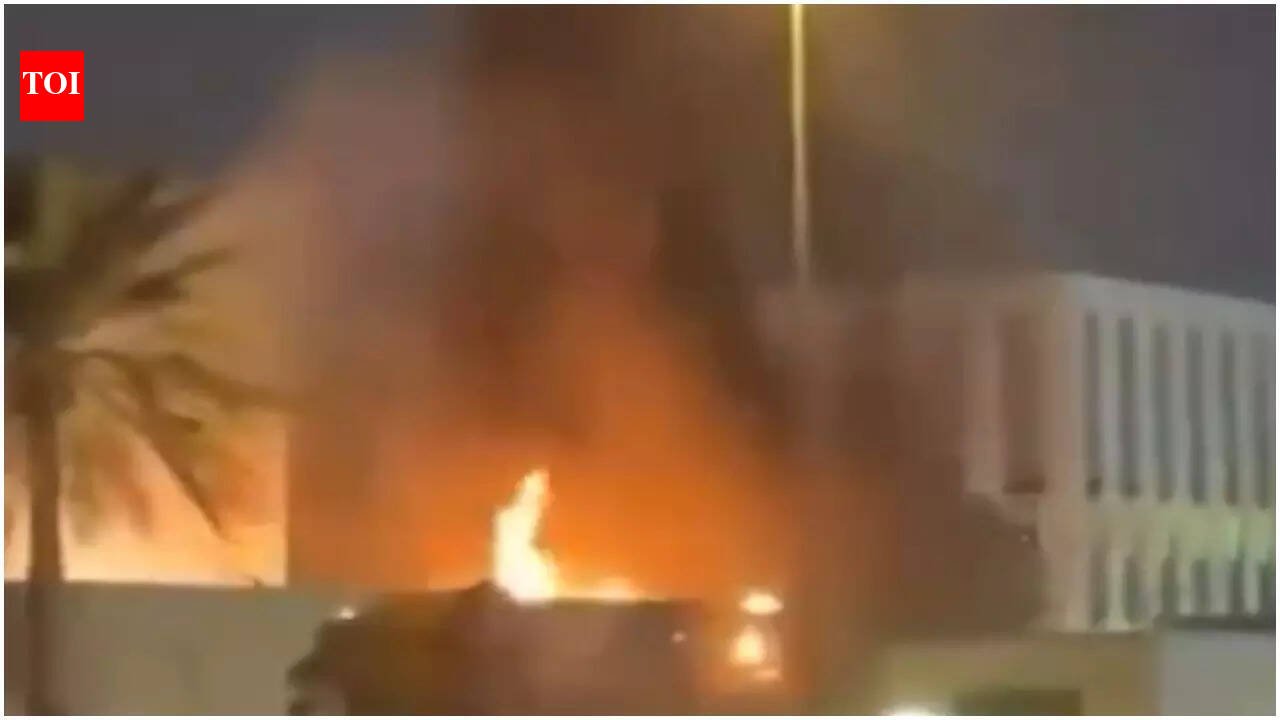
Authorities have put down ‌a limited fire in the vicinity of ⁠the US consulate in Dubai due to a drone strike, Dubai’s media office ⁠said on Tuesday.A US official and Dubai’s government media office told the Wall Street Journal that a drone struck the parking lot of the consulate in Dubai.

U.S. Embassy In Kuwait ‘BOMBED’ By Iranian Forces; Explosion, Black Smoke After Drone Strike

Several Footages are being circulated on social media, showing black smoke near the consulate. Dubai’s government told the Journal that it had contained the fire.“Emergency teams responded immediately,” the media office said. “No injuries have been reported.”

‘Iran hiding behind missiles’

State secretary Marco Rubio said that Iran is hiding behind these missiles and drones and gave an indirect warning that under Trump a country which has “terroristic” regime will not get nuclear weapons. They are hiding behind these missiles and hiding behind these drones. They wanted to reach a point where you couldn’t touch them and then they could do whatever the hell they wanted with their nuclear program — and there was no way in the world that this terroristic regime was going to get nuclear weapons. Not under Donald Trump’s watch.”

UAE retains its rights to self defence

The United Arab Emirates reaffirmed that it has not taken any decision to alter its defensive posture in response to the repeated Iranian attacks. “The UAE reiterates that it is not a party to this war and has not permitted the use of its territory, territorial waters, or airspace for any attack against Iran, consistent with its long-standing policy of good neighborliness, de-escalation, and its firm commitment to the Charter of the United Nations,” the foreign ministry said in a tweet. “Furthermore, the UAE underscores that it retains its legitimate right to self-defense, as recognized under international law and the Charter of the United Nations. The UAE further stresses the importance of journalistic responsibility and the need to rely on official, credible sources before publishing or circulating inaccurate or misleading reports,” it added.WhatsAppAuthorities in Dubai confirmed earlier in the day that sounds heard in various areas across the city were the result of air defence interception operations.The relevant Dubai teams continued to closely monitor the situation and were taking all necessary measures to ensure public safety.The UAE Ministry of Defence (MoD) announced that UAE air defence systems intercepted 11 ballistic missiles and 123 drones today, while one missile landed within the country’s territory without causing any human casualties.The Ministry stated that since the beginning of what it described as the blatant Iranian aggression, a total of 186 ballistic missiles was detected as launched towards the UAE. Of these, 172 missiles were destroyed, 13 fell into the sea, and one missile landed on the country’s territory.MoD added that 812 Iranian drones were detected, of which 755 were intercepted, while 57 fell within the country. It also reported that eight cruise missiles were detected and destroyed.

[ad_2]

Source link

‘We are getting signals’: Russia says India hints ‘renewed interest’ in more crude imports amid Iran crisis

[ad_1]

‘We are getting signals’: Russia says India hints ‘renewed interest’ in more crude imports amid Iran crisis

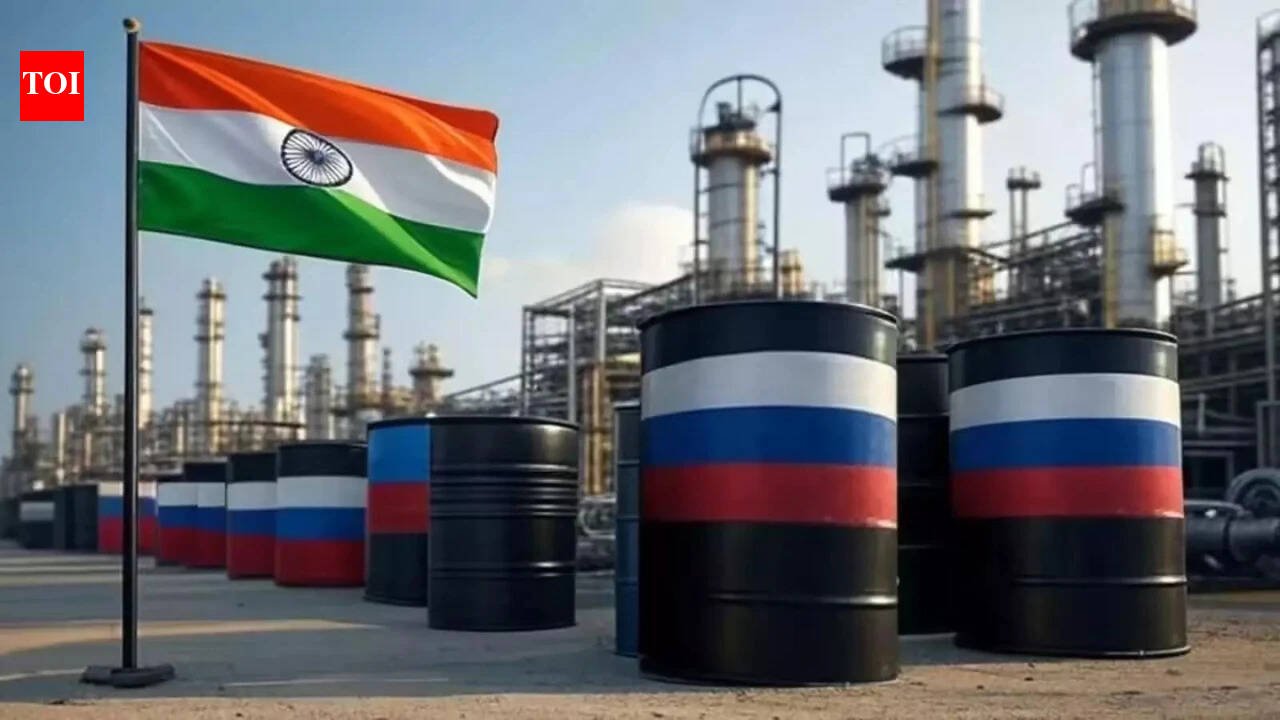
Russia on Tuesday claimed that India has signalled “renewed interest” in importing larger volumes of Russian crude oil as disruptions mount in global energy supplies following the closure of the Strait of Hormuz after US and Israeli strikes on Iran.The Strait of Hormuz, the world’s most critical oil shipping chokepoint, has been facing disruptions after Iranian actions in response to the strikes.

Moscow sees fresh demand from India

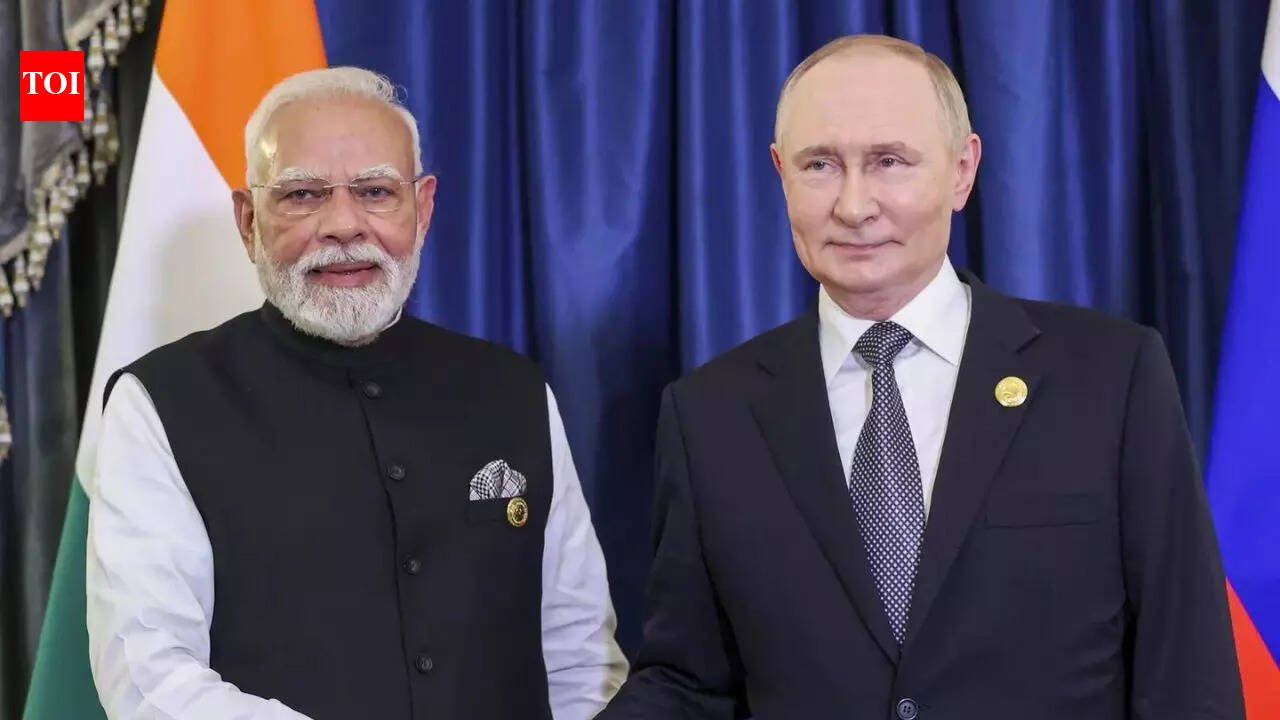
“Yes, we are getting signals of renewed interest from India,” Russian deputy Prime Minister Alexander Novak told state-run Rossiya 1 TV on the sidelines of an event in Moscow, according to news agency PTI.

US-ISRAEL-IRAN WAR: How Will It Impact India’s Oil, Trade & Air Travel| EXPLAINED

Novak, who oversees Russia’s energy sector, also did not rule out the possibility that the European Union could reconsider its decision to curtail imports of Russian hydrocarbons in view of the unfolding energy crisis.Nearly a fifth of the world’s oil supply and a significant share of liquefied natural gas exports pass through the narrow waterway linking the Persian Gulf with global markets. Any prolonged restriction on traffic threatens to disrupt supplies to major importers such as India, China and Japan, and could push up global crude prices.

Discounts to Asian buyers may narrow

According to Russia’s NTV channel, owned by energy giant Gazprom, the escalation of hostilities and Iran’s strikes on oil and gas infrastructure in Gulf countries could help Moscow reduce the “deep discounts” it has been offering to Asian buyers, including India.Russia has been India’s largest crude supplier in recent months, although the gap with Saudi Arabia narrowed earlier this year. Russian supplies to India stood at a little over 1 million barrels per day (mbd) in February, compared with 1.1 mbd in January and 1.2 mbd in December.Saudi Arabia emerged as a close second in February, with supplies rising 30 per cent to over 1 mbd, the highest import level from the kingdom in nearly six years, as per data from Kpler.

India monitoring Gulf crisis closely

Amid the escalating crisis, Russia has indicated it is ready to support India with energy supplies in case of disruptions arising from the Middle East tensions, Reuters reported.

Crude oil strategy

Iran has targeted oil refineries and production sites across the region in retaliatory strikes and closed the Strait of Hormuz for commercial activities, with its Islamic Revolutionary Guard Corps warning that any ship passing through could be set on fire.India, however, has sought to reassure markets about its preparedness.Petroleum and natural gas minister Hardeep Singh Puri said on Tuesday that the country has sufficient reserves of crude oil and petroleum products to manage short-term disruptions.“The trilemma of energy availability, affordability and sustainability continues to guide India’s approach, focused on meeting the energy requirements of our citizens,” Puri told the media.

Adequate stocks, diversified sourcing

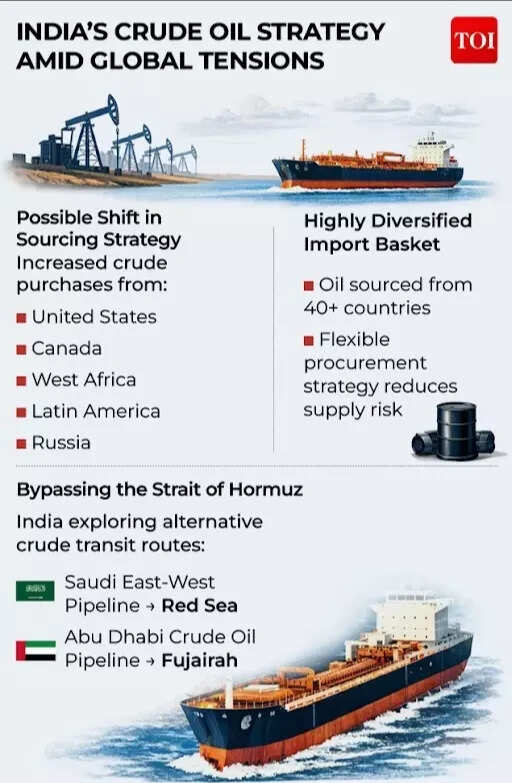
According to ANI, India holds about 25 days’ worth of crude oil and 25 days’ worth of petrol and diesel stocks, amounting to roughly eight weeks of total inventory. Only about 40 per cent of India’s crude imports transit through the Strait of Hormuz, while the remaining 60 per cent comes from other sources.Also read| India’s energy security exposure to Middle East: How much oil, LPG, LNG reserves do we have?Indian energy firms continue to import Russian crude under existing contracts, providing an additional buffer.Nearly 2.5–2.7 mbd of India’s crude imports transit the Strait of Hormuz, largely sourced from Iraq, Saudi Arabia, the UAE and Kuwait. With cargo movements from West Asia disrupted, Indian refiners have started exploring alternative sources.The ministry of petroleum and natural gas has set up a 24×7 control room to monitor fuel stocks and supply positions nationwide, and public sector oil marketing companies are maintaining adequate inventories.Government sources said India’s priorities remain uninterrupted fuel availability, protection of consumer interests and the well-being of nearly one crore Indians living and working in the Gulf region.

[ad_2]

Source link
Faisal Shaikh: The 50’s Mr Faisu aka Faisal Shaikh all set to get married; Adnaan Shaikh confirms the news

[ad_1]

The 50's Mr Faisu aka Faisal Shaikh all set to get married;  Adnaan Shaikh confirms the news

One of the most popular social media influencers, Faisal Shaikh, popularly known as Mr Faisu, has been juggling back-to-back shows and projects. Now, after gaining immense fame and success in his career, the actor is reportedly preparing to step into a new chapter in his personal life. According to media reports, Faisal is all set to get married. It has also been reported that the wedding might take place in July.Although he has not made any official announcement yet, the news has already created a buzz among fans, who are excited to know more about this new chapter in his life.As soon as the news came out in the media, it quickly went viral amongst fans. As the news spread like wildfire, paparazzi quizzed Adnaan Shaikh about the wedding reports. He replied to the question and confirmed the buzz regarding Faisu’s wedding. He said, “Faisu is getting married this year, but the date is not yet confirmed.”For the uninitiated, Mr Faisu is currently seen in The 50 and is rumoured to be the winner of the show. Before his rise to fame, Mr Faisu grew up helping his father run a small nightie business. He started working at the age of 21. Recalling his struggles, he once said, “I grew up helping dad run a small nightie business. The work was demanding and the pay was too low. So at 21, I got a job as a salesman on Linking Road. For Rs 50 a day, I spent 9 hours in the heat & threw myself at passersby to buy clothes.Despite the hardships, he never gave up on his dreams. He even started making videos on social media on a daily basis. Speaking about this phase in his life, he shared, “But I didn’t have time to wallow—I found a new job and added another hustle—creating fun videos online. I began making 14 videos every day for a year—on my way to work, during lunch breaks or even when I was sick. My friends & I would dance & lip-sync to songs.

This or That ft. Mr Faisu; reveals fun choices, says ‘I’m very professional when it comes to work’

[ad_2]

Source link

US stock market: Wall street crashes amid Iran tension; Dow jones slips over 900 points, Nasdaq dips by 2%

[ad_1]

US stock market: Wall street crashes amid Iran tension; Dow jones slips over 900 points, Nasdaq dips by 2%

A fresh wave of global selling pressure hit Wall Street on Tuesday, as escalating tensions involving Iran deepened fears of prolonged economic disruption. The S&P 500 fell 1.8 per cent in early trade. The Dow Jones Industrial Average was down 907 points, or 1.9 per cent, as of 9:35 am Eastern time, while the Nasdaq Composite dropped 2.1 per cent. The renewed slide came just a day after US equities had erased steep early losses to close marginally higher — a rebound that had hinged on oil prices remaining contained. That relief faded as crude surged closer to levels that investors fear could reignite inflationary pressures. Brent crude, the global benchmark, jumped 8.2 per cent to $84.14 a barrel after trading near $70 less than a week ago. US benchmark crude rose 8 per cent to $76.92. Oil prices spiked after Iran struck the US Embassy in Saudi Arabia, broadening its list of targets to include areas central to global oil and natural gas production. Markets are particularly focused on the Strait of Hormuz, a strategic chokepoint off Iran’s coast through which roughly one-fifth of the world’s oil supply passes. Any disruption there could have outsized consequences for global energy markets. Uncertainty over the duration of the conflict is adding to volatility. US and Israeli strikes have already killed Iranian Supreme Leader Ayatollah Ali Khamenei, yet US President Donald Trump has indicated that hostilities could persist for weeks. In a late-night social media post on Monday, Trump said wars can be fought “forever” with the munitions available to the United States. The sharp rise in crude threatens to compound inflation, which remains elevated, by increasing fuel and transportation costs. According to data from motor club AAA, the average US gasoline price rose 11 cents overnight to about $3.11 per gallon.On Wall Street, airline stocks extended losses amid concerns over higher jet fuel costs and travel disruptions linked to the conflict. United Airlines fell 4.1 per cent, American Airlines declined 4 per cent and Delta Air Lines slipped 3 per cent. Bond markets also reflected rising inflation expectations. The yield on the 10-year US Treasury climbed to 4.10 per cent from 4.05 per cent late Monday and 3.97 per cent on Friday. Higher yields translate into more expensive borrowing costs for households and businesses, affecting everything from mortgages to corporate bond issuances.The impact in equity markets has been most pronounced in sectors and countries heavily reliant on energy imports. In South Korea — a major oil importer — the Kospi index plunged 7.2 per cent in its worst session in nearly two years as markets reopened after a holiday. Japan’s Nikkei 225 fell 3.1 per cent, despite analysts noting that Japan maintains strategic energy reserves estimated to last more than 200 days.

[ad_2]

Source link

Middle East on boil: Russia says ready to help India with energy supplies in case of disruption

[ad_1]

Middle East on boil: Russia says ready to help India with energy supplies in case of disruption

Russia on Tuesday indicated that it is ready to support India with energy supplies in case of any disruption arising from the ongoing crisis Middle East, amid increasing global concerns around impact of Gulf tensions on energy supplies and prices. Reuters citing sources said, “Russia is ready to help India with energy supplies in case of disruption due to Gulf crisis.”

India Reiterates Energy Security Priority, Signals Russia Oil Imports Will Continue

The statement comes as India continues to closely monitor developments in the Middle East, where hostilities between the US and Iran have intensified, affecting trade, shipping lanes, and energy markets.Iran in its retaliatory strikes has targeted countries across regions including oil refineries and production sites. It has also closed the strategic Strait of Hormuz for all commercial activities, with IRGC warning any ship passing through will be set on fire. Petroleum and natural gas minister Hardeep Singh Puri on Tuesday said India has sufficient reserves of crude oil and petroleum products to manage short-term disruptions. “The trilemma of energy availability, affordability and sustainability continues to guide India’s approach, focused on meeting the energy requirements of our citizens,” Puri told the media.ANI citing sources said, India holds about 25 days’ worth of crude oil and 25 days’ worth of petrol and diesel stocks, amounting to roughly eight weeks of total inventory. Only 40% of the country’s crude imports transit through the Strait of Hormuz, while the remaining 60% comes from other sources. Indian energy firms continue to import Russian crude under existing contracts, providing an additional buffer.The minister noted that India has diversified its crude sourcing over the past few years to reduce vulnerability to regional disruptions. Public sector oil marketing companies maintain adequate fuel inventories, and strategic petroleum reserves serve as an extra cushion against potential supply shocks.The ministry of petroleum and natural gas has established a 24×7 control room to monitor fuel stocks and supply positions nationwide. Senior officials and heads of public sector energy companies attended the briefing, which focused on India’s preparedness strategy in light of the Gulf crisis, according to ET.Government sources emphasized that India’s top priorities remain uninterrupted fuel availability, protection of consumer interests, and the well-being of nearly one crore Indian nationals living and working in the Gulf region.“The government remains vigilant and prepared to respond to any potential disruption,” the ministry said, highlighting ongoing coordination with domestic and international partners to safeguard energy security.Middle East on boil: Russia says ready to help India with energy supplies in case disruptions

[ad_2]

Source link