Breaking News
Allah Ghazanfar: ‘Will be very bad for Pakistan’: Afghan IPL star warns after attack, seeks India’s help | Cricket News


Afghanistan spinner Allah Ghazanfar (X)

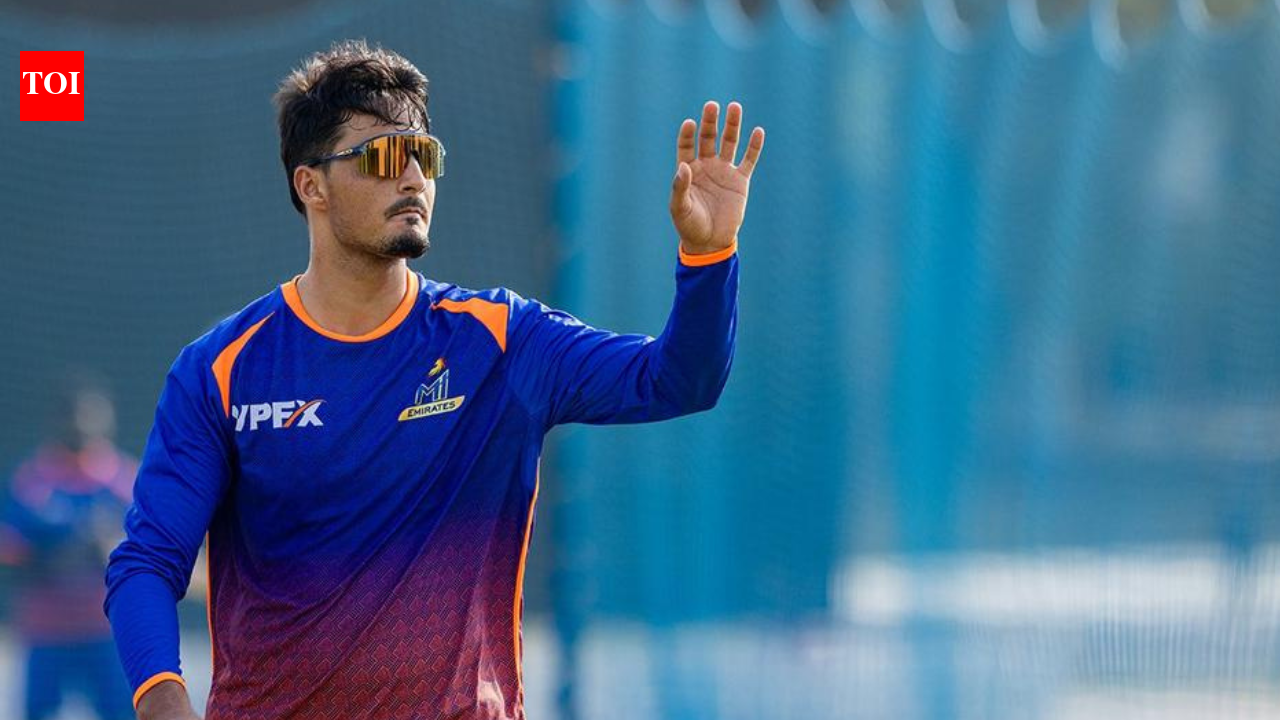
Afghanistan spinner Allah Ghazanfar has made an emotional appeal to the international community after a devastating airstrike struck a rehabilitation centre in Kabul. The young cricketer spoke about the wider impact of the escalating tensions between Pakistan and Afghanistan, calling attention to the human cost of the conflict.In what has been described as one of the deadliest airstrikes carried out by Pakistan on Afghanistan, at least 400 people were killed and around 250 others injured. Afghanistan’s deputy government spokesperson Hamdullah Fitrat stated that the strike hit a drug rehabilitation hospital, leaving significant portions of the 2,000-bed facility in ruins. Pakistan, however, has denied the allegations.

Watch

Trump’s ‘FAVOURITE’ Field Marshal Goes Rogue: Pak Massacres Hundreds In Afghan Capital Kabul

Ghazanfar highlighted the importance of the facility, stressing that it provided crucial support to vulnerable sections of society.“The people there don’t have money for treatment,” Ghazanfar told CNN News18. “And now, they’ve targeted that place as well; they’ve martyred those people. This is not acceptable to the people of Afghanistan.”Strongly condemning the attack, he also questioned the intent behind such military actions.“I don’t know what they’re trying to prove. They come and target ordinary people, and we simply cannot accept this. Afghanistan cannot accept this,” he said in the interview.“Everyone knows Afghanistan’s history,” he warned. “If that history repeats itself, it will be very bad for Pakistan.”Ghazanfar, who is set to represent Mumbai Indians in the IPL 2026, also spoke about Afghanistan’s ties with India, describing it as a close ally. He urged the global community to step in and help de-escalate the situation, emphasising that such conflicts harm ordinary people the most.“India is our close friend. We want to engage with them, to talk about these issues, so that things like this don’t happen. This is our request to other countries too. This is not good for the people. Right now, the world is going through many challenges, and this is not good for anyone,” he concluded.The spinner is yet to make his IPL debut and has featured in 20 matches for Afghanistan so far, picking up 29 wickets across formats.

Banner Insert


Source link

Blaze at furniture market in Maharashtra’s Bhiwandi; no injuries reported | Mumbai News


Fire breaks out at furniture market in Bhiwandi (Picture credit: ANI)

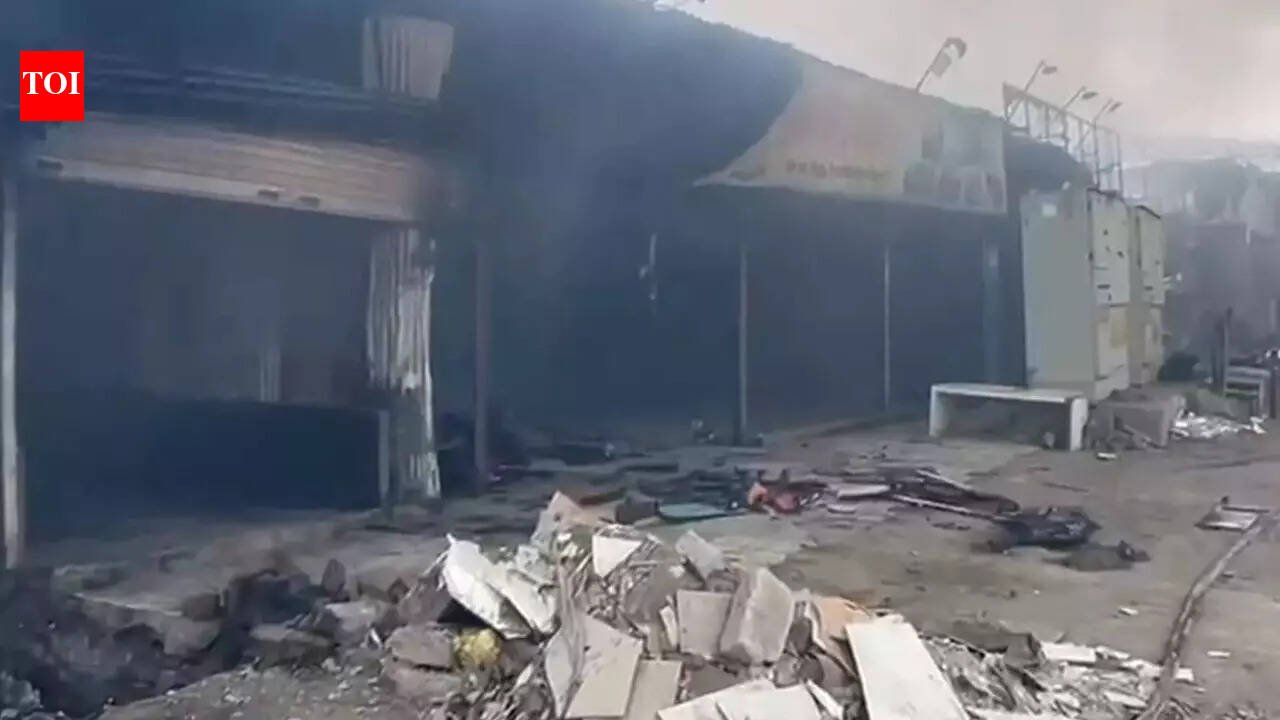
BHIWANDI: A fire broke out at a furniture market in the Chamunda Complex in Bhiwandi, Maharashtra, on Thursday, officials said. The incident occurred around 11.30am, following which fire tenders rushed to the spot to douse the blaze. No injuries have been reported so far. Speaking with ANI, Fire Officer Bapu Sonone said, “A fire broke out at 11:30 in a furniture market located in the Chamunda compound, affecting at least 7-8 furniture godowns. Despite some traffic due to the holiday, the responders arrived on time. “The fire is currently being cooled down, though the cause of the fire remains unknown. There were no reported injuries or significant property damage, though there is some difficulty in obtaining water as tankers are arriving late,” he added. Further details are awaited.


Source link

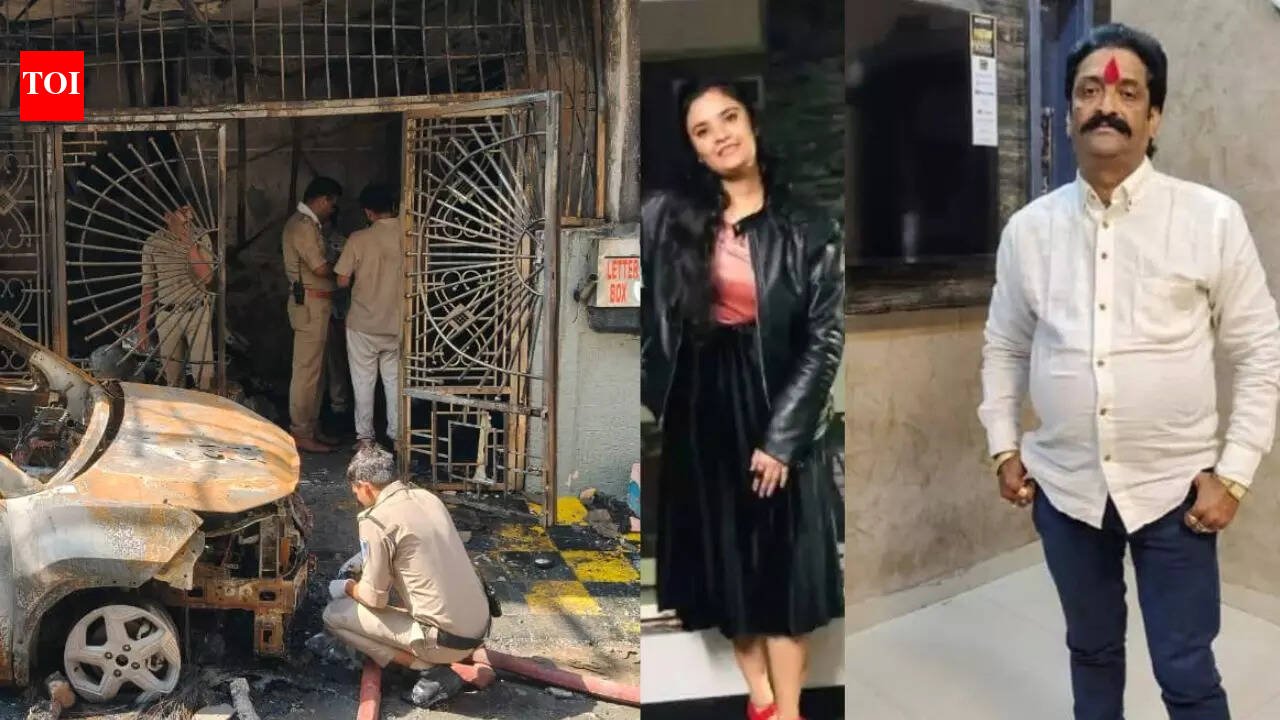
Indore House Fire: EV charging blast, 10 LPG cylinders and electronic locks: Deadly chain behind Indore house fire that killed 7 | Indore News


EV charging blast, 10 LPG cylinders and electronic locks: Deadly chain behind Indore house fire that killed 7

INDORE: At least seven members of a family, including a 12-year-old girl, were killed and three others critically injured when a major fire broke out at a three-storey residential building at Brijeshwari Annex near Bengali Square early on Wednesday.Commissioner of police Santosh Singh said the blaze may have been triggered by an explosion in an electric vehicle parked outside the premises at around 4am.

Watch

Centre Urges LPG Users To Shift To PNG While Assuring Uninterrupted Fuel Supply Nationwide

According to initial inputs from the response teams, the fire spread rapidly after a suspected explosion at the vehicle’s charging point. “Around 10 LPG cylinders were also stored in the house, some of which exploded. We witnessed two to three explosions ourselves, which made the situation extremely critical” he said.

Poll

Do you think electric vehicle charging points should be regulated more strictly in residential areas?

The building had three occupied floors, and rescue operations were complicated by electronic locking systems. Authorities believe a power failure during the incident may have caused these locks to remain engaged, trapping residents inside. “It appears the occupants were unable to exit as the electronic locks did not open,” Singh said.Fire tenders and emergency teams rushed to the spot within minutes. However, the situation escalated as multiple explosions were reported between 4:00 a.m. and 4:30 a.m.Rescue teams accessed the structure through an adjoining building, braving intense flames and thick smoke. Three people were initially brought out safely. However, several others remained trapped, particularly in bedroom areas.Six individuals were later recovered and taken to hospital in an unconscious state, where they were declared dead. Officials said the deaths were caused by smoke inhalation.Firefighters managed to contain the blaze and prevent it from spreading to nearby houses. The middle floor of the building suffered extensive damage, with parts of the structure rendered unsafe.The house belonged to one Manoj Pugalia, a polymer trader. Police believe that some inflammable material other than LPG cylinder might also be present inside the house.The deceased have been identified as Vijay Sethia (65), Chhotu Sethia (22), Suman (60), Manoj Pugalia (65), Simran (30), Rashi Sethia (12), and Tinu (35). Three others—Saurabh Pugalia (30), Ashish (30), and Harshit Pugalia (25)—sustained injuries and are currently undergoing treatment at a local hospital.The fire started a debate on the safety of EV charging points in residential areas with state minister Kailash Vijayvargiya visiting the site and terming the incident an ‘alarming’ wake-up call for the EV era. “As society moves towards electric vehicles, we must ensure safety protocols are foolproof. I have directed the Police Commissioner to form an expert committee to create a Standard Operating Procedure (SOP) for EV charging to prevent such recurrences,” he stated.


Source link

Maharashtra orders inquiry into ‘Rs 1,000cr scam’ in BMC HSG project | Mumbai News


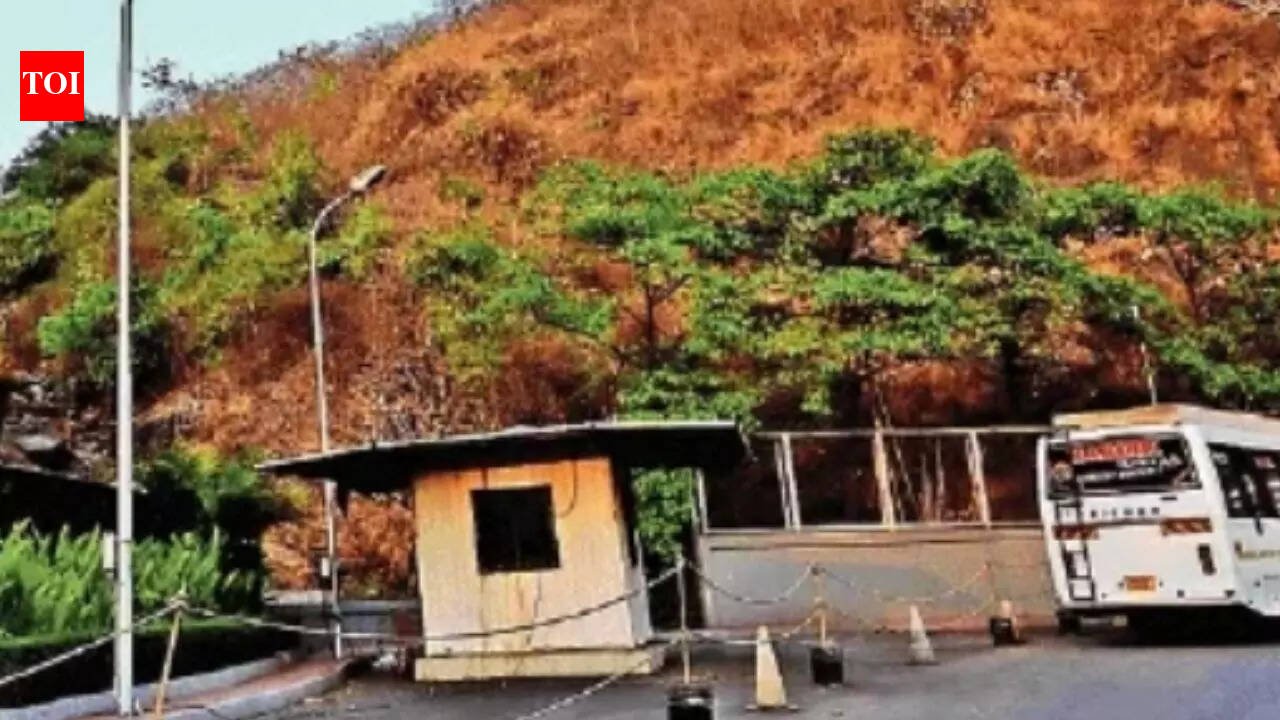
The project is to come up behind this hill

MUMBAI: Junior urban development minister Madhuri Misal admitted in the assembly that there was an irregularity in BMC’s agreement for a housing project planned in Malad (E) for project-affected persons (PAPs) as the civic body had not mentioned any date for starting the project but all the money had been given to the developer through credit notes and TDR. She said she has called for a report on all credit notes issued.

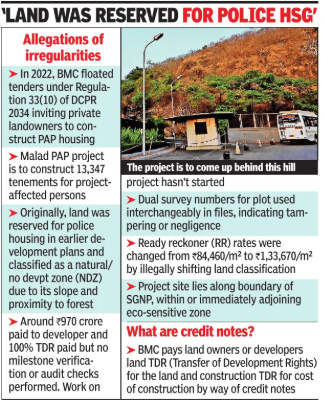
Land was reserved for police HSG

Congress MLA Aslam Shaikh, who raised the issue, alleged land classification was illegally changed and ready reckoner rates hiked, increasing cost of each PAP unit and raising project cost by Rs 618 crore. He said the project would not be ready for 10-20 years. Shaikh and BJP MLA Yogesh Sagar demanded the inquiry be conducted by a retired HC judge and not by an ACS rank officer.Shaikh said, “The plot was originally reserved for police staff quarters but was used for PAP housing, and the letter of acceptance was amended after April 2025. The ready reckoner rates were changed from Rs 84,460/m 2 to Rs 1,33,670/m 2 by illegally shifting land classification. This change was made without any fresh physical inspection or independent evaluation, which raises suspicion of collusion. Because of this, the cost per PAP unit increased from Rs 32.2 lakh to Rs 50.9 lakh. Other PAPs from SRA are available for just Rs 15 lakh. This resulted in increase in cost of Rs 618 crore.” He further alleged the contract was given to “someone who is an accused in the 2G scam.”Misal said the developer is to construct 13,347 flats for PAPs. Forty per cent of the plot’s area is reserved for police housing and the remaining 60% is proposed for construction of PAP flats, she said.“Accordingly, the developer has been given a credit note of Rs 470 crore for the first phase. Also, a conveyance deed has been signed on date 27/ 06/2025 to transfer land to BMC, and after including BMC’s name on property card, credit note of Rs 470 crore has been given for the second phase and 100% TDR (97102 sq m) has been given,” Misal said in a written reply.Shaikh said the private plot lay in a no-development zone but it was first reclassified for a police housing society and then converted for the PAPs project in favour of a builder. Shaikh said BMC paid the developer despite no green clearance being obtained.He said, “BMC has spent Rs 200 crore to construct the road to access the plot. Under the PAP scheme it’s supposed to be constructed by the builder at his cost.”


Source link

Assam assembly elections 2026: After joining BJP, Pradyut Bordoloi slams Congress, calls Imran Masood ‘communal’ | Guwahati News


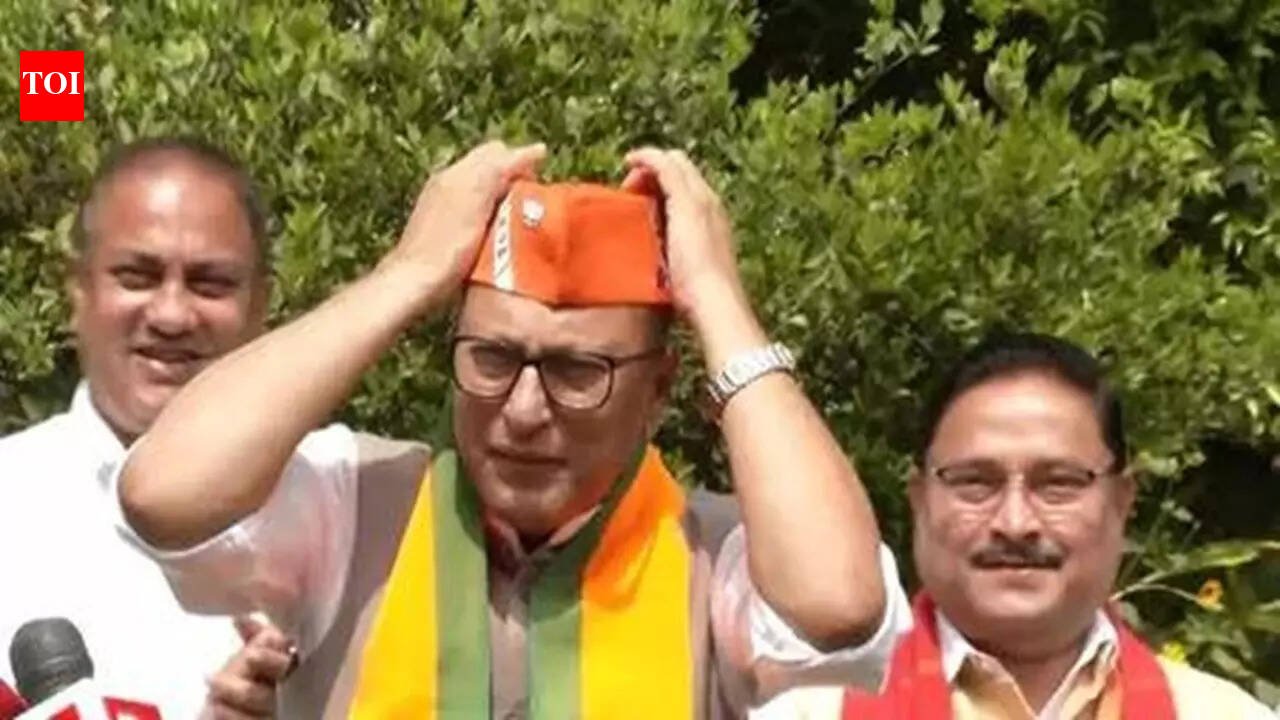
Nagaon MP Pradyut Bordoloi interacts with journalists in Delhi after joining the BJP.

NEW DELHI: After officially joining the BJP on Wednesday following his resignation from the Congress, Nagaon Lok Sabha MP Pradyut Bordoloi said his decision was driven by persistent internal humiliation and a lack of support from the party leadership.“There is not just one reason. I was feeling suffocated, and I was being humiliated,” news agency ANI quoted Bordoloi as saying.

Watch

Congress MP Pradyut Bordoloi Joins BJP, Assam Politics Sees Major Shake-Up Ahead of Assembly Elections

Referring to an Assam Central Election Committee (CEC) meeting, Bordoloi said he was deeply hurt after Congress leader Imran Masood dismissed his allegations against a candidate, whom he had accused of running a criminal nexus, as “fabricated”.Masood, the Lok Sabha MP from Saharanpur, is a member of the Congress screening committee for the upcoming Assam elections.“I came to know that a communal leader like Imraan Masood said that everything I was talking about and saying about a candidate against whom I had given evidence of a criminal nexus was false and fabricated. Imran Masood, in the presence of the party’s top leadership, had the audacity to say that all that Pradyut Bordoloi said was fabricated. The APCC president present there remained silent. This hurt me a lot,” said Bordoloi.Bordoloi joined the BJP in the presence of Assam chief minister Himanta Biswa Sarma and state BJP President Dilip Saikia.Earlier, Bordoloi had accused the Congress leadership of sidelining him, saying that internal mistreatment had brought his long association with the party to an end.He said his resignation was the result of “multiple issues” and not solely linked to ticket allocation for the Assam Assembly elections.“For me, getting a ticket was not a question of life and death. There were multiple issues. What was important for me was to hold my head high. The Congress party has given me a lot,” he told the media.“I want to make it very clear that I am in my second term in Lok Sabha, and there are another three years to go. I could have accepted the humiliation if I wanted to remain as an MP. But I decided to leave and work,” he added.Following Bordoloi’s resignation, the Congress has fielded his son from the Margherita assembly constituency for the upcoming Assembly polls.Bordoloi’s resignation comes a month after former Assam Congress chief Bhupen Kumar Borah joined the BJP after serving in the Congress for three decades.Meanwhile, Congress MP Priyanka Gandhi Vadra said, “Vichaar-dhara bhi kuch hoti hai”, stressing that political ideology should also be taken into account while making such decisions.Elections for all 126 Assembly constituencies in Assam will be held in a single phase on April 9, while counting of votes is scheduled for May 4, according to the Election Commission of India.Assam is set to witness a contest between the ruling BJP-led NDA and the Congress for the 126-seat Assembly. The BJP, led by Himanta Biswa Sarma, will seek a third consecutive term, while the Congress will aim to unseat the ruling party. (With agency inputs)


Source link

Dumping ground, water crisis spark stormy scenes in Ulhasnagar civic general body meeting | Thane News


ULHASNAGAR: The first general body meeting of the newly elected Ulhasnagar Municipal Corporation turned stormy, with sharp exchanges between ruling Shiv Sena (Shinde faction) and BJP corporators over the long-pending dumping ground issue and persistent water scarcity in the city.The meeting saw intense debate over the dumping ground located in the Khadi quarry area of Ulhasnagar Camp No. 5. Corporators alleged that frequent fires at the site have been releasing toxic smoke, severely impacting nearby residential areas. BJP members claimed that the worsening pollution has forced thousands of residents to migrate, while over 30,000 people continue to face serious health risks. Some corporators even alleged a rise in severe illnesses, including cancer, among locals.During the discussion, BJP corporator Sherry Lund raised concerns over the health of noted Sindhi spiritual leader Sant Devprakash Maharaj, who is currently undergoing treatment at a Mumbai hospital. Lund alleged that doctors have advised the saint against returning to Ulhasnagar due to hazardous pollution near his ashram in the Swami Shantiprakash area.Mayor Ashwini Nikam’s recent visit to the dumping site also came under focus, with corporators pointing out that she experienced breathing difficulties during the inspection, highlighting the seriousness of the issue.Members from BJP, Shiv Sena and Vanchit Bahujan Aghadi jointly demanded immediate relocation of the dumping ground and fulfilment of earlier assurances made by the civic administration.Municipal Commissioner Manisha Awhale informed the house that waste processing at the site has begun and that a collective dumping mechanism is being developed at Badlapur for scientific disposal of garbage.Apart from the heated discussions, the general body meeting also announced the formation of the standing committee, with eight members each from Shiv Sena and BJP being appointed. Additionally, a total of nine special committees were constituted, with representation given to members from both the ruling parties.The meeting also witnessed strong protests over irregular water supply, with corporators alleging mismanagement in valve operations leading to continued shortages across several areas.

Banner Insert


Source link

Mumbai’s beacon row: Is VIP ‘batti culture’ back in focus? | Mumbai News


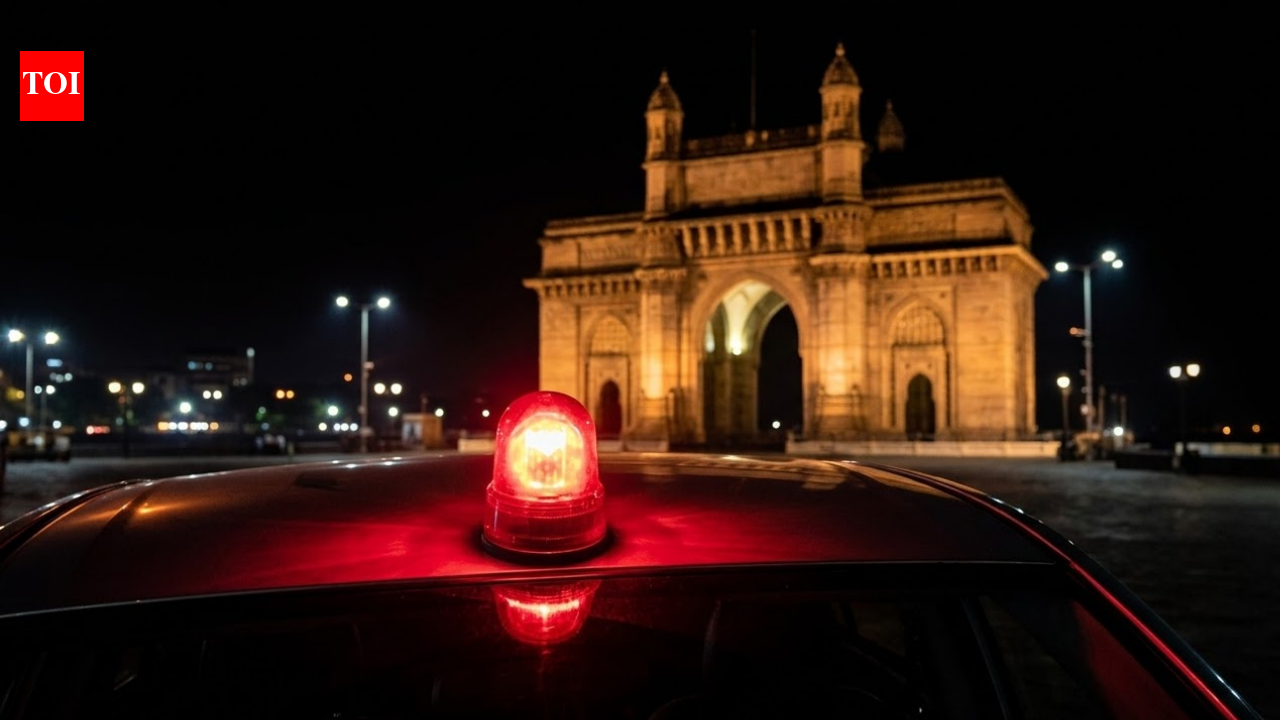
Why a flashing light on Mumbai mayor Ritu Tawde’s car sparked debate again (Representative AI image)

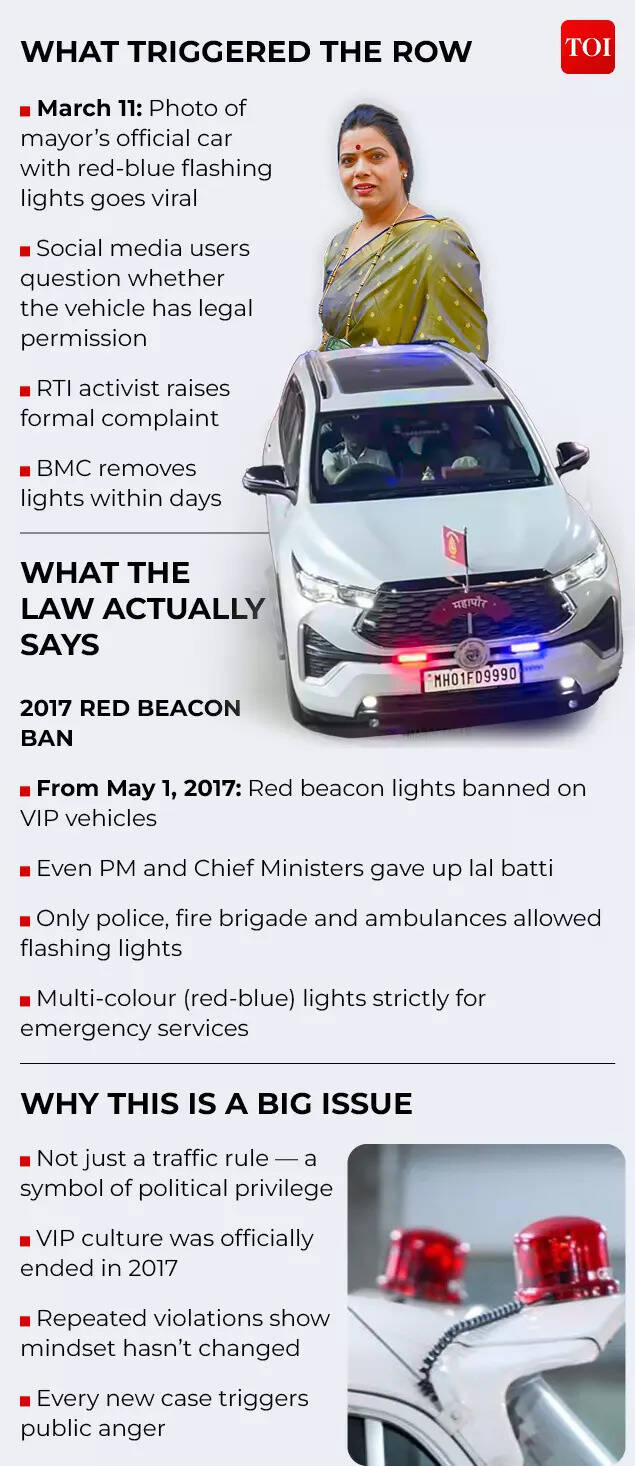
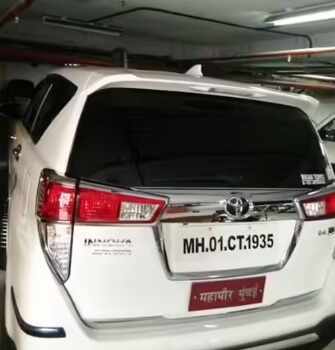
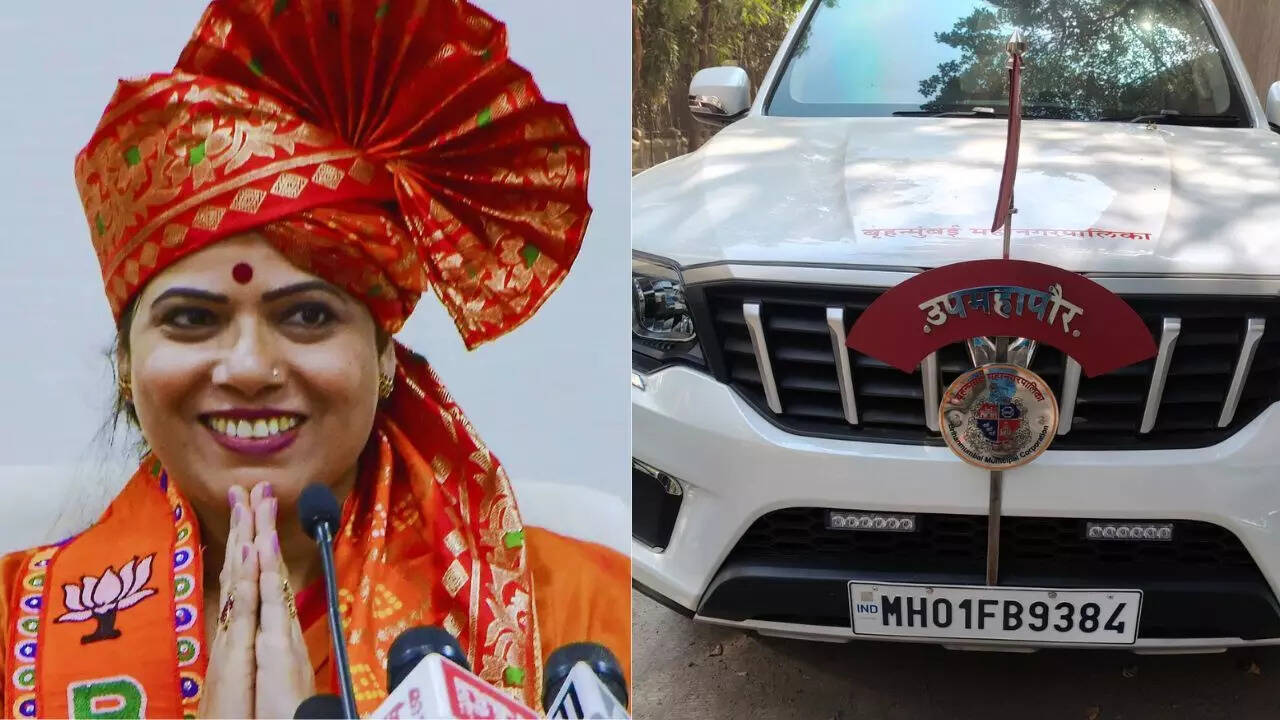
For nearly a decade, India believed it had ended one of the most visible symbols of political privilege — the red beacon light. The decision in 2017 to ban “lal batti” vehicles was presented as a cultural shift, not merely a traffic reform. It was meant to send a simple message: no public office-holder was above the ordinary citizen on the road.Yet in March 2026, a single image circulating on social media brought the debate back with unexpected force. The photograph showed the official vehicle of Mumbai mayor Ritu Tawde fitted with red-and-blue flashing lights — the kind normally seen only on police or emergency vehicles. Within hours, the image triggered criticism online, questions from activists, and eventually a political confrontation inside the Brihanmumbai Municipal Corporation.The civic body later removed the lights from mayor’s car as well as other vehicles allotted to office-bearers. But by then the issue had already evolved into something larger than a technical violation. It had reopened a national conversation about VIP culture, legal authority and the continuing gap between official rules and everyday practice.

How the controversy began

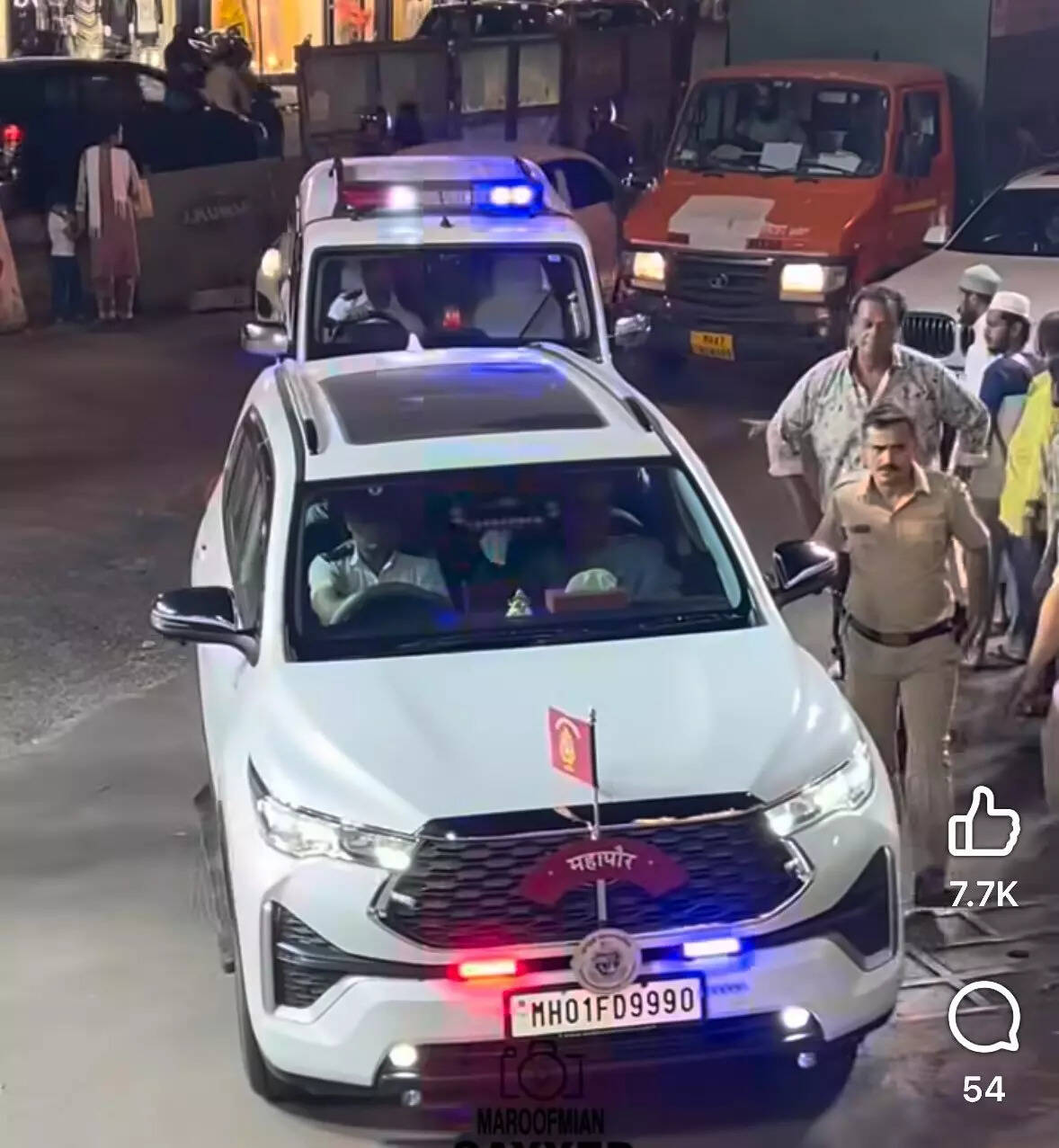
On March 11, a user on X uploaded a photograph of the official vehicle used by Mumbai mayor Ritu Tawde. The image showed the car fitted with red-and-blue flashing lights — the kind most citizens associate with police vehicles, ambulances and other emergency services.

-

The caption, “Does the Mumbai Mayor’s vehicle have permission to install police red-blue lights??,” simply asked whether the mayor’s car had permission to use such lights. But the question struck a nerve immediately.Within hours, more users began sharing the image. Some questioned whether the use of police-style flashing lights was legal. Others asked why an elected civic official needed a beacon at all when the Union government had already banned red-beacon culture years ago. The tone of the debate shifted rapidly from curiosity to criticism.

-

How the issue escalated in just a few days

The first public reaction came from social media users who openly questioned whether the mayor’s car was authorised to use red-and-blue lights. A user identified as @shivsainik007 asked whether the police had granted permission for the lights to be used on the mayor’s vehicle. Soon after, other users — including civil-society groups and activists — raised similar questions. Some pointed out that even the escort vehicle accompanying the mayor appeared to have similar flashing lights installed.The controversy moved beyond social media when RTI activist Anil Galgali formally wrote to the mayor and raised the issue. In his letter, he argued that the use of red-and-blue lights on the mayor’s official vehicle as well as the escort vehicle appeared to be unauthorised. He also referred to the instructions issued by the Union government in 2017, which clearly restricted the use of beacon lights to emergency services.The letter also demanded immediate action. Galgali argued that the matter should be taken seriously because it involved a violation of rules that had been introduced precisely to eliminate VIP culture.At that point, the controversy was no longer limited to online criticism. It had become a formal administrative issue.

The role of Brihanmumbai Municipal Corporation

As the debate intensified, officials in the Brihanmumbai Municipal Corporation confirmed that flashing lights had indeed been installed on the mayor’s official vehicle. They also stated that similar lights had been installed on other vehicles used by civic office-bearers, including the deputy mayor and the leader of the house.The BMC on March 14 removed these flashing lightsfrom the mayor’s car.
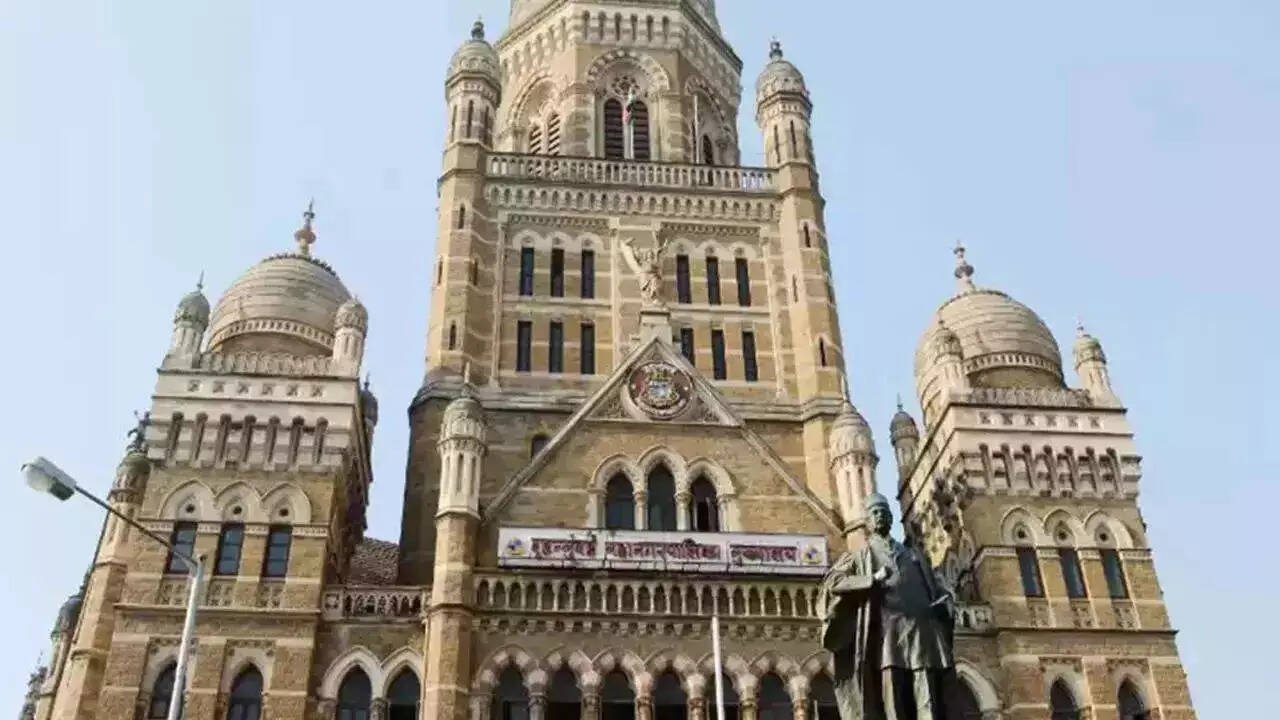
BMC

BMC

These were not traditional red beacons mounted on the roof — the symbol that had dominated Indian politics for decades. Instead, the lights were mounted on the front of the vehicle and flashed in red and blue, resembling the lights used by police vehicles.Officials later said the lights were removed after the issue came to their attention. But by the time the lights were taken off, the political and public reaction had already begun.

What the mayor said

Mayor Ritu Tawde responded to the controversy by describing the issue as an administrative lapse. She said the vehicle had been provided by the civic administration and that she had not demanded any beacon or flashing lights.
-

The BMC on Saturday, March 14, removed the red and blue flashing lights installed on the official vehicle of Mumbai Mayor Ritu Tawde and the escort vehicle accompanying her, following a controversy over their use.

Her argument, as mayor, she used the official vehicle that was allotted to her. If the vehicle had equipment that was not legally permitted, it was the responsibility of the administration to ensure compliance with the rules before handing it over.She also made it clear that she had no personal interest in using a beacon and that the matter had been exaggerated by political opponents. But the controversy did not end there. Instead, it quickly turned into a political confrontation.

Opposition leaders turn the issue into political debate

The strongest criticism came from opposition leaders inside the civic body. Former Mumbai mayor Kishori Pednekar accused the ruling party of bringing back VIP culture despite the Union government’s decision to end it. She questioned whether the mayor believed she was entitled to privileges that even senior national leaders had given up after the 2017 ban.Other opposition figures also criticised the use of flashing lights and argued that it reflected a mindset rather than a mistake. According to them, the problem was not the beacon itself but what it represented — the idea that political authority must be visibly displayed.

Why Devendra Fadnavis stepped in

The issue gained further attention when Maharashtra chief minister Devendra Fadnavis commented on the controversy. He said the mayor should not be blamed and that the beacon had not been installed in the traditional way on the roof of the vehicle. According to him, the mayor was fully aware of the rules and was being unfairly targeted.This intervention was politically significant because it shifted the debate from legality to intent. Supporters of the mayor argued that the controversy was being exaggerated for political gain, while critics insisted that the issue should be treated seriously regardless of intent.

Why red beacon remains such sensitive issue

For decades, the red beacon was one of the most visible symbols of power. It signalled authority on the road and often allowed vehicles to move faster through traffic. Over time, the number of officials using beacon-fitted vehicles increased dramatically. What had once been limited to a few high-ranking positions gradually expanded to include a wide range of political and administrative posts.Public resentment grew because the beacon came to represent inequality. Ordinary citizens were forced to stop in traffic while political leaders moved freely. Critics argued that the system created a psychological gap between public representatives and the people they represented.

The 2017 decision that was meant to end the practice

The turning point came in 2017 when the Union government announced a complete ban on the use of red beacon lights on vehicles used by public officials. The decision was presented as a major step towards ending VIP culture.Prime Minister Narendra Modi emphasised that every citizen should be treated equally and that public office should not be associated with visible privilege. From May 1, 2017, beacon lights were allowed only for emergency services such as police vehicles, fire brigades and ambulances.The decision was widely welcomed by the public. For many people, it symbolised a shift away from old political traditions that emphasised hierarchy and privilege.

The law explains why this matters

The rules governing beacon lights are contained in the Central Motor Vehicles Rules, 1989. For many years, these rules allowed both the Centre and the states to authorise the use of red beacon lights on vehicles used by certain high-ranking officials.Over time, the list of people entitled to use them grew steadily. Ministers, judges, senior bureaucrats and even local-level officials in some states were seen using beacon-fitted vehicles.Public criticism increased as the number of such vehicles grew. Courts also expressed concern that the practice created unnecessary traffic disruption and reinforced a culture of privilege.The turning point came after the Supreme Court issued strong observations in 2013 urging the government to restrict the use of red beacons. Following that, the Union government decided in 2017 to completely ban the use of red beacon lights on vehicles used by public officials — including the President, the Prime Minister and chief ministers.The political message behind the decision was clear. When Narendra Modi announced the ban, he described it as a step towards ending VIP culture and emphasised that every citizen should be treated equally on the road.From May 1, 2017, red beacons were permitted only for emergency services such as police vehicles, fire brigade vehicles and ambulances. The rules also restricted the use of multi-coloured flashing lights, which are typically associated with law-enforcement and disaster-response vehicles.In simple terms, civic office-bearers such as a city mayor are not legally entitled to use such lights.

Not the first such controversy

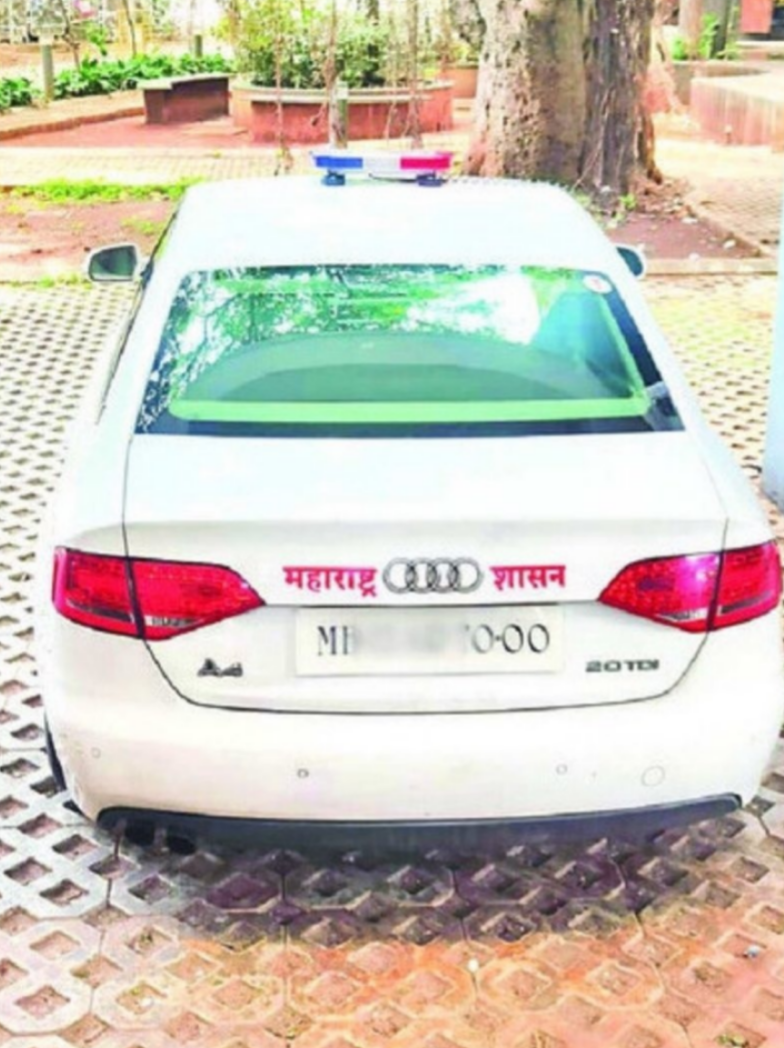
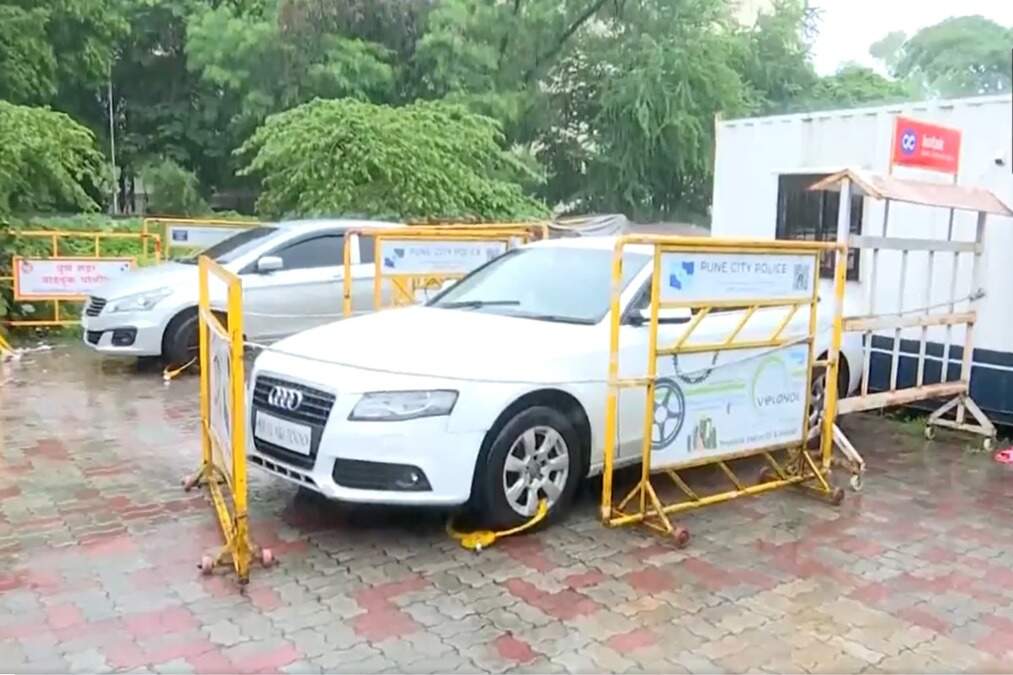
The Mumbai episode is only the latest in a long list of similar incidents that have occurred even after the 2017 ban.In 2017 itself, shortly after the ban came into force, the Regional Transport Office in Mumbai reportedly issued a notice regarding the use of a red beacon on the official vehicle of then mayor Vishwanath Mahadeshwar. That episode demonstrated how difficult it was to completely eliminate a practice that had existed for decades.

-

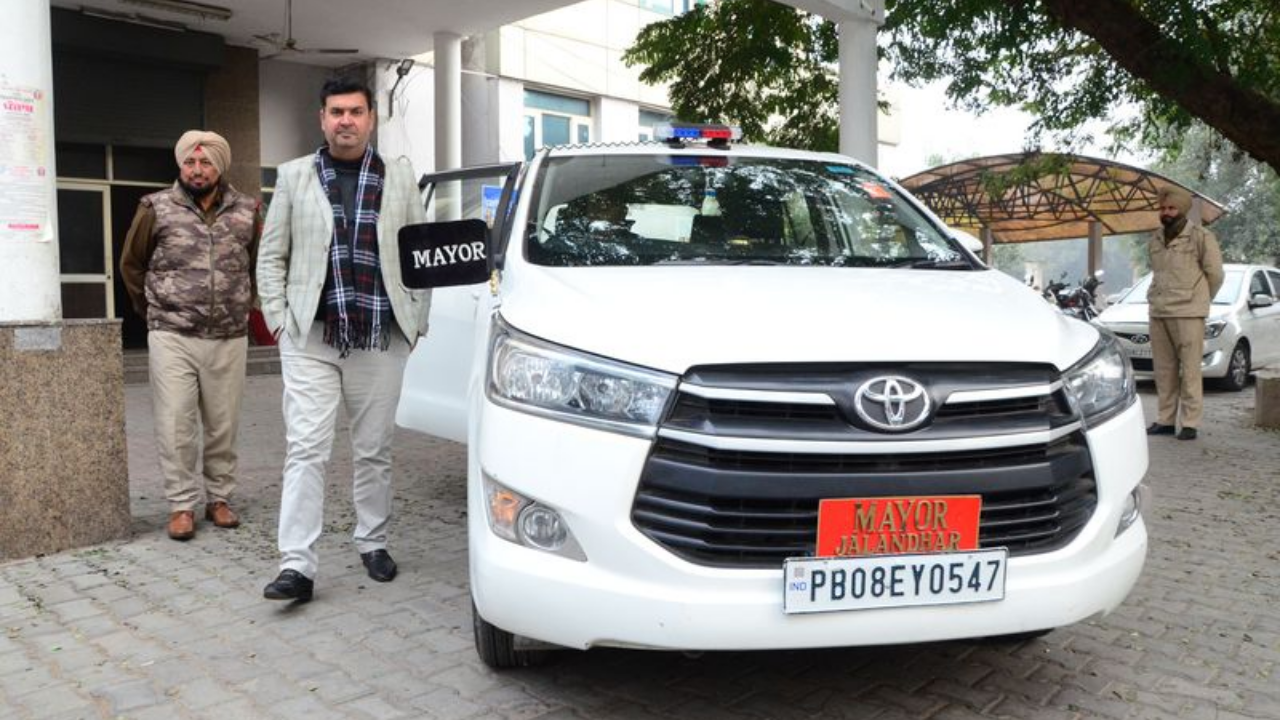
Another controversy surfaced in early 2025 in Punjab. In January that year, an RTI activist filed a formal complaint against Vaneet Dhir, alleging that the mayor was using a government-allotted vehicle fitted with red-and-blue beacon lights, a police-style siren and even an official flag. The complaint, submitted to the state governor and the director general of police, argued that the use of such symbols was a direct violation of the Union government’s 2017 decision to abolish VIP beacon culture.

-

According to the activist, the mayor’s vehicle had been equipped with these accessories without authorisation, despite clear rules stating that flashing red or blue lights can only be used by emergency and disaster-response vehicles.

The Pooja Khedkar episode

If the controversy involving Mumbai mayor Ritu Tawde reopened the debate locally, the case of Pooja Khedkar had already revived the issue nationally years earlier.Khedkar was not a senior bureaucrat, not a minister, and not even a confirmed IAS officer at the time. She was a probationary officer — someone still undergoing training and expected to follow the strictest administrative discipline.

-

Yet in 2024, images surfaced online showed a private vehicle allegedly being used by her fitted with a red-and-blue beacon and even a government-style insignia. The vehicle reportedly displayed markings that suggested official authority, something that is clearly restricted under existing rules.The reaction was immediate and far stronger than in earlier cases of beacon misuse. What angered many people was not just the use of a flashing light, but what it appeared to symbolise — a sense of entitlement before even formally entering public service. Critics argued that the 2017 ban had been introduced precisely to eliminate such displays of power, especially by young officials who were expected to represent a new administrative culture.

-

The controversy soon expanded beyond the vehicle itself. Questions were raised about the use of special privileges during training, the display of official symbols, and whether the rules governing government vehicles were being followed properly. The case quickly became a national story because it touched a deeper anxiety: if a probationary officer could appear to claim VIP privileges, what did that say about the success of the 2017 reforms?The government responded by transferring Pooja Khedkar from her posting, and the incident became one of the most widely discussed examples of how the red-beacon culture still survives in different forms.

The administrative angle: Lapse or system failure?

Another aspect of the controversy is the question of responsibility.Mayor Ritu Tawde said the vehicle had been provided by the administration and that she had not demanded a beacon. If that is correct, the issue raises broader questions about how official vehicles are prepared and whether existing rules are being properly followed by departments responsible for protocol.Critics argue that even a minor lapse can undermine the credibility of the 2017 reform. Supporters of the mayor argue that a mistake by the administration should not be turned into a political controversy.

A debate that keeps returning

Nearly nine years after the red-beacon ban came into force, the expectation was that the practice would gradually disappear. Instead, occasional controversies continue to surface across states and institutions.Each time a new case emerges, it reminds the public that the struggle against VIP culture is not only about legal rules but also about political behaviour and public perception.The controversy surrounding the mayor’s vehicle in Mumbai may have ended quickly once the lights were removed, but the debate it triggered is likely to continue.(With inputs from Richa Pinto)


Source link

Celina Jaitly says she will continue to stand by her brother even after he refused to speak to her: ‘My only intention been his safety’ |


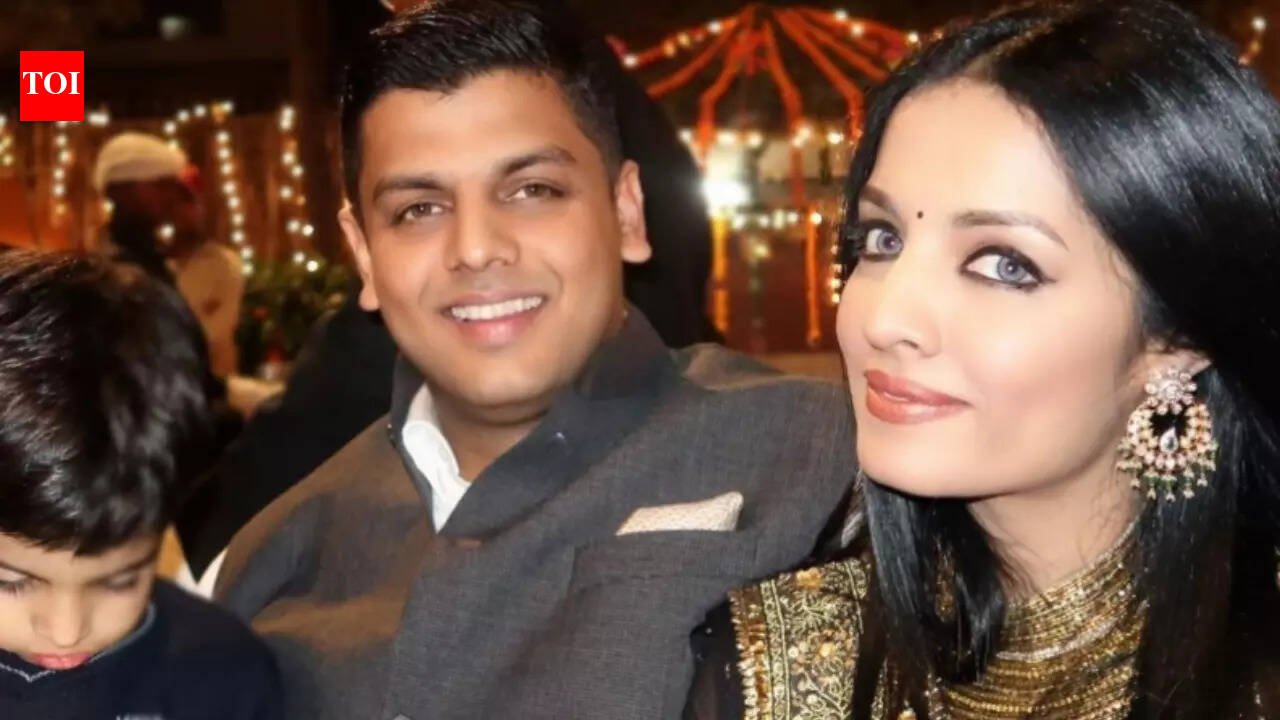
The Delhi High Court on March 16 dismissed a plea filed by former actor Celina Jaitly, who had sought assistance in establishing contact with her brother, Vikrant Jaitly. Vikrant has been in detention in the United Arab Emirates since September 6, 2024, and has reportedly refused to communicate with her. The court said that he is currently in UAE and has explicitly stated during consular interactions that he does not wish to communicate with his sister. He has also, for now, refused legal representation, indicating that any decisions going forward will be made by his wife.Two days later, on March 18, Celina shared an emotional note on social media, offering her perspective on the situation and suggesting that her brother’s silence could be an attempt to protect her. Posting a picture with him, she wrote, “The last I have spoken to my brother was on 23 August 2024 few days before he taken (6 September 2024) where in he was held in secret detention until end of May 2025. Thereafter, he was remitted to a detention centre in the Middle East where he has been held now for almost 18 months, without formal proceedings, and access to him has been limited and controlled.

Watch

Celina Jaitly’s Legal Battle: Divorce, Abuse, And Survival

Reflecting on his decision not to stay in touch, she added, “I cannot speculate on what my brother may have been advised or told in detention. He is extremely protective of me and has no visibility of what is happening in the outside world. Given my current circumstances, it is possible that he may have received partial information and is trying to shield me from further financial and emotional strain. In such circumstances, any decision taken by a detainee must be viewed in context. I believe he has, on occasion, also refused to speak to other kin and has said that he does not wish to speak to her or anyone else.”Emphasising her concern, Celina clarified that her legal efforts were never about personal interests but about her brother’s welfare. “The only matter that has deeply concerned me throughout all of this has been his physical and mental well-being. This writ was never about me. It was always about ensuring the possibility of meeting and speaking to my brother and, above all, that proper legal representation be appointed for him.She also expressed gratitude towards the Indian authorities for their continued involvement. “I am grateful that the Government of India has had nine consular accesses with him since June 2025 and has conveyed that they will continue to encourage him to accept legal aid whenever he and his wife are ready. I remain thankful that the State continues to look into his well-being while further recourse is being pursued. My only intention has always been his safety, legal protection, and dignity. I respect that he may be trying to protect me in his own way. However, I will continue to stand by him and ensure that he is not left without proper legal representation.”Concluding her note on a deeply personal note, she wrote, “Until I am able to see my brother and speak to him directly, there is nothing that I can conclusively adhere to… I know my brother.. He is my first baby. I stand by him till my dying breath!”During the March 16 hearing, the court was informed that Vikrant had chosen not to communicate with his sister and preferred that any legal decisions be taken only after consulting his wife. Authorities also told the court that while he had been granted consular access, he had declined legal assistance, according to Bar and Bench.


Source link

Dombivli Shobha yatra celebrates Gudi Padwa with colour, tradition and development-themed tableaux | Thane News


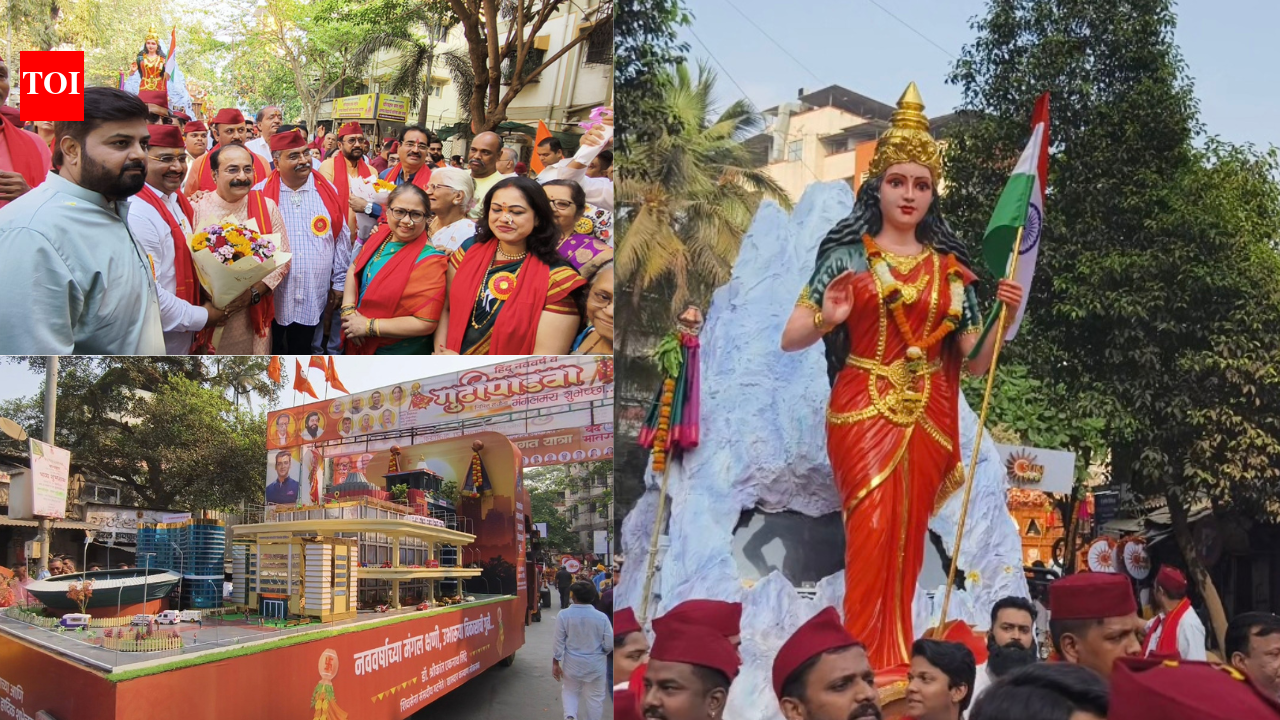
DOMBIVLI: Dombivli came alive with colour, tradition and excitement on the occasion of Gudi Padwa, as a grand around 3-km-long shobha yatra was held, continuing a 27-year-old legacy of celebrating the Marathi New Year in a vibrant manner.Organised by the Ganesh Mandir Sansthan along with the Navvarsh Swagat Yatra Coordination Committee, the procession saw participation from thousands of citizens dressed in traditional attire.BJP state president Ravindra Chavan and Kalyan Lok Sabha MP Shrikant Shinde were also present, joining residents in the celebrations.The procession, which passed through key routes including Phadke Road, featured elaborate tableaux showcasing themes rooted in Hindu culture, with a prominent “Vande Mataram”-themed float drawing attention.This year’s highlight was a specially designed tableau depicting major development projects in the Kalyan Lok Sabha constituency. Conceptualised under the initiative of MP Shrikant Shinde, the development-themed float offered a visual representation of ongoing and upcoming infrastructure projects in the region. A striking model of a proposed double-decker transport corridor—with roads and flyovers on the lower level and a metro line on the upper deck—emerged as a key attraction, giving a glimpse into the future of urban mobility.The tableau also included replicas of the ancient Khidkali Shiv Temple, currently undergoing beautification, and a super-speciality cashless hospital in Ulhasnagar, which has reportedly provided free treatment to thousands of patients over the past two years. In addition, models of the Sant Sawalaram Maharaj Mhatre Sports Complex, aimed at providing world-class facilities to youth, and the Agri-Koli Warkari Bhavan at Betawade were showcased.Thousands of onlookers gathered along the route to witness the procession, which began at Bhagshala Maidan and moved through Pendharkar College, Subhash Road, Madan Chowk and other key junctions before culminating at Phadke Road. Dhol-tasha troupes, folk performances and participation by Marathi film actors added to the festive fervour.Speaking to the media, MP Shrikant Shinde said the tableau was aimed at presenting a glimpse of ongoing efforts towards the holistic and rapid development of the constituency.Gudi Padwa marks the beginning of the Marathi New Year and symbolises victory, prosperity and new beginnings. Celebrations typically include hoisting a ‘Gudi’, making rangoli, and preparing festive delicacies such as puran poli.Regarded as one of the most prominent Gudi Padwa celebrations in the Mumbai Metropolitan Region, the Dombivli shobha yatra once again reflected the city’s rich cultural heritage while highlighting its aspirations for modern development.

Banner Insert


Source link

Fanaa: ‘Aamir Khan timepass karega, tujhe apni god mein bithaega 6 maheena,’ Kunal Kohli says Aditya Chopra didn’t want to cast him for Fanaa |


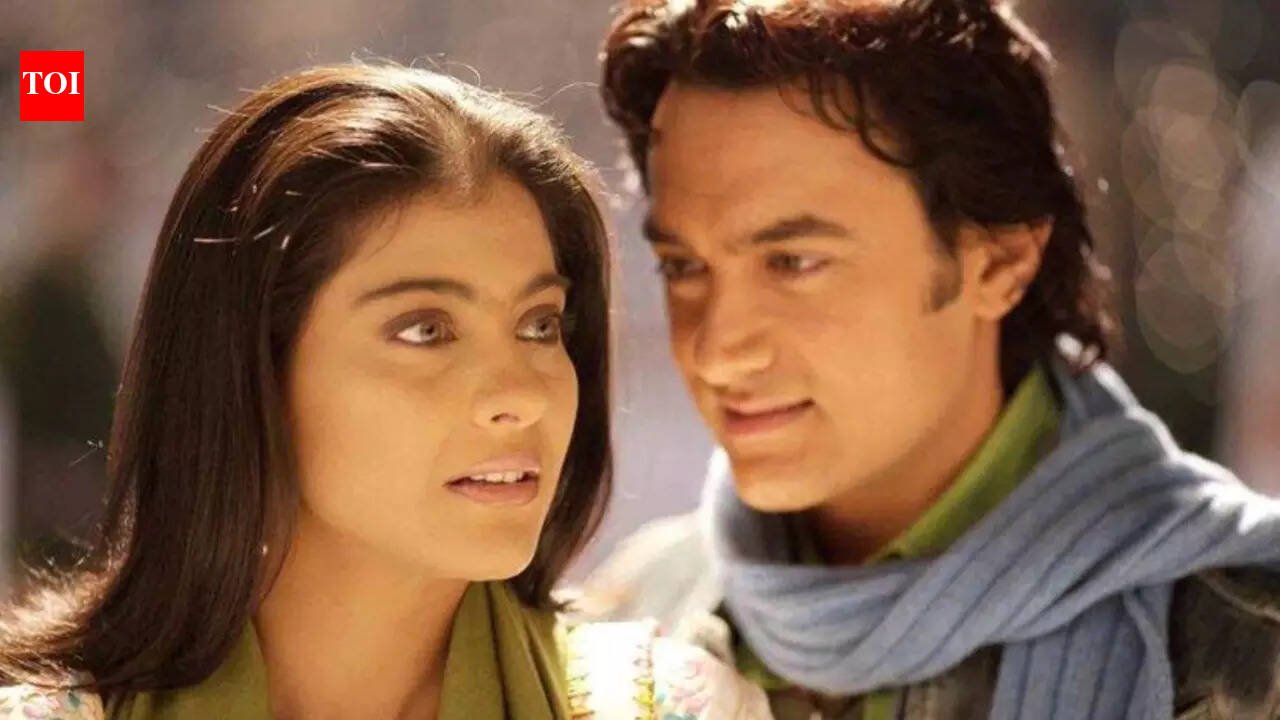
‘Fanaa’, starring Aamir Khan and Kajol, is set to complete 20 years this year. As the milestone approaches, director Kunal Kohli recently looked back at the film and reflected on why such stories are rarely attempted in today’s industry. But did you know, producer Aditya Chopra was not keen on casting Aamir for the film. Kohli expressed concern over the lack of risk-taking in modern filmmaking, calling the current scenario “sad.” He pointed out that projects like ‘Fanaa’ would be difficult to back today due to their unconventional storytelling. “It’s just sad heroes and producers are shying away from subjects that are bold and different. Because in Fanaa, the hero isn’t a hero, he’s a villain. It’s the love story of a terrorist. And there’s no salvation. He gets shot dead by the woman he loves and the woman who loves him,” he said.

Watch

Aamir Khan surprises everyone with heartfelt singing—shines in duet at live event

The filmmaker also opened up about the casting process and how bringing Aamir Khan on board wasn’t an easy decision initially. Producer Aditya Chopra had his reservations. Recalling their conversation, Kohli shared, “When I wanted to go to Aamir, Adi (Aditya Chopra, producer) wasn’t very keen. He said, “Arey yaar! Wo time pass karega. Tujhe apni god mein bithaega 6 mahine ke liye, phir nahi karega. Bahut time waste hoga. Tumhe time waste karna hai, tum karo.” And things like, “Achha, tumhari ek picture hit ho gayi, tumhe Aamir Khan chahiye?” (laughs). I said I wanted him in the first one too. And since I got Hrithik Roshan in the first one, why should I not go to Aamir Khan now?” he added.

Poll

Do you think modern filmmaking has become too risk-averse?

Despite the initial hesitation, Kohli revealed that Aamir immediately connected with the story. “Aamir heard the story within a week. He asked me to write the script in Urdu insted of English. I finished the draft within a week, but went back to him after two weeks because I didn’t want him to think I wrote the dialogues within a week. He questioned a lot whether I’m the right person to direct because I hadn’t done something like that before. He asked Adi, “If you’ve got a subject like this in your company, why are you not directing it?” Adi said, “Because I don’t think anyone can do it better than Kunal,” the filmmaker shared.Released in 2006, ‘Fanaa’ told the story of Rehan, a charismatic Delhi-based guide who falls in love with Zooni, a visually impaired woman from Kashmir. Their romance takes a dark turn when his true identity as a terrorist is revealed. The film struck a chord with audiences, going on to earn over Rs 100 crore worldwide and emerging as one of the biggest box office successes of its time. Even the music of the film was highly appreciated.


Source link