Breaking News
‘I don’t know how much is left for me’: Joe Root reflects on Ashes career and pressure | Cricket News

'I don't know how much is left for me': Joe Root reflects on Ashes career and pressure
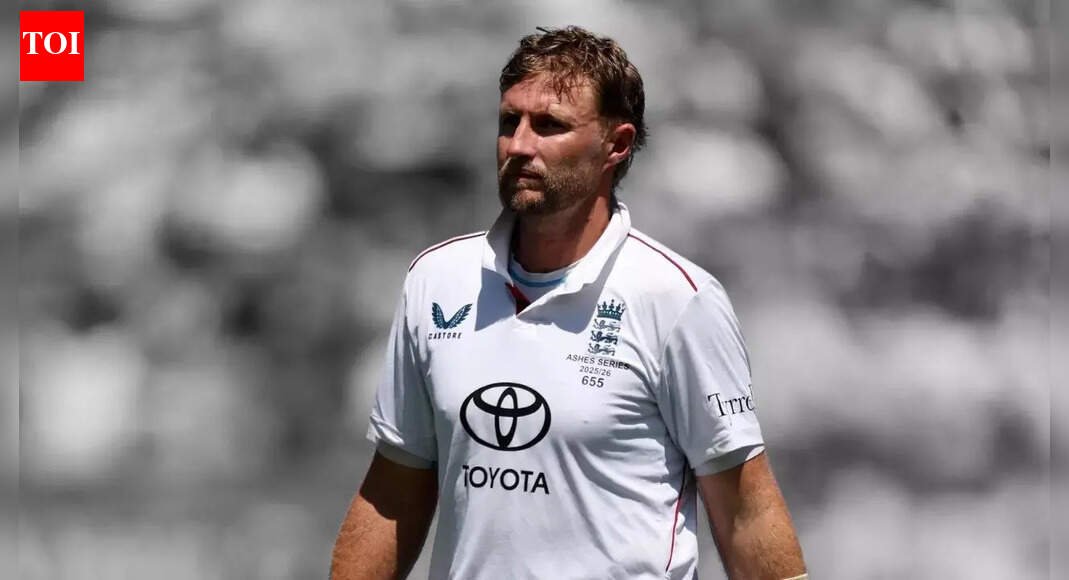
England’s Joe Root (AP Photo/Mark Baker)

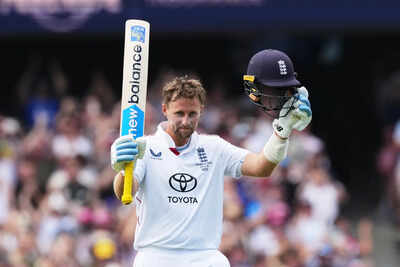
After a strong second day of the Sydney Test, Joe Root reflected on the importance of creating positive experiences for his team in Australia, especially for the younger players touring down under for the first time. Having already broken his century drought in Australia during the second pink-ball Test in Brisbane, Root produced another commanding innings, scoring 160 to put England in a position of strength at stumps on day two. England ended the day at 384 for 7, holding a 218-run lead over Australia, who were 166 for 2, with Travis Head unbeaten on 91. Root’s innings was a masterclass in patience and timing. Coming in with his side at 211 for 3 alongside Harry Brook, who scored 84 off 97 balls, Root faced 242 deliveries and struck 15 boundaries. He also received valuable contributions from Jamie Smith, who made 46, and Will Jacks, who added 27, guiding England to a solid total. Michael Neser was the pick of the Australian bowlers with 4 for 60, while Mitchell Starc and Scott Boland claimed two wickets each.

Sam Curran press conference: Sam hails Desert Vipers’ consistency after historic ILT20 title win

Speaking to reporters after the day, Root acknowledged the difficulty of batting under the conditions and emphasised the importance of using opportunities wisely. “It felt like yesterday was much batting, and it was much trickier today. It was about making sure to maximise that first innings, look at the surface and see how it plays out with time. It was pleasing and got it right to a degree today,” he said. The 35-year-old, who has enjoyed a long and illustrious career, also highlighted the significance of helping younger teammates build confidence in challenging conditions. “When you have played as long as I have, you are going to experience a lot of different things, and one thing I look at is opportunities. I do not know how many opportunities I am going to get to come here. It was great to win at MCG, and it was another opportunity today to help us get into a position of strength and try replicating that feeling once again for the group,” Root explained. He added that victories and strong performances in Australia can create lasting memories for first-time tourists and help them approach future tours with less mental baggage. “Hopefully, it benefits the team going forward when they come next time here. There are a lot of players playing for the first time in Australia, and when they have these positive memories, it will help them win. The baggage that the previous generation faced might not be there for them. There is so much to play for in the next three days,” Root said. With this century, Root equalled Ricky Ponting for the third-most Test centuries by an overseas player in Australia, marking his 41st hundred in Test cricket. Root has been England’s leading run-getter in this series, accumulating 394 runs in five Tests and nine innings at an average of 49.25, with two centuries. Australia’s innings in reply has been anchored by Travis Head, who remained unbeaten on 91 off 87 balls with 15 fours. Michael Neser was not out on 1, while Marnus Labuschagne contributed 48 before missing out on a fifty and Jake Weatherald managed 21. England’s bowlers will hope to take advantage of the remaining three days to maintain their advantage and push for a crucial win in the series. Root’s performance once again showcased his ability to adapt and dominate in Australian conditions, underlining his importance to the team and providing a blueprint for England’s younger players on how to approach Test cricket abroad. As the Ashes continue, England will be buoyed by this strong platform, with the captain leading by example both on and off the field.




Source link

Ruben Amorim’s sacking: Ratcliffe revolution fails to halt Manchester United decline | Football News


Ruben Amorim's sacking: Ratcliffe revolution fails to halt Manchester United decline
Luke Shaw of Manchester United battles for possession with Wilfried Gnonto of Leeds United during the Premier League match between Leeds United and Manchester United at Elland Road on January 04, 2026 in Leeds, England. (Photo/Getty Images)

MANCHESTER: Ruben Amorim’s sacking by Manchester United has exposed the dismal lack of progress since Jim Ratcliffe’s arrival as co-owner promised a new dawn.Amorim was the latest manager unable to turn the tide at Old Trafford, which has witnessed more than a decade of decline since Alex Ferguson retired in 2013.The veteran Scot stood down after winning the club’s 20th English league crown following two decades of domestic dominance gilded by European success.Since then United have not seriously competed to win the Premier League or Champions League despite a succession of big-name managers.Amorim, 40, is the first boss to be hired and axed since Ratcliffe took control of the club’s football operations after acquiring a minority stake in the Red Devils.The British billionaire’s arrival in February 2024 was greeted with glee by supporters desperate to see a new face at the helm after years of underachievement under the Glazer family, who still own a majority stake.Yet hopes that the boyhood United fan could make United competitive again at home and in Europe have so far been dashed.– No ‘knee-jerk reactions’ –Just a few months ago, Ratcliffe, 73, said Amorim had three years to prove himself despite a tough start at United, adding that the club would not be drawn into “knee-jerk reactions”.But United have continued to drift, winning just one of their past five home games in the league.An apparent rift with the club’s director of football Jason Wilcox over tactics and transfer targets appears to have increased the pressure on Amorim, who was dismissed on Monday after 14 months in charge.Wilcox moved into his current position in June last year, taking over the main role held by Dan Ashworth, who lasted just five months at the club in an early embarrassment for the new regime. Ratcliffe has so far done little to suggest he can deliver on his desire to restore a club he admitted “has become mediocre” to former glories.The club’s ambition to win a 21st league title by the time of their 150th anniversary in 2028 looks less realistic with every passing season.United finished the 2024/25 campaign in 15th spot — the club’s lowest top-flight finish since they were relegated in 1974 — and missed out on European football for only the second time in 35 years.Despite a marginal improvement this season, Amorim departed with his side 17 points adrift of leaders Arsenal after 20 games.The club are still within striking distance of the top four but cannot afford to lose further ground.– Transfer flops –Ratcliffe has been publicly scathing of some of United’s transfer dealings prior to his arrival but the jury is still out on incomings on his watch.Joshua Zirkzee and Manuel Ugarte have largely been peripheral figures since being signed under the managerial regime of Erik ten Hag, Amorim’s predecessor.Amorim was armed with an expensive new front three of Benjamin Sesko, Matheus Cunha and Bryan Mbeumo in the recent summer transfer window but they have scored just 12 Premier League goals between them so far.United’s ability to spend their way out of their troubles is beginning to be squeezed by financial sustainability rules.The club’s desperate need to return to the lucrative Champions League will have been a factor in their decision to axe Amorim, who arrived in November 2024 feted as one of the game’s leading young managerial talents.To compound matters for United fans starved of success, Ratcliffe is asking them to pay more to attend games.At the same time, he has been criticised for swingeing job cuts as he tries to restore order to the club’s finances.Last year United set out plans for a 100,000-seater stadium to replace their historic but creaking Old Trafford ground.Ratcliffe said the club planned to have the “world’s greatest football stadium”, with hopes it could be finished within five years, though there is major uncertainty over the timescale.Plans on and off the pitch are undoubtedly ambitious, but they are a long way from being realised.


Source link

GCL 2025: Coaching three Candidates in one team; GM Thipsay’s masterclass behind SG Pipers’ title | Top Stories News


GCL 2025: Coaching three Candidates in one team; GM Thipsay’s masterclass behind SG Pipers’ title
SG Pipers clinch GCL Season 3 title

NEW DELHI: Praggnanandhaa Rameshbabu, Anish Giri and Fabiano Caruana — wait, this isn’t a fun exercise in randomly listing chess stars, but the trio that helped SG Pipers break the stranglehold of two-time defending champions Continental Kings and lift the Global Chess League (GCL) Season 3 title a few weeks ago.But why mention only these three when it was a six-member team? The reason is simple: the Pipers were the only side to field three Grandmasters who have already qualified for the Candidates 2026.

Anish Giri Exclusive: FIDE World Cup in Goa, Candidates 2026 prep, GCL stories, and more

It seemed as if SG Pipers, with three Candidates players on the top boards, were built to dominate GCL 2025 on paper.But ask Pravin Thipsay, the coach of Pipers, and he would tell a different story.“We were the only team with three Candidates, top three boards,” Thipsay told TimesofIndia.com during an exclusive interaction.“So naturally, there was this feeling that it should be quite easy to win the tournament. That confidence, at times, turned into overconfidence.”“There was a psychological imbalance on the top three boards,” he added.“It was a mixture of self-confidence and not getting the kind of position they wanted. When they didn’t get a good position, they panicked a little and then tried to win.”Instead of dominating, the top boards often struggled with expectation.“The most dangerous moment was when even a draw would do. At that time, the players felt they were anyway going to go through,” Thipsay explained. “Some games were lost only because they were searching for a win, even in equal positions, even with White.”“Normally, you expect the top boards to score more,” Thipsay added. “That is why they are the top boards. Our last three boards really scored most of the points. The top three were not clicking, so that responsibility had to be taken by the lower boards.”As a result, when the tournament drew its curtains, Nino Batsiashvili, Hou Yifan, and Leon Mendonca became the most effective performers with 22, 21, and 18 points, respectively.

Star-studded SG Pipers (GCL Photo)

Among the top trio, though, the best was Fabiano Caruana with 11 points, followed by Praggnanandhaa (10.5) and Anish Giri (10).Thipsay identifies a crucial moment during the group stage.Adding some intrigue to the tale, Pipers went down 6–11 to Alaskan Knights in their final league match but still booked a place in the final.Both Pipers and Ganges Grandmasters finished with 15 match points, but Pipers edged through on game points, 84 to 83. With the Pipers needing at least six points to stay ahead, the Knights pushed hard for a playoff spot and managed to win the match. But as Pipers were able to garner the six points, they made the final.“We calculated that we needed only six points to qualify. Someone joked, ‘We can make six draws.’ That kind of thinking is very dangerous. They didn’t really take it as a call where something could actually go wrong,” Thipsay recalled.For a coach, handling three Candidates in one team could be difficult.“Whenever a player did badly, we never discussed it in a group,” Thipsay added. “If there was a strategically wrong game, we discussed it one-to-one, not in front of everyone.”Handling three Candidates required a careful, individual approach. Serious losses were treated privately. “If there was a strategically wrong game, we discussed it one-to-one, not in front of everyone,” he said.“The problem today is that players depend too much on engine preparation. The computer gives you the best move, but it doesn’t really tell you why. When the engine stops, now you have to think, ‘How am I going to play this position?’ That is where the problem comes.”After qualification, Thipsay decided to reset everything.“I told them very clearly that whatever happened in the preliminaries is over,” he recounted. “Tomorrow, we start with 0–0. I told them, you are playing Candidates players, so treat it like a match. One game with White, one game with Black.”That message worked.“At that point, I think it clicked,” Thipsay remarked. “They could connect it with how they prepare for Candidates.”

SG Pipers lift the maiden GCL title (GCL Photo)

And the results followed immediately.“With Black, we fared 2–4, and with White, we had 4.5–1.5 score. Everybody was comfortable.”The 66-year-old Grandmaster also changed the way the top boards were thinking about chess itself: “I told them, ‘You are better players — why should you have problems? Earlier, the problems came because you depended too much on preparation. Now you play concept-wise.’ Even if you play second-best or third-best moves, you can still beat your opponent.’”The top players listened to him carefully, as there, Thipsay confirms, were no clashes of egos.“Honestly, I was lucky,” he added. “They were great players and very humble. Some players are criticised for ego, but here they were very down to earth.”“They knew that I had studied their games. They knew I understood their chess. That made communication easier. They were happy that somebody had actually spent time looking at their games, their problems.”Sometimes, the smallest details mattered most, as Thipsay noticed something others missed.“They were playing late games without eating properly,” he recalled. “Lunch at two o’clock and a game until eight in the evening. I told them that we will eat before the game. And we won both games that day.”By the finals, the three Candidates had found balance.“My advice was very simple: be yourself. Don’t try to put your foot in somebody else’s shoes,” the coach concluded.


Source link

‘Not playing to survive’: Joe Root defends Smith’s approach after poor dismissal in fifth Ashes Test | Cricket News


'Not playing to survive': Joe Root defends Smith's approach after poor dismissal in fifth Ashes Test
Joe Root of England walks off after he was dismissed by Michael Neser of Australia during day two of the Fifth Test in the 2025/26 Ashes Series at Sydney Cricket Ground on January 05, 2026 in Sydney, Australia. (Photo/Getty Images)

England batter Joe Root defended teammate Jamie Smith after his dismissal in the first innings of the final Test in Sydney, saying a batter’s role is to score runs and not just stay at the crease. Root said England were trying to add runs quickly before the second new ball was taken.Jamie Smith’s Ashes campaign continued to be difficult as he fell four runs short of a second half-century in the series. He was dismissed after getting a start, with a commentator describing the shot as “brainless”.Smith backed away to hit a shoulder-high short ball over the off side but found Scott Boland at deep cover. He was dismissed by part-time pacer Marnus Labuschagne for 46 off 76 balls. The new ball was taken five to six overs after his dismissal.Root said the plan was to make the most of the overs before the new ball.“It was completely different that second new ball, and it was almost maximising that 10-over period ahead of facing that new ball,” Root told reporters after the end of play.“You eke out an extra 20 runs that could be the difference later on down the line. So there was a method behind what we were trying to do. We are always trying to move the game forward. It was not necessarily a case of saying, ‘Right, we are going to try and go at 15 an over for the next phase. But you see an opportunity, and you back yourself to make the right decisions,” he added.Root said batters will make mistakes and need to learn from them without being too harsh or too relaxed.“With what he has achieved in his career to date, I am sure he will find a way of getting in that frame of mind next time he goes out and plays. When it does not come off, it can look a certain way, but you are never playing to get out. As a batter, your job is not to survive; it is to score runs. You cannot win games just by surviving. You have to score more runs than the opposition. It is making sure you have a good method in how you want to achieve that,” Root said.Smith has scored 185 runs in five Tests in the series at an average of 23.12 and a strike rate of 74. He has one fifty in nine innings, with a best score of 60.Root also spoke about vice-captain Harry Brook, who missed out on a maiden Ashes hundred in Australia. He said Brook should take confidence from his innings.“Brooky played exceptionally well, and it was a vital partnership for us to play in that manner,” Root said. “I hope he gains a huge amount of confidence from that, not look back at with regret. It could be a vital innings in the context of this game,” he added.Brook is the third-highest run-scorer in the series with 316 runs from five matches at an average of 39.50 and a strike rate of over 81. He has one fifty.England resumed day two at 211 for 3, with Root on 72 not out and Brook on 78 not out. Brook was dismissed for 84 off 97 balls, which included six fours and a six. Root went on to score 160 off 242 balls with 15 fours. England also received support from Smith, who made 46, and Will Jacks, who scored 27 off 62 balls. England were bowled out for 384 in 97.3 overs.Michael Neser was the leading wicket-taker for Australia with figures of 4 for 60. Mitchell Starc and Scott Boland took two wickets each.At the end of day two, Australia were 166 for 2. Travis Head was unbeaten on 91 off 87 balls, which included 15 fours. Michael Neser was not out on 1. Marnus Labuschagne scored 48 off 68 balls, missing out on a half-century, while Jake Weatherald was dismissed for 21.


Source link

On This Day: When 15-year-old Pranav Dhanawade stunned cricket with 1,009 runs | Cricket News


On This Day: When 15-year-old Pranav Dhanawade stunned cricket with 1,009 runs
Pranav Dhanawade (X-Cricbuzz)

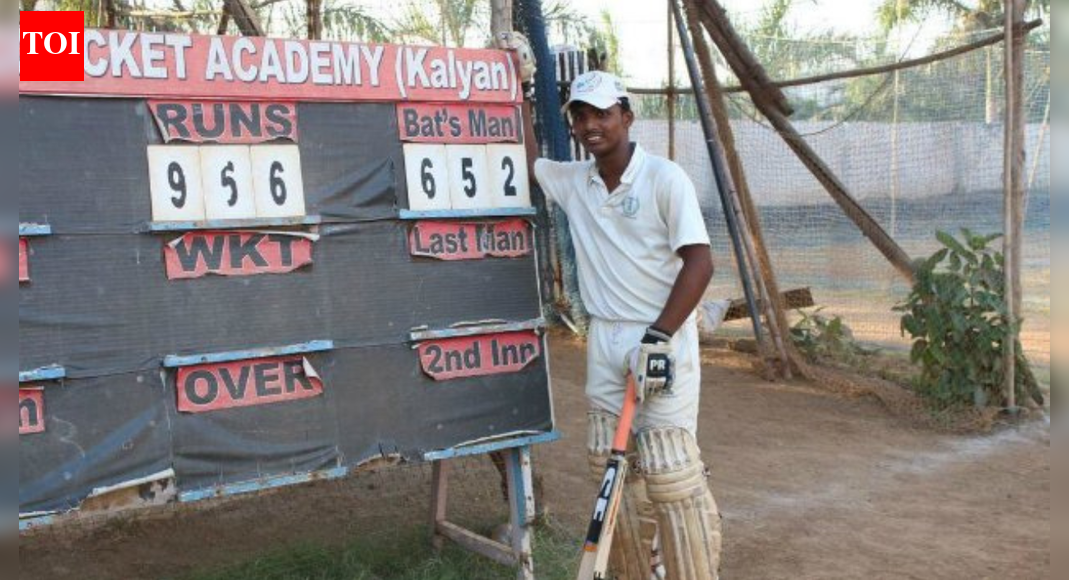
On this day ten years ago, a quiet patch of ground in a Mumbai suburb became the centre of the cricketing world. There were no grandstands, no roaring crowds, and no television history attached to it. Yet on 5 January 2016, it witnessed an innings that school cricket had never seen before.Pranav Dhanawade was fifteen. He opened the batting for Smt KC Gandhi School in a two-day inter-school match for the HT Bhandari Cup. By the time his team declared, he had scored 1009 not out off 327 balls. It was the first time anyone had crossed four figures in a recognised school match. A 117-year-old record was gone. Arthur Collins’ 628 from 1899 was history.

Bangladesh seek T20 WC match shift from India after Mustafizur Rahman’s IPL exit

The numbers still feel unreal a decade later. One thousand and nine runs. One hundred and twenty-nine fours. Fifty-nine sixes. A strike rate of 308.56. He spent 396 minutes at the crease, batting for over six and a half hours across two days. His team finished on 1465 for 3. Pranav alone had scored close to seventy per cent of the total.Pranav started cautiously. At lunch on the first day, he was on 45. By stumps, he had raced to 652 not out. Somewhere during that long evening, phones began ringing in the Dhanawade household. Friends and relatives called to say records were falling. By the time he walked off, he had already gone past Prithvi Shaw’s Indian school record of 546 and Arthur Collins’ mark that had stood for more than a century.Tuesday morning arrived with a new target in mind. One thousand. Reporters started turning up. Curious locals leaned against the fence. By lunch, Pranav was on 921. After the break, he crossed four figures. There was no celebration that matched the moment, just a young boy raising his bat on a dusty field as cameras scrambled for space.“I wanted to score big runs,” he later told The Indian Express. “I remember my coach telling me that no one will take me in the Mumbai team if I score these hundreds and two-hundreds.”When he went out to bat, the plan was simple. “When I go to bat, I only keep in mind that I had to play a big innings,” he told the BBC. “After playing on and on, I scored 100 runs, 200, 300, 400 runs.”There was luck along the way. A few catches were dropped. A stumping chance went begging. The boundaries were short and the opposition inexperienced. None of that takes away the stamina it required to stay there, ball after ball, session after session.The umpire noticed it. “I would say he was 101% fit temperamentally, and even after scoring so much, he was not tired,” Sunimal Sen told ESPNcricinfo. “Many times we see that batsmen, after scoring a hundred, say ‘Sir, we want water’, but he did not create this type of disturbance.”By the end of the match, Arya Gurukul were bowled out for 56 in their second innings. Smt KC Gandhi School won by an innings and 1382 runs. The result barely mattered anymore.Pranav’s father, Prashant, drives an autorickshaw around Kalyan. On the first day, a friend called him mid-shift. “Your son has 300 and won’t stop,” he said. Prashant rushed to the ground, watched another flood of runs, then returned the next morning with Pranav’s mother, Mohini, to see the moment everyone was waiting for.By Tuesday evening, the narrow lanes around Wayale Nagar were blocked by television vans. Prashant and Mohini gave interview after interview, barely catching their breath. Their son was being spoken about across the world.The Guardian called him “the first cricketer to navigate the nervous 990s”. Sachin Tendulkar posted on social media, congratulating him and urging him to work hard and “scale new peaks”. Ajinkya Rahane sent a message. MS Dhoni spoke about the importance of guidance. “To score like that anywhere, at that age, is very difficult,” he said. “The limelight will be on him, and it is important for his coach and parents to guide him right.”Michael Atherton mentioned the innings during a Test match broadcast. Maharashtra’s sports minister announced support for his education and coaching. Comparisons followed quickly. Too quickly, perhaps.Mumbai has always produced prodigies. Tendulkar and Vinod Kambli once put on 664 runs together as teenagers. Sarfaraz Khan scored 439 at twelve. Prithvi Shaw made 546 at fourteen. Pranav’s 1009 joined that list, louder and larger than all before it.Years later, the story sounded different. Pranav, now in his mid twenties, spoke about inconsistency, missed selections, and the weight of expectation. The pandemic took away opportunities. Others from his age group moved ahead. He was still chasing a place.“The expectation was huge after the record,” he admitted. “Every time I walked out to bat, I felt the pressure,” he told Cricket Graph.Yet the meaning of that day has not faded. On this day ten years ago, a boy from a modest family stood at a crease and refused to get out. For two days, cricket stopped being about levels and pathways and became something simpler. Bat. Ball. Time. A reminder that sometimes, history chooses the most unexpected corners to announce itself.


Source link

Virat Kohli in a MrBeast video? YouTuber says ‘trying to film with you’; makes public pitch | Cricket News


Virat Kohli in a MrBeast video? YouTuber says 'trying to film with you'; makes public pitch

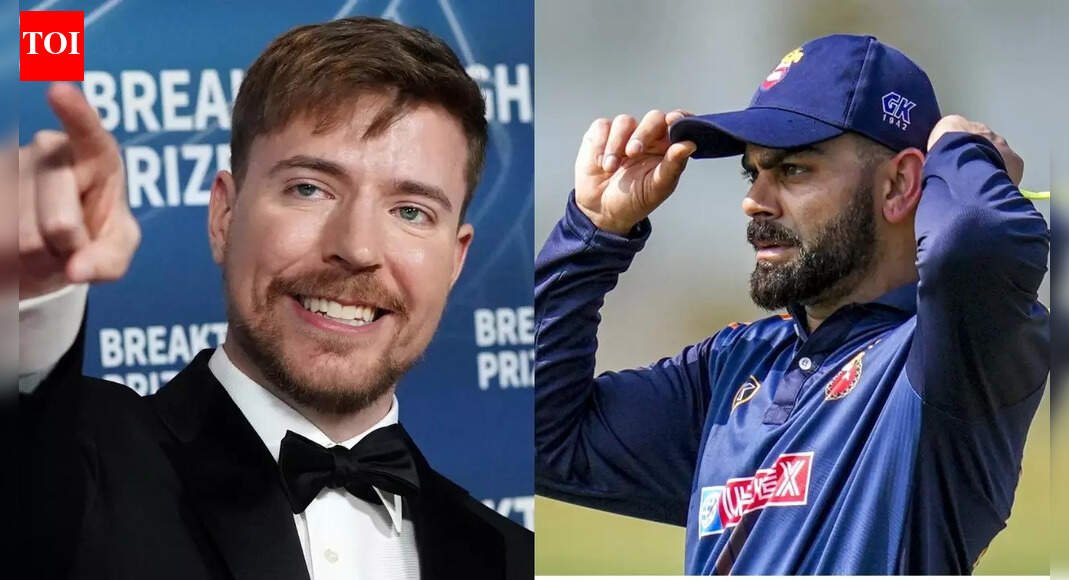
Popular American YouTuber James Stephen Donaldson, known globally as MrBeast, has once again reached out to star cricketer Virat Kohli, sending a public message to the former India captain days before the India vs New Zealand ODI series.MrBeast, who is known for challenge-based videos and collaborations with public figures, expressed his interest in working with Kohli during a conversation with NDTV.

Can Virat Kohli chase down Sachin Tendulkar’s hundred hundreds?

He said, “Hey Virat Kohli, I’m trying to film with you,” while also highlighting India as one of his biggest audience bases.Speaking during the interview, MrBeast said, “I love you guys. I want to come back there sometime soon. Hey, Virat Kohli, if you are watching this [interview], I’m trying to film with you. You guys have always been great, most people don’t realize that India is one of our largest audiences, so very grateful for all of you.”This is not the first time MrBeast has publicly approached Kohli for a collaboration. In 2025, he had posted on X, writing, “”Virat Kohli Hey! Anyway I could get you in a video?”That post had gone viral at the time, drawing attention from both cricket followers and YouTube viewers. While a collaboration between the two has not yet taken place, MrBeast’s latest comments have again triggered discussion on social media.


Source link

‘He can get under your skin’: Michael Neser opens up on Ben Stokes–Marnus Labuschagne clash | Cricket News


'He can get under your skin': Michael Neser opens up on Ben Stokes–Marnus Labuschagne clash
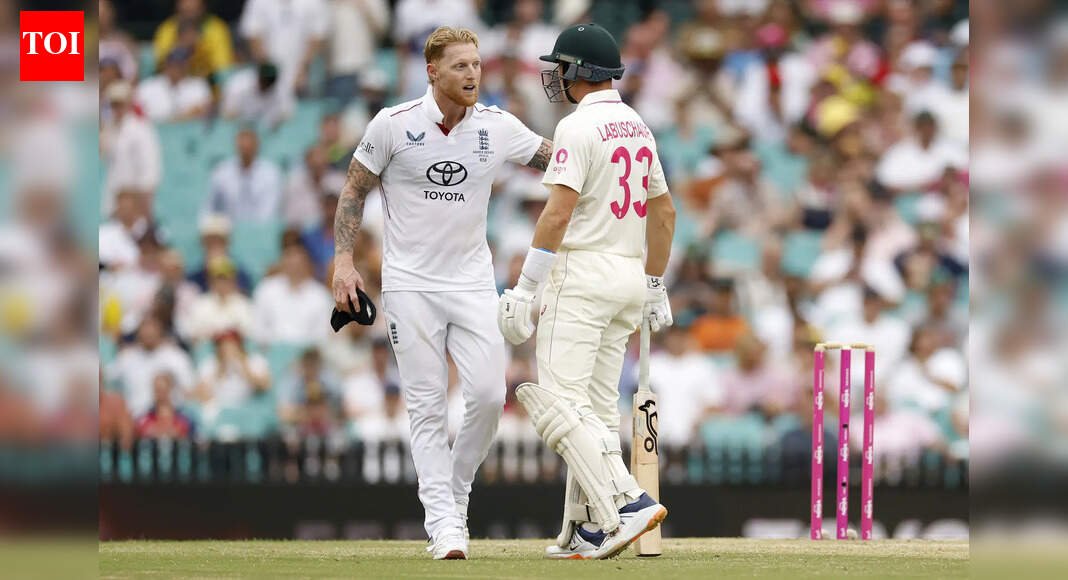
Marnus Labuschagne of Australia and Ben Stokes of England exchange words (Photo by Darrian Traynor/Getty Images)

Australia’s Marnus Labuschagne was at the heart of the action on Day 2 of the fifth Ashes Test in Sydney, making his impact felt both with the bat and the ball while also briefly clashing with England captain Ben Stokes late on Monday. During a tense moment just before stumps, Labuschagne appeared to rile Stokes while he was batting, prompting a fiery exchange on the field. But the Australian’s attempt to get under the English captain’s skin ultimately counted for little as Stokes had the final say, dismissing Labuschagne for 48 in the first innings. The 68-ball knock played a crucial role in Australia’s response, although he fell just short of a half-century.

Sam Curran press conference: Sam hails Desert Vipers’ consistency after historic ILT20 title win

Asked about the on-field confrontation during the post-day press conference, Michael Neser was dismissive, saying, “Not a clue…” He went on to highlight Labuschagne’s competitive temperament, adding, “It’s just the fact that he’s such a strong competitor that he can get under your skin. It’s just Marnus for you.” Labuschagne’s contributions with the ball were equally notable. Earlier in the day, he removed England’s Jamie Smith, who was well set on 46. Smith attempted an aggressive shot against a short delivery from Labuschagne and found a fielder on the boundary just before lunch. Neser explained that Labuschagne’s bowling is no accident, noting, “It’s not like it’s just a fluke. He’s actually practiced it. The one thing about Marnus is his quicker ball is actually quite a lot quicker – he was in the 130s (kph) and then he can bowl anywhere from 112 to 130, so it’s quite hard to get a read on him when he’s going like that. Labuschagne’s ability to contribute with the ball is not new to his teammates. Neser said, “He loves bowling. We’ve seen it in Sheffield Shield cricket. It’s not a surprise to us because he’s actually done that role quite often in Shield cricket and got a fair few wickets bowling short.” His part-time spin and seam options provide Australia with valuable flexibility in the middle overs, adding depth to a batting-heavy line-up. England were bowled out for 384 in their first innings, leaving Australia with a manageable target to build momentum. By the close of play on Day 2, Australia had reached 166 for 2, with Travis Head leading the reply in impressive fashion. Head remained unbeaten on 91 from 87 balls, while Michael Neser held the other end at 1 not out, leaving Australia in a strong position as they looked ahead to the next day’s play. Labuschagne’s performance, both in frustrating Stokes and taking key wickets, reinforced his status as a pivotal all-round contributor for Australia in the Ashes series. His competitive edge, ability with the ball, and disciplined batting are proving crucial as the contest heads into the final stages.


Source link

No more 3-4-3 as Manchester United sack head coach Ruben Amorim after Leeds draw; here’s why | Football News


No more 3-4-3 as Manchester United sack head coach Ruben Amorim after Leeds draw; here's why

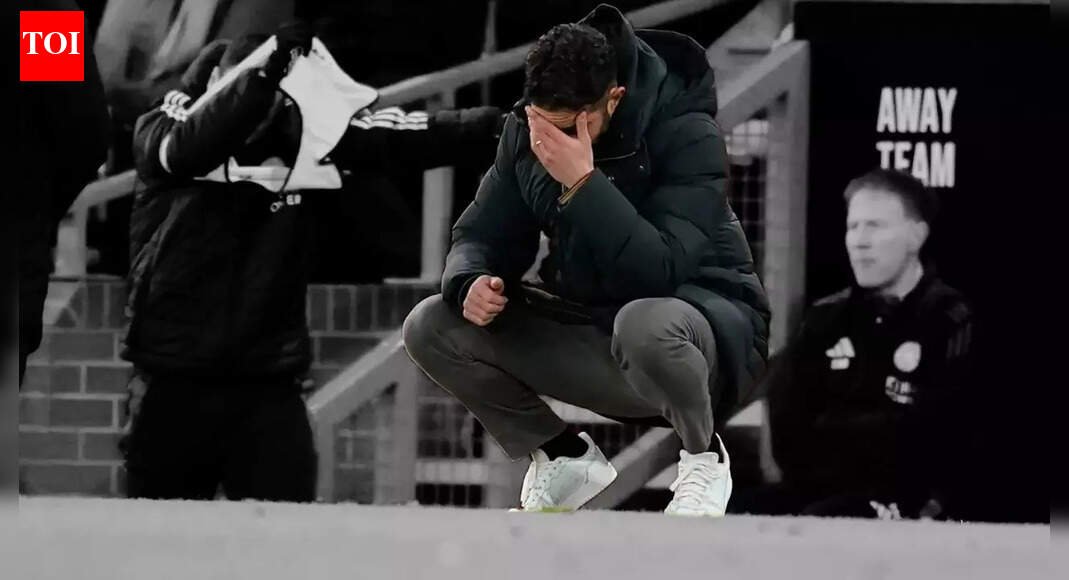
Manchester United on Monday sacked head coach Ruben Amorim, hours after the Portuguese spoke about tensions within the club following Sunday’s 1-1 draw against Leeds United. Amorim had said the club hierarchy needed to “do their job” and that he should be allowed to work without interference.The 1-1 draw at Elland Road was Amorim’s final match of his 14-month spell in charge. The result left Manchester United sixth in the Premier League after 20 matches.“With Manchester United sitting sixth in the Premier League, the club’s leadership has reluctantly made the decision that it is the right time to make a change,” United said in a statement. “This will give the team the best opportunity of the highest possible Premier League finish.”Former midfielder and current Under-18s coach Darren Fletcher is expected to take charge on an interim basis. His first match is likely to be away at Burnley on Wednesday night. The club is expected to make a permanent appointment in the summer.Reports had claimed that United’s head of recruitment, Christopher Vivell, asked Amorim to adapt his tactics after Fulham manager Marco Silva explained how his team planned to counter United’s system during their draw in August. Amorim changed his usual three-man defence for the win over Newcastle but returned to his preferred system in draws against Wolves and Leeds.Amorim was appointed in November 2024 after Erik ten Hag was sacked. The decision to remove him was taken by the club’s leadership, including chief executive Omar Berrada and director of football Jason Wilcox, following a breakdown in relations.Under the terms of his contract, which runs until 2027 with an option for a further year, United will have to pay the full amount, as there is no clause for a reduced exit.After the Leeds match, Amorim said, “It’s going to be like this for 18 months or when the board decide to change. That was my point, I want to finish with that. I’m not going to quit. I will do my job until another guy is coming here to replace me.”Amorim had faced criticism for sticking to a 3-4-3 formation. Before the Leeds game, he spoke about differences over the system and difficulties in signing players suited to it. He again used the 3-4-3 against Leeds.


Source link

On This Day: The accidental birth of limited-over cricket at the MCG | Cricket News


On This Day: The accidental birth of limited-over cricket at the MCG
Representative Photo: Melbourne Cricket Ground. Getty Images)

On This Day, 55 years ago, the game of cricket gave birth to a new form of international match when Australia hosted England at the Melbourne Cricket Ground in what turned out to be the first official One-Day International (ODI). It was a stop-gap solution to salvage a rain-washed Test at the MCG and, much to the surprise of the Australian cricket board, 46,000 fans turned up to watch the contest. With that, a new format of the game was born — by a happy accident.Go Beyond The Boundary with our YouTube channel. SUBSCRIBE NOW!The year was 1971, and the third Test between Australia and England was washed out due to rain. The teams decided to play a 40-over-a-side match instead. The grand reception to the game led to the birth of an exciting new format, which gained popularity in no time and witnessed its first World Cup just four years later, in 1975.

Bangladesh seek T20 WC match shift from India after Mustafizur Rahman’s IPL exit

Cricket has evolved significantly since then, including the emergence of Twenty20 Internationals in February 2005, first played between Australia and New Zealand. Even shorter formats of T20 are now being experimented with in franchise cricket, but officially, three formats remain active internationally — Tests, ODIs and T20Is.ODI cricket became an epitome of the commercialisation of the game, bringing in more money long before franchise-based T20 leagues became the toast of the town.That 40-over-a-side contest between Australia and England more than five decades ago has resulted in 13 World Cups so far, with the next scheduled for 2027.

Poll

Which cricket format do you prefer the most?

Australia are the most successful team in World Cups, held every four years, with six titles. India and West Indies have won it twice each, with the Caribbeans claiming the first two editions. England, Sri Lanka and Pakistan have each lifted the trophy once.Apart from the World Cups, the ICC — cricket’s world governing body — organised the highly successful ICC Champions Trophy, formerly known as the ICC KnockOut Trophy. The tournament, which began in 1998, has seen nine editions so far, with India the most successful side, winning it three times. They are also the reigning champions after lifting the trophy in 2025.India’s batting maestro Sachin Tendulkar is the most successful batter in ODIs with 18,426 runs and 49 hundreds in 463 matches, closely followed by modern-day great Virat Kohli with 14,557 runs, including a record 53 centuries in just 308 games. Among bowlers, Sri Lankan legend Muttiah Muralitharan leads the wicket-takers’ list with 534 scalps from 350 matches, followed by Pakistan great Wasim Akram with 502 wickets from 356 games.All these extraordinary developments began from a humble stop-gap match on this day — January 5, 1971 — at the MCG. And here’s how the first-ever ODI played out:In front of 46,000 spectators, Australia won the toss and captain Bill Lawry sent England in to bat.Geoffrey Boycott and John Edrich opened England’s innings in the first ODI. The stand was short-lived as Boycott was dismissed for 8 off 37 balls by Alan Thomson, reducing England to 21 for 1.Edrich then steadied the innings with a 66-run partnership for the second wicket alongside Keith Fletcher, who scored 24 off 47 balls before being dismissed by Ashley Mallett. Edrich held one end firmly, scoring the first-ever ODI half-century.A 37-run stand for the third wicket with Basil D’Oliveira (17 off 16) followed, but England then lost wickets at regular intervals. From 87/2, they slid to 156/7 with the dismissal of Edrich for 82. His 119-ball knock included four boundaries.England were eventually bowled out for 190 in 39.4 overs. Ashley Mallett (3/34 in 8 overs) and Keith Stackpole (3/40 in 8 overs) took three wickets each, while Graham McKenzie (2/22 in 7.4 overs) ended the innings by dismissing Alan Knott for 24 off 31 balls.Chasing 191 from 40 overs, Australia made a shaky start, losing opener Stackpole for 13 to Ken Shuttleworth, caught and bowled. At 19/1, Lawry and Ian Chappell added 32 runs before Lawry fell for 27 off 49 balls, leaving Australia at 51/2.Ian Chappell scored the second half-century in ODI history and added 66 runs for the third wicket with Doug Walters to keep the chase on track. Walters scored 41 off 51 balls, hitting six fours, as Australia reached 117/3.A further 41-run stand between Chappell and Bill Redpath (12) took the hosts close to victory. Chappell was eventually dismissed for 60 off 103 balls, with Australia needing 26 more runs and five wickets in hand.Greg Chappell (22 not out) and Rod Marsh (10 not out) then guided Australia home in 35 overs, sealing a five-wicket win with five overs to spare.Despite the defeat, England’s John Edrich was named Player of the Match for his 82 off 119 balls, becoming the first to get the award in limited-over cricket.


Source link

‘Unlucky to miss out’: AB de Villiers explains why India ignored this star player | Cricket News


'Unlucky to miss out': AB de Villiers explains why India ignored this star player
Mohammed Siraj (Photo by Ayush Kumar/Getty Images)

Former South Africa batter AB de Villiers has said Mohammed Siraj has been unfortunate to miss selection for the upcoming ICC T20 World Cup, pointing to team balance rather than form as the deciding factor. Speaking on his YouTube channel, De Villiers explained that Siraj’s exclusion was more about combination choices than performance. “We see Siraj in the ODI squad, he is one of the unlucky guys to miss out. But that is once again down to the balance,” De Villiers said.

Bangladesh seek T20 WC match shift from India after Mustafizur Rahman’s IPL exit

He highlighted India’s preference for a varied bowling attack, with Jasprit Bumrah and Arshdeep Singh leading the pace group and Harshit Rana offering added depth with the bat. “You have got Bumrah and Arshdeep. Harshit can hold the bat as well. So there are your three seamers. I think that is the reason why you went for Harshit because Siraj is only an outright bowler,” he added. De Villiers also pointed to India’s strategic focus on spin during the tournament. “They do not want to focus too much on seam bowling. The focus is on the spinners. If they get wickets with the seamers upfront, they almost see it as a bonus in a way,” he said, while stressing that Siraj remains firmly in India’s long-term plans. “So Siraj is unlucky but at least he is in the ODI plans moving forward for the 2027 World Cup.” Siraj had a solid IPL season with Gujarat Titans, picking up 16 wickets from 15 matches, but did not feature in a single T20I in 2025. De Villiers believes India have covered all areas heading into the World Cup. “The problem with Harshit Rana with the new ball is that he doesn’t have a lot of experience at the international level. But if he can give you a few overs with Bumrah and Arshdeep, there is enough overs, and then Shivam and Hardik can fill up,” he said. He underlined the depth in India’s bowling unit and its ability to shift momentum. “They also cover all bases with spin, and that’s where they will focus on trying to win games. When Bumrah has a quiet night, a Kuldeep comes through and gets you four and vice versa. Then there is Hardik coming through in the middle and turning the momentum around,” “Those are the kind of championship teams you want, and India has got all those bases covered,”De Villiers said.


Source link