Breaking News
‘Indian cricket in golden phase’: BCCI after T20 World Cup 2026 triumph | Cricket News

'Indian cricket in golden phase': BCCI after T20 World Cup 2026 triumph

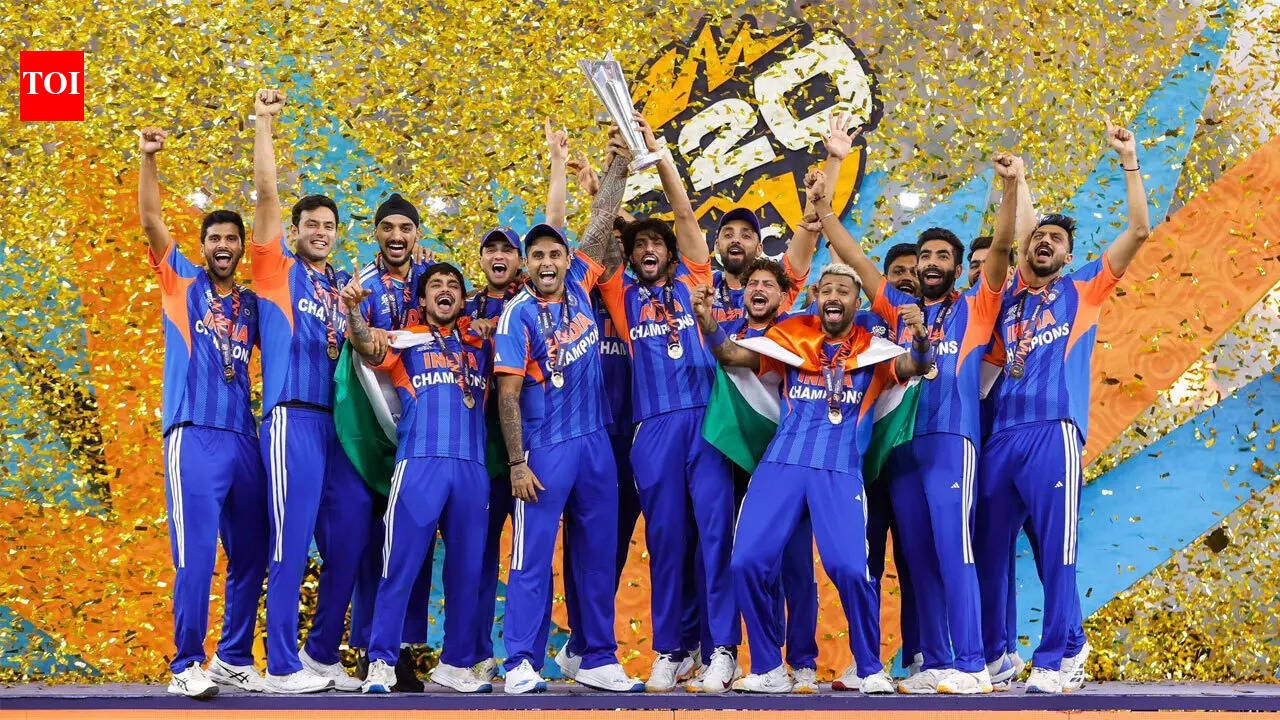
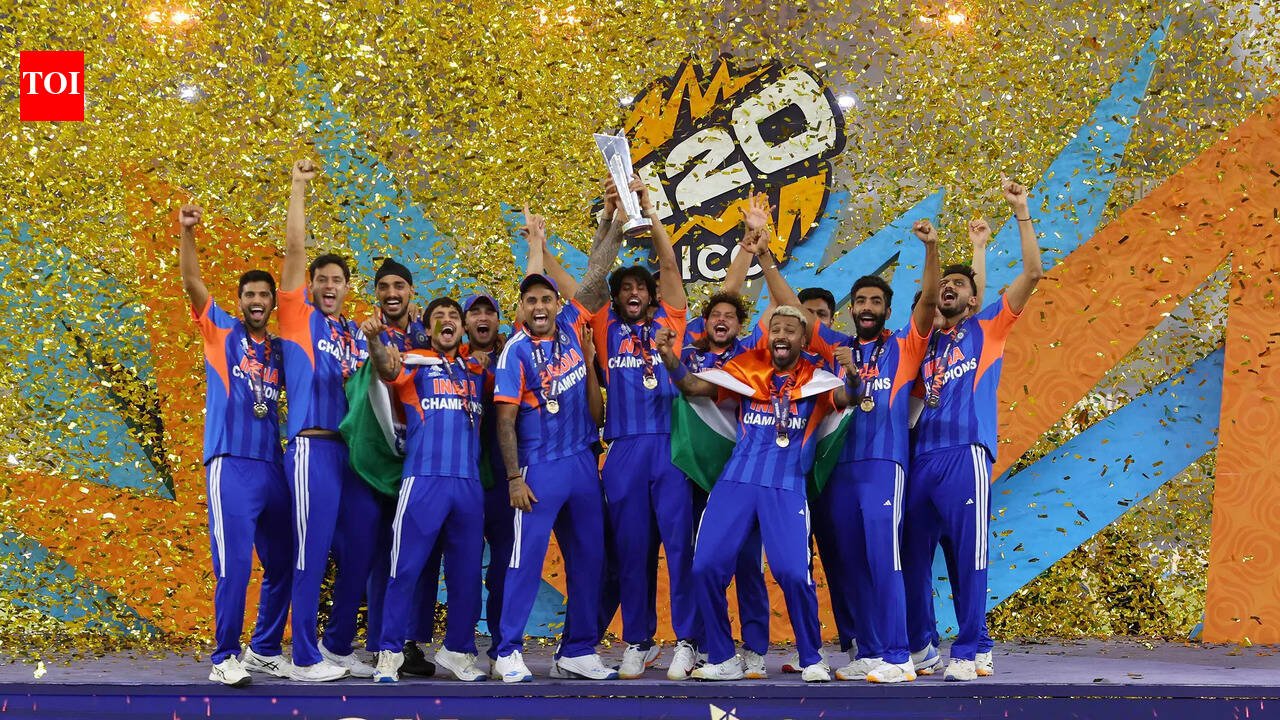
NEW DELHI: The Board of Control for Cricket in India (BCCI) congratulated India cricket team after their victory in the ICC Men’s T20 World Cup 2026 final against New Zealand national cricket team at the Narendra Modi Stadium in Ahmedabad.India registered a commanding 96-run victory in the summit clash, lifting the trophy in front of a packed home crowd.

Ahmedabad erupts as Team India arrive at hotel after T20 World Cup win

The triumph marked a historic milestone as India successfully defended the ICC Men’s T20 World Cup title, becoming the first team in the tournament’s history to retain the trophy. The victory was also significant as India became the first nation to win the ICC Men’s T20 World Cup on home soil, making the occasion even more memorable for millions of fans.Under the leadership of captain Suryakumar Yadav, the Indian team showcased fearless and dynamic cricket throughout the competition. With explosive batting, disciplined bowling and exceptional fielding, the side remained consistent across all phases of the tournament and delivered when it mattered most.The BCCI also praised head coach Gautam Gambhir and the support staff for their leadership, planning and preparation, which helped build a confident and well-balanced team capable of performing under pressure.“The Board also commends the Men’s Selection Committee for identifying and backing a group of players who combined experience with youthful energy, resulting in a formidable squad that delivered on the biggest stage. The BCCI also thanks all its affiliated State Associations for their continued contribution in helping achieve this vision,” BCCI said in a statement.Congratulating the team, BCCI president Mithun Manhas said, “Winning the ICC Men’s T20 World Cup is a moment of immense pride for the entire nation. To defend the title and achieve this feat on home soil makes it even more special. The team played outstanding cricket throughout the tournament under the leadership of Suryakumar Yadav and the guidance of Head Coach Gautam Gambhir. I congratulate every member of the squad, the coaching staff and the selectors for this remarkable accomplishment.BCCI secretary Devajit Saikia said, “Indian cricket is currently in its golden phase. India hosted two major ICC events — the ICC Women’s World Cup last year and the ICC Men’s T20 World Cup — and to emerge champions in both is simply remarkable. This success is also a reflection of the strong foundations laid over the years through progressive planning and vision. The contributions of Mr Jay Shah during his tenure in strengthening Indian cricket’s structures and global standing have played a significant role in shaping this era of excellence. Kudos to Captain Suryakumar Yadav and his fearless group, the team management led by Gautam Gambhir and the selectors for building a balanced side capable of excelling on the world stage yet again.”BCCI vice-president Rajeev Shukla added, “This victory is the result of collective effort, meticulous preparation and the commitment shown by the players and support staff throughout the tournament. The team has displayed remarkable composure and confidence in high-pressure situations, a hallmark of champion sides. To win the ICC Men’s T20 World Cup in front of our home fans makes the moment even more special and memorable. I would like to acknowledge the efforts of ICC Chair Mr Jay Shah, whose strong leadership continues to strengthen the global growth of the game. We thank the ICC for organising such a wonderful tournament that showcased the very best of T20 cricket. This triumph will remain a historic milestone for Indian cricket and a source of immense pride for the entire nation.”
Source link

Sri Lanka call off Afghanistan series in UAE due to Middle East conflict | Cricket News


Sri Lanka call off Afghanistan series in UAE due to Middle East conflict

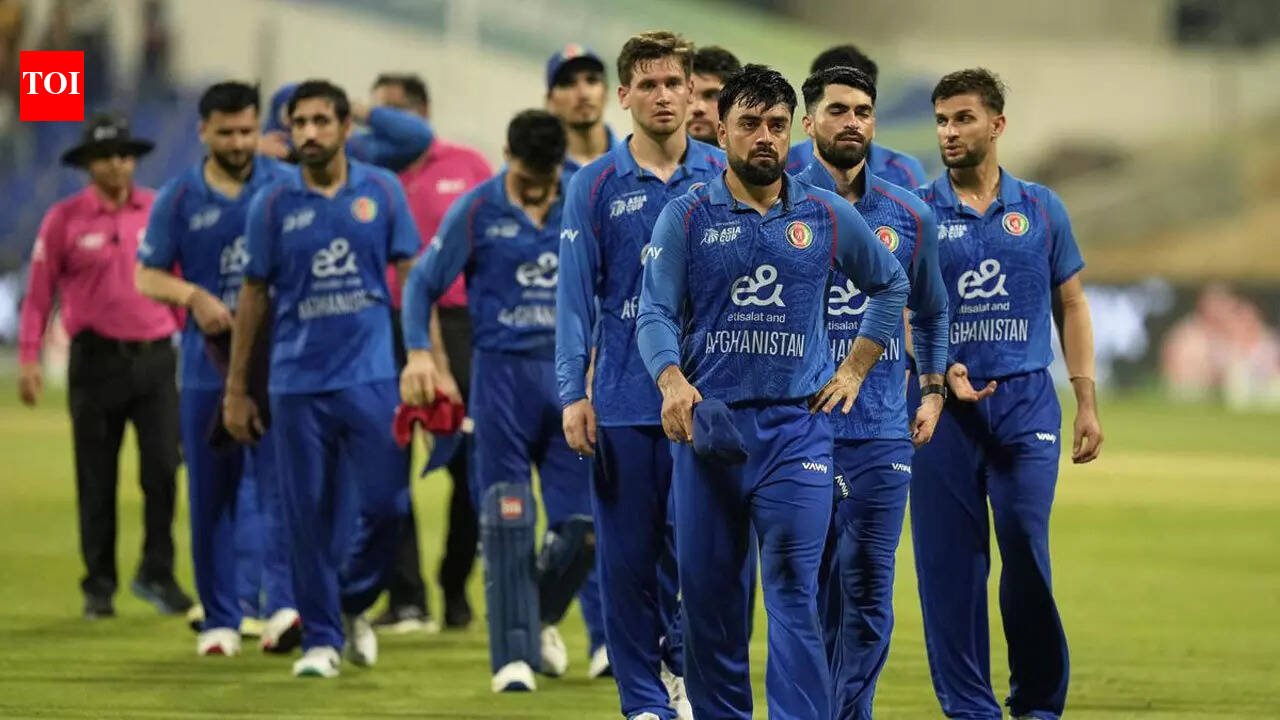
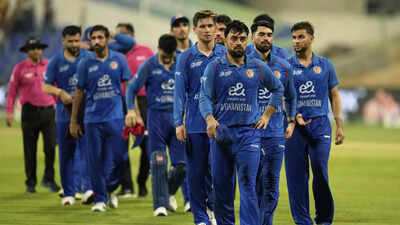
Sri Lanka national cricket team have indefinitely postponed their upcoming white-ball series against Afghanistan national cricket team, which was scheduled to begin in the United Arab Emirates this week, an official confirmed on Monday.“We had to cancel because of the flight situation… and the ongoing fighting in the region,” a Sri Lanka Cricket official told AFP.

Yash Dhull Exclusive: Heart surgery, recovery and senior World Cup dream

The two teams were scheduled to play three T20 internationals in Sharjah on March 13, 15 and 17, followed by three One-Day Internationals in Dubai on March 20, 22 and 25.The tour would have marked the first time Afghanistan hosted Sri Lanka for a bilateral series.Tensions have escalated across the Middle East after the United States and Israel attacked Iran on February 28, prompting Tehran to launch retaliatory strikes.The conflict has disrupted flights across the region, including in Dubai, where the airport was briefly shut on Saturday as Iran fired drones and missiles at targets across the Gulf.War-torn Afghanistan has never hosted an international cricket match and has instead staged its home fixtures in India or the United Arab Emirates.


Source link

‘Nothing to do with the stadium’: Harbhajan Singh shuts down Ahmedabad ‘panauti’ talk | Cricket News


'Nothing to do with the stadium': Harbhajan Singh shuts down Ahmedabad 'panauti' talk
Suryakumar Yadav and Tilak Varma of India lift the trophy (Photo by Pankaj Nangia/Getty Images)

Former India spinner Harbhajan Singh has brushed aside the notion that the Narendra Modi Stadium in Ahmedabad brings bad luck for the Indian team, stressing that the outcome of matches depends entirely on how the players perform on the day. The debate around the venue intensified after India’s defeat to Australia national cricket team in the final of the 2023 Cricket World Cup at the same stadium. However, Harbhajan insisted the loss had nothing to do with the ground itself and was simply down to Australia playing better cricket in that match.

Ahmedabad erupts as Team India arrive at hotel after T20 World Cup win

“When two good teams play against each other, one will obviously lose. When India played against Australia (in 2023), Australia were the better team on that particular day. In this game, we saw if you put your right foot forward from ball one, you will get the results. Whatever people used to think, that this ground is a ‘panauti’ (unlucky) or whatsoever I have heard on social media, that is done and dusted now.” Harbhajan also pointed out that similar perceptions had once existed about another iconic venue, Eden Gardens in Kolkata, before results eventually turned around. “Lot of people talk about Eden Gardens as well. Eden didn’t have the best of records, but somewhere down the line it changed. Luckily, in our era, we managed to do that. Lot of people talk about this Ahmedabad stadium as well – if the game is happening there, India might lose. But it has nothing to do with the cricketers or the result of the game. It is the mindset of the people who have never played cricket,” Harbhajan told India Today. His remarks follow similar views expressed by fellow off-spinner Ravichandran Ashwin, who also urged fans not to treat the Ahmedabad venue as a jinx ahead of India’s final clash against New Zealand national cricket team in the ICC Men’s T20 World Cup. “You can lose a game at a venue and win the next one. What is there in this? We have won a lot of games in that stadium. Don’t make a stadium like this taboo,” Ashwin said on his show Ash ki Baat while discussing the conversation surrounding the venue before the title clash. The veteran spinner, who has played 106 Tests for India, added that the current Indian team would not be distracted by such narratives. “I don’t think it should come into the way. I am sure, after a point of time, that monkey on the back will be there. But now, I don’t think the team will be thinking on those lines,” he added.


Source link

Suryakumar Yadav sets LA 2028 target after India’s historic T20 World Cup win: ‘Next stop Olympic gold’ | Cricket News


‘Next stop Olympic gold’: Suryakumar Yadav sets LA 2028 target after India's historic T20 World Cup win
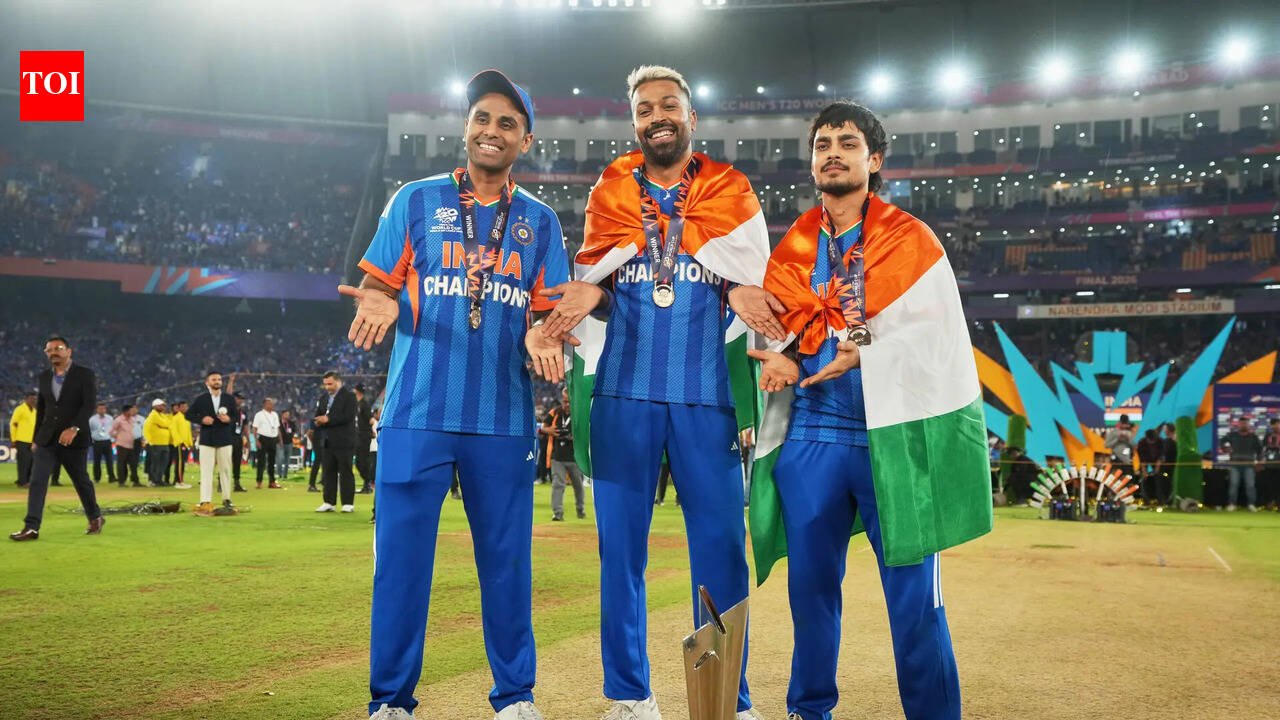
India’s Hardik Pandya, center, captain Suryakumar Yadav, left, and Ishan Kishan pose with the trophy. (AP Photo)

NEW DELHI: Fresh from guiding India to a historic T20 World Cup triumph at home, captain Suryakumar Yadav has already set his sights on the next major milestone — Olympic gold at the 2028 Summer Olympics.Go Beyond The Boundary with our YouTube channel. SUBSCRIBE NOW!India delivered a dominant performance in the final in Ahmedabad on Sunday, thrashing New Zealand by 96 runs to become the first team to successfully defend the T20 World Cup title and the first to win the trophy three times. The victory also marked the first time a team had lifted the T20 crown on home soil.

T20 World Cup: Gautam Gambhir, Suryakumar Yadav after Team India win

Speaking at a celebratory midnight press conference, Suryakumar described the achievement as a defining moment for the team but insisted that the focus was already shifting to future challenges.“It has been very special,” he said as celebrations continued across the country. “And definitely the next goal is Olympics, Olympic gold and also the T20 World Cup that year.”Cricket will return to the Olympic Games at Los Angeles 2028 — the first time the sport will feature in the Olympics since 1900 — opening a new chapter for international cricket.India’s recent dominance in the shortest format has been built on a fearless, attacking style that began taking shape during the 2024 T20 World Cup triumph under then-captain Rohit Sharma.“I think that drought ended in 2024 after a really long time and from there we never looked back,” Suryakumar said, referring to India’s major title drought following the 2013 Champions Trophy.“We played a different brand of cricket in 2024 and from there we understood how this team needs to work going forward. And it’s been a wonderful journey since then.”Following the retirements of Rohit Sharma and Virat Kohli from T20 internationals after the 2024 World Cup, Suryakumar took over leadership of the side and has overseen a new era of aggressive cricket.“We wanted to do something special in front of the home crowd,” he said. “We want to continue doing that… and never stop.”


Source link

‘Stop celebrating milestones, celebrate trophies’: Gautam Gambhir’s strong message after India’s T20 World Cup triumph | Cricket News


‘Stop celebrating milestones, celebrate trophies’: Gautam Gambhir’s strong message after India’s T20 World Cup triumph
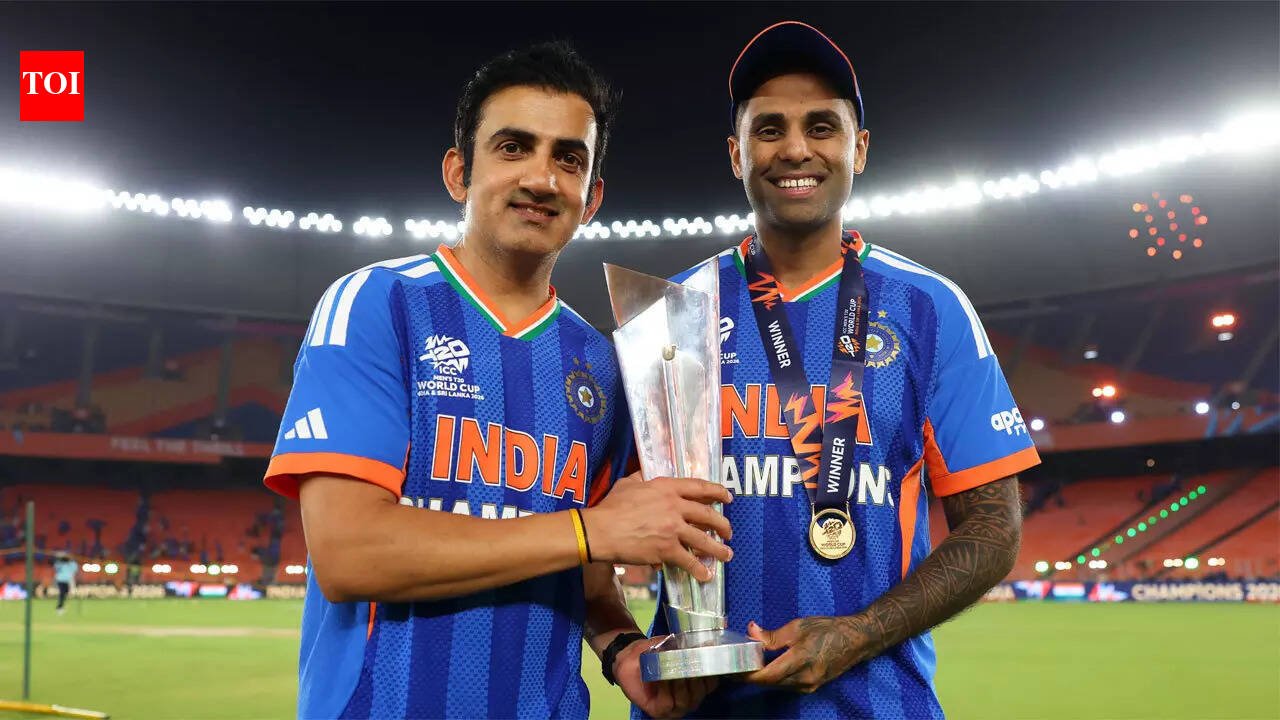
India head coach Gauitam Gambhir with captain Suryakumar Yadav. (Pic credit: BCCI)

NEW DELHI: For Gautam Gambhir, there is one idea that outweighs every statistic, every personal landmark and every century celebrated in record books. Trophies matter. Milestones do not.Go Beyond The Boundary with our YouTube channel. SUBSCRIBE NOW!The India head coach reiterated that philosophy yet again after India crushed New Zealand by 96 runs in the final to secure their third ICC Men’s T20 World Cup title on Sunday. Even amid the celebrations of a dominant, era-defining victory, Gambhir used the moment to remind everyone what truly counts.

T20 World Cup final: Fans in Ahmedabad go wild | India create history

“I think my simple philosophy with Surya has always been that milestones don’t matter. It’s the trophies that matter,” Gambhir said, referring to T20 captain Suryakumar Yadav. “For too long in Indian cricket, we’ve spoken about milestones. And I hope, till I’m there, we’re not going to talk about milestones.”The former India opener, who himself top-scored for the team in two ICC finals during his playing days, did not mince words while addressing the media. His message was clear: stop glorifying individual numbers.ALSO READ: Firm ideas, flexible tactics: How Gambhir helped India tame T20’s fickle nature“Stop celebrating milestones, celebrate trophies,” Gambhir said. “That is going to be important because the bigger purpose of a team sport is to be winning trophies, not scoring individual runs. It has never mattered to me, and it will never matter to me.”According to Gambhir, the current Indian team under Suryakumar has fully bought into that mindset. “I have been very fortunate that Surya and me were on the same page, especially on this front,” he added.He cited the performances of Sanju Samson during the business end of the tournament as the perfect example of the approach. Samson’s explosive knocks — including a 97 not out in the virtual quarter-final and crucial scores in the semi-final and final — were built around team needs rather than personal landmarks.“You can see it in the last three games, what Sanju did,” Gambhir said. “Imagine if you would have been playing for a milestone, probably we wouldn’t have got 250.”Away from the field, Gambhir also brushed aside the noise from social media criticism that has often followed him during India’s highs and lows.“My accountability is not towards any social media,” he said. “My accountability is towards those 30 people sitting in the dressing room.”For Gambhir, the team environment itself is built on something deeper than results — trust.“You pick the team on trust and faith. You don’t pick on hope,” he explained. “And when you pick someone on trust and faith, you don’t lose that after four or five games.”


Source link

T20 World Cup: The Rohit Sharma playbook Suryakumar Yadav keeps in his pocket | Cricket News


T20 World Cup: The Rohit Sharma playbook Suryakumar Yadav keeps in his pocket
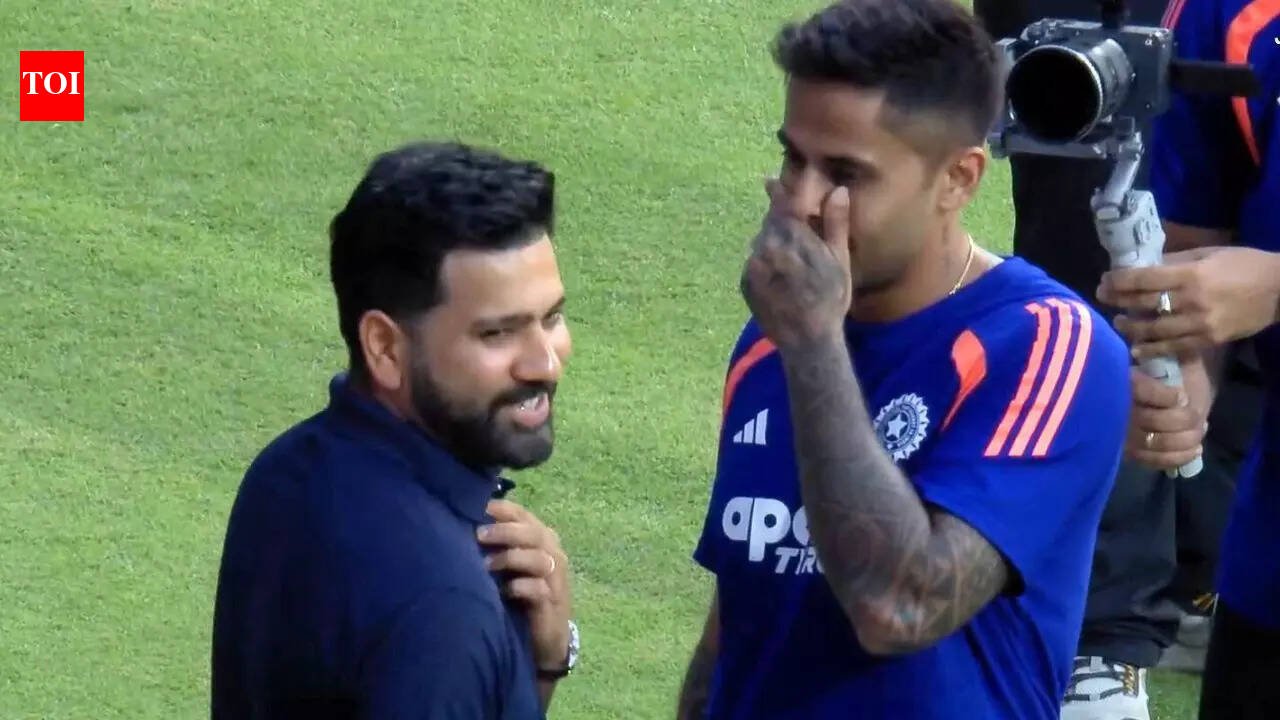
Rohit Sharma and Suryakumar Yadav (Screengrab)

In the run-up to this T20 World Cup, Suryakumar Yadav was asked about the all-attack approach he had instilled in the T20 team. India were on an impressive winning run and the question perhaps begged itself. But the captain immediately contradicted the journalist.Go Beyond The Boundary with our YouTube channel. SUBSCRIBE NOW!“It’s true that we are playing that form of cricket, but it’s not me who started it,” he said. “We started playing this brand of cricket under Rohit,” Surya said, explaining how deeply indebted the team was to its former captain, under whom Surya has played both for India and Mumbai Indians.

Kuldeep Yadav delighted for Sanju Samson | From Under-12 days to World Cup glory

It is the mindset change that Rohit, working in tandem with then coach Rahul Dravid, first brought to this team that has made them such a powerhouse in T20 cricket today. We need to go back and understand how the change happened.India, after a brilliant initiation to the T20 format with the inaugural World Cup win under MS Dhoni in 2007, had slowly settled into a style that was getting outdated. Though the team was always competitive through the 2010s, the fact that Dhoni — and later Virat Kohli’s team — didn’t win a World Cup indicated something was going wrong.ALSO READ: Firm ideas, flexible tactics: How Gautam Gambhir helped India tame T20’s fickle natureThe point of inflection probably came in the 2022 World Cup in Australia when India lost by 10 wickets to England in the semifinal in Adelaide. Rohit-led India had put up 168 on that day, a target which England galloped to in 16 overs.After that harsh defeat, Rohit understood that something had to change. That’s when he decided to bring in a complete change of approach to T20 cricket. It started with the opening partnership itself and Rohit took it upon himself to launch an attack right from the beginning. Up until then, 50 runs were more than acceptable in the Powerplay.Taking a cue from teams like Australia and England, Rohit figured that the envelope needed to be pushed and 75 was something that India should target in the first six overs. It didn’t matter to him if a couple of wickets fell in the process. The idea was to take the battle to the opposition right from the word go.Rohit showed the world how it could be done during the 2024 World Cup in St Lucia, when his 41-ball 92 didn’t just help India thrash Australia but sent them home from the Super Six stage.To have that no-fear approach, there was a sacrifice that Rohit had to make. No could no longer go in with four specialist bowlers. It had to be three and they were backed up by three (or four) allrounders. In 2024, it was Ravindra Jadeja, Axar Patel, Shivam Dube and Hardik Pandya who were backing up Jasprit Bumrah, Arshdeep Singh and Kuldeep Yadav, the three bowlers.This meant that while batters could bat with a sense of freedom secure in the knowledge that there is cover till No. 8, the specialist bowlers had to take more responsibility.It, of course, helped that India found Jasprit Bumrah at the peak of his powers. The unconventional pacer, who hardly goes for more than 25 in his four overs, invariably gave India the extra cushion to work with. Post 2024, as Rohit, Virat Kohli and Jadeja retired and Surya took over, he started taking this philosophy to the next level.Of course, it helped that he got a coach in Gautam Gambhir who too believes in a similar philosophy. Surya decided that Abhishek Sharma was his No. 1 opener. It was after an IPL game where he was the Man of the Match that Abhishek said, “Surya-bhai keeps telling me to go on playing like this. He follows my game closely, which gives me a lot of confidence.”While Abhishek was up and down in this World Cup, India’s lineup — with eight batters — never took a backward step. Sanju Samson, who found his spot in the XI in the latter stages, came in with the same mindset. Even though Samson had failed in a number of games before he got his chance against Zimbabwe in Chennai, the team management ensured that he didn’t change his batting style.It was this fearlessness flowing down the order that helped India get scores of 256-4 and 253-7 in the two must-win games against Zimbabwe and England and chase down 199 against the West Indies.The approach had its costs, putting extreme pressure on the allrounders, especially with mystery spinner C Varun losing his rhythm. But Surya, just like Rohit before him, knew that with Jasprit Bumrah in his arsenal, he could afford that risk. The fact was that Hardik found his mojo, Arshdeep was dependable and Axar delivered just when it mattered. All of it mattered in the end.With the defeat to South Africa, there were questions whether the philosophy was faulty. But Surya was adamant and stuck with an idea that he had seen working, both as a player and captain. The conviction had a lot to do with what he learnt from his predecessor Rohit.“In sports, wins and losses keep happening. Everybody works hard, sometimes, it works and sometimes it doesn’t. I have learnt this from Rohit that in life, being balanced is important. I have never seen his character change, through good or bad times,” Surya pointed out, in an emphatic hat-tip to his master.It is this clarity of thought that did the job for India the last time, and it is the same playbook that they fell back on now, to become undisputed kings of the T20 universe.


Source link

Pillars of the T20 dynasty: Key inflection points for Team India from 2024–26 | Cricket News


Pillars of the T20 dynasty: Key inflection points for Team India from 2024–26
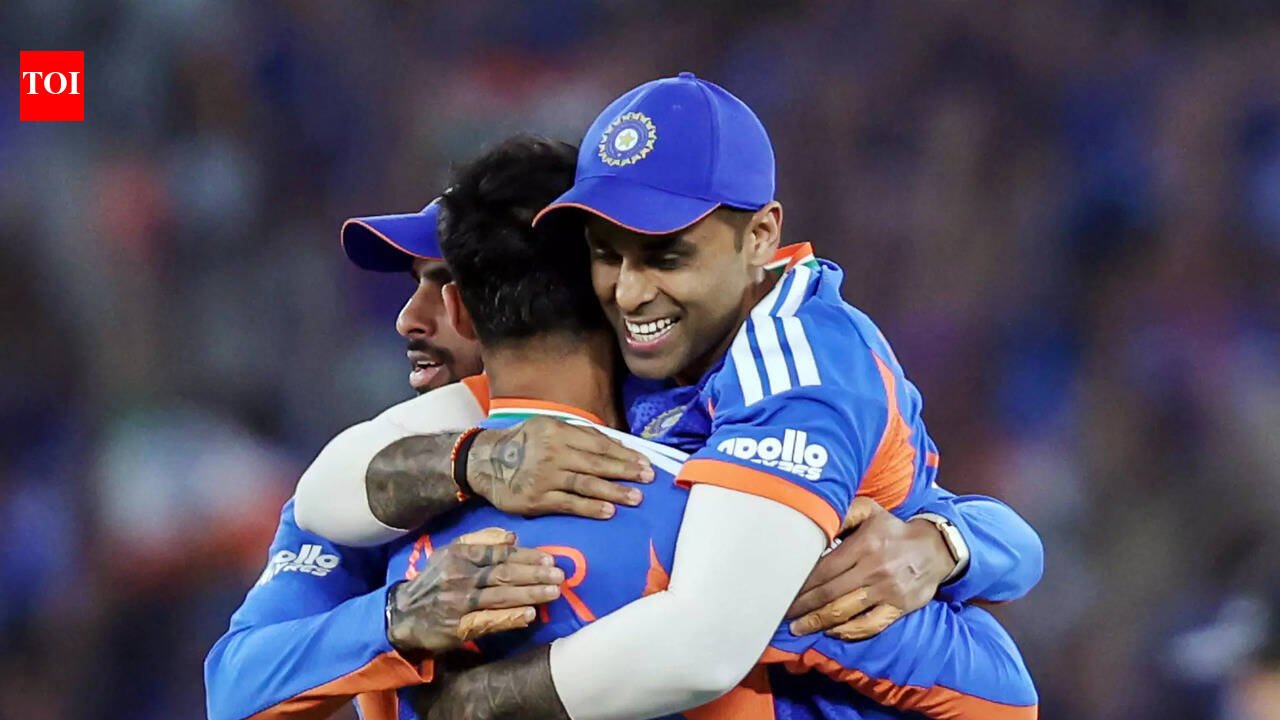
Axar Patel and Suryakumar Yadav celebrate the wicket of New Zealand’s Glenn Phillips. (ANI Photo)

After breaking a decade-long title drought with the 2024 T20 World Cup win, India went all in with a modern, aggressive T20 identity. After veterans like Rohit Sharma, Virat Kohli and Ravindra Jadeja stepped away, the think-tank designed a younger, braver side in which roles rather than reputations held sway. The subsequent two-year stretch was marked by inflection points in leadership, selection and tactics. TOI decodes what went into India’s transition from a powerhouse of individuals to a relentless T20-winning machine…Go Beyond The Boundary with our YouTube channel. SUBSCRIBE NOW!MOVING ON FROM HARDIK PANDYA AS CAPTAINCY OPTIONHardik Pandya was long considered the heir apparent to the T20 throne but the shift away from his leadership was a strategic pivot towards stability. One, his fitness was dodgy. Secondly, freeing him up from captaincy duties allowed him to grow into the role of the side’s primary allrounder. This allowed India’s most valuable allround asset to stay physically and mentally fresh for high pressure situations.

T20 World Cup final: Fans in Ahmedabad go wild | India create history

APPOINTING SURYAKUMAR AS T20-ONLY CAPTAINHanding the T20 captaincy to Suryakumar Yadav, a one-format player, was a bold strategic move. It marked a clear shift toward format specialisation, ensuring leadership continuity in the shortest format. Known for his fearless batting and innovative mindset, Surya embodied the modern T20 philosophy India wanted to adopt. His leadership emphasised intent, aggressive Powerplay batting and tactical flexibility with bowling changes. With his appointment, India created a structure where decisions were driven purely by T20 demands.DROPPING SHUBMAN GILL FOR INTENT-BASED SELECTIONShubman Gill’s exclusion was perhaps the loudest statement of the new era. Despite his technical brilliance and ODI dominance, his ‘classical’ approach was deemed too conservative. The management prioritised strike-rates over averages. By moving on from Gill, India sent a clear message that pedigree alone wouldn’t guarantee a spot. This paved the way for a more explosive, though volatile, top order in the form of Abhishek Sharma, Sanju Samson and Ishan Kishan.BACKING SANJU SAMSON AS ROHIT’S REPLACEMENTReplacing a titan like Rohit Sharma was no small feat but Sanju Samson’s like-for-like elevation worked wonders. While initially facing familiar ‘inconsistency’ labels, the batter delivered just when it mattered most, justifying the management’s decision to stick by him through the lean patches. Reintroducing him as a primary aggressor during the World Cup provided India with a ’keeperbatter who could exploit the Powerplay better than most. His ability to hit good balls for boundaries changed the team’s offensive baseline, turning him from a backup option into the indispensable tactical heartbeat.MAINTAINING LEFT-RIGHT BATTING COMBINATIONSOne of the tactical commitments from India was to maintain the leftright combinations throughout the batting order. Pairings such as Abhishek Sharma with Sanju Samson at the top, followed by Ishan Kishan and Suryakumar Yadav ensured bowlers rarely settled into rhythm. Later partnerships involving Shivam Dube and Hardik Pandya continued the pattern. The constant change of angles disrupted field placements and bowling plans. By structuring the lineup around alternating batting hands, India added a tactical layer that increased scoring opportunities and forced opponents to continuously adjust match-ups.BACKING SPECIALIST FINISHERSIndia placed greater emphasis on specialist finishers rather than relying solely on top-order dominance. Players like Shivam Dube and Rinku Singh were groomed for clearly defined late overs roles. Their job was not to anchor the innings but to maximise scoring in the final five overs against pace and spin alike. This shift recognised a key modern T20 reality that games are often decided in the final phase.INCLUDING MULTIPLE ALLROUNDERSAllrounders became central to the squad composition, providing flexibility in both batting depth and bowling options. Players like Hardik Pandya, Shivam Dube, Axar Patel and Washington Sundar allowed India to extend the batting lineup without compromising bowling resources. This multi-skilled approach made tactical adjustments easier, particularly on different pitches and conditions. It also helped captain Suryakumar to react dynamically to match situations, ensuring that the side maintained balance even while fielding aggressive batting combinations.


Source link

Abhishek Sharma, Sanju Samson tear into New Zealand; break 17-year record in T20 World Cup final | Cricket News


Abhishek Sharma, Sanju Samson tear into New Zealand; break 17-year record in T20 World Cup final
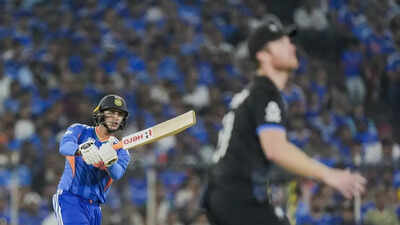
Abhishek Sharma plays a shot during the ICC Men’s T20 World Cup 2026 final cricket match between India and New Zealand, at Narendra Modi Stadium, in Ahmedabad, Gujarat. (PTI Photo)

Abhishek Sharma and Sanju Samson gave India an explosive start in the final of the ICC Men’s T20 World Cup against New Zealand at the Narendra Modi Stadium on Sunday.The two openers added 98 runs for the first wicket, creating the first 50-plus opening partnership in a men’s T20 World Cup final. The previous highest opening stand in a final was 48, scored by Kamran Akmal and Shahzaib Hasan for Pakistan against Sri Lanka at Lord’s Cricket Ground in 2009.

Extra trains and poojas: How India is preparing for T20 World Cup final

Abhishek had not scored many runs earlier in the tournament but delivered in the final, while Samson continued his run of form. Both openers scored 92 runs in the powerplay, the highest powerplay score in any T20 World Cup match.Also See: India vs New Zealand Live Score T20 World Cup Final 2026

Poll

Do you believe India's historical chance to become the first host nation to win the T20 World Cup will be successful?

Abhishek brought up his fifty in the final off just 18 balls and was eventually dismissed on 52. Highest PP scores in T20 WCs92/0 – IND vs NZ, Ahmedabad, 2026 Final92/1 – WI vs AFG, Bridgetown, 202491/1 – NED vs IRE, Sylhet, 201489/3 – ENG vs SA, Mumbai WS, 201686/1 – IND vs NAM, Delhi, 2026FOLLOW LIVEEarlier, New Zealand captain Mitchell Santner won the toss and chose to field.Before the match, MS Dhoni and Rohit Sharma brought the T20 World Cup trophy onto the field, drawing a loud response from the crowd.Dhoni led India to the first T20 World Cup title in 2007, while Rohit captained the side to their second title in the 2024 edition.New Zealand reached the final after defeating South Africa in the semifinal. India secured a seven-run win over England in Mumbai to reach the final.In T20 World Cup meetings between the two sides, New Zealand have the edge with wins in 2007, 2016 and 2021.India are chasing several milestones in the final. The side is aiming to become the first host nation to win the T20 World Cup, the first team to defend the title and the first team to win the tournament three times.For New Zealand, one challenge is to contain India’s batting order and handle the bowling of Jasprit Bumrah.“Happy to bat first since we have been doing that pretty well. Always good to have runs on the board in the semifinal or a final. It’s history now, new World Cup, and we are excited for it. It looks full already, and it’s only toss time, and hopefully we will give them a good show. Same team for us,” India captain Suryakumar Yadav said.“We are going to bowl first. Looks pretty good. We will see if it does anything and try to restrict them to a chasable score. Boys are good. This is why we are playing. It did. Great occasion, the semifinal and the guys will take confidence from that. This is the biggest stage, and everyone is ready. No, McConchie, Duffy is playing,” Santner said.India are playing their fourth T20 World Cup final, the most by any team. Out of the nine previous finals, six were won by the side chasing. Of the remaining three, India won two — in 2007 and 2024 — both in matches decided in the final over.TeamsIndia (Playing XI): Abhishek Sharma, Sanju Samson (wk), Ishan Kishan, Suryakumar Yadav (c), Tilak Varma, Hardik Pandya, Shivam Dube, Axar Patel, Varun Chakravarthy, Arshdeep Singh, Jasprit Bumrah.New Zealand (Playing XI): Tim Seifert (wk), Finn Allen, Rachin Ravindra, Glenn Phillips, Mark Chapman, Daryl Mitchell, James Neesham, Mitchell Santner (c), Matt Henry, Lockie Ferguson, Jacob Duffy.


Source link

Sanju Samson scripts history, breaks multiple records in T20 World Cup final vs New Zealand | Cricket News


Sanju Samson scripts history, breaks multiple records in T20 World Cup final vs New Zealand
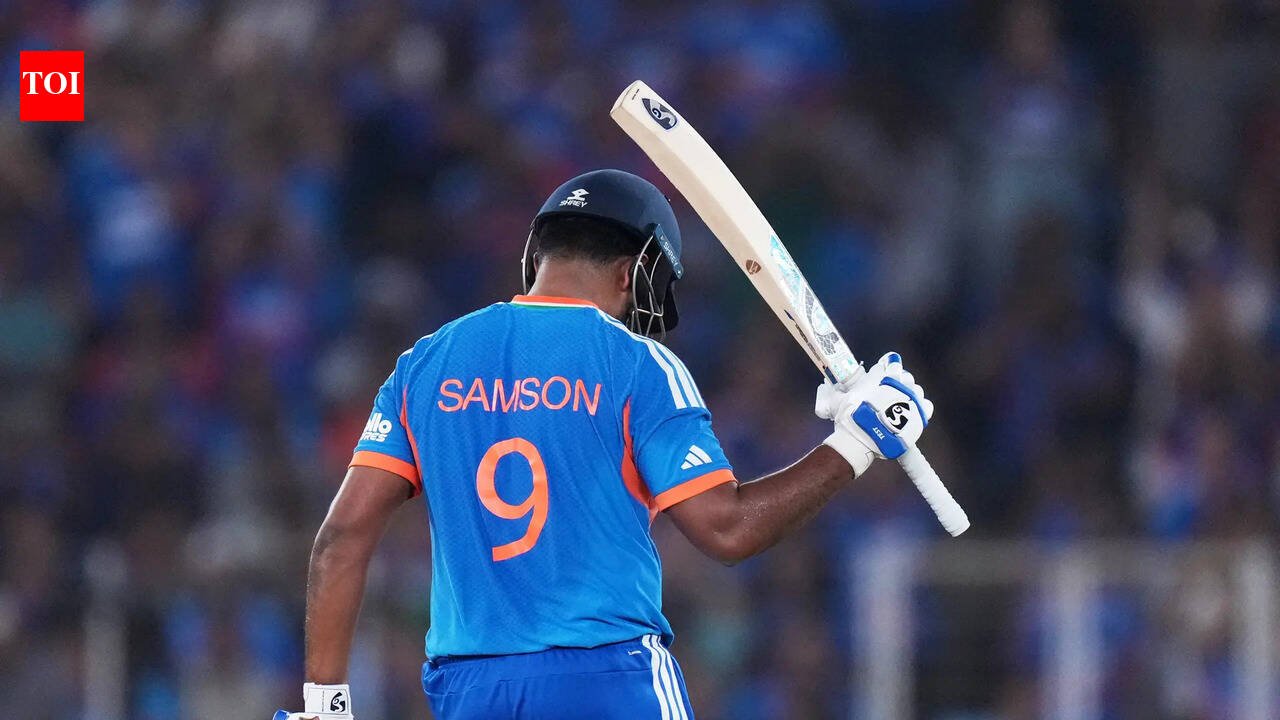
India’s Sanju Samson (AP Photo/Ajit Solanki)

Sanju Samson continued his remarkable run in the ICC Men’s T20 World Cup 2026 with another stunning knock in the final, giving India a blazing start with 89 runs off just 45 balls. The wicketkeeper batter once again set the tone at the top, attacking from the outset and keeping the pressure firmly on the opposition bowlers.Samson’s latest effort also helped India script a unique record in T20 World Cup history. For the first time ever, the top three batters in a team’s innings all crossed the 50-run mark in the same match. It highlighted the dominance of India’s batting line up on the biggest stage of the tournament.The 31 year old has also rewritten the record books with his six hitting this edition. Samson now holds the record for the most sixes in a single T20 World Cup campaign with 24, surpassing Finn Allen who had struck 20 sixes in an earlier edition.His 89 in the final has also gone down as the highest individual score in a T20 World Cup final. The Indian star surpassed the previous best of 85 not out by Marlon Samuels in 2016 and 85 by Kane Williamson in 2021.

Poll

Should Sanju Samson be a permanent starter for India in future T20 tournaments?

Samson’s consistency has been one of the standout stories of the tournament. He also joined an elite list of players who have scored half centuries in both the semi final and the final of a T20 World Cup. Only Shahid Afridi in 2009 and Virat Kohli in 2014 had previously achieved the feat before Samson added his name to the list in 2026.The Indian batter has also equalled another notable record for consecutive fifty plus scores in the tournament. Samson now has three successive scores of 50 or more in a T20 World Cup, placing him alongside some of the most consistent performers in the format.The list includes Mahela Jayawardene who achieved it in 2010, Virat Kohli who did so between 2016 and 2021, Babar Azam in 2021, KL Rahul in 2021, and two other players in the current edition, Kusal Mendis and Sahibzada Farhan.Sanju Samson also etched his name in the record books by becoming the highest-scoring Indian in a single edition of the ICC Men’s T20 World Cup. He surpassed Virat Kohli’s long-standing record of 319 runs, which was set during the 2014 tournament.What makes Samson’s achievement even more remarkable is that he was not part of India’s playing eleven at the start of the competition and featured in only five matches during the campaign.


Source link

What is the highest successful run chase in T20 World Cup final history? | Cricket News


IND vs NZ: India post 255 in first innings; what is the highest successful run chase in T20 World Cup final history?
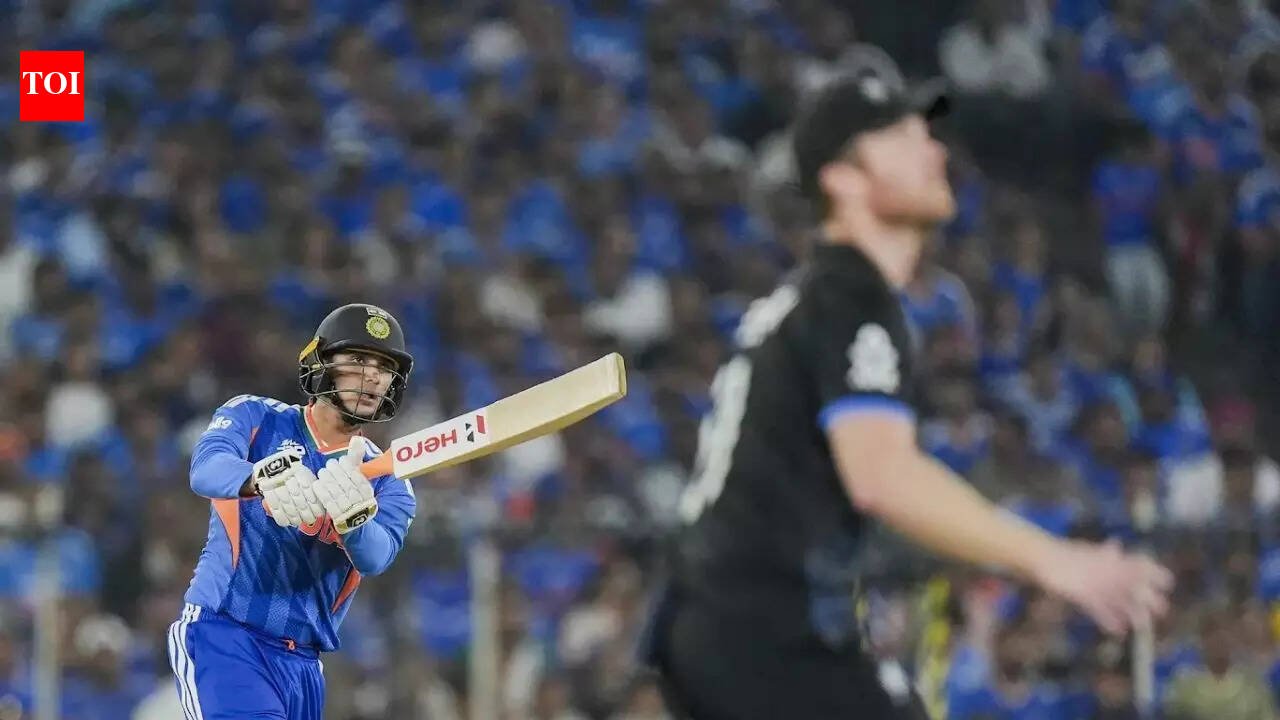
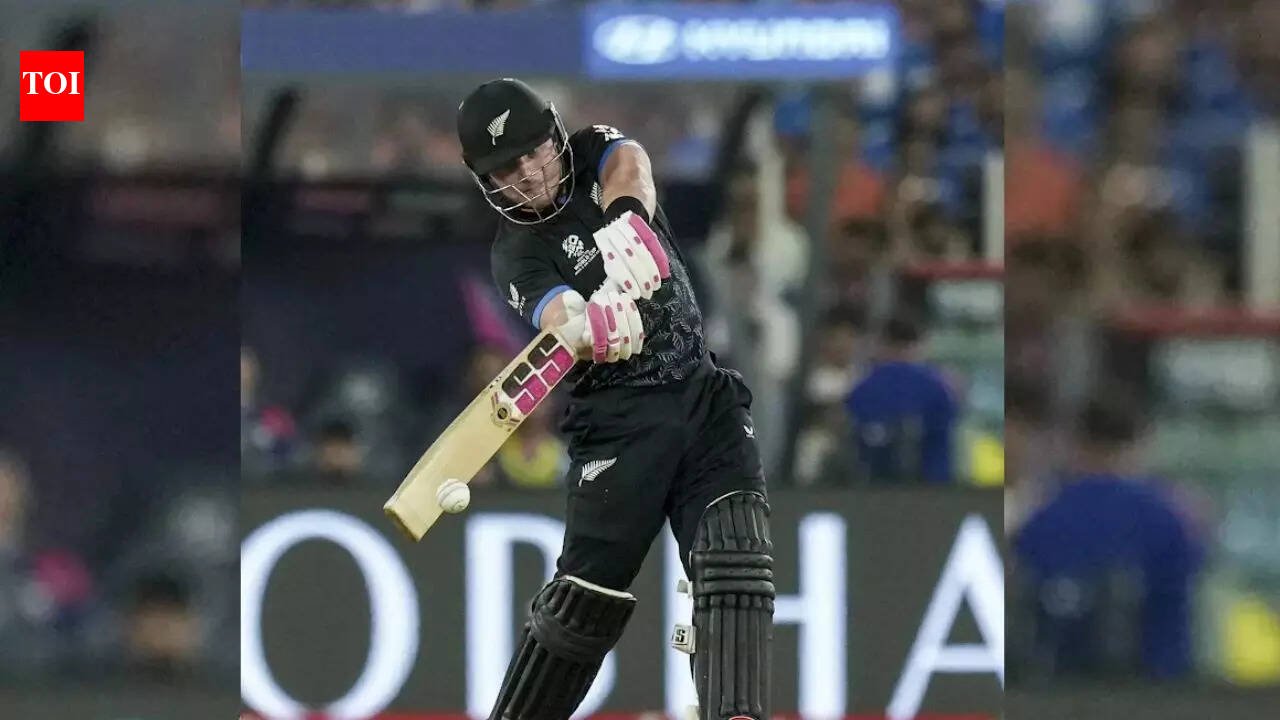
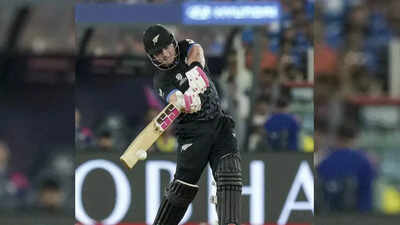
New Zealand’s Tim Seifert plays a shot during the ICC Men’s T20 World Cup 2026 final cricket match between India and New Zealand at Narendra Modi Stadium, in Ahmedabad, Gujarat. (PTI Photo)

Sanju Samson, Abhishek Sharma and Ishan Kishan led India to 255 for five against New Zealand in the final of the ICC Men’s T20 World Cup at the Narendra Modi Stadium on Sunday, the highest total in a men’s T20 World Cup final.Samson scored 89, while Abhishek made 52 and Kishan added 54 as defending champions India set a target of 256 for the Blackcaps.

Extra trains and poojas: How India is preparing for T20 World Cup final

India also recorded the highest T20 score in Ahmedabad. It was also the third-highest team total in T20 World Cup history and slightly higher than the score India posted against England in Mumbai three nights earlier.Also See: IND vs NZ T20 World Cup Final Live ScoreHighest team totals in T20 World Cup

  • 260/6 – Sri Lanka vs Kenya, Johannesburg, 2007
  • 256/4 – India vs Zimbabwe, Chennai, 2026
  • 255/5 – India vs New Zealand, Ahmedabad, 2026 Final
  • 254/6 – West Indies vs Zimbabwe, Mumbai, 2026
  • 253/7 – India vs England, Mumbai, 2026 Semifinal
  • 246/7 – England vs India, Mumbai, 2026 Semifinal

This was India’s fourth score of 250 or more in 2026, the most by any team in a calendar year.India scored 52 runs in the last five overs.New Zealand needed 256 to win. The target was higher than the total set by England in the 2019 ICC Cricket World Cup Final.New Zealand walked out to bat in the second innings of its Men’s T20 World Cup 2026 final against India at Ahmedabad, needing to register the highest successful chase in the history of the competition.The previous highest successful chase was completed by England, which managed to chase down 230 against South Africa at the Wankhede Stadium in Mumbai during the 2016 edition.Highest Successful Run Chase In T20 World CupsEngland chased down 230 in 19.4 overs vs South Africa (2016)South Africa chased down 206 in 17.4 overs vs West Indies (2007)India chased down 196 in 19.2 overs vs West Indies (2026)USA chased down 195 in 17.4 overs vs Canada (2024)West Indies chased down 193 in 19.4 overs vs India (2016)Highest Successful Run Chase T20 World Cup FinalNo team has ever successfully chased more than 176 runs in the T20 World Cup finals. Australia holds the second-highest chase after scoring 173 against New Zealand in the 2021 final. The Kiwis have lost both of their prior games in Ahmedabad, and their highest score at this venue is 175. Interestingly, NZ has never scored 180 runs here.At the time of writing this story, New Zealand were in trouble and were four wickets down at the score of 70 in 7.4 overs.FOLLOW LIVE


Source link