Breaking News
Maharashtra’s Ulhasnagar may get 30 electric buses by October this year


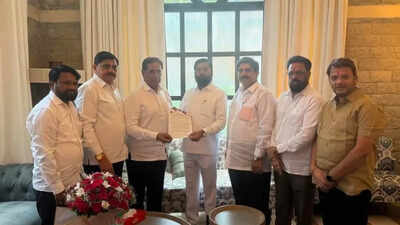
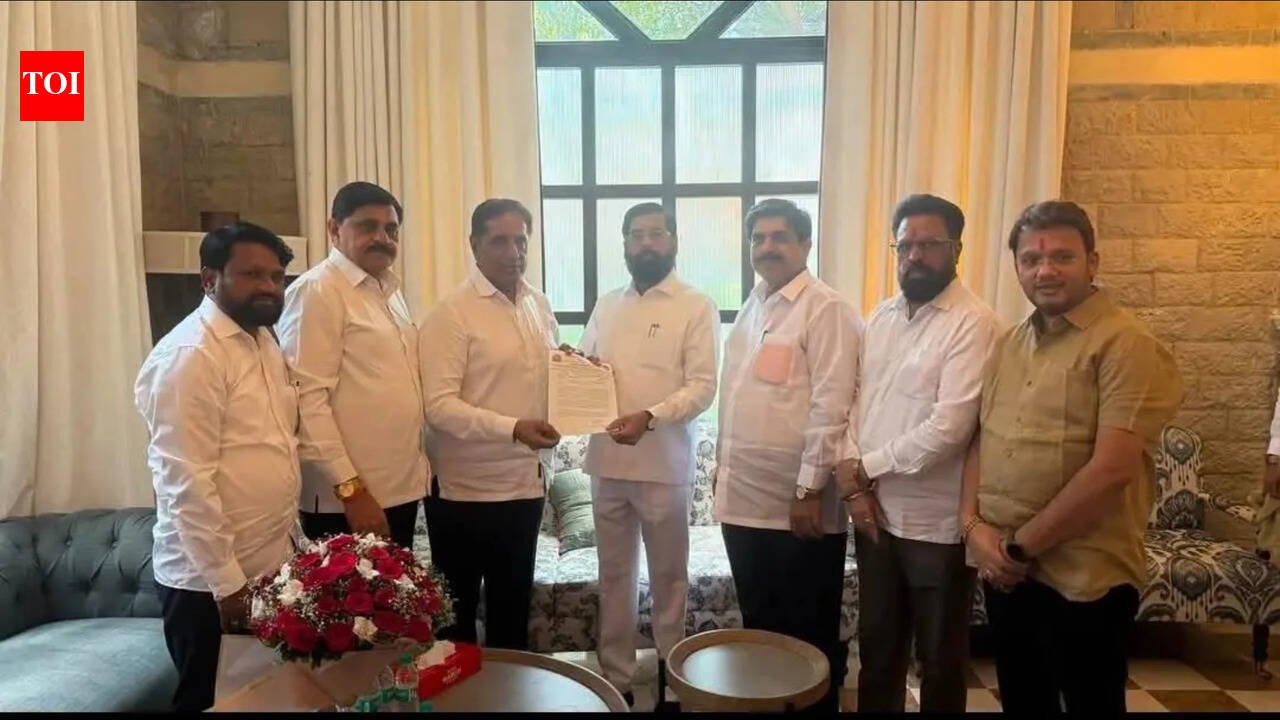
Maharashtra deputy chief minister Eknath Shinde (center), Shiv Sena leader and former MLA Pappu Kalani (right to Shinde), and other Shiv Sena functionaries

ULHASNAGAR: The city may get 30 electric buses by October this year, providing major relief to commuters travelling between Ulhasnagar and neighbouring areas such as Thane, Ambernath, Badlapur, Murbad, and Navi Mumbai. The proposal was discussed during a meeting between Shiv Sena leader and former MLA Pappu Kalani, other Shiv Sena functionaries, and Maharashtra deputy chief minister Eknath Shinde on Monday, where several long-pending civic and infrastructure issues concerning the city were taken up.Shiv Sena leader Kamlesh Nikam said the Ulhasnagar Municipal Corporation had submitted a proposal seeking 100 electric buses from the state government, which was later forwarded to the Centre. Out of these, 30 buses are likely to be allotted in the first phase by October. According to Nikam, the buses will operate on routes connecting Ulhasnagar with Murbad, Badlapur, Ambernath, Thane, and Navi Mumbai, significantly improving connectivity for residents, especially people from middle-class and economically weaker sections.During the meeting, Sena leaders also discussed multiple development projects planned for the city. Nikam said deputy CM Shinde sanctioned fund of Rs 100 crore for concrete roads in city roads through Mumbai Metropolitan Region Development Authority (MMRDA) fund. Tender processes for these projects are expected to begin shortly.Issues related to redevelopment and regularisation in Ulhasnagar were also raised during the meeting. Kalani demanded the appointment of key officials in the UMC, including an Additional Town Planner and deputy municipal commissioner, to speed up pending projects and administrative work. Shinde reportedly directed officials to fill the required posts at the earliest.The meeting also focused on the city’s water supply concerns. Pappu Kalani sought the development of an independent water source for Ulhasnagar so that the civic body can reduce its dependence on expensive water purchased from Maharashtra Industrial Development Corporation.


Source link

After public pressure, cleanliness crusader gets KDMC job back | Thane News


KALYAN: In a rare move, following sustained public pressure and political intervention, the state govt has reappointed Ramdas Kokare as deputy municipal commissioner (solid waste management) in the Kalyan-Dombivli Municipal Corporation. The move comes days after Kokare’s sudden transfer triggered outrage among residents and civic activists.Kokare, known across Maharashtra for his innovative waste management and cleanliness models, had been abruptly transferred last month after serving barely nine months at the KDMC. However, his next posting was not finalised.The move sparked a strong public reaction, with residents launching campaigns demanding his return, citing his role in significantly improving solid waste management and cleanliness standards in the twin city. Sources said KDMC commissioner Abhinav Goel had also urged the state govt to bring Kokare back, considering his work and public support. It is learnt that Kalyan Lok Sabha MP Shrikant Shinde also played an important role in pushing for his reinstatement, making the govt revoke the transfer on Monday.Kokare was first brought to KDMC in 2020 with a mandate to overhaul the civic body’s poor sanitation and waste management system, which was long criticised for rampant garbage dumping and lack of segregation.During his first tenure, he played a key role in shutting the Adharwadi dumping ground and aggressively promoting waste segregation across the city. However, after his transfer at the end of that tenure, waste management conditions reportedly deteriorated again. Sources said this was one of the key reasons why MP Shrikant Shinde had earlier demanded Kokare’s return to KDMC for a second stint.After rejoining KDMC, Kokare once again focused on waste segregation and scientific waste processing. Under his leadership, segregation levels, which had reportedly dropped to just 3%, rose to nearly 70%, among the highest in the MMR. He also pushed biomining initiatives at the Adharwadi dumping ground and encouraged recycling and revenue generation through waste processing projects.


Source link