Breaking News
FIR registered against beggar for attempting to kidnap 9-year-old in Mumbai | Mumbai News


Mumbai: A 40-year-old woman has registered a police complaint against a beggar for attempting to kidnap her nine-year-old daughter. The alert child had stopped a stranger and requested him to call her mother immediately. Police have registered an FIR.The incident occurred on March 21. The complainant works as a maid. Around 7 pm, she sent her daughter to Bhagat Singh Nagar slum in Goregaon (W) with some kheer to be delivered to her friend’s place. She then got busy. Shortly, she received a call from her daughter stating that she couldn’t find her friend’s house and was lost. The complainant then asked her daughter to wait and called up her friend, asking her to go to her daughter. But thereafter, the complainant got another phone call asking her to come down immediately as her daughter was crying. When the complainant reached the location, she found a large number of people gathered. Her daughter told her that a beggar, Chanda, who had come to their house earlier the same day had been following her and had grabbed her hand, asking her to accompany her for some food. The nine-year-old then stopped the stranger and requested him to call her mother immediately. The public then dialled police emergency number ‘100’ and handed over Chanda for inquiry.


Source link

Mumbai man uploads private photos of ex-wife on social media, FIR filed | Mumbai News


MUMBAI: A 31-year-old woman, studying for UPSC, has lodged a police complaint against her ex-husband for accessing her Instagram account unauthorisedly and uploading their private images on it. Dindoshi Police have registered an FIR against the 31-year-old accused who is an Indian Railways employee.According to the FIR, the couple got married in 2020. However, their relations soured and in 2024, the complainant separated from her husband. She moved back to her parents’ place. According to the FIR, the complainant was using a phone number gifted by her estranged husband and registered in her brother-in-law’s name. The accused allegedly ported it to another telecom company and started to use it. The complainant has claimed that he got unauthorised access to her Instagram and started chatting with her contacts, pretending to be her. In June 2025, the complainant filed for divorce. In March 2026, the accused allegedly created a video of her nude images and sent it to her over WhatsApp. He also uploaded their private images on her Instagram account and defamed her in conversations with her friends. Police are probing further.


Source link

Dhurandhar 3 Release Date: Fact check: Is ‘Dhurandhar 3’ releasing in June? Truth behind viral ‘Final Chapter’ end credit leak | Hindi Movie News


Fans are abuzz with excitement over ‘Dhurandhar: The Revenge,’ and an intriguing viral image hints at the possibility of ‘Dhurandhar 3’ being in the works for June 2026. Yet, the creators have not officially commented on this speculation, with insiders suggesting the storyline is intended as a thrilling two-part saga. Read the article to know more in detail.

‘Dhurandhar: The Revenge’, also known as ‘Dhurandhar 2’, has been receiving massive love from audiences, and its box office numbers are proof. Amid the extraordinary buzz around the film, an image is circulating online, leaving many wondering if they missed a post-credit scene — and whether another installment is actually on the way. Here’s what we know.

Dhurandhar 3′ on the cards?

An alleged end-credit slate featuring ‘Dhurandhar: The Final Chapter’, with a release date of June 14, 2026, is going viral on the internet. The image claims that the third part of the franchise is already planned and will hit theatres in June this year, potentially clashing with ‘Toxic: A Fairytale for Grown-Ups’, starring Yash.

The truth

However, there has been no official announcement or confirmation from the makers regarding ‘Dhurandhar 3’. The viral end-credit image appears to be AI-generated and is likely being circulated as a fake announcement to capitalise on the film’s ongoing buzz.

Watch

Ranveer Singh’s “no body double” underwater stunt from Dhurandhar: The Revenge goes viral

Reportedly, the Ranveer Singh starrer is a single story split into two parts, with the first installment released on December 5, 2025, and the second arriving on March 19, 2026.The image gained traction after director Aditya Dhar had urged audiences not to leave their seats until the end credits finished rolling, which further fuelled speculation about a potential third part.

The real end-credit scene

In reality, the end credits of ‘Dhurandhar: The Revenge’ feature backstory sequences, including how Ranveer Singh’s Jaskirat and Rizwan trained together before becoming spies for India. Another moment shows LTF chief Omar Shahid reacting to Hamza’s release by General Shamshad Hassan, played by Raj Zutshi.

More about ‘Dhurandhar: The Revenge’

Directed by Aditya Dhar, the film stars Ranveer Singh alongside Sanjay Dutt, Arjun Rampal, R. Madhavan, Rakesh Bedi, and Sara Arjun. The film also features Danish Pandor, Mustafa Ahmed, Gaurav Gera, Manav Gohil, and Bimal Oberoi, among others.The film was released in theatres on March 19, 2026.


Source link

‘Fake news’: Iranian Speaker says Trump’s talk claims aimed at manipulating oil markets


'Fake news': Iranian Speaker says Trump's talk claims aimed at manipulating oil markets

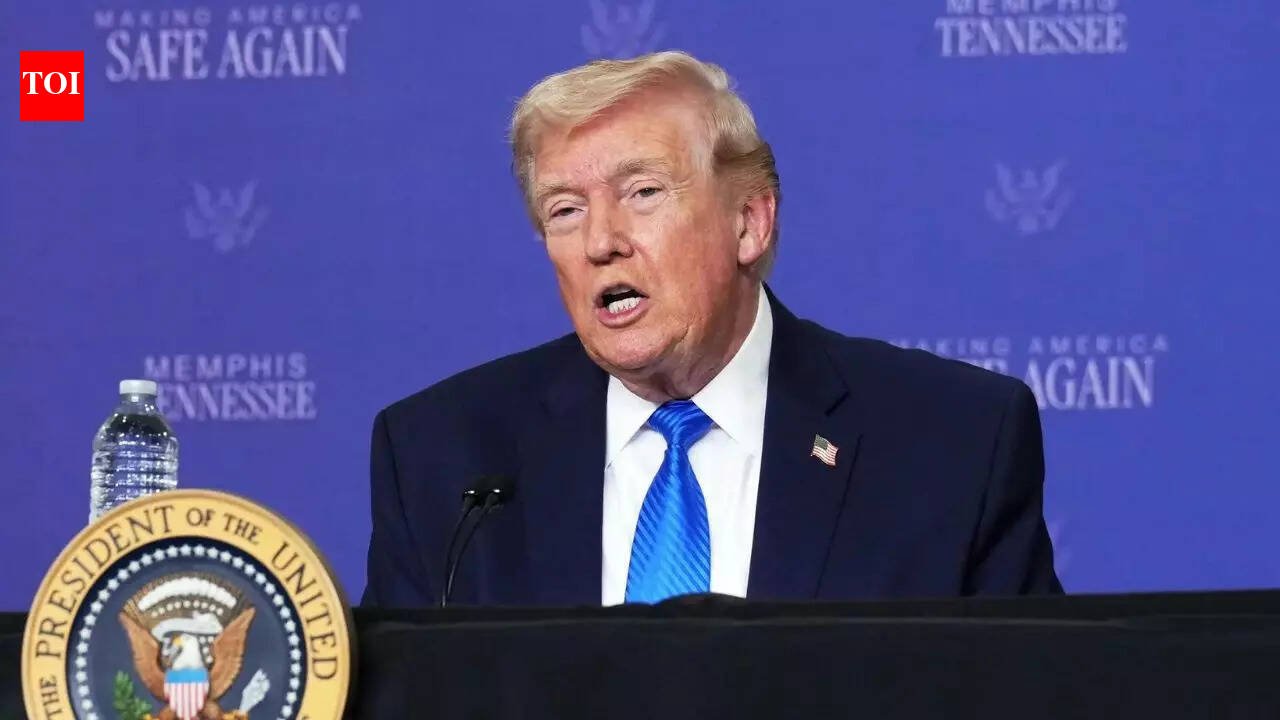
Iran on Monday denied holding any negotiations with the United States, dismissing claims by President Donald Trump as “fake news” stating it was aimed at manipulating “oil markets.“No negotiations have been held with the US, and fake news is used to manipulate the financial and oil markets and escape the quagmire in which the US and Israel are trapped,” Iran’s parliament speaker Mohammad Bagher Qalibaf wrote on X.“Iranian people demand complete and remorseful punishment of the aggressors. All Irainan officials stand firmly behind their supreme leader and people until this goal is achieved,” he added.The denial came after Trump said Washington and Tehran had held “very good and productive conversations” over the past two days towards “a complete and total resolution” of hostilities in the Middle East.Sharing a post on Truth Social, Trump said he had “instructed the Department of War to postpone all military strikes against Iranian power plants and energy infrastructure for a five-day period,” adding that the pause would depend on the “success” of ongoing “meetings and discussions.”“Over the last two days, Washington and Tehran have had very good and productive conversations regarding a complete and total resolution of our hostilities in the Middle East,” Trump said.Speaking later near Air Force One, Trump described the talks as “very strong” and said his adviser Steve Witkoff and son-in-law Jared Kushner were involved. “We will see where they lead,” he said. “We have major point of agreement; I would say almost all points of agreement,” he added.Referring to the temporary pause, the US president said, “We’re doing a five day period, and we’ll see how that goes. If it goes well, we’re going to end up with settling this.” He warned, “Otherwise, we’ll just keep bombing our little hearts out.” He also suggested Iran may be willing to abandon its nuclear weapons ambitions in exchange for peace.“They called, I didn’t call. They called. They want to make a deal,” Trump said, adding that “partners in the Middle East” were also part of the discussions.Trump further claimed the US was in contact with a “most respected” figure in Iran’s leadership, though not the supreme leader. “I can’t name the person … because I don’t want him to be killed,” he said.Earlier, Iranian state media also rejected these assertions, with the foreign ministry describing Trump’s decision to pause strikes as “part of efforts to lower energy prices and buy time for the implementation of his military plans.”Iranian news agencies Fars and Tasnim portrayed the US move as a climbdown under pressure. “Since the start of the war, messages have been sent to Tehran by some mediators, but Iran’s clear response has been that it will continue its defense until the required level of deterrence is achieved,” Tasnim reported.“No negotiations have taken place and none are underway. … With this kind of psychological warfare, neither the Strait of Hormuz will return to prewar conditions nor will calm return to energy markets,” it added.


Source link

Colombian Plane Crash: Colombian military Hercules plane with 110 soldiers on board erupts in flames after crash — watch


Colombian military Hercules plane with 110 soldiers on board erupts in flames after crash — watch

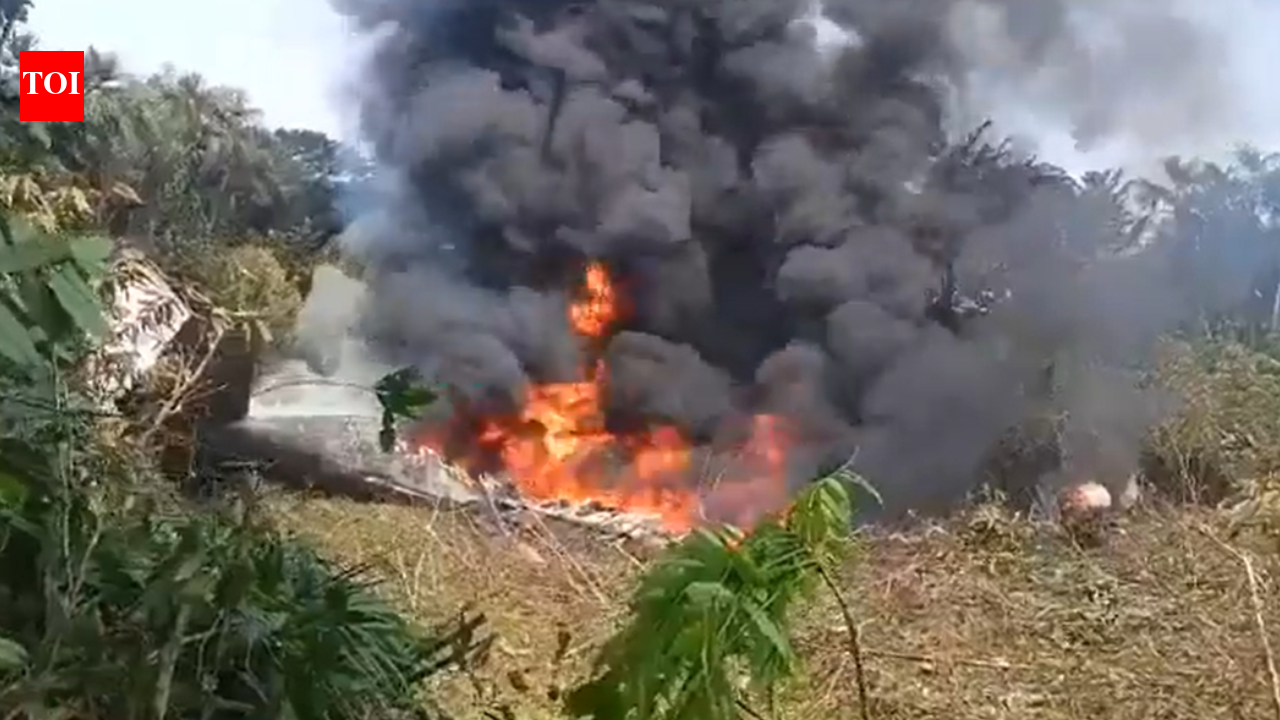
A Lockheed Martin (LMT.N) Hercules C-130 military aircraft carrying about 110 soldiers crashed in southern Colombia on Monday, according to the country’s defence ministry, with local media reporting that the plane went down shortly after take-off.Video footage circulating online showed the aircraft engulfed in flames.The country’s defence minister Pedro Sanchez said the accident occurred as the aircraft was taking off from Puerto Leguizamo in Colombia’s southern Amazon region near the border with Peru. The plane was transporting troops from the armed forces at the time.“The exact number of victims and the causes of the crash have not yet been determined,” he said, as cited by Reuters. BluRadio, citing authorities, reported that about 110 soldiers were on board the aircraft and that the crash occurred just 3 km (2 miles) from an urban centre.In a separate incident at the end of February, another Hercules C-130 aircraft belonging to the Bolivian Air Force crashed in the densely populated city of El Alto, narrowly missing a residential block. More than 20 people were killed and around 30 others were injured, while banknotes from the plane’s cargo were scattered across the city.


Source link

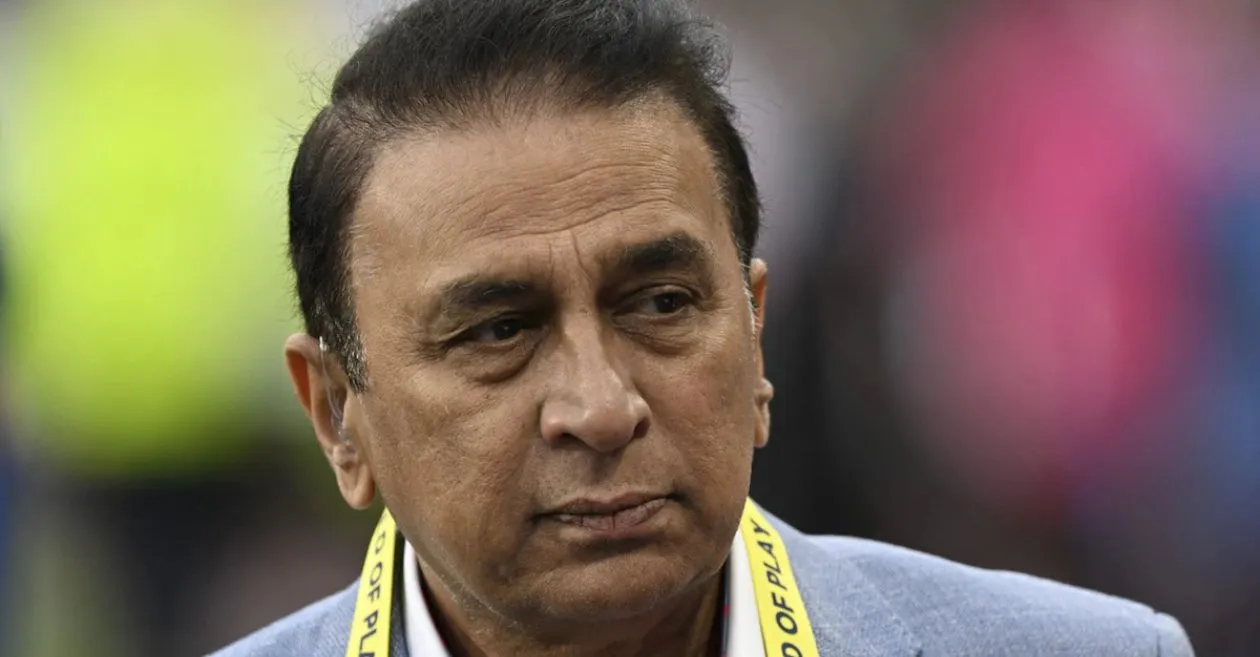
Sunil Gavaskar criticizes overseas players for delayed arrivals ahead of IPL 2026


The build-up to the IPL 2026 season has been met with a familiar sense of frustration as several high-profile overseas stars signal delayed arrivals. While the league remains the undisputed crown jewel of T20 cricket, the recurring trend of international players joining mid-tournament or withdrawing entirely, has sparked a fiery response from Indian cricket legend Sunil Gavaskar. Known for his candid insights, Gavaskar has urged franchises to stop being ‘taken for granted’ and prioritize squad integrity over individual star power.

The legendary opener’s comments come at a critical juncture. Despite the IPL’s massive financial pull, the logistical nightmare of late-season withdrawals and staggered arrivals continues to hamper team planning. For Gavaskar, the issue isn’t just about scheduling; it’s about a perceived lack of professional respect for the franchises that invest millions into these athletes.

Sunil Gavaskar hits out at foreign stars over late reporting for IPL 2026

In a scathing column for Sportstar, Gavaskar highlighted a cultural disconnect, suggesting that the generous nature of Indian franchises is often misinterpreted. He noted that owners frequently go above and beyond, covering travel and luxury accommodations for players’ families, perks that are rarely matched in other global leagues. According to Gavaskar, this ‘Indian hospitality’ is being viewed as a right rather than a privilege.

The owners go out of their way to accommodate their players… which is often misunderstood as a right by some, who then try to take advantage of the situation,” Gavaskar remarked.

His primary grievance lies in the lack of transparency; many players wait until after the auction, once their massive paydays are secured to reveal ‘personal reasons’ or fitness concerns that prevent a full-season commitment. Gavaskar’s solution is simple but stern: “Franchises must start dropping these players.” He argues that if a player cannot commit to the full duration for non-medical reasons, they shouldn’t be part of the tactical blueprint at all.

Also READ: RCB legend Virat Kohli reacts to ‘chartered flight to London’ rumours ahead of IPL 2026

Impact of delayed arrivals on team balance and the quest for the title

The timing of these delays is particularly damaging for 2026 title contenders. Reports suggest that Australian icons like Pat Cummins, Mitchell Starc, and Josh Hazlewood may miss the opening weeks to manage workloads or recover from minor niggles. While player burnout is a valid concern, Gavaskar argues that this pick-and-choose mentality throws months of auction strategy into the bin.

We are already hearing about some players who will not be available for a variety of reasons, none of which were informed before they were selected by the franchise. Unless franchise owners start to get tough and drop these players, they will find themselves hampered in their efforts to win the title. All the planning in forming the squad, which they believe can help them win, goes out of the window when players decide to come whenever they want,” he added.

When a marquee fast bowler or a top-order explosive hitter arrives three games late, the team’s chemistry is disrupted. In a league where the margin between the playoffs and the bottom of the table is often a single win, these delayed starts can be the difference between a trophy and a disappointment. Gavaskar insists that unless the IPL governing body or the franchises themselves implement stricter penalties or no-show clauses, the league’s planning phase will remain a gamble.

Despite the controversy, Gavaskar remains optimistic about the spectacle itself. He predicts that the 2026 season, culminating on May 31, will once again silence the critics with its sheer quality of cricket. However, his message to the millionaire players is clear: the IPL is a professional commitment, not a vacation to be taken at one’s convenience.

Also READ: Irfan Pathan highlights ‘concerning factor’ for KKR ahead of IPL 2026


Source link

‘Temple visits not a bad thing’: Axar Patel shares insight into team India culture | Cricket News


'Temple visits not a bad thing': Axar Patel shares insight into team India culture
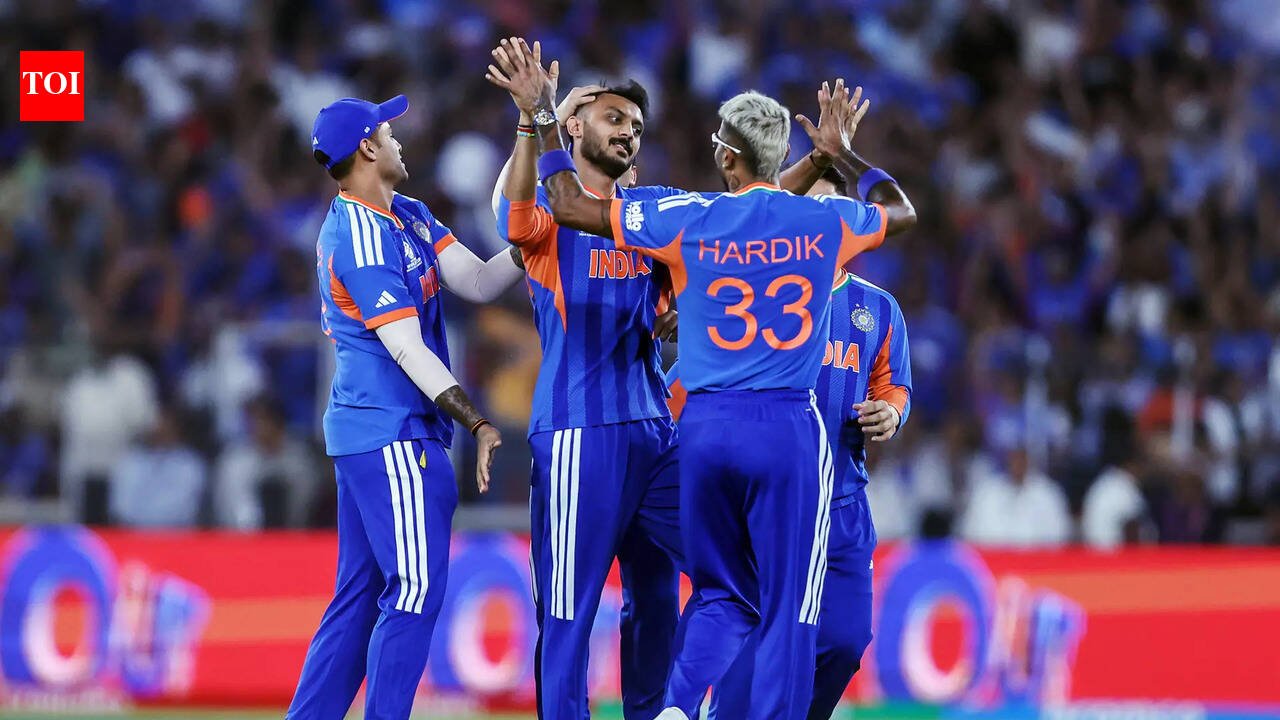
India’s Axar Patel and teammates celebrate (ANI Photo)

Axar Patel has shed light on a unique ‘tradition’ followed by the Indian cricket team during major assignments, while also reiterating his stance against the Impact Player rule ahead of IPL 2026.The Delhi Capitals skipper spoke about how players often visit temples during bilateral tours and ICC events. During the 2026 T20 World Cup, Indian players were seen visiting several temples before matches, and even after lifting the title, captain Suryakumar Yadav, head coach Gautam Gambhir and International Cricket Council chairman Jay Shah visited the Hanuman Temple to seek blessings with the trophy.

Watch

Axar Patel questions Impact Player rule: ‘All-rounders lose value’

Speaking at a Delhi Capitals event on Monday, Axar explained that such visits are largely driven by convenience and security arrangements during tournaments. “Temple visits are not a bad thing. We go to temples where otherwise we wouldn’t be able to go. We have security with us during tournaments,” he said.Alongside this, Axar once again voiced his displeasure with the Impact Player rule, becoming the latest Indian cricketer to question its impact on the game. The rule, introduced in 2023, allows teams to substitute a player from a list of five at any stage of the match and is set to remain in place until at least 2027.Axar’s view aligns with other senior players such as Rohit Sharma and Hardik Pandya, both of whom have previously raised concerns. Rohit had pointed out in 2024 that the rule hampers the development of all-rounders, while Hardik later added that it makes team selection difficult unless a player excels equally with both bat and ball.Explaining his perspective, Axar highlighted how the rule changes team strategies and reduces the need for multi-skilled players. “I don’t like this rule, honestly, because I am an all-rounder. Earlier, you would pick an allrounder for batting and bowling.“But because of this rule, the team management goes for a particular batsman or bowler, thinking ‘Why do we need an allrounder?’ Since I am an allrounder, I don’t like the rule. At the same time, rules are rules and we need to follow them. From a personal point of view though, I don’t like the rule,” he said during a pre-season press conference.Delhi Capitals will begin their IPL 2026 campaign against Lucknow Super Giants at the Ekana Cricket Stadium on April 1. Axar had earlier also flagged the issue in 2024, noting that the rule had an impact on his batting position when he was serving as vice-captain.

Banner Insert


Source link

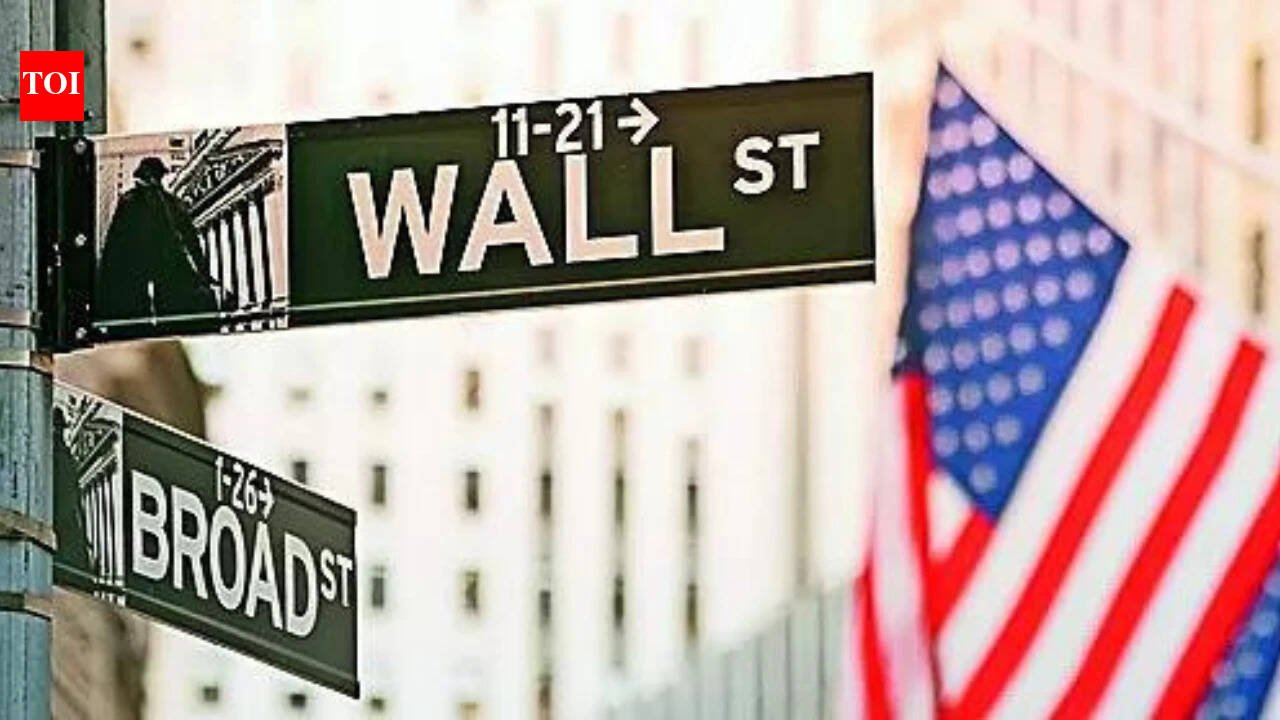
Us Stocks Rally: US stock market today: Wall Street jumps as Donald Trump delays Iran strikes; oil prices retreat


US stock market today: Wall Street jumps as Donald Trump delays Iran strikes; oil prices retreat

US stocks rallied sharply on Monday after President Donald Trump said the United States had held talks with Iran and would postpone planned strikes on Iranian power plants, triggering a relief rebound across global markets and a steep fall in oil prices.The Dow Jones Industrial Average rose 1,021.70 points, or 2.24 per cent, to 46,599.17, while the S&P 500 gained 136.26 points, or 2.09 per cent, to 6,642.74, and the Nasdaq Composite advanced 493.02 points, or 2.28 per cent, to 22,140.63.

Trump’s delay on Iran strikes sparks relief rally

The rebound came after Trump said he would postpone military action against Iranian power plants and energy infrastructure, easing immediate fears of a deeper escalation in the Middle East war.Trump made the announcement just hours before a deadline that had raised concerns of further conflict. In a post on Truth Social, he said the US and Iran had held “very good and productive” conversations over the past two days on a “complete and total resolution of hostilities in the Middle East”.Trump also said he was delaying attacks on Iranian power plants by five days to allow talks to continue.The announcement marked a notable shift from his weekend warning that he would “obliterate” Iran’s power plants if Tehran did not reopen the Strait of Hormuz within 48 hours.

Oil prices tumble, fueling risk-on move

The sharp rise in equities was closely tied to a sudden drop in crude prices, which had been a major source of market stress in recent weeks.Brent crude fell 10.5 per cent to $100.37 per barrel, down from nearly $120 last week. It briefly dropped as low as $96 immediately after Trump’s announcement before recovering part of the decline.Brent was last down 9.14 per cent at $101.89 per barrel, while US crude fell 8.58 per cent to $89.80 a barrel.Benchmark US crude initially fell toward $84 per barrel before trimming losses and rising back to $88.85.The easing in oil prices was a major positive for equities because investors had been worried that prolonged disruption in the Persian Gulf could drive a fresh inflation shock across the global economy.

S&P 500 heads for best day since before war

The S&P 500 jumped 1.9 per cent and was on track for its best day since well before the war began, reflecting broad-based relief after severe losses in previous sessions.The rally was widespread, with AP saying nine out of every 10 stocks in the S&P 500 were in positive territory.Companies with large fuel costs led gains as lower oil prices improved the outlook for operating expenses.Norwegian Cruise Line Holdings surged 7.9 per cent, while United Airlines climbed 4.5 per cent and American Airlines rose 4.9 per cent, news agency AP reported.Smaller companies also outperformed, with the Russell 2000 jumping 3 per cent, which AP described as a market-leading move.

Iran pushes back on Trump’s negotiation claims

Despite the market relief, uncertainty remained high because Iranian media quickly challenged Trump’s version of events.Iran’s Tasnim news agency, citing an Iranian official, said the Strait of Hormuz would not return to pre-war conditions and that energy markets would remain unsettled, while also stating that no negotiations with the US were under way.Iranian state television said Trump had backed down “following Iran’s firm warning”, while a state-owned newspaper said Iran’s Foreign Ministry denied that any negotiations had taken place.That contradiction limited the scale of optimism, even as investors welcomed the pause in immediate military escalation.

Global markets rebound, but Asia missed the turn

The US rally was part of a wider rebound in risk assets after Trump’s comments.MSCI’s global stock index rose 1.31 per cent to 994.34, while the pan-European STOXX 600 gained 1.87 per cent.European markets reversed earlier losses and held gains, with France’s CAC 40 up 1.7 per cent and Germany’s DAX rising 2.2 per cent.Asian markets, however, had already closed before Trump’s announcement and ended sharply lower. South Korea’s Kospi fell 6.5 per cent, while Japan’s Nikkei 225 and Hong Kong’s Hang Seng each dropped 3.5 per cent.

Treasury yields and dollar ease as fear trade unwinds

Bond markets also reflected a reduction in immediate panic.The 10-year US Treasury yield fell to 4.34 per cent from 4.39 per cent late Friday, though it remained well above the 3.97 per cent level seen just before the war began.Two-year and 10-year Treasury yields were each 5 to 6 basis points lower, with the 10-year yield last at 4.344 per cent.The dollar also softened after initially rising earlier in the day. Reuters said the euro was last up 0.4 per cent at $1.1616.

Analysts caution against assuming full de-escalation

Market strategists warned that Monday’s rally may prove fragile unless diplomatic progress becomes more concrete.“The market woke up to some potentially good news out of the Middle East on Monday. But follow-through on any relief rally will likely require tangible follow-through on the geopolitical front,” Chris Larkin, managing director of trading and investing at E*TRADE from Morgan Stanley, told Reuters.Reuters also quoted Elias Haddad, global head of markets strategy at Brown Brothers Harriman, as saying, “It’s clearly jawboning in the face of the meltdown that we’ve seen. We’re seeing a bit of a knee-jerk reaction to this positive news.”He added, “There’s certainly room for a bit of an unwind in the fear trade. A more sustained rally in risk assets will depend on whether this is legit de-escalation or simply a pause before a next leg up in escalation.”


Source link

2 more bonnet macaques shot with arrow, 3 archery academies in Thane’s Yeoor under lens | Mumbai News


Mumbai: Days after a bonnet macaque was shot with an arrow in Thane’s Upvan area, two more monkeys of bonnet macaque species have been injured in a similar fashion with arrows by an unknown persons in the region.The state forest department has lodged a preliminary offence report against an unknown person under the Wildlife Protection Act of 1972, since bonnet macaques are highly protected under Schedule 1. The honorary wildlife warden and RAWW activist, Pawan Sharma, said: “Since the arrows with which the bonnet macaques have been shot have definitely come from a professional archery kit, we are now checking with three archery training academies which are set up in the yeoor region, close to SGNP.”Sharma added that it is also possible that some person with access to the bow and arrow shot the monkey “just for fun”. PETA India’s Saloni Sakaria said they condemn this heinous crime. The use of such equipment, which is clearly not easily accessible to the general public, strongly suggests premeditated acts of cruelty. PETA India has raised this matter with the Chief Conservator of Forests, Wildlife West, Maharashtra, Dr Jitendra Ramgaonkar, urging immediate and stringent action against those responsible, including the invocation of relevant provisions under the Arms Act, 1959. PETA India recommends that perpetrators of animal abuse undergo psychiatric evaluation and receive counselling, as abusing animals indicates a deep psychological disturbance. Research shows people who commit acts of cruelty to animals are often repeat offenders who move on to hurting humans too.


Source link

Gold prices crash! US-Iran war wipes out $9 trillion yellow metal market cap – why is gold falling & is it losing safe haven appeal?


Gold prices crash! US-Iran war wipes out $9 trillion yellow metal market cap - why is gold falling & is it losing safe haven appeal?
Gold has corrected significantly by 19% globally and 17% in rupee terms. (AI image)

Gold prices crash and how! The unprecedented rise in gold prices over the last few quarters has come to a halt – for now. In fact, gold prices have been on a crashing spree for the last two months, and the March downfall has been particularly noticeable in the wake of the US-Israel-Iran war and Middle East conflict.Most asset classes have bled in the ongoing rout. From an equity markets stand point, investors have lost a whopping Rs 48.29 lakh crore since the US-Israel strikes on Iran. BSE Sensex and Nifty50 have crashed over 10.5%. The market capitalization of BSE-listed companies has come down by Rs 48.72 lakh crore) to Rs 415 lakh crore since the conflict began. But, in times of geopolitical uncertainties, gold is the go to investment – it’s a time-tested safe haven that investors rush to. Then why are gold prices plunging amidst the ongoing war? Does this mean that gold’s safe haven appeal is fading?

How much has gold crashed?

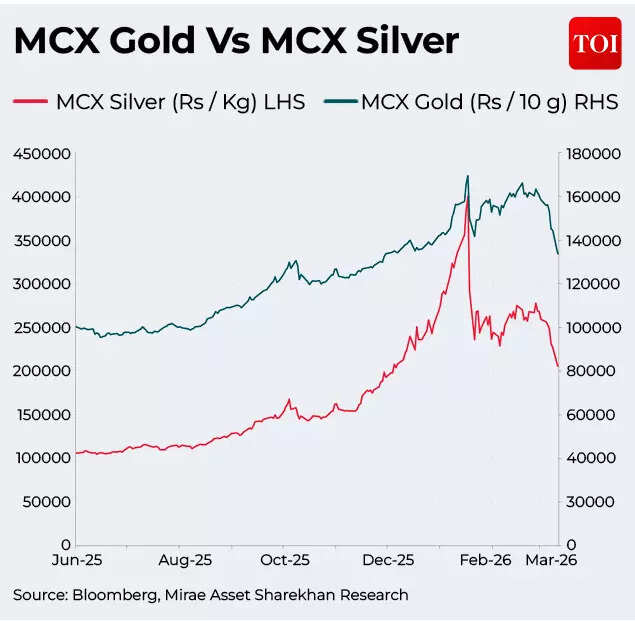
According to Jateen Trivedi, VP Research Analyst – Commodity and Currency, LKP Securities, since the start of the year, gold has seen a relatively limited correction, down 2% internationally (CMP ~$4257) and about 0.5% in domestic markets (₹134700). However, the sharper decline has come post the February 28 Middle East conflict, where gold has corrected significantly by 19% globally and 17% in rupee terms, reflecting heavy liquidation and macro-driven selling pressure. Silver has also mirrored this trend with steep declines following the geopolitical escalation.The figures for gold and silver are staggering. According to data shared by Mirae Asset Sharekhan, since the start of the US-Iran war gold has lost $9 trillion in market capitalisation or Rs 133 lakh crore in domestic market terms. The combined market capitalization loss for gold and silver stands at $10.5 trillion in international market terms and Rs 165 lakh crore domestically.An important point that investors should note is that gold and silver are still up substantially on a year-on-year basis:

  • International gold price is up by 45% y-o-y.
  • MCX Gold price is up by 58.3% y-o-y.
  • International silver price is up by 102.8% y-o-y.
  • MCX Silver prices are up 119% y-o-y.

Why are gold prices crashing? Is gold losing safe haven appeal?

While some commodity experts say it’s too early to say whether gold’s safe haven appeal is fading, others say the reasons for the price crash explain the current scenario.“The current fall is not due to a loss of safe-haven appeal, but rather a shift in macro expectations. Rising crude oil prices are keeping global inflation elevated, which is forcing central banks, especially the US Federal Reserve, to maintain a higher-for-longer interest rate stance,” says Jateen Trivedi.Markets had earlier priced in aggressive rate cuts, but the narrative has reversed, with the US Fed indicating possibly only one rate cut in 2026. This shift has strengthened the dollar and bond yields, reducing the attractiveness of non-yielding assets like gold and silver, he tells TOI.

MCX Gold Vs MCX Silver

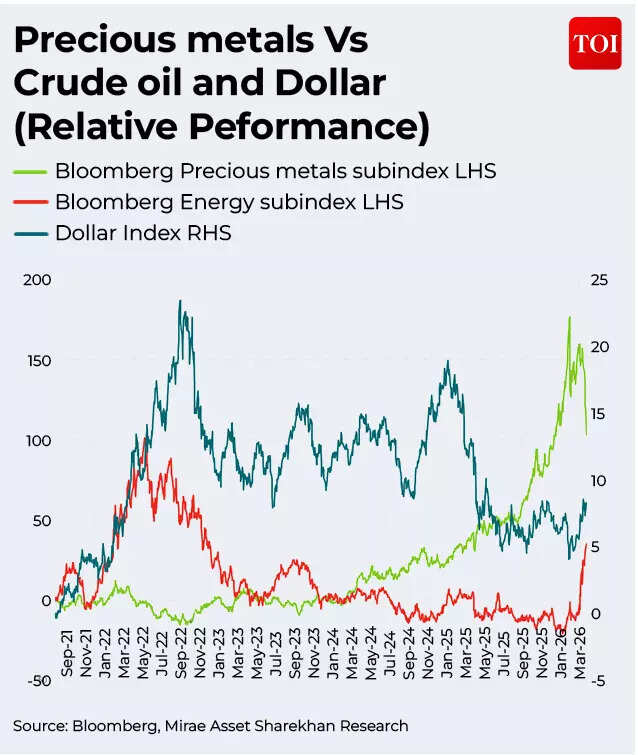
“Additionally, the recent sharp fall was amplified by heavy profit booking and unwinding of long positions, especially after the steep rally seen earlier,” he adds.To understand the crash in gold prices, it’s important to understand the factors that led to the yellow metal’s record rally.Weakness in the US Dollar Index has been one of the major structural fundamental factors fuelling rallies in commodities, especially precious metals, says Praveen Singh, Head of Commodities at Mirae Asset ShareKhan.Investors and central banks have been moving out of the US Dollar Index due to growing threats to the institutional independence and debasement and weaponization of the currency amid rising fiscal concerns in the key economies, he tells TOI.In a way, de-dollarization became a one-way consensus trade. Precious metals rallied hard in January-end as the dollar, driven by threats to the US Fed’s independence and a notion that the US administration would tolerate the US’s Dollar weakness (something akin to Plaza Accord in 1985), crashed to 95.55 on January 27 –a four-year low.

Precious metals Vs Crude oil and Dollar (Relative Performance)

“However, surging oil prices due to the raging Iran war threw the moribund US dollar a new lease of life as the US, being energy independent, is placed relatively better than most of its peers who are oil importing nations. Oil prices rose to a 4-year high before correcting on Trump’s de-escalation announcement,” he explains.While risks to the dollar’s status as a global reserve currency are real and huge; however, at the same time, as we have seen many times, alternatives to the greenback are limited in near term. So, occasionally the US dollar is surely capable of throwing surprises, he adds.Yet another factor that has worked against the rally of gold is the reaffirmation of independence of the US institutions. The Supreme Court’s ruling against the Trump-era tariffs and the Federal Reserve’s continued autonomy—backed by judicial support—have reinforced the resilience of US institutions.

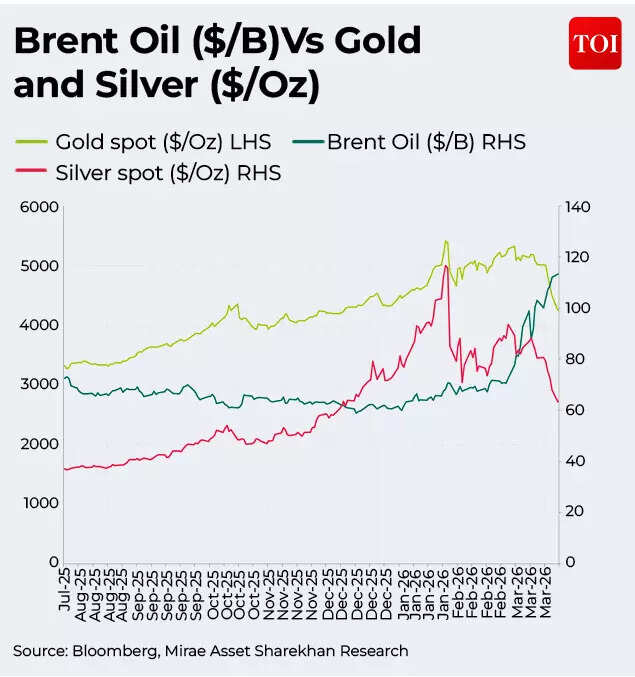
Brent Oil ($/B) Vs Gold and Silver ($/Oz)

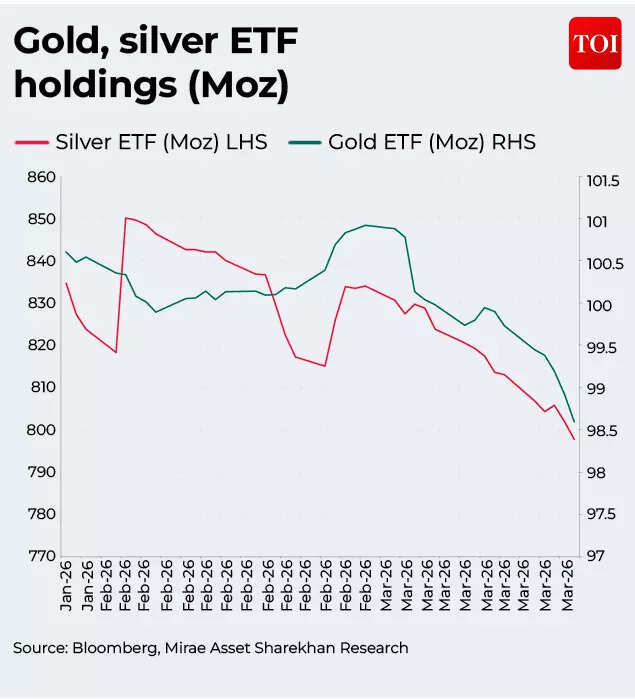
“Finally, owning hard assets became a crowded trade, so leverage unwinding is weighing on commodities. Considering the aforesaid factors, corrections, although quite unnerving and sharp, are not entirely unexpected,” Praveen Singh tells TOI.For Maneesh Sharma, AVP – Commodities & Currencies at Anand Rathi Shares and Stock Brokers, it’s too early to say that gold has lost its status as a safe haven asset this year.Gold’s performance since the war broke out mirrors its decline through mid-2022, when Russia’s invasion of Ukraine caused an energy price shock that rippled through global markets. While volatility in precious metals has calmed somewhat compared with the wild price swings in January, fluctuations have scared off some investors seeking a haven, Sharma tells TOI.Gold-backed ETFs, a popular way to hold the metal for Western retail and institutional investors, have seen persistent outflows in recent weeks, weighing on prices. InCred Money told TOI that gold is not losing its safe haven appeal – what we’re seeing is a combination of profit booking from an overextended rally and an interest rate headwind, both operating simultaneously. That’s why the correction feels as pronounced as it does, it says.

Gold, silver ETF holdings (Moz)

Where are gold prices headed and what should investors do?

While gold and silver prices have already undergone quite a sharp correction, unless oil prices and yields stabilize, precious metals may remain vulnerable, feel experts.In fact, Maneesh Sharma said that a further 10–15% downside moves in both gold and silver in the near term scenario cannot be ruled out.“With prices correcting by almost 15% since the start of ongoing geopolitical conflict, movements in crude oil prices in the short term could remain an important trigger influencing trends,” he says.“Investors could still continue to accumulate gold & silver on any 10–15 % dips in prices in the near term. We still expect gold to deliver 25–30 % returns on a yearly average basis (2025 avg. – 3,445/Oz) while prices could still test $ 5,800–6,000/Oz on the higher side by year end or by the start of next year. Meanwhile silver could remain volatile with higher side targets of $95–100/oz still achievable by year end,” he predicts.Jateen Trivedi, of LKP Securities also believes that the current phase appears to be a corrective downtrend driven by profit booking, and prices may extend lower by another 10–15% in the near to short term.“Internationally, gold could test levels of $4000–$3600, while in domestic markets, prices may drift towards ₹110000–₹115000. This decline should be viewed as an accumulation opportunity for long-term investors, rather than a structural breakdown,” he advises.“If geopolitical tensions persist, upside may remain capped, with gold likely to stabilize in the ₹130000–₹140000 range. However, in case of de-escalation and a shift toward rate cuts, gold can resume its bullish trend, potentially moving back towards $5000 internationally and ₹155000 domestically,” he adds.At least in the short term, we need to dwell on the possibility and impact of demand for risk assets competing with gold demand should the Iran war come to an end, says Mirae Asset Sharekhan’s Praveen Singh.He recommends accumulating gold and silver for medium-to-long term. “This is the preferred strategy as the possible upside is much more than the possible downside. In fact, these corrections are quite healthy. No gainsaying that long-term structural fundamental factors remain well in place. Gold price is expected to rise to $6000-$6500 and silver to $140 by the year-end,” he said.InCred Money is of the view that the gold price correction does not alter the fundamental rationale for holding gold and silver in a portfolio.“The diversification argument remains intact. These assets have low correlation with equities and bonds. They behave differently under stress. That characteristic doesn’t disappear because prices have pulled back from elevated levels,” it says.“Investors should look at gold and silver from an asset allocation point of view and not as a trading position. The long term thesis of gold (geopolitical uncertainties) and silver (high industrial use) are intact as of now. Such sharp corrections offer a better entry point for long term investors,” it adds.(Disclaimer: Recommendations and views on the stock market, other asset classes or personal finance management tips given by experts are their own. These opinions do not represent the views of The Times of India)




Source link