Breaking News
US stock markets today (April 2, 2026): Wall Street slides as oil tops $110 after Trump vows escalation; Dow falls 545 points, S&P 500 down 1.1%

[ad_1]
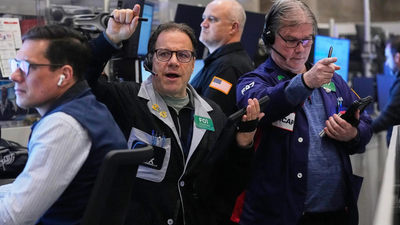
US stock markets today (April 2, 2026): Wall Street slides as oil tops $110 after Trump vows escalation; Dow falls 545 points, S&P 500 down 1.1%

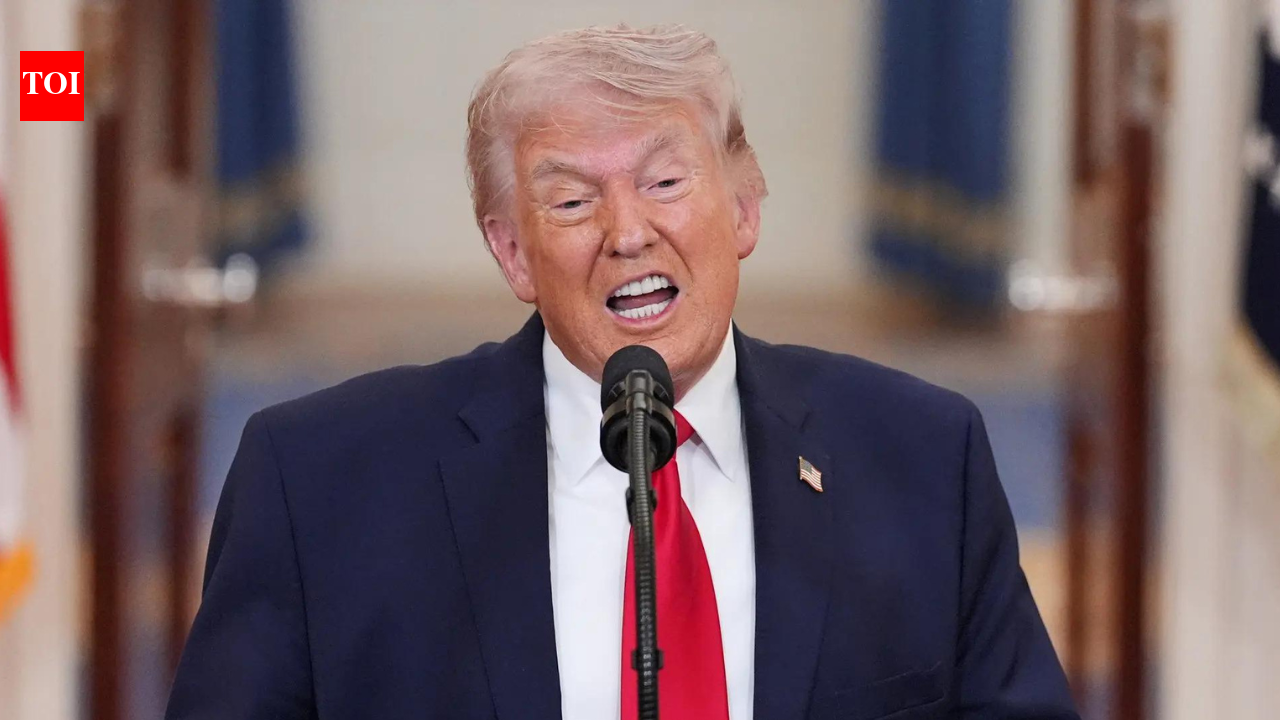
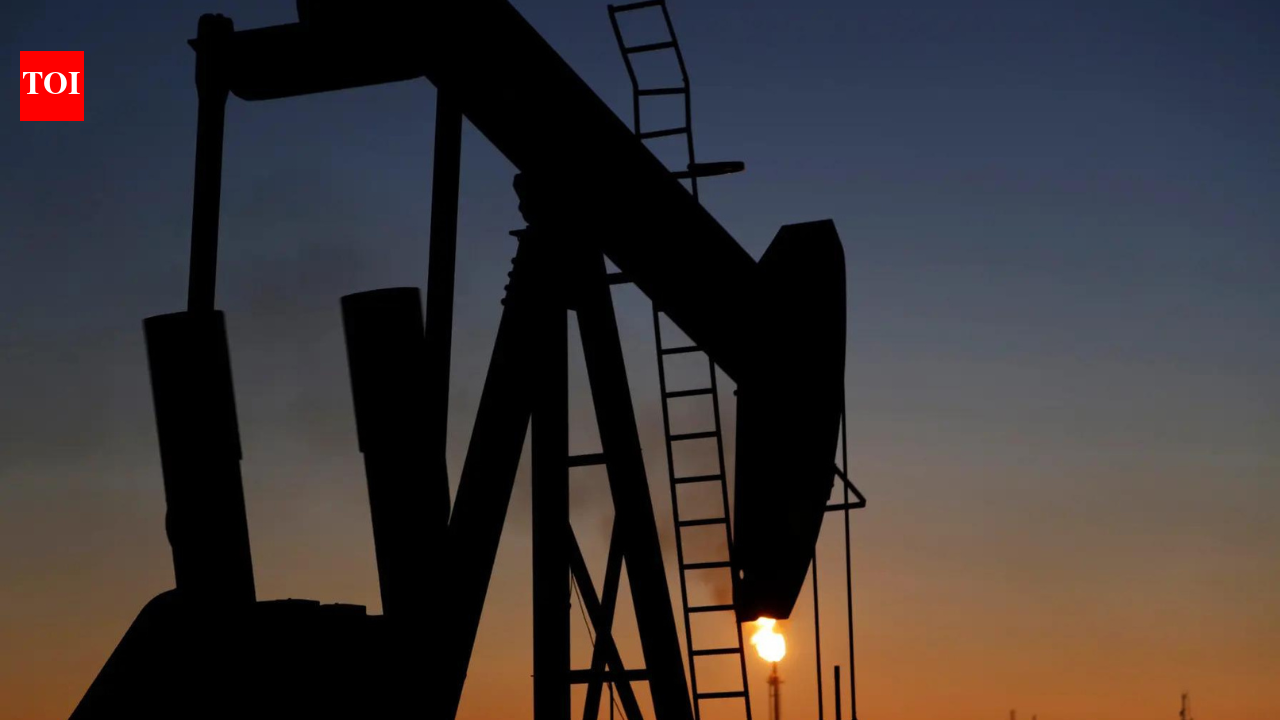
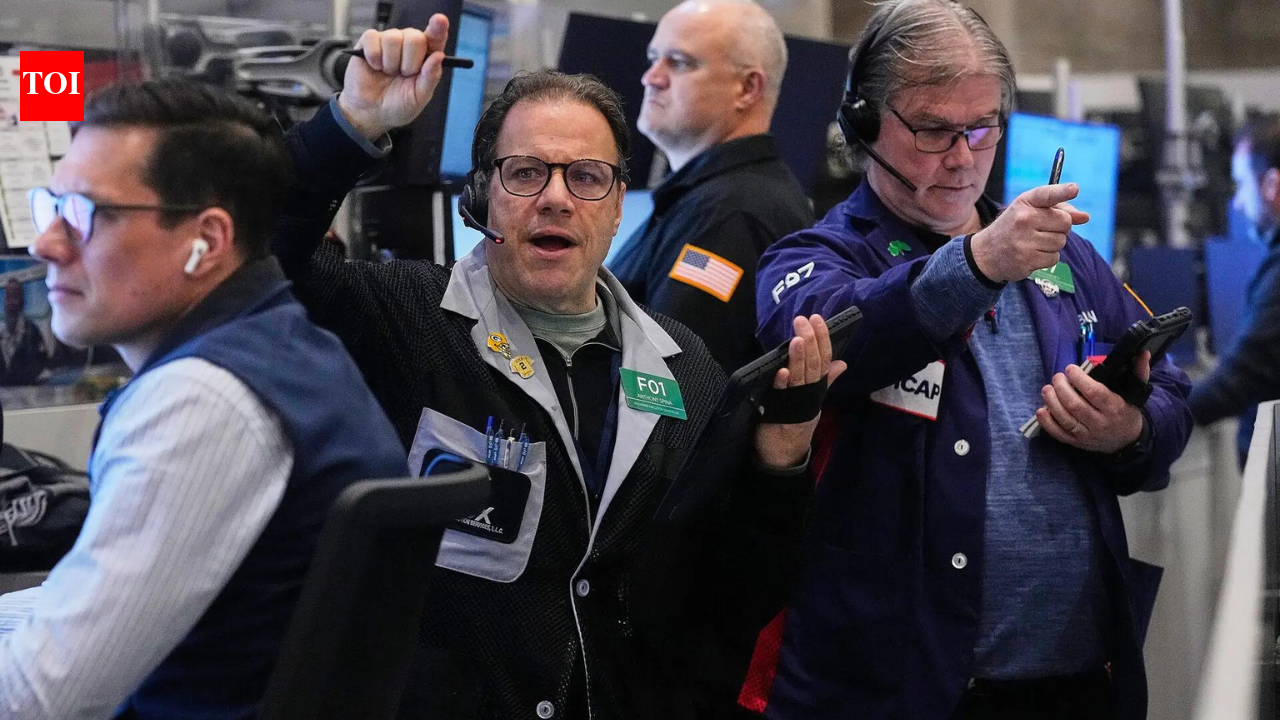
US stock markets declined sharply on Thursday, while oil prices surged, after President Donald Trump vowed to continue military action against Iran and did not provide a clear timeline for de-escalation of the conflict in the Middle East, according to AP.The S&P 500 fell 1.1%, with nearly three out of every four stocks in the benchmark index trading lower. The Dow Jones Industrial Average dropped 545 points, or 1.2%, while the Nasdaq Composite declined 1.6% as of 9:52 a.m. Eastern time.The broad-based weakness in US equities was mirrored across global markets, with major indices in Europe and Asia also trading in the red.The sell-off followed Trump’s national address on Wednesday, where he said the United States would continue to hit Iran “extremely hard over the next two to three weeks,” dampening hopes of a near-term resolution to the conflict.Markets had been gaining earlier in the week on expectations that the war could end soon. Despite Thursday’s losses, major indices remain on track to close the week with gains.Thursday also marked the final trading session of the week for Wall Street, as markets will remain shut on Friday for the Good Friday holiday.Crude oil prices continued to be the primary driver of volatility in global markets. Shipping traffic through the Strait of Hormuz — a key route through which about one-fifth of the world’s traded oil passes during peacetime–has been severely curtailed, tightening global supply.The price of Brent crude, the international benchmark, jumped 7.8% to $109.10 per barrel. US benchmark crude surged 11.7% to $111.92 per barrel. Oil prices had been easing towards $100 per barrel earlier in the week before rising sharply following Trump’s remarks.Financial markets have witnessed sharp swings since the onset of the conflict, with investor sentiment shifting rapidly in response to developments and policy signals.Just earlier this week, the S&P 500 had briefly approached a 10% decline from its record high — a level that is commonly referred to by investors as a “correction.” The index had rebounded on Tuesday and Wednesday on optimism around a possible end to the conflict.Sectorally, airline and travel-related stocks were among the biggest losers on Thursday, reflecting concerns over higher fuel costs and reduced travel demand. United Airlines fell 6.1%, while Carnival dropped 5%.Energy stocks, however, moved higher in line with rising crude prices. Exxon Mobil gained 2.3%, while Chevron advanced 3.4%.In the bond market, Treasury yields remained relatively stable. The yield on the 10-year Treasury note edged up to 4.33% from 4.32% late Wednesday.

[ad_2]

Source link

Are you a ‘worker’ under India’s labour codes? How it differs from white‑collar employment

[ad_1]

Are you a ‘worker’ under India’s labour codes? How it differs from white‑collar employment
The labour codes aim to simplify and consolidate India’s complex labour law framework.

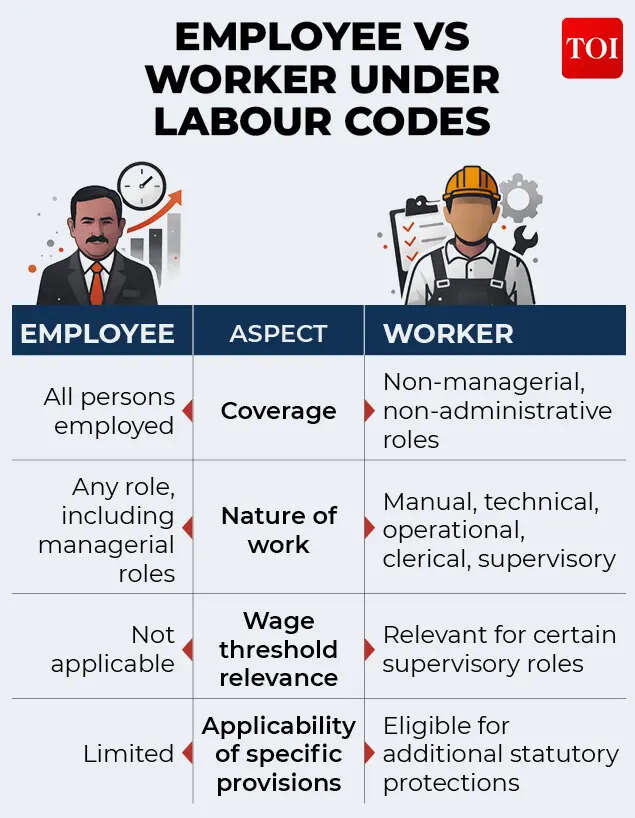
India’s new labour codes have introduced a structured distinction between the terms “employee” and “worker”. While all workers are employees, not all employees are workers. This distinction is more than just terminology – it determines the applicability of several statutory benefits and protections.The labour codes aim to simplify and consolidate India’s complex labour law framework. In doing so, they retain the principle that certain categories of roles – particularly those involving operational, manual or clerical work – may require specific safeguards. As a result, the concept of a “worker” remains central to how the codes are applied.This distinction is not limited to factories or industrial units. In today’s economy, many roles in offices, warehouses, retail outlets, and service centres may fall within the scope of “worker” depending on the nature of duties performed.Understanding the definition of “worker”The labour codes define a “worker” as someone employed to perform manual, skilled, unskilled, technical, operational, clerical or supervisory work. However, individuals in managerial or administrative roles are excluded. Supervisory employees may also be excluded if their wages exceed a specified threshold.The key factor is the nature of work performed—not the job title, salary level or workplace setting. This means that two employees in the same organisation, with similar designations, may be treated differently under the codes depending on their actual responsibilities. In contrast, the term “employee” is broader and includes all individuals engaged for hire or reward, regardless of their role. This allows the codes to apply specific provisions to workers while maintaining flexibility for other categories of employees.

Employee vs worker under labour codes

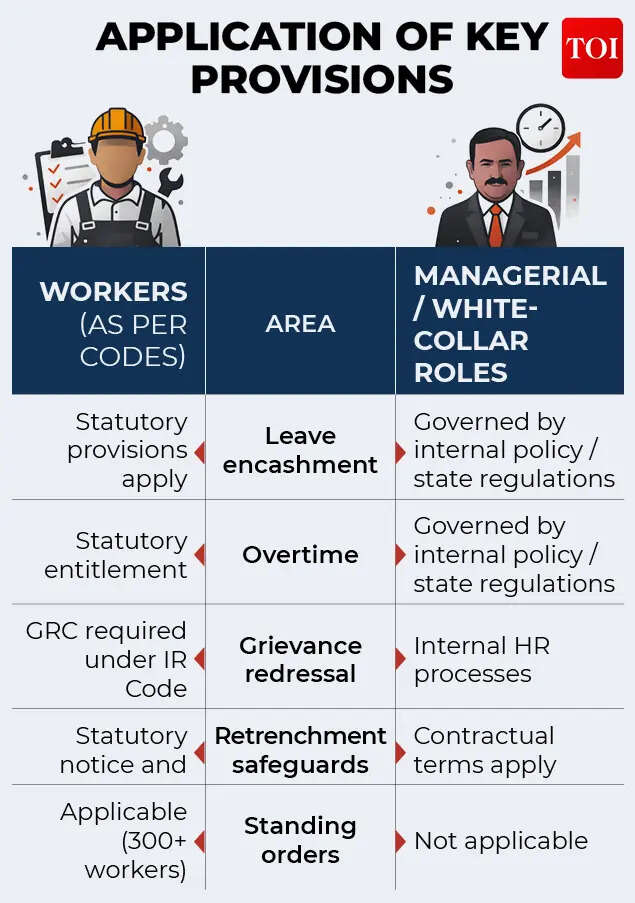
Key provisions applicable to workersThe labour codes provide a range of benefits and protections that apply specifically to workers. These include provisions on leave encashment, overtime, grievance redressal, retrenchment compensation, and standing orders. Below is a closer look at each of these areas.Leave encashment for workersUnder the Occupational Safety, Health and Working Conditions Code, 2020 (OSHWC Code), leave encashment provisions apply only to workers. The Code provides that workers are entitled to one day of earned leave for every 20 days of work in a calendar year, subject to a minimum number of days worked.At the end of the calendar year, workers may carry forward up to 30 days of earned leave. Any leave balance exceeding this limit must be encashed. Additionally, workers may request encashment of up to 30 days of leave at the end of the year, even if the carry-forward limit is not exceeded.All leave encashment is to be calculated based on the definition of “wages” under the labour codes, which includes basic pay, dearness allowance and retaining allowance, but excludes specific components such as house rent allowance, overtime allowance, statutory bonus, etc.Example: Where these provisions apply, a worker with 42 days of earned leave at year-end would have 12 days mandatorily encashed. The worker may also request encashment of the remaining 30 days.Overtime for workersThe OSHWC Code also provides for overtime pay for workers. Overtime is payable at twice the rate of wages and is applicable when a worker works beyond the prescribed limits.As per the draft Central Rules under the OSHWC Code, overtime becomes payable after 48 hours of work in a week. The maximum permissible overtime is 144 hours per quarter. Importantly, a worker’s consent is required before they can be asked to work overtime.Example: If an employee works 54 hours in a week, and the provisions apply, the 6 hours beyond 48 would be considered overtime and paid at twice the wages rate, subject to the worker’s consent and the quarterly cap.The 48-hour weekly threshold and 144-hour quarterly cap are based on draft rules and may be subject to change upon final notification.Grievance Redressal Committee (GRC)The Industrial Relations Code, 2020 mandates that every industrial establishment employing 20 or more workers must set up a Grievance Redressal Committee (GRC) to address individual grievances.The GRC must have equal representation from the employer and workers, with a maximum of 10 members. There must be adequate representation of women workers, proportionate to their share in the workforce. The committee is required to resolve grievances within 30 days of receiving an application.If a worker is dissatisfied with the GRC’s decision or if the grievance is not resolved within the stipulated time, the worker may escalate the matter to a conciliation officer or, subsequently, to an industrial tribunal.Example: Where this framework applies, a worker raising a concern about shift allocation or leave records would submit a grievance to the GRC. The committee would then follow a defined process and timeline to resolve the issue.Retrenchment and Worker Re-skilling FundThe Industrial Relations Code also outlines specific provisions for retrenchment. A worker with at least one year of continuous service is entitled to one month’s notice (or wages in lieu) and retrenchment compensation equivalent to 15 days’ average pay for each completed year of service.In addition, employers are required to contribute an amount equal to 15 days’ wages per retrenched worker to the Worker Re-skilling Fund. This fund is intended to support retrenched workers by crediting the amount to their accounts within 45 days of retrenchment.Example: Where these provisions apply, an organisation planning a workforce reduction would need to ensure that notice, compensation and re-skilling contributions are processed in accordance with the Code’s requirements.Standing OrdersThe standing orders framework under the Industrial Relations Code applies to industrial establishments employing 300 or more workers. Employers in such establishments are required to prepare and certify standing orders that define service conditions such as classification of workers, working hours, leave, misconduct, and disciplinary procedures.Employers may adopt the model standing orders issued by the Central Government or prepare their own, subject to consultation with trade unions or negotiating councils and certification by the appropriate authority.Where standing orders apply, organisations would document service conditions in a standardised format, ensuring consistency in how policies are applied across the workforce.

Application of key provisions

Rulings on worker definition – A summaryIndian courts have consistently emphasised that the classification of a worker depends on the actual duties performed, not merely on job titles or salary levels. Factors such as the degree of supervision, decision-making authority, and the nature of responsibilities are considered when determining whether an individual qualifies as a worker.These principles continue to guide the interpretation of the worker definition under the labour codes, especially in cases where roles may not fall neatly into one category.Finally,The labour codes provide a structured framework for distinguishing between employees and workers, with specific rights and protections linked to worker status. This distinction is relevant across sectors and applies equally to traditional industrial settings and modern workplaces.For organisations, the framework offers clarity on how different provisions apply to different categories of roles, supporting consistent and transparent workforce practices. For individuals, it enhances awareness of how statutory provisions relate to the nature of work performed.Overall, the labour codes aim to balance protection, flexibility and clarity—supporting both employee welfare and organisational efficiency in a unified legal framework.(Puneet Gupta is Partner, People Advisory Services Tax at EY India)

[ad_2]

Source link

Trump’s Iran address: Peace is close, war is closer

[ad_1]

Trump’s Iran address: Peace is close, war is closer

The TOI correspondent from Washington: The prime-time address was intended to reassure an anxious nation and steady jittery markets; instead, U.S President Donald Trump on Wednesday underscored the deep contradictions at the heart of his war in Iran, declaring that American objectives were “nearing completion” even as he threatened an intensification of military action.The speech, delivered from the White House on Wednesday night, marked Trump’s most comprehensive attempt yet to define the trajectory of a conflict that has escalated rapidly over the past month. Yet rather than offering clarity, it raised fresh questions about U.S. strategy, the risk of further escalation, and the durability of Washington’s alliances and partnerships.Trump struck a hubristic and triumphant tone, bragging about the greatness of the U.S military and asserting that American might has crippled Iran’s military capabilities, including its navy, air force, and missile systems. He suggested that the campaign could conclude within “two to three weeks,” framing the operation as a decisive success. In the same breath, he also warned that he was ready to hit Iran “extremely hard” in the coming weeks and expand strikes to critical infrastructure if Tehran failed to comply with U.S demands.The dual message—mission accomplished alongside threats of escalation—captured what analysts described as the central paradox of Trump’s Iran policy. While signaling closure, the president left open multiple pathways to a broader war, including continued aerial bombardment, the possibility of additional targets, and even a ground invasion. Notably absent in the speech was a clear exit strategy. Trump did not specify what political or military conditions would constitute a definitive end to hostilities, nor did he clarify how the U.S would secure long-term objectives such as curbing Iran’s nuclear program, which he acknowledged remains intact in part, and which some experts have suggested is a strawman bogey propped by Israel. Compounding concerns are reports that Washington is exploring plans to secure or seize Iran’s enriched uranium stockpiles, a move fraught with logistical and geopolitical risks. Such an operation would likely require either cooperation from Iranian authorities—currently unlikely—or a sustained military presence deep inside Iranian territory, raising the specter of a prolonged occupation. Experts warn that any attempt to physically control nuclear material in an active war zone could trigger retaliation, environmental hazards, and broader regional destabilization.Trump’s address also veered sharply into criticism of U.S. allies, particularly NATO members, whom he accused of failing to shoulder their share of the burden in confronting Iran. He reiterated calls for other nations, especially those reliant on Middle Eastern oil, to take responsibility for reopening the Strait of Hormuz, a critical global shipping lane that has been disrupted by the conflict. In a leaked remarks at a private Easter lunch earlier in the day, he taunted South Korea, Japan, and China for not helping keep Hormuz open, but conspicuously excluded India from the list of countries he wanted to intercede.The remarks reflect a widening transatlantic rift. European allies have largely refrained from direct military involvement, favoring diplomatic solutions and maritime security roles. Trump’s increasingly hostile rhetoric toward NATO, including suggestions that the alliance is no longer essential, has deepened concerns about U.S. reliability as a security partner.If Trump’s speech was aimed in part at calming financial markets—a longstanding preoccupation of the president—it appeared to have the opposite effect. Within minutes of the address, U.S. stock futures turned sharply negative and oil prices surged amid fears of prolonged disruption in the Strait of Hormuz. Analysts said the speech failed to provide the clarity investors had hoped for. Instead, it reinforced concerns about a drawn-out conflict with unpredictable economic consequences, including inflationary pressures driven by energy prices.The market reaction was particularly striking given Trump’s frequent invocation of stock performance as a barometer of his administration’s success. During the speech, he pointed to earlier market highs, but the immediate downturn underscored the fragility of investor confidence.At home, the address drew a mixed but increasingly critical response. Democratic lawmakers and some Republicans faulted Trump for failing to articulate clear objectives or a coherent strategy. Public opinion has also turned skeptical. Polls show a majority of Americans oppose the war and want it concluded quickly, with many expressing concern that the administration has not adequately explained its goals.

Stay updated with our Live Blog for minute-by-minute coverage of the Israel Iran War including breaking news, missile attacks, and Middle East crisis Latest Updates

[ad_2]

Source link

Govt directs refineries to divert feedstock to petrochemical units; move to ease industry shortages

[ad_1]

Govt directs refineries to divert feedstock to petrochemical units; move to ease industry shortages

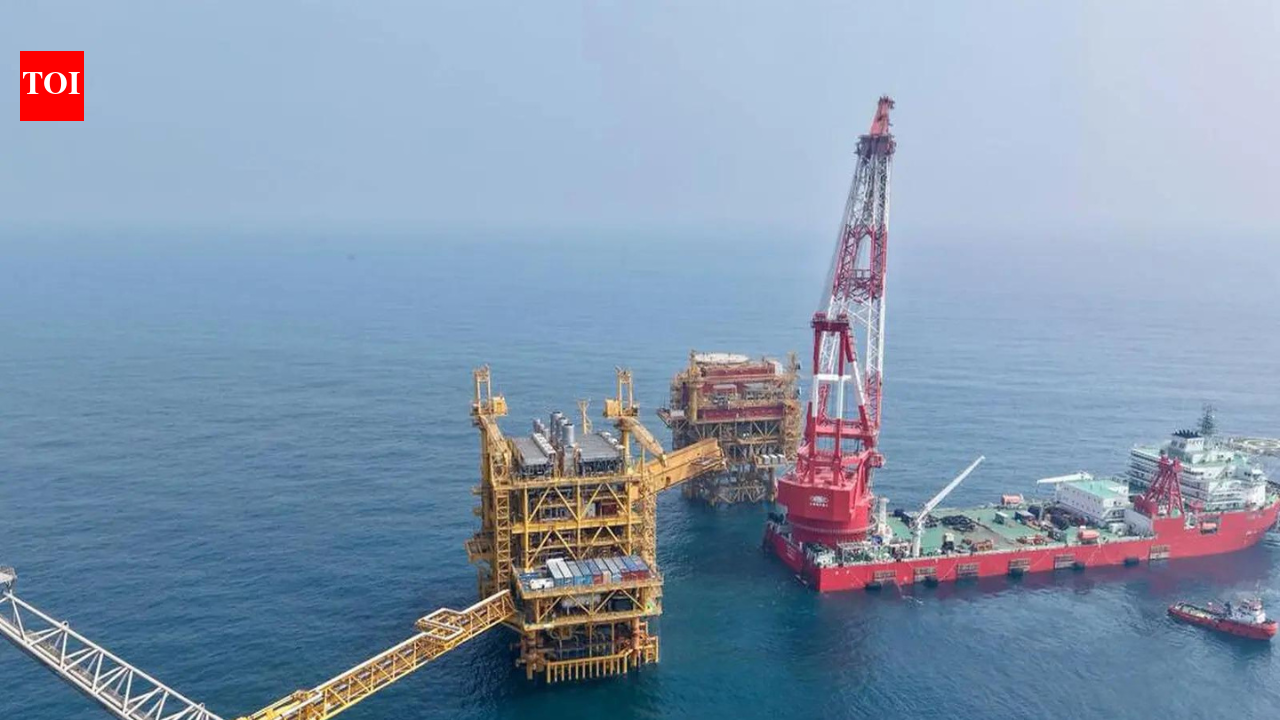
The government has asked oil refineries to divert part of the feedstock used for cooking gas (LPG) towards petrochemical units, as industries grapple with acute raw material shortages triggered by supply disruptions amid the West Asia conflict, according to PTI.The Ministry of Petroleum and Natural Gas on April 1 directed refiners to allocate a portion of propylene to the petrochemical sector, which has been hit after earlier curbs prioritised LPG output.

Watch

‘Petrol, Diesel Crisis Developing Worldwide’: PM Modi Urges Unity Amid West Asia Conflict

At an inter-ministerial briefing, Sujata Sharma, Joint Secretary in the ministry, said the government had initially asked refiners to maximise LPG production following disruption in imports from the Middle East.This was done by diverting hydrocarbon streams—such as propane, butane and propylene—away from petrochemical use.“But then there are certain other sectors which also need some of these molecules and thereby this decision has been taken,” she said.Before the conflict began on February 28, India imported about 60 per cent of its LPG requirement, with nearly 90 per cent of supplies transiting through the Strait of Hormuz, which has since been effectively shut.To boost domestic LPG output, the government had on March 9 directed refineries to channel the entire output of C3 and C4 streams exclusively for LPG production and avoid their use in petrochemicals.This, however, disrupted supply of propylene, impacting plastic manufacturing and downstream sectors such as packaging, food and beverages, FMCG, and even condom production.To ease the shortage, refiners have now been asked to restore partial supply of propylene to petrochemical units.“This move will have an impact on supplies available for domestic LPG, but it will be ensured, and it has been ensured that supplies to domestic consumers are not affected,” Sharma said.She added that the temporary removal of customs duty on certain petrochemical imports would further support affected industries.“I am very very hopeful that it will give us very good results,” she said.While domestic LPG supply has been prioritised, commercial LPG availability was initially impacted. The government later restored supply in phases—first to 20 per cent and then to 50 per cent of normal levels, including a 10 per cent component linked to piped natural gas reforms.This allocation has been prioritised for sectors such as restaurants, hotels, food processing, dairy units, community kitchens and subsidised canteens.Sharma said 4.3 lakh 5 kg LPG cylinders have been sold, and 60,000 tonnes of commercial LPG have been lifted across states and UTs since March 14.Educational institutions and hospitals continue to receive priority, accounting for about 50 per cent of total commercial LPG allocation.The government has now further increased commercial LPG allocation by an additional 20 per cent, taking total supply to 70 per cent of pre-crisis levels.The additional supply is being directed towards labour-intensive and core sectors such as steel, automobiles, textiles, chemicals and plastics, particularly for processes where substitution with natural gas is not feasible.

[ad_2]

Source link

‘Requests being examined’: Maldives, Sri Lanka among several nations seeking India’s energy supplies, says MEA | India News

[ad_1]

‘Requests being examined’: Maldives, Sri Lanka among several nations seeking India’s energy supplies, says MEA

NEW DELHI: The ministry of external affairs on Thursday said several neighbouring countries have sought India’s assistance for petroleum supplies amid rising regional pressures as the Middle East conflict continues. “On Bangladesh, we continue to supply energy requirements to them since 2007… We have also recently supplied 38,000 metric tonnes of petroleum products to Sri Lanka, based on their request. We have ongoing engagement with Nepal and Bhutan, which continues,” MEA spokesperson Randhir Jaiswal said. “The government of the Maldives has also reached out to us for the supply of petroleum products, both on a short-term and long-term basis. These requests are being examined, keeping in mind our own availability and needs,” he added.Jaiswal also offered assurances on safety of Indians in the region. “”Around 10 million Indians live in the GCC countries. All of them are safe, and we remain in constant communication with them. It is unfortunate that, so far, eight Indians have been killed in this conflict, and one is still missing,” he said.“Here at the Ministry of External Affairs, in coordination with our Ministry of Shipping and all our Indian embassies in the region, we are dedicated to safeguarding the security and interests of our citizens. We are closely monitoring all developments and activities related to the Gulf region, this ongoing conflict, and the Strait of Hormuz,” he further said.Additionally, addressing evacuation efforts, Jaiswal said, “Several of our Indian nationals—204, to be precise—have been able to leave Iran for Azerbaijan through the land border, and from there, they will be coming back home. Several of them have already returned, while others will do so over the next few days. We are thankful to the government of Azerbaijan for its support in facilitating the exit of Indian nationals from Iran.

[ad_2]

Source link

Rupee’s biggest single-day gains in years! Currency rebounds 1.6% to 93.14 vs US dollar after RBI intervention

[ad_1]

Rupee's biggest single-day gains in years! Currency rebounds 1.6% to 93.14 vs US dollar after RBI intervention

The rupee staged a sharp rebound on Thursday, rising 156 paise or 1.6 per cent to settle at 93.14 (provisional) against the US dollar, logging one of its steepest single-day gains in many years after regulatory measures by the Reserve Bank of India (RBI), according to PTI.The surge followed a series of steps by the central bank to restrict banks from onshore forward markets, prompting dollar unwinding by lenders.At the interbank foreign exchange, the domestic unit opened at 94.62 and rallied sharply by 188 paise during the session to hit an intra-day high of 92.82. It finally settled at 93.14, up 156 paise from the previous close.The rupee had breached the 95 mark earlier this week, closing at 94.70 on Monday after hitting a record low of 94.84 on Friday, which triggered RBI intervention, PTI reported.Forex markets remained shut on Tuesday due to Shri Mahavir Jayanti and on Wednesday on account of banks’ annual account closure.Through its March 27 circular, the RBI capped banks’ net open positions in the rupee at USD 100 million, with compliance mandated by April 10.On Wednesday, it announced additional measures, stating that authorised dealers will not be allowed to offer non-deliverable derivative contracts involving the rupee to resident or non-resident users.The central bank also barred users from rebooking any foreign exchange derivative contract, whether deliverable or non-deliverable, once cancelled after the issuance of these instructions.Despite Thursday’s rally, the rupee remains under pressure from foreign capital outflows, a strengthening dollar, and elevated crude oil prices amid ongoing geopolitical tensions, analysts said.Since the onset of the West Asia conflict on February 28, 2026, the rupee has depreciated by over 4 per cent. For the full FY26, the currency declined nearly 10 per cent against the US dollar.Anuj Choudhary, Research Analyst at Mirae Asset ShareKhan, said the rally was driven by regulatory tightening.“This led to the selling of dollars by the banks to comply with regulatory requirements,” he said.He added that the rupee may continue to trade with a positive bias as banks unwind positions ahead of the April 10 deadline.“However, global risk-off sentiments and rising crude oil prices may continue to pressure the rupee at higher levels,” he said, adding, “USD-INR spot price is expected to trade in a range of Rs 92.20 to Rs 93.20.”Meanwhile, the dollar index rose 0.60 per cent to 100.05, while Brent crude traded 6.84 per cent higher at USD 108.08 per barrel.In domestic equities, the Sensex ended 185.23 points higher at 73,319.55, while the Nifty gained 33.70 points to close at 22,713.10.Foreign institutional investors sold equities worth Rs 8,331.15 crore on Wednesday, exchange data showed.Separately, government data indicated that GST collections grew about 9 per cent in March, crossing Rs 2 lakh crore, marking the third-highest monthly mop-up in FY26.

[ad_2]

Source link

Stock market today (April 2, 2026): Which are the top gainers and losers in Nifty50 and BSE Sensex today? Check list

[ad_1]

Stock market today (April 2, 2026): Which are the top gainers and losers in Nifty50 and BSE Sensex today? Check list

Benchmark equity indices, Nifty50 and BSE Sensex staged a sharp recovery on Thursday, erasing steep intraday losses to end higher, supported by value buying in IT and banking stocks and a strong rebound in the rupee.The 30-share BSE Sensex rose 185.23 points, or 0.25 per cent, to settle at 73,319.55 after plunging 1,588 points in early trade to a low of 71,545.81. The index rebounded over 2,000 points from the day’s low, hitting a high of 73,568.54 in late trade.The NSE Nifty also recovered from sharp losses to close at 22,713.10, up 33.70 points, or 0.15 per cent. It had dropped 496.85 points, or 2.19 per cent, earlier in the session before climbing to an intraday high of 22,782.30.Market sentiment improved after a sharp rebound in the rupee, which strengthened by 188 paise to briefly touch the 92 level against the US dollar before settling over 150 paise higher. The recovery followed regulatory measures by the Reserve Bank aimed at stabilising the currency.Bargain buying in IT stocks led the gains, with HCL Technologies and Tech Mahindra rising nearly 3 per cent each.

Nifty50 top gainers

  • HCL Tech (+3.53%)
  • Tech Mahindra (+2.64%)
  • Infosys (+1.97%)
  • Wipro (+1.96%)
  • Tata Consumer (+1.78%)
  • TCS (+1.77%)
  • Hindalco (+1.29%)
  • Bajaj Finance (+1.17%)
  • HDFC Bank (+1.17%)
  • Maruti Suzuki (+0.98%)

Nifty50 top losers

  • Eicher Motors (-2.58%)
  • Asian Paints (-2.56%)
  • Eternal (-2.03%)
  • Sun Pharma (-2.02%)
  • Bajaj Auto (-1.55%)
  • Max Healthcare (-1.50%)
  • NTPC (-1.38%)
  • RIL (-1.37%)
  • HDFC Life (-1.20%)
  • Grasim Industries (-1.11%)

BSE Sensex top gainers

  • HCL Tech (+3.53%)
  • Tech Mahindra (+2.64%)
  • Infosys (+1.97%)
  • TCS (+1.77%)
  • Bajaj Finance (+1.17%)
  • HDFC Bank (+1.17%)
  • Maruti Suzuki (+0.98%)
  • Titan Company (+0.78%)
  • Bharat Electronics (BEL) (+0.70%)
  • Trent (+0.69%)

BSE Sensex top losers

  • Asian Paints (-2.56%)
  • Eternal (-2.03%)
  • Sun Pharma (-2.02%)
  • NTPC (-1.38%)
  • RIL (-1.37%)
  • Power Grid (-0.98%)
  • UltraTech Cement (-0.88%)
  • M&M (-0.66%)
  • Adani Ports SEZ (-0.57%)
  • Bajaj Finserv (-0.39%)

“Indian equity markets opened on the back foot as Trump’s renewed threat to strike Iran ‘extremely hard’ swiftly erased the optimism built in the prior session, triggering broad-based selling across Asian markets,” said Vinod Nair, Head of Research, Geojit Investments Ltd, PTI quoted.“The RBI’s twin regulatory actions—capping banks’ net open rupee positions and barring NDF offerings to corporates—though disruptive to banking operations in the near term, achieved their intended effect, mechanically forcing dollar unwinding and engineering a meaningful rupee recovery,” he added.Global cues remained weak after US President Donald Trump said in a national address that the US would continue to hit Iran “very hard” and “finish the job” soon.Crude oil prices surged more than 7 per cent, with Brent crude trading 7.28 per cent higher at USD 108.52 per barrel.Asian markets ended lower, with South Korea’s Kospi falling 4.47 per cent, Japan’s Nikkei 225 declining 2.40 per cent, Shanghai’s SSE Composite slipping 0.74 per cent and Hong Kong’s Hang Seng losing 0.70 per cent.European markets were also in the red, with Germany’s DAX down 1.71 per cent, Paris’ CAC 40 falling 0.98 per cent and London’s FTSE 100 slipping 0.12 per cent.Foreign Institutional Investors (FIIs) sold equities worth Rs 8,331.15 crore on Wednesday, while Domestic Institutional Investors (DIIs) bought stocks worth Rs 7,171.80 crore.In the previous session, the Sensex had surged 1,186.77 points to close at 73,134.32, while the Nifty climbed 348 points to settle at 22,679.40.

[ad_2]

Source link

Foreign investment in Indian real estate falls 75% in Jan-March; domestic investors cushion decline: Colliers report

[ad_1]

Foreign investment in Indian real estate falls 75% in Jan-March; domestic investors cushion decline: Colliers report

Foreign investment in India’s real estate sector dropped sharply during January-March, falling 75 per cent quarter-on-quarter to $400 million amid global uncertainty triggered by the West Asia conflict, according to PTI.Data from real estate consultant Colliers showed that total institutional investments declined 61 per cent to $1.6 billion in Q1 2026 from $4.2 billion in the October-December quarter of 2025.Of the total inflows, domestic investors contributed $1.2 billion, accounting for nearly three-fourths of the investments, while foreign investors brought in just $0.4 billion. In the previous quarter, domestic and foreign inflows stood at $2.6 billion and $1.6 billion, respectively.Badal Yagnik, Chief Executive Officer & Managing Director, Colliers India, said institutional investments continue to show resilience, supported by strong domestic demand.“While global investors are likely to remain cautious in the near-term on account of volatilities in trade, crude and commodities markets, this phase is expected to be transient in nature,” Yagnik said.He added that India’s favourable demographics and consumption-driven economy will help sustain its positioning in the Asia-Pacific region.Colliers said foreign investors may adopt a “wait-and-watch” approach in the coming quarters, potentially impacting inflows, though domestic capital is expected to provide some stability.Among asset classes, investments in office properties fell significantly to $821.1 million during January-March from $3,051.8 million in the preceding quarter.The institutional investment data includes inflows from AIFs, private equity, pension funds, sovereign wealth funds, foreign banks, real estate funds and REITs, among others.Colliers expects domestic investors to remain active and partly offset the impact of subdued foreign participation in the near term

[ad_2]

Source link

KVS admission 2026 last date today for Class 1 and Balvatika; apply here |

[ad_1]

KVS admission 2026 last date today for Class 1 and Balvatika; apply here
KVS closes registration April 02, 2026 for admissions with lottery process and merit lists

KVS admission 2026: Kendriya Vidyalaya Sangathan has set April 02, 2026 as the final date for submitting online applications for Class 1 and Balvatika admissions for the 2026-27 academic session. The registration process, which opened on March 20, 2026 at 10:00 am, will close by the end of the day.Admissions for entry-level classes are being conducted entirely through an online system, while other classes will follow a mixed mode based on seat availability. Officials have confirmed that document verification will be carried out strictly during the process to prevent discrepancies.Schedule outlines key admission stagesThe admission schedule specifies that the first merit list for Balvatika will be issued on April 08, followed by Class 1 on April 09. The second list will be released on April 16, and the third list on April 21.Offline registration for Class 2 and above is scheduled from April 02 to April 08. Admissions for these classes will be conducted between April 15 and April 20, subject to vacant seats. The final admission deadline, excluding Class 11, is June 30, 2026, while all processes will conclude by July 31, 2026.Eligibility criteria based on age cut-offAge eligibility is determined as of March 31, 2026. For Balvatika-1, children must be aged between three and four years, while Balvatika-2 requires four to five years and Balvatika-3 five to six years. Admission to Class 1 requires a minimum age of six years. Relaxation provisions apply for specified categories.Admission process varies by class levelFor Class 1 and Balvatika, selection will be carried out through a lottery system, with multiple merit lists released. Applications are accepted online only for these categories.Admissions for Classes 2 to 8 will take place offline, provided seats remain vacant, and forms must be submitted at the respective Kendriya Vidyalaya. For Classes 9 and 11, admissions depend on seat availability, with Class 11 entries linked to Class 10 results.Direct link to apply onlineReservation norms and priority categoriesReservation is implemented as per government guidelines, with 15 per cent for SC, 7.5 per cent for ST, 27 per cent for OBC (NCL), and 3 per cent horizontal reservation for CwSN.Priority in admissions is assigned to children of Central Government employees, followed by those of PSU and autonomous body staff, state government employees, and other applicants. Transfer history over the past seven years is also considered.Documents and compliance requirementsApplicants are required to submit valid documents including birth certificate, address proof, caste certificate where applicable, service certificate, and disability certificate. Authorities have stated that incorrect information may result in cancellation, and submission of an application does not ensure admission.

[ad_2]

Source link

Gold price today: Gold futures sink nearly 4% after Trump remarks on Iran; check rates in your city

[ad_1]

Gold price today: Gold futures sink nearly 4% after Trump remarks on Iran; check rates in your city

Gold prices fell sharply on Thursday in futures trade, declining by Rs 6,004 to Rs 1,47,704 per 10 grams on the Multi Commodity Exchange, as geopolitical tensions in West Asia intensified and strengthened the US dollar, dampening investor sentiment.The decline marked a reversal from a four-day winning streak, with the June contract of the yellow metal slipping 3.91%, or Rs 6,004.In international markets, Comex gold futures for the June delivery also turned lower after four consecutive sessions of gains, dropping $194.70, or 4.05% to $4,618.40 per ounce.Analysts said the fall came as the US dollar rebounded following statements by US President Donald Trump suggesting a possible escalation in the ongoing conflict with Iran.Gold prices declined on Thursday, ending a four-day gain, as the US dollar rebounded after President Donald Trump warned that the military campaign in Iran could continue with more intense action over the next two to three weeks, Jigar Trivedi, Senior Research Analyst at IndusInd Securities, said.In an address from the White House, Trump stated that Washington’s core strategic objectives in Iran were close to completion. However, he also said the US would strike Iran “extremely hard” over the next two to three weeks, without providing a timeline for ending the conflict or addressing the situation surrounding the Strait of Hormuz, which has disrupted global financial markets.According to Jigar Trivedi, this stance supported the US dollar, which has recently gained traction as a safe-haven asset, thereby pressuring dollar-denominated precious metals like gold.He further added that crude oil prices resumed their upward movement, adding to inflation concerns and expectations of tighter monetary policy conditions.“Traders have fully priced out the prospect of interest rate cuts in 2026 by the US Federal Reserve, a stark reversal from pre-war expectations of two cuts,” Trivedi said.Here’s how much gold costs in your city today:

Gold price in Chennai today

Gold is priced in Chennai at Rs 15,218 per 10 grams for 24K, Rs 13,950 for 22K, and Rs 11,635 for 18K.

Gold price in Mumbai today

In Mumbai, gold is trading at Rs 14,897 per 10 grams for 24K, Rs 13,655 for 22K, and Rs 11,173 for 18K.

Gold price in Delhi today

Gold prices in Delhi stand at Rs 14,912 per 10 grams for 24K, Rs 13,670 for 22K, and Rs 11,188 for 18K.

Gold price in Kolkata today

In Kolkata, gold is priced at Rs 14,897 per 10 grams for 24K, Rs 13,655 for 22K, and Rs 11,173 for 18K.

Gold price in Bangalore today

Gold in Bangalore is available at Rs 14,897 per 10 grams for 24K, Rs 13,655 for 22K, and Rs 11,173 for 18K.

Gold price in Hyderabad today

In Hyderabad, gold is trading at Rs 14,897 per 10 grams for 24K, Rs 13,655 for 22K, and Rs 11,173 for 18K.

Gold price in Ahmedabad today

Ahmedabad is recording gold prices of Rs 14,902 per 10 grams for 24K, Rs 13,660 for 22K, and Rs 11,178 for 18K.

Gold price in Jaipur today

In Jaipur, gold is priced at Rs 14,912 per 10 grams for 24K, Rs 13,670 for 22K, and Rs 11,188 for 18K.

Gold price in Lucknow today

Gold in Lucknow stands at Rs 14,912 per 10 grams for 24K, Rs 13,670 for 22K, and Rs 11,188 for 18K.

Gold price in Bhubaneswar today

In Bhubaneswar, gold is trading at Rs 14,897 per 10 grams for 24K, Rs 13,655 for 22K, and Rs 11,173 for 18K.

[ad_2]

Source link