Breaking News
‘Grave consequences’: White House says Iran ‘halted’ 800 executions after Trump’s warning; ground situation ‘monitored’

[ad_1]
'Grave consequences': White House says Iran 'halted' 800 executions after Trump's warning; ground situation 'monitored'

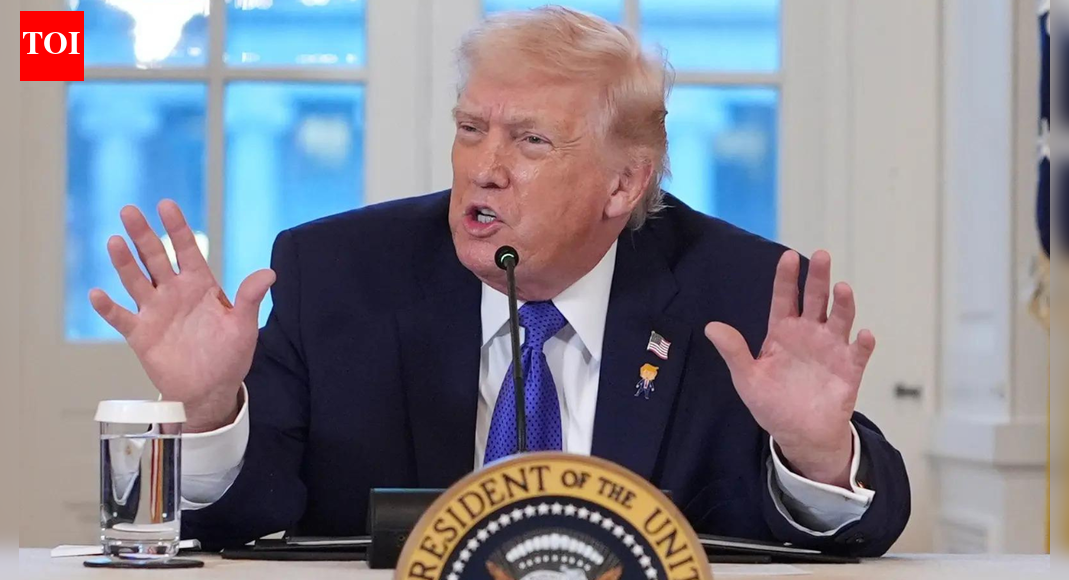
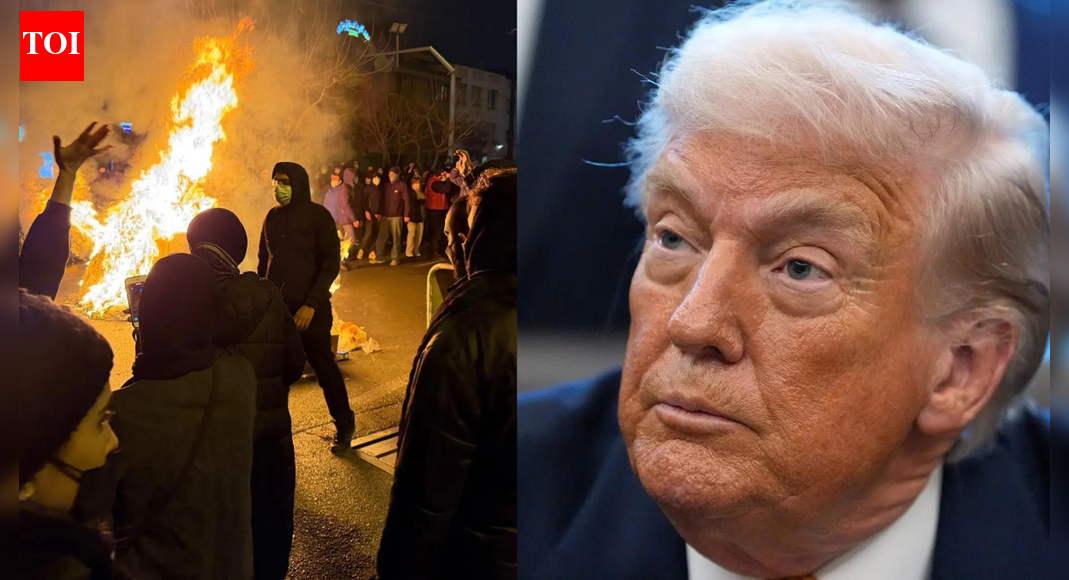
The United States claimed Iran halted 800 planned executions following pressure from President Donald Trump over Tehran’s crackdown on nationwide protests, even as Washington warned that military action remains an option. “The president understands today that 800 executions that were scheduled and supposed to take place yesterday were halted,” White House Press Secretary Karoline Leavitt told reporters on Thursday. “All options remain on the table for the president,” she said, adding that Trump had warned Iran of “grave consequences” if the killing of demonstrators continued.The White House also said that “President Donald Trump is closely monitoring the situation on the ground in Iran,” as quoted by Reuters.Earlier, Trump had said said that intermediaries from Iran had conveyed guarantees that executions would be halted. According to Trump, the assurances came from “very important sources on the other side,” even as regional allies grew increasingly concerned that rising tensions could trigger direct confrontation. With rhetoric from Washington and Tehran temporarily softening, a senior Saudi official told AFP on Thursday that Saudi Arabia, Qatar and Oman spearheaded an urgent diplomatic push to restrain Trump, citing fears of “grave blowbacks in the region”. The official said the three Gulf states mounted what he described as “a long, frantic, diplomatic last-minute effort to convince President Trump to give Iran a chance to show good intention”, requesting anonymity due to the sensitivity of the discussions. A second Gulf official corroborated the account, saying the diplomatic outreach also included a warning to Tehran that any strike on US facilities in the region would “have consequences”.The developments come as Iranian authorities continue a nationwide internet shutdown that activists fear is intended to conceal the scale of the crackdown. The blackout has now entered its seventh day. “Exactly one week ago… Iran fell into digital darkness as authorities imposed a national internet blackout,” internet monitoring group Netblocks said in a social media post, as quoted by AFP. Meanwhile, the US announced a new round of sanctions targeting Iranian officials accused of repressing protests challenging Iran’s theocratic leadership. Among those sanctioned is the secretary of Iran’s Supreme Council for National Security, whom the US Treasury Department accuses of being among the first officials to call for violence against protesters. The Treasury Department’s Office of Foreign Assets Control also designated 18 individuals and companies alleged to be involved in laundering money from Iranian oil sales through a shadow banking network linked to sanctioned institutions Bank Melli and Shahr Bank. Shadow banking refers to financial activities that resemble traditional banking but operate outside standard regulatory frameworks. Treasury Secretary Scott Bessent said the United States “stands firmly behind the Iranian people in their call for freedom and justice” and that Treasury “will use every tool to target those behind the regime’s tyrannical oppression of human rights.” The protests erupted on December 28 following the collapse of Iran’s rial currency, as the country’s economy has come under pressure from international sanctions imposed in part over its nuclear programme. Iranian Foreign Minister Abbas Araghchi offered a different account during an interview on Fox News Channel’s “Special Report with Bret Baier” on Wednesday, saying the protests began peacefully “and the government engaged with the protesters and with their leaders.” He said that after the tenth day, however, “terrorist elements led from outside” the country appeared and the demonstrations turned violent. In February, Trump reimposed a “maximum pressure” campaign on Iran aimed at blocking its development of nuclear weapons, including US-led strikes on three major Iranian enrichment facilities. While the threat of US retaliation over the deaths of protesters continues to loom, Trump has signalled the possibility of de-escalation, saying the killing appeared to be ending. The sanctions bar the targeted individuals and entities from accessing property or financial assets held in the US and prohibit US citizens and companies from doing business with them, though US officials acknowledge the measures are largely symbolic, as many of those sanctioned do not hold assets in US institutions.

[ad_2]

Source link

Gold price today: How much 22K, 24K gold cost in Delhi, Patna & other cities – Check rates

[ad_1]

Gold price today: How much 22K, 24K gold cost in Delhi, Patna & other cities – Check rates

Gold prices climbed to a fresh lifetime high in the domestic market on Thursday amid sustained buying by jewellers and stockists, according to the All India Sarafa Association.Gold advanced by Rs 800 to hit a new peak of Rs 1,47,300 per 10 grams (inclusive of all taxes), extending gains for the fifth consecutive session. The yellow metal had closed at Rs 1,46,500 per 10 grams in the previous session.Since the start of 2026, gold prices have surged Rs 9,600, or around 7 per cent, supported by persistent demand in the physical market. In overseas trade, spot gold slipped USD 12.22, or 0.26 per cent, to USD 4,614.45 per ounce, after having touched a record high of USD 4,643.06 per ounce in the previous session.Here is how much gold costs in major Indian cities today:

Gold price in Delhi today

The price of 22K gold in Delhi is Rs 13,140 per gram, down Rs 75, while 24K gold is priced at Rs 14,333 per gram, lower by Rs 82.

Gold price in Chennai today

In Chennai, 22K gold costs Rs 13,290 per gram, up Rs 10, while 24K gold is priced at Rs 14,498 per gram, higher by Rs 10.

Gold price in Mumbai today

Mumbai markets see 22K gold priced at Rs 13,125 per gram, down Rs 75, while 24K gold stands at Rs 14,318 per gram, lower by Rs 82.

Gold price in Ahmedabad today

In Ahmedabad, 22K gold is priced at Rs 13,130 per gram, down Rs 75, while 24K gold costs Rs 14,323 per gram, lower by Rs 82.

Gold price in Kolkata today

Kolkata markets price 22K gold at Rs 13,125 per gram, down Rs 75, while 24K gold stands at Rs 14,318 per gram, lower by Rs 82.

Gold price in Jaipur today

In Jaipur, 22K gold costs Rs 13,140 per gram, down Rs 75, while 24K gold is priced at Rs 14,333 per gram, lower by Rs 82.

Gold price in Hyderabad today

Hyderabad sees 22K gold at Rs 13,125 per gram, down Rs 75, while 24K gold is priced at Rs 14,318 per gram, lower by Rs 82.

Gold price in Bhubaneswar today

Bhubaneswar markets see 22K gold priced at Rs 13,125 per gram, down Rs 75, while 24K gold costs Rs 14,318 per gram, lower by Rs 82.

Gold price in Patna today

In Patna, 22K gold costs Rs 13,130 per gram, down Rs 75, while 24K gold is priced at Rs 14,323 per gram, lower by Rs 82.

Gold price in Lucknow today

Lucknow markets see 22K gold priced at Rs 13,140 per gram, down Rs 75, while 24K gold costs Rs 14,333 per gram, lower by Rs 82.

[ad_2]

Source link

US markets today: Wall Street steadies as Big Tech rebounds on earning results; oil prices slide sharply

[ad_1]

US markets today: Wall Street steadies as Big Tech rebounds on earning results; oil prices slide sharply

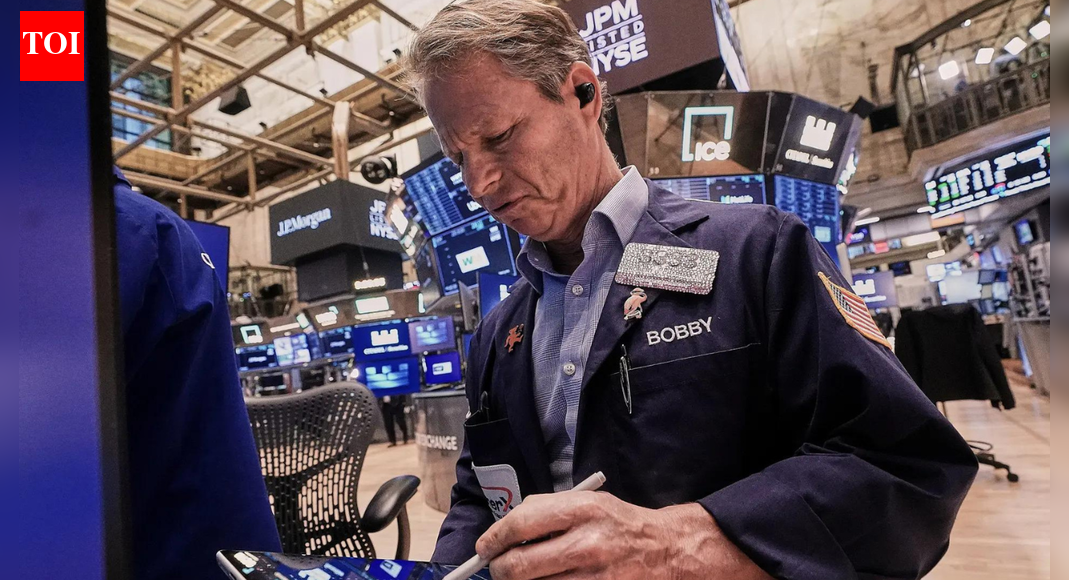
Wall Street steadied on Thursday as heavyweight technology stocks bounced back on the back of strong signals from the global chip industry, while a sharp drop in crude oil prices helped soothe broader market concerns, according to an AP report.The S&P 500 rose 0.6%, snapping a two-day losing streak that followed its recent record high. The Dow Jones Industrial Average gained 140 points, or 0.3%, in early trade, while the Nasdaq composite outperformed with a 0.8% rise, led by renewed buying in Big Tech stocks.

Marco Rubio Talks To Jaishankar On India-US Trade Deal Talks, Congratulates On Enacting Nuclear Bill

The rebound in technology shares came after Taiwan Semiconductor Manufacturing Co. (TSMC), a critical supplier to Nvidia and other global tech giants, reported quarterly profits that beat analyst expectations. The chipmaker also said it may raise capital expenditure to as much as $56 billion this year to capitalise on sustained demand from artificial intelligence applications.Nvidia, which had been one of the biggest drags on the S&P 500 a day earlier after sliding 1.4%, jumped 2.3% following TSMC’s results, easing concerns that AI-linked stocks had run too far, too fast. TSMC’s US-listed shares surged 3.7%, while ASML, a key supplier to chipmakers, rallied 6.7%.Sentiment was further supported by a sharp cooling in oil prices. US benchmark crude tumbled 4.6% to $59.04 a barrel, while Brent crude fell 4.3% to $63.69. The decline followed comments from President Donald Trump that executions in Iran may have been halted amid protests, easing fears of supply disruptions from one of the world’s key oil-producing regions. Gold prices also edged down from record highs, another signal of easing risk aversion.Corporate earnings remained in focus as reporting season gathered pace. Asset management giant BlackRock climbed 4.5% after posting stronger-than-expected profit and revenue, while Morgan Stanley gained 3.4% on similar results. Goldman Sachs slipped marginally, despite beating profit estimates, after missing revenue expectations.In deal-related moves, Boston Scientific slid 5.5% after announcing a roughly $14.5-billion cash-and-stock acquisition of Penumbra, whose shares jumped 11.3%.Bond yields edged higher after a series of encouraging US economic indicators. Data showed fewer Americans filing for unemployment benefits last week, alongside stronger-than-expected manufacturing activity in parts of the country. The 10-year US Treasury yield rose to 4.14%, from 4.12% earlier in the day.Overseas, equity markets were mixed across Europe and Asia, with South Korea’s Kospi standing out after climbing 1.6%, one of the strongest global performances for the session.

[ad_2]

Source link

Iran unrest: MEA prepares evacuation of Indians; first flight from Tehran to Delhi tomorrow, says sources | India News

[ad_1]

Iran unrest: MEA prepares evacuation of Indians; first flight from Tehran to Delhi tomorrow, says sources

NEW DELHI: The ministry of external affairs on Thursday said it is making preparations to facilitate the return of Indian nationals from Iran who wish to travel back to India, in view of the evolving situation in the country, sources told ANI.Earlier,the Indian Embassy in Iran has issued an advisory urging all Indian citizens currently in the country to register with the embassy. Officials noted that the registration process has been slow due to an ongoing internet shutdown. Family members of Indians in Iran have been advised that they can complete the registration on behalf of their relatives through the MEA’s online portal at https://www.meaers.com/request/home

‘Leave By Any Means’: India Issues Fresh Advisory As Iran Protests Intensify Across Cities

The advisory further stated that Indian nationals in Iran, including students, pilgrims, businesspersons and tourists, should leave the country using any available means, including commercial flights. The embassy has also activated four emergency helplines for Indian citizens: +98 9128109115, +98 9128109109, +98 9128109102, and +98 9932179359.With Iran reopening its airspace to civilian traffic after a temporary closure amid rising tensions, the first evacuation flight is scheduled to depart from Tehran to Delhi tomorrow. According to officials, all students have been duly registered, the embassy has collected their personal details and passports, and the first batch has been asked to remain ready by 8:00 am. Students from Golestan University and a few students from SBUMS and TUMS are likely to be part of the first evacuation batch. The final passenger list will be shared later tonight once confirmed by the authorities.Iran has been witnessing nationwide protests for over two weeks, initially triggered by anger over the collapse of the national currency and worsening economic conditions. The unrest has since escalated into broader protests against the country’s theocratic leadership, driven by discontent over economic mismanagement and restrictions on personal freedoms.The evacuation move has brought relief to families, particularly in Jammu and Kashmir, who have been concerned about the safety of students amid the deteriorating security situation in Iran.

[ad_2]

Source link

Budget 2026 expectations: Why India must put prevention at the centre of healthcare reform

[ad_1]

Budget 2026 expectations: Why India must put prevention at the centre of healthcare reform

Medical inflation is the most pressing concern at the moment.

By Srikanth KandikondaAs India prepares for the Union Budget 2026-27, stakeholders across sectors are sharpening their focus on measures that can strengthen economic resilience and citizen welfare in the coming year. In the healthcare and insurance space, expectations are anchored in a sustained commitment to making quality healthcare accessible and affordable for all. With rising medical inflation and evolving health risks, the budget presents a timely opportunity to bolster public health infrastructure and support insurance solutions that protect millions of Indian families.We recognize and applaud the proactive policy measures the government has already taken to support the health insurance sector and make coverage more affordable. A major development has been the passing of the Sabka Bima Sabki Raksha (Amendment of Insurance Laws) Bill, 2025, which allows 100% foreign direct investment (FDI) in the insurance sector. This year, the government has also taken steps to reduce the cost burden on policyholders by removing 18% GST earlier levied on insurance premiums. This initiative makes health and life insurance products more affordable for customers, especially for underserved communities. Medical Inflation: The primary challengeMedical inflation is the most pressing concern at the moment. As per industry reports, it is projected around 11.5-14% for 2025-2026, significantly outpacing general inflation, and among Asia’s highest. Customers unfortunately bear the brunt of it. With hospital bills, cutting-edge treatments, specialized medicines, and a heavier load of illnesses are all driving up out-of-pocket expenses, leaving too many without the care they need.Given this backdrop, we request the government to take steps in the Union Budget to increase public healthcare spending. Currently, public health expenditure in India remains below global benchmarks and even short of the National Health Policy target of 2.5% of GDP in 2025. Enhancing the budgetary outlay for public health would strengthen primary care networks, expand preventive services, and relieve financial stress on citizens. It would also support the expansion of community health infrastructure in underserved areas which are critical in bridging healthcare inequities.Prevention is the need of the hour While increased public spending is imperative, complementary policy measures can significantly accelerate the transition toward preventive healthcare, a proven strategy for reducing overall healthcare expenditure. Evidence from India and globally demonstrates that prevention fundamentally alters the economics of healthcare. For instance, primary prevention programs in cardiovascular disease management alone saved 3.6 million disability-adjusted life-years (DALYs) annually at an incremental cost-effectiveness ratio of $469 per DALY averted when compared with the status quo of no coverage. The impact on hospitalization is equally significant. Individuals with Outpatient Department (OPD) coverage, demonstrate 5-10% reduction in hospitalizations compared to those without such coverage. In practical terms, this means preventing the need for expensive hospital visits and prolonged inpatient stays. To harness this prevention dividend and encourage wider adoption of OPD coverage, we recommend the government introduce separate and enhanced tax benefits specifically for OPD services and preventive health screenings in the Union Budget 2026-27. Currently, preventive health check-ups receive a modest tax deduction of ₹5,000 annually under Section 80D. This is a limit that does not reflect the true value of prevention in reducing long-term healthcare costs.According to a recent report by KPMG, by 2050, India is projected to account for 16% of the global population aged 60 and older. As per United Nations Population Fund, India’s elderly population is predicted to double by 2050 and overtake the number of children in the country. As people live longer, the risk of chronic illnesses also increases. This makes preventive healthcare even more critical. Regular health check-ups, early detection and timely care can help seniors stay healthier for longer and avoid serious medical complications later. Policy measures that support preventive healthcare are, therefore, the need of the hour. Looking forward, the Union Budget 2026-27 provides a strategic moment to reinforce a health-led growth framework that aligns with India’s long-term vision of ‘Insurance for All by 2047’. The combination of increased public investment, and pro-insurance reforms, and focus on preventive approach, can accelerate progress towards universal health protection and financial security for all Indians. As the budget announcement approaches, we look forward to constructive reforms that foster greater affordability, inclusivity, and resilience in India’s healthcare and insurance landscape.(Srikanth Kandikonda is Chief Financial Officer of ManipalCigna Health Insurance)

[ad_2]

Source link

Mid-air scare: Air India’s Singapore-bound flight returns to Delhi; technical snag reported | India News

[ad_1]

Mid-air scare: Air India’s Singapore-bound flight returns to Delhi; technical snag reported

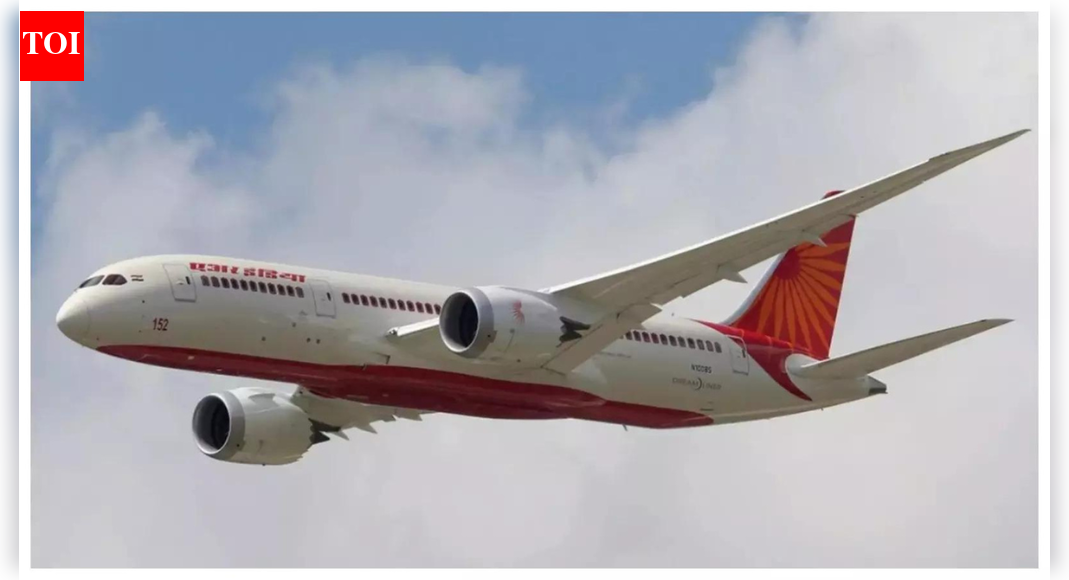
NEW DELHI: A Singapore-bound Air India flight carrying around 190 passengers returned to Delhi early Thursday after the aircraft developed a technical issue mid-air.According to PTI, the Boeing 787-9 Dreamliner, operating flight AI 2380, received an Auxiliary Power Unit (APU) fire warning after take-off, prompting the crew to turn back. The aircraft had been airborne for about an hour before it landed safely at the national capital.Confirming the incident, an Air India spokesperson said the operating crew decided to carry out a precautionary return to Delhi shortly after take-off due to a suspected technical issue.“The aircraft landed safely in Delhi. Our ground teams at Delhi extended all necessary assistance to passengers and the flight departed for Singapore on an alternative aircraft,” the spokesperson said in a statement. The spokesperson also regretted the inconvenience caused to passengers due to the unforeseen situation.Flight tracking data from Flightradar24 showed that the aircraft took off late and landed back in Delhi at around 1 am on Thursday. Passengers were later flown to Singapore on another aircraft.

[ad_2]

Source link

‘Poor planning’: Nikhil Kamath questions stock market closure during BMC polls; flags ‘serious lack of appreciation’

[ad_1]

'Poor planning': Nikhil Kamath questions stock market closure during BMC polls; flags 'serious lack of appreciation'

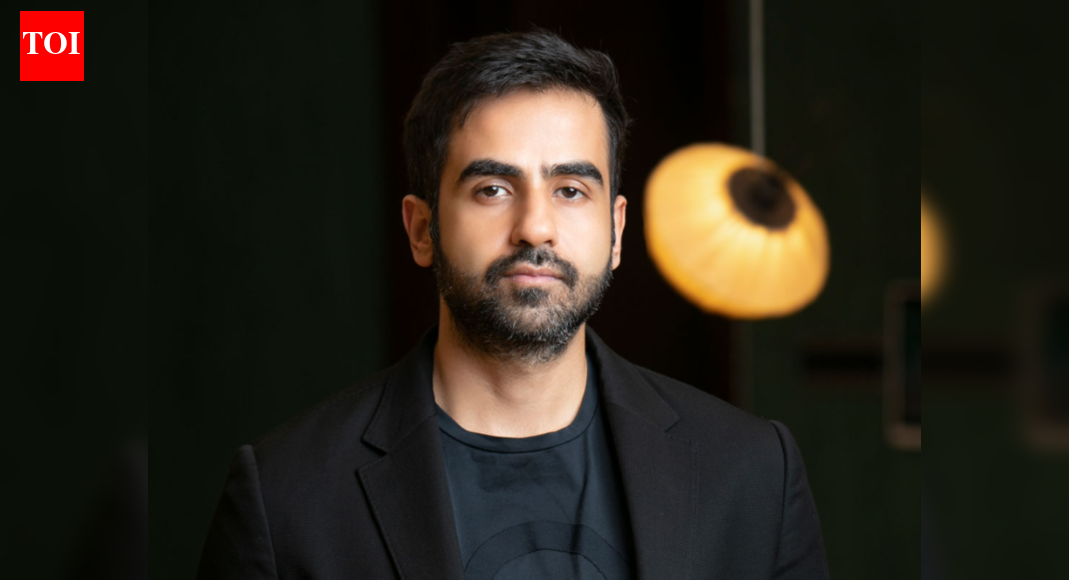
Zerodha founder Nikhil Kamath has flagged concerns over the closure of Indian stock market exchanges on January 15, after trading was suspended due to municipal corporation elections in Maharashtra. Commenting on the decision, Kamath questioned the planning behind declaring a market holiday for the local civic election. “Indian stock exchanges are closed today for Mumbai’s municipal elections. The fact that our exchanges, which have international linkages, are shut down for a local municipal election shows poor planning and a serious lack of appreciation for second-order effects.”He further went on to site Charlie Munger, vice chairman of Berkshire Hathaway. “As Munger said: ‘Show me the incentive, and I will show you the outcome.’ The holiday exists because no one who matters has any incentive to oppose the market holiday.”He further flagged, “It also tells you how far we have to go before global investors take us seriously.” Nikhil Kamath is the founder of Zerodha, an online platform that allows users to invest in stocks, derivatives, mutual funds, ETFs, bonds, and other financial instruments. Both the National Stock Exchange (NSE) and the Bombay Stock Exchange (BSE) are closed on Thursday, with no trading across any segment. Trading is set to resume on January 16. In a statement confirming the change, the exchange said, “Sub: Changes in settlement schedule on account of Trading Holiday on January 15, 2026 This is with reference to NSE circular NSE/FAOP/72262 dated January 12, 2026, wherein Trading Holiday has been declared on January 15, 2026, on account of Municipal Corporation Election in Maharashtra.” The market closure comes as polling is scheduled for municipal corporation elections across Maharashtra, leading to the suspension of trading activities for the day. Market participants were informed that normal operations would resume the following day. Meanwhile, security was tightened in Mumbai ahead of the Brihanmumbai Municipal Corporation (BMC) elections. Mumbai Police set up barricades at several locations and carried out vehicle checks to ensure smooth polling. Officials said arrangements were in place to maintain law and order during the civic elections. Voting in Mumbai is scheduled between 7.30 am and 5.30 pm across 227 wards, with counting of votes set for January 16.

[ad_2]

Source link

Nasa kicks-off first-ever ISS medical evacuation: Four astronauts return early; mission cut short by over a month

[ad_1]

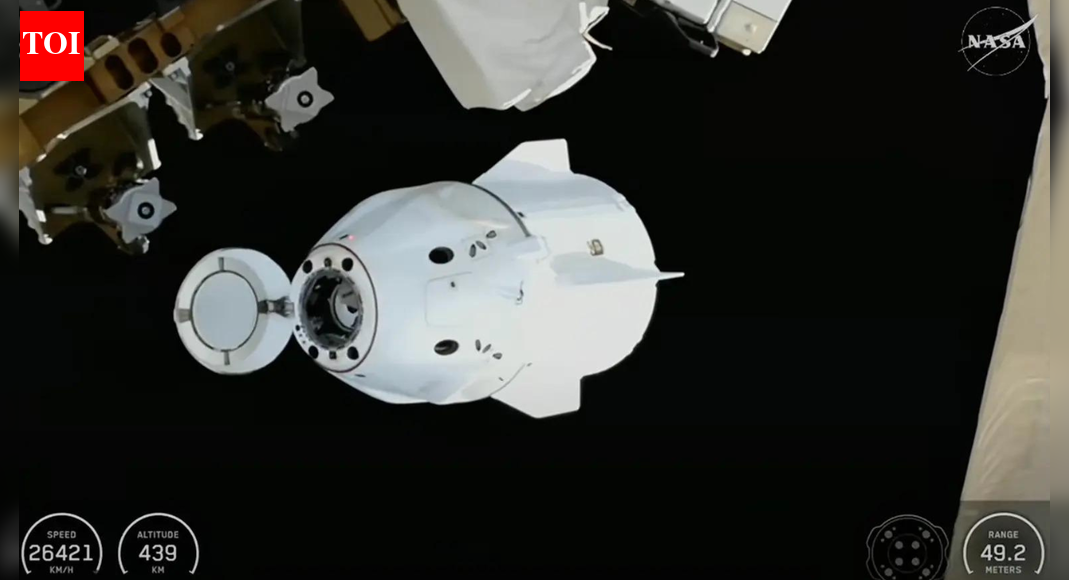
Nasa kicks-off first-ever ISS medical evacuation: Four astronauts return early; mission cut short by over a month
This screengrab from video provided by NASA TV shows the SpaceX Dragon departing from the ISS

Nasa began its first-ever medical evacuation from the International Space Station (ISS) on Wednesday, bringing back an astronaut in need of medical care along with three crewmates. The four astronauts, from the US, Russia, and Japan, are scheduled to splash down early Thursday morning in the Pacific near San Diego aboard a SpaceX capsule, cutting their mission short by over a month. “Our timing of this departure is unexpected,” Nasa astronaut Zena Cardman said before the return trip, “but what was not surprising to me was how well this crew came together as a family to help each other and just take care of each other.” Officials have not identified the astronaut requiring medical attention or revealed the specific health issues. Outgoing ISS commander Mike Fincke reassured that the astronaut is “stable, safe and well cared for,” noting that “this was a deliberate decision to allow the right medical evaluations to happen on the ground, where the full range of diagnostic capability exists.” Cardman, Fincke, Japan’s Kimiya Yui, and Russia’s Oleg Platonov were originally scheduled to remain on the station until late February. Nasa canceled a planned spacewalk on January 7 after the medical concern emerged and subsequently announced the crew’s early return. Officials emphasised that the health issue was unrelated to the spacewalk or other station operations and stressed that it was not an emergency situation. Nasa confirmed that standard splashdown and recovery procedures will be followed, with medical teams on hand aboard the Pacific recovery ship. It is not yet clear how soon all four astronauts will be flown from California to Houston, home of the Johnson Space Center.This was the first spaceflight for Cardman, a 38-year-old biologist and polar explorer, and Platonov, 39, a former Russian Air Force fighter pilot who had overcome a previous health issue that delayed his space debut. Fincke, 58, a retired Air Force colonel, and Yui, 55, a retired Japanese fighter pilot, were veteran space travelers. Fincke has spent more than 1½ years in orbit over four missions and conducted nine spacewalks, while Yui recently celebrated his 300th day in space across two missions. One US astronaut and two Russian cosmonauts remain aboard the ISS, just a month and a half into an eight-month mission that began with a Soyuz launch from Kazakhstan. Nasa and SpaceX are working to advance the launch of a replacement four-person crew from Florida, currently planned for mid-February.Nasa officials said it would have been riskier to leave the ailing astronaut in space for another month than to temporarily reduce the station crew by more than half. Until the next crew arrives, routine and emergency spacewalks, which require a two-person team with backup support, will be suspended. The medical evacuation marks the first major decision by Nasa’s new administrator, Jared Isaacman, who took office in December. “The health and the well-being of our astronauts is always and will be our highest priority,” Isaacman said when announcing the decision last week.Computer modeling had projected that a medical evacuation from the ISS would occur roughly once every three years, but Nasa had never faced such a situation in its 65-year history of human spaceflight. The Russians, however, have experienced similar events, including in 1985 when cosmonaut Vladimir Vasyutin returned early from Salyut 7 due to a serious illness.

[ad_2]

Source link

RBI proposes changes to banks’ forex positions

[ad_1]

RBI proposes changes to banks' forex positions

The Reserve Bank on Wednesday proposed changes to rules governing banks’ foreign exchange positions. The amendments to net open position (NOP) were made following a comprehensive review of the existing instructions, according to an official statement. NOP refers to the difference between banks’ total foreign currency assets and liabilities, revealing their exposure to currency fluctuations or exchange rate risk. The proposed guidelines are more closely aligned with the Basel Committee on Banking Supervision (BCBS) standards, the RBI said. The RBI will also ensure a consistent implementation across regulated entities, it said. Revisions include eliminating the separate offshore/onshore NOP calculation and including accumulated surplus from overseas operations in NOP. Maintenance of the forex risk capital charge on the actual NOP and modifying the Shorthand method for calculation of NOP in alignment with Basel guidelines, which treats open position in gold separately, has also been proposed, it said. There is also a provision to exempt certain structural forex positions from NOP, the central bank added.

[ad_2]

Source link

‘Nato should be leading the way’: Donald Trump renews push to acquire Greenland, citing security concerns; links takeover to ‘Golden Dome’ defence

[ad_1]

‘Nato should be leading the way’: Donald Trump renews push to acquire Greenland, citing security concerns; links takeover to ‘Golden Dome’ defence

File photo: US President Donald Trump (Picture credit: AP)

US President Donald Trump on Wednesday renewed his push for the United States to acquire Greenland, saying the Arctic island is vital for American national security and for the “Golden Dome” defence system he claims Washington is building.In a post on Truth Social, Trump said, “The United States needs Greenland for the purpose of National Security. It is vital for the Golden Dome that we are building.” He argued that Nato should take the lead in ensuring Greenland comes under US control, warning that if Washington does not act, “Russia or China will” — something he said “is not going to happen.”Trump also linked Greenland’s future directly to Nato’s military strength, claiming the alliance would be far less effective without US power. “Militarily, without the vast power of the United States… Nato would not be an effective force or deterrent — not even close!” he wrote, adding that Nato would become “far more formidable and effective with Greenland in the hands of the United States.” He concluded by saying that “anything less than that is unacceptable.”The remarks come amid fresh tensions with Denmark and Greenland’s leadership. Earlier, he warned Greenland’s prime minister after Jens-Frederik Nielsen reaffirmed the island’s commitment to Denmark and rejected the idea of becoming a US territory. “That’s their problem. I disagree with them,” Trump said, adding that Nielsen’s stance would be “a big problem for him.”Speaking in Copenhagen alongside Danish Prime Minister Mette Frederiksen, Nielsen said Greenland faced a clear choice and had decided to stand with Denmark, stressing unity within the Danish kingdom. While Greenland’s political debate continues to evolve, some voices on the island have argued that remaining under Denmark within Nato’s security framework is the wiser long-term option.Trump has repeatedly dismissed Denmark’s role, insisting that Greenland’s current defences are inadequate. He has claimed the island is vulnerable to Russian and Chinese naval activity and argued that US ownership — not leases or limited military access — is essential for effective defence. While acknowledging that the US already has bases and personnel on the island, Trump has said this is “insufficient” without full control.Denmark, meanwhile, has described the situation as a “decisive moment,” reiterating that Greenland is not for sale and rejecting Washington’s advances.The rhetoric has also raised alarm within US military circles. According to the Daily Mail, Trump has asked senior special forces commanders to prepare contingency plans for a possible invasion of Greenland, a move that has reportedly faced resistance from top military officials concerned about its legality and political feasibility.Despite the pushback, Trump has continued to frame Greenland as central to US and Nato security, warning that Washington will not allow either Russia or China to gain a foothold in the Arctic island.

[ad_2]

Source link