Breaking News
‘Unprecedented certainty in India’: PM Modi raises investment pitch amid ‘great global uncertainty’; highlights political stability, policy continuity

[ad_1]
‘Unprecedented certainty in India’: PM Modi raises investment pitch amid 'great global uncertainty'; highlights political stability, policy continuity
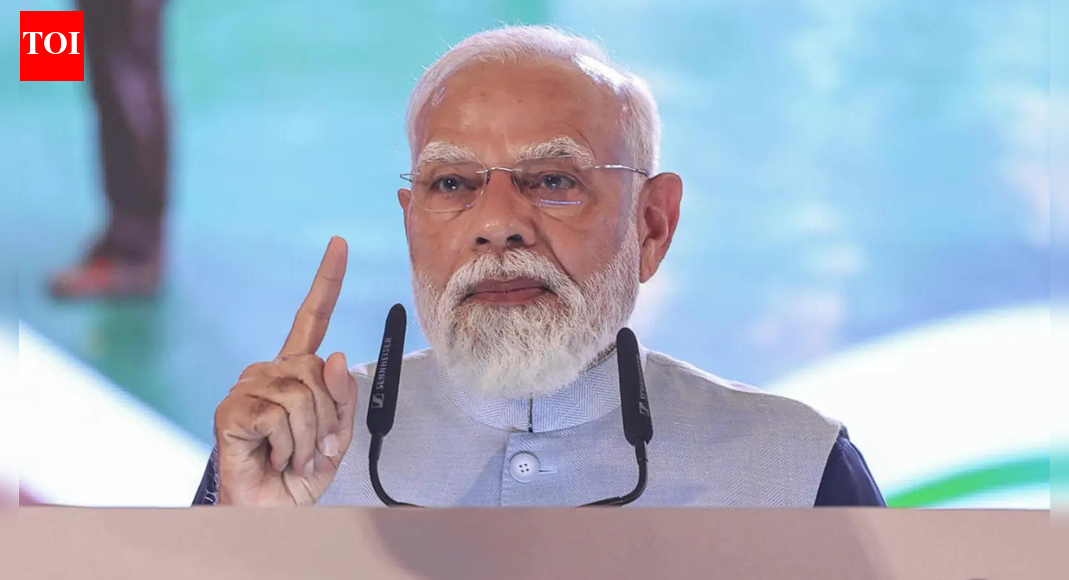
PM Modi (Photo credit- PTI)

Prime Minister Narendra Modi on Sunday pitched India as a stable and predictable investment destination at a time of global flux, telling investors that the country is witnessing an era of “unprecedented certainty” even as the world faces widespread uncertainty.“Amidst great global uncertainty, we are witnessing an era of unprecedented certainty in India. Today, India has political stability and continuity in policies,” Modi said, as quoted PTI, while inaugurating the Vibrant Gujarat Regional Conference (VGRC) for the Saurashtra and Kutch region in Rajkot.Highlighting India’s macroeconomic trajectory, the prime minister said the country is the world’s fastest-growing large economy and is steadily moving towards becoming the third-largest economy. “The figures that are emerging clearly show that the world’s expectations from India are constantly increasing,” he said, adding that Gujarat has played a significant role in the country’s recent rapid progress.Modi pointed to the expanding middle class and rising purchasing power as key drivers of India’s growth story. “India’s growth revolves around the mantra of ‘Reform, Perform, and Transform’,” he said, noting that global experts and institutions remain bullish on the country.Citing sectoral achievements, the prime minister said India is the world’s largest consumer of mobile data, UPI has become the world’s number one real-time digital transaction platform, and the country ranks among the top three globally in solar power generation and metro rail networks.“That is why I keep saying that this is the time, and it’s also the right time for every investor in the country and the world to take advantage of these opportunities,” Modi said.He specifically urged investors to look at the Saurashtra and Kutch regions, describing them as emerging growth anchors for India’s Aatmanirbhar Bharat push. “Saurashtra and Kutch have a huge role to play in making India a global manufacturing hub, and this role is market-driven, which is what instils the greatest confidence in investors,” he said.The prime minister said the regions are no longer just areas of opportunity but have become “an anchor region for India’s growth”. He cited Alang in Bhavnagar district as the world’s largest ship-breaking yard, Morbi district’s dominance in tile manufacturing, and the Dholera Special Investment Region’s emergence as a hub for modern manufacturing.“India’s first semiconductor fabrication facility is being set up in Dholera,” Modi said, adding that the region offers early-mover advantages for future technologies. “The infrastructure is ready, the policy is predictable, and the vision is long-term,” he said.Earlier in the day, Modi inaugurated a trade show at Marwadi University in Rajkot ahead of the VGRC. Officials said more than 1,500 memoranda of understanding are expected to be signed with over 110 international buyers from 16 countries, including the US and several European nations. Over 1,800 business meetings have been scheduled during the Reverse Buyer Seller Meet.Leading corporates such as Torrent Power, KOSOL, Adani Green, Essar Group, Nayara Energy and Jyoti CNC are participating in the exhibition, spread across 26,000 square metres. More than 400 exhibitors from sectors including agro and food processing, fisheries, defence, energy, petrochemicals, engineering, ports and logistics have set up stalls at the trade show, officials said.

[ad_2]

Source link

Gold & silver outlook: Bullion seen holding firm next week; US tariff verdict, geopolitics in focus

[ad_1]

Gold & silver outlook: Bullion seen holding firm next week; US tariff verdict, geopolitics in focus

Gold and silver prices are expected to remain firm next week as traders brace for heightened geopolitical risks and uncertainty around the US Supreme Court’s impending verdict on President Donald Trump’s tariff policy, analysts said.Market participants will also track inflation data from major economies including the US, India and Germany, alongside trade and investment numbers from China and commentary from US Federal Reserve officials for fresh cues, PTI reported.“The bullions are expected to continue their positive momentum and corrective moves should be a buying opportunity, as focus again will remain on the US Supreme court hearing in the Trump’s trade tariffs case and the geopolitical issues surrounding US President Donald Trump’s actions & comments,” said Pranav Mer, Vice President, EBG – Commodity & Currency Research, JM Financial Services Ltd.On the Multi Commodity Exchange (MCX), gold futures rose Rs 3,058, or 2.25 per cent, over the past week to settle at Rs 1,38,819 per 10 grams on Friday.Gold prices remained volatile during the week but ended higher, indicating a firm underlying trend, said Prathamesh Mallya, DVP – Research, Non-Agri Commodities and Currencies, Angel One.“Dollar movement, Federal Reserve’s next moves, inflation and jobs data are going to be the movers for the bullion prices in the short-term,” Mallya said, adding that gold could test Rs 1,41,000 per 10 grams next week from a technical perspective.In overseas markets, gold futures climbed $171.3, or 4 per cent, during the week to close at $4,500.90 per ounce.“Gold futures continued their positive momentum and closed the week higher by more than 2 per cent, with prices in the overseas market closing near $4,500 per ounce,” Mer said, PTI quoted.Silver also posted strong gains, with MCX futures jumping Rs 16,409, or 6.94 per cent, over the week. The metal hit a record high of Rs 2,59,692 per kg before settling at Rs 2,52,725 per kg on Friday.In international trade, silver prices rose $8.32, or nearly 12 per cent, to close at $79.34 per ounce.Mer said bullion prices were supported by safe-haven demand amid elevated geopolitical tensions and mixed global economic data, though intermittent strength in the US dollar capped gains at times. He added that exchange-traded funds continued to see inflows into gold and silver as investors seek portfolio protection.On the geopolitical front, Mer highlighted rising tensions following the capture of Venezuela’s President and control over the country’s oil flows, escalation in the Russia-Ukraine conflict, unrest in Iran and broader regional frictions, all of which have underpinned safe-haven buying.Mer said silver’s bullish structure could see prices testing Rs 2,80,000-3,00,000 per kilogram.With key inflation data due this week and the outcome of the US Supreme Court’s tariff hearing likely to influence risk sentiment, analysts expect bullion markets to remain closely aligned to macroeconomic and geopolitical developments in the near term.

[ad_2]

Source link

Chicago Bears suffer brutal playoff injury setback as T.J. Edwards, Ozzy Trapilo ruled out for remainder of postseason | NFL News

[ad_1]

Chicago Bears suffer brutal playoff injury setback as T.J. Edwards, Ozzy Trapilo ruled out for remainder of postseason

The Chicago Bears’ dramatic Wild Card win over the Green Bay Packers came at a heavy cost, with the franchise suffering a brutal injury setback that could define its playoff run. Linebacker T.J. Edwards and offensive tackle Ozzy Trapilo have both been ruled out for the remainder of the postseason.The Bears pulled off an emotional comeback at Soldier Field, keeping their Super Bowl hopes alive. However, the celebrations were short-lived once head coach Ben Johnson confirmed that both starters suffered season-ending injuries during the game.

Injury setbacks rock Bears’ playoff hopes

Edwards, a key leader in the middle of Chicago’s defense, went down in the third quarter. Medical evaluations later revealed a fractured fibula, an injury that immediately ended his postseason availability. Edwards had been one of the Bears’ most consistent performers all season, providing stability, communication, and physicality at linebacker.Trapilo’s injury followed late in the fourth quarter, delivering another tough blow. The young offensive tackle exited with a patellar tendon injury, which Johnson described as serious enough to rule him out for the rest of the playoffs. Trapilo had taken over the left tackle role late in the regular season and quickly became a crucial part of the offensive line rotation.

Bears turn to depth as pressure mounts

With Edwards sidelined, the responsibility now shifts to D’Marco Jackson, who stepped in after the injury against Green Bay. Jackson has shown flashes when given extended snaps and even earned NFC Defensive Player of the Week honors earlier in the season. Still, replacing Edwards’ experience and on-field leadership will be a major challenge in a high-stakes playoff environment.On offense, Chicago must reshuffle its line to protect the quarterback against elite postseason defenses. Theo Benedet is expected to be the next man up at left tackle. The Bears also have Braxton Jones available after his return from injured reserve, but he has yet to see game action following a long absence, making his usage uncertain.Chicago’s playoff run has been built on resilience, physical defense, and timely execution. Losing two starters one on defense and one on offense tests that formula at the worst possible moment. While the Bears remain confident in their depth, there is no denying that Edwards and Trapilo leave significant gaps.As the Bears prepare for the divisional round, the focus now shifts from celebration to survival. January football rarely forgives injuries, and Chicago will need contributions from every corner of its roster to keep its postseason dream alive.Also Read: Keon Coleman injury update: Will Bills WR play this week vs. Jaguars?

[ad_2]

Source link

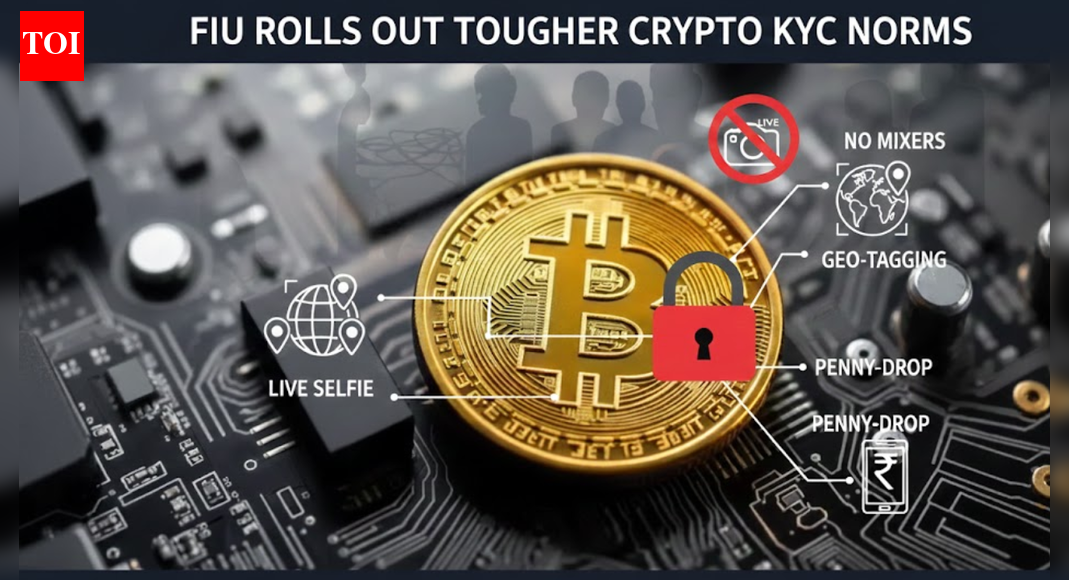
Crypto rules tightened: Live selfies, geo-tagging mandatory for users; FIU rolls out tougher KYC norms

[ad_1]

Crypto rules tightened: Live selfies, geo-tagging mandatory for users; FIU rolls out tougher KYC norms

India’s Financial Intelligence Unit (FIU) has rolled out stringent new Anti-Money Laundering (AML) and Know Your Customer (KYC) norms for cryptocurrency exchanges, making live selfie verification and geographical tracking mandatory during user onboarding, according to guidelines issued on January 8, PTI reported. Under the updated framework, crypto exchanges are classified as Virtual Digital Asset (VDA) service providers and will be required to go beyond basic document uploads for customer verification, the guidelines accessed by PTI showed.As per the rules, users must take a “live selfie” using software that verifies their physical presence through features such as eye-blinking or head movement, a step aimed at preventing the use of static images or deepfakes. Exchanges are also required to capture the latitude and longitude, date, timestamp and IP address from which an account creation process is initiated.In addition, exchanges must follow the “penny-drop” verification method, involving a nominal Re 1 transaction to confirm that the bank account provided is active and belongs to the registrant.Apart from a Permanent Account Number (PAN), users will now have to submit a secondary identity document such as a Passport, Aadhaar or Voter ID, along with OTP verification of both email ID and mobile number.The FIU, which operates under the Union Finance Ministry, has also taken a tough stance against mechanisms that conceal the trail of crypto transactions. The guidelines seek to “strongly discourage” Initial Coin Offerings (ICOs) and Initial Token Offerings (ITOs), citing their lack of economic justification and elevated risk.The FIU is the single-point regulator for cryptocurrency exchanges operating in India under the Prevention of Money Laundering Act (PMLA). All such exchanges must register as reporting entities, submit regular reports on suspicious transactions and maintain customer records to identify and combat money laundering, terrorist financing and proliferation financing risks. While crypto assets are not recognised as legal tender in India, they are taxed under the Income-Tax law.“The RE (crypto exchange) shall also ensure that the client whose credentials are being furnished at the time of onboarding is the same individual who is actually accessing the application and personally initiating the account creation process,” the guidelines stipulate.“The authenticity of such access and personal presence shall be established by capturing a live photograph of the client and employing liveliness detection technology to verify the client’s physical presence…,” they add.The guidelines mandate KYC updation every six months for “high-risk” clients and annually for all other users. Enhanced client due diligence is required for high-risk individuals or entities, including those linked to tax haven countries, jurisdictions on the FATF grey or black list, politically exposed persons (PEPs) and non-profit organisations (NPOs). This includes gathering information from open sources and consulting independent databases.On ICOs and ITOs, the FIU said these activities pose “heightened and complex” money laundering and terror financing risks as they “lack” justified economic rationale. It also flagged anonymity-enhancing crypto tokens, tumblers and mixers as tools designed to conceal or obfuscate the origin, ownership or value of transactions.Such transactions must not be facilitated and should trigger appropriate risk-mitigation measures, the guidelines said. Crypto tumblers or mixers, which blend coins from multiple sources after a transaction, make tracing extremely difficult.The FIU has also directed exchanges to preserve client identity, address and transaction records for a minimum of five years and retain them until any investigation is concluded.

[ad_2]

Source link

Budget 2026: Biogas body IBA seeks Rs 10,000 cr subsidy fund; pitches higher support for CBG, organic manure

[ad_1]

Budget 2026: Biogas body IBA seeks Rs 10,000 cr subsidy fund; pitches higher support for CBG, organic manure

The Indian Biogas Association (IBA) has proposed the creation of a Rs 10,000 crore fund to provide capital subsidy to the biogas industry in the Union Budget 2026, calling for higher fiscal support to accelerate investment, improve project viability and scale up green energy adoption, PTI reported.In its Budget recommendations, the industry body urged the government to raise the capital subsidy for compressed biogas (CBG) plants by 50 per cent to Rs 6 crore per 4.8 tonnes per day (TPD) of capacity, and increase the upper cap to Rs 25 crore per project, from the current Rs 10 crore limit. At present, the scheme offers Rs 4 crore per 4.8 TPD of capacity.IBA said it will share these recommendations with the Ministry of New & Renewable Energy and the Ministry of Finance, adding that it has raised the demands at multiple forums ahead of the Budget.The association said the capex cost of CBG plants has risen by over 50 per cent since the launch of the Central Financial Assistance (CFA) scheme in 2014, necessitating a revision in subsidy norms. It proposed that the enhanced subsidy structure be supported by a minimum corpus of Rs 10,000 crore, enabling projects of up to 20 TPD capacity.For Budget 2026, IBA said the biogas and CBG sector should be positioned as a fast-maturing pillar of green growth, which now requires deeper fiscal support, faster implementation and easier access to finance to unlock private investment and rural income opportunities.The association also called for scaling up project incentives by raising CFA levels, and proposed a mandated blending of fermented organic manure (FOM) in fertiliser use — at least 5 per cent by 2028, rising to 10 per cent by 2030.Pointing to the government’s annual Rs 2 lakh crore chemical fertiliser subsidy, IBA said this contributes little to soil organic content. Redirecting even 10 per cent (Rs 20,000–25,000 crore) of this subsidy towards FOM-linked or carbon-based incentives could improve soil health, reduce import dependence and promote climate-smart agriculture, it said.The association noted that the current Rs 1,450 crore allocation over three years for Market Development Assistance (MDA) for organic manure from CBG plants is “abysmally low” and only a starting point, especially when compared with chemical fertiliser subsidies.In line with the compressed biogas blending obligation (CBO) under the Ministry of Petroleum and Natural Gas, IBA suggested that the Ministry of Chemicals and Fertilizers consider introducing a FOM–Chemical Fertilizer Blending Obligation (FCFBO) under an Organic–Chemical Fertilizer Blending Programme.The industry body also pushed for carbon monetisation through a Green Certificate mechanism, urging the government to allow biogas and CBG producers to sell carbon credits in domestic and international markets. It said this would help meet climate targets while opening new revenue streams for producers.Carbon credits in voluntary markets are valued at USD 5–50 per tonne of CO₂, and even at the lowest price, the carbon premium for CBG’s greenhouse gas mitigation could be Rs 10–12 per kg of methane produced, IBA said. With around 1,000 CBG plants expected by 2030, the market value of CBG-based green certificates could be about Rs 4,000 crore, it estimated.IBA also suggested introducing ‘cap and trade’ practices for carbon-intensive entities, and subsidising part of the proposed carbon pricing mechanism to help kick-start the system.

[ad_2]

Source link

‘Even LoP is not safe’: BJP on Suvendu Adhikari convoy ‘attack’; MHA seeks report from his office | India News

[ad_1]

'Even LoP is not safe': BJP on Suvendu Adhikari convoy 'attack'; MHA seeks report from his office
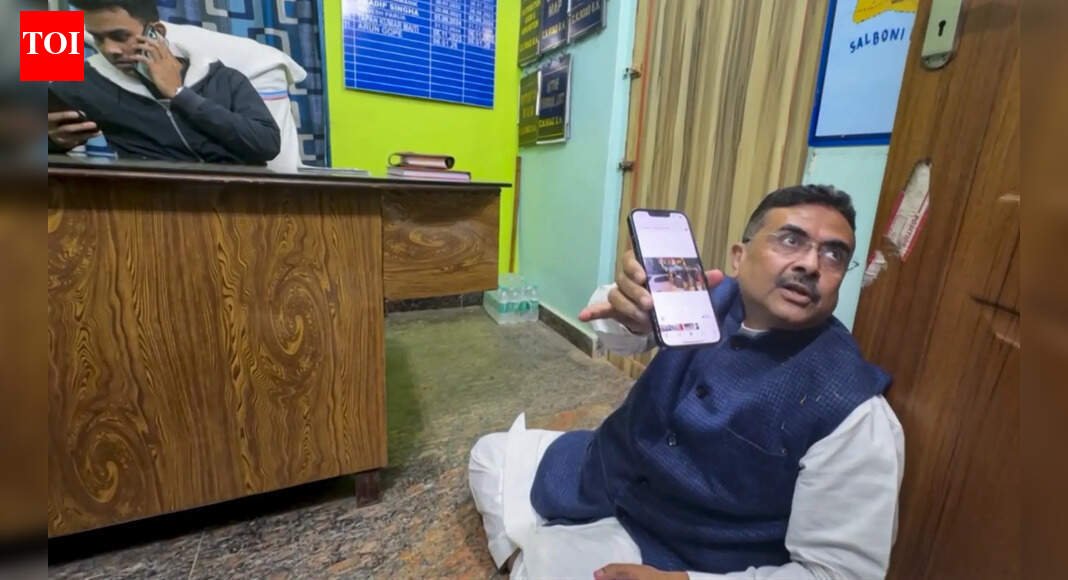
BJP’s Suvendu Adhikari sitting on a ‘dharna’ in a police station after the alleged attack (PTI)

NEW DELHI: The BJP on Sunday criticised the West Bengal Police following an alleged attack on the convoy of party leader and leader of opposition in the state assembly, Suvendu Adhikari.Also Read: Bengal LoP Suvendu Adhikari accuses TMC workers of attacking his convoy; sits on dharna at police station“Efforts were made to file a police report. This attack happened in the presence of the police, but no FIR was registered. If even the leader of the opposition is attacked, you can understand (how the situation is),” senior BJP leader Ravi Shankar Prasad said at a press conference in Delhi.Prasad, a former Union minister, recalled how a BJP delegation led by him nearly failed to enter West Bengal’s Sandeshkhali, where local strongman Shahjahan Sheikh — linked to the ruling Trinamool Congress (TMC) — had been accused of sexual assault by multiple women.“If my security personnel and the central forces had not been there, we would have been unable to enter the village,” he added.Adhikari, a former TMC leader who joined the BJP in December 2020 ahead of the West Bengal assembly polls in April–May 2021, alleged that his convoy was attacked by Trinamool Congress workers. The incident took place in Paschim Medinipur on Saturday night.“Tonight, around 8:20 pm, while I was returning from Purulia at Chandrakona Road in Paschim Medinipur district, I was viciously attacked by TMC goons. The police personnel were mute spectators. The TMC’s desperation is showing, resorting to thuggery because they can’t face the heat of the people’s rising anger,” he posted on X.Meanwhile, a state BJP leader said the Ministry of Home Affairs (MHA) has sought a report on the incident from Adhikari’s office.“The MHA has sought a report regarding the attack. The LoP’s office is preparing a detailed report, which will soon be sent to them,” the leader told news agency PTI.The next West Bengal assembly elections are expected in April–May.

[ad_2]

Source link

Budget 2026: CII pitches demand-led, faster privatisation of PSEs; seeks three-year pipeline

[ad_1]

Budget 2026: CII pitches demand-led, faster privatisation of PSEs; seeks three-year pipeline

Industry body Confederation of Indian Industry (CII) has called for a faster, demand-driven privatisation strategy for public sector enterprises (PSEs) in the Union Budget 2026-27, urging the government to adopt a predictable roadmap to unlock value from disinvestment and mobilise resources for capital expenditure amid global economic uncertainties.In its Budget proposals, CII suggested an accelerated four-pronged approach to privatisation, focusing on sectors where private participation can improve efficiency, technology adoption and global competitiveness, while allowing the government to sustain capex and meet developmental priorities.The industry lobby recommended that the Centre announce a rolling three-year privatisation pipeline, clearly outlining which enterprises are likely to be taken up during the period. It noted that full privatisation of all non-strategic PSEs is complex and time-consuming, and greater visibility would help attract deeper investor participation and improve valuation and price discovery.“Government could reduce its stake in listed PSEs in a phased manner to 51 per cent initially, allowing it to remain the single largest shareholder while releasing significant value into the market. Over time, this stake could be brought down further to between 33 and 26 per cent,” CII said.According to its analysis, reducing the government’s stake to 51 per cent in 78 listed PSEs could unlock close to Rs 10 lakh crore. In the first two years of the roadmap, disinvestment could target 55 PSEs where government holding is 75 per cent or less, mobilising around Rs 4.6 lakh crore. In the subsequent stage, 23 PSEs with higher government stakes could be disinvested, potentially raising Rs 5.4 lakh crore.“A calibrated reduction of the government’s stake in listed PSEs to 51 per cent and even lower is a pragmatic step that balances strategic control with value creation. Unlocking nearly Rs 10 lakh crore of productive capital would provide vital resources to accelerate physical and social infrastructure development and support fiscal consolidation,” said CII Director General Chandrajit Banerjee.CII said strategic privatisation, supported by strong governance, regulation and enabling infrastructure, can free up public resources for health, education and green infrastructure, while competitive markets drive efficiency.“India’s growth story is increasingly being powered by private enterprise and innovation. A forward-looking privatisation policy, aligned with the vision of Viksit Bharat, will enable the government to focus on its core functions while empowering the private sector to accelerate industrial transformation and job creation,” it said.The industry body also urged faster implementation of the government’s strategic disinvestment policy, which envisages an exit from all PSEs in non-strategic sectors and minimal presence in strategic ones.Recommending a shift to a demand-based approach, CII said the current practice of identifying enterprises first and then inviting bids often leads to stalled processes if valuation expectations are not met. Instead, it suggested gauging investor interest across a wider pool of enterprises first, and prioritising those with stronger demand.Such an approach, it said, would ensure smoother execution and better price discovery, while structured feedback from investors could help address procedural and regulatory bottlenecks.CII also proposed setting up a dedicated institutional framework to make privatisation more predictable and professionally managed, comprising a ministerial board for strategic guidance, an advisory board of industry and legal experts, and a professional management team to handle execution, due diligence, market engagement and regulatory coordination.

[ad_2]

Source link

Instagram Data Breach Exposes: Instagram password reset emails: Company issues clarification on ‘hacking’ of 17.5 million user data, says there was no… |

[ad_1]

Instagram password reset emails: Company issues clarification on ‘hacking’ of 17.5 million user data, says there was no…

Instagram has announced that it has fixed an issue that sent a wave of unexplained password reset emails and sparked fears of a massive hacking incident. In a statement issued on Sunday (Janaury 11), the company clarified that while an external party exploited a technical vulnerability, Instagram’s core systems remained secure.“We fixed an issue that let an external party request password reset emails for some people. There was no breach of our systems and your Instagram accounts are secure,” the company said in a statement posted on X.“You can ignore those emails — sorry for any confusion,” Instagram added, prompting a reply from Nikita Bier, head of product X (formerly). “I’m glad you shared this on X, because no one would see it on Threads,” he said.

Why Instagram users received password reset emails

The clarification follows an alarm triggered by a report from antivirus firm Malwarebytes which claimed that it has discovered a database for sale on the dark web containing the “sensitive information” of 17.5 million Instagram users. The data included usernames, physical addresses, phone numbers and email addresses.Malwarebytes suggested the leak was related to a potential 2024 incident involving an Instagram API exposure. It also warned that the surge in password reset requests may also result in further phishing attacks or account takeovers.

How to secure your Instagram account

Here are a few ways users can secure their Instagram accounts:

  • Enable two-factor authentication (2FA) which provides a secondary layer of security even if a password is compromised.
  • Review logged-in devices regularly. This will help you keep an eye whether your account is bring used by unauthorised party.
  • Do not click on suspicious links within the reset emails if you have not personally requested them.

[ad_2]

Source link

‘Journey from 20% to 30% and 40% won’t be that long’: Amit Shah says BJP vote share rising in Kerala; confident of forming government in 2026 | India News

[ad_1]

‘Journey from 20% to 30% and 40% won’t be that long’: Amit Shah says BJP vote share rising in Kerala; confident of forming government in 2026
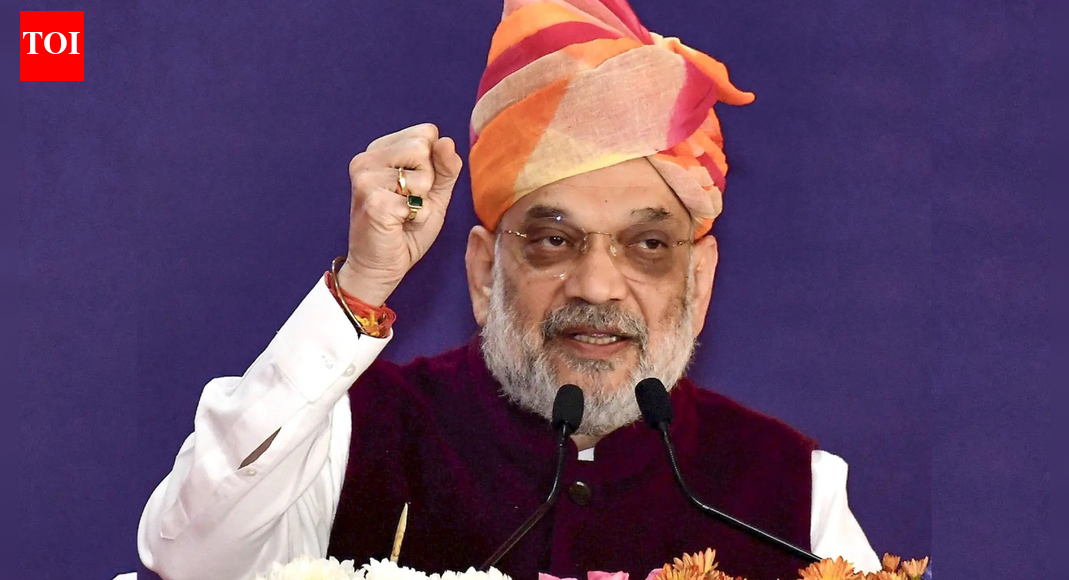
File photo: Union home minister Amit Shah (Picture credit: PTI)

NEW DELHI: Union home minister Amit Shah on Sunday said the Bharatiya Janata Party’s support base in Kerala is steadily expanding and expressed confidence that the BJP will form the government in the state in the upcoming Assembly elections this year.Addressing a gathering of newly elected local body representatives, Shah cited the party’s rising vote share over the years to back his claim. “In 2014, we received 11% of the vote; in 2019, 16%; and in 2024, 20%. Now, the journey from 20% to 30% and 40% won’t be that long, and we will prove this in 2026,” he said. ‘We have already achieved this across the country, but now it’s Kerala’s turn… This time, a BJP chief minister will definitely be elected in Kerala’, Shah said.Shah added that the BJP’s growth in Kerala was not limited to urban areas and reflected wider public support.He pointed to recent local body results, noting that the BJP has won 30 gram panchayats, two municipalities, and currently holds the mayor’s post in Thiruvananthapuram. Shah said these gains were possible due to the efforts and sacrifices of party workers and dedicated the party’s success to those who had faced jail terms and their families.Shah also launched a sharp attack on the ruling Left Democratic Front and the Congress-led United Democratic Front, criticising both for what he described as an over-reliance on remittances from Keralites working abroad. He argued that the state needed a more balanced development model. “Kerala’s development should be balanced,” he said, questioning whether the current model adequately addressed the needs of families that do not benefit from overseas remittances.“The LDF and UDF governments in Kerala are content with the money sent by Keralites working abroad… While I appreciate Keralites working abroad, I want to ask the LDF and UDF whether it is the responsibility of the Kerala government to care for those families whose members don’t send money from abroad… Whose responsibility is it to bring about improvements for those millions of people?” Shah said.Referring to governance in BJP- and NDA-ruled states, Shah said they had been transformed through what he called a balanced development approach under Prime Minister Narendra Modi. “Today, I have come to tell the people of Kerala that wherever the BJP and NDA have come to power, they have transformed those states into developed states… PM Modi has presented a balanced development model to the world,” he said.He urged Kerala to move beyond “one-dimensional” development and plan growth that benefits every citizen.Shah’s visit to Kerala also includes interactions with party leaders and participation in political and development-related programmes ahead of the Assembly elections later this year.

[ad_2]

Source link

Budget 2026: Govt should avoid hiking surcharge on super-rich, reviving wealth tax; why experts warn of capital flight

[ad_1]

Budget 2026: Govt should avoid hiking surcharge on super-rich, reviving wealth tax; why experts warn of capital flight

Tax experts have cautioned the government against raising the income tax surcharge on high-income individuals or reintroducing a wealth tax in the Union Budget 2026-27, warning that such moves could push wealthy taxpayers to relocate to low-tax jurisdictions and hurt investment and job creation.At present, individuals earning over Rs 50 lakh are subject to a surcharge on income tax — 10 per cent on income between Rs 50 lakh and Rs 1 crore, 15 per cent for Rs 1–2 crore, and 25 per cent for Rs 2–5 crore. Those earning above Rs 5 crore pay a 25 per cent surcharge under the new tax regime, while the surcharge is 37 per cent under the old regime, PTI reported.According to estimates by independent economists, recent GST rate cuts and lower income tax collections could cost the exchequer around Rs 2 lakh crore in the current fiscal, prompting debate on whether additional revenue measures may be needed in FY27 for higher spending on defence and other priorities.Risk of high earners relocatingPwC & Co LLP Partner Amit Rana said while the principle of taxation is based on vertical equity, excessively high taxes can be counterproductive.“We have a pretty good slab, wherein at the highest level you pay 42 per cent, at the lowest level you pay almost zero, even at reasonable income levels. But, when you start making it very prohibitive, you run the risk of high-income earners wanting not to be in India, and that is possible in the world today,” Rana told PTI.He added that high-income individuals play a key role in creating industries and generating jobs, making it essential to strike a careful balance in taxation.EY India Tax Partner Surabhi Marwah echoed similar concerns, saying high surcharges or a return of wealth tax could prompt high-net-worth individuals to move capital or residency abroad.“Tax uncertainty and steep effective rates may play a role in decisions around capital relocation and residency. Stability and predictability in the tax regime may be as important as the rates when the objective is to retain capital and talent,” she said.Marwah noted that wealth tax was abolished in 2015 as collections did not justify the administrative effort involved. She added that surcharges are generally viewed as more efficient and less litigious than asset-based taxes.“With the government now having access to robust data trails through GST, CRS agreements and other systems, policymakers may continue to see surcharge adjustments as a relatively simpler option compared to asset-based valuation regimes,” she said.Wealth tax seen as inefficientShardul Amarchand Mangaldas & Co Partner Gouri Puri said higher tax rates could encourage capital flight and discourage entrepreneurship.“Capital flight is a genuine risk since mobile families can re-domicile to other jurisdictions with lower rates. There is always global competition to keep tax regimes investor-friendly, and harsher taxes in India may discourage investment and push capital away,” she said, adding that a wealth tax would also revive concerns over compliance costs and administrative complexity.Deloitte India Partner Alok Agrawal pointed out that the government had already reduced the highest surcharge from 37 per cent to 25 per cent in Budget 2023 for individuals earning above Rs 5 crore under the new tax regime, bringing down the maximum marginal tax rate from about 42.7 per cent to 39 per cent.“This applied from April 1, 2023, and was applicable only under the new tax regime. So, it seems unlikely that the government would hike this once again within a short span of three years,” he told PTI.On wealth tax, Agrawal said collections from such a levy have historically been small relative to the cost of administration.“The government’s focus has instead been on improving tax collections through more robust enforcement by leveraging technology and information-sharing with other countries,” he added.

[ad_2]

Source link