Breaking News
Budget 2026: Time to cut the red tape for non-resident taxpayers

[ad_1]

Budget 2026: Time to cut the red tape for non-resident taxpayers
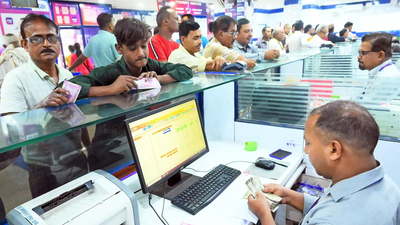
At present, non-resident individuals must file an Indian tax return if their total income exceeds Rs. 2.5 lakh. (AI image)

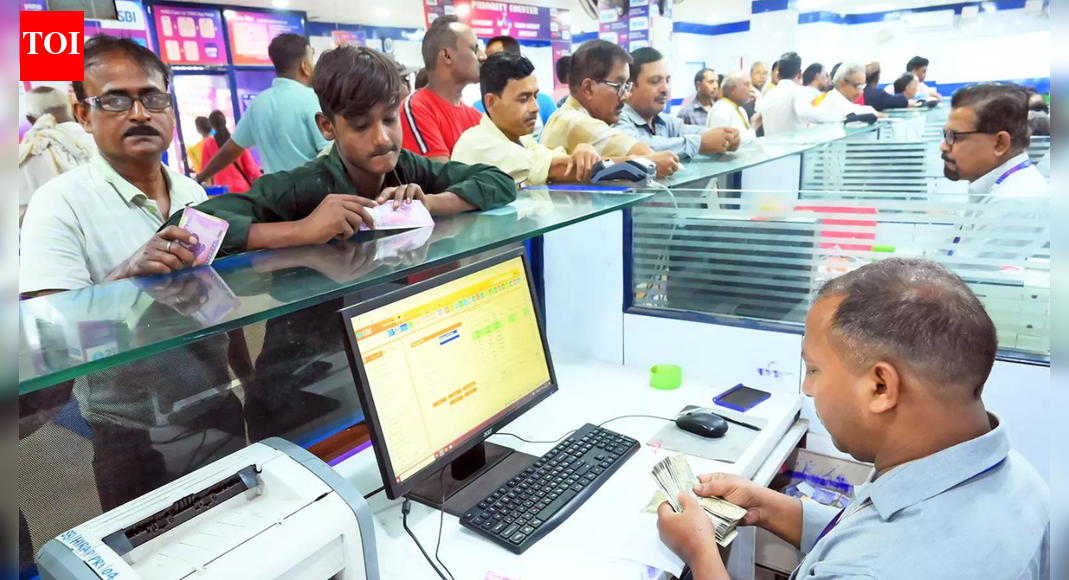
India’s economic footprint extends far beyond its borders. Millions of Indians living abroad continue to hold property, investments, and financial interests back home. Foreign nationals and global investors, too, increasingly engage with Indian businesses. Yet, for all the cross-border activity, India’s tax system still places a disproportionately heavy compliance burden on those who qualify as non-residents under tax law.As Budget 2026 approaches, industry bodies, tax experts, and non-resident taxpayers are urging the government to rationalize the rules. Their central message is simple: when income is minimal, passive, or already subject to tax deducted at source (TDS), compliance should be simple and easy. Return Filing: An archaic requirementAt present, non-resident individuals must file an Indian tax return if their total income exceeds Rs. 2.5 lakh — even when every rupee of that income has already suffered TDS and there is no additional tax liability arising in India. This includes small interest earnings, or dividend income.Tax experts point out that this leads to return filings with no additional tax payable, clogging the system and adding cost and effort for taxpayers who may have no other financial connection to India.Recommendation: Perhaps Budget 2026 provisions could provide some leeway and exemption in filing a tax return, if no tax is required to be paid and the non-resident has no business income in India. Challenges relating to furnishing a Tax Residency Certificate A non-resident taxpayer can claim the benefit of a tax treaty, which often provides a lower tax rate — for instance, on dividend income from shares held in India. Under section 90(2) of the Income-tax Act, the provisions that are more favourable to the taxpayer prevail. Thus, if the treaty prescribes a lower rate than domestic law, the treaty rate applies.However, section 90(4) requires the taxpayer to furnish a Tax Residency Certificate (TRC) in order to access treaty benefits, regardless of the nature or quantum of income. When the amounts involved are very small, the requirement to obtain a TRC can create unnecessary hardship for both the non-resident recipient and the resident payer, as the process involves time and cost. Mahesh Nayak, tax partner at CNK & Associates points to several other challenges. “In addition, non-resident taxpayers must currently file Form 10F electronically on the e-filing portal to claim tax treaty relief. They are also required to provide a TRC from foreign tax authorities covering the entire financial year to establish residency in the other country. In practice, many foreign tax authorities do not issue TRCs certifying future residency. Further, in certain jurisdictions, obtaining a TRC involves incurring a significant cost to the individual taxpayer and hence, asking for multiple TRCs for recurring payments becomes a costly affair, he says.Nayak points out that submission of documents other than TRC to substantiate the tax residency of a particular jurisdiction (country) should be permitted. The objective of a TRC is only to determine that the taxpayer is a resident of a particular country and therefore, if one can substantiate the tax residency through some other document, it should suffice, as held by Tribunals. “For example, in the US, a citizen is considered as a tax resident. Therefore, in such a situation, if one can provide a copy of the passport, clearly demonstrating US citizenship, that should suffice the eligibility of the taxpayer to claim the benefit of the India – US tax treaty. Copies of the passport can also be used to help determine the number of days stay in a particular jurisdiction, which can help determine tax residency in jurisdictions which determine tax residency based on number of days stay in that particular year,” he explains. Recommendations:

  • A threshold limit for seeking the TRC would help ease this burden.
  • Or allow non-resident taxpayers to submit TRCs from previous years (for example, the past one or two years) along with Form 10F.
  • Alternatively allow submission of documents other than TRC to substantiate residency of a particular country.

Challenges relating to online furnishing of Form 10FIf the TRC provided by the tax authorities of the relevant jurisdiction does not contain all the information as required under the Indian tax rules, the non-resident is required to provide the said details in a declaration in Form 10F, which is to be furnished electronically. “There are practical challenges for a non-resident taxpayer, who does not have a PAN in India, to furnish Form 10F as at times, the OTP is not sent to the foreign mobile number of the taxpayer. This creates an unnecessary hassle for a mere filing of a declaration along with the TRC,” states Nayak. Recommendation:

  • Offline furnishing of Form 10F should be permitted, as was allowed earlier.

Practical Pain PointsNon-residents must maintain a bank account in India to pay taxes and to receive tax refunds, even when they reside abroad and hold no other Indian assets. The final step in income-tax return filing — e-verification — is linked to Indian bank accounts, Aadhaar-linked mobile numbers, or certain digital signatures. Non-residents without Indian mobile numbers often struggle to complete filings within the stipulated deadline.Budget 2026 provides the perfect moment to modernize India’s approach — and to acknowledge that, for millions of global Indians and foreign nationals, “ease of compliance” is a reality.

[ad_2]

Source link
Russia oil trade: India imported €144 billion worth of crude since start of Ukraine war; second-largest buyer after China

[ad_1]

Russia oil trade: India imported €144 billion worth of crude since start of Ukraine war; second-largest buyer after China

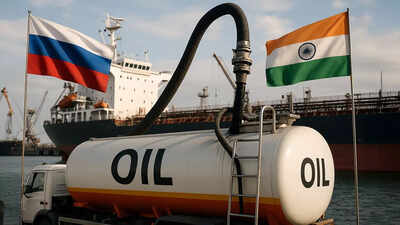
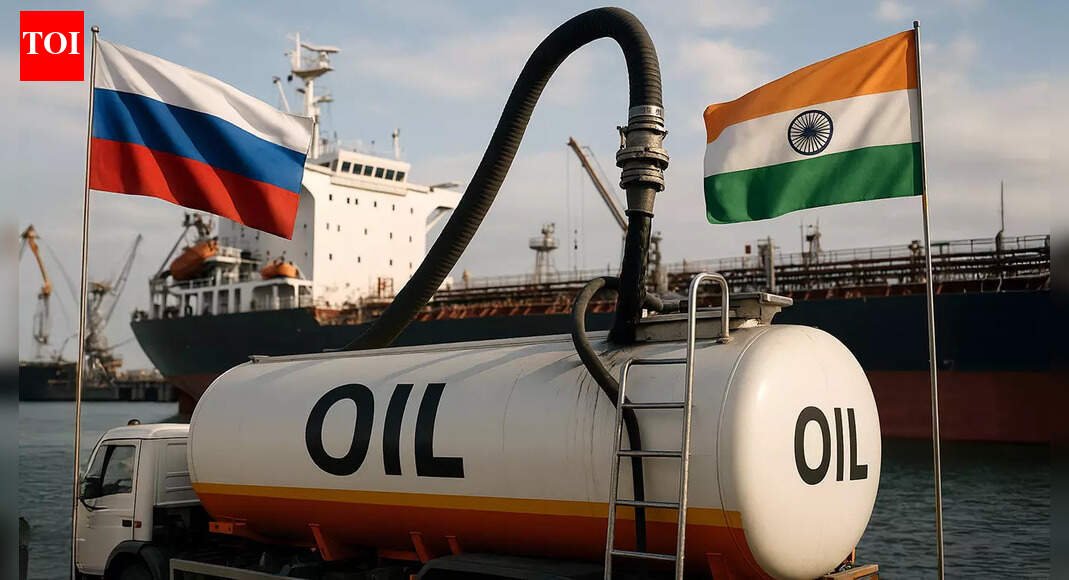
India has imported around 144 billion euros’ worth of crude oil from Russia since the start of the Ukraine war, making it the second-largest buyer after China, according to estimates by European think tank Centre for Research on Energy and Clean Air (CREA).According to news agency PTI, CREA said Russia has earned nearly 1 trillion euros from global fossil fuel sales since its full-scale invasion of Ukraine on February 24, 2022. “As of January 2026, Russia has earned 1 trillion euros and counting from global fossil fuel sales since the start of the full-scale invasion of Ukraine,” the think tank said, adding that these revenues continue to fund the war in Ukraine.China topped the list, buying fossil fuels worth 293.7 billion euros from Russia since February 2022, including 210.3 billion euros of oil, along with coal and gas. India followed as the second-largest buyer, importing fossil fuels worth 162.5 billion euros, including 143.88 billion euros of oil and 18.18 billion euros of coal, CREA said.The European Union spent 218.1 billion euros on Russian fossil fuels during the same period, including oil, coal and gas, despite sanctions imposed after the invasion. CREA noted that Russian oil has continued to flow into the EU, mainly to Hungary and Slovakia, and that products refined from Russian crude are still entering sanctioning countries.India, the world’s third-largest oil importer, sharply raised purchases of discounted Russian crude after Western nations cut back imports. Russia’s share in India’s crude basket rose from under 1 per cent before the war to nearly 40 per cent at its peak, PTI reported.However, Russia’s share has since fallen to below 25 per cent amid fresh US sanctions on major Russian oil exporters. India’s daily purchases of Russian oil from non-sanctioned entities dropped to around 72.92 million euros in early January from a peak of 189.07 million euros in July 2023, according to CREA.Reliance Industries, previously India’s biggest buyer of Russian crude, has said it does not expect to receive any Russian oil shipments in January, which could push India’s imports to a multi-year low amid tighter Western sanctions and trade-related pressures.

[ad_2]

Source link

Sigh of relief? ISL to resume on February 14, sports minister confirms; check full details | Football News

[ad_1]

Sigh of relief? ISL to resume on February 14, sports minister confirms; check full details

NEW DELHI: Sports Minister Mansukh Mandaviya on Tuesday said the delayed 2025-26 season of Indian Super League (ISL) will begin on February 14 after being put on hold due to the absence of a commercial partner. He added that all 14 clubs will take part. The I-League, which was also paused, will be held “around the same time” with all 11 teams involved.“There was lot of speculation regarding ISL but today the government, football federation and 14 clubs, Mohun Bagan and East Bengal included had a meeting and we have decided that ISL will start February 14. All clubs will participate,” Mandaviya said.All India Football Federation president Kalyan Chaubey was present at the meeting and spoke after the minister’s announcement. He explained the structure and funding of the leagues.The ISL will be played in a home-and-away format with 91 matches. Officials are still working on the logistics. The I-League will be conducted in a shorter format with 55 matches.“A Rs 25 crore central pool has been made for only the conduct of the ISL. 10 percent of this fund will come from AIFF, 30 percent was to come from a commercial partner but since we don’t have on right now the AIFF will pitch in with that contribution,” Chaubey said.“In all, the AIFF will give Rs 14 crore for ISL and about 3.2 crore for I League till we find a commercial partner,” he added.Chaubey also said a Governing Council Board will be set up to oversee the leagues in the future and that it will be “empowered to take all commercial decisions.”The 2025-26 ISL season was put on hold in July due to the uncertainty over the renewal of the Master Rights Agreement (MRA) between the league’s former organisers, Football Sports Development Limited (FSDL), and the AIFF.

[ad_2]

Source link

‘Dad I tell you …’: Nicolas Maduro’s son sends defiant message, gets emotional – watch

[ad_1]

‘Dad I tell you …’: Nicolas Maduro's son sends defiant message, gets emotional - watch

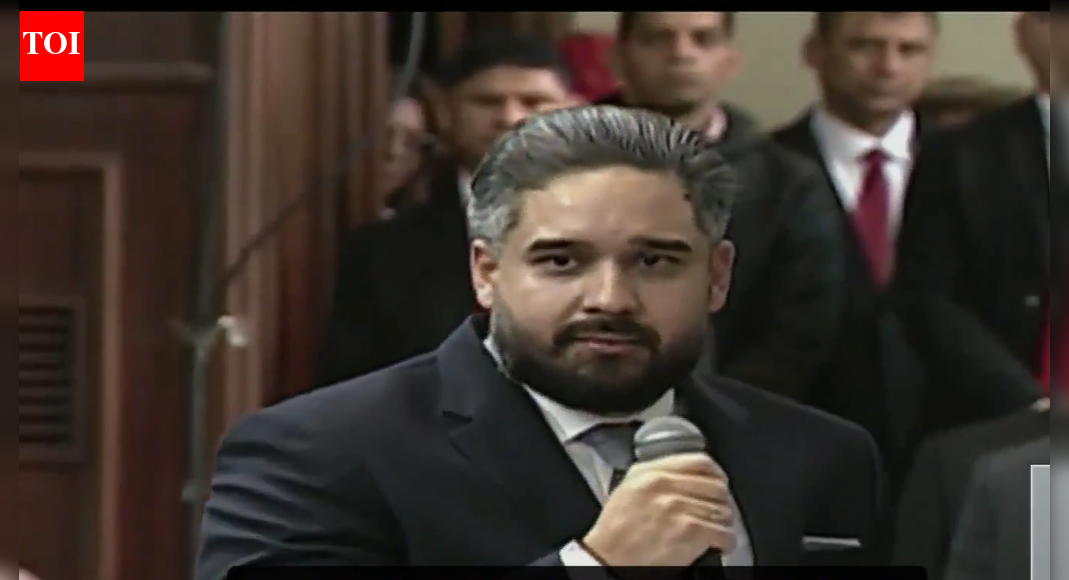
Venezuelan lawmaker Nicolas Maduro Guerra, son of captured President Nicolas Maduro, broke down during a session of the national assembly as he spoke about the capture of his father and first lady Cilia Flores by US forces, delivering an emotional and defiant message to the legislature. Speaking in the assembly, Maduro Guerra pledged loyalty to Venezuela’s leadership, reiterated his support for interim President Delcy Rodríguez, and called for the release of what he described as “kidnapped leaders.”

Maduro Son Sends 1st Message To Trump, Then Calls For ‘GLOBAL ACTION’ Against Mom-Dad Abduction

Addressing his father directly during the session, Guerra said Maduro has raised a strong family and everyone will do whatever their duties are towards the nation. He also expressed hope of meeting his father in the country soon. “Dad, I tell you, made all of us in the family strong people. Here we are fulfilling our duty until you return. The motherland is in good hands, Dad. And soon we are going to hug here in Venezuela. And you’re going to see the kids, Cilia you’re going to see them. Cilia, we will see each other. Long live Venezuela, long live homeland. And here we stand firm for whatever we need to do for our homeland. We love you so much…,” he said.His remarks came on the same day that Nicolás Maduro appeared before a court in New York, where he pleaded not guilty to drug trafficking and weapons charges, describing himself as “still the leader of Venezuela.”The capture has triggered international reactions and condemnation, raised questions over international law, and further intensified political tensions across Latin America, even as Venezuela’s leadership closed ranks amid the unfolding crisis.

[ad_2]

Source link

Indian banks set for stronger footing: Fitch flags regulatory reforms, reduced risks; growth opportunities remain robust

[ad_1]

Indian banks set for stronger footing: Fitch flags regulatory reforms, reduced risks; growth opportunities remain robust

Indian banks are likely to benefit from enhanced regulatory oversight by the Reserve Bank of India (RBI) and a more robust supervisory toolkit, which should lower systemic risks and improve the sector’s operating environment, global rating agency Fitch said in a report.Fitch noted that these regulatory shifts, combined with strong economic growth prospects and reduced inflation risks, are credit positive for Indian banks. “We believe regulatory responses to stress events, frameworks for monitoring risks and recovery of impaired loans have improved in recent years. Consequently, weaknesses that contributed to the last non-performing loan spike between the financial year ended March 2016 (FY16) and FY18 have been significantly reduced,” the report said, as per news agency PTI.Banking system metrics are now at their strongest in years. The sector’s non-performing loan ratio fell to 2.2 per cent in the first half of FY26, down from a peak of 11.2 per cent in FY18, while the common equity Tier 1 ratio has risen to 14.8 per cent from 9.3 per cent in FY14. Fitch also highlighted that the sector’s return on assets, at around 1.3 per cent, is comparable with peer banking systems in the Asia-Pacific region, reflecting a ‘bbb’ category operating environment.Fitch said the implementation of an expected credit loss (ECL) framework should further reduce volatility by smoothing earnings over the business cycle. Over the medium term, robust economic growth of over 6 per cent over the next two years is expected to provide banks with ample opportunities for profitable lending growth.The report added that India’s banking sector credit-to-GDP ratio stood at 59 per cent in 2025, below the peer average of 101 per cent. “This suggests there is headroom for lending growth to exceed nominal GDP growth moderately over the medium term without posing major risks to systemic stability, if underwriting standards hold up,” it said.Overall, Fitch indicated that stronger supervision, regulatory reforms, and a favourable macroeconomic environment position Indian banks to operate with reduced risks while continuing to expand credit prudently.

[ad_2]

Source link

‘Good luck’: Siddaramaiah confident of full 5-year term; Shivakumar extends wishes | India News

[ad_1]

‘Good luck’: Siddaramaiah confident of full 5-year term; Shivakumar extends wishes

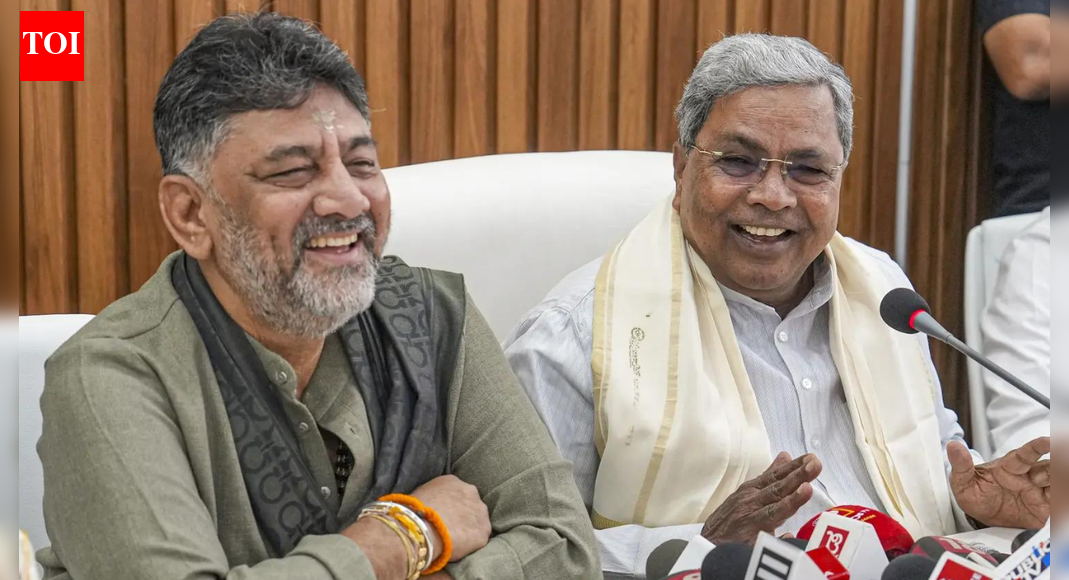
NEW DELHI: Karnataka chief minister Siddaramaiah on Tuesday expressed his confidence that he would complete the tenure of five years as the chief minister. He further added that the final decision shall ultimately land in the hands of the Congress high command.In response to his statement, Karnataka deputy chief minister DK Shivakumar extended his best wishes to the CM, wishing him “good luck”.“Let good things happen. I wish him all the best. Good luck,” Shivakumar said as PTI reports, responding to a question on Siddaramaiah’s remarks. He further added that there was no confusion regarding the CM’s statement within the party. “You (the media) are creating confusion. We don’t have any confusion. You have confusion. I wish him all the best, good luck,” he said.Earlier on Tuesday, Shivakumar also congratulated Siddaramaiah for matching the record of Devaraj Urs as Karnataka’s longest-serving chief minister. With 2,792 days completed in the office as of Tuesday during his second term, Siddaramaiah is now set to surpass the record on January 7.Shivakumar extended his best wishes to Shivakumar as he said, “I wish him success. May God bless him. I pray that God gives him good health and the opportunity to serve the people.”The power tussle between the leaders of the ruling Congress government and the speculations for a leadership change in Karnataka intensified after the state government reached the halfway mark of its five-year term on November 20, 2025.The speculations have been linked to the reports of a possible power-sharing arrangement between the two Congress leaders from 2023, at the time of the state government formation.

[ad_2]

Source link

China–Japan row: Beijing bans exports of dual-use goods to Tokyo amid Taiwan-related tensions; cites national security concerns

[ad_1]

China–Japan row: Beijing bans exports of dual-use goods to Tokyo amid Taiwan-related tensions; cites national security concerns
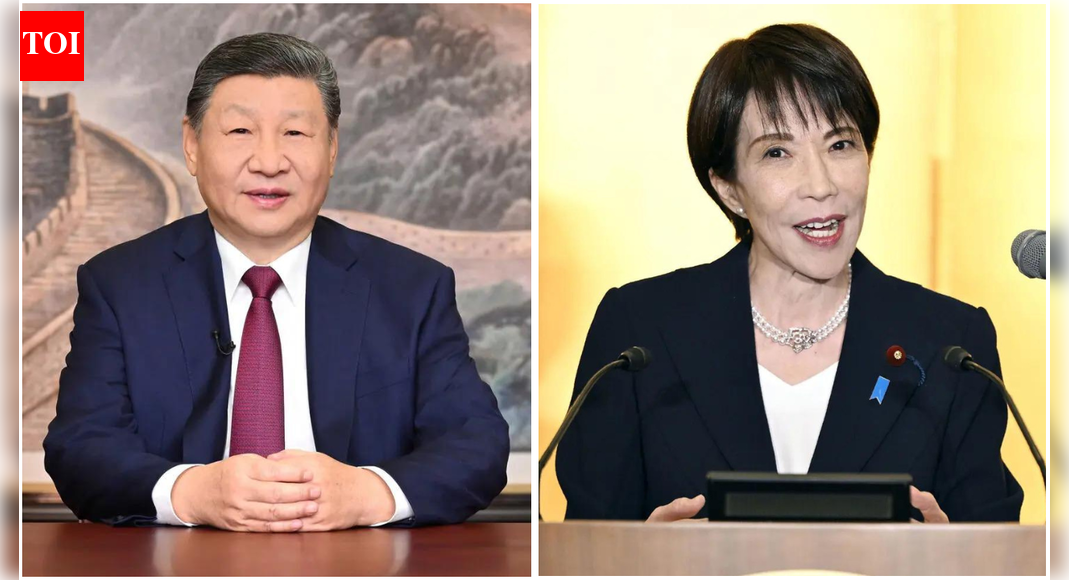
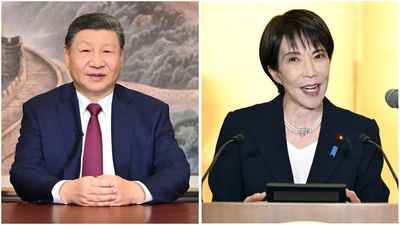
File photo: Chinese President Xi Jinping and Japanese PM Sanae Takaichi (Picture credit: AP)

China on Tuesday banned exports of dual-use goods that can serve both civilian and military purposes to Japan, a move that comes amid heightened tensions between the two countries over Taiwan.In a statement, China’s commerce ministry said exports of such items to Japanese military users, as well as to any other end-users that could help enhance Japan’s military power, are prohibited. It warned that any individual or organisation violating the rule by transferring or providing these made-in-China products to Japanese entities would face legal consequences, regardless of nationality.While the notice did not specify the items covered, some technology-related exports, including drones and navigation systems, could potentially be adapted for military use, as per news agency AP.There was no immediate response from Japan.China said the measures take effect immediately and are aimed at safeguarding national security and interests.Beijing classifies a range of products in sensitive sectors such as biotechnology, aerospace and telecommunications as dual-use goods subject to export controls.Relations between China and Japan have deteriorated in recent months over comments linked to Taiwan. Ties worsened after Japanese Prime Minister Sanae Takaichi said late last year that Japan’s military could get involved if China were to take action against Taiwan, the self-ruled island Beijing claims as its own territory. In December, Japan also said Chinese military aircraft locked radar on its fighter jets, despite what Tokyo described as a safe distance between them.China has stepped up military pressure around Taiwan, launching large-scale drills near the island last week. During that period, Chinese foreign minister Wang Yi criticised Japan’s leadership and Taiwan’s “pro-independence forces,” accusing Tokyo of challenging China’s territorial sovereignty.As per AFP, a Chinese commerce ministry spokesperson slammed Japan’s recent “erroneous remarks concerning Taiwan, implying the possibility of military intervention in the Taiwan Strait,” adding that the tightened export controls were necessary to protect China’s security interests.

[ad_2]

Source link

Budget 2026: Women centric schemes in focus — Jan Dhan-linked credit, insurance & more; check details

[ad_1]

Budget 2026: Women centric schemes in focus — Jan Dhan-linked credit, insurance & more; check details

For the Union Budget 2026, the government may be considering women-centric financial measures, with a focus on strengthening credit and insurance access through Jan Dhan accounts, as part of its wider push towards universal financial inclusion. Alongside this, the government is also considering suggestions to widen the scope of the Jan Suraksha schemes and provide policyholders with choices to enhance their insurance cover. People aware of the discussions said the proposed measures could include tailor-made credit cards, loan offerings and insurance products designed specifically for women. These steps are expected to build on initiatives announced in the FY26 Budget, such as the introduction of the Grameen Credit Score and targeted credit support for first-time entrepreneurs. “Measures to support the credit requirements of rural enterprises and self-help groups (SHGs) are also being actively considered,” an official told ET. These proposals are part of a larger effort to improve the effectiveness of social security-linked financial products.The Niti Aayog is also evaluating the Pradhan Mantri Jan Dhan Yojana (PMJDY), with particular attention on reviving inactive accounts. The exercise aims to encourage account holders to keep their Jan Dhan accounts active by improving access to both credit and insurance facilities. “This is being pursued with an aim at achieving 100% saturation,” another official said.According to the official, the Aayog believes that deeper credit inclusion and closing financial literacy gaps among Jan Dhan account holders are essential to strengthening India’s digital economy. The ongoing review of PMJDY is intended to align the flagship financial inclusion programme with the government’s long-term vision of Viksit Bharat, or making India a developed country by 2047.“Customer-orientated initiatives like continued emphasis on returning unclaimed funds and addressing insurance claim grievances through more robust regulatory supervision may also find mention in the budget announcement,” another official said.

[ad_2]

Source link

India’s first hydrogen train! Haryana pilot on Jind–Sonipat route enters final stage; launch expected soon – key features

[ad_1]

India’s first hydrogen train! Haryana pilot on Jind–Sonipat route enters final stage; launch expected soon - key features

Haryana is set to witness the launch of India’s first hydrogen-powered train, with Northern Railway’s pilot project between Jind and Sonipat entering its final stages.A Haryana government statement said a stable and uninterrupted 11 kV power supply has been ensured for the hydrogen plant at Jind, which will fuel the train during commissioning and regular operations.The hydrogen plant has a storage capacity of 3,000 kilograms and is currently in its final commissioning phase. Haryana chief secretary Anurag Rastogi recently reviewed the project with officials of Dakshin Haryana Bijli Vitran Nigam and directed regular monitoring of the power supply system to avoid any disruption. He also stressed the need for strong backup arrangements and quick-response mechanisms to support the project.Last month, railway minister Ashwini Vaishnaw told the Lok Sabha that Indian Railways has taken up a state-of-the-art pilot project to run its first hydrogen-powered train. He said the train has been developed as per specifications framed by the Research, Design and Standards Organisation to demonstrate hydrogen-based train technology. Vaishnaw added that manufacturing of the hydrogen train-set has been completed and hydrogen for the train will be produced at the Jind plant using the electrolysis process, a key component of green hydrogen generation.The hydrogen train has already reached Jind junction and is expected to begin its maiden journey soon on the Jind–Gohana–Sonipat route. Trial runs have been completed successfully, officials said. The eight-coach train, built at the Integral Coach Factory in Chennai, has power cars at both ends and is designed with a metro-style layout, with doors that close fully before departure to enhance passenger safety.Special features of the train-

  • Will cover up to 10 times more distance compared to electric trains
  • Will travel 180 km using 360 kg of hydrogen
  • Will run silently, ensuring a comfortable journey for passengers
  • Power engines are installed at both ends of the hydrogen train
  • 8 coaches for passenger seating
  • Facilities such as fans, lights, and air-conditioning are available during the journey
  • Metro-style design with 2 doors on each side of every coach for entry and exit

An official associated with the project said that all preparations are in place, though the final decision on the launch date rests with higher authorities.He said the train’s speed limit has been set at 110 km per hour and all technical aspects are being thoroughly checked.

[ad_2]

Source link

Uttar Pradesh SIR: 2.89 cr voters removed from draft electoral roll; 46.23 lakh declared dead | India News

[ad_1]

Uttar Pradesh SIR: 2.89 cr voters removed from draft electoral roll; 46.23 lakh declared dead

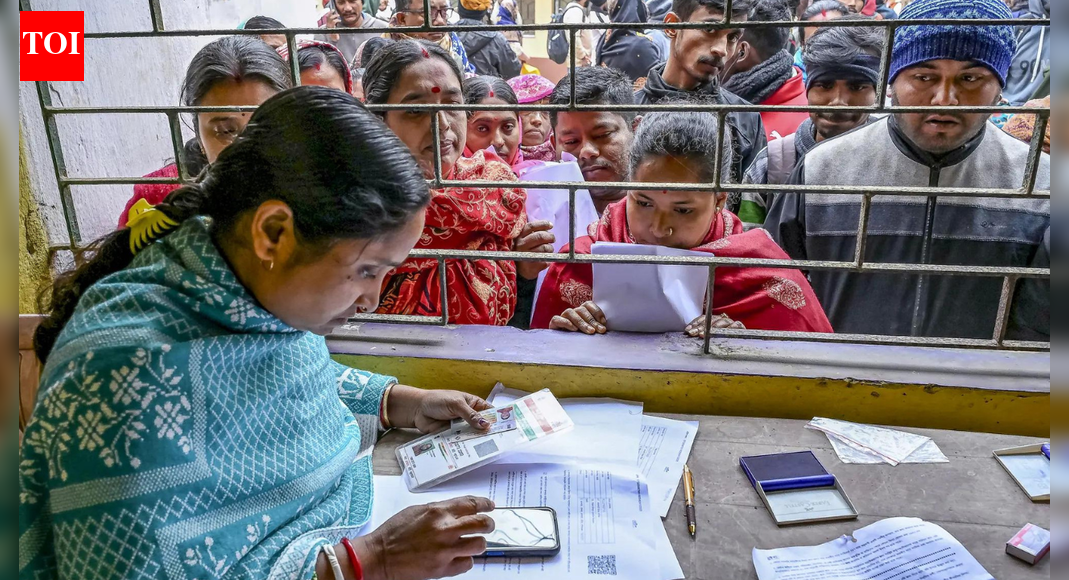
NEW DELHI: Uttar Pradesh’s chief election officer Navdeep Rinwa on Tuesday said approximately 2.89 crore voters were removed from Uttar Pradesh’s draft electoral roll published after the ongoing special intensive revision (SIR). Addressing a press conference, Rinwa said the Election Commission received around 12.5 crore ballot papers during the exercise. He added, “The number of deceased voters is 46.23 lakh, and 2.17 crore voters have moved, are missing or are absent. 25.47 lakh voters’ names appeared in more than one place. 2.89 crore voters’ names were not included in the draft.”According to the CEO, out of 15.44 crore voters, the names of 12.55 crore voters (81.30 per cent) have been retained in the draft electoral roll after the SIR.Rinwa said the final voter list under SIR will be issued on March 6, 2026. Urging voters to verify their details, he said, “Voters should check their details by entering their EPIC number on the website. I urge voters to do so. If their name is not available, they should fill out Form 6.” The Election Commission had extended the publication of the draft electoral roll by a week, revising the schedule for the SIR. With January 1 as the qualifying date, the draft roll to be published on January 6, instead of the earlier December 31 deadline.As per the revised timeline, the claims and objections period will run from January 6 to February 6, 2026. The SIR exercise in UP has missed multiple deadlines, with the enumeration deadline initially set for December 4 and subsequently extended twice.

[ad_2]

Source link