Breaking News
Amazon pares Fresh as it pushes quick delivery

[ad_1]

Amazon pares Fresh as it pushes quick delivery

Bengaluru: Amazon is preparing to scale down its 4-24 hour grocery delivery service, Amazon Fresh, in several major Indian cities as it sharpens focus on its quick commerce offering, AmazonNow, according to a UBS Global Research report.The transition is expected to play out across 10-15 large urban markets where AmazonNow is being expanded, effectively replacing Amazon Fresh in these locations, the report said.The move underscores Amazon’s shift towards faster fulfillment models, as competition intensifies in India’s quick commerce segment dominated by players such as Blinkit, Zepto and Swiggy Instamart.AmazonNow, currently live in six cities including Bengaluru, Mumbai and Delhi, is being positioned as the company’s primary vehicle for rapid delivery. UBS estimates the service could expand to 10 cities in the near term, covering a large share of quick commerce demand in the country.“We understand AmazonNow’s average order value (AOV) is Rs 260-300, while the mature stores (more than 6 months old) have a higher AOV of Rs 320-360, per our checks. The primary reason for low AOV vs Blinkit and Instamart is that AmazonNow is currently operating in FMCG and only recently adding other categories such as electronics, toys etc,” the research note said.The quick commerce push is being backed by a rapidly expanding dark store network. AmazonNow operates roughly 450 dark stores at present and is adding about two stores a day, with the network expected to scale up significantly over the next year, according to the report.Even as it pivots to faster deliveries in urban centres, Amazon continues to invest in its national logistics backbone. The company currently operates over 20 large warehouses for its broader ecommerce operations and is expected to increase this footprint further by mid-2026 to improve delivery timelines across India.Amazon Fresh, which remains operational in over 100 cities, will continue in markets where quick commerce is yet to be rolled out. However, in cities where AmazonNow is introduced, Fresh is likely to be phased down, reflecting a broader shift from scheduled grocery deliveries to instant fulfilment models.The report is based on channel checks and expert conversations and reflects third-party assessments of Amazon’s strategy rather than company-confirmed plans.

[ad_2]

Source link

Govt extends quality control order deadline to October; aims to boost electrical appliance supply

[ad_1]

Govt extends quality control order deadline to October; aims to boost electrical appliance supply

The government on Monday extended the implementation timeline for the mandatory quality control order (QCO) on certain electrical appliances by six months till October, PTI reported.“It shall come into force on the 1st of October, 2026,” the Department for Promotion of Industry and Internal Trade (DPIIT) said in a notification.The QCO is applicable to all electrical appliances intended for household, commercial or similar applications with rated voltage not exceeding 250 volts for single-phase appliances and 480 volts for other appliances, including direct current (DC) supplied and battery-operated appliances.Goods covered under the order include household electrical appliances such as vacuum cleaners, cooking ranges, frying pans, appliances for heating liquids, electric heating tools and electric steam cookers.The implementation timeline had earlier been extended in May 2025 till March this year.The move assumes significance as the government is encouraging companies to ramp up production of induction heaters and compatible utensils amid rising demand for these products due to concerns over LPG availability following the West Asia crisis.The conflict has disrupted shipping through the Strait of Hormuz, impacting oil and gas supplies and prompting consumers to shift towards alternative cooking solutions such as induction-based appliances.

[ad_2]

Source link

Pakistan External Repayments: Pakistan lines up $4.8 billion in external repayments by June, including $3.5 billion owed to UAE: Report

[ad_1]

 Pakistan To Return $3.5 Billion UAE Debt In April Despite Reserve Strain

Pakistan has made arrangements to repay $4.8 billion in external obligations by June, including $3.5 billion payable to the United Arab Emirates through three different facilities, according to a local media report.The development comes after Islamabad decided to return $2 billion to Abu Dhabi by the end of the current month. The amount had been placed with the State Bank of Pakistan (SBP) as a deposit, on which the country has been paying around 6 per cent interest.

Watch

Pakistan To Return $3.5 Billion UAE Debt In April Despite Reserve Strain

According to Geo News, citing official sources, Pakistan has also received assurances of more than $5 billion in financial support from two friendly countries to help manage its external financing needs.A $1.3 billion Eurobond, issued for a 10-year period, is also maturing this week and will be repaid, adding to short-term repayment pressure, reported news agency PTI.

UAE shortened rollover periods after December as regional tensions mounted

The UAE had in the past rolled over such deposits annually. However, in December 2025, the facility was extended only for short durations — first for one month and then for two months — indicating tighter financial conditions.Recently, the UAE sought immediate return of the funds amid the evolving situation in Middle East following the US-Israel war on Iran.Earlier, the UAE had agreed in principle to roll over the $2 billion deposit for a short-term period of two months after Pakistan’s deputy Prime Minister Ishaq Dar engaged with UAE authorities. The rollover was extended until April 17, 2026.Previously, two separate $1 billion tranches maturing on February 16 and February 22 were rolled over for one month. Another $1 billion tranche is due to mature in July 2026.

Foreign office says repayment is routine

The Abu Dhabi Fund for Development has placed a total of $3 billion with the SBP in three tranches. Two tranches that matured in January were rolled over for one month, while the third will be dealt with closer to maturity.On April 4, Pakistan’s foreign office rejected what it called “misleading and unfounded” reports about the return of UAE debt, saying the repayment was a routine financial transaction.“This is a routine financial transaction, and any attempt to portray it otherwise is erroneous and misleading,” the FO said in a statement.The FO added that the deposits were placed with the central bank under bilateral commercial agreements and reflected “the UAE’s strong support for Pakistan’s economic stability and prosperity”.For the current fiscal year, Pakistan is seeking rollover of about $12 billion in external deposits, including around $9 billion from Saudi Arabia and China, $5 billion and $4 billion respectively, in addition to the UAE deposits.

[ad_2]

Source link

Reliance Industries unit loading 2 million barrels of Venezuelan crude oil: Report

[ad_1]

Reliance Industries unit loading 2 million barrels of Venezuelan crude oil: Report

A unit of Reliance Industries has reportedly started loading a 2-million-barrel shipment of Venezuelan crude. The oil has directly procured from state-run oil firm Petróleos de Venezuela, SA (PDVSA), according to a company document and shipping data on Monday, cited by Reuters.Reliance Industries secured a US general licence in February 2026, following an application in early January, allowing it to directly purchase, export and refine Venezuelan crude without breaching sanctions. The approval came amid a broader easing of restrictions on Venezuela’s energy sector by the administration of Donald Trump. The move is expected to help Reliance diversify its crude sourcing, potentially replacing some Russian supplies with discounted Venezuelan heavy oil, while supporting renewed oil flows from Caracas.

[ad_2]

Source link

US stock market today (April 6, 2026): S&P 500 steady, Dow dips; oil swings on Iran war uncertainty

[ad_1]

US stock market today (April 6, 2026): S&P 500 steady, Dow dips; oil swings on Iran war uncertainty

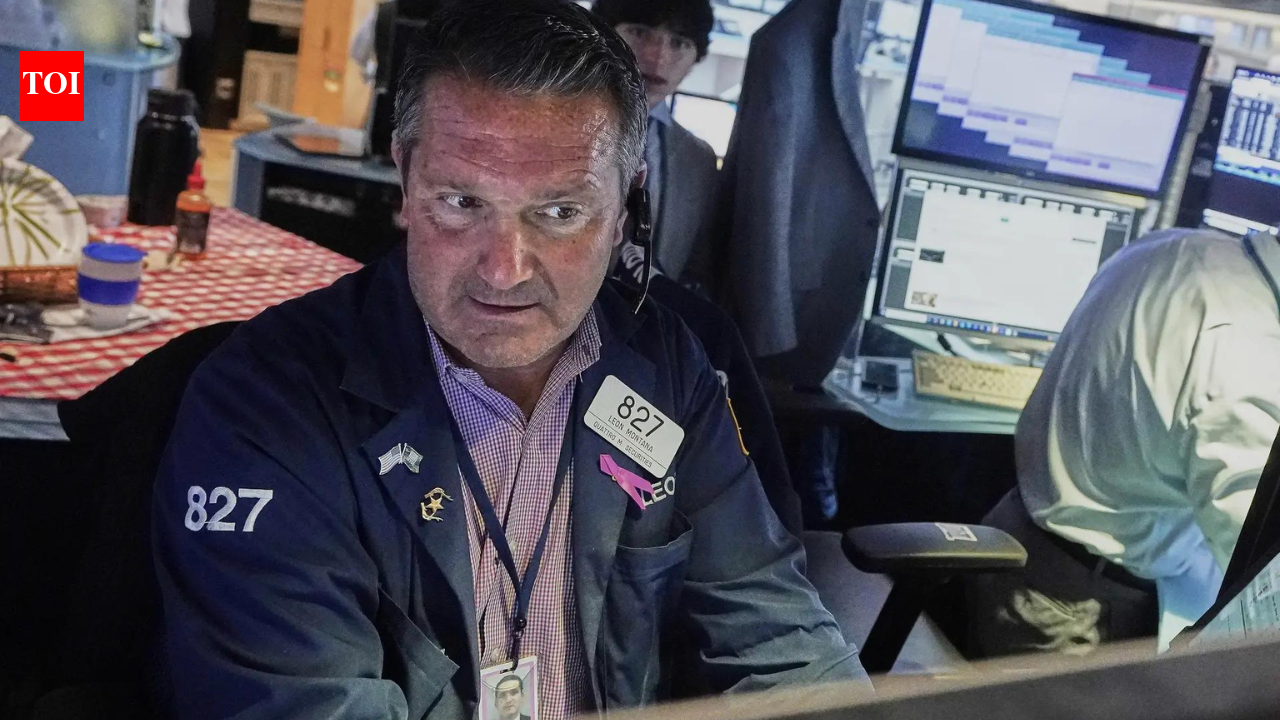
US stock markets showed tentative moves on Monday, with the S&P 500 inching higher while the Dow Jones Industrial Average slipped, as oil prices remained volatile ahead of President Donald Trump’s deadline on Iran, AP reported.The S&P 500 rose 0.1% in early trading, coming off its first weekly gain in six weeks. The Dow Jones Industrial Average fell 107 points, while the Nasdaq Composite advanced 0.4%.Oil prices fluctuated between gains and losses amid uncertainty over the Iran conflict and its impact on global energy supplies.Trading remained subdued as geopolitical tensions escalated, with Israel and the United States carrying out strikes in Iran that reportedly killed 25 people ahead of Trump’s deadline for Tehran to reopen the Strait of Hormuz.Futures markets reflected cautious sentiment, with S&P 500 futures up 0.1%, Dow futures down 0.2% and Nasdaq futures gaining 0.3%.Iran’s South Pars natural gas field was among the targets hit, while Tehran responded with missile attacks on Israel and Gulf Arab neighbours. Mediators from Egypt, Pakistan and Turkey have proposed a 45-day ceasefire and reopening of the Strait of Hormuz, though both Iran and the US are yet to respond.Trump, whose deadline expires Monday night Washington time, warned that if no agreement is reached, the US would target Iran’s power plants and infrastructure.“Tuesday will be Power Plant Day, and Bridge Day, all wrapped up in one, in Iran,” he said in a social media post, adding that failure to reopen the strait would leave Iran “living in Hell.”Despite the escalation, oil prices eased slightly. Benchmark US crude fell $1.40 to $110.14 per barrel, while Brent crude declined 45 cents to $108.58 per barrel. Prices, however, remain sharply elevated, with US crude up over 60% and Brent up nearly 50% since the conflict began five weeks ago.Global markets showed mixed trends. Japan’s Nikkei 225 rose 0.6% and South Korea’s Kospi gained 1.4%, while markets in Australia, Hong Kong, Shanghai and parts of Europe remained closed due to holidays.The US relies on the Persian Gulf for only a fraction of its oil imports, but global pricing dynamics mean disruptions in the Strait of Hormuz affect markets worldwide. Countries like Japan remain heavily dependent on the route, prompting efforts to secure alternative supply lines.Japan has begun releasing reserves and exploring alternate routes, while South Korea plans to deploy at least five ships to Saudi Arabia to establish new oil transport corridors.“As we kick off the first full trading week of April, the word uncertainty is paramount. Last year it was centered on the impact of ‘Liberation Day’ tariffs, this year it’s uncertainty surrounding the ongoing Iranian War,” said Jay Woods, analyst at Freedom Capital Markets in New York.

[ad_2]

Source link

Hormuz transit update: 2 Indian LPG tankers cross strait; 16 vessels remain stranded in Gulf

[ad_1]

Hormuz transit update: 2 Indian LPG tankers cross strait; 16 vessels remain stranded in Gulf

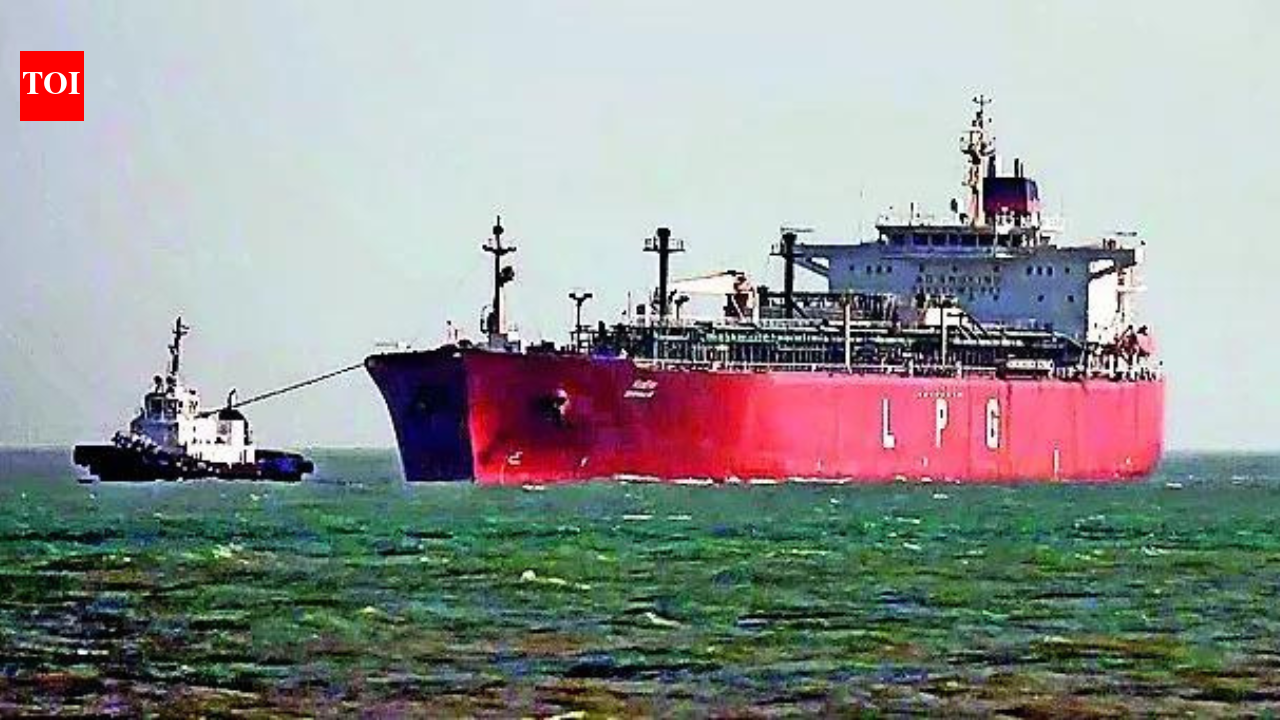
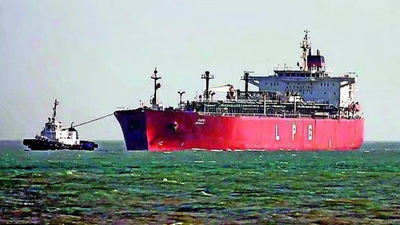
Two more Indian-flagged LPG tankers have safely crossed the conflict-hit Strait of Hormuz and are headed towards Indian ports, even as 16 vessels remain stranded in the Persian Gulf, officials said on Monday, according to PTI.LPG vessel Green Sanvi, carrying 46,650 tonnes of cargo, is scheduled to reach an Indian port on April 7, while Green Asha, with 15,500 tonnes, is expected to arrive on April 9, Mukesh Mangal, Additional Secretary in the Ministry of Ports, Shipping & Waterways, said at a briefing.

Watch

India’s Kandla Port Breaks All Records At 160 MMT Cargo Despite West Asia Crisis, Aims Bigger Target

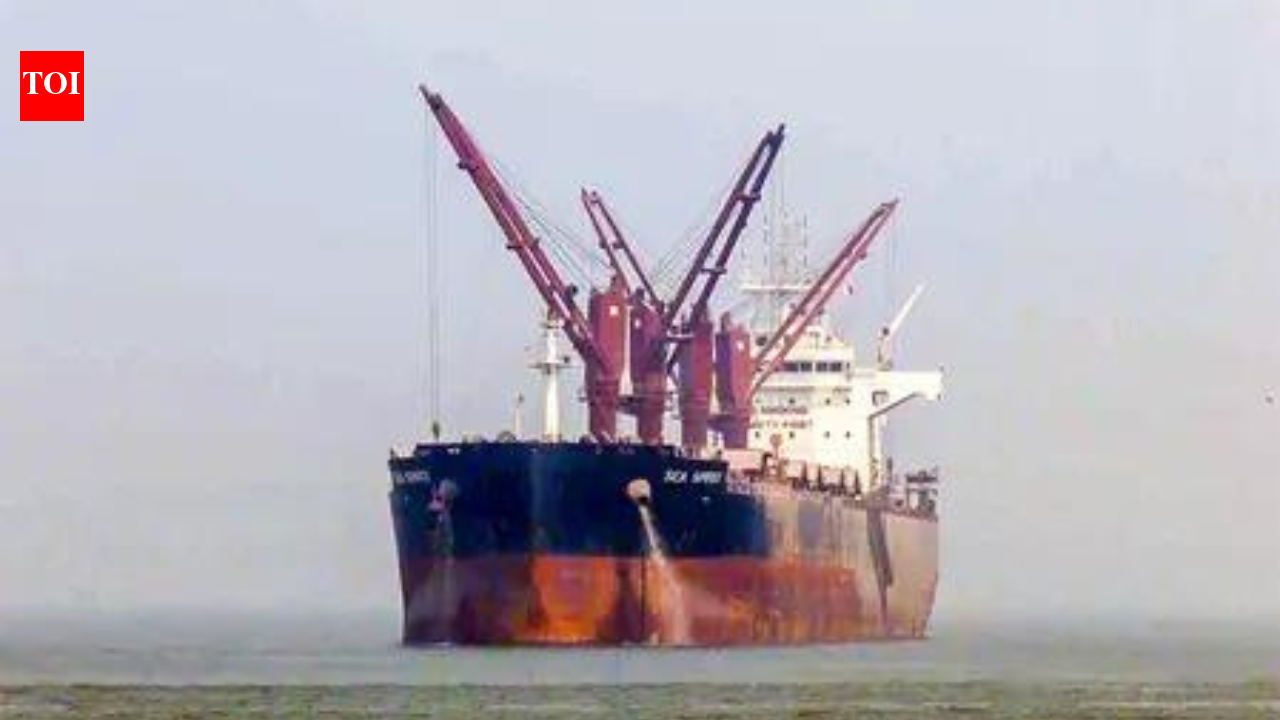
“Indian maritime operations remain safe and uninterrupted amid West Asia crisis. 16 Indian-flagged vessels with 433 seafarers are in the region; two LPG carriers, Green Sanvi and Green Asha, safely crossed Strait of Hormuz,” he said.With the latest movement, eight Indian-flagged LPG tankers have now transited through the strategic waterway, which has remained largely disrupted since the US and Israel launched strikes on Iran on February 28, followed by Tehran’s retaliation.Of the 16 vessels still in the Persian Gulf, one is a loaded LNG carrier, two are LPG tankers (one loaded, one empty), six are crude carriers (five loaded, one empty), three are container ships, one is a dredger, one carries chemical cargo and two are bulk carriers, Mangal said.On reports of Iran charging transit fees, he said, “we have no information of such payments.”The arrivals are expected to ease India’s LPG supply concerns, as the country depends on imports for about 60% of its cooking gas needs. Of the 33.15 million tonnes of LPG consumed last year, nearly 90% of imports came from West Asia.Shipping through the Strait of Hormuz — a key route for global oil and gas flows — has been severely affected since the conflict escalated, although Iran has indicated that “non-hostile vessels” may pass after coordination with its authorities.Last week, two LPG carriers, BW TYR and BW ELM, carrying around 94,000 tonnes of LPG, safely crossed the region. BW TYR reached Mumbai on March 31, while BW ELM docked at New Mangalore on April 1.Earlier, four Indian-flagged LPG tankers–Pine Gas, Jag Vasant, MT Shivalik and MT Nanda Devi–had also completed safe passage, delivering over 1.85 lakh tonnes of LPG to Indian ports in March.At the start of the conflict, 28 Indian-flagged vessels were in the Strait of Hormuz region. So far, 10 vessels–eight from the western side and two from the eastern side–have managed to transit safely.In addition, oil tanker Jag Laadki, carrying 80,886 tonnes of crude from the UAE, reached Mundra on March 18, while Jag Prakash, transporting gasoline from Oman to Africa, also crossed the strait earlier and is currently en route to Tanzania.

[ad_2]

Source link

‘India’s debt-to-GDP ratio lowest among major economies’: FM Sitharaman sees fiscal space, hints at rate cut

[ad_1]

'India’s debt-to-GDP ratio lowest among major economies': FM Sitharaman sees fiscal space, hints at rate cut

Finance Minister Nirmala Sitharaman on Monday said India stands out in debt management among major economies, with an overall debt-to-GDP ratio of about 81%, even as the global economy faces rising volatility and uncertainty, PTI reported.Speaking at an event organised by the National Institute of Public Finance and Policy (NIPFP), Sitharaman warned that the ongoing Middle East conflict has evolved into a “systemic tremor threatening vital arteries of global energy”.She said the global economic environment is increasingly marked by volatility, uncertainty, complexity and ambiguity, alongside a sharp surge in public debt across countries.“World economy witnessing volatility, uncertainty, complexity, and ambiguity; global public debt has surged,” the finance minister said.On India’s fiscal position, Sitharaman noted that the country remains relatively well-placed compared to other major economies in terms of debt sustainability.“India stands out in debt management with overall debt-to-GDP ratio at 81 per cent, lowest among major economies,” she said.The finance minister also said India has sufficient fiscal space to respond to emerging challenges.“India has fiscal space; there’s room to support affected sectors, expand capex, and interest rate cut by RBI,” she said.Sitharaman underlined that geopolitical tensions, particularly in West Asia, are not just regional disruptions but have wider implications for global energy supply chains and economic stability.“Middle East conflict evolved into systemic tremor threatening vital arteries of global energy,” she said.Her remarks come at a time when global markets are grappling with elevated crude oil prices, supply chain disruptions and tightening financial conditions driven by geopolitical conflicts.

MPC meet begins amid inflation concerns

The Reserve Bank’s rate-setting panel on Monday began its three-day deliberations for the first bi-monthly monetary policy of the fiscal, with expectations of a status quo on the benchmark lending rate amid concerns of a potential spike in inflation due to the ongoing Middle East crisis.The outcome of the six-member Monetary Policy Committee (MPC), headed by RBI Governor Sanjay Malhotra, is scheduled to be announced on Wednesday.The RBI has reduced the policy rate by a cumulative 125 basis points since February 2025, marking its most aggressive easing cycle since 2019. The last cut of 25 basis points came in December, while the central bank maintained a pause in its February policy.Experts said the MPC will factor in geopolitical tensions in Middle East, volatility in commodity prices and sharp currency movements, which have impacted the rupee.While retail inflation has moved closer to the RBI’s medium-term target of 4%, the recent surge in global crude oil prices has raised concerns about second-round effects on domestic prices, especially fuel, transportation and core inflation.Estimates suggest that every $10 per barrel increase in crude prices can push inflation higher by up to 0.60%. Crude, which had hovered around $60 per barrel for an extended period, has risen above $100 since the conflict began in late February.The rupee has also depreciated by over 4% since the start of the war, adding to imported inflation pressures.

Inflation targeting framework

The government has mandated the RBI to maintain retail inflation at 4%, with a tolerance band of +/-2%, for another five-year period ending March 2031.India adopted the inflation-targeting framework in 2016, with the MPC tasked to maintain annual inflation at 4% within a band of 2% to 6%. The framework has continued since then. As per the latest data, retail inflation rose to 3.21% in February from 2.74% in January.

[ad_2]

Source link

Iran war risk: JPMorgan CEO Jamie Dimon warns of oil shocks, sticky inflation and higher interest rates

[ad_1]

Iran war risk: JPMorgan CEO Jamie Dimon warns of oil shocks, sticky inflation and higher interest rates

JPMorgan Chase CEO Jamie Dimon has warned that the ongoing war in Iran could trigger oil and commodity price shocks, keeping inflation elevated and pushing interest rates higher than current market expectations, Reuters reported.The warning came in his annual letter to shareholders, a day after US President Donald Trump escalated pressure on Iran by threatening to target key infrastructure if the Strait of Hormuz is not reopened.“Now, because of the war in Iran, we additionally face the potential for significant ongoing oil and commodity price shocks, along with the reshaping of global supply chains, which may lead to stickier inflation and ultimately higher interest rates than markets currently expect,” Dimon said, news agency Reuters quoted as saying. Dimon, who has led JPMorgan for two decades, also highlighted broader geopolitical risks, including the war in Ukraine, tensions in the Middle East and friction with China.“The challenges we all face are significant,” he added.He said it remains uncertain whether the Iran war will achieve US objectives, while warning that nuclear proliferation remains the biggest risk linked to Iran.Markets have already begun pricing in these risks, with expectations of interest rate cuts this year largely fading amid rising inflation concerns triggered by the conflict.Last week, the benchmark S&P 500 index recorded its worst quarterly performance since 2022, weighed down by rising energy prices and geopolitical uncertainty since late February.Dimon noted that the US economy remains resilient, with consumers continuing to earn and spend, and businesses staying broadly healthy, though signs of weakening have emerged.He cautioned that economic strength has been supported by significant government deficit spending and past stimulus, while infrastructure investment needs continue to grow.At the same time, he pointed to positives such as fiscal stimulus under President Trump’s “Big, Beautiful Bill”, deregulation policies and rising capital expenditure driven by artificial intelligence.On financial stability, Dimon said the $1.8-trillion private credit market “probably” does not pose a systemic risk, despite investor concerns and recent withdrawals from such funds.However, he warned that in a downturn, losses across leveraged lending could exceed expectations as credit standards have weakened.Private credit markets also lack transparency and rigorous valuation benchmarks, increasing the risk of investor exits if conditions worsen, he said.Separately, Dimon criticised revised US capital rules, including Basel III and GSIB surcharge norms, calling aspects of the proposals “nonsensical” and “very flawed”.He said JPMorgan’s GSIB surcharge would fall only to 5.0%, a level he described as “absurd” and “un-American”, arguing it penalises the bank’s scale and performance.

[ad_2]

Source link

Stock market today (April 6, 2026): Which are the top gainers and losers in BSE Sensex and Nifty50 today? Check list

[ad_1]

Stock market today (April 6, 2026): Which are the top gainers and losers in BSE Sensex and Nifty50 today? Check list

Benchmark indices Sensex and Nifty staged a sharp rebound on Monday after early losses, supported by a correction in crude oil prices and strong buying in banking stocks.The 30-share BSE Sensex jumped 787.30 points, or 1.07%, to settle at 74,106.85. During the session, it climbed as much as 887.91 points, or 1.21%, to 74,207.46.The 50-share NSE Nifty advanced 255.15 points, or 1.12%, to close at 22,968.25, nearing the 23,000 mark.

Nifty50 top gainers

  • Trent (7.98%)
  • Shriram Finance (4.09%)
  • Axis Bank (3.96%)
  • Adani Enterprises (3.71%)
  • Titan Company (3.64%)
  • SBI Life (3.55%)
  • Larsen & Toubro (3.18%)
  • UltraTech Cement (3.16%)
  • Bajaj Finance (2.91%)
  • InterGlobe Aviation (2.84%)

Nifty50 top losers

  • Reliance Industries (-3.40%)
  • ONGC (-1.87%)
  • Max Healthcare (-1.38%)
  • Eicher Motors (-0.81%)
  • JSW Steel (-0.68%)

BSE Sensex top gainers

  • Trent (7.98%)
  • Axis Bank (3.96%)
  • Titan Company (3.64%)
  • Larsen & Toubro (3.18%)
  • UltraTech Cement (3.16%)
  • Bajaj Finance (2.91%)
  • InterGlobe Aviation (2.84%)
  • HDFC Bank (2.68%)
  • Kwality Wall’s (2.23%)

BSE Sensex top losers

  • Reliance Industries (-3.40%)

Brent crude, the global oil benchmark, declined 0.71% to USD 108.3 per barrel, offering some relief to markets.Asian markets ended mostly higher, with South Korea’s Kospi and Japan’s Nikkei 225 closing in the green, while Hong Kong and Shanghai markets remained shut for a holiday.“Domestic equities staged a strong rally as value buying gained traction across the board. Crude prices softened marginally on reports of ceasefire efforts, while encouraging provisional banking data supported interest in rate-sensitive segments,” said Vinod Nair, Head of Research, Geojit Investments Limited.He added that overall risk appetite remains cautious amid inflation concerns and potential disruptions to global trade.“Today’s recovery was driven primarily by a modest pullback in crude oil prices, with Brent slipping below the USD 105 mark amid reports of a proposed temporary ceasefire from Middle East mediators. Additionally, domestic institutional investors continued to provide stability at lower levels, absorbing selling pressure and supporting the broader market structure,” said Ponmudi R, CEO of Enrich Money.Foreign Institutional Investors (FIIs) sold equities worth Rs 9,931.13 crore on Thursday, while Domestic Institutional Investors (DIIs) bought shares worth Rs 7,208.41 crore, as per exchange data.

[ad_2]

Source link

SC refuses interim relief to Vedanta in the Jaiprakash Associates resolution plan matter

[ad_1]

SC refuses interim relief to Vedanta in the Jaiprakash Associates resolution plan matter

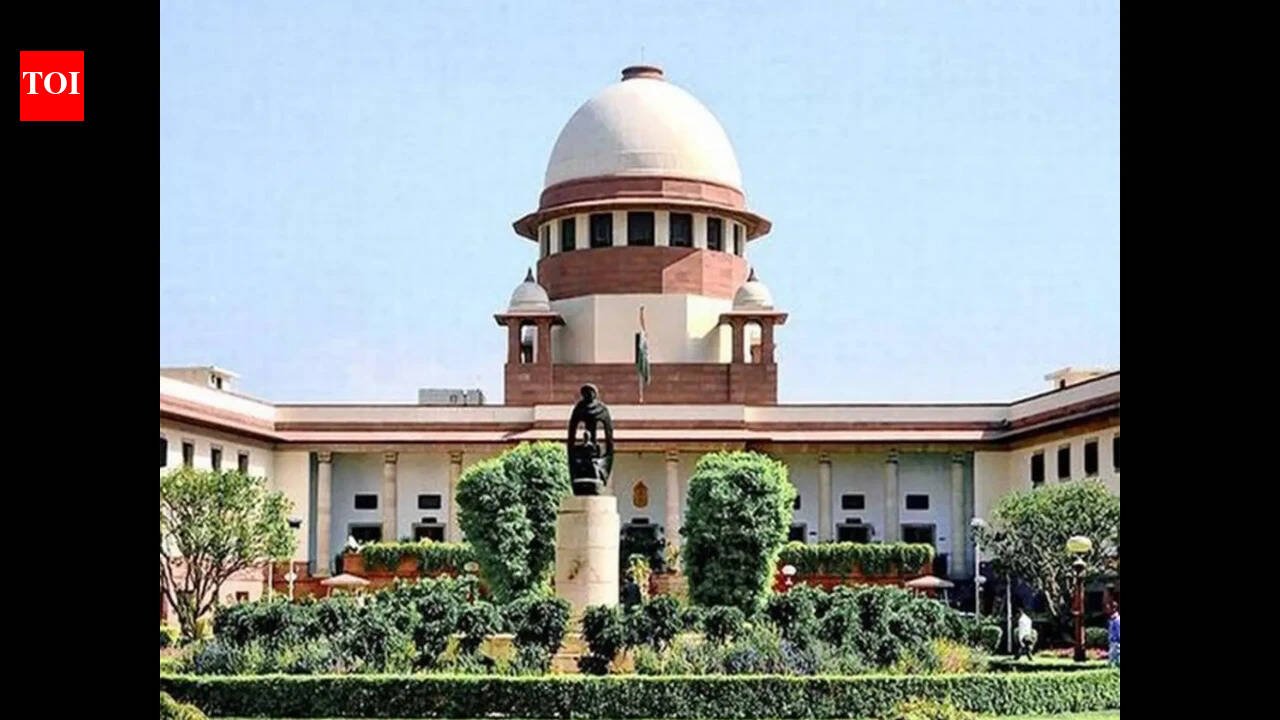
The Supreme Court of India on Monday declined to stay proceedings in a plea filed by Vedanta Limited challenging the approval of AdGroup’s resolution plan for the takeover of insolvent Jaiprakash Associates Limited.A Bench led by Chief Justice of India Surya Kant observed that since the appeal is likely to be decided shortly by the National Company Law Appellate Tribunal (NCLAT), and Vedanta’s interests have been adequately safeguarded through interim measures, there was no necessity to grant any interim relief.“The appeal is likely to be addressed soon, and we see no legal necessity to issue any interim direction,” the Court noted, while requesting the NCLAT to hear the matter on an out-of-turn basis on the scheduled date or immediately thereafter if arguments remain incomplete.The NCLAT is scheduled to hear Vedanta petition on Friday 10th April.Vedanta, in its petition, has challenged the decision of the Committee of Creditors (CoC) to accept Adani Group‘s resolution plan. It contended that its revised addendum bid offers over Rs 3,400 crore higher gross value compared to Adani’s proposal.Senior Advocate Kapil Sibal appeared for Vedanta, while Senior Advocate Mukul Rohatgi represented Adani Group. Tushar Mehta appeared on behalf of the lenders’ consortium (CoC) at the apex court.During the hearing, Vedanta submitted that it proposed to pay Rs 17,926 crore to creditors, as against Rs 14,535 crore under Adani’s plan. It argued that the CoC was effectively accepting a resolution plan that was around Rs 3,000 crore lower in value. However, the CoC countered that the practical difference between the two bids would amount to only about Rs 500 crore.The Court recorded submissions that the matter is listed before the NCLAT this week, and implementation of the resolution plan would take approximately 50 days, with little likely to change in the interim period of a few days.Observing that the NCLAT interim order had already addressed Vedanta’s concerns, the Supreme Court stated it would not halt the process at this stage. It added that any policy decision taken by the resolution professional or monitoring committee during this period must be in accordance with law and subject to NCLAT’s approval.The apex court further noted that the resolution process remains subject to approval by the adjudicating authority, and emphasised that if any action outside the legal framework is undertaken, appropriate recourse would be available.Both sides agreed before the apex court for an expeditious hearing before the NCLAT.

[ad_2]

Source link