Breaking News
Despite third-largest reserves, India trails in rare earth production; gap due to processing, regulatory hurdles: Report

[ad_1]

Despite third-largest reserves, India trails in rare earth production; gap due to processing, regulatory hurdles: Report

India holds the world’s third-largest reserves of rare earths at 6.9 million tonnes, yet its contribution is not even 1 per cent of the global production. A new report from Amicus Growth, cited by ANI, underlined this gap between resource potential and actual production on the part of India, while China leads in the global rare earth market with both reserves and processing capabilities.The country’s vast reserves, which make up 6-7 per cent of global resources, are primarily found in coastal sands rich in monazite. However, these deposits contain thorium, a radioactive element that makes mining and processing more complicated due to stringent safety rules.In 2024, the domestic production of rare earth elements stood at only 2,900 tonnes, making the country the seventh largest producer globally. China led the production ranks with 270,000 tonnes of total domestic and export production. The US produced 45,000 tonnes to become the second largest, with Myanmar producing 31,000 tonnes. Meanwhile, Australia, Thailand, and Nigeria produced approximately 13,000 tonnes each.Processing capacity remains a major hurdle for India. China controls roughly 90 per cent of global refining operations and nearly all heavy rare earth element processing. India’s limited processing abilities have kept it largely absent from the global rare earth trade, despite a recent small-scale joint venture with Japan in Visakhapatnam.Historical regulations have also played a role in India’s low output. For years, the government-owned Indian Rare Earths Limited (IREL) handled most production, treating these valuable elements as secondary products rather than strategic resources.The global rare earth reserve picture shows total deposits of 90-110 million tonnes. China leads with 44 million tonnes, followed by Brazil with 21 million tonnes. Australia holds 5.7 million tonnes, Russia 3.8 million tonnes, Vietnam 3.5 million tonnes, and the United States 1.9 million tonnes.“Annual production has been only a few thousand tonnes, and India has played virtually no role in global REE trade,” the report stated. It also added that India’s challenge lies not in resource availability but in addressing execution problems, processing limitations, and better integration across the value chain.

[ad_2]

Source link

‘My hero’: How Bryce Dunlap’s liver donation led to Browns’ most personal, powerful, and the rarest Dawg Pound captain moment in Cleveland | NFL News

[ad_1]

‘My hero’: How Bryce Dunlap’s liver donation led to Browns’ most personal, powerful, and the rarest Dawg Pound captain moment in Cleveland
The Browns used their final home game to honor Bryce Dunlap’s life-saving organ donation and his mother, Kimberly Dunlap Kane. (Images via Getty and Twitter/X)

The Cleveland Browns’ Week 17 matchup against the Pittsburgh Steelers came with a pregame moment that pulled attention away from the standings and straight to the heart of Huntington Bank Field.Kimberly Dunlap Kane, the mother of Bryce Dunlap, served as the Browns’ Dawg Pound Captain for the final home game of the 2025 season. The tribute carried real weight. Bryce Dunlap was the organ donor who saved the life of Browns legend Bernie Kosar, and his family was honored in front of a full stadium before kickoff.

How Bryce Dunlap’s liver donation became the centerpiece of Cleveland’s final home game

Before Kane walked onto the field, the Browns played a recorded message from Kosar on the stadium video board. The timing mattered. This was Cleveland’s last home game of the season and the team chose to center it on gratitude, not football.“I can’t even begin to share how appreciative I am for the gift I received from Bryce Dunlap,” Kosar said. “Everyone please get on your feet, and make some noise and show some support for my hero, Bryce.”Kane then stepped onto the field and smashed a black-and-yellow, Steelers-themed guitar to start the game. It was symbolic, but not theatrical. The moment was about Bryce, not the rivalry.Bryce Dunlap passed away on Nov. 16 at age 21 after complications from an anoxic brain injury. His family selected Kosar as the recipient of Bryce’s liver through a directed donation. Kosar received the transplant on Nov. 17 and was discharged from the hospital on Nov. 24.According to the Browns, the organization and Kosar have remained in contact with the Dunlap family since the transplant. The team confirmed Kane’s Dawg Pound Captain role ahead of kickoff and shared the moment publicly, crediting Bryce directly for Kosar’s recovery.

Bernie Kosar’s message and why this tribute went beyond a typical game-day honor

Kosar was not in attendance for the game, but he shared his support again through social media. His message stayed consistent. This was about honoring Bryce and his family, not celebrating his own recovery.“Hi, Browns fans,” Kosar said in the video posted by the team. “I can’t even begin to share how appreciative I am for the gift I received from Bryce Dunlap. Everyone, please get on your feet and make some noise to show your support for my hero, Bryce. And here to represent Bryce is his mother, Kimberly Dunlap Kane, who’ll be today’s Dawg Pound Captain. You matter, Go Browns.”Kosar has dealt with cirrhosis of the liver and Parkinson’s disease since 2024, making the transplant necessary. The donation was processed through LifeBanc, a nonprofit organ procurement organization. Kosar shared a recovery update after surgery and has remained publicly thankful to the Dunlap family.The Browns’ decision to center their final home pregame ceremony around Kane reframed the day. It was not about playoff implications or season results. It was about acknowledging the cost of Bryce Dunlap’s gift and the family behind it.Cleveland has hosted many Dawg Pound Captains over the years. This one stood apart. Not because of spectacle, but because it reminded everyone in the building that some moments in the NFL have nothing to do with football and everything to do with life.

[ad_2]

Source link

When should you sell a stock? How to turning selling from an emotional reaction into an investment decision – explained

[ad_1]

When should you sell a stock? How to turning selling from an emotional reaction into an investment decision - explained
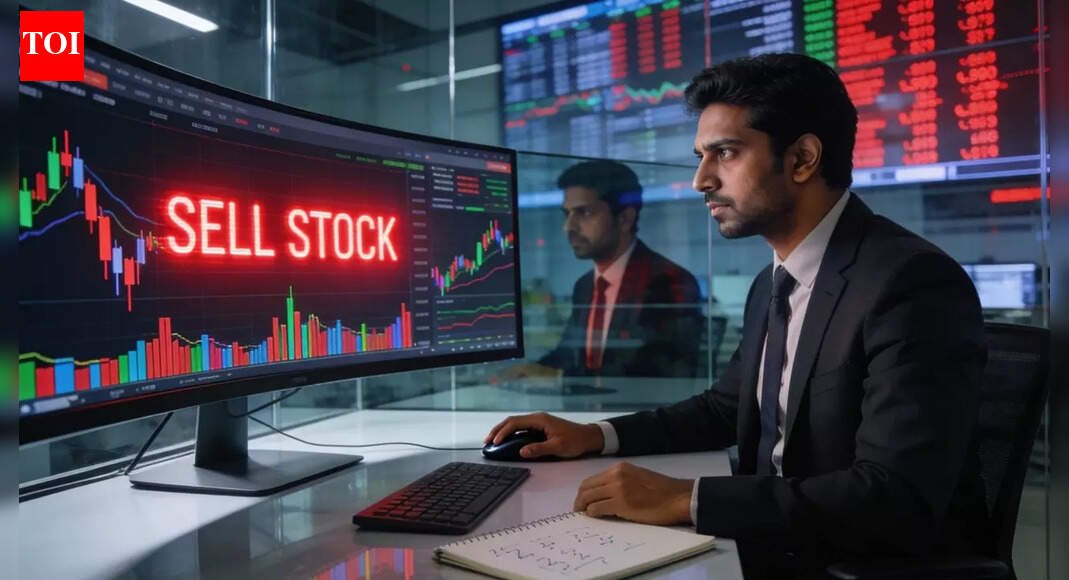
A useful way to think about selling is to go back to your original reason for buying. (AI image)

Selling is much harder than buying. Buying feels optimistic: you’re starting something new. Selling feels like admitting you were wrong, or that a journey has ended. Because it is emotionally uncomfortable, many investors either sell for the wrong reasons or refuse to sell when they actually should.The first thing we remind ourselves is that a falling price is not, by itself, a reason to sell. The market’s mood swings are not the same as a business’s reality. We’ve seen investors panic out of excellent companies simply because the stock dropped 20-30 per cent in a correction, only to watch it recover and then move far beyond their exit price. Just as often, we’ve seen people hold on to clearly deteriorating businesses because they can’t bear the thought of booking a loss.A useful way to think about selling is to go back to your original reason for buying. When you bought the stock, you hopefully had some idea of what you were paying for: maybe a certain pace of growth, a strong balance sheet, a competitive advantage, or a change in management that you believed would improve things. When the time to sell comes, the real question is: has that original thesis broken down?Consider a stock like Bajaj Finance. Let’s say you bought it around mid 2018 at Rs 275, because you believed the company could grow earnings at more than 20 per cent a year, maintain healthy margins, and keep asset quality clean. Two years later, the stock has fallen from Rs 275 to Rs 185, a drop of more than 30 per cent. On the surface, it looks like a disaster. But when you check the numbers, you see that earnings have indeed grown close to 45 per cent, margins are intact, and the balance sheet is still clean. The fall is largely because the market is in the middle of a broad correction.Now imagine a second stock, Vodafone Idea, which you bought at Rs 65 in mid 2016. Its price has fallen to around Rs 35 two years later. But in this case, the debt has started to get out of hand, margins have collapsed, and management does not have a clear plan to fix things. Here, the problem is not just the market’s mood. The business itself is changing for the worse.In the first case, a fall in price might be a reason to hold or even add, provided the valuation is now more attractive. In the second, it might be a reason to sell even if you have to accept a loss. The key difference is whether your original reason for owning the stock is still true.When we think about exits at Value Research Stock Advisor, we don’t act just because something is volatile. We look for structural changes: a sustained break in earnings power, a clear deterioration in balance sheet quality, serious governance concerns, or a valuation that has become so stretched that future returns are likely to be poor even if the business does reasonably well. Some of our best decisions have been to sit through ugly price corrections because the business story was intact. Some of our most important decisions have been to exit stocks that looked “cheap” in recent price history but where the underlying engine was misfiring.Another reason to sell, which investors often underestimate, is opportunity cost. Your capital is limited. If you find a new idea that is clearly better than something you already own – better business quality, better growth prospects, cleaner balance sheet, more attractive valuation – it can be rational to sell the weaker one and redeploy, even if nothing terrible has happened to it. What matters is whether your portfolio as a whole becomes stronger and more aligned with your long-term plan.There is one reason we try hard to ignore, and that is the urge to “get out because it’s gone up too fast” without looking at fundamentals. It is tempting to think, “I bought at Rs 100, it is now at Rs 150, that’s a neat 50 per cent profit, let me lock it in.” But if the business has many years of growth ahead, the valuation is still reasonable, and your allocation is within your comfort range, you might be cutting yourself off from much larger gains later. Some of the biggest wealth creators look permanently “expensive” on past prices. If you sell them just because they have doubled or tripled, without asking whether they are still good businesses at sensible prices, you may spend the next decade regretting your caution.A good practical habit is to write down, in one short paragraph, why you own each stock. At VRSA, every recommendation is backed by a clearly articulated rationale: what we see in the business, what we expect over time, and what might make us change our mind. You can do a simpler version for yourself. Then, when you feel tempted to sell, reread that note and ask: Has this reason changed? Or am I just reacting to price moves and headlines?Selling will never become effortless. There will always be some doubt, some second-guessing. That’s normal. The goal is not to get every sell decision perfectly right. The goal is to avoid selling good businesses for bad reasons, and to avoid clinging to bad businesses just because you don’t want to accept a loss. If you can tie your decisions to changes in the underlying business rather than the daily ticker, you will make far fewer painful mistakes, and you will give your real winners the time they need to make a difference.(Ashish Menon is a Chartered Accountant and a senior equity analyst in Value Research’s Stock Advisor service.)(Disclaimer: Recommendations and views on the stock market, other asset classes or personal finance management tips given by experts are their own. These opinions do not represent the views of The Times of India)
[ad_2]

Source link

India’s clean energy push: Record 44.5 GW renewable capacity added in 2025, says government; non-fossil capacity at 262.74 GW

[ad_1]

India’s clean energy push: Record 44.5 GW renewable capacity added in 2025, says government; non-fossil capacity at 262.74 GW

India recorded its highest-ever annual renewable energy capacity addition this year, installing 44.5 GW of new capacity till November, nearly doubling the additions seen in the same period last year, according to the Ministry of New and Renewable Energy (MNRE).With this expansion, the country’s renewable energy installed capacity has reached 253.96 GW, while overall non-fossil fuel-based power capacity stood at 262.74 GW as of November. Non-fossil sources now account for 51.55 per cent of India’s total installed electricity capacity of 509.64 GW, helping the country achieve its Paris Agreement target five years ahead of schedule.Solar energy led the growth, with nearly 35 GW added during the year, taking installed solar capacity to 132.85 GW, a rise of over 41 per cent from November 2024. Wind energy capacity also increased by 5.82 GW, lifting total wind installations to 53.99 GW.India crossed the 250 GW non-fossil capacity milestone in August 2025 and achieved its highest-ever renewable share in electricity generation on July 29, when renewables met 51.5 per cent of total power demand on a single day.Globally, India ranks third in solar power capacity and fourth in both wind power and total renewable energy capacity, according to the latest International Renewable Energy Agency statistics.The MNRE said the expansion aligns with India’s commitment to achieve 500 GW of non-fossil energy capacity by 2030. Several flagship schemes, including PM Surya Ghar: Muft Bijli Yojana and PM-KUSUM, also saw significant progress during the year, alongside major advances under the National Green Hydrogen Mission, according to the government statement.The ministry also highlighted rapid growth in domestic solar manufacturing, policy reforms in wind energy, the launch of India’s geothermal energy policy, and increased international cooperation as key contributors to the country’s clean energy transition.

[ad_2]

Source link

US stocks : S&P 500, Dow, Nasdaq see slight dip in final week of 2025; AI valuation worries linger

[ad_1]

US stocks : S&P 500, Dow, Nasdaq see slight dip in final week of 2025; AI valuation worries linger

US stock markets opened in red Monday, with major indices slipping despite a strong year dominated by tech companies. The S&P 500, Dow Jones, and Nasdaq fell in early trading, in a week that’ll mark the end of 2025.The S&P 500 slipped 0.2 per cent in early trading. With just three sessions remaining in 2025, the benchmark index is up more than 17 per cent for the year and is on course for its eighth consecutive monthly gain. The Dow Jones Industrial Average fell 44 points, or 0.1 per cent, while the Nasdaq composite declined 0.3 per cent. Bond markets saw Treasury yields ease, even as European and Asian equities traded mixed.Despite some recent concerns about whether AI stocks are priced too high and whether funding for large projects will remain strong, the Nasdaq has been the best-performing major index in 2025. This has been driven mainly by strong gains in shares of Nvidia, Google parent Alphabet, and other technology companies.Twenty minutes after markets opened, the numbers showed clear declines. The S&P 500 dropped 0.4 per cent to 6,904.93, though it’s still up more than 14 percent for the year. The Dow Jones fell 0.3 percent to 48,585.06, while the tech-heavy Nasdaq saw the biggest dip, falling 0.6 percent to 23,461.39.“There is some tech profit taking and no information to really drive markets,” said Jack Ablin from Cresset Capital. He suggested that the quiet trading environment might actually help stocks rise in the year’s final days, as quoted by AFP.In company-specific news, athletic wear maker Lululemon saw its stock rise 1.4 percent. This came after news broke that company founder Chip Wilson was pushing to get three new directors appointed to the company’s board through a proxy fight.

[ad_2]

Source link

2025 a year of flip flops in SC, it overturns many orders, including on Aravali, within weeks & months | India News

[ad_1]

2025 a year of flip flops in SC, it overturns many orders, including on Aravali, within weeks & months

NEW DELHI: Supreme Court’s decision on Monday — its last working day of 2025 — to stay its own 40-day-old order on the Aravali controversy was only the latest in a series of flip flops witnessed in the year, during which orders were set aside within months after they were passed — a fact noticed by SC itself, which emphasized in one of its judgments that the trend would cost the court’s credibility.The cases and issues that witnessed judicial reversals include menace of stray dogs, a governor’s power regarding assent to bills forwarded by a state legislature, ban on firecrackers, retrospective environmental clearance, insolvency of Bhushan Steel Ltd, and finally, the Aravali controversy.

Supreme Court Stays Its Order On Aravalli Definition, Environment Minister Welcomes Move

This phenomenon of one bench’s order being overturned by another within a short interval, even when there was no change in circumstances, perhaps indicates that the original orders were passed in a hurry without analysing all relevant issues related to the case. It also reflects the judge-centric approach, rather than principle-centric approach, in deciding a case.In the Bhushan Steel case, SC on May 2 quashed acquisition of bankrupt company Bhushan Power & Steel Ltd (BPSL) by JSW Steel under the Insolvency and Bankruptcy Code (IBC) and ordered liquidation of the debt-laden company. Three months later, the court on July 31 recalled the order. It passed a judgment on Sept 26 upholding the National Company Law Appellate Tribunal’s decision approving the Rs 19,700-crore resolution plan of JSW Steel to takeover BPSLIn the stray dogs case, SC took suo motu cognisance and passed a slew of directions on Aug 11 for catching of strays and putting them in shelter homes in view of rising number of dog bites and death caused by rabies. The case was transferred to another bench within a week and the new bench had on Aug 22 modified the order and directed that strays after being sterilised, vaccinated must be released to their territories under the Animal Birth Control Rules and they should not be confined to shelter homes.A similar thing happened in the Vanashakti petition, when SC on May 16 declared ex post facto (retrospective) environmental clearances illegal under the Environment (Protection) Act but the three judge bench of the court by a 2:1 majority recalled that order in Nov.Expressing concern over benches overturning orders passed by earlier benches, SC mentioned this in a judgment delivered on Nov 26, and said that it was “painfully” observing this growing trend which would “undermine this court’s authority”.In a rare instance of self-introspection on SC’s functioning, a bench of Justices Dipankar Datta and AG Masih had said public confidence in the judiciary would be undermined if cases are reopened and special benches are set up to re-hear a case at the behest of some party aggrieved by the verdict.“In the recent past, we have rather painfully observed a growing trend in this Court (of which we too are an indispensable part) of verdicts pronounced by judges, whether still in office or not and irrespective of the time lapse since pronounced, being overturned by succeeding benches or specially constituted benches at the behest of some party aggrieved by the verdicts prior in point of time,” it had said.“To us, the object of Article 141 of the Constitution seems to be this: the pronouncement of a verdict by a bench on a particular issue of law (arising out of the facts involved) should settle the controversy, being final, and has to be followed by all courts as law declared by the Supreme Court,” the bench had said.It had held that judicial discipline, propriety and comity, which are also inseparable parts of a just and proper decision-making process, demand that a subsequent bench of different combination defers to the view expressed by the earlier bench, unless there is something so grossly erroneous on the face of the record or palpably wrong that it necessitates a re-look in exercise of inherent jurisdiction either by a review petition or through a curative petition.

[ad_2]

Source link

Blackstone-backed Horizon Industrial files Rs 2,600-cr IPO papers with Sebi

[ad_1]

Blackstone-backed Horizon Industrial files Rs 2,600-cr IPO papers with Sebi

NEW DELHI: Horizon Industrial Parks, backed by global private equity firm Blackstone, on Monday filed preliminary papers with markets regulator Sebi to raise Rs 2,600 crore through an initial public offering (IPO). The issue is entirely a fresh offer of equity shares, with no offer for sale (OFS) component. According to the draft red herring prospectus (DRHP), about Rs 2,250 crore from the proceeds will be used to repay borrowings. Blackstone currently holds 89 per cent stake in the company, the draft papers showed. Ahead of the public issue, the company has already raised nearly USD 200 million (around Rs 1,650 crore) in a pre-IPO round, with participation from investors such as 360 ONE, SBI Life Insurance, SBI, Radhakishan Damani, EAAA and DSP Investments. Including the pre-IPO placement, Horizon is targeting a total fund raise of about Rs 4,250 crore (USD 500 million). Horizon Industrial Parks is an industrial and logistics infrastructure developer, owner and operator with a pan-India portfolio of about 60 million square feet spread across 46 assets in 10 cities. Blackstone made its first acquisition in the platform in 2020 and has scaled it to the current size over the past five years. The company operates across fulfilment centres, industrial facilities and in-city logistics assets. Its portfolio is around 95 per cent committed, with more than 100 customers, nearly 60 per cent of which are Fortune 500 companies. JM Financial, IIFL Capital Services, SBI Capital Markets and 360 ONE WAM are the merchant bankers to the issue.

[ad_2]

Source link

‘There is anger’: Kiren Rijiju on Anjel Chakma’s death; demands for ‘Delhi-like’ system for racial attacks | India News

[ad_1]

'There is anger': Kiren Rijiju on Anjel Chakma's death; demands for 'Delhi-like' system for racial attacks

NEW DELHI: Union minister of minority affairs Kiren Rijiju, responding to the death of Tripura student Anjel Chakma, demanded a Delhi-like special unit of police for the Northeast. Calling out the racial attack, Rijiju stated that this should not be a region-specific concern, but is detrimental to the nation.Speaking to PTI, Rijiju appeared visibly bothered and upset by the death of the MBA student in Dehradun. The Union minister said, “The incident that happened in Dehradun, a student from the Northeast died, we are very sad. There is anger as well. It should not just be seen as an incident. Why only Northeast? The whole country should be sad.”

‘Called Chinki, Chinese, Momo’: Tripura Student’s Killing In Dehradun Triggers Protests Across State

He also urged the people to be sensitised to the racial attacks as a society. The minister said, “Why racial attack? If it is so, then all sections of society should think about it.”The Union minister highlighted the actions taken by the Uttarakhand government, and further put forth the demand to form a special unit of police dedicated to the protection of the northeastern people, like the one in Delhi. Rijiju underscored how the once largely normalised racial hate cases against people from the northeast in India significantly declined after the special unit was set up.“Uttarakhand government has taken vigilance, and probably 5 people have also been arrested,” the minister said.“This is not a political issue. There should be protection for the people from the Northeast,” Rijiju said, “When PM Modi swore in as the Prime Minister, 20-40 incidents were normal, but with the Delhi special unit established, the number of incidents decreased.”The minister further expressed that the issue can be tackled if proper awareness is raised.

[ad_2]

Source link

India’s export to Australia grows 8% over 3 years of Ind-Aus ECTA: Piyush Goyal

[ad_1]

India's export to Australia grows 8% over 3 years of Ind-Aus ECTA: Piyush Goyal

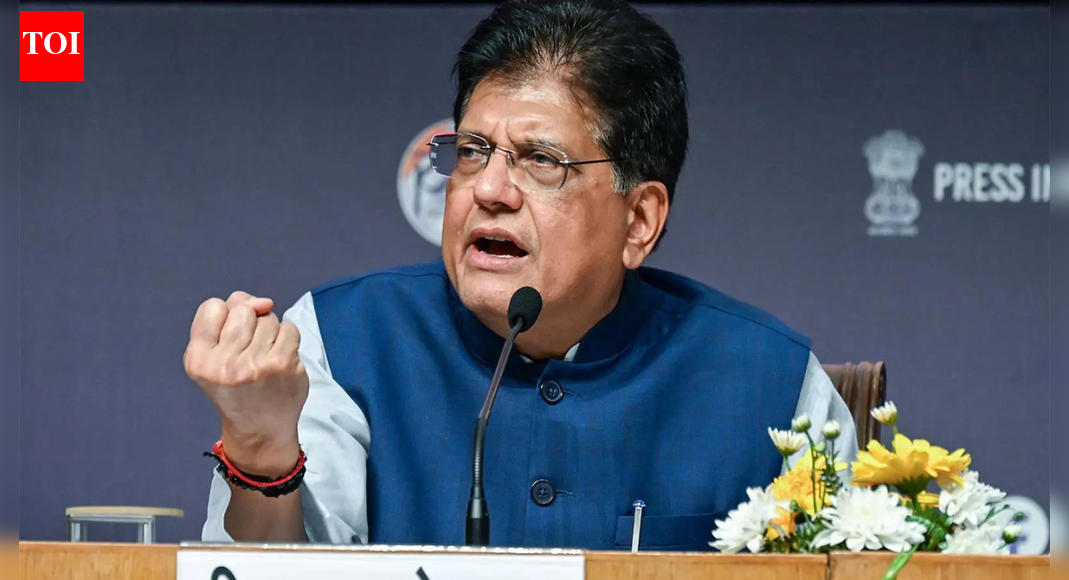
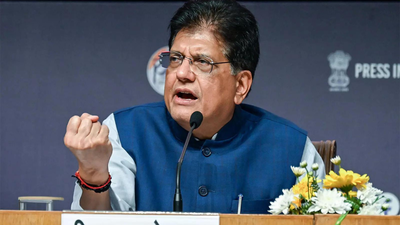
NEW DELHI: India and Australia marked the third anniversary of their Economic Cooperation and Trade Agreement (ECTA), showing a significant rise in trade between the two nations. The trade deal, which started three years ago, led to an 8 per cent growth in Indian exports to Australia during the 2024-25 financial year. This growth helped improve the overall trade balance for India.A major change is also expected to take place from January 1, 2026, as 100 per cent of Australian tariff lines will become zero-duty for Indian exports. This means Indian goods can enter Australia without extra taxes, creating new chances for sectors that employ many workers.Union Minister of Commerce and Industry Piyush Goyal, on Monday, shared the details on X. He stated that the agreement “translated intent into impact” over the last three years. “Over the past three years, the Agreement has delivered sustained export growth, deeper market access, and stronger supply-chain resilience, benefiting Indian exporters, MSMEs, farmers, and workers alike,” he said.Goyal noted that the trade agreement brought strong gains to many different industries. These included manufacturing, chemicals, textiles, plastics, and pharmaceuticals. Petroleum products and the gems and jewellery sector also saw a rise in business. Specifically, exports for gems and jewellery increased by 16 per cent between April and November 2025.Agricultural products from India have also found more buyers in Australia. There was broad growth in the sale of fruits, vegetables, marine products, and spices. Coffee exports showed especially high growth during this period. To make trading easier, both countries signed a Mutual Recognition Arrangement for organic products. This step allows for smoother trade and reduces the costs that exporters have to pay to follow rules.“As Comprehensive Economic Cooperation Agreement (CECA) negotiations advance, Ind-Aus ECTA continues to anchor India’s economic engagement in the Indo-Pacific, aligned with Make in India and the vision of Viksit Bharat 2047. Together, India and Australia are building a future of shared prosperity and trusted trade,” Goyal noted.

[ad_2]

Source link

Gold seen as top commodity of 2026 driven by central bank buying, geopolitics; silver to shine too: Goldman Sachs

[ad_1]

Gold seen as top commodity of 2026 driven by central bank buying, geopolitics; silver to shine too: Goldman Sachs

Gold is set to be the top performer in 2026, driven by strong central bank buying and rising global tensions, according to Goldman Sachs’ latest commodities outlook report. The bank forecasted gold prices to reach $4,900 by December in the new year, with central banks expected to purchase 70 tonnes monthly, which is four times higher than pre-2022 levels, as cited by ANI.The increased central bank demand for gold will be largely influenced by geopolitical concerns, particularly after the freezing of Russia’s reserves in 2022. This factor by itself is predicted to boost prices by 14 percentage points by next December. The bank also sees potential for higher prices from private investors, noting that “gold ETFs account for just 0.17 per cent of US private financial portfolios.”Silver is also expected to give good returns, banking on the overall strength in precious metals. It had strong rally in this year, and the trend is likely to continue as precious metals typically gain when the Federal Reserve cuts rates.Under the base metals heading, copper prices are expected to be stabilized around $11,400 per ton, backed by its recent surge in prices from $10,600 to $11,700. However, according to Goldman Sachs, even with such consolidation, they remain optimistic with regard to copper prices and their applications in AI, power, and defense installations.However, Lead is set to have a more challenging time. The bank expects varying returns across commodities in 2026, with industrial metals facing pressure due to increasing supply. Some of this supply growth is also being driven by Chinese overseas investments in metals crucial to AI and geopolitical competition.The report added that although overall commodity returns may moderate next year, other structural factors will continue to influence geopolitics, energy transition, and supply concentration in markets. Gold remains its top commodity pick, but copper retains longer-term support in otherwise challenging base metals.(Disclaimer: Recommendations and views on the stock market and other asset classes given by experts are their own. These opinions do not represent the views of The Times of India)
[ad_2]

Source link