Breaking News
Brace for fog chaos at airports on Sunday: IndiGo cancels flights; Air India issues travel advisory

[ad_1]

Brace for fog chaos at airports on Sunday: IndiGo cancels flights; Air India issues travel advisory

NEW DELHI: IndiGo has cancelled 13 flights scheduled for Sunday, citing forecasted bad weather across several airports, with two services affected by operational reasons. The cancellations impact routes to and from major cities, including Chandigarh, Mumbai, Ahmedabad, Hyderabad, Amritsar, Bengaluru, Delhi, Gaya, Kolkata, Chennai, Jaipur and Pune.The airlines on Saturday had cancelled 57 flights across their network at several airports, citing weather conditions.IndiGo, which had cancelled thousands of flights earlier this month due to stricter norms on pilots’ duty periods and rest, has continued to cancel some services for more than a week, citing “bad weather” as the reason.Meanwhile, Air India issued a travel advisory citing dense fog and reduced visibility across parts of northern India. The airline said the conditions may disrupt flight schedules on Sunday morning in cities like Chandigarh, Amritsar and Varanasi.“In the event of unexpected delays, diversions, or cancellations, please rest assured that our ground colleagues remain available to assist you.If you are flying with us tomorrow, we recommend checking your flight status here before heading to the airport and allowing extra time for your journey,” the airlines said through a post on X.The aviation regulator DGCA has designated December 10 to February 10 as the official fog window for this winter, requiring airlines to follow special low-visibility operating norms, as cited by PTI. Under the DGCA’s CAT-IIIB guidelines, airlines must roster pilots trained for low-visibility operations and deploy aircraft equipped to operate in such conditions.Category III systems enable aircraft to land in dense fog, with CAT-III A allowing landings at a runway visual range of 200 metres, and CAT-III B permitting operations at under 50 metres.Under its original winter schedule, IndiGo had approval to operate 15,014 domestic flights per week, or about 2,144 flights a day, around six per cent higher than its summer 2025 schedule. However, after widespread disruptions earlier this month, including the cancellation of about 1,600 flights in a single day due to stricter pilot rest norms, the government cut the airline’s domestic capacity by 10 per cent, or 214 flights daily. As a result, IndiGo is currently limited to operating no more than 1,930 domestic flights per day during the winter season.A four-member DGCA panel is probing IndiGo’s recent operational issues and has already questioned the airline’s CEO, Pieter Elbers, and COO, Isidre Porqueras. The panel’s report is expected later this week.The DGCA on Friday evening submitted its report on the circumstances leading to IndiGo’s operational disruptions to the civil aviation ministry, officials said. The report is expected to examine why the airline’s domestic network was severely affected while international operations remained largely unaffected.A ministry spokesperson said the inquiry committee, headed by DGCA Joint Director General Sanjay K. Bramhane, had submitted a confidential report. Aviation minister Ram Mohan Naidu has told Parliament that the government will take “exemplary” action against IndiGo once the probe is concluded.

[ad_2]

Source link

Silver at record highs! Futures price hits Rs 2.42 lakh/kg; driven by global supply chain hit fears and Fed rate-cut hopes

[ad_1]

Silver at record highs! Futures price hits Rs 2.42 lakh/kg; driven by global supply chain hit fears and Fed rate-cut hopes

Silver prices surged over 15 per cent last week to reach Rs 2.42 lakh per kg in the nation’s futures market. This rally was driven by strong industrial demand, expected US interest rate cuts in 2026, and concerns about supply disruptions. The price surge was mirrored globally, with silver reaching an all-time high of $79.70 per ounce.On the Multi Commodity Exchange (MCX), silver futures for March 2026 delivery jumped by Rs 18,210 in a single day. The white metal has shown incredible growth this year, rising by nearly 175% from its December 2024 levels.“Silver is no longer trading merely as a precious metal like gold. Its indispensable role in high-performance technology, combined with shrinking above-ground stocks and non-negotiable industrial demand, is reshaping its fundamentals,” said Rahul Kalantri, VP, Commodities, Mehta Equities, as quoted by PTI.The surge is largely attributed to China’s new export restrictions on silver, set to begin January 1, according to commodities experts. As the world’s largest consumer of silver for solar panels, electronics, and electric vehicles, China’s policy change is expected to hit global supply chains.Jigar Trivedi, senior research analyst at Reliance Securities, predicted that Comex silver prices could reach $100 per ounce next year, based on growing industrial demand outpacing supply.The precious metal has shown consistent growth in global markets too. Silver prices increased by $47.95, or 164 per cent, from $29.24 per ounce recorded at the end of 2024. Other factors that contributed to silver’s remarkable performance are strong industrial consumption, steady ETF inflows, and increased investment interest.

[ad_2]

Source link

Meet Jayshree Ullal: Indian-origin billionaire at the top of Hurun’s rich list

[ad_1]

Meet Jayshree Ullal: Indian-origin billionaire at the top of Hurun's rich list

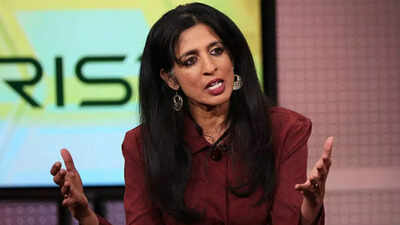
In its latest rich list for the year 2025, Hurun India awarded Indian-origin billionaire Jayshree Ullal, the Chief Executive Officer (CEO) and President of Arista Networks. With this achievement, she has successfully surpassed popular Indian-origin tech leaders such as Google’s Sundar Pichai and Microsoft’s Satya Nadella in the list of wealthiest executives in the tech sector. Here’s all you need to know about her.

Who is Jayshree Ullal?

Jayshree Ullal is an Indian-origin British-born billionaire who has been heading Arista Networks, a software services firm for the past 17 years.Earlier this year, the 63-year-old was ranked second among the top five first-generation women wealth creators, in the Candere Hurun Indian Women Leaders List 2025. As per her LinkedIn, she did her schooling at the Convent of Jesus & Mary in New Delhi. Then, she completed her bachelor’s in Science, Electrical and Electronics Engineering from San Francisco State University and did her Master of Science, Engineering Management from Santa Clara University in 1986. Recently, she also received an Honorary Doctorate in Engineering in 2025. Based out of Santa Clara, California, Ullal runs the cloud networking company which designs and sells multiple software products. She joined Arista Networks in 2008 and before that, worked in Cisco Systems, AMD (Advanced Micro Devices) and Fairchild Semiconductor.

Jayshree Ullal’s net worth

As per Forbes, her net worth is $5.7 billion and the revenue of her company in 2024 was $7 billion. Currently, she ranks as the 713th richest person in the world. Her net worth has recorded a rise of $34 million since 2020, with the boom in the AI and software services sector. While other Indian-origin leaders like Microsoft CEO Satya Nadella and Google CEO Sundar Pichai have been witnessing dips in their net worths recently, Ullal’s finance experiences a steady raise, establishing her as an exemplary leader in a male-dominated industry.

[ad_2]

Source link

Zepto files confidential IPO papers for Rs 11,000 crore IPO

[ad_1]

Zepto files confidential IPO papers for Rs 11,000 crore IPO

MUMBAI: Zepto has filed draft IPO papers seeking to raise up to Rs 11,000 crore (around $1.2 billion) with markets regulator Securities and Exchange Board of India (SEBI) through the confidential route, people aware of the matter said.The bulk of the IPO, it is understood, will be a fresh issue of shares. A clutch of the startup’s early investors will also be selling some stakes. Zepto declined to comment. The General Catalyst and Lightspeed backed startup, founded in 2021 by college dropouts Aadit Palicha and Kaivalya Vohra rivals Eternal’s Blinkit and Swiggy’s Instamart in the quick commerce market that analysts at Morgan Stanley said could grow to $57 billion by 2030. Zepto and Instamart trail Blinkit by a wide margin which leads the space with a near 50% share. The 10-minute delivery market in India has expanded beyond groceries to cover a host of categories including jewellery, small appliances, toys, electronics accessories and occasionally even iPhones on the back of rapid adoption by consumers, many of whom got used to online shopping during the pandemic. In October, loss-making Zepto closed a fresh $450 million in pre-IPO funding round led by US pension fund Calpers at a valuation of $7 billion, about 40% higher than its last valuation of $5 billion. Mumbai born Zepto, now based in Bengaluru, has raised about $2 billion in funding in all. The company had turned unicorn in August 2023 after investors infused over $200 million into the firm at a valuation of $1.4 billion. Zepto joins a clutch of companies including PhonePe, Flipkart and Oyo which are targeting a public listing next year. India’s booming IPO market has allowed startups to get listed and give exit to investors. Lenskart, Meesho, Urban Company, Pine Labs, Physicswallah and Groww are among big players that debuted on the exchanges this year.

[ad_2]

Source link

Wall Street outlook for year-end: US stocks eye strong close amid 2025’s record highs; focus shifts beyond big tech

[ad_1]

Wall Street outlook for year-end: US stocks eye strong close amid 2025's record highs; focus shifts beyond big tech

The US Wall Street is hoping to mark a strong finish for the year, amid recent highs. The S&P 500 ended at a record high on Wednesday, ahead of the Christmas holiday , being just around 1 per cent short of the 7,000 mark for the first time.The S&P 500 is on track for its eighth straight month of gains, a trend not seen since 2017-2018. The benchmark index has grown nearly 18 per cent this year, while the tech-heavy Nasdaq is up 22 per cent.Investors remain optimistic, with the US stock market showing signs of continued growth despite earlier concerns over technology sector weakness, according to a Reuters report.“Momentum is certainly on the side of the bulls,” said Paul Nolte, senior wealth adviser at Murphy & Sylvest Wealth Management, as quoted by Reuters. “Barring any exogenous event, the path of least resistance for stocks, I think, is higher,” he added.The Federal Reserve’s recent actions are keeping investors on edge. The Fed cut rates by 75 basis points over its last three meetings of 2025, bringing them to 3.50 per cent-3.75 per cent. Markets are eagerly awaiting the minutes from the December meeting, due next Tuesday.Additionally, an interesting shift is happening in the market. While tech stocks have struggled lately, dropping over 3 per cent since November, other sectors are doing well. Key sectors to mark significant gains include- Finance, transport, healthcare, and small-cap stocks.Anthony Saglimbene from Ameriprise Financial sees this as a positive sign, saying, “There are more investors that are buying in to the narrative that the economy is on pretty solid footing right now,” he explained. “And it has weathered a lot of potential roadblocks this year that might not be such roadblocks next year,” he added.Investors are also watching for President Donald Trump’s nomination for the next Fed chair, as Jerome Powell’s term ends in May 2026. This decision could impact market movements in the coming week.

[ad_2]

Source link

Skywatching in 2026: Complete guide to eclipses, supermoons, meteor showers, planetary alignments and NASA’s Artemis II lunar mission |

[ad_1]

Skywatching in 2026: Complete guide to eclipses, supermoons, meteor showers, planetary alignments and NASA’s Artemis II lunar mission

Whether it be with naked-eye viewing, through a pair of binoculars, or with a beginner’s telescope, a certain amount of planning can make way for viewing enthusiasts to fully enjoy the spectacular events that take place in the sky in 2026. Be it eclipses, aligned planets, or an eight-year supermoon, there are plenty of spectacular sky events in 2026 for enthusiasts to enjoy. Sky viewing in 2026 has plenty on offer for anyone, be it a beginner sky watcher or an enthusiast with a deep love for astronomy. Events such as a lunar eclipse, a solar eclipse, a list of sky showers, aligned planets, and an Artemis Mission to orbit around the Moon by NASA make it a perfect year to experience the beauty of sky viewing with friends and family.

List of celestial events in 2026

Date
Event type
Description
Visibility / Notes
3 Jan 2026 Full Moon / Supermoon Wolf Moon appears larger and brighter due to its proximity to Earth Global
10 Jan 2026 Planetary Opposition Jupiter is at its brightest point for 13 months Visible worldwide
17 Feb 2026 Annular Solar Eclipse “Ring of fire” effect as the Moon covers the Sun Total in Antarctica; partial in southern Africa and S. America
3 Mar 2026 Total Lunar Eclipse Worm moon turns deep red during 58-minute totality Western North America, East Asia, Australia, New Zealand
20 Mar 2026 Auroras / Equinox Potential vivid green & red northern lights Mid-latitudes
31 May 2026 Blue Moon The second full moon of the month Global
12–13 Aug 2026 Total Solar Eclipse + Perseid Meteor Shower Total solar eclipse in Greenland, Iceland, Spain + meteor shower peak Best in dark-sky locations
28 Aug 2026 Deep Partial Lunar Eclipse Over 96% of Moon immersed in Earth’s shadow, rust-coloured Americas, Europe, Africa
14–16 Nov 2026 Planetary Conjunction Mars and Jupiter within 1° of each other Global; best with binoculars
24 Dec 2026 Supermoon Closest full moon since 2019, unusually large and luminous Global
5 Feb 2026 NASA Artemis II Mission 10-day crewed mission around Moon Space / media coverage

Key celestial events in 2026

  • January highlights: Supermoon and Jupiter opposition

The year opens with a supermoon at the wolf moon on 3 January. This moon will appear slightly larger and brighter in the sky due to its close approach to Earth. The opposition of Jupiter will be observed on 10 January. It will appear at its brightest in 13 months.

  • February and March: Eclipses and Auroras

17 February: There is an annular solar eclipse, which presents the “ring of fire” that can be seen in totality only in Antarctica, with partial eclipses in southern Africa and South America.3 March: A total lunar eclipse makes the worm moon appear deep red for 58 minutes in western North America, East Asia, Australia, and New Zealand. It is the last total lunar eclipse before 2028.20 March: During the spring equinox, observers at mid-latitudes may see vivid displays of the aurora, due to the interaction of charged solar particles with the Earth’s magnetic field.On 31st May, the second full moon in the month, a blue moon rises. While the colour has not changed, the moon rise is a treat to watch.

  • August: Total Solar Eclipse and Perseid Meteor Shower

The year’s biggest event is on 12-13 August. A total solar eclipse moves across Greenland, Iceland, and Spain. Later that night comes the Perseid meteor shower. Dark-sky enthusiasts find this an ideal time for ‘star streaks.’

  • Late August and November: Lunar and planetary events

28 August: A deep partial eclipse plunges more than 96% of the Moon into the Earth’s shadow, making it appear rust red to observers in the Americas, Europe, and Africa.14-16 November: Mars and Jupiter come close to each other within a degree so that both can be viewed in the same field of a pair of binoculars.The year will conclude with a supermoon on 24 December, which will be the closest full moon occurring since 2019.Apart from natural occurrences, NASA’s Artemis II will see four astronauts go on a lunar orbital mission on February 5, comprising a 10-day journey around the lunar body on the Orion spacecraft, with a distance of over 5,800 miles past the lunar surface. This will be the farthest trip for human beings from Earth.

[ad_2]

Source link

India must allow insolvency and bankruptcy to build dynamic, risk-taking economy: PM’s Economic Advisory Council member Sanjeev Sanyal

[ad_1]

India must allow insolvency and bankruptcy to build dynamic, risk-taking economy: PM's Economic Advisory Council member Sanjeev Sanyal
India must allow insolvency and bankruptcy to build dynamic, risk-taking economy: PM’s Economic Advisory Council member Sanjeev Sanyal

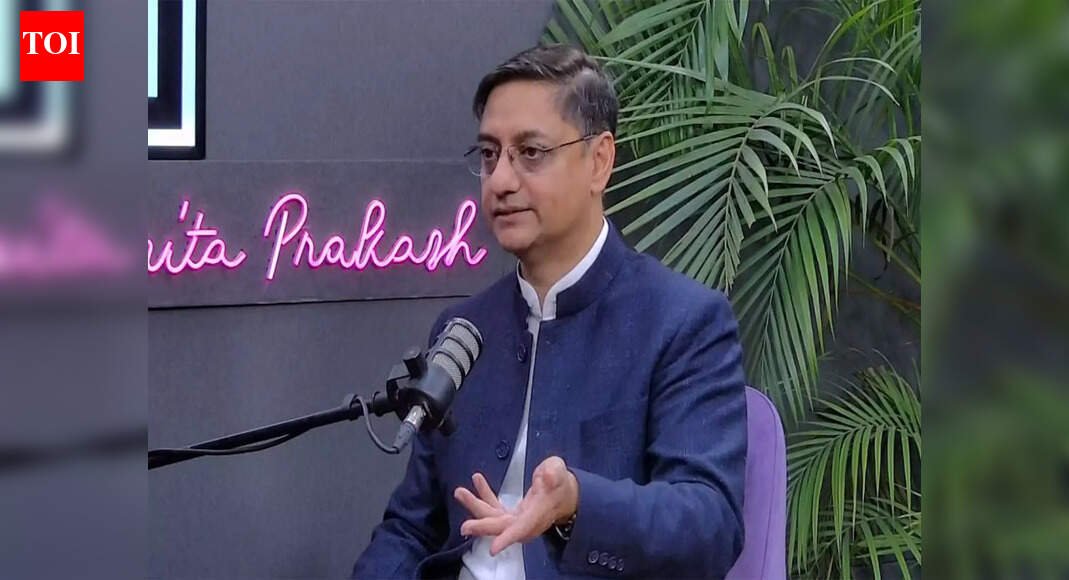
NEW DELHI: India needs to be comfortable with people and companies going bankrupt, as continuous insolvency and bankruptcy are essential for building a risk-taking and dynamic economy, said Economic Advisory Council to the Prime Minister (EAC-PM) member Sanjeev Sanyal.In an interview with ANI, Sanyal said a healthy economic system must allow for “continuous churn”, where old companies shut down, and new ones emerge to take their place. He stressed that constant change is necessary for long-term economic strength.Sanyal said allowing large companies to fail is sometimes unavoidable. Referring to 2017, he recalled that Indian banks were under severe stress, following which the government allowed some of the country’s biggest companies to go bankrupt.“This did not make the corporate sector weaker. In fact, it came back much stronger after the cleanup,” he told ANI.Using the airline sector as an example, Sanyal said the closure of Jet Airways created space for other airlines to expand. He added that companies that fail to follow rules or meet standards should be allowed to shut down.“We should allow continuous churn,” he said.In his interview with ANI, Sanyal also said that success should not be viewed negatively and that people should not resent companies that perform well.However, he added that regulators must intervene if large companies misuse their power or distort competition.The discussion also touched on welfare policies. Sanyal said he is “very, very uncomfortable with freebies” but supports the idea of a safety net for people who take risks.He said a risk-taking culture exists at every level of society, from a billionaire starting a large business to a person opening a small kirana shop. Since risks can fail, a safety net is necessary to support those who “fall off at the edges.Sanyal highlighted the growing strength of India’s financial markets, saying Mumbai has now become a more important centre for raising capital than London or Singapore. He said innovation is driven mainly by risk-taking capital such as equity and venture funding.He expressed hope that over the next 25 years, the top 20 companies in India’s stock market will be completely different from those today.Comparing global trends, Sanyal said countries like the United States and China remain strong because their leading companies change frequently. In contrast, he said Europe’s largest companies have remained largely unchanged for nearly 30 years, which he described as “stagnation”.Sanyal added that bankruptcy “should not be held as a moral failure” but should be seen as a natural part of a society willing to take risks and grow.

[ad_2]

Source link

‘This is not good’, says Elon Musk as silver prices soar ahead of China’s new export rules

[ad_1]

‘This is not good’, says Elon Musk as silver prices soar ahead of China’s new export rules

Tesla CEO Elon Musk has expressed his concerns over rising silver prices as China’s new export rules deadlines nears. In a post on microblogging platform X (formerly Twitter), Musk wrote “This is not good. Silver is needed in many industrial processes.” He was responding to a post that depicted ‘exploding’ silver prices due to “severe global supply shortage.” Prices of the white metal have increased sharply in recent times to a record high of $78.65 on Friday, December 26. A post by X user named ‘Bull Theory’ tried explaining the soaring prices. The post said:“Silver prices are exploding due to a severe global supply shortage. The physical market can no longer meet soaring demand. Here is what is actually going on 1. China is changing the rules.Starting January 1, 2026, China will restrict silver exports.To export silver, companies will now need government licenses.Only large, state approved firms qualify:– At least 80 tonnes of annual production– Around $30 million in credit linesThis effectively blocks small and mid size exporters. China controls roughly 60–70% of global silver supply. When China tightens exports, global supply drops immediately. This is the same tactics China used with rare earth metals. 2. The silver market was already short supply.Silver has been in a structural deficit for 5 straight years. That means demand is higher than supply every single year.For 2025:– Global demand: 1.24 billion ounces– Global supply: 1.01 billion ouncesThat is a gap of 100–250 million ounces. And this gap is expected to get worse after China’s export limits.Mining supply is not growing:Silver mining is mostly a by product of copper and zinc mining.New mines take 10+ years to build, Ore quality is falling, Recycling is not enough to fill the gap.There is no quick fix here.3. Physical silver inventories are collapsing.This is where it gets serious.– COMEX inventories are down 70% since 2020– London vaults are down 40%– Shanghai inventories are at 10-year lowsAt current demand, some regions hold only 30-45 days of usable silver.This is why physical premiums are exploding.In Shanghai:– Physical silver trades at $80+/oz– COMEX prices are much lowerThis price gap means buyers are paying extra just to get real silver.4. Paper silver is completely disconnected from reality.There is an extreme imbalance between paper silver and real silver.The paper to physical ratio is around 356:1.That means:– For every 1 ounce of real silver– There are hundreds of paper claimsIf even a small percentage of buyers ask for real delivery, the system breaks.Markets understand this. That is why price moves are becoming vertical.5. Industrial demand keeps rising.Silver is not just a safe haven metal.It is critical for:– Solar panels– Electric vehicles– Electronics– Medical devicesIndustrial use now makes up 50-60% of total silver demand.There is no substitute for silver in many of these uses.Banks and institutions are reacting to:– Supply limits– Physical shortages– Paper market riskSilver is not rallying because of fear.It is rallying because a real supply squeeze is playing out in real time.”

Elon Musk Can ‘CRY’, But He Will Still Pay $140,000,000 X Fine: EU Adamant After Hitler Attack

China’s new Silver export rules from January 1, 2026

Starting January 1, 2026, China will require companies exporting Silver to obtain licenses from its Ministry of Commerce (Mofcom). The move, according to experts, could further disrupt the global supply chain.

[ad_2]

Source link

700 kmph in 2 seconds: China sets world record with high-speed maglev train – watch video

[ad_1]

700 kmph in 2 seconds: China sets world record with high-speed maglev train - watch video

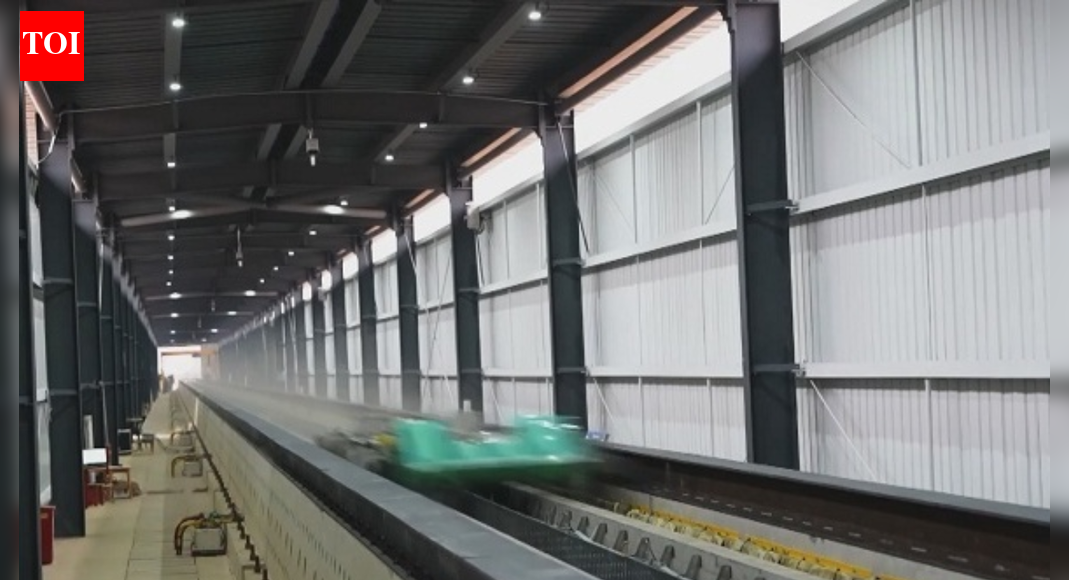
Maglev train tested in China (Image taken from X)

Chinese scientists have achieved a milestone in magnetic levitation technology. Researchers at China’s National University of Defence Technology successfully propelled a one-tonne vehicle to 700 kilometers per hour in just two seconds on a 400-meter test track, setting a new world record for superconducting electric maglev systems.The test, shown in footage making rounds on social media and Chinese news outlets, displayed a chassis-like vehicle zooming across the track leaving a misty trail. This demonstrates significant progress in both extreme acceleration capabilities and high-power control systems.“It resolves core technical challenges including ultra-high-speed electromagnetic propulsion, electric suspension guidance, transient high-power energy storage inversion, and high-field superconducting magnets,” CCTV stated, as reported by South China Morning Post (SCMP).

China Sets New Record in Superconducting Maglev Propulsion

. This breakthrough could revolutionise various transportation methods, from hyperloop systems to aerospace launches.The same team had previously reached 648 km/h on the same track in January. Their decade-long research puts China at the forefront of global maglev technology, marking significant progress since developing their first manned maglev train thirty years ago.Professor Li Jie, who led Beijing’s first commercial maglev subway line, believes this success will speed up China’s ultra-high-speed maglev transport development.In 2020, CRRC Qingdao Sifang had tested a 600km/h prototype. In the meantime, Southwest Jiaotong University developed a high-temperature superconducting maglev system in Chengdu targeting speeds over 600km/h.The latest development includes a collaboration between the Third Research Academy of China Aerospace Science and Industry Corporation and North University of China. The built a 2-kilometer experimental line in Datong for testing maglev trains in low-vacuum pipelines, with an aim for eventual speeds of 1,000 km/h.This technology has the potential to transform city-to-city travel through vacuum-sealed tubes and potentially revolutionise rocket launches by reducing fuel consumption during takeoff. It also offers new possibilities for testing high-speed flight equipment through ground-based simulations.

[ad_2]

Source link