Breaking News
ITR filing: Why are taxpayers getting messages from Income Tax Department on claims? Key FAQs before Dec 31 deadline

[ad_1]

ITR filing: Why are taxpayers getting messages from Income Tax Department on claims? Key FAQs before Dec 31 deadline
Representative image (AI-generated)

The Income Tax Department on Tuesday issued a press release clarifying why several taxpayers have received emails and SMS alerts seeking a review of their tax deduction and exemption claims.The department urged taxpayers to review their deduction and exemption claims for the current assessment year and take corrective steps before the revised deadline of December 31 to avoid penalties or further scrutiny.

Why are taxpayers getting intimations?

According to the release, advanced risk analytics under its risk management framework have flagged certain Income Tax Returns (ITRs) for Assessment Year 2025-26.These include cases where deductions or exemptions appear to be ineligible, such as claims related to bogus donations to Registered Unrecognised Political Parties (RUPPs).The department also observed errors in some returns, including incorrect or invalid PAN details of donees and discrepancies in the amount of deductions or exemptions claimed.Taxpayers are being contacted via SMS and email under the department’s NUDGE (Non-intrusive Usage of Data to Guide and Enable) campaign. They are advised to review their returns and file revised ITRs, if required, by December 31, to avoid further enquiries.

What is the department asking taxpayers to do?

The Income Tax Department said the initiative reflects a “trust-first” approach, which gives taxpayers an opportunity to voluntarily correct mistakes instead of facing immediate enforcement action.Taxpayers are advised to verify their deduction and exemption claims using supporting documents and reconcile details with Form 16, Form 26AS, the Annual Information Statement (AIS) and the Taxpayer Information Summary (TIS). If errors are found, they should revise their returns within the prescribed timeline.Those whose claims are genuine and legally correct do not need to take any further action, the department clarified.The department added that taxpayers who miss the December 31 deadline may still file an updated return from January 1, 2026, as permitted under the law, though this would involve payment of additional tax.During FY 2025-26, more than 21 lakh taxpayers have already updated their ITRs for assessment years ranging from 2021-22 to 2024-25, paying over Rs 2,500 crore in taxes. For the current assessment year (AY 2025-26), over 15 lakh returns have already been revised.

Why are refunds being delayed for some?

Several salaried taxpayers, particularly those under the old tax regime, have reported receiving intimations stating that their refund processing has been temporarily put on hold due to discrepancies in deduction claims.Tax experts say many such cases involve deductions like Sections 80C, 80D or HRA that were claimed directly in the ITR but were not declared to employers during TDS calculations.Chartered accountants have clarified that this does not automatically make a taxpayer non-compliant, as the Income Tax Act allows eligible deductions to be claimed directly while filing returns, even if they were not considered by the employer.

What happens if the intimation is ignored

Experts warn that ignoring such communications can have consequences. If discrepancies are not addressed, the department may disallow the deductions, leading to additional tax demand, interest, penalties, delay or cancellation of refunds and even detailed scrutiny or assessment.Tax professionals advise taxpayers not to panic but to promptly review their returns and respond appropriately to avoid future complications.

[ad_2]

Source link
HCCB, Coca-Cola India’s bottling arm, to lay off 300 employees; move to streamline operations

[ad_1]

HCCB, Coca-Cola India’s bottling arm, to lay off 300 employees; move to streamline operations

Hindustan Coca-Cola Beverages (HCCB), the bottling arm of Coca-Cola India, is set to lay off around 300 staffers as part of a plan to improve profitability and streamline operations.The company has approximately 5,000 employees and 15 manufacturing units, bottles and distributes brands such as Coca-Cola, Thums Up, Sprite, Minute Maid juices and Kinley water.A company spokesperson told ET, “Staying in sync with evolving business needs requires us to re-evaluate capabilities, structures, and take corrective actions where necessary.” Terming the downsizing as “minor in scale and non-disruptive to operations,” the spokesperson added, “We periodically assess business operations to stay competitive, efficient and agile.”

Biggest Tech Layoffs of 2025: Job Cuts at TCS, Intel, Microsoft, Google and more

The reduction affects roughly 4–6% of HCCB’s workforce across functions including sales, supply chain, distribution and bottling operations at its plants, as reported by the financial daily.Hemant Rupani, formerly with Mondelez International, recently took over as HCCB’s chief executive officer, succeeding Juan Pablo Rodriguez.HCCB reported a sharp 73% decline in net profit to Rs 756.64 crore in FY25, with revenue from operations falling 9% to Rs 12,751.29 crore, according to regulatory filings.The company attributed the decline partly to the higher base in FY24, when it sold bottling operations in Rajasthan, Bihar, the north-east and parts of West Bengal.These operations were transferred to three of its largest bottlers – Moon Beverages, Kandhari Global Beverages and SLMG Beverages.Under this model, Coca-Cola sells concentrate to its bottlers, who then produce and distribute the beverages.HCCB remains India’s largest beverage company with a leadership position in the soft drinks segment. Muted demand due to unseasonal and heavy rains between March and September also affected sales. April to June is usually the peak quarter in India’s nearly Rs 60,000-crore soft drinks market.

[ad_2]

Source link

‘Groped, slapped, stalked’: Bengaluru man assaults woman after she rejects his proposal; CCTV captures attack | Bengaluru News

[ad_1]

‘Groped, slapped, stalked’: Bengaluru man assaults woman after she rejects his proposal; CCTV captures attack

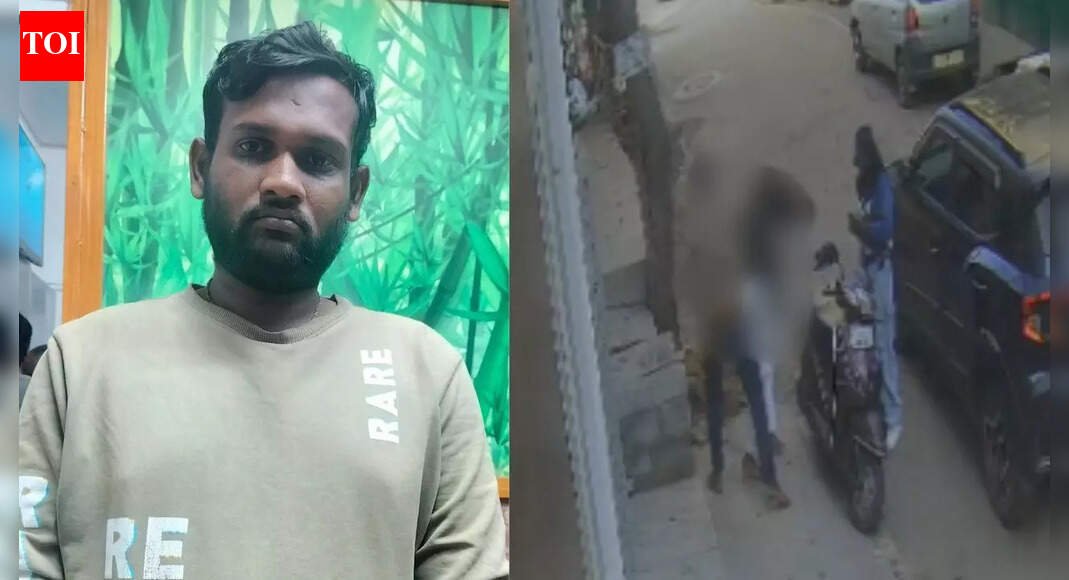
BENGALURU: A 21-year-old woman residing at a paying guest (PG) accommodation in Jnanajyothinagar on Ullal Main Road was allegedly stalked and assaulted by a man she befriended on Instagram on Monday afternoon (December 22). Following a complaint filed by the victim, the Jnanabharathi police swung into action and arrested the accused, identified as Naveen Kumar N (29), a resident of Billamaranahalli near Yelahanka. The victim, Archana (name changed), a native of Shringeri in Chikkamagaluru district, had moved to Bengaluru nearly two years ago and was working as a tele-caller at a developer’s firm. According to her complaint filed with the Jnanabharathi police, the incident occurred between 3.20 pm and 3.40 pm. She stated that on September 30, while working as a tele-caller, she had posted an advertisement related to her firm on Instagram. Naveen Kumar saw the post and responded to it. After a few days of chatting on Instagram, they exchanged phone numbers. Thereafter, Naveen allegedly began contacting her frequently through calls and messages and later started meeting her often in Nagarabhavi. For the first three months, his behaviour was cordial. However, the woman alleged that he later began forcing her to accept his proposal of love, despite her repeatedly telling him that she was not interested. She further alleged that Naveen continued to harass and follow her whenever she stepped out of her PG or workplace, refusing to leave her alone and tracking her movements wherever she went. Unable to bear the harassment, the woman quit her job at the developer’s firm and shifted to a PG. Despite this, the accused allegedly continued to follow her to the PG premises. She alleged that he verbally abused her and physically assaulted her on several occasions. On December 22, around 3.20 pm, when she stepped out of the PG along with her friend on a scooter, Naveen allegedly intercepted them in a car and assaulted her by hitting her on the head, back, and neck. She also accused him of attempting to tear her clothes during the attack. The victim immediately alerted the police by calling the emergency helpline 112. However, by the time police personnel reached the spot, the accused had fled. Based on her complaint, the police registered a case under Sections 74 (assault or use of criminal force to a woman with intent to outrage her modesty), 75 (sexual harassment), 76 (assault or use of criminal force to a woman with intent to disrobe), 78 (stalking), 79 (word, gesture, or act intended to insult the modesty of a woman), and 351 (criminal intimidation) of the Bharatiya Nyaya Sanhita. The police arrested Naveen Kumar soon after. During interrogation, he claimed that after getting acquainted through Instagram, they fell in love and later developed disputes. He stated that Archana blocked his mobile number and social media accounts, which left him frustrated. He allegedly went near her PG to talk to her, and when she refused, he assaulted her in anger, a senior police officer said. Deputy commissioner of Police (South-West) Anitha B. Haddannavar said the accused was arrested within 24 hours of the case being registered and that further investigation is under way.

[ad_2]

Source link

Pakistan economy in doldrums: Inflow of foreign loans rises in first 5 months; borrowing up from last year

[ad_1]

Pakistan economy in doldrums: Inflow of foreign loans rises in first 5 months; borrowing up from last year
Representative image (AI-generated)

Pakistan saw a 14% rise in foreign loans and grants during the first five months of the current fiscal year (July–November 2025), reaching $3.032 billion compared to $2.667 billion in the same period last year.Of the total inflows, foreign loans rose 46.2% to $2.521 billion, while grants fell by 43% to $54 million. In November alone, inflows amounted to $511 million, slightly higher than October’s $471 million but 46% lower than November 2024.Earlier this month, the International Monetary Fund (IMF) approved a $1.2 billion disbursement. The current inflow figures do not yet include this latest IMF release, as reported by Dawn.The government has set a target of $19.9 billion in total foreign inflows for the current fiscal year, slightly higher than last year’s $19.4 billion.The Ministry of Economic Affairs reported that of the $3.032 billion inflows, $1.157 billion was for project financing, while $1.875 billion comprised non-project inflows. Loans for budget support stood at $966 million, against an annual target of $13.5 billion. Additionally, Pakistan mobilised $500 million under the Saudi Oil facility at a planned rate of $100 million per month.

Reliance on bilateral and multilateral lenders

Inflows from bilateral and multilateral lenders totalled $2.066 billion in the first five months, compared to $1.73 billion in the same period last year, according to Dawn.Pakistan received $1.258 billion from multilateral lenders and $808 million from other bilateral lenders. Remittances from overseas Pakistanis also rose to $966 million, exceeding the annual target of $609 million.The IMF’s support comes amid Pakistan’s heavy reliance on external financing. The country narrowly avoided default in 2023 and is now among the Fund’s largest borrowers after Argentina and Ukraine.

Current IMF disbursement and support

Earlier this month, the IMF approved a $1.2 billion disbursement under Pakistan’s ongoing Extended Fund Facility and Resilience and Sustainability Facility programmes.This latest move lifts Pakistan’s total inflows from the IMF to roughly $3.3 billion and will be reflected in official accounts in the coming weeks.IMF officials have highlighted that Pakistan’s policy implementation has remained broadly consistent with programme goals, even after the recent monsoon floods that killed more than 1,000 people.The Fund observed that fiscal discipline, including maintaining a primary surplus of 1.3% of GDP in FY25, helped preserve macroeconomic stability. Gross reserves reached $14.5 billion at the end of FY25, up from $9.4 billion a year earlier and are expected to expand further in FY26.The Fund also stressed that Pakistan’s ongoing reform measures, including tax policy adjustments, energy sector restructuring and governance improvements, are critical to maintaining financial stability and supporting medium-term growth.

IMF imposes new conditions

As part of ongoing support, the IMF has imposed 11 new conditions on Pakistan, bringing the total to 64 over 18 months. These measures address governance flaws, corruption, tax reforms, the power sector and structural inefficiencies. Key directives include:

  • Publishing asset declarations of high-level federal and provincial officials by December 2026.
  • Developing action plans to tackle corruption in vulnerable departments.
  • Reviewing cross-border remittance costs and barriers by May next year.
  • Introducing reforms in the local currency bond market and the sugar industry.
  • Strengthening the Federal Board of Revenue’s efficiency and implementing tax reform strategies.
  • Preparing private-sector participation frameworks in the power sector and enacting legislative amendments to improve compliance.

[ad_2]

Source link

7 strange ways your body reacts in life or death situations |

[ad_1]

7 strange ways your body reacts in life or death situations

In moments where danger feels real and immediate, the human body behaves very differently from how it does in daily life. Thought often drops into the background. Instinct steps forward. People who have lived through accidents, violent encounters, natural disasters, or sudden medical emergencies often say the same thing later. They were not thinking. They were reacting. Some felt oddly calm. Others felt disconnected or unusually alert. None of it felt planned.This happens because survival switches the brain into a different operating mode. Normal priorities like comfort, politeness, or careful reasoning lose importance. The body focuses on one goal only, staying alive long enough to escape the threat. Actions happen first. Understanding comes later. That gap between reaction and awareness is what makes these experiences feel so strange in hindsight.

The Truth About Death Nobody Is Telling You- Sadhvi Bhagawati Saraswati Explains Krishna’s Message

A peer-reviewed review published in Nature Reviews Neuroscience describes how acute stress can rapidly reshape brain activity. Within moments, systems linked to threat detection become more active, while pain awareness, memory formation, and complex thinking are dialled down. This biological shift helps the body respond quickly when survival is on the line.

How the human body behaves during life or death situations

When danger is perceived, the nervous system releases a surge of stress hormones. Adrenaline and cortisol move through the body, activating neural circuits that evolved long before modern life existed. These responses are fast and automatic. They do not ask permission from conscious thought, which is why they often feel unfamiliar or out of character.

Time feels distorted

During life or death situations, many people notice that time stops behaving normally. Everything may seem to slow down, or the event may pass in a blur. This effect comes from the brain taking in more information per second than usual. Later, when those details are recalled, the moment feels longer than it truly was.

Pain disappears

In extreme danger, the body can temporarily mute pain. Serious injuries may not register until the threat has passed. Endorphins are released, and pain signalling pathways are suppressed so the body can keep moving. Once safety returns, pain often arrives suddenly and intensely.

Vision narrows

Tunnel vision is another common reaction. Awareness of the surroundings fades while attention locks onto whatever feels most dangerous or most useful for escape. This sharp focus can help in the moment, but it also explains why people later realise they missed obvious details around them.

Strength increases suddenly

Some individuals experience short bursts of unexpected physical strength during emergencies. Adrenaline allows muscles to work harder by reducing fatigue signals and recruiting more muscle fibres. This effect is temporary. When it fades, the body often feels drained or shaky.

Memory becomes fragmented

After surviving a life threatening event, memories can feel incomplete or jumbled. Stress hormones interfere with the hippocampus, which normally organises experiences into clear sequences. As a result, memories are stored as fragments rather than a smooth narrative.

Shaking or trembling suddenly

Once the danger has passed, shaking often begins. Hands tremble. Legs feel weak. This is not panic setting in late. It is the nervous system releasing built up stress chemicals. Shaking helps the body return to balance after extreme activation.

Loss of bladder control

In some cases, extreme fear leads to loss of bladder or bowel control. This response is involuntary. During survival mode, the body redirects energy away from systems that are not immediately necessary, prioritising alertness and movement instead.

Understanding these life or death reactions

None of these responses mean something went wrong. They mean the body did exactly what it was designed to do. Learning how the body reacts in life or death situations can ease shame and confusion after trauma. Your body was not failing you. It was trying to keep you alive.Disclaimer: This content is intended purely for informational use and is not a substitute for professional medical, nutritional or scientific advice. Always seek support from certified professionals for personalised recommendations.Also read| Best foods to eat if you have insulin resistance to improve blood sugar control and long-term health

[ad_2]

Source link

‘You had Osman Hadi killed’: Kin makes big allegation against Yunus govt; regime accused of trying to ‘sabotage’ Bangladesh election

[ad_1]

‘You had Osman Hadi killed’: Kin makes big allegation against Yunus govt; regime accused of trying to ‘sabotage’ Bangladesh election

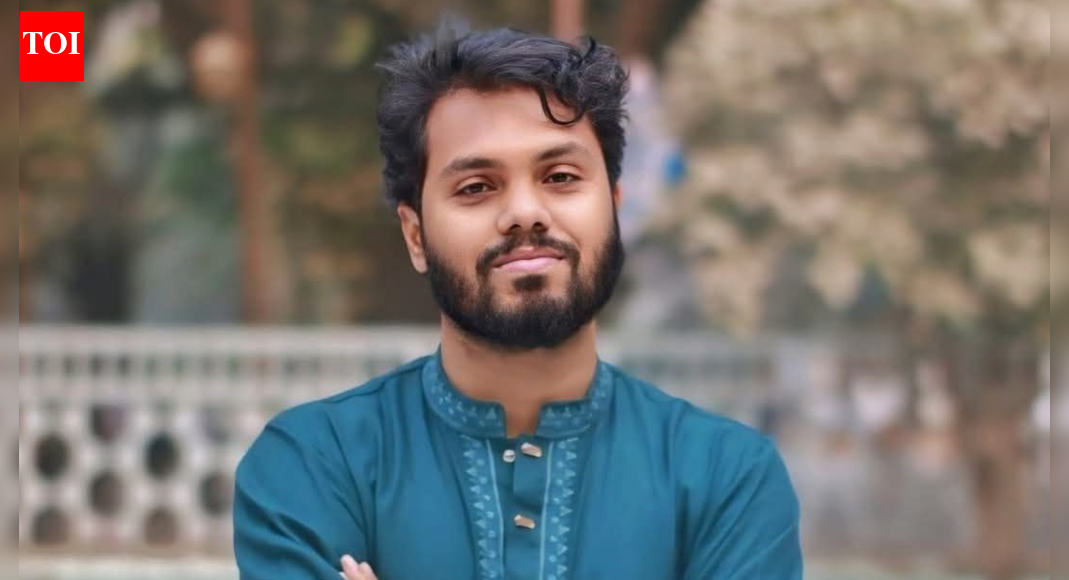
The brother of slain youth leader Sharif Osman Hadi accused Bangladesh’s interim government, of orchestrating the killing to destabilise the country and derail the upcoming national election in February.Sharif Omar bin Hadi, speaking at a protest rally in Shahbagh on Tuesday, said those in power could not evade responsibility for his brother’s murder, which took place just days after the election schedule was announced. Osman Hadi, a convenor of the political platform Inqilab Moncho, was shot on December 12 and later died of his injuries in Singapore on December 18.

‘This killing was meant to sabotage the election’

Addressing a “Shahidi Shopoth” programme organised by Inqilab Moncho outside the National Museum, Omar Hadi accused “a quarter within the government” of planning the killing to disrupt the electoral process. “It is you who had Osman Hadi killed, and now you are trying to foil the election by using this as an issue,” he said as quoted by The DailyStar.He said his brother had been firmly in favour of holding elections by February and had actively worked on the ground to prepare for them. “Respecting his wish, we demand that the election environment is not disturbed,” Omar Hadi said, warning that the government had so far shown “no visible progress” in delivering justice.He claimed Osman Hadi was targeted because he refused to bow to any agency or “foreign masters”. If justice was denied, Omar Hadi warned, those responsible would one day be forced to flee the country. Protesters later took an oath vowing to remain on the streets until “speedy and exemplary justice” was secured.

Inqilab Moncho issues ultimatum, warns of tougher protests

Earlier, Inqilab Moncho’s member secretary Abdullah Al Jaber, speaking as the keynote speaker, alleged a “deep conspiracy” involving international intelligence agencies and domestic “fascist associates” aimed at undermining Bangladesh’s sovereignty and the gains of the July uprising.The platform has given the government a 30-working-day deadline to identify and arrest the killers, warning of tougher nationwide programmes if the demand is not met. While the group said it would pause formal protests on December 25, the day BNP Acting Chairman Tarique Rahman is due to return to Bangladesh, it announced wall-writing and social media campaigns across December 24 and 25, with further agitation planned from December 26.In a parallel development, former prime minister Sheikh Hasina also blamed the interim government for the deteriorating law-and-order situation, saying the killing reflected “lawlessness” under Yunus.

Government promises speedy trial as arrests continue

The interim government has rejected suggestions of inaction, with Law Adviser Asif Nazrul saying the case would be tried under the Speedy Trial Tribunal Act, requiring completion within 90 days of the investigation report being filed. Home Adviser Jahangir Alam Chowdhury said the case was being treated as a top priority.Joint forces comprising police, the Rapid Action Battalion and Border Guard Bangladesh have arrested at least 10 people so far, including family members of the prime suspect, Faisal Karim Masud. Authorities say efforts are ongoing to arrest the main accused.Osman Hadi’s killing came a day after the Bangladesh Election Commission announced February 12 as the date for the next national polls. A prominent figure of the ‘July Uprising’ and a potential candidate for Dhaka-8, his death had fuelled major protests in Bangladesh.

[ad_2]

Source link

Are FIIs back on D-Street? Foreigners increase holdings of Indian stocks; buying highest in 2 months as rupee stabilises

[ad_1]

Are FIIs back on D-Street? Foreigners increase holdings of Indian stocks; buying highest in 2 months as rupee stabilises
Experts are of the view that the stock market could see a year-end rally. (AI image)

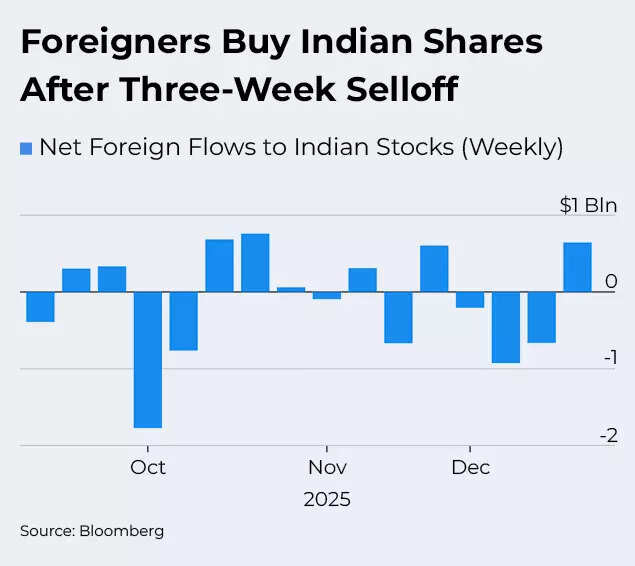
The story of Indian stock markets has been defined by the exodus of foreign investors in 2025. But in the last few sessions, foreign investors seem to be back on Dalal Street, with purchases of Indian equities seeing a surge last week, marking the strongest inflows in nearly two months, as the rupee staged a sharp recovery from record lows.Overseas investors bought $644 million worth of domestic shares, the highest level since mid-October, according to data compiled by Bloomberg. The renewed buying interest came as the rupee recorded its largest weekly gain in almost six months, reversing part of the pressure seen earlier.The inflows followed a period of sustained selling, during which foreign investors had pulled out nearly $1.8 billion from Indian equities over the previous three weeks. That phase of outflows coincided with a slide of more than 1 percent in the rupee, which had weighed on returns for dollar-based investors.

Foreigners Buy Indian Shares After Three-Week Selloff

Foreigners Buy Indian Shares After Three-Week Selloff

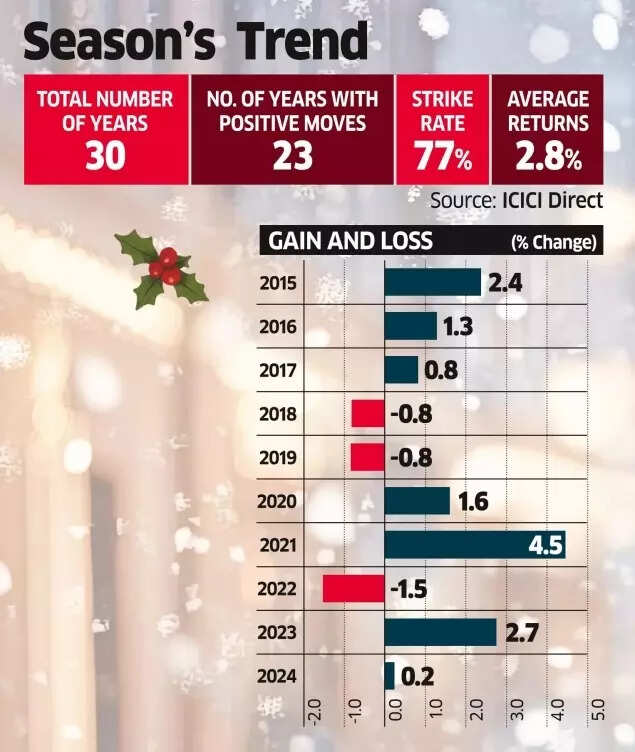
The recent turnaround underlines the strong relationship between currency movements and foreign portfolio flows into Indian stocks. Since exchange rate fluctuations directly influence returns for overseas investors, greater stability in the rupee is seen as a crucial factor in maintaining global interest in the country’s equity markets.Meanwhile, experts are of the view that the stock market could see a year-end rally as analysts point to the possibility of a seasonal Santa rally, supported by a mix of historical trends and favourable technical indicators.Data from ICICI Direct shows that the Nifty has delivered gains in 23 of the last 30 years, or about 77% of the time, during the period from December 20 to the end of the year. In those instances, the benchmark index recorded average returns of 2.8%, highlighting a consistent pattern of late-December strength.“This year-end momentum seen in more than 75% instances in the past three decades underscores the strength of the seasonal Santa rally,” said Dharmesh Shah, head of Technicals at ICICI Direct according to an ET report.

Santa Claus Rally

Santa Claus Rally

The index has already begun to show upward movement, rising nearly 0.81% over the last two trading sessions. On Tuesday, the Nifty closed at 26,177.15 in a largely flat session.Looking ahead, Chandan Taparia, head of Technical and Derivatives Research at Motilal Oswal Financial Services, expects the rally to extend further, with the benchmark likely to gain another 1% to 1.2% in the near term and approach levels close to 26,500.“The market has been forming a higher base over the past few sessions, suggesting that benchmark indices could see further upside in the near term,” he said. “Sentiment is supported by stable global cues, a subdued volatility index with the VIX below the 10 mark, and moderating FPI outflows, all of which point to a continued up move over the coming sessions.”(Disclaimer: Recommendations and views on the stock market, other asset classes or personal finance management tips given by experts are their own. These opinions do not represent the views of The Times of India)

[ad_2]

Source link

Stock market today: Nifty50 near 26,150; BSE Sensex below 85,500

[ad_1]

Stock market today: Nifty50 near 26,150; BSE Sensex below 85,500
The stock market is expected to hold firm at elevated levels and move within a narrow range, aided by supportive signals from global markets. (AI image)

Stock market today: Nifty50 and BSE Sensex, the Indian equity benchmark indices, opened in red on Wednesday. While Nifty50 was near 25,150, BSE Sensex was below 85,500. At 9:16 AM, Nifty50 was trading at 26,157.20, down 20 points or 0.076%. BSE Sensex was at 85,454.65, down 70 points or 0.082%.Experts are of the view that activity is likely to stay muted in the coming sessions due to the shortened trading week due to the Christmas holiday. The stock market is expected to hold firm at elevated levels and move within a narrow range, aided by supportive signals from global markets.Dr. VK Vijayakumar, Chief Investment Strategist, Geojit Investments Limited says, “As 2025 draws to a close the market appears to be moving to a consolidation phase with an upward bias. The strong domestic macros and the supportive earnings growth expectations in Q3 and Q4 of FY26 and for FY27 will provide the fundamental support to the market. The sustained domestic inflows and consistent DII buying will impart resilience to the market. However, since FIIs may sell the rallies, a sharp breakout is unlikely. Also, the revival of the AI trade in the US might impact sentiments in favour of a ‘non-AI trade’ in markets like India.” “The RBI decision to do an additional OMO to the tune of Rs 2 lakh crores will significantly enhance liquidity and bring down yields. This is positive for credit growth and banking stocks. This can be a shot in the arm for banking stocks which are fairly valued.”Wall Street ended higher on Tuesday, with the S&P 500 finishing at an all-time high after a series of economic indicators were released. Among these was the GDP growth number that lifted bond yields and boosted interest in growth-oriented stocks.Asian equities opened on a positive note, tracking the overnight rally in the S&P 500, which was underpinned by data indicating that the US economy expanded at its strongest rate in two years.Gold crossed the $4,500 per ounce threshold on Wednesday for the first time, supported by increased demand for safe-haven assets and expectations that the US central bank could lower interest rates further next year. Silver and platinum also climbed to fresh record levels.In the domestic market, foreign portfolio investors were net sellers of equities worth Rs 1,795 crore on Tuesday, while domestic institutional investors stepped in as net buyers with purchases of Rs 3,812 crore.(Disclaimer: Recommendations and views on the stock market, other asset classes or personal finance management tips given by experts are their own. These opinions do not represent the views of The Times of India)

[ad_2]

Source link

Bank holiday on Christmas: Will banks remain shut today and tomorrow? – check full list

[ad_1]

Bank holiday on Christmas: Will banks remain shut today and tomorrow? - check full list

With Christmas around the corner, many customers remain confused about bank operations as online messages and local notices give mixed signals. People planning cash withdrawals, cheque deposits or branch visits are often unsure whether Christmas Eve is a working day or a bank holiday. To avoid last-minute inconvenience, it is important to understand how bank holidays work during the festive season.In India, bank holidays are not uniform nationwide and vary by state and occasion. While Christmas is observed across the country, Christmas Eve is recognised as a bank holiday only in select states. As a result, banks may remain open in some regions and closed in others on December 24.Today, banks are closed only in Mizoram, Nagaland and Meghalaya on account of Christmas Eve. In the rest of the country, banks function as usual. On December 25, banks are closed across India to mark Christmas.December also sees several other state-specific bank holidays linked to regional festivals, elections, commemorative days and religious observances. Customers are advised to check state-wise holiday lists before visiting branches, particularly in northeastern and coastal states where additional holidays apply. Even when branches are shut, digital banking services such as UPI, mobile banking, internet banking and ATMs continue to remain operational.

December 2025 bank holidays (state-wise)

Date Holiday
December 1 State Inauguration Day / Indigenous Faith Day
December 3 Feast of St. Francis Xavier
December 9 General election to Local Government Institutions 2025
December 12 Death anniversary of Pa Togan Nengminja Sangma
December 15 General election to Panchayati Raj institutions and municipalities in Arunachal Pradesh
December 18 Death anniversary of U SoSo Tham
December 19 Goa Liberation Day
December 20 Losoong / Namsoong
December 22 Losoong / Namsoong
December 23 Holiday for bank employees in Nagaland
December 24 Christmas Eve (select states)
December 25 Christmas (nationwide)
December 26 Christmas Celebration
December 27 Christmas
December 30 Death anniversary of U Kiang Nangbah
December 31 New Year’s Eve / Imoinu Iratpa

Customers planning in-branch banking transactions during the festive period are advised to complete essential work in advance to avoid disruption due to state-specific bank closures.

[ad_2]

Source link
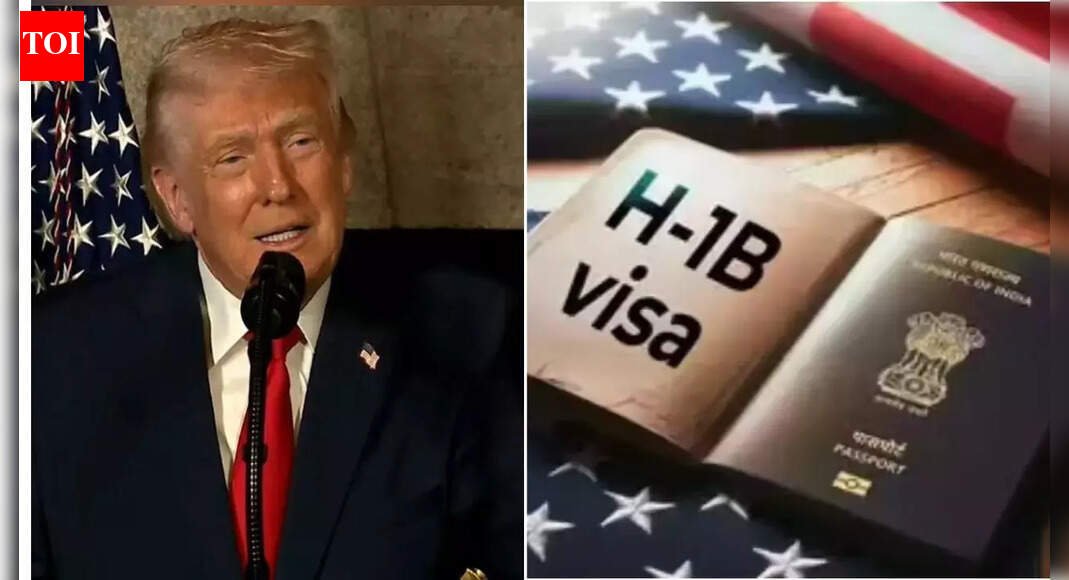
‘Policy decision’: US judge refuses to scrap Trump’s $100,000 H-1B visa fee; move to curb immigration

[ad_1]

'Policy decision': US judge refuses to scrap Trump’s $100,000 H-1B visa fee; move to curb immigration

A US federal judge upheld the Trump administration’s move to move ahead with President Donald Trump’s proposal to impose a $100,000 fee on new H-1B visas, dealing a setback to the American technology companies and business groups challenging the move.US District Judge Beryl Howell, in Washington, DC on Tuesday rejected a lawsuit filed by the Chamber of Commerce, which argued that the steep fee violated federal immigration law and would force companies, hospitals and other employers to cut jobs and services.Howell ruled that Trump had the legal authority to impose the fee, noting that his proclamation was issued under “an express statutory grant of authority to the President.” “The parties’ vigorous ‌debate over the ultimate wisdom of this political judgment is not within the province of the courts,” Howell wrote, Reuters reported.“So long as the actions dictated by the policy decision and articulated in the Proclamation fit within the confines of the law, the Proclamation must be upheld,” she added.The Chamber of Commerce had argued that the president lacked the power to impose such a fee and warned it would hurt employers that rely on skilled foreign workers.Its executive vice president and chief counsel Daryl Joseffer said many small and medium-sized businesses would struggle to afford the cost. “We are disappointed in ‍the court’s decision and are considering further legal options to ensure ‌that the H-1B visa program can operate as Congress intended,” Joseffer said in a statement.

What is the $100,000 H-1B fee?

The H-1B visa programme allows US employers to hire foreign workers in specialised fields and is widely used by technology companies. The programme issues 65,000 visas annually, with an additional 20,000 visas for workers with advanced degrees, typically valid for three to six years.Until now, H-1B visa fees generally ranged between $2,000 and $5,000, depending on various factors. Trump’s order would dramatically increase that cost to $100,000 for new applications.The Chamber has argued that the new fee would force businesses to choose between sharply higher labour costs or hiring fewer highly skilled foreign workers. Separate lawsuits have also been filed by a group of Democratic-led US states and a coalition of employers, nonprofits and religious organisations, challenging the fee.In his order, Trump cited his authority under federal immigration law to restrict the entry of foreign nationals deemed detrimental to US interests. Judge Howell said the administration had sufficiently supported its claim that the H-1B programme was displacing US workers, pointing to cases where companies laid off thousands of Americans while still seeking H-1B visas.

[ad_2]

Source link