Breaking News
Morgan Stanley, Nuvama & more: Stock recommendations by brokers for today — check details

[ad_1]

Morgan Stanley, Nuvama & more: Stock recommendations by brokers for today — check details

BoFA Securities has a buy rating on Varun Beverages with the target price at Rs 550. Analysts said that VBL has acquired Twizza, the no 4 player in South Africa, enhancing production capacity with its three backward integrated facilities. This complements the company’s manufacturing footprint and strengthens VBL’s market position. The deal was done at an attractive valuation that adds 6% to VBL volume, 4% to its revenue and 2% to its earnings before interest, taxes, depreciation, and amortisation (EBITDA). Overall execution and delivery next summer are the key for the company.Nuvama has a buy rating on Century Plywood with the target price at Rs 1,028. Analysts said that the company’s management was confident of achieving Rs 12,000 crore revenue by FY31 targeting 18% compounded annual growth rate (CAGR). The company can achieve Rs 700 crore – Rs 750 crore revenue from the current gross block and will need further Rs 2,000 crore – Rs 2,500 crore investment by FY29 to achieve FY31 target. The company also said that its plywood execution was strong, while medium-density fibreboard (MDF) margins shall turn around H2FY27 onwards, laminates turnaround is in progress, and particle board to record EBITDA breakeven by Q3FY26.Nomura has a buy on Samvardhana Motherson with the target price at Rs 125. Analysts said that the company is acquiring Nexans Auto’s wiring harness business through which it’s set to foray into the global photovoltaic wiring harness segment with an attractive acquisition. They expect the potential transaction to be cash earnings per share (EPS)-accretive. Analysts believe the acquisition is attractively valued and could potentially lead to EPS accretion of 2% in the first year itself.Morgan Stanley has initiated its coverage of Pine Labs with an equal weight rating and the target price at Rs 260. Analysts said that the company is a leader in its focus segments, benefits from first mover advantage and a strong partner ecosystem. They projected a 19% revenue CAGR for FY25-FY28 and expect its shift towards an asset-light model to drive EBIT margin to 20% by FY28 (against 3% in FY25).Investec has initiated its buy rating on Canara HSBC Life Insurance with a buy rating and a target price of Rs 225. Analysts said that the stock is a mispriced opportunity as it’s a relatively low-risk way to play the structural life insurance growth story in India. The visible drivers for margin expansion and distribution-led scale are present. Its current valuations imply only modest value of new business (VNB) growth.(Disclaimer: Recommendations and views on the stock market, other asset classes or personal finance management tips given by experts are their own. These opinions do not represent the views of The Times of India)

[ad_2]

Source link

‘My interviewer wasn’t even human’: Job seeker shares bizarre interview experience with AI avatar |

[ad_1]

‘My interviewer wasn’t even human’: Job seeker shares bizarre interview experience with AI avatar

Artificial intelligence has already taken over large parts of modern hiring. Algorithms scan CVs, software ranks candidates, and automated systems now replace junior recruiters and even some of the engineers who once built them. CV screening, shortlisting and candidate ranking are now routinely automated. What has largely remained untouched, until now, is the interview: a human candidate speaking to a human interviewer in real time. That assumption is starting to fray, not through corporate announcements, but through unsettling first-hand accounts from people who believed they were speaking to real humans.

“My interviewer wasn’t even human”

In one account posted on Reddit, in the r/interviews subreddit, a job applicant described receiving a routine email invitation for an online interview. The link worked as expected. The video loaded. On screen was a woman who smiled, nodded, and began asking questions.At first, nothing seemed unusual.As the interview continued, the candidate noticed her head movements repeating in a way that felt unnatural. Small facial twitches appeared every few seconds. The applicant assumed it was a poor internet connection and carried on.When the conversation moved into substantive questions, the delivery stood out.“There was no hesitation. No ‘uh’. No pauses,” the user wrote.The interviewer responded instantly to every answer, with polished, perfectly structured language. Curious, the candidate asked a question back: “Why do you think this role matters?”The response came immediately. It was fluent, confident, and, in the user’s words, “textbook-perfect”.The candidate asked the same question again. The answer was identical. Same wording. Same cadence.They asked a third time.The response did not change.Shortly afterwards, the screen froze briefly. When the video resumed, the interviewer continued speaking as if nothing had happened.The candidate ended the post by questioning whether companies should be allowed to conduct interviews using AI avatars without disclosure, writing: “I’m not against AI in hiring, but if an interviewer is basically a talking bot, shouldn’t candidates at least be told?” The post sparked hundreds of comments, many expressing concern about transparency in recruitment and how easily AI could now pass as human in a professional setting.

“Five minutes in, I realised my candidate wasn’t human”

It is not only employers experimenting with automation. Some candidates, too, have turned to clever technological workarounds to get a foot in the door.In a separate but closely related account posted to r/recruiting, the experience unfolded from the other side of the interview. The poster said they were interviewing candidates for an AI engineering role and joined a video call expecting a routine screening. Almost immediately, they noticed something off about the candidate’s movements. “This person’s head moves a lot when they talk,” the recruiter wrote. “Weirdly repetitive. It is not natural. It is almost looping.” The recruiter continued the interview, assuming camera lag. Then the candidate began speaking uninterrupted for nearly two minutes. “No pauses. No filler words. Just continuous, textbook-perfect talking.” To test the situation, the recruiter asked a basic question: “What is AI?” The response came back scripted. When the question was repeated, the answer was identical. The third attempt produced the same result. Shortly after, the call disconnected. According to the recruiter, HR later confirmed what had happened. The real candidate had joined briefly at the beginning of the call to introduce themselves. After that, an AI agent had taken over the interview. “It even looked almost identical to the person’s LinkedIn photo,” the recruiter wrote. They concluded bluntly: “So yeah. Not just fake resumes anymore. Fake candidates are now literally joining interviews. Recruiting hell has officially entered the uncanny valley.” Even if this is not yet a formal or widespread practice, it fits squarely with the direction hiring has been moving in. Tasks once handled by people are increasingly outsourced to systems designed to simulate them, often well enough to pass without challenge. Interviews have long been one of the few remaining points of genuine human contact in recruitment. These accounts suggest that boundary is starting to blur.What makes the moment unsettling is not just that AI can now mimic faces, voices and conversational rhythm, but that it is learning to do so rapidly. Voice modulation tools already erase tell-tale pauses. Visual generators can produce lifelike faces that hold up under casual scrutiny. Behavioural models are improving at replicating imperfection itself. For now, repetition gives them away. Soon, even that may not.

[ad_2]

Source link

Uninvited guest: Bengaluru lecturer quits job, turns full-time thief; how she robbed wedding guests | Bengaluru News

[ad_1]

Uninvited guest: Bengaluru lecturer quits job, turns full-time thief; how she robbed wedding guests

BENGALURU: Basavanagudi police have arrested a 46-year-old woman for allegedly stealing gold ornaments, cash and other valuables from wedding functions by posing as a relative of the bride or groom. The accused, Revathi, has been remanded in police custody for 12 days.Revathi, a former guest lecturer and a resident of Udayanagar in K R Puram was found to be involved in multiple thefts at convention halls.Following her arrest, police recovered 262 grams of gold ornaments worth about Rs 32 lakh. Revathi had quit her teaching job a few years ago before allegedly turning to theft.

Bengaluru lecturer quits job, turns full-time thief

The case came to light after a complaint from a Manjunatha Nagar resident, who, along with her mother, attended a relative’s wedding at a marriage hall in Basavanagudi on Nov 23. They had kept a bag containing a 32-gram gold chain and an artificial collar chain in one of the rooms. Later, they discovered that the chain, valued around Rs 3 lakh, and the piece of artificial jewellery, were missing.Revathi was arrested from her residence on Dec 1. During interrogation, she confessed to the theft and admitted to committing similar offences at two other marriage halls in Basavanagudi and in other districts. During interrogation, she revealed stashing away some of her ill-gotten gains at home while the rest were pledged to a bank in Kadubeesanahalli for a loan.According to police, Revathi targeted wedding functions, closely observing women attendees wearing gold ornaments while they were engaged in rituals. She would then slip into the rooms to steal valuables before quietly slipping out of the venue.She told the investigators that financial pressure, including her husband’s cardiac ailment, along with expenses of her son’s education and other household needs drove her to the thefts.

[ad_2]

Source link

Watch: Massive explosion at Pennsylvania nursing home leaves residents trapped under debris; rescue efforts underway

[ad_1]

Watch: Massive explosion at Pennsylvania nursing home leaves residents trapped under debris; rescue efforts underway

An explosion at a nursing home in Pennsylvania left residents trapped as emergency crews rushed to rescue potential victims of the fire.The blast occurred on Tuesday around 2 pm (local time) at the Silver Lake Nursing Home in Bristol Township, around 30 minutes northeast of Philadelphia. Authorities and first responders described the incident as a possible gas explosion.“We understand that there are people trapped inside,” said Ruth Miller, a spokesperson for the Pennsylvania Emergency Management Agency, according to The Associated Press. Emergency crews responded immediately to the facility, working to evacuate residents and search for those who may have gone missing. Video footage on social media showed police cars, ambulances, and fire trucks with flashing lights at the scene, while flames and black smoke poured from the building. Windows were blown out, and part of the roof collapsed.The Upper Makefield Township police department called the explosion a “mass casualty incident” and urged residents to avoid the area due to the large emergency response, reports the Independent. Lieutenant Sean Cosgrove of Bristol Township police told Levittown Now that residents were evacuated by emergency crews, staff, and even bystanders. He added, “I do not know if everyone is accounted for or not yet. I’m not aware of any critical injuries but there definitely were injuries.”The nursing home’s last fire safety inspection took place in September 2024. According to Medicare.gov, the facility has a one-star rating with health inspections described as “much below average.”Pennsylvania Governor Josh Shapiro confirmed on X that he has been briefed on the incident. “My Administration is in contact with local officials and first responders on the ground,” he said. The investigation into the cause of the explosion is ongoing, and authorities have not yet confirmed the number of injuries or fatalities.

[ad_2]

Source link

NTA to roll out live photo, facial recognition checks | India News

[ad_1]

NTA to roll out live photo, facial recognition checks
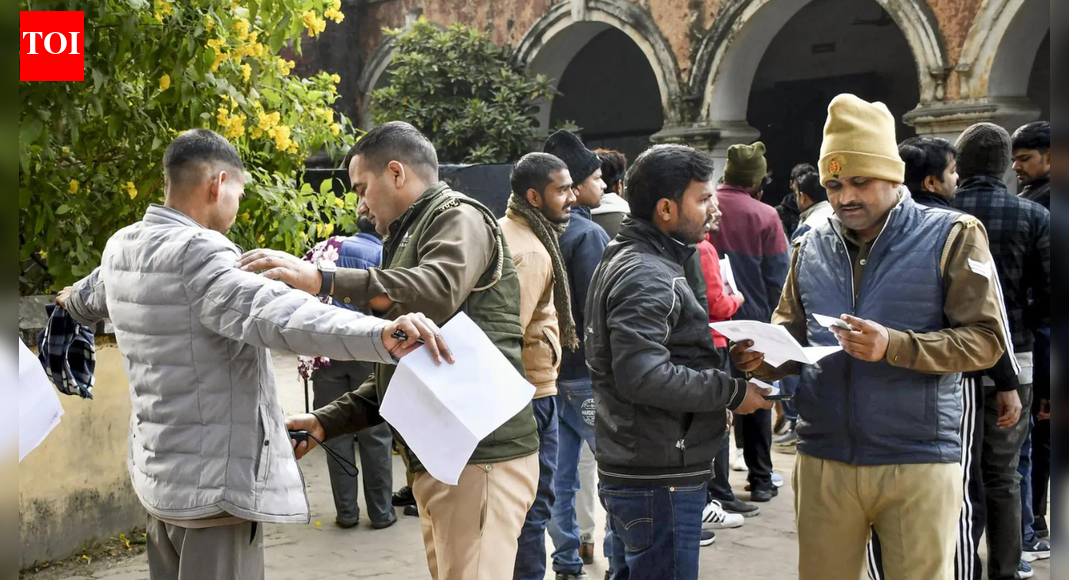
Representative photo (PTI)

NEW DELHI: In a bid to tighten exam security and curb impersonation, the National Testing Agency (NTA is planning to introduce facial recognition-based identity check for major national entrance tests, including NEET-UG and JEE-Main, from 2026, senior officials have said.The move follows a successful proof of concept conducted during NEET 2025, for which Aadhaar-based face authentication technology was deployed at select examination centres in Delhi. The pilot was carried out in collaboration with UIDAI, integrated with NIC’s digital infrastructure and NTA’s existing exam protocol.“During the 2025 NEET exam, UIDAI successfully conducted a PoC to evaluate the feasibility and effectiveness of Aadhaar-based face authentication for candidate verification. Based on its outcomes, the system will be extended to major entrance exams from next year,” a senior official said. Alongside facial recognition at exam centres, NTA is also introducing a mandatory live photograph capture feature at the application stage. Candidates will be required to upload both a recent scanned photograph in JPG/JPEG format and a live photograph captured through a webcam or mobile device while filling in the form. “This dual verification will ensure that the person applying is the same as the one who appears in the exam. Older photographs will no longer be accepted,” a senior official added.The push for enhanced surveillance comes amid heightened scrutiny of exam integrity following alleged paper leak incidents in recent times. The measures were recommended by the Radhakrishnan committee, constituted by the Centre to review the conduct of national-level entrance examinations.

[ad_2]

Source link

Donald Trump accused of rape in newly released Epstein files; DOJ calls claims ‘untrue and sensationalist’

[ad_1]

Donald Trump accused of rape in newly released Epstein files; DOJ calls claims 'untrue and sensationalist'

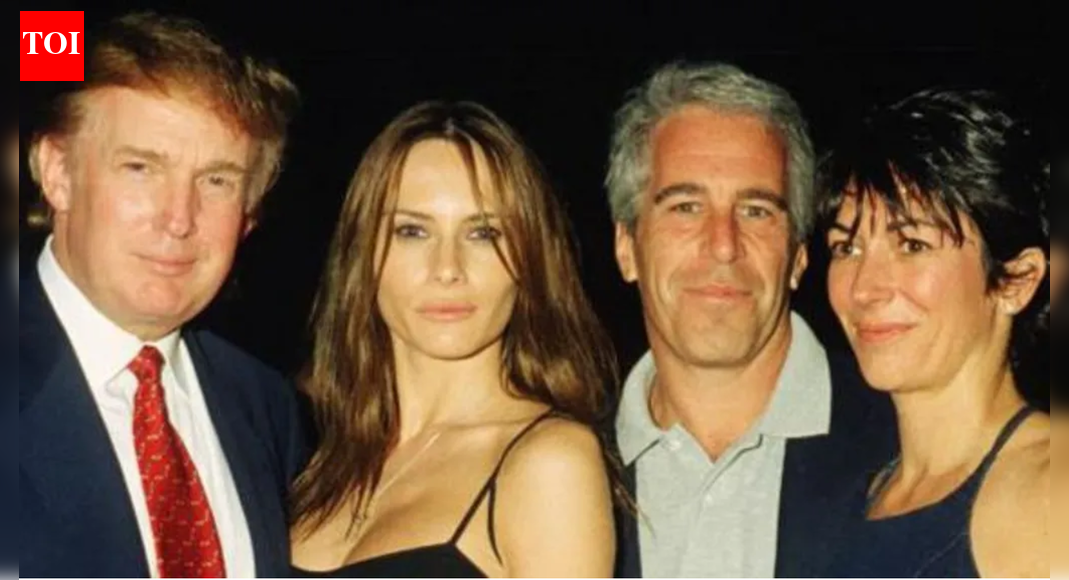
A newly released trove of government files related to the Jeffrey Epstein investigation includes an unverified allegation that US President Donald Trump raped a woman decades ago. However, US Department of Justice (DOJ) has rejected the claim and called it as “untrue and sensationalist”.The documents were released by DOJ on Tuesday. The disclosure is a part of a larger release in accordance with the Epstein Files Transparency Act, a law passed this year requiring federal authorities to disclose records connected to the late pedophile’s criminal case. Trump signed the legislation last month despite previously resisting releasing the files.Among nearly 30,000 pages of material is now available on the official Justice Department website.An FBI intake report dated October 27, 2020, records a tip from a former limousine driver. According to that report, the driver described a disturbing phone conversation he claimed he overheard in 1995 involving Trump and Epstein. The document alleges that an unnamed woman present at the time told the driver “he raped me”, referring to Trump alongside Epstein, according to the People.The driver’s account says the woman later told him she had contacted police about what had occurred, and was then found dead in January 2000 by suicide. The details in the file are heavily redacted, and the authorities have made little to no determination about the allegations’ credibility.In an accompanying statement on X on Tuesday, DOJ addressed the claims. It said some documents contain “untrue and sensationalist claims made against President Trump that were submitted to the FBI right before the 2020 election.”The authotrity described the allegations as lacking any credible basis. “To be clear: the claims are unfounded and false, and if they had a shred of credibility, they certainly would have been weaponised against President Trump already,” the department said.The DOJ reitarated its commitment to transparency and the legal requirement to release the records, but also said that the inclusion of such claims in the files does not make them factual.Trump has repeatedly denied any wrongdoing in connection with Epstein. In public statements this week, the MAGA chief called the focus on the Epstein case as a distraction by Democrats, asserting that he “cut ties” with Epstein long before the pedophile’s arrest in 2019.The release covers a range of material, not just the unverified rape allegation. Internal emails in the files show Trump was recorded as having travelled on Epstein’s private jet in the 1990s more times than previously known — at least eight flights between 1993 and 1996. Trump’s association with Epstein in the 1990s is well documented, but inclusion in flight logs or social records is not itself an accusation of illegal behaviour.DOJ is constantly being pressured by Democrats for not releasing the full bulk of files. Supporters of the Transparency Act say the public has a right to see government records, even if they contain unverified claims.The latest release follows criticism of an earlier batch of Epstein records, some of which were temporarily removed from the DOJ’s online portal amid concerns about protecting victims’ identities. Authorities later restored those files after determining no victims were shown in the disputed photos.

[ad_2]

Source link

Madhya Pradesh electoral rolls cut by over 42.7 lakh after SIR, 8.4 lakh voters ‘unmapped’ | India News

[ad_1]

Madhya Pradesh electoral rolls cut by over 42.7 lakh after SIR, 8.4 lakh voters 'unmapped'

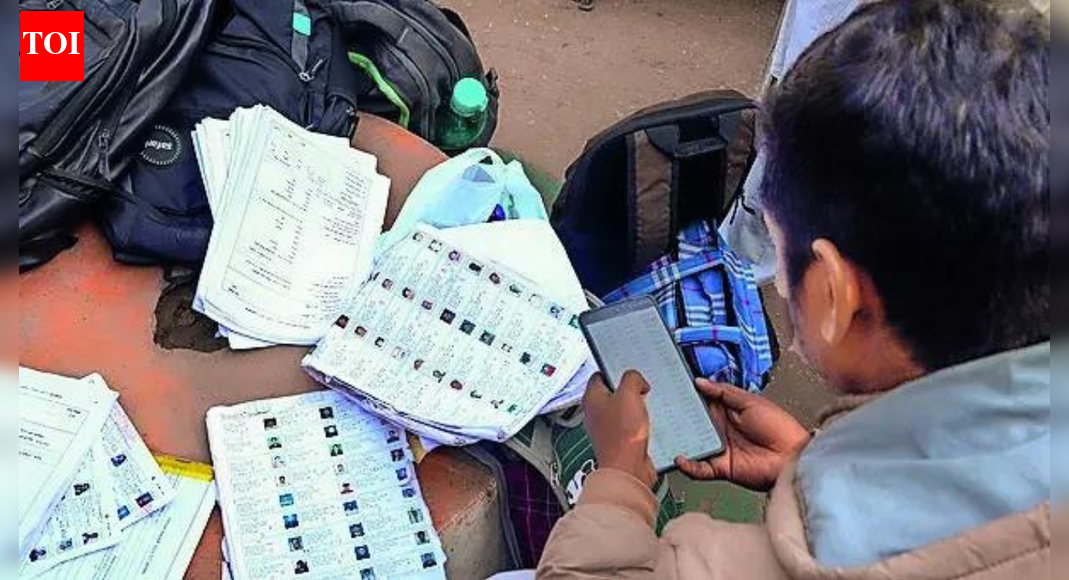
BHOPAL: A sweeping revision of Madhya Pradesh’s electoral rolls has led to the deletion of 42.7 lakh voters, or 7.4% of the electorate, following a 44-day special intensive revision (SIR) that officials said ranks among the largest voter list clean-ups undertaken in the state.The draft electoral rolls published on Tuesday show the voter count falling from 5.7 crore before the revision to 5.3 crore – a net reduction of 42.7 lakh names after door-to-door verification across 65,014 polling booths.Election officials said the deletions included 8.4 lakh voters found to be deceased, 31.5 lakh who had shifted from their registered addresses, and 2.7 lakh duplicate entries. The scale of deletions reflects extensive demographic churn over two decades, with the stated goal of producing clean, accurate and up-to-date electoral rolls, officials said.Alongside the deletions, poll officials identified about 8.4 lakh “unmapped” voters whose details could not be linked to records from the SIR in 2003. Their names remain in the draft poll rolls for now but will be reviewed.“The unmapped voters will have to produce the required documents within seven days of receiving the notice from the BLO (booth level officer),” joint chief electoral officer Ram Pratap Singh Jadaun said. Failure to respond could result in deletion when final rolls are published.The exercise ran from Nov 4 to Dec 18, following an extension granted by the Election Commission, with more than 65,000 BLOs conducting house-to-house checks across cities, towns and villages. Enumeration forms were received from 5.31 crore electors, covering over 92% of the electorate, officials said. The drive spanned 55 districts and involved 230 electoral registration officers, 532 assistant EROs, and large-scale support from panchayat secretaries, revenue staff, Gram Rojgar Sahayaks and volunteers. Six recognised national political parties took part through 1.3 lakh booth level agents.Officials stressed that deletions remain provisional. Under revision guidelines, no name can be removed without prior notice and a speaking order from an ERO or AERO. The claims and objections window opened Tuesday and runs until Jan 22, 2026, allowing voters to seek inclusion, correction or restoration of names. Appeals may be filed before the district magistrate and, subsequently, the chief electoral officer under the Representation of the People Act, 1950.

[ad_2]

Source link

Deal approvals: CCI clears Blackstone’s Federal Bank entry; Tata Steel gets nod for BlueScope buyout

[ad_1]

Deal approvals: CCI clears Blackstone’s Federal Bank entry; Tata Steel gets nod for BlueScope buyout

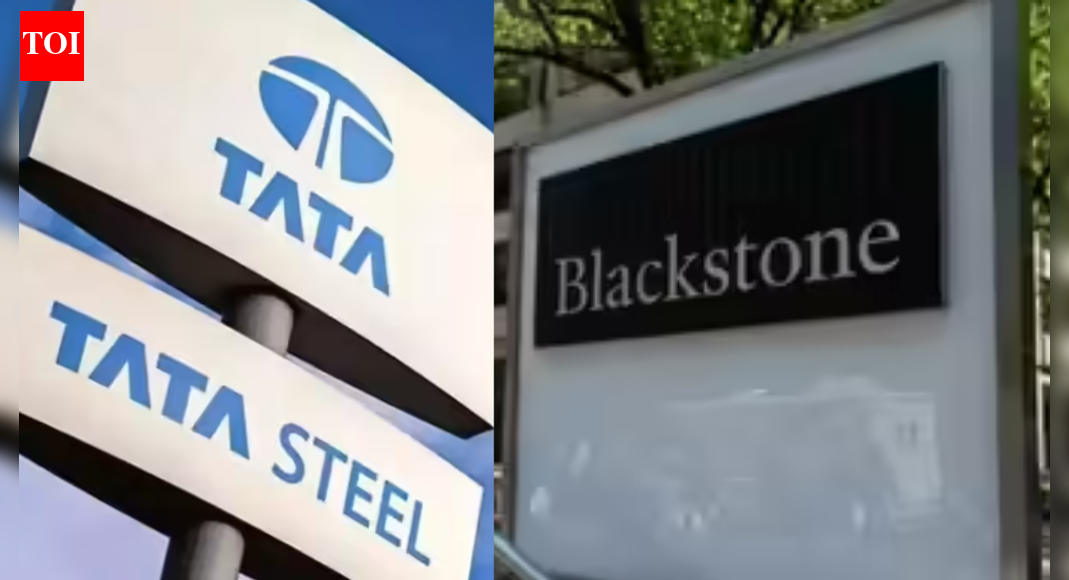
The Competition Commission of India on Tuesday approved US-based private equity firm Blackstone’s proposal to acquire up to 9.99 per cent stake in Federal Bank through warrants, clearing the way for the global investor’s entry into the private sector lender.In a release, the fair trade regulator said the proposed transaction involves Asia II Topco XIII Pte Ltd, an arm of Blackstone, acquiring warrants that carry the right to subscribe to equity shares of Federal Bank, PTI reported.“The proposed combination envisages acquisition of certain warrants by Asia II Topco XIII Pte Ltd (acquirer), each carrying a right to subscribe to one fully paid-up equity share of Federal Bank Ltd (target),” the regulator said.Upon full exercise of the warrants, the acquirer will hold 9.99 per cent of the paid-up share capital of Federal Bank on a fully diluted basis, according to the CCI. Blackstone will also have the right to nominate a director on the bank’s board as long as it holds at least a 5 per cent stake.Federal Bank is a private sector commercial lender offering a range of banking products and services, including deposits, loans and payment solutions.In a separate approval, the CCI also cleared Tata Steel Ltd’s proposal to acquire sole control of Tata BlueScope Steel by purchasing the remaining 50 per cent equity stake held by BlueScope Steel Asia Holdings Pty Ltd.“Commission approves Tata Steel Limited’s proposed acquisition of sole control in Tata BlueScope Steel Pvt. Ltd. by purchasing the remaining 50 per cent equity shareholding currently held by BlueScope Steel Asia Holdings Pty Ltd,” the watchdog said in a post on X.Tata BlueScope Steel is currently a 50:50 joint venture between BlueScope Steel Ltd of Australia and Tata Steel Downstream Products Ltd. Tata Steel is engaged in iron ore mining and steel production, while Tata Steel Downstream Products operates in the coated steel segment, offering surface-coated steel products and related solutions.Transactions crossing specified thresholds require clearance from the competition regulator, which is mandated to prevent unfair business practices and ensure fair competition in the market.

[ad_2]

Source link

Pakistan: National airline PIA sold to private consortium; Rs 135 billion deal sealed

[ad_1]

Pakistan: National airline PIA sold to private consortium; Rs 135 billion deal sealed

Pakistan government on Tuesday sold its national airline, PIA, for Rs 135 billion to a consortium led by Arif Habib investment firm on Tuesday. The sale, organised through a bidding process in Islamabad, marks the largest transaction in Pakistan’s history. It aims to revive the once-prestigious carrier that had been struggling due to years of mismanagement, as reported by PTI.There were three companies bidding for this auction, namely Arif Habib, Lucky Cement, and Airblue. Arif Habib won this auction after an aggressive bidding process against Lucky Cement. The successful auction cost of Rs 135 billion was much higher than the government’s reference price of Rs 100 billion. Airblue has quoted the lowest amount, Rs 26.5 billion.The sale will involve 75% of the shares of PIA at this stage, and the successful bidder will have 90 days to purchase the rest 25%. A greater portion of the money accruing from the sale of the national carrier, 92.5%, will be invested in the airline, while the remaining 7.5% will be paid to the government.The deal requires Arif Habib to invest an additional Rs 80 billion in PIA over the next five years. This comes after the government took over the airline’s massive debt of Rs 654 billion last year to make the sale more attractive.Prime Minister Shehbaz Sharif praised the transparent nature of the sale. “It will be the largest transaction ever in Pakistan’s history,” he stated during a federal cabinet meeting.The entire bidding process was broadcast live on local TV channels. This successful sale came after a failed attempt last year when the airline didn’t attract the desired price.PIA’s privatization marks the end of an era for what was once a prominent airline. Years of poor management had severely impacted its service quality and reputation, ultimately forcing the government to sell it to private investors.

[ad_2]

Source link

IT reset: Indian tech stocks search for momentum after a long slowdown; AI shifts from pilots to payoffs

[ad_1]

IT reset: Indian tech stocks search for momentum after a long slowdown; AI shifts from pilots to payoffs

After nearly four years of underperformance, India’s information technology stocks are entering 2026 with expectations shaped more by realism than hype, as investors assess whether artificial intelligence can finally revive growth after a prolonged slowdown.The Nifty IT index is trading close to a four-year low, a sharp reversal from the pandemic-era boom that once made software exporters market favourites, according to an ET report. In 2021, the index surged nearly 60% on the back of emergency digital spending, cloud migration and strong deal pipelines. That momentum faded quickly as global inflation, aggressive interest-rate hikes and recession fears forced clients to rein in discretionary technology budgets, pushing the index down more than 26% in 2022.Although IT stocks recovered in 2023 and 2024 with gains of about 24% and 22%, the rebound lacked conviction. Markets were grappling with macro uncertainty and the early, unclear impact of artificial intelligence. In 2025 so far, the index is down more than 10%, marking its second-worst annual performance of the past decade.For investors who entered the sector after the 2021 peak, returns have been disappointing. Even as defence, public sector banks and auto stocks climbed to new highs, IT names continued to lag, reflecting both cyclical pressures and deeper structural shifts.

Why demand stayed weak even as profits held up

On the cyclical side, demand from key markets has remained cautious. The US and Europe, which together generate the bulk of Indian IT revenues, have seen large enterprises delay major technology transformation programmes amid concerns over inflation, interest rates, geopolitics and trade policies. Discretionary spending — critical for large digital and modernisation deals — has stayed under pressure despite healthy corporate profits.Structural factors have added another layer of challenge. Years of automation, cloud migration and now AI adoption have sharply improved productivity at Indian IT firms. While this supports margins, it has also reduced the manpower required for similar workloads, limiting near-term revenue growth. Companies are doing more with fewer people — a positive for clients but a headwind for top-line expansion.As the sector looks ahead to 2026, the central question for investors is whether Indian IT can adapt to an AI-driven world and regain a sustainable growth trajectory. Most analysts believe it can, though not overnight.Sumit Pokharna of Kotak Securities argues that enterprise AI adoption will be a long journey. He expects it to unfold over seven to eight years, with humans and AI agents working together. Connecting AI systems to complex enterprise platforms, testing them across industries and ensuring reliability will require significant effort, he says — a process that plays to the strengths of Indian IT companies experienced in managing large, complex systems.Timing, however, has been a challenge. Indian IT firms were slower than global technology giants to position themselves as AI leaders. Early AI-driven efficiency gains created a deflationary effect, allowing work to be done faster and cheaper, which weighed on revenues when clients were already focused on cost cutting.

AI monetisation emerges, but patience still required

That dynamic is now beginning to shift. Across the sector, companies are increasing investments in AI tools, platforms and talent. AI is being deployed internally to lift productivity, embedded into service offerings and used to help clients move from pilot projects to full-scale deployments.Nomura notes that nearly all Indian IT services companies are stepping up AI investments, focusing on internal applications, client solutions and ecosystem partnerships. Clients are gradually moving beyond proof-of-concept projects to standalone AI implementations – a transition seen as critical for meaningful monetisation.Early signs of traction are emerging. Tata Consultancy Services has said it has already reached about Rs 12,500 crore in annualised AI-related revenue, calling AI a “civilizational change” for enterprises. The company is working with most of its top clients on AI projects, with deal activity rising quarter after quarter. Other large players are also reporting AI-led productivity gains and improved win rates in competitive bids.Even so, discretionary spending has yet to show a clear rebound. Kotak Securities points out that large transformation deals remain fiercely competitive, often involving global peers, which continues to pressure pricing.

2026 outlook

The outlook for 2026 appears more balanced than in recent years. In the most recent quarter, large-cap IT companies reported positive sequential constant-currency growth, surprising investors after several muted quarters. Growth ranged from about 0.3% at Wipro to 2.4% at LTIMindtree and HCL Tech.Order bookings have also been robust, with median year-on-year growth of around 26%, indicating that deal pipelines remain intact despite macro caution. Enterprise AI is increasingly moving from experimentation to monetisation. Infosys has reported productivity gains of 40–50% in select workflows through its services.AI platforms, while HCL Tech has said its advanced AI revenue has crossed $100 million, accounting for nearly 3% of its revenue base across 47 client accounts.Nomura forecasts revenue growth of about 4.5% for large IT firms in FY27, with mid-sized companies expected to grow faster. HSBC believes growth of 4–6% is achievable if global confidence improves and tariff-related uncertainties ease.Margins could also find some support. Productivity gains from AI, better utilisation and tight cost control are expected to offset wage hikes and investment spending. Nomura expects modest margin expansion in FY27, while HSBC highlights strong cash-flow generation as a key sector strength. Many IT companies generate free cash flow close to net profit, enabling steady dividend payouts of 3–4%, offering downside protection to investors.Geographically, the US remains the largest market, contributing more than half of industry revenues. Europe is gradually improving, while Japan is viewed as a long-term opportunity given its low outsourcing penetration. Analysts see deeper acceptance of Indian IT services in Japan as a potential growth driver over time.Most analysts stop short of predicting a sharp turnaround in 2026. Instead, there is growing consensus that the worst may be over. Double-digit growth like the pandemic years is unlikely to return, but stability and gradual improvement appear more realistic.Abhishek Jain of Arihant Capital Markets says the sector is adapting and innovating, with near-term expectations remaining neutral but prospects improving as AI-led deals from the US and Europe begin to flow through. Jefferies, however, remains underweight on the sector, citing weak headline growth and relatively high valuations even after the correction.

[ad_2]

Source link