Breaking News
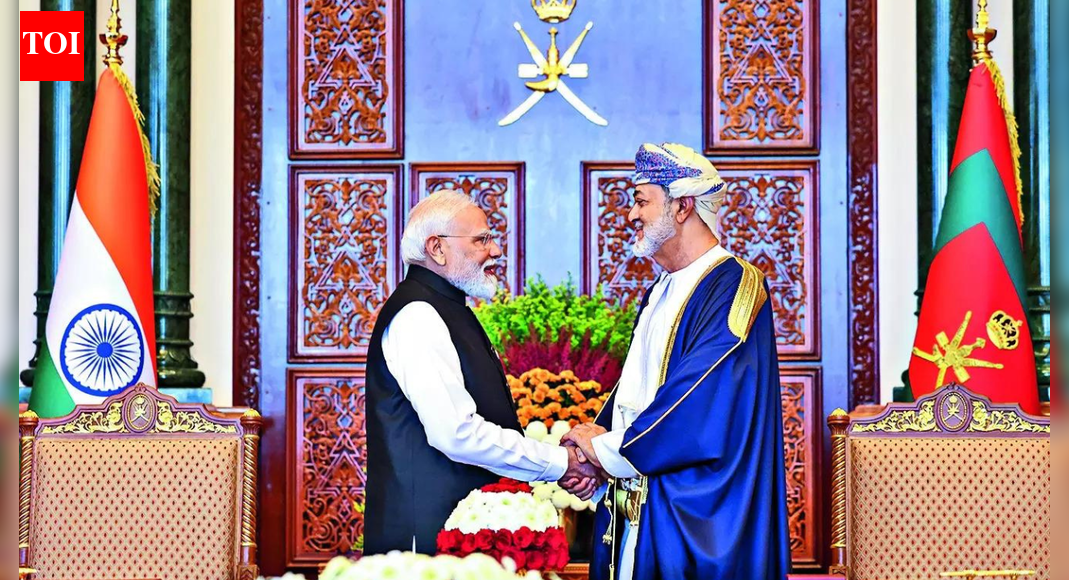
India-Oman trade deal: What the CEPA changes for India’s Gulf strategy, GTRI explains

[ad_1]
India-Oman trade deal: What the CEPA changes for India’s Gulf strategy, GTRI explains

The India–Oman Comprehensive Economic Partnership Agreement (CEPA) will add to India’s growing network of preferential trade arrangements in the Gulf, but its significance lies more in consolidating market access and investment presence than in sharply expanding trade volumes, Ajay Srivastava, founder of the Global Trade Research Initiative (GTRI) said.India and Oman signed the agreement on December 18, marking India’s sixth free trade pact in the past five years, following deals with Mauritius, the UAE, Australia, the EFTA bloc and the UK. The pact is expected to come into force in the coming months.

‘India-Oman FTA To Open Major Opportunities Across Key Sectors’: Commerce Minister Piyush Goyal

Under the CEPA, Oman has granted zero-duty access on about 98% of its tariff lines, covering nearly 99% of India’s exports by value. India’s exports to Oman were about $4.1 billion in FY25, led by refined petroleum products such as naphtha and petrol, along with machinery, metals, aircraft, rice and consumer goods.“While more than 80% of Indian goods already enter Oman at an average tariff of around 5%, duties on some items go up to 100%. Their removal improves competitiveness, but the scope for large trade expansion remains limited by Oman’s market size,” Srivastava said.India, in return, has offered tariff liberalisation on about 78% of its tariff lines, largely through tariff-rate quotas, to protect sensitive sectors. India’s imports from Oman stood at roughly $6.6 billion in FY25, dominated by crude oil, LNG and fertilisers, along with key chemical inputs.The agreement also includes commitments in services, with Oman opening sectors such as IT, professional services, education, healthcare and research. Provisions to ease temporary entry for Indian professionals and streamline pharmaceutical approvals could reduce regulatory costs for Indian firms operating in Oman, Srivastava noted.According to GTRI, the broader importance of the CEPA lies in India’s investment and strategic footprint in Oman. Indian companies have more than 6,000 joint ventures in the country, with cumulative investments exceeding $7.5 billion, largely in the Sohar and Salalah free zones.“The agreement is less a trade breakthrough and more a consolidation of India’s economic position in a critical Gulf corridor,” Srivastava said, adding that it supports India’s longer-term interests in energy security, logistics, services exports and regional connectivity.Given Oman’s location at the entrance to the Gulf and its role as a logistics and energy hub, the CEPA strengthens India’s engagement in the region even as trade volumes remain modest, he said.

[ad_2]

Source link

President Donald Trump-owned Truth Social parent to merge with Google-backed fusion reactor company in $6 billion deal

[ad_1]

President Donald Trump-owned Truth Social parent to merge with Google-backed fusion reactor company in $6 billion deal

The parent firm of US President Donald Trump’s social media platform Truth Social, Trump Media, a fusion energy firm called TAE, has merged, and the move has seen the share price of Trump Media jump by nearly 25% following the news, though it “slumped by about 70% in the past year.” The companies have agreed to an all-stock mergertactic that will see the “combined entity” develop “the world’s first utility-scale fusion power plant” beginning in 2026, and will give the “shareholders of both companies approximately 50% of the combined entity.”In a statement to news agency AFP on Monday, Trump Media CEO Devin Nunes described this move “a big step forward toward a revolutionary technology that will cement America’s global energy dominance for generations to come.” Nunes and CEO of TAE Michl Binderbauer will be “co-CEOs of the combined company” with Michael Schwab at its board helm and even including Donald Trump Jr.The deal is “expected to close by mid-2026,” though it still “requires shareholder and regulatory approval” before it can be finalised. When it is finalized, this new company will be able to pursue its aim of starting plant construction in 2026.

What is fusion power and why it can be important to meet AI energy demands

Fusion power plants would produce electricity using the same process that powers the Sun, an objective that researchers have pursued for years. However, no commercially viable facility has been built despite decades of development.This uncommon partnership emerges as the Trump administration promotes energy-intensive AI technology that will necessitate a substantial expansion of power generation capacity.AI data centres are putting growing pressure on US electrical grids, and the White House is advocating expedited approval of energy projects to meet demand.TAE Technologies, established in 1998, claims its fusion technology could provide abundant electricity to support AI infrastructure.The California-headquartered company has constructed five fusion reactors and has a workforce of more than 400 people, including 62 individuals with PhD degrees, according to a statement.The firm has managed to raise over $1.3 billion from investors such as Google, Chevron, and Goldman Sachs. It has also promised to provide a cash contribution of a maximum of $300 million to TAE. Trump Media has also launched various projects in the past few months, such as financial services based on cryptocurrency and online video streaming, though their revenue during the first half-year period of 2025 was merely $1.7 million.

[ad_2]

Source link

Budget 2026 for the investor: Time to fix the flawed tax design on share buybacks

[ad_1]

Budget 2026 for the investor: Time to fix the flawed tax design on share buybacks
For high-income taxpayers, buyback proceeds may now be taxed at slab rates up to 35.88%, despite the fact that the shareholder is surrendering and extinguishing their rights in the shares. (AI image)

When the Finance Act, 2024 rewired the tax treatment of share buybacks, it upended a long-standing system that had—with all its imperfections—at least been predictable. Starting Oct 1, 2024, the burden of tax shifted decisively from the company to the shareholder.What appeared to be a simplification has instead triggered a chorus of concerns from tax experts, industry bodies, and investors—who warn that the new regime taxes notional income, creates economic distortions, and deviates from global best practice.In 2025, some listed companies did undertake the buyback route, notable being Infosys, Bajaj Consumer Care, Tracxn Technologies, SIS, Infobeans Technologies, Dhampur Sugar Mills.From Capital Gains to Dividend Tax: A Radical ShiftUnder the earlier system, listed companies undertaking buybacks paid buyback tax under section 115QA, while shareholders received proceeds tax-free.The 2024 amendment scrapped this and introduced a two-part mechanism for taxing shareholders:

  1. The entire buyback consideration is taxed as “deemed dividend” under section 2(22)(f).
  2. The original cost of the shares becomes a capital loss under section 46A. It is to be adjusted against other capital gains either in the same financial year or as set-off over the subsequent eight years,

For high-income taxpayers, buyback proceeds may now be taxed at slab rates up to 35.88%, despite the fact that the shareholder is surrendering and extinguishing their rights in the shares. That, experts argue, is the very definition of a capital transaction—not dividend income.The capital loss would be treated as long-term or short-term depending on the duration of holding of the shares before buy back. Listed shares that are held for more than a year (two years for unlisted shares) are treated as a long-term asset, with a tax rate of 12.5%. If in a subsequent sale in the open market of the remaining shares held by the investor or any other assets, the shareholder incurs a long-term capital gain, then the capital loss on buy-back can be set off. The impact is that the buy-back proceeds are at first taxed as dividend as per the slab rate (which for many investors will be higher than the long-term capital gains tax rate). Secondly, on sale of the assets, the loss (on buy-back) would be available for set off only against capital gains, which are taxable at a lower rate. Furthermore, if such loss has to be carried forward to future year/s, the return of income for the year of loss has to be filed on time; else, such loss is forfeited.Tax implications in the hands of a shareholder:

Particulars Computation
100 shares bought in 2020 Rs. 40 per share
Total cost of acquisition Rs. 4,000
Buy-back of 20 shares in 2024 Rs. 60/- per share
Income taxable as deemed dividend Rs. 1,200 (Rs. 60*20 shares)
Capital loss on such buyback Rs. 800 (Rs. 40*20 shares)
50 Shares sold in 2025 Rs. 3,500 (At Rs. 70 per share)
Capital Gains (Sale consideration Rs. 70 per share less cost price Rs. 40 per share) Rs. 1,500 (Rs. 3,500 – 2000)
Chargeable capital gain after set off Rs. 700 (Rs. 1500 – 800)

The Real-World Impact: A Tax Trap for InvestorsThe circularity becomes clearer when seen numerically. Under the new regime:

  • Buyback consideration → taxed as dividend
  • Cost of acquisition → treated as capital loss
  • Capital loss → usable only against current or future capital gains, often at much lower tax rates and subject to timely return filing

Which means taxpayers pay high tax today and receive relief only later—and only if they have gains to offset. Countries such as Australia and the UK tax buybacks as dividends only to the extent of the income component embedded in the buyback price.The Anomaly: Taxing Capital as IncomeA buyback is not always funded by accumulated profits. Companies may buy back shares using:

  • retained earnings,
  • share premium, or
  • proceeds from a fresh issue.

In the latter two cases, there is no distribution of profits at all. Yet, the entire payout is treated as dividend income in the shareholder’s hands. As Ravikant Kamath, partner at EY-India points out, this results in artificial taxation of a capital receipt.He illustrates: A loss-making company using its share premium to carry out a buyback at Rs. 20 each, against a face value of Rs. 100 each, it triggers dividend taxation—even where the shareholder suffers an economic loss.In the light of the upcoming Budget 2026, Ravikanth Kamath, recommends various alternative mechanisms that can be introduced for taxing buyback of shares.1. Restore capital gains treatment under section 46ATax should be levied only on the difference between buyback price and cost of acquisition, as originally designed since 1999. There are sufficient guardrails in both Companies Act and Income tax Act to prevent abuse of disguised dividends.2. Do not tax buybacks funded out of share premium or fresh issue proceedsThese are capital transactions, not profit distributions.3. For buybacks out of retained earnings, split taxation appropriately where only the amount representing accumulated profit is treated as dividend.

  • Amount representing accumulated profits →dividend
  • Amount representing capital returned → capital gains, not taxable as dividend.

[ad_2]

Source link

Who is Nidhhi Agerwal? All about Prabhas starrer ‘The Raja Saab’ actress mobbed at Hyderabad mall event and debuted opposite Tiger Shroff in 2017 |

[ad_1]

Who is Nidhhi Agerwal? All about Prabhas starrer 'The Raja Saab' actress mobbed at Hyderabad mall event and debuted opposite Tiger Shroff in 2017
In a shocking turn of events, actress Nidhhi Agerwal encountered a harrowing mobbing experience following a song launch in Hyderabad, with footage circulating online depicting her fight to navigate through the throngs of fans. This unsettling incident has ignited a firestorm of criticism across social media platforms.

Videos of actress Nidhhi Agerwal getting mobbed and manhandled by fans after she exited a song launch event of ‘The Raja Saab’ in Hyderabad went quickly viral on the internet. Netizens slammed the behavior of the crowd and called the visuals ‘disturbing’. The actress managed to reach her car somehow and looked absolutely furious after getting inside it. Now, are you one of those who wants to know more about the actress? Then you come to the right page.

About Nidhhi Agerwal

According to the reports, Nidhhi Agerwal was born into a Hindi-speaking Marwari family in Hyderabad. She was brought up in Bengaluru. The actress can speak Telugu, Kannada, Tamil, and Hindi. After participating in a beauty contest (2014), she marked her debut in movies with ‘Munna Michael’ opposite Tiger Shroff in Bollywood (2017).

The Raja Saab Challenge: Why Prabhas’ Comedy-Horror Is Off to a Slow Start in North America

She entered Telugu cinema with Naga Chaitanya’s ‘Savyasachi’ in 2018. She made her Tamil debut opposite Silambarasan TR in ‘Eeswaran’ in 2021.You will be surprised to know that her fans have built a temple of her in Tamil Nadu.

More about ‘The Raja Saab’ incident

After attending the launch event of the song ‘Sahana Sahana’ from the film ‘The Raja Saab’, Nidhhi Agerwal made her exit from the venue. While leaving the Lulu mall in Hyderabad, the actress was mobbed by the crowd, and she couldn’t move towards her car. Agerwal looked frustrated, and as soon as she reached the vehicle, she let her anger out, which was visible in the videos. She or the film team has not issued any statements on the incident as of now.

Nidhhi Agerwal’s projects

Nidhhi Agerwal has worked in movies like ‘Mr. Majnu’, ‘Hero’, ‘Kalaga Thalaivan’, and ‘iSmart Shankar’. She recently featured in Pawan Kalyan’s ‘Hari Hara Veera Mallu’. It was released in theaters in July this year. Next, she will star in Prabhas‘ ‘The Raja Saab’. The cast of the movie also includes Sanjay Dutt, Malavika Mohanan, and Riddhi Kumar, apart from Prabhas and Nidhhi Agerwal.Meanwhile, Zarina Wahab, Samuthirakani, Vennela Kishore, Brahmanandam, VTV Ganesh, Satya, Prabhas Sreenu, and Yogi Babu are in supporting roles.Directed by Maruthi, the film has been scheduled to hit theaters on January 9, 2025.

[ad_2]

Source link

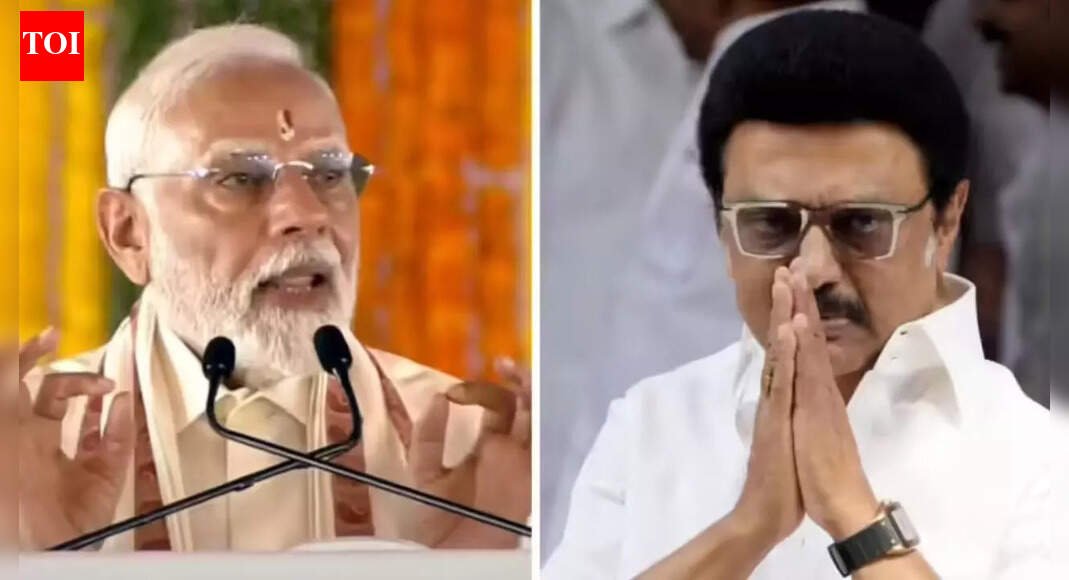
TN exporters hit by US tariff hike: CM Stalin writes to PM Narendra Modi; warns of job losses, economic fallout | Chennai News

[ad_1]

TN exporters hit by US tariff hike: CM Stalin writes to PM Narendra Modi; warns of job losses, economic fallout

CHENNAI: Chief minister M K Stalin has urged Prime Minister Narendra Modi to solve the crisis faced by TN exporters due to the recent tariff hike imposed by the US. Currently, the US has imposed 50% tariff hike on Indian exports.Stalin wrote to Modi saying that the confirmed orders were cancelled and new orders have stopped.

Chennai Gripped By Panic As Bomb Threats Target MK Stalin, Ajith Kumar, Top Tamil Nadu Personalities

“In Tiruppur exporters have reported a staggering wipe out of Rs 15,000 crores in confirmed orders, coupled with enforced production cuts of up to 30% across units. New orders are also drying up at an alarming rate. This has translated into a combined daily loss of Rs 60 crores in revenues for exporters in Tiruppur, Coimbatore, Erode and Karur Districts, pushing many Small and Medium enterprises to the brink of collapse. A similar dismal scenario is witnessed in our footwear clusters in Vellore, Ranipet and Tirupatthur distircts,” Stalin said.Due to the tariff hike, Stalin said the manufacturers are forced to cut profit margins and offer “deep discounts” to retain their clients, which erodes their competitiveness and viability. “Lakhs of jobs hang in the balance, with the sectors already witnessing layoffs and wage deferrals that threaten the stability of entire communities,” Stalin said.The chief minister said due to the tariff disadvantage international buyers diverting orders to competitors like Vietnam, Bangladesh and Cambodia, which have a current tariff advantage over us. “Once these markets are lost, regaining them would be an uphill battle, as entrenched supply chains rarely revert back. This has ominous long-term implications for the future employment prospects of our youth, especially women,” Stalin said.Stalin insisted Modi to solve the impasse through bilateral agreement at the earliest. “A swift decision would not only revive the fortunes of our exporters but also reinforce India’s position as a reliable global manufacturing hub,” Stalin said.

[ad_2]

Source link

ITR filing AY 2025-26: Received message from I-T department? Big clarification issued – what taxpayers need to know

[ad_1]

ITR filing AY 2025-26: Received message from I-T department? Big clarification issued - what taxpayers need to know

The Income tax department (ITD) on Thursday said the recent communications sent to some taxpayers regarding their transactions are advisory in nature and aimed at facilitating voluntary compliance, not initiating enforcement action.In a post on X, the department said the messages were issued only in cases where there is an apparent significant gap between disclosures made in income tax returns (ITRs) and information received by the tax department from reporting entities during the year.“These communications are to facilitate taxpayers and make them aware of the information available with the ITD regarding transactions reported by the reporting entities,” the department said, adding that the outreach is limited to specific cases where discrepancies appear prima facie.The ITD said the objective is to provide taxpayers an opportunity for voluntary correction by reviewing their Annual Information Statement (AIS) and submitting feedback through the Compliance Portal. Where required, taxpayers can revise returns already filed or file a belated return if they have not done so.The department reminded taxpayers that the last date for revising or filing a belated return for assessment year 2025–26 is December 31, 2025.“Taxpayers are requested to respond promptly via the Compliance Portal if discrepancies exist or ignore if your filing is correct,” the IT department said.Tax refunds had been delayed in some cases as the Income Tax Department scrutinised refund claims flagged as high-value or red-flagged, CBDT Chairman Ravi Agrawal had said on November 17. He said the review followed instances of wrongful deductions and incorrect claims, while low-value refunds continued to be issued. Earlier in the last month, the Income Tax Department had planned a targeted “nudge” campaign to improve compliance in reporting foreign assets and income in income tax returns filed for Assessment Year 2025–26, based on information received from foreign jurisdictions under the Automatic Exchange of Information (AEOI) framework.In the first phase, the Central Board of Direct Taxes (CBDT) had identified about 25,000 “high-risk” cases where foreign assets appeared to exist but had not been disclosed in ITRs. These taxpayers were to be contacted through SMS and email advisories, asking them to review their Annual Information Statement (AIS) and revise their returns by December 31, 2025, to avoid penal consequences. The campaign was expected to be expanded from mid-December to cover more cases, according to PTI.The compliance push coincided with scrutiny of high-value and red-flagged refund claims, which had delayed some refunds. CBDT Chairman Ravi Agrawal had said legitimate refunds were expected to be released by December, even as analysis of wrongful claims continued.Accurate disclosure of foreign assets and income is mandatory under the Income-tax Act, 1961, and the Black Money Act, 2015, which prescribes strict penalties for non-compliance.

[ad_2]

Source link

Securities market code bill: Sebi reform bill seeks bigger board, stronger oversight; key provisions explained

[ad_1]

Securities market code bill: Sebi reform bill seeks bigger board, stronger oversight; key provisions explained

The Securities Market Code Bill, introduced in the Lok Sabha on Thursday, proposes a sweeping overhaul of India’s securities law framework, including expanding the Securities and Exchange Board of India (Sebi) board to up to 15 members from the current nine, strengthening governance norms and enhancing investor protection, PTI reported.The Bill seeks to reinforce Sebi’s regulatory mechanism by providing a more transparent and consultative process for issuing subordinate legislation. It also introduces new grounds for the removal of board members, including cases where a member acquires financial or other interests that could prejudice the discharge of official duties.Under the proposed law, Sebi board members will be required to disclose any “direct or indirect” interest, including interests held by family members, related to matters under consideration in board meetings. Members with such interests must refrain from participating in related deliberations.The Bill grants Sebi additional responsibilities, including periodic review of its own performance, assessment of the proportionality and effectiveness of regulations, and a greater focus on capacity building, research and studies. Sebi will also be required to lay down guiding principles for implementing the new Code.One code to replace three lawsThe proposed legislation seeks to consolidate and replace three existing securities laws — the Securities Contracts (Regulation) Act, 1956; the Sebi Act, 1992; and the Depositories Act, 1996. The Bill has been referred to a Standing Committee for further consultation.According to the Statement of Objects and Reasons, the Code aims to create a principle-based legislative framework that reduces compliance burden, improves regulatory governance and supports technology-driven securities markets.Delegation, sandbox and innovationTo enable more effective regulation, Sebi will be empowered to delegate certain registration-related functions to market infrastructure institutions and self-regulatory organisations. The Bill also allows the Sebi board to establish a regulatory sandbox to encourage innovation in financial products, contracts and services.The Code strengthens investor protection, promotes investor education and awareness, and ensures time-bound grievance redressal, including through an ombudsperson mechanism. Investors will also be able to engage more directly with Sebi’s rule-making through public consultations, making the regulatory process more inclusive.While some defaults are proposed to be decriminalised, the Bill provides a range of civil actions such as warnings and directions. Penalty powers have been streamlined, with fines linked to the gains made or losses caused due to violations.The legislation also introduces mechanisms to ensure better coordination between Sebi and other financial regulators, including a structured Memorandum of Understanding (MoU) framework for information sharing and clear division of responsibilities.Commenting on the Bill, partner (financial services) at Nangia Group, Sunil Gidwani said mandatory disclosure of “direct or indirect” interests by Sebi board members is a crucial corporate governance step.“The provision to transfer surplus funds to the Consolidated Fund of India creates a balanced fiscal structure. While the board retains a reserve for operational autonomy, the transfer mechanism ensures public accountability and prevents the idle accumulation of regulatory fees,” he said, PTI quoted him as saying.

[ad_2]

Source link

The Canadian Sikh lawyer who refused to swear oath to King Charles – and got the law changed | World News

[ad_1]

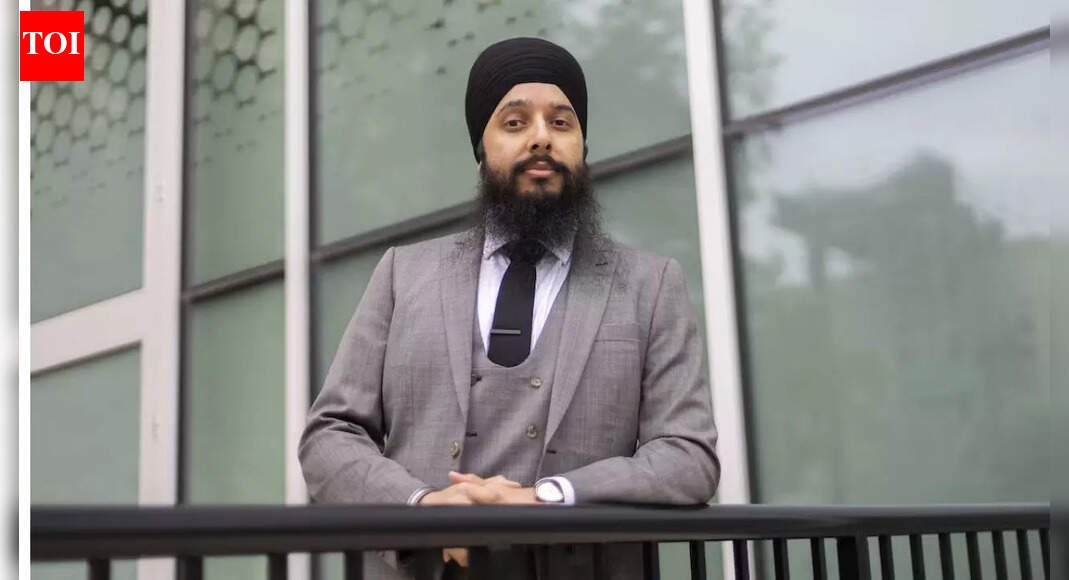
The Canadian Sikh lawyer who refused to swear oath to King Charles – and got the law changed
Image: The Globe and Mail

When Prabjot Singh Wirring was preparing to enter the legal profession in Alberta, he encountered a requirement that placed him at the centre of a constitutional and cultural debate. Like all prospective lawyers in the province, he was expected to swear an oath of allegiance to the reigning monarch, now King Charles III. For Wirring, an initiated Sikh, that oath posed a serious conflict with his religious beliefs.Rather than quietly comply or abandon his legal career, Wirring chose to challenge the rule in court. His case, first filed in 2022, ultimately reached the Alberta Court of Appeal. On December 16, 2025, the court ruled in his favour, concluding that the mandatory oath violated freedom of religion under the Canadian Charter of Rights and Freedoms and ordering the province to change the requirement.

Why a Sikh lawyer took Canada’s oath of allegiance to court

At the time, Alberta required all new lawyers to swear an oath of allegiance to the monarch as a condition of being admitted to the bar. While similar oaths exist elsewhere in Canada, most provinces do not make them mandatory or allow alternative affirmations.Wirring argued that the requirement forced him to choose between his religious obligations and his ability to practise law. He maintained that this amounted to an infringement of his Charter right to freedom of religion.A lower court initially dismissed Wirring’s case in 2023, characterising the oath as largely symbolic and not a meaningful infringement on religious freedom. Wirring appealed that decision, taking the matter to Alberta’s highest court.In December 2025, a unanimous three-judge panel of the Alberta Court of Appeal overturned the earlier ruling. The judges found that the oath was not merely symbolic and that it placed a real and substantial burden on Wirring by conditioning his professional future on violating his faith.

What the court decided

The Court of Appeal ruled that the mandatory oath violated section 2(a) of the Charter, which protects freedom of conscience and religion. The court declared the requirement to be of no force or effect and ordered the province to fix the issue within 60 days.Judges suggested several possible remedies, including abolishing the oath altogether, making it optional, or amending its wording to remove compulsory allegiance to the monarch.

Who is Prabjot Singh Wirring

Prabjot Singh Wirring is a Canadian lawyer based in Edmonton, Alberta. He earned his law degree from Dalhousie University and was completing his articling requirements when the oath issue arose. Wirring is an Amritdhari Sikh, meaning he has formally undergone Sikh initiation and follows a strict religious code of conduct.As part of his faith, Wirring believes he can swear allegiance only to Akal Purakh, the timeless divine being in Sikhism. He argued that pledging “true allegiance” to the King would contradict a prior, absolute religious oath, something his faith does not permit.

Broader reactions and debate

The decision triggered strong reactions across Canada. Civil liberties organisations welcomed the ruling as a clear affirmation that religious freedom must not be compromised by professional requirements. Supporters argued that the judgment brought Alberta into line with other provinces and reflected Canada’s pluralistic society.Critics saw the ruling as an erosion of Canada’s constitutional traditions. They argued that as a constitutional monarchy operating under the Westminster system, legal authority ultimately flows from the Crown, making the oath a meaningful civic commitment rather than a symbolic gesture.

[ad_2]

Source link

Annamalai arrested: TN police detains BJP workers for protesting garbage dumping; BJP calls it ‘condemnable’ | India News

[ad_1]

Annamalai arrested: TN police detains BJP workers for protesting garbage dumping; BJP calls it ‘condemnable’

NEW DELHI: The Tamil Nadu police on Thursday ‘arrested’ former BJP state president K Annamalai along with other party workers protesting against “dumping of waste from Tiruppur city at Chinnakalipalayam village,” BJP said.BJP alleged that it drew the Stalin government ire for supporting and protesting along with the the local residents against the decision of dumping the Tiruppur city in the Chinnakalipalayam village. It criticized the decision of arresting the BJP leader calling it condemnable.State BJP unit on X posting a video of Annamalai being detained said,” In the context of ongoing protests by residents of five villages against the dumping of waste from Tiruppur city at Chinnakalipalayam village, the Stalin government’s action of arresting our former state president, Mr. @annamalai_k, who participated in the protest in support of those people, is strongly condemnable..!”

[ad_2]

Source link

Gold price today: How much 22K, 24K gold costs in your city; check rates for Mumbai, Delhi & other cities

[ad_1]

Gold price today: How much 22K, 24K gold costs in your city; check rates for Mumbai, Delhi & other cities

Gold prices edged lower on Thursday, with the February contract slipping Rs 580, or 0.43%, to Rs 1,34,314 per 10 grams, as weak global cues weighed on precious metals, analysts said. In overseas markets, Comex gold futures for February delivery declined by $12.6, or 0.29%, to $4,361.3 per ounce, while silver futures for March 2026 delivery slid $1.18, or 1.76% , to $65.72 per ounce.

Here how much gold costs in your city today:

Gold rate in Delhi today

In the national capital, 22K gold is currently priced at Rs 12,375 per gram, while 24K gold is selling at Rs 13,499 per gram.

Gold rate in Mumbai today

Mumbai is seeing 22K gold at Rs 12,360 per gram, and 24K gold available at Rs 13,484 per gram.

Gold rate in Bengaluru today

Bengaluru markets list 22K gold at Rs 12,360 per gram, whereas 24K gold is priced at Rs 13,484 per gram.

Gold rate in Chennai today

Chennai continues to record among the highest figures, with 22K gold marked at Rs 12,440 per gram and 24K gold at Rs 13,571 per gram.

Gold rate in Kolkata today

In Kolkata, 22K gold is being sold at Rs 12,360 per gram, while 24K gold is available at Rs 13,484 per gram.

Gold rate in Hyderabad today

In Hyderabad, 22K gold is priced at Rs 12,360 per gram, and 24K gold at Rs 13,484 per gram.

Gold rate in Ahmedabad today

Ahmedabad buyers are paying Rs 12,365 per gram for 22K gold and Rs 13,489 per gram for 24K gold.

Gold rate in Jaipur today

Jaipur has 22K gold priced at Rs 12,375 per gram, and 24K gold tagged at Rs 13,499 per gram.

Gold rate in Bhubaneswar today

In Bhubaneswar, 22K gold stands at Rs 12,360 per gram, while 24K gold is quoted at Rs 13,484 per gram.

Gold rate in Kanpur today

Kanpur’s market shows 22K gold at Rs 12,375 per gram, with 24K gold selling for Rs 13,499 per gram.

[ad_2]

Source link