Breaking News
Insurance Bill to boost FDI, give regulator more power

[ad_1]

Insurance Bill to boost FDI, give regulator more power

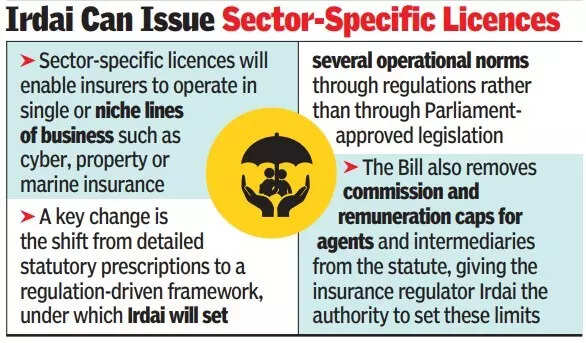
MUMBAI: The insurance sector is expected to see significant investments with the Sabka Bima Sabki Raksha (Amendment of Insurance Laws) Bill, 2025, to be introduced by the government in the winter session of Parliament.The Bill seeks to enable 100% FDI in insurance and allows Irdai, the regulator, to issue sector-specific licences, permitting new insurers to operate in single or niche lines of business such as cyber, property or marine insurance. The Bill does not specify whether composite licences permitting both life and non-life insurance under one entity will be allowed. The amendment states that govt can notify such other class of business that can be licenced in consultation with Irdai.The proposed law amends the Insurance Act, 1938, the LIC Act, 1956, and the IRDA Act, 1999. The amendments seek to widen capital access, modernise regulation, and expand insurance coverage by shifting oversight from statute to regulation.
Screenshot 2025-12-16 040046

.

The regulator’s financial powers are also proposed to be strengthened. According to the Bill, Irdai will be allowed to retain 25% of its annual surplus in a reserve fund to meet its expenses. A policyholders’ education and protection fund will be created, funded through penalties imposed on insurers. The definition of insurance intermediary has been expanded to include entities such as insurance repositories.A key change is the shift from detailed statutory prescriptions to a regulation-driven framework, under which Irdai will set several operational norms through regulations rather than through Parliament-approved legislation. Under the amendments, parameters such as minimum capital requirements, solvency margins, and investment norms will be moved out of the Act and placed under regulatory control. This allows Irdai to prescribe different capital requirements for different categories of insurers. Fixed statutory investment mandates, including compulsory allocations to government securities and approved investments, will be replaced by investment conditions specified through regulations.The Bill also removes commission and remuneration caps for agents and intermediaries from the statute, giving Irdai the authority to set these limits. Licensing requirements for surveyors and loss assessors are proposed to be eased, with oversight shifting to a regulatory framework. The Bill allows LIC to establish zonal offices without prior approval from the Centre. Overseas LIC branches will be permitted to maintain funds.

[ad_2]

Source link
Watch: FBI shares surveillance video of far-left terror group plotting New Year’s Eve attack in Los Angeles

[ad_1]

Watch: FBI shares surveillance video of far-left terror group plotting New Year’s Eve attack in Los Angeles

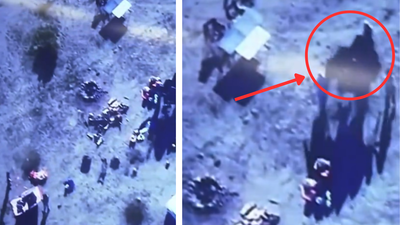
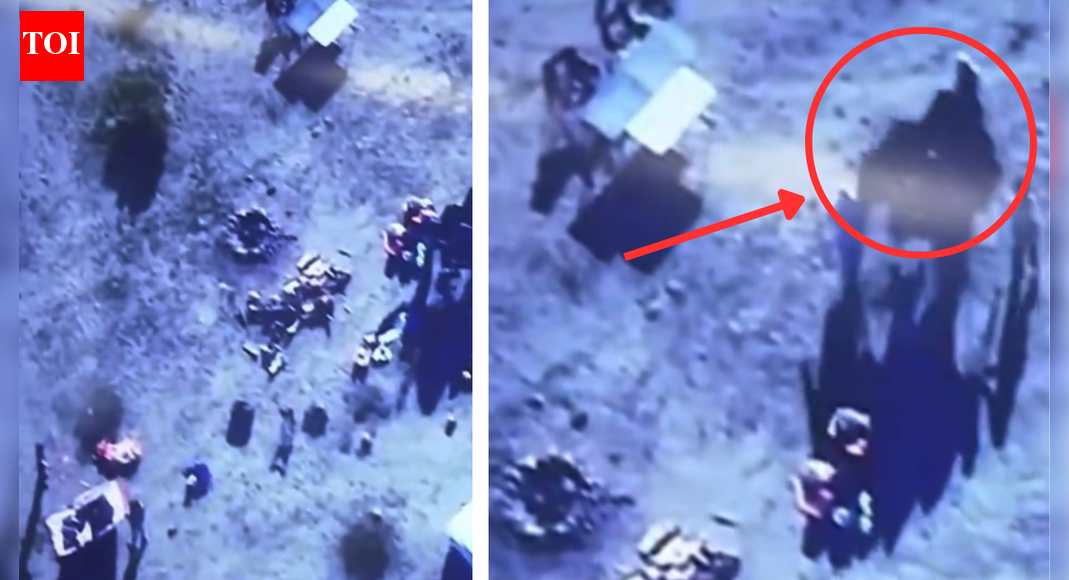
FBI foiled a suspected New Year’s Eve terror plot in California, releasing surveillance footage of the extremists just before their arrest.Four alleged members of a far-left pro-Palestinian anti-government group called the Turtle Island Liberation Front were apprehended last week while travelling east of Los Angeles to test improvised explosive devices (IEDs), officials said. The group is suspected of planning coordinated bomb attacks at at least five locations across the region.US Attorney General Pam Bondi posted on X that authorities prevented “far-left” extremists from executing “a massive and horrific terror plot”.The suspects were identified as: Audrey Illeene Carroll, 30; Zachary Aaron Page, 32; Dante Gaffield, 24; and Tina Lai, 41.The quad face charges, including conspiracy and possession of an unregistered destructive device, according to a complaint filed in the US District Court for the Central District of California.Officials said the group travelled to the desert with “precursor chemicals” on December 12, intending to build bombs. A surveillance plane captured their movements, and the FBI and Los Angeles SWAT team arrested the quartet without incident.The plot reportedly targeted two logistics centres at midnight on New Year’s Eve. The group also allegedly discussed attacking Immigration and Customs Enforcement (ICE) agents and vehicles in January or February. One of the extremists, Carroll, allegedly said: “That would take some of them out and scare the rest of them.”LAPD Chief Jim McDonnell praised the coordinated effort. “The successful disruption of this plot is a powerful testament to the strength of our unified response,” he said, adding that collaboration with allied agencies “prevented a potential tragedy and reaffirmed our shared commitment to safeguarding our communities”.The FBI has said the investigation is ongoing to identify any additional suspects connected to the plot.

[ad_2]

Source link

Mercosur hurdle: French objections and farm protests freeze EU trade deal; Brussels faces credibility test

[ad_1]

Mercosur hurdle: French objections and farm protests freeze EU trade deal; Brussels faces credibility test

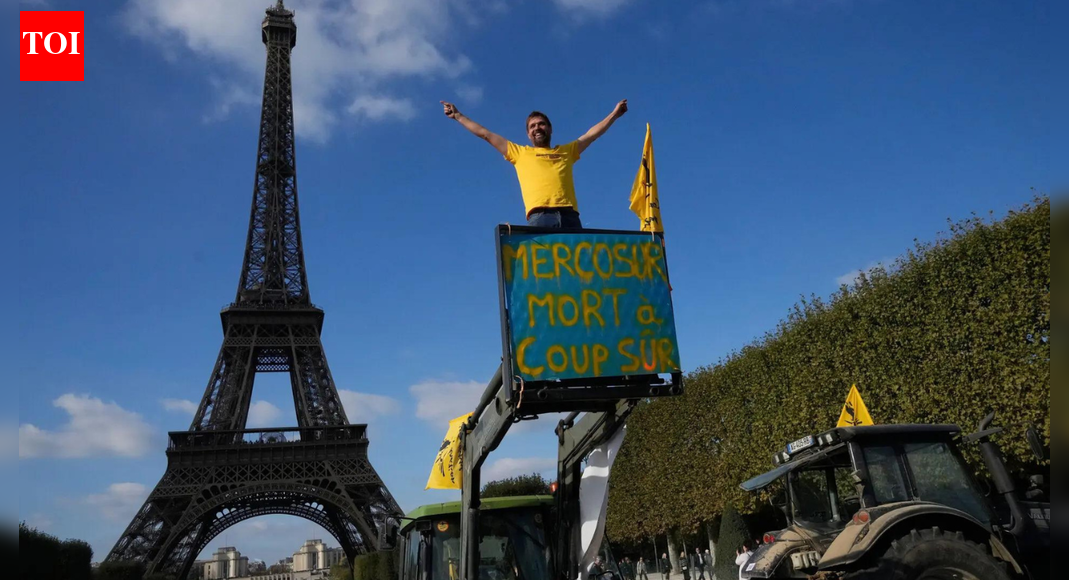
France’s last-minute opposition and mounting farmer protests are threatening to derail the European Union’s long-delayed free-trade agreement with South America’s Mercosur bloc, raising fresh doubts over whether the pact can be signed this year, AP reported.Angry European farmers, fearing cheaper agricultural imports and tougher competition, have taken to the streets in Brussels just as EU negotiators were hoping to close a deal that has taken nearly 25 years to negotiate. The agreement involves the 27-country EU and five Mercosur nations — Brazil, Argentina, Uruguay, Paraguay and Bolivia — and would gradually remove duties on most goods traded between the two blocs over 15 years.The accord, agreed in principle a year ago, still needs approval from all EU member states and the European Parliament. EU officials had planned for European Commission President Ursula von der Leyen and European Council President António Costa to sign the deal in Brazil on December 20, but growing resistance now threatens that timeline.French Prime Minister Sébastien Lecornu said on Sunday that the current deal was “unacceptable” and that the “conditions have not been met” for EU leaders to authorise its signing this week, effectively seeking a delay that could push the decision to 2026 or later. While acknowledging steps taken by the European Commission to protect farmers and tighten food safety checks, Lecornu said France remained unconvinced.Poland, Austria, the Netherlands and France fear Mercosur exporters could undercut EU farmers who operate under stricter labour, environmental and sanitary rules, including pesticide restrictions, analysts told AP. France has been pressing for “mirror clauses” that would require Mercosur producers to meet the same standards — demands that have not been fully accepted.Alicia Gracia-Herrero, a senior fellow at the Brussels-based Bruegel Institute, said the standoff exposed limits to the EU’s political unity and global influence. “If we cannot get this done even with (US President Donald) Trump’s pressure, what can you expect from the EU?” she said, warning that further delays could undermine Brussels’ credibility in talks with partners such as Indonesia and India.The deal comes at a sensitive time for the EU, which has been seeking to diversify trade ties after Trump imposed tariffs of 15% on most EU imports earlier this year, AP reported. Brussels sees the Mercosur pact as a strategic counterweight to aggressive trade tactics by both the US and China.European Commission spokesperson Olof Gill said the bloc is pushing to conclude the agreement by year-end, arguing it would strengthen the EU’s geopolitical standing. “We’re talking about bringing together two of the world’s biggest trading blocs,” he said, citing cooperation on climate, economic security and reform of the global rules-based order.Agriculture remains central to the dispute. The EU exported 235.4 billion euros ($272 billion) worth of agricultural goods in 2024, and critics warn the deal could hurt local dairy and beef producers and cause environmental damage. Supporters counter that it would save businesses about $4.26 billion in duties annually and open markets for products ranging from French wine to German pharmaceuticals and Brazilian minerals.To calm opposition, the European Commission has proposed safeguards, including mechanisms allowing farmers to trigger investigations if Mercosur imports are priced at least 10% below EU products, tighter border inspections for banned pesticides, and reforms to distribute agricultural subsidies more equitably.These measures, however, have failed to ease French concerns or quell farmer anger. Agricultural unions are again planning demonstrations in Brussels as EU leaders meet later this week, underlining the political risks surrounding a deal that was once seen as a cornerstone of the bloc’s trade strategy.

[ad_2]

Source link

Sri Lanka to arrest 1996 World Cup-winning captain Arjuna Ranatunga; here’s why | Cricket News

[ad_1]

Sri Lanka to arrest 1996 World Cup-winning captain Arjuna Ranatunga; here’s why
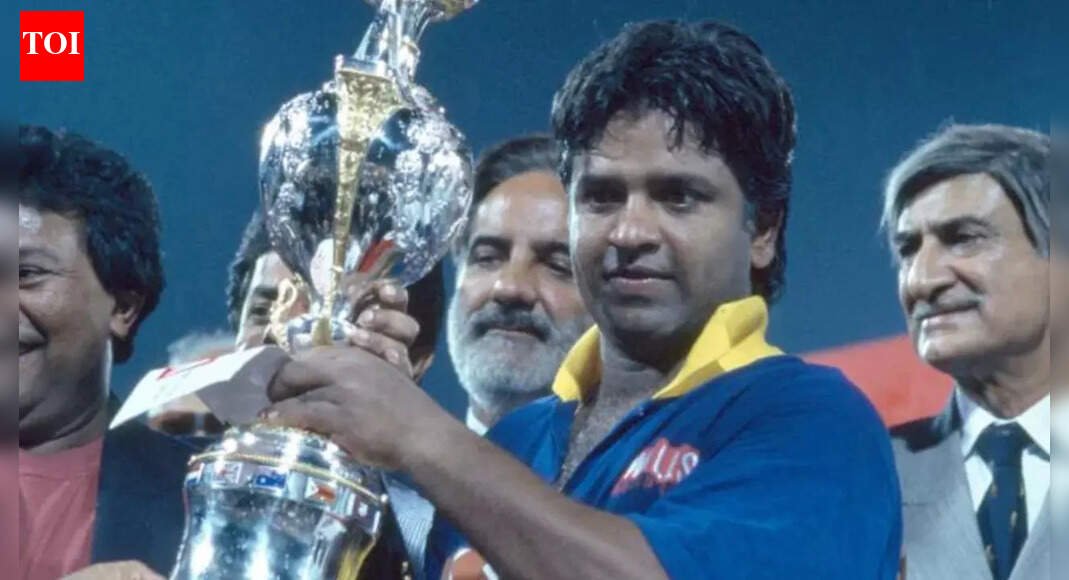
Arjuna Ranatunga. (Photo/social media)

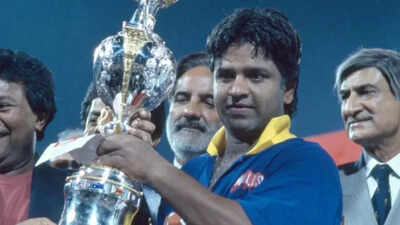
Sri Lankan authorities plan to arrest the country’s former men’s cricket team captain, Arjuna Ranatunga, on corruption charges linked to his tenure as petroleum minister, a court was told on Monday.Ranatunga and his brother are accused of altering the procedure for awarding long-term oil procurement contracts and instead making spot purchases at higher prices, according to a corruption watchdog.“The total loss to the state from 27 purchases is 800 million rupees,” the Commission to Investigate Allegations of Bribery or Corruption told the court, as reported by news agency AFP. The amount was equivalent to just over $5 million at the time the deals were made in 2017.The commission told Colombo Magistrate Asanga Bodaragama that Arjuna Ranatunga was currently abroad and would be arrested upon his return.His elder brother, Dhammika Ranatunga, who was chairman of the state-run Ceylon Petroleum Corporation at the time, was arrested on Monday and later released on bail.The magistrate imposed a travel ban on Dhammika, who holds dual citizenship of Sri Lanka and the United States.The next hearing in the case is scheduled for March 13.Arjuna Ranatunga, 62, captained Sri Lanka to victory in the 1996 Cricket World Cup, defeating Australia in the final.The case involving the Ranatunga brothers is part of a broader crackdown by the government of Sri Lankan President Anura Kumara Dissanayake, who came to power last year after pledging to act against corruption.Another brother, Prasanna Ranatunga, a former tourism minister, was arrested last month in connection with an insurance fraud case. That matter is pending.Prasanna Ranatunga had earlier been convicted in June 2022 for extorting money from a businessman and is currently serving a two-year suspended prison sentence.

[ad_2]

Source link

India-New Zealand trade talks: Commerce Secretary says FTA negotiations nearing closure; deal expected soon

[ad_1]

India-New Zealand trade talks: Commerce Secretary says FTA negotiations nearing closure; deal expected soon
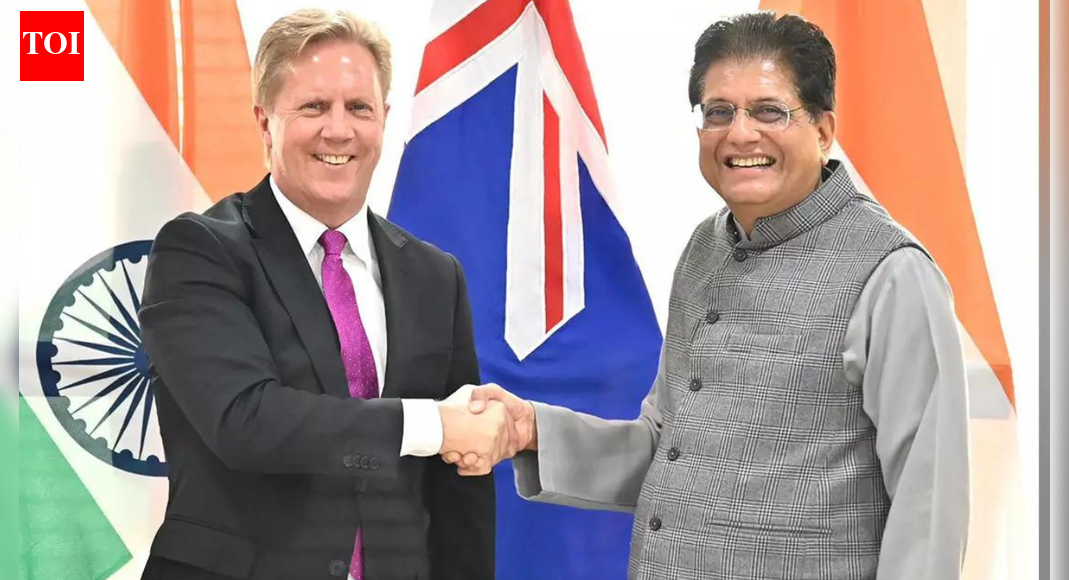
Commerce and Industry Minister Piyush Goyal with New Zealand’s Trade Minister Todd McClay (File photo-ANI)

Negotiations between India and New Zealand on a proposed free trade agreement are likely to be wrapped up soon, Commerce Secretary Rajesh Agrawal said on Monday, signalling progress after multiple rounds of discussions at both official and ministerial levels, PTI reported.“We are in a good zone where we hope that the agreement will be closed and finalised soon… It is expected to be done soon,” Agrawal told reporters, following the conclusion of the fourth round of talks.The negotiations, formally launched on March 16, 2025, have gathered pace in recent weeks, with both virtual and in-person meetings held to bridge remaining gaps. Last week, New Zealand’s Trade Minister Todd McClay visited India to review the progress of discussions with Commerce and Industry Minister Piyush Goyal.Bilateral merchandise trade between the two countries stood at $1.3 billion in 2024-25, marking a growth of nearly 49 per cent over the previous year. Officials on both sides expect the proposed agreement to further boost trade flows, deepen investment linkages, strengthen supply-chain resilience and provide a predictable framework for businesses.New Zealand currently has a relatively open tariff regime, with its average import duty at 2.3 per cent, which could support faster market access once the pact is concluded.A free trade agreement typically involves a substantial reduction or elimination of customs duties on a broad range of traded goods, along with eased norms to promote trade in services and investment.India and New Zealand had earlier initiated talks on a Comprehensive Economic Cooperation Agreement (CECA) in April 2010 to enhance trade in goods, services and investment. However, after nine rounds of negotiations, discussions stalled in 2015.India’s key exports to New Zealand include clothing, fabrics and home textiles; pharmaceuticals and medical supplies; refined petroleum products; agricultural machinery such as tractors and irrigation equipment; automobiles; iron and steel; paper products; electronics; shrimps; diamonds; and basmati rice.New Zealand’s major exports to India comprise agricultural products and minerals, including apples, kiwifruit, lamb and mutton, milk albumin, lactose syrup, coking coal, logs and sawn timber, wool and scrap metals.

[ad_2]

Source link

PM Modi in Jordan: To hold talks with King Abdullah II; what’s at stake | India News

[ad_1]

PM Modi in Jordan: To hold talks with King Abdullah II; what's at stake
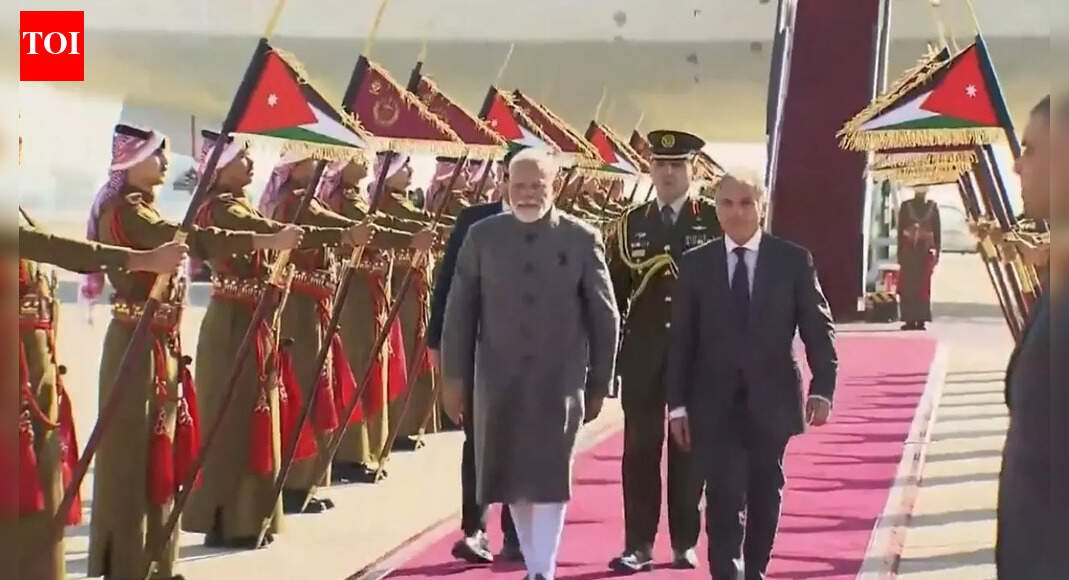
PM Modi with Jordanian counterpart Jafar Hassan (Photo: Screengrab/DD news)

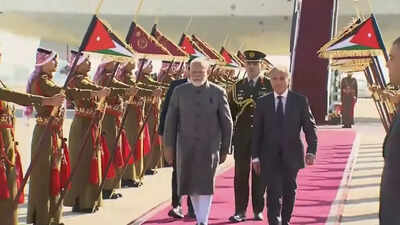
NEW DELHI: Prime Minister Narendra Modi landed in Amman, the capital of Jordan, as part of his three-nation tour, which also includes Ethiopia and Oman.Jordanian Prime Minister Jafar Hassan received PM Modi at the airport. The visit to Jordan coincides with the 75th anniversary of diplomatic ties between the two countries, a milestone expected to strengthen bilateral engagement further.

PM Modi Begins Jordan, Ethiopia, Oman Tour To Boost Ancient Ties, Expand India’s Global South Role

PM Modi will be in Jordan from December 15 to 16 at the invitation of King Abdullah II ibn Al Hussein, during which he will hold talks to review the full range of India-Jordan relations and discuss regional developments.He is also set to meet the Indian diaspora in the country.India and Jordan share warm and long-standing relations rooted in mutual respect and goodwill, with their first cooperation agreement signed in 1947 and full diplomatic ties established in 1950. High-level engagements in recent years have significantly strengthened bilateral ties, including the visits of King Abdullah II to India in 2018, President Pranab Mukherjee’s visit to Jordan in 2015, Prime Minister Narendra Modi’s transit visit to Amman in 2018, and National Security Adviser Ajit Doval’s visit in 2020. Regular leadership-level contacts continue to guide the partnership.Bilateral trade has expanded steadily, with India emerging as Jordan’s fourth-largest trading partner. In 2023–24, bilateral trade stood at USD 2.875 billion, with Indian exports accounting for USD 1.465 billion. Indian investments of around USD 1.5 billion, particularly in phosphates, fertilisers, textiles, and garments, form a key pillar of economic ties. Flagship joint ventures include the IFFCO-Jordan Phosphate Mines Company project and the Indo-Jordan Chemical Company. Trade and institutional mechanisms such as the Trade and Economic Joint Committee and sector-specific joint working groups support economic cooperation.India and Jordan also cooperate in health, education, skill development, science and technology, and capacity building. The India-Jordan Centre of Excellence in Information Technology, inaugurated in 2021, is a major initiative aimed at training Jordanian professionals in advanced IT fields. Educational links include scholarships under ITEC and ICCR programmes, with ITEC slots recently increased from 37 to 50 annually.People-to-people ties are reinforced by cultural exchanges, tourism cooperation, and a vibrant Indian diaspora of around 17,500 in Jordan. Cultural festivals, film collaborations, yoga events, and academic initiatives further underscore the breadth of the India-Jordan partnership.In the second leg of his tour, PM Modi will visit Ethiopia from December 16 to 17, marking his first visit to the country. He is scheduled to hold detailed talks with Ethiopian Prime Minister Abiy Ahmed Ali on all aspects of bilateral relations. Addis Ababa, the capital, is also the headquarters of the African Union.The MEA said the Ethiopia visit will reaffirm the shared commitment of both countries, as partners in the Global South, to strengthening friendship and expanding bilateral cooperation.In the final leg of his tour, PM Modi is scheduled to visit Oman from December 17 to 18 at the invitation of Sultan Haitham bin Tarik, marking his second visit to the country. The Ministry of External Affairs said India and Oman share an all-encompassing Strategic Partnership rooted in centuries-old ties of friendship, trade, and strong people-to-people connections.The visit coincides with 70 years of diplomatic relations between the two nations and follows the Sultan of Oman’s state visit to India in December 2023. Both sides are expected to conduct a comprehensive review of cooperation across areas, including trade, investment, energy, defence, security, technology, agriculture, and culture, and exchange views on regional and global issues of mutual interest.

[ad_2]

Source link

Trade talks: India, Mexico open dialogue to blunt tariff shock; preferential pact on the table

[ad_1]

Trade talks: India, Mexico open dialogue to blunt tariff shock; preferential pact on the table

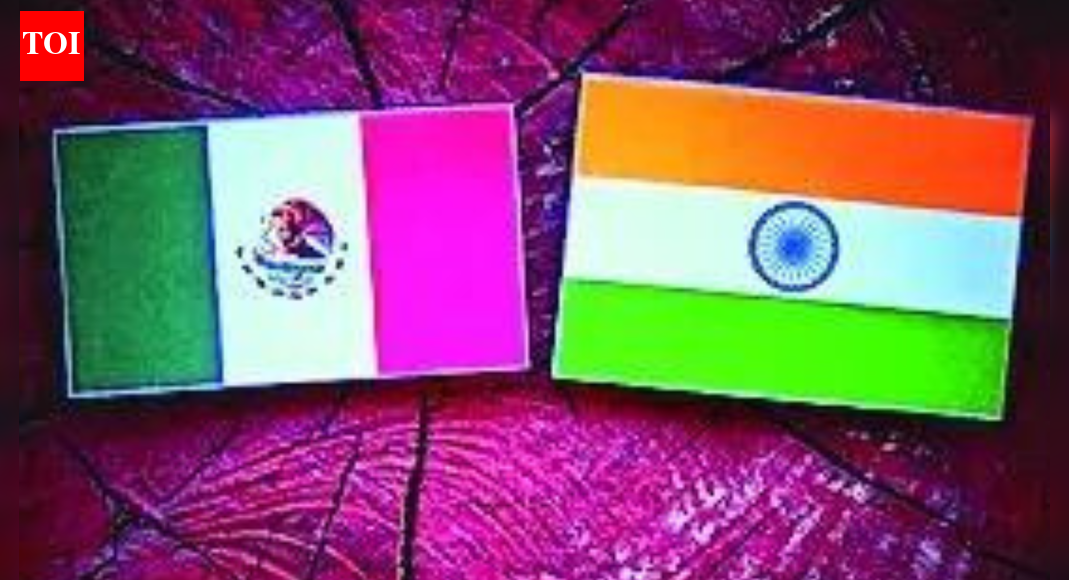
India has begun discussions with Mexico to mitigate the impact of steep import tariffs approved by the Latin American country on goods from non-free trade agreement partners, including India, and to explore the possibility of a preferential trade agreement to safeguard bilateral trade interests, ANI reported.Mexico has cleared tariff hikes of up to 50 per cent, effective from 2026, on select imports from Asian countries such as India and China. The measure, framed as support for domestic industry and a correction of trade imbalances, raises MFN import duties in the 5–50 per cent range on 1,455 tariff lines under the WTO framework, targeting countries without FTAs.According to Indian estimates, exports worth around $2 billion could be affected, especially automobiles, two-wheelers, auto components, textiles, iron and steel, plastics, leather and footwear. The proposal was first floated in September 2025, deferred to August 2026 after concerns from non-FTA partners and industry, and then resubmitted on December 3, 2025. It has since been cleared by both houses of Mexico’s Parliament and is awaiting Presidential Gazette notification.India–Mexico merchandise trade stood at $8.74 billion in 2024, with Indian exports at $5.73 billion and imports at $3.01 billion, resulting in a trade surplus of $2.72 billion for India, according to DGCI&S data. Key Indian exports include light vehicles ($0.88 billion), motorcycles ($0.39 billion), base metals ($0.76 billion), auto parts ($0.74 billion), mechanical machinery ($0.46 billion), textiles and clothing ($0.41 billion), chemicals ($0.43 billion) and pharmaceuticals ($0.38 billion). Major imports from Mexico comprise crude petroleum oils ($1.7 billion), smartphones ($0.27 billion) and gold ($0.17 billion).The government said it has been closely assessing Mexico’s tariff revisions, engaging stakeholders and pursuing dialogue to protect exporters while ensuring a stable trade environment for businesses and consumers in both countries, ANI reported. The Indian Embassy had raised concerns with Mexico’s Ministry of Economy in late September, which clarified that the measure was not directed against India and reaffirmed commitment to bilateral ties.“Through continuous engagement thereafter, a virtual meeting between Commerce Secretary Shri Rajesh Agrawal and Vice Minister Dr. Luis Rosendo was held on 2 December 2025, agreeing to pursue a trade agreement to mitigate the impact promptly, with technical discussions initiated from 12 December 2025,” Agrawal said in a presentation.A recent report by the Global Trade Research Initiative (GTRI) warned that Mexico’s tariff move could significantly disrupt Indian exports from January 1, 2026, noting that the policy aligns more closely with recent US protectionist measures and signals support for near-shoring and tighter North American supply chains.

[ad_2]

Source link

‘Always been more than one tendency in party’: Shashi Tharoor shares post comparing his ideas with Rahul Gandhi; calls it a ‘thoughtful analysis’ | India News

[ad_1]

‘Always been more than one tendency in party’: Shashi Tharoor shares post comparing his ideas with Rahul Gandhi; calls it a ‘thoughtful analysis’

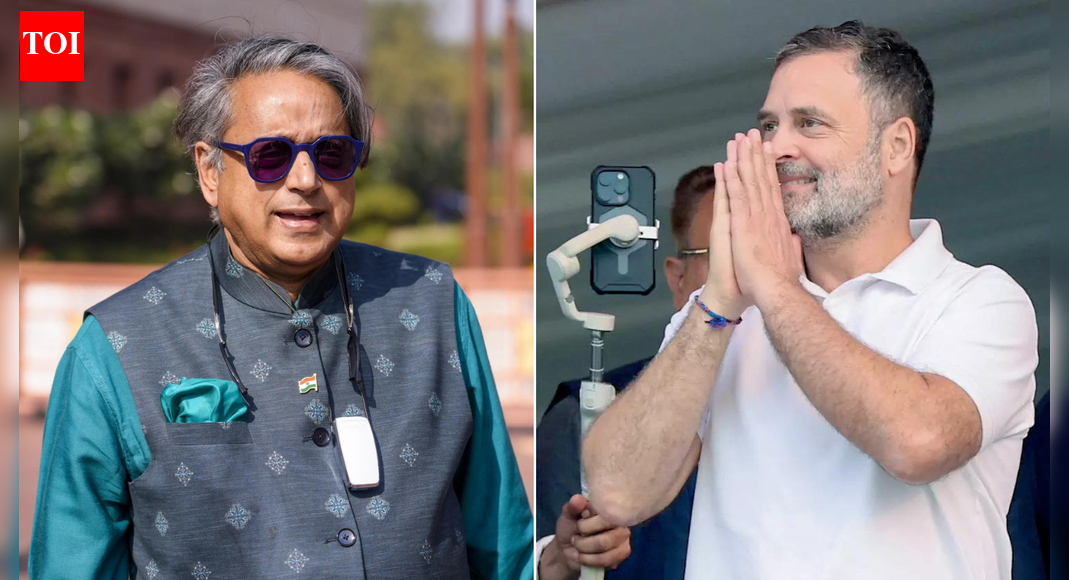
NEW DELHI: Congress MP Shashi Tharoor on Monday reposted a thread which compared his ideological tendencies with that of Rahul Gandhi‘s. The thread called the leader of opposition’s rural policies “devastating”, while that of Tharoor’s more aligned with the “background, political language, and audience.”Tharoor called the analysis “fair, and reflective of a certain perception of the current reality.” The post also called the Congress party

Congress vs Congress: Tharoor’s Essay Triggers Storm, BJP Adds Fuel With Jibe

“Rahul Gandhi represents a different strategic turn: Congress’s post-2010 attempt to reposition itself as a rural, grievance-driven mass party to counter BJP dominance. This was a reactive, yet devastating shift that can be shown through the electoral results themselves,” the thread posted by X account Civitas Sameer read.“The most ironic part of it all is that the individual leading this rural turn is among the most elite and insulated figures in Indian politics. Born into a dynastic family, symbolic rural politics without lived or organisational depth lacks any credibility,” it continued.The post then went on to contrast Rahul with Tharoor saying: “Tharoor, by contrast, shows alignment between background, political language, and audience. His increasing focus on SM platforms (particularly Instagram) and digital media reflects awareness of political fit, not ideological drift.”“Tharoor has not engaged in a ‘rightward shift’ as many on the Congress party side make it out to be. He was a proud Hindu from day one for his own reasons (whatever it may be) and even wrote a whole book about it called ‘Why I am a Hindu’,” it further said.Though the post noted that Tharoor was being sidelined within the party, it clarified that it wasn’t “an endorsement of Tharoor’s worldview.”“Many on the Right are merely noticing it now because of the reactive ostracisation efforts of the mainstream INC. Like the urban technocratic leaders of the past, he is being sidelined by this new INC. However, this is not an endorsement of Tharoor’s worldview. It is an observation that he understands limits, while INC as a party does not. INC today is neither a credible urban reformist party nor a serious rural mass party. It has abandoned one without successfully transforming,” it said.“Thank you this thoughtful analysis. There has always been more than one tendency in the party; your framing is fair, and reflective of a certain perception of the current reality,” he said.The post also called the Grand Old Party “neither a credible urban reformist party nor a serious rural mass party.”“However, this is not an endorsement of Tharoor’s worldview. It is an observation that he understands limits, while INC as a party does not. INC today is neither a credible urban reformist party nor a serious rural mass party. It has abandoned one without successfully transforming,” the post said.

[ad_2]

Source link

WPI data: Wholesale inflation still in negative zone at -0.32%; rises from – 1.21% in October as food prices move up

[ad_1]

WPI data: Wholesale inflation still in negative zone at -0.32%; rises from - 1.21% in October as food prices move up

Wholesale inflation in November was down 0.32%, thanks to falling prices of food articles, oils and electricity. However, the figure was still 0.71% up as compared to the previous month, when the WPI recorded a sharp plunge of 1.21%. This increase is attributed to the month-on-month increase in the prices of pulses and vegetables, according to government data.WPI-based inflation stood at 2.16% in November, last year.Primary articles record an uptickIn November, primary articles, which account for 22.62% of the index, registered a notable rise, as the index climbed by 2.07%, from 188.2 in October to 192.1. Within this category, minerals prices increased by 4.50%, food articles by 2.50% and non-food articles by 1.28%. At the same time, crude petroleum and natural gas prices declined by 1.62% during the month, as compared to October.Fuel and power also increase The fuel and power segment also inched up marginally, with the index rising by 1.03%. Electricity prices jumped by 6.70% in November, while mineral oil prices slipped by 0.67%. Coal prices, meanwhile, showed no change from October.Manufactured productsIn contrast, prices of manufactured products, which form the largest share of the WPI basket at 64.23%, edged down slightly in November. The index dipped by 0.07% to 145.0 from 145.1 in the previous month. Of the 22 two-digit NIC groups under this category, 14 recorded price declines, seven saw increases and one remained unchanged.Price drops were seen in areas such as fabricated metal products (excluding machinery and equipment), food products, non-metallic mineral products, computer, electronic and optical products, and chemicals. Meanwhile, prices rose in segments including other manufacturing, machinery and equipment, textiles, electrical equipment and wearing apparel.Food inflationFood inflation at the wholesale level showed some moderation, though it remained negative. The WPI Food Index, with a weight of 24.38%, rose to 195.0 in November from 192.0 in October. On a year-on-year basis, food inflation stood at (-) 2.60% in November as compared with (-) 5.04% in the previous month.The next Wholesale Price Index, which will be for the month of December 2025, is scheduled to be released on January 14, next year.

[ad_2]

Source link

‘Rahul ji himself says daro matt…’: Ex-MLA Mohammed Moquim’s first reaction after Congress expulsion; what he said | India News

[ad_1]

‘Rahul ji himself says daro matt…’: Ex-MLA Mohammed Moquim’s first reaction after Congress expulsion; what he said

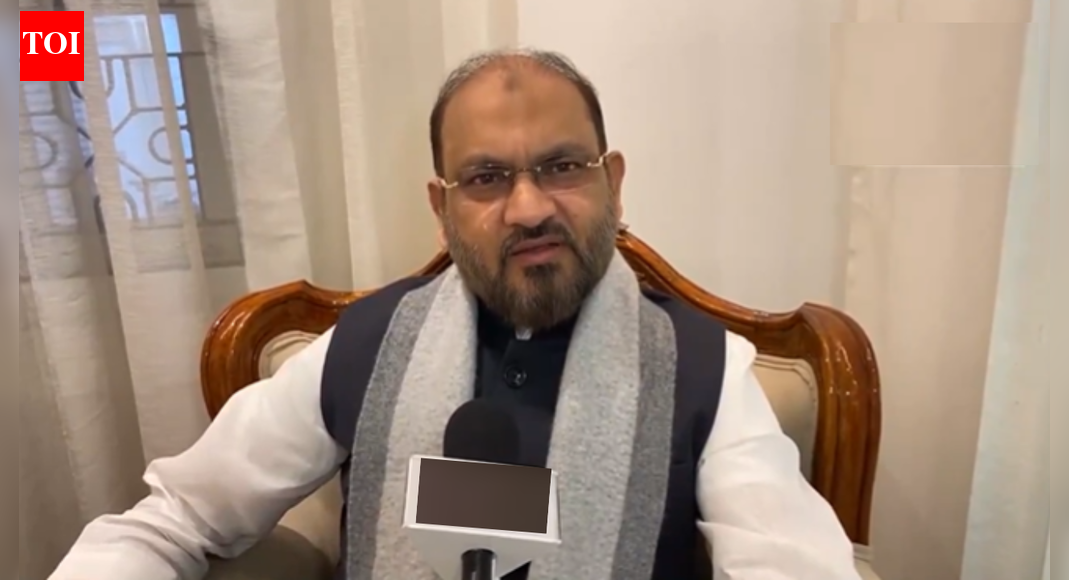
NEW DELHI: Former Congress MLA Mohammed Moquim reacted to his expulsion from the party on Monday, defending his move to write to Sonia Gandhi expressing dissatisfaction with the party leadership, citing recent electoral losses. He cited Rahul Gandhi’s suggestion of “daro matt (don’t be scared)” and said that he had “told the truth to the party’s high command” but had to be expelled.“I came to know that I have been expelled from the party. I had taken the right step after due deliberation. We are such a big party but we are unable to connect to people in every state. We are unable to win. Congress is minimising. So, as a true Congress worker, I thought that if the high command is not meeting us and we are unable to communicate with them,” he said.

Congress Shows Rift As Odisha MLA Writes To Sonia Gandhi Seeking Kharge’s Removal, Priyanka’s Rise

Also read: Congress expels ex-Odisha MLA over ‘anti-party’ activities“So, I expressed my thoughts to Sonia ji through a letter. The truth and the need to reform the party – I just gave her a suggestion. Later, it came in the media and when they asked me I told them the truth. Rahul ji himself says ‘daro matt’…I told the truth to the party’s high command but had to be expelled,” Moquim added.Congress party cited “anti-party” activities as the reason behind his expulsion.“This is for the information of all concerned that AICC has approved the proposal for the expulsion of Sri Md. Moquim from the primary membership of the party, due to anti-party activities,” the notice issued by Odisha Pradesh Congress Committee (OPCC) said.In the letter, Moquim had urged Sonia to bring forward “young leaders”, as the party was going through a “difficult phase”.“The recent outcomes in Bihar, Delhi, Haryana, Maharashtra, and Kashmir, where our defeats were by staggering margins, are not just electoral setbacks; they reflect a deeper organisational disconnect,” the letter said.“A series of wrong decisions, misguided leadership choices, and the continued concentration of responsibility in the wrong hands have weakened the Party from within. Rather than correcting these errors, we appear to be repeating them and the consequences are now visible to the entire nation,” the letter added.

[ad_2]

Source link