Breaking News
Donald Trump on $1 million ‘Gold Card’ visa: Nobody talked to me more about it than Apple CEO Tim Cook who said …

[ad_1]
Donald Trump on $1 million ‘Gold Card’ visa: Nobody talked to me more about it than Apple CEO Tim Cook who said ...

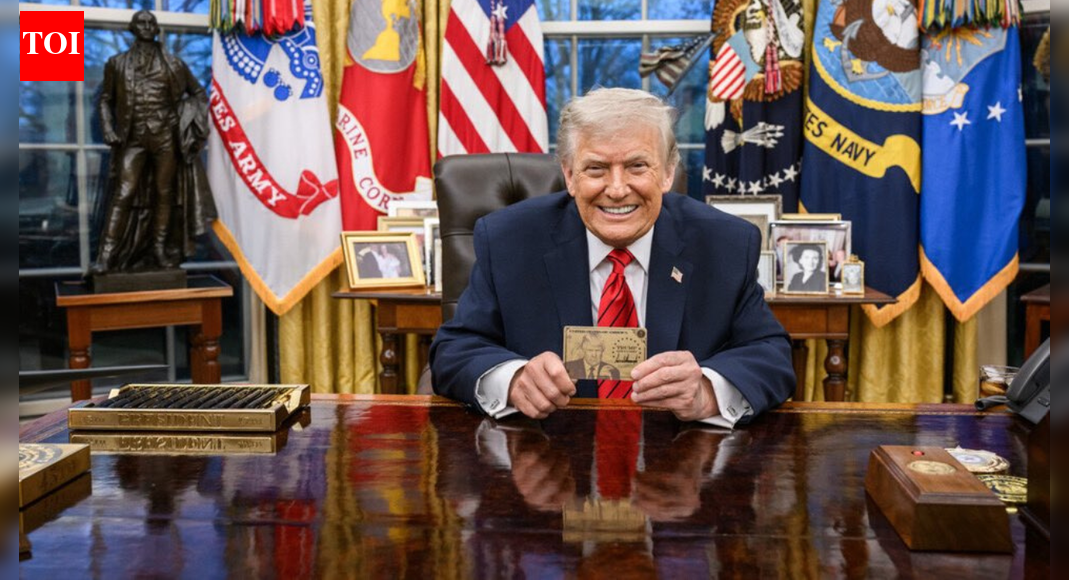
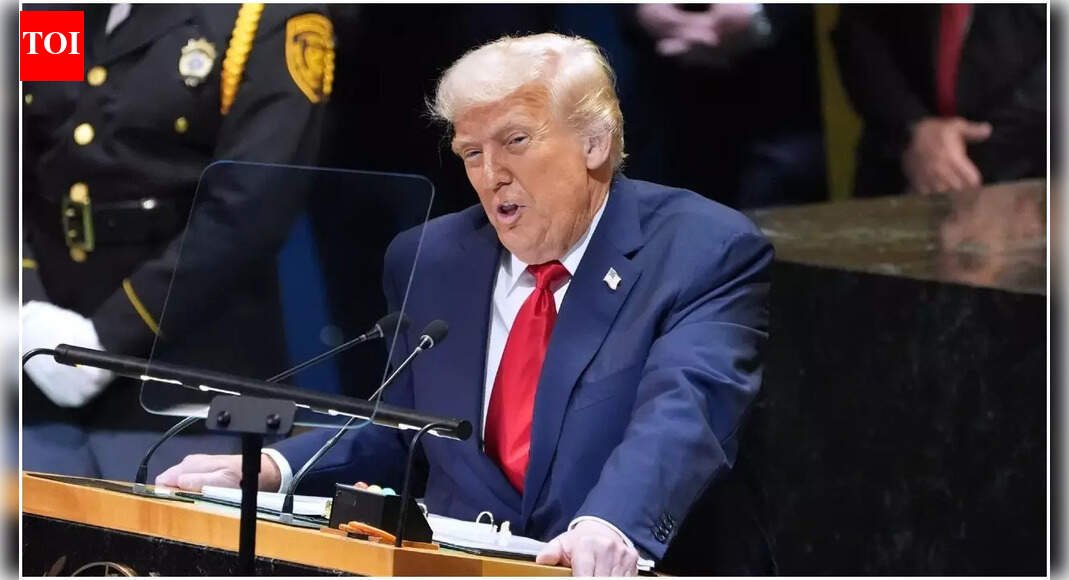
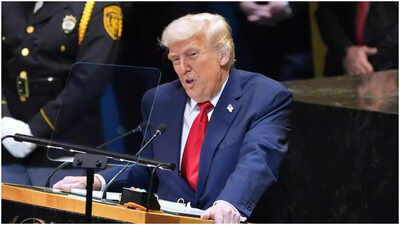
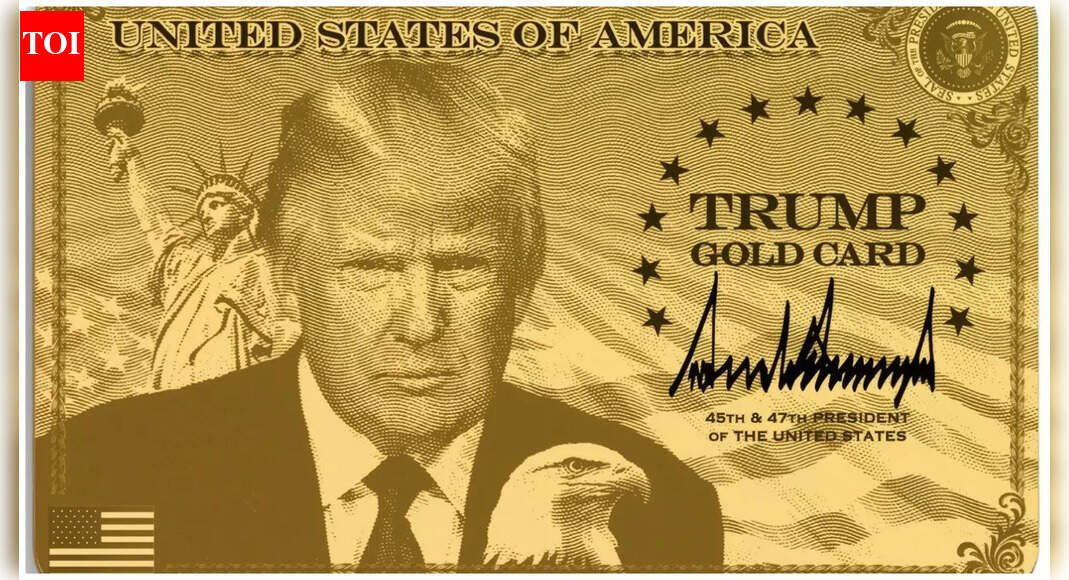
Donald Trump has announced what is being termed ‘gold card’ – an expedited visa that will grant US residency to immigrants in ‘record time’. The Trump administration has also launched a website accepting applications for the $1 million gold card. During the announcement, Trump told reporters that the company will be happy with the new gold card, specifically naming iPhone maker Apple and its CEO Tim Cook. “The companies will be very happy and I know Apple will be happy. Nobody talked to me more about it than Tim Cook who said it’s a real problem,” Trump told reports, adding “It’s not going to be a problem anymore.”

What is Trump’s $1 million ‘gold card’

The new ‘gold card’ visa program has been in the works for months. In an executive order dated September 19, 2025, the ‘gold card’ visa is aimed to “facilitate the entry of aliens who have demonstrated their ability and desire to advance the interests of the United States by voluntarily providing a significant financial gift to the Nation.” As per an official government webpage, applicants will have to pay a $15,000 DHS processing fee and, after background approval, a contribution of $1 million. With the new ‘gold card’ visa, immigrants will “receive U.S. residency in record time,” the website states.The card will be subject to availability. Applicants who are eligible and approved for the gold card will get legal status as an EB-1 or EB-2 visa holder. While the application and approval process is expected to take weeks, officials noted that “a small number of countries may have wait times of up to a year or more based on visa availability.”“A direct path to Citizenship for all qualified and vetted people. SO EXCITING! Our Great American Companies can finally keep their invaluable Talent,” wrote Trump in a social media post announcing the $1 million ‘gold card’ visa.

DHS secretary Kristi Noem praises new ‘gold card’ visa program

Sharing a post on X, the Department of Homeland Security Kristi Noem wrote:“The Department of Homeland Security is working closely with @CommerceGov to facilitate the rollout of President Trump’s Gold Card program.Under this historic initiative, qualified individuals and corporations, who contribute $1 million and $2 million respectively, will receive expedited EB-1 or EB-2 green cards following rigorous vetting.This landmark program fulfills President Trump’s promise to attract the world’s most successful entrepreneurs and investors to America while guaranteeing they have skin in the game.”


[ad_2]

Source link
Asian stocks today: Markets rise as Fed delivers third straight rate cut; silver hits record high

[ad_1]

Asian stocks today: Markets rise as Fed delivers third straight rate cut; silver hits record high

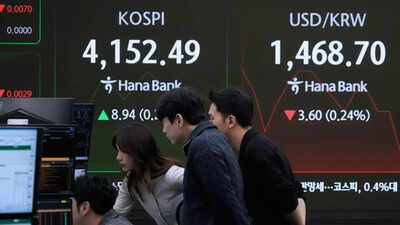
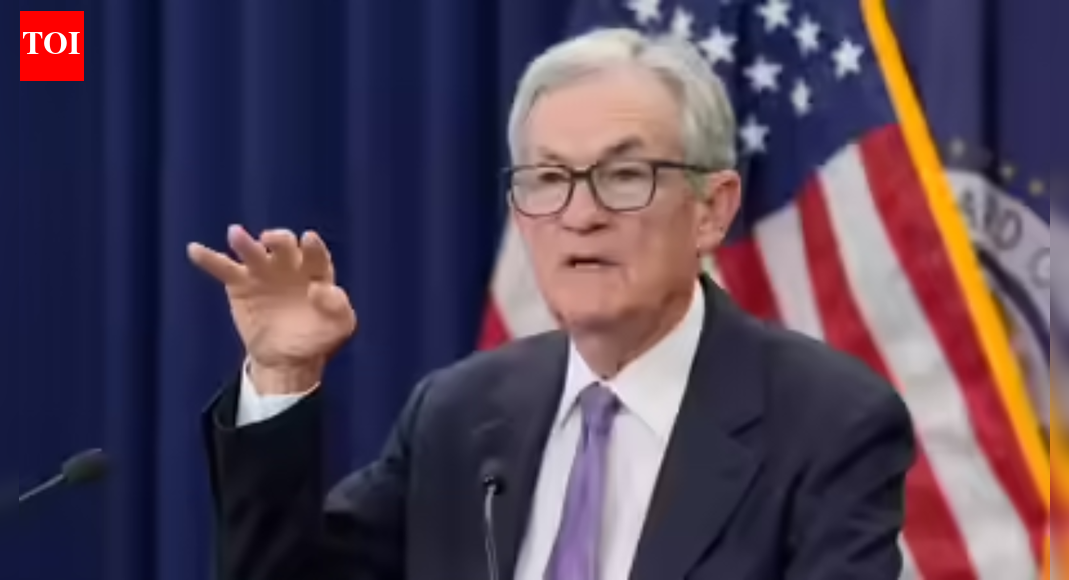
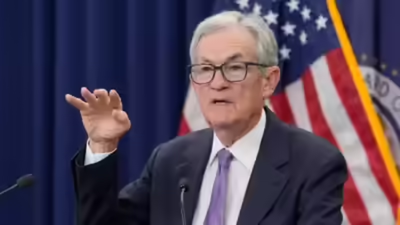
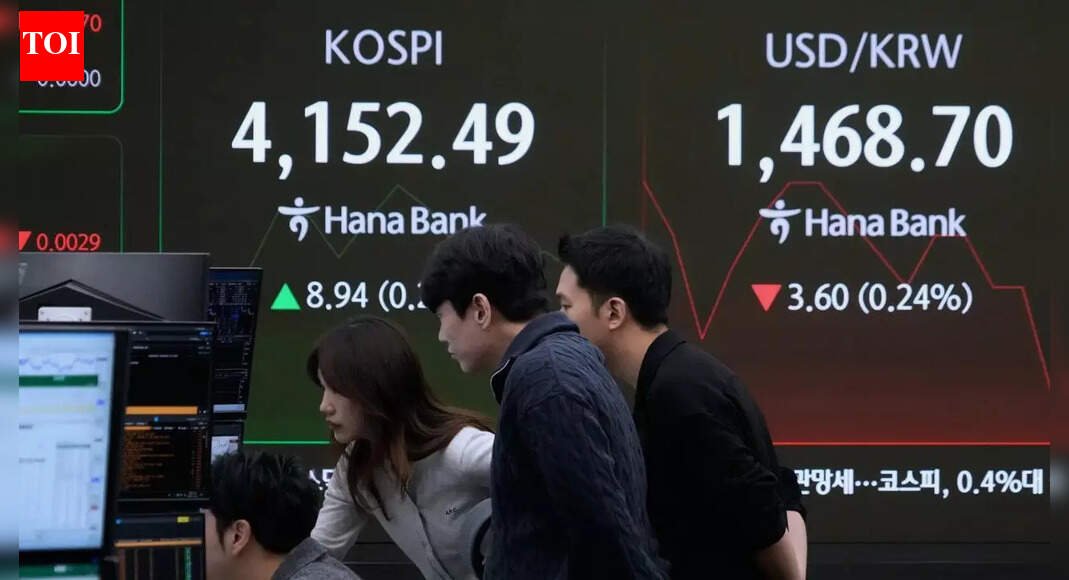
Asian markets traded higher on Thursday after the US Federal Reserve delivered its third consecutive interest rate cut, although gains were capped as policymakers hinted they could slow the pace of future reductions.The latest quarter-point cut, bringing borrowing costs to their lowest level in three years, had already been widely expected. Investors, however, drew comfort from Fed Chair Jerome Powell’s post-meeting comments, where he struck a tone that was “less hawkish” than feared.After a positive close on Wall Street, most Asian markets advanced. Hong Kong, Sydney, Seoul, Singapore, Wellington, Manila and Jakarta all traded higher.While, Tokyo, Shanghai and Taipei slipped.Policymakers are attempting to bolster the US labour market, which has shown persistent weakness through the year. Concerns over slowing jobs growth have increasingly outweighed worries about elevated inflation, with some officials expecting the price impact of Donald Trump’s tariffs to ease over time, reported AFP.Expectations for aggressive easing in 2026 have cooled after the Fed used language similar to late-2024 — widely interpreted then as signalling a pause in its latest statement.Two policymakers dissented. Trump appointee Stephen Miran voted for a deeper 50-basis-point cut, while another member opposed any cut at all.Powell emphasised that the central bank remained flexible, saying officials are well placed to decide the “extent and timing of additional adjustments based on the incoming data, the evolving outlook and the balance of risks”.The US dollar weakened further against major global currencies. Gold, typically a preferred asset when US interest rates decline jumped nearly 1% to rise above $4,200. Silver extended its surge as well, hitting a new record of $62.8863 after crossing the $60 mark earlier this week amid strong demand and tightening supplies.Gold prices later eased slightly, pulling back from a near one-week high after the U.S. Federal Reserve delivered a divided interest rate cut that left markets unsure about the pace of easing in 2026.Spot gold edged down 0.2% to $4,221.49 per ounce at 0300 GMT, after touching its highest level since December 5 earlier in the session. Meanwhile, US gold futures for February delivery rose 0.6% to $4,249.70 per ounce.Silver continued to outperform. Spot silver climbed 0.8% to $62.25 per ounce after hitting a fresh record of $62.88 earlier in the day. The metal has gained 113% so far this year, supported by robust industrial demand, falling inventories and its recent inclusion in the US critical minerals list.


[ad_2]

Source link

US Federal Reserve cuts rate: What does it mean for Indian stock markets? Explained

[ad_1]

US Federal Reserve cuts rate: What does it mean for Indian stock markets? Explained

Most experts believe that a rate cut by the US Federal Reserve is a positive signal for the Indian markets. (AI image)

The US Federal Reserve cut the benchmark rate by 25 basis points in the latest monetary policy review. A split US Federal Reserve announced its third successive interest rate cut of the year, whilst indicating a potential pause in future cuts. The rate cut, reducing the range to between 3.50 percent and 3.75 percent, brings it to the lowest level in approximately three years – matched market predictions.A rate cut by the central bank of the world’s largest economy has implications for markets globally and India is no different. Indian equity benchmarks, Sensex and Nifty, are already down 2.05% and 2.16% from their lifetime highs hit a few days ago. The markets have been bleeding despite a repo rate cut by the Reserve Bank of India (RBI). Continuous outflow of foreign capital, rupee depreciation, and lack of clarity on the India-US trade deal are acting as negative triggers for the stock market. What does the US Fed’s rate cut mean for the Indian stock markets? We take a look:

US Federal Reserve’s rate cut decision:

US Federal Reserve Chairman Jerome Powell indicated that the central bank finds itself “well positioned to wait and see how the economy evolves from here.” The Federal Reserve reintroduced specific phrasing from late 2024 in its policy statement, suggesting a temporary halt to rate cuts.Powell emphasised that the committee remains suitably placed to assess the “extent and timing of additional adjustments based on the incoming data, the evolving outlook and the balance of risks.”The Federal Reserve projected one rate cut for the upcoming year, whilst highlighting increased employment-related concerns in its latest policy announcement.

What it means for Indian stock markets

Most experts believe that a rate cut by the US Federal Reserve is a positive signal for the Indian markets. Vijay Singh Gour, Research Analyst at Mirae Asset Sharekhan explains that the Fed’s monetary policy influences India’s financial markets, mainly by driving capital flows. The market had anticipated a 25 basis point rate cut, which would ease global liquidity. Such a cut is generally positive for Indian equities because lower US Treasury yields make dollar-denominated assets less appealing, encouraging Foreign Institutional Investors (FIIs) to increase allocations to emerging markets like India, thus boosting inflows and strengthening the Rupee, Vijay Singh Gour told TOI. “The 25 bps rate cut from the Federal Reserve is likely to provide some relief to the Indian currency and the FII sell off. This shall ease some pressure on Indian markets which are expecting some positive triggers,” says Sujan Hajra, Chief Economist & Executive Director, Anand Rathi Group. “Also the Fed rate cut further opens up the space for RBI for a rate cut in the current low inflation environment to support growth,” he tells TOI.Dr VK Vijayakumar, Chief Investment Strategist, Geojit Investments Limited cautions that the rate cut bodes well for the Indian markets, but the net impact may be muted. “The Fed’s decision to cut rates by 25 bps was on expected lines. The noteworthy part of the decision is the 9-3 vote, which signals a tough road ahead for further rate cuts. The FOMC’s dot plot indicates two more rate cuts – one in 2026 and another in 2027. However, this might change since the Fed chair has clearly indicated that “ we are well positioned to wait and see how the economy evolves,” he tells TOI. The Fed decision, though favourable from the market perspective, is unlikely to have a significant impact on the Indian market, which is being weighed down by the sustained selling by FIIs, the huge supply of paper from IPOs and the poor earnings growth of the last six quarters, he feels. “Of these, earnings growth is the most significant, and this is going to change for the better in the coming quarters. A slowdown in IPOs is likely in 2026, and along with this when earnings growth picks up, the market will respond positively. Weakness in the market now presents buying opportunities in high quality stocks, particularly in largecaps and selectively in midcaps,” VK Vijayakumar adds.


[ad_2]

Source link

Trump’s $1M ‘Gold Card’ visa unveiled: What applicants stand to gain; what remains off-limits

[ad_1]

Trump's $1M ‘Gold Card’ visa unveiled: What applicants stand to gain; what remains off-limits

US President Donald Trump on Wednesday unveiled his long-anticipated “gold card,” a high-priced immigration offering designed to grant legal status, and eventually US citizenship, to individuals and companies willing to pay significant sums. Framed as a replacement for the three-decade-old EB-5 investor visa, the new programme opens the door to permanent residency for foreign nationals ready to invest $1 million personally or $2 million through their employers. Trump has cast the gold card as a way to attract the world’s “best people,” pitching it not only as a magnet for elite graduates from US universities but also as a revenue generator for the federal government.The rollout comes against the backdrop of Trump’s strict immigration crackdowns. Even as his government has pursued mass deportations and tightened border controls, Trump has repeatedly argued that exceptional foreign-born talent should be allowed to stay.Also read: Trump launches Gold Card, cites corporate demand — what it means“THE UNITED STATES GOVERNMENT’S TRUMP GOLD CARD IS HERE TODAY! A direct path to Citizenship for all qualified and vetted people. SO EXCITING! Our Great American Companies can finally keep their invaluable Talent,” Trump said in a post on Truth Social.

What ‘Gold Card’ gets you?

Fastrack legal residency and US citizenship

Despite its branding, the “gold card” is essentially a revamped green card, but one that Trump touts as “much better” and offering a “stronger path.” Holders receive permanent legal residency, meaning they can live and work in the United States indefinitely and, over time, pursue US citizenship. Unlike the EB-5 programme, which hinges on job-creation requirements, the new card’s criteria appear streamlined: payment of the required fee and completion of background vetting.Green Cards are accessible via multiple routes including sponsorship, lotteries, or EB-5 investments starting at $800,000 with job creation requirements. Gold Cards require a $5 million direct payment (or sometimes cited as $1 million for a base version), bypassing traditional processes for faster approval aimed at economic benefit.Under the Gold Card program, a successful applicant would receive lawful permanent resident status under the EB-1 or EB-2 visa categories, as determined by the US department of homeland security and subject to availability.

Access for top tier graduates and skilled labour

One of Trump’s central arguments for the programme is its ability to retain highly skilled graduates from US universities, particularly those from China, India, and France. Businesses, he has said, routinely lose world-class candidates because their visa status is uncertain. The gold card aims to remove that barrier, offering companies the opportunity to secure permanent residency for prized recruits, with each card tied to a single individual.“Tremendous people won’t have to say they graduated from college and have to go back to India, China, France; we’re taking care of that,” Trump said as he launched the card.“You can’t hire people from the best colleges because you don’t know whether or not you can keep the person,” the US president said.

$15,000 vetting fee

Every application includes a $15,000 vetting fee to fund thorough background checks, according to commerce secretary Howard Lutnick.The administration has framed this level of scrutiny as ensuring only top-qualifying individuals obtain residency. Meanwhile, Trump emphasized the programme’s fiscal upside, promising all proceeds will go directly to the US government to fund “positive” national initiatives.Also read: Gold Card visa cost, eligibility, application timeline, and how to apply — explained

What it doesn’t get you

No job obligations, no mention of caps

Unlike the EB-5 system it replaces, the gold card comes with no stated requirements for job creation by investors or employers. Trump’s announcement also omitted any reference to annual caps or limitations on the number of cards available. This leaves questions about oversight, scalability, and how the programme fits into broader immigration policy frameworks.

No guarantee of lower costs for businesses

While corporations can purchase multiple cards, each one applies to only one employee, meaning costs scale directly with the number of hires. Companies seeking to retain multiple foreign-born graduates could find themselves paying millions, a model that favors well-capitalized employers and wealthy individuals but may not help smaller firms struggling with talent shortages.

Not a departure from merit-based immigration politics

Despite Trump’s hardline stance on immigration elsewhere, the gold card neither resolves nor escapes the political tensions within his base. Critics within the MAGA movement have objected to policies that increase legal immigration, even in selective forms. Although framed as “bringing in the best people,” the programme does not address broader concerns around fairness, accessibility, or the treatment of immigrants without wealth or elite credentials.


[ad_2]

Source link

Fed likely to cut rates, may signal pause

[ad_1]

Fed likely to cut rates, may signal pause

The US Federal Reserve is expected to cut interest rates on Wednesday as policymakers grapple with gaps in economic data caused by the recent govt shutdown and work through competing views about the risks facing the economy. The anticipated quarter percentage point cut may come with a non-committal approach to next year’s rate path given the division among policymakers between those skeptical about the need for more rate reductions in the face of still-elevated inflation and those who feel the economy and job market may weaken if the U.S. central bank doesn’t bring down borrowing costs.New quarterly economic projections to be released alongside the latest rate decision will show how Fed officials expect the economy to evolve in 2026 along with what they see as the appropriate path of rates. Those year-ahead forecasts, however, often become outdated quickly due to incoming data and say little about the pace of expected policy actions.(This is a Reuters story)


[ad_2]

Source link

Adani Enterprises’ rights offer fully subscribed

[ad_1]

Adani Enterprises' rights offer fully subscribed

MUMBAI: The Rs 25,000-crore rights offer for Adani Enterprises, the flagship of the Adani Group, closed with 108% subscription with the public portion subscribed 130%. The promoters of the company who hold 74% in the company had said that they would participate in the rights offer to subscribe to their full quota. The public portion of the offer was oversubscribed by 30%.Institutional investors in Adani Enterprises, including GQG, the US-based fund that has stakes in several group companies, several mutual funds, including SBI MF, Aditya Birla MF, Kotak MF also participated in the offer, sources said. LIC and IHC of Abu Dhabi, both holding about 4% in the company, too participated.


[ad_2]

Source link

Trump says US seized ‘largest ever’ oil tanker off Venezuela; dramatic footage shows operators fast-roping aboard — watch

[ad_1]

Trump says US seized ‘largest ever’ oil tanker off Venezuela; dramatic footage shows operators fast-roping aboard — watch

The United States seized an oil tanker off the coast of Venezuela, President Donald Trump announced Wednesday, marking a dramatic escalation in his administration’s pressure campaign against Nicolás Maduro, the leader of Venezuela. “As you probably know, we have just seized a tanker off the coast of Venezuela, a large tanker, very large, the largest one ever seized, actually,” Trump said during a White House event on a new luxury visa programme. Trump declined to say who owned the tanker. But when asked about the ship’s oil, he said: “Well, we keep it, I guess.” Meanwhile, hours after Trump’s statement, Attorney General Pam Bondi shared a video in a post in X and said that the government executed a seizure warrant on a tanker headed from Venezuela and Iran.“Today, the Federal Bureau of Investigation, Homeland Security Investigations, and the United States Coast Guard, with support from the Department of War, executed a seizure warrant for a crude oil tanker used to transport sanctioned oil from Venezuela and Iran.”“For multiple years, the oil tanker has been sanctioned by the United States due to its involvement in an illicit oil shipping network supporting foreign terrorist organizations. This seizure, completed off the coast of Venezuela, was conducted safely and securely—and our investigation alongside the Department of Homeland Security to prevent the transport of sanctioned oil continues,” she added. A video posted by Bondi showed armed operators descending ropes from helicopters onto the deck of the vessel before entering what appeared to be the bridge.The reports came two days after Trump declined to rule out deploying troops in an interview with POLITICO. In the interview, Trump repeatedly declined to rule out sending troops to bring down Maduro, whom he accused of exporting drugs and criminals to the United States. Since then, the administration restored sanctions, bolstered the US military presence in the Caribbean and used lethal force against vessels it alleged were trafficking drugs in concert with the Venezuelan military. Officials said the measures aimed to pressure Maduro to cede power to the opposition.

How the market reacted?

According to the NBC, as soon as the reports being circulated online, the oil prices began steadily rising, climbing more than 1.3% or about 75 cents, as of 3:45 p.m. ET. US crude prices jumped 1 percent Wednesday afternoon, to just under $59 a barrel. As per the reports from Politico, the seizure could put pressure on shippers to stop taking Venezuelan crude, potentially tightening global oil supplies. U.S. crude prices jumped 1 percent Wednesday afternoon, to just under $59 a barrel. Trump, who has repeatedly pointed to declining gasoline prices amid voters’ complaints about the rising cost of living, repeated his claim Wednesday that gasoline prices had dropped to $1.99 a gallon, though data collected by the American Automobile Association put the national average slightly below $3 per gallon.


[ad_2]

Source link

PM-led panel finalises names for CIC & ICs, Rahul Gandhi dissents | India News

[ad_1]

PM-led panel finalises names for CIC & ICs, Rahul Gandhi dissents

NEW DELHI: The three-member selection committee headed by Prime Minister Narendra Modi that met on Wednesday to appoint the new Chief Information Commissioner (CIC), eight information commissioners (ICs) and a vigilance commissioner is learnt to have finalised the names. However, Leader of Opposition (LoP) in Lok Sabha Rahul Gandhi is learnt to have registered his strong dissent to the choices and submitted the same in writing, sources said.Gandhi is said to have strongly objected to the absence of names from Scheduled Castes, Scheduled Tribes, and OBC communities. The issue raised by the Congress neta is likely to be a key talking point in the upcoming mega rally against “vote chori” being organised by Congress on Dec 14.

‘Detect, Delete, Deport’: Amit Shah Blasts Rahul Gandhi Over Infiltrators, Oppn Stages Walkout

The details of the appointments were not known till late in the evening. The meeting that lasted for nearly one and a half hours was held at the Prime Minister’s Office. It was also attended by home minister Amit Shah. Sources said the LoP sought more details of the appointees and also questioned the criteria adopted for the selection of CIC and ICs. According to sources, Gandhi was of the view that the govt’s proposal on the names was completely “biased”. He apparently said that the absence of weaker communities from constitutional positions was unacceptable, given the need to strengthen their participation across the board, including higher positions. The LoP is learnt to have forcefully put forth his differences on the govt proposal.

CIC has been without a chief since September 13

There were three parts to the meeting: One on appointment of CIC, another on choice of eight ICs & third on vigilance commissioner. While Gandhi registered his “dissent” in writing separately on the govt’s proposal for CIC and vigilance commissioner, he gave his “observations” on the eight names for the post of ICs, sources said. The Central Information Commission has been without a chief since incumbent Heeralal Samariya demitted office on Sept 13 on attaining the age of 65 years. Besides the chief, the commission can have up to 10 commissioners. Currently, it is making do with just two – Anandi Ramalingam and Vinod Tiwari. According to commission’s website, the pending caseload stands at over 30,800. The eight posts of information commissioners have been vacant since Nov 2023. With Samariya demitting office, the chief’s post fell vacant for the seventh time since 2014.There was a total of 53 names in the panels prepared by the govt and presented before the collegium for the 10 positions. On the objection raised, the govt is said to have agreed to include a few from the marginalised communities in the panels. But there was still no clarity about their inclusion in the appointments. Under Section 12 (3) of the RTI Act, the prime minister is the chairperson of the search committee, which also comprises the LoP and a Union minister nominated by the PM. According to the procedure for the appointment of CIC, the particulars of interested candidates are invited through advertisements in newspapers and through the DoPT website.


[ad_2]

Source link

Didn’t engineer chaos to bypass pilot rest rules: IndiGo chairman

[ad_1]

Didn't engineer chaos to bypass pilot rest rules: IndiGo chairman
IndiGo’s chairman, Vikram Singh Mehta, apologized for recent flight disruptions, denying they were deliberate. He stated external experts will identify root causes to prevent future chaos. Mehta clarified that the airline followed new pilot rest rules and did not compromise safety. A combination of internal and external factors, not intentional actions, pushed systems beyond limits, causing cancellations.

NEW DELHI: Under government scrutiny for unprecedented flight disruptions, IndiGo chairman Vikram Singh Mehta on Wednesday denied the chaos was deliberate. Apologising multiple times in his about 8-minute video message, he said “external technical experts (will) work with the management; help determine the root causes, and ensure corrective action so that this level of disruption never occurs again”.DGCA is probing whether the airline caused the disruptions to avoid abiding by the new pilot rest rules. Mehta denied it. “Over the past week there has been a lot of criticism. Some fair. Some not. The fair criticism is that the airline let down you down. We owe answers to customers, govt, shareholders, employees. We will examine every aspect of what went wrong. We will learn from it,” he said.“However, there are some allegations that are untrue. That IndiGo engineered the crisis. That we tried to influence govt rules. That we compromised safety. That the board wasn’t involved. These claims are incorrect. IndiGo has followed pilot fatigue rules as they came into effect. We operated under new rules throughout, both in July and in Nov. We did not attempt to bypass them. Nor did we anything that impacted our unblemished track record of safety. The disruptions of last week did not happen because of any deliberate actions,” said the former chairman of Shell Group of companies in India.“On Dec 3, an unexpected chain of events led to large-scale flight cancellations. This continued into Dec 4 and 5. Thousands of our passengers were left stranded. We did not meet your expectations during those days. This happened because of a combination of of internal & external events including minor technical glitches; schedule changes linked to start of winter; adverse weather; increased congestion in aviation system and implementation of and operation under updated crew rostering rules. This is not an excuse, this is simply the truth. This combination of events pushed our systems beyond their limits,” Mehta said. He said the board was constantly involved in tackling the issue and that things were back on track much before expected. IndiGo operated 1,900 flights to 138 destinations with normal punctuality, he said. Although he admitted: “Last week’s events are a blemish on this company’s pristine record. Our compay has erred. It has to win back your trust. It will not be easy. It will depend on actions and not words. It will be a journey.”


[ad_2]

Source link

President Murmu stresses human rights for all, including ‘person in last mile’ | India News

[ad_1]

President Murmu stresses human rights for all, including 'person in last mile'
President Murmu emphasized ensuring human rights for everyone, highlighting India’s shift from entitlement to empowerment and charity to rights over the past decade. She noted government efforts to provide essential services like clean water, electricity, and healthcare, securing dignity for all households.

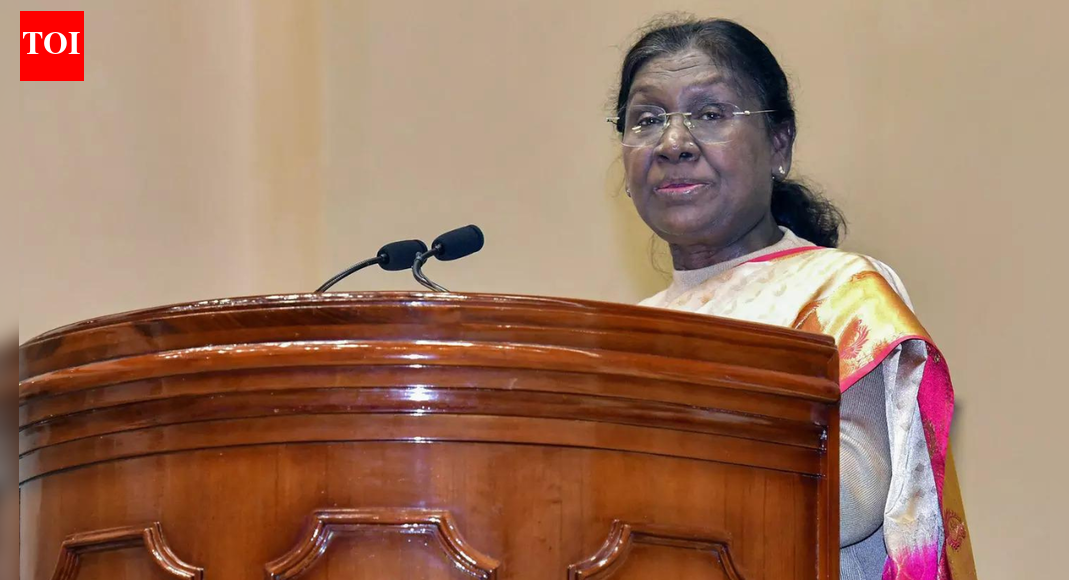
NEW DELHI: Emphasising that human rights must be ensured for all, including the “person in the last mile”, President Droupadi Murmu highlighted that over the last decade India has moved ahead with a different approach – “from entitlement to empowerment & from charity to rights”.Murmu spoke of the work being done by govt to ensure that every-day essential services like clean water, electricity, cooking gas, healthcare, banking services, education, and improved sanitation become available to all. “This uplifts every household and secures dignity,” she said.The President described the notification of the four Labour Codes related to wages, industrial relations, social security and occupational safety, health and working conditions as a “transformative change” that lays foundation for a future-ready workforce & more resilient industries.Murmu was speaking at the National Human Rights Commission-hosted event in the capital. She said Human Rights Day is also an “occasion to remind us that the universal human rights are inalienable and they form the bedrock of a just, equitable, and compassionate society”.The President called upon every citizen to recognise that human rights are not sole responsibility of govts or NHRC, but that protecting rights of fellow citizens is a shared duty.


[ad_2]

Source link