Breaking News
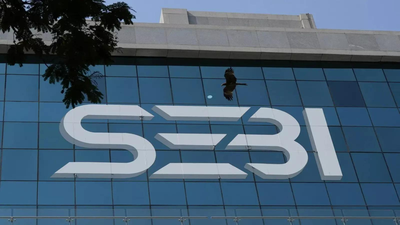
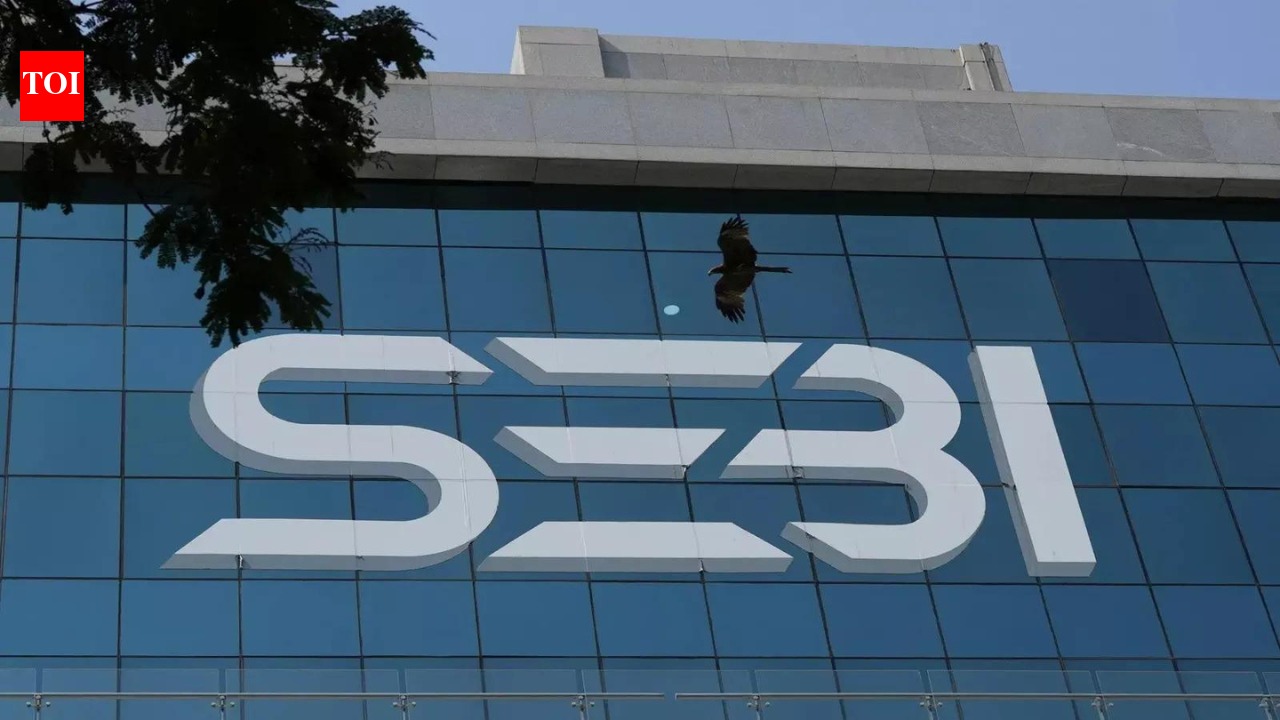
Sebi board to consider easing FPI settlement norms, intermediary rule changes at Monday meet

[ad_1]

Sebi board to consider easing FPI settlement norms, intermediary rule changes at Monday meet

The Securities and Exchange Board of India (Sebi) board will meet on Monday to deliberate on a wide-ranging agenda that includes a proposal to ease fund settlement norms for foreign portfolio investors (FPIs) and changes to regulatory frameworks governing market intermediaries, people familiar with the matter told news agency PTI.A key proposal before the board is to allow FPIs to net funds for same-day cash market trades instead of settling each transaction individually. Under the existing framework, FPIs are required to settle equity cash market trades on a gross basis, funding each purchase transaction independently of sale transactions even if both occur on the same day.Sebi has proposed permitting “netting of funds”, which would enable FPIs to use proceeds from same-day sales to offset purchase obligations, requiring them to meet only the net payable amount. The move is aimed at improving operational efficiency and reducing the cost of funding for FPIs, particularly on index rebalancing days. It is also expected to help minimise forex-related costs arising from timing mismatches between inflows and outflows.The proposal follows concerns that the current gross settlement mechanism imposes additional funding requirements on FPIs for at least one extra day, thereby increasing transaction costs.This will be the fifth board meeting chaired by Sebi Chairman Tuhin Kanta Pandey since he assumed office on March 1, 2025.Apart from FPI-related reforms, the board will review several governance and regulatory proposals, including a comprehensive overhaul of the “fit and proper person” criteria applicable to market intermediaries. The aim is to enhance procedural clarity and fairness, the people said.As part of the proposed changes, Sebi is considering abolishing the reference to initiation of winding-up proceedings as a disqualification, so that only a final winding-up order is taken into account while assessing whether a person is fit and proper.The regulator is also looking to explicitly include the right to a hearing in the rules. While the practice of providing a reasonable opportunity of being heard already exists, the proposal seeks to formally codify this provision to remove procedural ambiguity.In addition, the board is expected to consider ease-of-doing business proposals relating to real estate investment trusts (REITs) and infrastructure investment trusts (InvITs).Another key agenda item is the discussion of a report submitted by a high-level panel on conflict of interest and transparency. The panel has proposed wide-ranging reforms aimed at enhancing disclosure norms and fostering a “zero-tolerance” culture to address potential conflicts of interest involving top Sebi officials, they added.

[ad_2]

Source link

Govt orders faster city gas project clearances, hikes commercial LPG allocation to ease supply stress

[ad_1]

Govt orders faster city gas project clearances, hikes commercial LPG allocation to ease supply stress

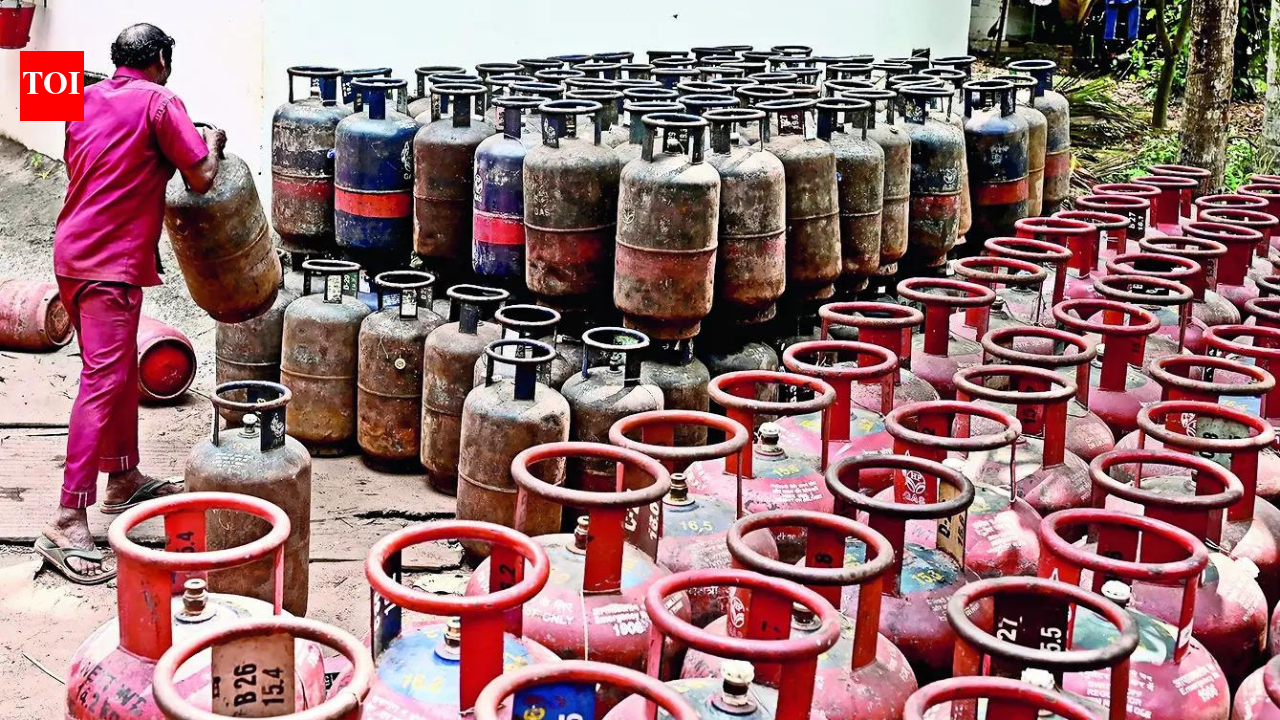
The government has stepped up efforts to streamline gas distribution and ease supply pressures, directing faster processing of city gas projects while increasing allocations of commercial LPG to key sectors amid a challenging geopolitical environment.The Petroleum and Explosives Safety Organisation (PESO) has instructed its offices to dispose of City Gas Distribution (CGD) applications within 10 days, aiming to accelerate the rollout of piped natural gas (PNG), an official statement said.Commercial LPG consumers in major cities and urban areas have also been advised to shift to PNG as part of a broader strategy to reduce dependence on liquefied petroleum gas. Domestic LPG supply remains stable, with no reported dry-outs at distributorships and normal delivery patterns across the country, the statement said, adding that most deliveries are being carried out through the Delivery Authentication Code (DAC) while panic bookings have subsided, PTI reported.On the commercial LPG front, the government has progressively increased allocations. After restoring 20 per cent supply earlier, an additional 10 per cent allocation linked to PNG expansion reforms was announced on March 18. A further 20 per cent allocation was cleared on March 21, taking total commercial LPG supply to 50 per cent.The latest increase prioritises sectors such as restaurants, dhabas, hotels, industrial canteens, food processing units, dairy operations, community kitchens and subsidised food outlets run by state governments and local bodies. Provision has also been made for 5 kg cylinders for migrant workers.Around 20 states and Union Territories have implemented the revised allocation guidelines, while public sector oil marketing companies are supplying commercial LPG in the remaining regions. In the past eight days, about 15,440 tonnes of LPG have been lifted by commercial entities.Educational institutions and hospitals continue to receive priority, accounting for nearly half of the total commercial LPG allocation. Despite global uncertainties affecting supply, the government indicated that domestic availability remains under control while efforts continue to transition urban consumers towards PNG.

[ad_2]

Source link

Indo-Tibet commerce set to resume via Shipki La from June, says Himachal minister

[ad_1]

Indo-Tibet commerce set to resume via Shipki La from June, says Himachal minister
File photo: Tibetan women in markets to cash in on winters

Traditional Indo-Tibet trade, suspended during the Covid pandemic in 2020, is set to resume through the Shipki La pass in Himachal Pradesh’s Kinnaur district from June this year, state tribal development and revenue minister Jagat Singh Negi said on Sunday.He said earlier restrictions due to security concerns and other factors had prevented tourists and traders from accessing the border areas. With curbs now easing, the resumption of trade is expected to boost commercial activity and generate employment in Kinnaur and adjoining regions.Negi told PTI that traditional trading activities had remained in limbo for several years and local traders’ unions and associations had repeatedly demanded their revival. He expressed hope that trade would restart in June, once weather conditions improve.The minister also urged the Union government to develop the Shipki La road to facilitate the Kailash-Mansarovar Yatra, noting that construction of just 3–4 km of connectivity would enable a smoother and shorter journey.He said Kailash-Mansarovar holds great religious importance for followers of Hindu, Bodh and Jain faiths and opening this route would also encourage adventure tourism and increase tourist inflow. Negi added that Members of Parliament from Himachal Pradesh should raise the demand with the Centre.Indo-Tibetan trade has a long history. A formal treaty signed in 1697 between Tibet (Ganden Phodrang) and Raja Kehari Singh of Bushahar ensured safe passage and strengthened long-term trade ties, with commerce conducted on a barter basis along the old Hindustan-Tibet road.Tibetan traders traditionally brought wool, sheep, salt, yak tails and raw silk, while Indian traders exported copperware, rice, textiles, tea and agricultural tools. Trade was based on “gamgya”, a traditional oath of mutual trust, rather than written contracts.The exchange was largely halted after the 1962 Sino-Indian War. Limited, regulated trade resumed in 1994 after several decades but was again discontinued during the Covid pandemic in 2020.

[ad_2]

Source link

PM Modi chairs high-level review meet on fuel, power amid Middle East tension | India News

[ad_1]

Narendra Modi Reviews Energy Security As Middle East Crisis Deepens

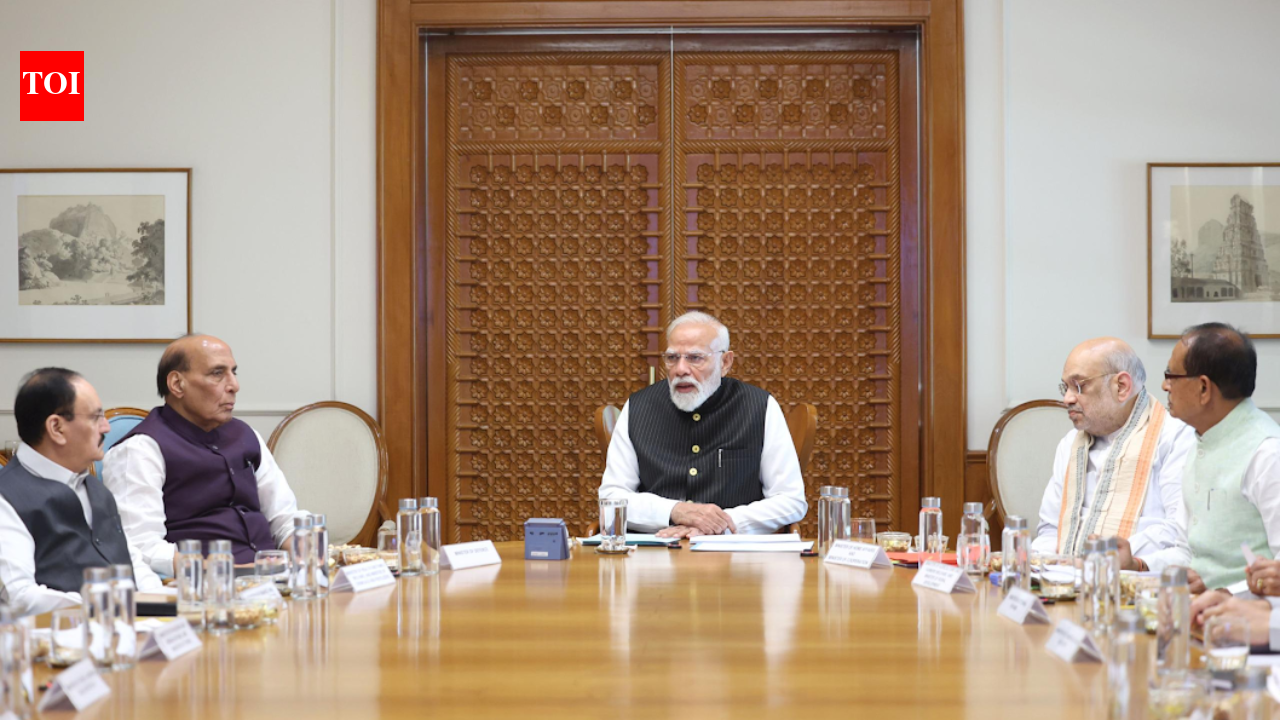
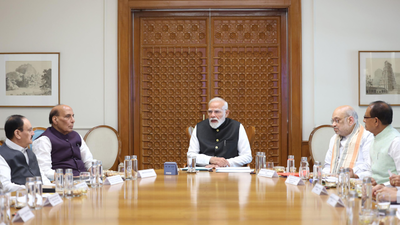
NEW DELHI: Prime Minister Narendra Modi on Sunday chaired a high-level meeting to review the situation related to petroleum, crude oil, natural gas, power and fertiliser sectors amid the evolving situation in the Middle East.The meeting focused on ensuring uninterrupted supply of essential resources, maintaining stable logistics, and streamlining distribution across the country. Officials briefed the Prime Minister on preparedness measures to tackle any potential disruptions arising from geopolitical developments in the region.

Watch

Narendra Modi Reviews Energy Security As Middle East Crisis Deepens

The government is closely monitoring the situation to safeguard energy security and ensure that supply chains remain resilient, with an emphasis on minimising any impact on consumers and key sectors of the economy.On March 12, PM Modi had said that the war in the Middle East region has triggered a worldwide energy crisis, calling it a “critical test of national character” that requires handling the situation with peace, patience and greater public awareness. The prime minister had also emphasised that the government is working relentlessly to address disruptions in international supply chains. “Continuous efforts are also underway to determine how we can overcome the disruptions that have occurred in the supply chain,” he said.The conflict, now in its third week, began on February 28 with attacks by the US and Israel on Iran and has since escalated, with Iran retaliating against Israel and several Gulf neighbours.Iran’s control over the Strait of Hormuz, a key global shipping route for energy supplies, has significantly impacted movement, with limited ships allowed to pass. The resulting blockade has disrupted energy supplies to several countries, including India.Since the conflict began, Prime Minister Narendra Modi has held telephonic conversations with several global leaders, including those from Saudi Arabia, the UAE, Qatar, Bahrain, Kuwait, Jordan, France, Malaysia, Israel and Iran.

[ad_2]

Source link

‘Kicked and punched’: Sikh student tortured, turban forcibly removed in Pakistan

[ad_1]

'Kicked and punched': Sikh student tortured, turban forcibly removed in Pakistan
AI-generated image used for representation

An Amritdhari Sikh girl was allegedly assaulted at a Christian school in Pakistan’s Faisalabad district, IANS reported, citing Khalsa Vox.The report claims that the girl’s turban was forcibly removed and she was beaten after she refused to take part in Christian prayers. The incident reportedly took place at St. Catherine Girls High School in the Warispura area.The girl’s mother said school staff kicked and punched her daughter in the stomach. She added that the girl suffers from asthma, but when her sister tried to help, teachers allegedly stopped her, saying the victim was pretending.Sikh Brotherhood International, a community group, has condemned the incident and called for strict action against the school authorities.The mother also alleged that she did not receive support from Sikh leaders in Pakistan despite asking for help. She has demanded action against those responsible.Khalsa Vox further reported that the mother had earlier faced serious abuse. She claimed she was held captive for nine months in Faisalabad and was assaulted and tortured by her captors. During that time, she also alleged that her son’s hair, which is sacred in Sikhism, was forcibly cut.According to the report, the case came to light after a journalist highlighted it, following which Punjab’s minority affairs minister intervened and helped secure her release.The incident has raised fresh concerns among Sikh community members in Pakistan, who are questioning the safety and treatment of minorities in the country.

[ad_2]

Source link

Govt to auction 19 critical mineral blocks in seventh tranche as focus sharpens on supply security

[ad_1]

Govt to auction 19 critical mineral blocks in seventh tranche as focus sharpens on supply security

The government will launch the seventh tranche of auctions for critical and strategic minerals on Monday, putting 19 blocks on offer across multiple states as part of efforts to strengthen domestic resource security.The move comes as India seeks to boost self-reliance in clean energy, advanced technologies, fertilisers and other strategic sectors amid global supply-chain disruptions, PTI reported.So far, six rounds of auctions have been completed, with 46 critical and strategic mineral blocks already sold, according to the mines ministry.“Building on this momentum, the seventh tranche will offer 19 blocks across several states under mining lease and composite licence,” the ministry said in a statement.Critical minerals are considered vital for economic development and long-term mineral security, particularly as the global transition towards clean energy and advanced technologies drives demand for resources such as lithium, graphite, rare earth elements (REE), tungsten, vanadium, titanium and other rare metals.Their limited availability and geographical concentration continue to pose challenges for resilient supply chains worldwide.The ministry said Union coal and mines minister G Kishan Reddy, along with minister of state for coal and mines Satish Chandra Dubey, will formally launch the seventh tranche of auctions on March 23.In a separate statement, the ministry said it will also organise the National District Mineral Foundation (DMF) Summit 2026 in New Delhi on Monday and Tuesday.

[ad_2]

Source link

Market recap: Mcap of five of top-10 most valued firms erodes by Rs 1 lakh cr; HDFC Bank biggest laggard

[ad_1]

Market recap: Mcap of five of top-10 most valued firms erodes by Rs 1 lakh cr; HDFC Bank biggest laggard

Last week’s bloodbath at the Dalal Street erroded the market capitalisation of five of the top-10 most-valued firms by over Rs 1 lakh crore. The broader equity benchmarks also ended on a muted note. The BSE Sensex slipped by 30.96 points, or 0.04%, while the NSE Nifty declined 36.6 points, or 0.15%, reflecting a largely subdued trading environment. Of the top ten firms, HDFC took the hardest hit. Market movement through the week showed a mixed pattern. Ajit Mishra, SVP, Research, Religare Broking Ltd, noted that while early sessions supported gains, selling pressure in later sessions weighed on overall performance. “Markets ended the week on a largely flat note with a negative bias, reflecting underlying caution among participants. The tone remained positive during the first three sessions; however, a sharp decline on Thursday erased the gains, followed by a volatile final session,” he said. Among the major constituents, HDFC Bank, ICICI Bank, Tata Consultancy Services, Bajaj Finance and Hindustan Unilever were the key laggards, together dragging down valuations significantly over the week. The total market value erosion for these five companies stood at Rs 1,02,771.87 crore. Individually, HDFC Bank saw its market capitalisation fall by Rs 56,124.48 crore to Rs 12,01,267.28 crore. Hindustan Unilever lost Rs 18,009.62 crore, bringing its valuation down to Rs 4,89,631.32 crore, while Bajaj Finance recorded a decline of Rs 15,338.42 crore to Rs 5,16,715.12 crore. Tata Consultancy Services witnessed a reduction of Rs 7,127.63 crore, taking its mcap to Rs 8,64,940 crore, whereas ICICI Bank edged lower by Rs 6,171.72 crore to Rs 8,91,673.06 crore. On the other hand, select heavyweights managed to post gains during the week. Reliance Industries led the gains with its valuation rising by Rs 45,942.75 crore to Rs 19,14,235.92 crore. Bharti Airtel added Rs 24,462.03 crore to reach Rs 10,52,893.75 crore, while State Bank of India climbed by Rs 10,707.52 crore to Rs 9,76,968.57 crore. Further, Life Insurance Corporation of India and Infosys also registered increases of Rs 2,624.88 crore and Rs 2,473.79 crore respectively, taking their valuations to Rs 4,91,610.45 crore and Rs 5,08,789.37 crore. At the end of the week, Reliance Industries retained its position as the most-valued listed firm, followed by HDFC Bank, Bharti Airtel, State Bank of India, ICICI Bank, Tata Consultancy Services, Bajaj Finance, Infosys, Life Insurance Corporation of India and Hindustan Unilever.

[ad_2]

Source link

‘Abetment requires direct instigation, not mere harassment’: Why Mumbai court acquitted bizman in 2013 suicide case

[ad_1]

'Abetment requires direct instigation, not mere harassment': Why Mumbai court acquitted bizman in 2013 suicide case

Twelve years after an HIV-positive woman died by suicide by jumping from the 15th floor of her Goregaon building, a Mumbai sessions court has acquitted a 37-year-old businessman accused of abetting her death, ruling that harassment alone cannot amount to abetment without clear intent to drive a person to take their own life. The case stemmed from a complaint filed by the woman’s former husband, who alleged that the accused had subjected her to harassment after she was diagnosed with HIV. However, the court found no direct or proximate link between the alleged harassment and the woman’s decision to end her life. Emphasising the legal threshold for abetment to suicide, the court observed that mere allegations of harassment, without evidence showing intention or active instigation, are insufficient to hold an accused guilty.Case overview and allegationsThe judgment concludes a 12-year legal battle following the suicide of a woman in May 2013. The prosecution alleged that the woman took her own life due to continuous harassment, physical abuse, and mental torture by a man with whom she was in a relationship. The primary allegations included medical harassment following the woman’s HIV diagnosis, claims that the accused forced her to undergo an abortion against her will, and criminal intimidation involving threats toward her daughter’s safety and the sending of obscene messages.History of the marriage and separationThe relationship between the deceased and the complainant, her ex-husband, was marked by a 2003 marriage and the birth of their daughter in 2004. Although the couple divorced by mutual consent in 2006 due to “stubborn conduct” and persistent disputes, they continued to reside together in Mumbai for the sake of their child. The woman then got into a relationship with the accused, a neighbour. In June 2011, the woman informed her ex-husband that she had married the accused in a temple ceremony. Following the ex-husband’s remarriage in November 2011, the woman moved into separate rental premises which he had arranged for her.Events leading to the suicideThe prosecution’s case focused on a series of alleged harassment beginning in 2012 when the woman was diagnosed with HIV, leading to claims of abuse by the accused. In early 2013, she reportedly informed her ex-husband of a pregnancy by the accused, followed by an alleged forced abortion on March 30. The situation escalated on May 21, 2013, when she claimed the accused threatened to kidnap her daughter. After staying at her ex-husband’s staff quarters for safety that night, she went for a walk at 6 am on May 22, during which the accused allegedly followed her and sent abusive messages. Between 7.30 am and 8 am that morning, she jumped from a 15th-floor terrace. Her daughter was on holiday with relatives with London. Defining abetment to suicide Under Section 306 of the IPC, the court noted that abetment requires a significantly higher burden of proof than simply demonstrating harassment. The judgment highlighted two critical requirements, the presence of specific intent (mens rea), meaning the accused must have intended to provoke or instigate the suicide, and evidence of direct instigation. This requires an active or direct act that leaves the deceased with no other viable option but to take their own life.Why the court acquitted the accusedThe court identified several critical gaps that created reasonable doubt regarding the accused’s guilt. Medical evidence contradicted the prosecution’s claims, as the doctor at the nursing home denied any abortion took place, and the accused tested negative for HIV, weakening the motive for disease-based harassment. Further, witness credibility was questioned because the ex-husband did not witness the alleged assaults, and the victim’s sister’s deposition contradicted her initial police statement. Digital evidence including WhatsApp and text messages was ruled inadmissible because it was not authenticated according to legal standards for electronic evidence.Judge’s reasoning Judge Rajendra V Lokhande noted that a conviction under Section 306 of the IPC requires the essential presence of clear mens rea—the specific intention to abet the act—noting that mere harassment is insufficient on its own. The judge further observed that the prosecution failed to establish any active or direct action by the accused that would have forced the deceased to conclude she had no other option but to commit suicide.Judge’s verbatim quotes “The prosecution evidence does not establish an active or direct action of the accused which leads deceased… to commit suicide finding no other option. There is no prosecution evidence to prove that the accused had the mens rea to instigate or push the deceased… to commit suicide.”“The prosecution has not brought any evidence to prove that the accused forcefully made abortion of (the deceased) without her consent… therefore, the evidence of (the ex-husband) about alleged forceful abortion of (the deceased) by the accused is not believable.”“For a conviction under Section 306 of the IPC, it is a well established legal principle that the presence of clear mens rea—the intention to abet the act—is essential. Mere harassment, by itself, is not sufficient to find an accused guilty of abetting suicide.”“The element of mens rea cannot simply be presumed or inferred; it must be evident and explicitly discernible. Without this, the foundational requirement for establishing abetment under the law is not satisfied, underscoring the necessity of a deliberate and conspicuous intent to provoke or contribute to the act of suicide.”Legal precedents citedThe court relied on two primary Supreme Court rulings to establish the framework for acquittal. In Jayedeepsinh Pravinsinha Chavda vs State of Gujarat (2024), it was established that intent cannot be presumed and must be explicitly discernible. Similarly, Mariano Anto Bruno vs The Inspector of Police (2022) clarified that the actions of an accused must be so severe that they reflect a clear intention to push the deceased to a breaking point where they feel suicide is the only exit.

[ad_2]

Source link

‘AA22xA6’: Anushka Sharma to make her Telugu debut in Allu Arjun and Deepika Padukone starrer – Report |

[ad_1]

‘AA22xA6’: Anushka Sharma to make her Telugu debut in Allu Arjun and Deepika Padukone starrer - Report
Allu Arjun’s upcoming film, tentatively titled ‘AA22xA6’ with director Atlee, is reportedly assembling a star-studded cast. Following reports of Deepika Padukone, fresh buzz suggests Anushka Sharma might join the ambitious sci-fi project, marking her potential Telugu debut. The film is also rumored to feature Mrunal Thakur, Janhvi Kapoor, and Rashmika Mandanna.

Allu Arjun is working on his upcoming film tentatively called ‘AA22xA6’ with ‘Jawan’ fame director Atlee. The film reportedly has star studded line up with Deepika Padukone playing the female. Now, fresh reports suggest Anushka Sharma is also set to star in the sci-fi film.

Anushka Sharma in talks with ‘AA22xA6’ team

According to a report by Deccan Chronicle, another big Bollywood star seems to be joining the ambitious project. It is suggested that she is in talks to join the film and if this turns out to be true, it will be her first Telugu movie. But there is no official confirmation yet.

Anushka Sharma’s recent work

Anushka Sharma was last seen in the 2018 film, ‘Zero’, opposite Shah Rukh Khan and Katrina Kaif. Since then, she has yet to make her presence in a full-fledged role. It is imperative to add that the actress, after transitioning herself to a more producer role, hasn’t been in the news for any acting roles. She was set to star in 2022 with the film ‘Chakda ‘Xpress’, a biopic of former Indian women’s cricket Jhulan Goswami. However, it is expected to be delayed and even rumoured to have been shelved.Anushka Sharma and her husband Virat Kohli are now based in London with their son and daughter.

About ‘AA22xA6’

Speaking about ‘AA22xA6’, the movie also reportedly features multiple female actors, including Mrunal Thakur, Janhvi Kapoor and Rashmika Mandanna. There is also buzz that Rashmika Mandanna may play a negative role. Allu Arjun is also expected to play multiple roles in the film.

Watch

Inside Kollywood’s 2025 Crisis and Uncertain Future

The music for the film will be composed by Sai Abhyankkar.On the other hand, Allu Arjun, after working with Atlee, will be working with Lokesh Kanagaraj on ‘AA23’ with star musician Anirudh adding the tunes. The film is set to begin shooting in 2026.

[ad_2]

Source link

​Blue saree brigade: Women at the heart of India’s water systems | India News

[ad_1]

​Blue saree brigade: Women at the heart of India’s water systems
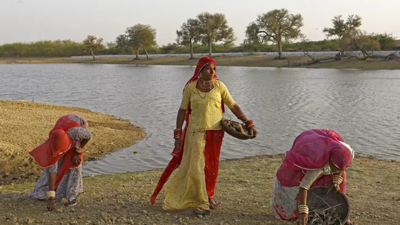
World Water Day 2026: How India’s Jal Sahelis are leading the way (Image credits: Unicef)

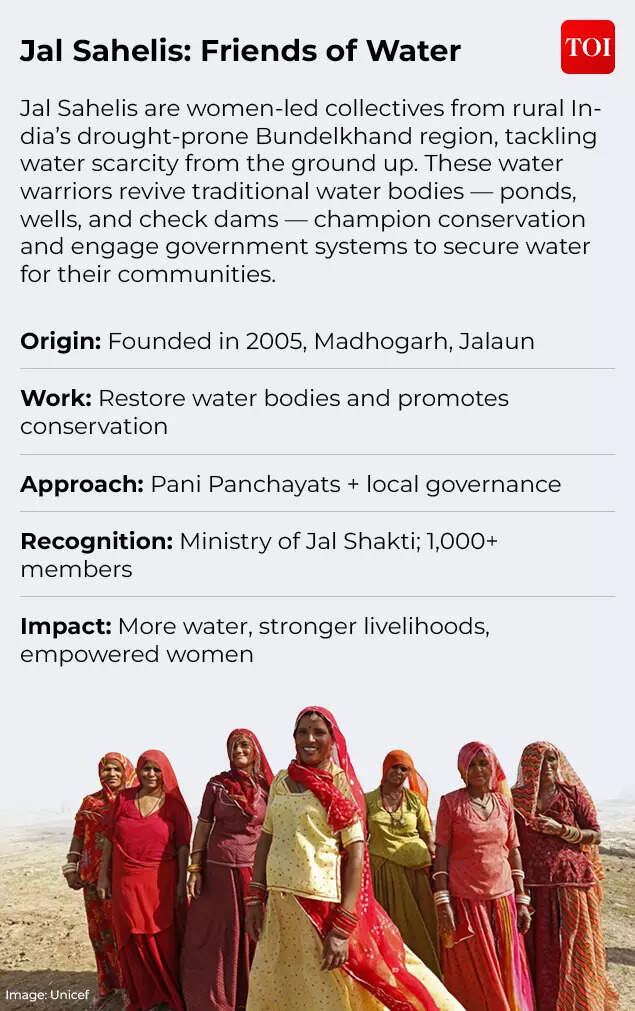
In the parched flatlands of Bundelkhand, one of India’s most water-stressed regions, a woman wakes before sunrise. She does not head to a well. She heads to a meeting. As a Jal Saheli — a “Friend of Water” — she is part of a network of roughly 1,530 women across 321 villages who have spent the last decade digging check dams, reviving ancient ponds, repairing handpumps, and holding councils on groundwater. They are mostly illiterate. They are entirely indispensable.On this World Water Day, the United Nations has made its message unambiguous: the global water crisis is, at its core, a gender crisis — and the solution runs through women. The 2026 campaign, themed “Water and Gender: Where Water Flows, Equality Grows,” calls for a transformative, rights-based approach where women have equal voice, leadership, and opportunity in water decision-making. Across India, quietly and without ceremony, that transformation is already underway.

The Jal Saheli Movement

When the rains failed for the thirteenth time in Bundelkhand, Shirkunwar Rajput – woman who led the Paani Panchayat in Udguwan (Lalitpur)- did not wait for the government. She gathered the women of her village and said something that would eventually be carved in stone on a check dam: “In Bundelkhand, fetching water is entirely a woman or girl’s job. Hence, women have the first right on water resources,” as quoted by Mongabay.The Jal Saheli movement, founded in 2005 from Madhogarh in Jalaun, Uttar Pradesh, grew from that conviction. By 2024, around 1,530 Jal Sahelis were active across 321 villages in the states of Uttar Pradesh and Madhya Pradesh. These women — aged between 18 and 70, clad in simple blue sarees have built over one hundred check dams, revived traditional ponds, installed new handpumps and created soak pits that reduce run-off waste.The impact has been agricultural as well as domestic. Before the Jal Sahelis intervened, farmers in some of these villages could grow only a single crop of wheat per year. Assured irrigation has since enabled two to three annual harvests. Groundwater recharge from the check dams has brought functioning wells back to communities where children used to share a single pump among 1,200 people.Welthungerhilfe, working alongside the NGO Parmarth Samaj Sevi Sansthan, trained these women volunteers in water resource planning, water table monitoring, and conservation techniques before sending them back to their villages as experts. The model has since drawn the attention of government departments in Uttar Pradesh and Madhya Pradesh, both of which have expressed interest in scaling it to 5,000 villages.

.

Governing the underground: Atal Bhujal Yojana

India’s aquifers are in crisis. The Central Ground Water Board classified 256 districts as water-stressed as recently as 2020, and the country’s average per-capita water availability is projected to decline sharply by 2050. Against this backdrop, the Government of India launched the Atal Bhujal Yojana (Atal Jal) in 2020 — a Rs. 6,000 crore ($756 million) scheme co-funded by the World Bank, targeting 8,562 gram panchayats across seven water-stressed states: Gujarat, Haryana, Karnataka, Madhya Pradesh, Maharashtra, Rajasthan, and Uttar Pradesh.What makes Atal Jal distinctive is not just its budget but its politics. The scheme mandates that at least 33 percent of members of Village Water and Sanitation Committees (VWSCs) must be women. In practice, the representation has gone further: women now hold an average of 44 percent of seats across the scheme’s gram panchayats. Crucially, 33 percent of women are occupying actual decision-making positions — President, Vice President, Secretary, and Treasurer — within Water User Associations.By the scheme’s own figures, the results are material: an area of 670,802 hectares has been covered under demand-side water efficiency activities, saving an estimated 1,716 million cubic metres of water through micro-irrigation, crop diversification, and rainwater harvesting. A further 642 million cubic metres of groundwater has been recharged through the construction of 77,052 structures. Around 30 million people have benefited, at a per-beneficiary cost of roughly Rs. 2,627.In Haryana, the scheme has taken on a distinctly feminine face through the figure of the Jal Saheli — a local resource person, usually a woman from a self-help group, trained to conduct water quality tests, communicate groundwater data to communities, and advocate for efficient irrigation practices. In Rajasthan’s Phalodi district, Jal Sahelis working under UNICEF and the NGO Unnati revived a centuries-old village pond, raising Rs. 1.5 million in community funds alongside MGNREGA allocations.

Bhubaneswar ‘caller club’

The water revolution in India is not only happening in fields and check dams. It is also happening through smartphones in urban slums.Between January 2023 and December 2024, the Centre for Advocacy and Research (CFAR), supported by the Australian Government’s Water for Women Fund, ran a landmark urban WASH initiative across 215 informal settlements in Bhubaneswar, Odisha. At its heart was a “Caller Club”: trained community members who called on behalf of residents to log and escalate water, sanitation, and hygiene grievances through the Janhit-Vaani Interactive Voice Response System (IVRS).Community members made a total of 18,750 calls over the two-year period. Women led the effort, accounting for 10,419 calls — and providing the majority of feedback, with 5,610 calls on water-related issues specifically. Of the 8,517 water-related grievances recorded, 4,550 (53.4 percent) were formally addressed, benefiting 8,696 people. Sanitation grievances fared even better: 4,783 of 6,767 reported issues (70.7 percent) were resolved, and hygiene-related complaints saw a 98.4 percent resolution rate.The urban local body, the Public Health Engineering Department, and Watco responded positively to online grievances, working with communities to both resolve issues and educate residents on infrastructure maintenance. The project also funded climate-resilient infrastructure upgrades across 126 settlements: elevated toilets to prevent monsoon flooding, stormwater drains, and solar-powered water filtration plants — all designed with input from the women who use them.Laxmipriya Lenka, President of the Slum Development Association in Bhubaneswar, was among the voices that made this feedback loop work. Her leadership exemplifies what the UN Women’s 2026 World Water Day campaign calls for: not just access to water, but agency over it.

Evidence for women’s leadership

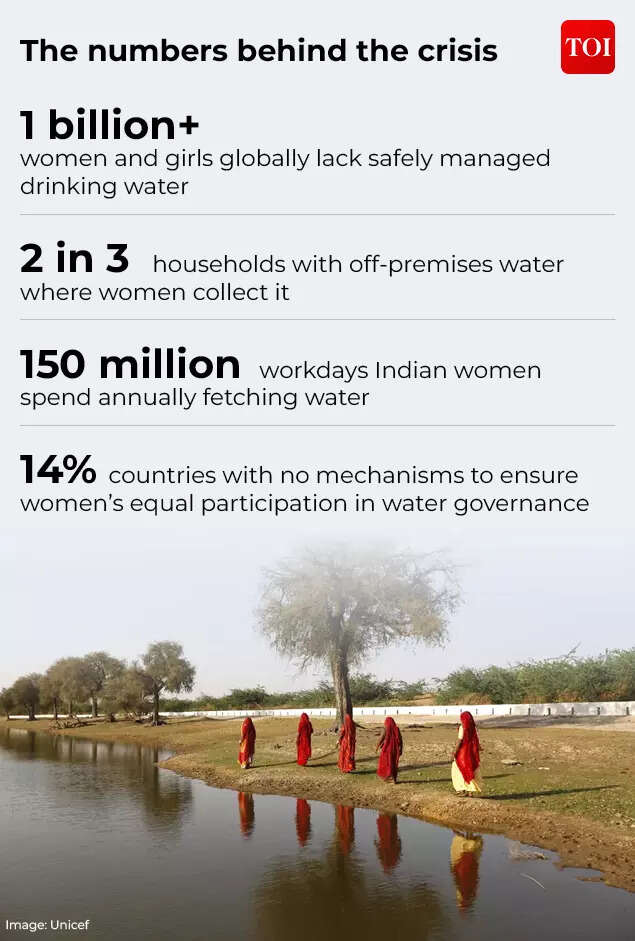
The case for women’s centrality in water governance is not merely moral — it is empirical. A landmark study on India’s panchayats, cited by UN Women, found that the number of drinking water projects in areas with women-led local councils was 62 percent higher than in those led by men. Research across 44 water projects in Asia and Africa, cited by the World Resources Institute, found that when women helped shape water policies and institutions, communities used water more sustainably and equitably.Yet the structural barriers remain significant. Fewer than 50 countries globally have laws or policies that specifically mention women’s participation in water resources management. In India, the national water policies of 1987, 2002, and 2012 consistently sidelined women — policies drafted, largely, by men who did not traditionally carry water home. It is only with schemes like Jal Jeevan Mission and Atal Bhujal Yojana, and the grassroots pressure of movements like the Jal Sahelis, that this omission is beginning to be corrected.

.

The economic case is equally compelling. In India alone, productivity losses attributable to women’s water-collection duties are estimated to be equivalent to approximately Rs. 10 billion — or roughly $160 billion, nearly 4.7 percent of GDP. Every tap closer to home, every check dam that holds monsoon water through March, translates into hours returned to women: for school, for work, for rest, for leadership.Chandrakant Kumbhani, chief operating officer, Community Development, Ambuja Foundation, underscores this transformation: “Water resource development is one of the most powerful drivers of women’s empowerment in rural India. But the real shift happens when women move beyond being beneficiaries to becoming decision-makers — involved in planning, managing, and governing water systems at the village level. This participation builds confidence, visibility, and leadership, enabling them to influence not just water-related decisions, but broader community priorities. As climate pressures intensify, this role becomes even more critical. Women’s involvement strengthens how communities plan for and manage water resources, making systems more adaptive and sustainable.”

A movement in stone

The check dams of Bundelkhand carry inscriptions. In the local dialect, chiselled into concrete, they read: “Women have the first right on water resources.” This is not poetry. A declaration that the women who suffer most from scarcity are the ones who have earned the authority to manage abundance.Leela Khatun, Leader of the Jal Sahelis, described the work of reviving a village pond. “The pond is a lifeline for the villagers, particularly during the summer, drought, and periods of scanty rainfall. We undertook the task of cleaning the pond, using both manual labour and excavators,” she told UNICEF proudly. “Some of the desilting work was carried out under MGNREGA. We held discussions with the village head and the villagers to ensure a sustainable water supply.Across India — from the slum settlements of Bhubaneswar to the gram panchayats of Rajasthan, from the overexploited aquifers of Haryana to the drought-scarred plateaus of Madhya Pradesh — women like Devwati Sharma are doing the technical, political, and physical labour of water governance. They are holding meetings, filing grievances, repairing infrastructure, and teaching water literacy to communities that the formal sector has yet to reach.On this World Water Day, the United Nations has a slogan: “Where Water Flows, Equality Grows.” In India, the women who have spent years with their hands in the earth already know it to be true. The question now is whether the world’s governments, donors, and institutions will carve it into their own policies — with the same permanence that a Jal Saheli chisels it into stone.
[ad_2]

Source link