Breaking News
India’s crude shuffle: How Iran’s Hormuz chokehold rerouted oil imports from Gulf to Russia

[ad_1]

India's crude shuffle: How Iran's Hormuz chokehold rerouted oil imports from Gulf to Russia

Iran’s Hormuz chokehold has reshaped India’s oil purchase pattern, with a sharp drop in Gulf supplies this month pushing refiners towards Russia and smaller producers to keep supplies steady. So far in March, crude imports into the country are down 23% compared to February, according to shipping data and analyst estimates cited by ET. The plunge comes as inflows from the Middle East have contracted significantly, with disruptions linked to the Strait of Hormuz adding to supply concerns. If the crisis continues, total imports for the month could decline by about a fifth sequentially.

Watch

India Warns Against Attacks On Commercial Ships Amid Hormuz Crisis, Calls For Peace And Dialogue

Figures from Vortexa show India brought in 81 million barrels of crude between March 1 and 18, compared with 105 million barrels during the same period last month. The steepest fall has been in Middle Eastern supplies, which dropped to 22.4 million barrels from 59.9 million barrels earlier, Xavier Tang, senior market analyst at the firm told financial daily.With the Iran war intensifying and energy routes under strain, refiners have moved quickly to plug the gap. Purchases from Russia have nearly doubled, making it the largest supplier with 34.3 million barrels, around 44% of India’s total imports in the first half of the month, according to Kpler data.At the same time, cargoes from African nations have increased sharply. Angola shipped 7.5 million barrels during the period, a significant jump from 2.9 million barrels in all of February. Congo, Gabon and Sudan, not regular suppliers to India, added 1.9 million barrels, 1.7 million barrels and 700,000 barrels respectively.Flows from the United States have also softened, with about 3 million barrels arriving so far in March, nearly half of what was seen last month.From the Gulf, India has so far imported 7.9 million barrels from Saudi Arabia, 6.8 million barrels from Iraq and 1.9 million barrels from the UAE. However, Saudi shipments are expected to rise in the coming weeks. “We are seeing approximately 15-16 million barrels of crude loading from Saudi Arabia’s west coast to India this month,” said Nikhil Dubey, senior refining analyst at Kpler. “Of this, around 9 million barrels are already enroute and are expected to arrive within the next 6-7 days,” he said, adding that some deliveries may extend into April due to longer voyage times.Analysts caution that if disruptions at the Strait of Hormuz continue through March, overall imports could fall to between 115 million and 125 million barrels, below the usual monthly range of around 150 million barrels.Amid the tight supply scenario, there are indications that Iranian oil could re-enter the market. US Treasury Secretary Scott Bessent has said Washington may allow crude already at sea to be sold, potentially opening the door for buyers such as India. Before sanctions halted the trade, Iranian oil accounted for roughly 10% of India’s crude inflows, with most of those volumes now heading to China.

[ad_2]

Source link
How Iran targeted US, UK base Diego Garcia 4,000km away in Indian Ocean — Explained

[ad_1]

How Iran targeted US, UK base Diego Garcia 4,000km away in Indian Ocean — Explained

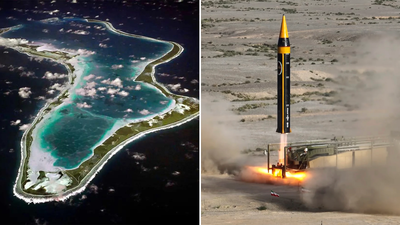
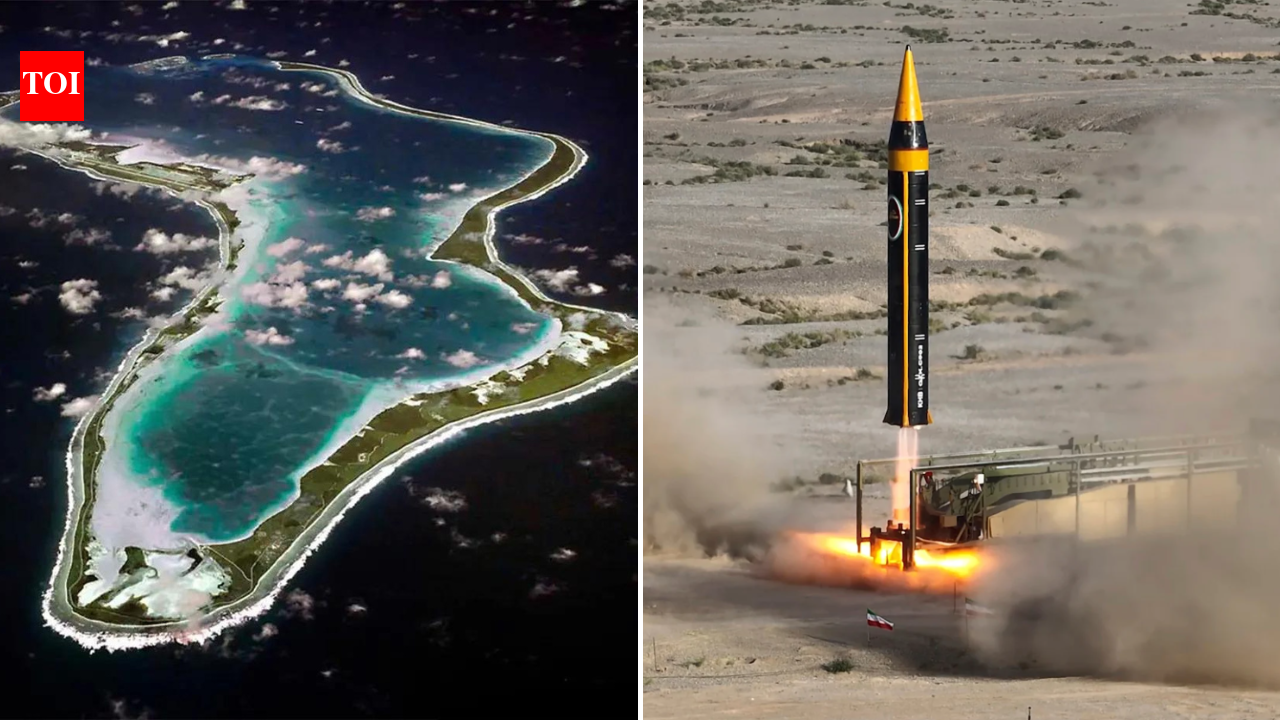
Iran’s attempted long-range strike on the US-UK military base at Diego Garcia has showcased a sharp escalation in both capability and intent, pushing the geography of the ongoing conflict far beyond the Middle East, as per a report by the Washington Post. The base, located roughly 4,000 kilometres from Iran’s coastline, was targeted with two intermediate-range ballistic missiles, according to US officials, in what appears to be one of Tehran’s longest-range strike attempts to date.Iran continues to strike Gulf nations — Follow live updatesNeither missile hit its target. One reportedly failed mid-flight, while the second was engaged by a US Navy destroyer using an SM-3 interceptor, though it remains unclear whether the interception was successful. Despite the lack of impact, the attempt itself has triggered alarm in Washington and allied capitals, as it suggests Iran may now possess or is willing to demonstrate strike capabilities far beyond its previously declared limits.Also read: Iran fires 2 ballistic missiles towards US, UK military bases in Diego GarciaThe strike came amid intensifying hostilities between Iran and a US-Israel alliance, even as Donald Trump indicated that Washington was “very close” to achieving its military objectives and could consider winding down operations. Yet the attack on Diego Garcia, a remote but critical military hub, suggests Tehran is widening both the scope and signalling of its retaliation.

A strike across 4,000 kilometres

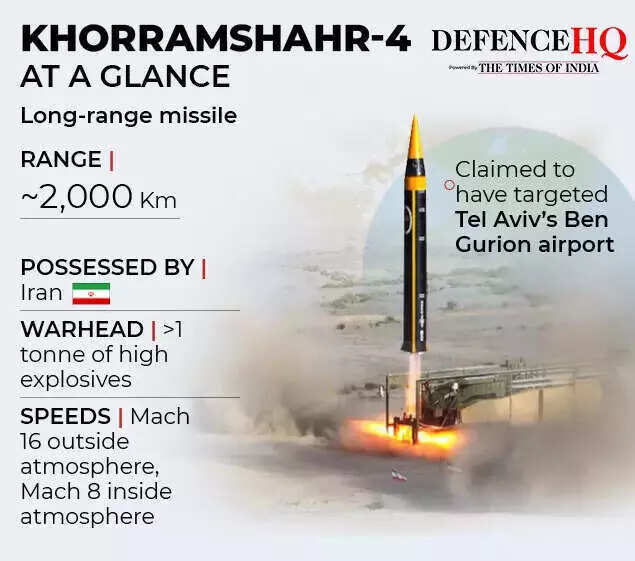
The attempted strike stands out primarily for its distance. Diego Garcia lies deep in the Indian Ocean, more than 3,800 kilometres from Iran, well beyond the 2,000-kilometre range Tehran has long claimed as the upper limit of its missile programme.US officials believe the missiles used were likely from the Khorramshahr-4 class, an intermediate-range ballistic missile that analysts had previously assessed to have a potential range exceeding 4,000 kilometres, though publicly demonstrated capabilities had remained lower. If confirmed, the strike would mark the first operational indication that Iran can hit targets at such distances.

Khorramshahr-4

The implications extend far beyond this single incident. A 4,000-kilometre strike radius from Iran would place large parts of Europe including cities such as Paris and London within theoretical reach. For NATO countries that have largely viewed the conflict as regionally contained, the attempted strike alters that calculation significantly.The Khorramshahr-4 itself is a liquid-fuelled missile capable of carrying a warhead exceeding one tonne, with the option of deploying cluster munitions. Its design, derived in part from earlier North Korean and Soviet systems, combines relatively simple architecture with high payload capacity. The missile is also believed to feature manoeuvrable re-entry capabilities, making interception more difficult.

Why Diego Garcia matters

The choice of target is as significant as the distance. Diego Garcia is one of the most strategically important military installations operated jointly by the United States and the United Kingdom. Situated in the Chagos Archipelago, the base serves as a critical logistics and operations hub for long-range missions.It has historically supported US bombing campaigns in Afghanistan and Iraq, as well as more recent operations in the Middle East. Its airfield is capable of hosting heavy bombers, surveillance aircraft, and pre-positioned military equipment, allowing rapid deployment across Asia, Africa and the Gulf.The base’s isolation far from conventional conflict zones has long been considered one of its key advantages. Iran’s decision to target it challenges that assumption, demonstrating a willingness to strike even remote strategic assets.The attack also comes amid renewed scrutiny over the future of the base. The United Kingdom recently agreed to transfer sovereignty of the Chagos Islands to Mauritius while retaining long-term access to Diego Garcia under a lease arrangement, a move that has drawn political criticism in Washington.

Missile defence and widening conflict

The attempted interception reportedly using the SM-3 system highlights the growing importance of missile defence in the conflict. The SM-3, deployed on US Navy warships, uses a “hit-to-kill” approach relying on kinetic force rather than explosives to destroy incoming missiles. Its effectiveness against intermediate-range threats is well established, but the uncertainty around this interception underscores the challenges posed by advanced ballistic systems.At the same time, the strike on Diego Garcia fits into a broader pattern of Iranian escalation. Tehran has stepped up attacks on energy infrastructure across the Gulf, including reported drone strikes on Kuwait’s Mina Al-Ahmadi refinery, while issuing warnings to countries hosting US forces.Iranian officials have also expanded their rhetoric, warning that targets linked to their adversaries could extend beyond traditional battlefields. These signals point to a strategy that combines conventional missile strikes with the threat of asymmetric attacks.Meanwhile, the United States has reinforced its regional posture, deploying additional warships and thousands of Marines. Despite talk of winding down operations, Washington’s military build-up suggests preparations for a prolonged confrontation.

[ad_2]

Source link

US taps emergency oil reserve, releases 45 million barrels to tame war-driven price hike

[ad_1]

US taps emergency oil reserve, releases 45 million barrels to tame war-driven price hike

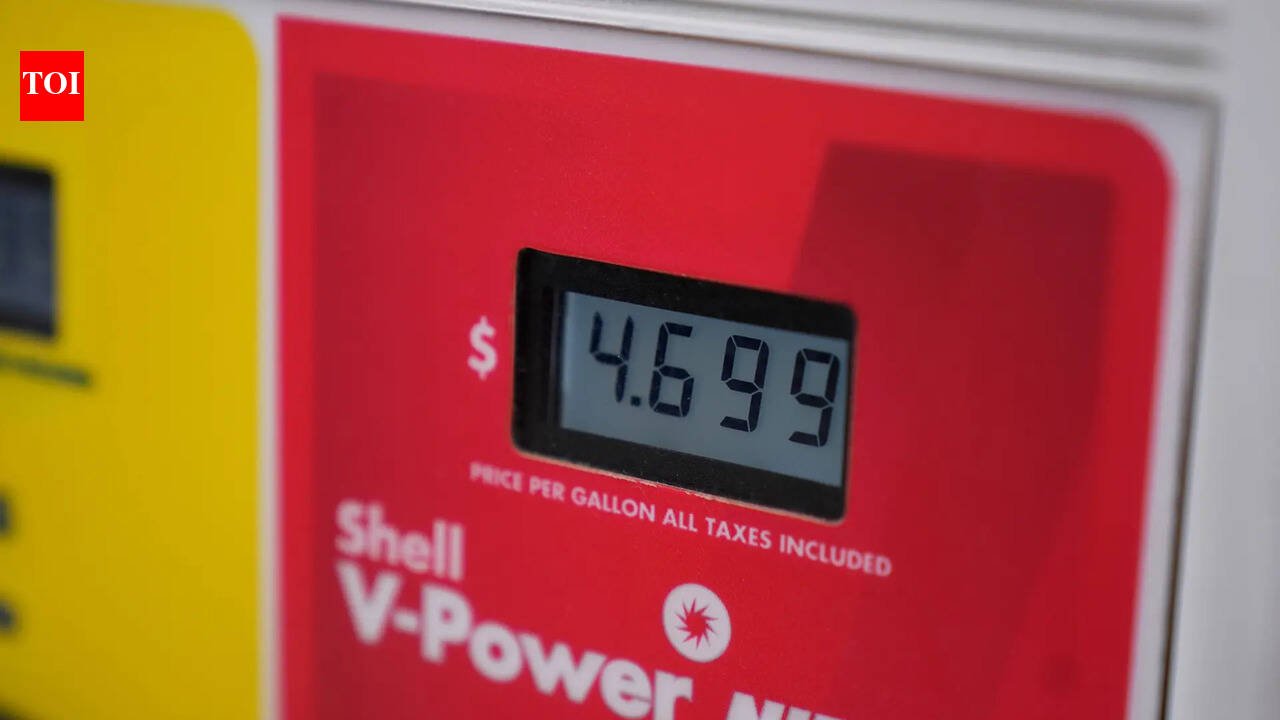
In a bid to cool rising oil prices amid the ongoing Middle East crisis the Trump administration has begun releasing crude from the Strategic Petroleum Reserve (SPR), lending 45.2 million barrels to energy companies in its first round. The volume released so far represents just over half of the 86 million barrels the administration had earlier said it would make available in the initial phase. The broader plan is to lend a total of 172 million barrels, with deliveries scheduled through this year and into the next, according to Reuters.The Energy Department said that firms awarded these early supplies include BP Products North America, Gunvor USA, Marathon Petroleum and Shell Trading. Other companies that secured contracts by Friday are Energy Transfer Crude Marketing, Mercuria Energy America, Trafigura Trading and Vitol.This release forms part of a wider coordinated effort involving 32 countries under the International Energy Agency, which together plan to inject 400 million barrels of oil into the market. Prices have climbed to their highest levels in four years following the war launched by the United States and Israel on February 28, marking the steepest surge since Russia’s invasion of Ukraine.The arrangement operates as a loan rather than a sale, with companies required to return the crude along with additional barrels as a premium. The Energy Department said the system is intended to steady markets “at no cost to American taxpayers.”Companies must repay between 18% and 22% more oil than they borrow, although some bidders offered higher returns to secure allocations. For the first tranche alone, the structure is expected to boost the reserve by nearly 10 million barrels once repayments are made.The SPR, stored in underground sites along the Texas and Louisiana coastlines, currently holds about 415 million barrels of crude, equivalent to more than four days of global consumption.Overall, while 172 million barrels are set to be lent out, the government expects to receive roughly 200 million barrels in return, factoring in the additional premium.Earlier this month, US President Donald Trump said that he would tap into strategic reserves to reduce prices amid the ongoingIran war.“Right now we’ll reduce it a little bit and that brings the prices down,” Trump said in an interview with Local 12 television, when asked if he was going to tap the US Strategic Petroleum Reserve.

[ad_2]

Source link

Watch: US diplomatic facility near Baghdad airport in flames after attack

[ad_1]

Watch: US diplomatic facility near Baghdad airport in flames after attack

A fire broke out at a US diplomatic facility near Baghdad airport in Iraq, according to security sources quoted by Reuters. A pro-Iranian militant group, Ashab al-Kahf, later claimed responsibility for the attack in a statement. Visuals shared online showed a large and intense blaze, with thick black smoke rising into the night sky.Earlier, the Middle East Broadcasting Network reported that air defence systems were activated over the US embassy to intercept incoming threats.On Wednesday, Kataib Hezbollah, a group designated as a terrorist organisation by the United States announced a temporary suspension of its attacks on the US embassy for five days on the condition of “a US commitment not to strike residential areas in Baghdad and other provinces,” as quoted by the report.Kataib Hezbollah and the Harakat al-Nujaba movement are among the main Iran-aligned groups targeting US interests. Both groups have taken part in the ongoing conflict alongside Iran and have carried out multiple strikes in Iraq and other areas.Iraq has been drawn into the wider regional conflict following the US-Israel attack on Iran on February 28. Since then, strikes have targeted Iran-backed groups, which have responded with frequent attacks on US-linked sites in Iraq and across the region.On Thursday, the Pentagon confirmed for the first time that combat helicopters were used to carry out strikes against pro-Iranian armed groups in Iraq during the ongoing conflict.

[ad_2]

Source link

Flipkart group CFO to leave co amid IPO plans

[ad_1]

Flipkart group CFO to leave co amid IPO plans

BENGALURU: Walmart-owned e-commerce firm Flipkart on Thursday said its group chief financial officer Sriram Venkataraman is quitting the firm as the company prepares for its next phase of growth and a potential public listing.Venkataraman will remain with the company for a period to ensure continuity and a smooth handover, Flipkart said. During this transition, Ravi Iyer will oversee the broader finance organisation.The move comes as Flipkart tightens its leadership structure ahead of a potential IPO, sharpening focus on profitability and scale. Flipkart group CEO Kalyan Krishnamurthy said Venkataraman played a key role in building and strengthening the finance function.

[ad_2]

Source link

Weight-loss therapy costs set to be lower by up to 90%

[ad_1]

Weight-loss therapy costs set to be lower by up to 90%

NEW DELHI : Weight-loss therapy costs are set to reduce substantially by up to 90%, with generic versions of injectable semaglutide are expected to hit pharmacy shelves from March 21. The move kicks off one of the most closely watched price wars in the high-stakes obesity and diabetes drug market.This is in the wake of the innovator Novo Nordisk’s patent on semaglutide, the key ingredient in these therapies, expiring on Friday. Two drugmakers including Natco Pharma and Eris Lifesciences announced plans to roll out the pen-filled jabs over 50% cheaper than the innovator’s price, in April. Interestingly, in a bid to lower the therapy cost further, they are also introducing vials at Rs 1,300 per month — about 90% cheaper than the innovator brand Ozempic.The vial will need to be administered through a syringe by a trained hand. More companies including Sun Pharma, Zydus and Dr Reddy’s are expected to join the highgrowth Rs 1,500 crore therapy market on Day 1 (March 21).Blockbuster therapies — Wegovy and Mounjaro — marketed by Novo Nordisk and Eli Lilly respectively, were launched at ‘’India-specific prices’’ last year, while global bestseller Ozempic by the Dutch firm, made its India debut in Dec last year. Semaglutide, a GLP-1 (glucagon-like peptide-1) receptor agonist, helps to control blood sugar and improve satiety, reducing cravings for food, eventually inducing weight-loss.Natco plans to launch a semaglutide pen device in April starting at Rs 4,000 per month. The innovator Novo Nordisk’s Ozempic is priced at Rs 8,800 per month for the lowest strength. It is also introducing multi-dose vials starting at Rs 1,290 per month.Natco said: “It is the most affordable GLP-1 in Indian market as it is around 70% cheaper than pen device, and 90% cheaper than the price of the innovator’s brand. This will increase patient accessibility to the GLP-1 therapy and would help in long term compliance for the patients.”

[ad_2]

Source link

HDFC sacks employees for AT1 bond mis-selling

[ad_1]

HDFC sacks employees for AT1 bond mis-selling

MUMBAI: HDFC Bank has terminated three employees, including senior executives, after an internal probe into the alleged mis-selling of Credit Suisse AT-1 bonds to NRI clients at its UAE operations. The action follows regulatory scrutiny and investor complaints. Shares of the bank closed down 2.4%, continuing Thursday’s decline following the sudden resignation of the bank’s chairman Atanu Chakraborty.The employees dismissed include Sampath Kumar, group head of branch banking, Harsh Gupta, EVP for Middle East, Africa and NRI business, and Payal Mandhyan, SVP, for their roles in selling high-risk AT-1 bonds through the bank’s Dubai branch, in an episode that began in Jan 2025 and has since drawn attention to persistent concerns around such instruments after the Credit Suisse collapse.In response to a query, HDFC bank said, “The bank identified certain gaps in client onboarding requirements at its DIFC branch in the UAE and has completed a detailed and objective review of the matter. “Appropriate remedial actions have been taken in line with internal policies. Personnel changes have been undertaken along with appropriate action as per the bank’s conduct regulation.”AT-1 bonds are debt instruments with equity-like features. They offer higher yields but do not appreciate like equity, and the issuer’s liabilities can be extinguished if the bank’s net worth is impaired. In the event of bankruptcy, these instruments rank lowest among fixed income securities for repayment priority.According to allegations, staff in the Dubai and Bahrain branches persuaded NRI clients to shift FCNR deposits from India to Bahrain by presenting the bonds as fixed-maturity products with assured returns. Investors were asked to sign blank documents, and key disclosures on the perpetual nature and high risk of AT-1 bonds were omitted.These bonds were later written off during the UBS-led bailout of Credit Suisse, leading to losses for investors. The probe began in Jan 2025 after complaints from NRI investors and led to the suspension of Harsh Gupta and Payal Mandhyan. The bank’s internal investigation, conducted amid restrictions imposed by the Dubai Financial Services Authority, concluded on March 18 resulting in the terminations. The Dubai regulator barred the bank from onboarding new clients in the emirate, and the lender faces investor lawsuits.

[ad_2]

Source link

Travel to laundry: Companiess pass on price hikes, budgets to get hit

[ad_1]

Travel to laundry: Companiess pass on price hikes, budgets to get hit

MUMBAI: As the West Asia war rages on, India’s middle class has begun bearing the brunt. From airfares to air-conditioners, home interiors, bottled water and even regular laundry services, companies across segments are starting to take price hikes to cope with inflating input costs on the back of of supply disruptions and soaring oil, derivatives of which are key to the manufacturing of a lot of components used in daily products. Much of the price increases will hit the markets from April, industry executives said.Godrej Appliances will take price hikes of 5-10% across categories including ACs, washing machines and refrigerators from next month, a company spokesperson said. In the case of white goods and broader durables, volatile commodity (metals like copper etc) costs and new energy norms had already nudged companies to implement price increases; the war has only exacerbated the situation by triggering gas supply crunch and shortage of raw materials such as plastic.

Travel to laundry_ Cos pass on price hikes, budgets to get hit

Lack of availability of memory and SoC chips have continuously been pushing up prices of television sets and now with the war-led disruption, there is expected to be another 1-2% impact on prices, said Arjun Bajaj, director at Videotex which manufactures TVs for brands. Polymer prices, for instance, which are used in cabinet parts, cables and insulation materials have increased by nearly 40-50% per kg in recent days while cost of packaging materials have gone up 80%, said Bajaj. With input costs rising across materials such as plywood, adhesives, hardware, Bengaluru-headquartered home interior firm DesignCafe will be implementing price hikes in the range of 10-15% for new customers from April 1. “There is also growing uncertainty around material availability in the coming weeks due to fluctuating stock levels across the supply chain,” said CEO & co-founder Shezaan Bhojani. Some suppliers have also introduced temporary surcharges for 30 to 60 days, with a wait-and-watch approach thereafter, said Tanuj Choudhary, co-founder & COO at HomeLane. New Delhi-based laundry firm Perfecto Cleaners is now implementing an increase in service pricing as the shift to electric alternatives from LPG has led to rise in expenses, said founder Kshitij Rajpal. The turn around time for stores dependent on gas supplies are suffering, said Arunabh Sinha, founder at Uclean. Bisleri has raised the rates of its packaged water bottles by 11%. The impact of the war is far and wide, touching almost every sector. Indian carriers Air India, Indigo and Akasa Air have already started levying a fuel surcharge which means air tickets will become more expensive. “Discretionary spending like dining out and travel could weaken first,” said analysts at The Knowledge Company in a recent study. Besides the strain on consumer pockets, there’s also growing apprehension of job losses in labour intensive sectors such as restaurants if the turmoil persists, giving the common man more reasons to worry. “Fund flow is certainly an issue now. There are no job cuts yet but if this gets prolonged, then there will definitely be,” said Mumbai-based restaurateur and NRAI vice-president Pranav Rungta.FMCG firms may raise MRPThe full effect of the rise in plastics and logistics costs will start playing out by next month. If the situation persists, many FMCG companies will be forced to increase their MRPs to manage the high-cost environment, said Piruz Khambatta, group chairman at Rasna. “Our focus is on ensuring accessibility through the right product mix and formats. At the same time, we will continue to monitor the external environment and take appropriate action should the need arise,” said Rakshit Hargave, MD & CEO at Britannia. Margin pressure is likely to show up through smaller packs, selective hikes or lower promotions, analysts said.

[ad_2]

Source link

‘Bring almost 140 mn barrels to global markets’: After Russian, US eases sanctions on Iranian oil

[ad_1]

Russian Oil Tanker Bound for China Makes U-Turn to India as Delhi Steps Up Imports Amid Iran War

After Russian crude, the US has now issued a 30-day sanction waiver on Iranian oil, currently at sea, to ease rising concerns about energy supply flows as Middle East conflict continues to boil. US treasury secretary Scott Bessent said that the authorisation applies specifically to Iranian crude and petroleum products that are already in transit. “This temporary, short-term authorization is strictly limited to oil that is already in transit and does not allow new purchases or production,” he stated.The waiver, outlined in a general licence posted on the US Treasury website, covers cargoes loaded between March 20 and extends till April 19. This marks the third instance in roughly two weeks that Washington has relaxed sanctions, following an earlier easing on Russian oil.

Watch

Russian Oil Tanker Bound for China Makes U-Turn to India as Delhi Steps Up Imports Amid Iran War

Explaining the move, Bessent said the step is intended to inject additional supply into global markets.He added that at present, the sanctioned “Iranian oil is being hoarded by China on the cheap.”“By temporarily unlocking this existing supply for the world, the United States will quickly bring approximately 140 million barrels of oil to global markets, expanding the amount of worldwide energy and helping to relieve the temporary pressures on supply caused by Iran,” Bessent said in a statement on X. He added, “In essence, we will be using the Iranian barrels against Tehran to keep the price down as we continue Operation Epic Fury.”He had suggested the proposal a day earlier during a Fox Business interview, indicating that sanctions relief was under consideration. The suggestion drew criticism from analysts, who argued the policy could have unintended consequences.“To put it mildly, this is bananas,” Blackstone Compliance Services’ David Tannenbaum told the BBC. “Essentially, we’re allowing Iran to sell oil, which could then be used to fund the war effort.”Bessent, however, rejected that interpretation, emphasising that the waiver is narrowly defined.“Iran will have difficulty accessing any revenue generated and the United States will continue to maintain maximum pressure on Iran and its ability to access the international financial system.” Tehran, meanwhile, said that it does not have extra crude oil to sell to global buyers.“Currently, Iran basically has no surplus crude oil left on the water or for supply in other international markets, and the US treasury secretary’s statement is solely aimed at giving hope to buyers,” Iranian oil ministry spokesman Saman Ghoddoosi wrote on X.

Poll

How do you view the criticism against easing sanctions on Iranian oil?

Following joint US and Israeli strikes on Iran, tensions in the region have disrupted a key global oil route, with Iran effectively blocking the Strait of Hormuz, a passage that typically carries about 20% of the world’s oil and gas, alongside continued attacks on energy infrastructure, driving crude prices higher.Donald Trump also suggested that he was considering “winding down” military operations against Iran, even as the United States temporarily eased sanctions on Iranian oil shipments to address a global supply crunch.

[ad_2]

Source link

Watch: Dwayne Bravo under fire after ‘two chicks at home’ remark at KKR presser | Cricket News

[ad_1]

Watch: Dwayne Bravo under fire after ‘two chicks at home’ remark at KKR presser
Kolkata Knight Riders (KKR) mentor Dwayne Bravo and captain Ajinkya Rahane (PTI Photo/Swapan Mahapatra)

NEW DELHI: At the pre-season press conference ahead of the Indian Premier League (IPL) 2026 season on Friday, things took an unexpected turn when Dwayne Bravo made a remark, which was immediately caught on mic.Sitting alongside teammates and coaching staff, Bravo was chatting informally when he said, “I had two chicks at my house”.Though meant as harmless banter, the comment was picked up by live microphones and streamed online, instantly creating an awkward situation.

Watch

Cricket stars gather for Kuldeep Yadav’s grand wedding reception | Star-studded night

The light-hearted conversation quickly turned uncomfortable once everyone realised it was being broadcast. Ajinkya Rahane, showing quick awareness, stepped in right away and warned the group that the mics were still on. Watch:His timely reaction helped prevent the moment from escalating further. The clip, however, had already been captured and soon spread rapidly across social media platforms.Many fans reacted with amusement, seeing it as a funny, human moment that showed the lighter side of players. Though, some felt he should have been more careful with his choice of words.Rahane’s composed handling of the situation was widely appreciated, with people praising his professionalism and presence of mind.Soon after the clip gained traction online, the full press conference video was taken down from Kolkata Knight Riders’ official account. While no formal explanation was given, it is believed the move was made to avoid unnecessary controversy just before the tournament.Kolkata Knight Riders will kick off their IPL 2026 season against Mumbai Indians on March 29. With preparations in full swing, the incident is likely to be seen as just a minor, off-field moment that briefly grabbed attention before the real action begins.

Banner Insert

[ad_2]

Source link