Breaking News
Bse: Stock market today: Which are the top 10 losers on NSE & BSE on March 19? Check list as one Nifty stock bucks trend

[ad_1]

Stock market today: Which are the top 10 losers on NSE & BSE on March 19? Check list as one Nifty stock bucks trend

Benchmark equity indices Sensex and Nifty suffered a sharp sell-off on Thursday, with both plunging more than 3 per cent as surging crude oil prices, weak global cues and escalating attacks on energy infrastructure in West Asia triggered a broad-based market rout. The fall was especially severe in financials, autos and industrials, while ONGC stood out as the only gainer in the Nifty50.The BSE Sensex tanked 2,496.89 points, or 3.26 per cent, to close at 74,207.24 — its biggest single-day fall since June 2024 and its lowest level since April 7, 2025. The NSE Nifty slumped 775.65 points, or 3.26 per cent, to end at 23,002.15, wiping out the gains of the previous three sessions.

Nifty50 losers

Company Name Current Price (Rs) Price Change % Change
Shriram Finance 949.80 -71.81 -7.03%
Eternal 228.74 -13.80 -5.69%
Bajaj Finance 832.20 -47.90 -5.45%
HDFC Bank 798.20 -44.85 -5.32%
M&M 3,045 -169.00 -5.27%
L&T 3,435 -173.00 -4.81%
Tata Motors PV 309.30 -15.45 -4.76%
InterGlobe 4,154 -206.00 -4.74%
Trent 3,482 -159.00 -4.37%
Bajaj Auto 8,869 -403.00 -4.35%

Sensex losers

Company Name Current Price (Rs) Price Change % Change
Eternal 228.74 -13.80 -5.69%
Bajaj Finance 832.20 -47.90 -5.45%
HDFC Bank 798.20 -44.85 -5.32%
M&M 3,045 -169.00 -5.27%
L&T 3,435 -173.00 -4.81%
InterGlobe 4,154 -206.00 -4.74%
Trent 3,482 -159.00 -4.37%
Bajaj Finserv 1,715 -76.90 -4.30%
UltraTech Cem. 10,814 -433.00 -3.85%
Axis Bank 1,207 -46.21 -3.69%

Nifty50 gainer

Company Name Current Price (Rs) Price Change % Change
ONGC 269.10 +4.11 +1.55%

Sharp reversal wipes out three-day rally

Thursday’s sell-off marked a dramatic reversal after a brief recovery in the previous three sessions. Nifty had rallied 2.68 per cent, or 626 points, over the last three sessions, while Sensex had gained 2.8 per cent, or 2,140 points. Those gains were erased in a single trading day as global risk sentiment deteriorated sharply.

Oil shock and global weakness trigger broad sell-off

The market slide came after Brent crude surged 6.75 per cent to $114.8 per barrel, as Iran intensified strikes on Gulf energy assets, including a key natural gas facility in Qatar, two Kuwaiti oil refineries and a Saudi refinery on the Red Sea.That sharp rise in oil prices heightened concerns over inflation, India’s import bill and corporate margins, especially as the country remains heavily dependent on imported crude.PTI also said all sectoral indices ended in the red, with auto, realty, financial services and banking among the hardest hit. Market breadth was decisively negative, with 3,192 stocks declining on the BSE against just 1,051 advances.

Top Nifty50 losers led by Shriram Finance, Eternal and Bajaj Finance

The sell-off in the Nifty50 was led by financial and consumption-linked counters.Shriram Finance emerged as the top loser on the Nifty50, falling 7.03 per cent to Rs 949.80. Eternal dropped 5.69 per cent to Rs 228.74, while Bajaj Finance declined 5.45 per cent to Rs 832.20.HDFC Bank, already under pressure after chairman Atanu Chakraborty’s resignation over ethical concerns, slid 5.32 per cent to Rs 798.20, as per the data provided and PTI’s broader market report.Mahindra & Mahindra fell 5.27 per cent to Rs 3,045, while Larsen & Toubro lost 4.81 per cent to Rs 3,435. Other major Nifty laggards included Tata Motors PV, down 4.76 per cent to Rs 309.30; InterGlobe Aviation, down 4.74 per cent to Rs 4,154; Trent, down 4.37 per cent to Rs 3,482; and Bajaj Auto, down 4.35 per cent to Rs 8,869.

Sensex losers mirror the broader damage

On the Sensex, Eternal was also the worst performer, dropping 5.69 per cent to Rs 228.74.It was followed by Bajaj Finance, down 5.45 per cent to Rs 832.20; HDFC Bank, down 5.32 per cent to Rs 798.20; Mahindra & Mahindra, down 5.27 per cent to Rs 3,045; and Larsen & Toubro, down 4.81 per cent to Rs 3,435.InterGlobe Aviation fell 4.74 per cent to Rs 4,154, while Trent lost 4.37 per cent to Rs 3,482. Bajaj Finserv slipped 4.30 per cent to Rs 1,715, UltraTech Cement dropped 3.85 per cent to Rs 10,814, and Axis Bank declined 3.69 per cent to Rs 1,207.The list underlines how the pain was concentrated in rate-sensitive lenders, cyclicals and discretionary names.

ONGC was the lone bright spot in Nifty50

In an otherwise deeply red market, ONGC was the only stock in the Nifty50 to end in positive territory.ONGC rose 1.55 per cent to Rs 269.10, gaining Rs 4.11 on the day, making it the lone exception.

Analysts say macro risks changed sentiment quickly

Market experts said the sharp fall reflected a rapid shift in risk appetite as geopolitical and macroeconomic concerns converged.“Indian equities witnessed a sharp and broad-based reversal, with the Nifty-50 erasing recent gains in a single session as global and domestic risks converged. The sell-off was triggered by a combination of macro headwinds that significantly altered risk perception. Crude oil prices surged above USD 111 per barrel amid escalating geopolitical tensions in the Middle East, raising concerns over sustained supply disruptions,” Hariprasad K, Research Analyst and Founder, Livelong Wealth, said, as quoted by news agency PTI.Vinod Nair, head of research at Geojit Investments Limited, also linked the decline to both oil and global monetary signals.“The domestic market ended sharply lower, giving up the gains of the past three days, as a series of attacks on energy infrastructure in the Middle East triggered a renewed spike in oil prices and dampened investor sentiment. The US Fed adopted a hawkish stance, signalling higher inflation amid elevated geopolitical uncertainty,” he said, according to PTI.

Midcaps, smallcaps and all sectors end in the red

The damage was not limited to frontline indices.The BSE MidCap Select index fell 3.34 per cent, while the SmallCap Select index declined 2.77 per cent.All sectoral indices ended lower. Auto was the worst-hit, plunging 4.07 per cent, followed by realty at 3.79 per cent, financial services at 3.66 per cent, consumer discretionary at 3.62 per cent, BSE Top 10 Banks at 3.53 per cent, industrials at 3.49 per cent, services at 3.44 per cent, BSE Focused IT at 3.41 per cent and consumer durables at 3.38 per cent, according to PTI.Market breadth also remained deeply negative, with 3,192 stocks declining on the BSE against 1,051 advances, while 161 remained unchanged.

Global weakness adds to pressure

Weakness across global markets added to the pressure on Indian equities.Asian markets including South Korea’s Kospi, Japan’s Nikkei 225, Shanghai’s SSE Composite and Hong Kong’s Hang Seng all ended significantly lower, PTI said.European markets were also trading with steep losses, while US markets had closed sharply lower on Wednesday.

FIIs continue selling, DIIs offer some support

Foreign investor flows remained under pressure.According to exchange data, Foreign Institutional Investors (FIIs) sold equities worth Rs 2,714.35 crore on Wednesday. Domestic Institutional Investors (DIIs), however, bought shares worth Rs 3,253.03 crore, partially offsetting the outflows.Thursday’s crash is one of the clearest signs yet of how sharply Indian markets are reacting to the deepening West Asia conflict.With Brent crude now above $114 a barrel and Gulf energy infrastructure under direct attack, investors are increasingly pricing in the risk of higher imported inflation, pressure on India’s current account, and the possibility of slower growth if the conflict drags on.If oil remains elevated and global risk aversion deepens, market volatility is likely to stay high in the sessions ahead.

[ad_2]

Source link

‘Russia driving wedge’: Kyiv denies anti-India plot, seeks fair probe into detention of 6 Ukrainians | India News

[ad_1]

‘Russia driving wedge’: Kyiv denies anti-India plot, seeks fair probe into detention of 6 Ukrainians

NEW DELHI: Ukraine on Thursday called for a transparent and impartial investigation into the detention of six of its nationals in Mizoram, firmly rejecting any suggestion of involvement in terrorist activities and accusing Russia of trying to “drive a wedge between Ukraine and India.The Ukrainian nationals were detained for allegedly entering Mizoram without authorisation and suspected unlawful activities. An American national was also detained in connection with the case. According to reports, the individuals are accused of assisting certain entities in Myanmar that are believed to have links with anti-India insurgent groups.MEA spokesperson Randhir Jaiswal said, “There are certain areas which are restricted in India, and there are certain protected areas. So for those areas, you need permission to travel there, and whether they were in possession of this particular permission or not, it is now in the court. It will be presented, and thereafter, we’ll come to know… I understand that they may want certain documents for travelling to that part of India.Ukraine’s ambassador Oleksandr Polishchuk recently met Secretary (West) in the external affairs ministry, Sibi George, and sought consular access to the detained citizens.Embassy of Ukraine in a statement said, “Ukraine firmly rejects any insinuations regarding the possible involvement of the Ukrainian State in supporting terrorist activities. Ukraine is a state that faces the consequences of Russian terror on a daily basis and, for this very reason, takes a principled and uncompromising stance in combating terrorism in all its forms.The embassy also expressed “serious concern” over media reports suggesting that the action in the case was “prompted” by information from the Russian side, describing the situation as showing signs of a “possible orchestrated and politically motivated nature.”Referring to ties with India, Ukraine noted that both countries have already affirmed their shared position on combating terrorism. It cited the joint statement issued after Prime Minister Narendra Modi’s visit to Ukraine on August 23, 2024, where both sides strongly condemned terrorism, said there can be no justification for it, and underlined the need for international cooperation in line with international law and the UN Charter.Building on this, Ukraine said that any allegations related to terrorism must be examined strictly on the basis of verified facts, transparent procedures, and full intergovernmental cooperation. It also emphasised the need for objectivity, transparency, and impartiality in the investigation.Ukraine further expressed its readiness for “active cooperation” between its authorities and Indian counterparts, particularly under the bilateral Treaty on Mutual Legal Assistance in Criminal Matters, which provides for extensive cooperation through designated authorities.The statement also underlined that Ukraine has no interest in any activity that could threaten India’s security and alleged that “it is Russia, as an aggressor state, that seeks under every circumstance to drive a wedge between friendly countries – Ukraine and India.”Ukraine also warned that any attempts to use the case to discredit it or create distrust in India-Ukraine relations would be seen as a deliberate effort to harm bilateral ties, which it said are steadily developing and have strong potential for further growth.

[ad_2]

Source link

India Energy Data National Security: Gulf crisis: Government classifies energy data as national security matter; seeks real-time updates across oil, gas sector

[ad_1]

Gulf crisis: Government classifies energy data as national security matter; seeks real-time updates across oil, gas sector

The Centre has classified key energy data as a matter of national security and directed all entities across India’s oil and gas value chain to submit detailed operational information, as the government moves to tighten oversight of supplies disrupted by the ongoing Middle East war.The oil ministry has issued the Petroleum and Natural Gas (Furnishing of Information) Order, 2026, requiring refiners, LNG importers, pipeline operators, city gas distributors and petrochemical firms across both public and private sectors to regularly report granular data to the Petroleum Planning and Analysis Cell (PPAC), in some cases on a daily basis.

New order seeks real-time view of India’s energy supply chain

The March 18 gazette notification mandates disclosure of data such as production, imports, stock levels and consumption patterns.The order is aimed at creating a centralised, real-time information system that would allow the government to respond faster to supply disruptions, prioritise critical sectors such as power, fertilisers and household LPG, and make better procurement decisions during crises.Officials cited by news agency PTI said that the initiative is designed to improve India’s ability to monitor supply chains, manage inventories and reduce vulnerability to geopolitical shocks.

Move comes amid war-driven supply stress

The order comes against the backdrop of heightened energy security concerns after the war in the Middle East disrupted gas and LPG supplies.India imports around 88 per cent of its crude oil, 50 per cent of its natural gas and 60 per cent of its LPG.Before the conflict, more than half of India’s crude oil imports came from Saudi Arabia, Iraq and the UAE via the Strait of Hormuz. 85-95 per cent of LPG imports and about 30 per cent of gas supplies also moved through the strait.With the Strait effectively shut due to the war, India’s energy flows have been hit.While crude oil disruptions have been partly cushioned through alternate sourcing from Russia, West Africa, the US and Latin America, gas and LPG supplies to industrial and commercial users have been curtailed because of shortfalls from Gulf suppliers.

Who must report and what data must be shared

The order has a wide scope and applies across the petroleum and natural gas ecosystem.According to PTI, it covers crude oil producers and importers, oil refining companies, oil marketing firms, storage and terminal operators, natural gas producers, LNG importers and terminal operators, gas pipeline operators, gas marketers, city gas distribution entities, petrochemical plants using gas or petroleum products as feedstock, and any public or private entity forming part of the oil and gas supply chain.The notification states, “Every entity engaged in the production, processing, refining, storage, transportation, import, export, marketing, distribution or consumption of petroleum products or natural gas… shall furnish to PPAC, information relating to production, imports, exports, stocks, storage, allocation, transportation, supply, consumption and utilisation of petroleum products or natural gas, aggregated or disaggregated by geography, time or consumers as may be specified”. The government has also left the reporting format flexible.“The information shall be furnished in such form, manner, electronic platform and periodicity as may be specified by the Central government or by PPAC and may include daily, weekly, monthly or other periodic returns,” the order said.

Confidentiality clauses will not apply

One of the most significant parts of the order is that it overrides confidentiality protections.The notification makes it clear that companies cannot refuse to share information by citing commercial sensitivity or proprietary concerns.“The obligation to furnish information under this order shall apply notwithstanding anything contained in any contract, agreement, commercial arrangement or confidentiality obligation and no entity shall refuse to furnish information required under this notification on the ground that such information is commercially sensitive or proprietary,” the order said.

Legal backing under Essential Commodities Act

The ministry has invoked powers under the Essential Commodities Act, 1955 to issue the order.The law allows the central government to require any person producing, importing, exporting, stocking or dealing in an essential commodity to provide information on production, supply, distribution, stocks or utilisation.The government said it considers the new system necessary in the public interest to build a centralised institutional mechanism for the systematic collection, compilation and analysis of petroleum and natural gas data for effective monitoring of the supply chain.

Tighter compliance burden for industry

Industry players will now have to upgrade their internal data systems and reporting processes to comply with the tighter framework.The order signals a broader shift in how the government is approaching energy security. Beyond securing alternate supplies, the Centre is now placing equal emphasis on real-time visibility across the chain, from imports and storage to allocation and final consumption, as it prepares for prolonged volatility in global energy markets.

[ad_2]

Source link

Gold Price Today: Gold price today: Yellow metal plunges over Rs 3,600; check 24K, 22K city-wise rates in Delhi, Mumbai, Pune and more

[ad_1]

Gold price today: Yellow metal plunges over Rs 3,600; check 24K, 22K city-wise rates in Delhi, Mumbai, Pune and more

Gold prices witnessed a sharp fall in futures trade on Thursday, tracking weak global cues and a stronger US dollar. According to PTI, gold contracts for April delivery on the Multi Commodity Exchange dropped by Rs 3,616, or 2.36 per cent, to Rs 1,49,409 per 10 grams in a turnover of 7,387 lots.Analysts said the precious metal came under pressure as rising US Treasury bond yields and a firm dollar reduced the appeal of safe-haven assets. In the international market, Comex gold futures for April delivery declined by $120.84, or 2.47 per cent, to $4,775.36 per ounce in New York. Experts noted that stronger US producer inflation data and elevated bond yields continued to weigh on bullion prices.

City-wise gold rates today

Gold rate in Bengaluru today:

Bengaluru’s 24K gold price stands at Rs 15,464 per gram, while 22K gold costs Rs 14,175 and 18K gold Rs 11,598 per gram. Compared to yesterday, 24K gold declined by Rs 311, 22K by Rs 285 and 18K by Rs 233.

Gold rate in Delhi today:

In Delhi, 24K gold is priced at Rs 15,479 per gram, 22K at Rs 14,190 and 18K at Rs 11,613. Since yesterday, 24K gold has fallen by Rs 311, 22K by Rs 285 and 18K by Rs 233.

Gold rate in Mumbai today:

Mumbai’s 24K gold rate stands at Rs 15,464 per gram. The 22K variant is at Rs 14,175, while 18K gold is priced at Rs 11,598. Compared to the previous day, 24K gold dropped by Rs 311, 22K by Rs 285 and 18K by Rs 233.

Gold rate in Chennai today:

In Chennai, 24K gold is trading at Rs 15,894 per gram, while 22K gold is priced at Rs 14,569 and 18K at Rs 12,239. All three categories have slipped slightly by Rs 1 compared to yesterday’s rates.

Gold rate in Kolkata today:

Kolkata records 24K gold at Rs 15,464 per gram, 22K at Rs 14,175 and 18K at Rs 11,598. Prices have declined by Rs 311, Rs 285 and Rs 233 respectively.

Gold rate in Hyderabad today:

Hyderabad sees 24K gold at Rs 15,464 per gram, 22K at Rs 14,175 and 18K at Rs 11,598. All three categories are lower by Rs 311, Rs 285 and Rs 233 respectively.

Gold rate in Ahmedabad today:

In Ahmedabad, 24K gold is priced at Rs 15,469 per gram, 22K at Rs 14,180 and 18K at Rs 11,603. Compared to yesterday, 24K gold is down Rs 311, 22K down Rs 285 and 18K down Rs 233.

Gold rate in Jaipur today:

Jaipur’s 24K gold rate stands at Rs 15,479 per gram, while 22K is Rs 14,190 and 18K Rs 11,613. Prices have slipped by Rs 311, Rs 285 and Rs 233 respectively.

Gold rate in Bhubaneswar today:

In Bhubaneswar, 24K gold is retailing at Rs 15,464 per gram, 22K at Rs 14,175 and 18K at Rs 11,598. Compared to yesterday, prices are lower by Rs 311, Rs 285 and Rs 233 respectively.

Gold rate in Pune today:

Pune records 24K gold at Rs 15,464 per gram, 22K at Rs 14,175 and 18K at Rs 11,598. Prices have declined by Rs 311, Rs 285 and Rs 233 respectively.

Gold rate in Kanpur today:

Kanpur’s 24K gold price stands at Rs 15,479 per gram, 22K at Rs 14,190 and 18K at Rs 11,613. Compared with the previous day, prices have dropped by Rs 311, Rs 285 and Rs 233 respectively.

[ad_2]

Source link

West Bengal elections 2026: How the state voted in 2021 — the year BJP surged | India News

[ad_1]

West Bengal elections 2026: How the state voted in 2021 — the year BJP surged
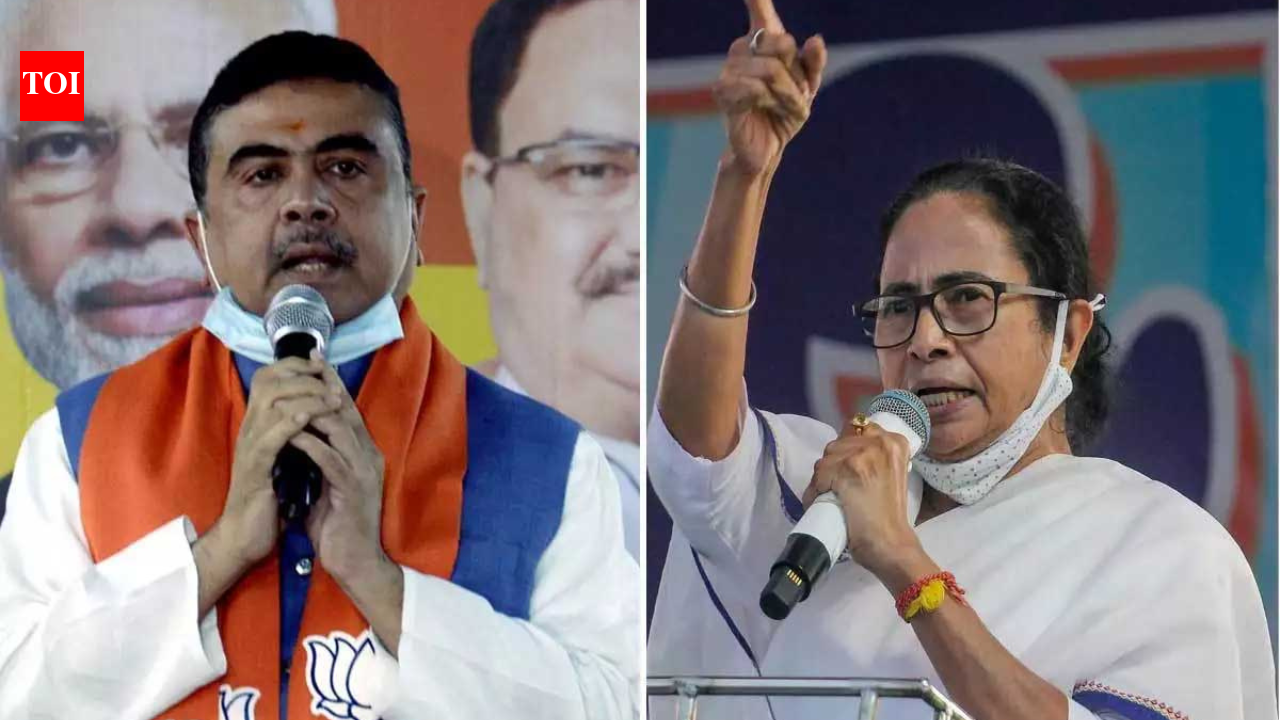
Suvendu Adhikari and Mamata Banerjee (File photo)

NEW DELHI: With both the Trinamool Congress (TMC) and the BJP announcing their candidate lists, the battle for Bengal has effectively begun. While the TMC has declared candidates for all 294 seats, the saffron party has so far named 144, covering roughly half the Assembly. The contest is largely being seen as a direct duel between Mamata Banerjee’s TMC and the BJP led by Prime Minister Narendra Modi.The BJP is now aiming to challenge Mamata Banerjee’s over-a-decade-long rule. Its rise in the Bengali-speaking state has been striking, from near-zero presence to becoming the principal opposition and a serious contender for power.The Modi-led campaign has consistently kept Mamata at the centre of its political attacks, targeting what remains an elusive prize—the second-largest assembly in the country — West Bengal.

2021: The BJP’s turning point

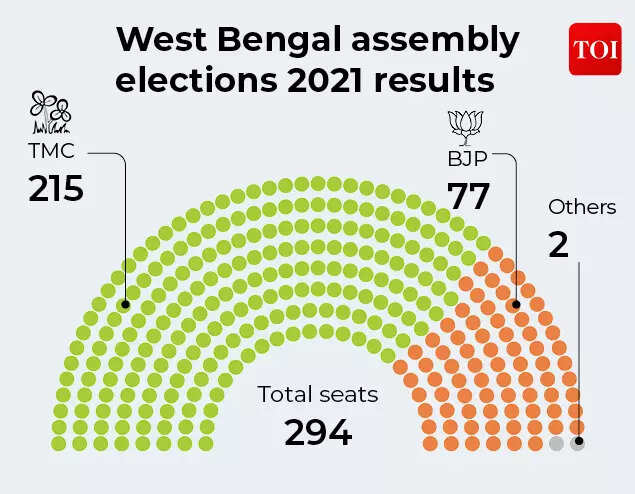
The 2021 assembly election marked a turning point. Despite projecting a landslide victory, the BJP secured 77 seats—falling short of power but registering a dramatic surge from just 3 seats earlier, and firmly establishing itself as a formidable opposition.In many ways, the 2021 election told a bigger story than Mamata Banerjee’s victory, it marked the BJP’s rise to prominence in Bengal politics.

How Bengal voted in 2021

Often called the BJP’s ‘Chanakya’, Amit Shah had confidently declared during the campaign that the party would cross the 200-mark in the 294-member assembly, coining the slogan “abki baar, 200 paar”. The results, however, told a very different story.

West Bengal assembly elections 2021 results

The BJP fell well short, not just of 200, but even of the halfway mark of 147 seats.The outcome also brought personal setbacks for several of the party’s prominent faces. Union minister Babul Supriyo, former Rajya Sabha MP Swapan Dasgupta, and Lok Sabha MP Locket Chatterjee were among those who lost their seats.

Voting patterns and missed calculations

Much of the BJP’s strategy had rested on consolidating Hindu votes and gaining the support of Scheduled Caste (SC) communities, while closely watching whether Muslim voters would back the TMC. In the end, the results suggested that Muslim voters largely stood with Mamata Banerjee, while SC votes did not consolidate in the BJP’s favour as expected.

From 2019 highs of BJP to 2021 setback

Compared to its strong performance in the 2019 Lok Sabha elections, the Assembly results were a setback. Back then, the BJP had won 18 out of 42 seats and led in 121 assembly segments with a vote share of 40.2%. In 2021, it secured 77 seats—44 fewer than the segments it had led in earlier and its vote share dipped slightly to 38.13%.

BJP: A decade of rapid rise

Yet, beneath the disappointment lies a remarkable story of growth. Just a decade ago, in the 2011 Assembly elections, the BJP had failed to win a single seat and managed only 4% of the vote. In 2014, it won two Lok Sabha seats with an 18% vote share. In 2016, it secured three Assembly seats with around 10% votes. From there to 77 seats and over 38% vote share in 2021 marks a dramatic rise.In the process, the BJP has replaced the Left and the Congress, who had dominated Bengal politics for decades, as the principal opposition force. While both the Left parties and the Congress drew a blank in an unprecedented outcome, smaller players like the Rashtriya Secular Majlis Party and an independent candidate managed to win a seat each.The BJP has not just gained seats; it has built an organisational base, a cadre, and a leadership structure in the state. That machinery, now firmly in place, is likely to shape its strategy for future battles, both in the Lok Sabha elections and the next assembly contest.

The Nandigram battle

Another key takeaway for the BJP was the victory of its “giant killer” Suvendu Adhikari, who defeated Chief Minister and TMC supremo Mamata Banerjee in Nandigram by a narrow margin of 1,956 votes after a fiercely contested battle.The contest had turned into a prestige fight after Mamata herself chose to challenge Adhikari on his home turf. He had gone a step further, declaring he would quit politics if he failed to defeat her by 50,000 votes. While he fell short of that ambitious claim, his eventual win, even by a slender margin proved politically significant.The defeat dealt a symbolic blow to the TMC’s larger victory and meant Mamata Banerjee would have to seek re-election to the Assembly within six months to continue as chief minister.

[ad_2]

Source link

Patna high court grants bail to JD(U) MLA Anant Singh in Dularchand Yadav murder case

[ad_1]

Patna high court grants bail to JD(U) MLA Anant Singh in Dularchand Yadav murder case

NEW DELHI: The Patna high court on Thursday granted bail to Anant Singh in connection with the murder of Jan Suraaj supporter Dularchand Yadav.Anant Singh had been arrested ahead of polling in the Bihar Assembly elections last year along with two associates, Manikant Thakur and Ranjeet Ram.Despite his arrest, Singh went on to win the Mokama Assembly seat in Patna district by a margin of 28,206 votes, defeating RJD candidate Veena Devi, wife of Surajbhan Singh, who secured 63,210 votes. He later took oath as an MLA in the Bihar Assembly and sought blessings from chief minister Nitish Kumar before assuming office.Dularchand Yadav was killed during a clash between supporters of rival candidates in Mokama on October 30. Singh was accused of orchestrating the incident and was arrested on the night of November 1.Earlier, Bihar Director General of Police Vinay Kumar had said that the death was not caused by a gunshot injury but due to cardiac and respiratory failure, as per the post-mortem findings.“A bullet mark was found on the leg of the deceased, but it was not the cause of death. The primary cause was determined to be cardiac and respiratory failure,” DGP Vinay Kumar said.Following the incident, two station house officers were suspended. Ghoswari SHO Madhusudan Kumar and Bhadaur SHO Ravi Ranjan were removed from duty, officials said.The Mokama contest had drawn attention as it involved two strongmen — Anant Singh and Surajbhan Singh — who have long dominated the region’s political landscape.In the 2025 Bihar Assembly elections, the NDA secured a landslide victory, winning 202 out of 243 seats, while the Mahagathbandhan managed 35. The ruling alliance crossed the 200-seat mark for the second time after its 206-seat win in 2010.

[ad_2]

Source link

Tragic Accident Claims Lives of IIT Bombay Students on Mumbai–Pune Expressway | Mumbai News

[ad_1]

Khandala trip turns fatal: 3 IIT-Bombay students die as SUV overturns on Mumbai-Pune Expressway

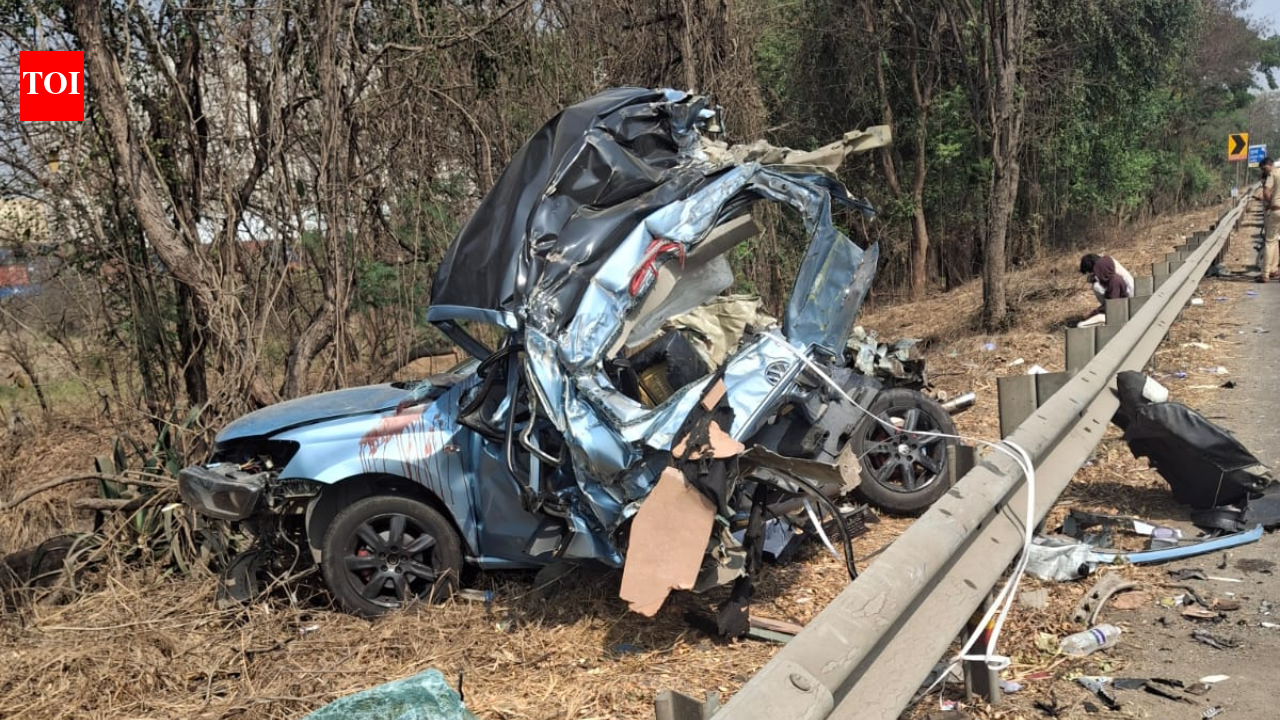
NAVI MUMBAI: Three students of Indian Institute of Technology-Bombay (IIT-B) were killed after the SUV in which they were travelling along the Mumbai-Pune expressway while returning from Khandala after watching sunrise to reach IIT-B campus at Powai overturned after losing control reportedly while overtaking a truck ahead near Panvel exit on Thursday around 9.30 am. The victims — Shreyansh Sharma (22) from Jaipur, Omkumar Borse (23) from Nashik and Lay (20) from Nagpur — were part of a group of six students who had left the Powai campus around 5am in three SUVs to watch the sunrise. The accident occurred on their return journey, shortly after crossing the Bhatan tunnel. According to police, the SUV lost control while attempting to overtake a truck near the 10.7 km mark before the Panvel exit. The vehicle reportedly somersaulted multiple times, leaving it mangled and trapping the occupants inside. All three students in the vehicle sustained fatal injuries. However, batchmates travelling in the other two vehicles told investigators that the SUV may have brushed against the truck while changing lanes, causing the driver to lose control. Police are examining both versions. “We are investigating the exact cause of the accident and will register an FIR based on findings,” said a senior officer from Panvel taluka police station. Highway police indicated that overspeeding could have been a factor. “Prima facie, it appears the vehicle was at high speed when it lost control and overturned,” an officer said. Rescue teams were rushed to the spot after an alert was received on the emergency helpline. The bodies were later taken to a hospital in Panvel for postmortem. Two faculty members from IIT Bombay also reached the hospital.

[ad_2]

Source link

Rupee weakens in NDF, set to slip past 93 as oil surges; RBI steps up key tool

[ad_1]

Rupee weakens in NDF, set to slip past 93 as oil surges; RBI steps up key tool

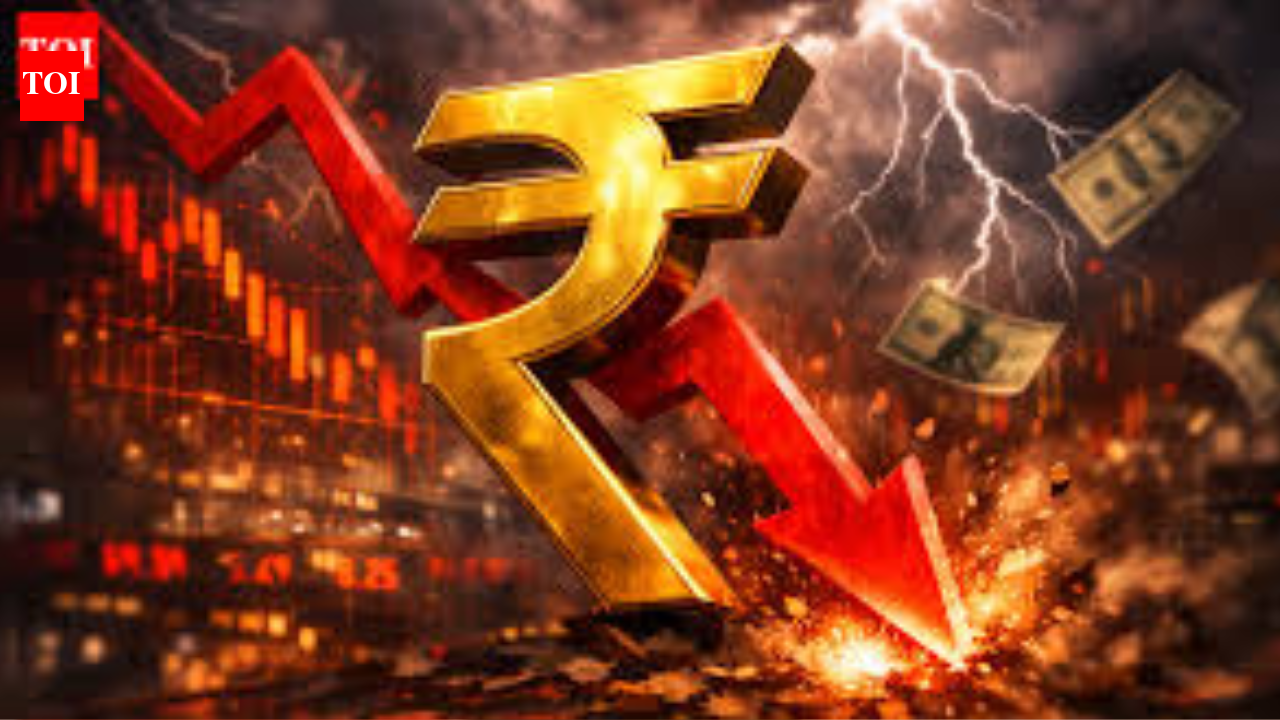
The rupee fell 49 paise to hit a record low of 92.89 against the US dollar in early trade on Thursday, amid sustained pressure from a strong dollar and global market volatility.As the currency weakened, the Reserve Bank of India has significantly increased its market intervention using forward contracts, Bloomberg reported citing people familiar with the matter. The central bank’s net-short dollar position, a gauge of its forward dollar sales, is nearing $100 billion across offshore and onshore markets.The figure has risen sharply from $67.8 billion in January, according to official data, and was last at a record $88.8 billion in February 2025, according to Bloomberg.The stepped-up intervention comes as emerging market currencies face renewed pressure from a strengthening US dollar. Even before the ongoing geopolitical tensions, the RBI had been actively intervening in forex markets to stabilise the rupee amid heavy equity outflows triggered by higher US tariffs.“Letting the rupee freely absorb shocks is not an option in times of stress, when speculative dominance in FX markets can quickly put the currency on a slippery slope, one that we can ill-afford,” said Madhavi Arora, chief economist at Emkay Global Financial Services Ltd told Bloomberg. The RBI has focused much of its intervention in offshore markets, particularly through non-deliverable forwards (NDFs), which allow it to influence the exchange rate without immediately drawing down foreign exchange reserves. The central bank has also used short-term dollar contracts and supplemented them with buy-sell swaps in the domestic market to manage liquidity.India’s foreign exchange reserves stood at $717 billion in the week ended March 6, close to record highs.However, analysts caution that the growing derivatives position could pose challenges. As these contracts mature, they may generate recurring demand for dollars, potentially limiting any sustained recovery in the rupee, strategists at Barclays Plc noted.The rupee has hit successive record lows in March, breaching the key 92-per-dollar level, reflecting continued pressure on the currency despite central bank efforts.

[ad_2]

Source link

Just 350m away! Projectile strikes near Bushehr nuclear reactor, IAEA flags near miss

[ad_1]

Just 350m away! Projectile strikes near Bushehr nuclear reactor, IAEA flags near miss
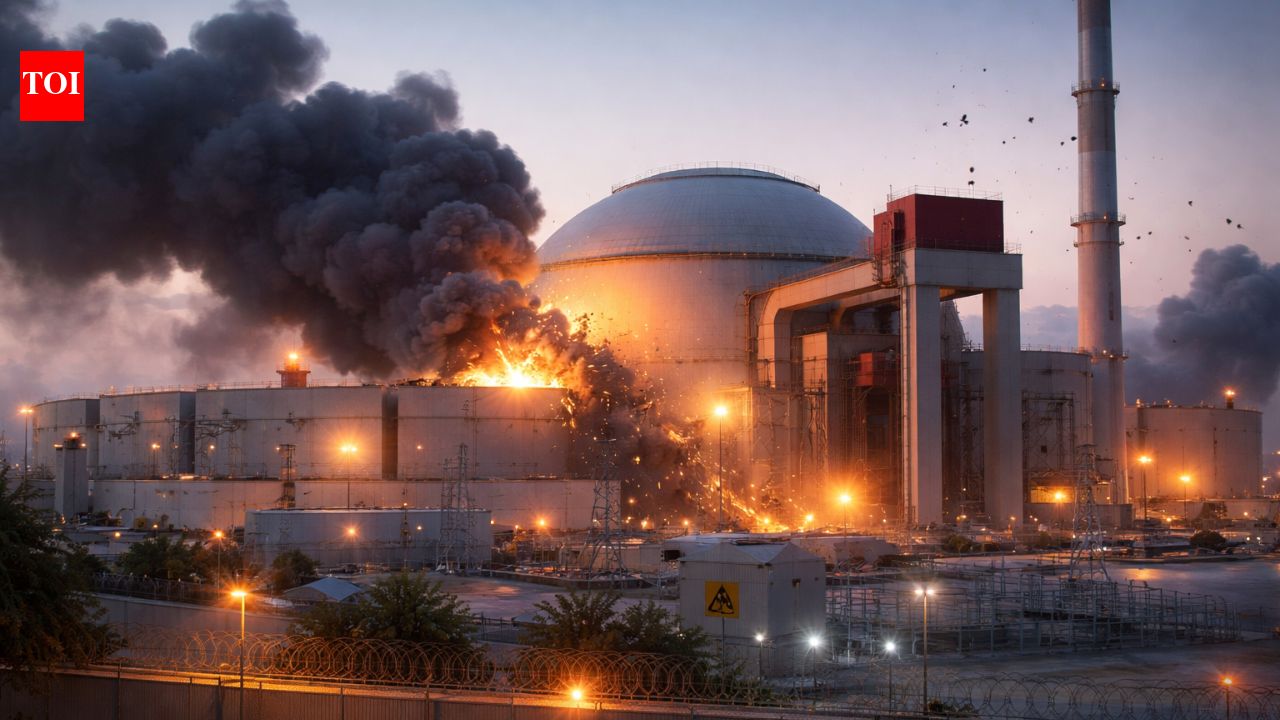
AI-generated image used for representation (Source: ChatGPT)

The International Atomic Energy Agency (IAEA) on Thursday said a “projectile hit” took place near Iran’s Bushehr Nuclear Power Plant, striking a structure about 350 metres from the reactor.In a statement posted on X, IAEA director general Rafael Mariano Grossi said the reactor itself was not damaged and no injuries were reported. However, he warned that any attack near nuclear facilities violates key safety principles. “Although there was no damage to the reactor itself nor injuries to staff, any attack at or near nuclear power plants violates the seven indispensable pillars related to ensuring nuclear safety and security during an armed conflict and should never take place,” he said.The agency did not specify the nature of the projectile that struck the area near the Bushehr plant, located on Iran’s Persian Gulf coast, around 480 miles south of Tehran. The facility currently has one operational unit, with two additional Russian-designed units under construction.Iran and Russia have alleged that a projectile struck the premises of the Bushehr nuclear power plant, raising fears of a potential radiological incident amid Tehran’s ongoing conflict with Israel and the United States.While no leakage of nuclear material was reported after the Tuesday evening incident, it has once again highlighted longstanding concerns among Iran’s neighbours that the Persian Gulf facility could be vulnerable to attacks or natural disasters such as earthquakes.Alexei Likhachev, head of Russia’s state nuclear corporation Rosatom, earlier said the strike took place at 15:11 GMT on Tuesday and hit an area close to the plant’s meteorological service, near an operating power unit.He stressed that safety remains the top priority, adding that personnel had already been partially reduced at the site. “The safety of human life is our absolute priority. We had previously partially reduced the number of personnel at the construction site of Bushehr Nuclear Power Plant Units 2 and 3. About 250 employees and their families were safely evacuated from Iran. Children of employees were preemptively evacuated before the armed conflict began. About 480 of our comrades remain there. Preparations for the third personnel evacuation are under way,” he said.Rosatom also condemned the incident, urging all sides to de-escalate tensions around the nuclear facility.The strike comes amid ongoing hostilities after the United States and Israel launched attacks on Iran on February 28, targeting its leadership and military infrastructure. Iran has since retaliated, and the conflict continues. Grossi has repeatedly called for diplomacy, saying that “to achieve the long-term assurance that Iran will not acquire nuclear weapons and for maintaining the continued effectiveness of the global non-proliferation regime, we must return to diplomacy and negotiations”.Also read: Israel bombs South Pars- Why does this gas field matter so much to Iran — and the world?
The first unit of the Bushehr plant was connected to the grid in 2011. It is a Russian-designed VVER reactor with a capacity of 915 MWe. Two additional VVER-1000 units are under construction, with unit 2 progressing steadily since its first concrete was poured in 2019 and key structural components installed in recent years.Iran has indicated that unit 2 could become operational by 2029. According to Rosatom, work is also ongoing on unit 3. In September 2025, Rosatom and the Atomic Energy Organisation of Iran signed an agreement to cooperate on small modular reactors, as Iran aims to expand its nuclear capacity to 20 GW by 2041.

Bushehr spared in June conflict, scrutiny rises now

Bushehr, a functioning civilian nuclear power plant, remained untouched during the 12-day Israel-Iran conflict in June. During that period, the US targeted three Iranian nuclear enrichment sites, damaging centrifuges and likely burying Tehran’s stockpile of highly enriched 60% uranium underground. Since then, Iran has restricted access to those sites, blocking inspections by the IAEA.Any strike on an operational nuclear power plant raises the risk of radioactive leakage into the environment, a concern that has loomed large since Russia’s full-scale invasion of Ukraine in 2022, where nuclear facilities have repeatedly come under threat.A potential radiation leak into the Persian Gulf would pose an existential crisis for Gulf Arab nations, many of which depend heavily on desalination plants in the region for their water supply.

[ad_2]

Source link

Strait of Hormuz disruption impact: India considers dedicated Rs 1,000 crore war-risk cover to support insurers

[ad_1]

Strait of Hormuz disruption impact: India considers dedicated Rs 1,000 crore war-risk cover to support insurers
Under a proposal being reviewed by the finance ministry, domestic insurers could be enabled to provide cover for vessels navigating high-risk areas. (AI image)

Middle East conflict impact on India: The government is looking at the creation of a specialised fund to assist insurers offering war-risk coverage for ships operating on routes to and from India through conflict-affected waters in West Asia. Ongoing disruptions linked to the Iran conflict have unsettled trade movements, while global reinsurers have withdrawn from the region, making cargo transport both more expensive and harder to insure.Under a proposal being reviewed by the finance ministry, domestic insurers could be enabled to provide cover for vessels navigating high-risk areas such as the Strait of Hormuz, supported by a government-backed reinsurance mechanism designed to absorb potential losses, sources told ET.“We are examining if a fund can be created as reinsurance is not available in the region,” a government official said. The proposed arrangement would effectively act as a backstop, helping insurers secure reinsurance support at a time when international players are staying away.An industry executive noted that the structure could mirror the Marine Cargo Excluded Territories Pool introduced in 2022 following the Russia-Ukraine conflict and related sanctions.This pool, overseen by the state-run General Insurance Corporation of India (GIC Re), offers insurance coverage for marine cargo shipments of fertilisers and other goods originating from designated “excluded territories,” including Belarus, Ukraine and Russia.Such shipments are typically excluded from coverage by global insurers due to war-related risks and international sanctions. The existing pool comprises 21 members and provides a capacity of ₹484 crore per shipment.Under the current framework, GIC Re, acting as the pool manager, works with an underwriting committee to approve coverage for additional commodities when required. It accounts for the largest share of capacity at 51.6 percent and receives a 2.5 percent management commission on the original gross premium after adjusting for obligatory cessions.According to a government official, multiple options are under consideration, with any decision on establishing such a facility likely to be taken only after the Strait of Hormuz route reopens. The final decision regarding its structure, size, and institutional placement will depend on these developments.Another person familiar with the matter said the proposed pool could be housed within state-run insurers led by GIC Re, with an estimated corpus of around ₹1,000 crore.The proposed mechanism may also extend coverage to crude oil shipments moving through the Strait of Hormuz, in addition to other cargo, the person added. “This is being discussed so as to ensure the continuity of cover for India-bound cargo, as most global insurers have withdrawn the cover,” the person said.Industry stakeholders, including exporters and shipping companies, have in the past advocated the creation of such a facility.

[ad_2]

Source link