Breaking News
Dubai to host Eid ul Fitr 2026 prayers in over 900 mosques, confirms timing in UAE emirate amid Iran vs US-Israel war

[ad_1]

Dubai to host Eid ul Fitr 2026 prayers in over 900 mosques, confirms timing in UAE emirate amid Iran vs US-Israel war
Thousands to Gather Across 900 Mosques for Eid ul Fitr 2026 Prayers in Dubai

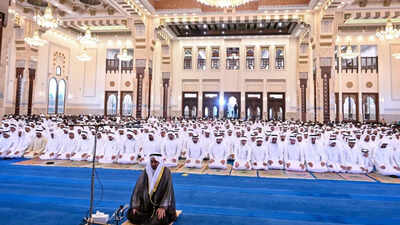
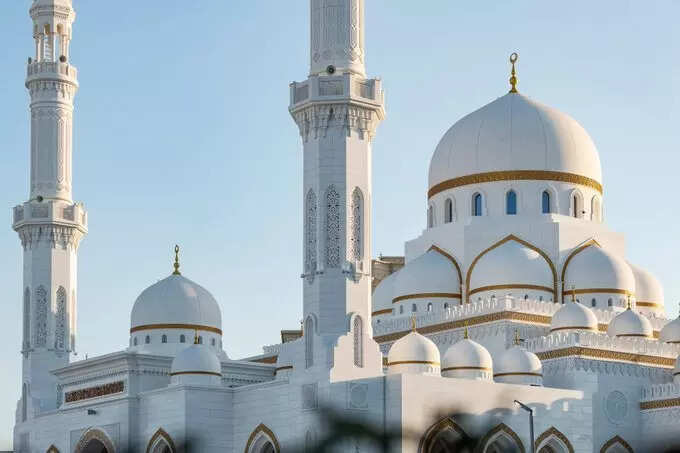
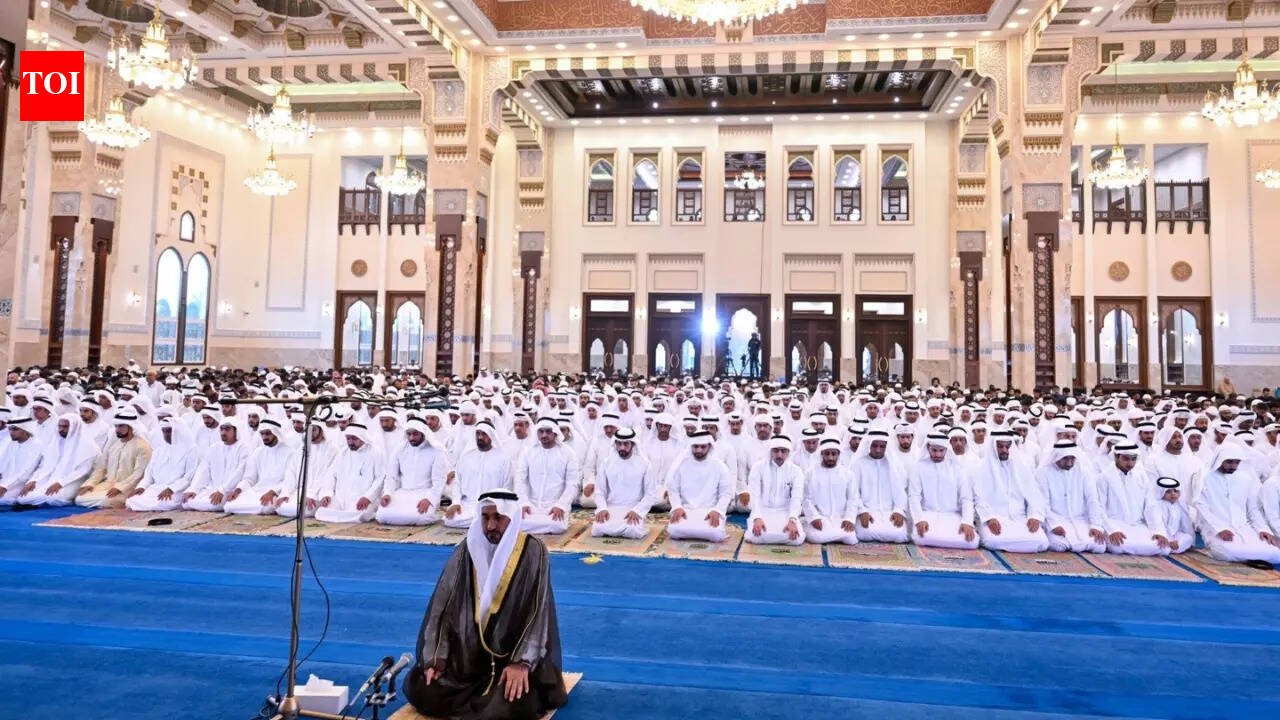
Dubai is preparing for one of its largest and most coordinated Eid ul Fitr 2026 prayer gatherings in recent years, with authorities announcing that more than 900 mosques across the emirate will host prayers, a ‘Muezzin Al Freej’ that reflects both the spiritual significance of the occasion and the logistical precision required in the current climate but this year’s celebrations come with a notable shift.While the scale remains grand, the format has changed and marks a careful balance between tradition, safety and evolving regional realities.

Dubai’s citywide Eid ul Fitr 2026 prayer network

According to officials, Eid ul Fitr prayers in Dubai will take place at 6:40 am across over 900 mosques, ensuring that the Muslim worshippers across the city have access to nearby prayer spaces. This wide distribution is not just about convenience, it is a deliberate strategy to avoid overcrowding, ensure smoother movement of worshippers and maintain safety and order across the emirate.Authorities have confirmed full readiness, with coordination between religious bodies and emergency response teams to manage what is expected to be a massive turnout.

No open grounds this year in Dubai for Eid ul Fitr 2026 prayer

In a significant departure from tradition, Dubai, along with other Gulf countries, has restricted Eid ul Fitr prayers to mosques only, suspending large open-air gatherings such as Eidgah prayers. This decision is rooted in the broader regional context. Amid the ongoing geopolitical tensions and heightened security concerns due to Iran vs US-Israel war, authorities are prioritising controlled environments over large, open congregations.

​No Open Grounds? Dubai’s Eid ul Fitr 2026 Prayer Format Has Changed​ Amid Iran vs US-Israel War

No Open Grounds? Dubai’s Eid ul Fitr 2026 Prayer Format Has Changed Amid Iran vs US-Israel War

Mosques, with defined capacities and structured entry systems, offer a more manageable setting for large gatherings. While this may alter the familiar visual of sprawling Eid prayer grounds, the essence of the celebration remains intact, just more organised and secure.

Eid ul Fitr 2026 prayer timing and significance in Dubai and other UAE emirates

The announcement comes as the UAE officially confirmed that Eid ul Fitr will be observed on Friday, March 20, 2026, following the completion of Ramadan. Eid prayers, held shortly after sunrise, are the spiritual highlight of the festival, bringing together communities in a shared moment of gratitude and celebration. In Dubai, the uniform timing of 6:40 am ensures synchronisation across the emirate, creating a sense of collective worship on a citywide scale. Adding to the atmosphere, initiatives like coordinated takbeerat (Eid chants) and mosque-wide announcements will create a unified spiritual experience across Dubai. From neighbourhood mosques to major prayer centres, the sound of Eid Takbeerat will resonate simultaneously, turning the entire city into a shared space of devotion. This synchronisation is not just symbolic; it reflects Dubai’s emphasis on community cohesion, even within a structured and regulated environment.

Safety takes centre stage in Dubai during Eid ul Fitr 2026 prayer

Behind the scenes, authorities have placed strong emphasis on safety and preparedness. Across the UAE, guidelines have been issued urging worshippers to arrive early to avoid congestion, follow instructions from mosque officials and maintain orderly movement within prayer spaces. The decision to decentralise prayers across hundreds of mosques is itself a safety measure, reducing the risks associated with large, concentrated gatherings.This comes at a time when the region has witnessed emergency alerts, heightened security protocols and increased vigilance around public gatherings. Against this backdrop, Eid prayers are being carefully managed to ensure they remain peaceful and secure. Dubai’s approach is part of a broader Gulf-wide trend. Countries including the UAE, Kuwait and Qatar have all moved towards mosque-only Eid ul Fitr prayers, signalling a regional shift in how large religious gatherings are organised during times of uncertainty.This marks a notable evolution from previous years, where large outdoor Eidgahs were common, massive crowds gathered in open spaces and celebrations were more decentralised and informal. Now, the focus is on structured, regulated and safety-first celebrations. The announcement has quickly gained traction as hosting prayers across 900+ mosques is a logistical feat, highlighting Dubai’s ability to manage large-scale events.

​Eid ul Fitr 2026 Amid Iran vs US-Israel War Tensions: Dubai Opts for Mosque-Only Prayers​

Eid ul Fitr 2026 Amid Iran vs US-Israel War Tensions: Dubai Opts for Mosque-Only Prayers

The shift from open grounds to mosques reflects a significant change in tradition. The decision comes amid ongoing regional tensions, adding a layer of urgency and relevance. For residents, this directly impacts how they will celebrate one of the most important days of the year. For many residents, this year’s Eid ul Fitr may feel different. The absence of large outdoor gatherings means more localised celebrations, smaller but community-based prayer experiences and a quieter, more structured atmosphere.Yet, the core elements remain unchanged with congregational prayer, community connection and spiritual reflection. In many ways, the shift may even bring the experience closer to home, with neighbourhood mosques becoming the centre of celebration. Dubai’s Eid ul Fitr prayer plan reflects a broader reality. Large-scale public events are increasingly being designed with flexibility and resilience in mind. Whether due to health concerns, security risks or logistical challenges, authorities are adapting traditional practices to fit modern conditions. This is not about limiting celebrations but about reimagining them safely.Dubai’s decision to host Eid Al Fitr prayers across more than 900 mosques is both ambitious and strategic with a massive scale, structured execution and safety-first approach.

[ad_2]

Source link

Gold Price: Dubai souks buzz as gold prices crash over Dh50 in UAE: Eid ul Fitr 2026 shoppers rush to buy

[ad_1]

Dubai souks buzz as gold prices crash over Dh50 in UAE: Eid ul Fitr 2026 shoppers rush to buy
Eid ul Fitr 2026 gold rush begins as prices drop in the UAE markets

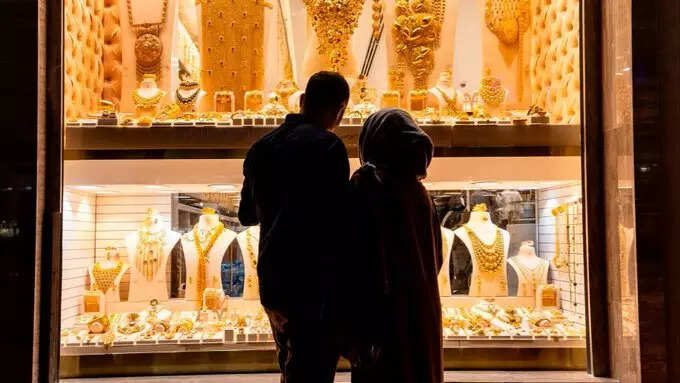
After weeks of soaring prices that kept many buyers on the sidelines, gold has finally taken a sharp turn in the UAE, dropping over Dh50 from its March peak and triggering a surge in last-minute Eid shopping across Dubai’s jewellery markets. For shoppers who had been waiting patiently, the dip has arrived just in time and for the gold market, it has sparked a familiar Ramadan pattern of hesitation, followed by a sudden rush.

What’s happening to gold prices in the UAE?

Gold prices in Dubai have seen a significant correction in recent days, with 24K gold falling to around Dh554 per gram, down sharply from earlier highs that touched above Dh640 earlier this month. The drop is not just a daily fluctuation, it reflects a broader trend. Prices are down Dh30+ in a single day and nearly Dh80–Dh90 below early March peaks.Similarly, 22K gold has followed suit, falling by more than Dh80 from its peak levels, making jewellery purchases noticeably cheaper for consumers. For many buyers, this is the first real price relief window in weeks.

Eid ul Fitr rush returns to gold souks

The timing of the dip couldn’t be more significant. With Eid Al Fitr just around the corner, UAE shoppers, especially families preparing for gifting and weddings, are now returning to gold markets in large numbers.Jewellers are reporting:

  • Increased footfall in Dubai’s gold souks
  • Higher demand for lightweight jewellery
  • Renewed interest from price-sensitive buyers

After holding off purchases during the price surge, many shoppers are now seeing this correction as a “buy-now” moment. This pattern is not new. Every year, gold demand spikes before Eid ul Fitr but this time, the surge is being amplified by sudden price relief.

Why are gold prices falling in the UAE?

The drop in UAE gold prices is closely tied to global market movements. Gold, often seen as a safe-haven asset, had surged earlier this month due to geopolitical tensions, inflation fears, and economic uncertainty but recent developments have led to a partial pullback.

Gold Falls Sharply in UAE: Is This the Best Time to Buy?

Gold Falls Sharply in UAE: Is This the Best Time to Buy?

Key factors behind the decline include:

  • Profit-Taking After Highs – After hitting near-record levels, global investors began booking profits, causing prices to ease.
  • Market Volatility – Gold prices have been swinging sharply in recent weeks, reacting to oil price shocks, currency movements and interest rate expectations.
  • Geopolitical Influence – The ongoing Iran vs US–Israel conflict has created extreme volatility across markets, including gold.

Interestingly, while geopolitical risk usually pushes gold prices up, sudden shifts in sentiment can also trigger quick corrections—exactly what is being seen now. March 2026 has been anything but stable for gold. Prices started the month at elevated levels, surged to peaks above Dh640 and then began a steady decline punctuated by sharp daily swings.In fact, gold has risen rapidly on global tensions, fallen sharply on corrections and rebounded briefly before dipping again. This volatility has made timing the market difficult for buyers but for those who waited, the current dip offers a rare advantage.

Global factors driving local gold prices

What’s happening in Dubai’s gold markets is deeply connected to global developments. Dubai is one of the world’s largest gold trading hubs, and its prices are influenced by:

  • International bullion rates
  • Currency fluctuations
  • Supply chain disruptions

Recent disruptions in flights across the Middle East, even affecting gold shipments, have added another layer of complexity to pricing dynamics. At the same time, the broader economic impact of the ongoing conflict with rising oil prices, inflation concerns and market uncertainty, has created unpredictable price movements across commodities.For shoppers, the current scenario presents a clear opportunity. Lower prices mean:

  • Better value for jewellery purchases
  • Increased affordability for wedding buyers
  • Higher purchasing power for gifting

Retailers say many customers are opting for larger pieces than they initially planned, buying earlier than expected and locking in prices before another potential rise. However, experts caution that this window may not last long.

Will gold prices fall further?

The big question on everyone’s mind is whether this the lowest point or just a pause before another surge. Analysts suggest that gold prices are likely to remain volatile in the short term, influenced by ongoing geopolitical tensions, central bank policies and inflation trends. Given the uncertainty, prices could drop slightly further, stabilise or rebound quickly if global tensions escalate again. This unpredictability is what makes the current moment both an opportunity and a risk.

​Cheaper Gold Ahead of Eid ul Fitr 2026: Shoppers Flock to Dubai Souks​

Cheaper Gold Ahead of Eid ul Fitr 2026: Shoppers Flock to Dubai Souks

The sharp drop in gold prices has quickly become a trending topic across the UAE and for good reason. The dip comes just days before Eid ul Fitr, when demand is naturally high. A drop of Dh50–Dh90 per gram is significant, especially for bulk purchases. Gold is deeply tied to cultural traditions, gifting, and celebrations. In a time of global uncertainty, any price relief is major news.

What gold buyers should keep in mind

While the dip is attractive, experts advise buyers to remain cautious:

  • Track daily price movements
  • Compare rates across retailers
  • Focus on making charges, not just gold rates
  • Avoid panic buying

The goal is to strike a balance between timing the market and meeting personal needs. The current gold price movement reflects a larger global reality. Markets are volatile, geopolitical tensions are shaping economic trends and consumer behaviour is adapting quickly. In this environment, even traditional assets like gold are behaving in less predictable ways.Gold prices dropping over Dh50 in the UAE has created a rare buying window just before Eid, drawing shoppers back into the market after weeks of hesitation with prices down significantly from peak, demand rising rapidly and market still highly volatile but beyond the numbers lies a deeper story. In a world shaped by uncertainty, even gold (long seen as a symbol of stability) is now moving to the rhythm of global events and for UAE shoppers, it means that the best time to buy might just be now but only for those ready to act fast.(Disclaimer: Recommendations and views on the stock market, other asset classes or personal finance management tips given by experts are their own. These opinions do not represent the views of The Times of India)

[ad_2]

Source link

Eid Wishes & Messages: Happy Eid-ul-Fitr 2026: Eid Mubarak Wishes, Messages, Quotes, and Images for Sharing on Facebook and WhatsApp |

[ad_1]

Happy Eid-ul-Fitr 2026: Eid Mubarak Wishes, Messages, Quotes, and Images for Sharing on Facebook and WhatsApp
(Image Credits: Pinterest)

The crescent moon has officially been sighted, the month of fasting has wrapped up, and the beautiful, chaotic energy of Eid morning is finally here. You already know the drill. The sheer khurma is simmering on the stove, the brand-new clothes are out of their covers, and the house smells faintly of rich attar and fresh jasmine. After thirty days of waking up at ungodly hours for suhoor and reflecting on your spiritual journey, it is time to eat, celebrate, and connect with everyone you love. But before the food coma officially hits and the Eidi envelopes start getting passed around, there is one modern morning ritual you have to navigate: the massive wave of WhatsApp notifications. Your phone is going to light up with messages from aunts, cousins, childhood friends, and colleagues. Sending back a generic “Eid Mubarak” to fifty different people feels a little entirely too robotic, but trying to type out a deeply personal, poetic message for every single chat while getting dressed is practically impossible. You need good, genuine messages, and you need them ready to copy and paste. Whether you are looking for a heartfelt note for your parents, a funny text for your group chat, or the perfect short quote to pair with your Eid outfit picture on Facebook and Instagram, we have you covered. Here are the best Eid-ul-Fitr 2026 wishes, messages, and quotes to share with your loved ones today.

Heartfelt Eid Wishes for Family

Family is the absolute center of Eid. These messages are designed to be warm, full of gratitude, and perfect for the family group chat or individual texts to your parents and siblings.1. Eid Mubarak to the people who make every single festival so incredibly special. May our home always be filled with this much laughter and love. 2. Wishing my beautiful family a joyous Eid! May Allah accept our fasts and shower our home with endless peace and prosperity this year. 3. Eid just isn’t the same without you all. Sending my warmest hugs and prayers to the best family in the world. 4. May the blessings of this beautiful day bring incredible health, wealth, and happiness to our doorstep. Eid Mubarak, Mom and Dad! 5. Here is to a day filled with extra sweet sheer khurma and even sweeter memories. Eid Mubarak to my favorite people. 6. Leaving behind the exhaustion of the month and stepping into today with pure gratitude. I am so lucky to celebrate with you all. 7. May Allah’s divine light guide our family through any dark days ahead. Wishing you all a very blessed Eid-ul-Fitr. 8. Sending so much love from my home to yours. May this Eid bring you everything you have been praying for. 9. Celebrating the spirit of Eid with the ones I love the most. May we be blessed with profound peace today and always. 10. To my siblings: Eid Mubarak! Please save some of the biryani for me, I am on my way over.

Fun and Casual Messages for Friends

Keep it light, energetic, and highly focused on the food and fun for your friends. These are perfect for a quick DM or a casual text drop.11. Eid Mubarak! May your day be entirely filled with great food, zero family drama, and pockets full of Eidi. 12. Wishing you an Eid packed with wild celebrations, endless kebabs, and a fantastic nap afterward. 13. Here is to a fresh start and a brand new chapter. May all those crazy dreams of yours turn into reality this year. Eid Mubarak, buddy! 14. Sending you massive good vibes and a virtual bowl of sheer khurma! Have a fantastic day celebrating. 15. May this Eid give you the strength to chase your biggest goals and the patience to deal with all the nosy relatives today. 16. Fasting is over, feasting begins! Wishing you a very Happy Eid. Let’s catch up and celebrate properly this weekend. 17. May the joy of this festival fill up both your heart and your bank account. Have a highly prosperous Eid! 18. Wishing you a day that’s loud, bright, and completely unforgettable. Keep shining, my friend. 19. Eid Mubarak! May your outfit look flawless and your makeup stay perfectly intact all day. 20. To my favorite partner in crime: May this Eid bring us even more ridiculous memories and amazing food.

Images

Best Eid Mubarak Wishes and Messages

(Image Credits: Pinterest)

Best Eid Mubarak Wishes, Messages, and Quotes

(Image Credits: Pinterest)

Short Quotes for WhatsApp Status and Facebook

Need a quick caption for your festive outfit picture or a snapshot of your gorgeous henna? These short, aesthetic quotes work perfectly for your social media updates.21. Embracing the blessings, the food, and the beautiful chaos. Eid Mubarak 2026! ✨ 22. May the light of the moon bring triumph and peace into all our lives this year. � � 23. Fasting is over; the feasting has officially commenced. � �🌿 24. May this Eid usher in a heavy dose of peace, prosperity, and positivity. � � 25. Stepping into the holiday with a heart full of gratitude and a plate full of biryani. Eid Mubarak! � � 26. Wishing everyone a year as rich in joy as today’s dessert spread. � � 27. Grateful for the month that passed, excited for the day ahead. Eid Mubarak to all! � � 28. May the vibrant glow of the festival light up your path to success this year. � � 29. Dressed up, feeling festive, and ready for whatever this beautiful day brings. � � 30. Let the celebrations begin. Wishing peace and love to everyone celebrating today.

Traditional and Spiritual Eid Greetings

For older relatives, colleagues, or community groups, a touch of respect, cultural depth, and spirituality is always the right approach.31. May Allah accept our good deeds, forgive our transgressions, and ease the suffering of all people around the globe. Eid Mubarak. 32. On this sacred day, may the divine grace of the Almighty always protect you and your family. Have a deeply spiritual and joyful Eid. 33. I pray your life is constantly filled with the light of knowledge and the warmth of divine love. Wishing you a blessed Eid-ul-Fitr. 34. Let us welcome this day by letting go of past grievances and trusting completely in the divine will. Have a peaceful celebration. 35. May the profound blessings of the season surround you today and always. Have a wonderful, highly traditional Eid. 36. Hoping the dawn of this Eid brings an abundance of tranquility and spiritual wealth into your home. 37. May the festival of Eid bring you luck, joy, and the inner strength to face all of life’s challenges with unshakeable faith. 38. Sending you my most sincere wishes for a year filled with divine blessings, good fortune, and holistic well-being. 39. May your home resonate with the joy of festive prayers and the laughter of loved ones today. 40. As we celebrate the end of Ramadan, may your personal world be filled with endless light and peace. Eid Mubarak to you and yours.Taking just two minutes to copy and send the right message makes the people in your life feel valued and remembered on a busy holiday.

[ad_2]

Source link

Lockie Ferguson to miss IPL 2026 start, puts family first: ‘Help my wife out’ | Cricket News

[ad_1]

Lockie Ferguson to miss IPL 2026 start, puts family first: 'Help my wife out'
Lockie Ferguson (PTI Photo/Shailendra Bhojak)

NEW DELHI: Lockie Ferguson will miss the early part of IPL 2026 as he chooses to spend time with his family after recently becoming a father. The fast bowler, who plays for Punjab Kings, is expected to join the squad later in the tournament after taking a short break from cricket.Ferguson explained his decision. “Just had a wee son, trying to spend as much time as I can at home and help my wife out,” he said ahead of the 3rd T20I against New Zealand, as quoted by ESPNCricinfo. “I’ll have a few weeks off after this, before sort of heading to the later stages of the IPL and away for the winter.”

Watch

Shashi Tharoor & Samson’s Redemption Story: From Setbacks to Glory

He had earlier taken only a brief break during the T20 World Cup 2026, spending just a few days with his family before returning to play. Now, he wants a longer rest to balance personal life and cricket. Ferguson said he still enjoys representing the New Zealand national cricket team, adding, “Always a pleasure playing for the Black Caps, really enjoyed my time in India with the group again.” In his absence, Punjab Kings may turn to players like Ben Dwarshuis, along with other pace options in their squad.

Commitment to New Zealand and future goals

Ferguson made it clear he is not stepping away from international cricket. He said, “They thought this was my last game (laughs). No, I’m still very committed to play for New Zealand.”Looking ahead, he is focused on upcoming global tournaments and added, “Looking forward to the next two World Cups, there’s a great opportunity for our squad.” He also mentioned working hard to stay fit and contribute to the team.On the growth of cricket, Ferguson supported the idea of a franchise T20 league in New Zealand, saying, “I think it’s exciting that there’s a prospect at a franchise tournament,” and highlighted the country’s talent and potential to showcase its cricket on a bigger stage.

Banner Insert

[ad_2]

Source link

Big oil relief soon? What Trump’s possible ‘unsanctioning’ of Iran crude means for India

[ad_1]

Big oil relief soon? What Trump’s possible ‘unsanctioning’ of Iran crude means for India
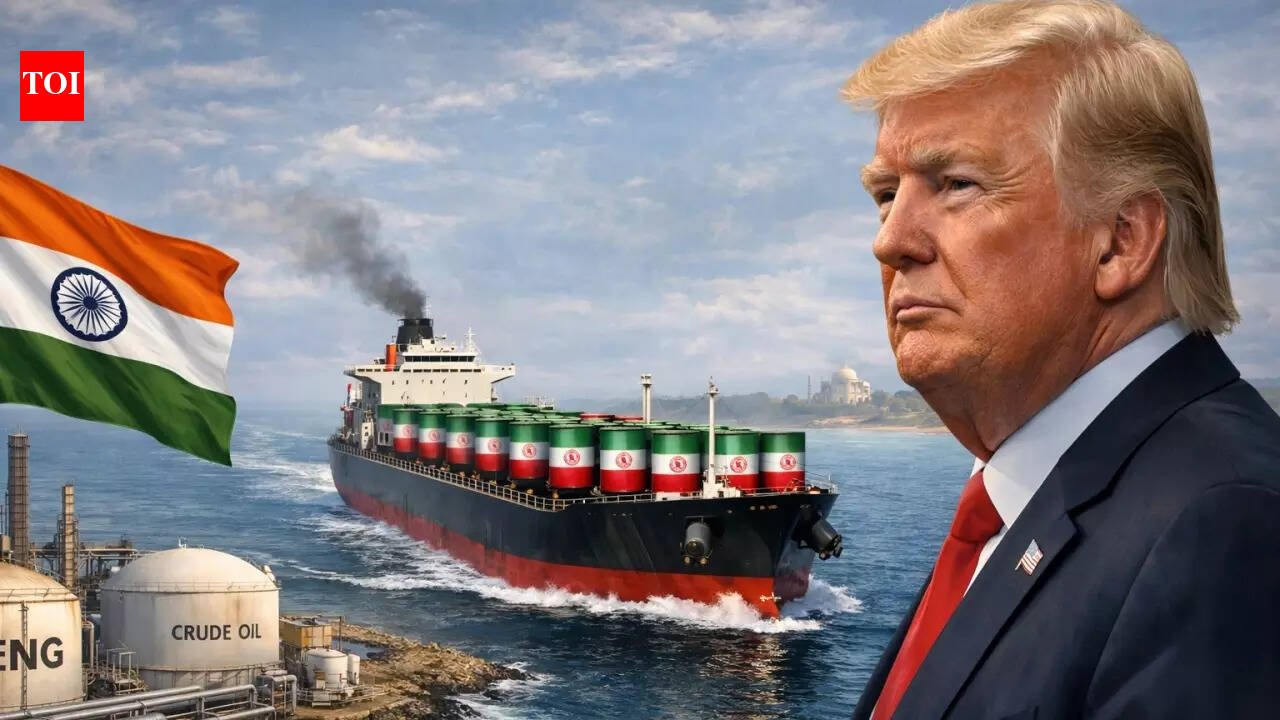
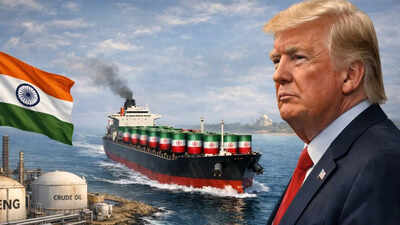
If the US were to ‘unsanction’ Iran oil at sea, India would be able to step up procurement. (AI image)

Will India get access to Iran crude oil soon? The Donald Trump administration has signalled the possibility of waiving sanctions on floating Iran crude oil to ease the ongoing shock in the global energy markets. The US-Israel-Iran war has driven up crude oil prices globally, with Brent crude rising to near $120 per barrel levels.The Trump administration has already issued a similar waiver for Russian crude oil which it had sanctioned to pressure Moscow to end the conflict with Ukraine. US Treasury Secretary Scott Bessent said on Thursday that Washington is considering the possibility of lifting sanctions on Iranian oil cargoes that are already in transit, as energy prices surge amid the ongoing Middle East conflict.His remarks, made during an interview with Fox Business, came as oil and gas markets rallied again following Iran’s strike on Qatar’s largest liquefied natural gas (LNG) facility and its threats to target broader regional energy infrastructure.“In the coming days, we may unsanction the Iranian oil that’s on the water. It’s about 140 million barrels. So depending on how you count it, that’s 10 days to two weeks of supply that the Iranians had been pushing out that would have all gone to China. In essence, we will be using the Iranian barrels against the Iranians to keep the price down for the next 10, or 14 days, as we continue this campaign,” Bessent said.Also Read | How Iran’s strikes on Qatar’s Ras Laffan, world’s largest LNG hub & other Middle East oil & gas infra, will impact India Bessent also indicated that the US could tap additional volumes from its strategic petroleum reserves to help stabilize global oil prices.The US has been working to contain the sharp rise in energy costs after US-Israeli strikes on Iran on February 28 triggered a wider escalation. Iran’s response has effectively disrupted commercial shipping through the Strait of Hormuz, creating bottlenecks in global energy supply chains. Under normal conditions, nearly one-fifth of the world’s crude oil and LNG shipments pass through this key route.

US sanction waiver for Iran oil soon? What it means for India

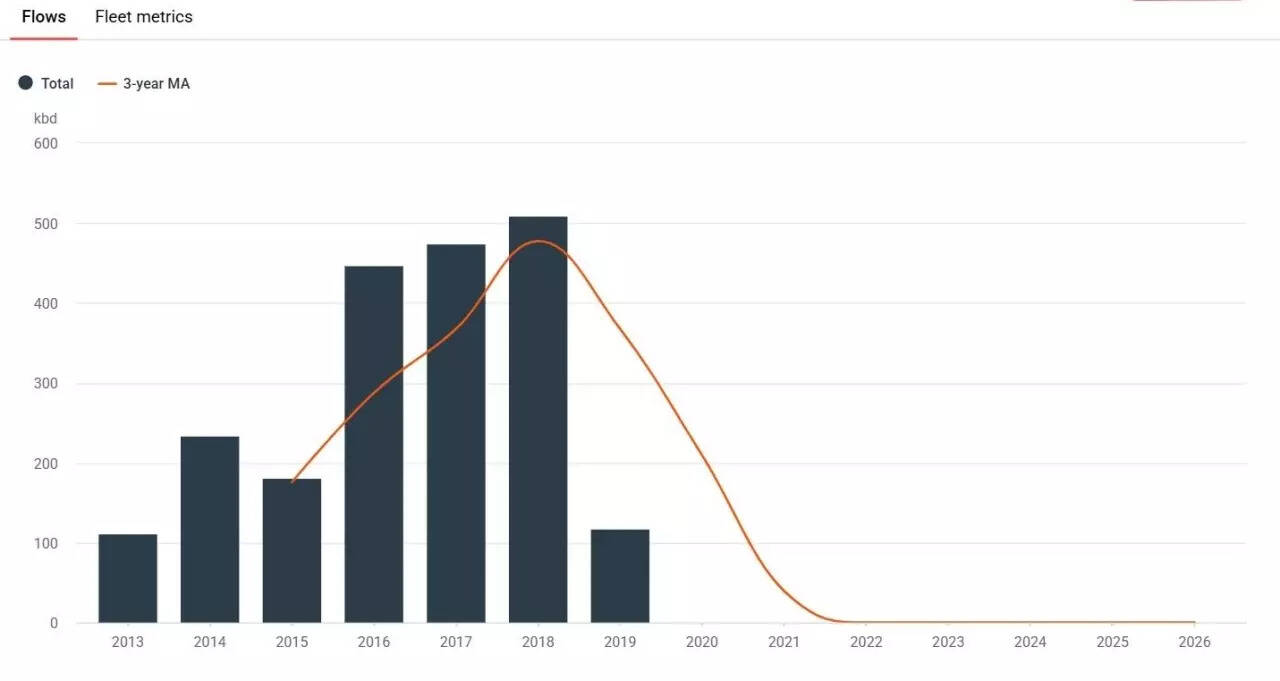
India has not been buying crude oil from Iran since mid-2019 after the US ended waiver for sanctions on Iran crude. Around 35-40% of India’s crude oil needs are met through cargoes that make their way towards Asia through the Strait of Hormuz. The de facto closure of Strait of Hormuz since the start of the US-Iran war has disrupted supplies for India, even as it works to ensure safe passage for its tankers.To mitigate any oil supply shock, India has been aggressively buying Russian crude oil in the last few weeks. According to a Bloomberg report, India bought 30 million barrels of Russian crude in a week after the conflict broke out.

India's annual imports of Iran oil (Source: Kpler)

India’s annual imports of Iran oil (Source: Kpler)

So, if the US were to ‘unsanction’ Iran oil at sea, India would be able to step up procurement, adding an important source to its crude supply basket.According to Sumit Ritolia, Lead Research Analyst, Refining and Modelling at Kpler, historically, India was a major buyer of Iranian crude, importing significant volumes of Iranian Light and Heavy grades due to strong refinery compatibility and favourable commercial terms. The expert says that speculation in the market about a possible relaxation or modification of US sanctions on Iranian crude has brought a significant variable back into focus for global oil flows. “India could emerge as a key demand centre to watch, alongside Chinese buyers (state-owned enterprises and large independents) and other Asian countries,” Ritolia says.Following sanctions tightening in 2018, imports stopped from May 2019, with crude oil volumes getting replaced by Middle Eastern, US and other grades. At peak, Iranian crude accounted for around 11.5% of India’s total imports as per Kpler data.Also Read | Armageddon scenario! Why Iran’s missile strikes on Qatar’s LNG spell nightmare for Europe, AsiaAlso, just like easily available Russian crude on sea, the supply of Iranian crude also remains substantial. Roughly 170 million barrels are estimated to be on water, including volumes that are held in floating storage as well as shipments in transit. According to Ritolia, Indian refiners retain the ability to re-integrate these barrels with minimal operational adjustments, supported by prior processing experience and established trading setups.However, the expert believes that any resumption of imports will depend largely on commercial viability and geopolitical developments rather than technical readiness from India’s perspective.“Key considerations include the scope and durability of sanctions relief (including on shipping), pricing structure, and the availability of payment, insurance and logistics mechanisms. If these conditions align, a ramp-up in Indian imports of Iranian crude could be significant, similar to the rapid increase observed in Russian crude intake following the easing of Western sanctions,” he concludes.

[ad_2]

Source link

Armageddon scenario! Why Iran’s missile strikes on Qatar’s LNG spell nightmare for Europe, Asia

[ad_1]

Armageddon scenario! Why Iran’s missile strikes on Qatar’s LNG spell nightmare for Europe, Asia
European gas prices have more than doubled since the US-Israel-Iran conflict began. (AI image)

Is an Armageddon scenario about to play out? Europe and Asia are facing a nightmare scenario with the escalating crisis in the Middle East now increasingly impacting key energy infrastructure. The latest shockwave for the market has come in the form of a big hit to Qatar’s Ras Laffan complex on Thursday morning by Iran.LNG or liquefied natural gas facilities rank among the most intricate and large-scale industrial structures ever built, and Ras Laffan stands as the biggest of them, converting Qatar’s vast gas reserves into super-cooled fuel for global transport—until the Iranian missile strikes disrupted operations.This has led to markets across Europe and Asia confronting a new energy shock. Under normal conditions, roughly one-fifth of the world’s LNG supply originates from Ras Laffan, which is a sprawling industrial hub developed over three decades at a cost of hundreds of billions of dollars and covering an area nearly three times that of Paris.To understand the scale of LNG operations at the facility, sample this: Ras Laffan operates 14 liquefaction trains that process gas into 77 million tonnes of LNG annually, sufficient to meet Japan’s entire yearly demand or exceed the combined needs of the UK and Italy!

Armageddon scenario plays out for Europe, Asia

The immediate impact of the latest strikes was evident across global energy markets. Brent crude prices briefly surged by over 10 percent, crossing the $119-per-barrel mark before easing from those highs.

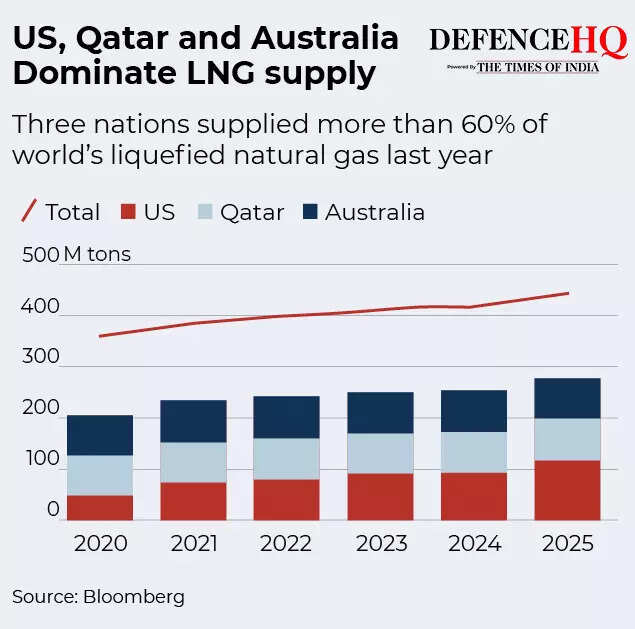
US, Qatar and Australia dominate LNG supply

In Europe, gas prices spiked as much as 35 per cent and later stabilised at around 70 euros per megawatt hour, still reflecting a gain of about 28 per cent. This rise is expected to feed through to electricity costs, as power prices in the region are largely linked to gas rates.Analysts at EnergyScan told AFP, “We are not yet in the worst-case scenario we described in our last monthly report, but we are getting closer.”European gas prices have more than doubled since the US-Israel-Iran conflict began, as traders assessed the implications of a prolonged disruption to Qatar’s LNG exports. “I woke up this morning and thought, ‘No, please no,’”Anne-Sophie Corbeau, former head of gas analysis at BP and now with Columbia University’s Center on Global Energy Policy, told the Financial Times. “This has always been my nightmare scenario, my Armageddon scenario, the one I didn’t want to happen,” the report quoted the expert saying.Two gas traders said they were still trying to absorb the scale of the incident after Iran carried out a two-stage attack, launching ballistic missiles at the facility late Wednesday and again in the early hours of Thursday. “This is unprecedented,” one of them said.QatarEnergy, the state-owned operator of Ras Laffan, told Reuters that damage to two LNG units—developed in partnership with ExxonMobil—could take between three and five years to repair. The disruption is expected to result in annual revenue losses of $20 billion and force the cancellation of long-term supply agreements with Italy, Belgium, Korea and China.The disruption has effectively removed about 17 per cent of Qatar’s overall gas output for the foreseeable future. Prior to the strike, market participants believed LNG shipments from Ras Laffan would quickly resume once tensions in the Middle East subsided and the Strait of Hormuz became secure for tanker movement. Although prices had climbed last week, they had steadied at levels well below those recorded during Russia’s invasion of Ukraine in 2022.That outlook has now been overturned!

Years of repair to drive up prices

One trader told Financial Times that European gas prices are likely to remain elevated “through 2027,” while the region could struggle to replenish storage levels over the summer as Asian buyers turn to US LNG to offset the shortfall. Asia was already dealing with constrained supply and rationing following disruptions from the Gulf. Europe, increasingly dependent on LNG after Russia curtailed pipeline exports during its war with Ukraine, now faces intensified competition with countries such as Japan and South Korea for limited LNG cargo availability.

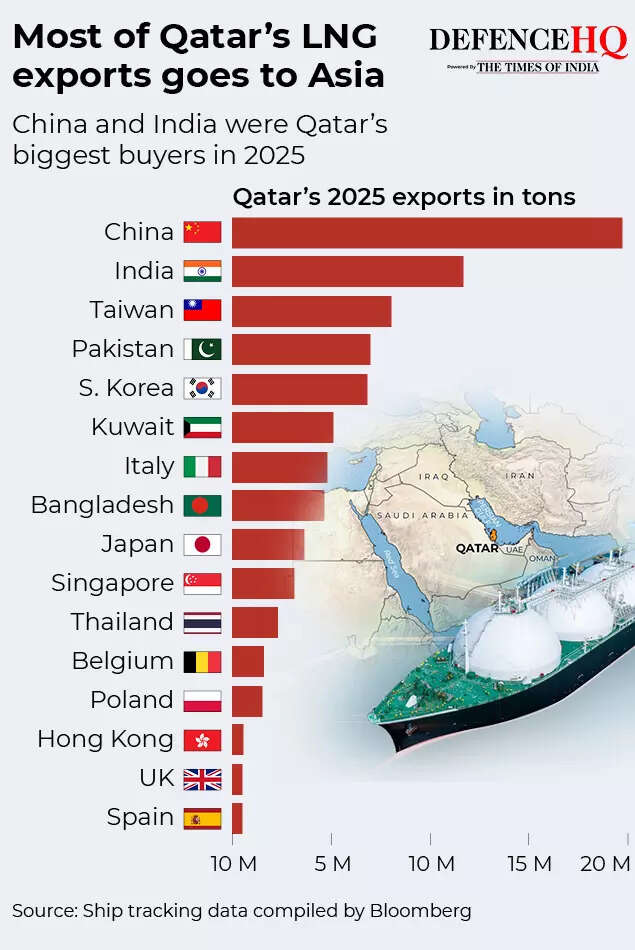
Most of Qatar's LNG exports goes to Asia

Laurent Segalen, a clean energy investment banker, was quoted as saying: “It is apocalypse now. The coming months for gas importers are going to be a bloodbath.” The infrastructure required to cool gas into LNG is highly complex and cannot be replaced quickly. Repairs will involve a meticulous process that can only begin once Qatar is assured that the site is secure and personnel can return without the threat of further attacks.Tom Marzec-Manser, an LNG specialist at energy consultancy Wood Mackenzie, said it is already clear that a return to normal output levels in Qatar will not happen quickly, regardless of how soon the conflict ends. “What we can conclude immediately is that regardless of when the conflict now ends, a resumption of normal production from Qatar is not going to happen in a matter of weeks,” he told FT.The expert noted that earlier projections had suggested production at Ras Laffan could resume within about 40 days, but that timeline is no longer realistic. He also indicated that Qatar’s ambitious expansion plans for the facility, which include adding six new liquefaction units over this year and next, are now likely to face delays. “There is an element of uncertainty, but we know now this is a months-long reduction in supply,” he added.Although some LNG projects in the United States are expected to come online soon, Corbeau said replacing Qatari supply is far from straightforward and involves significant political challenges. She pointed out that some policymakers have already begun advocating for easing restrictions on Russian gas imports.At the same time, several countries have started reverting to coal-based power generation, while industrial operations in parts of Southeast Asia are being forced to scale back or suspend production due to limited energy availability. “The world of energy is going to fracture between the haves and the have-nots,” said Segalen.

[ad_2]

Source link

Iranian Oil Sanctions: US may unsanction 140 million barrels of Iranian oil to cool prices as Gulf war shakes energy markets

[ad_1]

US may unsanction 140 million barrels of Iranian oil to cool prices as Gulf war shakes energy markets

File photo: US treasury secretary Scott Bessent (Picture credit: AP)

The Trump administration is considering lifting sanctions on around 140 million barrels of Iranian oil currently stranded on tankers in a bid to boost global supply and cool surging crude prices, as the war in the Gulf continues to hammer energy infrastructure and disrupt shipping through the Strait of Hormuz.US treasury secretary Scott Bessent said on Thursday that Washington could move within days to allow the oil to enter the market.“In the coming days, we may unsanction the Iranian oil that’s on the water. It’s about 140 million barrels,” Bessent told Fox Business Network’s Mornings with Maria programme.

Emergency energy move as oil stays above $100

As per Reuters, the US administration believes releasing the stranded Iranian barrels could help keep oil prices lower over the next 10 to 14 days, at a time when crude has remained above $100 per barrel for much of the past two weeks.Bessent said the move is part of a broader effort to deal with the supply shock caused by the closure of the Strait of Hormuz, which he described as creating a deficit of roughly 10 million to 14 million barrels per day in the physical market, according to Reuters.“So, to be clear, we’re not intervening in the financial markets. We are supplying the physical markets,” he said, as quoted by Reuters.He also stressed that the Treasury would “absolutely not” intervene in oil futures markets, instead focusing only on steps that increase actual supply.

White House signals ‘break the glass’ response

Bessent described the administration’s energy response as a “break the glass plan” being executed across the Treasury and the broader executive branch to manage immediate energy security risks.He said the stranded Iranian crude represents roughly 10 days to two weeks of supply that Iran had been shipping, much of which would otherwise have gone to China.“In essence, we will be using the Iranian barrels against the Iranians to keep the price down for the next 10 or 14 days as we continue this campaign,” Bessent said.Bessent signalled the administration still has “lots of levers” and “plenty more that we can do” to influence global energy pricing if the crisis deepens.

More SPR releases also on the table

Alongside the possible easing of sanctions on Iranian oil, the administration is also weighing another release from the US Strategic Petroleum Reserve (SPR).Bessent said the US could undertake a unilateral SPR release in addition to last week’s coordinated G7 release of 400 million barrels.Bessent called last week’s move the “largest coordinated SPR release in history” and said Washington could still do more on its own if needed.He also drew a comparison with a recent US decision to allow the sale of sanctioned Russian oil stranded on tankers, which added around 130 million barrels to global supplies.“We un-sanctioned Russian oil. We knew that there were about 130 million barrels on the water and we created supply that is beyond the Strait of Hormuz,” Bessent said.

Gulf energy attacks intensify global price shock

The discussion over emergency supply measures comes as the Gulf war continues to hit critical energy assets and send oil and gas prices sharply higher.Brent crude jumped nearly 10 per cent to $118 a barrel on Thursday morning, while European natural gas prices surged as much as 30 per cent, after tit-for-tat attacks across the Persian Gulf.Qatar said Iranian attacks damaged gas sites, including the Ras Laffan terminal, the world’s largest liquefied natural gas facility.Drone attacks caused fires at two state-owned refineries in Kuwait, a drone fell at a major Saudi export terminal, and the UAE said it had responded to incidents at gas facilities and an oil field caused by debris from missile interceptions.Oil prices have stayed elevated because Iran has closed the Strait of Hormuz to shipping and attacked tankers, compounding fears of a sustained supply crunch.

Allies being pressed to protect Hormuz

Bessent also used Thursday’s remarks to press US allies to take a bigger role in securing shipping lanes through the Strait of Hormuz.US President Trump was due to meet Japanese Prime Minister Sanae Takaichi at the White House later in the day to discuss Japan’s possible naval role in ensuring safe passage for vessels, given Japan’s heavy dependence on Gulf oil.“She’s very pro-US I think we’re going to have a very good discussion today,” Bessent said of Takaichi.Bessent further said, “When President Trump says our allies should join us in a coalition along the straits of Hormuz, they’re the ones who need this oil,” while noting that the US is now an oil exporter.He added it would be “very disappointing for those who benefit the most not to do something” to help escort ships through the strait.

Wider war context deepens market anxiety

The energy emergency is unfolding alongside a widening military campaign.US defence secretary Pete Hegseth said on Thursday that the US military had struck more than 7,000 targets in Iran since the war began nearly three weeks ago, damaging or sinking more than 120 Iranian navy ships and leaving its military ports “crippled.”“We’re winning decisively and on our terms,” Hegseth said, though he declined to say when the conflict might end.European leaders have grown increasingly alarmed by the strikes on energy infrastructure, with French President Emmanuel Macron warning in Brussels that the escalation was “reckless” and that destruction of production facilities could prolong the war’s economic fallout.

[ad_2]

Source link

Iran: Fuel, food and finance: How distant US-Iran war might spill into your monthly household bills

[ad_1]

Fuel, food and finance: How distant US-Iran war might spill into your monthly household  bills

Years ago it was the Covid pandemic, then Russia–Ukraine conflict, then came Trump’s tariffs and now the world is witnessing a raging crisis in the Middle East. Different timelines, different circumstances but each time, the impact lands closer home. In the first week of the raging conflict with Iran, the US spent $11.3 billion. But this isn’t really about America, Iran, or Israel in the abstract — it’s about you and how much you will have to pay!But what does a war thousands of kilometres away have to do with your monthly grocery bill, your child’s education abroad, or your savings? Well, the impact runs deeper.

Watch

Premium Petrol Prices Hiked By Up To ₹2.35 Per Litre In India Amid West Asia Conflict

After the US and Israel launched joint strikes on Iran on February 28, its ripple effects may land squarely on the Indian dinner table. As the US-Iran conflict tightens its grip on global energy routes, households are discovering that geopolitics doesn’t stay on maps, it shows up in kitchens, commutes, and bank balances. The big question: How will the Middle East war reshape your monthly budget? The crisis may start showing up in your bills through a range of spendings – let’s have a closer look at how your grocery bill might look!

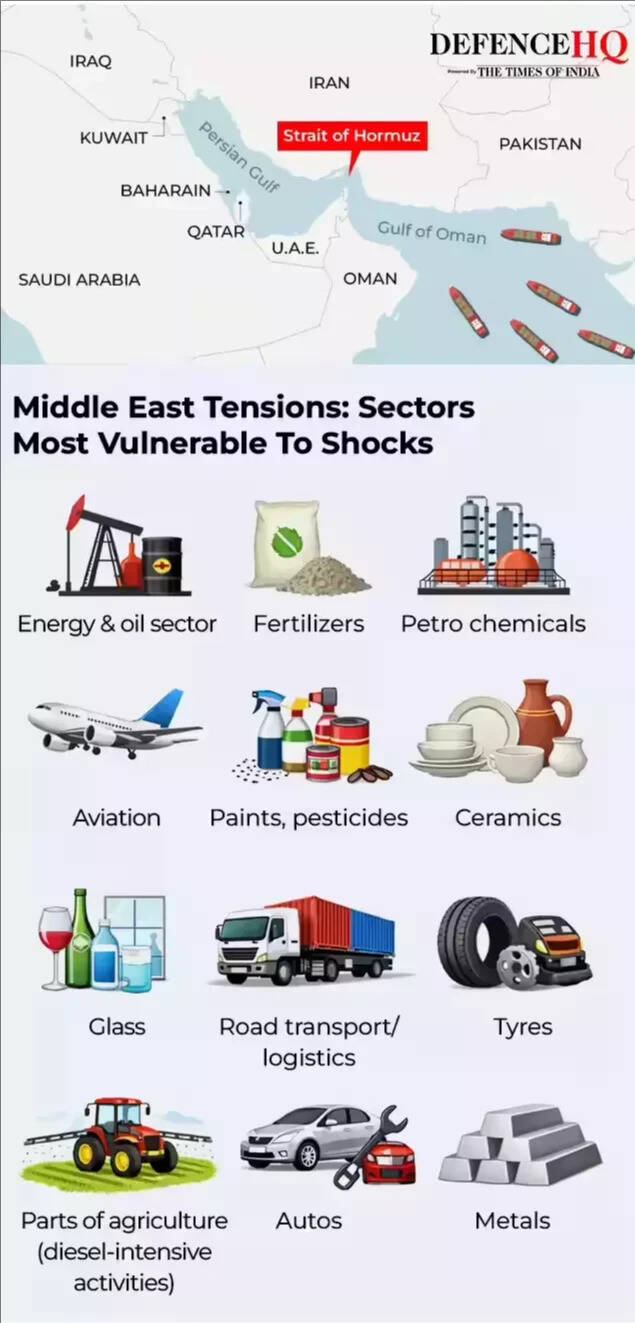
Middle East tensions

First comes the LPG shock

The most immediate impact is being felt in the kitchen, even before the stove is turned on. With nearly 90% of India’s LPG imports routed through the Strait of Hormuz, supply disruptions have led to panic buying and reports of black marketing are also emerging. Earlier this month, LPG rates saw a sharp revision – as of March 10, 2026, a domestic 14.2 kg cylinder costs Rs 913, up from Rs 853 on March 1. Commercial cylinder prices have risen even more steeply, from Rs 1,768.50 to Rs 1,884.50, marking a Rs 115 hike. Rishi Shah, Partner and Economic Advisory Services Leader, Grant Thornton Bharat told TOI that “households may look to prepare for 15-20% effective fuel and cooking cost increases over the next quarter, if the disturbances persist. Fundamentally this is driven by global supply disruptions, something outside government control.”

Now pour in a little oil

Another reason why your grocery bill could suddenly feel heavier, could be cooking oil prices. According to a TOI report, Sunflower oil is now about Rs 15 more per litre while mustard oil costs Rs 10 more. Meanwhile, blended oils have seen a jump from roughly Rs 880 to Rs 1,000 for a five-litre can online, quietly adding to the strain on household budgets, the report said.Mumbai APMC grain market director Nilesh Veera told TOI that wholesale rates went up by Rs 5 per litre in the past few days, but then dropped slightly. “So the hike is now Rs 2-3 per litre which raises retail prices proportionately,” he said.The reason lies in India’s heavy import dependence,over 56% of its edible oil needs were met through imports in 2023–24.What makes it worse is the supply chain squeeze. Russia and Ukraine together account for 70–90% of the country’s sunflower oil imports, and disruptions in Black Sea routes, along with tensions around the Red Sea and Suez Canal, have tightened supplies and driven up freight costs. According to the Solvent Extractors’ Association (SEA), the risk of disrupted shipments from Russia and Eastern Europe, combined with higher transport costs for palm oil, is fuelling price hikes. “The risks of disrupted sunflower oil shipments from Russia and Eastern Europe, and higher freight costs for palm oil, have caused price hikes, forcing traders and consumers to closely monitor the situation to navigate supply chain risks,” SEA said

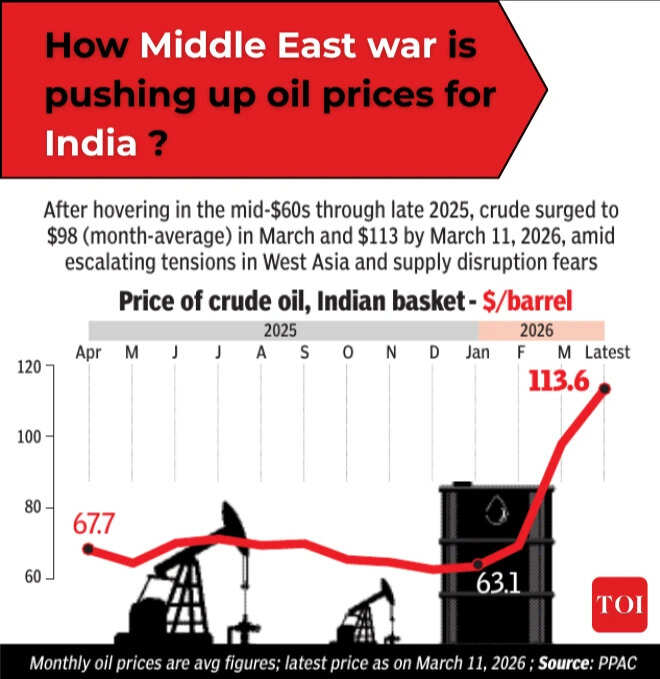
How Middle East war is pushing up oil prices for India

Now add the ingredients

Pulses may face pressure: Think your everyday dal is completely insulated from global tensions? Not really. India imports around 5–6 million tonnes of pulses each year: tur, urad, and lentils, from Myanmar, Canada, and parts of Africa. Now while supply lines remain largely intact, some pressure is coming from rising logistics costs. Higher freight charges, war-risk premiums, and increased insurance costs are pushing up the landed price of these imports, costs that are likely to trickle down to retail, potentially adding to food inflation.As Bimal Kothari, chairman of the India Pulses and Grains Association (IPGA), explains to ET, “Some cargo does pass through the Red Sea, so any disruption there could create constraints in imports. War risk premiums have also increased, pushing up insurance costs for container shipments.” “However, much of India’s pulse imports are unlikely to be directly affected,” the expert assured. Fruits and dry fruits: Your fruit basket could be next in line. India relies on competitively priced apple imports from Iran, and any disruption could quickly alter market dynamics. In 2024, Iran made up nearly 23% of India’s apple imports, along with a significant share in dry fruits like pistachios (around 60%) and almonds (about 39%). At the same time, anjeer, pista, saffron and apricots will also see the impact. With uncertainty around shipping routes and trade flows, traders are already turning cautious. “Traders are already factoring this uncertainty into future trading strategies. Given the price advantage of Iranian apples, any prolonged disruption leading to reduced imports could force a recalibration of sourcing strategies and reshape dynamics in India’s apple market,” Harish Chauhan, Convener, Himachal Pradesh’s Sanyukt Kissan Manch told ET.Expensive sweet tooth: Time for dessert? Your sweets might also get pricier. The surge in dry fruit prices is already hitting mithai makers and bulk buyers. As Vicky Jaisinghani of A-1 Sweets, Ulhasnagar, noted, imported Pishori pista has jumped from Rs 2,600 to Rs 3,400 per kg, while Iranian pista has risen from Rs 1,650 to Rs 2,400. Despite the spike, quality can’t be compromised, as premium ingredients are key to maintaining taste. Mayur Shah of Pravinchandra & Co. in Masjid Bunder said, “We have not hiked our rates, but may do so once existing stocks are over.”

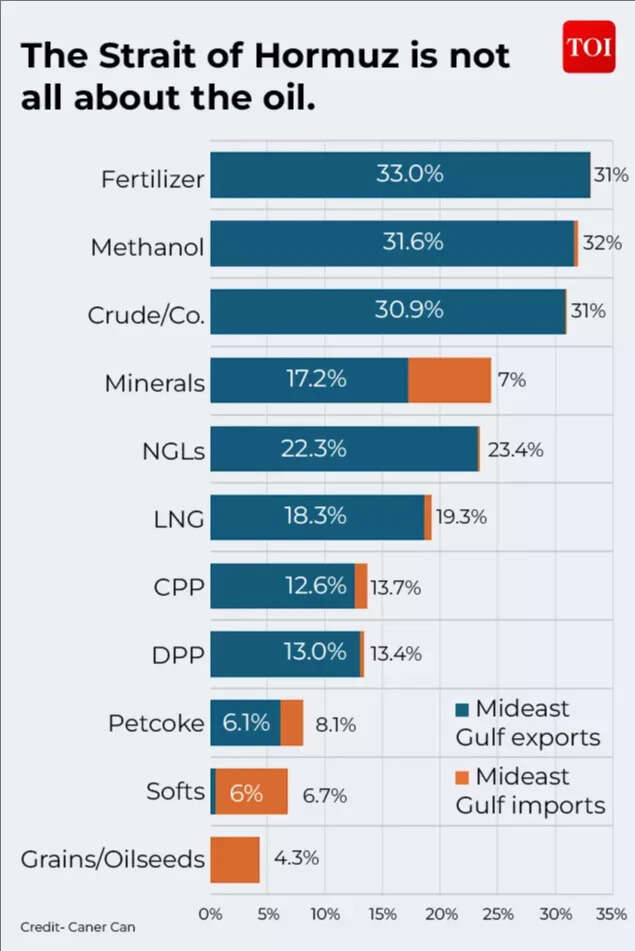
The Strait of Hormuz is not all about the oil

Daily used items might see hikes

Petrochemical inputs are widely used across everyday products, from soaps and shampoos to creams, hair oils, and even packaging like bottles and tubes, making FMCG companies highly sensitive to crude price movements. These derivatives account for over a quarter of their input costs. According to company executives, prices of key crude derivatives such as plastics, resins, and polymers including polyethylene and polypropylene used in packaging, have surged by up to 25% in the past month. A similar spike has been seen in polyester staple fibre, further adding to cost pressures across the sector. And oh, your statement shoes? The are also set for a rollercoaster ride! Harkirat Singh, managing director of shoe brand Woodland India told ET that the company’s suppliers “are asking us to increase prices as they are buying raw materials at significantly higher costs.” From April, the company may increase prices by 8–12%.

Your home makeover may get pricier!

Painting your house could soon cost more, as soaring crude prices push up paint costs. Decorative paints may become 9–10% more expensive, according to ET. For instance, Berger Paints is set to raise prices by around 5% on average for solvent-based products, waterproofing emulsions, and industrial paints from March 25, as rising input costs begin to bite. CEO Abhijit Roy told ET that the company is closely monitoring raw material prices, which are fluctuating daily, and hinted that another round of hikes may follow if pressures persist.Planning to bring home a new TV or AC? You might want to brace for a higher bill. Consumer electronics and appliances are expected to become 5–6% costlier, largely due to their heavy reliance on plastic components, whose prices are rising sharply.“We will increase prices from April, possibly by 5–6%,” Kamal Nandi of Godrej Enterprises told ET. He noted that input costs have surged significantly over the past month, with plastic suppliers repeatedly hiking prices and hesitating to commit to long-term contracts, adding further uncertainty for manufacturers and, ultimately, consumers.

Commuting costs: Paying the ‘war surcharge’

India buys nearly 40% of its crude oil needs from the Middle East, although discounted Russian crude has offered some cushion in recent months. Still, global prices are surging, Brent crude has crossed the $100-per-barrel mark, and Iran has warned prices could spike to as high as $200 if the conflict escalates further.This has pushed up international prices of petrol, diesel, and aviation turbine fuel, with spot rates, what refiners actually pay, running even higher than futures. Refining margins, especially on diesel and ATF, have also risen sharply.Yet, domestic fuel prices have remained unchanged for now. This means state-run oil companies are absorbing losses on every litre sold. In the near term, the burden is likely to be shared between oil marketing companies and the government.

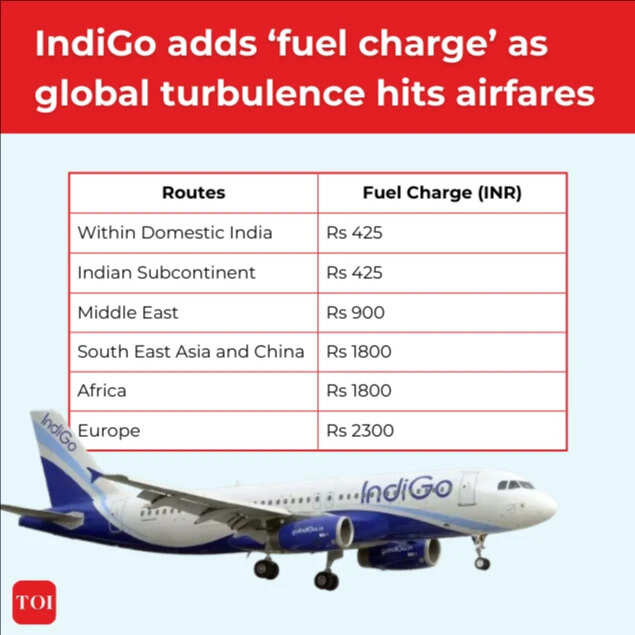
IndiGo adds 'fuel charge'

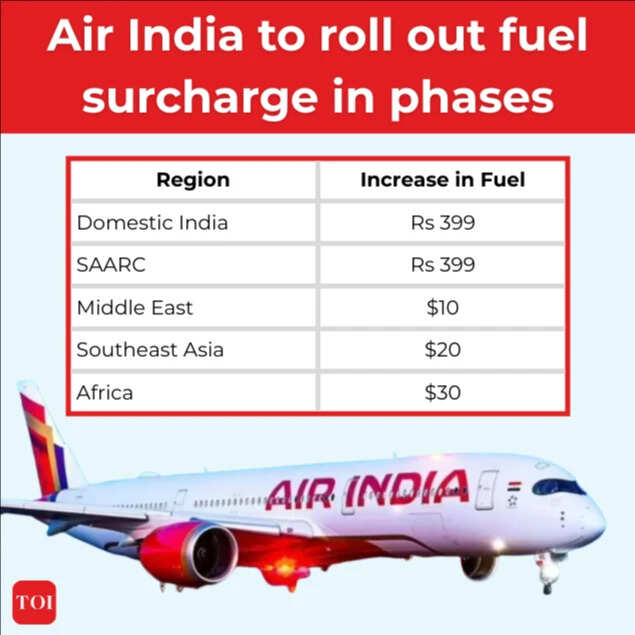
Meanwhile, air travel is getting costlier as airlines have begun passing on the impact of rising aviation turbine fuel (ATF) prices. IndiGo has introduced a fuel surcharge ranging from Rs 425 to Rs 2,300 on domestic and international flights, while Air India and Air India Express announced a Rs 399 surcharge on domestic tickets starting March 12. At the same time, Akasa Air also announced introducing a fuel surcharge ranging from Rs 199 to Rs 1,300 on domestic and international flight tickets. “There has been a significant increase in the price of aviation turbine fuel, driven by evolving geopolitical developments in the Middle East,” Akasa Air said in its statement.

Air India to roll out fuel surcharge in phases

Other carriers are signalling similar moves. SpiceJet has warned that fare hikes may be unavoidable if fuel prices remain high, with founder Ajay Singh stating that airlines will have “no choice” but to increase fares and urging the government to cut jet fuel taxes. With ATF costs surging amid Middle East tensions, flying is set to become more expensive in the coming weeks.

Car purchases to get expensive

So maybe no trips to far-off destinations—but what about buying a car, especially since petrol prices aren’t rising? You might want to hold off a bit, though, as automakers are preparing for price hikes of 2–3%. Luxury brands Mercedes-Benz and Audi have already announced increases of around 2% from April 1, while mass-market carmakers are still finalising their revisions. Industry leaders have warned that these hikes could dent recent sales gains driven by GST cuts, but say they have little choice as volatile supply chains continue to push costs higher.

Education: The indirect cost spiral

Planning to study abroad? You may need a bigger budget than expected. The escalating Middle East conflict has weakened the rupee, which has slipped to a record low of around 93.12 against the US dollar. A weaker currency makes everything, from tuition fees to accommodation and daily expenses, more expensive for Indian students paying in foreign currency, adding significant pressure on family finances. As Middle East tensions continue, families are becoming cautious about sending students to the region. While cancellations remain limited, some are considering deferrals or other destinations. Alternatives are getting costlier as the rupee weakens. Study abroad expenses have surged, for instance, a year at Harvard has risen from about Rs 53 lakh in 2021 to over Rs 78 lakh, according to a TOI analysis.

Portfolio loss

The shock on Dalal Street isn’t just a story for investors, it’s quietly hitting household finances too. The recent selloff triggered by the US-Iran conflict has wiped out nearly Rs 34 lakh crore in investor wealth within weeks, shrinking the value of stocks, mutual funds, and retirement savings. For many families, this means their portfolios are suddenly worth much less, forcing them to rethink spending, delay big purchases, or put off plans like buying a home or car.While the immediate impact has been severe, experts say the longer-term outlook for the Indian stock market remains relatively stable. Compared to other global economies, New Delhi’s exposure to oil shocks is somewhat cushioned, as energy imports form a smaller share of overall consumption. Lower dependence on foreign investor flows has also helped limit volatility. According to Moody’s Analytics, India has seen only moderate corrections in line with typical market cycles, suggesting that despite the current turbulence, the broader growth trajectory remains intact.Referring to countries like India and China, Moody’s report added, “although both economies are large net oil importers from Gulf Cooperation Council economies in absolute terms, energy imports account for a smaller share of domestic consumption, limiting their vulnerability to oil price shocks. Foreign investor participation in equity markets is also lower, and in China’s case, capital controls further limit volatility. These structural factors have helped shield their equity markets from sharper declines.” So, how will your bills look at the end of this month?The escalating, and more importantly US-Iran conflict could hit Indian households, driving up costs across almost every aspect of daily life. In the kitchen, LPG prices have risen while edible oils, pulses, lentils, and imported dry fruits could climb due to disrupted supply chains and higher logistics costs. Fuel inflation is adding to the burden, with crude crossing $100 a barrel, prompting petrol, diesel, and aviation turbine fuel surges, further pushing transportation costs. On Friday, state run oil marketing companies increased the price of their premium-grade power petrol by over Rs 2 per litre, while keeping the prices of regular petrol and diesel unchanged.For households, this turbulence is a reminder of how quickly global shocks can ripple through personal finances. While markets may stabilise over time, the immediate hit to savings and investments can influence spending decisions, delay financial goals, and heighten uncertainty. If volatility persists, families may continue to adopt a more cautious approach, cutting back on discretionary expenses and prioritising financial security, until clearer signals of stability emerge.
[ad_2]

Source link

Relief Scheme For Exporters: Government launches Rs 497-crore RELIEF scheme to support exporters hit by Middle East conflict – all you need to know

[ad_1]

Government launches Rs 497-crore RELIEF scheme to support exporters hit by Middle East conflict - all you need to know

The Centre on Thursday launched the RELIEF (Resilience & Logistics Intervention for Export Facilitation) scheme with an outlay of Rs 497 crore to support Indian exporters facing disruptions due to the ongoing conflict in the Middle East, as the government moved to cushion the impact of rising freight costs, insurance premiums and shipping delays.The scheme has been introduced under the Export Promotion Mission and will be implemented by the Export Credit Guarantee Corporation of India (ECGC).Commerce secretary Rajesh Agarwal said the package is aimed at helping exporters exposed to conflict-hit markets in the region.“We are announcing a new scheme under the Export Promotion mission, especially focused upon exporters exposed to these 17-18 geographies which have been impacted by the conflict to assuage some of the challenges that our exporters are facing,” he said, according to news agency PTI.

Daily monitoring mechanism set up amid trade disruptions

The government has also set up an inter-ministerial group (IMG) comprising the commerce ministry, ministry of petroleum and natural gas, ports and shipping, department of financial services, ministry of external affairs, RBI, CBIC and other departments to track the situation on a daily basis.The group is meeting every day to assess the evolving cargo movement situation and determine the need for further intervention.Commerce secretary described the situation as one where the “Middle East conflict has an impact” and acknowledged there are significant “challenges due to this conflict.”He added, “The government has come together to set up two inter-ministerial group in the Department of Commerce. We are meeting daily to assess the challenges. We are trying to listen to them and respond to them.”

Scheme targets Gulf and Middle East export corridors

The RELIEF scheme mainly covers consignments meant for delivery or trans-shipment to key Gulf and Middle East destinations, including the UAE, Saudi Arabia, Kuwait, Qatar, Oman, Bahrain, Iraq, Iran, Israel and Yemen.Urgency behind the scheme stems from disruptions around the Strait of Hormuz, which have triggered additional war-risk premiums and emergency conflict surcharges on maritime cargo.It added that freight rates on key routes had surged by nearly 90-100 per cent during the 2023-24 Red Sea crisis, and similar pressures are now weighing heavily on exporters, especially MSMEs with limited working capital.

Component I: Automatic export obligation relief and protection for existing shipments

The first component of the scheme offers automatic extension of export obligations for Advance Authorisations and EPCG authorisations falling due between March 1 and May 31, 2026, with the deadline now extended to August 31, 2026, without penalty.This component protects already insured shipments covered by ECGC in the immediate one-month window from February 14 to March 15, 2026.For exporters already insured by ECGC during that period, the government will top up compensation for war and political risk losses beyond normal policy cover, while keeping premiums at pre-disruption levels. The estimated support under this component is Rs 56 crore.

Component II: Enhanced ECGC cover for upcoming exports

The second component is designed for upcoming export consignments over the three-month period from March 16 to June 15, 2026, and aims to encourage and facilitate ECGC coverage.This component will provide stable premiums and enhanced insurance cover of up to 95 per cent for fresh shipments into the affected region. The estimated support under this segment is Rs 159 crore.

Component III: MSME support for freight and insurance shock

The third and largest component specifically targets MSME exporters that do not have ECGC cover.It will partly reimburse extraordinary freight and insurance costs over the one-month period from February 14 to March 15, 2026, shielding smaller exporters from sudden surcharge shocks.This segment will reimburse up to 50 per cent of the additional freight and insurance burden for non-ECGC-insured MSME exporters shipping to the affected markets. It said this component carries the biggest allocation of the package, with an estimated outlay of Rs 282 crore.

Govt says aim is to keep exports moving and protect market share

The commerce secretary underlined that the support package is meant not just as relief, but as a strategic step to preserve India’s position in key overseas markets during the crisis.“There is a dependence on our exports in these countries, and we are trying to see that even in these difficult circumstances, whatever exports we are able to do, we are trying to support that also,” he said, as quoted by ANI.ECGC will maintain a real-time monitoring dashboard for claims processing and fund utilisation, while an EPM Steering Committee will oversee the scheme and can reallocate funds depending on how the situation evolves.Taken together, the RELIEF package signals that the government expects the Middle East conflict to keep pressuring trade routes and logistics costs in the near term. The immediate goal appears to be to prevent shipment disruptions, avoid order cancellations and ensure Indian exporters, particularly MSMEs, do not lose market share in a strategically important region.

[ad_2]

Source link

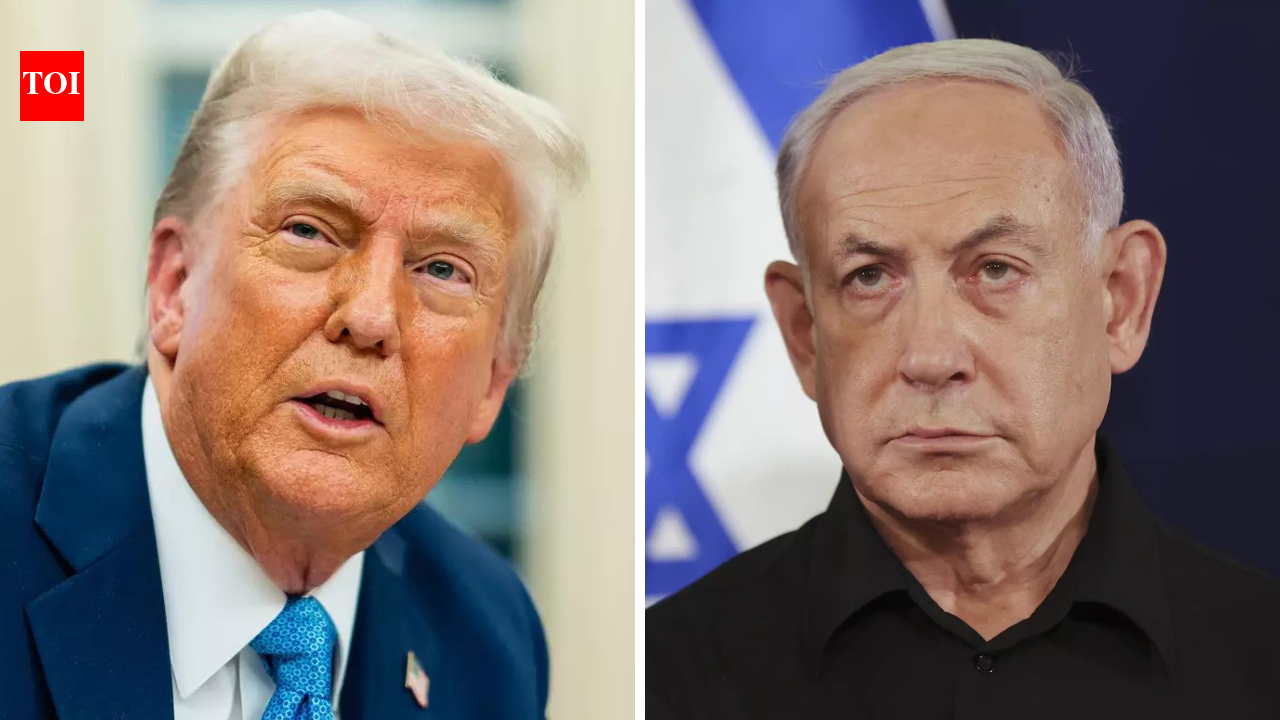
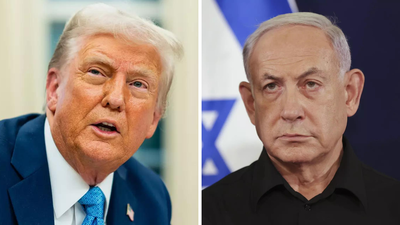
Trump-Netanyahu split out in open? Intel chief says Israel’s goals in Iran not same as US

[ad_1]

Trump-Netanyahu split out in open? Intel chief says Israel's goals in Iran not same as US

US intelligence chief Tulsi Gabbard on Thursday said that United States and Israel have different objectives during the military campaign in Iran.During a hearing in front of the House of intelligence committee, Gabbard said that Trump’s objective are to destroy Iran’s ballistic missiles launching capabilities and their navy.“The objectives that have been laid out by the president are different from the objectives that have been laid out by the Israeli government.”“We can see through the operations that the Israeli government has been focused on disabling ⁠the Iranian leadership. The president has stated that his objectives are to ⁠destroy Iran’s ballistic missiles launching capability, their ballistic ⁠missile production capability, and their navy,” she added.Earlier in the day, US defence secretary Pete Hegseth said that there was no “time frame” for ending the war against Iran.“It will be at the president’s choosing, ultimately, where we say, ‘Hey, we’ve achieved what we need to,'” he told reporters.‘Immense blessing for Israel’Meanwhile, an Israeli minister said that strikes on Iran were “an immense blessing” for Israel.Zeev Elkin, a member of Prime Minister Benjamin Netanyahu’s right-wing Likud party, said, “The debate should not be about when (the war) will end, but about how we are going to prolong and deepen the damage caused,” said Zeev Elkin, a member of Prime Minister Benjamin Netanyahu’s right-wing Likud party.”“Every day of the campaign is an immense blessing for the State of Israel,” Elkin added, speaking on army radio.An Israeli minister said on Thursday that the US-Israeli strikes against Iran were “an immense blessing” for Israel, nearly three weeks into the Middle East war. Israel and the United States launched strikes on Iran on February 28, triggering a war that has since engulfed the Middle East. Trump distances US from Israel’s attack on South Pars gas fieldEarlier in the day, Trump distanced US from Israel’s attack on Iran’s South Pars gas field, describing his Israeli allies as having “violently lashed out” at the facility and promising that it would not happen again if Tehran refrains from attacking Qatar. He claimed Iran responded without full information, launching what he described as an unjustified strike on part of Qatar’s LNG infrastructure.Trump said the US had “nothing to do” with the strike on the offshore gasfield facilities in Iran’s Bushehr province on Wednesday, which was followed by Iran pledging to strike energy facilities in Qatar, Saudi Arabia and the United Arab Emirates.In a social media post, Trump said Israel had targeted a section of the major gas facility “out of anger” over developments in the Middle East, stressing that Washington had no prior knowledge of the attack and that Qatar was “in no way” involved.“Israel, out of anger for what has taken place in the Middle East, has violently lashed out at a major facility known as South Pars Gas Field in Iran. A relatively small section of the whole has been hit. The United States knew nothing about this particular attack, and the country of Qatar was in no way, shape, or form, involved with it, nor did it have any idea that it was going to happen,” wrote Trump.“Unfortunately, Iran did not know this, or any of the pertinent facts pertaining to the South Pars attack, and unjustifiably and unfairly attacked a portion of Qatar’s LNG Gas facility. No more attacks will be made by Israel pertaining to this extremely important and valuable South Pars Field unless Iran unwisely decides to attack a very innocent, in this case, Qatar – In which instance the United States of America, with or without the help or consent of Israel, will massively blow up the entirety of the South Pars Gas Field at an amount of strength and power that Iran has never seen or witnessed before,” he said.“I do not want to authorize this level of violence and destruction because of the long term implications that it will have on the future of Iran, but if Qatar’s LNG is again attacked, I will not hesitate to do so. Thank you for your attention to this matter,” added Trump.Meanwhile, Israel has continued targeting senior Iranian leadership, including the reported killing of intelligence minister Esmail Khatib and other top security figures. Iran has retaliated with missile barrages on Israel, including strikes that caused casualties in the occupied West Bank.

[ad_2]

Source link