Breaking News
‘Not a religious person’: China firmly opposes Grammy award to Dalai Lama


‘Not a religious person’: China firmly opposes Grammy award to Dalai Lama

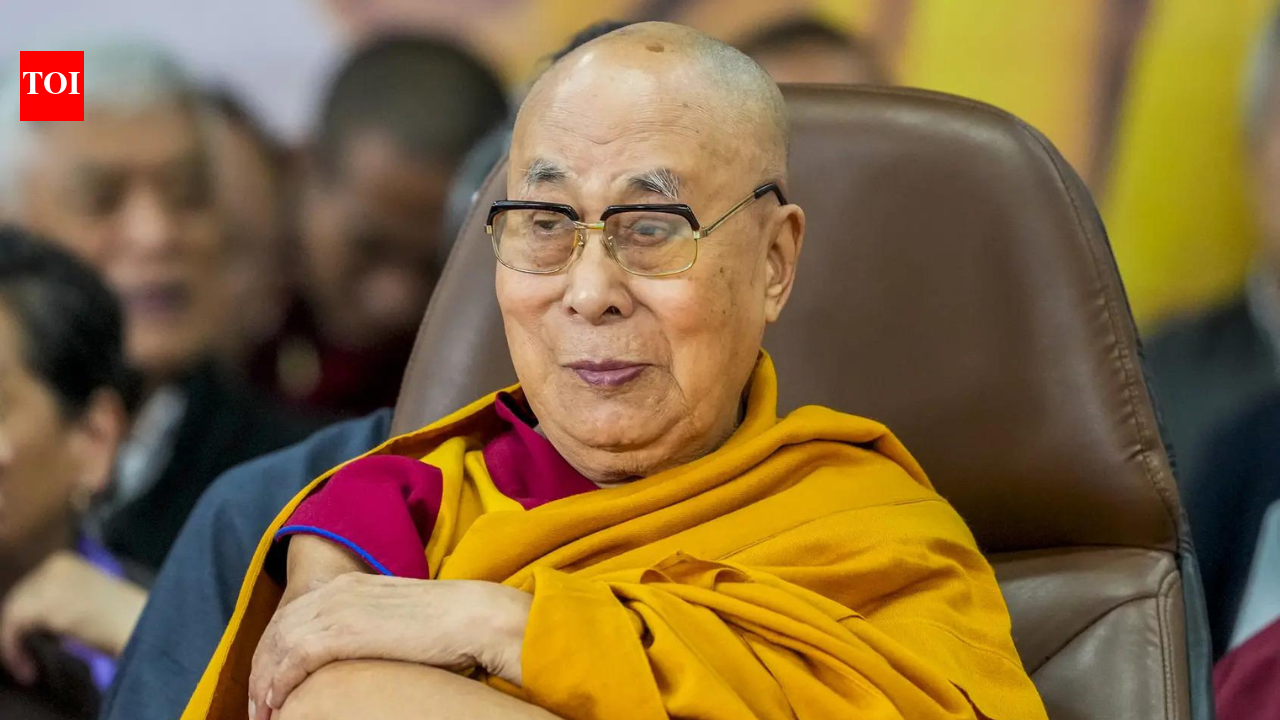
China on Monday criticised the Grammy Award conferred on the Dalai Lama, stating that it “firmly opposes” the Tibetan spiritual leader using the international recognition to carry out what it described as “anti-China activities.The reaction came after the Dalai Lama (also known as Tenzin Gyatso) won his first Grammy Award in the Best Audio Book, Narration, and Storytelling Recording category for his spoken-word album Meditations: The Reflections of His Holiness the Dalai Lama at the 68th Grammy Awards held in Los Angeles.

Bad Bunny, Gaga & Kendrick Rule Music’s Biggest Night: Grammys 2026 Winners

Responding to a question on the award, Chinese foreign ministry spokesperson Lin Jian reiterated Beijing’s long-standing position on the Tibetan leader, alleging that he engages in separatist activities under the guise of religion.“The Dalai Lama is not purely a religious person,” Lin told a media briefing. “He is a political exile committed to anti-Chinese separatist activity under the disguise of religion.”Lin added that Beijing “firmly opposes relevant sides using the award as a tool to carry out anti-China activities.”The Dalai Lama has lived in exile in Dharamsala, India, since fleeing Tibet in 1959 following a failed uprising against Chinese rule. He was awarded the Nobel Peace Prize in 1989 for his consistent, non-violent struggle for the freedom of Tibet, as described by the Nobel Committee.At the Grammys, the 90-year-old spiritual leader edged out other nominees including Kathy Garver for Elvis, Rocky & Me: The Carol Connors Story, Trevor Noah for Into the Uncut Grass, Ketanji Brown Jackson for Lovely One: A Memoir, and Fab Morvan for You Know It’s True: The Real Story of Milli Vanilli.Reacting to the award, the Dalai Lama struck a reflective and understated tone, saying that he did not see the honour as a personal achievement.“I firmly believe that peace, compassion, care for our environment, and an understanding of the oneness of humanity are essential for the collective well-being of all eight billion human beings. I am grateful that this Grammy recognition can help spread these messages more widely,” he added.China considers the Dalai Lama a separatist and has repeatedly objected to foreign governments, institutions and platforms engaging with him, while the Tibetan leader maintains that he seeks genuine autonomy for Tibet and not independence.


Source link

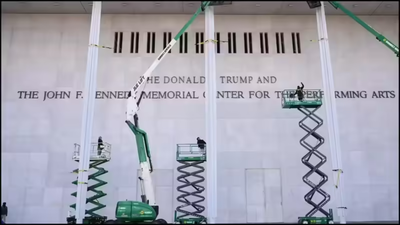
‘Tired, broken, and dilapidated’: Donald Trump announces two-year shutdown of Kennedy Center for ‘complete rebuilding’


'Tired, broken, and dilapidated': Donald Trump announces two-year shutdown of Kennedy Center for 'complete rebuilding'

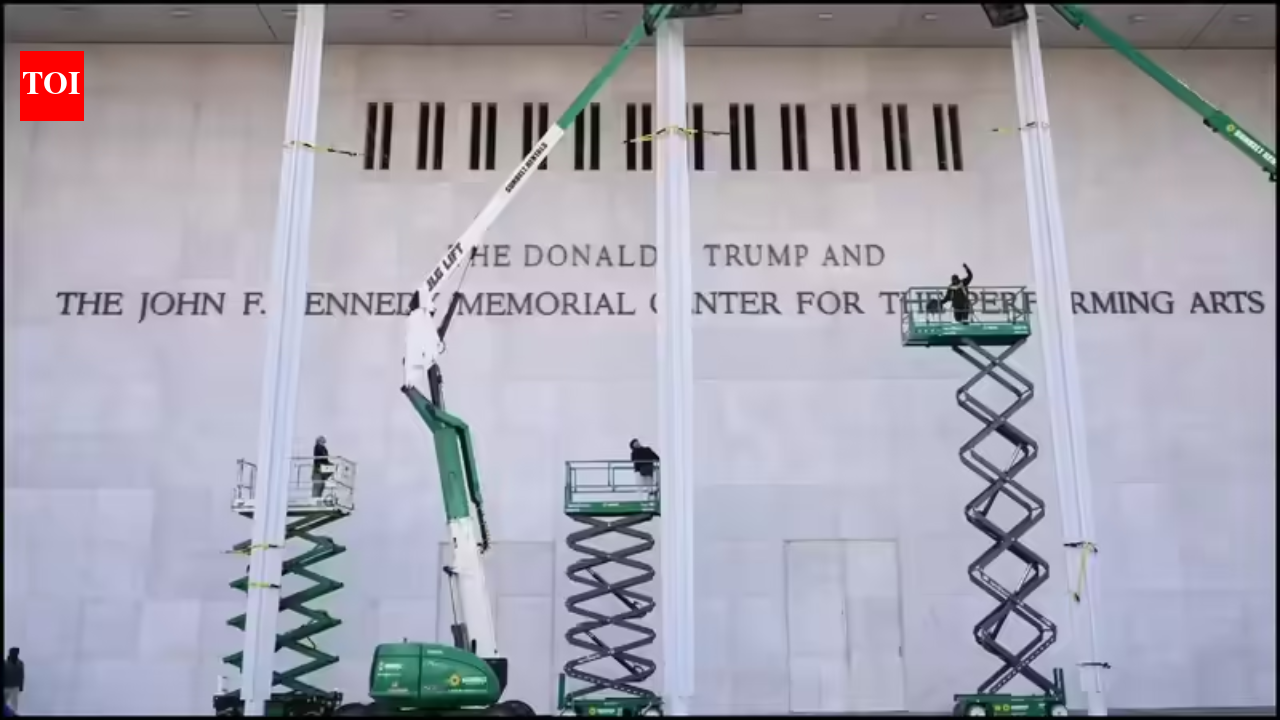
US President Donald Trump announced on Sunday that the Kennedy Center will be shutting down for two years starting July 4, America’s 250th anniversary, for extensive renovations amid declining ticket sales and performer boycotts. Trump, who recently became chairman and added his name to the building, claims the closure is necessary to transform it into the world’s finest performing arts facility.Since taking control of the once non-partisan center, Trump has criticised its programming as too “woke” and made significant changes to its leadership. He announced the decision on Truth Social, stating that entertainment operations must cease to allow for construction and renovation work.

‘Direct Conflict’: Philip Glass Pulls Symphony Premier From Kennedy Center In Trump Protest

“After a one year review of The Trump Kennedy Center, that has taken place with Contractors, Musical Experts, Art Institutions, and other Advisors and Consultants, deciding between either Construction with Closure and Re-Opening or, Partial Construction while continuing Entertainment Operations through a much longer period of time, working in and around the Performances, I have determined that The Trump Kennedy Center, if temporarily closed for Construction, Revitalization, and Complete Rebuilding, can be, without question, the finest Performing Arts Facility of its kind, anywhere in the World,” declared Trump on Truth Social, though the exact scope of renovations remains unclear. “In other words, if we don’t close, the quality of Construction will not be nearly as good, and the time to completion, because of interruptions with Audiences from the many Events using the Facility, will be much longer. The temporary closure will produce a much faster and higher quality result!” he added.Further announcing the 2-year shutdown, he added, “Based on these findings, and totally subject to Board approval, I have determined that the fastest way to bring The Trump Kennedy Center to the highest level of Success, Beauty, and Grandeur, is to cease Entertainment Operations for an approximately two year period of time, with a scheduled Grand Reopening that will rival and surpass anything that has taken place with respect to such a Facility before.Claiming that the Centre is in need of renovations, Trump also said, “The Trump Kennedy Center will close on July 4th, 2026, in honor of the 250th Anniversary of our Country, whereupon we will simultaneously begin Construction of the new and spectacular Entertainment Complex. Financing is completed, and fully in place! This important decision, based on input from many Highly Respected Experts, will take a tired, broken, and dilapidated Center, one that has been in bad condition, both financially and structurally for many years, and turn it into a World Class Bastion of Arts, Music, and Entertainment, far better than it has ever been before. America will be very proud of its new and beautiful Landmark for many generations to come. Thank you for your attention to this matter!”The announcement has sparked widespread speculation about the center’s financial health. Maria Shriver, a Kennedy family member, pointed out that many artists are refusing to perform there, as reported by AFP. Notable cancellations include “Hamilton,” Renee Fleming, and Philip Glass. The Washington National Opera has also decided to leave after more than 50 years.The controversial name change, which didn’t receive required congressional approval, has triggered significant backlash. The center’s leadership has also seen upheaval, with newly appointed Senior Vice President Kevin Couch resigning just days after taking the position.Recent data shows the center struggling significantly. According to The Washington Post, ticket sales have hit their lowest levels since the pandemic. The December Kennedy Center awards ceremony saw television viewership drop 25 percent from 2024, reaching a record low according to Nielsen ratings.


Source link

Budget 2026: Filing returns? Don’t sweat I-T, says Nirmala Sitharaman


Budget 2026: Filing returns? Don’t sweat I-T, says Nirmala Sitharaman

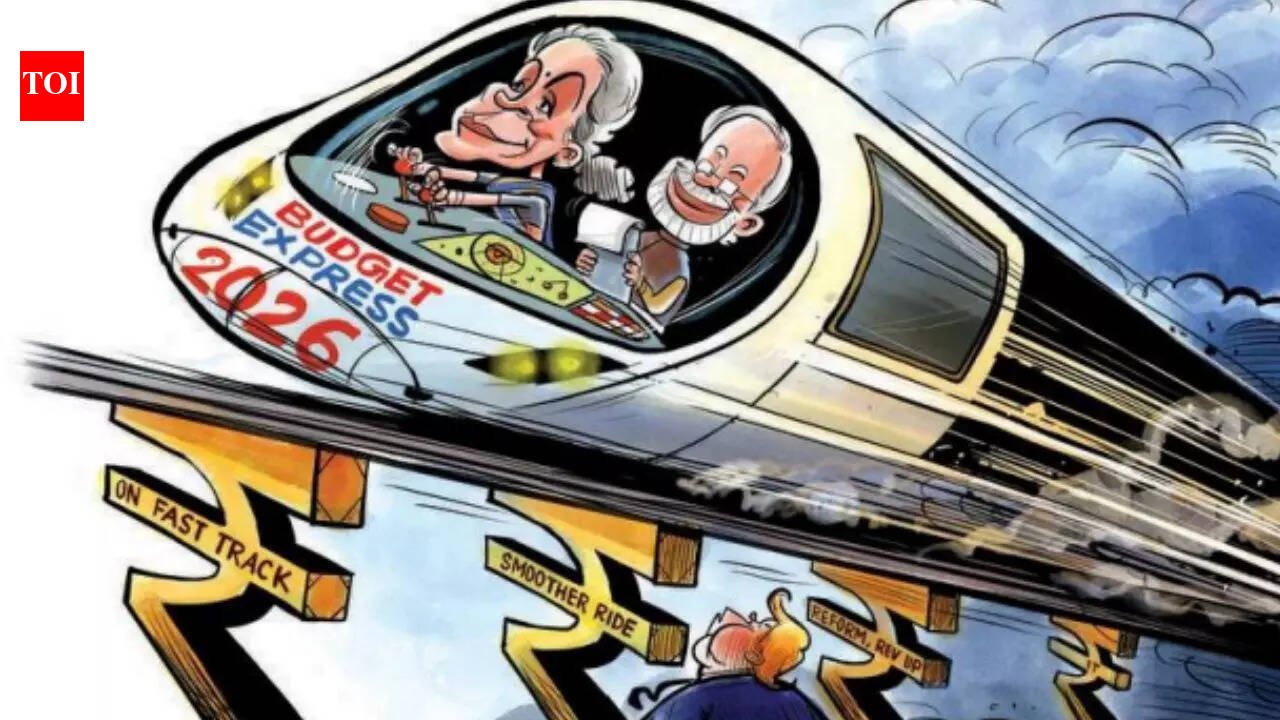
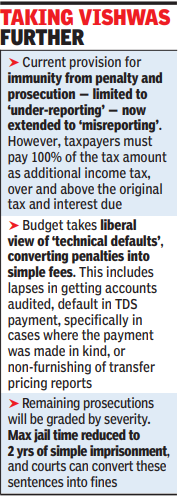
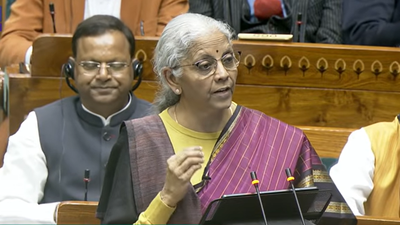
If trust has been Nirmala Sitharaman’s byword for taxpayers so far, she took it further this year to improve ‘ease’ of filing and updating returns, and encouraging voluntary compliance to cut down on litigation. Sitharaman said the new Income Tax Act, 2025, which comes into force from April 1, is revenue-neutral, with no changes to income tax rates or slabs, but reducing the number of sections by nearly half and removing layers of interpretational ambiguity. One of the most significant changes is the introduction of a single ‘tax year’, replacing the confusing distinction between assessment year and previous year. The redesigned income tax return forms will be notified shortly, with the govt promising simpler language and layouts that allow ordinary taxpayers to comply without professional assistance. The FM said the time limit for filing a revised tax return was being extended from nine months to 12 months after the end of the tax year, leaving enough room to fix mistakes without staring at a penalty. Taxpayers can now update their returns after reassessment proceedings have been initiated at a cost. An additional 10% tax rate will apply over and above the rate applicable for the relevant year. Such returns can also be filed to reduce earlier claimed losses.

Budget

More Time To Revise, Fix Mistakes

CA Ketan Vajani said, “The taxpayer can now take shelter under updated return and avoid penalties with 10% extra cost. An amendment is proposed with effect from assessment year 2026-27 and the benefit can be availed of even in the current financial year.” Gautam Nayak, tax partner at CNK & Associates added, “Instead of paying 25%, the taxpayer would have to pay 35%. However, this would enable closure of the matter without resorting to a drawnout and time-consuming reassessment and consequential penalty process. Of course, such updated return cannot be filed in prohibited cases, such as those where information is available under the Black Money Act, Prevention of Money-Laundering Act etc.Currently, an additional Rs 8 lakh, she can now do so. In another move to cut down on disputes, the FM has proposed integration of assessment and penalty proceedings into a single, common order. Reducing paperwork and the prospect of physical interactions with tax officials, applications for lower/nil TDS certificates can be filed electronically. Tax starting at 25%, going up to 70%, of the differential tax and interest is payable depending on the delay in filing the updated return. Further, filing an updated return is now possible to reduce losses claimed earlier. For instance, if the original return had loss of Rs 10 lakh and the taxpayer wants to file an updated return with loss of Rs 8 lakh, she can now do so. In another move to cut down on disputes, the FM has proposed integration of assessment and penalty proceedings into a single, common order. Reducing paperwork and the prospect of physical interactions with tax officials, applications for lower/nil TDS certificates can be filed electronically.


Source link

Pakistan to boycott February 15 T20 World Cup match against India | Cricket News


Pakistan to boycott February 15  T20 World Cup match against India
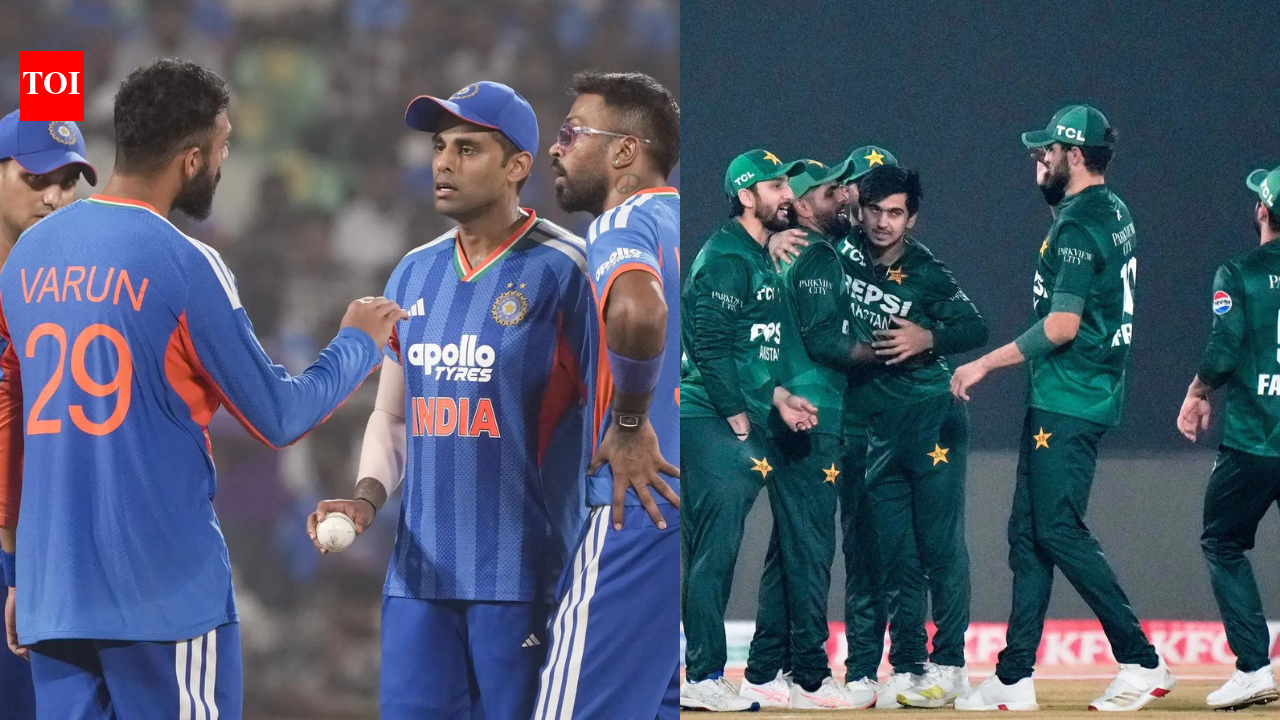
India vs Pakistan (Agency Image)

New Delhi: Pakistan will not take the field against India at the 2026 ICC Men’s T20 World Cup, the Government of Pakistan confirmed in an official statement on X.While granting permission for the national team to travel to Sri Lanka for the tournament, the government said Pakistan would boycott the group-stage match against India scheduled for February 15 2026, without specifying the reason for the decision.

Suryakumar Yadav press conference: On Ishan vs Sanju, Tilak Varma and Washington Sundar injury

Both sides were set to clash in Colombo, Sri Lanka, in a Group A fixture.“The government of The Islamic Republic of Pakistan grants approval to the Pakistan Cricket Team to participate in the World T20 2026, however the Pakistan Cricket Team shall not take field in the match scheduled on 15 February 2026 against India,” read the statement.TimesofIndia.com understands that the Pakistan Cricket Board (PCB) has yet to inform the International Cricket Council (ICC) of its decision not to play the February 15 fixture.Although the Pakistan government has not issued an official explanation for this reason, the TimesofIndia.com believes it is linked to the recent terrorist attack in Balochistan. Mohsin Naqvi, Pakistan’s Interior Minister, who also serves as PCB chairman, has publicly attributed the attack to India. According to ISPR statements, counter-terror operations resulted in the deaths of 92 terrorists, while 18 civilians and 15 security personnel were killed in the violence.However, pakistan’s participation in the T20 World Cup came under a cloud after PCB chairman Mohsin Naqvi raised doubts following Bangladesh’s removal from the tournament on January 24 due to security concerns in India.Pakistan was the only nation to support Bangladesh’s request for a neutral venue and accused the ICC of applying double standards in India’s favour. Naqvi had maintained that the final decision would be taken by the government.Two days later, after meeting Prime Minister Shehbaz Sharif, Naqvi said he had been advised to keep all options open, with a call expected by “Friday or next Monday.”


Source link

‘This time, it will be a regional war’: Khamenei warns US’ Middle East allies; slams Trump’s ‘rhetoric’


'This time, it will be a regional war': Khamenei warns US' Middle East allies; slams Trump's 'rhetoric'
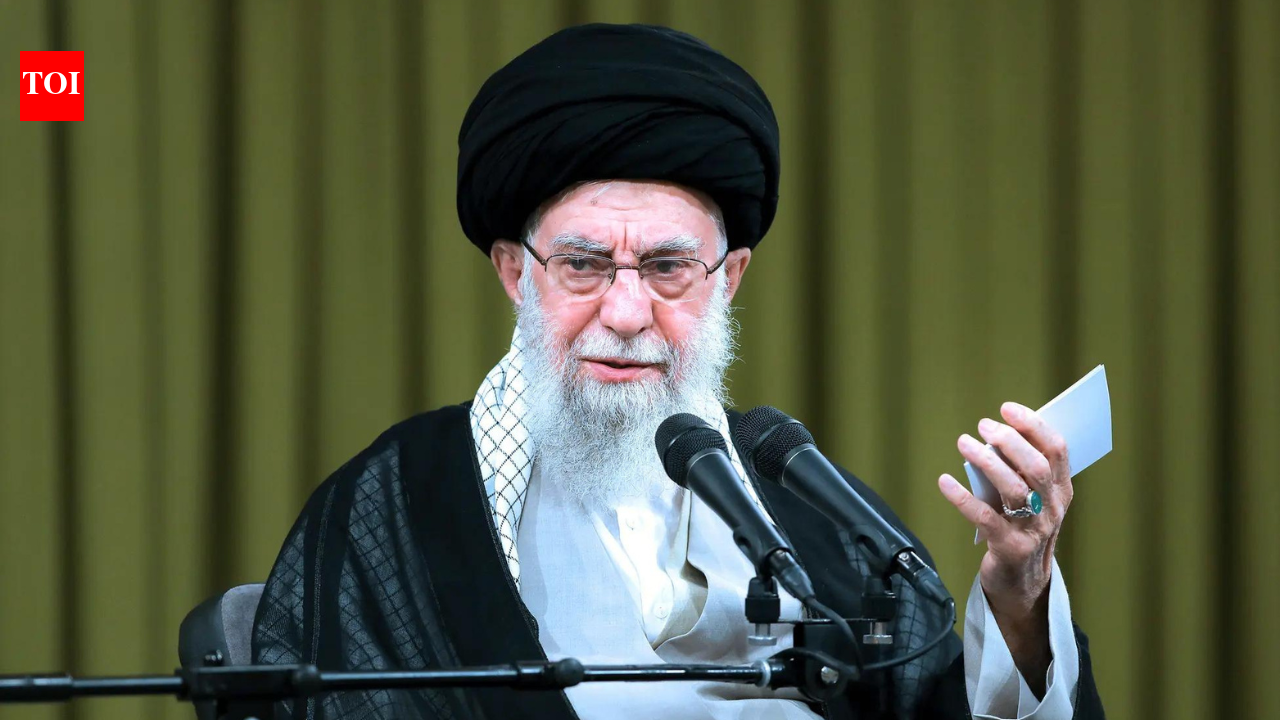
Ayatollah Ali Khamenei (File photo)

Iran’s Supreme Leader Ayatollah Ali Khamenei on Sunday warned the United States’ Middle East allies that any potential US attack on the Islamic Republic would trigger a regional war, amid heightened tensions between the two countries following deadly domestic protests in Iran. Speaking at a legislative session, Khamenei told Iranians they “should not be scared” of US President Donald Trump’s rhetoric. “The Americans should know that if they start a war, this time it will be a regional war,” he said.The warning follows Trump’s threats in response to Tehran’s crackdown on mass demonstrations that began in December over the high cost of living and evolved into a broader anti-government movement. Khamenei described the protests as orchestrated by the United States and Israel, calling them “riots.” “They (rioters) attacked the police, government centres, IRGC centres, banks, and mosques, and burned the Koran… It was like a coup,” he added, saying that “the coup was suppressed.”Tehran has acknowledged more than 3,000 deaths during the protests, stating most were security personnel and innocent bystanders, attributing the violence to “terrorist acts.” Rights groups and foreign governments, however, have accused Iran and its Islamic Revolutionary Guard Corps (IRGC) of killing thousands of protesters. In retaliation for the European Union’s (EU) designation of the IRGC as a terrorist organisation, Iranian lawmakers on Sunday labelled the armies of the EU member states as terrorist groups. Lawmakers donned the Guards’ green uniform and chanted “Death to America,” “Death to Israel,” and “Shame on you, Europe,” according to state television. Speaker Mohammad Bagher Ghalibaf slammed the EU’s “irresponsible action,” citing “Article 7 of the Law on Countermeasures Against the Declaration of the IRGC as a Terrorist Organisation,” which allows Iran to classify the armed forces of European countries as terrorist groups. The immediate impact of the move is unclear.Sunday’s session coincided with the 47th anniversary of the return from exile of the late Ayatollah Ruhollah Khomeini, founder of the Islamic Republic in 1979. The IRGC, the ideological arm of Iran’s military, is tasked with safeguarding the revolution from “external and internal threats.”The EU’s designation follows similar classifications by the United States, Canada, and Australia. Last June, Iran and Israel fought a 12-day war after Israel targeted Iranian nuclear-linked sites, with the US intervening on Israel’s behalf. The conflict ended after Trump mediated a truce, though regional tensions remain high.(With AFP inputs)


Source link

Budget 2026: Odisha, Kerala, Andhra, Tamil Nadu to get dedicated rare earth corridors — what it means


Budget 2026: Odisha, Kerala, Andhra, Tamil Nadu to get dedicated rare earth corridors — what it means

Union finance minister Nirmala Sitharaman on Sunday proposed the establishment of dedicated rare earth corridors in Odisha, Andhra Pradesh, Tamil Nadu and Kerala as part of the Union Budget for 2026–27, aiming to reduce India’s dependence on imports and strengthen domestic capabilities in critical minerals.Presenting the Budget in Parliament, Sitharaman said the Centre would “support mineral-rich states to promote mining, processing, research and manufacturing of rare earth elements and permanent magnets”, which are crucial for clean energy, electronics, defence and electric mobility.

Reform Over Rhetoric: FM Sitharaman’s Budget 2026 Charts India’s Growth Path Amid Global Trade War

The finance minister said, “The budget proposes raising the Electronics Components Manufacturing Scheme outlay from 22,999 crores to 40,000 crores, alongside new initiatives such as ISM 2.0, rare earth corridors, and dedicated chemical parks.”The proposal builds on the scheme for rare earth permanent magnets that was launched in November 2025, she said, adding that the government now proposes to scale up support for states to establish dedicated corridors focused on the full value chain – from extraction to advanced manufacturing.

Reducing import dependence

Rare earth minerals are a group of 17 elements used in high-tech products such as electric vehicle motors, wind turbines, smartphones, semiconductors, defence systems and precision electronics. India currently imports a significant share of its rare earth requirements, with China dominating global production and processing.China controls a large portion of the world’s rare earth refining capacity and has, in recent years, tightened export controls on critical minerals, raising concerns over supply disruptions for manufacturing economies like India.The proposed corridors are aimed at building domestic capacity and insulating Indian industry from global supply shocks.

Polls bound states in focus

Two of the four states identified for the proposed rare earth corridors – Tamil Nadu and Kerala – are scheduled to go to Assembly polls later this year, bringing added political attention to the Budget announcement. Both states have significant coastal mineral reserves, including monazite-rich sands that contain rare earth elements, making them central to India’s critical minerals strategy. The proposed support for mining, processing and research infrastructure is expected to be closely watched in the run-up to the elections, particularly for its potential impact on investment, employment and industrial activity in the states.

Chemical parks and manufacturing push

As part of a broader industrial strategy, FM also announced a scheme to support states in setting up three dedicated chemical parks through a challenge-based route. The parks will follow a cluster-based, plug-and-play model to boost domestic chemical production and further cut import dependence. The measures are aligned with the government’s push to strengthen capital goods manufacturing and secure supply chains for strategic sectors.The Budget proposals come amid growing global competition for access to critical minerals, with countries accelerating efforts to localise production and processing of rare earths and other strategic materials.


Source link

Ishan Kishan’s 42-ball century, Arshdeep Singh fifer drive India to 46-run win over New Zealand, seal 4–1 T20I series | Cricket News


Ishan Kishan's 42-ball century, Arshdeep Singh fifer drive India to 46-run win over New Zealand, seal 4–1 T20I series
India’s Ishan Kishan (PTI Photo)

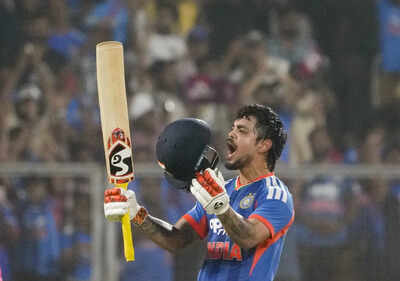
Thiruvananthapuram: Ishan Kishan’s blistering 42-ball century was the heartbeat of India’s mammoth 271/5 at the Greenfield Stadium on Saturday, transforming what might have been a competitive total into a match-winning one. On the smallest playing area of the series, and on a pitch dry on top yet tacky underneath, India’s innings was a masterclass in timing, power, and ruthless intent. In pursuit, New Zealand were bundled out for 225, with only Finn Allen’s 80 off 38 offering any semblance of resistance. The 46-run victory capped a dominant 4–1 series triumph for India.

Sanju Samson or Ishan Kishan? | Greenstone Lobo predicts the ideal player for T20 World Cup

The partisan Thiruvananthapuram crowd had come expecting fireworks from local hero Sanju Samson, but it was Kishan who stole the show. Lockie Ferguson, making his international comeback after 2024 for New Zealand, supplied the only early sting with genuine pace and bounce, removing both Samson and Abhishek Sharma. Abhishek’s 30 off 16 set the tone with brisk aggression, but Samson’s six-ball six ended in silent disappointment — a forlorn walk off the field greeted by a deafening silence from the home fans. Kishan, returning from a niggle, started measured and non-fussy, letting the pitch and outfield settle beneath him. Once in rhythm, he unleashed sheer carnage. Partnering captain Suryakumar Yadav, who carved 63 off 30 with effortless elegance, India torpedoed from 100 to 200 in just 5.2 overs, the duo adding a 137-run stand for the third wicket. Kishan’s ruthlessness was particularly brutal against leg-spinner Ish Sodhi, whom he hammered for 29 runs in a single over. The defining moment came in the 17th over against New Zealand captain Mitchell Santner: two consecutive sixes brought up Kishan’s century, immediately celebrated with a bear hug from Hardik Pandya at the non-striker’s end. Ten sixes and six fours punctuated a knock of explosive efficiency, power, and timing in perfect harmony. Even after Kishan and Suryakumar departed, the carnage continued. Hardik Pandya bludgeoned 42 off 17, while Rinku Singh and Shivam Dube closed the innings with flair. The Kiwi chase began in flames. Tim Seifert fell for 5 in the first over to Arshdeep Singh, and though Finn Allen — the Big Bash run-topper with 466 runs at a 184.2 strike rate — played a scintillating 80 off 38, wickets at key moments slowed the momentum. By 10 overs, New Zealand were 131/2, needing 141 from the remaining 10 overs — a near-impossible ask. The visitors surged to 166 by 14 overs, but from there, the asking rate ballooned to alarming proportions. The wrecker-in-chief during this phase was Arshdeep, who bore the brunt of Finn’s early assault before returning to remove Rachin Ravindra, Mitchell Santner, and Kyle Jamieson, finishing with figures of 5/51 from four incisive overs. “Great learning for me to stay in the game. That was the message from the coaching staff. Lately, I’ve been going for runs consistently, I’m trying to stay in the game with Morne Morkel’s help,” Arshdeep said after the game. Beyond the numbers, the match carried a subtle T20 World Cup subtext: Kishan taking over wicketkeeping duties from Samson signals India’s intent to finalise combinations for the showpiece event starting next week.


Source link

Sunetra Pawar sworn in as Maharashtra deputy CM: Wives who stepped in after powerful husbands to continue political legacy | India News


Sunetra Pawar sworn in as Maharashtra deputy CM: Wives who stepped in after powerful husbands to continue political legacy

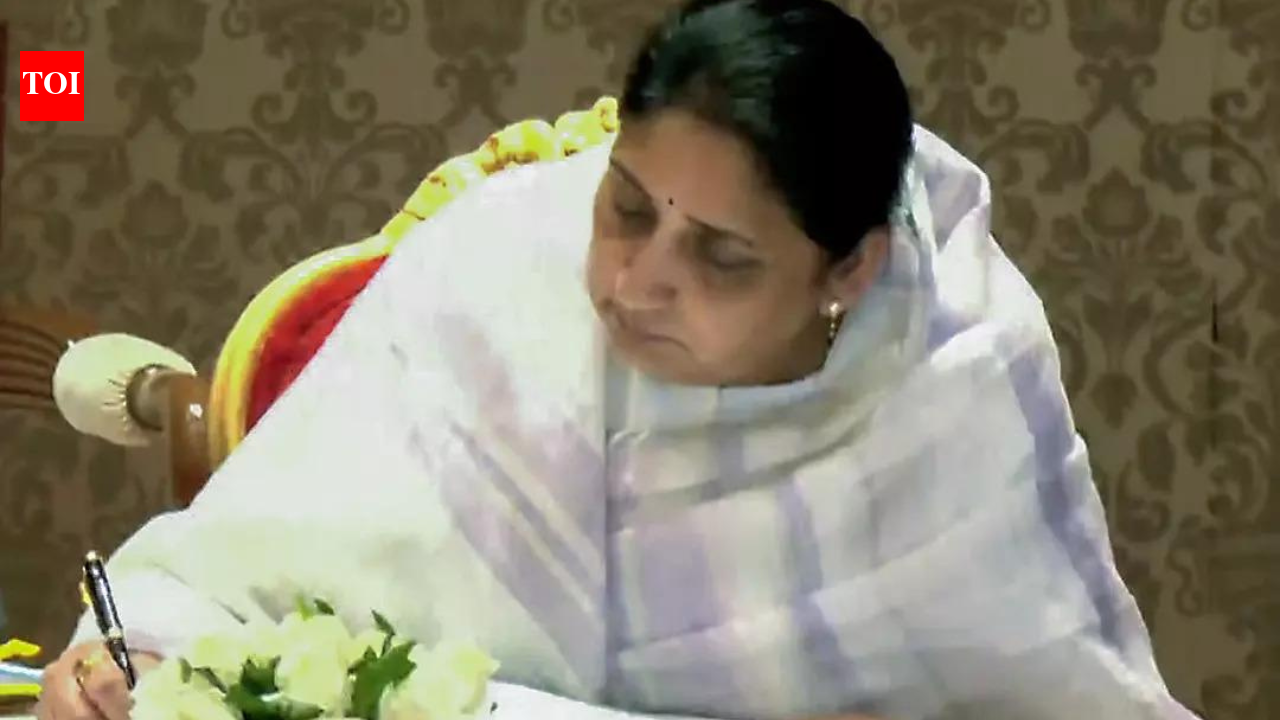
Sunetra Pawar on Saturday replaced her late husband Ajit Pawar and sworn in as the deputy chief minister in Maharashtra cabinet.This comes just days after Ajit Pawar was killed in a plane crash while traveling to Baramati from Mumbai.

Sunetra Pawar To Be Named NCP Leader, Dy CM Oath Likely Tomorrow: Chhagan Bhujbal

Sunetra was elected the Nationalist Congress Party’s (NCP) legislature party leader earlier in the day during a meeting held in the city. The NCP, a key constituent of the Mahayuti government in Maharashtra, submitted a letter to Chief Minister Devendra Fadnavis confirming Sunetra Pawar’s election as the party’s legislature leader.Sunetra Pawar will assume all portfolios previously held by her late husband, with the exception of the finance ministry. Indian politics has witnessed several instances where women leaders have stepped in to carry forward their husband’s political legacy, often under difficult circumstances.Rabri Devi, a prominent leader of the Rashtriya Janata Dal (RJD) in Bihar, became the state’s first female chief minister on July 25, 1997, following the resignation of her husband, Lalu Prasad Yadav, due to his involvement in the fodder scam. She held this position until 2005, also winning the 2000 assembly elections.Sonia Gandhi entered politics in 1997, following her husband and former Prime Minister Rajiv Gandhi’s 1991 assassination. She became Congress president in 1998, leading the UPA to general election victories in 2004 and 2009.Deepa Dasmunsi of the Congress won the Raiganj Lok Sabha seat in 2009 after her husband, senior leader Priya Ranjan Dasmunsi, slipped into a coma in 2008, consolidating and retaining his political base in West Bengal.Ranjana Kul, representing the NCP in Maharashtra, entered the state assembly from Daund in 2004 following the death of her husband Subhashrao Kul, later vacating the seat for her son Rahul.Madhuri Misal, a BJP leader from Pune, won the Parvati assembly constituency in 2009 after the murder of her husband Satish Misal, a corporator, and later went on to become Pune BJP chief.Runu Mete, a Trinamool Congress candidate, contested the Indus assembly seat in West Bengal during the 2021 elections after her husband Gurupada Mete died mid-campaign, drawing strong sympathy support.Sandhya Desai-Kuperkar, of the NCP, briefly held an assembly seat as a proxy candidate following the death of her husband Babasaheb Kuperkar.Rita Verma, Congress leader from Jharkhand and a four-term Dhanbad MP who rose politically following her husband’s setbacks, later becoming a Union minister.


Source link

Suspected Pakistani drone sighted in J&K’s Samba; second time in a row | India News


Suspected Pakistani drone sighted in J&K’s Samba; second time in a row
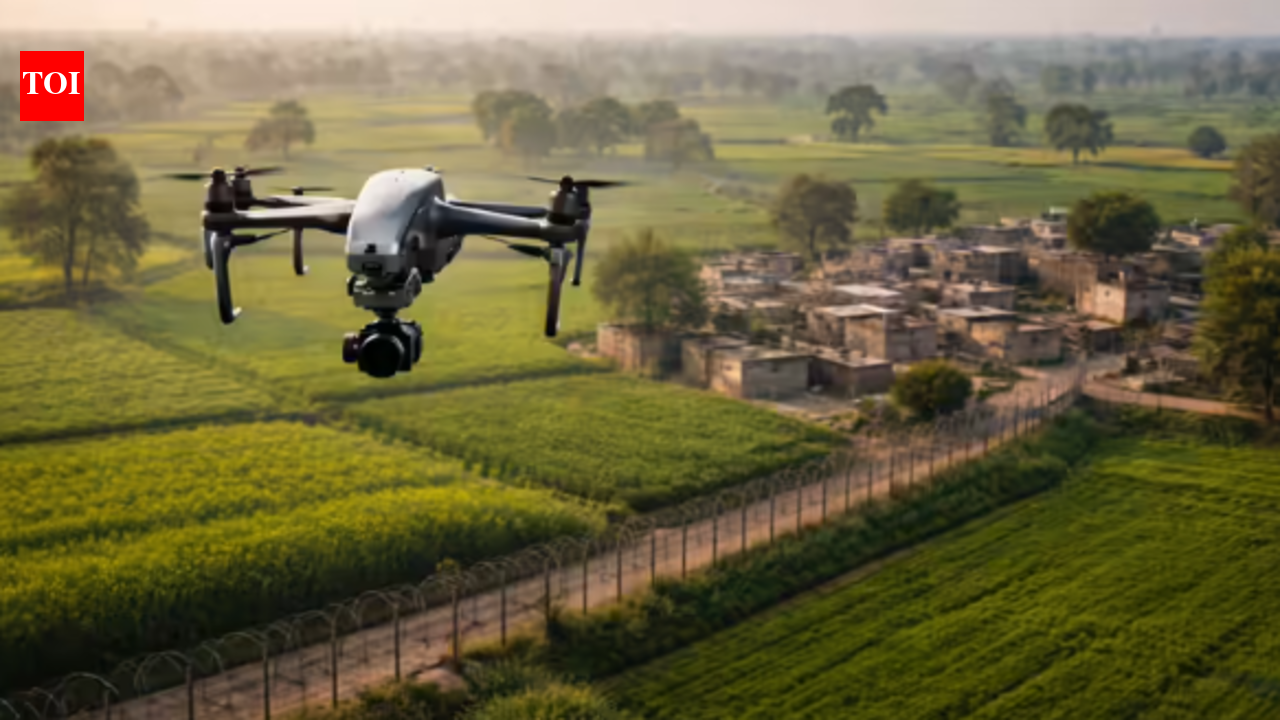
Representative image (AI-generated)

NEW DELHI: Security forces launched a search operation in Jammu and Kashmir’s Samba on Saturday after a suspected Pakistani drone was sighted along the International Border (IB) in the district, officials said.The drone was seen hovering briefly over Indian territory near Chillyari village before returning towards Pakistan after about two minutes.Following the sighting, police and security forces conducted extensive searches in areas along the IB to rule out any possible airdropping of weapons or narcotics.A similar incident was reported on Friday, when another suspected Pakistani drone briefly hovered over Indian territory near Ratanpur village in the Ramgarh sector of Samba.The sightings come amid continuing tensions between India and Pakistan following a four-day conflict last May, during which both sides extensively deployed drones.Islamabad has repeatedly used drones to drop weapons and narcotics in Punjab and Jammu and Kashmir, both of which share a border with Pakistan.(With PTI inputs)


Source link

Digital life, real heart risk: How to keep your heart safe in a 24/7 non-stop world


Digital life, real heart risk: How to keep your heart safe in a 24/7 non-stop world

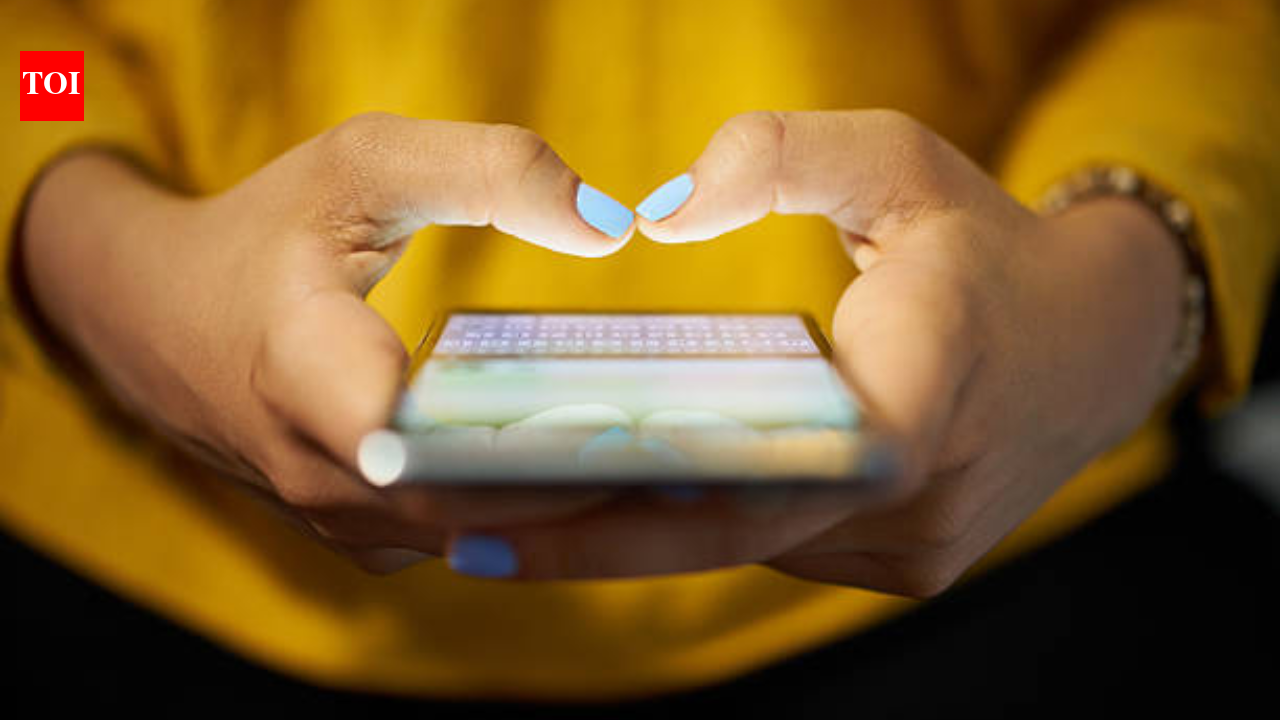
Most of us don’t notice how much time we spend staring at screens because it feels normal now. Phones, laptops, TVs. Work, messages, news, reels, reminders. The day blurs into one long glow. And the stress that comes with it feels unavoidable, like background noise you learn to live with. Constant screen stress changes how life is lived. Meals are eaten while checking phones. Family time happens with one eye on notifications. Sleep gets pushed later because there’s always one more thing to read or watch. What’s unsettling is that this stress doesn’t stay mental. It moves into the body. Increased blood pressure. Irregular heartbeats. Anxiety attacks that feel like something worse. Chronic fatigue. Headaches. Sleep disorders. There have been cases where prolonged digital stress has been linked to heart problems, severe burnout, even sudden medical emergencies.But these cases don’t always make noise. They’re often labeled as isolated incidents. Bad luck. Pre-existing conditions. Stressful jobs. The screen connection gets brushed aside because it feels too ordinary to blame. After all, everyone is glued to a screen. So how dangerous could it really be?“Spending long hours sitting and focusing on screens often displaces physical movement. Prolonged sitting slows blood circulation and is linked with higher risk of obesity, high blood pressure, and poor cholesterol levels, all major contributors to heart disease. Screens emit blue light that can interfere with melatonin production and disturb sleep patterns. Poor sleep is a known risk factor for hypertension and other heart conditions,” Dr. Subhash Chandra, Chairman – Interventional Cardiology – Cardiology & Structural Heart Disease, BLK – Max Super Specialty Hospital told TOI Health.

Digital life, real heart risk: How to keep your heart safe in a 24/7 non-stop world

“Continuous notifications and social media use can raise stress levels and cortisol (a stress hormone), which over time may contribute to elevated blood pressure and strain on the cardiovascular system. Some longitudinal studies suggest that higher amounts of screen time (especially TV viewing in early adulthood) are associated with greater risk of coronary heart disease, heart attacks and strokes later in life,” the doctor added.

Why awareness is still so low

One reason is normalization. When something affects almost everyone, it stops looking harmful. We expect stress to come with modern life. We joke about being tired and overwhelmed. We wear burnout like a badge. And when symptoms show up, we tell ourselves we’re just not managing well enough.Another reason is that screen stress doesn’t look dramatic. There’s no single moment of collapse. No obvious injury. It builds slowly, quietly, over years. And by the time it becomes serious, it’s hard to trace back to something as ordinary as checking your phone too much.There’s also discomfort in the idea that tools we depend on might be hurting us. Phones are tied to work, income, connection, safety. Questioning their impact feels inconvenient. So it’s easier to ignore the warnings than to rethink habits.“If prolonged screen time is affecting your overall health, you might notice persistent fatigue or poor sleep, higher resting blood pressure, weight gain or difficulty losing weight, feelings of stress or anxiety related to phone/ computer use and reduced interest in physical activity,” Dr. Subhash Chandra warns.

Digital life, real heart risk: How to keep your heart safe in a 24/7 non-stop world

“Digital stress doesn’t feel dangerous because it looks so ordinary. You’re just checking your phone, replying to emails, scrolling a bit. But your body reads all of that as pressure. Constant alerts keep the fight-or-flight system switched on. Cortisol and adrenaline stay high. Heart rate and blood pressure creep up. And the body loses its ability to shift back into calm mode. When this becomes daily life, things start changing under the surface. Blood pressure doesn’t fully come down. Blood sugar control gets worse. Blood vessels stay tense instead of relaxed. Inflammation builds slowly. None of this hurts right away, which is why it’s easy to ignore. Digital stress also messes with sleep, cuts down movement, and pushes people toward quick fixes like late caffeine or stress snacking. Over time, the heart is working harder with fewer chances to recover. It’s not one big moment. It’s years of small strain adding up,” the doctor warns.

When life-threatening cases don’t change the conversation

As per a study based on data from over 1,000 study participants in Denmark, increased time on electronic devices or watching TV among children and young adults was associated with higher cardiometabolic disease risk, such as high blood pressure, high cholesterol and insulin resistance. “Limiting discretionary screen time in childhood and adolescence may protect long-term heart and metabolic health,” said study lead author David Horner, M.D., PhD., a researcher at the Copenhagen Prospective Studies on Asthma in Childhood (COPSAC) at the University of Copenhagen in Denmark.Even when such extreme cases are reported, they rarely change behavior. People assume it won’t happen to them. Or that those cases were unusual. Or that they’ll slow down later, when life is less busy.But “later” keeps moving.And the scary part is how little awareness people have of the early signs. Chest tightness gets blamed on anxiety. Poor sleep gets normalized. Constant exhaustion gets brushed off as age. The body sends signals, but they don’t fit our idea of danger, so we don’t listen.

This isn’t about fear. It’s about attention

The goal isn’t to scare people or demonize screens. They’re not going away. But pretending they’re harmless just because they’re common is costing us more than we admit. Life isn’t meant to be lived in a constant state of reaction.And maybe awareness starts with noticing how often we’re tense for no clear reason. How rare it feels to be unreachable. How strange quiet has become. Because when something slowly drains joy, energy, and health, it deserves to be taken seriously.Even if it fits in your pocket.Dr Subhas Chandra shares a few remedies or tweaks that can protect the heart.

  • Stand up, stretch or walk for a few minutes every 30–40 minutes of screen use.
  • Avoid screens 1–2 hours before bed to improve sleep quality and support heart health.
  • Aim for at least 150 minutes of moderate physical activity per week. Plus, short walks, stair climbing or even household chores help counter long sitting periods.
  • Use app timers or do digital detox breaks to reduce social media stress and constant notifications.
  • Monitor blood pressure, cholesterol and glucose levels, especially if you have a high screen usage pattern.

Do wearable devices and health apps help?

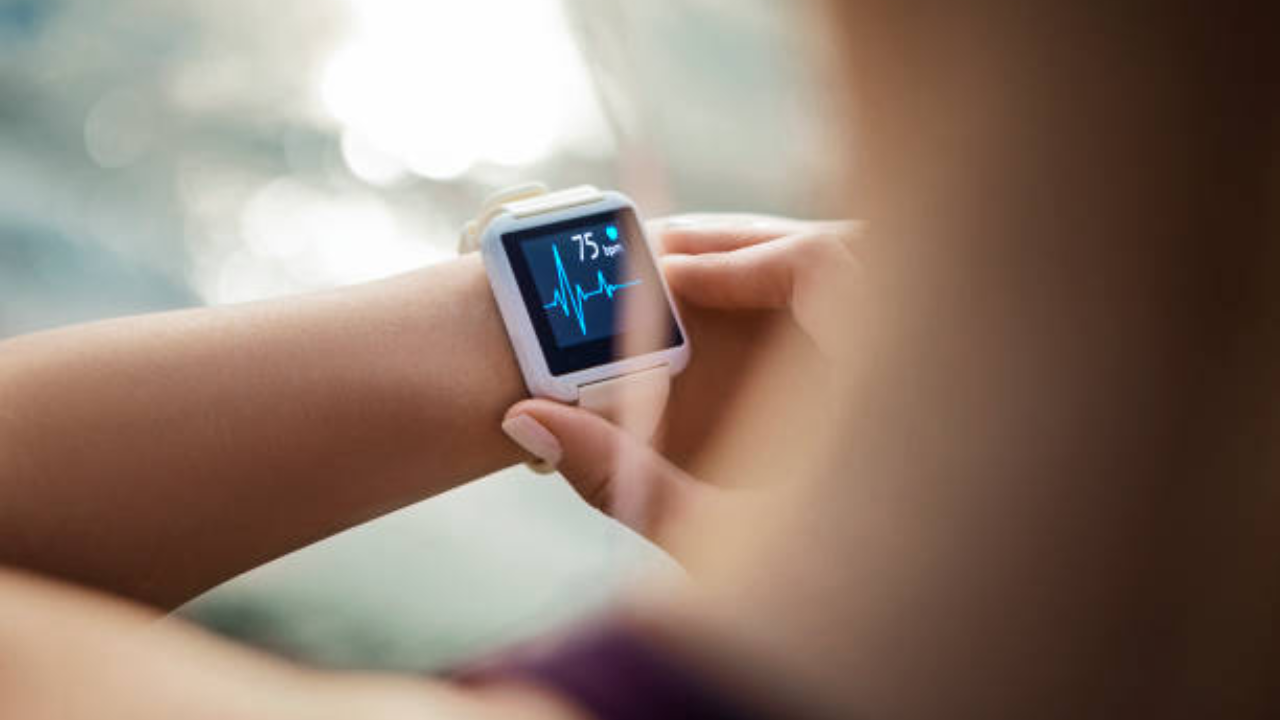
“For some users, constant tracking can increase worry, especially when devices send alerts about high/ low heart rates or irregular rhythms that might not be clinically significant. Some people become excessively focused on small fluctuations, leading to stress and unnecessary doctor visits. Consumer wearables are not always perfectly precise. Heart rate and rhythm measurements can be misleading, particularly during exercise or irregular heart rhythms. Relying on these readings without professional interpretation can cause false reassurance or undue concern,” says Dr. Subhas Chandra.

Digital life, real heart risk: How to keep your heart safe in a 24/7 non-stop world

“Wearables collect lots of sensitive health data (heart metrics, location, sleep, etc.). These data might be vulnerable to breaches or misuse if not properly protected by the manufacturer or app developer. Users may sometimes delay seeking medical help because a device says everything is “normal,” even when symptoms are present,” he explains.“Wearables should complement, not replace, professional medical care,” he warns.Medical experts consulted This article includes expert inputs shared with TOI Health by: Dr. Subhash Chandra, Chairman – Interventional Cardiology – Cardiology & Structural Heart Disease, BLK – Max Super Specialty HospitalInputs were used to explain how screen time affects overall health and why caution needs to be exercised.

Source link