Breaking News
US warplanes and elite units have been landing in Britain since the weekend


US warplanes and elite units have been landing in Britain since the weekend

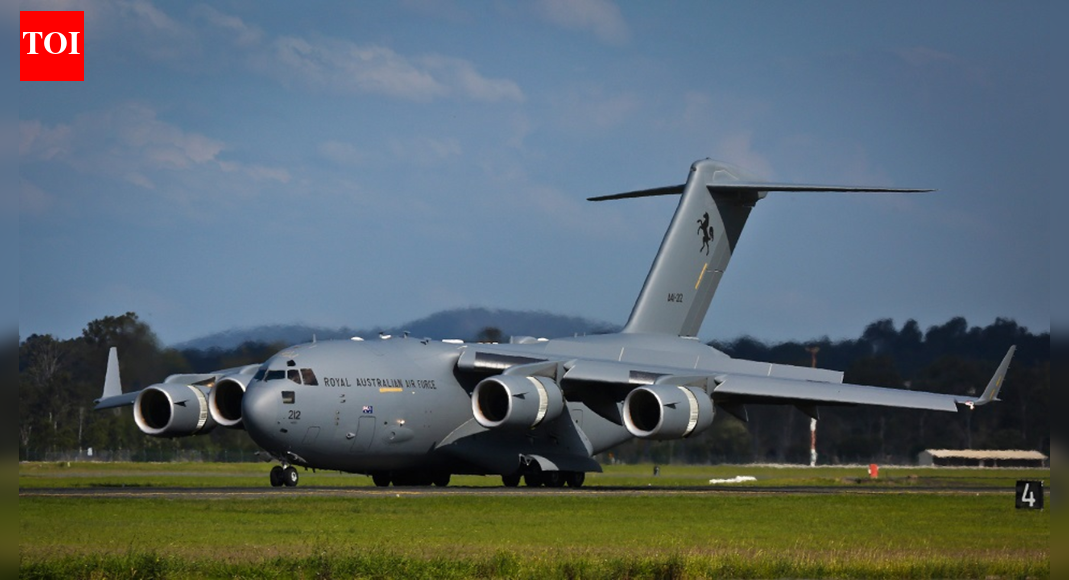
LONDON: Heavily armed US military planes have been landing in Britain since Saturday, suggesting America is preparing for further military operations following the capture of Venezuela’s President Maduro and his wife Cilia Flores in a weekend raid.A fleet of at least 14 C-17 Globemaster III cargo jets and at least two armed AC-130J Ghostrider gunships have landed at RAF Fairford in Gloucestershire, and RAF Mildenhall and RAF Lakenheath in Suffolk, since Saturday.The 174-f00t-long Globemaster is designed to transport most military vehicles and paratroopers. The Ghostrider carries cannon, bombs and missiles.At least five MH-60M Black Hawk helicopters and one MH-47G Chinook, thought to have been carried on the Globemaster, have been spotted in British hangars. An American KC-135R Stratotanker military aerial refuelling plane landed in Mildenhall on Tuesday.Some of the aircraft took off from Hunter Army Airfield in Georgia and Fort Campbell in Kentucky, home to the US Army’s 160th Special Operations Aviation Regiment, nicknamed the Night Stalkers, which played a key role in capturing Maduro and took part in the mission to capture Osama bin Laden in Pakistan.Special operations soldiers were seen rappelling from two CV-22B tilt-rotor Osprey aircraft in a fast-rope and rescue exercise at RAF Fairfield on Tuesday.An MoD spokesperson told TOI: “As routine, we do not comment on the operational activity of other nations, including third party use of UK bases. The US is the UK’s principal defence and security partner. The depth of our defence relationship with the US remains an essential part of our security.”A spokesman for the UK PM said: “I’m not going to comment on speculation around operational activity, especially regarding other nations. The US is the UK’s most important defence and security partner.”It is possible the military build-up was in order to seize the Russian-flagged oil tanker Marinera, until recently known as the Bella-1, in the North Atlantic on Wednesday after it slipped through a US naval blockade of Venezuela. President Trump has also threatened to seize Greenland by force, to attack Iran if the regime’s forces kill demonstrators, and made threats against Colombia and Mexico.The US operates in the UK under a range of national and international agreements, principally the Nato Status of Forces Agreement and the Visiting Forces Act. Any US operation from a base in the UK is considered on a case-by-case basis.


Source link

‘We will take all the oil’: US reveals plan for Venezuela; what are the 3 phases?


'We will take all the oil': US reveals plan for Venezuela; what are the 3 phases?

US secretary of state Marco Rubio on Wednesday said the United States has a “three-fold process” planned for Venezuela following the removal of President Nicolás Maduro, outlining steps focused on stabilisation, recovery and political transition.“We have a three-fold process in Venezuela,” Rubio told reporters after briefing lawmakers on Capitol Hill. He said the first phase would focus on stabilising the country to prevent chaos.“Step 1 is the stabilisation of the country; we don’t want it descending into chaos. Part of that stabilisation, and the reason why we understand and believe that we have the strongest leverage possible is our quarantine. Two more ships were seized today. We are in the midst right now and about to execute on a deal to take all the oil – they have oil that is stuck in Venezuela. They can’t move it because of our quarantine and because it’s sanctioned,” he said.Rubio said the US is preparing to take between 30 and 50 million barrels of Venezuelan oil that remains stranded due to sanctions.“We are going to take between 30 and 50 million barrels of oil. We are going to sell it in the market place at market rates, not at the discounts Venezuela was getting. That money will then be handled in such a way that we will control how it is dispersed ” he said, further adding that the proceeds would be managed in a way “that benefits the Venezuelan people.”The second phase, Rubio said, would focus on economic recovery and reconciliation ensuring fair access for American, Western and other companies to Venezuela’s market sector.“The second phase will be a phase of what we call recovery – ensuring that American, western and other companies have access to the Venezuelan market oil that is fair, also at the same time, we begin to create the process of reconciliation nationally within Venezuela so that the Opposition forces can be released from prisons or brought back to the country, and we begin to rebuild civil society,” he said.“The third phase will be one of transition,” Rubio added, noting “some of these will overlap, I have described this to them in great detail. We will have more detail in the days to follow but we feel like we are moving forward here in a very positive way.”Further on the Greenland crisis, Rubio said he plans to meet Danish officials next week, amid renewed assertions by the Trump administration that the US intends to acquire the strategic Arctic island. “I will be meeting them (Government of Denmark) next week,” he said, adding, “I am not here to talk about Denmark or military intervention… We will have those conversations with them then.”Rubio said the administration’s preference was to eventually purchase Greenland rather than use force. He also told reporters that Trump has spoken about acquiring Greenland since his first term. “That’s always been the president’s intent from the very beginning,” he said, adding that Trump was “not the first US president that has examined or looked at how we could acquire Greenland.”


Source link

‘Russia, China only fear …’: Donald Trump blasts Nato; takes credit for pushing bloc to pay ‘bills’


'Russia, China only fear ...': Donald Trump blasts Nato; takes credit for pushing bloc to pay 'bills'
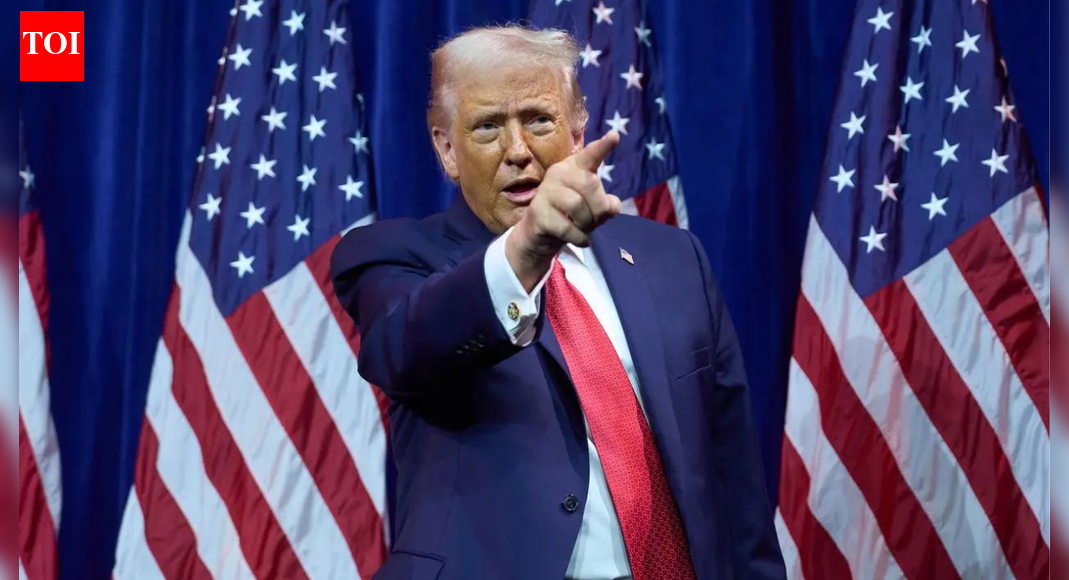
File photo: US President Donald Trump (Picture credit: AP)

US President Donald Trump on Wednesday claimed that Nato allies sharply increased their defence spending only after his intervention, while also asserting that Russia and China do not fear the military alliance without the United States.In a post on Truth Social, Trump said Nato countries were earlier spending around 2 per cent of their GDP on defence and that many members were “not paying their bills” until he stepped in.

Trump’s Greenland ‘Military Takeover’ Ignites MAGA? Johnson Says ‘Not Appropriate’ As NATO Panics

He claimed he pushed allies to raise defence spending to 5 per cent of GDP and said they now pay “immediately”. Trump added that many had doubted such a shift was possible, but argued it happened because of his personal relationships with allied leaders.The US President also made strong claims about global conflicts, saying Russia would have “all of Ukraine right now” without his involvement. He further stated that he had “single-handedly ended” eight wars and said his actions had saved millions of lives.Trump criticised Nato’s overall strength, arguing that Russia and China have “zero fear” of the alliance without US backing.He also expressed doubt over whether Nato countries would support the United States in a crisis, while reiterating that Washington would continue to stand by the alliance regardless.Referring to his first term in office, Trump said he rebuilt the US military and claimed that this remains a key reason adversaries fear and respect the United States. He also took a swipe at Norway, a Nato member, for not awarding him the Nobel Peace Prize, though he added that recognition did not matter to him.Trump ended the post by saying the only country Russia and China fear is what he described as the “DJT rebuilt” United States, closing with his campaign slogan, “Make America Great Again.”


Source link

Bangladesh–Pakistan ties: Dhaka to resume direct flights to Karachi from January 29; service restarts after 10-year gap


Bangladesh–Pakistan ties: Dhaka to resume direct flights to Karachi from January 29; service restarts after 10-year gap

Bangladesh’s national airline will resume nonstop flights between Dhaka and Karachi later this month, restoring direct air links between Bangladesh and Pakistan after a gap of more than 10 years, officials said on Wednesday.Biman Bangladesh Airlines will begin operating the Dhaka–Karachi service from January 29.

Bangladesh Slipping Into Pakistan’s Pocket: Sushant Sareen Warns India Of New Eastern Security Front

Initially, the airline will run two flights a week, on Thursdays and Saturdays, Bengali daily Prothom Alo reported, citing a press release from Biman.According to the schedule shared by the airline, the flight will leave Dhaka at 8 pm local time and reach Karachi at 11 pm. The return service will depart Karachi at midnight and land in Dhaka at 4.20 am.Direct flights between the two cities were last operated in 2012. News portal tbsnews.net, quoting Biman officials, said discussions with Pakistani aviation authorities had been underway for several months to reopen the route. The relaunch has now received formal clearance from the Pakistan Civil Aviation Authority, which has approved Biman to operate flights and use designated air corridors within Pakistani airspace.The move comes amid improving ties between Dhaka and Islamabad following the fall of former prime minister Sheikh Hasina’s government in 2024. Since then, both sides have taken steps to rebuild diplomatic, trade and people-to-people relations after years of strained ties. Bangladesh became independent from Pakistan in 1971.However, it remains unclear whether Bangladesh has obtained overflight permission from India, as the shortest air route between Dhaka and Karachi passes through Indian airspace, according to news agency PTI.In a statement, Biman said the new service is expected to make travel between Bangladesh and Pakistan “easier and more convenient” and could also support business, tourism and family travel. The airline added that the flights will be operated using modern aircraft and experienced crews.As per bdnews24.com, the aerial distance between Dhaka and Karachi is around 2,370 km. Currently, passengers travelling between the two cities have to rely on connecting flights via Middle Eastern hubs. Airlines such as Emirates, Qatar Airways, Flydubai, Gulf Air and Air Arabia operate these services, with total travel times ranging from eight to 12 hours, and sometimes extending to over 18 hours due to long layovers.Plans to revive direct air connectivity were first announced in August last year during the visit of Pakistan’s deputy Prime Minister and foreign minister Ishaq Dar to Dhaka. His trip marked the first high-level visit from Pakistan to Bangladesh in more than a decade, reported PTI.


Source link

Aldrich Ames: How an alcoholic became Soviet Union’s biggest asset inside the CIA | World News


Aldrich Ames: How an alcoholic became Soviet Union's biggest asset inside the CIA
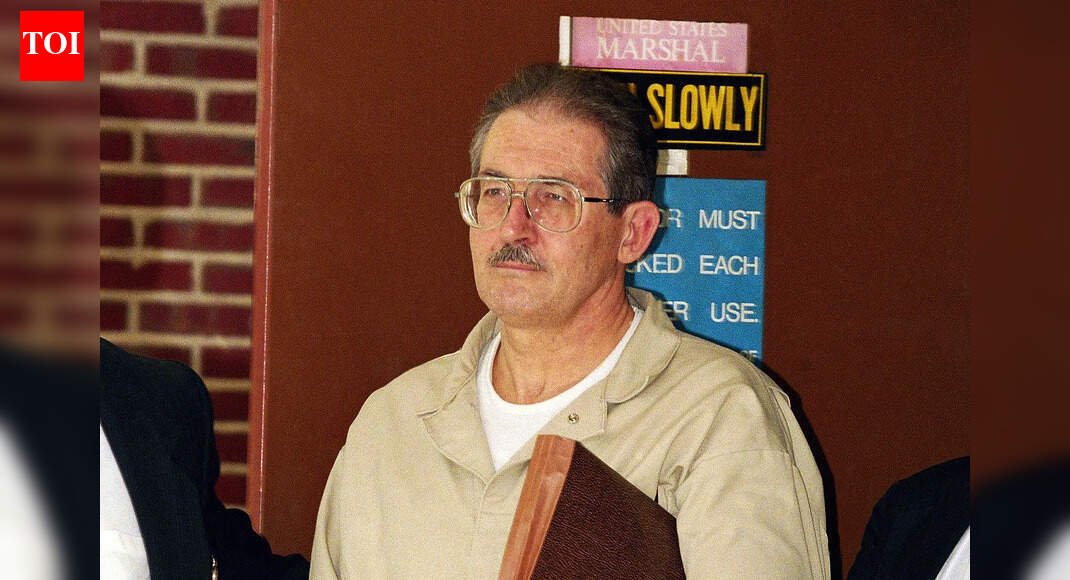
FILE – Former CIA agent Aldrich Ames leaves federal court after pleading guilty to espionage and tax evasion conspiracy charges April 28, 1994, in Alexandria, Va. (AP Photo/Wilfredo Lee, File)

When Aldrich Ames finally left for the Elysian Fields, none of America’s major newspapers felt compelled to soften the landing. The New York Times called him what he was: “Aldrich Ames, C.I.A. Turncoat Who Helped the Soviets, Dies at 84.” The Washington Post went further: “the most damaging CIA traitor in agency history.” It was unduly harsh from a paper that once labelled ISIS chief Abu-Bakr Al-Baghddadi an austere scholar. That’s how deeply ingrained hate for Aldrich Ames is in the American psyche, the man who turned out to be a Russia’s most coveted asset during the Cold War. That unanimity tells you something important. Aldrich Ames is not remembered because he was fascinating. He is remembered because he was devastatingly ordinary.

The Alcoholic Traitor

To understand Aldrich Ames, one must first strip away the mythology that usually attaches itself to traitors. He was not glamorous, not especially clever, not driven by grand visions of history. He was, above all else, familiar. A second-generation CIA man who grew up inside the culture of secrecy, hierarchy, and quiet entitlement that defined Cold War intelligence work.His father had served in the agency and struggled with alcoholism, a detail often noted but rarely dwelt upon, even though it would quietly echo through the son’s life. Ames absorbed espionage not as a calling but as an atmosphere, something ambient and unquestioned. By the time he formally joined the CIA, intelligence work already felt less like a mission and more like an inheritance.

Putin To Invade NATO? Kremlin Fires Back At Germany’s ‘RESTORE USSR’ Warning | ‘COMPLETE STUPIDITY’

What distinguished Ames early on was not promise but tolerance. He was repeatedly flagged as a mediocre field officer, better suited to desk work than clandestine operations. He drank heavily, performed unevenly, and carried himself with a resentful sense that the agency owed him more than it was willing to give. None of this stopped his rise. If anything, it made it easier. The CIA, confident in its own vetting and bound by institutional inertia, mistook longevity for reliability and familiarity for trust.By the early 1980s, Ames had reached a position of extraordinary sensitivity: counter-intelligence chief for the Soviet division. It was a role that granted him access to the deepest secrets of American espionage, including the identities of Soviet officials who had secretly chosen to work for the West. This was not the result of brilliance or strategic insight. It was the product of a system that promoted its own until there was no reason left not to.

The Non-Believer

Aldrich Ames

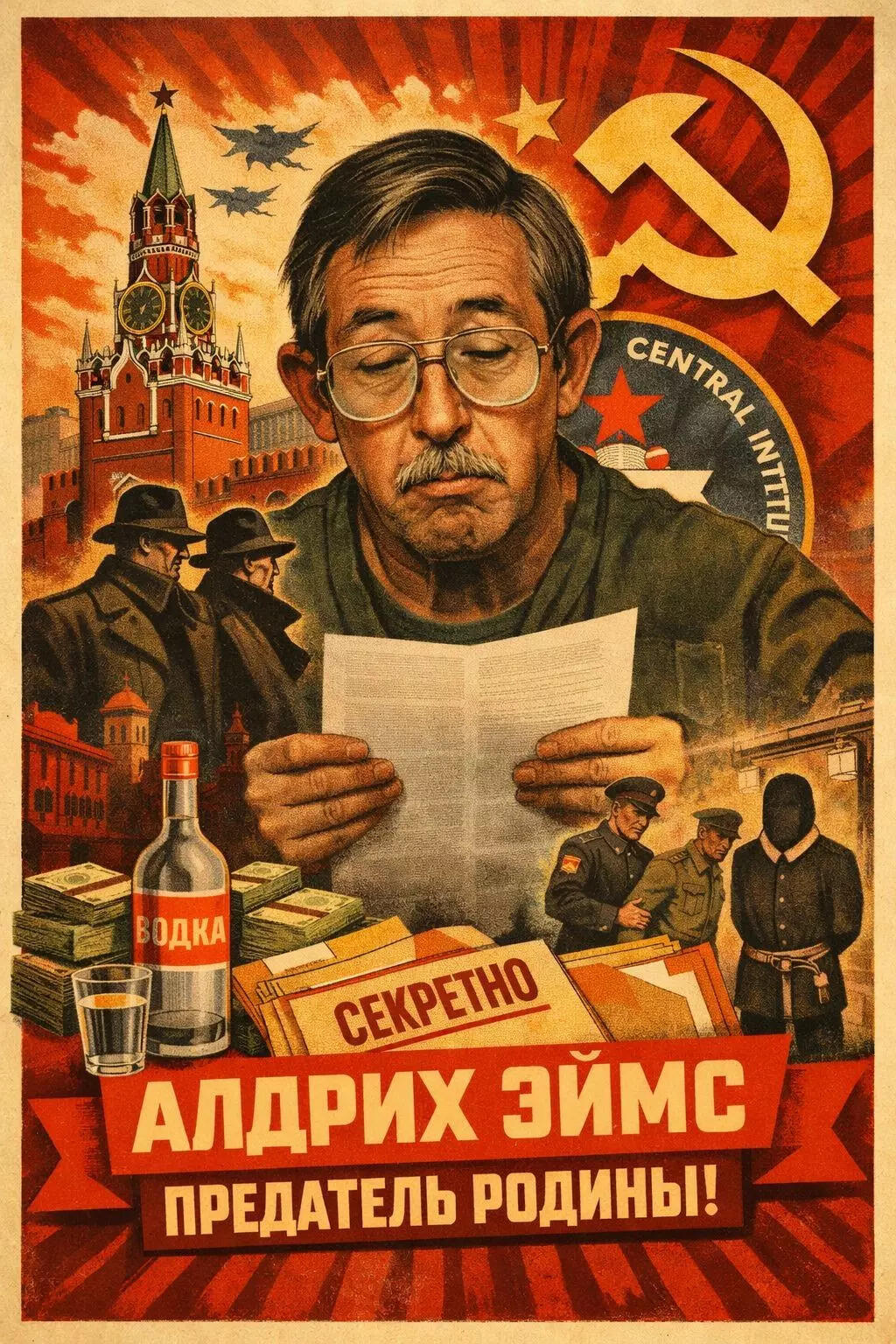
Ames did not defect in a moment of ideological awakening. He unravelled. By the mid-1980s, his alcoholism had deepened into routine dependence. Vodka was not an indulgence but a stabiliser, a way of managing a professional life he felt increasingly unfulfilled by and a personal life that was collapsing under the weight of debt, divorce, and resentment. Money problems mounted. So did bitterness toward an agency he believed underpaid and underappreciated him. In 1985, with startling simplicity, he walked into the Soviet Embassy in Washington and offered himself. There was no gradual courtship, no coded overture. He handed over names, identified himself, and asked to be paid. The brazenness of the act was matched only by the speed with which it escalated.What followed was not a calculated long-term strategy but a panic-driven collapse of restraint. Ames feared exposure, particularly from the very Soviet assets he was responsible for protecting. His solution was annihilation. He betrayed them all, delivering to Moscow a comprehensive map of Western intelligence inside the Soviet system.Alcohol played a critical role here, not as an excuse but as an enabler. It dulled caution, eroded empathy, and encouraged the kind of compartmentalisation that allowed Ames to treat betrayal as a logistical problem rather than a moral one. He did not frame his actions as treason so much as transaction. Secrets became currency. Loyalty became irrelevant.The KGB understood what it had acquired. Ames was not a source of insight so much as volume, a bureaucratic funnel through which decades of American intelligence flowed directly into Soviet hands. For that, he was paid handsomely. Millions of dollars arrived, and with them came the lifestyle that Ames believed validated his choices.

The Damage

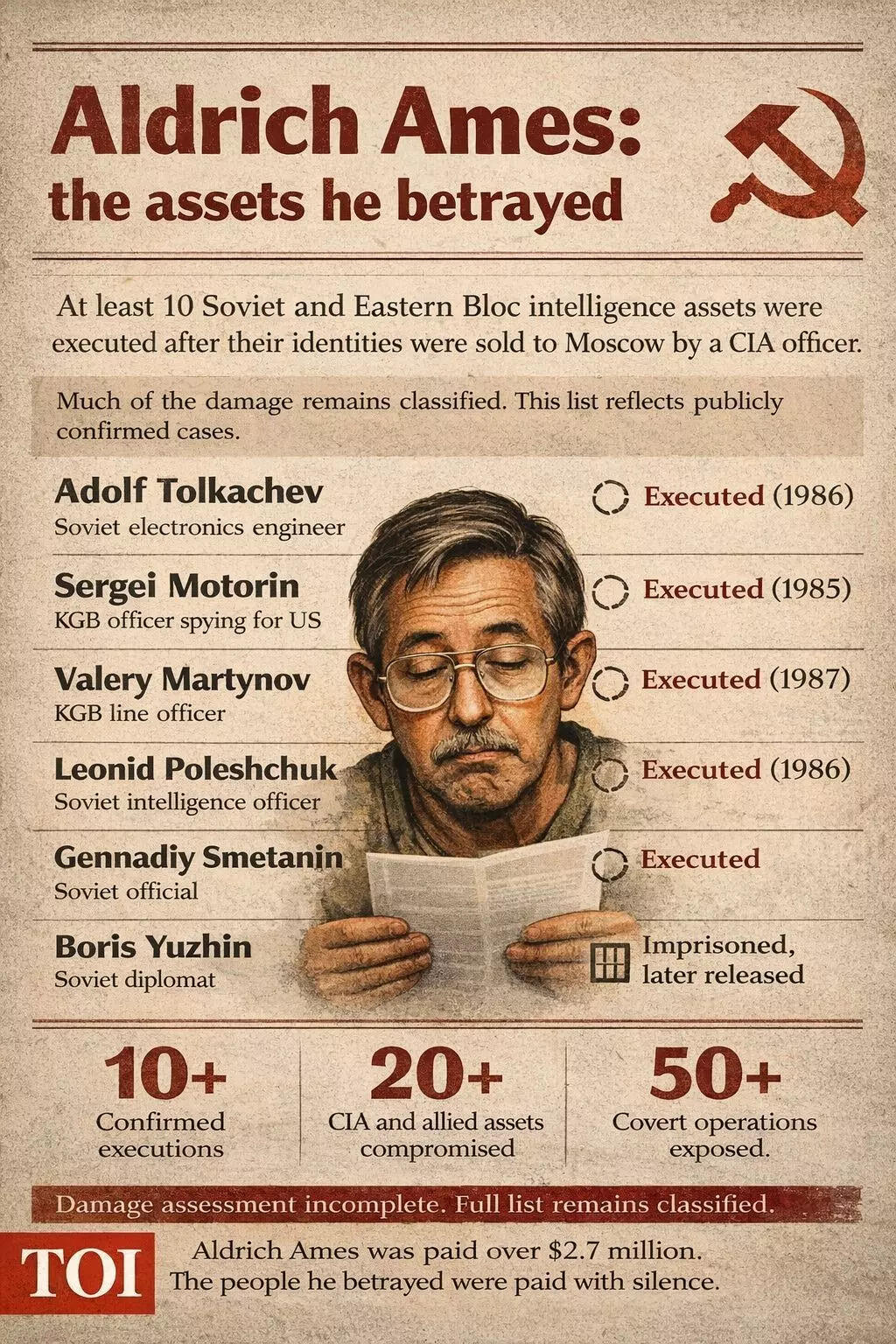
Aldrich Ames: The assets he betrayed

The damage was immediate and catastrophic. As Ames’s disclosures reached Moscow, Soviet counter-intelligence moved swiftly. Western agents began disappearing. Some were arrested, others interrogated, and at least ten were executed. Networks that had taken decades to build collapsed almost overnight. The CIA lost its most valuable human intelligence channels at a moment when understanding the Soviet system was more important than ever.Beyond the human cost, which remains the most damning aspect of the case, Ames inflicted long-term strategic damage. The CIA’s picture of Soviet capabilities and intentions became distorted, increasingly reliant on technical intelligence and disinformation fed back through compromised channels. Policy debates at the highest levels of the US government were shaped by intelligence that was no longer trustworthy.Ames, confronted with the consequences, remained disturbingly detached. He insisted that espionage itself was overrated, that spy networks were theatrical exaggerations rather than essential instruments of statecraft. It was a view that conveniently absolved him of responsibility for the deaths that followed his actions. If the game was meaningless, then the pieces were expendable.This moral emptiness is what distinguishes Ames from ideological traitors of earlier eras. The Cambridge Five believed they were serving history. Ames believed nothing of the sort. His betrayal was not animated by conviction but by contempt, a corrosive belief that the system itself did not deserve loyalty.

Banality of Evil

What makes the Ames case especially damning is not how clever he was, but how long it took to notice what was obvious.By the late 1980s, his lifestyle had become impossible to ignore. He purchased a house in cash, drove a Jaguar, wore tailored suits, and paid for cosmetic dental work, all on a salary that could not plausibly support such spending. Colleagues noticed. Reports were filed. Investigations were opened and then allowed to stall.The CIA’s internal security apparatus moved with lethargy, hamstrung by understaffing, bureaucratic caution, and a culture that resisted the idea that one of its own could be responsible for such damage. At one point, the investigation was effectively paused when the sole officer assigned to it went off for training.It was only when the FBI took over that the pieces fell into place. Surveillance confirmed unexplained meetings and suspicious behaviour. Financial records told a story the agency had long refused to confront. In February 1994, Ames was arrested outside his home, ending nearly a decade of uninterrupted betrayal.When confronted, he pleaded guilty and accepted a life sentence. Even then, he downplayed the impact of his actions, insisting that the intelligence world exaggerated its own importance. It was a final act of deflection, consistent with a man who had spent years convincing himself that nothing truly mattered beyond his own survival.

Source link

‘Why don’t you look at your own region?’: Jaishankar slams West’s ‘free advice’ on Op Sindoor; what he said | India News


'Why don't you look at your own region?': Jaishankar slams West's 'free advice' on Op Sindoor; what he said

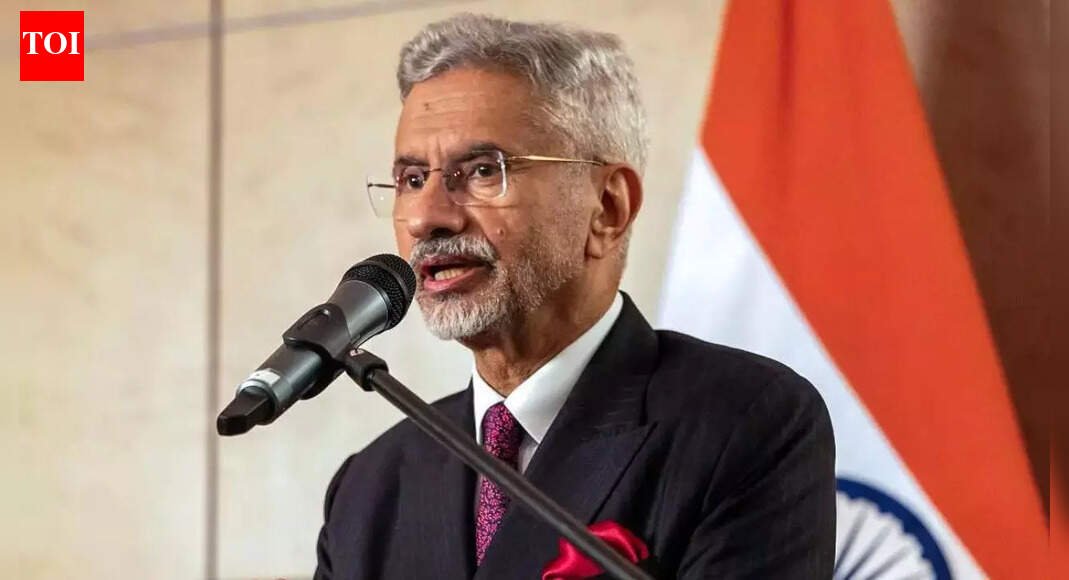
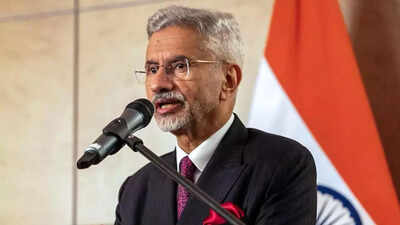
NEW DELHI: External affairs minister S Jaishankar on Wednesday took a dig at the western hypocrisy during India’s military response under Operation Sindoor, declaring India does not need the West’s free advice. “Why don’t you look at your own region for levels of violence?” he remarked.Speaking to members of the Indian community in Luxembourg, Jaishankar recalled that several nations offered unsolicited advice to the country during Operation Sindoor, India’s military response launched in May 2025 after the Pahalgam terror attack that killed 26 civilians.“Sometimes you hear people say, like it happened during Operation Sindoor. Now if you ask them, say, “oh really you’re worried, why don’t you look at your own region? And ask yourself, what are the levels of violence there.”“How much risks have been taken, how much worry the rest of us have about what you are doing. But that’s the nature of the world. People, what they say is not what they do,” he added.Jaishankar further underlined that India will engage differently with different actors. “So those who are willing to work with us and be helpful, positive, we have to deal with them in that way,” he said, adding “those who do the kind of things which Pakistan does, we have to deal with it in a different way.”Jaishankar also took a jibe on how the western countries often advise others on handling their internal or regional conflicts, suggesting such commentary is frequently detached from ground realities and offered without much thought.“Now, to what extent do the developments in the rest of the world affect it? It’s hard to say. People sitting far away will say things, sometimes with application of mind, sometimes not, sometimes with self-interest, sometimes carelessly. That will happen.”“I can tell you, whatever you might say, in this day and age, countries are more, I don’t want to say they become more selfish, but they will do things only if it is of direct benefit to them. They’ll offer you free advice. If something happens, say, no, please don’t do that. It worries us if there is tension,” he added.US President Donald Trump had repeatedly claimed that Washington mediated the May 2025 India-Pakistan ceasefire, an assertion India has rejected. New Delhi has maintained that the military pause followed a request from Pakistan’s Director General of Military Operations to his Indian counterpart, not third-party intervention.Further on the Venezuela crisis, Jaishankar said India’s primary concern is the safety of the people following US military operations there.“We are concerned about the developments, but we would really urge all the parties involved to now sit down and come to a position which is in the interest of the well-being and safety of the people of Venezuela, because at the end of the day, that is our concern,” Jaishankar said.“We would want Venezuela as a country with whom, over many, many years, we’ve had very good relations. So we would like the people to come out well, whatever the direction of events,” he added.His remarks came after Venezuelan President Nicolás Maduro and his wife, Cilia Flores, were captured in Caracas and flown out of the country during a joint operation involving intelligence agencies and US law enforcement.


Source link

‘Not only dog bites’: SC flags road accidents due to strays; highlights civic lapses, warns states | India News


'Not only dog bites': SC flags road accidents due to strays; highlights civic lapses, warns states

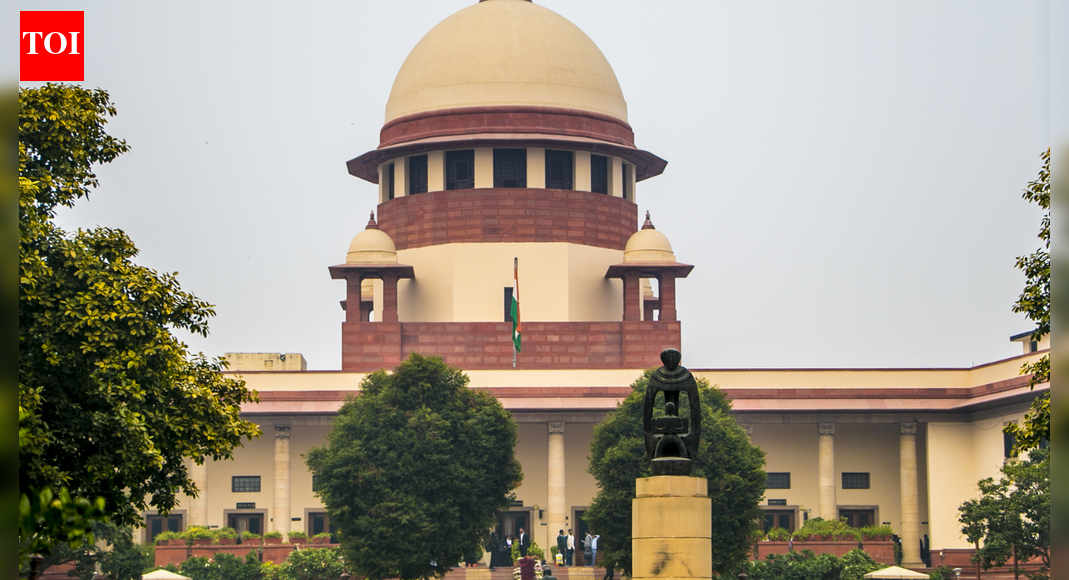
NEW DELHI: Flagging lapses by civic authorities, the Supreme Court on Wednesday observed that fatalities across the country are being caused not just by dog bites, but also by road accidents involving stray animals.A bench of Justices Vikram Nath, Sandeep Mehta and N V Anjaria made the remarks while hearing pleas seeking modification of its earlier directions, filed by animal lovers as well as those demanding stricter enforcement of the court’s orders. The bench noted that several lawyers and animal rights activists had argued they were not heard before the November 7 order was passed.“The roads should be clear of dogs and stray animals. It is not only the dog bites but also the roaming of stray animals on roads that are proving dangerous and causing accidents. No one knows which dog is in what mood in the morning. Civic bodies have to implement the rules, modules and directions strictly,” the bench said, according to news agency PTI.Justice Mehta highlighted the seriousness of the issue, pointing out that two Rajasthan High Court judges had met with accidents in the past 20 days, with one still suffering from spinal injuries. “It’s a serious issue,” he told counsel appearing in the matter.Senior advocate Kapil Sibal, appearing for a petitioner seeking modification of the earlier order, argued that the solution does not lie in rounding up all stray dogs. He said a scientific and globally accepted approach was needed to reduce human-animal conflict.Sibal urged the court to adopt the CSVR model—Capture, Sterilise, Vaccinate and Release—for controlling the stray dog population, submitting that this method would gradually bring down dog bite incidents. “Prevention is always better than cure,” Justice Nath remarked, adding that the court’s earlier directions were limited to removing stray dogs from institutional areas and did not override existing rules.‘Strict enforcement of existing rules’The bench clarified that its focus was on ensuring strict enforcement of existing rules, regulations, modules and standard operating procedures by states and civic bodies. “Some states have not responded to compliance with our orders and implementation of the arguments. We will be very harsh with those states. All the rules, regulations and SOPs need to be followed,” the court warned.When lawyers pointed out ongoing dog attacks, the bench said it was aware that children and adults were being bitten and, in some cases, losing their lives.At the outset, senior advocate Gaurav Agarwal, appointed amicus curiae in the case, informed the court that the National Highways Authority of India had prepared an SOP to comply with the court’s directions. “They have identified 1,400 km of road as a vulnerable stretch. However, after detection, the NHAI says that the state governments have to take care of it,” Agarwal said.The bench suggested fencing highways and expressways to prevent stray animals from entering roadways. Agarwal also told the court that states including Madhya Pradesh, Uttar Pradesh, Karnataka and Punjab were yet to file compliance affidavits, while some submissions received so far were “disappointing”. Justice Nath said the court would deal with those states.‘If one tiger is a man-eater … ‘Continuing his submissions, Sibal said the response to the stray dog issue must reflect a mature and responsible society. “First of all, this is not an adversarial issue and we are here as dog lovers. If one tiger is a man-eater, we don’t kill all tigers,” he argued, stressing the need for sterilisation to systematically reduce dog populations. He claimed the CSVR model had brought down the stray dog population in Lucknow to almost zero.Sibal also cautioned that housing rabid and non-rabid dogs together could spread the disease. Responding in a lighter vein, the bench remarked, “The only thing missing is providing counselling to the dogs as well so that he doesn’t bite when released back.”Similar submissions were made by senior advocates Colin Gonsalves, Anand Grover and C U Singh, along with several animal rights activists who appeared in person. Senior advocate K K Venugopal, appearing for NALSAR, Hyderabad, highlighted data pointing to an acute shortage of shelters for stray dogs.The hearing remained inconclusive and is set to continue on Thursday.The case stems from the apex court’s November 7 directions, issued after noting an “alarming rise” in dog bite incidents within institutional areas such as schools, hospitals and railway stations. The court had ordered the immediate relocation of stray dogs from such premises to designated shelters after sterilisation and vaccination, and directed that the animals should not be released back to the same locations.It also instructed authorities to remove all cattle and other stray animals from state highways, national highways and expressways, warning that repeated dog bite incidents reflected administrative apathy and a systemic failure to secure public spaces from preventable dangers.The Supreme Court is hearing the matter as part of a suo motu case initiated on July 28 last year, following media reports on stray dog attacks leading to rabies, particularly among children, in the national capital.


Source link

Another Hindu man dies in Bangladesh: Youth drowns in canal; was being chased by mob


Another Hindu man dies in Bangladesh: Youth drowns in canal; was being chased by mob

Another case of violence against a Hindu youth has been reported from Bangladesh, where a man identified as Mithun Sarkar died after being chased by a group of men who accused him of theft. During the chase, Sarkar jumped into a nearby water body and drowned.The incident took place in Mohadevpur area of Naogaon district in northern Bangladesh. Confirming the details, Naogaon Police Super Mohammad Tariqul Islam told ANI, “In the northern district of Naogaon in Bangladesh, in an area called Mohadevpur, a Hindu young man named Mithun Sarkar was chased by a mob accusing him of theft. He jumped into the water and after he jumped in, he died. The police were informed and they recovered his body with the help of the fire service.

Bangladesh: Hindu Man Mithun Sarkar Drowns After Jumping In Canal To Escape Chasing Mob

Islam added that authorities are probing the matter. “We are conducting a post-mortem on Mithun Sarkar’s body and investigating the incident,” he said, without sharing further details.The incident comes amid a surge in communal violence in Bangladesh as the country heads towards its 13th National Parliamentary Election. According to data released by the Bangladesh Hindu Buddhist Christian Unity Council, at least 51 incidents of violence were recorded in December alone.These incidents included 10 murders, 10 cases of theft and robbery, and 23 instances involving the illegal occupation of homes, business establishments, temples and land, along with looting and arson. The group also documented four cases of arrest and torture on what it said were false allegations of religious defamation and links to “RAW”, one attempted rape, and three incidents of physical assault. The council noted that the pattern of violence has continued into the first week of January.Several fresh incidents were reported in early January. On January 2, 96 decimals of paddy land belonging to Satya Ranjan Das in Ramgati, Lakshmipur, were allegedly set on fire. A day later, businessman Khokan Chandra Das was hacked and set ablaze in Shariatpur, succumbing to his injuries. On the same morning, members of Milan Das’s family in Ward No. 4 of Amuchia Union under Boalkhali Upazila in Chattogram were reportedly held hostage during a robbery.Another robbery was reported the same day at the residence of Sanu Das in Homna, Cumilla, where miscreants allegedly looted 10 bhori of gold ornaments, 12 bhori of silver and cash amounting to 20,000 taka, the statement said.


Source link

Green introduces a bill to abolish H-1B program just prior to stepping down


Green introduces a bill to abolish H-1B program just prior to stepping down

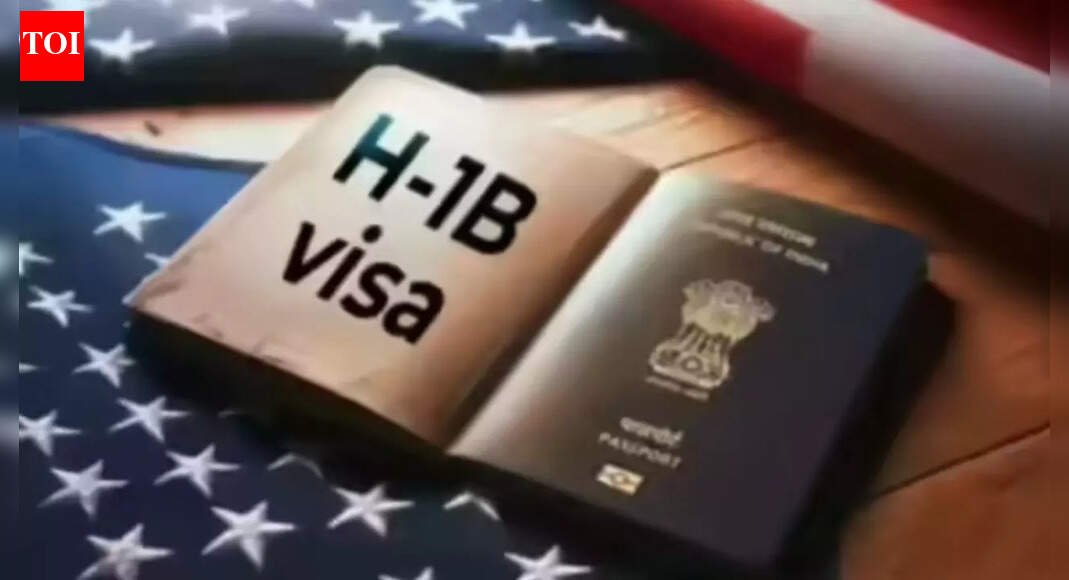
Republican firebrand Marjorie Taylor Greene, long known for her staunch “America first” rhetoric, has introduced a bill in the House of Representatives seeking to completely terminate the H-1B visa program, a key pathway for skilled foreign workers, a significant number of whom are from India.The legislation, designated HR 6937, was filed in the House on January 2, and proposes to amend the Immigration and Nationality Act (INA) to eliminate the H-1B visa category “and for other purposes.” According to immigration experts, while it is unlikely to secure the support needed to become law, it has ignited fresh debate on the H-1B program.

U.S. Rewrites H-1B Rules, Setback To Indian Workers; Check Who Is Eligible & Changes | WATCH

According to a report issued by the US Citizenship and Immigration Services (USCIS), of the total H-1B applications (including extensions) approved in fiscal 2024, 71% or about 2.8 lakh were for Indian beneficiaries. Chinese nationals, next in line, accounted for roughly 47,000 approvals, or just 12% of the total. While chances of this bill becoming law are slim, if passed it would impact Indians aspiring to work in the US.The bare details that are currently available on the official government website, provides for relevant amendments to the INA but there are no details available on transitional arrangements or exemptions for existing visa holders. The bill was immediately referred to several House committees, including ‘Judiciary, Energy and Commerce’, and ‘Ways and Means’, where it will face initial review.Greene, a Republican congresswoman from Georgia, has been a vocal critic of the H-1B system for years, consistently arguing that it undermines American workers by enabling companies, particularly in the tech sector, to recruit foreign labour at lower wage levels. In statements accompanying the bill’s introduction, she reiterated this stance, framing the legislation as a necessary step to protect US jobs and counter what she describes as “outsourcing and wage suppression.On social media, Greene highlighted her long-standing commitment to reshaping immigration policy, asserting that the H-1B program has too often been abused by corporations that put profits over people.Introduction of this bill comes at a tumultuous moment in her political career. Once one of the most visible allies of President Donald Trump, Greene has recently experienced a very public falling out with him over a series of disputes, including her support for bipartisan efforts to release files connected to the Jeffrey Epstein investigation. The discord culminated in Greene’s resignation from the House effective January 5.


Source link

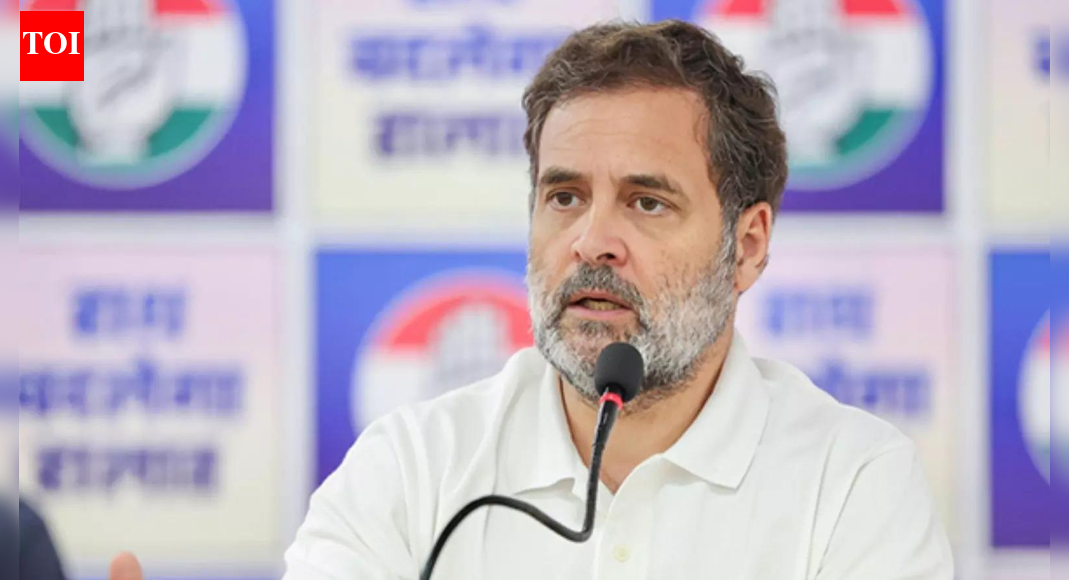
‘Fark samjho sirji’: Rahul Gandhi takes dig at PM Modi over Trump tariffs; invokes Indira Gandhi | India News


'Fark samjho sirji': Rahul Gandhi takes dig at PM Modi over Trump tariffs; invokes Indira Gandhi

NEW DELHI: Leader of opposition Rahul Gandhi on Wednesday launched a sharp attack on Prime Minister Narendra Modi, accusing him of “surrendering” under “pressure” and contrasted his leadership with that of former prime minister Indira Gandhi.Gandhi’s remarks came a day after US President Donald Trump, speaking at the House GOP Member Retreat, claimed that PM Modi had sought an audience with him. “Prime Minister Modi came to see me, ‘Sir, may I see you please’. Yes,” Trump said.

‘No Strategic Sense’: Ex-NSA John Bolton Slams Trump Over India Tariffs

Trump also referred to India facing steep tariffs, saying New Delhi was “paying a lot of tariffs now” and had “reduced” the purchase of Russian oil “substantially”.Gandhi shared a video message on X with the caption “Fark samjho sirji”.“I know these BJP–RSS people very well now. Put a little pressure on them, give them a little push and they run away in fear,” Gandhi said. “As soon as Trump signalled from there, they picked up the phone and said, ‘What are you doing Modi ji?’ Narendra surrendered and with ‘yes sir’, Narendra Modi ji followed Trump’s signal.”Drawing a comparison with the 1971 war, Gandhi said India had once stood firm despite US pressure. “You might remember a time when the phone call didn’t come — the Seventh Fleet had come. In the 1971 war, the Seventh Fleet came, weapons came, an aircraft carrier came. Indira Gandhi ji said, ‘I will do what I have to do.’ This is the difference,” he said, referring to the United States Seventh Fleet.Trump has imposed tariffs totalling 50% on Indian exports, including a 25% levy linked to India’s procurement of Russian oil.“I have a very good relationship with him. He’s not that happy with me because they’re paying a lot of tariffs now because they’re not doing the oil — but they are, they’ve now reduced it very substantially,” Trump said.The tariffs, imposed in August, have triggered multiple rounds of trade talks and at least four conversations between the two leaders, but have yet to yield a bilateral trade deal.Separately, Trump also said in his remarks that India had flagged delays in the delivery of Apache helicopters, claiming New Delhi has been waiting for the aircraft for five years.


Source link