Breaking News
Delhi demolition drive: Samajwadi Party MP Mohibbullah Nadvi present at site; 5 arrested | Delhi News

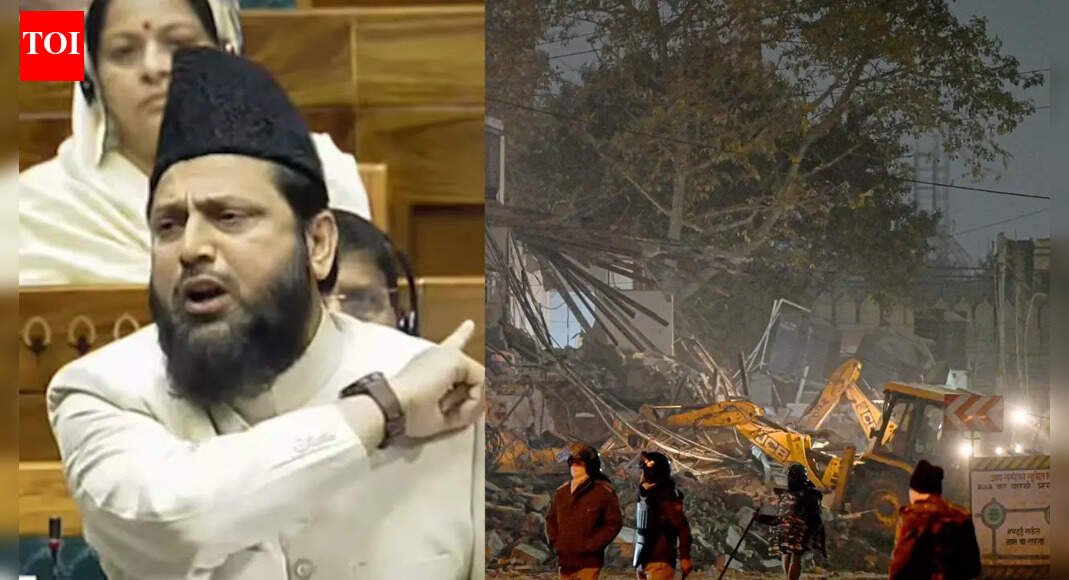
Delhi demolition drive: Samajwadi Party MP Mohibbullah Nadvi present at site; 5 arrested
Sources said Samajwadi Party MP Mohibbullah Nadvi was present in the area when the incident occurred.

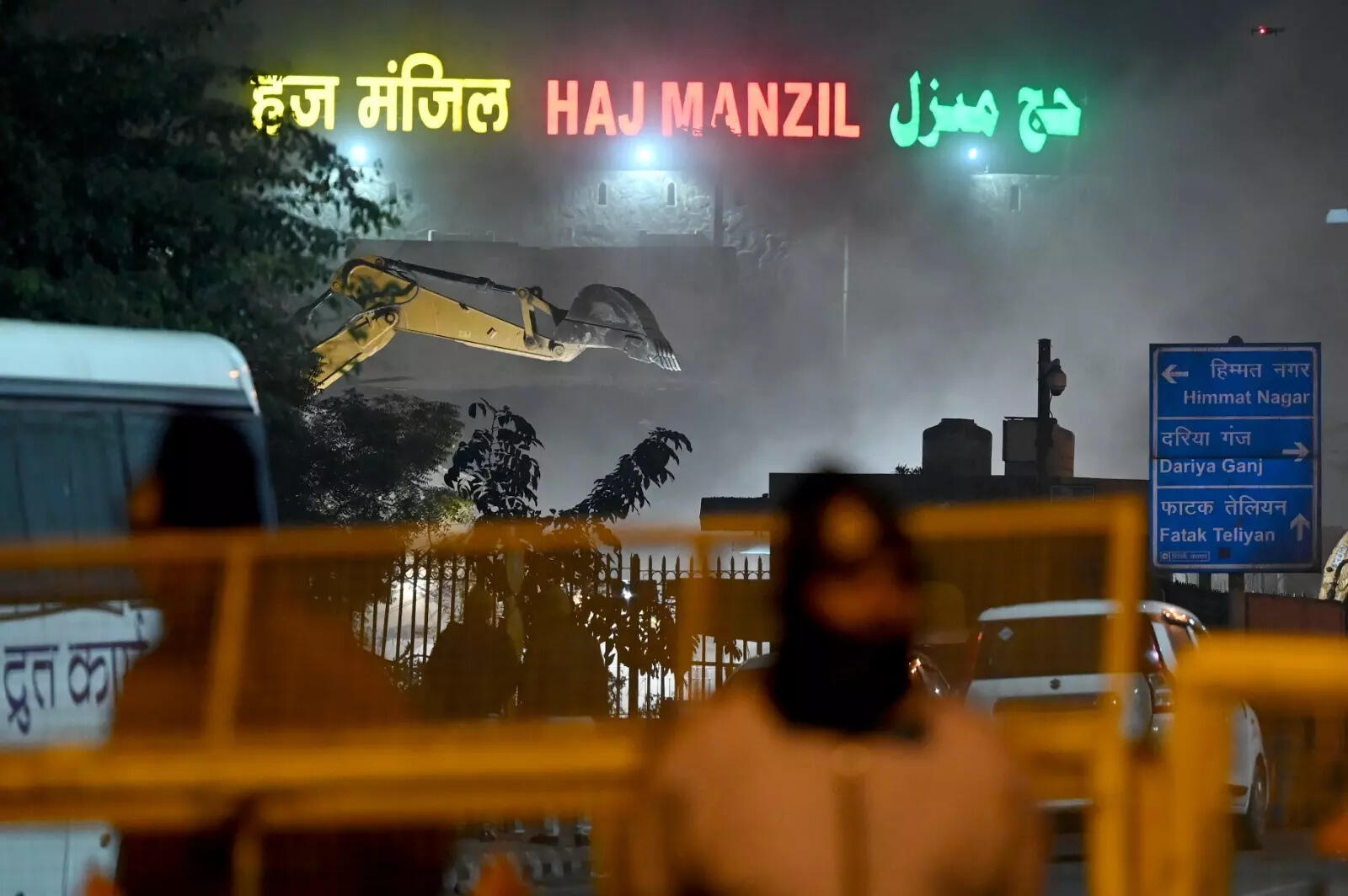
NEW DELHI: Delhi police have arrested five people in connection with a stone-pelting incident that broke out near the Faiz-e-Elahi Masjid in the Turkman Gate area of the capital, where a demolition drive was carried out by the Municipal Corporation of Delhi (MCD) on Wednesday. Sources said that Samajwadi Party MP Mohibbullah Nadvi was present in the area when the incident occurred. The violence erupted while the MCD was conducting a court-mandated demolition on land adjoining the mosque and a nearby graveyard. At least five police personnel were injured after some people allegedly pelted stones and glass bottles at the force. An FIR has been registered in the matter, and five people have been detained for questioning, police said. Delhi home minister Ashish Sood described the stone pelting as “unfortunate” and warned that violence would not be tolerated.
-

Demolition drive at Faiz-e-Ilahi Mosque near Turkman Gate in Delhi on Wednesday. (Image Credit: Tarun Rawat)

He said some commercial establishments had illegally come up around the mosque and action was being taken in compliance with court directions. “Obstructing or disrupting work being carried out within the framework of law is completely unacceptable,” Sood said. He added that certain “criminal and mischievous elements” resorted to demonstrations and violence, which could not be tolerated, and said individuals involved in the incident had been identified and legal action was being taken against them. So far, five people have been caught in the case, he said. “I want to clearly state that Faiz-e-Elahi mosque is completely safe. The action is limited only to those illegal commercial establishments that fall within the scope of the court’s orders. There is no arbitrariness or mala fide intent on the part of the government in this matter,” Sood stated. The minister also appealed to people not to fall prey to provocation, warning that strict action would be taken against anyone who took the law into their own hands. He urged the public to cooperate with the administration in identifying anti-social elements and maintaining communal harmony. MCD deputy commissioner Vivek Kumar said no damage had been caused to the mosque during the drive. He said the demolition was carried out in compliance with a high court order and that around 36,000 square feet of encroached area was cleared. The cleared area included a diagnostic centre, a marriage hall and two two-storey boundary walls. The demolition continued through the night, he added. Kumar said debris sufficient to fill around 200 to 250 vehicles was still lying at the site and would be removed as part of the ongoing clean-up operation.The operationThe operation began soon after midnight, with about 17 bulldozers, excavators and other heavy machinery deployed at the site. Authorities said the action was meticulously planned, with the area divided into several zones under the supervision of senior officials. Rapid Action Force personnel were positioned at strategic locations, while additional police units were deployed to maintain law and order. Traffic advisories were issued in advance, alerting commuters to possible congestion around Ramlila Maidan and nearby roads. Traffic diversions were also put in place to ensure smooth vehicular movement. Delhi Police said the situation in the Turkman Gate area was under control and reiterated that court orders were being implemented in a professional and sensitive manner, while ensuring the safety of both residents and personnel.(With inputs from agencies)

Source link

Explained: Why NMC shut down the MBBS course at Vaishno Devi medical college in J&K


Explained: Why NMC shut down the MBBS course at Vaishno Devi medical college in J&K

On January 6, 2026, months after granting conditional approval to start an MBBS course, the National Medical Commission (NMC) withdrew permission for the Shri Mata Vaishno Devi Institute of Medical Excellence (SMVDIME) in Jammu and Kashmir’s Reasi district, following a regulatory process punctuated by inspections, complaints and, eventually, political and public unrest.At its core, the NMC decision rests on regulatory non-compliance. The controversy that followed has layered that decision with questions of governance, merit, religion and student protection.

How the college got approval

SMVDIME applied to establish a new medical college with an intake of 50 MBBS seats for the 2025-26 academic year under public notices issued by the NMC on December 5 and December 19, 2024, according to PTI.After processing the application, the Medical Assessment and Rating Board (MARB), an autonomous board under the NMC, granted a Letter of Permission (LoP) on September 8, 2025. The permission allowed the institute to start the MBBS course, subject to strict conditions.These included maintaining minimum standards of infrastructure, faculty and clinical material, permitting surprise inspections, furnishing accurate information and rectifying deficiencies before renewal, the MARB order said. The regulator also reserved the right to withdraw or cancel permission in case of misrepresentation or non-compliance.

Complaints and surprise inspection

Following the issuance of the LoP, the NMC received multiple complaints alleging serious shortcomings at the college. These included inadequate infrastructure, insufficient clinical material, a shortage of qualified full-time teaching faculty and resident doctors, and low inpatient and outpatient numbers, PTI reports.Acting under Section 28(7) of the NMC Act, 2019, which empowers the regulator to conduct surprise inspections without prior notice, a team of assessors visited the institute on January 2, 2026.The inspection formed the basis of the adverse findings that followed.

What the inspection found

According to the MARB assessment report, the deficiencies were extensive and cut across core requirements.Faculty strength was significantly below prescribed norms, with a 39% shortfall in teaching faculty and a 65% deficiency in tutors, demonstrators and senior residents. Clinical services were also found to be far below standards, with outpatient department attendance of 182 at 1 pm against a required 400, and bed occupancy at 45% against the mandated 80%.Intensive care units had around 50% average occupancy, while the number of deliveries averaged about 25 per month, a figure the MARB termed “grossly deficient”. Several practical laboratories and the research laboratory were not available. Lecture theatres did not meet minimum standards, the library had 744 books against a requirement of 1,500 and only two journals against the mandated 15.The report also noted the absence of an antiretroviral therapy centre and facilities for managing multidrug-resistant tuberculosis. Only two operation theatres were functional against a requirement of five, with no minor operation theatre in the outpatient area and inadequate equipment for para-clinical subjects. Some departments lacked separate male and female wards.

The regulatory basis for withdrawal

Citing Chapter V, Regulation 29 of the Establishment of Medical Institutions, Assessment and Rating Regulations, 2023, which treats non-compliance as an offence liable to penalty, the MARB categorised the deficiencies as statutory non-compliance.After considering the assessment report, the commission concluded that the institute had failed to meet the minimum standard requirements specified in the Undergraduate Medical Education Regulations, 2023. With the approval of the NMC chairperson, the MARB decided to withdraw the LOP with immediate effect, PTI said.In addition, the regulator decided to invoke the performance bank guarantee furnished by the college, underscoring the financial consequences of regulatory failure.

What happens to the students

To ensure that students are not academically displaced, the MARB order directed that all students admitted during counselling for the 2025-26 academic year be accommodated in other medical institutions in Jammu and Kashmir as supernumerary seats.“This means no admitted student will lose an MBBS seat due to the withdrawal decision,” PTI reports. The implementation of the relocation will be handled by the Union Territory’s designated health and counselling authorities, who have been formally informed.

Protests and political response

Parallel to the regulatory action, the college became the focus of protests by the BJP-supported Shri Mata Vaishno Devi Sangharsh Samiti, a conglomeration of right-wing organisations. The agitation was triggered by the composition of the inaugural MBBS batch, which included 42 Muslim students, seven Hindu students and one Sikh, admitted through NEET.The Samiti demanded either the expulsion of non-Hindu candidates or the closure of the college, according to IANS.Jammu and Kashmir Chief Minister Omar Abdullah publicly defended the admissions, stating that they were strictly merit-based. “Those children worked hard to get their seats. No one did them any favour,” he said, according to PTI. He added that if the prevailing atmosphere made the institution unsafe for students, they should be adjusted elsewhere.“We do not want to send them to a place where so much politics is being done. Close that medical college. That medical college is not worth opening,” Abdullah said.He also reiterated that SMVDIME is not a minority institution and receives grants from the Jammu and Kashmir government.

Security and administrative response

Following protest calls, security around the Civil Secretariat was tightened, with hundreds of police personnel deployed to prevent any law and order situation. Officials reiterated that admissions had been conducted strictly on merit and in accordance with prescribed norms.Union Minister of State Dr Jitendra Singh said the Lieutenant Governor, who is also the chairman of the Shri Mata Vaishno Devi Shrine Board, was competent to address the issue and expressed hope that steps were being taken to resolve it, according to IANS.

Why the shutdown happened

Despite the political and public fallout, the formal reason for the shutdown remains regulatory. The NMC’s decision was driven by documented deficiencies in faculty, infrastructure and clinical exposure, identified through a surprise inspection and assessed under existing law.The student relocation order has prevented immediate academic loss. What remains unresolved is the future of the institution itself, and whether it can address the deficiencies and seek fresh approval.For now, the episode stands as a case study in how regulatory enforcement, institutional preparedness and local politics can converge, with students placed at the centre of the fallout.


Source link

134-year-old record shattered: Australia create history in Ashes, achieve rare Test feat | Cricket News


134-year-old record shattered: Australia create history in Ashes, achieve rare Test feat
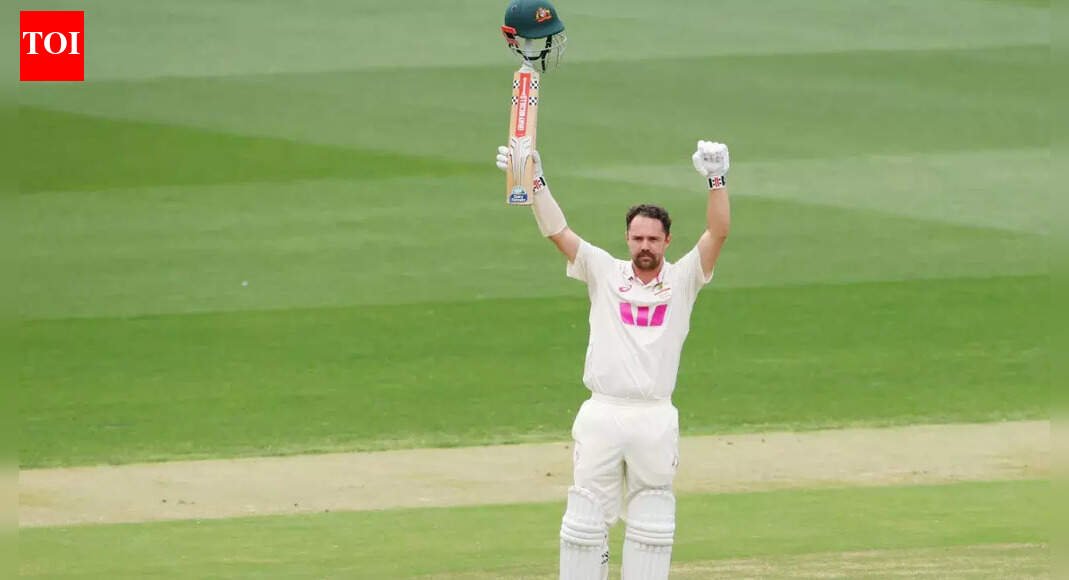
Travis Head scored a blistering 163 in the SCG Test (Getty Images)

NEW DELHI: Australia etched their name into a rare 134-year-old chapter of Test history on Day 3 of the fifth Ashes Test at the Sydney Cricket Ground, producing a batting effort unmatched in the rivalry since the 19th century. Australia, pushing for a 4-1 series victory after the shock defeat at the MCG in the Boxing Day Test, are firmly in control in the fifth and final Test.Smith registered the 37th Test century of his career and remained unbeaten on 129 at stumps, following Travis Head’s blistering 163 earlier in the innings.

Usman Khawaja’s retirement speech: ‘I want the journey for the next Usman Khawaja to be easier’

Australia closed the third day on 529 for 7, holding a commanding first-innings lead of 134 runs after England were dismissed for 384 despite Joe Root’s sublime 160.What made Australia’s innings truly historic was the sheer consistency across the batting order. The hosts stitched together seven partnerships of 50 or more runs, a feat achieved only once before in the 134-year history of Test cricket — by India at The Oval in 2007 under Rahul Dravid, in a match remembered for Anil Kumble’s lone Test century. Australia fell just short of equalling that benchmark, with the lone sub-50 stand being the 27-run partnership between Alex Carey and Smith.

Most 50+ partnerships an innings in Ashes

Team 50+ Partnerships in an Innings Venue Year
Australia 7 SCG 2025
England 6 Adelaide 1892
England 6 Brisbane 1928
Australia 6 Brisbane 2006
Australia 6 Brisbane 2025

In the long history of the Ashes, seven half-century partnerships in a single innings had never been recorded until now. The previous best in the contest dated back to 1892, when England managed six such stands at Adelaide — a record that stood untouched for 134 years. Only four other Ashes innings have featured six 50-plus partnerships, underlining the rarity of Australia’s effort at the SCG.


Source link

Trump ‘sir’ dials wrong number on India’s Apache purchase


Trump 'sir' dials wrong number on India's Apache purchase

The TOI correspondent from Washington: US President Donald Trump pulled another hyperbole out of his MAGA hat on Tuesday, claiming that India had ordered 68 Apache attack helicopters from the United States, the delivery of which was so slow that Prime Minister Narendra Modi deferentially sought a meeting with him to raise concern over the delays. A review of official contracts, delivery records, deployment details and conversations with military and diplomatic sources shows that the claim does not align with facts: India ordered only 28 Apache helicopters in total, and as of December 2025, all of them have been delivered.

Apache AH-64e And Prachand Give India A Two-Front Air Strike Edge From Deserts To High Himalayas

The discrepancy reinforces a pattern critics have frequently noted in Trump’s public remarks where numbers are often inflated and timelines simplified to emphasise US leverage or personal involvement, like for instance in his persistent claim that he forced India and Pakistan into a truce with threat of tariffs. In this case, while delivery delays were real and did frustrate New Delhi, the scale described by Trump was not; neither was his claim that PM Modi asked “Sir, may I see you, please?” to raise the issue.In Trump’s recalls, everyone – even foreign leaders (except Putin and Xi Jinping) – is always calling him “sir.”India’s acquisition of the Boeing AH-64E Apache Guardian helicopters took place in two distinct phases, not one massive order. The first deal was signed in September 2015, during the final months of the Obama administration, when India signed an agreement to buy 22 Apaches for the Indian Air Force (IAF) in a contract worth about $2.2 billion. These helicopters were delivered on schedule, with the final units arriving by 2020 during the first Trump administration. They were inducted into two frontline squadrons and quickly became a central part of India’s attack helicopter capability.The second deal was signed in February 2020 during Trump’s visit to India. This follow-on contract, valued between $600 million and $800 million, covered six Apaches for the Indian Army Aviation Corps. This is the order that experienced repeated delays and became a talking point in US and Indian political discussions, including PM Modi flagging it during his visit to the White House in February 2025, one of many topics that were on the agenda. Combined, both deals amount to 28 helicopters—less than half of the figure cited by Trump.While the Air Force’s Apaches arrived on time, delivered at the end of Trump’s first term, the Army’s six helicopters were significantly delayed. Deliveries were initially scheduled to begin in early 2024. Instead, the first batch reached India only in July 2025—about 15 months late. The final three helicopters arrived in December 2025, completing the order nearly two years behind schedule.Several factors contributed to the delays. Boeing’s Apache production line in Mesa, Arizona, was affected by post-pandemic supply chain disruptions, including shortages of engines, gearboxes, and specialised electronics. In addition, India reportedly had a relatively low priority ranking within the US defence priorities and allocations system (DPAS) in 2024, meaning other customers—including the US. Army—were ahead in the queue for certain components.There were also technical and logistical complications. Boeing briefly paused some Apache deliveries worldwide due to electrical and power-generation concerns that required additional safety testing. In a final twist, the last batch bound for India in November 2025 had to turn back mid-flight after Turkey denied overflight clearance to the Antonov-124 transport aircraft carrying the helicopters, adding several more weeks of delay.Also read: ‘If they don’t help on Russian oil issue…’; Donald Trump’s new tariff warning to India; praises PM ModiThese genuine frustrations likely form the basis of Trump’s comments, but the numerical exaggeration undermines their credibility. Is it possible that Trump may have conflated two separate Indian helicopter purchases from Boeing: the AH-64E Apache attack helicopter and the CH-47F Chinook heavy-lift helicopter? Both deals were signed around the same time, both involved Boeing (for which Trump claimed to be the all-time best salesman), but they still add up to only 43, since India ordered 15 Chinooks, all of which have been delivered between 2019 and 2020. There is no record in India’s ministry of defence or US foreign, military Sales (FMS) notifications of any additional Apache orders beyond the 28 units. While the Army originally projected a requirement for 39 Apaches, no new contracts have been signed.In fact, despite the Apache’s formidable firepower, India’s experience with dodgy US supply chains issues and increasingly mercurial strategic shifts vis-a-vis China and Pakistan is such that it is now peeling away from American, and for that matter, any foreign dependency. Instead, New Delhi is increasingly prioritising indigenous solutions under its “Make in India” policy. In this case, it is leaning on the HAL Prachand Light Combat Helicopter. A lighter chopper optimized for extreme altitudes, Prachand can operate where the heavier Apache struggles, including at heights above 20,000 feet like in Siachen. India plans to induct 156 Prachand helicopters across the Army and Air Force, gradually reducing reliance on foreign attack helicopters.The emerging strategy is clear: Apaches will remain India’s heavy strike platforms in plains and desert sectors, but the future of India’s rotary-wing combat power will be increasingly domestic. Trump’s claim of 68 helicopters may have overstated the scale, but it has inadvertently highlighted why India is determined to avoid dealing with a maverick.


Source link

Top stocks to buy today: Stock recommendations for January 7, 2026 – check list


Top stocks to buy today: Stock recommendations for January 7, 2026 - check list
Top stocks to buy (AI image)

Stock market recommendations: According to Mehul Kothari, DVP – Technical Research, Anand Rathi Shares and Stock Brokers, the top stocks to buy today (January 7, 2026) are Varun Beverages Ltd, Havells, and IREDA. Let’s take a look:Varun Beverages Ltd – Trend Resumption After BreakoutBuy near: ₹490–₹485 | Stop Loss: ₹460 | Target: ₹550 | Time Frame: 30–60 DaysVBL has witnessed a decisive trendline and triangle breakout, indicating resumption of the primary uptrend. Momentum remains supportive, with RSI breaking out and hovering near 55, reflecting improving strength without overbought conditions. MACD bullish crossover further reinforces the positive bias. Additionally, the stock has closed above its quarterly VWAP, validating the breakout from a medium-term institutional perspective.Havells – Breakout with Improving Momentum StructureBuy near: ₹1455–₹1430 | Stop Loss: ₹1375 | Target: ₹1560 | Time Frame: 30–60 DaysHavells has shown a clear price trendline breakout along with an RSI range breakout, signalling strengthening technical structure. Momentum indicators are supportive, with RSI trending higher and MACD confirming a bullish crossover. The stock has also closed above its 10- and 20-DEMA and reclaimed the monthly VWAP, enhancing the credibility of the emerging uptrend and reflecting improved institutional participation.Indian Renewable Energy Development Agency – Reversal from Double Bottom FormationBuy near: ₹145–₹142 | Stop Loss: ₹135 | Target: ₹162 | Time Frame: 30–60 DaysIREDA is displaying encouraging signs of a trend reversal after forming a well-defined double bottom pattern. The setup is supported by bullish divergence, indicating improving momentum. The stock has closed above its 10-DEMA and prior swing high, strengthening the bullish case. Additionally, RSI trendline breakout and MACD bullish crossover further improve the probability of continuation toward higher levels.(Disclaimer: Recommendations and views on the stock market, other asset classes or personal finance management tips given by experts are their own. These opinions do not represent the views of The Times of India)


Source link

‘Ikkis’ box office collection day 6: Agastya Nanda and Dharmendra starrer walks the same path as ‘Tu Meri Main Tera Main Tera Tu Meri’, earns Rs 1.5 crore on its first Tuesday | Hindi Movie News


'Ikkis' box office collection day 6: Agastya Nanda and Dharmendra starrer walks the same path as 'Tu Meri Main Tera Main Tera Tu Meri', earns Rs 1.5 crore on its first Tuesday
Agastya Nanda’s inaugural film ‘Ikkis’ has hit a rough patch at the box office, reportedly falling short of Rs 25 crore even after a week of release. The war drama, featuring the legendary Dharmendra in his swan song role, only managed to collect Rs THIS amount on day six. Read on.

Agastya Nanda‘s ‘Ikkis’ failed to impress the audience, and its box office collections are proof of the same. While both the makers and the audience had high hopes for the film, it ultimately did not meet their expectations. Even after six days since the release, the movie has not crossed the Rs 25 crore mark at the box office. Let’s take a look at how much it has earned on its sixth day.

‘Ikkis’ box office collection Day 6 (first Tuesday)

The war drama starring Amitabh Bachchan’s grandson, Agastya Nanda, opened to mixed reviews from the audience and the critics as well. According to the Sacnilk report, the film has earned Rs 1.5 crore at the box office on Day 6 since the release. With this, the total collection of the film stands at Rs 23 crore.

Day-wise collection

Day 1 [1st Thursday]: Rs 7 croreDay 2 [1st Friday]: Rs 3.5 croreDay 3 [1st Saturday]: Rs 4.65 croreDay 4 [1st Sunday]: Rs 5 croreDay 5 [1st Monday]: Rs 1.35 croreDay 6 [1st Tuesday]: Rs 1.50 croreTotal: Rs 23.00 crore

‘Ikkis’ vs ‘Tu Meri Main Tera Main Tera Tu Meri

The Kartik Aaryan and Ananya Panday starrer has witnessed the same fate as ‘Ikkis’ at the box office. The rom-com has been earning in lakhs in its second week. On day 13 (second Tuesday), the film earned Rs 25 lakh at the box office. The total collection of the film stands at Rs 32.5 crore.

‘Ikkis’ vs ‘Dhurandhar’

The Aditya Dhar directorial, ‘Dhurandhar’, has finally shown signs of slowing down towards the end of its fifth week. On day 33 since the release, the Ranveer Singh-led spy thriller raked in Rs 4.75 crore at the box office. The total score of the movie in India is Rs 781.75 crore.

More about ‘Ikkis’

Directed by Sriram Raghavan, ‘Ikkis’ is the last screen appearance of the late legendary actor Dharmendra. Apart from Agastya Nanda and Dharmendra, the film also stars Jaideep Ahlawat, Simar Bhatia, Sikander Kher, and Vivaan Shah. The movie was released in theaters on January 1, 2026.


Source link

Rich can’t bypass tiers of court & come directly to us: Supreme Court | India News


Rich can’t bypass tiers of court & come directly to us: Supreme Court

NEW DELHI: Supreme Court under the leadership of CJI Surya Kant maintained its stand for equitable distribution of judicial time for litigants irrespective of their status, and said on Tuesday that the rich and influential could not bypass tiers of judiciary to move the SC directly.When an accused sought hearing of his petition challenging validity of a provision of PMLA, the bench said, “You have started a unique kind of litigation. Because you are rich and influential, you can move SC directly at every stage of trial.”“Rich and influential will not be allowed to bypass the tiers of justice delivery system and seek direct audience in SC. They must face trial like ordinary citizens,” the bench said, refusing to entertain the plea.CJI Kant said there are many pleas pending which have challenged validity of PMLA, and time permitting, these would be heard together by the end of this month.When advocate Sidharth Luthra said the petition challenging a provision of PMLA, Sec 44(1) (c), could be tagged with pending pleas, the bench said Luthra can join proceedings but for that a separate plea need not be entertained.


Source link

To boost civilian ties in border areas, Army sets up solar plant in Sikkim, water facility in Arunachal | India News


To boost civilian ties in border areas, Army sets up solar plant in Sikkim, water facility in Arunachal

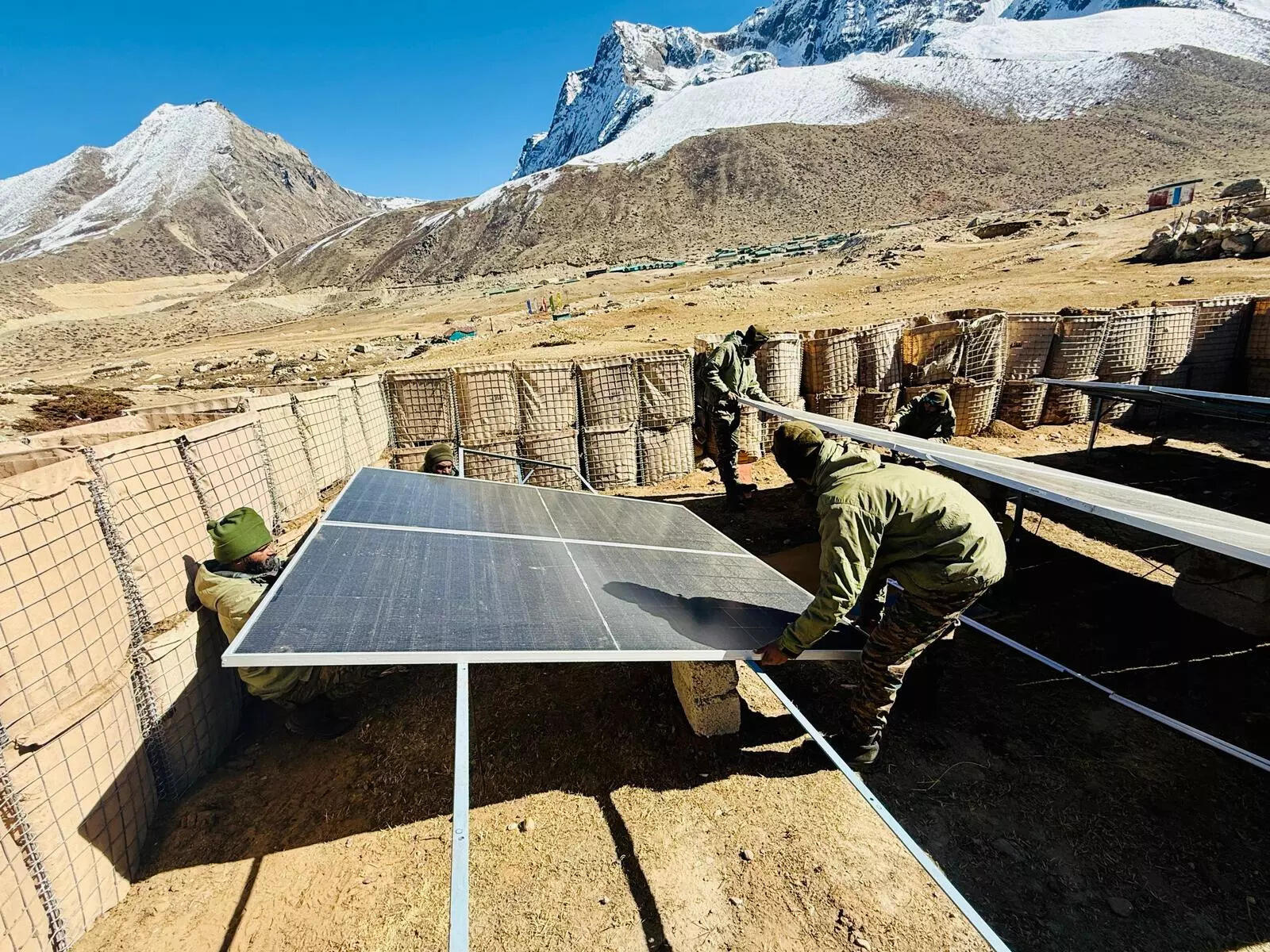
NEW DELHI: To enhance civil-military cooperation and improve the quality of life in remote border areas, the Indian Army has constructed a 10-KW solar power plant in north Sikkim and a water storage facility in Arunachal Pradesh.“Trishakti Corps of the Indian Army has established a 10-KW solar power plant at Muguthang village, North Sikkim”, located at an altitude of around 15,000 feet near the China border, an official statement said. “Reliable electricity has enabled year-round habitation and improved safety in this remote border village,” it said.

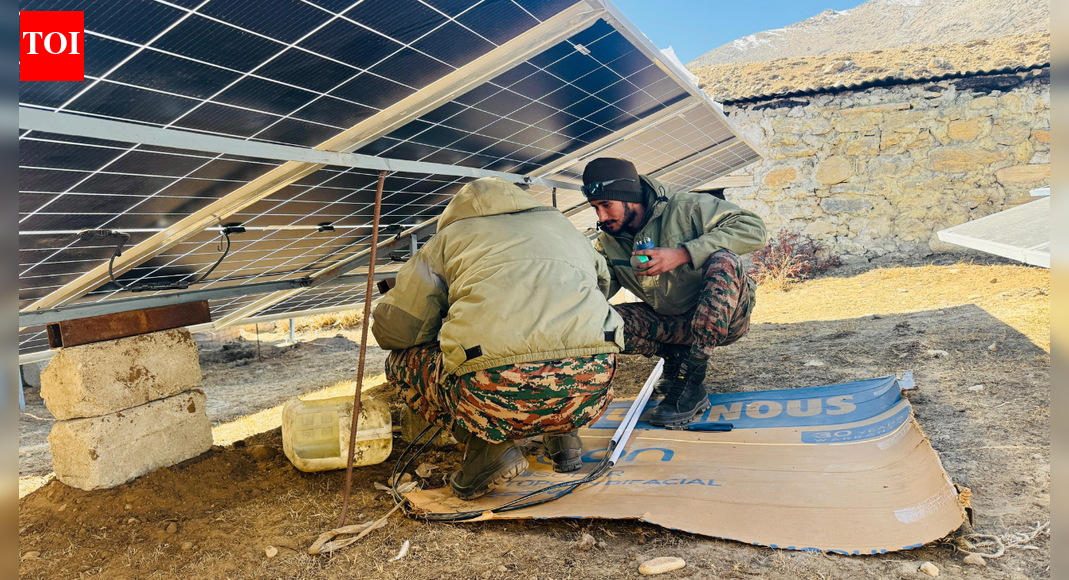
Army jawans installing a 10KW power plant at Muguthang village in North Sikkim. Credit: Trishakticorps_IA

Muguthang is a sparsely populated border village with 32 residents from 10 families. The plant has improved night-time safety, enhancing connectivity and eliminating the need for seasonal migration during the harsh winter months. Earlier, due to the absence of a dependable power supply, villagers relied on small personal solar panels and were compelled to migrate to other areas for nearly 5-6 months every year, leaving behind their homes and livestock.

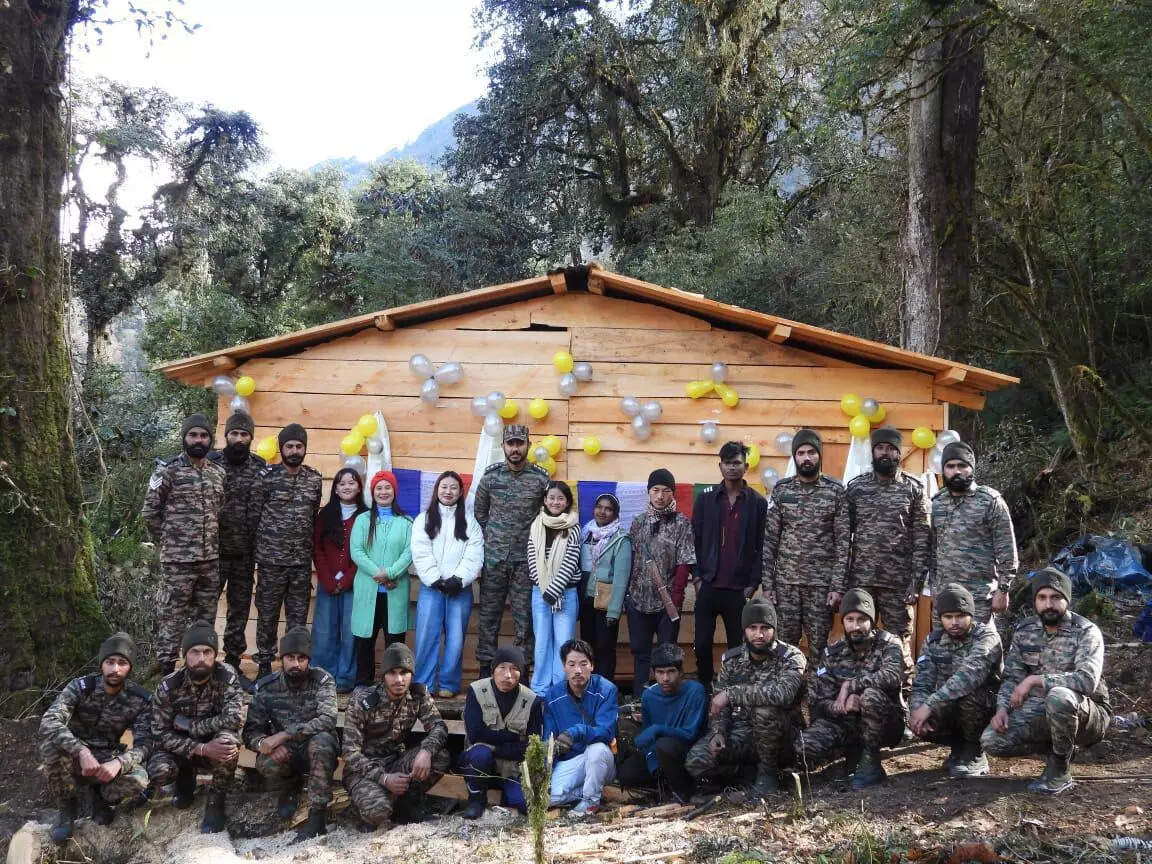
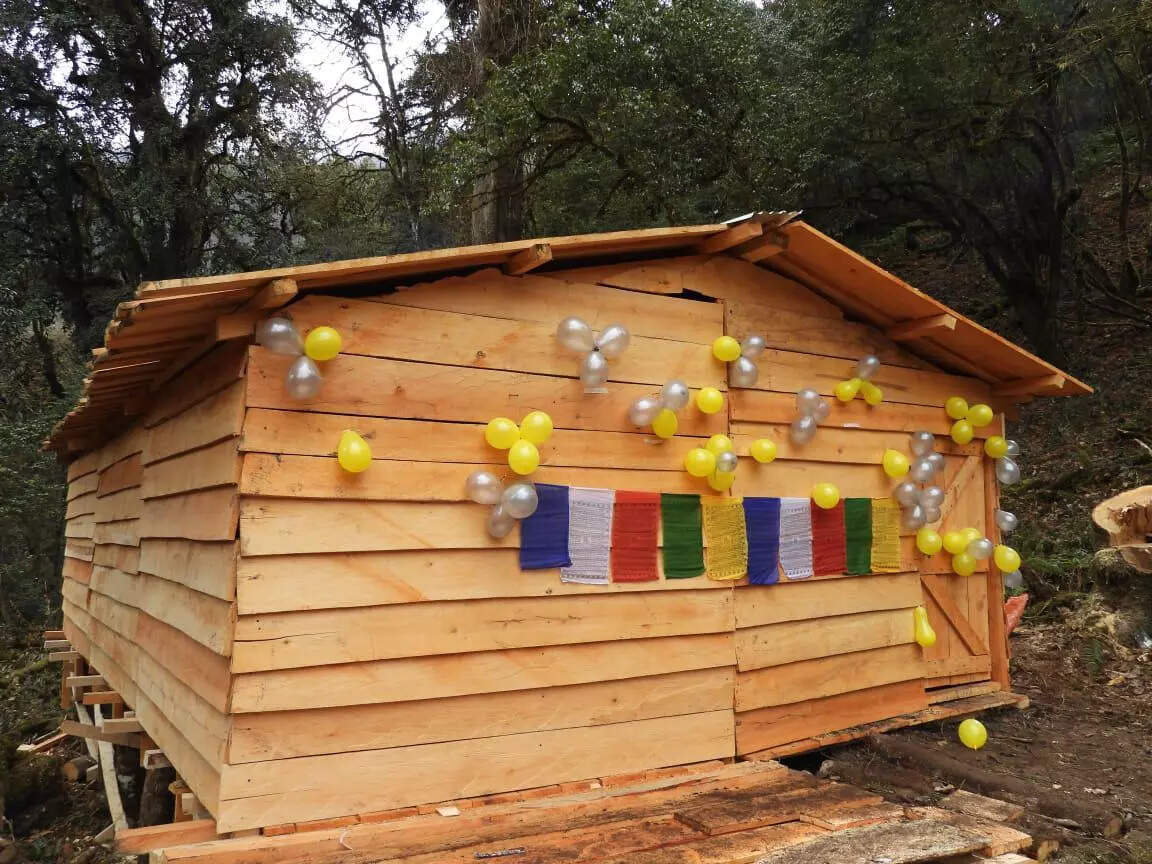
A log hut with a water storage facility built at Ojugo village in Taksing, Upper Subansiri district, Arunachal. Credit: SpearCorps.IndianArmy

In Arunachal Pradesh, Army troops from Spear Corps have constructed a log hut with water storage facility at Ojugo village in Taksing, Upper Subansiri district. The newly constructed facility will provide essential shelter and assured water availability. “The initiative under Operation Sadbhavana ensures basic amenities in remote areas, benefiting local villagers and graziers,” Spear Corps posted on X.Also, the Army on Monday flagged off an eco-tourism exposure tour from Along Military Station, Arunachal, marking a significant step towards youth empowerment and sustainable development in the border regions.

A log hut with a water storage facility built at Ojugo village in Taksing, Upper Subansiri district, Arunachal. Credit: SpearCorps.IndianArmy

Prior to the tour, a comprehensive three-day homestay and eco-tourism training capsule was conducted at Aalo, during which 30 students and two instructors were familiarised with the fundamentals of community-based tourism, responsible travel practices, and the economic potential of eco-tourism in Arunachal.In Manipur, Red Shield Division under SpearCorps inaugurated a textile unit and Yarn Bank at Nungkot, empowering Kom women weavers through skill training and livelihood support. A visit to IDP Camp Lamlai was also organised and raw material for handloom and tailoring units were distributed.


Source link

PIOs in UK see wealth soar, whilst Pakistanis see ‘notable decline’: LSE report


PIOs in UK see wealth soar, whilst Pakistanis see ‘notable decline’: LSE report

LONDON: Individuals from white British and Indian ethnic groups have seen substantial increases in median wealth in Britain since 2012, whilst the wealth of those of Pakistani ethnicity has seen a marked decline, a new report from the London School of Economics (LSE) shows.Individuals from Asian Other and white Other ethnic groups also experienced substantial increases in median wealth from 2012/2014 up to 2021/2023, In contrast, wealth among individuals from the Pakistani ethnic group dropped sharply and black African, black Caribbean, and Bangladeshi ethnic groups remained with “almost no accumulated household wealth throughout”, it said.The largest gains were experienced by the Indian and Asian Other groups, with median wealth rising by £93,000 for the Indian ethnic group.UK-born adults from the Indian group “have a clear wealth advantage” over both non-UK-born Indians and the white British group, it said.The report, titled “The Ethnic Wealth Divide in the UK: Mapping Disparities Across Time, Age and Immigrant Generations”, by Eleni Karagiannaki, research fellow at LSE, used data from the UK Household Longitudinal Survey to show how ethnic wealth gaps have widened in 24-month periods from 2012/14 to 2021/2023.Adults from Pakistani, Bangladeshi, black Caribbean, and black African ethnic groups reported significantly lower savings than those from the white British, Other Asian, and Indian ethnic groups, with PIOs recording the highest levels. More than 50% of adults among the Bangladeshi, Pakistani, and black African groups had no savings.Whilst white British, white other, and Indian individuals are more likely to move up from the bottom quartile, Pakistani and black African individuals are more vulnerable to downward mobility from the top, it said.In 2012/14, adults in the white British, Indian, and Asian Other groups already had higher rates of home and investment ownership compared to other groups. By 2021/23, these gaps had widened further, as these groups increased ownership while Bangladeshi, black Caribbean, and Pakistani groups saw sharp declines, particularly in home ownership.“Indian and white British groups typically experience steadier income growth across the life-course, enabling earlier asset accumulation. Pakistani and Bangladeshi groups exhibit the widest income gaps relative to the white British group than any ethnic minority group,” it said.


Source link