Breaking News
Watch: Khalistanis in UK disrupt protest by Hindus over killings in Bangladesh


Watch: Khalistanis in UK disrupt protest by Hindus over killings in Bangladesh

The protest led by the Hindu community against the killing of a Hindu man in a communally charged environment in Bangladesh was disrupted by the Khalistani miscreants outside the Bangladesh High Commission in London.Indian and Bangladeshi Hindus were outside the Bangladesh High Commission in London on Saturday when a handful of Khalistanis showed up outside in support of Bangladesh.Shattered by horrific lynchings of Dipu Chandra Das and Amrit Mondal, trapped and persecuted Hindus in Bangladesh are sending out an SOS to India to open the borders to escape Islamist mob fury. The fears were accentuated on Thursday by the groundswell of support to Bangladesh Nationalist Party leader Tarique Rahman, who’s considered a hardliner.VIDEO TOI reached out to a cross-section of Hindus residing in Rangpur, Chittagong, Dhaka and Mymensingh and spoke to them on Whatsapp call with the help of exiled Bangladesh Sanatan Jagran Macha leader, Nihar Haldar, accused of sedition along with former ISKCON monk, Chinmoy Krishna Das.The ripples could be felt in refugee pockets of Gadchiroli, Chandrapur in Maharashtra and Pakhanjur in Chhattisgarh, where Hindu immigrants from erstwhile East Pakistan were settled. Dr Subodh Biswas, president of Nikhil Bangla Samanbay Samiti, an organisation of former East Pakistan refugees, says, “Why don’t Hindu organisations get proactive? India is the only country where Hindus of Bangladesh can bank upon during a crisis. More Hindus will be killed, but borders remain shut. We plan to stage protests at the border.”“There are 2.5 crore Hindus in Bangladesh. It’s not a small number. Hindu organisations in India are doing nothing more than lip service. We are staring at a holocaust,” said a Sanatan Jagran Macha activist requesting anonymity. It’s not that there will be Hindu exodus after borders open, but we will be at least insulated from violence, said a resident of Mymensingh. “We are living the worst nightmare. Opening the Indian borders will at least create an escape route for those facing persecution,” said a Hindu from Dhaka. Many lead a hand-to-mouth existence in Bangladesh, including those like Dipu Chandra Das’ family.The acrimonious exchanges between India and Bangladesh in the past few weeks came to a head on Friday with India slamming Dhaka for “unremitting hostility” against minorities – including Hindus, Christians and Buddhists – in the country at the hands of extremists.Calling it a matter of grave concern, ministry of external affairs (MEA) condemned the recent killing of a Hindu youth in Mymensingh and stressed that the perpetrators of the crime must be brought to justice.Asked about the return of BNP acting chairman Tarique Rahman to Dhaka after 17 years, the Indian govt only said it should be seen in the context of India’s call for efforts to ensure free, fair and inclusive parliamentary polls in Bangladesh.


Source link

Skywatching in 2026: Complete guide to eclipses, supermoons, meteor showers, planetary alignments and NASA’s Artemis II lunar mission |


Skywatching in 2026: Complete guide to eclipses, supermoons, meteor showers, planetary alignments and NASA’s Artemis II lunar mission

Whether it be with naked-eye viewing, through a pair of binoculars, or with a beginner’s telescope, a certain amount of planning can make way for viewing enthusiasts to fully enjoy the spectacular events that take place in the sky in 2026. Be it eclipses, aligned planets, or an eight-year supermoon, there are plenty of spectacular sky events in 2026 for enthusiasts to enjoy. Sky viewing in 2026 has plenty on offer for anyone, be it a beginner sky watcher or an enthusiast with a deep love for astronomy. Events such as a lunar eclipse, a solar eclipse, a list of sky showers, aligned planets, and an Artemis Mission to orbit around the Moon by NASA make it a perfect year to experience the beauty of sky viewing with friends and family.

List of celestial events in 2026

Date
Event type
Description
Visibility / Notes
3 Jan 2026 Full Moon / Supermoon Wolf Moon appears larger and brighter due to its proximity to Earth Global
10 Jan 2026 Planetary Opposition Jupiter is at its brightest point for 13 months Visible worldwide
17 Feb 2026 Annular Solar Eclipse “Ring of fire” effect as the Moon covers the Sun Total in Antarctica; partial in southern Africa and S. America
3 Mar 2026 Total Lunar Eclipse Worm moon turns deep red during 58-minute totality Western North America, East Asia, Australia, New Zealand
20 Mar 2026 Auroras / Equinox Potential vivid green & red northern lights Mid-latitudes
31 May 2026 Blue Moon The second full moon of the month Global
12–13 Aug 2026 Total Solar Eclipse + Perseid Meteor Shower Total solar eclipse in Greenland, Iceland, Spain + meteor shower peak Best in dark-sky locations
28 Aug 2026 Deep Partial Lunar Eclipse Over 96% of Moon immersed in Earth’s shadow, rust-coloured Americas, Europe, Africa
14–16 Nov 2026 Planetary Conjunction Mars and Jupiter within 1° of each other Global; best with binoculars
24 Dec 2026 Supermoon Closest full moon since 2019, unusually large and luminous Global
5 Feb 2026 NASA Artemis II Mission 10-day crewed mission around Moon Space / media coverage

Key celestial events in 2026

  • January highlights: Supermoon and Jupiter opposition

The year opens with a supermoon at the wolf moon on 3 January. This moon will appear slightly larger and brighter in the sky due to its close approach to Earth. The opposition of Jupiter will be observed on 10 January. It will appear at its brightest in 13 months.

  • February and March: Eclipses and Auroras

17 February: There is an annular solar eclipse, which presents the “ring of fire” that can be seen in totality only in Antarctica, with partial eclipses in southern Africa and South America.3 March: A total lunar eclipse makes the worm moon appear deep red for 58 minutes in western North America, East Asia, Australia, and New Zealand. It is the last total lunar eclipse before 2028.20 March: During the spring equinox, observers at mid-latitudes may see vivid displays of the aurora, due to the interaction of charged solar particles with the Earth’s magnetic field.On 31st May, the second full moon in the month, a blue moon rises. While the colour has not changed, the moon rise is a treat to watch.

  • August: Total Solar Eclipse and Perseid Meteor Shower

The year’s biggest event is on 12-13 August. A total solar eclipse moves across Greenland, Iceland, and Spain. Later that night comes the Perseid meteor shower. Dark-sky enthusiasts find this an ideal time for ‘star streaks.’

  • Late August and November: Lunar and planetary events

28 August: A deep partial eclipse plunges more than 96% of the Moon into the Earth’s shadow, making it appear rust red to observers in the Americas, Europe, and Africa.14-16 November: Mars and Jupiter come close to each other within a degree so that both can be viewed in the same field of a pair of binoculars.The year will conclude with a supermoon on 24 December, which will be the closest full moon occurring since 2019.Apart from natural occurrences, NASA’s Artemis II will see four astronauts go on a lunar orbital mission on February 5, comprising a 10-day journey around the lunar body on the Orion spacecraft, with a distance of over 5,800 miles past the lunar surface. This will be the farthest trip for human beings from Earth.


Source link

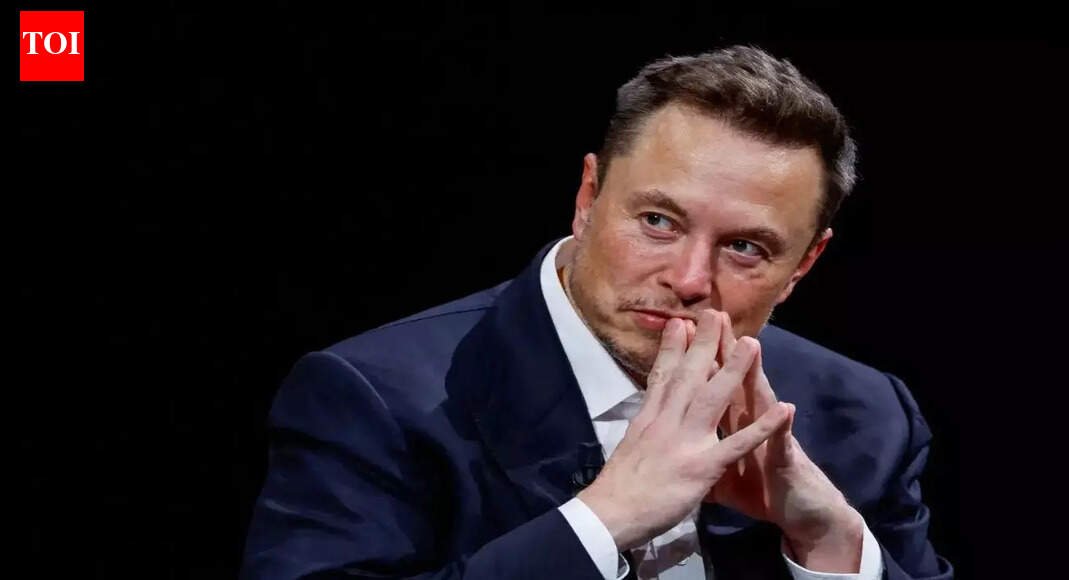
‘This is not good’, says Elon Musk as silver prices soar ahead of China’s new export rules


‘This is not good’, says Elon Musk as silver prices soar ahead of China’s new export rules

Tesla CEO Elon Musk has expressed his concerns over rising silver prices as China’s new export rules deadlines nears. In a post on microblogging platform X (formerly Twitter), Musk wrote “This is not good. Silver is needed in many industrial processes.” He was responding to a post that depicted ‘exploding’ silver prices due to “severe global supply shortage.” Prices of the white metal have increased sharply in recent times to a record high of $78.65 on Friday, December 26. A post by X user named ‘Bull Theory’ tried explaining the soaring prices. The post said:“Silver prices are exploding due to a severe global supply shortage. The physical market can no longer meet soaring demand. Here is what is actually going on 1. China is changing the rules.Starting January 1, 2026, China will restrict silver exports.To export silver, companies will now need government licenses.Only large, state approved firms qualify:– At least 80 tonnes of annual production– Around $30 million in credit linesThis effectively blocks small and mid size exporters. China controls roughly 60–70% of global silver supply. When China tightens exports, global supply drops immediately. This is the same tactics China used with rare earth metals. 2. The silver market was already short supply.Silver has been in a structural deficit for 5 straight years. That means demand is higher than supply every single year.For 2025:– Global demand: 1.24 billion ounces– Global supply: 1.01 billion ouncesThat is a gap of 100–250 million ounces. And this gap is expected to get worse after China’s export limits.Mining supply is not growing:Silver mining is mostly a by product of copper and zinc mining.New mines take 10+ years to build, Ore quality is falling, Recycling is not enough to fill the gap.There is no quick fix here.3. Physical silver inventories are collapsing.This is where it gets serious.– COMEX inventories are down 70% since 2020– London vaults are down 40%– Shanghai inventories are at 10-year lowsAt current demand, some regions hold only 30-45 days of usable silver.This is why physical premiums are exploding.In Shanghai:– Physical silver trades at $80+/oz– COMEX prices are much lowerThis price gap means buyers are paying extra just to get real silver.4. Paper silver is completely disconnected from reality.There is an extreme imbalance between paper silver and real silver.The paper to physical ratio is around 356:1.That means:– For every 1 ounce of real silver– There are hundreds of paper claimsIf even a small percentage of buyers ask for real delivery, the system breaks.Markets understand this. That is why price moves are becoming vertical.5. Industrial demand keeps rising.Silver is not just a safe haven metal.It is critical for:– Solar panels– Electric vehicles– Electronics– Medical devicesIndustrial use now makes up 50-60% of total silver demand.There is no substitute for silver in many of these uses.Banks and institutions are reacting to:– Supply limits– Physical shortages– Paper market riskSilver is not rallying because of fear.It is rallying because a real supply squeeze is playing out in real time.”

Elon Musk Can ‘CRY’, But He Will Still Pay $140,000,000 X Fine: EU Adamant After Hitler Attack

China’s new Silver export rules from January 1, 2026

Starting January 1, 2026, China will require companies exporting Silver to obtain licenses from its Ministry of Commerce (Mofcom). The move, according to experts, could further disrupt the global supply chain.


Source link

700 kmph in 2 seconds: China sets world record with high-speed maglev train – watch video


700 kmph in 2 seconds: China sets world record with high-speed maglev train - watch video

Maglev train tested in China (Image taken from X)

Chinese scientists have achieved a milestone in magnetic levitation technology. Researchers at China’s National University of Defence Technology successfully propelled a one-tonne vehicle to 700 kilometers per hour in just two seconds on a 400-meter test track, setting a new world record for superconducting electric maglev systems.The test, shown in footage making rounds on social media and Chinese news outlets, displayed a chassis-like vehicle zooming across the track leaving a misty trail. This demonstrates significant progress in both extreme acceleration capabilities and high-power control systems.“It resolves core technical challenges including ultra-high-speed electromagnetic propulsion, electric suspension guidance, transient high-power energy storage inversion, and high-field superconducting magnets,” CCTV stated, as reported by South China Morning Post (SCMP).

China Sets New Record in Superconducting Maglev Propulsion

. This breakthrough could revolutionise various transportation methods, from hyperloop systems to aerospace launches.The same team had previously reached 648 km/h on the same track in January. Their decade-long research puts China at the forefront of global maglev technology, marking significant progress since developing their first manned maglev train thirty years ago.Professor Li Jie, who led Beijing’s first commercial maglev subway line, believes this success will speed up China’s ultra-high-speed maglev transport development.In 2020, CRRC Qingdao Sifang had tested a 600km/h prototype. In the meantime, Southwest Jiaotong University developed a high-temperature superconducting maglev system in Chengdu targeting speeds over 600km/h.The latest development includes a collaboration between the Third Research Academy of China Aerospace Science and Industry Corporation and North University of China. The built a 2-kilometer experimental line in Datong for testing maglev trains in low-vacuum pipelines, with an aim for eventual speeds of 1,000 km/h.This technology has the potential to transform city-to-city travel through vacuum-sealed tubes and potentially revolutionise rocket launches by reducing fuel consumption during takeoff. It also offers new possibilities for testing high-speed flight equipment through ground-based simulations.


Source link

‘Rahul Gandhi hates India’: BJP cites Shashi Tharoor’s remarks on India’s foreign policy; what opposition MP said | India News


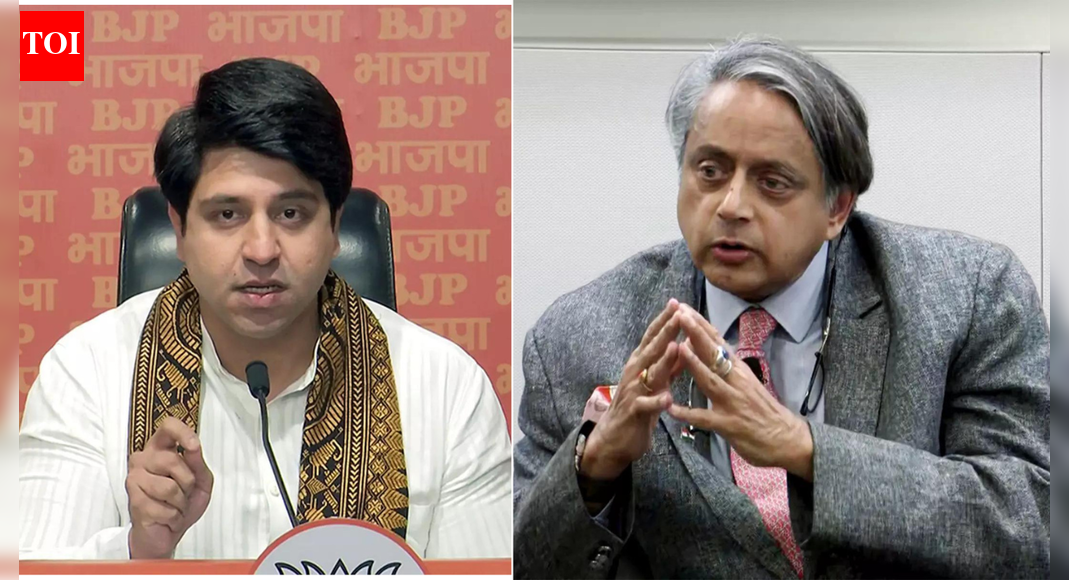
'Rahul Gandhi hates India': BJP cites Shashi Tharoor's remarks on India's foreign policy; what opposition MP said
Shehzad Poonawalla and Shashi Tharoor (Images/Agencies)

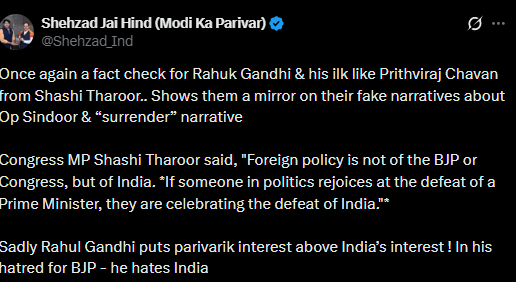
NEW DELHI: BJP spokesperson Shehzad Poonawalla on Saturday accused Congress leader Rahul Gandhi of putting “family interests above national interest” while defending Operation Sindoor. He cited Congress MP Shashi Tharoor’s remarks to counter Opposition criticism of the military operation.In a post on X, the BJP leader wrote: “Once again a fact check for Rahul Gandhi & his ilk like Prithviraj Chavan from Shashi Tharoor. Shows them a mirror on their fake narratives about Op Sindoor & ‘surrender’ narrative.”

​Shehzad Poonawalla​'s X post

‘Every Indian Is Assaulted When…’: Shashi Tharoor Slams Attacks On Christmas Celebrations In India

Referring to comments made earlier by Tharoor, Poonawalla said even leaders from the Opposition had acknowledged that national security issues should rise above partisan politics.“Foreign policy is not of the BJP or Congress, but of India. If someone in politics rejoices at the defeat of a Prime Minister, they are celebrating the defeat of India.”Using the remark to attack the Congress leadership, Poonawalla added: “Sadly Rahul Gandhi puts parivarik interest above India’s interest. In his hatred for BJP — he hates India.”This is not the first time the BJP spokesperson has cited Shashi Tharoor to target the Opposition. Earlier, Poonawalla had referred to Tharoor’s article criticising dynastic politics to take aim at the Gandhi family and the Congress leadership. Describing the piece as “insightful”, Poonawalla had hailed the Congress MP as a “Khatron ke Khiladi” for openly questioning political succession within his own party.

‘Completely defeated’: Prithviraj Chavan after Operation Sindoor

The BJP’s sharp response comes amid a political storm triggered by remarks from senior Congress leader and former Maharashtra chief minister Prithviraj Chavan, who earlier this month claimed that India was “completely defeated” on the first day of Operation Sindoor.Speaking to reporters in Pune, Chavan had said: “On the first day (of Operation Sindoor) we were completely defeated. In the half-hour aerial engagement that took place on the 7th, we were fully defeated, whether people accept it or not. Indian aircraft were shot down. The Air Force was completely grounded, and not a single aircraft flew.”He further questioned the nature of modern warfare and the size of India’s armed forces.“Recently, we saw during Operation Sindoor, there was not even a one-kilometre movement of the military… Whatever happened over two or three days was only an aerial war and missile warfare. In such a situation, do we really need to maintain an army of 12 lakh soldiers, or can we make they do some other work?”The comments drew strong criticism from the BJP, which accused the Congress of repeatedly undermining the armed forces. Responding on X earlier, Poonawalla had said the statements were “shocking” and alleged that the Congress had a history of questioning military actions, adding: “Sena ka apman is Congress ki pehchaan.”Chavan, however, refused to apologise for his remarks, insisting that he had a constitutional right to question government actions.“Why will I apologise? It is out of the question. The Constitution gives me the right to ask questions,” he said.

Rahul Gandhi cites Donald Trump on Operation Sindoor

The BJP has also linked the controversy to Rahul Gandhi’s earlier remarks on Operation Sindoor, in which the Congress leader cited US President Donald Trump’s claims and alleged that Prime Minister Narendra Modi halted military action under external pressure.Gandhi had said: “Trump dialled PM Modi and said: Sunn… yeh jo tu kar raha hai isko 24 ghante ke andar band kar… aur Narendra Modi ne paanch ghante ke andar saara ka saara rok diya.” (Listen… whatever you’re doing, stop it within 24 hours, and Narendra Modi stopped everything within five hours.)The government has repeatedly rejected this claim. External Affairs Minister S Jaishankar told Parliament that Prime Minister Modi and Trump had no calls during the period in question, while PM Modi himself said in the Lok Sabha: “No world leader asked for suspension of Operation Sindoor.”Operation Sindoor was launched by India on May 7, targeting terror infrastructure deep inside Pakistan and Pakistan-occupied Kashmir, in retaliation for the April 22 terror attack in Pahalgam, Jammu and Kashmir, in which 26 civilians were killed.


Source link

Astronomers spot wobbling jets on rare interstellar comet 3I/ATLAS |


Astronomers spot wobbling jets on rare interstellar comet 3I/ATLAS

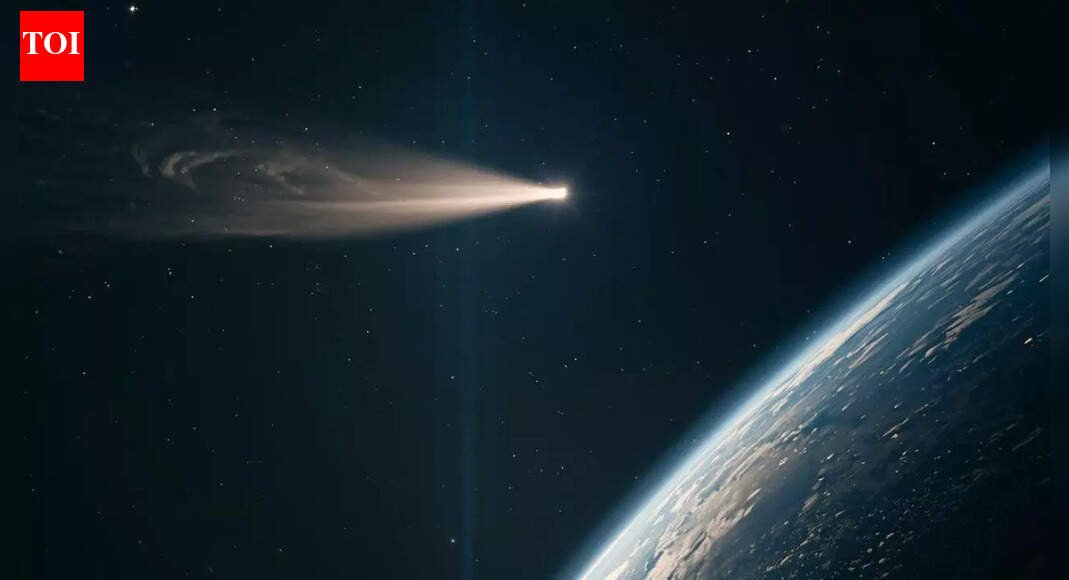
Interstellar objects usually pass through quietly, noticed only by a small group of astronomers before fading back into deep space. Comet 3I/ATLAS has followed a different path. Even as it moves away from Earth and heads out of the solar system, it keeps offering scientists new details to puzzle over. Recent observations suggest this visitor from another star system behaves in ways that are both familiar and oddly unusual. Its dust and gas do not simply trail behind it as expected. Instead, parts of the comet appear to move in shifting patterns that change over time. These movements are subtle, not dramatic, but they matter. They give researchers a rare chance to study how an untouched object, formed far beyond our Sun, reacts when exposed to solar heat for the first time.3I/ATLAS is only the third known object confirmed to have entered the solar system from interstellar space. Before it, astronomers identified the unusual object Oumuamua in 2017 and the comet 2I Borisov in 2019. Each arrival has added a small piece to a much larger picture of how other planetary systems form and evolve.

What is a sun facing antitail of comet 3I/ATLAS

Most comets develop tails that stream away from the Sun, pushed back by solar radiation and the solar wind. An anti tail is different. It appears to extend in the opposite direction, toward the Sun. This effect is uncommon but not unheard of among comets from our own solar system.In the case of 3I/ATLAS, the anti tail became especially interesting because it showed narrow jet like features. These jets were not static. Over repeated observations, they appeared to wobble, shifting position in a slow and regular way. This behaviour hinted that something more complex was happening at the comet’s core, as per a paper published on the paper repository site arXiv.

How were the wobbling jets discovered

Astronomers detected these changes after observing 3I/ATLAS across 37 nights between early July and early September 2025. The work was carried out using the Two meter Twin Telescope at the Teide Observatory in Tenerife.Over time, the team watched the comet’s coma change shape. Before August, it looked like a fan of dust facing the Sun. Later, as the comet moved closer to its October approach to the Sun, a clearer tail pointing away from the Sun became visible. Within the sun facing structure, the jets appeared on seven separate nights.By tracking their movement, researchers noticed a regular pattern. The jets seemed to shift every seven hours and forty five minutes, suggesting a slow precession rather than random motion.

What does the wobble reveal about the comet

The most likely explanation for the wobbling jets is rotation. As the comet spins, active areas on its surface release gas and dust in changing directions. From Earth, this looks like a gentle oscillation.From the data, scientists estimate that the nucleus of 3I/ATLAS completes one full rotation roughly every fifteen hours and thirty minutes. This is shorter than earlier estimates and suggests the comet’s interior structure may be more compact or uneven than first thought.Because this object formed around another star, its behaviour offers a glimpse into physical processes that may be common elsewhere in the galaxy.

Why is this discovery important

Jets and outgassing have been observed in solar system comets before. What makes this case stand out is that it is the first time such behaviour has been clearly seen in an interstellar comet.Researchers describe 3I/ATLAS as a pristine body. It likely spent billions of years in deep space before briefly encountering the Sun. Studying how it reacts to solar heating helps scientists test models of comet formation beyond our own planetary system.As the researchers noted in their paper, this is a rare opportunity that may not come again soon.

What happens to 3I/ATLAS next

On December 19, 2025, the comet came the closest to Earth, and since then it has been drifting away. It is projected to leave the solar system completely, just like other visitors from other stars.Its trip is almost ended, yet it will still be useful to science for a long time. Astronomers will keep using the information they got from this short visit to change how they think about comets, rotation, and planetary systems outside of our own. When 3I/ATLAS ultimately leaves our solar system, it will leave behind more questions than answers. This is generally how progress starts.


Source link

Ashes: ‘Brutally honest’ Ben Stokes labels MCG pitch ‘not ideal’ despite historic England win | Cricket News


Ashes: 'Brutally honest' Ben Stokes labels MCG pitch 'not ideal' despite historic England win
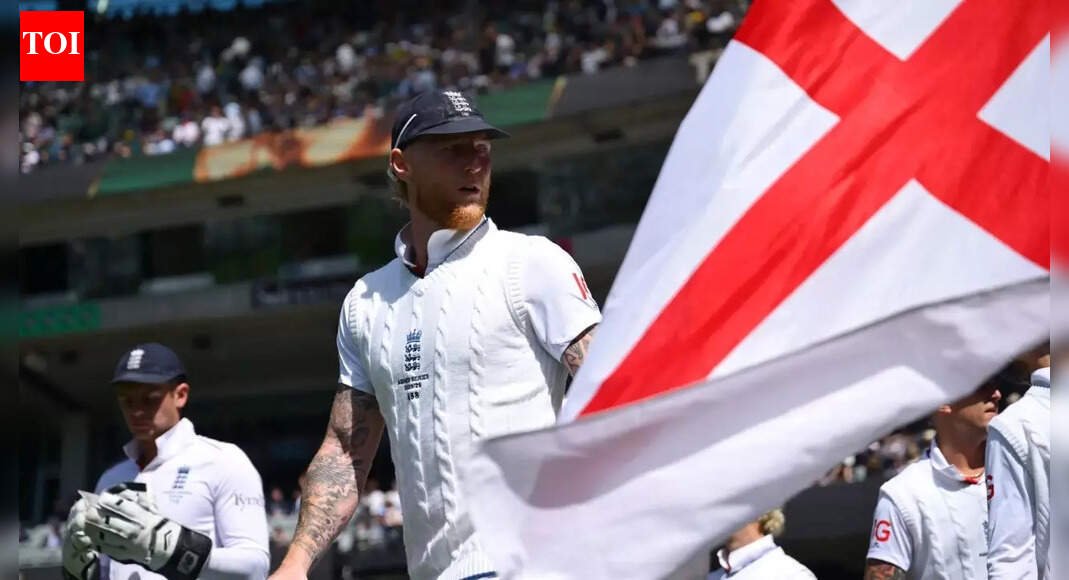
Ben Stokes of England leads his team out during day two of the Fourth Test in the 2025/26 Ashes Series between Australia and England at Melbourne Cricket Ground on December 27, 2025 in Melbourne, Australia. (Photo/Getty Images)

Ben Stokes and Steve Smith said on Saturday that a Test match finishing in two days was “not what you want”, adding to criticism of the Melbourne Cricket Ground pitch after the fourth Test between Australia and England ended early.A total of 20 wickets fell on the opening day on Friday, with Australia bowled out for 152 and England dismissed for 110. Another 16 wickets fell on day two, bringing the match to an end within 142 overs as England won by four wickets.“When you go out there and you’re faced with those conditions, you’ve got to crack on and deal with it,” Stokes said after England ended a 15-year wait for a Test win on Australian soil.“But being brutally honest, that’s not really what you want.”“You know, Boxing Day Test match, you don’t want a game finishing in less than two days,” the English captain added. “It’s not ideal, but you can’t change it once you start the game and you’ve just got to play what’s in front of you.”Smith said the pitch had too much grass, which created excessive seam movement and made batting difficult.“It was tricky. No one could really get in. I think when you see 36 wickets across two days, that’s probably too much,” he said.“It probably did a little bit more than they wanted it to. Maybe if we dropped it down to eight millimetres, it would be about right.”Cricket Australia chief executive Todd Greenberg said short Test matches were damaging from a commercial point of view. The Boxing Day match saw the most wickets fall on the first day of an Ashes Test since 1909.The concerns followed the first Test of the series in Perth, where 19 wickets fell on day one and the match also finished in two days, resulting in significant financial losses for Cricket Australia.“A simple phrase I’d use is short Tests are bad for business. I can’t be much more blunt than that,” Greenberg said.“So I would like to see a slightly broader balance between the bat and the ball.”Several former players also criticised the Melbourne pitch. Former England captain Michael Vaughan called it “a joke” on Saturday, adding, “This is selling the game short.” Another former England captain, Alastair Cook, described it as “an unfair contest”.Pitch preparation in Australia is traditionally handled independently by curators, without input from team captains or Cricket Australia. Greenberg, however, indicated that greater oversight may be required.“It’s hard not to get more involved when you see the impact on the sport, especially commercially,” he said.“I’m not suggesting I’ll go around talking to ground staff, but we do have to have a careful eye on what our expectations are over the course of a summer.”


Source link

This day, that year: December 27, 1911 — When ‘Jana Gana Mana’ was first sung in Calcutta | India News


This day, that year: December 27, 1911 — When ‘Jana Gana Mana’ was first sung in Calcutta
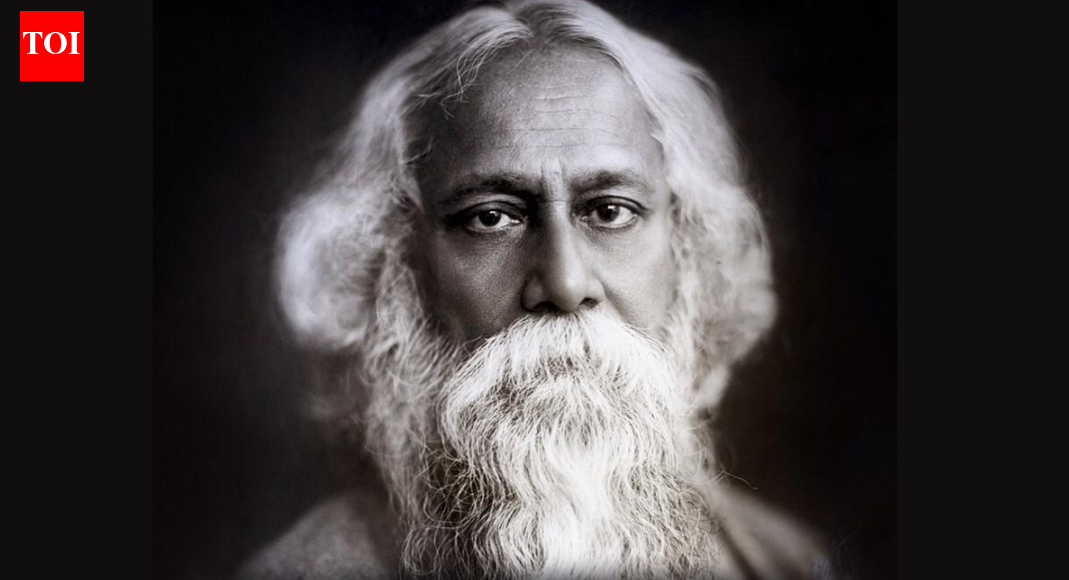
Rabindranath Tagore’s ‘Jana Gana Mana’ was publicly sung for first time on December 27, 1911

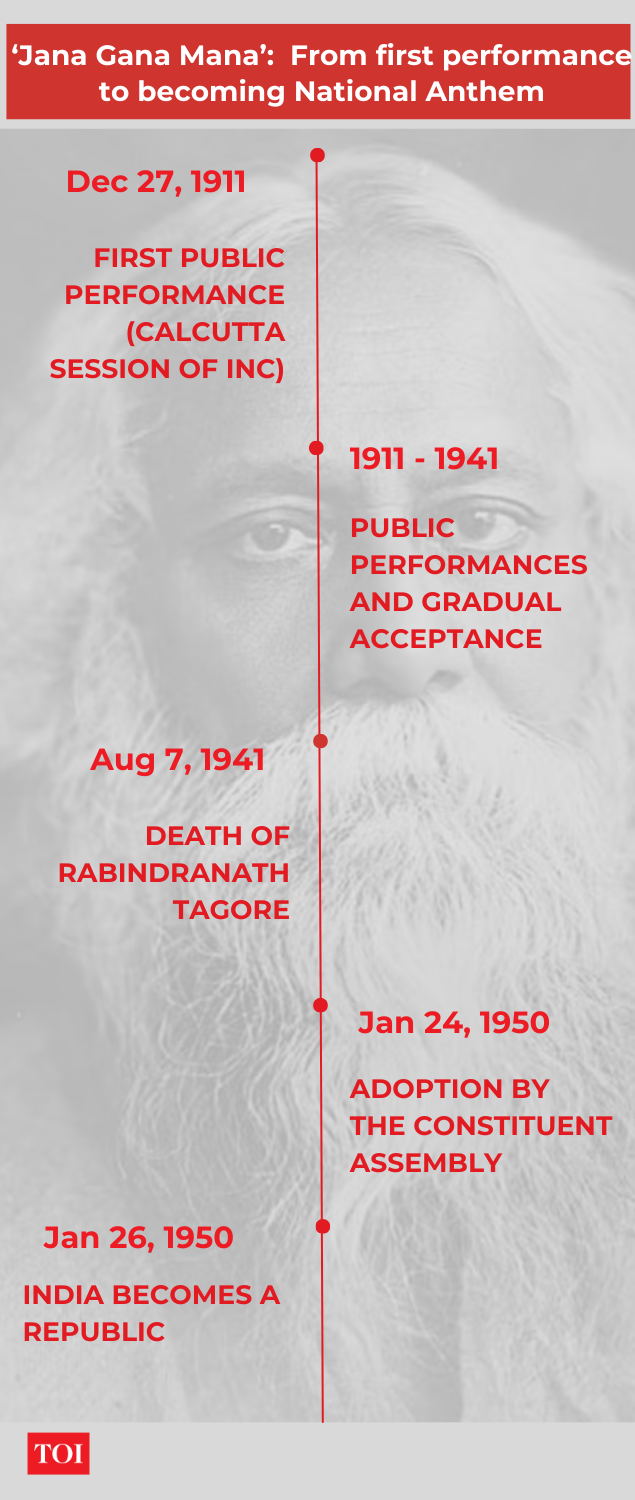
December 27, 1911– the day a song first heard at a Congress session in Calcutta began a chapter that would culminate in becoming India’s National Anthem, and become a shared national voice.Composed by Rabindranath Tagore, originally in Bangla, the hymn would, nearly four decades later, be adopted as the National Anthem of India. At the time of first rendition, it was introduced simply as a patriotic composition at a gathering of a political organisation that was still shaping its role in India’s anti-colonial movement.

The Calcutta Session of 1911

The 1911 Congress session was held at the Bharat Sabha, a single-storeyed structure on Bowbazar Street in Calcutta, in presence of then-Congress president, a senior moderate leader Bishan Narayan Dhar. Other prominent figures there were Ambika Charan Mazumder and Bhupendra Nath Bose.At this point in its history, the Indian National Congress was not a political party in the modern electoral sense but a national organisation bringing together leaders, intellectuals, professionals, and activists seeking constitutional reforms and, increasingly, self-government. Its annual sessions were platforms for political resolutions as well as cultural expressions aligned with emerging nationalist sentiment.

How 'Jana Gana Mana' ulitmatelt became the national anthem

The first performance

Jana Gana Mana was sung before the assembled delegates 114 years ago, which was the 2nd day of the Calcutta session. The performance was led by Tagore’s niece Sarala Devi Chowdhurani, along with a group of students. Contemporary Congress records referred to the composition as “Janaganamana Adhinayaka”, describing it as a patriotic song.The lyrics were written in highly Sanskritised Bengali, employing a register familiar to audiences associated with the Brahmo Samaj and the emerging Bengali intelligentsia. The song addressed “Bharata Bhagya Vidhata”, a phrase referring to the guiding force or destiny of India.

The political context of 1911

The Congress session came on the heels of the Delhi Durbar of December 1911, held to mark the coronation of King George V and Queen Mary as Emperor and Empress of India. It was also at the backdrop for the announcement made by the British Government about the nullification of the division of Bengal and moving the Imperial Capital from Calcutta to Delhi.While Jana Gana Mana was being performed in this politically fraught atmosphere, there are some newspaper accounts of that time that suggested that it was meant to serve as a welcome or tribute to the British monarch.

Tagore’s clarification

Rabindranath Tagore did not immediately respond publicly to these claims. However, in later years, he explicitly rejected the suggestion that the song praised George V. In a letter written in 1937, Tagore recalled refusing a request from an acquaintance to compose a song in honour of the British king, describing his reaction as one of “amazement mingled with anger.”In a more forceful letter written in 1939, Tagore stated that he found it insulting to suggest that he would write in praise of a temporal ruler. He clarified that the “Adhinayaka” of Jana Gana Mana referred to a timeless guiding spirit of the Indian people, not a colonial sovereign. These letters have since been cited in official and scholarly accounts addressing the controversy.“I should only insult myself if I cared to answer those who consider me capable of such unbounded stupidity as to sing in praise of George the Fourth or George the Fifth as the Eternal Charioteer leading the pilgrims on their journeys through countless ages of the timeless history of mankind,” he had said.

Publication as Bharata Vidhata

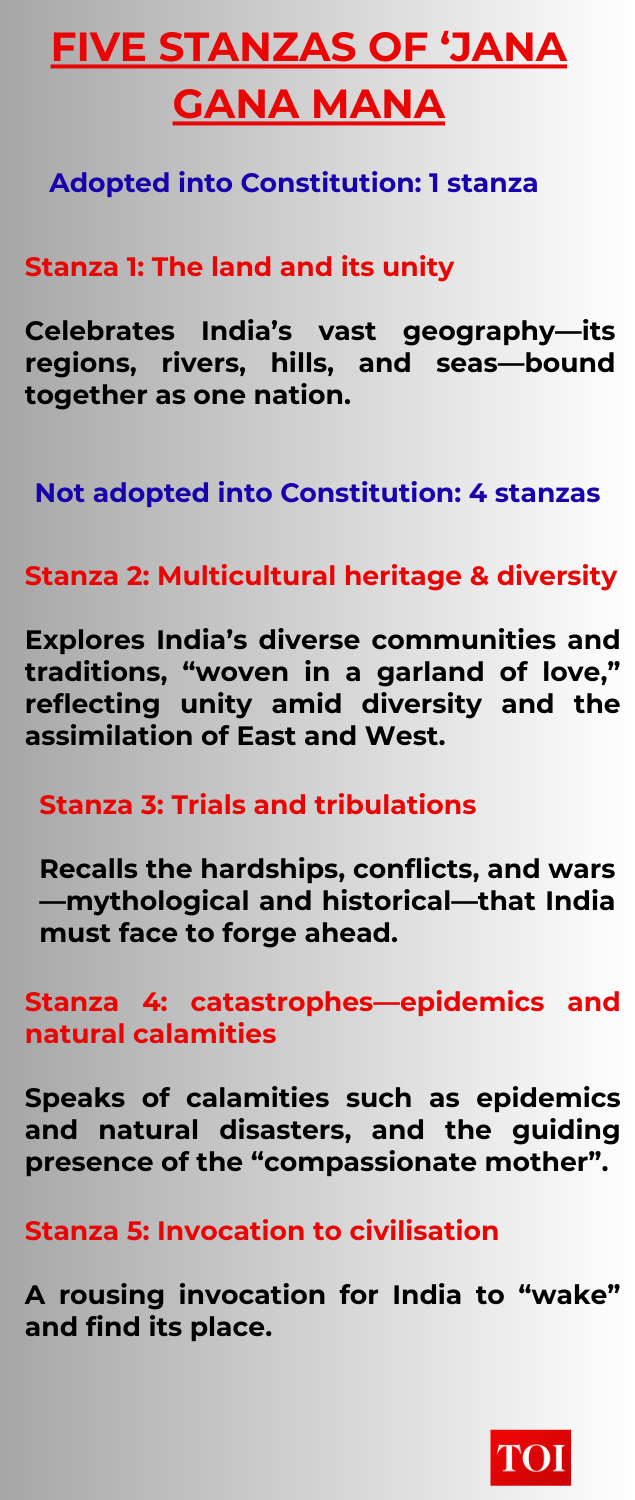
Within a month of its first performance, the song was published in January 1912 in Tattvabodhini Patrika, the journal of the Brahmo Samaj. The journal was edited by Tagore himself. In print, the song appeared under the title “Bharata Vidhata” and was classified as Brahmo Sangeet.At the time of publication, the composition consisted of five stanzas. Each verse invoked different aspects of India’s geography, people, and collective experience. The published text confirmed that the song was conceived as a hymn rather than a political chant.

Subsequent early performances

On January 25, 1912, less than a month after its Congress debut, Jana Gana Mana was performed again at a public gathering in Calcutta celebrating the Hindu month of Magh. This performance took place under Tagore’s direct guidance.Over the following years, the song circulated primarily within cultural and nationalist circles, without any official political status. It coexisted with other patriotic compositions, most notably Vande Mataram, which had already acquired widespread popularity during the Swadeshi movement.

English translation

In 1919, Tagore journeyed to southern India and stayed at the Theosophical College in Madanapalle in what is now the state of Andhra Pradesh. It was here that he made a translation of “Jana Gana Mana” in English in his own handwriting. He titled it “The Morning Song of India.”This translation was not meant for replacement of the original text written in Bengali language, but to introduce its meaning in other languages. The handwritten manuscript has since been preserved and reproduced in various archives.
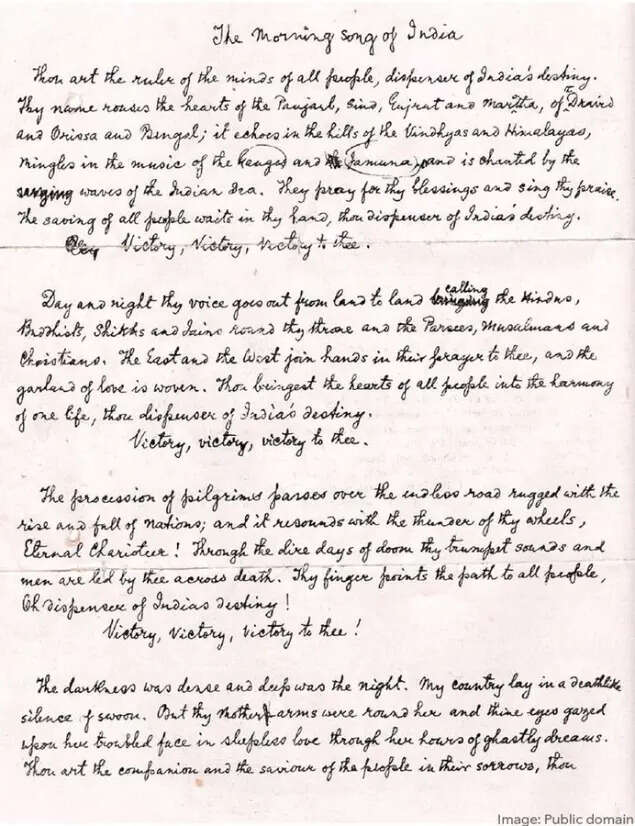
image (7)

An English translation of Jana Gana Mana by Rabindranath Tagore (Image credit: Nobel Prize handle on X)

The song during the freedom struggle

During the 1920s and 1930s, Jana Gana Mana continued to be performed at cultural gatherings, though it did not displace Vande Mataram as the most widely recognised nationalist song. Both compositions occupied distinct places within the freedom movement’s symbolic repertoire.The song acquired additional political resonance during World War II, when it was adopted by Subhas Chandra Bose’s Indian National Army (INA) as one of its anthems. It was sung by INA units in Southeast Asia and later by INA members in Japan. This further mainstreamed the song’s association with anti-colonial resistance.

1947: International exposure

Jawaharlal Nehru, the then Prime Minister of India, reported in a letter that the performance of “Jana Gana Mana” received positive reviews, with delegations of different countries requesting a copy of its sheet music.However, at that point, India had not yet adopted a national anthem, and no official choice had been considered either.

Debate in the Constituent Assembly

After Independence, the newly established government faced the question of choosing a national anthem. The decision was essentially one of constitutional and symbolic significance. Thus, the matter was therefore referred for consideration before the Constituent Assembly.Both Jana Gana Mana and Vande Mataram were considered. While Vande Mataram had played a central role in the freedom struggle, there were some apprehensions about its suitability for performance at international events as well as about its musical adaptability.The matter was raised in Parliament by Prime Minister Nehru on August 25, 1948. He said, “It was thought by some people that the “Vande Mataram” tune with all its very great attraction and historical background was not easily suitable for being played by orchestras in foreign countries, and there was not enough movement in it. It seemed, therefore, that while Vande Mataram should continue to be the national song par excellence in India, the National Anthem tune should be that of Jana-Gana-Mana.

Adoption as the National Anthem

On January 24, 1950, two days before India became a republic, Dr Rajendra Prasad, President of the Constituent Assembly, formally announced the adoption of Jana Gana Mana (hindi version) as the National Anthem of India. The announcement specified that, “The composition consisting of the words and music known as Jana Gana Mana is the National Anthem of India, subject to such alterations in the words as the Government may authorise as occasion arises; and the song Vande Mataram, which has played a historic part in the struggle for Indian freedom, shall be honoured equally with Jana Gana Mana and shall have equal status with it. I hope this will satisfy the Members.”Only the first stanza of Tagore’s original five-verse composition was adopted. The officially recognised version has a playing time of approximately 52 seconds.

Aftermath and legacy

Rabindranath Tagore did not live to witness the acceptance of his composition as the national anthem. He passed away in August 1941, almost nine years before the Constituent Assembly took its decision.Notably, Tagore is the only person in world history to have penned two national anthems. His song “Amar Sonar Bangla” was Constitutionally adopted as the national anthem of Bangladesh in 1972.With time, the final four verses of ‘Jana Gana Mana’ gradually phased-out. Although, the anthem has been performed in its entirety on special occasions. The musical composition of the national anthem of India was standardized to accommodate orchestral performances during official or international gatherings.

​What the five stanzas of "Jana Gana Mana' meant​

From its initial performance in a small auditorium at Calcutta way back in 1911 to its eventual adoption as a national anthem in 1950, Jana Gana Mana followed a long and documented journey shaped by political change, cultural debate, and constitutional process.




Source link

Startups in 2025: Fewer closures but big names stumble — BluSmart, Dunzo & others exit


Startups in 2025: Fewer closures but big names stumble — BluSmart, Dunzo & others exit

Despite a difficult funding climate, this year emerged as a comparatively stable year for India’s startup ecosystem, with shutdowns falling sharply from last year’s highs. Around 730 startups ended operations in 2025, a major decline from the 3,903 closures recorded in 2024. According to the department for the promotion of industry and internal trade (DPIIT), India, at present, has over 2.06 lakh registered startups. Though the number of closures was lower, it included several prominent names, spanning electric mobility, hyperlocal delivery, consumer internet and ecommerce. Here are some of the startups that said good byes in 2025:BluSmartElectric ride-hailing startup BluSmart was among the most notable exits. Launched in 2019, the company offered fully electric vehicles, assured rides and salaried drivers. The firm had gained roughly 9% market share in Delhi. Soon the ride company expanded its fleet to more than 8,000 electric vehicles across the country and raised around $168 million from investors, including BP Ventures and celebrity backers. However, according to ET, operations were suspended in April after Sebi detected large-scale financial misconduct at Gensol Engineering, a listed solar EPC firm promoted by BluSmart’s founders, the Jaggi brothers. While Gensol did not hold equity in BluSmart, it owned a substantial share of the startup’s EV fleet, resulting in close financial ties. Sebi said the promoters had siphoned off at least Rs. 262 crore from EV loans, forged lender documents, manipulated share prices, misled investors through false disclosures, and diverted funds towards stock trading and personal luxury purchases. Following the revelations, BluSmart faced internal disruptions, including delayed salary payments, declining ride volumes and leadership exits, before suspending services and transferring its fleet to Uber.Dunzo Hyperlocal delivery platform Dunzo also shut down after years of financial strain. Once a pioneer in the category, the startup drew widespread attention in 2022 when it secured $240 million from Reliance Retail. However, the platform struggled to compete with fast-scaling quick-commerce rivals such as Zepto, Swiggy Instamart and BlinkIt. The company failed to raise additional capital to support operations and expansion, while expenses, including those linked to its IPL sponsorship, added to financial stress. By September, Dunzo’s sole remaining co-founder, Kabeer Biswas, exited to build Flipkart’s quick-commerce arm Minutes, bringing the company’s prolonged downturn to a close.Hike Messaging app Hike, founded in 2012 by Kavin Mittal, was once viewed as India’s answer to global platforms such as WhatsApp and Telegram. Backed by investors including Tiger Global, SoftBank and Tencent, the company raised over $250 million within four years, with Mittal asserting, ‘we’re here to stay.’ At its peak, Hike had more than 100 million registered users and handled over 40 billion messages each month. However, the platform began winding down in 2021, when it shut its core messaging service, citing the challenge of competing with global network effects, ET reported. Hike later pivoted to Rush, a real-money gaming platform, following earlier attempts to reposition its messaging product, including its 2019 rebrand as Hike Sticker Chat. The company’s remaining operations ended in September after the Promotion and Regulation of Online Gaming Act imposed a blanket ban on real-money gaming apps.Good Glamm Group The Good Glamm Group, once valued close to unicorn status, also scaled back significantly. With a portfolio of over a dozen brands, the company aimed to replicate the roll-up ecommerce model by acquiring and integrating digital-first consumer brands. Over time, weaknesses in this approach became apparent. Heavy acquisition-related debt, slowing growth and limited access to fresh funding weighed on the business. Several acquired brands, including Sirona and The Mom’s Co, were wound down as anticipated efficiencies from shared marketing and supply chains failed to materialise. The group’s troubles reflected the broader challenges facing roll-up ecommerce models in India.Otipy Grocery delivery startup Otipy, launched during the pandemic by former Blinkit CTO Varun Khurana, also shut operations this year. The NCR-based B2B2C firm differentiated itself through a subscription-led, farm-to-fork model, connecting consumers with farmers via community resellers handling last-mile delivery in Mumbai and Delhi-NCR. The startup raised $44.2 million during its early years but struggled as ultra-fast delivery became the industry standard. Financial pressures mounted, leading to delayed salary payments and pending vendor dues. In May, the Crofarm India subsidiary ceased operations, affecting around 300 employees and delivery partners. Industry-wide data reflects a broader easing in shutdowns. Tracxn data cited by ET shows that startup closures fell nearly 80% this year, compared with the peak period of 2021–22, when more than 11,000 startups wound down. Over the past five years, enterprise applications have accounted for the largest share of closures, followed by retail and edtech, with healthtech, entertainment and media also seeing significant exits. Maharashtra and Karnataka have recorded the highest number of shutdowns among states during this period.


Source link