Breaking News
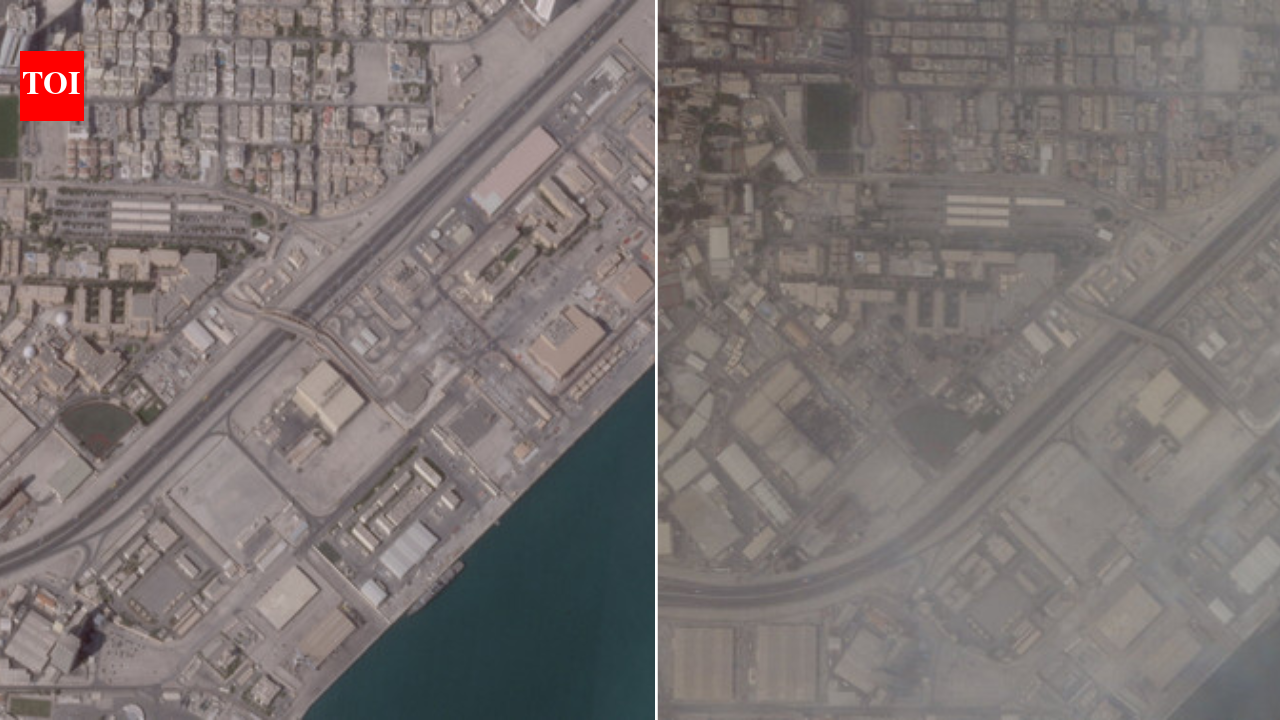
Satellite images show damage at US Fifth Fleet naval base in Bahrain’s Manama; see before-after pics


Satellite images show damage at US Fifth Fleet naval base in Bahrain's Manama; see before-after pics
Before and after image of US navy fleet

Iran launched retaliatory strikes in fury after the killing of its Supreme Leader.After the longest-serving leader in the Middle East was killed in strikes while in office, Supreme Leader Ayatollah Ali Khamenei, Iran launched strong retaliatory attacks, targeting key cities including Dubai and Sharjah in the United Arab Emirates and Manama in Bahrain. The strikes rattled the Arab world, with multiple American bases and targets across the region coming under attack from an angered and Khamenei-less power centre in Tehran.

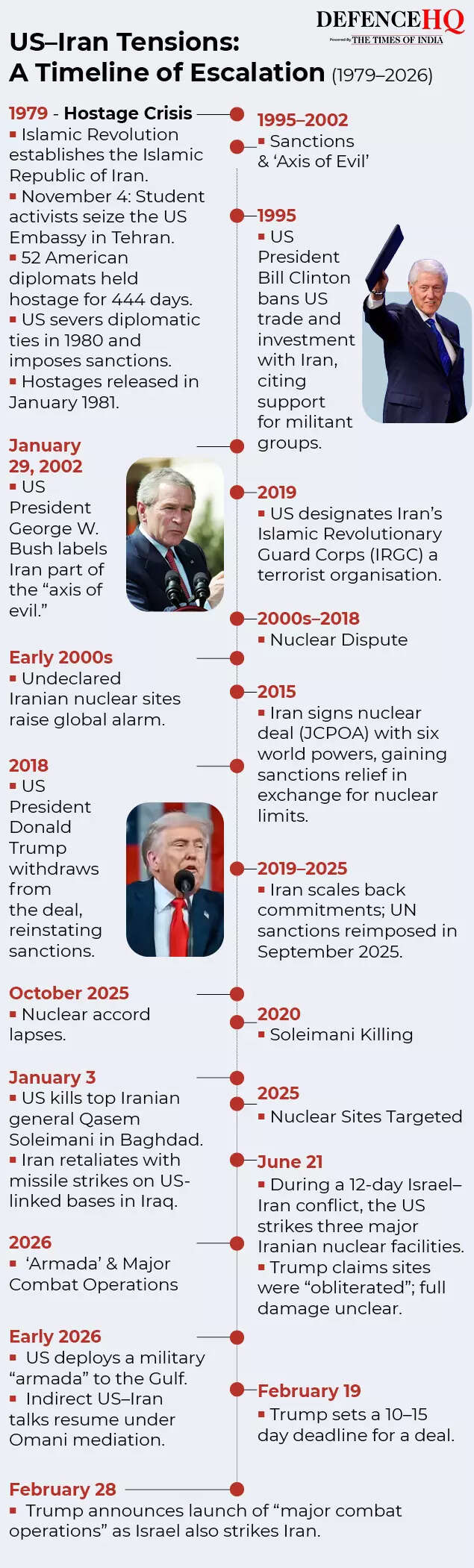
iran timeline

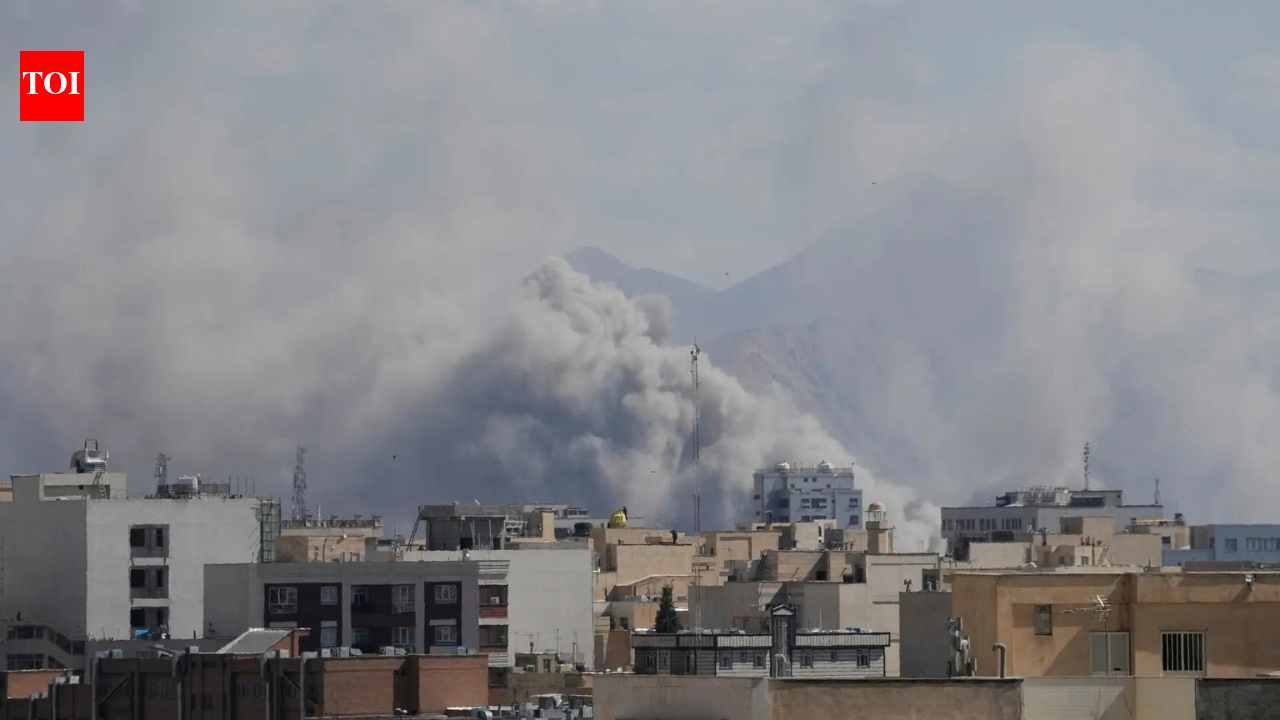
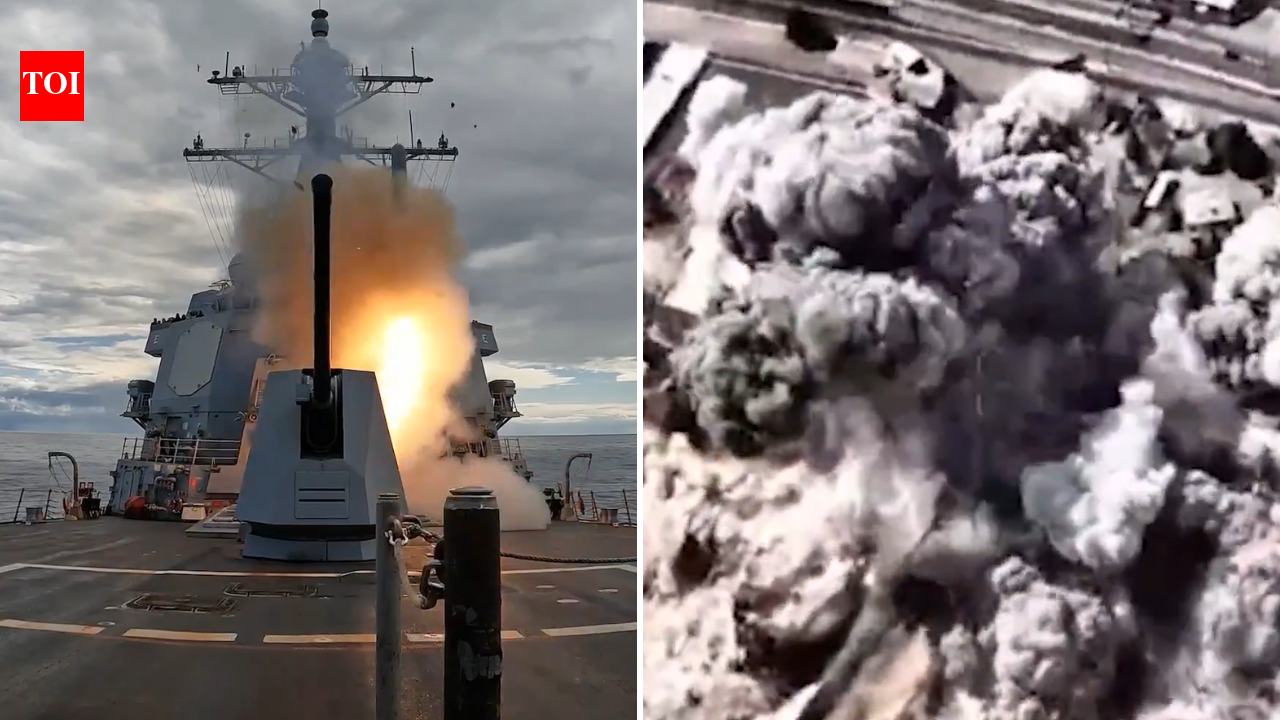
The strikes followed a major military operation by the United States and Israel against Iran, aimed at dismantling the political leadership that had been under Khamenei for more than three decades.Also read: US F-15 down in Kuwait? Iran shares video showing fighter jet engulfed in flames, pilots ejectingSatellite images later emerged showing the Iranian offensive targeting the US Fifth Fleet naval base in Manama. The before-and-after comparison of the images highlighted the scale of the damage caused by the strikes on the American facility.A video circulating online also showed smoke rising from the area around the base. Bahrain’s government confirmed that a missile had targeted the US Navy’s Fifth Fleet facility and called the strike a violation of the country’s sovereignty.Officials said the Fifth Fleet service centre was hit in the missile attack and that emergency response teams were immediately deployed to the site. It is not yet clear whether there were any casualties from the strike.The attack in Bahrain came as part of a wider wave of military actions across the Middle East.Several sites linked to the United States across the region are facing threats, including military installations in Qatar, Kuwait and the United Arab Emirates. Air defence systems in several countries were activated in response.Iran described the strikes as defensive retaliation, saying they were a response to what it called aggression against it.Early Sunday, drones struck the airport in Bahrain’s capital, Manama, causing minor damage, authorities said.The US embassy in Manama also urged American citizens to avoid hotels in the city, warning that they could become potential targets after the Crowne Plaza hotel was hit.Tehran’s offensive also targeted cities that are not traditional military targets, including Abu Dhabi, Dubai, Doha, Sharjah and Manama.


Source link

US-Iran war spreads: Israel bombs Hezbollah targets in Beirut; Gulf nations vow to defend themselves — key points


Iran-Linked Fighters Attack US Bases In Iraq; Explosions In Baghdad, Erbil As Drones Unleash Mayhem

AP file photo

A joint US-Israeli attack on Iran has killed Supreme Leader Ayatollah Ali Khamenei and triggered retaliatory strikes across the region, escalating tensions and raising fears of a wider conflict.Israeli strikes targeted Tehran, while Iran responded with drones and missiles aimed at Israel and sites around the Gulf. Gulf states have pledged to defend themselves against Iranian attacks, while a missile barrage in Jerusalem left seven people injured.

Iran-Linked Fighters Attack US Bases In Iraq; Explosions In Baghdad, Erbil As Drones Unleash Mayhem

US President Donald Trump said in a video posted Sunday that the military operation in Iran, which he called “one of the most complex, most overwhelming military offensives the world has ever seen”, will continue until “all of our objectives” are achieved.Residents fled southern Lebanon on Monday after Israel carried out multiple strikes and issued evacuation warnings to villagers. At least 31 people were killed in the Israeli attacks, as cited by AP.The violence, which began on Saturday, has spread to more locations and increased the death toll. Governments around the world reacted with both support and condemnation, amid concerns about the impact on the global economy.

Israel and Hezbollah exchange strikes as ceasefire unravels

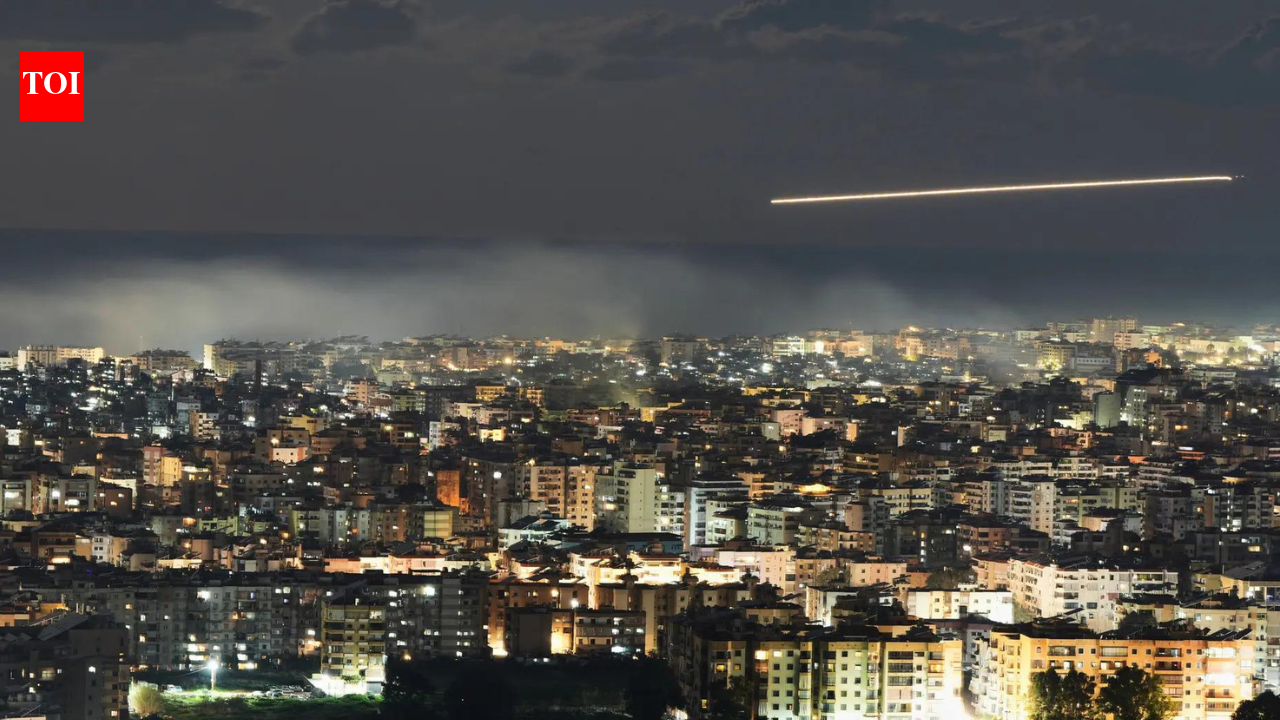
Air raid sirens sounded in northern Israel shortly after midnight on Monday. Hours later, explosions struck the outskirts of Beirut, marking a breach of a ceasefire that had largely held since November 2024.The Israeli military said it began targeting Hezbollah positions in Lebanon after projectiles were launched into Israel. No injuries or damage were immediately reported. Israel issued evacuation orders for around 53 towns and villages in Lebanon, prompting hundreds of thousands of residents to flee their homes overnight.It was the first such exchange since the truce between Israel and Lebanon formally ended hostilities with Hezbollah, according to Israel’s public broadcaster.Hezbollah claimed responsibility, stating it was responding to repeated Israeli strikes and to avenge the killing of Iran’s Supreme Leader Ayatollah Ali Khamenei. He was killed on Saturday in a strike on his compound in Tehran during the US-Israeli war against Iran.Israel accused Hezbollah of operating on behalf of the Iranian regime. While Israeli forces have continued strikes in southern and eastern Lebanon since the ceasefire, areas near Beirut had rarely been targeted until now.

Stock market crashes amid Middle East tensions

Indian equity benchmarks fell sharply at the opening bell on Monday amid rising tensions in the Middle East and global market volatility, with crude oil prices and trade concerns weighing on sentiment.The Nifty50 slipped below 24,900, while the BSE Sensex dropped more than 1,000 points in early trade. At 9:16 AM, the Nifty50 was at 24,866.00, down 313 points or 1.24%. The BSE Sensex stood at 80,226.63, down 1,061 points or 1.30%.Analysts said sectors sensitive to crude prices, including oil marketing companies, paints, tyres, aviation and chemicals, could face margin pressure due to higher input costs.Upstream oil producers such as ONGC and Oil India may benefit from improved realisations, while defence stocks including HAL and BEL could see positive sentiment.

Iran will not negotiate with US, says top security official

Iran’s top national security official, Ali Larijani, said Tehran “will not negotiate with the United States,” dismissing reports that it had sought to resume talks through intermediaries.In a post on X, Larijani — secretary of the Supreme National Security Council and one of the country’s most senior figures, rejected media claims of outreach to Washington.He also said Trump has “plunged the region into chaos with his ‘false hopes’ and is now worried about further casualties of American troops.”

Kuwait air defences intercept hostile aerial targets

Kuwait’s armed forces said early Monday that its air defence units intercepted several hostile aerial targets over the country.In a statement, the military spokesperson said the Kuwaiti Air Defence Force “successfully intercepted a number of hostile aerial targets with efficiency and capability at dawn today.” The targets were detected and engaged within the central region as part of operations to protect national airspace. No casualties were reported.The spokesperson added that the armed forces remain on full alert and will continue to address any developments to ensure the country’s security and stability.

Got him before he got me, says Donald Trump

Confirming the death of Khamenei Trump said, “I got him before he got me. They tried twice, I got him first.”He said that over the past 36 hours, the United States and its partners had launched Operation Epic Fury, which he described as one of the largest and most complex military offensives ever carried out.According to Trump, US forces struck hundreds of targets across Iran, including Revolutionary Guard facilities and air defence systems. He added that nine ships and a naval building were destroyed “in a matter of literally minutes.”

Abu Dhabi, Dubai stock markets to remain shut

The Abu Dhabi and Dubai stock markets will remain closed on Monday, March 2, and Tuesday, March 3, amid rising tensions in the Middle East, according to Gulf News.The Capital Market Authority (CMA) announced that both the Abu Dhabi Securities Exchange and the Dubai Financial Market will suspend trading on these dates. The decision was made in line with the authority’s regulatory and supervisory mandate and applicable laws.The CMA said it will continue to monitor regional developments, assess the situation, and take further measures as needed. It also urged stakeholders to follow official communication channels of the CMA, Abu Dhabi Securities Exchange, and Dubai Financial Market for updates.

Travel disruptions hit the region

Escalating hostilities in the Middle East have disrupted air travel across the region, leaving governments scrambling to evacuate stranded citizens.Dubai International Airport, one of the world’s busiest, suffered damage from missile strikes, and blasts have also been reported in Abu Dhabi and Doha. Large sections of Middle Eastern airspace were closed over the weekend, with neighboring countries restricting flights.The impact has extended beyond the region, as foreign governments coordinate the repatriation of their nationals. Air travel remains heavily disrupted across West Asia, from the UAE to Israel. By Sunday evening, around 1,600 flights were cancelled by regional carriers including Emirates, Etihad, and Qatar Airways. Airlines such as IndiGo, Air India, and Akasa reported 350 flight cancellations during the day.Most airlines have already announced cancellations extending into Monday, with resumption dependent on assessments of safety in the conflict zone.

Britain’s Royal Air Force in Cyprus hit by suspected drone strike

Britain’s Royal Air Force base at Akrotiri in Cyprus was hit by a suspected drone strike overnight, causing limited damage but no casualties, Cypriot authorities and the UK ministry of defence said.A Cyprus government spokesperson confirmed that “information received through various channels indicates that it involved an unmanned drone, which caused limited damage,” as cited by Reuters. Residents near the base were advised to shelter in place following the suspected impact, according to a security alert from the British bases administration.The UK retains sovereignty over two military bases on Cyprus, an EU member state. RAF Akrotiri, located on a large peninsula at the island’s southern tip, was last directly attacked by Libyan militants in the mid-1980s.

Source link

Lunar Eclipse on Holi 2026: Date, sutak time, visibility in India and significance of Chandra Grahan


Lunar Eclipse on Holi 2026: Date, sutak time, visibility in India and significance of Chandra Grahan

Chandra Grahan is going to take place on March 3, 2026 and this will be a rare celestial event, which is going to happen on the day of Holi festival. This will be the first Lunar Eclipse of the year and as it will fall on the day of Holi so it will be considered as unique and rare. This will be a great opportunity for the sky watchers and astronomers to witness this unique event and capture this in their DSLR’s.

Chandra Grahan on March 3, 2026: What is Blood Moon?

On this day, the earth will be between the Sun and the Moon and the Moon will be in the Earth’s shadow and the alignment causes a total lunar eclipse. In this phase, the Moon looks red because the sunlight bends through Earth’s atmosphere and it is called as Blood Moon.

Will this Lunar Eclipse be visible in India?

Yes, this Lunar Eclipse will be seen from different parts of India.

Lunar Eclipse 2026: Start and Ends Time

This Chandra Grahan will start in the afternoon from 03:20 PM (March 3, 2026) and it will end at 06:47 PM in the evening. It will last for few hours. The most interesting thing is that people from India would be able to witness this Lunar Eclipse just for 15 minutes starting from 06:30 to 06:47 PM after the moonrise. Because the Moon rises earlier in the northeastern states of Assam, Arunachal Pradesh, Meghalaya, and Bengal, people there will have a better chance of seeing the eclipse.

When to perform Holika Dahan on March 2 or 3? Check correct date here

According to the astrological facts, Holika Dahan should be performed on March 3, 2026 after the eclipse ends. On 2nd March, there will be Bhadra so during that time Holika Dahan can not be performed so its better to perform it after the eclipse ends on March 3, 2026.

Chandra Grahan 2026: Sutak Time?

On March 3, Sutak kaal will start from 06:23 AM in the morning and it will end with the Eclipse.

What makes this Lunar Eclipse unique?

Holi is celebrated on Phalguna Purnima, the full moon day of the Hindu month of Phalguna. But this time it will happen on the day of festival of colors, Holi which makes it more special and unique. Hindus believe that eclipses are related to the myth of Rahu and Ketu, two shadow planets that are supposed to dusturb the moon’ energy during a grahan. People typically take specific actions and precautions to keep safe during this time.

Are you ready for this Chandra Grahan?

Ask this question to yourself because this Lunar Eclipse will not be normal or a casual one because this is going to take place in Leo zodiac sign under the Purva Phalguni Nakshatra and above that on the day of Holi. You can not take this Chandra Grahan as normal because there will be so many changes are coming in your life. Your life will not be as usual after this Lunar Eclipse. This will bring changes in your thoughts, mind, emotions and give you clarity in life. People who were on the path of injustice, this Lunar Eclipse will remove the evil from the earth just like Holika was burned to death. You need to purify yourr thoughts, intentions and this should be visible in your actions too otherwise this Lunar Eclipse will give a big setback in your professional and personal life. This will be one of the biggest astrological event so people should be aware of this.


Source link

Stock market crash today: Nifty50 goes below 24,900; BSE Sensex down over 1,000 points on Middle East tensions


Stock market crash today: Nifty50 goes below 24,900; BSE Sensex down over 1,000 points on Middle East tensions
Stock market today (AI image)

Stock market crash today: Nifty50 and BSE Sensex crashed in opening trade on Monday amidst rising Middle East tensions and global market turmoil, with impact on crude oil prices and trade in focus. While Nifty50 went below 24,900, BSE Sensex was done over 1,000 points. At 9:16 AM, Nifty50 was trading at 24,866.00, down 313 points or 1.24%. BSE Sensex was at 80,226.63, down 1,061 points or 1.30%.Analysts warn that sectors sensitive to crude prices such as oil marketing companies, paints, tyres, aviation and chemicals could face pressure on margins due to rising input costs. In contrast, upstream oil producers including ONGC and Oil India may gain from improved realisations, while defence stocks such as HAL and BEL could witness positive sentiment.Dr. VK Vijayakumar, Chief Investment Strategist, Geojit Investments Limited says, “The uncertainty related to the war in West Asia will loom large over the market in the near-term. The major risk from the market perspective is the energy risk arising from the surge in crude. Indications are that a sharp spike in crude by, say 20%, is likely only if the Hormuz Strait is closed, obstructing oil transport through the strait. There is no official confirmation of this yet. If Brent crude remains around $ 76 equity markets may remain weak but are unlikely to witness a big crash. Experience tells us that panic selling during a crisis is the wrong strategy. Investors should refrain from selling and watch how things evolve. Data from crises during the last many decades tells us that an event like the present crisis will not have any impact on the market six months later. This is the takeaway from the market behaviour after the recent crises like the Covid crisis, Russia-Ukraine war and the Gaza conflict. The ongoing West Asian crisis is unlikely to be different. However, since a war can spring unexpected surprises, investors have to be cautious.Weakness in the market can be used to slowly accumulate high quality stocks in domestic consumption themes like banking, automobiles, capital goods and defense.”Asian markets also came under strain, falling 1.1 per cent, while equity index futures for the US and Europe dropped as tensions intensified after the US-Israeli military action against Iran. Brent crude briefly surged as much as 13 per cent before trimming gains, as turmoil in the global oil market intensified amid the effective closure of the Strait of Hormuz.Crude prices extended gains on Monday, rising more than 8 per cent to multi-month highs as Iran and Israel increased attacks in the region, damaging tankers and disrupting supplies from a key oil-producing corridor.Gold climbed up to 2 per cent after the United States and Israel carried out major strikes on Iran, killing Supreme Leader Ayatollah Ali Khamenei, heightening geopolitical tensions and amplifying global economic uncertainty.Foreign portfolio investors were net sellers of Indian equities worth Rs 7,536 crore on Friday. Domestic institutional investors offset part of the outflows, purchasing shares worth Rs 12,293 crore on a net basis.(Disclaimer: Recommendations and views on the stock market, other asset classes or personal finance management tips given by experts are their own. These opinions do not represent the views of The Times of India)


Source link

Top stocks to buy: Stock recommendations for March 2, 2026 week – check list


Top stocks to buy: Stock recommendations for March 2, 2026 week - check list
Top stocks to buy (AI image)

Stock market recommendations: Siemens Energy, and Polycab are Motilal Oswal Financial Services Ltd’s top stock recommendations for this week starting March 2, 2026. Below is the rationale and target prices:

Stock name CMP (Rs) TP (Rs) UPSIDE (%)
Siemens Energy 2897 3600 24%
Polycab 8469 9600 13%

Siemens EnergySiemens Energy is well positioned to benefit from the domestic and global T&D capex cycle, supported by energy transition tailwinds and rising transformer demand. Incremental capacity expansion to 60,000 MVA reflects confidence in long-term demand visibility and export opportunities. Revenue grew 26% YoY, broadly in line, while EBITDA margin expanded 200bp YoY to 24.1%, aided by lower other expenses. Strong margins, higher other income, and a lower tax rate led to 57% YoY PAT growth. Order backlog rose 38% YoY, providing healthy revenue visibility/ We model 27%/31%/32% revenue/EBITDA/PAT CAGR over FY25–28E, led by robust transmission growth and steady generation recovery. We marginally tweak our estimates by 4%/1%/1% for FY26/27/28 and arrive at a revised TP of INR3,600 (earlier INR3,400), based on 55x Mar’28E EPS.PolycabPolycab continues to gain market share in the Cables & Wires segment, supported by strong distribution reach, premium product portfolio, and favourable demand from real estate, infrastructure, and urbanization trends. Project Spring targets growth at ~1.5x industry levels, strengthening long-term visibility. Temporary margin pressure from commodity inflation and elevated channel inventory has reversed quickly, with inventory normalizing and full cost pass-through implemented. Stabilizing raw material prices and strong underlying demand are expected to drive sequential margin improvement and earnings recovery. Premiumization, rising brand investments, and deeper distribution penetration are accelerating growth across wires and FMEG categories. We expect ~16%/19%/18% revenue/EBITDA/PAT CAGR over FY26-28, supported by strong cash flows, disciplined capex, and improving operating leverage.(Disclaimer: Recommendations and views on the stock market, other asset classes or personal finance management tips given by experts are their own. These opinions do not represent the views of The Times of India)


Source link

Iran war: Hezbollah fires at Israel; US releases IRGC HQ strike video – 10 key points


IRGC 'BLOWS UP' U.S. Navy-Linked Vessels, Bombs American Base In 3 Gulf Nations | WATCH

The war between the United States and Iran has entered a volatile new phase, with President Donald Trump signalling a shift in his projected timeline for the conflict. Speaking to NBC, Trump said that the campaign could last “around four weeks”, describing it as one of the most complex offensives ever undertaken. His remarks came as Iran intensified retaliatory missile and drone attacks across the Middle East, killing civilians in Israel and striking Gulf states that host Western forces.Britain, France and Germany have now vowed to support “necessary and proportionate defensive action” to neutralise Iranian missile capabilities. While stopping short of joining offensive strikes, London has allowed the US to use British bases for limited defensive purposes, underlining how rapidly the war risks widening.

IRGC ‘BLOWS UP’ U.S. Navy-Linked Vessels, Bombs American Base In 3 Gulf Nations | WATCH

The Israel Defence Forces (IDF) further confirmed that Hezbollah was responsible for the rocket fire launched from Lebanon.It would also be the first instance of the group firing on Israel since the US-brokered ceasefire between Israel and Lebanon came into force in November 2024.Here are the 10 key developments:

Trump signals extended campaign

Trump acknowledged that the operation, launched jointly with Israel, may run for weeks rather than days. While insisting US objectives would be achieved, he conceded there would “likely be more” American casualties before it ends. The Pentagon confirmed three US service members were killed and five seriously wounded in the opening phase, codenamed Operation Epic Fury.

IRGC headquarters destroyed

US Central Command said it had destroyed the headquarters of the Islamic Revolutionary Guard Corps (IRGC), the powerful force underpinning Iran’s military and economic influence. Trump further claimed nine Iranian naval vessels were sunk and that the navy’s headquarters had been largely destroyed, though Tehran has not confirmed those losses.

Iran retaliates across the region

Iran responded with missile and drone attacks on Israel and multiple Gulf states. In Israel, strikes hit Jerusalem and the town of Beit Shemesh, killing at least 11 people. Air raid sirens also sounded in northern Israel after projectiles were fired from Lebanon, raising fears of a broader front.

Gulf states invoke self-defence

Foreign ministers from the Gulf Cooperation Council condemned what they called “treacherous” attacks and reserved the right to respond. The Gulf Cooperation Council said member states would take all necessary measures to protect their territories, warning that regional stability is vital to global economic security.

Britain permits US use of bases

UK Prime Minister Keir Starmer confirmed Britain would allow the United States to use its bases for “specific and limited defensive purposes” aimed at destroying Iranian missile launch sites. He stressed the UK was not joining offensive action but had a duty to protect British lives and allies in the region.

France and Germany align with UK

In a joint statement, Britain, France and Germany said they were ready to enable “necessary and proportionate defensive action” to stop Iranian missile strikes at source. The declaration marks a significant European shift from diplomacy towards active defensive coordination with Washington.

Strait of Hormuz tensions spike

Iran previously declared the Strait of Hormuz closed, and maritime security agencies reported attacks on vessels in the waterway. Any sustained disruption threatens global oil supplies, as roughly a fifth of the world’s traded crude passes through the strait.

Leadership transition in Tehran

Iranian President Masoud Pezeshkian announced that a provisional leadership council had begun work, with a new supreme leader expected within days. Iran’s foreign minister wrote to the United Nations accusing the US and Israel of opening a “dangerous Pandora’s box”.

Supreme Leader killed in opening strikes

Iranian state media confirmed that Ali Khamenei was killed in one of the first waves of strikes targeting senior leadership and Revolutionary Guard facilities. Israeli officials described the mission as a “golden opportunity”, citing months of intelligence coordination with Washington. The killing has left a leadership vacuum in Tehran.

Tensions in US

In the US, Democratic leader Hakeem Jeffries criticised the operation as a “reckless decision”. Protests erupted in Pakistan, while shipping companies suspended Suez Canal routes and airspace closures stranded thousands of travellers. Markets remain jittery amid fears the war could engulf the wider Middle East.


Source link

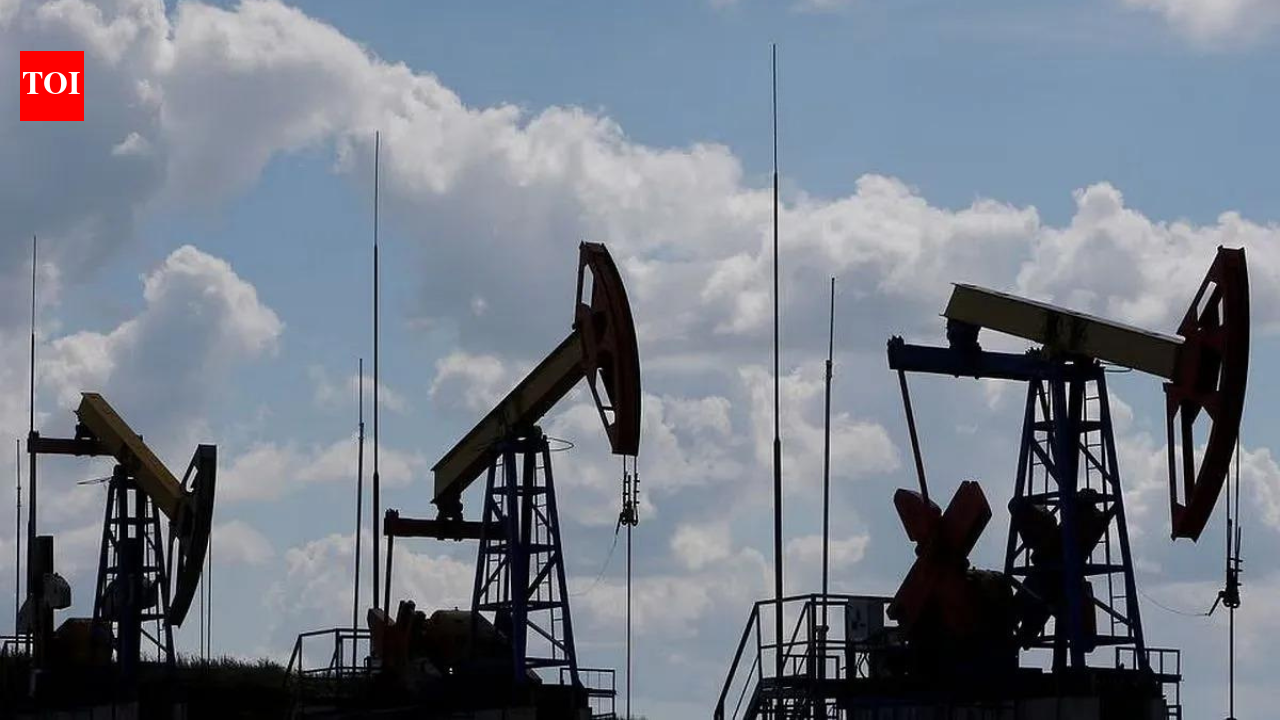
Oil prices surge 10% as US-Israel strikes on Iran rattle global markets


Oil prices surge 10% as US-Israel strikes on Iran rattle global markets

Oil prices surged by as much as 10 per cent as markets opened in Asia, after US and Israeli strikes on Iran heightened fears of a wider conflict in the Middle East and potential disruption to global energy supplies.Brent crude and Nymex light sweet crude both leapt sharply in early trading on Monday, before easing slightly. Brent rose more than 12 per cent at one stage to around $82 a barrel, having settled at just over $73 on Friday. By mid-morning in Asia, it was trading close to $79.30, up nearly 9 per cent. US crude climbed about $8, or 12 per cent, to roughly $75 a barrel, while West Texas Intermediate was up around 8 per cent at about $72.The spike adds to an already strong year for oil, with international benchmark prices having climbed roughly 20 per cent since January. Analysts warned that further escalation could drive energy costs even higher, depending on how Tehran responds and whether supply routes are affected.Particular concern surrounds the Strait of Hormuz, the narrow entrance to the Persian Gulf through which around 15 million barrels of crude oil pass each day — about a fifth of global supply, according to Rystad Energy. Tankers using the strait transport oil and gas from Saudi Arabia, Kuwait, Iraq, Qatar, Bahrain, the United Arab Emirates and Iran. Reports of attacks on vessels in the area have raised fears that shipments could slow or halt altogether, restricting exports and pushing up crude and petrol prices worldwide.Jorge León, senior vice-president of geopolitical analysis at Rystad, said markets were focused less on theoretical spare capacity and more on whether oil could physically move through the Gulf. “If flows through the Gulf are constrained, additional production will provide limited immediate relief,” he warned.Meanwhile, US stock futures fell more than 1 per cent, while shares in major oil companies such as Exxon and Chevron gained about 2 per cent.The conflict between Iran, the United States and Israel has escalated into one of the most serious Middle East crises in years, with coordinated US-Israeli air and missile strikes across Iran triggering extensive retaliation. Supreme Leader Ayatollah Ali Khamenei has been confirmed dead after the initial offensive, prompting Tehran to launch missiles and drones at Israeli and US targets across the Gulf and into neighbouring states. Casualties have mounted, infrastructure and airspace disruptions are widespread, and global markets are reacting to the heightened risk of prolonged hostilities. International pressure for de-escalation remains intense, even as Iran vows vengeance and the fighting continues.


Source link

Ahmedabad: Class 12 boy locked in room by girlfriend’s family dies of suicide | Ahmedabad News


Ahmedabad: Class 12 boy locked in room by girlfriend’s family dies of suicide

AHMEDABAD: A 17-year-old boy appearing for Class 12 board exams allegedly died by suicide on Saturday afternoon after being locked inside his 15-year-old girlfriend’s Chiloda home, where her father allegedly confined him upon finding him there. Chiloda police have registered an accidental death case. Police said the girl, a Class 10 board student and from the same school as the boy, was alone at home as her father had stepped out to see her hospitalized mother. The boy, who lived nearby, went to meet her during this time. Inspector S J Chauhan said the girl’s father returned unexpectedly, found the boy inside, reprimanded both, and then asked his daughter to step out before locking the boy in a room and calling his family. While his relatives were on their way, the boy allegedly used a sari to hang himself from the ceiling fan. He was found unresponsive when the room was opened and was declared dead at the hospital. Chauhan said the girl’s family had earlier objected to the teenagers’ relationship and restricted their interactions. Both were in the middle of their board exams. Statements of family members have been recorded. “At present, we registered an accidental death case. Further investigation is underway,” Chauhan said.


Source link

‘Cut off the head of the snake’: US says IRGC HQ destroyed in strike – Watch video


‘Cut off the head of the snake’: US says IRGC HQ destroyed in strike – Watch video

The United States has said it has destroyed the headquarters of Iran’s powerful Islamic Revolutionary Guard Corps, declaring it had “cut off the head of the snake” in a sweeping assault.In a statement, United States Central Command (CENTCOM) said a large-scale American strike had wiped out the IRGC’s main command facilities. “America has the most powerful military on earth, and the IRGC no longer has a headquarters,” it said. The command accused the corps of having “killed more than 1,000 Americans over the past 47 years”, adding that the latest operation had dealt a decisive blow.The announcement came on the second day of joint US-Israeli bombardments that also killed Iran’s Supreme Leader, Ayatollah Ali Khamenei, in one of the opening strikes. Washington said major combat operations were continuing as part of Operation Epic Fury, with B-2 stealth bombers deploying 2,000-pound bombs against hardened missile facilities and US naval forces striking targets in the Gulf of Oman.CENTCOM confirmed that three US service members had been killed in action and five seriously wounded, marking the first publicly acknowledged American casualties in the conflict. “Several others sustained minor shrapnel injuries and concussions,” it said, adding that identities would be withheld until families were notified. No details were given about where the deaths occurred.President Donald Trump, speaking from his Florida resort, focused on battlefield gains. He said 48 Iranian leaders had been killed “in one shot” and that nine Iranian naval vessels had been destroyed. Posting on Truth Social after the casualties were reported, he wrote: “We have destroyed and sunk 9 Iranian Naval Ships, some of them relatively large and important.” He did not mention the American fatalities.Iran’s Revolutionary Guards claimed they had struck the USS Abraham Lincoln with four ballistic missiles, but CENTCOM denied this. “The missiles launched didn’t even come close. The Lincoln continues to launch aircraft in support of CENTCOM’s relentless campaign,” it said.The conflict has already spread beyond Iran and Israel. Tehran has fired missiles and drones at Israeli cities and at US military installations across the Gulf. Nearly two dozen people were killed in Pakistan after protesters attempted to storm a US consulate, while airspace closures across the region left hundreds of thousands stranded.Democratic leader Hakeem Jeffries called the deaths of US troops “heartbroken” news and urged Congress to restrain what he described as a “reckless decision to go to war”. US Ambassador to the United Nations Mike Waltz wrote simply: “Freedom is never free.”With Iran’s provisional governing council now meeting to name a successor and Washington insisting that “heavy and pinpoint bombing” will continue, fears are mounting of a wider regional war and deepening global economic shock.


Source link

‘They want to talk, and I agreed’: Trump claims Iran seeking dialogue


'They want to talk, and I agreed': Trump claims Iran seeking dialogue

US President Donald Trump said on Sunday that Iran’s new leadership wants to talk to him and that he agreed, according to an interview with The Atlantic magazine.“They want to talk, and I agreed to talk, so I will be talking to them. They should do it sooner. They should give what was very practical and easy to do sooner. They waited too long,” Trump said in the interview from his Florida residence.Trump did not specify who he would speak with or say whether it would occur on Sunday or Monday but noted that some of the Iranians involved in negotiations in recent weeks were no longer alive.

IRAN WAR: Trump’s First Video Message To Khamenei & Iranians; Confirms Combat Ops | ‘Surrender Now’

“Most of those people are gone. Some of the people we were dealing with are gone, because that was a big—that was a big hit,” he said. “They should have done it sooner, Michael. They could have made a deal. They should’ve done it sooner. They played too cute.”Iranian President Masoud Pezeshkian said a leadership council composed of himself, the judiciary head, and a member of the powerful Guardians Council temporarily assumed the duties of supreme leader following the death of Ayatollah Ali Khamenei.When asked whether he was willing to prolong the US bombing campaign against Iran to support a popular uprising if one unfolded, “Will they continue to get support if it takes some time to overthrow the regime?” Trump was noncommittal. “I have to look at the situation at the time it happens, Michael. You can’t give an answer to that question,” he said. But the President also expressed confidence that a successful uprising was coming, noting the signs of celebration in the streets of Iran and supportive gatherings of expatriate Iranians in New York and Los Angeles. “That is going to happen. You are seeing that, and I think it’s going to happen. A lot of people are extremely happy over there and in Los Angeles and in many other places,” he said. Trump told the magazine that he was pleased with Iranian people’s reaction so far. “Knowing it’s very dangerous, knowing I told everybody to stay in place—I think it’s a very dangerous place right now,” he told me. “The people over there are shouting in the streets with happiness, but at the same time, there are a lot of bombs coming down.”


Source link