Breaking News
Almost all US bases hit by Iran: Is America unable to safeguard its Middle East military assets?

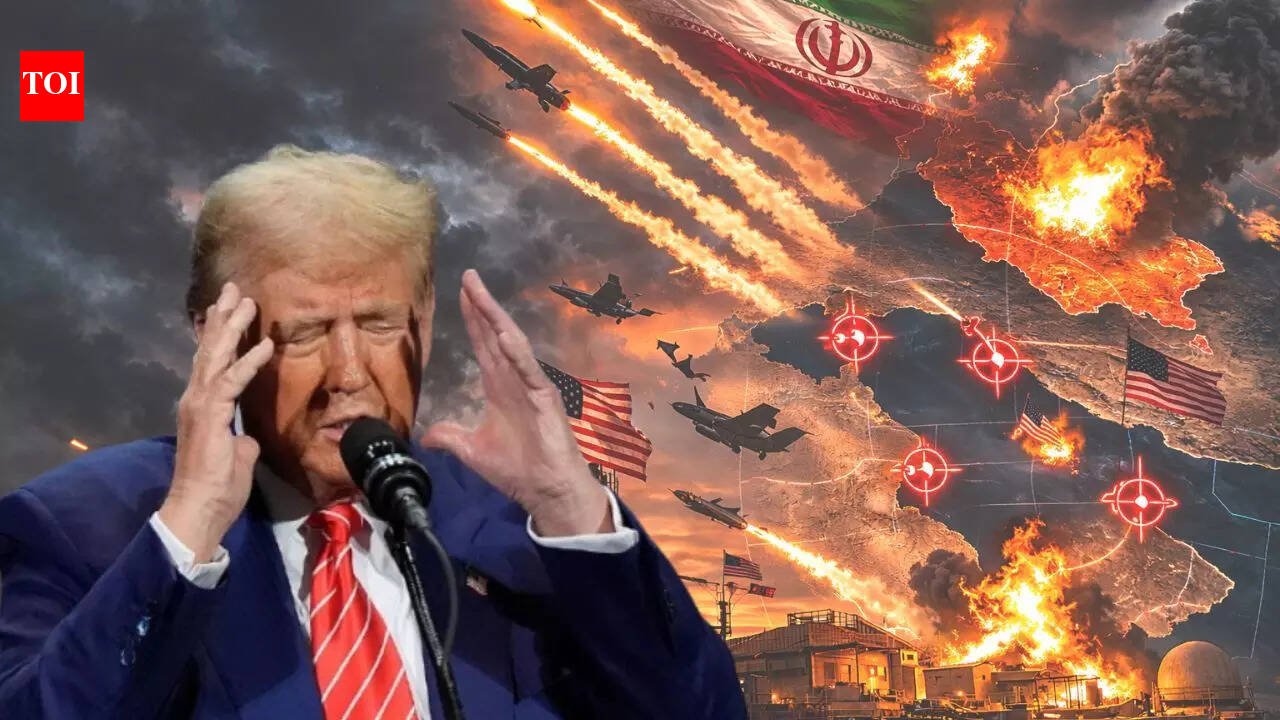
Iran’s Salvos RIP OPEN U.S. Air Defence Umbrella; After Iron Domes, America Defence Shield ‘Smashed’

NEW DELHI: Hours after the killing of Iran’s Supreme Leader Ayatollah Ali Khamenei in a sweeping US–Israel operation, Tehran launched what it described as a broad retaliatory campaign targeting American and Israeli military assets across the Middle East.Iran’s Islamic Revolutionary Guard Corps (IRGC) claimed that all Israeli and US military targets in the region had been struck “by the powerful blows of Iranian missiles”.

Iran’s Salvos RIP OPEN U.S. Air Defence Umbrella; After Iron Domes, America Defence Shield ‘Smashed’

“This operation will continue relentlessly until the enemy is decisively defeated,” the IRGC said, adding that all US assets throughout the region were now considered legitimate targets.The scale and geography of the attacks have triggered a pressing question: is the United States struggling to safeguard its military footprint in the Gulf, and are its layered air defence systems being stretched to their limits?

A multi-front retaliation across the Gulf

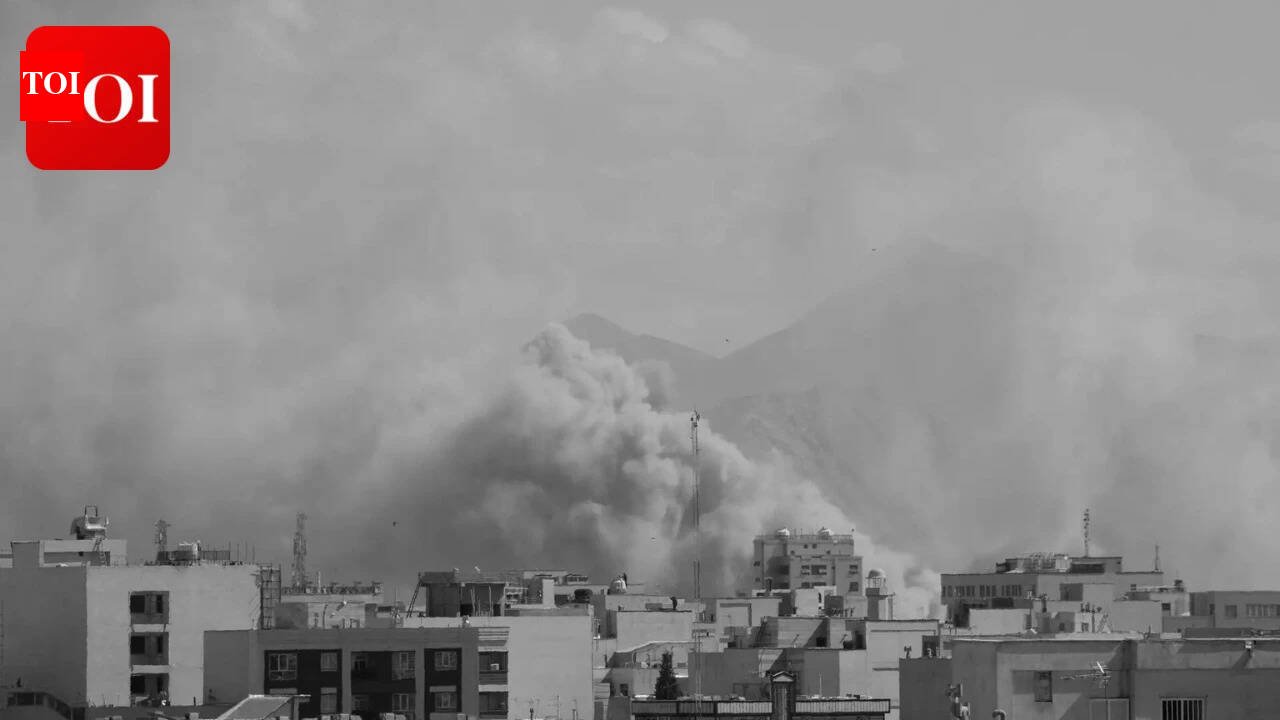
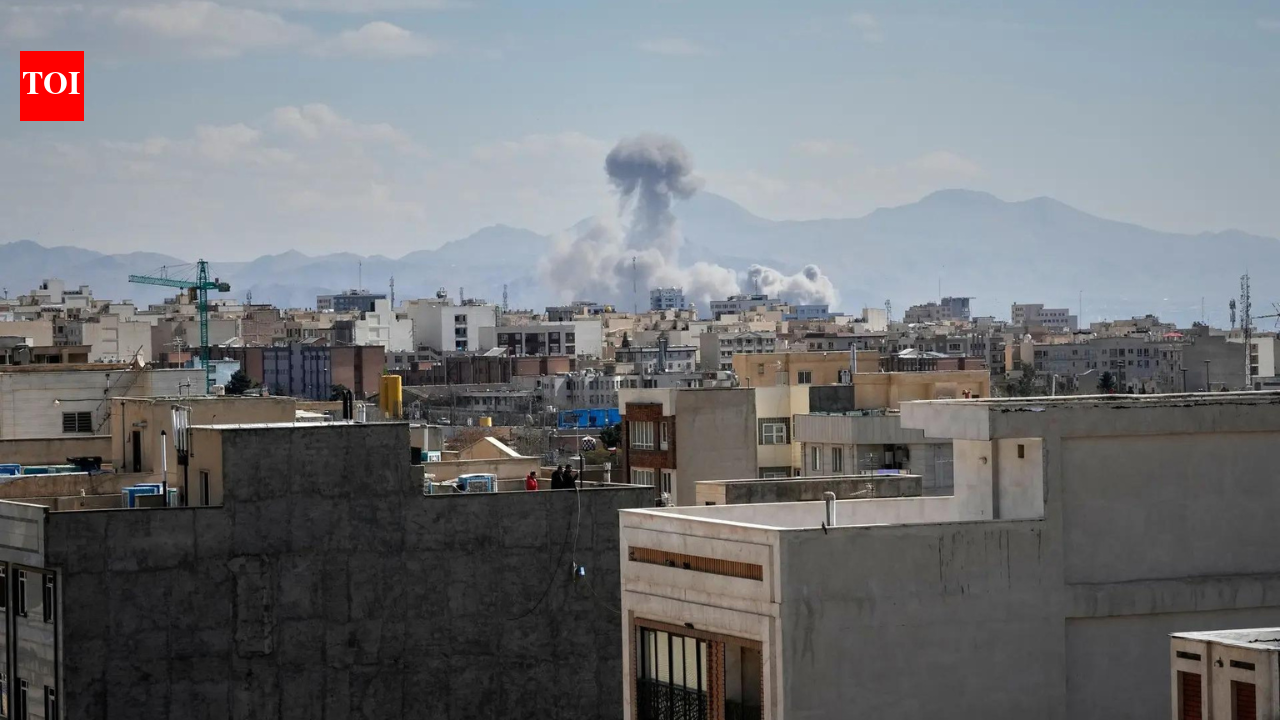
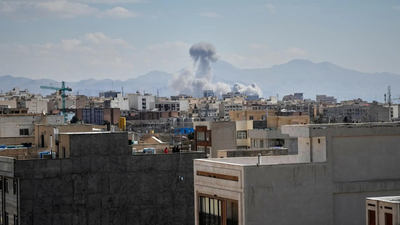
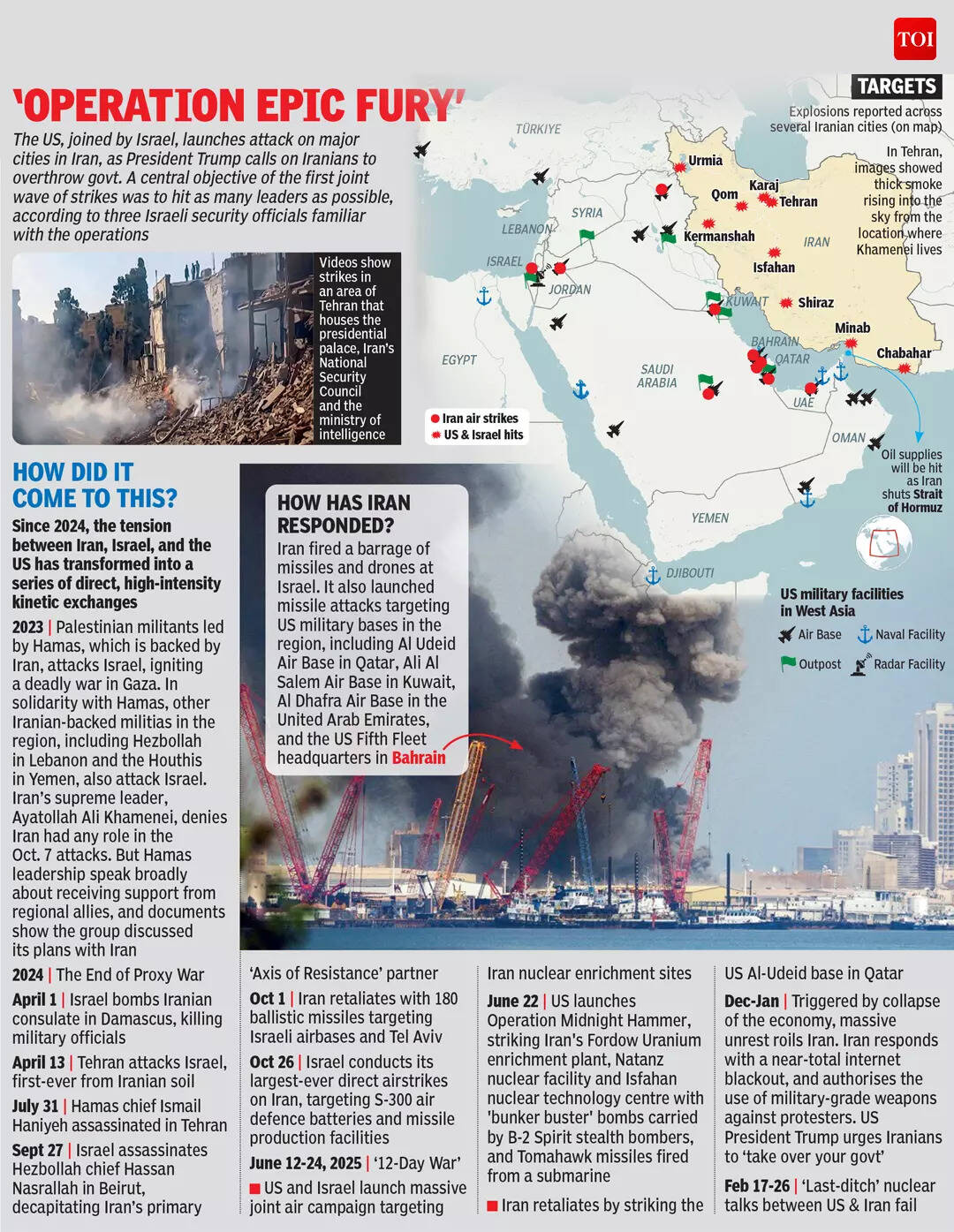
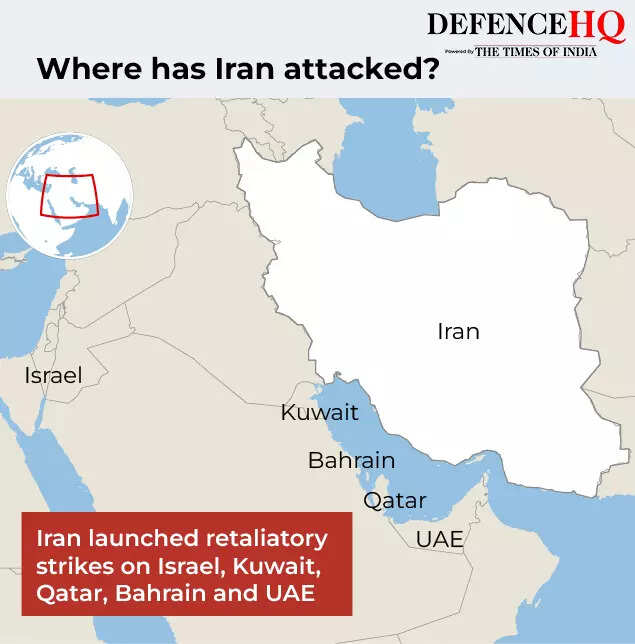
Iran’s retaliation was not confined to a single theatre. According to Iranian state-linked outlets and regional media, missiles and drones were launched towards US-linked assets in Bahrain, Kuwait, Qatar, the United Arab Emirates and Iraq’s Kurdish region.In Abu Dhabi, at least one person was reported killed after several missiles launched from Iran were intercepted, according to the UAE’s state news agency. A fire broke out near a hotel on Dubai’s Palm Jumeirah after what officials later described as an “incident” in a building that injured four people.Footage verified by BBC showed thick smoke rising from a luxury hotel in Dubai, while other videos captured loud explosions and interceptions in the skies over Doha and Manama.
maps3

.

In Bahrain, the government confirmed that a missile attack targeted the headquarters of the US Navy’s Fifth Fleet in Manama. The kingdom described it as a “treacherous attack” and “a blatant violation of the kingdom’s sovereignty and security”.Video circulating on social media appeared to show a drone striking a tower block near the naval headquarters, setting it ablaze. Bahrain’s Interior Ministry said several residential buildings had been hit and civil defence teams were engaged in rescue and firefighting operations.

CENTCOM confirms US casualties

Amid the barrage of claims and counterclaims, US Central Command issued an update from Tampa, Florida.“As of 9:30 am ET, March 1, three US service members have been killed in action and five are seriously wounded as part of Operation Epic Fury,” CENTCOM said.Several others sustained minor shrapnel injuries and concussions and were being returned to duty, it added, noting that major combat operations continued and the situation remained fluid.The confirmation of American fatalities marks a significant escalation, raising the stakes for Washington and reinforcing concerns over the vulnerability of forward-deployed US forces.

Kuwait and Qatar: Bases under fire

In Kuwait, the defence ministry said Ali al-Salem Air Base came under attack by ballistic missiles, all of which were intercepted by Kuwaiti air defence systems. However, a drone targeted Kuwait International Airport, leaving employees with minor injuries and causing material damage.Kuwait’s Foreign Ministry said the country maintained its right to defend itself.In Qatar, the defence ministry said it had “thwarted” attacks under a “pre-approved security plan”, intercepting all missiles before they reached the country’s territory. Sources speaking to Al Jazeera reported that a long-range early warning radar in northern Qatar had been targeted.The Qatari foreign ministry called the attack “a flagrant violation of its national sovereignty” and “an unacceptable escalation”, noting that Doha had sought to distance itself from regional conflicts.

Saudi Arabia and Iraq drawn in

Saudi Arabia confirmed that Iran had targeted Riyadh and the kingdom’s eastern region, adding that the attacks were repelled.“These attacks cannot be justified under any pretext or in any way,” the Saudi foreign ministry said, stressing that the kingdom had previously confirmed it would not allow its territory to be used to target Iran.In Iraq, Erbil International Airport in the Kurdish region was reportedly targeted twice. US air defences shot down a drone near a US military base close to Erbil, according to Reuters. The Iraqi government later confirmed air strikes on Jurf al-Nasr, a military base housing Kataib Hezbollah elements integrated into the regular army.Kataib Hezbollah warned that it would soon begin attacking American bases “in response to their aggression”.

Iran claims strike on USS Abraham Lincoln, US denies hit

Iran’s Islamic Revolutionary Guard Corps escalated its rhetoric by claiming it had directly struck a major US naval asset in the Gulf.“The US aircraft carrier Abraham Lincoln was struck by four ballistic missiles,” AFP quoted the Guards as saying, as Tehran sought to portray the attack as a significant blow to American military power in the region.However, the United States swiftly rejected the claim.“Iran’s IRGC claims to have struck USS Abraham Lincoln with ballistic missiles. LIE. The Lincoln was not hit. The missiles launched didn’t even come close. The Lincoln continues to launch aircraft in support of CENTCOM’s relentless campaign to defend the American people by eliminating threats from the Iranian regime,” US Central Command said.Despite Washington’s denial, the IRGC maintained its hardline tone, warning that “the land and sea will increasingly become the graveyard of the terrorist aggressors”.In a separate development, US Central Command said an Iranian Jamaran-class corvette was struck during the opening phase of Operation Epic Fury and was sinking near Chah Bahar in the Gulf of Oman.The naval dimension of the confrontation, involving aircraft carriers, destroyers and support vessels, has introduced a new layer of strategic risk to an already volatile regional conflict, raising concerns about further escalation at sea.

“Will keep the gates of hell open”: Iran

Iran signalled that the campaign was far from over. In what it called the fifth wave of “Operation True Promise 4”, the IRGC said a ship carrying ammunition for American vessels at Jebel Ali anchorage had been hit and “completely disabled”.It also claimed that “The American naval base in the Abdullah Mubarak area of Kuwait was hit by 4 ballistic missiles and 12 drones, and all the infrastructure was destroyed, and a large number of American forces were killed and injured.”“The IRGC Navy, along with the air force, will keep the gates of hell open to enemy units,” it added.Independent verification of the scale of damage remains limited, but the rhetoric underscores Tehran’s intent to broaden the battlefield.

US Air defence under strain?

Across the region, Patriot systems and other missile defence batteries were activated repeatedly. In Doha, Accroding to Al Jazeera witnesses reported hearing at least a dozen explosions that sounded like Patriot interceptors engaging incoming missiles.The United States maintains about 13 military bases across the Middle East, with between 30,000 and 40,000 troops typically deployed.While many missiles were intercepted, the sheer number of launches and the geographic spread of targets have raised questions about the sustainability of constant high-alert operations and the strain on interceptor inventories.Even successful interceptions come at a cost. Patriot missiles and other high-end interceptors are expensive and finite, and saturation attacks can test the limits of layered defences.

Strait of Hormuz: A global chokepoint at risk

The conflict also reverberated across global energy markets. The UK Maritime Trade Operations agency said vessels in the Gulf had received warnings about the possible closure of the Strait of Hormuz.Roughly one fifth of the world’s oil and gas passes through the strait, making it one of the most critical maritime chokepoints globally. Any prolonged disruption could trigger sharp spikes in oil prices and destabilise global markets.
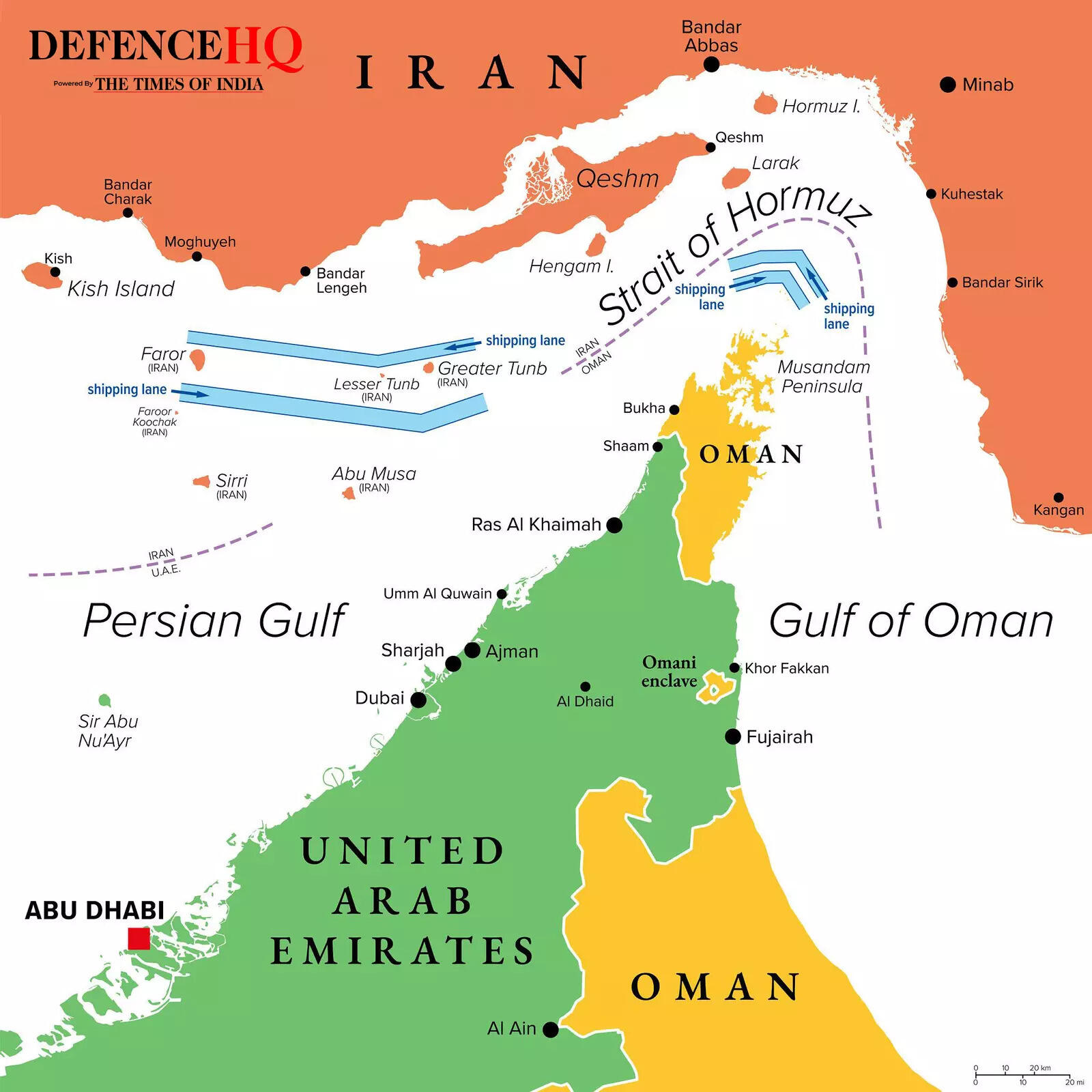
Strait of Hormuz copy (1)

.

Qatar, Kuwait, Bahrain and the UAE temporarily closed their airspace, further signalling the severity of the escalation.

Iran’s diplomatic defence

Iran’s Deputy foreign minister Hamid Ghanbari told Al Jazeera that Tehran had the right to defend itself and regretted any humanitarian losses caused by the escalation.Foreign Minister Abbas Araghchi wrote to the UN Security Council and Secretary-General Antonio Guterres, stating that Iran would “continue ⁠to exercise its right of ⁠self-defence decisively and without ⁠hesitation until ⁠the aggression ceases fully and unequivocally”.Araghchi later said the killing of Khamenei was “a very serious and unprecedented act and a blatant violation of international law”, adding: “We have no restrictions or limits in defending ourselves.”He confirmed that a Transitional Council had been established to manage affairs following the leadership vacuum.
Source link

Netanyahu says strikes on Iran ‘will only intensify’; thanks US for backing Israel’s long-standing goal


Netanyahu says strikes on Iran 'will only intensify'; thanks US for backing Israel's long-standing goal

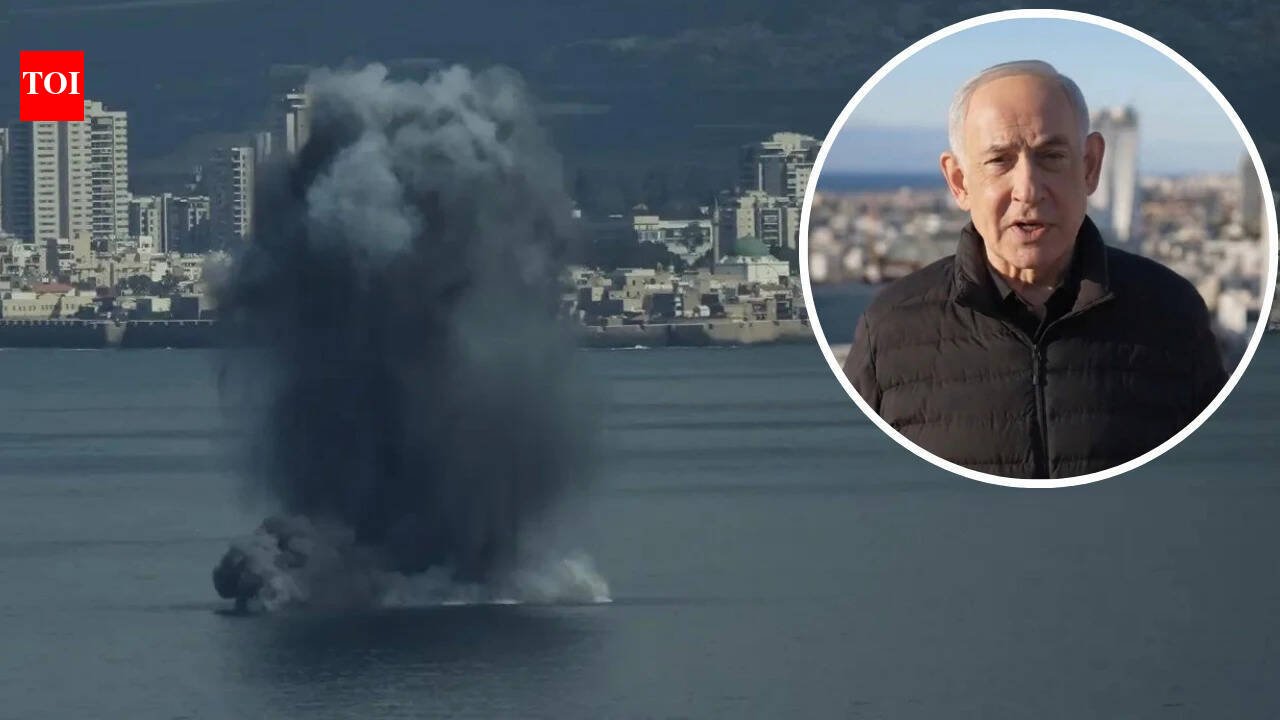
Israeli Prime Minister Benjamin Netanyahu claimed that the strikes on Iran “will only intensify” in the coming days. In a video statement released on Sunday, Netanyahu also expressed his condolences for the families that fell victim to Iran’s strikes on Israel.In the video posted on X, Netanyahu said, “I’ve just finished a meeting with the Minister of Defence, the Chief of the General Staff, and the head of the Mossad. I’ve given instructions for the continuation of the campaign.”Further talking about eliminating Iran’s Supreme Leader Ayatollah Ali Khamenei, he said, “Yesterday, we eliminated the tyrant Khamenei. Along with him, we took out dozens of the regime’s top oppressive figures. Our forces are now striking at the heart of Tehran with ever-increasing intensity, and this will only intensify further in the coming days.”First responders said an Iranian missile strike on Sunday killed at least nine people in the Israeli city of Beit Shemesh, marking the deadliest attack in the country since the war began.Netanyahu remarked on the ongoing situation as “painful days”, saying that the IDF is campaigning to bring the full might to fight for their existence and the future of Israelis.“That said, these are painful days. Yesterday, here in Tel Aviv, and now in Beit Shemesh, we’ve lost dear people. My heart goes out to the families, and on behalf of you all, the citizens of Israel, I send wishes for a speedy recovery to the wounded,” he said.“We are in a campaign in which we are bringing to bear the full might of the IDF, as never before, to this fight to ensure our existence and our future,” Netanyahu added.Netanyahu further expressed his support for the United States and said that “his friend” US President Donald Trump, and said that the US has helped them fulfil the intent they have posed for 40 years.He said, “But we are also bringing to this campaign the support of the United States, my friend, the President of the United States, Donald Trump, and the US military. This combination of forces enables us to do what I’ve longed to do for 40 years – to strike the terrorist regime hip and thigh. That’s what I promised – and that’s what we shall do.”


Source link

Narendra Modi Tamil Nadu Rally: Tamil Nadu polls: PM Modi targets DMK over corruption, Katchatheevu; calls ‘no fear’ remark a badge of honour | India News


Tamil Nadu polls: PM Modi targets DMK over corruption, Katchatheevu; calls ‘no fear’ remark a badge of honour

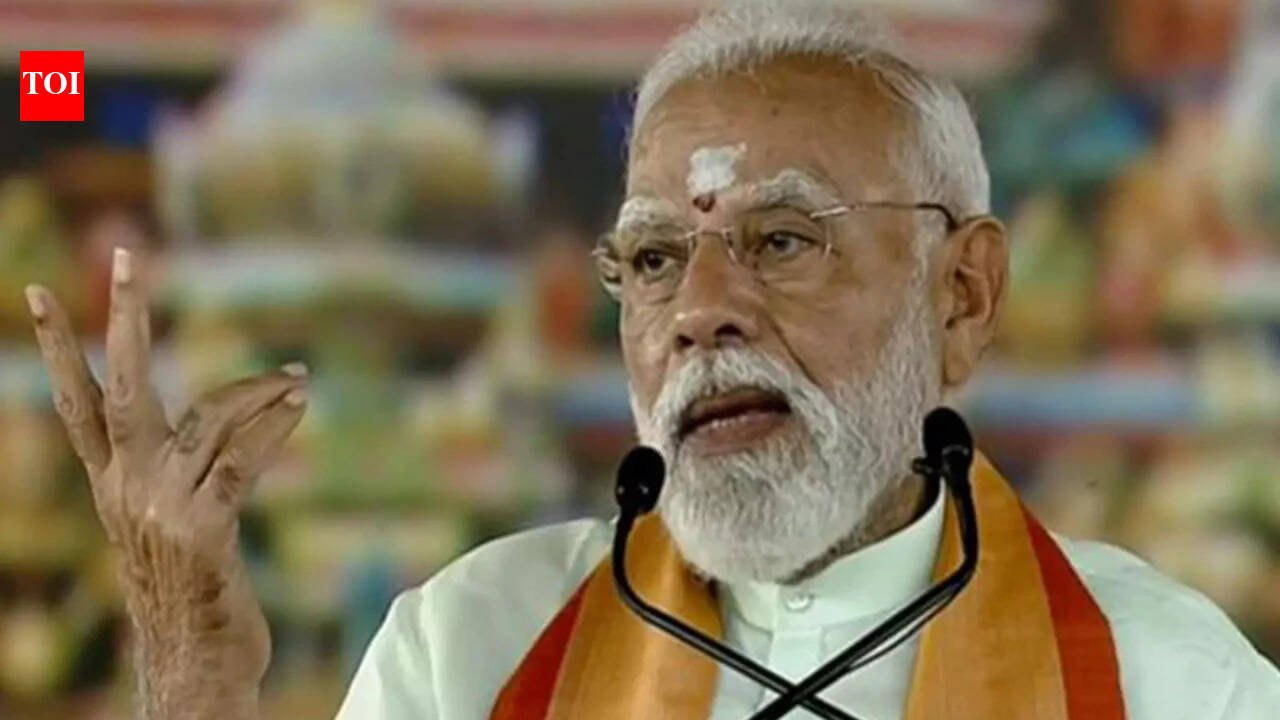
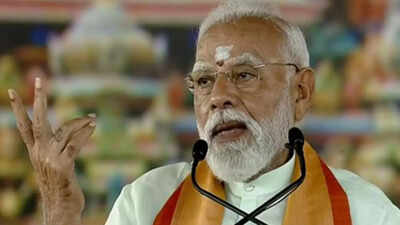
File photo: PM Modi (Picture credit: ANI)

NEW DELHI: Prime Minister Narendra Modi on Sunday launched a sharp attack on the ruling DMK in Tamil Nadu, accusing its leaders of competing in scams and failing to protect the state’s interests, while asserting that the NDA would form the next government.Addressing a massive rally in Madurai ahead of the 2026 Assembly elections,PM Modi said people had “made up their mind” to bring the AIADMK-led NDA to power in the state.

‘DMK competes in scams, not good work’

As per news agency PTI, PM Modi contrasted the DMK with former chief minister K Kamaraj, saying Kamaraj set an example of honesty in politics. “But the DMK is an example of the exact opposite,” he alleged, listing what he described as a Rs 365 crore cash-for-transfer scam, Rs 900 crore cash-for-jobs scam, Rs 1,000 crore contract scam and Rs 4,700 crore sand mining scam.“Usually ministers compete in good work. In the DMK, they compete in scams,” he said, accusing the government of “stealing from the poor, the youth and the farmers” and claiming it had no moral right to continue.

PM Modi Declares Countdown For DMK Exit, Calls It A Government Of Corruption, Mafia, And Crime

Katchatheevu, Jallikattu and ‘Congress-mukt’ Tamil Nadu

PM Modi said Tamil Nadu was the first state to become “Congress-mukt” by keeping the Congress out of power for six decades. He alleged that the Congress “took revenge” by giving away Katchatheevu to Sri Lanka in the 1970s and claimed the DMK did nothing at the time.Referring to the Jallikattu row, he said that when the Congress-led Centre, supported by the DMK, issued a notification banning the sport, “through an ordinance, it was we who ensured Jallikattu could continue.” He also said the Centre honoured Tamil culture by installing the Sengol in Parliament.

‘No one fears anyone in democracy’

Responding to Tamil Nadu deputy chief minister Udhayanidhi Stalin’s remark that the DMK does not fear the Prime Minister “or even if the father of PM comes”, PM Modi called it a “badge of honour”.“In a democracy, nobody fears anyone. So, when someone says they don’t fear me, they aren’t criticising me; actually, they are appreciating my commitment to democratic values,” he said.

Law and order, women’s safety and housing

Invoking late chief minister J Jayalalithaa, PM Modi alleged rising crimes against women and said families were being destroyed by drugs and alcohol. He promised that under an NDA government, “drug mafia and criminals will be behind bars” and women’s safety and dignity would be ensuredHe also accused the DMK of delaying surveys under the PM Awas Yojana (Rural), claiming nearly three lakh houses remain pending. “Why should lakhs of poor families suffer for DMK’s petty politics?” he asked.During the visit, PM Modi inaugurated and laid the foundation stone for infrastructure projects worth Rs 4,400 crore, according to news agency ANI. He also offered prayers at the Sri Subrahmanya Swamy temple in Tirupparankundram and met the family of a young devotee who died during last year’s Karthigai Deepam controversy.


Source link

T20 World Cup: Zimbabwe stuck in India amid closure of airspace in Middle East | Cricket News


T20 World Cup: Zimbabwe stuck in India amid closure of airspace in Middle East
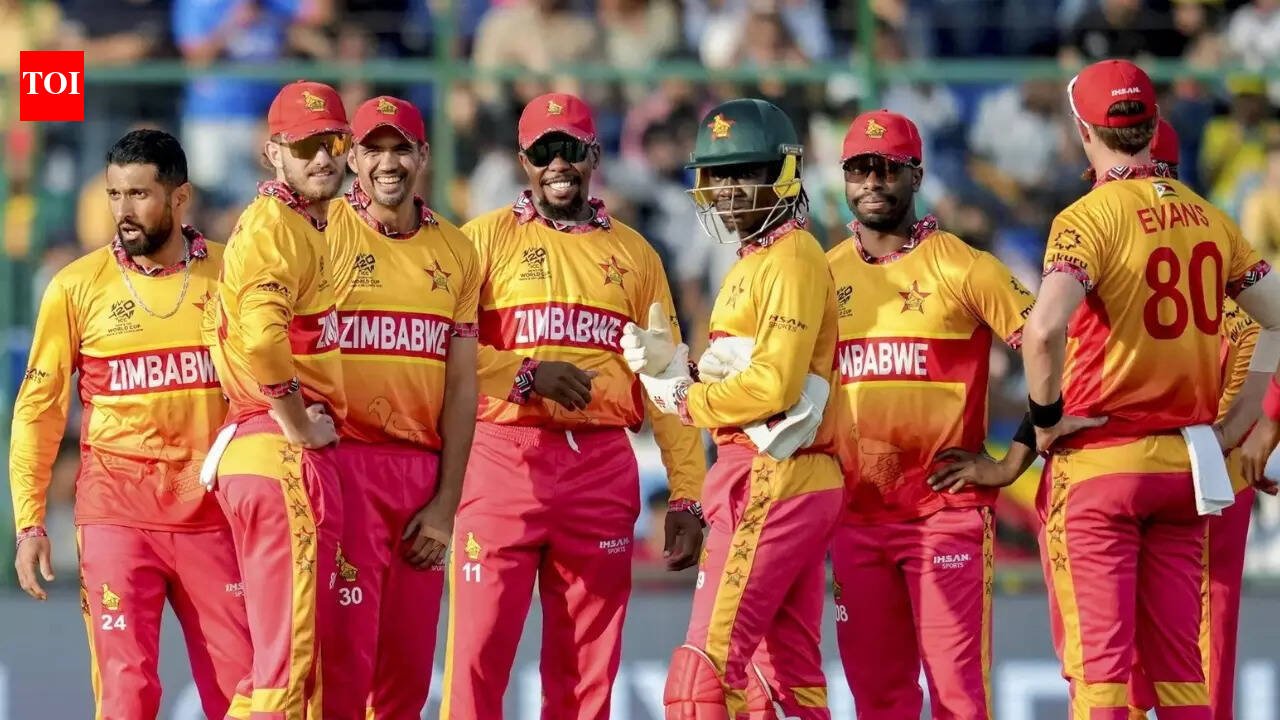
Zimbabwe players celebrate after the wicket of South Africa’s captain Aiden Markram during the ICC Men’s T20 World Cup 2026 cricket match between Zimbabwe and South Africa, at Arun Jaitley Stadium in New Delhi. (PTI Photo)

TimesofIndia.com in New Delhi: Already out of the T20 World Cup semi-final race, Zimbabwe readied for the dead rubber against South Africa in New Delhi on Sunday. As they went through their paces on a hot Saturday afternoon a day prior, their focus shifted to their phones and news channels by the evening.After the US and Israel’s airstrikes on Iran and their counter-attack on US military installations around the Gulf, it has affected the airspace in the global business hub of Dubai. Zimbabwe were due to fly out through that region on their way back home after a positive tournament.“You still believe that the focus is on the game. At the end of the day, it is on the back of everyone’s minds. You know you’re going home, when you’re going home, how you’re going home, the conversations are happening in the groups. No clarity on travel plans, focus on game since,” said Zimbabwe coach Justin Simmons after their 5-wicket loss to South Africa.As a result, Zimbabwe and their travelling fans are forced to look at alternative routes. The team was due to leave in three batches, revealed Simmons, but have no clarity as things stand. One of the players in the squad, Graeme Cremer, lives in Dubai. The team and their fans are considering the possibility of flying for Ethiopia’s capital, Addis Ababa, and then taking their onward journeys.South Africa, meanwhile, have more days left in India. They will now fly to Kolkata for the semi-final against New Zealand. The reality of the world outside, though, is not lost on the Proteas contingent.“Obviously it comes up in every conversation, so you can’t wish it away because it’s there. We’ve just got to try and nail our yorkers. So whilst it’s (in) conversations, we’ve managed to just move that aside,” said South Africa coach Shukri Conrad after they kept their unbeaten run going.“And obviously our manager, together with the ICC, we firmly believe that all the right decisions will get made. All our focus is on Kolkata and playing New Zealand on Wednesday,” he added.On Saturday, ICC, headquartered in Dubai, had issued a statement clarifying that they were monitoring the developing situation. “The International Cricket Council (ICC) is closely monitoring the evolving situation in the Middle East and has activated comprehensive contingency plans to safeguard the travel, logistics and well-being of all stakeholders associated with the ICC Men’s T20 World Cup 2026, currently underway in India and Sri Lanka,” said the statement.“While the crisis in the Middle East has no direct bearing on the conduct of the tournament, the ICC acknowledges that a significant number of personnel – including players, team management, match officials, broadcast teams, and event staff – rely on Gulf hub airports, particularly Dubai (DXB), as key transit points for onward travel to their home countries upon concluding their commitments at the event,” it continued.As of Sunday, Indian airlines have cancelled 350 international flights due to the disruptions caused by the escalating conflict in the GUlf region.“In view of airspace restrictions arising from geopolitical developments in the Middle East, a total of 350 flights operated by Indian domestic carriers have been cancelled on 01.03.2026,” the civil aviation ministry said in a post on X at 1634 hours on Sunday.


Source link

Saudi Us Iran Strike: Riyadh’s secret plea: Saudi crown prince reportedly pressed US for military action against Iran


'WILL GO ALL-OUT': Saudi Leads Arab Fury As Missiles Bombard 5 Gulf States Amid Iran Vs Israel-War

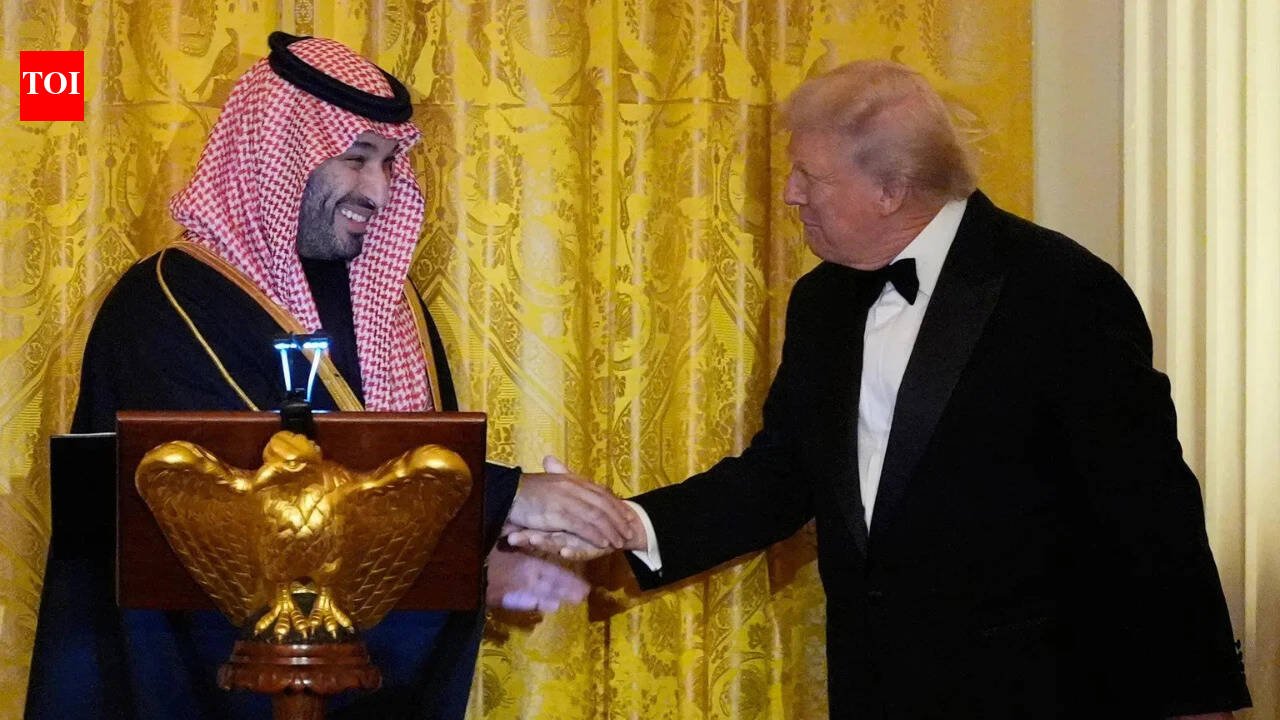
As Iran mourns the death of its Supreme Leader, Ayatollah Ali Khamenei, fresh details have surfaced about Saudi Arabia’s alleged behind-the-scenes role in the US strike on Iran. A report by The Washington Post claims that Saudi Crown Prince Mohammed bin Salman held multiple private calls with US President Donald Trump, urging him to launch military action against Tehran.Citing four people familiar with the matter, the report said that even as Riyadh publicly backed a diplomatic solution, the crown prince privately pressed Trump to act. The US, with Israel’s support, subsequently carried out strikes in Iran that resulted in Khamenei’s death.

‘WILL GO ALL-OUT’: Saudi Leads Arab Fury As Missiles Bombard 5 Gulf States Amid Iran Vs Israel-War

After negotiations between US envoy Steve Witkoff, Trump’s son-in-law Jared Kushner, and Iranian officials, Saudi Arabia publicly stated that it would not permit its airspace to be used for strikes on Iran. This announcement followed reported phone conversations between the crown prince and Iran’s President Masoud Pezeshkian.However, in his conversations with US leaders, Mohammed bin Salman reportedly argued that failing to strike Iran immediately would allow Tehran to grow stronger and more dangerous. He is said to have warned that Iran now commands one of the largest military footprints in the Middle East since the 2003 US invasion of Iraq.His brother, Saudi Defence Minister Khalid bin Salman, echoed these concerns during closed-door meetings with US officials, cautioning about the potential consequences of inaction.According to the report, US intelligence assessments had indicated that Iran was unlikely to pose an immediate threat to the United States over the next decade. Despite its adversarial stance toward Tehran, Washington had until then refrained from launching a full-scale strike.The Saudi leader is currently performing a delicate diplomatic balancing act.The Saudi crown prince is torn between protecting his nation’s sensitive oil industry from Iranian attacks and managing a deep-seated rivalry with a country he considers his primary regional enemy, according to the sources cited by The Washington Post.This tension is the latest chapter in a long-standing power struggle. The two nations—Sunni-led Saudi Arabia and Shiite-led Iran—have spent years competing for influence, often clashing through indirect “proxy wars” across the Middle East.


Source link

‘Very disturbing’: Thousands of Indians stuck in Iran and Gulf as Middle East conflict escalates | India News


‘Very disturbing’: Thousands of Indians stuck in Iran and Gulf as Middle East conflict escalates

Strikes in Iran (AP photo)

The Middle East is plunged into turmoil following joint US-Israel missile strikes on Iran, which killed Supreme Leader Ayatollah Ali Khamenei, triggering retaliatory attacks and widespread instability across the region. The conflict has disrupted air travel, forced airport closures, and prompted India to issue urgent advisories urging its citizens in Iran, Israel, and Gulf countries, including the UAE, to exercise utmost caution.

Indian students in Iran

Around 3,000 Indian students are said to stuck in Iran, including nearly 2,000 from Jammu and Kashmir. About 1,100–1,200 remain in conflict zones. Nasir Khuehami, National Convenor of the Jammu and Kashmir Students Association, told ANI that a formal request has been sent to PM Modi for immediate evacuation. “This morning, we saw that after the conflict between Iran and Israel, in which Israeli forces attacked Iran, our citizens there, especially Indian students and Indian citizens who have studied and worked there for many years, are very worried... Their families, particularly those in the Kashmir Valley, are very frightened, anxious, and in distress. The number of students from the Kashmir Valley is the highest. There are around 3,000 Indian students, and among them, around 2,000 Kashmiri students… Still, our 1100-1200 students are there… They want us to evacuate them immediately… Today, we wrote a letter to PM Modi, in which we requested him to launch a full-fledged evacuation operation so that our stranded citizens can be evacuated immediately. The Government of India should open diplomatic channels and raise the issue with their counterparts,” he said.Till then, students have been advised to move to safer locations and stay indoors, by the MEA.Follow live updates on the situation in Iran, Middle East

Students plead to government

Several Indian students stuck in Iran shared their ordeal, urging Indian government to help evacuate.Ayesha, an Indian student, stranded in Iran said that she was forced to stay to avoid failing her exams. “We all are cut off from the internet. We are hearing bomb sounds every 15 minutes. It is very disturbing here. When our embassy gave us the advisory to leave Iran, our university didn’t cooperate. They said if you leave, you will fail… Universities, hospitals, and everything is closed for 15 days right now. We are very thankful to the embassy; we are in contact with them... They are also helpless right now because the airspace is banned here from every country. We are not able to evacuate,” she said.Another Indian student in Tehran made a plea to the Indian government for immediate evacuation. She said, “I am an Indian student and currently I’m in Tehran. The situation here feels really bad and uncertain. We really don’t know what’s going to happen next. We are very grateful that the Government of India and the Ministry of External Affairs are in discussions regarding our safety, but in times like these, speed matters a lot. I am not even able to speak properly because air strikes are happening and the situation is getting worse for us. We request a quicker and clear evacuation as soon as possible. Please do not wait for the situation to get worse. Just help us. Please get us out of here as soon as possible.”“Air strikes since morning, we are stuck,” said an Indian student in Iran urging India to start evacuation.

Indians stranded in UAE and Gulf countries

Several travellers from Madhya Pradesh had gone to Dubai and Sharjah for tourism and business purposes when the crisis erupted. In the UAE, over 700 people from Madhya Pradesh, including former MLA and BJP leader Sanjay Shukla, are unable to return due to cancelled flights and temporary airport shutdowns.Shukla shared a video on social media showing smoke from explosions kilometres away and appealed to PM Narendra Modi for assistance, adding that his son is also stranded with him. Former Depalpur MLA Vishal Patel and other travellers are similarly waiting for the situation to normalise before returning to India.Also read: Oil tanker hit near Oman in Strait of Hormuz; 15 Indians evacuated

Government response and advisories

The Ministry of External Affairs (MEA) has issued urgent advisories for Indians in the conflict-hit region. Indian embassies in Tehran and Tel Aviv have established 24×7 helplines and are coordinating with local authorities. Assam’s government is in touch with the MEA to track residents from the state who are living or stranded in West Asia and gather information on their status.Meanwhile, in its official stance, India urged restraint, dialogue, and protection of civilian lives amidst escalating hostilities.

Aviation and maritime precautions

Airlines have been instructed to monitor airspace advisories and reroute or cancel flights as needed. The Ministry of Ports, Shipping, and Waterways has also warned Indian seafarers to exercise extreme caution in Iranian waters and nearby regions. Companies and maritime stakeholders are being asked to report the status of Indian crew members to authorities promptly.Meanwhile, air travel disruption continues as tensions escalate in the Middle East, affecting flights to and from the region, prompting aviation ministry to issue advisory. “In view of airspace restrictions arising from geopolitical developments in the Middle East, a total of 350 flights operated by Indian domestic carriers have been cancelled on 01.03.2026. Passengers are advised to check their flight status with the concerned airlines and remain in close coordination with them for any required assistance. The Ministry of Civil Aviation is in close coordination with airlines, airport operators and other stakeholders to proactively monitor the situation and facilitate necessary passenger support.,” it said.


Source link

‘Crumbling empire’: What Khamenei said about US in his last public speech


'Crumbling empire’: What Khamenei said about US in his last public speech

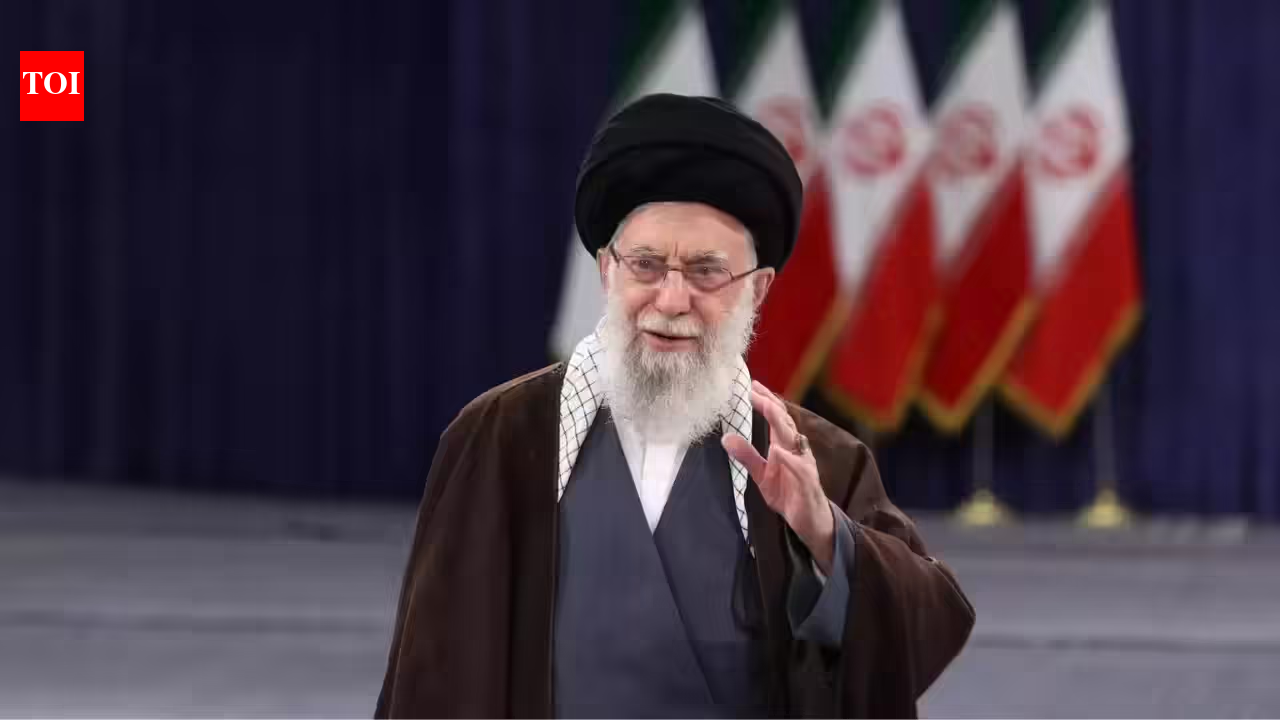
As Iran and much of the world reels from the killing of Supreme Leader Ayatollah Ali Khamenei in joint US–Israel strikes early Sunday, his final public speech has come under spotlight. Delivered on February 17, just over ten days ago, Khamenei’s address included sharp warnings against the United States and Israel, reflections on unrest inside Iran, and references to Iran’s history.He directly criticised the US, calling it a “crumbling empire” and asserting that America was in decline. “It’s a system that is truly in decline. It’s an empire that’s heading toward a collapse,” he said. He rejected pressure over Iran’s defence capabilities and nuclear programme, adding: “The problem we have with the United States is that they want to devour Iran, and the Iranian nation is preventing them. The Islamic Republic stands in their way.” On American threats, he added pointedly: “You, too, won’t be able to do such a thing,” referring to eliminating the Islamic Republic.

‘TRY IT, WE GO ALL-OUT’: Khamenei’s Big Dare To Trump, Tehran Signals ‘TOTAL WAR’ | Watch

Follow live updates on aftermath of Khamenei’s death hereThe speech was delivered in East Azerbaijan Province, on the eve of the anniversary of the 1978 Tabriz uprising, when protests against the Shah had erupted. “Over the course of time during the era of the Revolution, whenever I have traveled to Tabriz or other cities in Azerbaijan, I’ve felt that there was a particular distinction – a certain superiority – in the feelings, outlook, and perspective of these people. It’s something that is seen less frequently elsewhere. That very event which took place on the 29th of Bahman, 1356 (Feb. 18, 1978), is a historical marker that mustn’t be forgotten at all,” he said, in what became his final public speech. He also spoke of a more recent episode of unrest, roughly 40 days prior, which he described as a “coup attempt.” He alleged that foreign intelligence agencies, including those of the US and Israel, had orchestrated the unrest to target sensitive military and governmental sites. “My dear ones! What took place was a ‘coup’ that was defeated,” Khamenei said. “It wasn’t the case that a group of young or old people became angry somewhere… No, it was much more than that. It was a coup attempt, but this coup was crushed under the feet of the Iranian nation.” He claimed security forces, the Basij, the IRGC, and ordinary citizens had foiled the plot, preventing the seizure of key institutions, including the national broadcaster IRIB.

.

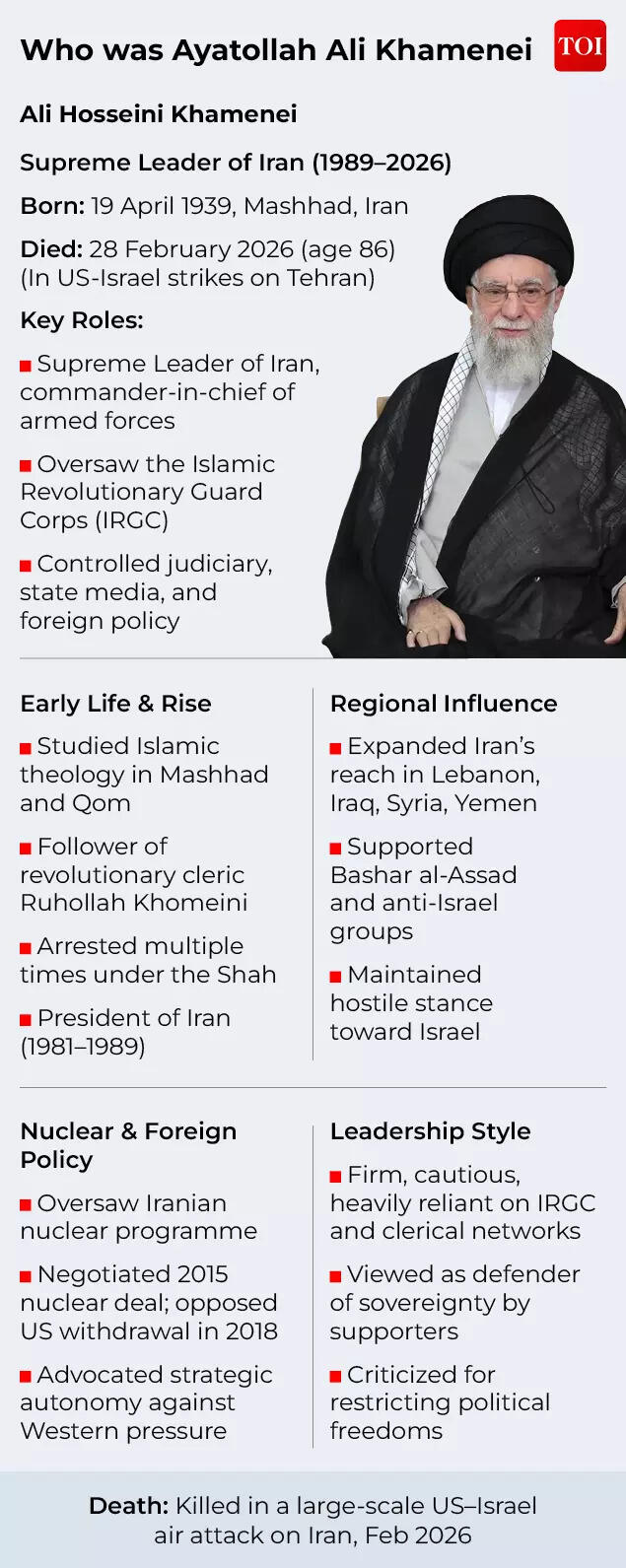
Iran’s Supreme Leader Ayatollah Ali Khamenei, 86, was killed in a precise US–Israel airstrike on his central leadership compound in Tehran, the Israeli Defence Forces confirmed. The operation, targeting Khamenei and senior officials, ended decades of his rule, during which he commanded Iran’s armed forces, oversaw domestic repression, and directed regional proxy networks. Iranian authorities acknowledged the strike, with transitional oversight assigned to the president, judiciary chief, and a Guardian Council jurist.


Source link

Who is Ayatollah Alireza Arafi? Iran’s interim Supreme Leader after Khamenei’s death


Iran State TV's Shock Announcement On Khamenei: 'Joins Highest Kingdom, Drinks Nectar Of Martyrdom'

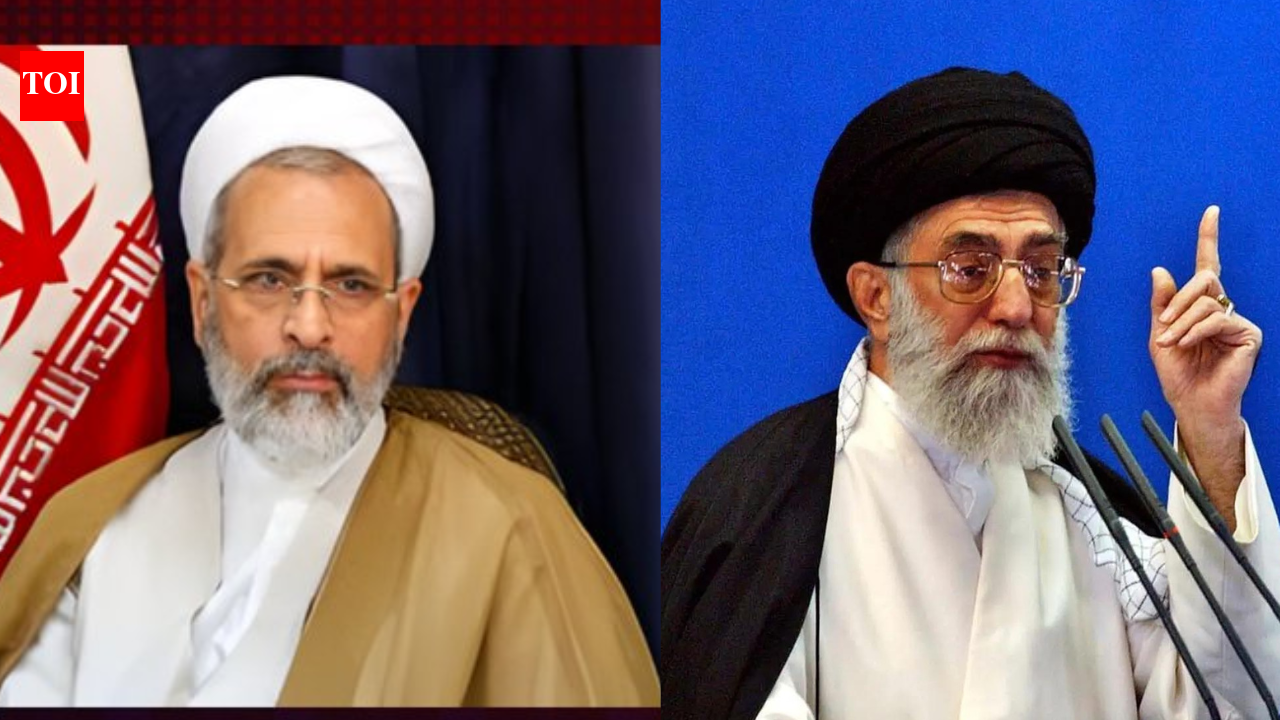
Iran has appointed Ayatollah Alireza Arafi as its interim Supreme Leader, a pivotal step in the country’s leadership transition following the death of longtime leader Ayatollah Ali Khamenei in joint US–Israeli airstrikes on Tehran early Saturday.Arafi, a senior cleric and a long-time insider in Iran’s religious and political hierarchy, now faces the challenge of steering the Islamic Republic during a period of heightened regional tensions and internal uncertainty. Click for live updates

Iran State TV’s Shock Announcement On Khamenei: ‘Joins Highest Kingdom, Drinks Nectar Of Martyrdom’

Arafi’s rise within the clerical establishment

Arafi, born in 1959 in Meybod, Yazd province, comes from a clerical family and has spent decades within Iran’s theological and bureaucratic institutions. He studied in Qom, Iran’s principal seminary city, under prominent religious scholars and earned the rank of mujtahid, qualifying him to issue independent Islamic legal rulings.His career accelerated under the late Supreme Leader Khamenei, who appointed him to key roles over the years. These included Friday prayer leadership in Meybod and later in Qom itself, positions that signalled trust from the top leadership. Arafi also chaired Al-Mustafa International University, a key institution for training clerics from Iran and abroad, and in 2019 was appointed to the powerful Guardian Council, the constitutional body that vets legislation and candidates. CFR notes that Arafi’s mix of administrative and theological positions places him firmly within the core of Iran’s clerical elite, and that his elevation maintains continuity within the existing structure of religious authority.

Constitutional path to leadership

Under the Iranian Constitution, the supreme leader must be a senior Shia cleric chosen by the Assembly of Experts, an elected body of religious scholars. Following Khamenei’s death, Tehran will first establish an interim leadership council to carry out key functions pending the Assembly’s selection of a new supreme leader, according to the Middle East Institute. Arafi’s appointment comes amid competing names discussed in public and state media as potential successors to Khamenei, including figures from both hard-line and more pragmatic clerical factions. But his positions in the Guardian Council and Assembly of Experts gave him institutional leverage when the succession decision was made.

Arafi’s view and role

Arafi has spoken publicly about the role of seminaries and clerics in promoting a politically engaged version of Shi’a Islam, emphasising solidarity with the oppressed and an international outlook. As he put it in previous remarks: “Seminaries (in Iran) need to be from the people, in solidarity with the downtrodden, be political [Islamist], revolutionary, and international (in approach).”Observers note that while Arafi has extensive experience within Iran’s religious bureaucracy and enjoys strong establishment credentials, he lacks an independent political base outside those institutional structures, a factor that may shape how he leads during a period of both external conflict and internal uncertainty.

A crucial transition in Tehran

Khamenei, who ruled Iran for nearly 37 years, was killed late on February 28, 2026, in a joint US–Israeli strike, triggering a succession process and nationwide mourning. Arafi’s rise marks only the second transition of supreme leadership since the 1979 Islamic Revolution, a moment that will test Iran’s political framework and its ability to maintain cohesion under challenging conditions.As Arafi steps into Iran’s highest office, international attention will focus on how he balances religious authority with geopolitical pressures and domestic stability in the months ahead.


Source link

Iran strikes Gulf states, even mediator Oman – why its strategy could backfire


Iran strikes Gulf states, even mediator Oman – why its strategy could backfire

Iran on Sunday expanded its response to US-Israeli strikes by targeting Gulf Arab states, including Oman and the United Arab Emirates, in what analysts say is an attempt to pressure Washington but one that risks driving the region closer to the United States.According to CNN, Iran launched missiles and drones at Israel and at civilian locations such as hotels and airports in several Middle Eastern countries that host US military bases. Oman said that its Duqm commercial port was targeted, despite Muscat having mediated talks between the US and Iran just last week. The strikes suggest that, for Iran, “everything is on the table,” Hasan Alhasan, senior fellow for Middle East policy at the International Institute for Strategic Studies, told CNN.“There’s a very clear message… that no one is safe, that mediation doesn’t offer protection, and that exchanges of mutual assurances or pledges not to allow airspaces or territories to be used militarily against Iran are ineffective either,” Alhasan said.He added that Iran’s approach appears aimed at increasing pressure on Gulf governments so they, in turn, push the US administration to bring the conflict to an early end.Iran’s calculus, he said, is to “ratchet up the pain on the Gulf states, in order to compel them to apply pressure on the Trump administration to bring a quick end to the war.”However, Alhasan cautioned that the strategy could prove counterproductive. It remains unclear how much leverage Gulf states hold over Washington.“It’s quite clear that the US has a mind of its own, and it’s acting in close concert with the Israelis. And I think what Iran’s strategy may end up doing, in fact, is pushing the Gulf states into closer alignment with the US, rather than the other way around,” he said.

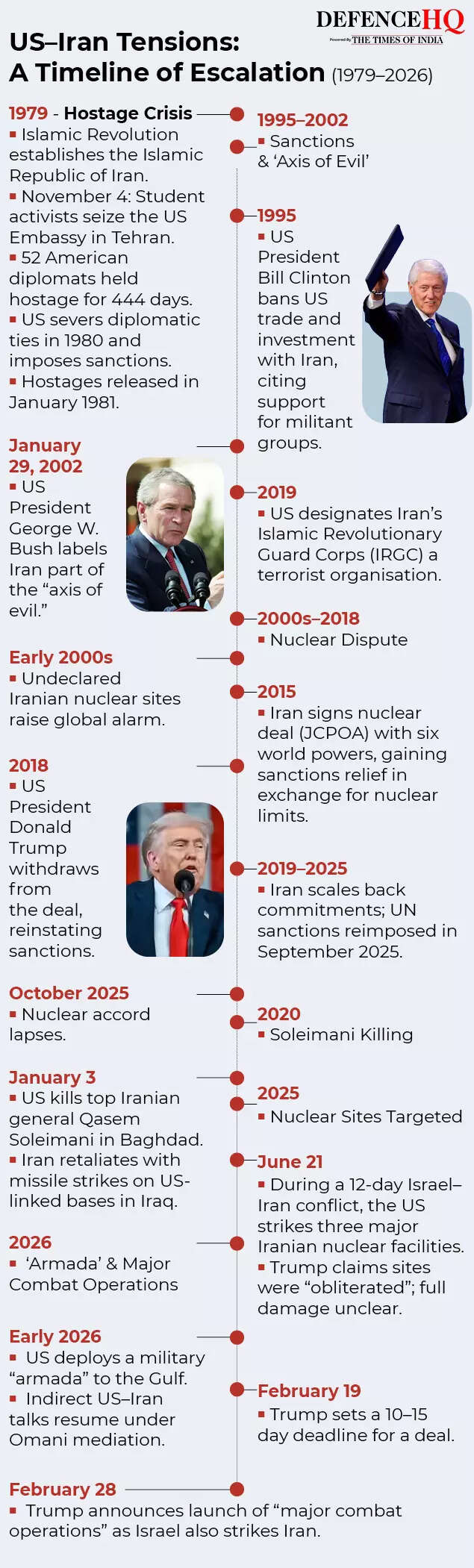
Iran conflict timeline

He further noted that while Gulf countries favour de-escalation, large-scale civilian casualties could force them “to start considering options up the escalation ladder.” Meanwhile, Anwar Gargash, an adviser to the UAE president and former state minister for foreign affairs, said Iran had “missed its target” with attacks on Arab Gulf states. “Your war is not with your neighbors, and through this escalation,” Gargash wrote Sunday on X.“Return to your senses, to your surroundings, and deal with your neighbors with reason and responsibility before the circle of isolation and escalation widens, ” he said.The UAE, which in recent years had sought to ease tensions with Iran, was among the countries hit, with Dubai, the country’s commercial hub, particularly affected by missiles and drones, AP reported.The developments mark a widening of the conflict beyond US, Israel and Iran, placing Gulf states, many of which host US military facilities, in a more direct line of fire, even as they publicly call for restraint.

Op Epic Fury

It comes as on early Saturday, US-Israel conducted joint raids in Iran, what was called Operation Epic Fury, which killed Iran’s supreme leader Ali Khamenei and Iran’s top military and security commanders.


Source link

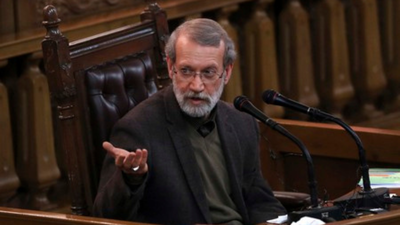
Who is Ali Larijani? Khamenei’s trusted adviser and key figure in Iran’s leadership


Who is Ali Larijani? Khamenei’s trusted adviser and key figure in Iran’s leadership

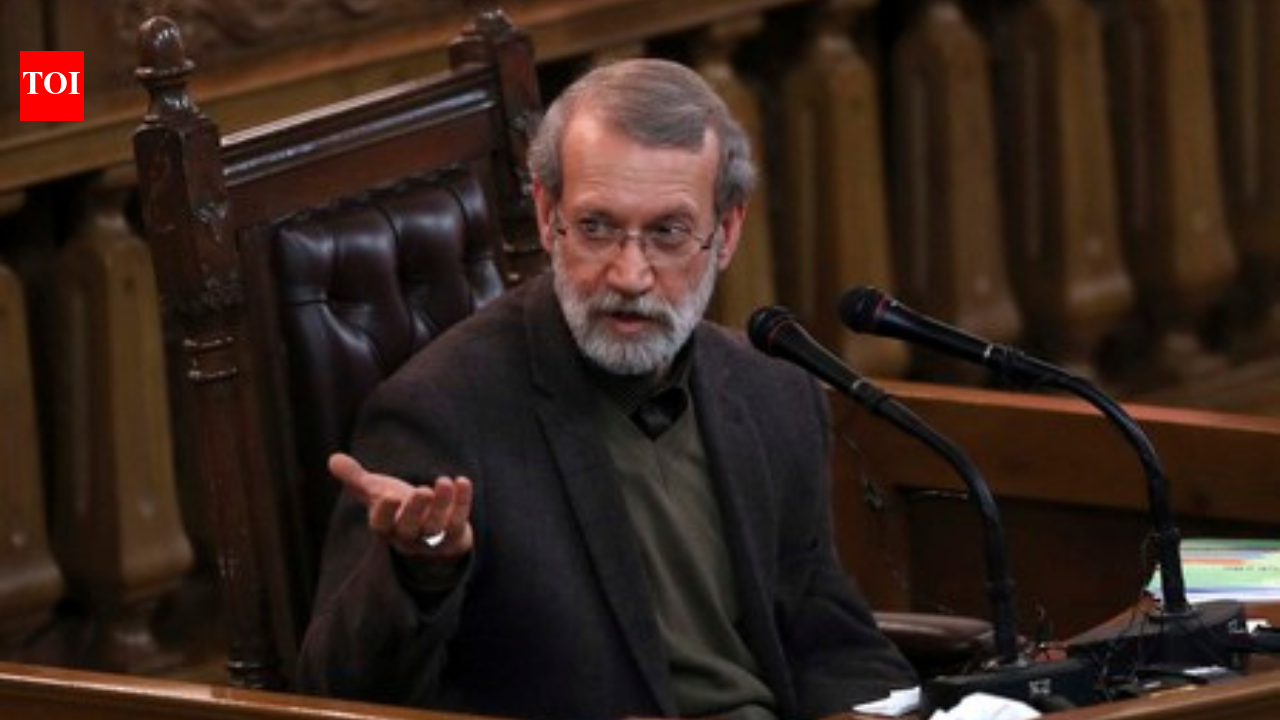
In the immediate aftermath of Supreme Leader Ayatollah Ali Khamenei’s killing, Iran’s top security official Ali Larijani struck a defiant tone, vowing retaliation against the United States and outlining plans for a transitional leadership structure.“The Americans have stabbed the Iranian people in the heart and we will stab them in their heart,” Larijani said in remarks, according to Al-Jazeera. He warned that the reaction from Iran’s armed forces would be much stronger. “ They must know they cannot just hit and run.”

‘Your Lies & Fabrications Are Exposed’: Iran Diplomat Confronts Israeli & U.S. Envoys In UNSC Clash

Larijani also confirmed that a temporary leadership mechanism would be activated following Khamenei’s death, according to Times of Israel. “An interim leadership council will soon be formed. The president, the head of the judiciary and a jurist from the Guardian Council will assume responsibility until the election of the next leader. This council will be established as soon as possible. We are working to form it as early as today,” Larijani said. His comments signal both retaliation abroad and political management at home, as Iran navigates one of the most critical moments in the history of the Islamic Republic.

Who is Ali Larijani?

Ali Larijani, 67, is one of the most powerful figures in Iran’s political and security establishment. A former commander in the Islamic Revolutionary Guard Corps (IRGC) and longtime conservative politician, he currently serves as secretary of the Supreme National Security Council, Iran’s top national security body.In recent months, as tensions with the United States and Israel escalated and nationwide protests gripped Iran, Khamenei reportedly leaned heavily on Larijani to steer the country. Iranian officials describe him as a trusted and loyal adviser with direct access to the supreme leader.Conservative analyst Nasser Imani said Khamenei “fully trusts Larijani,” calling him the right figure for a “sensitive juncture” because of his political experience and strategic thinking.Larijani’s responsibilities have expanded significantly. He has overseen internal security measures during protests, coordinated with regional actors such as Russia, Qatar and Oman and played a role in nuclear negotiations with Washington. He has also been involved in contingency planning in case of war or disruption to the leadership.Larijani comes from an elite political and religious family. He served as speaker of Parliament for 12 years and previously held the post of secretary of the Supreme National Security Council from 2005 to 2007 before returning to the role on August 5 this year.He was also tasked in 2021 with negotiating a 25-year strategic agreement with China worth billions of dollars, reflecting his standing within the system.Although Larijani is a central figure in Iran’s leadership circle, he is not considered a likely successor to Khamenei because he is not a senior Shiite cleric, a key requirement for the position of supreme leader. However, officials say that he sits at the top of contingency lists for managing the country in the event of leadership disruption, according to The New York Times.Observers describe Larijani as a calculating conservative with a mix of pragmatism and nationalism. While some critics link him to harsh crackdowns on dissent and allege complicity in human rights abuses, supporters view him as one of the few remaining figures capable of holding together a system under pressure.


Source link