Breaking News
Can Trump overturn Supreme Court tariff ruling? What US Constitution says


Can Trump overturn Supreme Court tariff ruling? What US Constitution says
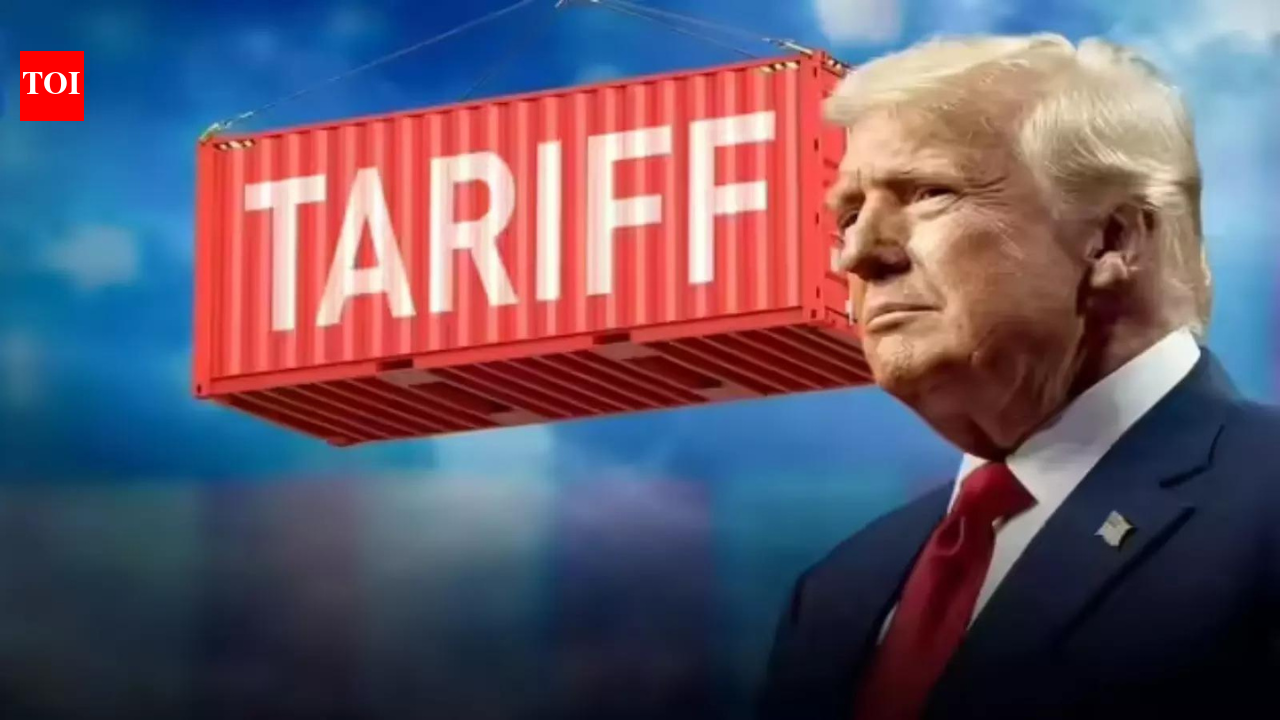
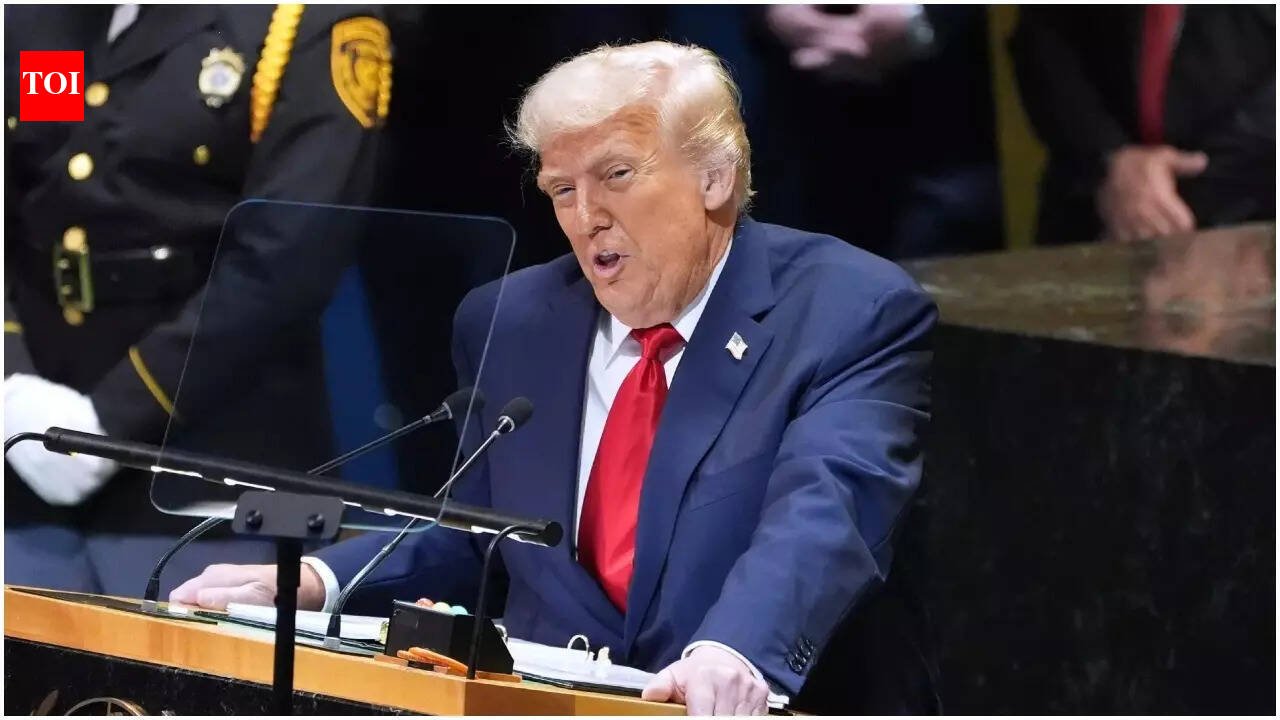
The US Supreme Court’s ruling striking down tariffs imposed under emergency powers has triggered a fundamental constitutional question: can a president –including Donald Trump — overturn or bypass a Supreme Court decision on tariffs?The answer, rooted in the US Constitution’s separation of powers, is clear. A president cannot reverse a Supreme Court ruling. But the judgment itself explains why — and outlines the limited paths still available to the executive branch.

‘US Is Screwed If…’: Trump Fears Supreme Court Ruling As Tariff Empire Faces Trillions In Losses

Supreme Court has the final word on constitutional meaning

Under Article III of the US Constitution, the Supreme Court exercises judicial power to interpret federal law and determine whether presidential actions comply with statutes and constitutional limits.In Learning Resources, Inc. v. Trump, the Court held that the International Emergency Economic Powers Act (IEEPA) does not authorise a president to impose tariffs, rejecting the administration’s claim of sweeping emergency authority.The Court emphasised that tariffs are fundamentally taxes — and taxation authority belongs to Congress.“There is no exception to the major questions doctrine for emergency statutes. Nor does the fact that tariffs implicate foreign affairs render the doctrine inapplicable. The Framers gave “Congress alone” the power to impose tariffs during peacetime.” the Court wrote, reaffirming Article I’s allocation of taxing power.Once the Court interprets a statute or constitutional provision, that interpretation becomes binding law nationwide. The executive branch must comply.

Why a president cannot overturn the ruling

The Constitution divides government power among three branches:

  • Congress (Article I) writes laws and controls taxation and tariffs
  • The president (Article II) executes and enforces laws
  • Courts (Article III) interpret laws and resolve disputes

Because tariff authority derives from Congress’s taxing power, the Court ruled, “The president has no inherent authority to impose tariffs independently during peacetime.”That means a president cannot:

  • Nullify a Supreme Court judgment by executive order
  • Reissue identical tariffs under the same rejected legal theory
  • Ignore the ruling without triggering a constitutional conflict.

The Court stressed: “There is no major questions exception to the major questions doctrine. Accordingly, the President must “point to clear congressional authorization” to justify his extraordinary assertion of the power to impose tariffs,” which it found absent in IEEPA.

The constitutional principle behind the decision

Central to the ruling is separation of powers — a system designed to prevent concentration of authority in one branch.The justices warned that allowing tariff powers through vague emergency language would create unchecked presidential authority over trade policy and the broader economy.According to the judgment, Congress historically delegated tariff authority only through statutes containing explicit limits on scope, duration and procedure.The Court also relied on the “major questions doctrine,” under which courts require clear legislative approval before allowing executive action involving vast economic and political consequences.

What Trump or any president can still do

While the ruling blocks tariffs imposed under IEEPA, it does not eliminate presidential trade power entirely.The Constitution leaves several lawful options:

  • Seek new legislation from Congress: Congress can explicitly authorise tariffs through new statutes. If lawmakers grant clear authority, tariffs could return in a legally sustainable form.
  • Use other trade laws: Other statutes contain detailed procedures allowing tariffs under specific conditions, though the Court did not evaluate hypothetical future actions.
  • Pursue future litigation: A later case could revisit related legal questions, though only the Supreme Court itself can overturn its precedent.
  • Shape future courts indirectly: Presidents influence constitutional interpretation over time through judicial appointments when vacancies arise.

What a president cannot legally do

The ruling makes clear that a president cannot:

  • Claim emergency authority alone to impose tariffs
  • Reinterpret the same statute contrary to the Court’s holding
  • Bypass Congress to exercise taxation powers.

The justices noted that emergencies do not justify transferring core legislative powers to the executive without explicit language from Congress.

Why the decision matters beyond Trump

The case can be viewed as one of the most significant separation-of-powers rulings affecting economic policy in decades.The Court concluded that accepting the administration’s argument would have allowed tariffs of unlimited amount, duration and scope based solely on a presidential emergency declaration.By rejecting that claim, the ruling reasserts congressional control over trade policy and narrows how emergency powers can be used to reshape the economy.
Source link

Trump’s tariffs illegal: US top court strikes down tariffs imposed across globe


Trump's tariffs illegal: US top court strikes down tariffs imposed across globe
US president Donald Trump

In a stinging rebuke to President Donald Trump’s aggressive trade war, the US Supreme Court ruled on Friday that his sweeping unilateral tariffs on imports worldwide violate federal law, derailing a cornerstone of his foreign policy and economic agenda. In a 6-3 verdict, the court held that the tariffs went beyond the scope of the law, with Chief Justice John Roberts authoring the majority opinion.“The president asserts the extraordinary power to unilaterally impose tariffs of unlimited amount, duration, and scope,” Roberts wrote for the court, reported CNN. “In light of the breadth, history, and constitutional context of that asserted authority, he must identify clear congressional authorization to exercise it.”The emergency authority Trump attempted to rely on, the court said, “falls short.”In his opinion, Roberts brushed aside an argument from the administration that the president had power to use tariffs to regulate commerce. That was an issue that came up during the oral arguments last year as Trump suggested the president had inherent authority to issue the tariffs.“When Congress grants the power to impose tariffs, it does so clearly and with careful constraints,” Roberts wrote. “It did neither here.”

Decision impacts some, but not all of Trump’s tariffs

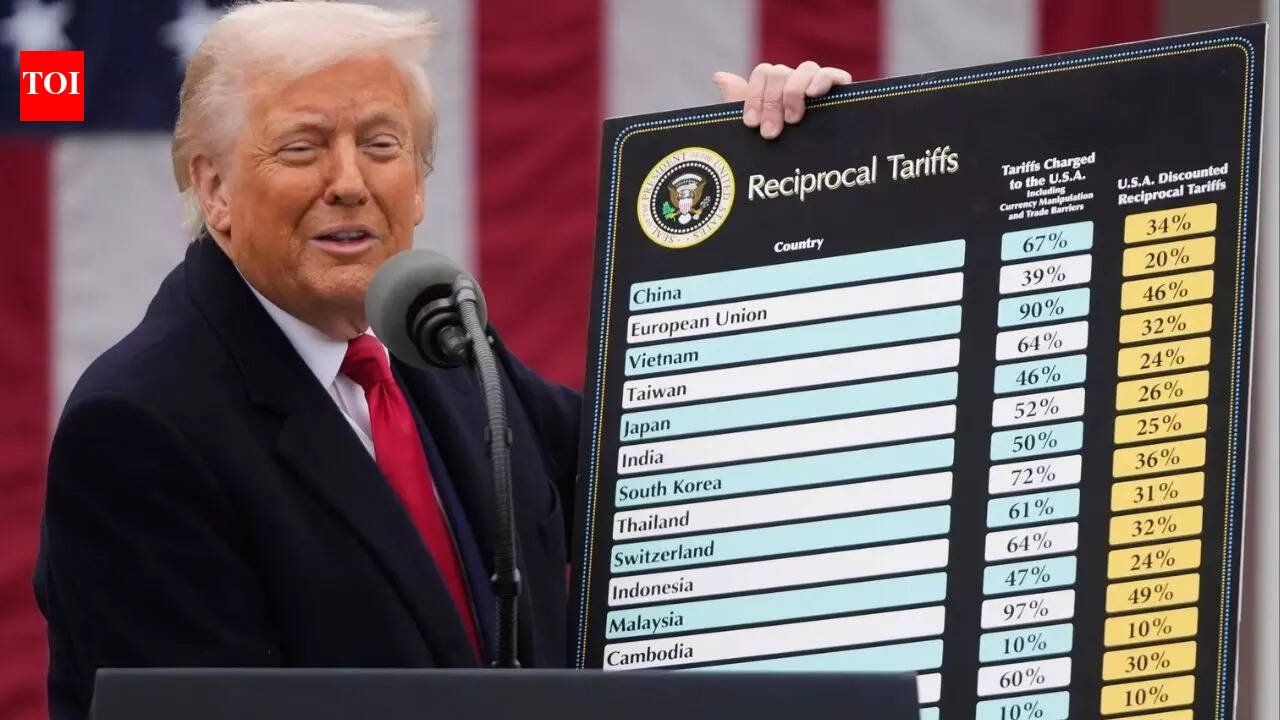
The judgment is expected to offer major relief to economies worldwide.The country-wide tariffs Trump imposed on most of the world will be affected by Friday’s decision.The ruling centres on Trump’s use of a 1977 law, the International Emergency Economic Powers Act (IEEPA), that gives the president the power to “regulate” trade in response to an emergency.Trump first invoked it in February 2025 to tax goods from China, Mexico and Canada, saying drug trafficking from those countries constituted an emergency.He deployed it again in April, ordering levies from 10% to 50% on goods from almost every country in the world. He said the US trade deficit – where the US imports more than it exports – posed an “extraordinary and unusual threat”.The unaffected tariffsThe industry-specific steel, aluminium, lumber and automotive tariffs, which were implemented under Section 232 of the Trade Expansion Act of 1962, citing national-security concerns.The legal challenge to Donald Trump’s tariff regime has emerged as a crucial test of the limits of presidential power, with the court’s decision likely to have far-reaching consequences for the global economy.On January 12, 2026, Trump wrote on Truth Social that if the Supreme Court were to rule against the United States on tariffs, the country could face repayments amounting to hundreds of billions of dollars. He added that this estimate would exclude potential compensation claims from countries and companies that had invested in new plants, factories and equipment to sidestep tariff payments.Including such investments, he warned, the financial burden could run into trillions of dollars, creating a situation that would be extremely difficult for the country to manage and possibly take years to calculate and settle. He also argued that a ruling against the tariffs would deal a severe blow to the United States’ national security-driven trade policy.

Read the full judgment


Source link

71% of Indian-Americans disapprove of Donald Trump’s second-term performance: Survey


71% of Indian-Americans disapprove of Donald Trump’s second-term performance: Survey

A Carnegie survey found that 71 percent of Indian Americans disapproved of how Donald Trump handled his overall job as President in his second term.The 2026 Indian American Attitudes Survey (IAAS), conducted in partnership with YouGov, found that only 29 percent of the 1,000 Indian American adults surveyed strongly or somewhat approved of how Trump handled his job as President, New India Abroad reported.

One Year Of Trump 2.0: How India-US Ties Went From Strategic Ties To Strategic Stress In 12 Months

The findings, when compared to data from a nationwide YouGov poll from Dec. 2025, revealed that Indian Americans were substantially more critical of Trump than the overall US population.The report came one year into President Donald Trump’s second term and found that the community was reassessing its political and social position amid tensions in US-India relations, domestic policy shifts, and rising reports of online hate speech targeting the community.Large majorities also disapproved of Trump’s handling of key policy areas. The survey found that 64 percent disapproved of his immigration policy, 68 percent disapproved of his handling of the domestic economy, and 70 percent disapproved of his international economic policy, including trade and tariffs. In many cases, respondents expressed strong disapproval rather than mild opposition.Evaluations of his management of US-India relations were also negative. Fifty-five percent disapproved of Trump’s approach to relations with India, 20 percent approved, and roughly one-quarter reported no opinion, suggesting limited foreign policy salience in electoral decision-making.Indian Americans continued to identify disproportionately with the Democratic Party, but attachment weakened since 2020. Democratic identification declined to 46 percent, while Republican affiliation increased modestly to 19 percent. Independents accounted for 29 percent of respondents. Ideologically, 32 percent identified as moderates, the largest single bloc, placing the community largely at the centre of the political spectrum.Economic issues dominated policy priorities. Twenty-one percent cited inflation and prices as their most important issue, followed by jobs and the economy at 17 percent. Health care and immigration were the only other issues registering in double digits, while foreign policy concerns remained comparatively low.Experiences of bias remained widespread. Twenty-seven percent believed Indian Americans faced “a lot” of discrimination in the United States. About half reported having personally experienced discrimination in recent years, most commonly based on skin colour, country of origin, or religion. Since the start of 2025, one in four respondents reported being called a slur.Respondents also reported frequent exposure to online racism, with nearly half saying they encountered anti-Indian content on social media regularly. Nearly one-third said discrimination concerns led them to avoid political discussions online, and roughly one-fifth reported modifying travel, public expression, or civic participation out of fear of harassment. However, the share reporting direct, personal experiences of discrimination did not significantly change compared to prior survey waves.Many respondents said discrimination altered how they spoke, lived, or participated in public life, though most did not plan to leave the United States. While 14 percent said they frequently considered relocating abroad, a majority continued to recommend the country for employment, reflecting continued belief in economic opportunity.The survey also found that reactions to symbolic political events reflected ideological divides more than identity-based solidarity. Sixty-eight percent expressed enthusiasm for New York City Mayor Zohran Mamdani’s election, largely on ideological grounds. Public remarks by Vice President JD Vance regarding religion and marriage drew negative responses linked to concerns about religious inclusion and representation.Collectively, the findings indicated that one year into Trump’s second term, anxieties about discrimination and the shifting political environment coexisted with continued belief in opportunity in the United States.The full study was fielded between Nov. 25, 2025, and Jan. 6, 2026, and had a margin of error of ±3.6 percent.The report, authored by Sumitra Badrinathan of American University, Devesh Kapur of Johns Hopkins-SAIS, Andy Robaina of Carnegie Endowment for International Peace, and Milan Vaishnav of Carnegie Endowment for International Peace, built on earlier IAAS waves conducted in 2020 and 2024 and examined partisan identity, vote preferences, policy priorities, evaluations of political leaders, and experiences with discrimination.


Source link

‘Not a negotiated document’: India clarifies on signing UN statement condemning Israel’s West Bank expansion | India News


'Not a negotiated document': India clarifies on signing UN statement condemning Israel's West Bank expansion
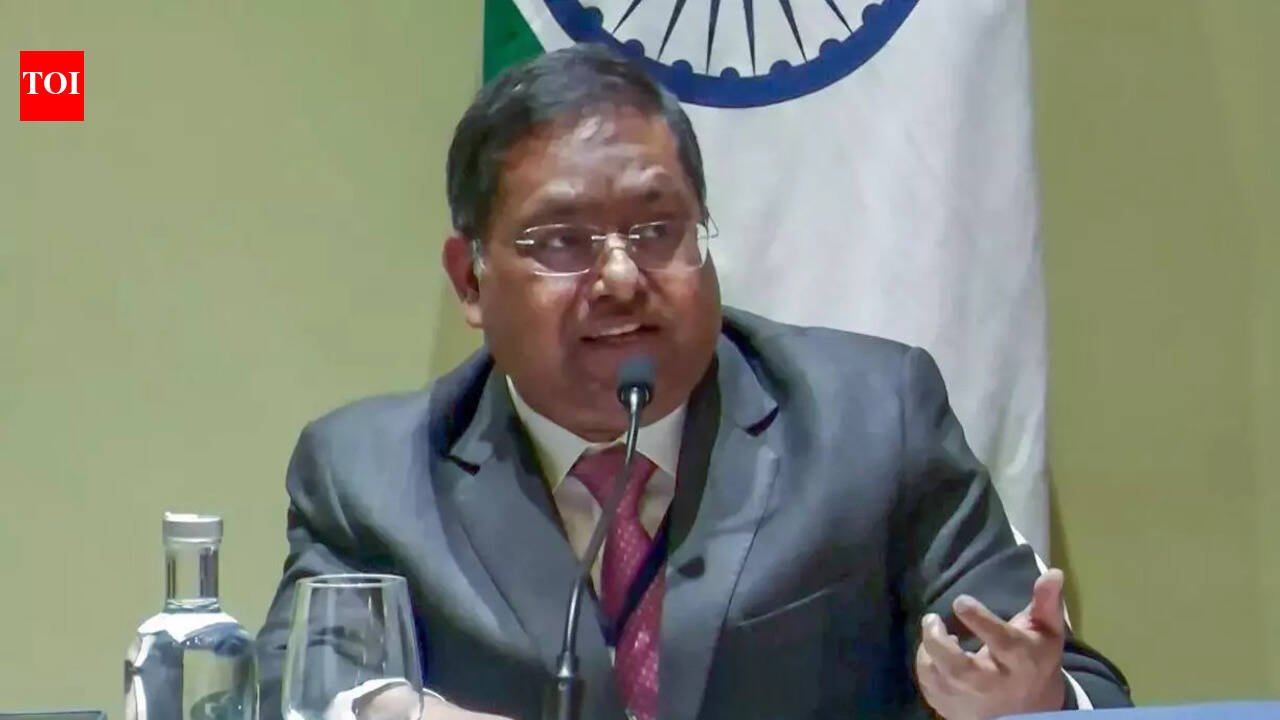
MEA spokesperson Randhir Jaiswal (ANI photo)

NEW DELHI: The ministry of external affairs on Friday said the United Nations joint statement India signed was not a “negotiated document” that condemned Israel’s West Bank expansion.The foreign ministry said New Delhi’s stand on the expansion issue was already expressed in the India-Arab League Ministerial meeting that laid out a broader vision for deeper two-way ties, pitched for a sovereign and viable Palestine state living side-by-side with Israel. The meeting had also stressed the need for conducting international relations based on the UN charter.“The statement referred to was not a negotiated document. Our position on this particular issue was expressed in the India-Arab League Ministerial meeting joint statement,” MEA spokesperson Randhir Jaiswal was quoted as saying by news agency ANI.The bureaucrat’s statement broadly implies that India did not participate in drafting or agreeing to that specific joint statement condemning Israel’s West Bank expansion. Therefore, it does not reflect India’s formally agreed diplomatic position.India was among more than 100 countries and international organisations that condemned Israel’s ongoing efforts to consolidate control over the West Bank in a joint statement at the UN, saying such measures violated international law and undermined the ongoing efforts for peace and stability in the region.India endorsed the statement late on Wednesday, just before the deadline for joint condemnation lapsed. The statement comes ahead of PM Narendra Modi’s visit to Israel next week, during which he’s also likely to address the Israeli Parliament.“We strongly condemn unilateral Israeli decisions and measures aimed at expanding Israel’s unlawful presence in the West Bank,” the statement said. “Such decisions are contrary to Israel’s obligations under international law and must be immediately reversed,” it said.It strongly opposed any form of annexation. “We reiterate our rejection of all measures aimed at altering the demographic composition, character and status of the Palestinian Territory occupied since 1967, including East Jerusalem,” it added.


Source link

Accommodation row rocks Pakistan hockey: Federation bans captain, then revokes after PHF chief resigns | Hockey News


Accommodation row rocks Pakistan hockey: Federation bans captain, then revokes after PHF chief resigns

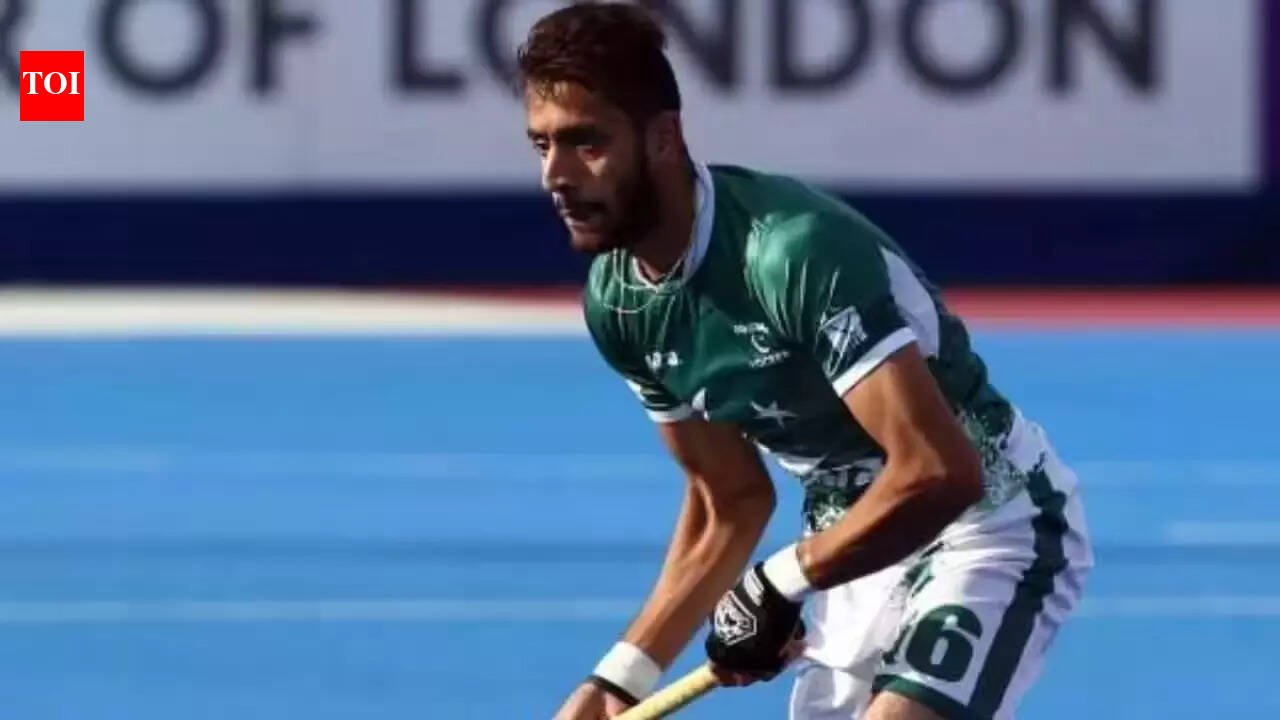
The Pakistan government has overturned the two-year ban imposed on national hockey team captain Ammad Shakeel Butt, calling the action taken by the country’s hockey federation “illegal and unconstitutional”.The ban had been announced by Tariq Bugti shortly before he stepped down as president of the Pakistan Hockey Federation. Butt had criticised the federation over mismanagement during the team’s recent tour of Australia.But the federation’s patron-in-chief, Pakistan Prime Minister Shehbaz Sharif, appointed interim PHF president Muhuydin Ahmed Wani, who reversed the decision and described it as an “illegal and unconstitutional step” by Bugti.Bugti resigned following a major fallout after the national team returned from Australia, where players faced logistical problems and stayed in Airbnb accommodation despite the Pakistan Sports Board releasing 10 million rupees to the PHF for five-star hotel arrangements during their FIH Pro League matches in Canberra.A senior official from the Inter-Provincial Coordination Ministry confirmed that Prime Minister Sharif accepted Bugti’s resignation and appointed Wani as ad-hoc PHF president along with Brig Musratullah as Director-General.“Both will manage hockey affairs on ad-hoc basis and try to repair the damage done,” the official said, as cited by news agency PTI.After the team returned home early Wednesday, Butt and several senior players told reporters they could no longer work with the existing PHF and team management. Butt said players were misled and warned against speaking to the media about their problems in Australia. He was then banned by Bugti for bringing Pakistan hockey into disrepute.Butt had also accused the PHF of forcing players “to clean the kitchen and wash dishes” before matches during the tour, in which the team lost all its Pro League games against the home side and Germany. Players were also left travelling for hours after a hotel refused them entry due to lack of advance payment by the PHF, despite funds from the PSB.He further alleged that most players had not received daily allowances from the PSB and PHF for the past year.Bugti blamed the PSB for the episode, saying the Board handled tour arrangements and was “responsible for whatever happened there”.Pakistan have lost all eight of their Pro League matches so far against Netherlands, Argentina, Australia and Germany, and are last among nine teams.They are scheduled to travel to Egypt in four months for the final qualifying tournament for the World Cup.


Source link

T20 World Cup: No fuss, no noise, just business – the New Zealand way | Cricket News


T20 World Cup: No fuss, no noise, just business - the New Zealand way
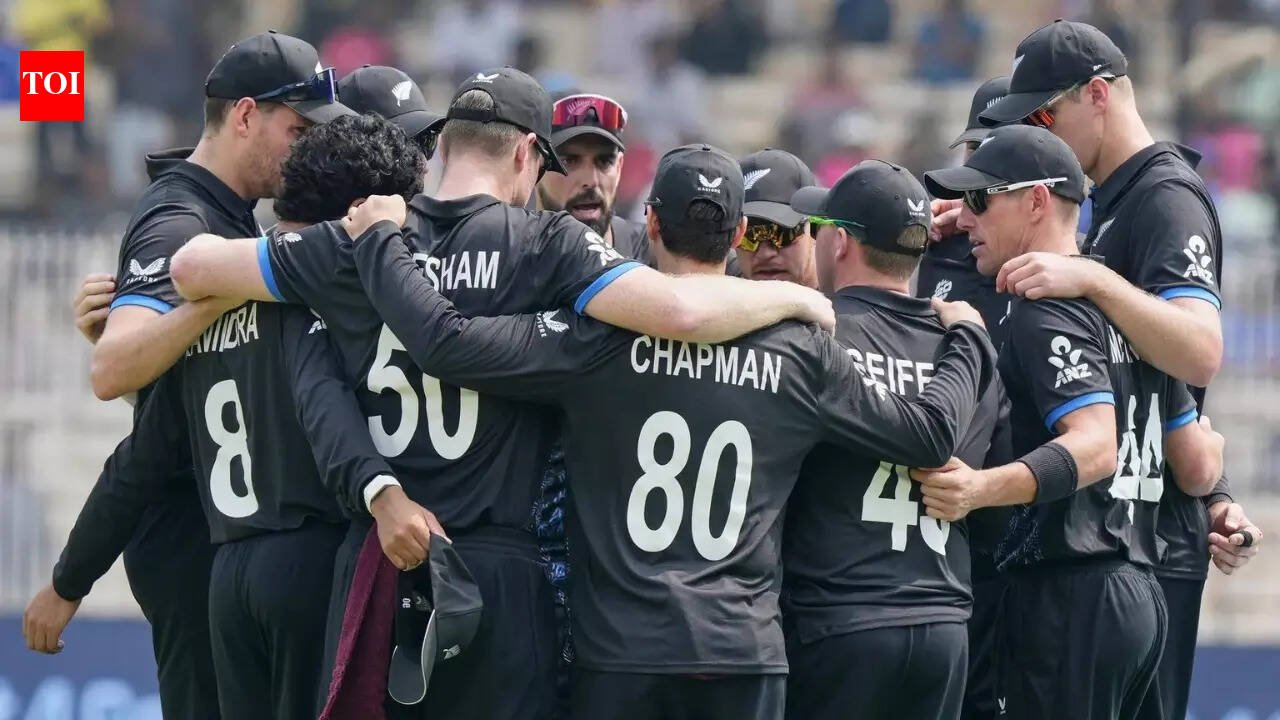
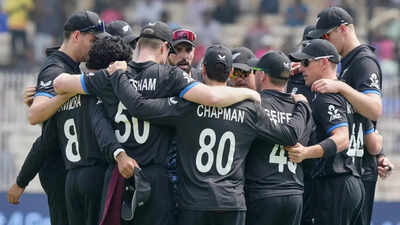
New Zealand’s team huddles before the start of the T20 World Cup cricket match between Canada and New Zealand in Chennai, India, Tuesday, Feb. 17, 2026. (AP)

TimesofIndia.com in Colombo: New Zealand middle-order batter Mark Chapman looked perplexed when he was asked about the Super Eight groups, where all four table-toppers, who have done well in their respective groups, will end up facing each other. It has been done because of the pre-tournament seedings.The 31-year-old smiled and replied, “When it comes to scheduling and planning, that’s not really in my domain.”

Why Pakistan don’t trust Babar Azam any more | T20 World Cup 2026

Chapman’s response sums up the way New Zealand play their cricket. No fuss, no theatrics, just straight down to business.After playing three matches in Chennai and one in Ahmedabad, all on red-soil pitches, the Kiwis had only one training session to adapt to the conditions ahead of their first Super Eight match against Pakistan at the R Premadasa Stadium.

Did they look bothered?

None of them rushed towards the pitch for a closer look. Once warm-ups were done, the players moved to the indoor nets. About an hour later, Daryl Mitchell came out barefoot to inspect the surface, spending a good fifteen minutes studying every inch of the 22 yards.Chapman, who did not get to see the surface, left it to the senior leadership group.“In the subcontinent, the toss always plays a factor depending on the conditions. I haven’t seen the pitch yet, so I don’t actually know what it looks like. There will be discussions behind the scenes with the senior leadership group about what we want to do,” he said.The black-soil pitches in Colombo do assist spinners, and with bigger boundaries and a slower outfield, it presents a new challenge for the 2021 T20 World Cup finalists.“We haven’t played in Sri Lanka yet. A lot of guys in our team have played a lot of cricket here, so I don’t see that playing too much of a factor. Guys understand what they need to do, and we are confident we will face whatever conditions are in front of us,” said Chapman, whose knees were heavily strapped.“In India, particularly on red-soil pitches, conditions have been favourable for batting. It has been tough for the bowlers, and the margins have been very small. We have seen scores close to 200 regularly.“Here, it is slightly different with the slower nature of the pitches. The bowlers will hopefully get a chance to show their skills, and spinners are more likely to play a part here,” he added.

Playing at the same venue

Although Pakistan are stationed in Sri Lanka, they played their group matches at two different venues in Colombo.New Zealand will be the only team playing all their Super Eight matches at the same venue, facing Pakistan on February 21, Sri Lanka on February 25, and England on February 27, all at the R Premadasa Stadium.“One of the challenges in tournaments like these is hopping from venue to venue and adapting. When we play three games at the same place, we learn with each game.“It is nice to turn up at the same venue with similar pitches and adjust. Tomorrow is our first game here, so we will have to adapt anyway, but we will understand the conditions better as we go,” he said.

Facing spin

New Zealand’s first challenge will be Pakistan’s spin-heavy attack. Usman Tariq, Abrar Ahmad, Mohammad Nawaz, Saim Ayub, and Shadab Khan form a strong unit.“Pakistan have a number of very good spinners, each with their own threat. We have played them quite frequently over the last few years.“We are well aware of what they will bring. For us, it is about being really clear in how we want to play against them,” he said.Obviously, there was a Usman Tariq question: “Usman Tariq has a unique action with the way he pauses at the crease, so that is something to factor in.”Chapman, whose role is to take on spinners in the middle overs, explained why running between the wickets will be crucial.“Given the slower pitch and bigger boundaries, you have to change your game plan. Against spinners, it is about different options like the sweep or reverse sweep. In India, you can target straight boundaries more.“For me, it is about finding different areas of the ground. There are big pockets here, so it is not all about sixes. Twos, fours, and running between the wickets are very important, especially if it is not a high-scoring game,” he said.

Pakistan's Usman Tariq balances a football on his finger as he warms up before the start of a T20 World Cup cricket match in Colombo, Sri Lanka, Sunday, Feb 15, 2026. (AP Photo)

Team news

New Zealand have suffered injury setbacks. Michael Bracewell has been ruled out of the remainder of the tournament after re-injuring his left calf. Captain Mitchell Santner missed the last group match against Canada due to illness, while Lockie Ferguson returned home for the birth of his first child.“Mitchell Santner looks pretty sprightly and excited to get back on the park, barring any last-minute illness.“Lockie has just returned and is coming off a long flight. We will see how he pulls up. I cannot confirm whether he will be in the playing eleven,” Chapman said.


Source link

‘Congress left borders open’: Amit Shah raises infiltration pitch in poll-bound Assam | India News


'Congress left borders open': Amit Shah raises infiltration pitch in poll-bound Assam
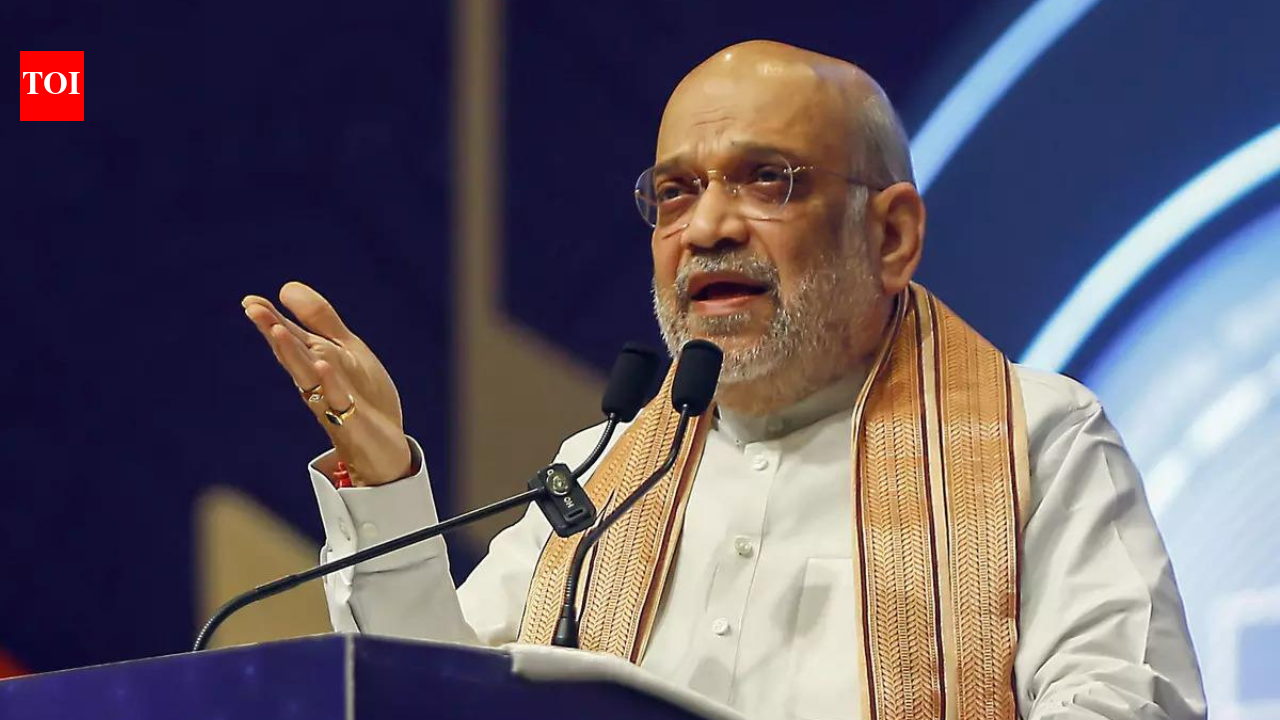
Union home minister Amit Shah (File photo)

NEW DELHI: Union home minister Amit Shah on Friday trained his guns on Congress over its years in power in Assam, blaming the party for infiltration and alleging that it had “left our borders open to infiltrators” in what he described as an “attempt to alter the demographics” of the state. He also drew a contrast with the current BJP government under chief minister Himanta Biswa Sarma, praising his “work to clear lakhs of acres of land occupied by infiltrators.”Addressing a gathering in poll-bound Assam, Shah strongly criticised the Congress’s record, saying, “Assam was beset by two problems: infiltrators were usurping the rights of the Assamese… These Congress governments left our borders open to infiltrators. Infiltrators continued to enter Assam. An attempt was made to alter the demographics of Assam by snatching away the jobs of Assam’s youth, the food grains of the poor, and the land of the villages.Shah further praised the Sarma-led government, stating, “In the second five years, our CM Himanta Biswa Sarma worked to clear lakhs of acres of land occupied by infiltrators and remove them. Now, elections are coming for the third time. Form the BJP government here once again. I promise you that we will send back every single infiltrator who entered during the Congress regime.”He also highlighted infrastructure development under the BJP, saying, “Congress ruled for years, but it did nothing for the development of Assam. What Congress could not do in fifty years, we did in ten years. In the last five years, 14 kilometres of road have been built in Assam every day… Almost hundreds of bridges were built, including four major new bridges.”Notably, CM Himanta Sarma was previously part of the Congress government in Assam. After strained relations with the party, he joined the BJP in 2015 and later became chief minister, succeeding his BJP colleague Sarbananda Sonowal.Meanwhile, Shah also launched the second phase of the Vibrant Villages Programme in Assam, which will cover 1,954 border villages across 15 states and two Union Territories. The launch was held in Cachar district.Earlier in the day, the Union home minister arrived in the poll-bound state on a two-day visit to launch border infrastructure projects and address public gatherings.


Source link

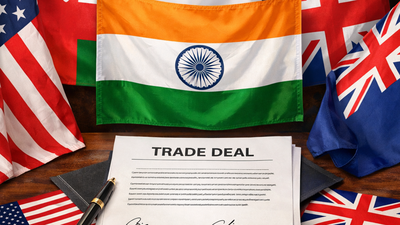
India-US trade deal operational soon! Other FTAs will follow, here’s what Union minister Goyal said


India-US trade deal operational soon! Other FTAs will follow, here's what Union minister Goyal said

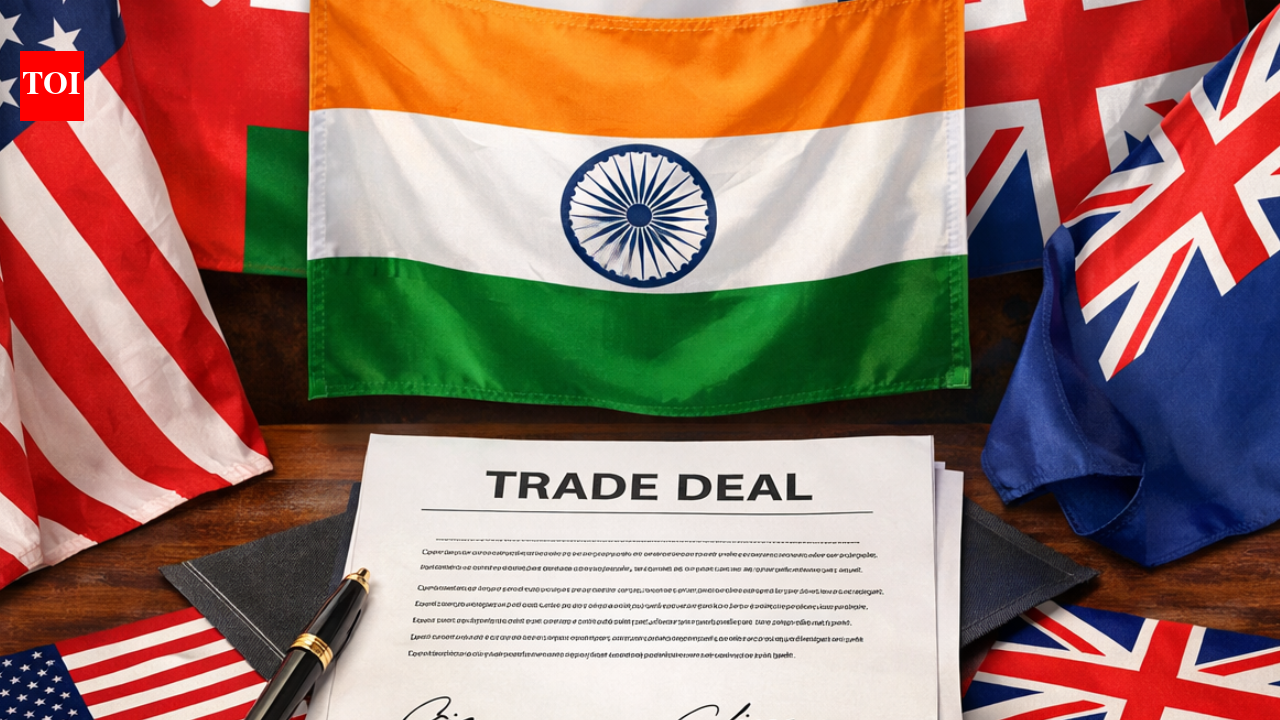
India is set to operationalise its recently signed trade deals with the United States, the United Kingdom, and other countries soon. Earlier this month, India and the US announced that they had reached an interim trade deal, scheduled for formalisation in March. Union commerce and industry minister Piyush Goyal said on Friday that the deal is expected to come into effect in April. The minister further confirmed that other free trade agreements with the United Kingdom and Oman might also materialise in April. Meanwhile, a similar pact with New Zealand is scheduled for implementation in September.To finalise the legal text of the interim trade agreement, officials from India and the US will meet for three days starting February 23. The meeting follows months of negotiations between the two countries, resulting in the announcement of an interim trade deal. During this period, the Trump administration had imposed a 50% tariff on Indian exports, including a 25% levy, citing India’s purchase of Russian crude as indirectly supporting Moscow’s “war machine” against Ukraine.Under the deal, reciprocal tariffs on India have come down from 50% to 18%, while India has committed to lowering tariffs on US products. Meanwhile, India also entered the US-Led Pax Silica on Friday. Minister Piyush Goyal had earlier assured that the trade pact protects farmers and the agricultural sector. Welcoming the trade framework, he highlighted the opportunities it offers for farmers, fishermen, and micro, small, and medium enterprises to access the $30 trillion US market. He added that the formal agreement could be signed by March, after which India’s tariff reductions on US exports would come into effect.


Source link

FPIs back on D-Street: Foreign portfolio investors pour in over Rs 33,000 crore, but why is IT sector missing from their shopping list?


FPIs back on D-Street: Foreign portfolio investors pour in over Rs 33,000 crore, but why is IT sector missing from their shopping list?

Foreign portfolio investors once again turned towards Dalal Street to shop for Indian equities, spending in Rs 33,487 crore across 15 sectors, in the first half of February. The bulk of the inflows went into capital goods, financial services and oil & gas stocks, marking the strongest fortnightly buying seen since the second half of April 2025. Capital goods stocks attracted the highest inflows, drawing Rs 8,032 crore between February 1 and 15, compared with Rs 2,761 crore in January. The government’s Rs 4,470 crore stake sale in BHEL partly supported the sector’s momentum. “The capital goods sector has underperformed the market, and there was nothing negative in the budget on the sector which could have prompted global investors to reallocate funds,” said Siddarth Bhamre, head of Research, Asit C Mehta Intermediates told ET. According to Rajesh Singhla, CEO & fund manager at Alpha AIF, the US-India trade deal framework announced in the first week of February also lifted sentiment in segments such as capital goods, textiles, gems and jewellery, helping draw foreign money. Financial services witnessed a turnaround, receiving Rs 6,175 crore in the first fortnight of February after facing outflows of Rs 8,592 crore in January. Singhla said strong third-quarter earnings from banks and financial companies may have supported investor interest, although he noted that valuations in the sector remain unappealing. Foreign investors also bought Rs 4,678 crore worth of oil & gas shares during the period.Why is IT still failing to attract? Despite the broader buying, overseas investors continued to exit some sectors. They sold Rs 13,812 crore across eight sectors in the first half of February, with information technology bearing the brunt. IT alone accounted for more than Rs 10,000 crore of the outflows. The sector has been under sustained pressure in 2025, with nearly Rs 75,000 crore worth of shares offloaded so far, the highest among all sectors, amid concerns that AI-led disruption could affect the outlook for software services exporters. “Fears of AI making the sector less labour-intensive could spark further selling,” said Bhamre. “Overseas investors have shifted allocation from services to pockets in the real economy in this fortnight.” Market performance reflects the trend. The Nifty IT index has declined nearly 15% so far this year, compared with a 2.6% drop in the benchmark Nifty. Singhla, however, suggested the sell-off may have been excessive. “The foreign selling in IT stocks was due to fears of the earnings trending lower as the threat of disruptions due to AI loomed large, but most of the selling was sentimental, and the sell-off was an overreaction,” he said.


Source link

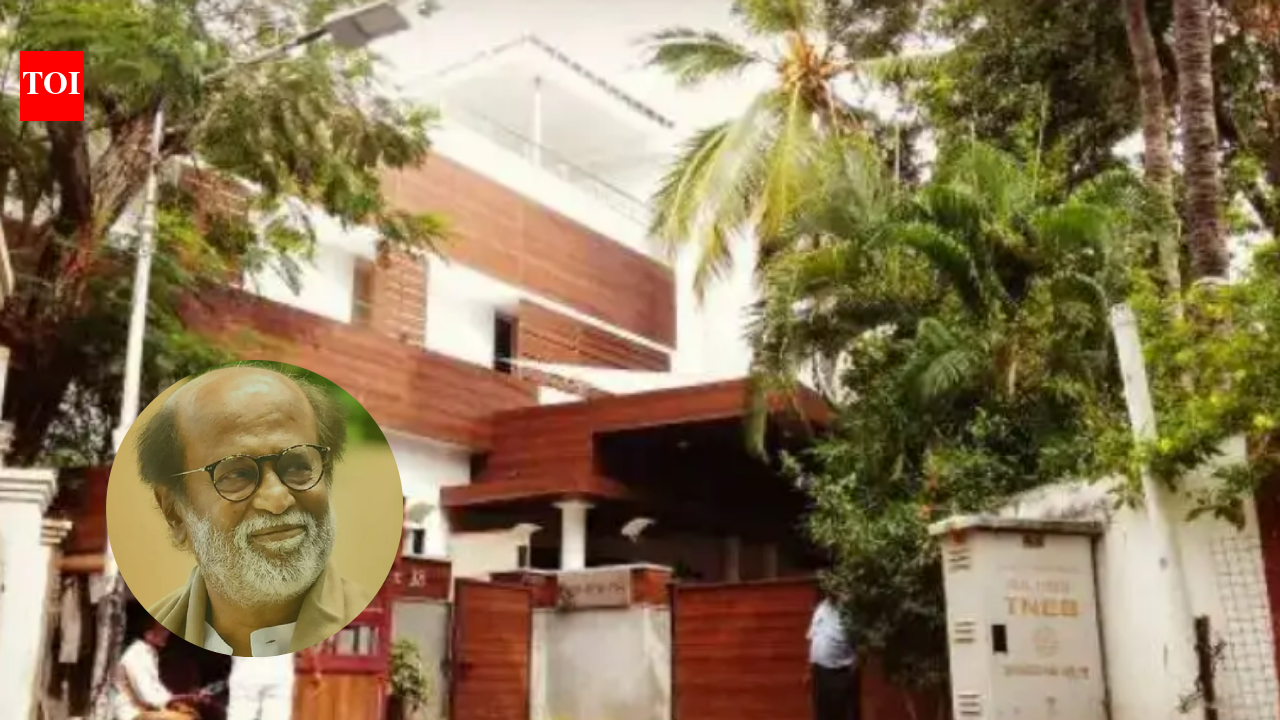
Rajinikanth House: Inside Rajinikanth’s Elegant Poes Garden Home: A Glimpse of the Living Legend |


Rajinikanth’s Poes Garden home: INSIDE the quiet, minimal world of a living legend
Venture into the tranquil home of Rajinikanth, the legendary superstar, where his Poes Garden bungalow radiates simplicity and grace. Priced at Rs 35 crore, the space boasts understated interiors featuring rich wood detailing and soothing neutral colors, echoing the essence of his humble spirit.

Legendary star Rajinikanth’s house is like entering a movie star’s home and more like discovering the quiet soul of a legend. The ‘Coolie’ star lives in a beautiful bungalow at 18 Raghava Veera Avenue, Poes Garden, Chennai. The house sits in one of the most well-known areas of Chennai. This home is not just a building. It holds memories, values, and years of love from people.

Minimal interiors

As we reported in the 2024 report, his house is reportedly valued at around Rs 35 crore, the interiors stay clean and minimal. Woodwork covers many parts of the house. Soft and plain colors fill the rooms. The marble flooring looks shiny and cool. In addition to it, the entrance has a large wooden door with mirrored glass panels. Inside, the walls stay calm with neutral shades. Wooden shelves hold awards, photos, and small memories. These things show his long journey, someone has completed 50 years in cinema.

A look at the kitchen

The kitchen has a touch of old and new styles. Red granite countertops add color and strength. A modern electric chimney keeps the space fresh. The design stays simple and easy to use. Natural light fills the area. The kitchen feels warm and practical. It matches his simple way of living.

Green outdoors and everyday moments

A green lawn surrounds the house. Trees, plants, and smooth stones create peace. A stone path runs through the garden. This outdoor space feels fresh and open. Rajinikanth often meets people and the media here. He welcomes them with warmth and ease. Beyond this home, he owns a peaceful white house in Pune. It feels bright and quiet. In Chennai, he also owns a wedding hall.On the work front, he is working with another Tamil legend, Kamal Haasan, for the upcoming movies, tentatively named ‘Thalivar 173’ and ‘Thalivar 174.’


Source link