Breaking News
Why US Supreme Court struck down Donald Trump’s trade tariffs; explained in 10 points

Why US Supreme Court struck down Donald Trump's trade tariffs; explained in 10 points

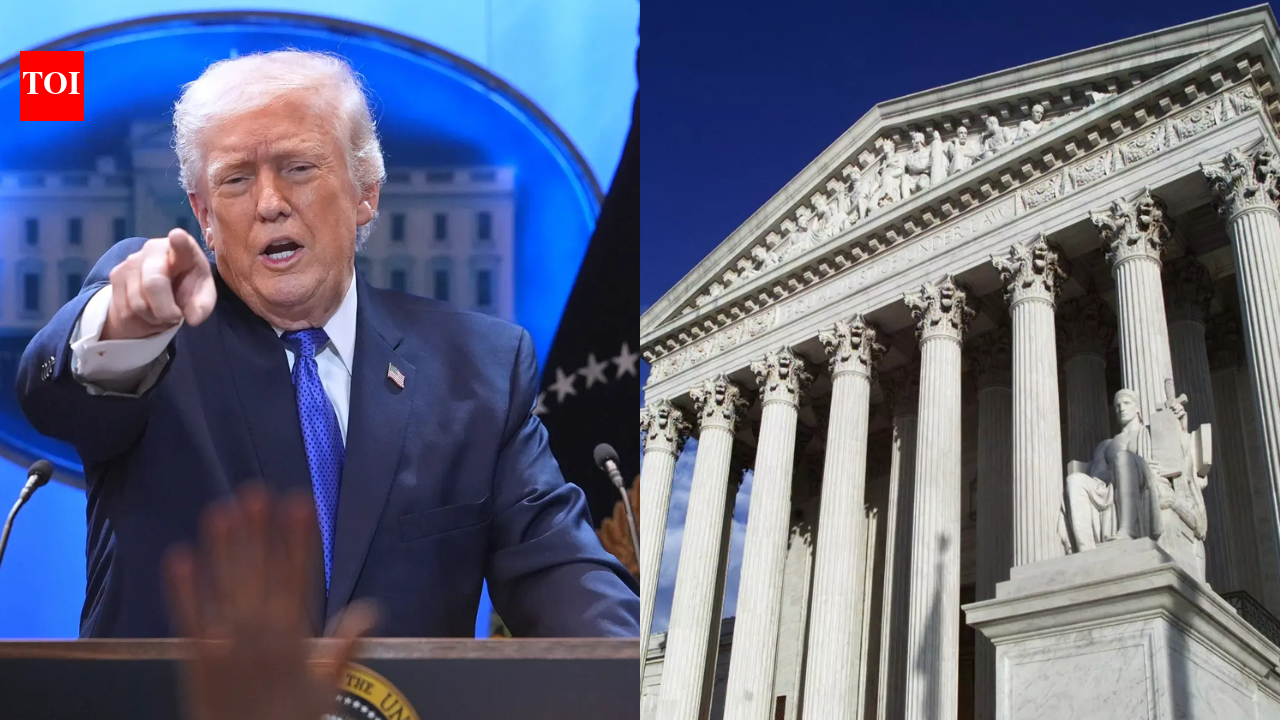
The US Supreme Court on Friday struck down many tariffs imposed by Donald Trump, ruling that a key emergency law he relied on does not give presidents the authority to impose such duties. The 6–3 decision was a major defeat for Trump and a relatively rare instance of the court checking his efforts in a second term that has relied heavily on tariffs as economic and foreign policy leverage against both allies and adversaries.The majority coalition brought together Chief Justice John Roberts and Justices Sonia Sotomayor, Elena Kagan, Neil Gorsuch, Amy Coney Barrett and Ketanji Brown Jackson. Justices Clarence Thomas, Samuel Alito and Brett Kavanaugh dissented.

‘Historic Embarrassment’ For Trump; US Supreme Court Blocks Global Tariffs In Shock Ruling

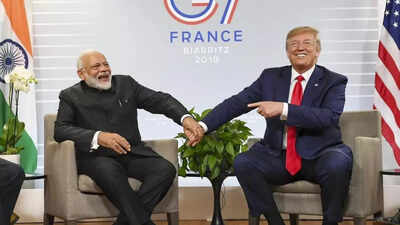
At the center of the case was the International Emergency Economic Powers Act (IEEPA), a 1977 statute that allows the president to regulate imports to address national security, foreign policy or economic threats. Trump had invoked the law to justify sweeping tariffs on nearly every country, citing “large and persistent” trade deficits and failures by China, Canada and Mexico to stem the flow of illicit fentanyl and other drugs into the United States. The court, however, concluded the law does not authorize tariffs.The ruling has wide economic and political implications. It raises the prospect that the administration may have to refund more than $100 billion in tariff revenue to importers and leaves unresolved how businesses or consumers affected by higher prices could be compensated. Trump reacted angrily and quickly moved to impose new tariffs under different laws, including the 1974 Trade Act, signaling the fight over presidential tariff powers is likely to continue.Also read | Nothing changes for India: Donald Trump’s big statement on trade dealTrump also said the court decision would not affect the ongoing India–US trade deal. Speaking after announcing a new 10% global tariff, he said the arrangement with India would remain unchanged and that New Delhi would continue paying tariffs while the United States would not.“Nothing changes, they’ll be paying tariffs, and we will not be paying tariffs. So, the deal with India is they pay tariffs. This is a reversal for what it used to be. I think Prime Minister Modi is a great gentleman, a great man, actually, but he was much smarter than the people that he was against in terms of the United States. He was ripping us off, India. So we made a deal with India, it’s a fair deal now, and we are not paying tariffs to them and they are paying tariffs. We did a little flip,” said Trump.

Why the court struck down Trump tariffs

1. The emergency law does not mention tariffs

IEEPA authorises the president to “regulate … importation” to address unusual and extraordinary threats to national security, foreign policy or the economy. But the statute does not use the words tariff, duty, levy or tax, which the court said was significant.

2. No president had used IEEPA this way before

The majority stressed that before Donald Trump, presidents had not understood IEEPA to allow tariffs. That history supported the view that Congress never granted such power in the law.Follow US Supreme Court Rejects Trump Tariffs Live Updates

3. Tariffs are different from other emergency tools

The court said tariffs differ from actions like quotas or embargoes because they “operate directly on domestic importers to raise revenue for the Treasury,” placing them outside the statute’s intended scope.

4. Government reading would give sweeping power

Under the administration’s interpretation, the court said, a president could impose duties “of unlimited amount and duration, on any product from any country,” a level of authority the justices said Congress had not clearly granted.

5. Majority relied on the major questions doctrine

Three conservative justices in the majority — Roberts, Gorsuch and Barrett — applied the principle that major economic or political powers claimed by the executive must be clearly authorised by Congress.

6. All six majority justices agreed on the core point

Despite differences in reasoning, all six concluded that IEEPA is silent on tariff authority and historically was not understood to include it.

7. Roberts’ central conclusion

Chief Justice John Roberts wrote: “Our task today is to decide only whether the power to ‘regulate … importation,’ as granted to the president in IEEPA, embraces the power to impose tariffs. It does not.”

8. Some justices noted other tools exist in the law

The opinion said IEEPA allows measures such as quotas or embargoes on imports during emergencies, but that does not mean tariffs — a separate and revenue-raising instrument — are included.

9. Tariffs had broad economic effects

The struck-down tariffs had pushed up prices of imported goods including furniture, apparel and electronics. Economists said prices may not fall quickly because Trump is already pursuing replacement tariffs and companies may keep prices high amid uncertainty.

10. Decision creates legal and practical fallout

The ruling opens the door to possible refunds of more than $100 billion in tariff revenue to importers, with lower courts, the US Court of International Trade, Customs and Border Protection and the Treasury Department expected to oversee the process. Importers are directly eligible, while other businesses may seek reimbursement through lawsuits; compensation for consumers is unclear.Within hours of the decision, Trump announced he would impose a new 10% tariff on all imports starting February 24 by invoking Section 122 of the 1974 Trade Act, a provision no president had previously used, and said he would pursue further tariffs through Section 301 investigations into other countries’ trade practices.



Source link

Zomato delivery boy killed after speeding car rams bike in Delhi’s Subhash Nagar; driver held | Delhi News


Zomato delivery boy killed after speeding car rams bike in Delhi’s Subhash Nagar; driver held

NEW DELHI: A Zomato delivery boy died after being hit by a speeding car around 3 am in the Subhash Nagar area of West Delhi, police said on Saturday.According to Delhi Police, the incident occurred in the early hours when the victim, who was on a bike, was struck by a car allegedly being driven at high speed.Police have taken the accused driver into custody and seized the car involved in the incident. Further investigation is underway to ascertain the exact sequence of events.Officials said more details are being gathered.(With agency inputs)


Source link

Ex-UP junior engineer, his wife get death for sexually abusing 33 boys, selling their videos | India News


Ex-UP junior engineer, his wife get death for sexually abusing 33 boys, selling their videos

A Pocso court in UP’s Banda sentenced to death Friday a former govt junior engineer and his wife for sexually abusing 33 boys over a decade, some as young as three, and selling videos and photographs of their torture on the dark web to customers across 47 countries. Additional district judge PK Mishra said convicts Ram Bhawan (50) and Durgawati (47) inflicted such physical and psychological trauma on the survivors – some required hospitalisation for injuries to their genitals and a few developed squint eyes – that their crimes deserved to be categorised as “rarest of rare”. “The sheer scale of this victimisation across multiple districts, combined with the extreme moral turpitude of the convicts, marks this as a crime of such an exceptional and heinous nature that it leaves no room for reformation, necessitating the ultimate judicial deterrent to meet the ends of justice,” says the order. The court directed the UP govt to pay Rs 10 lakh in compensation to each of the 33 victims. Ram Bhawan, who worked in the UP jalkal (waterworks) department, and Durgawati would lure children by offering them access to online video games, money and gifts. They remained active in Banda and Chitrakoot from 2010 till 2020, when Interpol got CBI involved in an inquiry on child sexual abuse content on the dark web.‘Still battling trauma’ CBI registered an FIR on Oct 31 that year after the trail led to Ram Bhawan and Durgawati. The agency had filed a chargesheet documenting their crimes on Feb 10, 2021. Special public prosecutor Kamal Singh Gautam said the case had an overwhelming amount of evidence of what the children were subjected to. “The survivors are still suffering the psychological trauma caused by the predators”, Gautam said. CBI had medical experts from AIIMS Delhi to examine 25 of the children who suffered severe injuries at the hands of the convicts. The prosecution relied on their reports, digital evidence and the testimonies of the children to build their case and seek capital punishment to those accused in the case. Additional district judge Mishra convicted the couple of offences ranging from aggravated penetrative sexual assault and using children for pornographic purposes to abetment and criminal conspiracy under relevant sections.


Source link

Shaheen Afridi dropped, Babar Azam demoted due to loss against India? What Pakistan coach says on ‘paradigm shift’ | Cricket News


Shaheen Afridi dropped, Babar Azam demoted due to loss against India? What Pakistan coach says on 'paradigm shift'
Pakistan captain Babar Azam with Shaheen Shah Afridi

Pakistan dropped ace left-arm pacer Shaheen Afridi and demoted star batter Babar Azam against Namibia in a must-win game after facing heavy defeat against India in the T20 World Cup group-stage match, but the team’s head coach, Mike Hesson on Friday rejected suggestions that changes were reactions to the heavy loss against India. Hesson said the decisions, including moving Babar Azam down the order and leaving out Shaheen Shah Afridi for the match against Namibia, were made for tactical reasons.India defeated Pakistan by 61 runs in the group-stage match, with Ishan Kishan leading the win with a major innings.Shaheen conceded 15 runs in his final over, while Babar scored five runs.“No, I wouldn’t say that (Shaheen was dropped because of poor performance and Babar pushed down the order because of the loss to India). I think, as I said, (pacer) Salman Mirza deserved his opportunity,” said Hesson in a media interaction.“And Babar was the first to recognise when left-arm spin was taking shape and it was turning that it wasn’t a smart move to send out two right handers.”Babar did not bat against Namibia as Sahibzada Farhan scored an unbeaten century and carried the innings.“So no, certainly not a paradigm shift, (it was) more about roles,” said Hesson, when asked if there was a “paradigm shift” after the defeat to India.Pakistan will next face New Zealand in their Super 8 opener in Colombo on Saturday. Improving their powerplay returns is a key focus.Hesson said Babar was moved from the opening position because his scoring rate in the powerplay has been below expectations.“Babar is well aware of that. I think he’s well aware (his) strike rate in the powerplay in World Cups is less than 100 in T20s. So clearly, that’s not a role that we think here we need. We think he’s a fine player through the middle, if required, in terms of if we’re in a little bit of trouble, or as we saw against the USA,” said Hesson.“Once he gets himself set, he can increase his strike rate at that point. So, we brought Babar back in for a specific role post the Asia Cup. We wanted some batsmanship through the middle, and he certainly brings that for us.”Against Namibia, Shadab Khan was sent ahead of Babar. Farhan and Shadab batted through the full 20 overs.Hesson said Babar was not suited to come in around the 12th over when the team wanted to increase the scoring rate.“So, the other day we got to the 12th over mark and at that point, Babar Azam is not the best person to come in. We’ve got plenty of other options who can come in and perform that role towards the end. He knows that he’s got a certain set of skills that the team require, and there are certain times where other players can perform that role more efficiently,” added Hesson.


Source link

‘Inform parents’: Gujarat may tweak marriage norms | India News


'Inform parents': Gujarat may tweak marriage norms
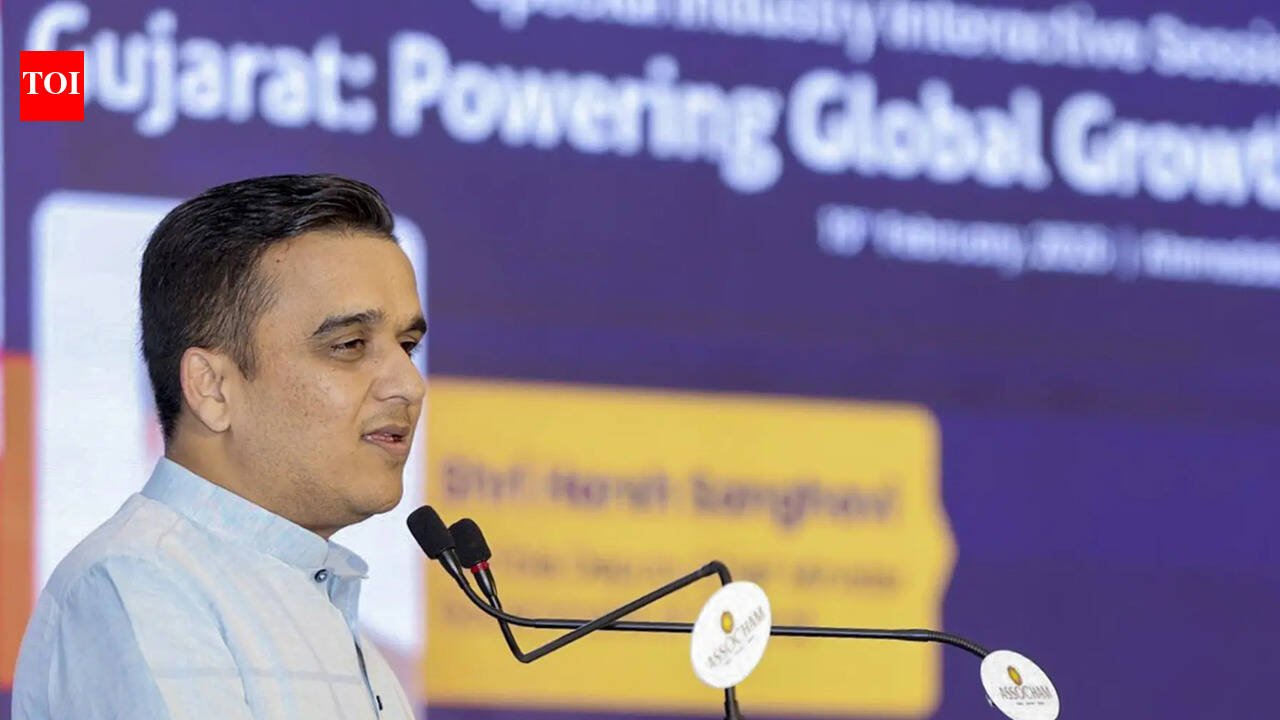
Gujarat deputy CM Harsh Sanghavi, who has itnroduced the proposal

GANDHINAGAR: The BJP govt in Gujarat has proposed ‘anti-love jihad’ amendments to marriage registration rules that would require couples to inform their parents before registering their union – a move welcomed by AAP, met with silence by the Congress and flagged by legal experts as a potential constitutional violation.Under the draft rules introduced in the assembly Friday, couples seeking to register their marriage will have to submit an undertaking stating whether they have informed their parents. The assistant registrar will notify the parents of both bride and groom electronically, including over WhatsApp, or through physical communication.Registration will be granted within 30 days after verification, with all submitted details uploaded to a govt portal. Deputy CM Harsh Sanghavi, who introduced the proposed changes, said the govt had nothing against “love marriage” but couldn’t allow deception in the name of mutual consent. “Innocent girls are being trapped and such practices are spreading like termites in society. Salim masquerading as Suresh will not be allowed,” he said. Citing instances from Panchmahal district, Sanghavi said investigations were ordered after nikaah certificates were allegedly issued in villages where there was no mosque or even a single Muslim family. In villages such as Kankodakui and Nathkuva, hundreds of such certificates were allegedly issued by talati-cum-mantris (village panchayat secretaries), Sanghavi said. In the assembly, AAP legislator Hemant Ahir, who had moved a private member’s bill on similar lines earlier in the week, congratulated the govt on tabling the proposed amendments. “Changes in the rules were the need of the hour. There were several loopholes in the rules,” he said. BJP MLA Lavingji Thakor, a strong proponent of stricter norms, said the move would benefit families of all communities. Congress stayed mum. Several community organisations, including those representing the Patidar and Kshatriya Thakor groups, have long pressed for mandatory parental involvement in love marriages. Over the past three months, as many as 30 meetings were held between the state govt and representatives of various organisations to finalise the changes. Legal experts said the proposal might not stand judicial scrutiny. “This infringes upon the fundamental rights guaranteed under Article 21 of the Constitution,” said advocate Mahesh Baria. Fellow advocate Nilesh Bhavsar said while the govt had described the measure as mere intimation, parental objections could potentially influence registration decisions, leading to litigation.


Source link

MHA forms 2nd empowered committee for Bengal to fast-track requests under CAA | India News


MHA forms 2nd empowered committee for Bengal to fast-track requests under CAA
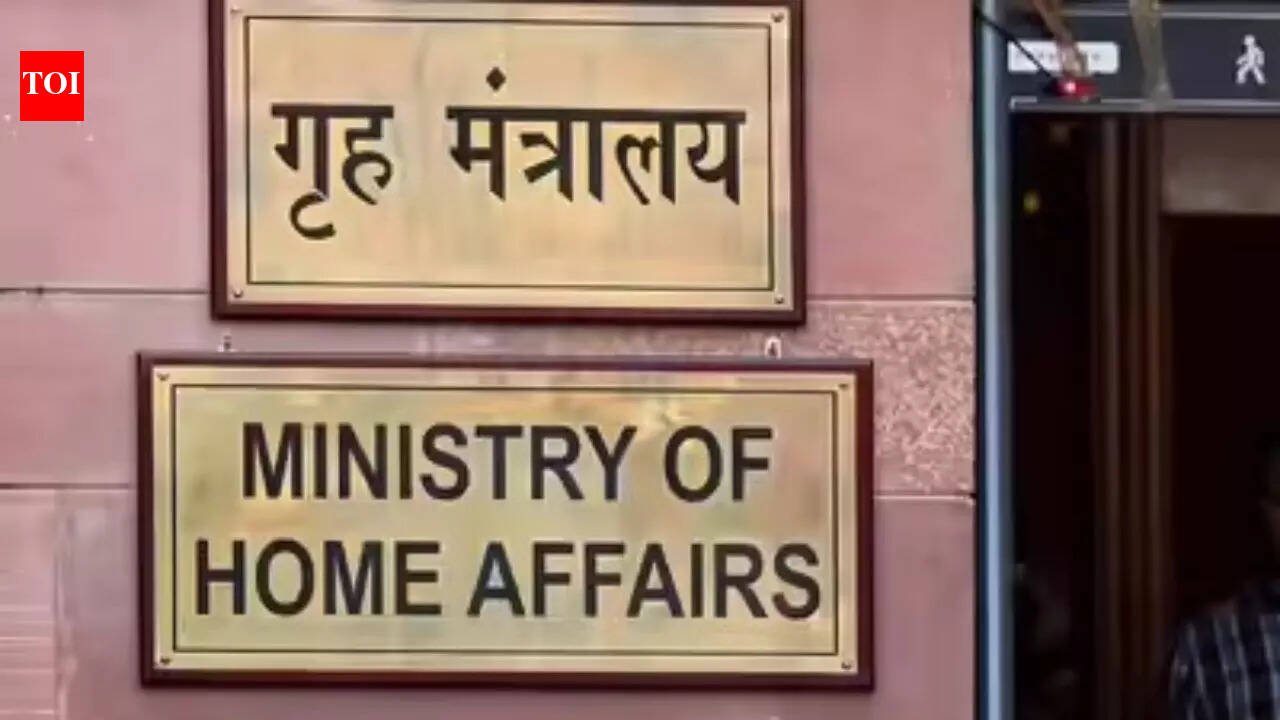
Ministry of home affairs. (File Photo)

New Delhi: The Union home ministry on Friday constituted a second empowered committee for West Bengal to fast-track the processing of citizenship requests received under Citizenship Amendment Act, 2019 (CAA). CAA provides for grant of citizenship to immigra-nts from Pakistan, Afghanistan and Bangladesh belonging to their six minority faiths – Hindu, Sikh, Christian, Buddhist, Jain and Parsi – who entered India before Dec 31, 2014, fearing religious persecution in their home countries. In a gazette notification issued on Friday, the home ministry said West Bengal’s new empowered committee – which takes the final call on citizenship applications forwarded by the district-level committee after verification of documents – shall be headed by the deputy registrar general, directorate of census operations of the state. The original empowered committee – set up in accordance with a notification issued by MHA in March 2024 and headed by director, census operations of West Bengal – will continue to be in existence. The new empowered committee, central govt sources told TOI, has been set up as the volume of applications under CAA in the state has increased. Sharing of work is expected to compress the processing time. West Bengal has a significant number of Hindu immigrants, such as those belonging to the Matua community. BJP has been making a major outreach to them to strengthen its electoral prospects in the state. The new empowered committee on CAA allows certain members of the empowered committee as notified on March 11, 2024 – like the jurisdictional foreigners regional registration officer and state informatics officer – to nominate an officer each, not below the rank of under secretary. Other members like an officer of the subsidiary intelligence bureau and postmaster general or a postal officer nominated by him remain the same. Like the original empowered committee, the new panel shall include a representative from the office of West Bengal principal secretary (home) or additional chief secretary (home) and a representative of the jurisdictional divisional railway manager as invitees.


Source link

Montreal Canadiens: Montreal Canadiens Could Break Rivalry Taboo on Trade Deadline Deal With Toronto Maple Leafs To Acquire Some Depth Pieces | NHL News


Montreal Canadiens Could Break Rivalry Taboo on Trade Deadline Deal With Toronto Maple Leafs To Acquire Some Depth Pieces
Montreal Canadiens Captain Nick Suzuki (Via Getty Images)

The Canadiens and Maple Leafs making a trade sounds unlikely. These bitter rivals have completed just three trades since 2000. Yet circumstances heading into the March 6 deadline could quietly push both organizations toward breaking that taboo.Montreal sits second in the Atlantic Division with 72 points through 58 games. The playoff push continues for GM Kent Hughes, who wants calculated reinforcement without sacrificing long-term assets. And Toronto, with 63 points in 57 games, might just be what the Canadiens need.

Maple Leafs Could Pivot to Selling To Recover From Disastrous Season

The Maple Leafs face critical decisions through the final weeks before the deadline. Their nine-point deficit is not insurmountable, but continued struggles could force management to pivot toward selling pending unrestricted free agents rather than chasing a playoff spot.Calle Järnkrok, Scott Laughton, Bobby McMann and Troy Stecher all become unrestricted free agents on July 1. None are franchise-altering players, but each offers depth and playoff versatility that contenders covet in March. Järnkrok provides reliable two-way play anywhere in the lineup, while Laughton brings grit and leadership. McMann adds a secondary scoring punch. Historical rivalry makes trades between these clubs difficult. The Maple Leafs acquired Doug Gilmour from Montreal for a sixth-round pick in 2003. Toronto obtained Mikhail Grabovsky for Greg Pateryn and a second-round pick in 2008. The Canadiens sent Tomas Plekanec and Kyle Baun to Toronto for Kerby Reichel, Rinat Valiev and a second-round pick in 2018. Three trades in over two decades show how rarely these rivals conduct business. No GM wants to gift a rival a playoff difference-maker. But pending unrestricted free agents represent different risk levels than core pieces with terms remaining on contracts. But Montreal acquiring one or two veteran depth players fits perfectly with their competitive window. The Canadiens are not in win-now-at-all-costs mode but want to strengthen a young core without disrupting long-term plans. Adding playoff-tested depth for reasonable prices makes strategic sense.Toronto recouping mid-round picks or depth prospects for players who might walk in July represents logical asset management. A third-round pick or young prospect from Montreal could prove more valuable than keeping a pending unrestricted free agent through a lost spring.The trade deadline arrives at 3 p.m. ET on March 6, following the Olympic roster freeze that ends February 22. Teams have two weeks after the Olympics to finalize deals. Montreal resumes play on February 26 against Ottawa, while Toronto returns February 25 versus Boston.Rivals rarely cooperate, but value alignment could produce a quiet deadline deal that looks minor in March but feels significant when the playoffs begin. If Toronto wants to climb from their seventh-place to a wildcard position, a trade might be the key after all.


Source link

Explained: 5 reasons why NYT op-ed is saying it’s ‘India’s century’


Explained: 5 reasons why NYT op-ed is saying it's 'India's century'

For years, 21st-century geopolitics has been framed as a heavyweight bout between Washington and Beijing. But what if the most consequential player isn’t in either corner?The world’s fastest-growing major economy — and its most populous nation — isn’t China. It’s India.As other major powers age, India’s greatest export may simply be its people. So what could that mean for the global order?On the podcast “Interesting Times,” host Ross Douthat spoke with international relations scholar Amitav Acharya about demographics, growth and what Acharya calls a “multiplex” world — one shaped by several rising powers, not a single superpower.Here are five takeaways from the NYT conversation on why this could be India’s century:

Third pole

The “third pole” envisions India as an independent center of global power — distinct from both the United States and China.Instead of aligning fully with Washington or Beijing, India would act as its own gravitational force: a top-three economy, a strategic power in the Indian Ocean, a demographic heavyweight and a diplomatic swing state engaging both sides without formal alliances.In Acharya’s “multiplex world order,” power is distributed among several major actors — and India is one of them.

Faster growth than China

Acharya acknowledged that China industrialized and reduced poverty faster. But he cautioned against a short-term lens.In the early post-independence decades, India played a significant role in Asian affairs while China was consolidating Communist rule. Though China later surged ahead, India’s recent growth rates have outpaced China’s — albeit from a lower base.India has also preserved its democratic system. The key challenge now is jobs. If India expands trade access — especially with Europe and the United States — it could combine growth with greater economic resilience.

Demographic advantage

While China faces a collapsing birthrate and rapid aging, India is entering a “demographic dividend” phase — a large working-age population with fewer elderly dependents.Unlike China, India never implemented a one-child policy, leaving it with a younger labor force.But demographics are not destiny. Without job creation, education reform and skill development, the dividend could become a liability. Integration into global supply chains — blending manufacturing with services and technology — will be critical.

Multi-alignment

India’s strategy has evolved from Cold War “non-alignment” to what Acharya calls “multi-alignment.”The goal: avoid overdependence on any single power. India maintains ties with the U.S., engages Russia and deepens trade with the European Union — all while preserving strategic autonomy.This balancing act works so long as major powers tolerate flexibility. It becomes harder if Washington demands countries choose sides.

The Indian diaspora

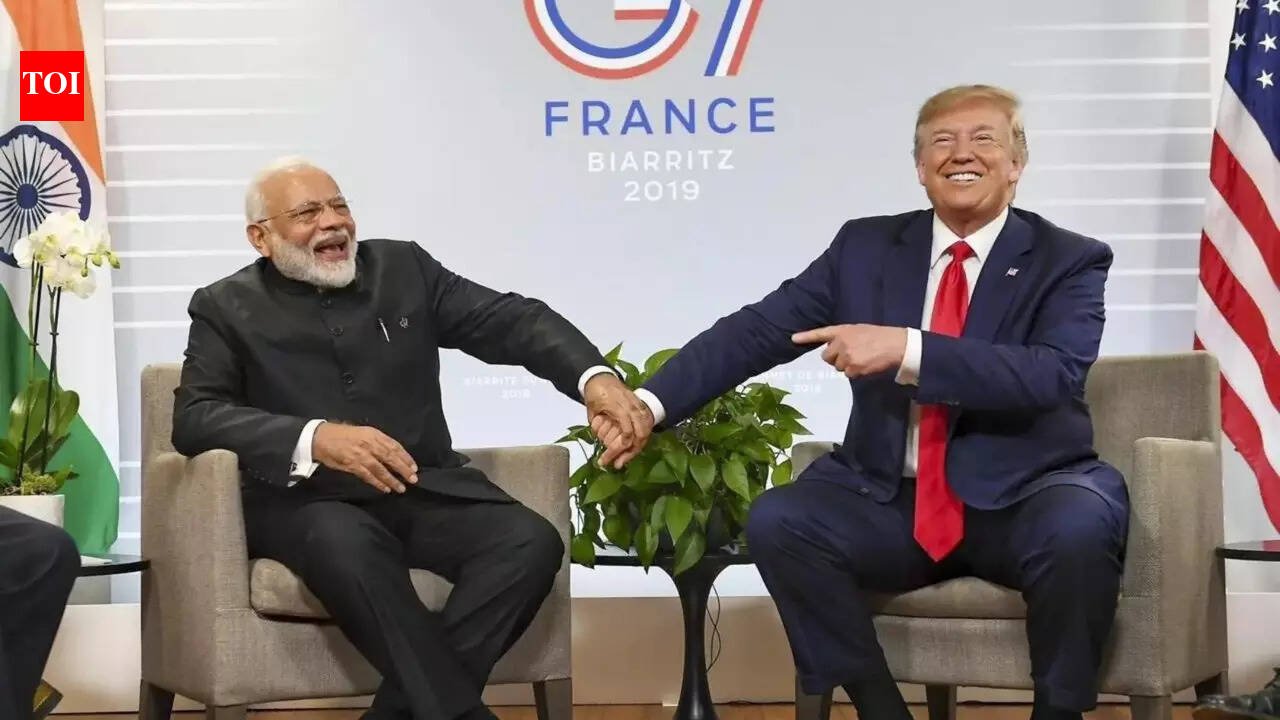
Prime Minister Narendra Modi has turned the Indian diaspora into a diplomatic asset, staging major events in U.S. cities to showcase global influence.Yet American understanding of India still lags behind its focus on China. Indian Americans have risen prominently in tech and politics, but their success — especially in Silicon Valley and through H-1B visas — has triggered backlash amid rising populism.Acharya argues the resentment reflects broader anti-immigrant currents rather than direct job displacement. Politically diverse, parts of the diaspora appear to be trending conservative — in some cases as a path toward assimilation in a polarized America.


Source link

Donald Trump announces 10% global tariffs after SC deems his reciprocal tariffs illegal


Donald Trump announces 10% global tariffs after SC deems his reciprocal tariffs illegal

A furious Donald Trump on Friday announced that he would be signing an executive order imposing a 10% global tariff. Trump’s statement comes within hours of the US Supreme Court striking down his reciprocal tariffs and deeming them as illegal.“Today, I will sign an order to impose a 10% global tariff under Section 122, over and above our normal tariffs already being charged and we’re also initiating several Section 301 and other investigations to protect our country from unfair trading practices,” the US president said during his press conference.Following the Supreme Court’s decision to invalidate his tariff measures, Trump said his administration would pursue different avenues to restore the trade duties that had been overturned. He also said that the issue of refunds could end up in courts for years. The Supreme Court verdict is being seen as a big setback to one of his central economic initiatives.

Trump’s Reaction to SC striking Down Tariffs

Speaking at a press briefing, Trump said that alternative mechanisms would be deployed to substitute those the court had, in his view, wrongly dismissed, and suggested that these new approaches might even generate higher revenues.Trump reacted angrily to the verdict, calling it “deeply disappointing” and “ridiculous,”. Trump said he felt “absolutely ashamed” of the six justices who sided against him, accusing them of lacking the courage to act in the country’s best interests.During an afternoon press conference, he criticized the court’s majority as “fools” and “lap dogs” for what he described as RINOs — “Republicans in Name Only” — and “radical left Democrats.” He further alleged that their stance was unpatriotic and disloyal to the Constitution. Trump also indicated that he believes existing statutes may still allow him to introduce alternative tariffs.The president has repeatedly asserted – contrary to available evidence – that foreign governments would bear the cost of his tariffs and that the resulting revenue would be substantial enough to reduce the national debt and even fund dividend payments to taxpayers.However, fresh analysis linked to a major US bank showed on Thursday that tariff payments made by mid-sized American firms have tripled over the past year. These added costs have affected businesses employing a combined 48 million people nationwide — the very segment Trump had pledged to strengthen. To manage the higher tax burden, such companies have had to raise prices for consumers, cut back on hiring, or accept slimmer profit margins.According to estimates from the Congressional Budget Office, the tariffs — not all of which were invalidated — were projected to raise $3 trillion over a decade. While significant, that amount would still fall short of offsetting anticipated budget deficits.The Supreme Court has yet to provide guidance on how any potential reimbursement of tariffs might be handled.The Supreme Court invalidated Trump’s tariff program, delivering a significant setback to a cornerstone of his economic strategy.In a 6-3 ruling, the justices examined duties introduced under an emergency authority statute, including the broad “reciprocal” tariffs applied to almost every foreign nation. The Court concluded that invoking emergency powers to impose import taxes without congressional approval was unlawful.The majority held that the Constitution does not permit a president to independently create or modify tariffs, as the authority to levy taxes is explicitly assigned to Congress. Writing for the Court, Chief Justice John Roberts stated that the nation’s founders did not allocate any portion of the taxing authority to the executive branch.The conservative-led bench determined, by a six-to-three vote, that the International Emergency Economic Powers Act does not grant the president the power to impose tariffs.


Source link

Lower tariffs, revenue setback & more: What SC ruling means for Trump’s economic agenda


Lower tariffs, revenue setback & more: What SC ruling means for Trump’s economic agenda
Economists anticipate the decision will also dent federal revenues. (AI image)

The Supreme Court has dealt a blow to US President Donald Trump’s favourite economic agenda – tariffs, to the extent that the US President has called the ruling a ‘disgrace’. Trump’s reciprocal tariffs have been called illegal by the apex court, The Supreme Court of the United States on Friday said that President Donald Trump exceeded his legal authority by invoking emergency economic powers to levy tariffs — a rare reprimand that delivers a significant setback to his economic program.What does the ruling mean? We take a look:

Lower tariff burden: At least for the moment!

With certain levies imposed under the International Emergency Economic Powers Act (IEEPA) deemed unlawful, the overall US tariff rate is expected to decline, at least in the near term, reports AFP.According to The Budget Lab at Yale University, doing away with the IEEPA-based tariffs would bring the average effective tariff rate down to 9.1 percent — still the highest level seen since 1946, excluding 2025. Had those emergency-based tariffs remained in place, the rate would have stood at 16.9 percent.Analysts suggest that even if the Trump administration moves to reimpose similar trade barriers under alternative statutes, the resulting tariff levels would probably be lower than those previously enforced.Also Read | Why were Trump tariffs ruled illegal by Supreme Court? Top points from what SC said in its rulingHeather Long, chief economist at Navy Federal Credit Union, said the ruling compels a recalibration of trade policy that could ultimately result in reduced tariff levels and a more structured approach to introducing future duties.Oliver Allen of Pantheon Macroeconomics noted that the tariffs appear to have weighed on Trump’s approval ratings, while voter dissatisfaction over elevated prices continues to be a politically sensitive issue ahead of the November midterm elections.

Hit to Trump government revenues

Economists anticipate the decision will also dent federal revenues. Estimates suggest that tariffs enacted under IEEPA generated between $130 billion and $140 billion by the close of 2025.ING analysts Carsten Brzeski and Julian Geib observed that the issue of potential reimbursements remains unresolved and will be addressed by lower courts in the months ahead.They emphasized that refunds would not be automatic; companies seeking repayment would need to pursue legal action. That process is already underway, with more than 1,000 corporate entities reportedly engaged in litigation.Should the government ultimately be required to return collected duties, it could face an additional fiscal strain.Also Read | Trump tariffs struck down by US Supreme Court: What it means for India – 55% exports to America free from 18% duty

Reduced room to maneuver

A key worry is that Trump may forfeit some of the “flexibility” to deploy tariffs on national security grounds or as bargaining tools in trade talks — a concern previously flagged by US Treasury Secretary Scott Bessent.Even so, he has argued that the administration retains the ability to rely on tariffs as a source of government revenue.Erica York, vice president of federal tax policy at the Tax Foundation, said invalidating tariffs imposed under emergency authority would limit the president’s capacity to introduce sweeping duties at will.However, Wendy Cutler, senior vice president at the Asia Society Policy Institute, suggested that US trading partners are unlikely to abandon recently concluded tariff arrangements. In her view, they understand that withdrawing could ultimately leave them in a weaker position in dealings with the White House.Also Read | ‘US not at war with every nation’: Supreme Court’s sharp put down in ruling against Trump’s illegal tariffs

Alternative routes

Despite the setback, President Donald Trump has other legal mechanisms available to reinstate trade barriers, and analysts anticipate he may pursue them.Section 122 of the Trade Act of 1974 permits the president to respond to balance-of-payments concerns by introducing temporary import duties of up to 15 percent.In addition, Section 338 of the Tariff Act of 1930 authorizes the imposition of tariffs as high as 50 percent on nations deemed to be engaging in discriminatory trade conduct.Another established tool is Section 232 of the Trade Expansion Act of 1962, which has already been used repeatedly to levy sector-specific tariffs that were not affected by Friday’s decision.Likewise, Section 301 of the Trade Act of 1974 — employed during Trump’s first term to target imports from China — remains an option, though it requires a formal investigation process similar to Section 232.Earlier this year, Trump told The New York Times that he could also consider restructuring the tariffs as licensing fees.


Source link