Breaking News
Evening news wrap: Trump issues warning to allies over Hormuz; BJP releases Kerala election manifesto & more | India News


Evening news wrap: Trump issues warning to allies over Hormuz; BJP releases Kerala election manifesto & more
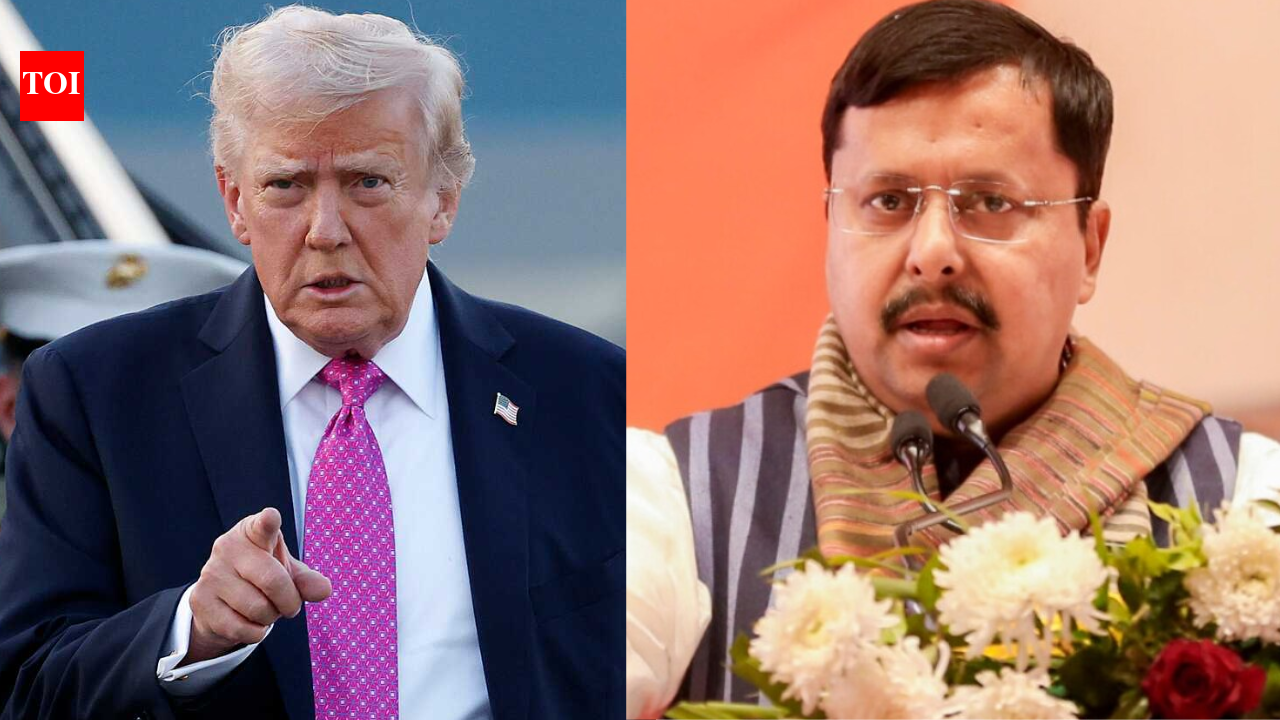
  • Donald Trump warned countries hit by Hormuz fuel disruptions to buy from the US and stop relying on Washington for protection.
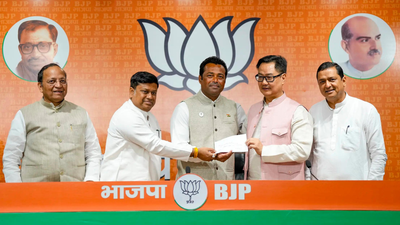
  • BJP released its manifesto ahead of Kerala polls, promising a Rs 3,000 pension, free water for households, and a mix of welfare and infrastructure measures.
  • IndiGo has named aviation veteran Willie Walsh as CEO following Pieter Elbers’ exit after last year’s operational crisis.
  • Fakhar Zaman has been banned for two matches after being found guilty in the PSL ‘ball-tampering’ controversy.
  • A woman died after allegedly jumping from the 17th floor, minutes after discovering her husband dead inside their Bengaluru apartment.

Here are top 5 stories of the day

Trump says US won’t ‘help anymore’ in Strait of Hormuz crisis

Donald Trump said countries facing jet fuel shortages because of disruptions near the Strait of Hormuz should buy fuel from the US and do more to secure their own energy supplies. In a Truth Social post, he criticized allies such as the UK for not supporting military action against Iran and said they should no longer rely on the US for protection. Read full story

BJP releases Kerala poll manifesto, promises Rs 3,000 pension and free water

The BJP released its manifesto for the Kerala Assembly elections, promising a mix of welfare schemes, infrastructure development and temple-focused measures. The manifesto included a Rs 3,000 monthly pension for needy women, widows and senior citizens above 70, along with 20,000 litres of free water per month for every household in Kerala. Read full story

IndiGo appoints former British Airways chief Willie Walsh as CEO

IndiGo announced the appointment of former British Airways chief Willie Walsh as its new chief executive officer, following the resignation of Pieter Elbers earlier this month. The move comes months after the airline grappled with a significant operational crisis in December. Read full story

Fakhar Zaman suspended after PSL ‘ball-tampering’ incident

Pakistan’s opening stalwart Fakhar Zaman has been suspended for two matches over the PSL ‘ball-tampering’ controversy, following an incident during a tense finish between Karachi Kings and Lahore Qalandars. The controversy erupted at the end of the 19th over in the second innings, with Karachi requiring 14 runs from the last over before sealing victory with three balls remaining. Read full story

Techie couple from Telangana die minutes apart in Bengaluru apartment

A techie couple from Telangana died within minutes of each other at an apartment complex in Bengaluru. Bhanu Chander Reddy Kunta was found dead inside a locked room in the couple’s flat after his wife, Shaziya, raised an alarm when he did not respond. Minutes later, Shaziya allegedly jumped from the 17th floor of the building. Read full story


Source link

End of Red Terror? How close India is to its Naxal-free target as Amit Shah’s March 31 deadline ends | India News


End of Red Terror? How close India is to its Naxal-free target as Amit Shah’s March 31 deadline ends

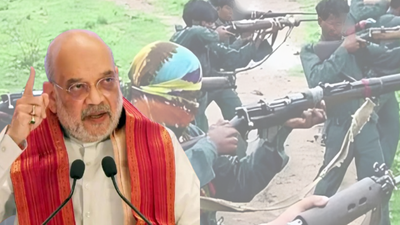
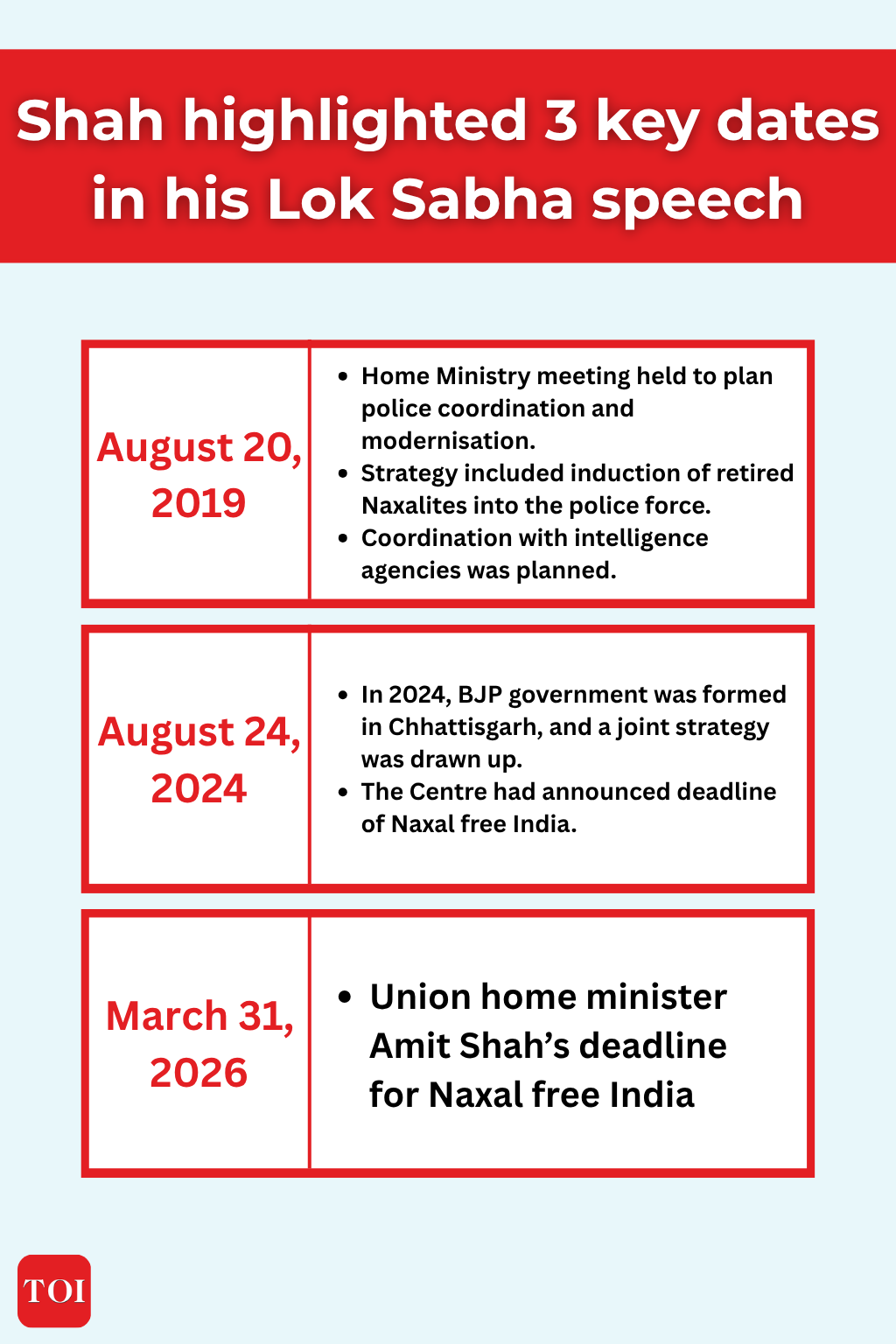
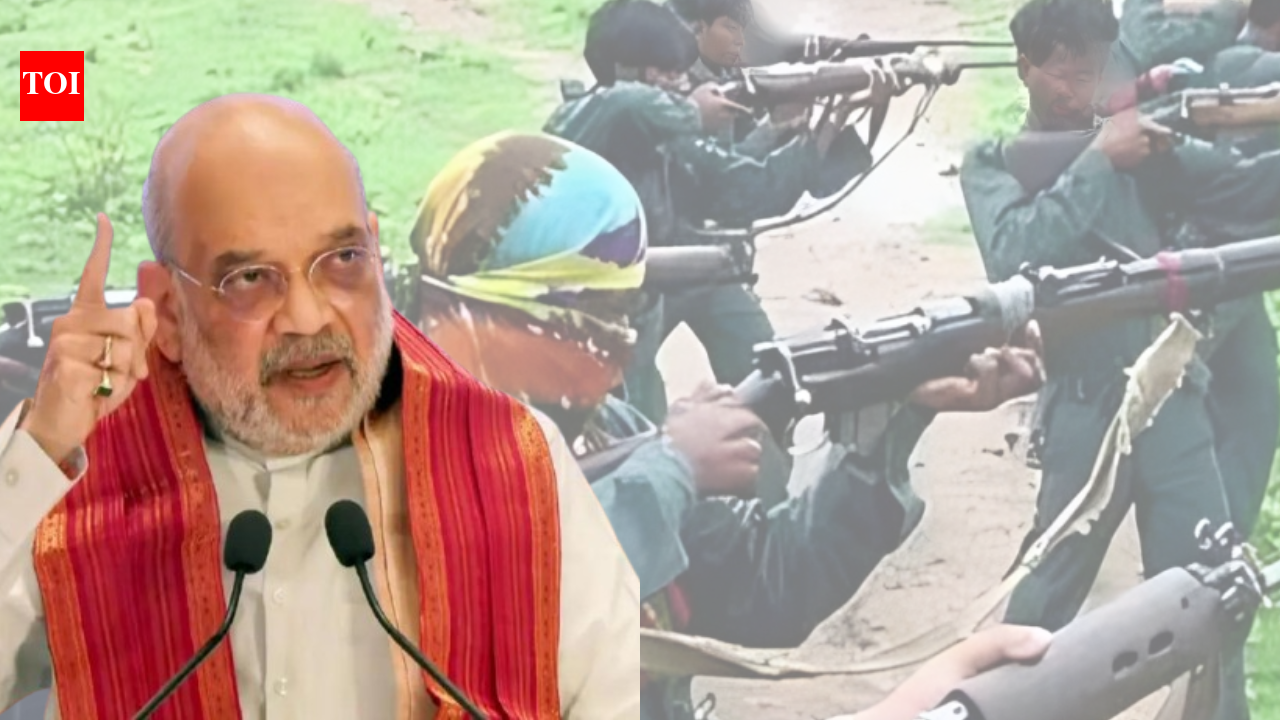
As the sun sets over the dense canopies of Chhattisgarh’s forests today, it marks more than just the end of a day, it signals the final countdown to a historic deadline. Union home minister Amit Shah’s March 31, 2026 target was never just a date on paper, rather it was a security benchmark, and a message both to Naxalites and the nation. That deadline ends today, and with it comes the question ringing louder than ever: is India now closer than at any point in decades to ending Naxalism?Shah’s deadline is not just about counting encounters rather a signal that the endgame may finally be near.Speaking in the Lok Sabha on Monday, the home minister said India’s anti-Naxal campaign had entered its final phase, claiming Naxalism had been almost wiped out in Bastar, the region once seen as the heartland of “Red Terror”. He said that the area is now seeing roads, schools, ration shops, health centres and welfare delivery. The claim marks a dramatic shift for a region that once symbolised the peak of Naxalist influence. But how did Bastar, and much of central India, become part of the Red Corridor in the first place?
.

.

Formation of the Red Corridor — How it all began?

The Red Corridor did not appear on India’s map overnight. Its story began in 1967, in Naxalbari, West Bengal, where a peasant uprising gave birth to what India would later know as Naxalism.However, what started as a local rebellion did not stay local for long.Slowly, the movement spread into some of India’s most remote, underdeveloped and tribal-dominated regions. Over the years, it stretched across parts of Chhattisgarh, Jharkhand, Odisha, Maharashtra, Madhya Pradesh, Andhra Pradesh, Telangana, and pockets of Kerala and Karnataka. Piece by piece, this expanding belt of unrest came to be known as the “Red Corridor.”But this was never just a movement of slogans and rebellion. It soon turned into a violent armed challenge to the Indian state. Naxalist groups built parallel systems of control in remote areas, attacked security forces, blew up roads and public infrastructure, extorted money, and in many cases forced civilians, even children, into their network.Reference link: https://www.pib.gov.in/PressReleasePage.aspx?PRID=2120771®=3&lang=2At its peak, Naxalist violence affected 126 districts and reached deep forest regions where the state’s presence was weak.However, that is no longer the case.
.

.

Narrowing down the Red corridor

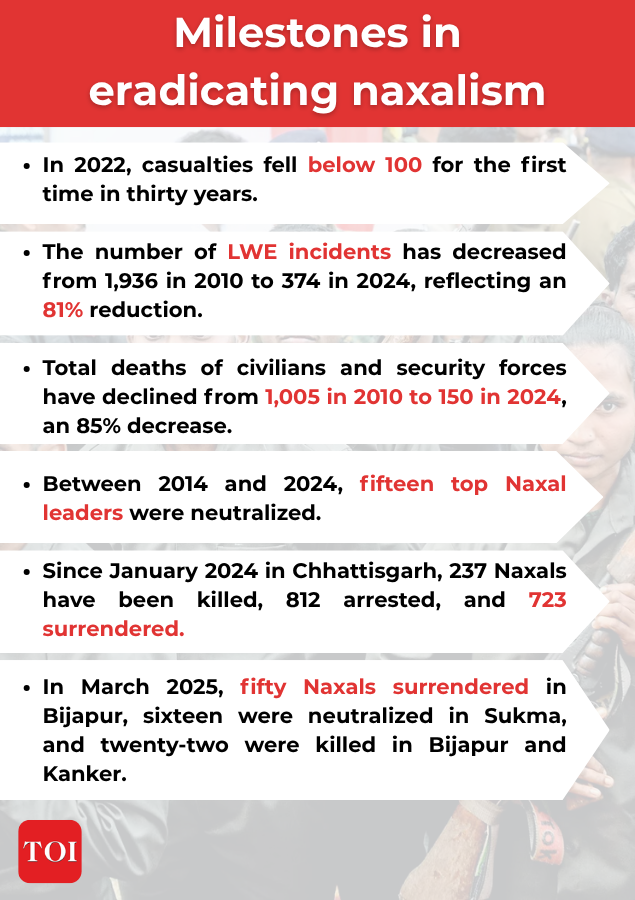
More districts leave the corridor The naxalite moment that once stretched through states, is now looking far smaller. According to government data, the number of LWE-affected districts has steadily fallen from 126 to 90 in April 2018, then to 70 in July 2021, and further to just 38 by April 2024. Furthermore, even within those 38 districts, the number of worst-hit districts has been cut from 12 to 6, now limited to Bijapur, Kanker, Narayanpur and Sukma in Chhattisgarh, West Singhbhum in Jharkhand, and Gadchiroli in Maharashtra. The message is hard to miss: the once-sprawling Red Corridor is no longer quite the corridor it used to be.Look a little closer and the picture gets even sharper. Among the 38 affected districts, the number of “districts of concern,” areas that still need intensive resources beyond the worst-hit zones, has also come down from 9 to 6. These are Alluri Sitarama Raju in Andhra Pradesh, Balaghat in Madhya Pradesh, Kalahandi, Kandhamal and Malkangiri in Odisha, and Bhadradri-Kothagudem in Telangana. The category of other LWE-affected districts has thinned out too, falling from 17 to 6. These include Dantewada, Gariaband and Mohla-Manpur-Ambagarh Chowki in Chhattisgarh, Latehar in Jharkhand, Nuapada in Odisha, and Mulugu in Telangana. In short, the insurgency has not just been reduced in scale, it has been pushed into a narrower, more fragmented geography. MHA data puts this more clearly: Naxal active territory has shrunk from over 18,000 sq km in 2014 to around 4,200 sq km by 2024, and by 2025 it was reduced further to just a few hundred square kilometres. What was once a wide corridor is now down to a few dense forest holdouts.The insurgency is not just losing ground but also people The numbers inside the movement tell just as striking a story. Government data shows that over the past decade, as security operations were backed by roads, welfare and a stronger state presence, the insurgency has steadily weakened. Between 2004–2014 and 2014–2024, violent incidents nearly halved from 16,463 to 7,744. Over the same period, deaths of security personnel fell from 1,851 to 509, while civilian deaths dropped from 4,766 to 1,495.
.

.

And the trend continued in 2025, when security forces killed 270 Naxals, arrested 680, and saw 1,225 cadres surrender. Add to that major operations like Operation Black Forest, along with mass surrenders in Bijapur, Chhattisgarh and Maharashtra, and the pattern becomes clear: the Maoist movement is not just losing territory, it is also losing fighters. In fact, more than 8,000 Naxalites have abandoned violence in the last 10 years, reinforcing the government’s claim that the insurgency is no longer spreading outward, but steadily being squeezed into its final pockets.Reference link: https://www.pib.gov.in/PressReleasePage.aspx?PRID=2182437®=3&lang=2https://www.pib.gov.in/PressReleasePage.aspx?PRID=2120771®=3&lang=2

March 31 – Why this date matters?

The March 31 deadline is the government’s attempt to draw a final line under one of India’s longest-running internal security threats. Because Naxalism was never just about gunfights in the jungle. Over the years, Maoist groups targeted security forces, roads, telecom towers, public infrastructure and democratic institutions. They used violence, extortion, coercion and recruitment in tribal belts, turning many remote regions into places where the state itself struggled to function.And that is the key point.In areas like Bastar, the fight was not only over territory, it was over whether roads could be built, schools could open, health services could reach, and banking and communication could work. In Parliament, Shah argued, “Red terror was not there because there was no development; rather, development could not happen there because of red terror.” Stressing his point, the minister compared Naxalbari, Bastar, Saharsa and Ballia. All four, he said, had similarly low literacy and income levels in earlier decades. Yet Naxalism took root only in Naxalbari and Bastar, not in Saharsa or Ballia. His message? “Red Terror was not there because there was no development; rather, development could not happen there because of Red Terror.”And the damage, he said, was brutal. Shah pointed to Naxalites hanging innocent villagers after branding them “enemy informers”, staging sham “People’s Courts” with no judge, no lawyer, no due process, and trying to replace the Constitution and justice system with fear and parallel rule. So, in simple terms, March 31 matters because it is more than a security deadline but a point where India ends not just the armed rebellion, but the decades-long Naxal grip over neglected tribal regions, and takes a step towards replacing it with governance, law and development.

Repainting the red corridor: How is the government doing it?

As India marks a crucial milestone in its battle against Left Wing Extremism, years of planning, operations, and development are beginning to show results. Once stretching across 12 states and parts of Uttar Pradesh, the “Red Corridor” has shrunk dramatically. The government’s zero-tolerance approach against Naxalism combines security operations, welfare schemes, and community engagement to restore lives and livelihoods in affected areas. In Parliament, Shah highlighted a strategy of dialogue with those willing to negotiate, while taking firm action against those attacking civilians and security forces. Alongside, advanced technology, including drones, satellites, AI analysis, and social media monitoring, has strengthened coordination and helped reclaim territories long under fear.

Zero-tolerance approach

The government has adopted a firm zero-tolerance stance against Naxalism, combining security operations with development initiatives to reclaim affected areas. The strategy focuses on two key objectives: restoring the rule of law and rapidly compensating for decades of developmental neglect. Full implementation of welfare schemes ensures that benefits reach regions long deprived due to insurgency.

Coordinated national strategy

The National Policy and Action Plan on LWE, approved in 2015, outlines a multi-layered approach that combines security measures, development interventions, and protection of local rights. Central authorities support states with armed police forces, India Reserve battalions, intelligence sharing, counter-insurgency training, and inter-state coordination, delivering a unified response to the LWE threat.

Strengthening security

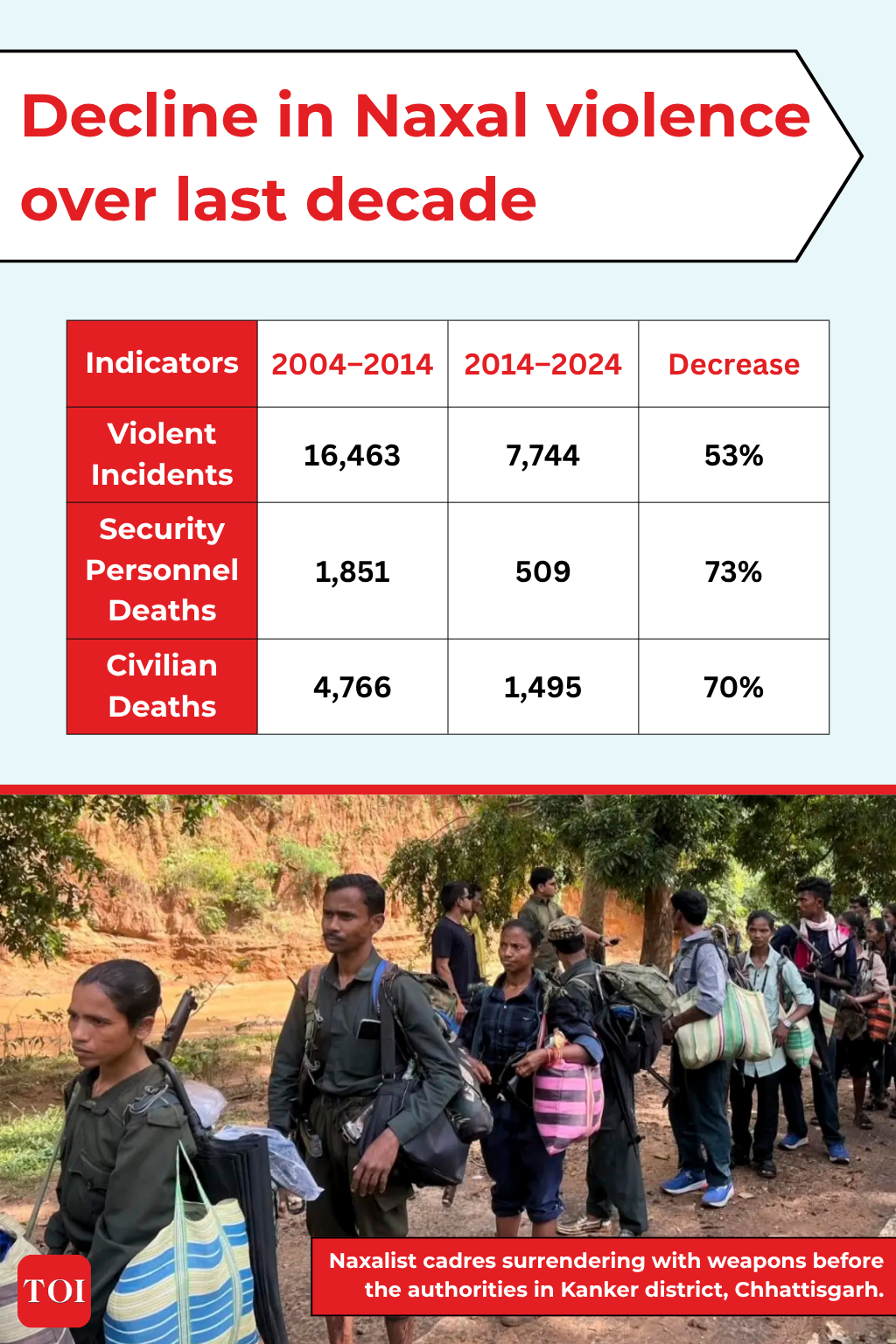
Security infrastructure has been drastically improved. 612 fortified police stations have been built, up from 66 in 2014, alongside 302 new security camps, 68 night landing helipads, 15 Joint Task Forces, and six CRPF battalions to support state police. The National Investigation Agency and Enforcement Directorate have targeted Naxal finances, seizing crores of rupees and prosecuting funders. Long-duration operations and targeted strikes have led to thousands of arrests, surrenders, and neutralisations of top cadres.
.

.

Development as a tool

Development has become a key weapon against extremism. Schemes such as Special Central Assistance, Special Infrastructure Scheme, and the Dharti Aaba Janjatiya Gram Utkarsh Abhiyan focus on roads, mobile connectivity, financial inclusion, and public infrastructure. Over 17,500 km of roads have been sanctioned, 10,505 mobile towers planned, and more than 1,000 bank branches, 937 ATMs, and 5,700 post offices set up. Skill development initiatives, including ITIs, Skill Development Centres, and 178 Eklavya Model Residential Schools, empower youth and provide alternatives to insurgency.

Civic engagement and media outreach

The government has strengthened trust with communities through Civic Action Programmes and media campaigns countering Naxalist agenda. Tribal youth exchanges, radio jingles, documentaries, and pamphlets ensure awareness, engagement, and support for democratic governance.

The bigger picture: How close is India really?

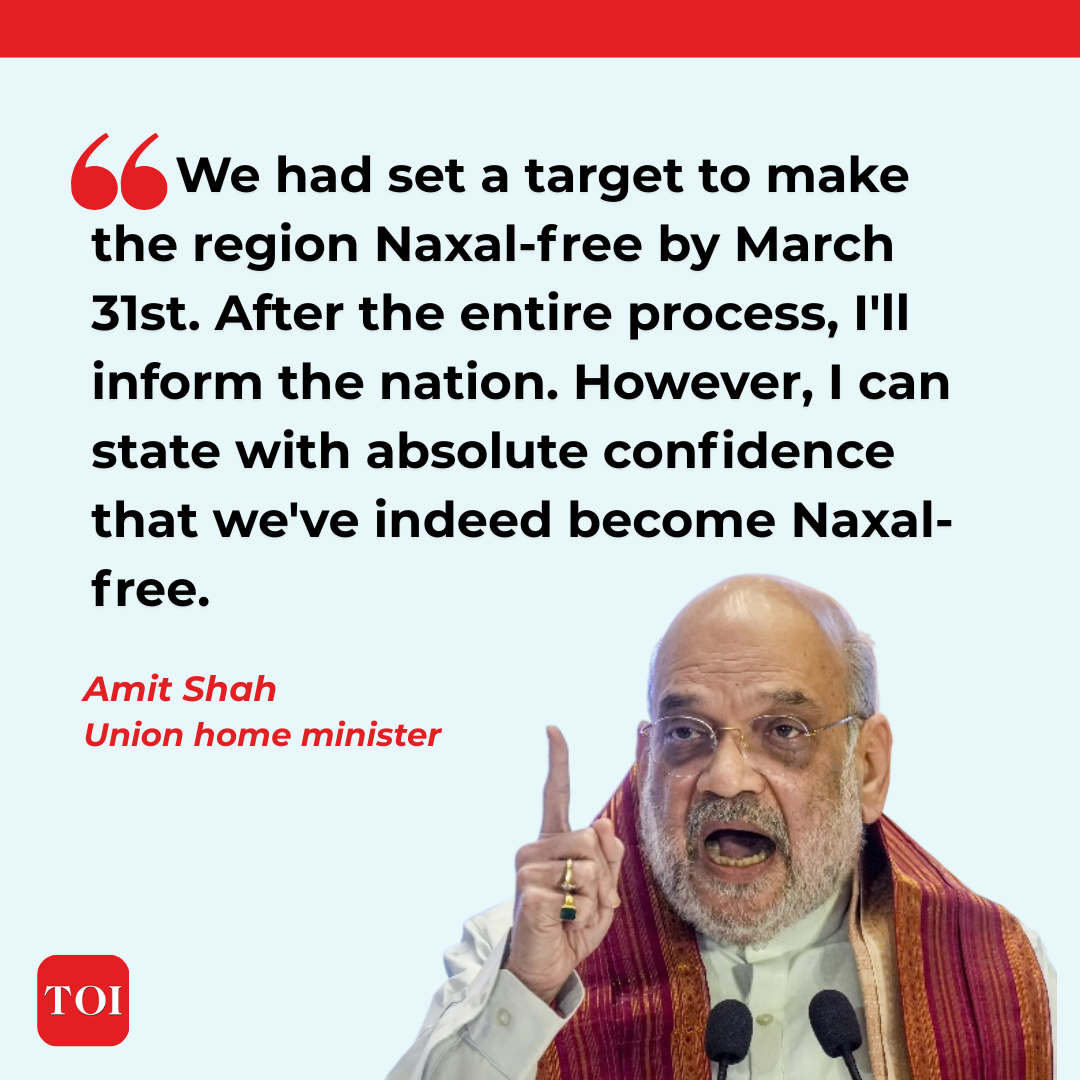
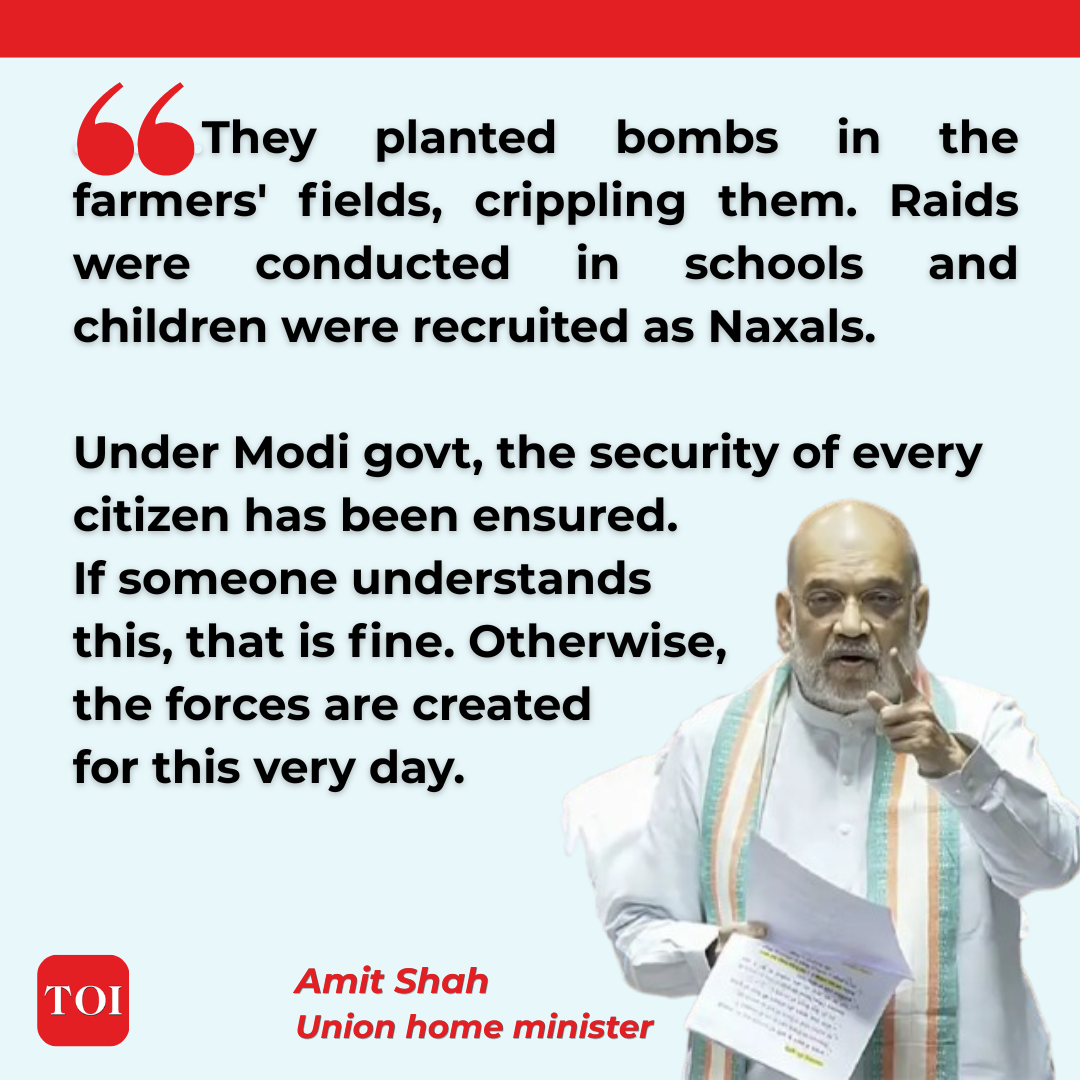
The short answer is: India appears very close to ending large-scale organised Naxal violence and according to Amit Shah, it may already have effectively crossed that threshold.Speaking in Parliament, the Union home minister declared that the Naxal leadership had been almost wiped out. “Their Politburo and central structure have been almost completely dismantled. Our goal was a Naxal-free India by March 31. The country will be informed once the entire process is formally completed, but I can say that we have become Naxal-free,” Shah said on the floor of the House.
.

.

He also made it clear that the Centre would continue to act firmly against armed extremism. Calling a “Naxal-free India” one of the government’s biggest achievements, Shah said those who take up arms would have to face the consequences. “The solution for addressing injustice is prescribed in the Constitution. Taking up arms is not the answer,” he said.Still, there is an important caveat. Even if the main Maoist structure has been dismantled, smaller underground cells, splinter groups, extortion networks or isolated local violence could continue for some time. And if governance weakens in tribal areas, the deeper issues that once fed the insurgency, land insecurity, displacement, poor administration and mistrust of the state, could remain.That is why the next phase matters. The shift is now from counter-insurgency to consolidation. In simple terms, the battlefield may have been won, but the peace still has to be secured.So yes, India is closer than ever, and by Shah’s own claim, effectively there.

Source link

Leander Paes: ‘Big opportunity to serve the youth’: From tennis courts to politics, Leander Paes joins BJP | India News


'Big opportunity to serve the youth': From tennis courts to politics, Leander Paes joins BJP

NEW DELHI: Indian tennis great Leander Paes on Tuesday joined the Bharatiya Janata Party, calling it a “big opportunity to serve the youth” as he steps into public life ahead of key elections. The 51-year-old, who remains one of India’s most decorated athletes, was inducted into the party in the presence of Union ministers including Kiren Rijiju.Marking the transition from sport to politics, Paes described the move as a moment of responsibility rather than symbolism. “This party membership slip is not just a slip but a responsibility to serve the nation,” he said, thanking Prime Minister Narendra Modi and Home Minister Amit Shah for the opportunity. He added that India’s young population presents a crucial moment to expand sports education and infrastructure, saying he hopes to contribute meaningfully in that space.Rijiju welcomed the tennis icon’s entry, saying he expects Paes to “play a bigger innings” in politics and boost initiatives such as the Khelo India programme. BJP leader Sukanta Majumdar also backed the move, saying Paes’ appeal among young people could strengthen the party’s outreach, particularly in West Bengal where elections are approaching.Paes’ political journey comes full circle after a brief stint with the Trinamool Congress, which he joined in 2021 and campaigned for during the Goa elections. His switch to the BJP now places him among a growing list of high-profile sportspersons entering politics.On the court, Paes built a career spanning more than three decades, winning 18 Grand Slam titles across men’s and mixed doubles and securing a historic bronze medal at the 1996 Atlanta Olympics. His partnership with Mahesh Bhupathi — dubbed the “Indian Express” — brought global recognition to Indian tennis, while his Davis Cup performances made him a national figure.Reflecting on his journey, Paes said he had “played for the country for 40 years” and now wants to focus on empowering youth through sport, including promoting equal opportunity scholarships for women. His entry into politics signals an attempt to translate sporting legacy into public service, as he prepares for a new and more complex arena beyond the baseline.


Source link

‘India reliable supplier globally’: PM Modi inaugurates Rs 3,300 crore semiconductor plant in Gujarat | India News


‘India reliable supplier globally’: PM Modi inaugurates Rs 3,300 crore semiconductor plant in Gujarat

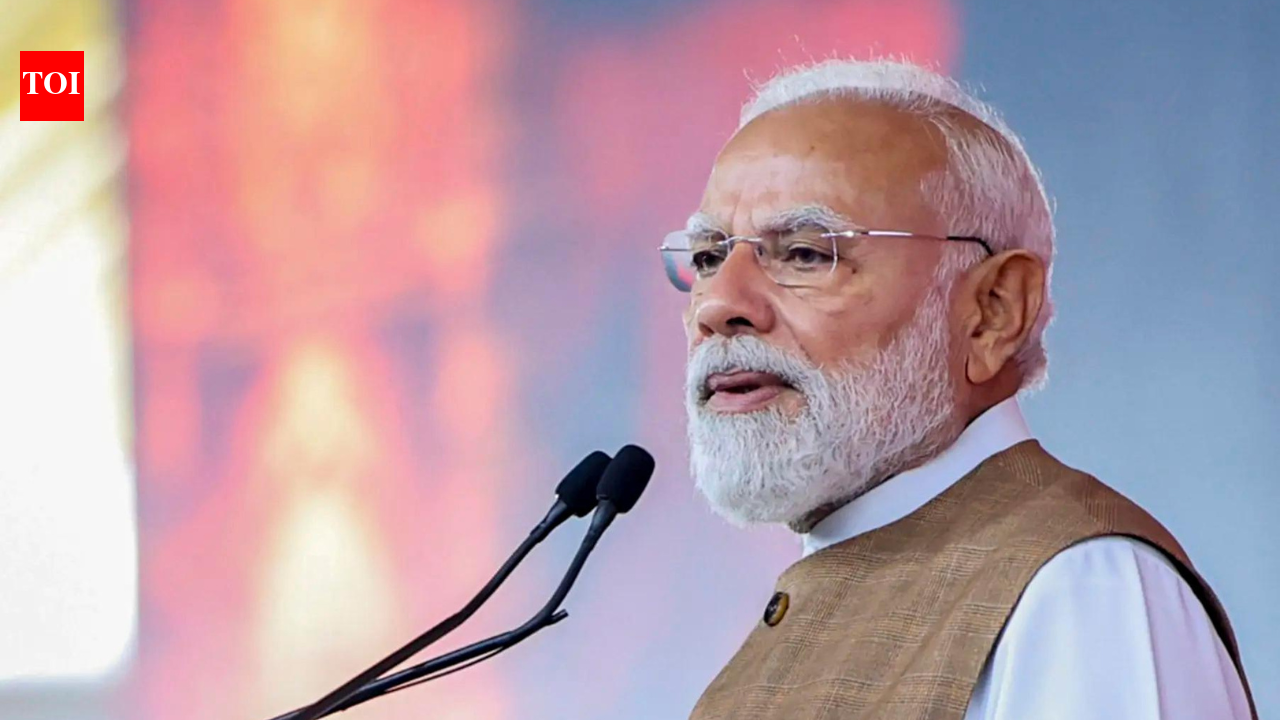
NEW DELHI: Prime Minister Narendra Modi on Tuesday inaugurated a Rs 3,300 crore semiconductor plant by Kaynes Technology at Sanand GIDC in Ahmedabad, marking the second such facility in the country taking forward semiconductor manufacturing plans.The plant is part of the semiconductor mission and is expected to strengthen domestic chip production capacity. Speaking at the event PM Modi asserted India’s broader ambitions in the sector, saying the country is positioning itself as a reliable player in the global semiconductor supply chain. He added that India is not just witnessing global changes but is preparing to lead them, and pointed to the launch of Semiconductor Mission 2 in the latest budget to boost self-reliance across production sectors, according to PTI. “India of 21st century not merely witness to change, but is moving forward with resolve to lead that change. We launched Semiconductor Mission 2 in last budget to make India self-reliant in every sector of its production,” PM said. The Prime Minister also said India’s decision to join the Pax Silica initiative would help strengthen access to critical minerals essential for semiconductor manufacturing, according to PTI.According to Gujarat science and technology minister Arjun Modhwadia, the facility will manufacture over 7 lakh chips per day. Speaking ahead of the launch on Monday, he said, “In the semiconductor manufacturing chain, Prime Minister Narendra Modi will tomorrow inaugurate a Rs 3,300 crore Kaynes Semicon plant in Sanand. This will be the second plant in the series, and the facility will manufacture more than 7 lakh chips per day.He added, “With this second unit, we are entering the era of this futuristic industry. The USP of the Prime Minister has been his ability to turn challenges into opportunities,” he told ANI.The inauguration comes weeks after PM Modi launched the Micron semiconductor plant in February. Referring to the pace of that project, he said, “The MoU for this facility was signed in June 2023, the foundation stone was laid in September, and by February 2026, commercial production had already begun. Even in developed countries, such approvals and processes take years, but India has completed this seemingly impossible task in just 900 days. When intentions are clear, and dedication is towards rapid national development, policies become decisive, and decisions gain momentum naturally,” reported ANI. Earlier in the day, Modi also inaugurated the Samrat Samprati Museum at Koba Tirth in Gandhinagar on the occasion of Mahavir Jayanti. Named after Samrat Samprati, the grandson of Ashoka, the museum focuses on the historical and cultural legacy of Jainism.


Source link

‘Consider me your candidate in all 294 seats’: Mamata Banerjee’s pitch in Bengal battle | India News


'Consider me your candidate in all 294 seats': Mamata Banerjee's pitch in Bengal battle
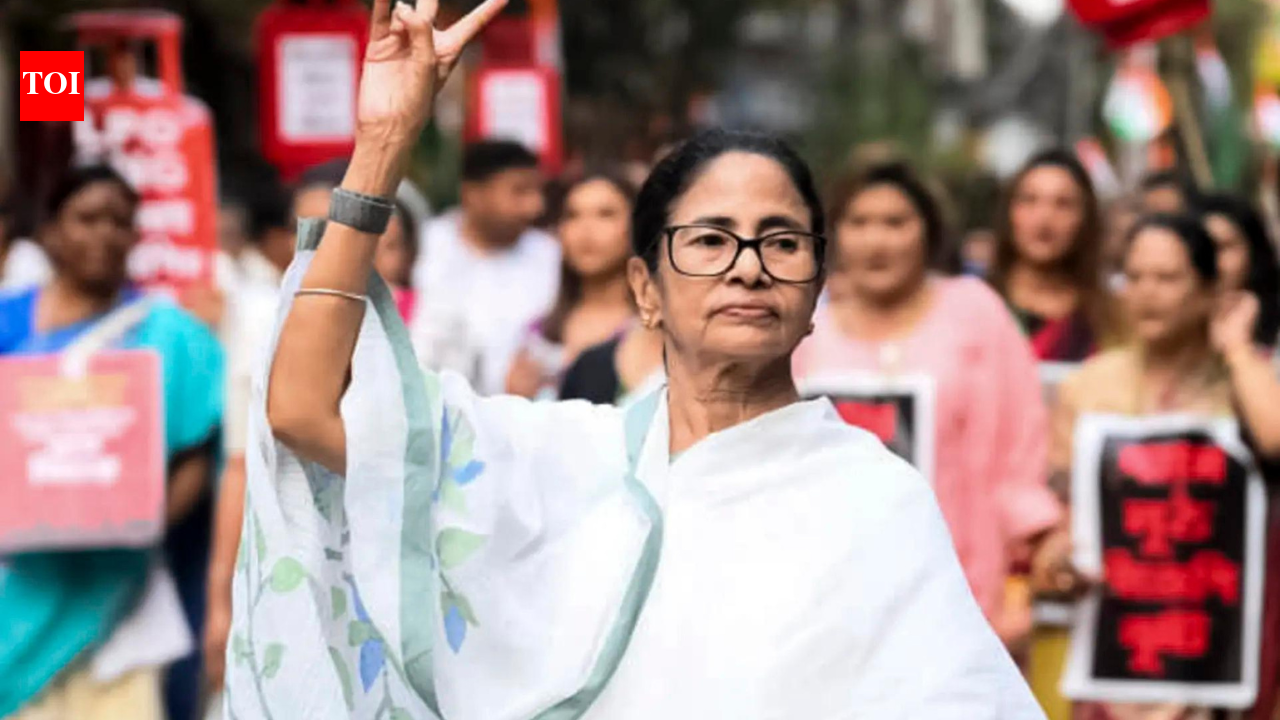
West Bengal chief minister Mamata Banerjee (file photo)

NEW DELHI: “Consider me your candidate in all 294 constituencies,” Mamata Banerjee on Tuesday said in a poll rally, urging voters to look beyond individual nominees and rally behind her leadership.As Mamata Banerjee took the stage in Paschim Medinipur’s Chandrakona on, her message cut through the campaign noise with a clear pitch: leadership over labels. In poll-bound West Bengal, where assembly elections are scheduled in two phases on April 23 and April 29, the Trinamool Congress supremo positioned herself as the face of the contest across all constituencies.She exuded confidence a day after her strongest rival in the state, BJP leader Suvendu Adhikari, filed nominations from Bhabanipur, also contested by West Bengal chief minister Mamata Banerjee, and from Nandigram, where he had defeated her in the 2021 elections.At the rally, Banerjee also flagged what she described as irregularities in voter enrolment, citing inputs from her nephew and party leader Abhishek Banerjee. “I was informed by Abhishek (Banerjee) yesterday that he had to rush to the EC office in Kolkata from the middle of his campaign schedule upon receiving information that about 30,000 forms were submitted in a single day to include fresh voters,” the TMC supremo said.Escalating her attack on the Bharatiya Janata Party, she alleged attempts to manipulate electoral rolls by bringing in voters from other states. “The BJP is trying to include illegal voters from Bihar, Rajasthan, Haryana and Uttar Pradesh in the electoral rolls of Bengal. They are planning to transport outstation voters by means of railways, as they did in Bihar,” she claimed.CM Mamata further accused the BJP of acting in concert with the Election Commission of India, alleging targeted deletions from voter lists. “The BJP and EC are snatching the citizenship, constitutional and democratic rights of people. We will fight them every inch of the way,” she said.Sharpening the political contrast, she warned of cultural and policy impositions if the BJP were to come to power in the state. Maintaining that the party has “no respect” for Bengal, she claimed it would impose “ban on non-veg food consumption” and attempt to introduce the National Register of Citizens through the backdoor, including plans to send targeted citizens to detention camps.With high-stakes rhetoric and a direct appeal to voters, Mamata’s pitch in Paschim Medinipur underscored a campaign that is as much about personality as it is about party.


Source link

‘So-called defender of Hinduism says nothing about Sabarimala’: Rahul Gandhi takes dig at PM Modi | India News


'So-called defender of Hinduism says nothing about Sabarimala': Rahul Gandhi takes dig at PM Modi
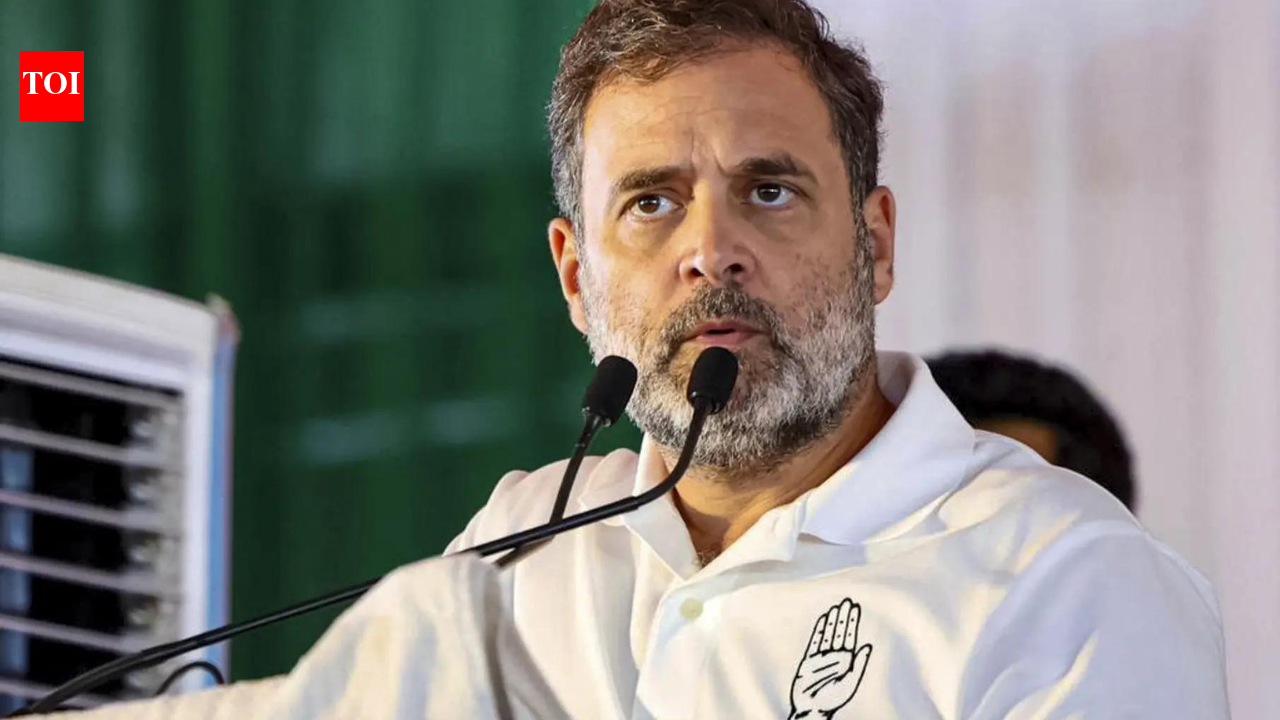
Rahul Gandhi (File photo)

NEW DELHI: Congress MP and Leader of Opposition in Lok Sabha Rahul Gandhi on Tuesday launched a sharp attack on Prime Minister Narendra Modi accusing him of selectively raising religious issues and questioning his silence on the alleged Sabarimala gold theft case.Addressing an election rally in Kannur, Kerala, ahead of the upcoming Assembly polls, Gandhi said, “When the so-called defender (the PM) of Hinduism comes to Keralam, he says nothing about Sabarimala,” he said.He further alleged inaction over the issue and accused leaders of the ruling Left Democratic Front (LDF) of wrongdoing.“How is the BJP supporting the CM (Pinarayi Vijayan)? First, wherever the PM goes, he talks about temples, religion and gods. But when the PM comes to Keralam, he doesn’t raise the issue of the Sabarimala temple. CPM leaders stole gold from the Sabarimala temple, but no action has been taken against them,” Gandhi said.Gandhi claimed that there was an underlying understanding between the BJP and the ruling Communist Party of India (Marxist)-led LDF in Kerala. He alleged that the chief minister was being shielded by the Centre.“Narendra Modi controls the Chief Minister of Kerala. The CM of Kerala knows that Narendra Modi is not acting on his cases; the CM knows that Narendra Modi has the key to putting the CM in jail right now. You will hear Congress attacking Narendra Modi, but you will never hear Kerala CM attacking Modi or Modi attacking Kerala CM,” he said.In another remark, Gandhi jibed at PM Modi. “The way Donald Trump controls Narendra Modi, the same way Narendra Modi controls the Chief Minister of Kerala,” he said while addressing the rally.The Congress leader also claimed that the BJP preferred the LDF to remain in power in the state. “Modi wants LDF to win the Assembly elections in Kerala,” he said.Sharpening his attack on the Left, Gandhi said the CPI(M) had deviated from its ideological roots. “CPI(M) no longer Left party but extreme Right wing party,” he said.He framed the upcoming election as a contest between contrasting ideologies while alleging an unusual alignment between political rivals. “This election is a fight between two ideologies. The ideology of the Left Front CPM, the ideology of the UDF and the Congress party. And for the first time, we are seeing that there is a partnership between the BJP and the Left Front. Normally, this would be quite surprising that a Left party is allying with an extreme right party,” he said.The remarks come amid an intensifying political battle in Kerala, where both the ruling LDF and the opposition United Democratic Front (UDF) have accused each other of acting as the BJP’s “B-team.” Earlier, Gandhi had alleged that the LDF was “completely supported by BJP” and described the Left government as a “corporate-funded government,” claiming it no longer functioned as a true Left formation. He also suggested that the BJP preferred the LDF in power as it would be easier to influence compared to the Congress-led UDF.On the other hand, Kerala chief minister Pinarayi Vijayan has countered by accusing Rahul Gandhi and the Congress of acting as the BJP’s “B-team,” intensifying the war of words ahead of the high-stakes Assembly elections in the state.


Source link

Assam assembly elections 2026: What is BJP offering in its poll manifesto | India News


Assam assembly elections 2026: What is BJP offering in its poll manifesto
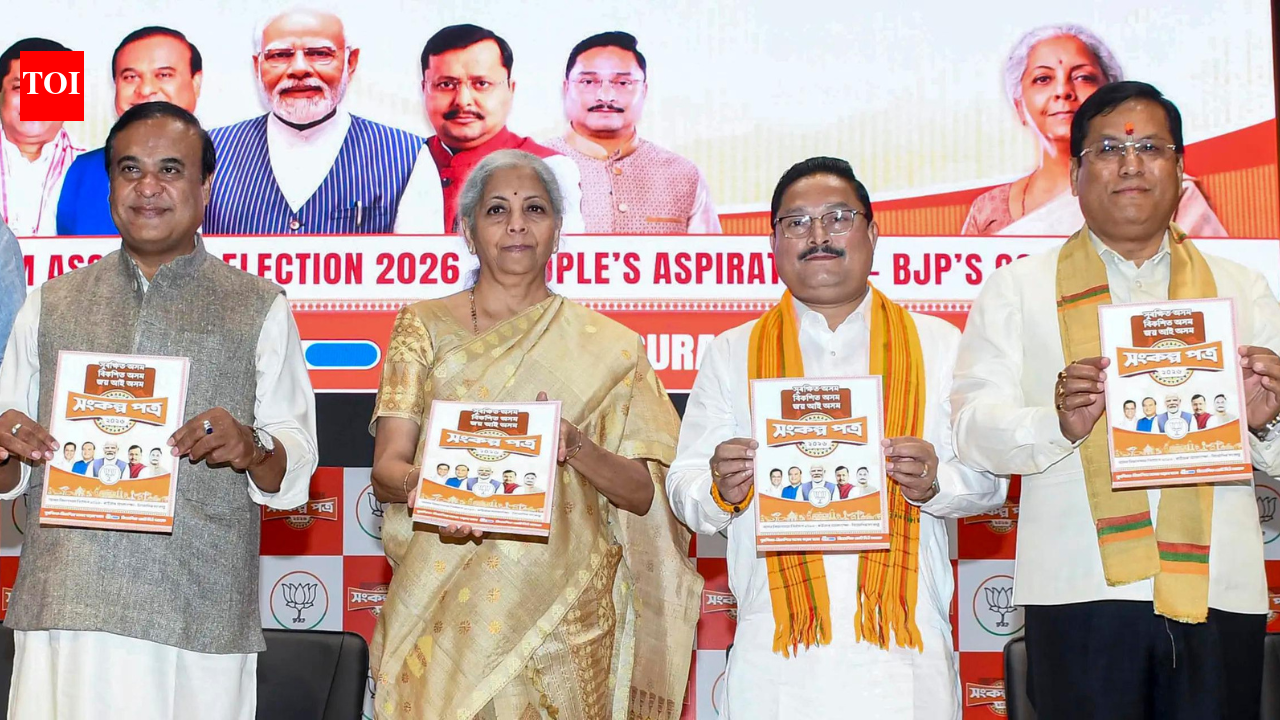
BJP releases manifesto ahead of polls (Image/PTI)

NEW DELHI: The Bharatiya Janata Party on Tuesday unveiled its manifesto for the Assam assembly elections 2026, outlining an ambitious mix of cultural, economic and governance promises aimed at consolidating its position in the state. The document, released by finance minister Nirmala Sitharaman, lays out 31 commitments under the party’s “Sankalp Patra.”A central plank of the manifesto is the promise to safeguard the land, heritage, and dignity of Assam’s indigenous communities. The BJP has also pledged firm action against encroachment, including the recovery of land allegedly occupied by illegal settlers. In addition, the party has proposed the implementation of a Uniform Civil Code and measures to strengthen law and order, framing these as essential for long-term stability.

Watch

EXCLUSIVE: ‘Congress Wants To Create New Assam, End BJP’s Tyrannical Rule,’ Says Gaurav Gogoi

On the economic front, the BJP has promised investments worth Rs 5 lakh crore to transform Assam into a key economic hub and India’s eastern gateway. The manifesto emphasises infrastructure expansion, job creation for youth, and sustained development, with the leadership highlighting what it calls a decade of transformation under its rule. The party also claims that improved opportunities are encouraging Assamese youth to return to the state from global careers.

What are 31 commitments promised in BJP’s ‘Sankalp Patra‘?

BJP has promised the following commitments in its manifesto:

  1. We will protect the land, heritage and dignity of theindigenous people of Assam
  2. We will strengthen the legislative protections to preservethe civilisation, heritage and rights of the people ofAssam
  3. We will invest Rs 5 lakh crore to position Assam as India’sEastern Gateway, backed by an Asom Gati ShaktiMaster Plan to ensure the timely completion of projects
  4. In collaboration with the Central Government, we will launch Asom Nagar Unnayan Abhijan
  5. We will launch the Badh Mukt Assam Mission withan investment of Rs 18,000 crore+ to make Assamflood-free
  6. We will provide employment and self-employmentopportunities for the youth
  7. We will empower the youth of Assam to becomeself-relian
  8. We will continue to provide rice, masur dal, sugar and salt 08at a subsidised rate, including mustard oil and also providefree ration to the poorest of the poor families.
  9. We will launch the One District, One University initiative andensure a comprehensive coverage of medical and engineeringcolleges in each district to enhance quality higher education in Assam
  10. We will transform education in Assam by ensuring education forall, building world-class institutions and expanding the teacherworkforce
  11. We will strengthen the dignity, security and economicindependence of the women of Assam
  12. We will ensure the promotion, protection andpreservation of the indigenous culture of Assam
  13. We will strengthen income security for farmers
  14. We will provide financial assistance to fish farmers,ensuring income support during the non-fishing period.
  15. We will launch the Asom Krishi Unnayan Abhijan tomodernise and strengthen agricultural market infrastructureand supply chain management
  16. We will actively pursue the Central Government to implementthe recommendation of the Group of Ministers (GoM) inrespect of scheduling the six communities of KochRajbongshi, Tai Ahom, Adivasis & Tea Tribes,Chutia, Moran and Matak while safeguarding theconstitutional, social and economic rights of existing STcommunities.
  17. We will pursue the Central Government to consider the inclusion ofseven communities, Bishnupriya Manipuri, Bhar orRajbhar, Newar, Bhujel, Sabar, Satnami and KiranSheikh, in the Central List of Other Backward Classes,in line with their existing recognition in the State OBC list.
  18. We will work towards granting constitutional status to the Autonomous Councils of the Mising, Rabha, Sonowal Kachari,Thengal Kachari, Deori, Tiwa and Boro Kachari tribes.
  19. We will ensure inclusive development and land security for the tribaland indigenous people
  20. We will ensure the holistic development of tea tribe communities
  21. With 22 lakh+ houses completed under the Pradhan MantriAwas Yojana (Gramin and Urban), we will construct anadditional 15 lakh houses to ensure every family has accessto a pucca house with basic amenities.
  22. We will launch Nijut Sipini to provide financialassistance to 10 lakh traditional weavers to supporttheir livelihoods and strengthen handloom production.
  23. Building on our rapid economic growth since 2016, we will doubleAssam’s economy to $150 billion by 2031 and scale it to $300billion by 2036
  24. We will provide a wage subsidy of Rs 10,000 peremployee to new industries investing in Assam to support thetraining and employment of local youth, with enhanced incentivesfor enterprises established under Advantage Assam.
  25. We will launch the Asom Parjyatan Bikash Abhijan to position Assam as a leading tourism destination.
  26. We will ensure time-bound implementation of all signed peace accords
  27. We will focus on the welfare of the government employees, promoting good governance and strengthening law and order
  28. We will ensure holistic development of sports across the state with targeted intervention
  29. To develop Dibrugarh as the second capital of Assam
  30. To ensure the holistic development of Barak Valley
  31. Building on Assam’s rising health investment of Rs 2,600 crore in 2016 to Rs 8,900 crore in 2025, we will strengthen the medical infrastructure in the state


Source link

Tamil Nadu: TVK chief Vijay booked for violating election rules day after entering polls | India News


Tamil Nadu: TVK chief Vijay booked for violating election rules day after entering polls
TVK chief Vijay (File photo)

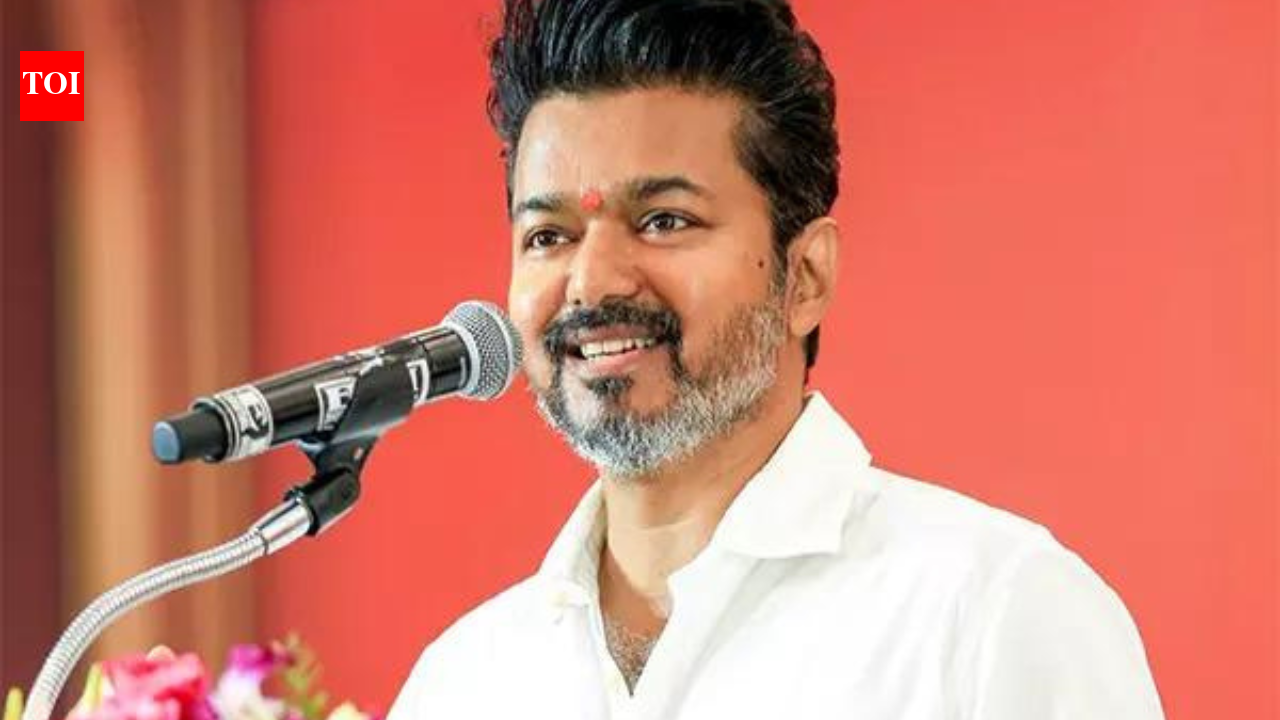
NEW DELHI: A case was registered on Tuesday against Tamilaga Vettri Kazhagam (TVK) chief Vijay for violation of election conduct rules at Peravallur Police Station.According to the complaint filed by Flying Squad Officer Kumar, Vijay allegedly violated the Model Code of Conduct during a public gathering by using around 30 loudspeakers, drawing a crowd of over 5,000 people and causing inconvenience to the public.The complaint also stated that the gathering led to the obstruction of a public pathway and reportedly blocked the movement of an ambulance, raising concerns over public safety.Acting on the complaint, the Peravallur police have registered a case under five sections, including charges related to public nuisance, unlawful assembly and obstruction of public ways. The case names Vijay along with nearly 5,000 party workers, according to ANI. Vijay had recently announced that he will contest from the Perambur and Trichy East constituencies.Tamil Nadu is set to go to polls in a single phase on April 23, with counting of votes scheduled for May 4.


Source link

‘Dweep Shakti’: Three services conduct amphibious assaults, maritime dominance ops | India News


‘Dweep Shakti': Three services conduct amphibious assaults, maritime dominance ops

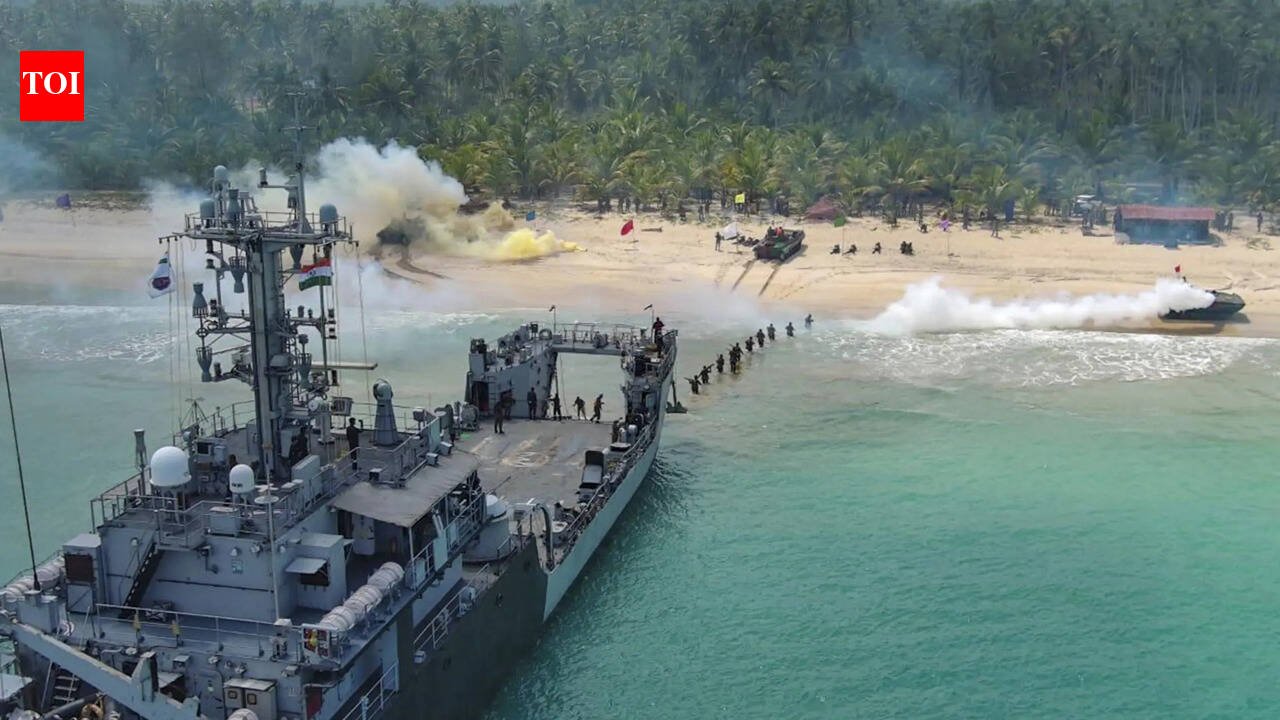
NEW DELHI: In a rare show of seamless synergy, all three services of the armed forces jointly conducted Dweep Shakti, a high-intensity Tri-Service exercise, between March 24 and March 28 to validate integrated capability for rapid response along the coastal and island defence operations.During the joint exercise, the triservices executed coordinated amphibious assaults, maritime dominance operations and complex beach landing drills.“In seamless synergy, IndianArmy, IndianNavy and IndianAirForce executed coordinated amphibious assaults, maritime dominance operations and complex beach landing drills employing Next-Generation Equipment and drones, reaffirming precision, jointness and mission-ready interoperability,” the Army posted on X. It also shared some photos of the military drill.The exercise also refined integrated tactics, techniques and procedures, reinforcing the armed forces’ growing multi-domain capability and steadfast commitment to securing India’s maritime frontiers and island territories, it said.


Source link

Indian killed in Kuwait desalination plant attack | India News


Indian killed in Kuwait desalination plant attack

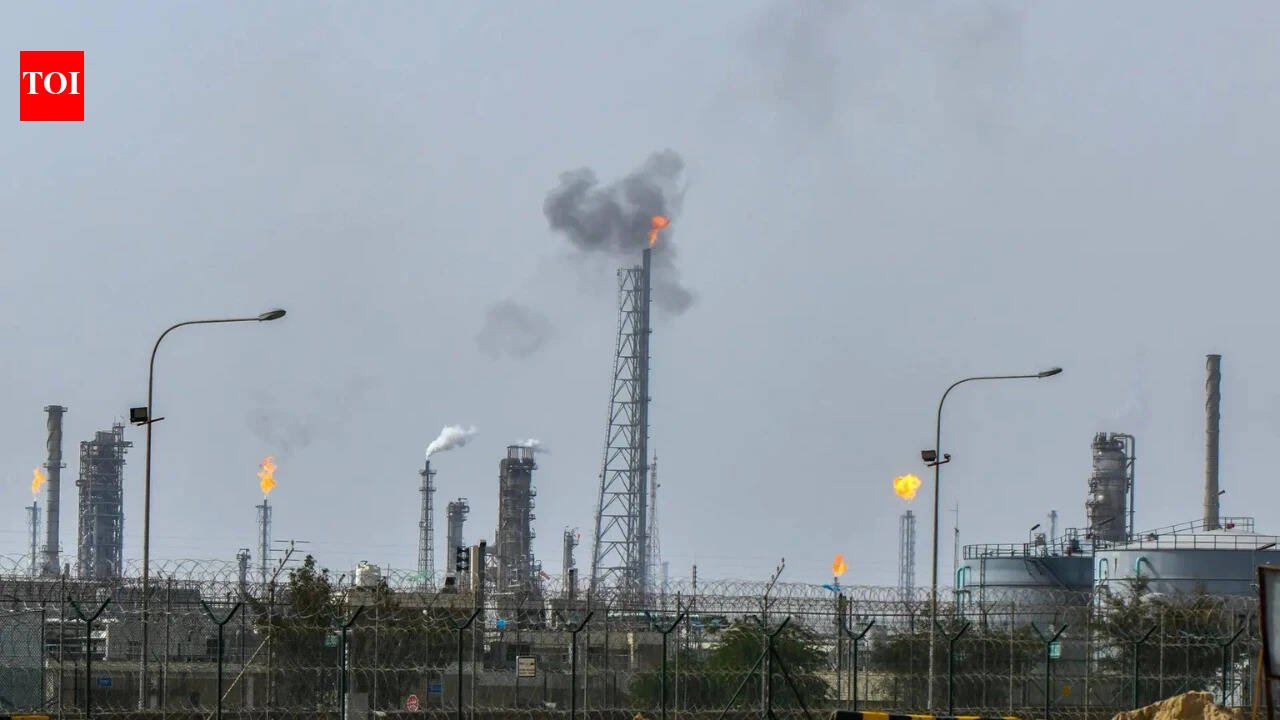
NEW DELHI: An Indian national was killed in an attack on a power and water desalination plant in Kuwait, taking the toll of Indians killed in the ongoing war in West Asia to eight.“Embassy of India in Kuwait expresses its condolences at the tragic demise of an Indian national due to an attack on a desalination facility in Kuwait yesterday. The embassy is coordinating with Kuwaiti authorities to render all possible support and assistance,” said the Indian embassy on X, confirming the first Indian death in Kuwait in the conflict.Kuwait’s ministry of electricity, water and renewable energy said a service building at one of its power and water distillation plants was damaged during the attack, according to the state-run KUNA news agency. Officials described it as a “brutal attack”. The plant where the attack occurred wasn’t identified.Ministry spokesperson Fatima Jawhar Hayat said the strike resulted in the death of a worker of Indian nationality, Gulf News reported.


Source link