Breaking News
86 per cent in India report workplace disruptions, above global levels | India News


86 per cent in India report workplace disruptions, above global levels

NEW DELHI: India’s workforce is facing a sharper disruption than the rest of the world’s — but is also adapting faster, with 86% reporting major workplace changes in the past year, far above global levels, and 89% actively building new skills to stay relevant.Exclusively accessed by TOI, the 2026 Human Progress Report by ETS (Educational Testing Service), a global non-profit that designs assessments like TOEFL and GRE and tracks workforce readiness trends, flags a defining shift. Job security is no longer about tenure, but adaptability. As AI reshapes work and roles evolve rapidly, Indian workers are leaning heavily into continuous learning and skill validation to stay competitive.Globally, 67% of workers reported at least one major workplace disruption, but India is among the hardest hit markets. Nearly 98% of workers here report facing at least one barrier to professional success, underscoring the pressure to constantly upskill.Yet, India also stands out for resilience. The country recorded a Human Progress Index score of 114.4, significantly above the global average of 96.7.The report shows Indian workers are actively future-proofing. Nearly nine in ten say they are developing new skills, while 90% believe verified credentials are essential as skill demands shift.“In the face of a changing job landscape, workers are quickly adapting,” said Amit Sevak, CEO of ETS. “Adaptability is becoming the new ‘must have’ skill.”A key driver of this shift is AI. Indian workers estimate that over 42% of their tasks involve AI tools, higher than the global average, and 78% say they use AI primarily to remain competitive, not by choice.Globally, the report points to a widening skills gap. Workers face a 19-point gap between the importance of AI skills and actual proficiency and 88% expect employers to support upskilling, but only 71% get it.The pressure is translating into anxiety. Another structural gap is emerging around access to credentials. While 73% of workers globally want skill credentials, only 45% have access, pointing to affordability and availability barriers.The broader global picture is one of continuous disruption. The report, based on over 32,000 respondents across 18 countries, notes that workers are “trying to aim at an unclear future,” even as they build skills in real time.


Source link

Leander exits TMC, joins BJP ‘to serve youth and countrymen’ | India News


Leander exits TMC, joins BJP ‘to serve youth and countrymen’

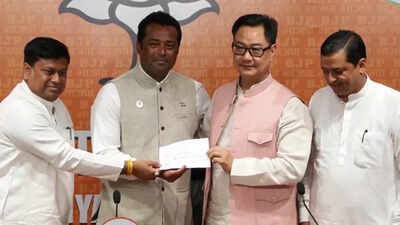
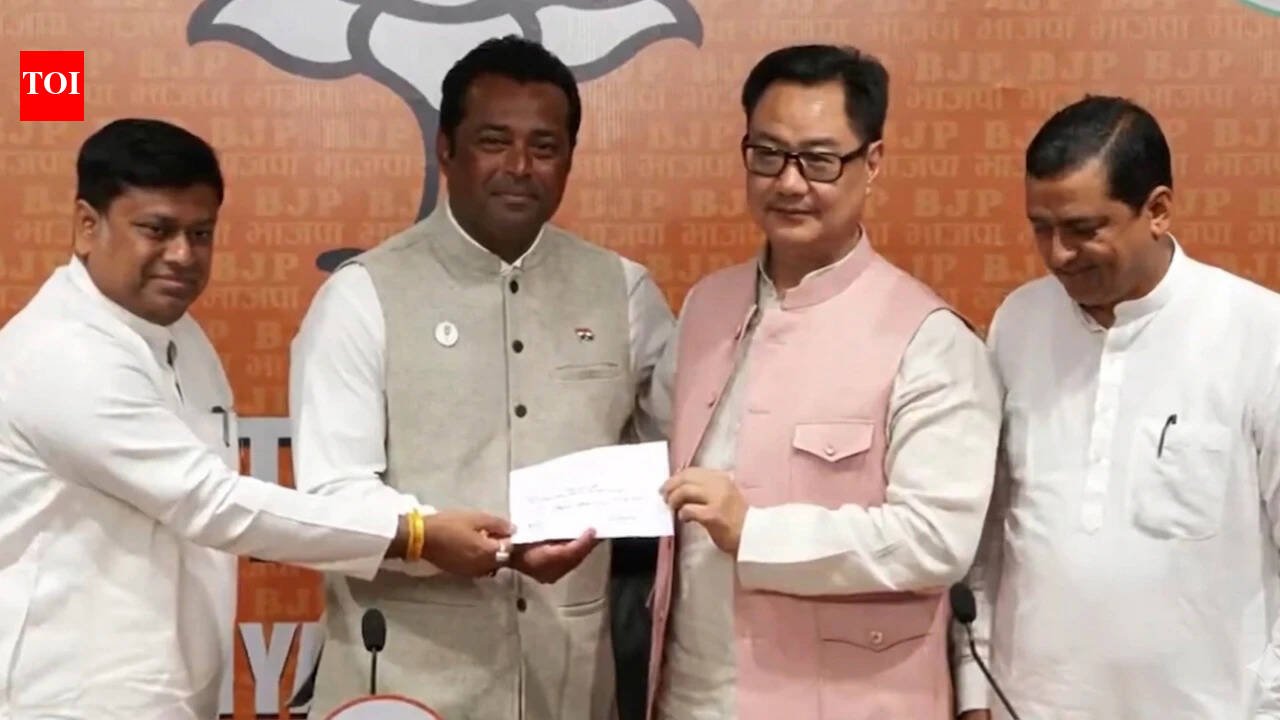
=KOLKATA/NEW DELHI: Olympic bronze medallist and multiple Grand Slam doubles champion Leander Paes crossed over to the BJP on Tuesday, exiting the Trinamool Congress after a brief stint.At BJP headquarters in New Delhi, Paes, 52, framed the move as a new “responsibility” after four decades in sport. “I have played for the country… I wish to serve youth and countrymen now,” he said, thanking PM Narendra Modi for the opportunity. Party functionaries pitched the tennis legend’s entry as a signal to urban voters and younger demographics, pushing back against criticism that the BJP focuses narrowly on Hindu causes.Junior Union minister Sukanta Majumdar called Paes “a son of Bengal”, citing his upbringing in Kolkata and lineage tracing back to 19th-century poet and playwright Michael Madhusudan Dutt. Party functionaries expect his profile — Christian, Goan roots, Kolkata upbringing — to widen outreach among non-Hindu communities and the urban middle class.Paes had met BJP national president Nitin Nabin in Kolkata last week, fuelling speculation. He was inducted by the minority affairs minister Kiren Rijiju along with senior netas. BJP insiders said his proximity to Rijiju dates back to 2019–21, when the latter handled the sports portfolio.“We have 74.5 crore youth. We need to build a future for them,” Paes said.Rijiju called the entry a “moment of pride”, describing Paes as an iconic figure inspired by the government’s sports push.Paes had joined Trinamool in 2021 and campaigned in the Goa polls during the party’s expansion attempt that later faltered.Trinamool’s reaction ranged from guarded to pointed. One functionary declined to comment. Another said, “The Foreign Contribution (Regulation) Amendment Bill, 2026, will be discussed in Lok Sabha on Wednesday. Our MP, Saugata Roy, will speak against it. Hopefully, Paes will express his views on this since Trinamool and the Christian community oppose the bill strongly. Now that he will campaign, we hope he will open up on the anti-conversion statutes in 13 states.Voices from sports and Christian circles struck mixed notes. Former India Davis Cup captain Jaidip Mukerjea said sportspersons should focus on sport. “Joining just before assembly elections also isn’t proper… timing wrong,” he said. Father Gregory Monteiro called the move unexpected but a personal choice, hoping it would benefit the community.


Source link

Top-level rejig in Army today as heads of eastern, western commands retire | India News


Top-level rejig in Army today as heads of eastern, western commands retire

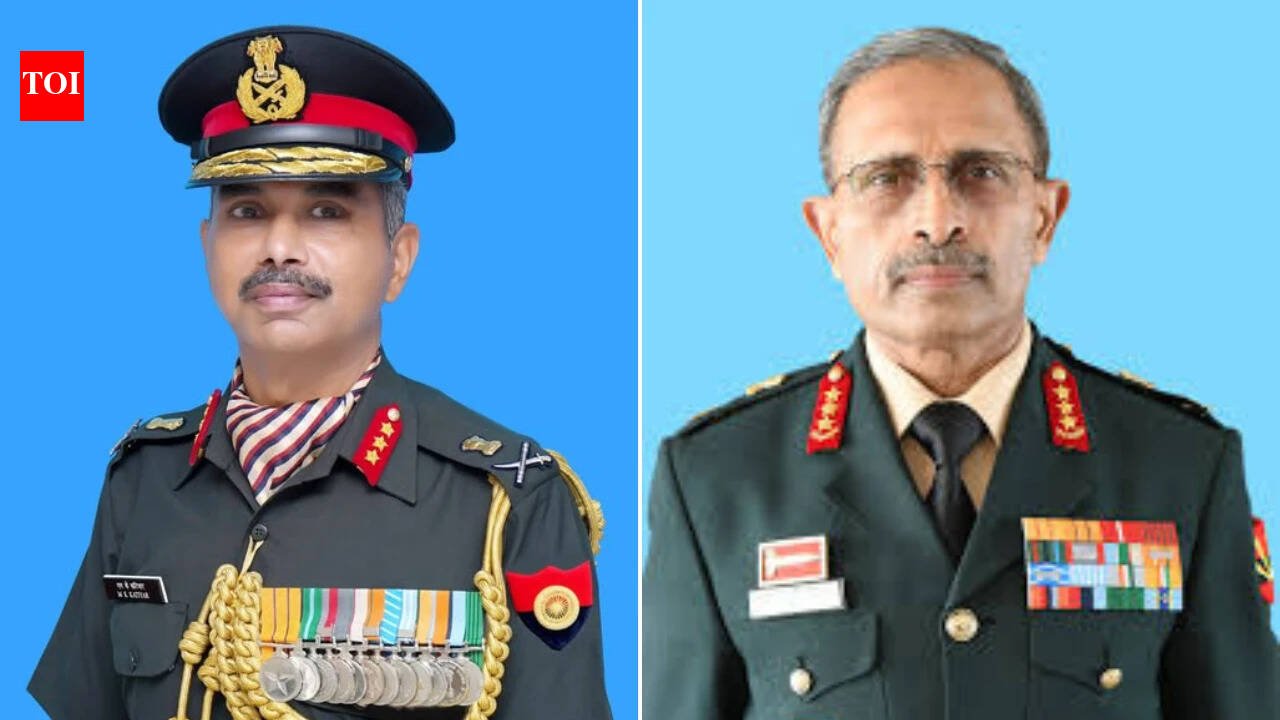
NEW DELHI: The Indian Army will witness a reshuffle at the top level on Wednesday as heads of two key commands — Western and Eastern — retired on Tuesday.Lt Gen Manoj Kumar Katiyar, the general officer commanding-in-chief (GoC-in-C) of the Army’s Western Command, retired after a distinguished 40-year career. He earlier served as Director General of Military Operations (DGMO) at IHQ of the defence ministry (Army). Prior to that, he was General Officer Commanding of the Army’s I Corps, a premier strike formation.On Wednesday, the current vice-chief, Lt Gen Pushpendra Pal Singh, is scheduled to take over as the head of Western Command, which is one of the Army’s most critical operational formations responsible for guarding the Pakistan border across Jammu, Samba, Kathua and Punjab.Lt Gen RC Tiwari, the Eastern Army Commander, also superannuated on Tuesday. He will be succeeded by Lt Gen VMB Krishnan, who has been promoted.Lt Gen Dhiraj Seth, the General Officer Commanding-in-Chief of the Pune-based Southern Command, will move to the Army HQ as vice-chief from April 1. Lt Gen Seth is an Armoured Corps officer commissioned in Dec 1986. He has held several command and staff appointments during his career. Prior to taking charge of Southern Command in July 2024, he commanded the Mathura-based XXI Strike Corps, one of the Army’s key strike formations.Lt Gen Sandeep Jain, currently Chief Of Staff, Southern Command, will get elevated as Southern Army Commander in his place.Lt Gen Katiyar, who led the Western Command during the conflict with Pakistan last May, recently said, “During Operation Sindoor, we successfully thwarted Pakistan’s nefarious objectives and achieved success… Beyond regular training, we are undertaking large-scale procurement of new equipment, including drones and counter-drone systems. Wherever necessary, we are manufacturing these items in-house within our own workshops.During his tenure as Eastern Army Commander, Lt Gen Tiwari played a key role in strengthening operational preparedness in the eastern theatre, enhancing training and capability development. Through his military career spanning over three decades, Tiwari held significant command roles in both conventional warfare and counter-insurgency environments, including commanding an infantry battalion for counter-insurgency operations, a mountain brigade in high-altitude areas, the elite Black Cat Division as General Officer Commanding (GOC) and 3 Corps (Spear Corps) in Nagaland.


Source link

Srinagar Encounter: Encounter breaks out near Srinagar | India News


Encounter breaks out near Srinagar

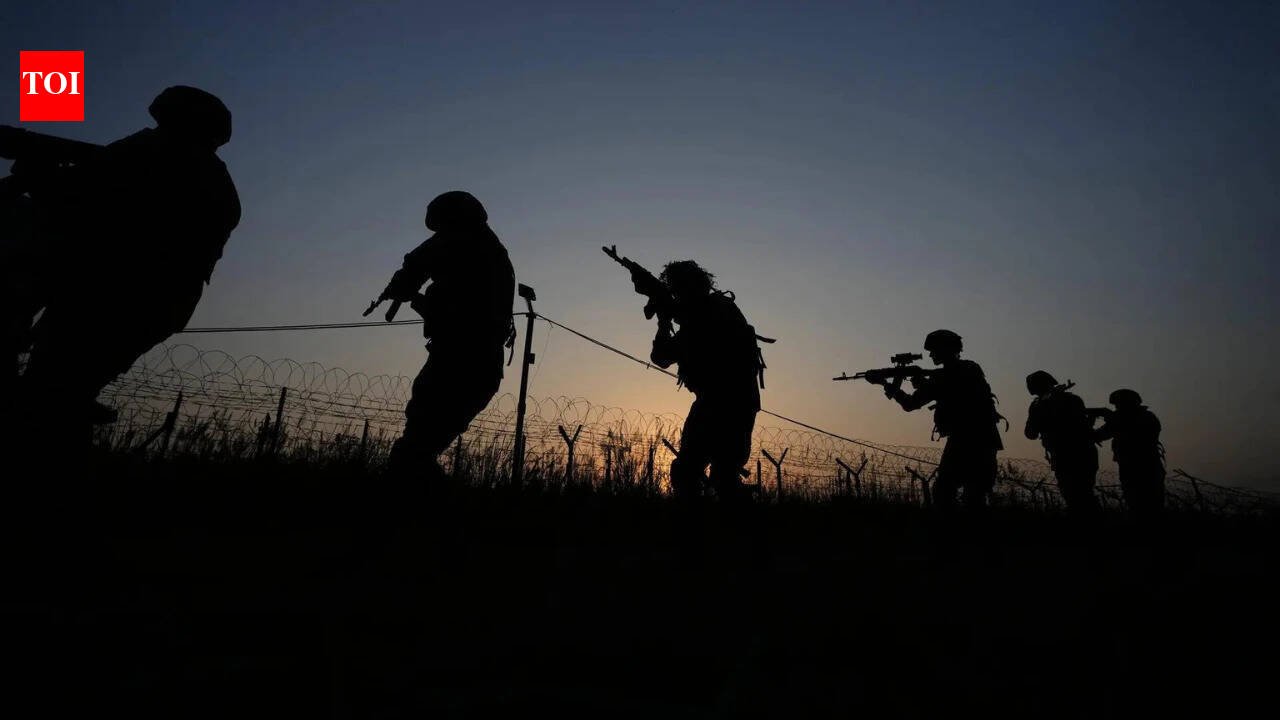
SRINAGAR: An exchange of fire broke out Tuesday between security forces and terrorists in a forest area of Ganderbal, about 60 km north of Srinagar, the Army said.The Army’s Srinagar-based Chinar Corps said that based on specific intelligence input, a joint search operation was launched by the Army and Jammu and Kashmir Police in the Arahama area. “During the search, vigilant troops observed suspicious activity. On being challenged, terrorists opened fire, and our troops retaliated,” the Army said, adding that the operation is continuing.


Source link

As TG bill becomes law, community uncertain about status of 32000 TG certificates issued on basis of ‘self-perceived identity’ | India News


As TG bill becomes law, community uncertain about status of 32000 TG certificates issued on basis of 'self-perceived identity'

NEW DELHI: With the Transgender Person (Protection of Rights) Amendment Bill, 2026 becoming law with President of India Droupadi Murmu’s assent on Monday, all eyes are now on the way forward as the amendments do away with the provisions in the 2019 law that allowed “self-perceived gender identity” to be the basis for self-determination and identification for approval for transgender certificate by the district magistrate.The amended definition of “transgender persons” makes it clear that it will not include persons with “different sexual orientations and self-perceived sexual identities”. A medical board headed by the chief medical officer has been introduced. Going forward the district magistrate will issue a certificate of transgender identity, after examining the recommendation of the medical board cited as “authority” to be constituted by the central or state governments. Moreover, the DM will also have the option to seek assistance from medical experts.While the TG community members are exploring the legal route to challenge the enacted amendments in Court, they wonder what will be the fate of the over 32,000 TG certificates issued so far based on self-perceived identity and those pending approval. Member of the National Council for Transgender Persons Abhina Aher told TOI that the community was planning to take legal recourse as the Bill violates the landmark NALSA judgement of 2014 that affirmed the right to self-determination of transgender persons. A visit to the National Portal for Transgender Persons linked to the website of the ministry of social justice and empowerment shows that the total number of applications received stands at 37362. The portal puts the number of TG certificates issued so far at 32660, and of these, TG identity cards have been issued to 32630 persons. As many as 5833 applicants have not been found eligible, and 4794 applications were pending approval as of Tuesday.In this backdrop, youth like Akash (name changed) are a worried lot. A transman from Haryana’s Charkhi Dadri who is currently in Delhi for coaching as he aspires to sit for the civil services examination, Akash says he is fearful of what lies ahead. “ I got my TG certificate on March 18 but will this certificate stay valid? The amendments don’t even mention transman or transwoman in the definition and take away the right to self-perceived identification. So, what happens to me and others in the same situation? Who will stand up to secure our rights and protect us from exploitation?” Akash asked.The amended definition of “transgender person” lays down that it includes a person having such socio-cultural identities as kinner, hijra, aravani and jogta, or eunuch, or a person with intersex variations specified below or a person who, at birth, has a congenital variation in one or more of the following sex characteristics as compared to male or female development.—

  1. primary sexual characteristics
  2. external genitalia
  3. chromosomal patterns
  4. gonadal development
  5. endogenous hormone production or response, or such other medical conditions.

The definition also includes “any person or child who has been, by force, allurement, inducement, deceit or undue influence, either with or without consent, compelled to assume, adopt, or outwardly present a transgender identity, by mutilation, emasculation, castration, amputation, or any surgical, chemical, or hormonal procedure or otherwise.”


Source link

IMD warns of more heatwave days in many states, April to get above normal rainfall in the country, brining down temp in certain parts | India News


IMD warns of more heatwave days in many states, April to get above normal rainfall in the country, brining down temp in certain parts

NEW DELHI: Many parts of the country may not be hotter than usual during April-June summer season due to normal to ‘below normal’ maximum (day) temperatures but most parts in east, northeast and coastal Peninsular India are likely to get two to eight days of extended heatwave duration, the IMD said on Tuesday.“Above-normal heatwave days are expected over Rajasthan, Gujarat, Haryana, Punjab, Maharashtra, Uttar Pradesh, Bihar, Jharkhand, West Bengal, Odisha, Chhattisgarh, Telangana, Andhra Pradesh, Coastal Tamil Nadu and northern parts of Karnataka during April to June,” said IMD’s chief Mrutyunjay Mohapatra while releasing seasonal outlook for the three-month period.The forecast map, released by the Met department, shows additional heatwave days even in Delhi-NCR but the occurrence is most likely to be confined in May-June as April in many parts of India, including northwest, may experience above-normal rainfall due to prevailing and predicted western disturbances.Heatwave is considered if the maximum temperature of a weather station reaches at least 40 degree Celsius or more for plains and at least 30 degree C or more for hilly regions. Many parts of plains normally get three to five days of heatwave during April-June period.The most parts of the country which may get below normal temperatures during the days are, however, likely to have warmer nights. “During the season (April-June), above-normal minimum (night) temperatures are likely over most parts of the country except some regions of Maharashtra and Telangana where normal to below normal minimum temperatures are likely,” said Mohapatra.Though the IMD chief preferred not to say anything about the monsoon season at this juncture, the latest forecasts from the Monsoon Mission Climate Forecast System (MMCFS) suggest that El Niño–Southern Oscillation (ENSO) neutral conditions are most likely to continue during April to June.“Thereafter, the probability of development of El Niño conditions increases gradually,” said IMD — an indication that its adverse impact on rainfall may hit later part of monsoon season during Aug-Sept. IMD is expected to come out with its first stage forecast on this year’s monsoon rainfall sometime around mid-April.IMD data shows as many as 45 human deaths due to extreme weather events across many states in March. Lightning caused the maximum 32 deaths in Uttar Pradesh, Bihar, Jharkhand, Haryana, Karnataka, Maharashtra, Assam, Chhattisgarh, Kerala.Speaking about March, Mohapatra said eight Western Disturbances (WDs) impacted India during the month, against the normal of 5-6.Six WDs impacted northwest India during March 11-31, causing light to moderate rains with thunderstorms, lightning, gusty winds and hailstorm over northwest & adjoining central parts of the country.The large-scale thunderstorm activity occurred in many parts of the country mainly during the second half of the month and it led to reduction in maximum temperatures over most parts of India.


Source link

West Bengal polls: Like Nandigram last time, has BJP set another trap for Mamata in Bhabanipur | India News


West Bengal polls: Like Nandigram last time, has BJP set another trap for Mamata in Bhabanipur

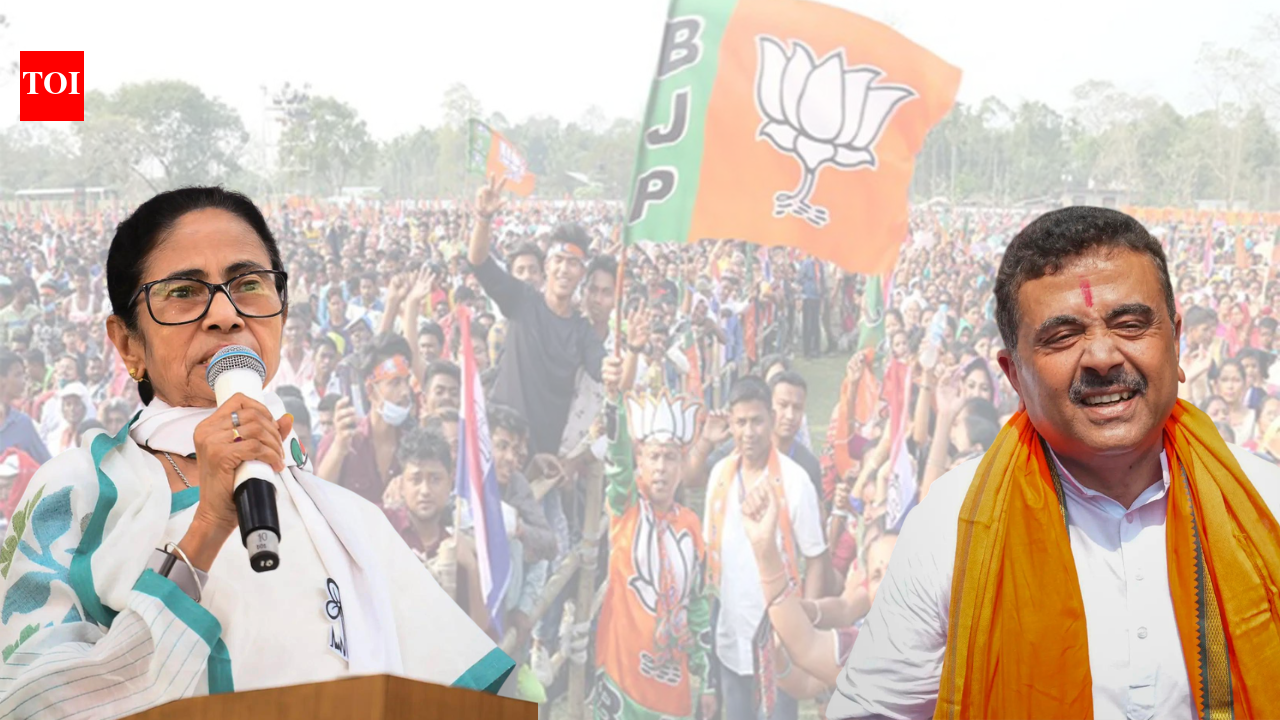
Bhabanipur, long seen as Mamata Banerjee’s safest political ground, is beginning to stir uneasy comparisons with Nandigram. In the 2021 assembly elections, her decision to contest from Nandigram ended in a dramatic setback, with Suvendu Adhikari defeating her in a high-stakes battle that reshaped the narrative of the polls and marked a symbolic leap for the Bharatiya Janata Party in West Bengal. Five years on, the BJP appears to be attempting a similar strategy, this time in Bhabanipur, turning what was once considered a safe seat into a potential battleground.By fielding Adhikari in Bhabanipur, the BJP has effectively redrawn the battle lines, transforming what was once a comfortable stronghold into a high-pressure contest. The move is not just electoral but deeply symbolic, aimed at challenging Banerjee’s authority at the very seat that has repeatedly secured her political survival. For the chief minister, Bhabanipur is more than just another constituency, it is where she rebuilt her mandate after Nandigram. Now, it risks becoming a stage for history to repeat itself.The parallels are hard to ignore. Just as Nandigram became a referendum on Banerjee’s leadership in 2021, Bhabanipur is shaping up as a test of her enduring grip over urban Bengal. The question looming over the contest is whether the BJP has managed to recreate a similar political trap, or whether Banerjee can once again turn a moment of vulnerability into a decisive comeback.

From fortress to frontline

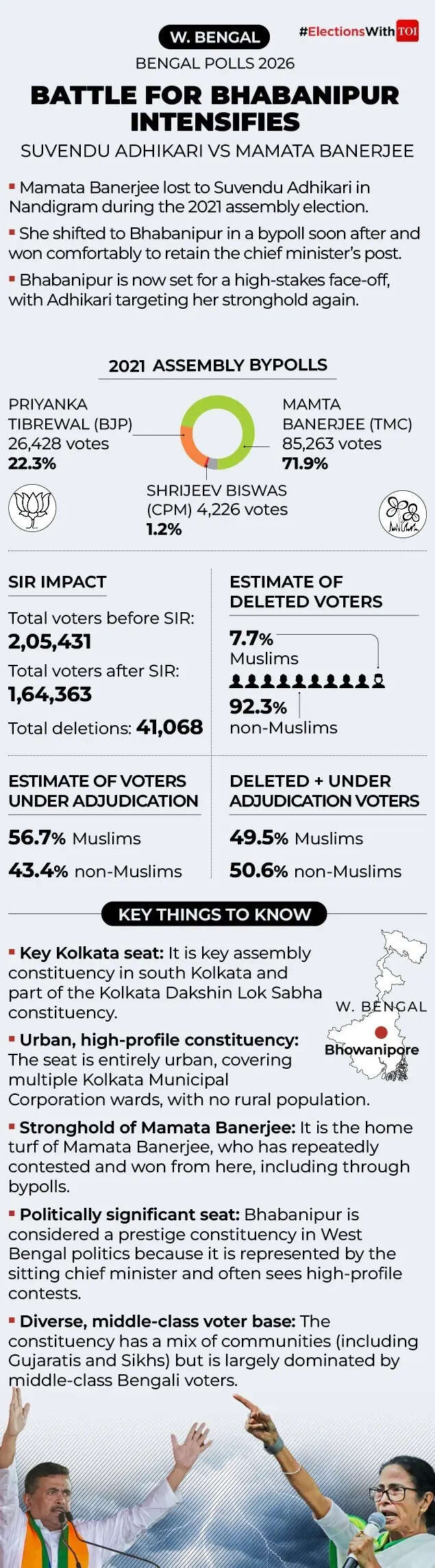
Bhabanipur’s transformation from a TMC bastion to a competitive seat reflects shifting political currents. In the 2021 bypoll, Banerjee secured over 71 per cent of the vote, defeating BJP’s Priyanka Tibrewal by a margin exceeding 58,000 votes. Yet, recent trends suggest cracks in that dominance.

(Bengal polls)

In the 2024 Lok Sabha elections, the TMC’s lead in the segment narrowed to around 6,500 votes, while the BJP made gains across several municipal wards. Internal party meetings now reflect a sense of urgency. TMC national general secretary Abhishek Banerjee has set an ambitious target—winning Bhabanipur by over 60,000 votes—and warned cadres against complacency.The constituency’s evolving demographics add complexity. With roughly 76 per cent Hindu voters (split between Bengali and non-Bengali communities) and 24 per cent minorities, Bhabanipur reflects a microcosm of urban Kolkata. Migrant populations from Uttar Pradesh, Bihar and Odisha further shape electoral behaviour, making outcomes less predictable than before.

SIR row and shifting voter base

A key flashpoint in the current contest is the Special Intensive Revision (SIR) of electoral rolls. According to party sources, over 40,000 names have been deleted, with thousands more under adjudication. This has triggered a political storm.Banerjee has accused the Centre, led by Narendra Modi, of interference in the state’s electoral process, warning that administrative changes could affect poll fairness. She has also promised legal support to voters whose names may have been removed.The data suggests a complex picture: while a large share of deleted voters are non-minorities, a significant proportion of those under scrutiny belong to minority communities. Combined, the figures point to an almost even split, fuelling competing narratives from both sides.Adding to the uncertainty is Ward 77, once considered a TMC stronghold due to its minority voter base. Political observers now describe it as “fluid”, indicating that even traditional vote banks may not be entirely secure.

A seat steeped in political history

Bhabanipur’s importance goes beyond current electoral arithmetic. Once a Congress bastion represented by leaders like Siddhartha Shankar Ray, the constituency has mirrored Bengal’s political evolution over decades.After disappearing from the electoral map in 1972 due to delimitation, it was revived in 2011—the same year Banerjee ended the Left Front’s 34-year rule. Since then, the seat has been closely tied to her political journey. From her bypoll victory that year to her return in 2021 after the Nandigram defeat, Bhabanipur has repeatedly served as her fallback and fortress.Yet, the BJP’s decision to field Adhikari here marks a turning point. Fresh from filing nominations in Nandigram and projecting confidence of victory, he has framed the contest as part of a broader push for a “corruption-free” government in the state.As West Bengal heads into a two-phase election in April, with counting scheduled for May 4, Bhabanipur stands at the centre of the political storm. What was once a safe seat is now a test of resilience for Banerjee, and a potential launchpad for the BJP’s ambitions in Kolkata.


Source link

Senior bureaucrat Vir Vikram Yadav appointed new DGCA chief | India News


Senior bureaucrat Vir Vikram Yadav appointed new DGCA chief
Vir Vikram Yadv (Image credit: ministry of environment, forest and climate change website)

NEW DELHI: Senior bureaucrat Vir Vikram Yadav has been appointed Director General of the Directorate General of Civil Aviation (DGCA), replacing Faiz Ahmed Kidwai, according to an official order issued on Tuesday, cited by PTI. Yadav, a 1996-batch IAS officer of the Odisha cadre, is currently serving as additional secretary in the ministry of environment, forest and climate change. Kidwai, who headed the aviation safety regulator for a little over a year, has been appointed additional secretary in the department of personnel and training. The leadership change comes at a time when the DGCA is dealing with multiple challenges, including safety concerns, operational disruptions and the impact of ongoing tensions in West Asia on airline operations. During Kidwai’s tenure, the regulator faced scrutiny following widespread disruptions at IndiGo in December 2025, lapses at various airlines, accidents involving non-scheduled operators, and a fatal crash involving an Air India aircraft in June last year. The DGCA had taken enforcement actions, including penalties against IndiGo. Airline operations are also under pressure due to airspace restrictions linked to the Middle East conflict, leading to longer routes and higher fuel costs. At the same time, India’s aviation sector continues to see strong growth in passenger demand, even as airlines grapple with aircraft shortages. Civil Aviation Minister K Rammohan Naidu recently said deliveries of about 1,700 ordered aircraft could take up to 15 years due to global supply chain issues. The DGCA has also introduced several passenger-friendly measures, including new norms on seat allocation and ticket cancellations, though airlines have raised concerns over potential revenue impact.


Source link

Identity on trial: Why India’s new transgender law is facing backlash | India News


Identity on trial: Why India's new transgender law is facing backlash

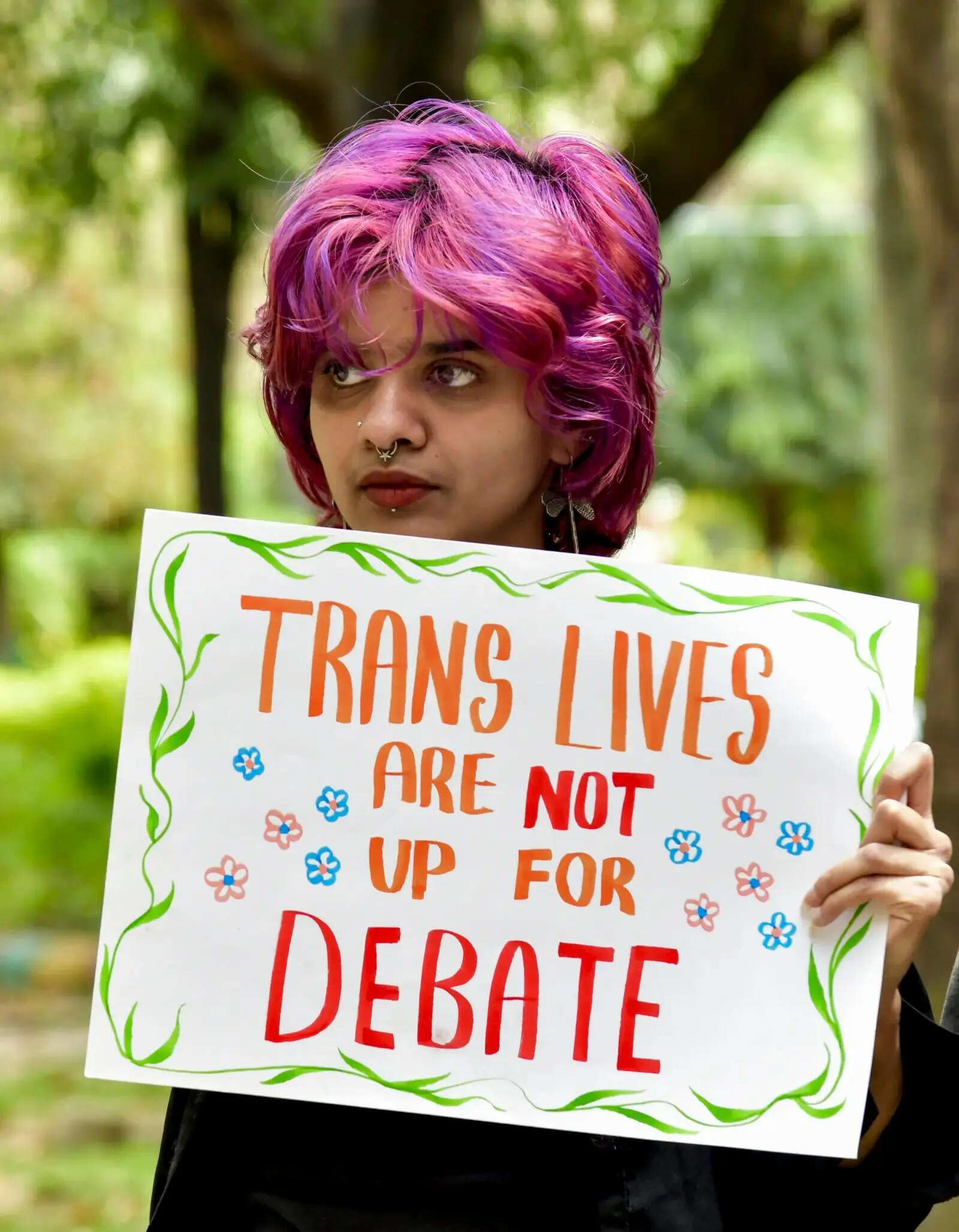
‘Cause shade never made anybody less gay’ – Taylor Swift, You Need to Calm DownLast week, two contrasting developments related to the LGBTQ+ community made global headlines. One, in the German city of Munich, Dominik Krause was elected mayor, the first openly gay man to hold a constitutional office in a European country.Second, at the same time Krause was celebrating his victory with his partner and the public, in India, Parliament passed a legislation – The Transgender Persons (Protection of Rights) Amendment bill, 2026 – striking away the statute of self-determination.That translates to taking away the individual’s right to self identification, a Constitutional guarantee, and liberty over one’s own body.

Cause shade never made anybody less gay (X)

On Monday, March 30, President Droupadi Murmu assented to the bill, making the proposed legislation the law and bringing it into effect. Ironically, the ‘rights’ of the very community it claims to ‘protect’ have since risen in protest, taking to the streets to vociferously and legally push back against the proposed propositions challenging it. Not just that, the passage of the controversial bill itself created a massive uproar in both Houses of Parliament.In Lok Sabha, it was taken up last Tuesday, stopping the discussion on the Finance bill midway with Union Parliamentary affairs minister Kiren Rijiju insisting the bill needed to be passed the very day. And it did, with a voice vote amidst the din in the House, opposition walking out and an exhaustive two-minute-long reply by the concerned minister for social justice and empowerment Virendra Kumar.The story was no different the next day in the Upper House, the proposed legislation passed while the opposition demanded that it be sent to the select committee.

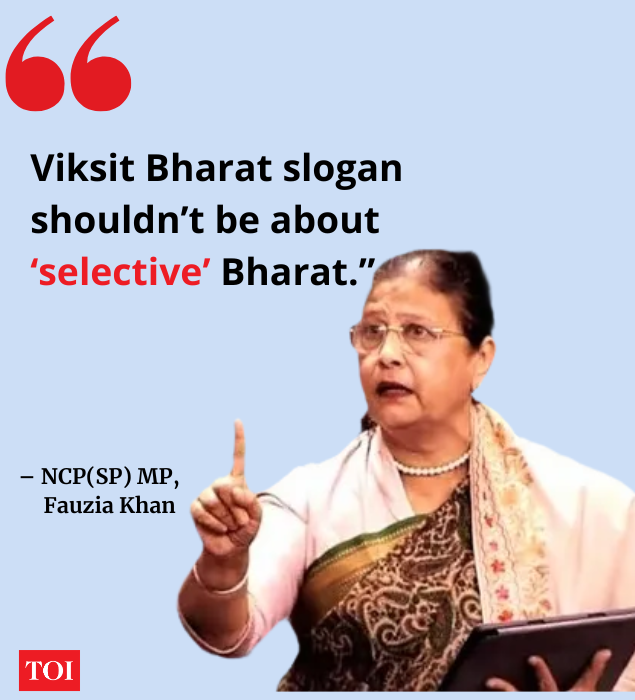
Fauzia Khan in Parliament

Speaking on bill, NCP(SP) MP Fauzia Khan said “Viksit Bharat slogan shouldn’t be about ‘selective’ Bharat.” Replying to which Kumar argued, every person’s emancipation and empowerment, asserting that the amendment will ensure that transgender persons continue to get legal recognition and protection. But, with a caveat, that a ‘magistrate’ and a ‘medical board’ would somehow determine if you are a trans person and qualify for rights, and that they would be protected.Anish Gwande, LGBTQ+ rights activist and national spokesperson of NCP(SP), also first openly gay person to hold such office for a major political party in India, speaking to TOI described the bill as “illegal, unconstitutional and illogical” adding “it is unfortunate that the bill was passed by both houses of Parliament without any substantive discussion within 24 hours.” He went on to question the timing of the bill, “It is bizarre to see governments focus on amendments to the trans bill, instead of war in West Asia, on LPG crisis in the country, on the depreciating Rupee.”

The gender question

For many the world exists in two colours – ‘black and white’, but it still leaves a population embracing the ‘greys’. The greys believe in facets of being agathokakological – the in-between areas, complexity, nuance, mixed feelings, or situations that aren’t purely one thing. A concept alien to the binaries. Similarly, what and how an individual feels about their ‘own’ body, nobody else can understand or tell but that particular individual. To understand this, it becomes essential to distinguish between sex and gender, terms often used interchangeably but conceptually distinct.

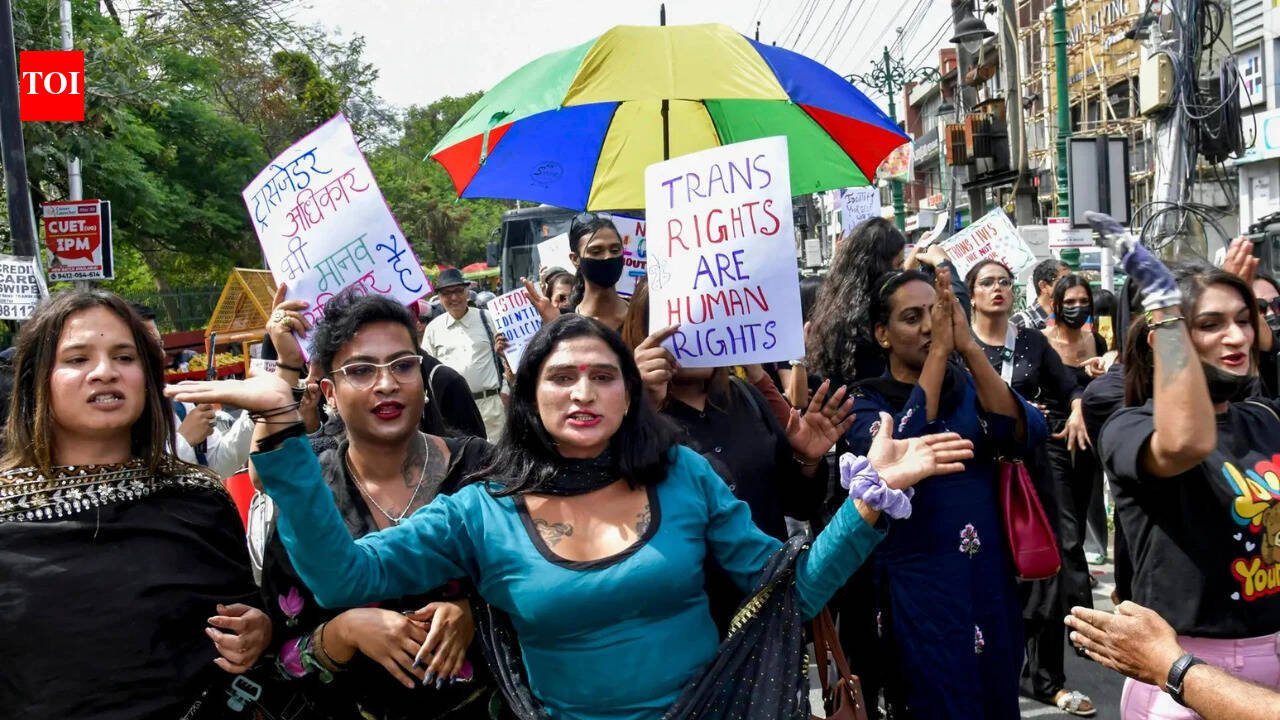
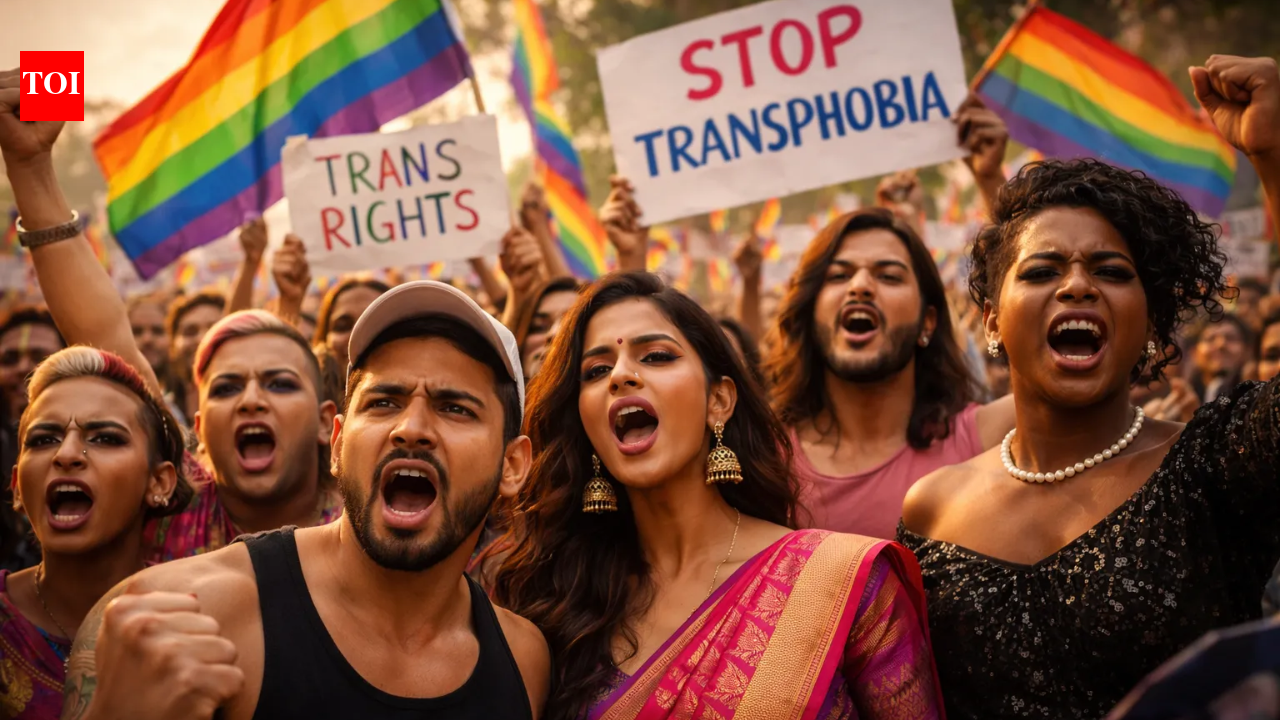
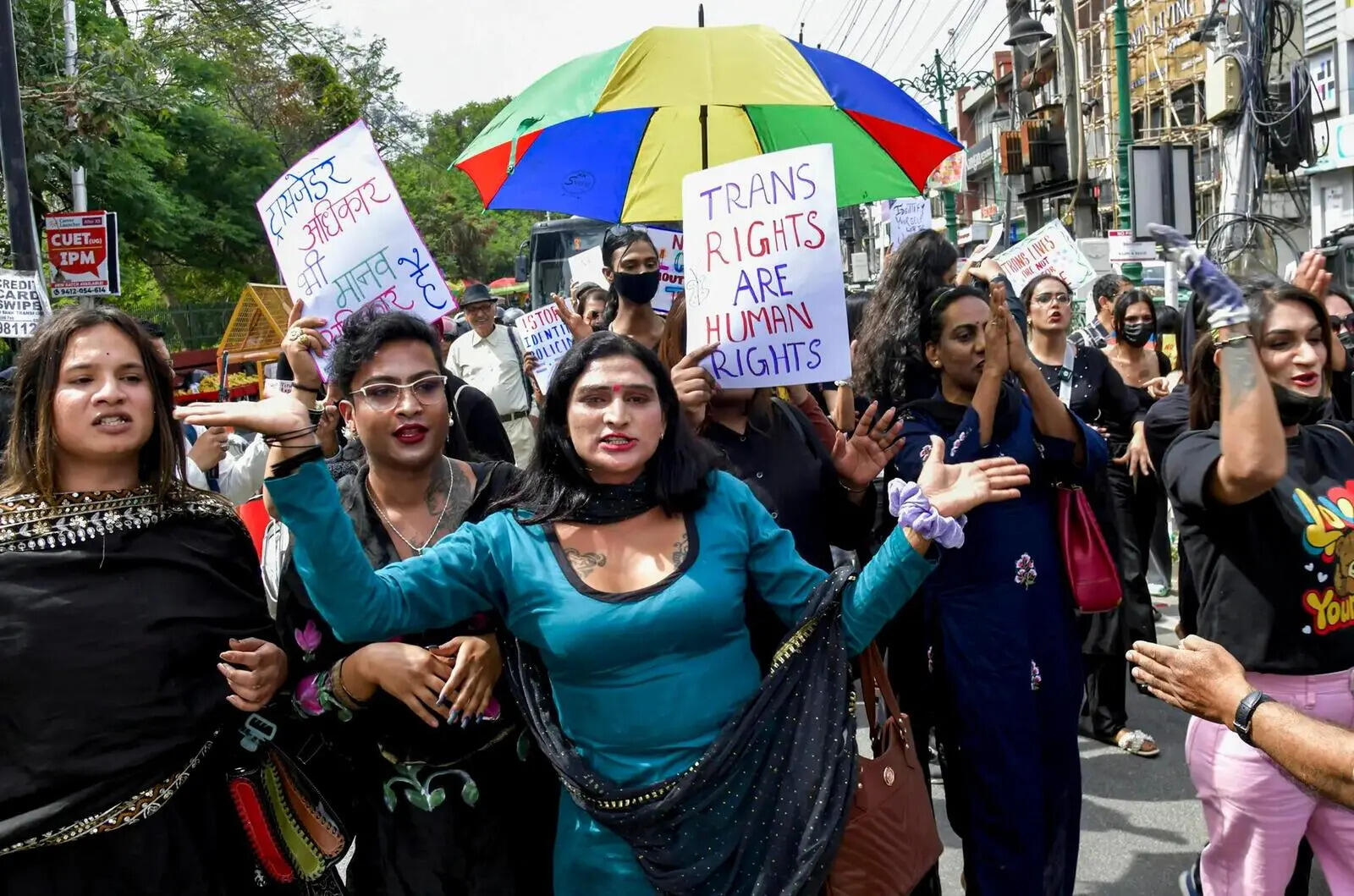
Protest against Transgender Persons bill (PTI)

Biological sex typically refers to physical attributes such as chromosomes, hormones, and reproductive anatomy, usually categorised as male or female. Gender, however, is understood in scholarly literature as a social and psychological construct that encompasses identity, roles, expressions, and lived experience. As philosopher Judith Butler argues, gender is not something one simply is, but something one does – a continuous process shaped by social norms and personal agency.Similarly, the World Health Organization defines gender as the characteristics of women, men, girls and boys that are socially constructed, including norms, behaviours, and roles associated with being a particular gender. This understanding moves beyond rigid binaries and acknowledges that gender exists along a spectrum. The American Psychological Association further recognises gender identity as a deeply felt, inherent sense of being male, female, a blend of both, or neither, an internal experience that may or may not align with the sex assigned at birth.In this context, the idea of the ‘greys’ is not merely poetic but empirically grounded. Contemporary gender studies consistently affirm that human identity resists strict categorisation. What appears as ambiguity to the binary lens is, in fact, a legitimate and lived reality for many.Thus, gender is not a fixed endpoint but an evolving narrative, one that is deeply personal, socially mediated, and often negotiated within structures that struggle to accommodate its fluidity.

The Transgender persons (protection of rights) amendments Act 2026

What the Act entails

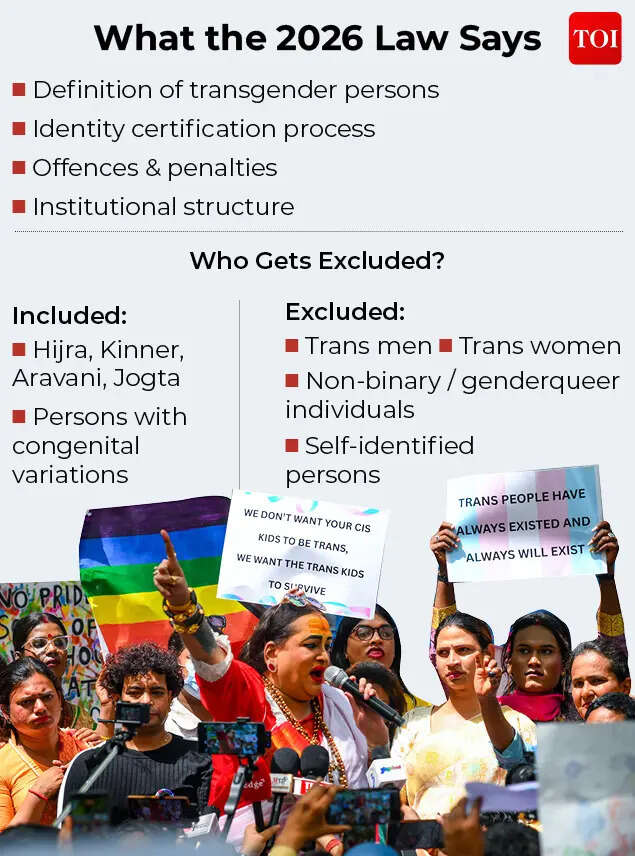
The legislation introduces changes across four key areas:

  • Definition of transgender persons
  • Process of identity certification
  • Offences and penalties
  • Composition and functioning of institutional bodies

The government’s Statement of Objects and Reasons argues that the earlier definition was “vague” and made it difficult to identify “genuine oppressed persons.” It further clarifies that protections should not extend to “self-perceived identity” or what it terms “acquirable characteristics.”

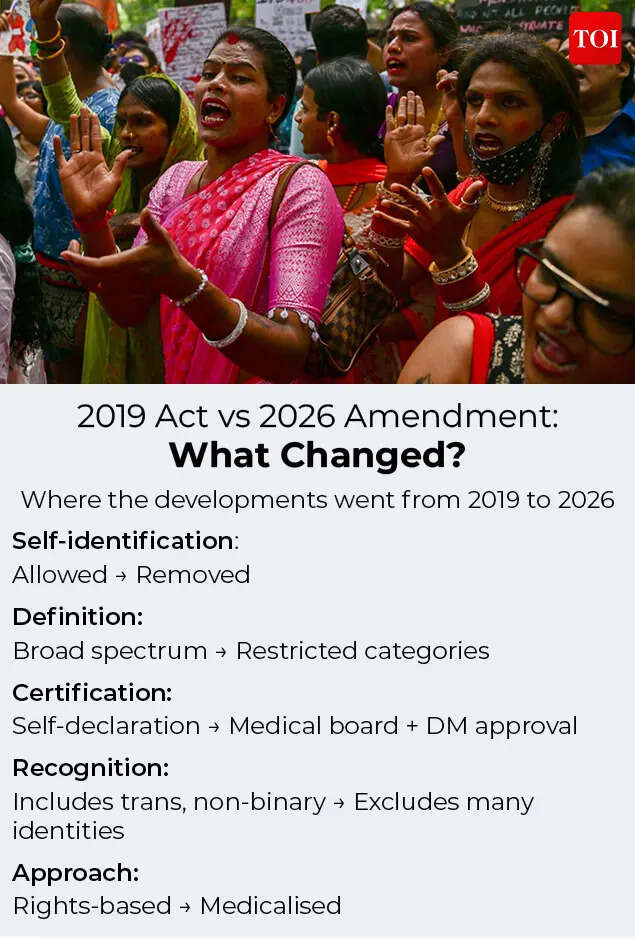
2019 Act vs 2026 Amendment

This framing signals a shift in legislative intent, from recognising identity as self-determined to one that is externally verified.

Key changes in the provisions

A narrower definition

The Act replaces the broader 2019 definition with a more restrictive one. It identifies transgender persons under two categories:

  1. Those belonging to specific socio-cultural groups, such as kinner, hijra, aravani and jogta, or individuals with congenital variations in sexual characteristics, including differences in chromosomes, genitalia, hormones or gonadal development.
  2. It also includes a category of persons who have allegedly been compelled, “by force, allurement, inducement, deceit or undue influence, either with or without consent”, to assume or present a transgender identity, reeking of the underlying premise of the Act.

Notably, it excludes persons with “self-perceived gender identity” and those with different sexual orientations. As a result, trans men, trans women and genderqueer individuals who do not fall within these listed categories are effectively excluded. The inclusion of the term “eunuch”, a classification historically rooted in the Criminal Tribes Act, 1871, where it was defined in medicalised and derogatory terms, marks a notable shift in a contemporary rights framework.The amendment also removes a distinct recognition of intersex persons, subsuming them under a clinical category termed “congenital variation,” thereby reinforcing a medicalised lens.The replacement of the term “intersex” with “congenital variation” reflects a shift towards a medicalised framework that frames such identities as conditions requiring diagnosis or correction. This approach sits in contradiction with existing administrative systems, such as birth registration, which continue to operate within a strict male–female binary and do not accommodate intersex identities.Sneha, a Delhi-based doctor, says, “The congenital variations basically refer to conditions which can be fixed with medical treatments, but pulling that in to refer to people of different gender makes no sense, how would you fix it and beyond that, what if someone just isn’t willing to get it changed?”It also raises concerns around autonomy and privacy, as it introduces the possibility of mandatory medical scrutiny for identity recognition. In doing so, the framework risks reducing inherently personal and lived experiences of identity to clinical evaluation, rather than recognising them as legitimate expressions of self. The Act’s treatment of socio-cultural identities has also drawn criticism for being selective and exclusionary. While it recognises a limited set of traditionally acknowledged identities, several region-specific and culturally rooted identities, particularly from the northeast and parts of south India, find no mention, like the Nupa Maanba or Nupi Maanbi, which are traditional socio-cultural identities existing in Manipur. This omission raises concerns about the erasure of diverse lived realities that fall outside the listed categories. Questions have also been raised over the lack of consultation with statutory advisory bodies meant to represent transgender persons, further deepening apprehensions that the law does not adequately reflect the diversity within the community it seeks to regulate.

Medical board for certification

Under the 2019 law, individuals could apply for identity certificates based on self-declaration. The amendment introduces a medical board, led by a Chief Medical Officer, whose recommendation becomes central to the process. The district magistrate will be the final person to decide on the recommendation and may also seek further medical opinions.

Mandatory reporting by hospitals

Hospitals performing gender-affirming surgeries must now report details of such procedures to authorities, including district magistrates and medical boards.

Stricter penalties

The Act introduces stringent punishments for offences such as coercing individuals into transgender identity, with penalties ranging up to life imprisonment depending on the nature of the crime and the age of the victim.Gwande, said it is plainly absurd that the law will introduce something “which would only discourage the people who work for and with the community, by criminalizing it in a manner as such when there is no clarity as to what would amount as allurement, or coercing.”

What are the major departures from the 2019 law?

At the heart of the 2019 Act was the principle that gender identity is self-perceived. It explicitly recognised a wide spectrum, including trans men, trans women, non-binary and genderqueer persons, and did not mandate medical intervention.The 2026 amendment removes this foundation.By eliminating the provision for self-perceived identity, the law narrows eligibility and excludes large sections of the transgender community. It also introduces a retrospective clause stating that such identities “shall not include, nor shall ever have been so included,” raising concerns about the status of thousands already recognised under the previous law.

2019 Act vs 2026 Amendment- What Changed

Legal experts note that this shift moves away from the Supreme Court’s 2014 judgment in National Legal Services Authority (NALSA) vs Union of India, which held that self-determination of gender is a fundamental right under Article 21.

Why has the Act faced fierce opposition?

The opposition from the transgender community has been swift and widespread.“From the start to the end this bill is completely arbitrary, nonsense, and it violates every kind of human right that is possible on the planet,” said Baadal, a trans activist.

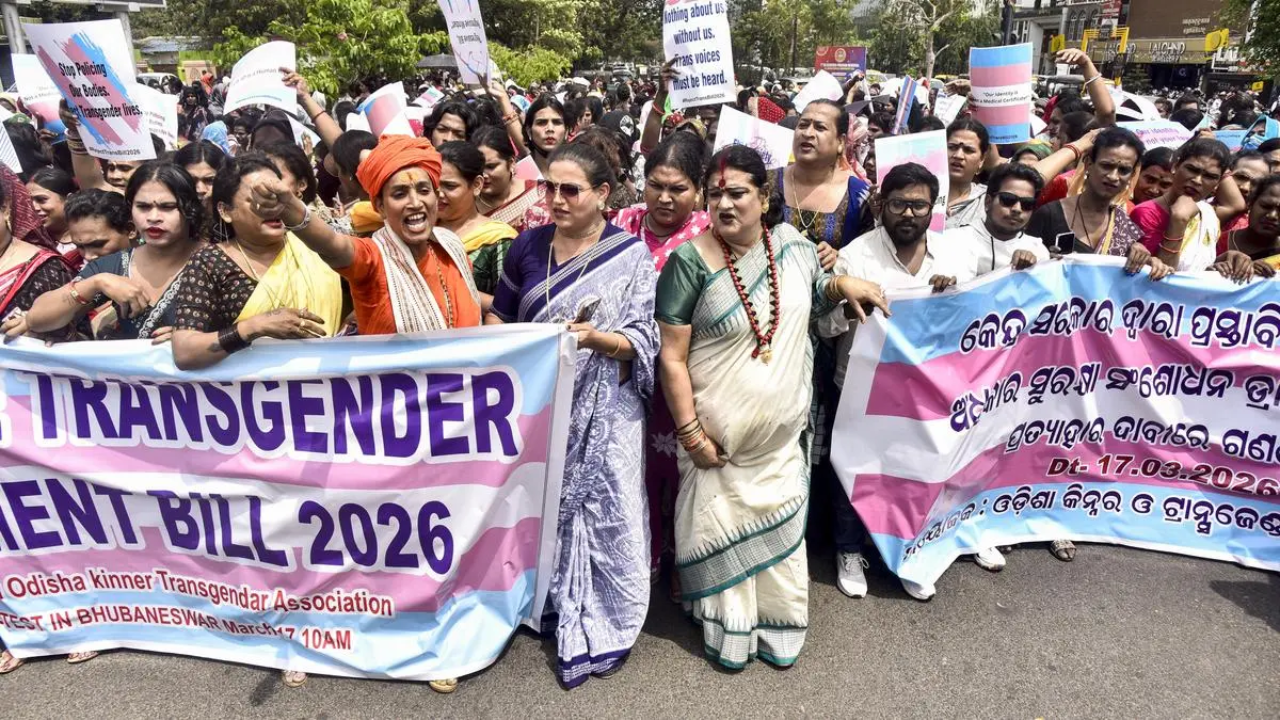
Protest against the changes

At the core of the protests is the removal of self-identification. Activists describe the introduction of medical boards as “medical gatekeeping,” arguing it places identity under institutional scrutiny.Mumbai Queer Pride, in a statement, said the law risks erasing transgender persons “under the guise of medical scrutiny.” Another major concern is the lack of consultation. Members of the National Council for Transgender Persons reportedly said they were not consulted before the bill was introduced.Gwande said they have asked for an unconditional apology from the officials of ministry of social justice and empowerment for “refusing to meet the representatives of the community and also insulting them.”Two members of the National Council of Transgender Persons (NCTP), Kalki Subramanium and Rituparna Neog, stepped down from their positions after the Rajya Sabha approved the controversial bill. Describing the bill as “regressive” and “existential,” they stated they could not continue being part of a council that the government chose not to consult.In her resignation letter addressed to minister Virendra Kumar, Subramanium, who represented the southern states on the council, said that “the recent introduction and passage of the Transgender Persons (Protection of Rights) Amendment bill” has “created an untenable position” for her.She further wrote, “As a statutory representative, my primary mandate is to advise the Government on legislation affecting our lives. The decision to move this bill forward without any formal consultation with myself or other community representatives of the NCTP undermines the very purpose for which this Council was established.”Highlighting her recent engagements, she added, “I have spent the last several weeks in constant dialogue with the transgender and intersex communities across the Southern Indian states and throughout the nation. The consensus is absolute: this bill is seen as a step backward for our fundamental rights to self identification and dignity.”

Legal tenability

Legal experts argue that the Act may face constitutional challenges.The NALSA judgment had explicitly rejected biological tests for determining gender and affirmed self-identification as a constitutional right.It also drew from international frameworks such as the Yogyakarta Principles, which state that no one should be forced to undergo medical procedures for legal recognition of gender identity.Karan Singh, a lawyer, talking about the legal standing of Act said, “on face of it the legislation itself seems to fall flat on multiple legal grounds, it stands in straight contradiction/violation of the NALSA judgement, the privacy of people choosing to undergo procedures is at stake, again violative of right to privacy, dignity under Article 19, and also the doctor-patient confidentiality is seemingly being violated as well.

Protest against Transgender Persons bill (PTI)

The introduction of mandatory medical certification and reporting requirements raises concerns around privacy as well. In KS Puttaswamy vs Union of India (2017), the Supreme Court recognised informational privacy as a fundamental right.Critics argue the Act does not clearly establish a legitimate state interest for collecting sensitive medical data, nor does it define safeguards.A Supreme Court-constituted advisory committee on transgender rights had urged the Centre to withdraw the bill, immediately after it was passed by Parliament, citing concerns that key provisions violate established legal principles. The panel, headed by former Delhi High Court judge Justice Asha Menon, wrote to Minister Virendra Kumar on last Wednesday.In its resolution, the committee flagged that the proposal to deny the right to self-identification of gender runs contrary to the Supreme Court’s 2014 NALSA v Union of India judgment, which recognised this right without requiring medical intervention. The panel cautioned that replacing self-identification with a state-controlled certification process, mandating assessment by a medical board, marks a significant departure from the court’s ruling.The committee was set up by the Supreme Court in October 2025 while hearing a case involving the dismissal of a transgender woman from teaching jobs in Uttar Pradesh and Gujarat. It was tasked with identifying gaps in the implementation of the Transgender Persons Act, 2019, and recommending measures to ensure equal participation and “reasonable accommodation” for transgender persons.

Impact on privacy, acceptance, individuality

Beyond legality, the Act’s implications extend to everyday life.Identity certificates are gateways to welfare schemes, healthcare, and employment opportunities. By making certification more complex, activists say the law may limit access to these benefits.The requirement for hospitals to share details of gender-affirming procedures has raised concerns about surveillance and stigma.“There is no medical test to prove anyone’s gender,” said Sneha. “But we are asked to prove it.”Activists also warn of a “chilling effect”, where social workers, NGOs, and even families may hesitate to support transgender individuals due to fear of legal consequences.While speaking on bill in Rajya Sabha Congress MP Renuka Chowdhury asked a pertinent question, pointing to treasury benches she said, “do you know what LGBTQ+ is? Can even four people sitting in the house tell me the meaning, I’ll accept the amendment.”She further added, “When there isn’t enough awareness in the Parliament, how is it gonna be on the streets and society?”

The road ahead

While the government maintains that the amendments strengthen protections, the response from the community suggests otherwise.“If it becomes law, we will challenge it,” Gwande said. He had also expressed hope that the President would not give her assent to the bill, after multiple rights organizations had written to her asking to return the bill to Parliament for reconsideration. But, the bill got Presidential assent on Monday. For many, the issue goes beyond a single piece of legislation. It touches upon the fundamental question of autonomy.As the Supreme Court observed in NALSA, “the moral failure lies in the society’s unwillingness to contain or embrace different gender identities.”The current conditions suggest that the question remains unresolved, and is now being tested in law.

Source link

‘Let the singer be at peace’: Assam CM Himanta attacks Congress over Zubeen Garg mention in election manifesto | India News


'Let the singer be at peace': Assam CM Himanta attacks Congress over Zubeen Garg mention in election manifesto
Assam chief minister Himanta Biswa Sarma

NEW DELHI: Assam chief minister Himanta Biswa Sarma on Tuesday accused the Congress of doing “disgusting politics” by including the issue of singer Zubeen Garg’s death in its election manifesto, saying the party had “committed an unpardonable crime” by invoking the late singer’s name for votes.Speaking on the sidelines of the BJP manifesto release programme here, Sarma said Zubeen Garg was deeply loved by the people of Assam and it was “unfortunate and sad” to use his name in an election campaign.“The Congress has committed an unpardonable crime by including Zubeen’s name and his death in its election manifesto. If the Congress wants to pay real tribute to Zubeen, they can hire a lawyer… they can bring Abhishek Manu Singhvi, who can argue the case free of cost in the fast-track court,” he said.The remarks came after the Congress, in its manifesto released by party president Mallikarjun Kharge, promised justice for the singer within 100 days of coming to power.Sarma said the issue was already being heard in court and claimed the Congress was unaware that a fast-track court had been constituted and daily hearings had already begun.“Nobody has done this kind of disgusting politics of bringing in Zubeen’s name to seek votes… People will give the party stern punishment at the hustings,” he added.The chief minister said the government could not dictate the outcome of the case and could only facilitate the legal process by setting up the court and appointing prosecution lawyers.“I want justice delivered in under three months, preferably within a month. I believe the way the proceedings are taking place, it will not take even 100 days to deliver justice, and I hope we will get good news within a month,” he said.The Gauhati High Court had appointed an exclusive fast-track sessions court on March 16, and the state government later provided logistical support for its functioning.Zubeen Garg, 52, died while swimming in the sea in Singapore on September 19 last year, where he had gone to attend the fourth North East India Festival (NEIF).Following his death, the Assam government formed a Special Investigation Team (SIT) under the CID wing of Assam Police to probe the case. The SIT later filed a chargesheet before a local court in Guwahati, naming seven accused, all of whom have been arrested and are currently in judicial custody.Sarma also attacked the Congress leadership, alleging that Kharge had insulted both Bhupen Hazarika and Zubeen Garg, while also referring to remarks allegedly made by Kharge’s son.“Kharge’s son had insulted the youth of Assam, saying there was no talented person in the state to work in the semiconductor industry… Will people believe that they can give justice to Zubeen Garg?” Sarma said.The chief minister further alleged that a video circulating on social media showed people from a consultancy firm hired by the Congress discussing how the issue of Zubeen Garg’s death should be raised at different levels to secure votes.“If I become the chief minister again, I will ensure that all members of this firm are arrested for indulging in this kind of dirty politics and conspiracy. I will not spare anybody who does politics in Zubeen’s name,” he said.Sarma said he did not want to politicise the singer’s name and would visit his memorial again only after taking oath as chief minister.“Zubeen had himself said ‘politics nokoriba, bondhu’ (Don’t indulge in politics, friends), but Congress is doing just that… let the singer be at peace,” he said.He also questioned why Congress leaders visit the singer’s memorial with cameras.


Source link