Breaking News
‘Unfortunately, Ajit left us before that’: Sharad Pawar makes big NCP merger revelation | India News


'Unfortunately, Ajit left us before that': Sharad Pawar makes big NCP merger revelation

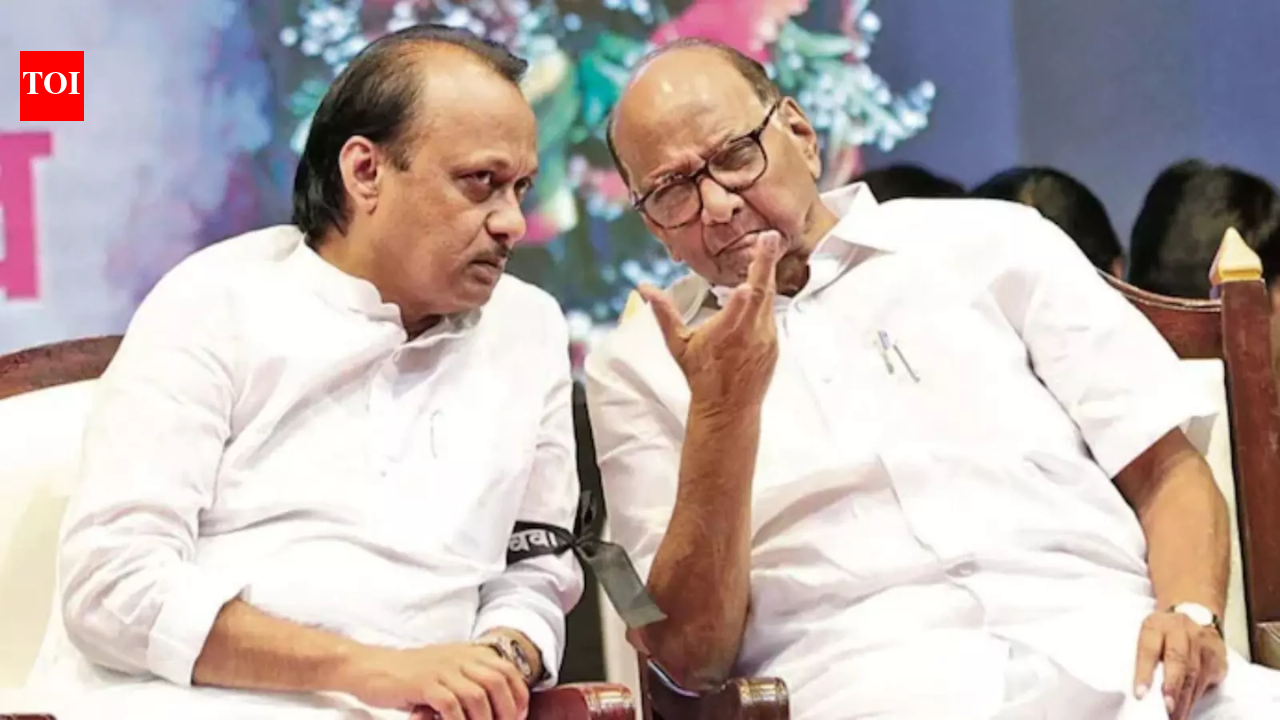
File photo: Sharad Pawar with Ajit Pawar

NEW DELHI: NCP (SP) chief Sharad Pawar on Saturday made a significant revelation about the future of the Nationalist Congress Party, saying that talks to merge the two rival NCP factions were already under way and had progressed to an advanced stage before the sudden death of his nephew and party chief Ajit Pawar. Speaking at a press conference, Sharad Pawar said the proposed merger was not only under discussion but was also in line with Ajit Pawar’s own wishes.

Sunetra Pawar To Be Named NCP Leader, Dy CM Oath Likely Tomorrow: Chhagan Bhujbal

“Now we feel his wish should be fulfilled. Ajit Pawar, Shashikant Shinde and Jayant Patil had initiated the talks about the merger of the two factions. Even the merger date had been fixed — it was scheduled on the 12th (February). Unfortunately, Ajit left us before that,” Sharad Pawar said.This disclosure comes amid intense political activity in Maharashtra following Ajit Pawar’s death and reports that his wife, Rajya Sabha MP Sunetra Pawar, is likely to be sworn in as deputy chief minister. Sharad Pawar, however, maintained that he had no prior information about her possible elevation, underlining that key decisions were being taken by leaders in Mumbai and not in consultation with him.

‘Family stands united, no issue’

When asked whether he, as a senior member of the Pawar family, was taken into confidence regarding Sunetra Pawar’s possible appointment as deputy chief minister, Sharad Pawar sought to downplay any suggestion of discord. “Family stands united if an issue occurs in the family. There are no issues in the family,” he said.

‘Decisions happening in Mumbai, not here’

Sharad Pawar made it clear that discussions on political and organisational decisions were taking place away from him. Responding to questions on the apparent haste in decision-making after Ajit Pawar’s death, he said, “All these discussions are not taking place here; they are happening in Mumbai. Praful Patel, Sunil Tatkare and other senior leaders are having these discussions. Whatever is being seen appears to be decisions taken by them. I will not comment on this.”


Source link

Operation Trashi-I Day 14: Security forces ‘re-establish’ contact with terrorists in J&K’s Dolgam | India News


Operation Trashi-I Day 14: Security forces 're-establish' contact with terrorists in J&K's Dolgam
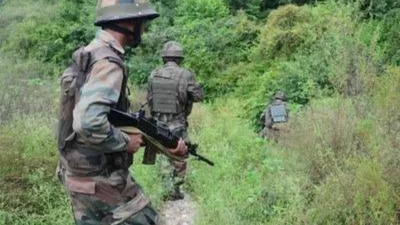
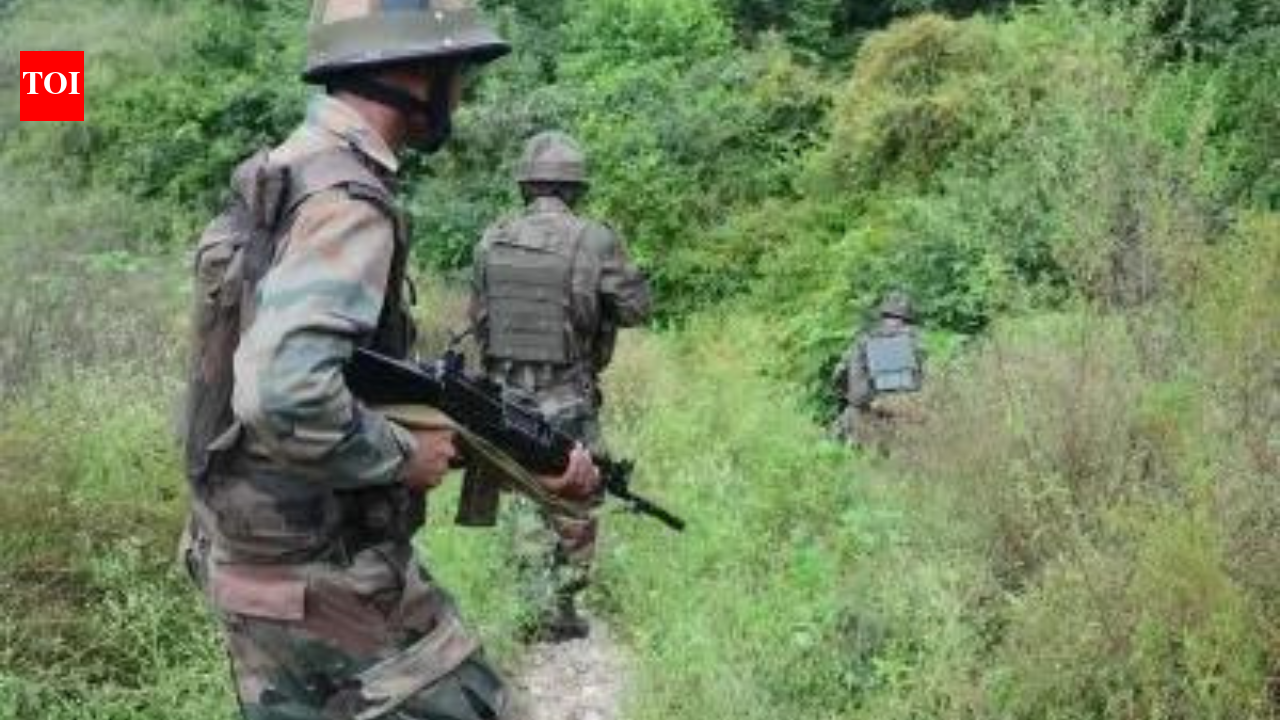
Image used for representative purposes

NEW DELHI: An encounter broke out early Saturday in Dolgam area of J&K, after security forces re-established contact with terrorists. The area was cordoned off as Operation Trashi-I entered day 14.“During the ongoing joint Operation TRASHI-I, contact with terrorists was re-established in the early hours of 31 Jan 2026, in the general area of Dolgam by troops of White Knight Corps, Jammu & Kashmir Police and and CRPF.”Giving further but brief details it added, “Intelligence from all sources had been coordinated to provide inputs to execute the operation on ground. A cordon has been established and operations are in progress.”This comes just hours after anti-terror operation intensified in the Kishtwar district of Jammu and Kashmir against three Jaish terrorists. The operation in the Chatroo area of Kishtwar also resulted in the continued suspension of internet services. Connectivity was been cut in areas within a six-kilometre radius, including Singpura, Arigam, Dwathar and Naidgam. The shutdown, in place since January 23, was extended until Friday at 11.59 pm, according to an order issued by the Jammu and Kashmir home department.The operation, launched on 18 January in a snowbound area, was slowed by tough terrain despite repeated contacts, with the terrorists escaping by using the landscape to their advantage. On the first day, one paratrooper was killed and seven soldiers were injured. Subsequent encounters on January 22 at Mali Dana Top and on January 25 in the Janseer–Kandiwar area also ended with the militants slipping away through dense vegetation and deep snow.


Source link

Centre reassesses key provisions of UGC rules in wake of SC’s stay | India News


Centre reassesses key provisions of UGC rules in wake of SC’s stay

New Delhi: A day after Supreme Court stayed UGC’s Promotion of Equity in Higher Education Institutions Regulations, 2026, the education ministry began examining on Friday the removal of the “false complaints” clause that featured in the 2025 draft but was dropped from the final notified rules.Those from the general category have argued that in the absence of a deterrent, false complaints may be used to harass them. Opponents of the regulations pointed out that the new framework includes other backward classes — a category not covered under the 2012 regulations — leaving the general category “without remedies for discrimination faced by them”.

Lucknow: Akhilesh On UGC Rules, SC Stay Sparks Student Debate, Sambhal Police FIR Issue And More

While removing OBCs from the purview of the regulations may not be an easy option, sources said the Centre is examining whether safeguards against false complaints need to be restored and the ambit of the anti-discrimination mechanism be expanded to cover EWS.New UGC norms silent on penalty for false complaintsSupreme Court put on hold Thursday the regulations notified on Jan 13, taking serious exception to several provisions and observing that they could fuel societal divisions and have a dangerous impact on the goal of a casteless society.Sections 2 and 3(c) of the regulations, which define beneficiaries as “socially and educationally backward classes” and state that “caste-based discrimination” refers to discrimination against members of Scheduled Castes, Scheduled Tribes and OBCs. Notably, OBCs were not mentioned in Regulation 3(c) of the draft but were added in the notified rules this year.The draft regulations provided for penalties against false complaints. The deleted provision stated that anyone filing a false discrimination complaint could face a fine determined by the equity committee, with repeat or serious violations potentially leading to disciplinary action under institutional rules.A senior govt official said, “This is being examined along with compliance with SC’s directions, including its observation on setting up a panel of experts to study the regulations.”The court flagged concerns around possible “segregation” of students. Section 7 of the regulations, dealing with measures for promotion of equity, states that any selection, segregation or allocation related to hostels, classrooms or mentorship groups must be transparent, fair and non-discriminatory.


Source link

‘Have to live with scars for life but will fight on’: Acid attack survivor after SC flags lifelong trauma | India News


‘Have to live with scars for life but will fight on’: Acid attack survivor after SC flags lifelong trauma

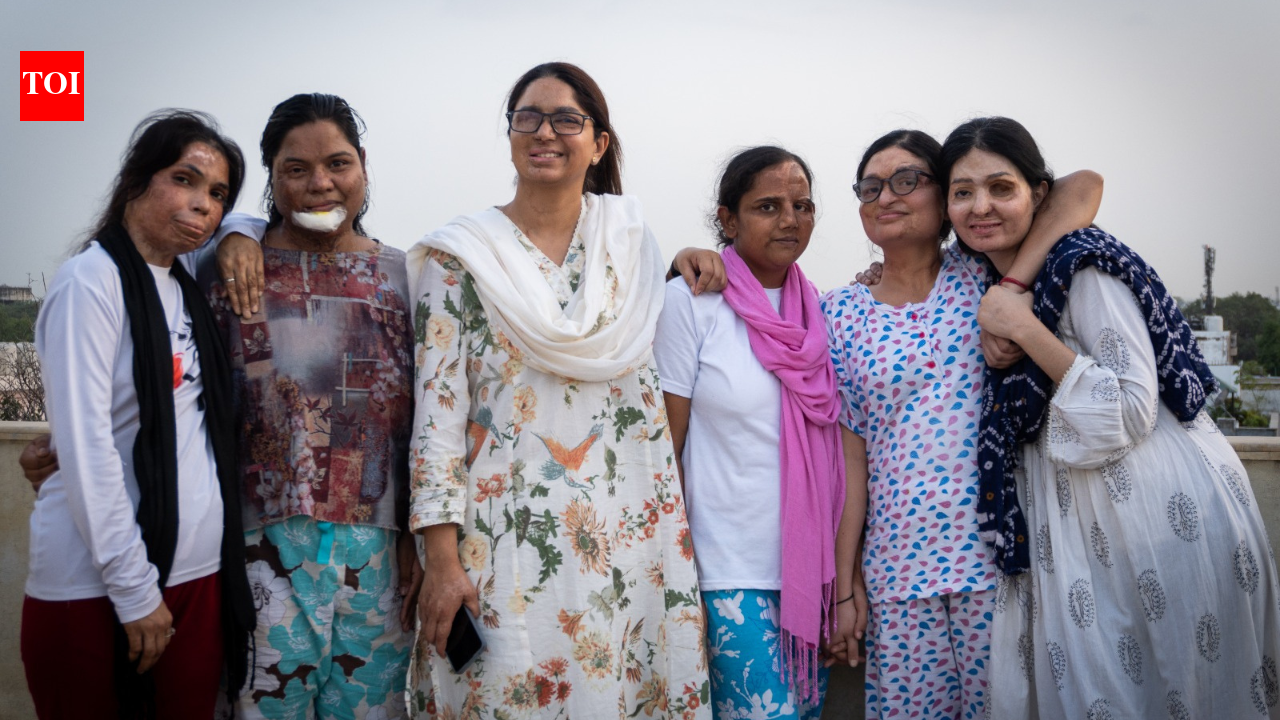
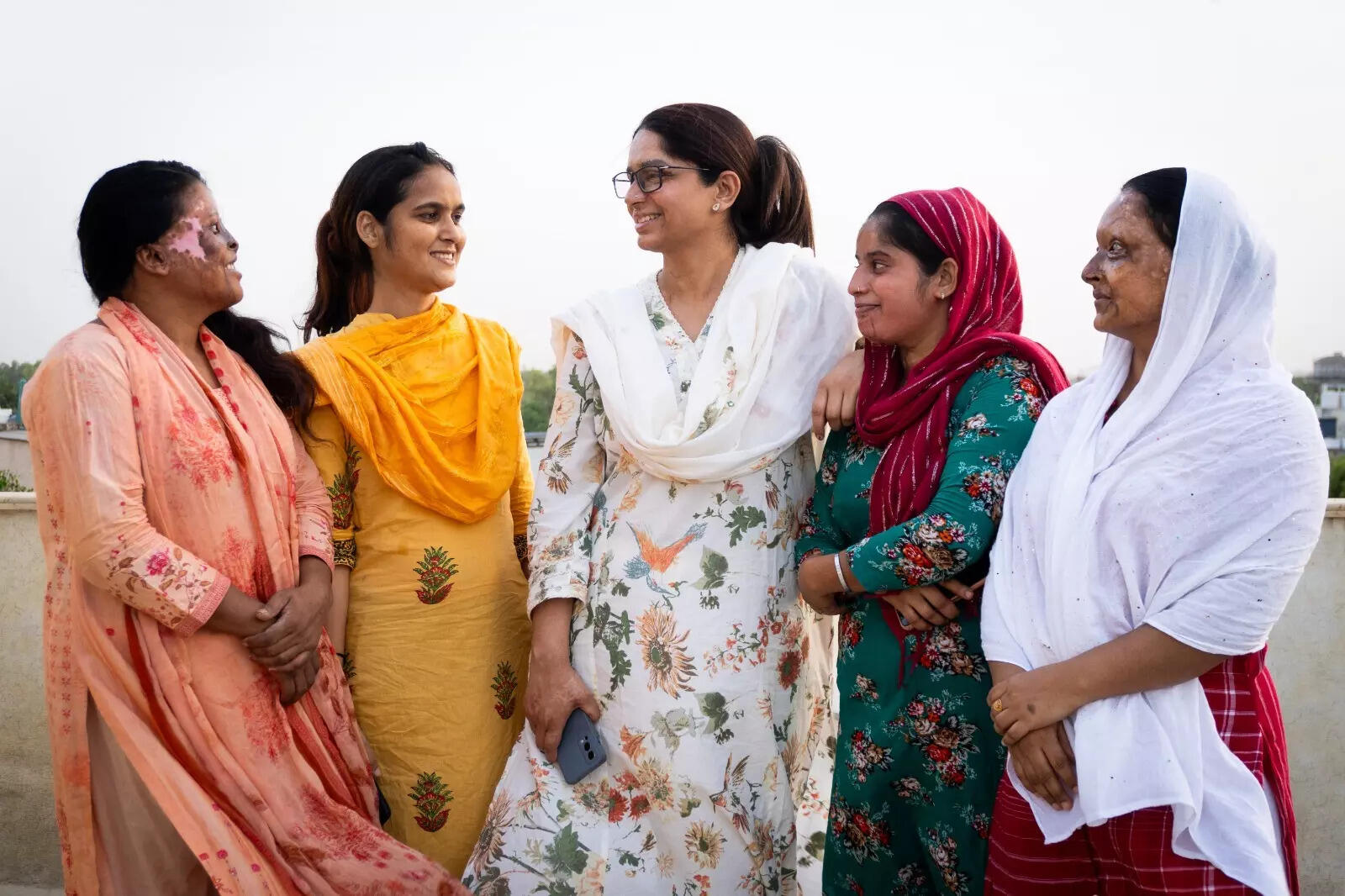
NEW DELHI: Shaheen Malik does not call it a victory. When her petition came up before the Supreme Court on Tuesday, the Bench made observations that could reshape how acid attack cases are treated—flagging the need for “extraordinary punitive measures”, questioning why the assets of convicted attackers cannot be seized and auctioned to compensate victims, and stating that a reformative approach has “no place” for attackers.While stopping short of issuing binding directions, the court assured Malik legal assistance of her choice, urged high courts to fast-track trials, and sought detailed data from states on acid attack cases. But for Malik, there is a long way to go. “This is not closure or a win. For survivors, it is only a beginning,” she told TOI on Friday.

.

.

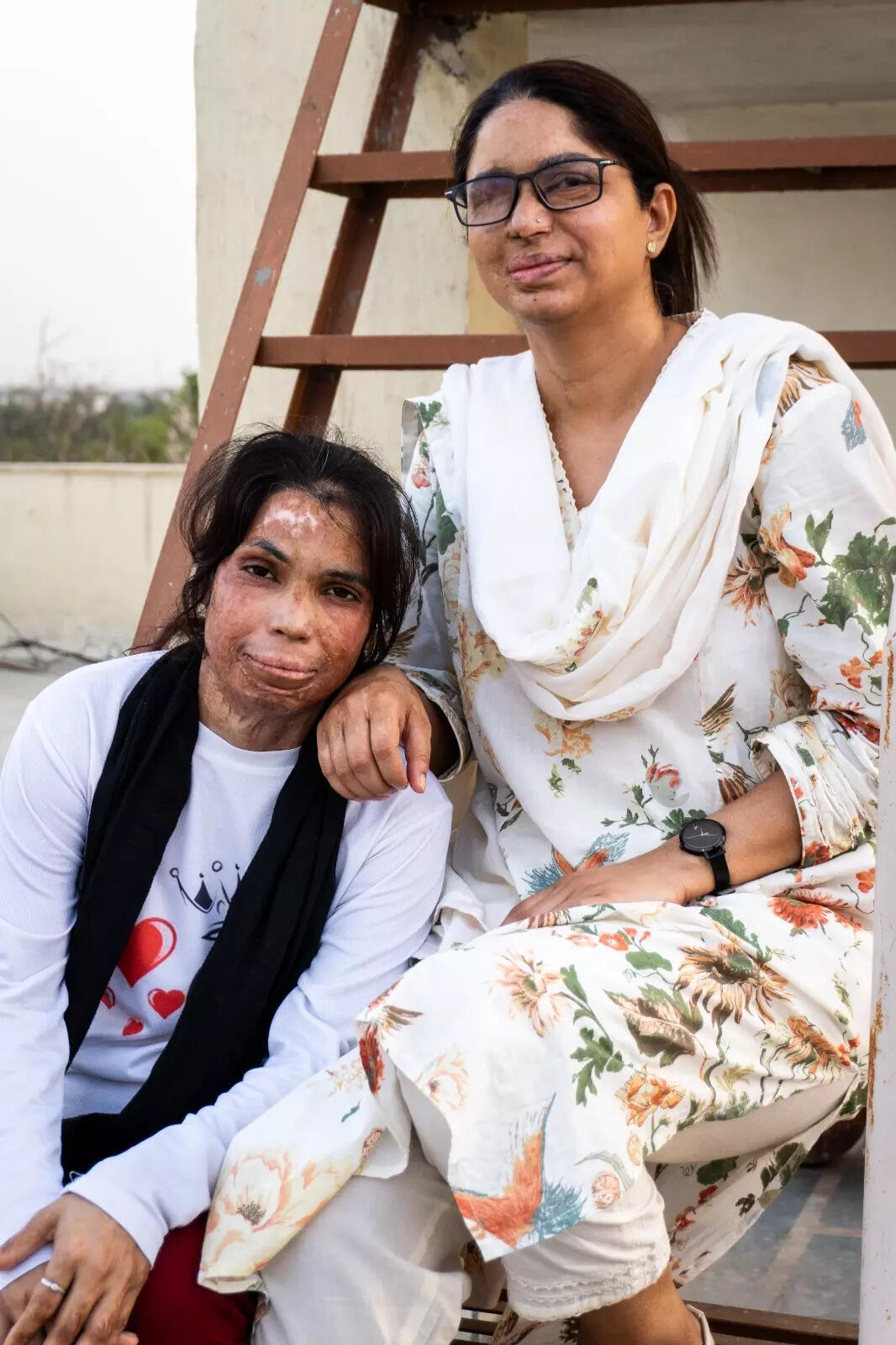
In 2009, acid was thrown on Malik’s face outside her workplace in Panipat. Since then, her life has unfolded inside hospital wards, police stations and courtrooms. She accused her employer’s wife and two students, one a juvenile, of carrying out the attack.Earlier data submitted by 15 HCs showed UP with the highest number of pending acid attack cases (198), followed by West Bengal (160), Gujarat (114), Bihar (68) and Maharashtra (58).For Malik, the numbers only echo what her body has carried for years.“For one second, I thought it was a prank,” she recalled. “Then the burning started.” Her parents and brothers rushed to bring her back to Delhi, hoping she would be admitted immediately, but they were turned away. “Hospitals initially refused to admit me unless we deposited lakhs of rupees, saying it was a criminal case,” she told the court. Even after an FIR was registered, she said, nothing moved. “Years passed… The case didn’t move.What followed was not only physical devastation, but systemic abandonment. Survival itself came at a cost that never stopped mounting.
.

.

The corrosive liquid caused third-degree burns and permanent disfigurement, melting skin and facial tissue across nearly 90% of her face and parts of her body. Malik permanently lost vision in one eye. After more than two dozen reconstructive surgeries, her remaining eye still requires lifelong treatment and specialised cylindrical lenses.In 2012, after writing to then Haryana CM Bhupinder Singh Hooda, she received Rs 3 lakh towards medical expenses. Malik said, “Justice was never about the money. But the cost of surviving is crushing.”Years blurred into each other—endless travel, hospital visits followed by court dates, and a support system that slowly shrank. “I lost friends, connections… everything.”Then came 2025. After more than 15 years of litigation, a Delhi court acquitted the three accused, citing lack of substantial evidence and serious gaps in the investigation. “I was disfigured, visually impaired, mentally shattered—and the people responsible walked free.” That moment became the trigger for her PIL in the SC. “I woke up and decided, this needs a fight,” Malik said. “I could give up—or continue fighting for every woman facing injustice.” She chose the latter not just for herself but to flag what she calls a “structural failure”.Malik spoke of time slipping away. Pleading for an expedited hearing, she told the court the violence does not end with the crime. It stretches across years of trauma, isolation, treatment, hearings and waiting. “I told the SC that the pain I carry, no one else should have to carry for this long. I have given this case sixteen years of my life. I cannot give another sixteen,” she said.
.

.

If Malik has one demand, it is not sympathy but sensitisation with consequences. Her petition sought police training, time-bound investigations, fast-track courts, judicial sensitivity and stricter punishment. “Acid violence comes from patriarchy, entitlement. When there is no fear, crimes continue.”Like hundreds of hearings she has attended before, that Tuesday began with cautious hope. She reached early, even though her case was listed for the afternoon. When the order finally came, she wiped away a tear.Malik believes the court’s suggestion to auction assets of convicted attackers is crucial. She said, “Medical care for acid survivors is primary for their survival. No one should live wondering if better treatment could have saved their sight, face, or future.”Acid violence, she said, imposes lifelong financial, psychological and social costs. “If the crime is created by society, then society must step in—not through charity, but accountability.”The violence stripped her of an ordinary future, with marriage out of the picture long ago. She lives alone, often wishing she had a companion. “No one wants to accept you with this face… this disability. I have to live like this for the rest of my life.”In 2021, Malik founded Brave Souls Foundation in Delhi, supporting over 300 acid attack survivors with medical aid, legal assistance, trauma counselling and rehabilitation. But stigma remains. “People don’t want to rent us houses, don’t want to give us jobs. They say our faces bring bad luck. The culprits, meanwhile, blend back into normal life.”Still, Malik says she has purpose. “My work is my life’s goal. If I can ease someone else’s struggle, it’s enough.” She hopes to be remembered not as a victim, but as proof that fighting yields something.“This isn’t personal anymore,” she said.

Source link

Pawar play in Maharashtra: NCP factions eyeing Feb merger? The 4 frontrunners to fill top post after Ajit dada’s death | India News


Pawar play in Maharashtra: NCP factions eyeing Feb merger? The 4 frontrunners to fill top post after Ajit dada's death
Sharad Pawar, Sunetra Pawar & Supriya Sule

NEW DELHI: The sudden death of Maharashtra deputy chief minister and Nationalist Congress Party (NCP) president Ajit Pawar in a plane crash has triggered fresh churn in the state’s politics, reopening talks of a reunification of the two NCP factions led by the Pawars.The rumoured merger of the two NCP factions led by Ajit Pawar and his uncle Sharad Pawar is “very much on course”, with talks having reached an “advanced stage” even before the deputy chief minister’s death in Wednesday’s plane crash, sources aware of the talks told news agency PTI.“The process of bringing the family and the party back together was already in motion. Ajit dada himself had held several rounds of discussions with senior leaders to bridge the gap,” the sources said.The tragedy, they say, may now accelerate the process rather than stall it.

NCP factions eyeing February merger?

Negotiators from both the ruling NCP and the Sharad Pawar-led NCP (SP) confirmed that discussions were well underway, with a tentative announcement earlier planned for February 8, shortly after the Zilla Parishad and Panchayat Samiti elections, the agency said.The two factions had already “tested the waters” by jointly contesting the Pune and Pimpri-Chinchwad civic polls under the NCP’s clock symbol, which was a clear sign of a thaw after the dramatic 2023 split.

The 4 frontrunners: Who will fill the vacuum?

While the NCP (SP) believes Sharad Pawar will naturally return to a “central role” in guiding a unified party, the ruling NCP is keen on preserving the Pawar family’s political legacy.Ajit Pawar’s death has left the ruling NCP without a clear leader. With senior leader Chhagan Bhujbal unwell, the party now faces uncertainty over leadership as well as key cabinet portfolios, including finance and excise, which were handled by Ajit Pawar.Apart from Sharad Pawar, sources said three names have emerged as frontrunners to lead a merged NCP: Sunetra Pawar, Supriya Sule and senior leader Praful Patel.Sources said Ajit Pawar’s wife and Rajya Sabha MP Sunetra Pawar is being considered for the post of deputy chief minister. There is a growing chorus within the ruling NCP in favour of appointing Sunetra Pawar as party president as well as leader of the legislative party.However, if that option does not materialise due to any reasons then Praful Patel is being seen as the next likely choice to take charge, sources added.

Will Ajit Pawar’s death speed up reunification?

Sources said Ajit Pawar had meticulously planned the reunification of the two NCP factions and viewed the merger as part of a long-term strategy, keeping the 2029 elections and the party’s future relevance in mind. He was confident the reunion would take place with the consent of his uncle, Sharad Pawar.Reunification was also Ajit Pawar’s last wish, according to Kiran Gujar, a member of Vidya Pratishthan and a close associate of the Pawar family for over four decades.Speaking to reporters after the immersion of Ajit Pawar’s ashes, Gujar said, “Today, the ashes of Ajit Pawar were immersed at Sangam here. It was ‘Dada’s’ last wish that this (merger of two factions of NCP) should happen. All should be united. Talks about this were happening throughout the family. In my last phone call with him, he had asked me for some election-related papers.”“He was one hundred per cent keen on merging both the factions. He had told me five days ago that the entire process was complete and the merger was imminent in the next few days,” Gujar told PTI.Asked whether Ajit Pawar had discussed the issue with Sharad Pawar, Gujar said that “positive talks were underway with Pawar saheb, Supriya Tai (Supriya Sule) and other leaders”, and there were indications that the senior Pawar would endorse the move.“Many positive things were on the cards, but this tragedy struck and took Ajit ‘Dada’ away from us. Now, after his death, it has become even more imperative that both factions come together and work for the betterment of Baramati and the state,” he said.Just days before the fatal plane crash, Ajit Pawar had also met NCP (SP) leader Jayant Patil to finalise organisational unity and power-sharing arrangements. Even as merger talks gathered momentum, a section of party workers in the NCP has begun debating Ajit Pawar’s successor.Ajit Pawar himself had earlier told TOI that reuniting the party was his immediate political goal, with the blessings of Sharad Pawar.The moment carries a stark irony. Ajit Pawar was the architect of the 2023 split that fractured the NCP and aligned a majority of its legislators with the BJP–Shiv Sena-led Mahayuti government, leaving Sharad Pawar’s faction in opposition.Yet, despite the split, Ajit Pawar retained the party’s official identity, with the Election Commission recognising his group as the “real” NCP and awarding it the “watch” symbol.

Maharashtra’s power dynamics

Ajit Pawar’s NCP currently holds 40 MLAs, while the Sharad Pawar faction has 10.A merged party would command over 50 MLAs, potentially altering equations within the BJP-led Mahayuti alliance and the opposition Maha Vikas Aghadi (MVA).However, even if a unified NCP were to exit the ruling alliance, the Devendra Fadnavis government would remain secure, with the Mahayuti holding 235 MLAs in the 288-member Assembly.Political analysts say the bigger impact could be in western Maharashtra, the NCP’s traditional “sugar belt” — where the BJP has made recent inroads.For now, the February 7 local body polls will act as a “coordinated tribute” to the late leader, with both NCP factions contesting together under the clock symbol, seen as a prelude to a possible reunification after the results are declared on February 9.


Source link

Kolkata godown fire: PM Modi condoles deaths in Anandapur mishap; announces Rs 2 lakh ex-gratia | India News


Kolkata godown fire: PM Modi condoles deaths in Anandapur mishap; announces Rs 2 lakh ex-gratia

NEW DELHI: Prime Minister Narendra Modi on Friday condoled the loss of lives in the devastating fire at two godowns in Kolkata’s Anandapur area and announced ex-gratia assistance for the victims from the Prime Minister’s National Relief Fund.In a statement, the PMO said, “The recent fire mishap in Anandapur, West Bengal is very tragic and saddening. My condolences to those who have lost their loved ones. I pray that those injured recover at the earliest.” He added that “An ex-gratia of Rs. 2 lakh from PMNRF would be given to the next of kin of each deceased. The injured would be given Rs. 50,000.”Also read – Kolkata godown fire: 11 charred bodies recovered, 23 still missing; families in limboAt least 11 people have died in the fire, while around 23 others missing, raising fears that the toll could climb further. So far, 21 body parts, including partially burnt and skeletal remains, have been recovered from the site, officials said. The blaze broke out around 3 am on Monday at a godown belonging to Pushpanjali Decorators and rapidly spread to an adjacent warehouse operated by food chain Wow! Momo near Ruby crossing. Officials said inflammable materials stored in both structures caused the fire to spread quickly, trapping workers inside.Police said only three of the nearly 37 workers present managed to escape. Most of those inside were staying on the godown premises and hailed from neighbouring districts. By Tuesday evening, 11 charred bodies had been recovered, with authorities saying DNA tests would be conducted to establish identities. Rescue operations continued cautiously as large portions of the structures had collapsed, slowing the search for those feared trapped under debris.West Bengal urban development minister and Kolkata mayor Firhad Hakim, who visited the site, announced a compensation of Rs 10 lakh for each affected family. Narendrapur police detained Gangadhar Das, the owner of Pushpanjali Decorators, from his East Midnapore residence. According to officials, Das owns the land on which both warehouses were built, while the Wow! Momo unit was operating on lease.Preliminary investigations have pointed to serious fire safety lapses. A senior police officer said, “An investigation is on to ascertain the exact cause of the fire. Prima facie we suspect the blaze started from a cooking oven. We are also looking into fire safety compliance of the godowns.” Fire minister Sujit Bose said the units were operating without mandatory fire safety clearances. “A probe has been initiated to ascertain the cause. We are also checking if fire audit was done. Stern legal action will be taken against the godown owners for lapses,” he said.Wow! Momo, however, said its warehouse had complied with safety norms. A company spokesperson said, “Twenty-eight fire extinguishers were installed inside the warehouse. The godown that belongs to the decorator’s company did not have any compliance and the fire spread from there.”As rescue teams continued operations, relatives of missing workers gathered at the site, anxiously seeking information. Many were seen breaking down, uncertain about the fate of their family members. “We are waiting for any word, but the silence is deafening. Our boys came here to earn a living, not to disappear into ash,” said a relative of one of the missing workers from Panskura.


Source link

‘Population increased from 0 to 64 lakh’: Amit Shah attacks Cong over infiltrators in poll-bound Assam | India News


'Population increased from 0 to 64 lakh': Amit Shah attacks Cong over infiltrators in poll-bound Assam
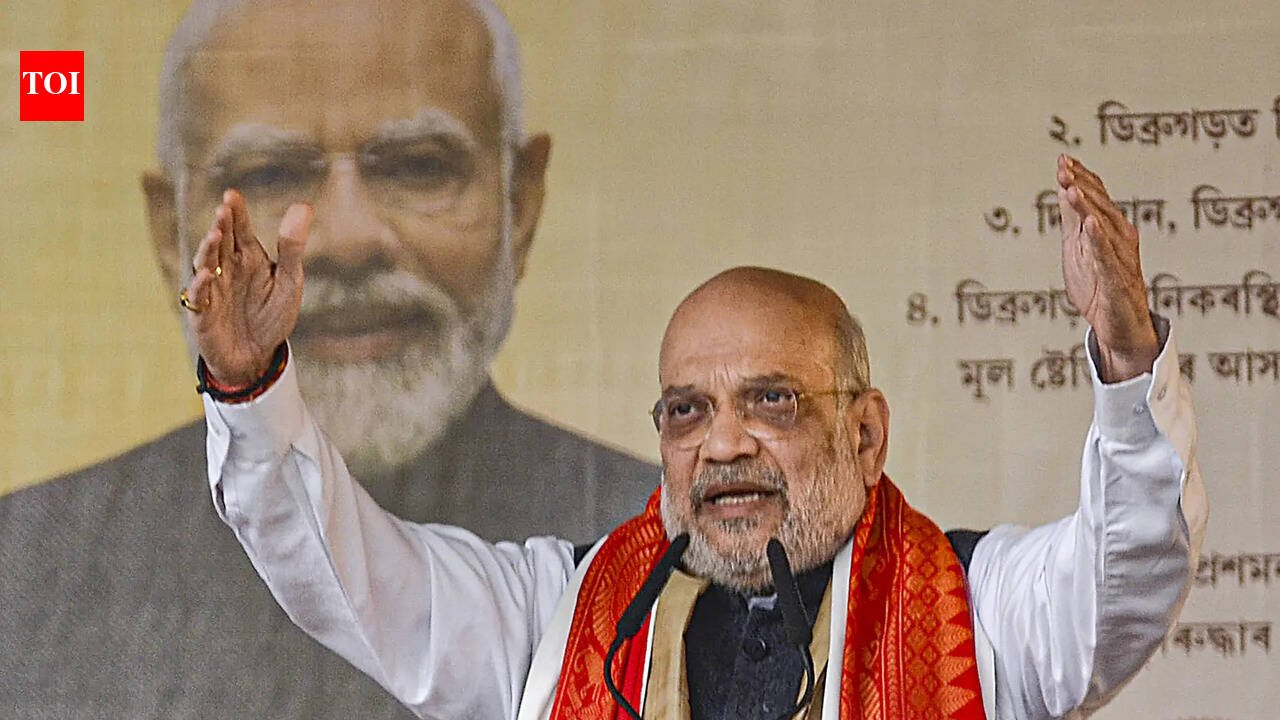
Union home minister Amit Shah addresses a public meeting in Assam on Friday. (PTI Photo)

NEW DELHI: Union home minister Amit Shah on Friday accused the Congress of “changing” the poll-bound state’s demography, a “trend” he said the current BJP-led government at the Centre is working to “reverse.”Shah made the remarks at the closing ceremony of the 10th Mising Youth Festival at Kareng Chapori in Assam’s Dhemaji. He also urged the people to vote for the state BJP government in the upcoming assembly elections to “completely free” Assam from infiltration.

Amit Shah Blames Infiltration For Muslim Population Growth, Backs CAA As Moral Responsibility

“Assam’s demography completely changed during Congress rule. The population of infiltrators rose to 64 lakh from nil, and infiltrators became the majority in seven districts,” the senior BJP leader alleged.“If you want to stop infiltration, then elect the BJP government for a third term and strengthen the hands of chief minister Himanta Biswa Sarma. Two BJP state governments in Assam have freed 1.26 lakh acres of land from encroachment by infiltrators,” he added.The BJP first came to power in Assam in May 2016 and won re-election five years later. It is now aiming for a third consecutive term when the state goes to polls in April.Meanwhile, Shah also highlighted the role played by the Mising community in preventing infiltrators from settling in Upper Assam through their hardworking lifestyle.“It is the responsibility of the Mising community to stop infiltration. You do not need to take up guns. Through your culture of hard work, infiltrators have not been able to settle here,” he remarked.The home minister further alleged that several tribal communities in Assam struggled to protect their identity during the Congress regime, while asserting that the BJP was committed to addressing the issues of the Mising society through an interlocutor appointed by the Centre.(With PTI inputs)


Source link

Shubhanshu Shukla, IISc-IISER team, find how brick-building bacteria react to toxin in Martian soil | India News


Shubhanshu Shukla, IISc-IISER team, find how brick-building bacteria react to toxin in Martian soil
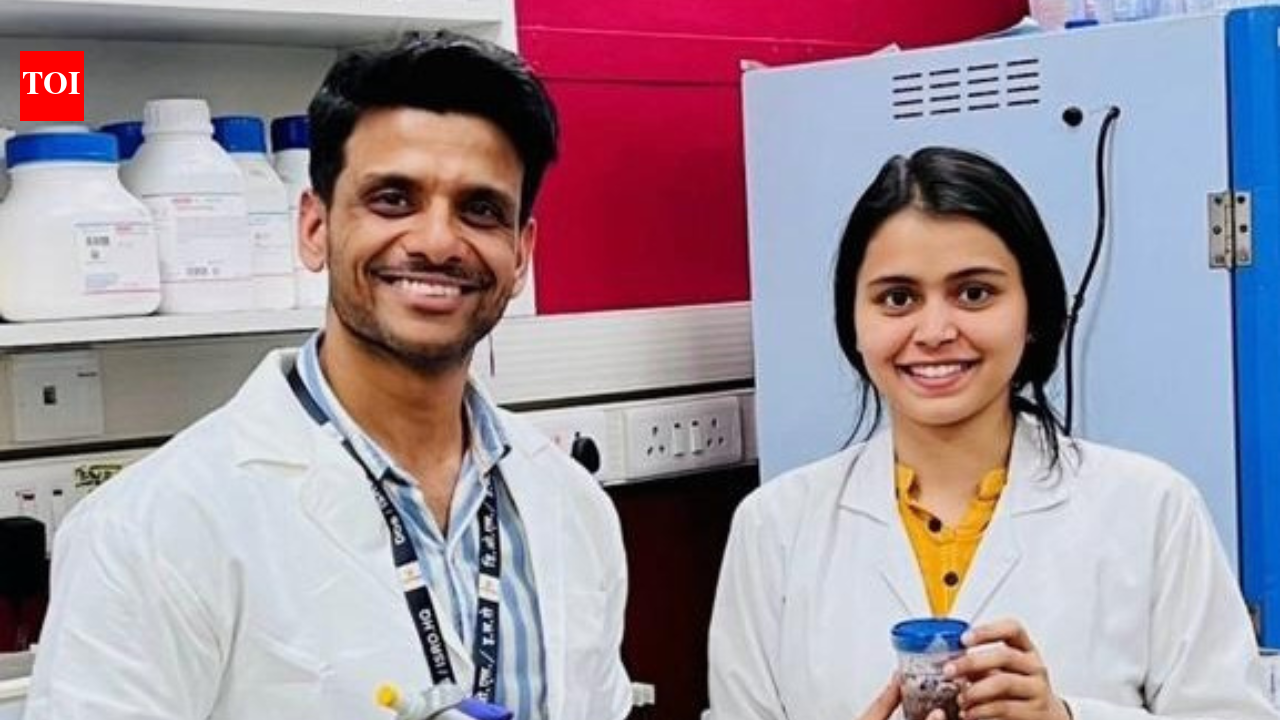
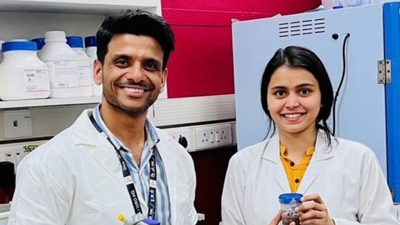
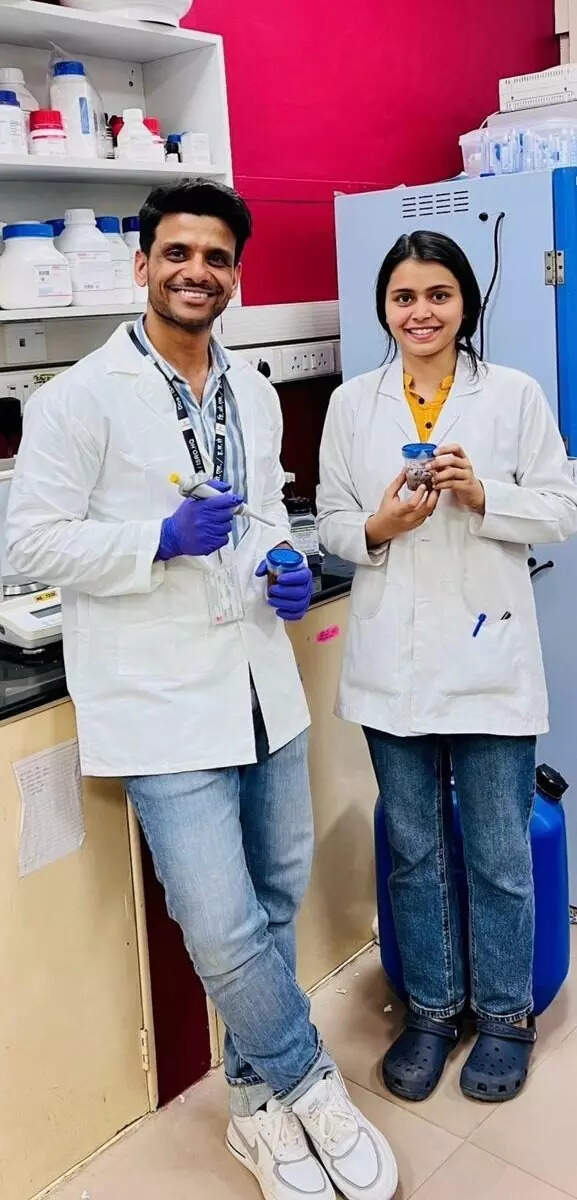
Shukla with lead author Swati Dubey | Credit: Aloke lab, IISc

BENGALURU: A toxic chemical long considered hostile to life on Mars, may not be an obstacle to building on the Red Planet after all. Instead, it could turn out to be an unlikely aid. Researchers at IISc, working with scientists at IISER-Kolkata and Isro astronaut Shubhanshu Shukla, have found that perchlorate, a chlorine-based compound known to stress living cells, can strengthen bacteria-made “space bricks” under the right conditions.“Mars is an alien environment. What is going to be the effect of this new alien environment on Earth organisms is a very, very important scientific question to answer,” Aloke Kumar, associate professor, mechanical engineering at IISc and corresponding author, says.

WhatsApp Image 2026-01-30 at 15.18.19.

Shukla with lead author Swati Dubey | Credit: Aloke lab, IISc

Perchlorates have been detected at several Martian landing sites and are considered hostile to life. They interfere with microbial growth and pose health risks to humans. For scientists exploring biological routes to construction on Mars, the compound has long been seen as a constraint that must be eliminated or avoided. The new study, however, points to a more complex interaction between chemistry, biology, and soil.The team focused on bacteria that can bind loose soil into solid blocks through biocementation. In earlier work, IISc researchers showed that the soil bacterium “Sporosarcina pasteurii” can produce calcium carbonate crystals that glue together particles of lunar or Martian soil simulants. The process requires urea, calcium, and guar gum, a natural polymer that supports bacterial survival.In the new study, published in PLOS One, the researchers used a more robust bacterial strain isolated from soils in Bengaluru. After confirming its mineral-forming ability, the team examined how it responded to perchlorate levels comparable to those measured on Mars, reaching up to about one per cent.The biological response was studied in collaboration with IISER-Kolkata, where Professor Punyasloke Bhadury’s group examined how perchlorate alters cell behaviour. The bacteria grew more slowly, became rounder in shape, and began clumping together, all clear signs of chemical stress. They also released higher levels of proteins and other molecules into their surroundings, forming an extracellular matrix.

WhatsApp Image 2026-01-30 at 15.18.19 (1).

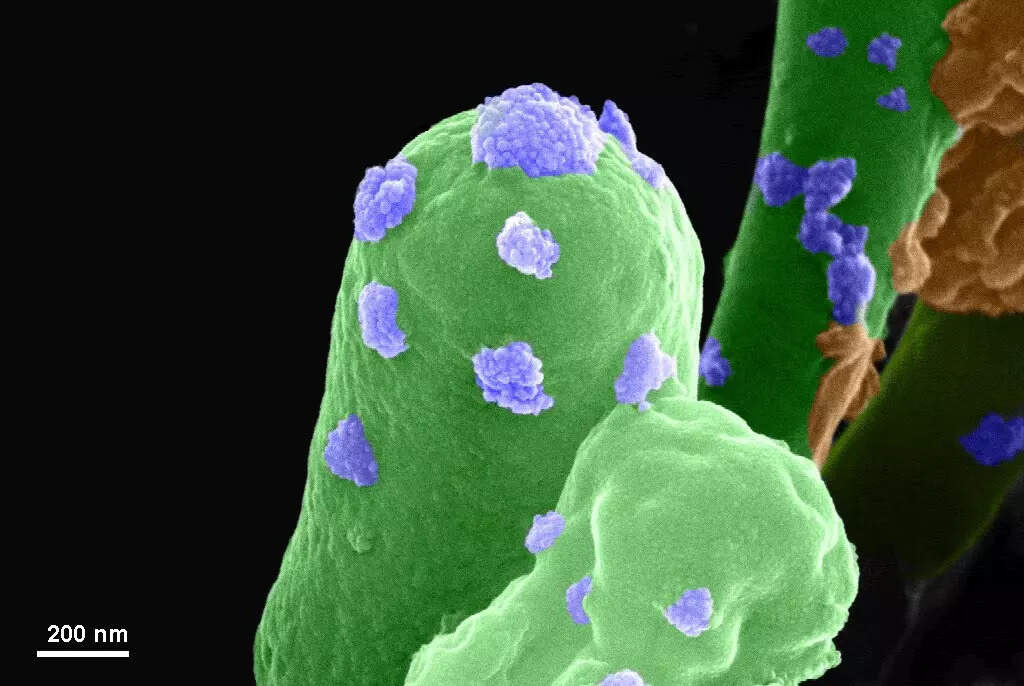
Microscopy image of Sporosarcina pasteurii | Credit: Aloke lab, IISc

When these stressed bacteria were added to synthetic Martian soil in the lab, the outcome surprised the researchers. With guar gum and a small amount of nickel chloride present, the resulting bricks were stronger than those produced without perchlorate. Microscopy revealed more mineral precipitates and fine “microbridges” formed by the extracellular matrix, linking bacterial cells to soil grains and minerals.“When the effect of perchlorate on just the bacteria is studied in isolation, it is a stressful factor. But in the bricks, with the right ingredients in the mixture, perchlorate is helping,” says IISc’s Swati Dubey, the study’s first author. Ultimately, the team’s goal is to deploy this method as an alternative, sustainable building strategy, to rely less on carbon-intensive cement-based processes – both on Earth and Mars. Co-author of the study, Shukla, who is pursuing his Master’s degree with Kumar at IISc, says such technologies can also help make future Mars landing missions smoother, by helping build better roads, launch pads, and rover landing sites. “The idea is to do in situ resource utilisation as much as possible. We don’t have to carry anything from here; in situ, we can use those resources and make those structures, which will make it a lot easier to navigate and do sustained missions over a period of time,” ,” Shukla added.


Source link

Jairam Ramesh shares archive letters by Jawaharlal Nehru and Sardar Vallabhbhai Patel flagging concerns over RSS | India News


Jairam Ramesh shares archive letters by Jawaharlal Nehru and Sardar Vallabhbhai Patel flagging concerns over RSS

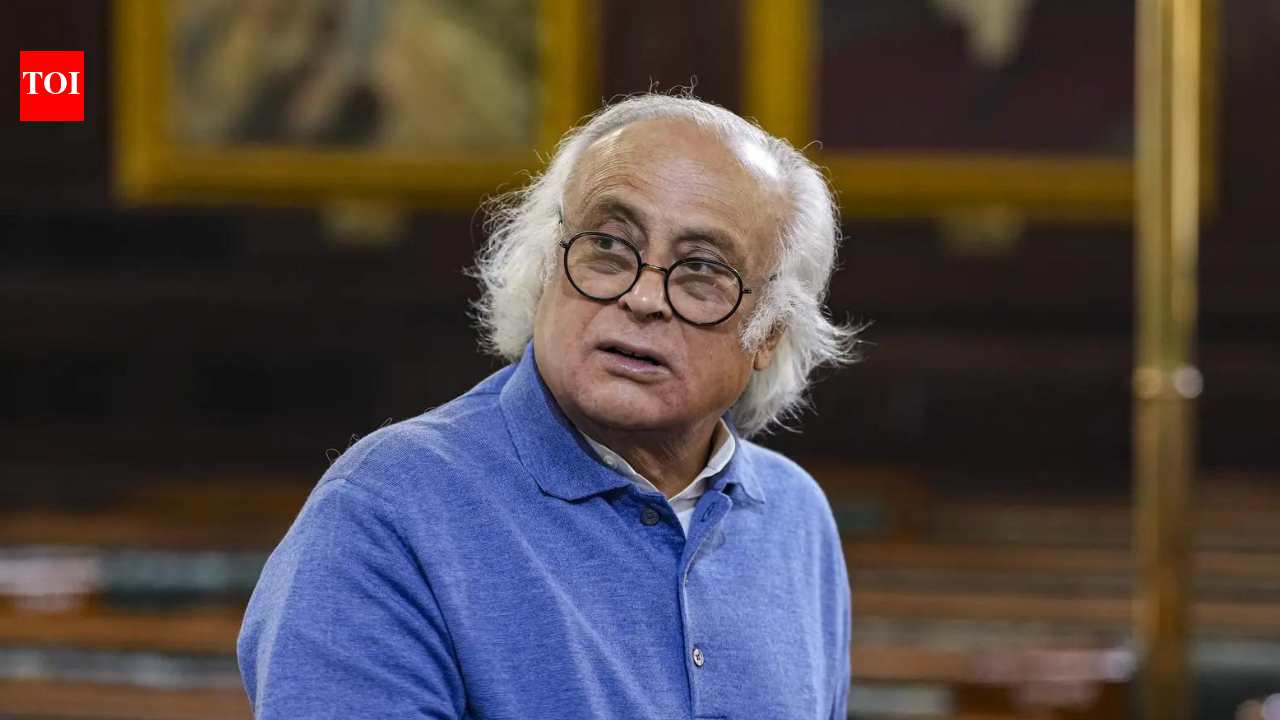
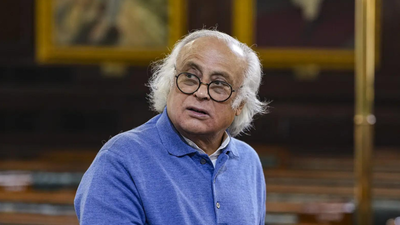
Jairam Ramesh (File photo

NEW DELHI: On the death anniversary of Mahatma Gandhi, Congress leader Jairam Ramesh shared two historic letters from 1948, written by Nehru and Sardar Vallabhbhai Patel to Syama Prasad Mookerjee. The letters shared criticise the activities of Hindu Mahasabha and RSS. Ramesh took to social media platform X to share these pieces of history, alongside a link to Nehru’s radio address from the night of Gandhi’s assassination on January 30, 1948.

Congress Chief Kharge Demands Ban On RSS Citing Sardar Patel’s 1948 Letter, BJP Hits Back

In his letter, Nehru had said, “Speeches were delivered that Mahatma Gandhi was an impediment and the sooner he died the better it would be for the country….The RSS has behaved in an even worse way and we have collected a mass of information about its very objectionable activities…”Ramesh’s social media post included screenshots of both letters. Ramesh called these letters “damning indictments of the self-declared custodians of nationalism.” “And to think that there is a Lok Sabha MP wedded to that ideology and who was blessed by the PM himself, who said that he could not choose between Gandhi and Godse. His mindset is revealing,” he added, apparently taking a dig at BJP MP Abhijit Gangopadhyay’s controversial remarks in 2024, according to PTI.The timing of these letters was significant. Nehru wrote his letter just two days before Gandhi’s assassination. Patel’s letter came later, on July 18, 1948. Both leaders expressed strong criticism of the Hindu organisations’ activities during that crucial period in Indian history.Mahatma Gandhi was killed by Nathuram Godse on January 30, 1948.


Source link

‘Low risk, travel curbs not needed’: WHO assesses Nipah virus cases in India | India News


‘Low risk, travel curbs not needed’: WHO assesses Nipah virus cases in India

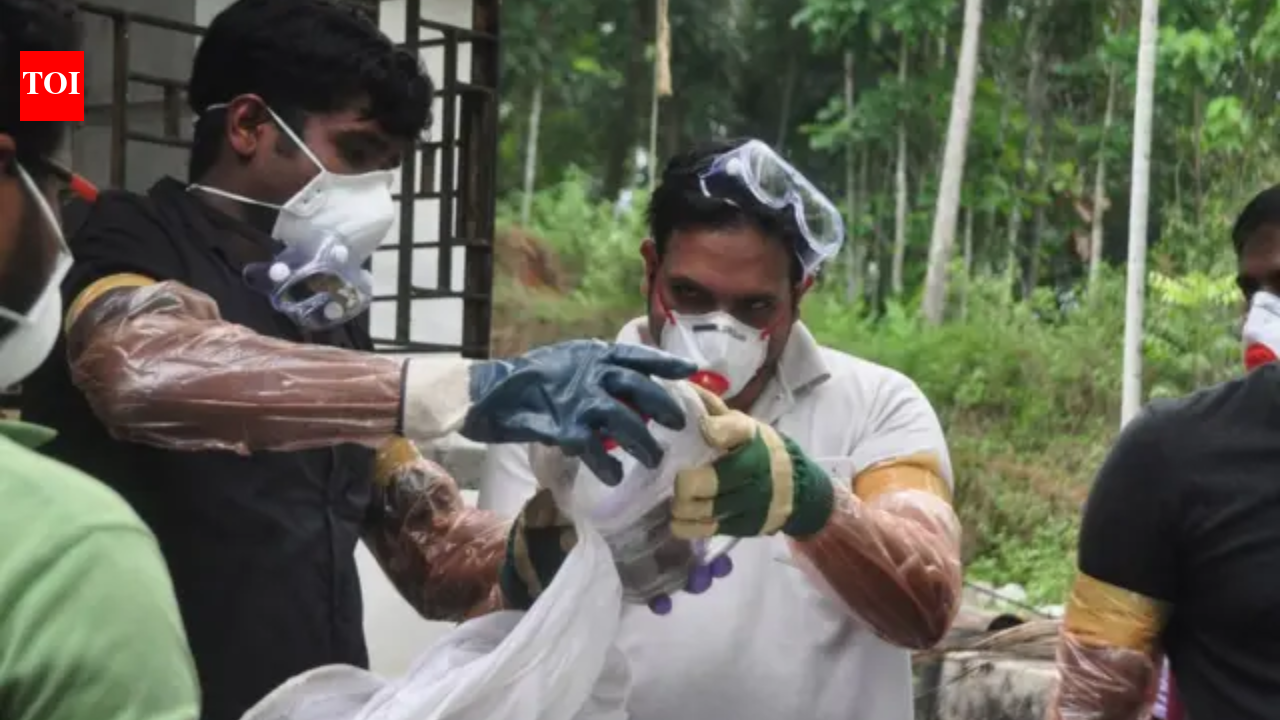
NEW DELHI: The World Health Organisation (WHO) has sought to reassure the public over India’s latest Nipah virus outbreak, saying the risk of spread remains “low” and that there is no need for travel or trade restrictions following the confirmation of two cases in West Bengal.The cases were reported from North 24 Parganas district, an area that has seen Nipah outbreaks in the past.Both patients are 25-year-old nurses—a woman and a man—working at the same private hospital in Barasat. They developed initial symptoms in the last week of December 2025, which rapidly progressed to neurological complications. The two were placed in isolation in early January.In an update shared on its website, following confirmation of the cases, WHO said an extensive public health response was activated. Authorities identified, traced, monitored, and tested 196 contacts linked to the two patients. All contacts were asymptomatic and tested negative for Nipah virus infection. As of 27 January, no additional cases were been detected. “ The likelihood of spread to other Indian states or internationally is considered low.WHO assessed the risk at the sub-national level in West Bengal as moderate due to the presence of fruit bat reservoirs in border areas and the possibility of sporadic spillover. However, the agency said the national, regional, and global risk remains low.“Based on current evidence, WHO does not recommend any travel or trade restrictions,” said the agency.The national government deployed an outbreak response team to West Bengal to work closely with state authorities. Enhanced surveillance, laboratory testing, infection prevention and control measures, and field investigations are underway. WHO said coordinated efforts between central and state health teams have enabled timely containment of the outbreak.“Nipah virus is a zoonotic disease transmitted mainly from bats to humans, sometimes through contaminated food or close contact. With no licensed vaccine or treatment currently available, early detection, supportive care, and strong infection prevention measures remain essential,” said WHO on it’s website.Historically, Nipah outbreaks in the WHO South-East Asia Region have been limited to Bangladesh and India, occurring sporadically or in small clusters. Human-to-human transmission is rare and usually confined to health-care settings or close family contacts, with no known instances of international spread through travel.This is the seventh documented Nipah outbreak in India and the third in West Bengal, following earlier outbreaks in Siliguri in 2001 and Nadia in 2007. The affected districts border Bangladesh, where Nipah outbreaks occur almost annually.WHO said several vaccine candidates are under development, but early supportive care, including intensive treatment for severe respiratory or neurological complications, remains critical for improving survival.


Source link