Breaking News
What Indian officials gifted US counterparts in 2024: Silver train set, pashmina shawl & more | India News


What Indian officials gifted US counterparts in 2024: Silver train set, pashmina shawl & more

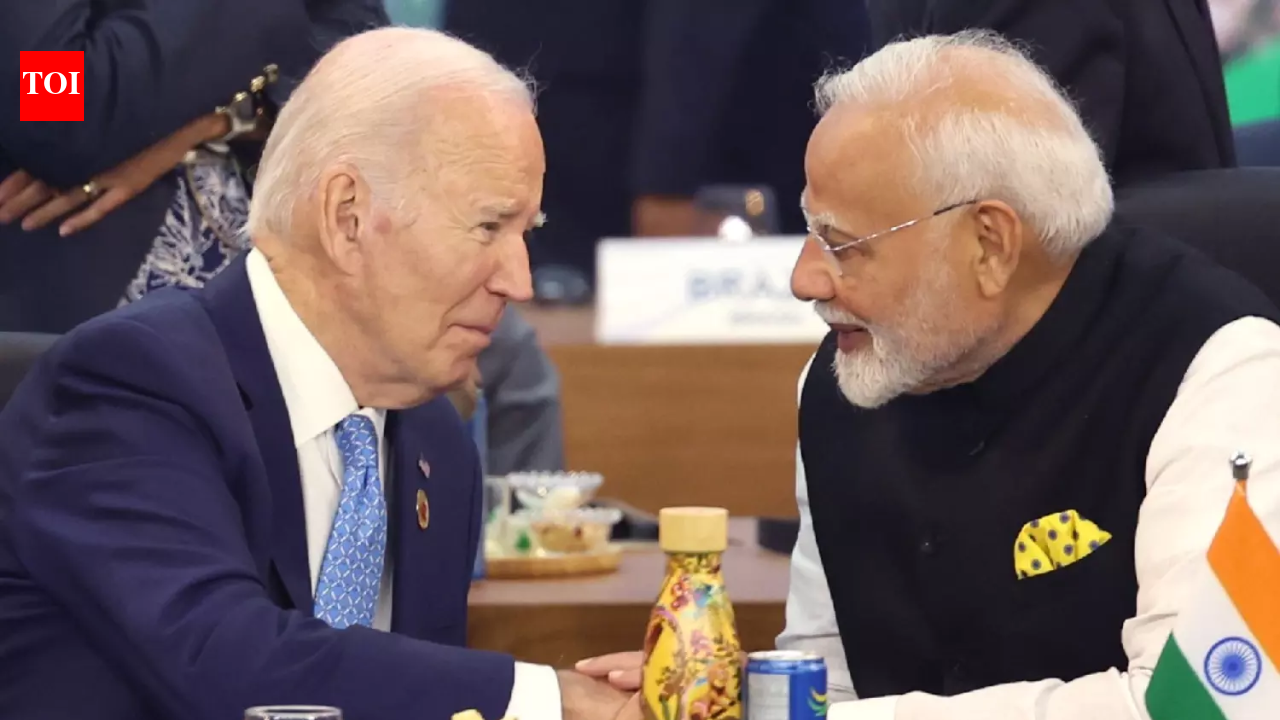
NEW DELHI: The US State Department released a compilation of gifts presented by PM Modi and other Indian government officials to US leaders. The Office of the Chief of Protocol, Department of State, submitted this comprehensive listing of “gifts received from foreign government sources” for the calendar year 2024. Under law, federal employees must file these reports for gifts of more than minimal value, which for 2024 is $480.00. The report states that the “non-acceptance would cause embarrassment to donor and US.”The listings include several items presented by PM Modi to former US President Joe Biden. On September 10, 2023, during Biden’s travel to New Delhi for the G20 Leaders’ Summit, he was gifted a “Wood Chest, Scarf, Saffron with Jar, Wood Box for Tea” with an estimated value of $562. The chest, scarf, jar, and box were transferred to the US National Archives (NARA) while the saffron and tea were “disposed of pursuant” to Secret Service policies. On July 16, 2024, PM Modi also presented Biden with a “Sterling Silver Metal Train Set” with an estimated value of $7,750, which has been transferred to the National Archives.Other members of the administration received gifts as well. Former First Lady Jill Biden received a “Pashmina Shawl” from PM Modi on October 21, 2024, valued at USD 2,969. Former Vice President Kamala Harris received a “Lord Krishna Raas Leela Silver Box” on October 18, 2024, valued at $1,330, while her husband Douglas Emhoff received cufflinks estimated at $585.65. These items were all transferred to the National Archives.Additionally, national security advisor Ajit Doval gifted Jacob Sullivan a “Kashmir Pashmina Scarf with Box” on August 23, 2024, with an estimated value of $599.00, which was “Transferred to GSA.” Defence minister Rajnath Singh gifted a “Shiva Nataraja Bronze Statue” to Lloyd Austin on November 24, 2022. With an estimated value of $3,700.00, its disposition is listed as “Pending Transfer to GSA.”


Source link

Errors detected: NHAI refunds toll in 18L cases | India News


Errors detected: NHAI refunds toll in 18L cases
In 35% Of Cases, Toll Debited Sans Vehicles At Plaza

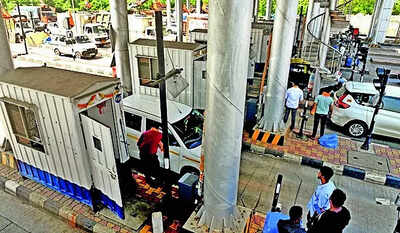
New Delhi: NHAI has refunded toll charges in 17.7 lakh cases between Jan and Dec 2025 for incorrect deductions and in nearly 35% of these cases, the vehicles were not at the toll plaza when the user fee was debited from FASTag wallet.Considering that such transactions happen due to manual entry of vehicle details by toll operators because of some issue, the road transport ministry is mulling doing away with this option completely.In a written reply, Union road transport minister Nitin Gadkari informed the Lok Sabha Thursday that National Payment Corporation of India (NPCI), which provides the Central Clearing House (CCH) services of electronic toll collection, “has reported 17.6 lakh transactions where refunds were made due to incorrect user fee (toll) deductions from Jan-2025 to Dec-2025 out of a total of 464 crore FASTag transactions”. This is barely 0.03% of all FASTag transactions.An official said, “Though the number of faulty transactions is miniscule, this shouldn’t happen. A decision will be likely taken soon on stopping the practice of manually feeding vehicle registration numbers in the system to deduct toll. In such cases, there is a possibility of the toll attendants noting down wrong details. This becomes an unnecessary hassle for commuters.”The ministry said that with the implementation of FASTag, the average time taken to cross toll plaza has reduced to 40 seconds compared with the earlier 12.2 minutes per vehicle under the manual tolling system.In a separate written reply to a question on the total toll collection, the road transport ministry said in the past three quarters of the financial year 2025-26, Rs 50,195 crore was collected as user fee across the national highway and expressway network. During the entire last financial year, Rs 61,508 crore was collected as toll, the ministry further said.


Source link

SIR logical discrepancy: SC’s West Bengal order effective all-India | India News


SIR logical discrepancy: SC's West Bengal order effective all-India
Court Rejects Bhushan’s Idea On Illegals

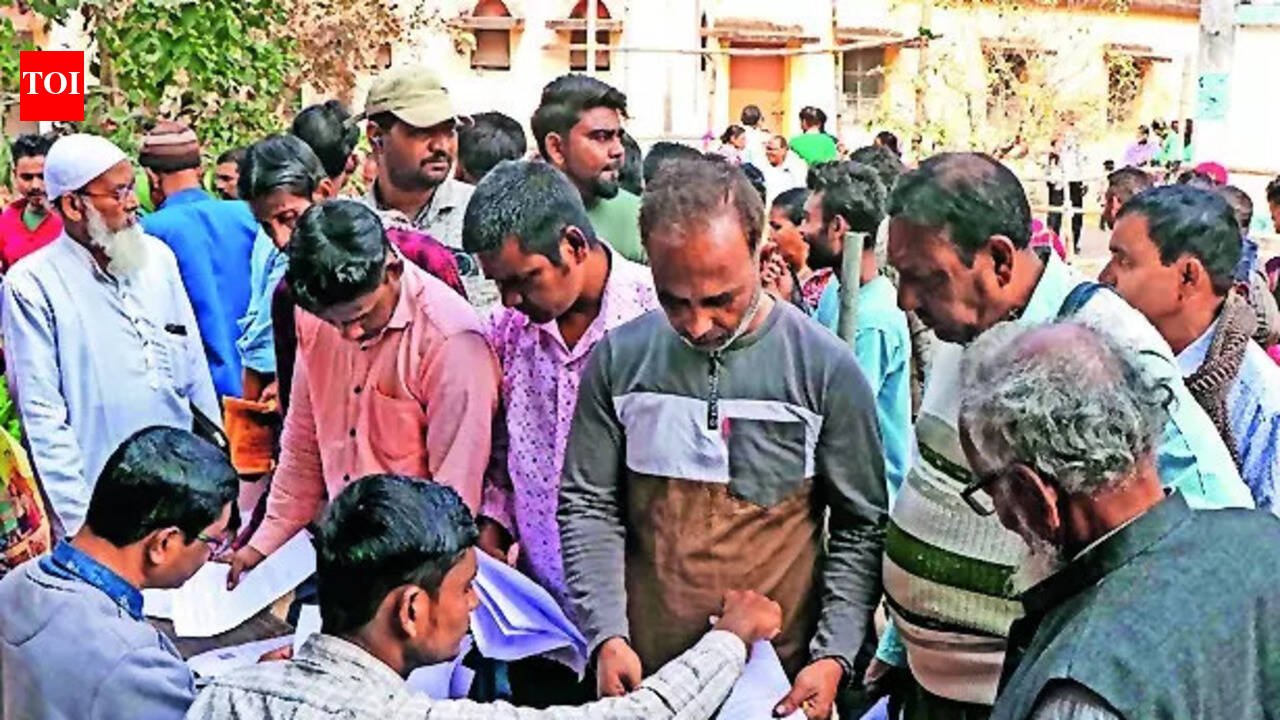
New Delhi: Supreme Court on Thursday asked the Election Commission to implement in Tamil Nadu the court directed procedure for submission of documents by voters flagged under ‘logical discrepancy’ category during Special Intensive Revision of West Bengal electoral rolls, prompting the EC to request the SC to extend it to all states undergoing SIR of voter lists.A bench of Chief Justice Surya Kant and Justice Joymalya Bagchi, dealing with petitions by politicians from ruling DMK party, said the names of voters categorised under ‘logical discrepancies’ by EC would be displayed at public places, panchayat and taluk offices along with the reasons for such categorisation and documents required to be furnished by them.“The person receiving the documents from voters would issue a receipt. However, hearing of voters for inclusion of their names in electoral rolls would be conducted at taluka level officers,” the bench said and directed the TN govt to provide adequate staff to the EC to carry out the task. It allowed the voters to submit the documents within 10 days of display of the list by EC.It also asked the DGP, SPs and collectors to ensure no law and order situation emerges to scuttle the SIR exercise. This prompted EC counsel and senior advocate D S Naidu to request the SC to extend the order to all states where SIR of electoral rolls are being carried out. In its order, the bench recorded – “We expect the EC to comply with these directions on a pan-India basis.”In another hearing, the CJI-led bench concluded hearing on the challenge to the constitutional validity of SIR, which was first carried out in Bihar and then extended to 12 other states, after a three month long hearing that saw contrasting arguments put forth by the poll body and petitioners.Appearing for Association for Democratic Reforms, advocate Prashant Bhushan said EC cannot remove a person from the voter list if he/she gives a self-declaration claiming to be an Indian citizen.He said if anyone objects to the citizenship of a voter, then the onus is on the complainant to produce the voter list from Bangladesh to substantiate the accusation of illegal migrants. The bench laughed and said, “You know this is not possible. How will someone get the voter list from Bangladesh containing the name of an alleged illegal migrant figuring in the voter list of an Indian state.”


Source link

Amid row, three Rahman songs in Beating Retreat | India News


Amid row, three Rahman songs in Beating Retreat

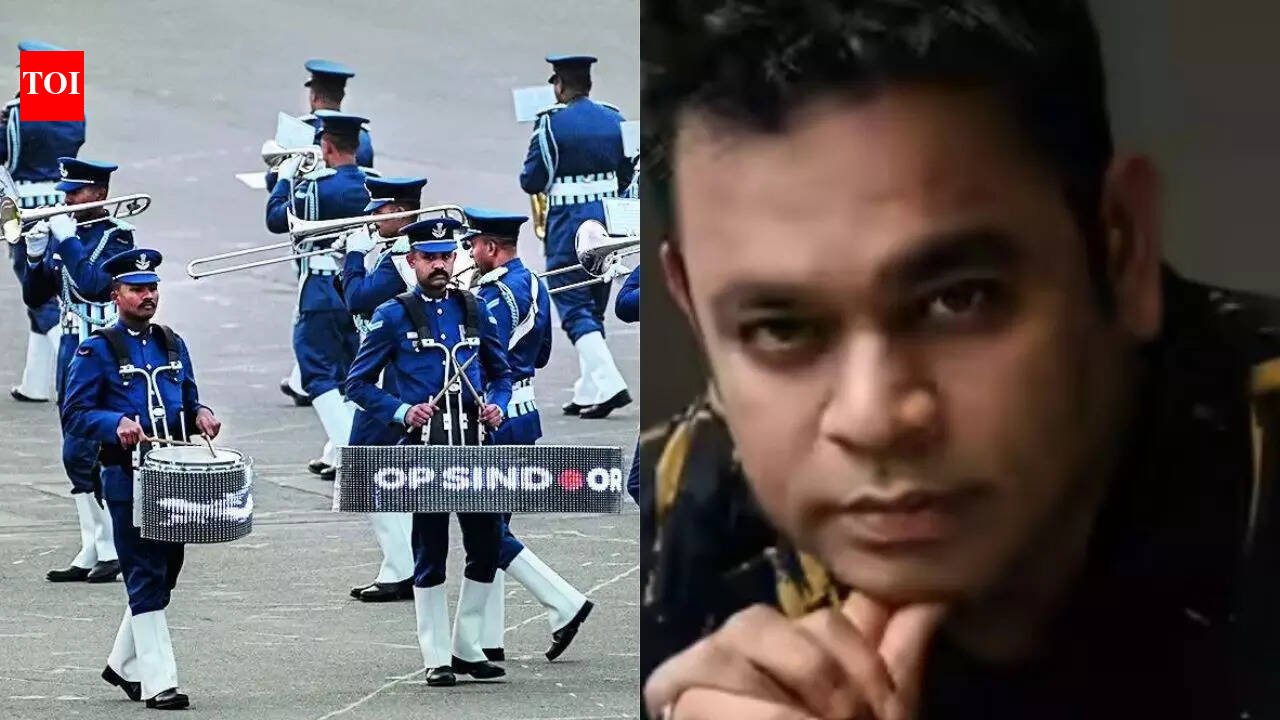
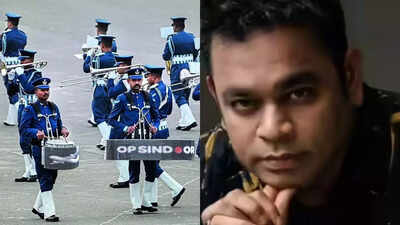
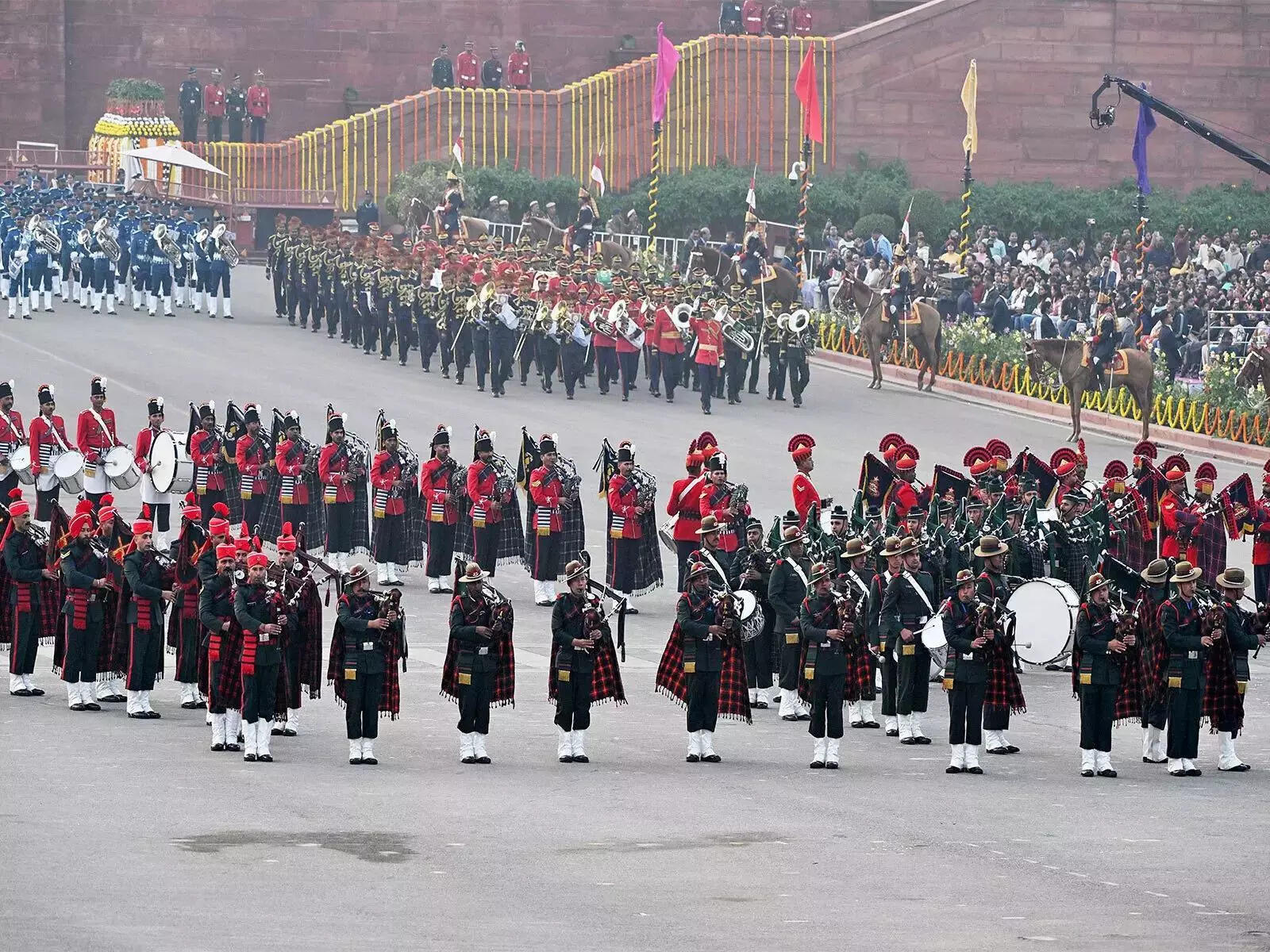
New Delhi: As Republic Day celebrations drew to a close with the Beating Retreat ceremony, Vijay Chowk reverberated with three of composer AR Rahman’s iconic songs – Oscar-winning ‘Jai ho’, ‘Bharat humko jaan se pyaara hai’ and ‘Ma tujhe salaam’.Earlier this month, when asked about his absence from Hindi-film music during an interview with BBC Asian Network, Rahman said, “It might be a communal thing also… but it is not in my face”. He later said that intentions could be “misundersood sometimes” and that he was grateful to the country.While the Central Armed Police Forces band performed “Jai Ho”, the Indian Navy band played ‘Bharat humko…’. The song ‘Aarambh hai prachand’ from the movie Gulaal was played by the Indian Army band. Vande Mataram on its 150th anniversary and Operation Sindoor were featured prominently during the ceremony on Thursday evening, which was presided over by President Droupadi Murmu, who arrived in the ceremonial buggy. Vice-President CP Radhakrishnan, PM Narendra Modi, defence minister Rajnath Singh, Chief of Defence Staff General Anil Chauhan, and the three service chiefs were also present.The bands stood various formations that included ‘Amar Jawan’: a tribute to Indian Army bravehearts, ‘Deva Vyuha: a battle formation referred to in Mahabharata battle formation against Bhishm Pitamah and ‘Ardhachandra Vyuha’: a half-moon battle formation.LED screens placed at the venue also showed a video clip of a BrahMos missile hitting a target; instruments of several band members were wrapped with LEDs on which the logo of Op Sindoor shone. Images of Rafale, Tejas, Su-30, BrahMos, S-400 air defence system, Netra, Prachand and C-130 also played on the screens.Later, the PM shared the glimpses from Beating Retreat 2026, saying that “performances by the various bands were memorable”.In a series of posts on X, Modi said: “Air Force Band was exceptional… They performed ‘Brave Warrior’, ‘Twilight’, ‘Alert (Post Horn Gallop)’ and ‘Flying Star’ impeccably. The Sindoor formation was brilliant!”On the naval band, he posted, “Simply outstanding! The Naval Band’s performances included ‘Namaste’, ‘Sagar Pawan’, ‘Matribhumi’, ‘Tejasvi’ and ‘Jai Bharati’. The Matsya Yantra formation was flawless.”


Source link

Congress complaint to EC: BJP using bulk Form 7 to delete genuine voters in SIR states | India News


Congress complaint to EC: BJP using bulk Form 7 to delete genuine voters in SIR states

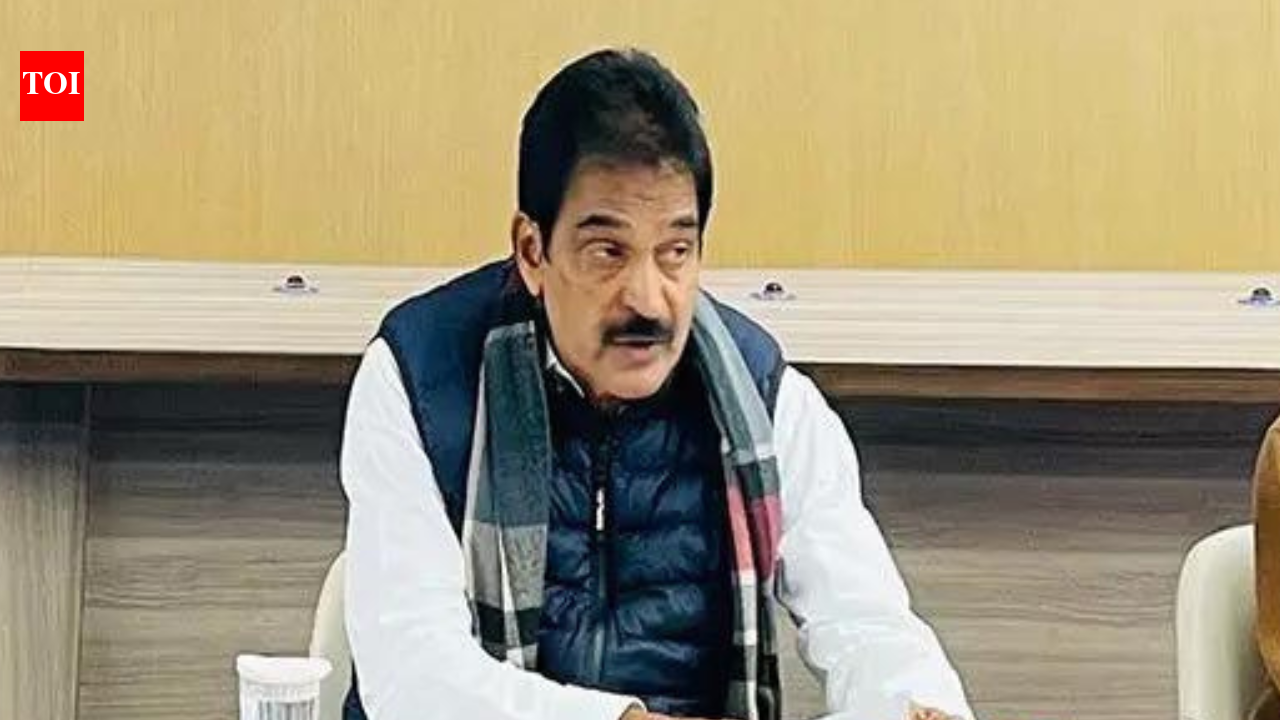
NEW DELHI: In an urgent missive to Election Commission, Congress on Thursday accused the ruling BJP of using the EC’s Form 7 to target genuine voters for wrongful deletion in the Claim and Objection phase of the SIR in Rajasthan, Gujarat, Madhya Pradesh, Chhattisgarh, Uttar Pradesh, West Bengal, Assam and Kerala.AICC general secretary and MP KC Venugopal, in a complaint to EC, termed the watchdog’s inaction in addressing concerns about systematic subversion of electoral rolls revision as worrisome and urged immediate steps to prevent BJP from misusing the electoral rolls to gain unfair electoral advantage.

‘Vote Theft In Bengal’: TMC MP Abhishek Banerjee Slams ECI Over SIR, BJP Fires Back

“These actions, if not taken cognizance of by the Commission, … will lead to the disenfranchisement of lakhs of voters, especially those belonging to the backward, marginalised communities,” he said, adding that backward communities are being targeted by BJP.Venugopal said Form 7 serves a narrow purpose of raising objection to a voter’s name with fact-based reasons like death or duplication, and “is not meant for generalised or speculative objections”. He said the burden of proof too rests on the person filing the Form, with penalties prescribed for making a false submission.Specifying the pattern involved in engineering wrongful deletion, Venugopal said Form 7 is being generated in bulk through a centralised system, which is then being used to raise objections in bulk against targetted categories of electors, including SCs, STs, the minorities and senior citizens. He said these forms are then being handed over to BLOs across multiple constituencies through a well-organised mechanism. The striking feature here is the absence of clear and verifiable particulars of the individual submitting the Form 7, though EC mandates disclosure of an objector’s identity along with documentary material substantiating the objection. He said in many instances, the alleged objectors denied filing the objections.“This casts serious doubts over the sanctity of the entire SIR process being undertaken,” he said.Congress urged EC to institute real-time supervision over the voter deletion process and the monitoring of Form 7 applications, including their issuance and submission. It also sought investigation under Article 324 into misuse of Form 7. Congress further urged EC to release disaggregated data relating to Form-7 applications for all 12 States undergoing SIR.


Source link

Beating retreat 2026: PM Modi attends event marking end of Republic Day celebrations; hails ‘India’s rich military heritage’ | India News


Beating retreat 2026: PM Modi attends event marking end of Republic Day celebrations; hails 'India's rich military heritage'

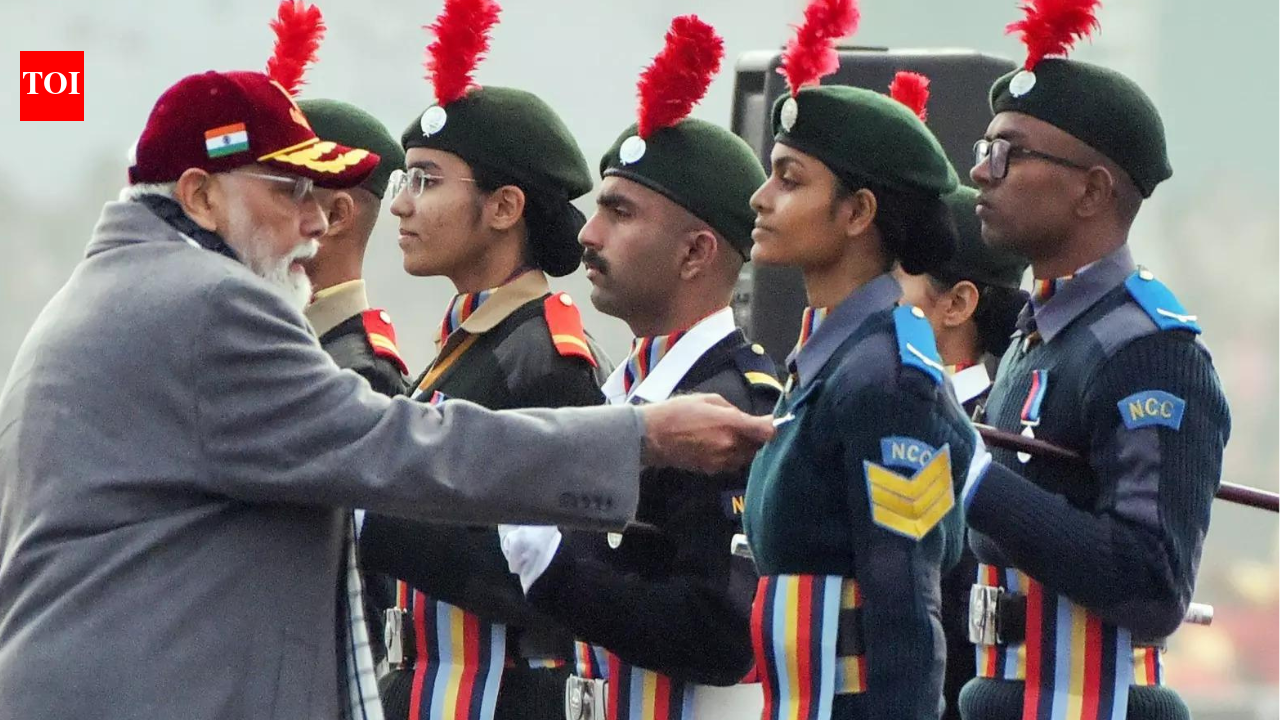
NEW DELHI: Prime Minister Narendra Modi on Thursday said the ‘Beating Retreat’ ceremony, scheduled for this evening, marks the formal conclusion of Republic Day celebrations and highlights the strength of India’s military heritage.He added that the event showcases the discipline, traditions and valour of the armed forces, who remain committed to safeguarding the nation.“This evening, the Beating Retreat ceremony will be held. It symbolises the conclusion of the Republic Day celebrations. In it, the strength of India’s rich military heritage will be displayed. We are extremely proud of our armed forces who are dedicated to the defence of the country. Eko bahunamsi manya edita visham visham yuddhaya san shishaadhi,” PM Modi said through a post on X. The ‘Beating Retreat’ ceremony, held annually at Vijay Chowk in New Delhi, signals the conclusion of Republic Day celebrations. Drawing on military tradition, it features performances by the Army, Navy and Air Force bands, blending patriotic and classical music to create a solemn and stirring spectacle.

'Beating Retreat ceremony' at Vijay Chowk today to formally conclude Republic Day celebrations.

‘Beating Retreat ceremony’ at Vijay Chowk today to formally conclude Republic Day celebrations.

Defence minister Rajnath Singh confirmed that the event will commence at 5.00 pm, officially closing the Republic Day festivities.“At 5.00 pm today, the ‘Beating Retreat’ ceremony will be held at Vijay Chowk in New Delhi. This ceremony is a solemn and dignified tradition that brings the Republic Day celebrations to a close,” the defence minister said through a post on X. The Delhi Traffic Police has issued a traffic advisory ahead of the Full Dress Rehearsal of the event. Traffic restrictions will be in place from 4 pm to 6 pm to ensure the smooth conduct of the event and facilitate the movement of participating contingents and officials.Vijay Chowk and several connecting roads, including Raisina Road, Krishna Menon Marg, Sunehri Masjid roundabout, and Kartavya Path between Vijay Chowk and the Rafi Marg-Kartavya Path crossing, will remain closed to general traffic during this period.Commuters have been advised to plan their journeys in advance and use alternate routes such as Ring Road, Ridge Road, Aurobindo Marg, Safdarjung Road–Kamal Ataturk Marg, Rani Jhansi Road, and Minto Road.


Source link

‘Effort to protect Assam’s identity’: Amid oppn’s criticism, CM Himanta cites SC to defend ‘Miyan’ remark | India News


'Effort to protect Assam’s identity': Amid oppn's criticism, CM Himanta cites SC to defend 'Miyan' remark

NEW DELHI: Assam chief minister Himanta Biswa Sarma on Thursday refused to walk back from his remarks on “Miya Muslims” after the criticism by the opposition.A day after the chief minister said that he encourages troubling the “Miyan” to drive them back from the state, Sarma clarified that the word was used to refer the illegal Muslim migrants from Bangladesh. He also cited the Supreme Court to claim that the issue is a “grave and long-standing problem that Assam has lived with for decades.”In a social media post on X, Sarma said, “Those who are attacking me for my remarks on “Miyan”—a word used in Assam in the context of Bangladeshi Muslim illegal migration—should pause and read what the Supreme Court of India itself has said about Assam. This is not my language, not my imagination, and not political exaggeration.”“The silent and invidious demographic invasion of Assam may result in the loss of the geostrategically vital districts of lower Assam… The influx of illegal migrants is turning these districts into a Muslim majority region… It will then only be a matter of time when a demand for their merger with Bangladesh may be made… Loss of lower Assam will sever the entire land mass of the North East from the rest of India and the rich natural resources of that region will be lost to the Nation,” Himanta cited a Supreme Court observation.“Our effort is not against any religion or any Indian citizen. Our effort is to protect Assam’s identity, security, and future, exactly as the Supreme Court cautioned the nation to do. Ignoring that warning would be the real injustice—to Assam and to India,” he added.Earlier on Wednesday, Himanta had said that he encourages creating “trouble” for “Miyan Muslims” so that they are driven out of the state, remarks that have sparked widespread outrage across the election-bound northeastern state.“Trouble the Miyan Muslims by any means. If they face trouble, they will go from Assam. If I want to give trouble to Miya, I go at 12 am. It’s not an issue. We are directly against the Miya Muslims,” Himanta had said.“We are not hiding anything; we directly say that we are against Miyans. Earlier, people feared that notices would be served against them. Now, I encourage everyone to give trouble to Miyan. Yesterday, I saw that they have reached Duliajan. A tsunami will happen here, but the result will be in Pakistan,” he added.His remarks drew strong criticism from Opposition leaders, who warned that such statements could have serious consequences for social harmony.Congress leader Udit Raj said the Assam chief minister’s remarks would not go down well with the public and could even lead to “civil war”.“Congress neither works for Bengali Muslims nor for Bengali Hindus. Congress views everyone as a citizen. It is good that what was once done covertly, Himanta Biswa Sarma has now openly stated,’ the Congress leader told news agency IANS.CPI(M) MP Amraram also condemned the comments, accusing the Assam government of using administrative exercises to marginalise vulnerable communities.“This is what the chief minister always does. In the name of SIR, votes are being taken away from Dalits, minorities, SCs, and STs. Even when people are not being divided on the basis of Hindu or Muslim, votes are being manipulated in the name of SIR. All of these people are citizens of this country, whether Muslim, Hindu, Sikh, Christian, or Buddhist. Creating hatred against them, I believe, is a betrayal of the country, its Constitution, and its unity,” he said.


Source link

UGC row: SC stays new rules; 2012 regulations to continue — what it means | India News


UGC Equity Regulations Explained: What Exists What Changed And Why It Has Sparked Protests

File photo

NEW DELHI: The Supreme Court on Thursday put on hold the University Grants Commission’s (UGC) Promotion of Equity in Higher Education Institutions Regulations, 2026, restoring the older 2012 framework for the time being. The court said the new rules suffer from vagueness, particularly in how caste-based discrimination is defined, and warned they could be misused.

UGC Equity Regulations Explained: What Exists What Changed And Why It Has Sparked Protests

With the stay in place, universities and colleges across the country will now continue to operate under the 2012 UGC regulations, at least until the legal challenge to the 2026 framework is resolved.So what exactly is the difference between the two regulations, and how will campuses function going forward?What the 2012 regulations providedThe 2012 rules were the UGC’s first formal attempt to address discrimination in higher education. They prohibited discrimination on several grounds, including caste, religion, gender, disability, language and place of birth.Under this framework, institutions were required to appoint an Anti-Discrimination Officer and establish an Equal Opportunity Cell. Complaints were handled internally, with the officer conducting a preliminary inquiry and recommending action under existing service or university rules.However, the system was largely advisory in nature. There were no strict timelines, no external oversight, and no penalties prescribed for institutions that failed to act. The rules also did not explicitly define false or malicious complaints, nor did they spell out safeguards for those accused.What the 2026 regulations sought to changeThe 2026 regulations marked a significant shift in scale and enforcement. They explicitly included Other Backward Classes within caste-based discrimination protections, alongside Scheduled Castes and Scheduled Tribes, bringing a much larger share of the student population under the framework.More importantly, enforcement moved from a single officer to an elaborate institutional system. Universities were required to set up Equal Opportunity Centres, multi-member Equity Committees, Equity Squads, Equity Ambassadors, a 24×7 helpline, and online complaint portals.Timelines were made mandatory. Committees had to meet within 24 hours of a complaint, submit reports within 15 working days, and institutions were required to act within seven days. Non-compliance carried serious consequences, including loss of UGC funding, degree-granting powers, and recognition.While intended to ensure accountability, critics argued that the framework gave wide discretion to internal committees, used broadly worded definitions of discrimination, and lacked safeguards against false or malicious complaints.Why Supreme Court intervenedSupreme Court found prima facie merit in concerns that the 2026 rules, especially the definition of caste-based discrimination under Regulation 3(c), were vague and open to misuse. The bench directed that the 2012 regulations would continue to apply until further orders and issued notices to the Centre and the University Grants Commission.The stay does not strike down the 2026 rules permanently, but pauses their implementation while the court examines their constitutional validity.What applies now on campuses

  • Anti-Discrimination Officers and Equal Opportunity Cells will handle complaints
  • There are no mandatory timelines prescribed by regulation
  • Enforcement remains largely internal and discretionary
  • There are no UGC-level penalties linked to equity compliance
  • Institutions cannot act under the expanded structures, strict timelines, or punitive provisions introduced in 2026.

“Today, the Supreme Court heard our writ petition challenging the UGC Regulations which have been enacted recently. The Supreme Court has stayed the UGC Regulations and has kept them in abeyance. The Supreme Court has directed that UGC Regulations 2012 will be in operation till further orders. The matter has been posted for hearing on March 19,” Vishnu Shankar Jain told ANI.Meanwhile, petitioner and advocate Vineet Jindal said that the Supreme Court’s decision aligned with the arguments raised before it regarding Clause 3C. He stated that while the clause addressed caste-based discrimination, it included only certain castes and excluded the general category, giving the impression that the general caste was being specifically targeted.Jindal further said that the new rules and regulations appeared to create divisions among students, which runs counter to the constitutional principle of equality. He added that the Chief Justice of India acknowledged shortcomings in the regulations and noted that they need to be reconsidered and reviewed.

Source link

MGNREGA to oppn’s principal issue, could trigger stormy budget session | India News


MGNREGA to oppn’s principal issue, could trigger stormy budget session

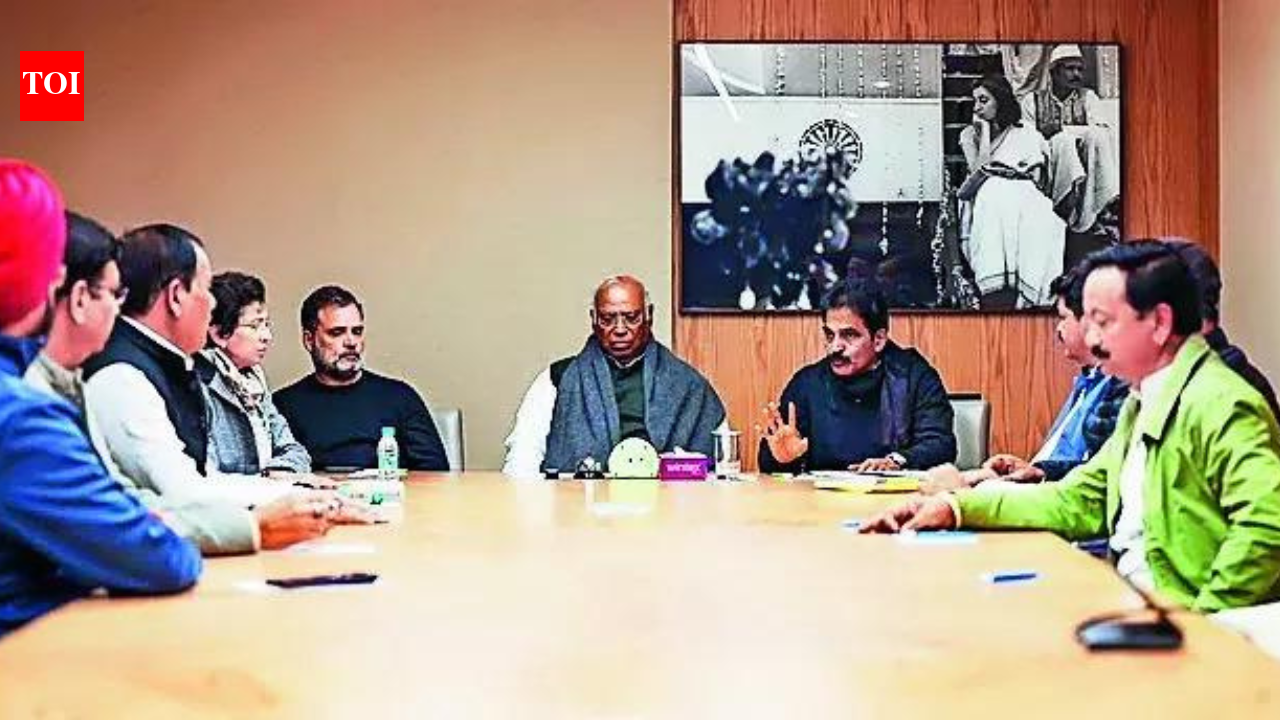
NEW DELHI: MGNREGA will be the opposition’s principal issue to target the Modi govt during the budget session of Parliament, with its demand for the rural job scheme’s restoration likely to trigger stormy exchanges in both Lok Sabha and Rajya Sabha.Opposition INDIA bloc, which held a coordination meeting in the chamber of Congress president Mallikarjun Kharge on Wednesday ahead of the start of the session, also decided to fully participate in the session which includes the Union budget and the Motion of Thanks to the President’s joint address. The special intensive revision (SIR) of electoral rolls is another issue on the opposition’s agenda.In the strategy discussions, attended by Rahul Gandhi, DMK’s TR Baalu, RSP’s NK Premachandran, Shiv Sena (UBT)’s Arvind Sawant, SP’s Javed Ali Khan, CPM’s John Brittas, CPI’s P Sandosh, Congress’s KC Venugopal, Kodikunnil Suresh, Manickam Tagore, RJD’s Prem Chand Gupta, among others, the leaders decided to mark their protest over the job scheme as President Droupadi Murmu in her address to the joint sitting of Parliament on Wednesday mentioned VB-GRAMG that will replace MGNREGA. TMC did not attend the discussions.When the President’s speech mentioned the VB-GRAMG scheme, opposition MPs stood up and raised slogans. While the action riled the govt into slamming the opposition, Congress’s Jairam Ramesh said, “Today during the President’s address, all opposition parties most respectfully and in a dignified manner protested the bulldozed repeal of MGNREGA. The opposition will use all democratic means to demand the restoration of MGNREGA.”If the statement made clear the opposition’s intent to make the job scheme the front and centre of its parliamentary agenda, the same scenes may be witnessed during the presentation of the Union budget.The reason behind the focus on MGNREGA seems to be the upcoming five assembly elections and the unanimity among the parties on the issue. The belief among the opposition parties is that the disbanding of the job scheme poses a serious threat to the availability of distress employment for the poor in the future because of the shifting of a considerable financial burden on the states under VB-GRAMG.Since the subject would automatically become part of the discussion on the Union budget and then also figure in debate on the motion of thanks, it would provide ample opportunity to the rivals to amplify concerns and target BJP.However, there is some uncertainty in the INDIA bloc over its decision to focus on MGNREGA and to participate in the session, in view of what TMC may do after it comes to Parliament in the coming days, after the initial absence. The Mamata Banerjee outfit has in the past forced the hands of other allies with independent action.


Source link

No security concern for Indian diplomats or their kin: Bangladesh | India News


No security concern for Indian diplomats or their kin: Bangladesh

Dhaka: Days after India advised family members of Indian diplomats and officials to return amid threat of violence against Indian establishments in Bangladesh, Dhaka on Wednesday shrugged off New Delhi’s concerns, saying it is their “choice” and “not our concern”. “If they want to take their families back, it is not our concern. There is no security concern. I do not understand what signal is being sent. It is their decision,” Bangladesh foreign affairs adviser Md Touhid Hossain said.The advisory was issued last week following massive anti-India protests near the Indian high commission in Dhaka and assistant high commissions in other cities — angry protests had come precariously close to the diplomatic facility in Chittagong — as well as a series of attacks on minority Hindus, including killings, since the death of radical Islamist leader and India-baiter Sharif Osman Hadi on Dec 18, six days after he was shot.“There is no situation in the country that would compel diplomats to send their family members back home or where officials or their family members are in danger,” Touhid said, adding he sees “no justification for the reported non-family posting of Indian diplomats”. He told reporters that the Bangladesh govt has not been informed of any security concerns regarding the family members of Indian diplomats.While the Bangladesh high commission in New Delhi and its missions have suspended visa operations, the Indian high commission in Dhaka and its missions continue to remain open.


Source link