Breaking News
US strikes in Venezuela: Jaishankar expresses India’s concern; urges nations to prioritise people’s safety | India News

US strikes in Venezuela: Jaishankar expresses India's concern; urges nations to prioritise people’s safety

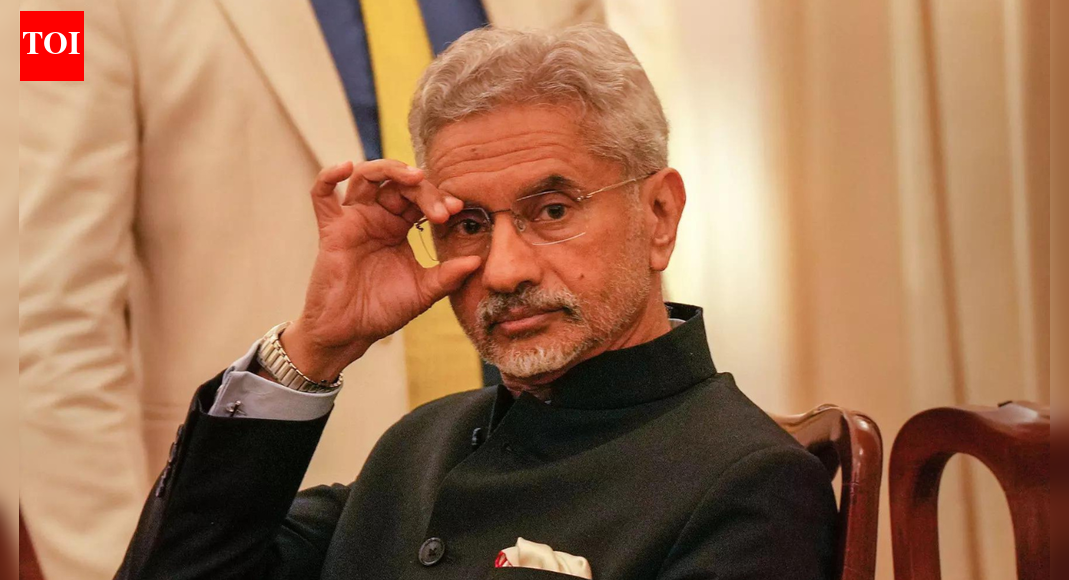
NEW DELHI: External affairs minister S Jaishankar on Tuesday said the safety of people in Venezuela is India’s primary concern amid the crisis following US military operations in the country and the capture of President Nicolas Maduro and his wife.Speaking in Luxembourg, Jaishankar urged all parties involved in the crisis to sit down and reach a position that serves the well-being of the people of Venezuela.“I think we put out a statement yesterday, so I would urge you to look at it. Obviously, what happened—if I can sum up the statement—is that we are concerned about the developments, but we would really urge all the parties involved to now sit down and come to a position which is in the interest of the well-being and safety of the people of Venezuela, because at the end of the day, that is our concern,” Jaishankar said.“We would want Venezuela as a country with whom, over many, many years, we’ve had very good relations. So we would like the people to come out well, whatever the direction of events,” he added.This comes after Venezuelan President Nicolas Maduro and his wife, Cilia Flores, were captured in Caracas and flown out of the country on Saturday in a joint operation involving intelligence agencies and US law enforcement.Subsequently, the ministry of external affairs reiterated India’s support for the safety and well-being of people in Venezuela as the situation in the country remains tense amid US strikes.“Recent developments in Venezuela are a matter of deep concern. We are closely monitoring the evolving situation,” the MEA said in a statement.“We call upon all concerned to address issues peacefully through dialogue, ensuring peace and stability in the region. The Embassy of India in Caracas is in contact with members of the Indian community and will continue to provide all possible assistance,” it added.
Source link

NMC drops MBBS nod for Vaishno Devi College; admitted med students to be moved to other J&K colleges | India News


NMC drops MBBS nod for Vaishno Devi College; admitted med students to be moved to other J&K colleges

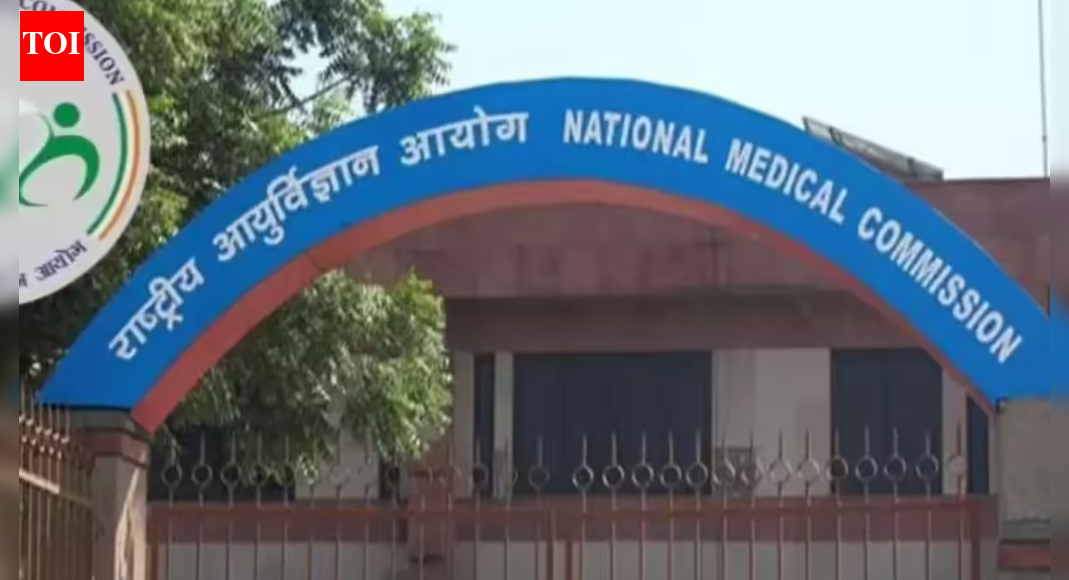
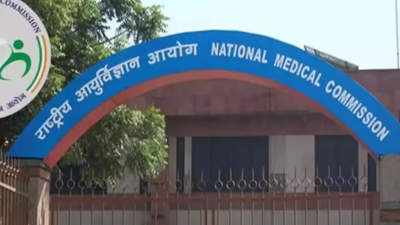
NEW DELHI: The National Medical Commission’s Medical Assessment and Rating Board (MARB) has withdrawn the Letter of Permission (LoP) granted to the Shri Mata Vaishno Devi Institute of Medical Excellence to run an MBBS course with 50 seats for the 2025-26 academic year, after a surprise inspection found serious violations of minimum standards.The January 6 order takes immediate effect. NMC officials said the institute was noncompliant with key requirements, including infrastructure and faculty strength, following multiple complaints.To safeguard students already admitted for 2025-26, authorities have been directed to shift them to other medical colleges in J&K as supernumerary seats, as per norms.The move comes amid wider scrutiny of the college. Earlier, NMC had rejected institute’s request to place all 50 MBBS seats under All-India Quota through Medical Counselling Committee, saying seat-sharing policy cannot be altered for a single institution.Located near the Shri Mata Vaishno Devi shrine in Reasi, the institute was sanctioned 50 MBBS seats on Sept 8, 2025 and began operations in Nov from administrative block of Shri Mata Vaishno Devi University.The college has also faced protests from Hindu organisations over selection of 43 students from a particular community in its first batch of 50, with allegations that the institute is largely funded by devotees of another faith. College officials said all admitted students were from J&K.With LoP withdrawn, future of institute’s first MBBS batch hinges on swift relocation of students to other colleges.


Source link

Intellectually disabled woman’s testimony gets rapist 10-year RI | India News


Intellectually disabled woman’s testimony gets rapist 10-year RI

MUMBAI: Relying on Supreme Court’s observation that the testimony of a person with a disability can’t be considered weak or inferior only because they interact with the world in a different manner, a sessions court recently sentenced a 35-year-old salon worker to 10 years of rigorous imprisonment for abduction and rape of a woman with moderate intellectual disability in 2019, marking a rare conviction under Rights of Persons with Disabilities Act.Calling the victim a “sterling witness”, judge Surekha A Sinha found the man guilty on multiple counts, including rape under IPC. He was given one year in jail under Section 92(b) of Disabilities Act (assaulting or using force against a person with a disability). The sentences are to run concurrently.Psychiatrists deposed that while the woman was 25 years old physically, her social age was around seven years and two months, with an IQ of 36.According to the prosecution, on April 29, 2019, the survivor’s mother noticed that she had gone missing after the family returned from voting in the Lok Sabha polls. When the woman returned home shortly after, she was in tears and revealed her assault. She said while playing in a nearby lane, the accused caught her hand and forcibly took her to the mezzanine floor of his residence. There, he threatened her with a knife, gagged her with a pillow, and sexually assaulted her. To destroy evidence, she said, the man washed her with soap.During trial, special public prosecutor Geeta Sharma examined 14 witnesses. While forensic reports were inconclusive — a result the prosecution attributed to the accused washing the victim after the assault — medical experts provided critical testimony. Doctors confirmed that the victim had suffered physical trauma consistent with sexual assault.The defence said the case was built on hearsay and cited minor discrepancies in the testimony. The judge rejected these, saying the testimony of a person with a disability must be treated with “utmost sensitivity”. “Minor discrepancies and contradictions are not fatal to the case of prosecution. Courts cannot cling to a fossil formula and insist upon corroboration even if, taken as a whole, the case spoken of by the victim of sex crime strikes the judicial mind as probable.


Source link

Chandigarh: Sponsoring terror ‘expensive affair’, says HC, junks bail plea in narco-terrorism case | India News


Chandigarh: Sponsoring terror ‘expensive affair’, says HC, junks bail plea in narco-terrorism case

CHANDIGARH: Punjab and Haryana HC denied bail to Gurmukh Singh — son of former Akal Takht jathedar Jasbir Singh Rode — and Gurmej Singh in a narco-terrorism case related to smuggling of arms, explosives (including tiffin bombs), and narcotics from Pakistan via drones to fund terror activities in Punjab and other parts of India.A division bench of Justice Gurvinder Singh Gill and Justice Ramesh Kumari said sponsoring terrorism was an “expensive affair” and the charge was of heroin being smuggled into the country, along with arms and ammunition, to fund terror activities.“Facts brought on record by NIA, prima facie, prove the involvement of appellants in terror activities. Trial is in progress. Since they have links with persons across the border, who fund their activities, there are also chances of their absconding from trial,” HC said. It ordered an expeditious trial and directed police and prosecution to complete evidence in a timely manner.NIA’s prime allegations are that the accused were part of a larger conspiracy involving “receipt, concealment, and distribution of arms, explosives, and terror funds intended to revive militancy in Punjab”. The agency alleged multiple consignments were collected between June and Aug 2021, concealed at locations across Punjab that were shared through encrypted messaging platforms. The agency claimed to have recovered grenades, detonators, pistols, cartridges, explosive materials, large sums of cash, multiple passports, and vehicles from Gurmukh.Gurmukh’s counsel argued he was falsely implicated due to his family background and political reasons, and claimed there was no direct recovery from his possession. NIA asserted that evidence clearly pointed to his role in facilitating terror activities.The agency submitted the appellants were allegedly in contact with Lakhbir Singh Rode alias Baba, a declared terrorist and chief of a banned organisation.

Interpol’s Red Notice Triggers Global Chase For ₹13,000 Cr Cocaine Cartel Heir Rishabh Baisoya


Source link

Speedy trial must, says SC, gives Red blast accused bail | India News


Speedy trial must, says SC, gives Red blast accused bail

NEW DELHI: At a time when home minister Amit Shah has vowed to eradicate Left-wing extremism by March-end, Supreme Court on Tuesday said success against Naxalites could not be based on arrests alone and there must be adequate courts and infrastructure for speedy trial of the arrested ultras.One Kailash Ramchandani was arrested in June 2019 for being the person who signalled Naxalites to trigger an IED blast that killed 15 police personnel at Gadchiroli in Maharashtra. He was also accused of supplying material used in IED and walkie talkies to the extremists through a small shop used as a front.

The Collapse Of The Red Corridor: How India Broke The Back Of Maoist Extremism | I Witness

Senior advocate Trideep Pais told SC there were scores of cases pending before the same special judge where Ramchandani’s case was being heard and the prosecution had listed 146 witnesses of which only one has been examined in the last three months. Pais said the accused had no criminal antecedents and pleaded for bail, saying he had been in custody for six-and-a-half years.Additional solicitor general Aishwarya Bhati told a bench of CJI Surya Kant and Joymalya Bagchi the blast was triggered on the signal given by the accused and his hands were red with the blood of 15 police personnel.The bench said, “Your success story against Left-wing extremism cannot be based on arrests alone. There must be speedy trial, which is possible only when govt sets up exclusive special courts to try cases of this nature. Since there are many cases pending before the same trial judge and prosecution has cited many witnesses, the trial is not going to be concluded in the near future.”But the bench was cautious in granting only interim bail to the accused with the condition that he would be under constant watch of police. “If he attempts to get in touch with his associates among Naxalites, the interim bail would be liable to be cancelled,” it said and asked him to report to the police station near his home once a week.


Source link

Big victory for Hindu dharma, slap in the face for DMK: BJP | India News


Big victory for Hindu dharma, slap in the face for DMK: BJP

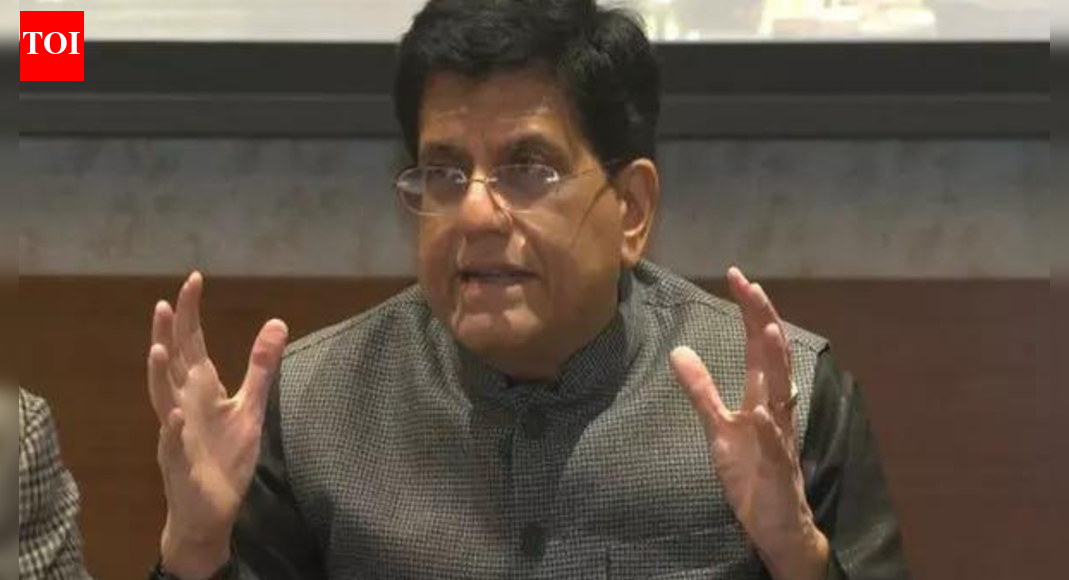
NEW DELHI: BJP on Tuesday celebrated the Madras high court order as a “big victory” for Hindu dharma, justice for devotees and “slap for the appeasement politics” of DMK and its allies. Union minister Piyush Goyal, who is BJP’s in-charge for Tamil Nadu polls due in a few months, slammed the state govt over its likely move to appeal the order, saying it is a continuation of its “anti-Hindu” politics and people will teach it a lesson the same way they had humbled the INDIA bloc in Bihar.

Deepam row: Piyush Goyal Accuses MK Stalin Govt Of Targeting Hindu Traditions

Goyal seized on the division bench decision to launch a broadside against the Opposition with an eye on the BMC polls in Maharashtra on Jan 15, noting that MPs of Congress, Shiv Sena (UBT) and NCP(SP), besides DMK, were signatories to a notice in Lok Sabha for a motion to remove Madras high court judge GR Swaminathan, who had originally passed the order upheld by the division bench.Uddhav Thackeray has turned “anti-Hindu” and given up on the ideals of his father Balasaheb Thackeray, he alleged, asserting that people of Maharashtra who have faith in Hindutva will never vote for anti-Hindu parties.As many as 107 MPs, including Priyanka Gandhi Vadra of Congress, had submitted a notice to Lok Sabha Speaker Om Birla against Justice GR Swaminathan during the last session of Parliament. The Speaker’s office is looking into the notice.


Source link

Many high courts yet to frame guidelines against sexual harassment | India News


Many high courts yet to frame guidelines against sexual harassment

NEW DELHI: Nearly three decades after Supreme Court’s Vishaka judgment mandating a mechanism against the sexual harassment of women at workplaces, it remains unimplemented by many high courts, including Calcutta, Patna, Orissa, Kerala, Chhattisgarh, Allahabad and Uttarakhand.Appearing for PIL petitioner Geeta Rani, senior advocate Sonia Mathur told SC that, significantly, district courts in Delhi, Punjab and Haryana, too, do not have any such mechanism. The bench sought status reports from registrar generals of the defaulting HCs, and bar associations and bar councils all over the country.

‘Lack of redressal mechanism undermines women’s rights’

The petitioner told the bench of CJI Surya Kant and Justice Joymalya Bagchi that the absence of a gender-sensitised complaint-handling structure in many courts, bar associations and tribunals results in serious constitutional violations and discourages women from fully participating in the justice delivery process.“In several courts across the country, there is either no established internal redressal mechanism, or the mechanism is not duly notified, accessible or functional. Information about complaint procedures, responsible authorities, or grievance redressal channels is often unavailable or opaque,” she said. “Sensitisation and awareness among court administration, judicial staff, security personnel and lawyers also remain inadequate. This systemic deficiency exposes women to an unsafe environment and undermines their constitutional guarantees,” the petitioner said.In the Vishaka judgment in 1997, Supreme Court had laid down mandatory guidelines requiring all institutions, including courts, to establish mechanisms for prevention and redressal of sexual harassment at workplace, recognising women’s right to equality, dignity and a safe work environment under Article 14, 15 and 21 of the Constitution. In 2013, SC, in the Medha Kotwal Lele case, had reaffirmed and strengthened the Vishaka guidelines, and directed all institutions to ensure effective, independent and accessible complaint mechanisms to safeguard women’s rights at workplaces. In 2015, SC had constituted the Gender Sensitisation and Internal Complaints Committee for protection of female lawyers, employees, interns and litigants within court premises.The petitioner said, “The absence of similar mechanisms in HCs, district courts and tribunals results in unequal treatment of women lawyers across judicial Institutions and hence, violates Article 14. A constitutional standard available within SC must be replicated for every court of justice in the country.”


Source link

Right to speedy trial irrespective of nature of offence: Supreme Court | India News


Right to speedy trial irrespective of nature of offence: Supreme Court

NEW DELHI: A day after Supreme Court rejected the bail plea of activists Umar Khalid and Sharjeel Imam by holding that delay in trial and long incarceration cannot be the sole ground to grant relief, another bench of the court on Tuesday held that an accused has fundamental right to speedy trial and it is not eclipsed by the nature of the offence.

SC: Right to speedy trial irrespective of nature of offence

It said delay in trial is a valid ground to grant bail and granted relief to former Amtek Group chairperson Arvind Dham who has been in jail for the last 16 months in a money laundering case.“The right to speedy trial, enshrined under Article 21 of Constitution, is not eclipsed by the nature of the offence,” said a bench of Justices Sanjay Kumar and Alok Aradhe. It said SC had in multiple cases invoked long incarceration to grant bail when the jail period ranged from 3-17 months.

If state can’t ensure speedy trial, don’t oppose bail plea: Supreme Court

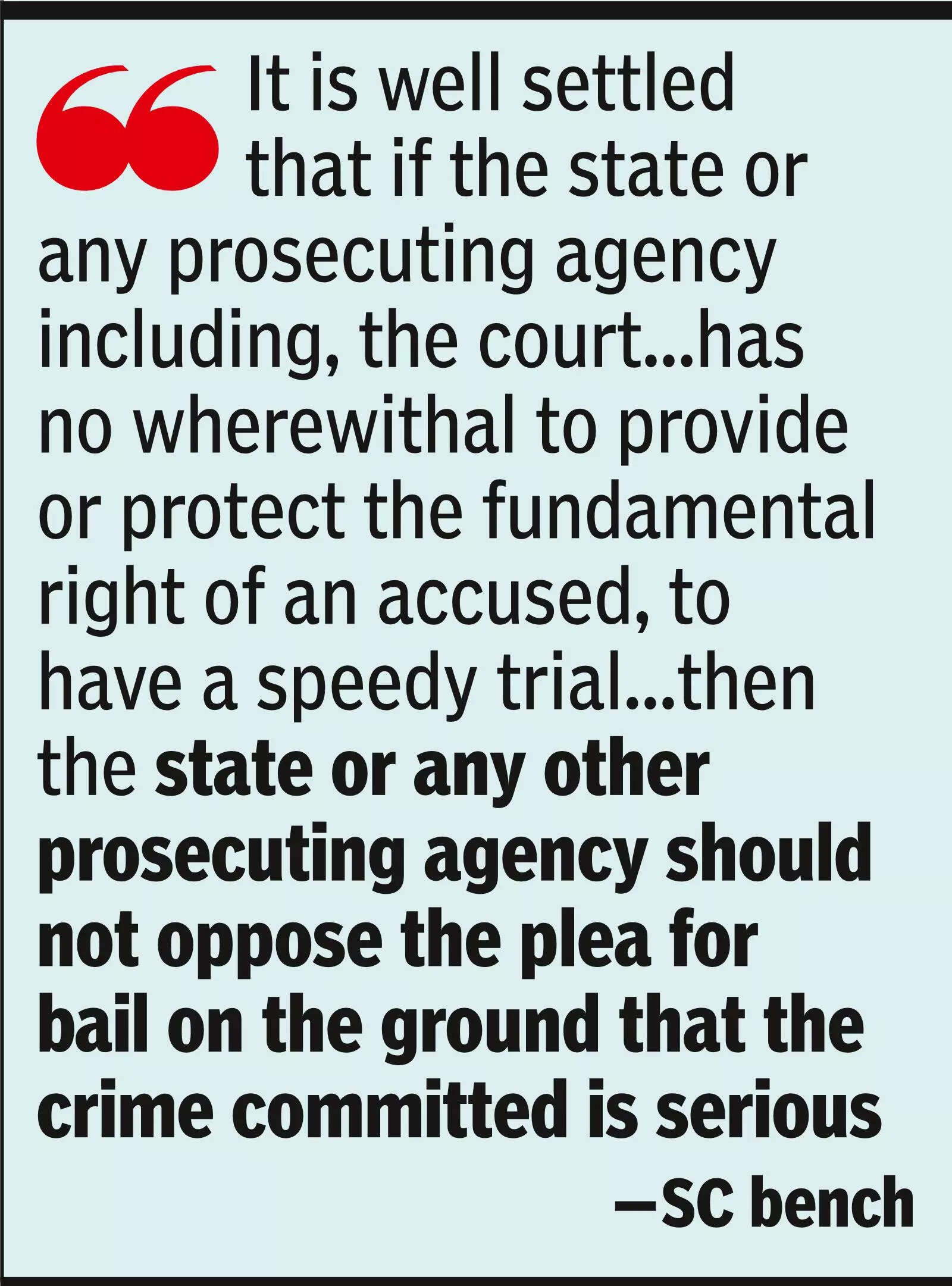
Prolonged incarceration of an undertrial, without commencement or reasonable progress of trial, cannot be countenanced, as it has the effect of converting pretrial detention into form of punishment,” said the SC bench.Though Umar Khalid and Sharjeel Imam, who have spent almost six years in jail, are being prosecuted for terror acts under UAPA, the bail provisions — under Section 43D(5) of Unlawful Activities (Prevention) Act and Section 45 of Prevention of Money Laundering Act — are similar. Both say an accused cannot be released on bail if there are reasonable grounds for believing that the accusation against such person is prima facie true and condition is imposed under the accused to demonstrate prima facie innocence.The court’s order granting bail to former Amtek Group chairperson Arvind Dham is in contradiction to the order passed while rejecting the bail plea of the student activists but it is in conformity with orders passed by SC earlier, including in cases of former Delhi CM Arvind Kejriwal and TN minister Senthil Balaji. It shows inconsistency in the approach of the apex court.Allowing the plea of Dham, the bench said gravity of offence is one of the factors which is to be considered while deciding bail but said that statutory restrictions (as provided under PMLA, UAPA) cannot be permitted to result in indefinite pretrial detention in violation of Article 21.“It is well settled that if the State or any prosecuting agency including, the court, concerned has no wherewithal to provide or protect the fundamental right of an accused, to have a speedy trial as enshrined under Article 21 of the Constitution, then the State or any other prosecuting agency should not oppose the plea for bail on the ground that the crime committed is serious. Article 21 of the Constitution applies irrespective of the nature of the crime,” it said.“The aforesaid proposition was quoted with approval by another two-judge bench of this court and it was held that long period of incarceration for around 17 months and the trial not even having commenced, the appellant in that case has been deprived of his right to speedy trial,” the court added.The bench noted that there was no likelihood of trial being concluded in near future as there are 210 witnesses to be examined in the proceeding. “There is no likelihood of trial commencing in the near future. The continued incarceration in such circumstances, particularly where the evidence which is primarily documentary in nature, is already in custody of the prosecution, violates the right of the appellant to speedy trial under Article 21 of the Constitution of India,” it said.While allowing bail plea of UAPA accused K A Najeeb, alleged to be a member of banned PFI, Chief Justice Surya Kant, who was part of a three-judge bench and penned the judgment, had said Section 43D(5) of UAPA per se did not oust the ability of constitutional courts to grant bail on grounds of violation of fundamental rights of accused.


Source link

Uttarakhand: Govt open to ‘all forms of probe’, says Dhami on 2022 resort murder; CM to meet girl’s parents | India News


Uttarakhand: Govt open to ‘all forms of probe’, says Dhami on 2022 resort murder; CM to meet girl’s parents

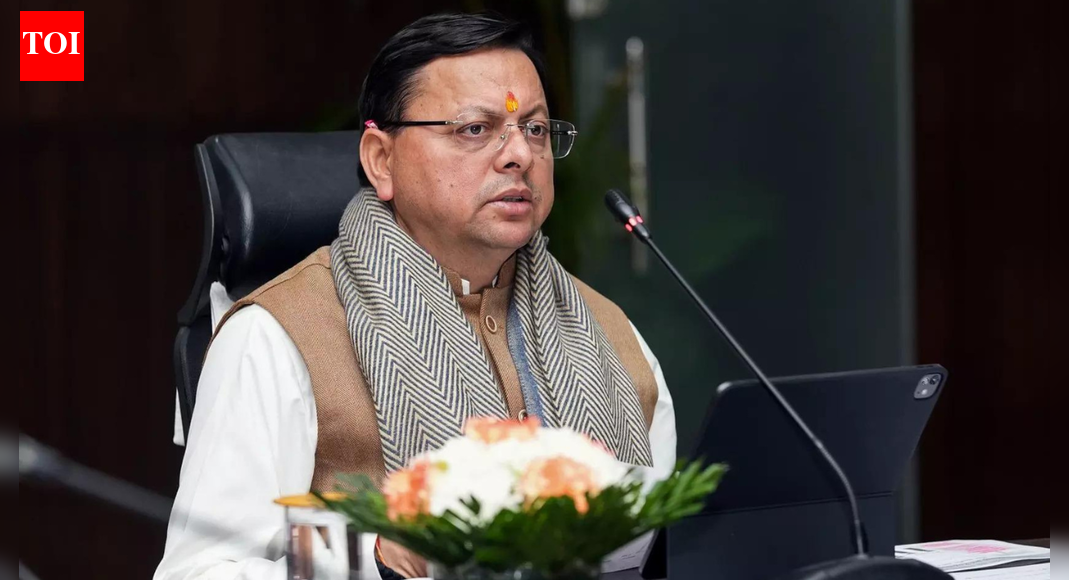
Amid growing demand for a CBI probe into the 2022 Rishikesh resort murder case, in which a 19-year-old receptionist was allegedly killed under mysterious circumstances, CM Pushkar Dhami Tuesday said his govt was open to “all forms of probe” to get answers. The incident had triggered massive protests across Uttarakhand at the time. Dhami said he would also meet the woman’s parents and discuss the matter with them.Calling the case “extremely heartbreaking and sensitive”, Dhami said sentiments of entire state were connected to the case. “Being the CM, I will meet them. After examining all legal aspects, whatever they say regarding justice for their daughter will be followed”.The CM said those involved in the crime would not be spared. “Earlier, it was due to a probe by SIT that three accused were sentenced to life. Some audio recordings have recently come to the fore. We have formed an SIT to probe the matter and the ex-MLA and others whose names have surfaced must cooperate. Instead of remaining on the run, those who made allegations should appear before police so the truth can come out,” he said.Not ruling out a “planned political conspiracy” behind the latest row, Dhami said a similar audio leak had surfaced during the exam paper leak issue. “Hue and cry was created then too. Now another audio leak is being used to spoil the environment of Uttarakhand,” he said, taking a swipe at Congress netas for trying to revive their political careers through the case.Questioning circumstances surrounding the clips, Dhami said it was suspicious that the phone was switched off after releasing the audio and a presser was held in Delhi though the matter pertained to Uttarakhand. He said police and social media records confirmed that the party in-charge named in one audio did not visit Uttarakhand during the period mentioned.Cops tried to approach those levelling fresh allegations and pasted notices at their houses, but they continue to avoid sleuths, he said. Police in Haridwar have constituted an SIT to probe the audio involving a woman, Urmila Sanawar, whose allegations have led to the political storm. The row escalated after several audio clips were allegedly released by Urmila, in which expelled former BJP MLA Suresh Rathore was purportedly referring to a “VIP” who he alleged was a senior BJP neta. It was insinuated that the “VIP” had visited the resort and “sought favours” from the receptionist. Rathore later denied allegations, claiming that the clips were “AI-generated”.


Source link

Court allows forensic test of Unnao survivor’s voice sample | India News


Court allows forensic test of Unnao survivor's voice sample

NEW DELHI: A Delhi court on Tuesday allowed forensic examination of the Unnao rape survivor’s voice sample in a case relating to her alleged gang rape in June 2017, a week after she was raped by former BJP MLA Kuldeep Sengar.The order was passed on an application moved by the counsel for one of the accused, Shubham Singh.According to the defence counsel, the woman “denied” that the voice in certain recorded conversations belonged to her, even though those recordings were being relied upon during the trial.The defence has argued that these disputed recordings allegedly contain statements in which she admits “she had left her house voluntarily”, which could be “crucial objective evidence”.Taking note of the submission, special judge Murari Prasad Singh directed the voice sample be sent to CFSL for comparison with audio and video recordings already part of the case record. The judge clarified the forensic exam was being permitted only to aid the adjudicatory process, and evidentiary value of the forensic report would be examined and assessed at an appropriate stage.


Source link