Breaking News
‘You should have come earlier’: Delhi HC refuses to stay Lalu Yadav’s trial in IRCTC case; issues notice to CBI | India News

'You should have come earlier': Delhi HC refuses to stay Lalu Yadav's trial in IRCTC case; issues notice to CBI
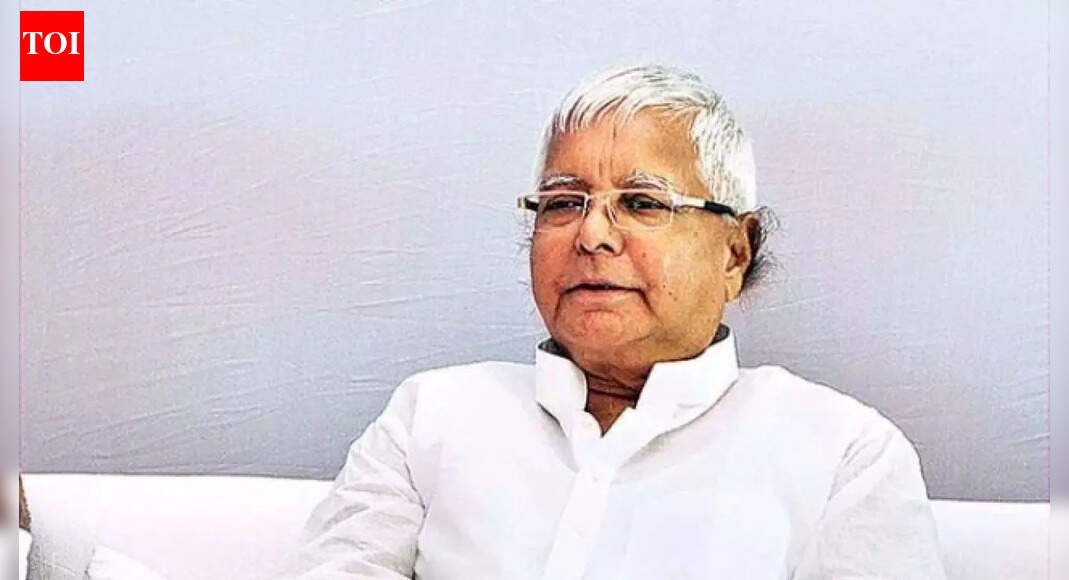
Lalu Prasad Yadav (File photo)

NEW DELHI: The Delhi high court on Monday refused to stay Lalu Prasad Yadav‘s trial in the alleged IRCTC scam case and issued notice to the Central Bureau of Investigation (CBI) seeking its reply.The single-judge bench of Justice Swarana Kanta Sharma told Yadav’s lawyers, Kapil Sibal and Maninder Singh, that it would not grant a stay without the CBI’s response and fixed January 14 as the next date of hearing.“Let them (CBI) file a reply. You should have come earlier; you didn’t come. The trial court order was passed earlier,” Justice Sharma said.The CBI’s counsel also sought time to file a reply in the matter.The trial court framed charges against Yadav, a former Union minister and ex-Bihar chief minister, in October last year. Charges were also framed against 13 other accused, including his wife and former chief minister Rabri Devi, and their son Tejashwi Yadav, a former deputy chief minister of the state.The charges relate to alleged irregularities in the award of operational contracts for two Indian Railway Catering and Tourism Corporation (IRCTC) hotels to a private firm during the RJD supremo’s tenure as the Union railway minister between 2004 and 2009.In a scathing observation, the trial court had said the land and share transactions in the case were “possibly an instance of crony capitalism fostered in the garb of eliciting private participation” in the Railways’ hotels at Ranchi in Jharkhand and Puri in Odisha.In its chargesheet, the CBI has alleged that a “conspiracy” was hatched between 2004 and 2014, under which BNR hotels of the Indian Railways, located in Puri and Ranchi, were first transferred to the IRCTC and later leased out for operations, maintenance and upkeep to Sujata Hotels Private Limited, a Patna-based firm.The agency further alleged that the tender process was rigged and manipulated, with conditions tweaked to favour Sujata Hotels, a private entity.(With PTI inputs)
Source link

‘Only thought I’ll be an MLA’: Siddaramaiah to become Karnataka’s longest-serving CM; set to surpass Devaraj Urs | India News


'Only thought I'll be an MLA': Siddaramaiah to become Karnataka's longest-serving CM; set to surpass Devaraj Urs
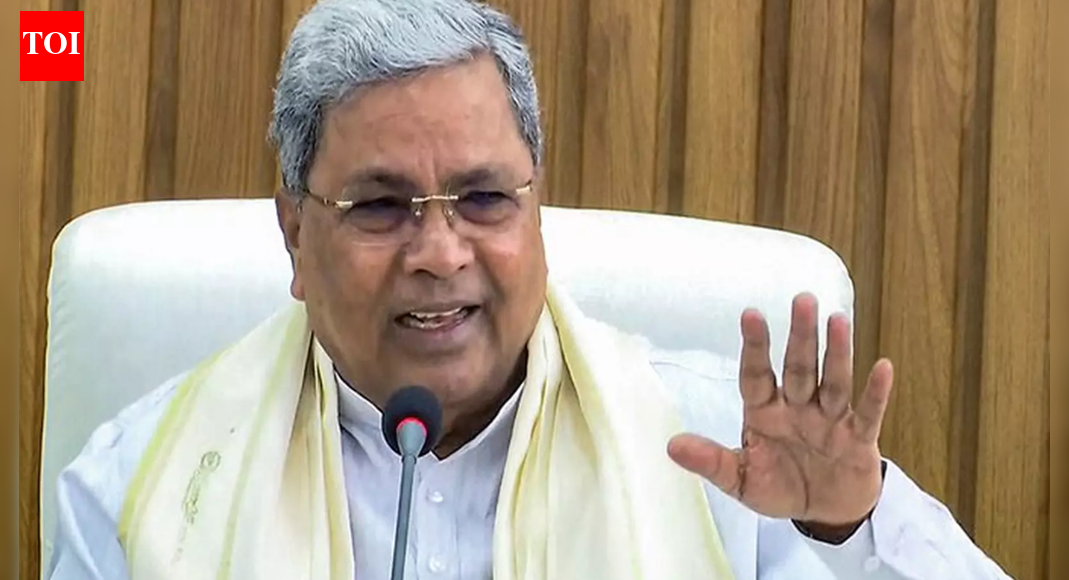
Karnataka CM Siddaramaiah (ANI)

NEW DELHI: Karnataka chief minister Siddaramaiah on Monday said he is set to surpass the late D. Devaraj Urs as the state’s longest-serving chief minister on January 6, but stressed that the two leaders should not be compared due to their different social backgrounds.“With the blessings of the people, tomorrow late D Devaraj Urs’ record of being the longest serving Chief Minister of Karnataka will be broken. The matter of pride is that I and Urs belong to Mysuru,” he told reporters.

Siddaramaiah, DK Shivakumar Project Unity After High-Stakes Karnataka Meet Amid Rumours Of Cong Rift

Reflecting on his political journey, Siddaramaiah said, “I had only thought that I will be an MLA after becoming the Taluk Board member. I have so far won eight elections. I lost two Parliament elections and two assembly elections. In my life, I have contested in 13 elections, including Taluk elections.”Claiming there is no direct comparison between himself and Urs, he said, “Devaraj Urs was not socially backward. In fact, he was from a forward class, the ruling class. He was from a community which is less in population, but he was a popular leader,” as quoted by PTI.Highlighting how politics has evolved over time, the Chief Minister added, “People gave him money and votes in 1962. Time has now changed.”On whether his record could be broken in the future, Siddaramaiah said, “Records are meant for breaking. I never said that no one will break my record. Someone may emerge to break my record of the longest serving Chief Minister or the one who presented the maximum budgets.” He has presented 16 budgets so far.Speaking about celebrations for his milestone, he said, “State Revenue Minister Krishna Byre Gowda is planning something, but I don’t have any details as such. I will speak to him.”On a potential cabinet reshuffle, he said, “It has to be done. I will speak to Rahul Gandhi whenever he calls me. I have told him that I will speak to him in January.”


Source link

‘Triumph of humanity’: TMC’s Abhishek Banerjee as Sunali Khatun gives birth; pregnant woman was repatriated from Bangladesh | India News


'Triumph of humanity': TMC's Abhishek Banerjee as Sunali Khatun gives birth; pregnant woman was repatriated from Bangladesh
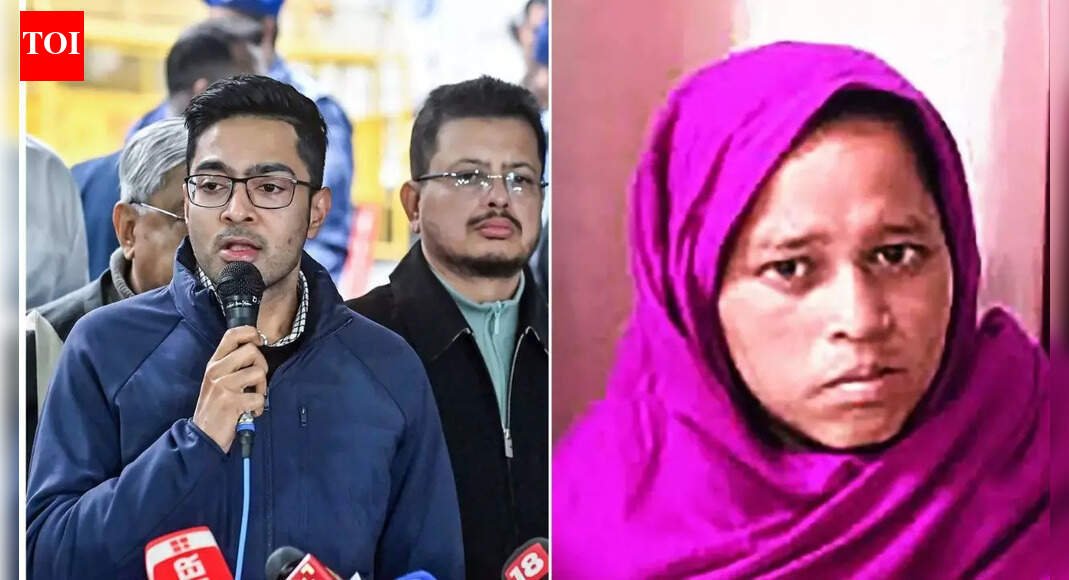
Abhishek Banerjee; Sunali Khatun

NEW DELHI: Sunali Khatun, the pregnant woman who was repatriated from Bangladesh on the Supreme Court’s directions after being deported on suspicion of being a Bangladeshi national, has delivered a baby boy in West Bengal’s Birbhum district.In a series of posts on X, Trinamool Congress (TMC) national general secretary Abhishek Banerjee said he was “deeply moved,” noting that the occasion was made even more poignant by the “injustices” she had suffered.Also Read | The why and how of Sunali’s sorry state“I am deeply moved and genuinely heartened to learn that Sunali Khatun has given birth to a healthy baby boy at Rampurhat Medical College in Birbhum. This moment of joy feels even more profound against the backdrop of the injustice she was subjected to. In a shocking abuse of power, she was falsely branded as a Bangladeshi and forcibly deported to Bangladesh by the Delhi Police and the Union government,” Banerjee, the nephew of West Bengal chief minister and TMC supremo Mamata Banerjee, wrote.The Lok Sabha MP added that Khatun’s ordeal amounted to a “violation of dignity” that no citizen—let alone a pregnant woman—should be made to endure, and praised her for her “extraordinary courage” and resolve.Also Read | Kept saying we’re Indian, they didn’t listen: Sunali KhatunBanerjee also announced that he would meet Khatun on Tuesday.“This is a triumph of humanity. Tomorrow, during my visit to Birbhum, I will personally meet Sunali at the hospital to convey my best wishes to her and her newborn. My prayers remain with her family,” he posted.On December 5 last year, Sunali Khatun and her eight-year-old son—who had earlier been deported from India—were repatriated on “humanitarian grounds” following a directive from the Supreme Court.The top court had also asked the Centre to ensure free medical treatment for Khatun in view of her advanced pregnancy and to take care of her son.After returning to India, she expressed relief and gratitude, and appealed for her husband to be brought back as well. Khatun has maintained that she is the daughter of Bhodu Sheikh, an Indian citizen.(With agency inputs)


Source link

‘Delay in trial not trump card’: No relief for Umar Khalid and Sharjeel Imam in Delhi riots case— why SC rejected bail pleas | India News


'Delay in trial not trump card': No relief for Umar Khalid and Sharjeel Imam in Delhi riots case— why SC rejected bail pleas

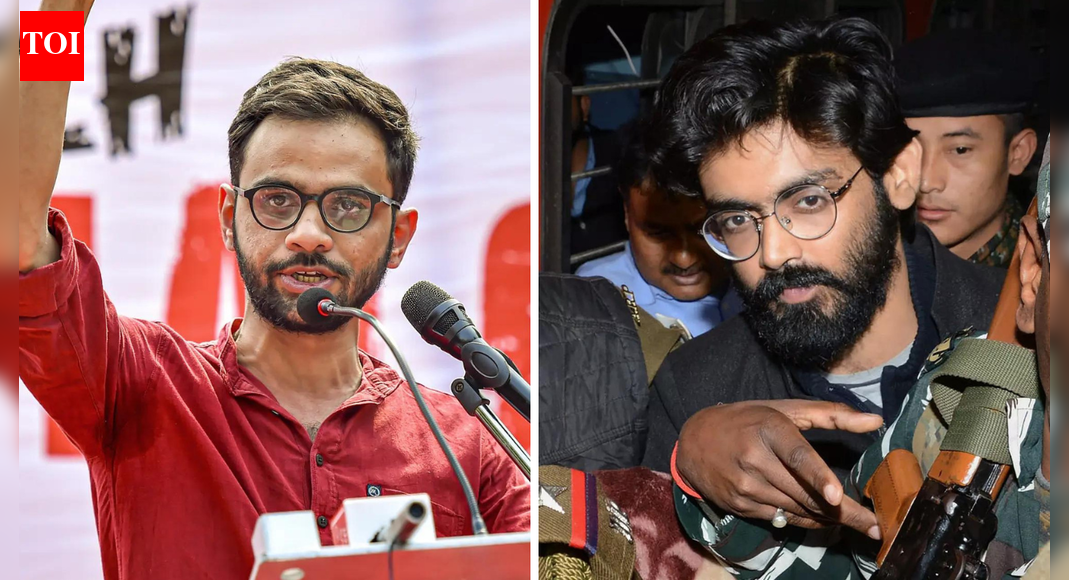
NEW DELHI: The Supreme Court on Monday rejected the bail pleas of Umar Khalid and Sharjeel Imam — lodged in Tihar jail under the Unlawful Activities (Prevention) Act (UAPA) linked to 2020 Delhi riots.The bench of justices Aravind Kumar and NV Anjaria said that prosecution material disclosed a prima facie case against Umar Khalid and Sharjeel Imam, thereby attracting the statutory bar to bail under Section 43D(5) of UAPA.

SC Rejects Bail Plea Of Umar Khalid, Sharjeel Imam; Grants Bail To 5 Others In Delhi Riots Case

The bench added that the Khaild and Imam can pray for bail after one year after the completion of examination of protected witnesses.Meanwhile, the top court granted bail to 5 other accused in the case, adding twelve strict conditions.All seven accused had challenged Delhi high court’s order denying them bail on September 2.Why SC rejected Umar Khalid and Sharjeel Imam bail?The top court said that not every accused involved in the case stands on same footing. It said that both Khalid and Imam had a “formative role” in the conspiracy .“Umar Khalid and Sharjeel stand on different footing and it can’t be ignored in terms of parity and culpability. It becomes a court to examine bail pleas individually to see whether pre-trial liberty is attracted. Liberty is of foundational importance at the same time, the constitution does not conceive liberty in isolation,” the top court said.“This court is satisfied that the prosecution material disclosed a prima facie allegation against the appellants Umar Khalid and Sharjeel Imam. The statutory threshold stands attracted qua these appellants. This stage of proceedings does not justify their enlargement on bail. Apart from death or destruction the provision encompasses acts that disrupt services and threaten the economy,” it added.The court said that in prosecutions under the UAPA, delay in trial does not operate as a “trump card” which automatically displaces statutory safeguards.“The UAPA as a special statute represents a legislative judgment as to the conditions on which bail may be granted in pre-trial stage. Delay serves as a trigger for heightened judicial scrutiny. The discussion has been confined to delay and prolonged incarceration. UAPA offences are rarely confined to isolated acts. The statutory scheme reflects this understanding,” it said.“Section 43D(5) of UAPA departs from general provisions for grant of bail. (But) it does not exclude judicial scrutiny or mandate denial of bail in default,” it added.Meanwhile, during the hearing, the advocates who appeared for them mostly argued on the delay and the unlikelihood of the commencement of the trial. It was also stated to the court that they have been under custody for over five years in a case in which they are facing serious allegations of committing offences under the UAPA.The contentions were also made that there is no proof of violence that they instigated the riots, even after five years have passed.What are the chargesKhalid along with several others have been charged in connection to an alleged conspiracy behind the communal riots which took place in Delhi in February 2020.Khalid was arrested in September 2020, charging him under several sections of the Unlawful Activities Prevention Act including terrorist activity and conspiracy.Additionally he was also charged under provisions of the Indian Penal Code including murder, rioting, sedition, conspiracy and promoting communal enmity.According to Delhi Police, 53 people died in the violence and more five hundred people were injured.On September 2, the Delhi high court denied bail to Imam, Khalid and seven others — Mohd Saleem Khan, Shifa Ur Rehman, Athar Khan, Meeran Haider, Shadab Ahmed, Abdul Khalid Saifi and Gulfisha Fatima. On the same day, another high court bench rejected the bail plea of co-accused Tasleem Ahmed.In its order, the high court observed that, prima facie, the role attributed to Imam and Khalid in the alleged conspiracy was “grave”, noting that they had delivered inflammatory speeches along communal lines to “instigate mass mobilisation of members of the Muslim community”.


Source link

Quality of generic drugs as good as that of costlier branded cousins: Study | India News


Quality of generic drugs as good as that of costlier branded cousins: Study
Prices of some top brands can be as much as 14 times higher

NEW DELHI: A citizen-funded quality study of commonly prescribed medicines has found no difference in quality between expensive branded drugs and the far cheaper generics, including govtsupplied medicines, even as prices of some top brands can be as much as 14 times higher for the same drug.The findings come from Citizens Generic vs Branded Drugs Quality Project by Kerala-based non-profit Mission for Ethics and Science in Healthcare, which tested 131 samples of 22 widely used medicines for heart disease, diabetes, liver disorders, infections, pain, acidity, allergies and thyroid conditions.The project was led by Cyriac Abby Philips, popularly known as The Liver Doc, who flagged how fear and mistrust of cheaper medicines — rather than evidence — often push patients to abandon treatment, with serious health consequences.

Australia, US And UK Raise Alarm Over Fake Rabies Vaccine As India Pushes Back On Claims

The study covered top branded drugs, branded generics sold by large pharmaceutical companies, trade or local generics and govt medicines supplied under Pradhan Mantri Bhartiya Janaushadhi Pariyojana. All samples were purchased from pharmacies.Testing was conducted at a laboratory accredited by National Accreditation Board for Testing and Calibration Laboratories and US Food and Drug Administration, across five Indian Pharmacopoeia parameters: drug content, dissolution, uniformity, impurities and physical appearance. All genericsmet prescribed quality standards and performed on a par with branded medicines.What stood out was the price gap. The average price per tablet of branded medicines was Rs 11.17, compared with Rs 2.4 for Jan Aushadhi drugs, with several trade generics also being significantly cheaper. For medicines like pantoprazole, atorvastatin and rifaximin, branded versions cost five to 14 times more than the cheapest quality-tested alternatives.Indians incur 62%–69% of healthcare expenditure on medicines. Doctors say high prices often lead to missed doses, irregular intake or treatment discontinuation, especially for chronic illnesses.Senior clinicians said the findings mirror everyday practice. Dr Suranjit Chatterjee, senior consultant in internal medicine at Indraprastha Apollo Hospitals, said lowercost medicines, including Jan Aushadhi drugs, meet Indian Pharmacopoeia standards and are likely to work as intended. While doctors are comfortable prescribing such options to cost-constrainedpatients, he cautioned that regular monitoring is essential and flagged practical issues such as inconsistent availability, limited dose options, packaging and patient familiarity. Wider availability and assurance of batch-tobatch consistency, he said, would support wider use of such medicines.Dr Sandeep Kharb, senior consultant in endocrinology at Asian Hospital, said the results confirm what clinicians routinely see — that patients do just as well on affordable versions of medicines such as metformin, amlodipine and levothyroxine as on expensive brands. He added that rigorous testing in accredited laboratories addresses most quality concerns and affordability is crucial for long-term adherence to treatment.The study’s authors argue the issue is not price control but transparency and trust. In the absence of accessible quality data, doctors and patients often rely on brand perception rather than evidence — at considerable financial and health cost.


Source link

Body image distress now big mental health issue, finds AIIMS-ICMR study | India News


Body image distress now big mental health issue, finds AIIMS-ICMR study
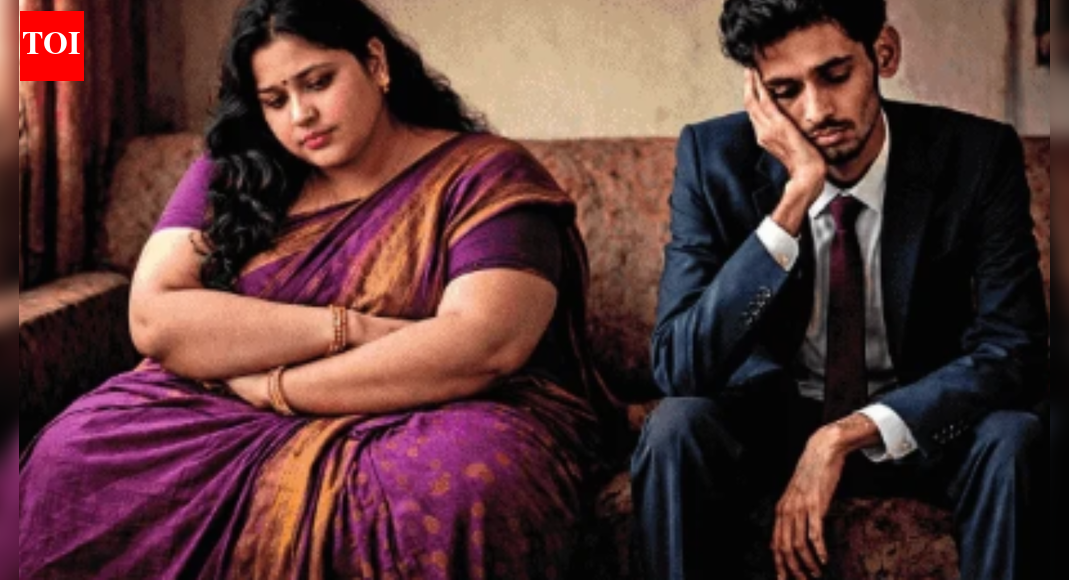
Representative image (AI-generated)

NEW DELHI: Body image anxiety is emerging as a major but under-recognised mental health issue among young Indians, affecting not only those with obesity but also those who are underweight. An Indian study has found that nearly one in two young adults at both extremes of body weight suffer from moderate to severe psychological distress linked to body image.\A recent study published in the Journal of Education and Health Promotion, conducted as part of the AIIMSICMR research programme on weight management in young adults, highlights the depth of this largely hidden crisis. The study of 1,071 young adults aged 18-30 years attending AIIMS outpatient clinics found 49% of obese and 47% of underweight participants reported moderate to severe body image concerns, compared with about 36% among those with normal or overweight status.

Here’s what stress does to your health

About 25% of participants were obese and 11% underweight, most of them students from middle-income households, the study found. Underweight youth were almost twice as likely, and obese youth nearly three times as likely, to experience body image distress compared with those of normal weight.Experts involved in the research said weight-related conditions cannot be managed without addressing mental health . “Weight management goes far beyond losing weight,” said Prof Piyush Ranjan, department of medicine. “Unaddressed emotional concerns are a major reason young people drop out of lifestyle programmes. Integrating psychological screening into routine nutrition care is essential for sustainable outcomes.The study, led by nutritionist and PhD scholar Warisha Anwar, found that while many young adults begin weight-loss programmes with motivation, disengagement is common as psychological fatigue, body image distress, academic pressure and life-stage transitions set in — highlighting a gap in India’s largely calorie-centric approach to weight management. Distress varied by weight: obese youth showed higher self-consciousness and loss of confidence, while underweight youth reported greater anxiety, loneliness and embarrassment; overall, over half were constantly weight-conscious, one in three felt less confident, and one in four felt judged, with anxiety, isolation and embarrassment most pronounced at both extremes.Behind the numbers are lived experiences. Rohit, 23, underweight since his teens,said routine comments on his appearance made him withdraw socially. “People think they’re being helpful. They don’t realise how exposed it makes you feel.” At the other end, Meera, 20, who gained weight during the pandemic, said: “My body suddenly mattered more than my grades. I didn’t just gain weight. I lost confidence.”Researchers said stigma and unrealistic beauty ideals fuel emotional distress that affects motivation, adherence and long-term health outcomes. The study, funded by ICMR cautions that India’s public health response remains skewed toward obesity, neglecting the psychological burden faced by underweight youth.Prof Naval K Vikram, chief of the metabolic research group at AIIMS, called for person-centred care, including early psychological screening, integrated nutrition services and body-image-sensitive counselling, particularly in educational institutions.


Source link

‘Can pray for bail after one year’: Umar Khalid, Sharjeel Imam to stay in jail — key takeaways from Supreme Court verdict in Delhi riots case | India News


'Can pray for bail after one year': Umar Khalid, Sharjeel Imam to stay in jail — key takeaways from Supreme Court verdict in Delhi riots case
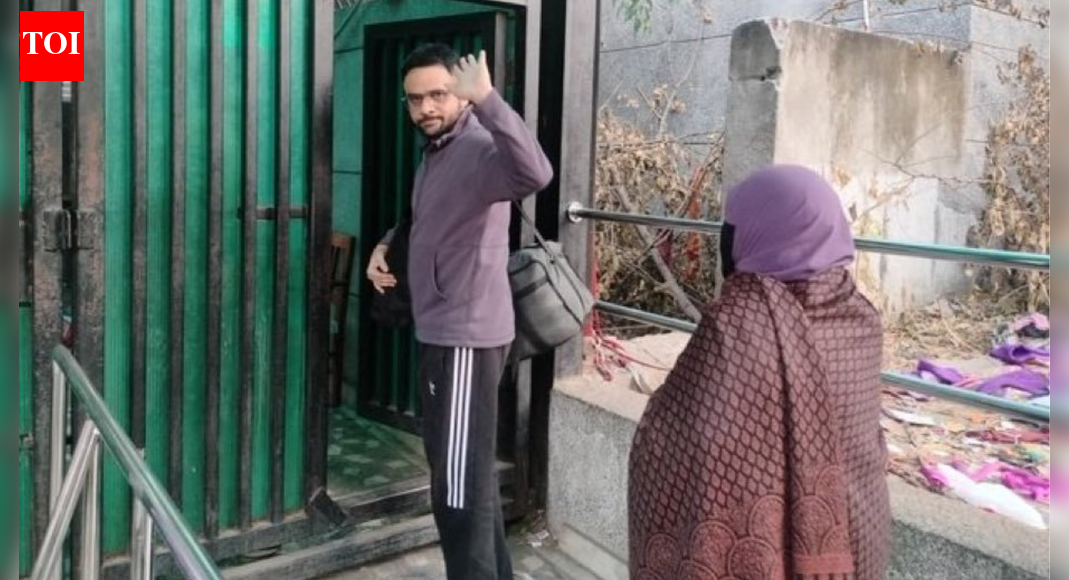
Umar Khalid returned to Delhi’s Tihar Jail on 29 December.

NEW DELHI: The Supreme Court on Monday pronounced its verdict on Umar Khalid, Sharjeel Imam and several others, rejecting their bail plea in the Delhi 2020 riots case.A bench comprising Justices Aravind Kumar and N.V. Anjaria rejected the bail pleas of Umar Khalid and Sharjeel Imam, saying that the two stand on different footing and it can’t be ignored in terms of parity and culpabilty.“Khalid and Imam can pray for bail after one year,” the SC added, saying that that terrorist act under UAPA is not confined to conventional warfare but includes all acts of attacking national integrity and sovereignity.

BJP Claims Rahul Gandhi Ties To ‘Anti-India’ Panel Over US Lawmakers’ Umar Khalid Letter

The accused had challenged a Delhi High Court order refusing them bail in a case under the Unlawful Activities (Prevention) Act (UAPA) linked to the alleged larger conspiracy behind the 2020 north-east Delhi riots.For live updatesThe SC however granted bail to Gulfisha Fatima, Meeran Haider, Shifa Ur Rehman, Mohd. Saleem Khan, and Shadab Ahmad.

The case so far

Counsel appearing for the accused had argued primarily on the prolonged incarceration of the petitioners and the uncertainty over the commencement of the trial. They had told the court that the accused have been in custody for more than five years despite facing serious charges under the UAPA, and contended that there was no evidence to show that they had instigated violence during the riots even after such a long period.Opposing the pleas, the Delhi Police had maintained that the alleged offences amounted to a deliberate attempt to destabilise the state. It argued that the violence was not the result of spontaneous protests but part of a well-planned “pan-India” conspiracy aimed at “regime change” and “economic strangulation”.The police further submitted that the conspiracy was allegedly timed to coincide with the official visit of the then US President to India, with the objective of attracting international media attention and globalising opposition to the Citizenship Amendment Act (CAA). The CAA, it said, was deliberately chosen as a “radicalising catalyst” under the guise of “peaceful protest”.According to the prosecution, the “deep-rooted, premeditated and pre-planned conspiracy” allegedly orchestrated by the accused led to the deaths of 53 people and extensive damage to public property, resulting in the registration of 753 FIRs in Delhi alone. It also claimed that evidence on record indicated an attempt to replicate the conspiracy on a pan-India scale, citing, among other things, the use of various WhatsApp groups, including the Delhi Protest Support Group (DPSG) and the Jamia Awareness Campaign Team.The Delhi Police argued that delays in the trial were attributable to the accused themselves and submitted that, if they cooperated, the trial could be concluded within two years.On September 2, the Delhi High Court denied bail to Imam, Khalid and seven others — Mohd Saleem Khan, Shifa Ur Rehman, Athar Khan, Meeran Haider, Shadab Ahmed, Abdul Khalid Saifi and Gulfisha Fatima. On the same day, another high court bench rejected the bail plea of co-accused Tasleem Ahmed.In its order, the high court observed that, prima facie, the role attributed to Imam and Khalid in the alleged conspiracy was “grave”, noting that they had delivered inflammatory speeches along communal lines to “instigate mass mobilisation of members of the Muslim community”.


Source link

Isro scientists will be amazed, mocks Owaisi on reports of UP govt’s ‘mobile on back’ test to determine Bangladeshi | India News


Isro scientists will be amazed, mocks Owaisi on reports of UP govt's 'mobile on back' test to determine Bangladeshi
ISRO scientists will be amazed, mocks Owaisi on reports of UP govt’s “mobile on back” test to determine Bangladeshi

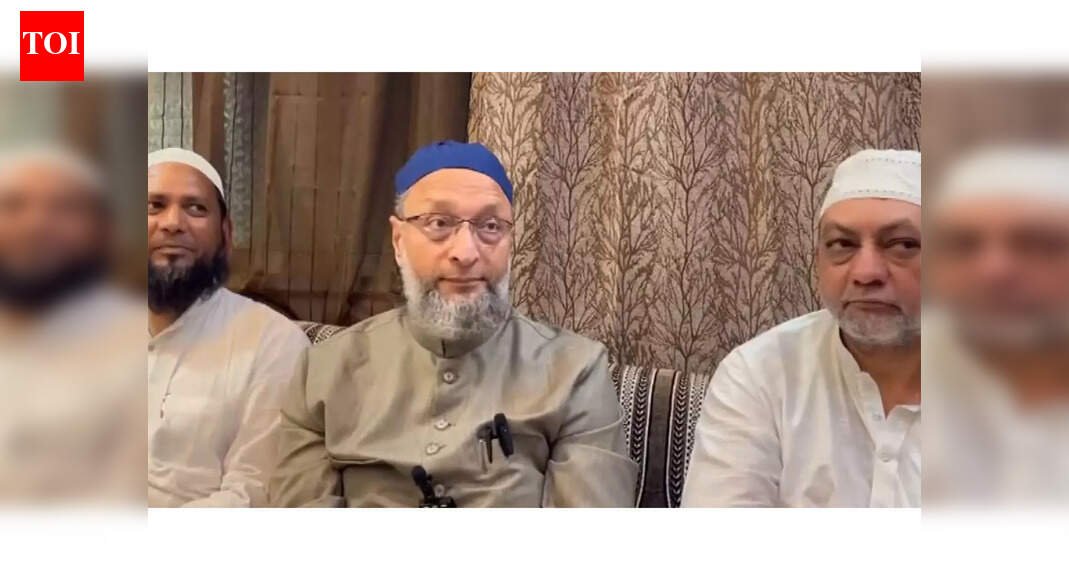
All India Majlis-e-Ittehadul Muslimeen (AIMIM) national president Asaduddin Owaisi on has criticised the Yogi Adityanath government in Uttar Pradesh, during a press conference held in Amravati.He referred to recent reports that claimed people’s identities were being determined through mobile phones. Owaisi said that the UP government should be “congratulated” for the new “invention” to determine whether a person is Bangladeshi by placing a mobile phone on their back.Owaisi sarcastically said that even leading scientists and ISRO would be surprised by this “technology.” He questioned whether citizenship and identity in India would now be determined by mobile phones. He said that such actions were not only ridiculous but also against both the law and the Constitution.Furthermore, Owaisi claimed that after a mosque, the administration has now taken bulldozer action against madrasas, which are being termed illegal, in Uttar Pradesh’s Sambhal district. He alleged that the government is acting arbitrarily in the name of bulldozer action and misusing the law.He alleged that the government is targeting a particular community and using the bulldozer as a political weapon. However, the administration says that the action is being taken only against illegal constructions and there is no discrimination against any community.The AIMIM chief alleged that such manoeuvres are creating an atmosphere of fear among the public and arbitrariness in the name of law and order. He demanded that the government adhere to constitutional and legal procedures on serious issues like identity and citizenship.He levelled serious allegations against the Modi government and the ruling parties regarding electoral politics. He stated that first, there was the issue of vote theft, and now candidates are being “stolen.” He alleged that in many places, candidates are being forced to withdraw their nominations through intimidation, threats, or bribery, which is a very dangerous trend for democracy.Owaisi said that if voters are not provided with a candidate of their choice, the very foundation of democracy will be weakened. He also said that this process directly violates the public’s right to vote, reducing elections to a mere formality.On the BMC elections, Owaisi said, “If elections are being held unopposed anywhere through intimidation, threats, or bribery, then it is a threat to our democracy.”Owaisi appealed to political parties to keep constitutional obligations and social harmony in mind when making statements on issues like elections and population.Owaisi raised several serious questions about the central government’s foreign policy and security strategy. He said that after the terrorist attack in Pahalgam, India took a tough stance and tightened its water-related agreements against Pakistan, but despite this, there was no hesitation in playing against Pakistan in international cricket tournaments. Calling this a “double standard,” Owaisi asked why normal relations are being pursued on the playing field while issuing strong statements on terrorism.Speaking on the Bangladesh issue, Owaisi said that a clear and transparent policy should be formulated regarding illegal Bangladeshi nationals living in India. Those living illegally should be deported through legal procedures, but the entire process should be in accordance with the Constitution and human values. He said that political stability in Bangladesh is crucial for the security and development of India, especially the northeastern states.Owaisi also said that increased strategic activities by China near the Bangladesh border and the presence of elements linked to Pakistan’s intelligence agency are matters of concern. He stressed that these issues should be viewed not merely from a political perspective but in the broader context of national security.


Source link

‘They are here for regressive thoughts’: Shiv Sena’s Shaina NC slams Aaditya Thackeray | India News


'They are here for regressive thoughts': Shiv Sena's Shaina NC slams Aaditya Thackeray

Shiv Sena leader Shaina NC launched a scathing attack on Shiv Sena (UBT) leader Aaditya Thackeray, accusing him of possessing “regressive thoughts”. Speaking to ANI, Shaina NC said, “Aaditya Thackeray inducted Rashid Mamu. Aaditya Thackeray joined Umar Khalid at the Gateway protest. They are plotting to turn Mumbai into Mamdani, but we will never let that happen. We are here for progressive politics. They are here for regressive thoughts and comments.”

‘Batenge Toh Katenge’: Uddhav & Raj Thackeray Unite For Mumbai Civic Polls | Shiv Sena (UBT) | MNS

Meanwhile, Aaditya Thackeray hit back at the Mahayuti government in a post on X on Sunday, alleging attempts to “falsely steal credits” for the Mumbai coastal road and the installation of a statue of Shiv Sena founder Bal Thackeray. In his post, Aaditya Thackeray said, “Looking at these shameless ones, you realise how much of a fraud someone can be. Just like they’re falsely trying to steal credit for the Coastal Road, today they’ve put up a hoarding claiming that the revered Hindu heart-emperor Balasaheb Thackeray’s statue was also installed by these frauds.”He further stated, “The location of the statue, its design–these were decided by Uddhavsaheb, it was installed by Uddhavsaheb, and even the fee was paid by Uddhavsaheb!”Continuing his attack, Aaditya Thackeray added, “But a thief is a thief. They can never go straight. In ‘Mindhechya’ mirror, do they even see their own face, or is that stolen too?”Aaditya Thackeray’s remarks were aimed at the ruling Mahayuti government amid ongoing political sparring between the rival Shiv Sena factions in Maharashtra.Earlier, Shiv Sena (UBT) chief Uddhav Thackeray and Maharashtra Navnirman Sena (MNS) chief Raj Thackeray on Sunday unveiled their joint manifesto, ‘Vachan Nama’, for the upcoming Brihanmumbai Municipal Corporation (BMC) elections. The manifesto’s cover prominently featured a photograph of the Thackeray brothers alongside Shiv Sena founder Balasaheb Thackeray.The Shiv Sena (UBT)-MNS alliance pledged to provide affordable housing and strengthen infrastructure across healthcare, public transport, and education sectors.This came after Maharashtra Chief Minister Devendra Fadnavis criticised the opposition, saying that the Mahayuti will “teach a lesson” to those who care only about their self-interest.“We launched our BMC election campaign by breaking a coconut. This election will be a life-changing one for the people of Mumbai and for Mumbai itself. We have to teach a lesson to those who only care about their self-interest,” he said.Polling for 29 municipal corporation elections across the state, including Mumbai, Pune, and Pimpri-Chinchwad, will be held on January 15, with vote counting scheduled for January 16.


Source link

5.1-magnitude earthquake jolts Assam: Tremors felt in Morigaon; no immediate damage reported | India News


5.1-magnitude earthquake jolts Assam: Tremors felt in Morigaon; no immediate damage reported

NEW DELHI: An earthquake measuring 5.1 on the Richter Scale struck Morigaon district in Assam early Monday morning, the National Centre for Seismology (NCS) said. The tremor occurred at 04:17:40 IST, with its epicentre located at latitude 26.37 N and longitude 92.29 E, at a depth of 50 km. There were no immediate reports of casualties or damage to property, officials said, though residents reported feeling mild to moderate tremors in parts of central Assam. Authorities are monitoring the situation.


Source link