Breaking News
‘A special day’: PM Modi to inaugurate Piprahwa relics exposition; repatriated Buddha-linked treasures on display | India News


‘A special day’: PM Modi to inaugurate Piprahwa relics exposition; repatriated Buddha-linked treasures on display
PM Modi, Inscribed relic casket from Piprahwa (Picture- Ministry of culture)

NEW DELHI: Prime Minister Narendra Modi on Friday said he will inaugurate the Grand International Exposition of Sacred Piprahwa Relics in Delhi on Saturday, calling it a special moment for those who care about India’s history, culture and the teachings of Bhagwan Buddha.In a post on X, PM Modi said, “Tomorrow, 3rd January, is a very special day for those passionate about history, culture and the ideals of Bhagwan Buddha. At 11 AM, the Grand International Exposition of Sacred Piprahwa Relics related to Bhagwan Buddha, ‘The Light & the Lotus: Relics of the Awakened One’, will be inaugurated at Rai Pithora Cultural Complex in Delhi.”The Prime Minister said the exposition brings together the Piprahwa relics that were repatriated after more than a century, along with authentic relics and archaeological material preserved at the National Museum in New Delhi and the Indian Museum in Kolkata. He further described the event as part of the government’s effort to popularise the teachings of Bhagwan Buddha and strengthen the connection between young people and India’s cultural roots. PM Modi also thanked those involved in bringing the relics back to India.

What are Piprahwa relics

The Piprahwa relics were discovered in 1898 and are considered among the earliest and most important archaeological finds linked directly to Bhagwan Buddha. Archaeological evidence connects the Piprahwa site to ancient Kapilavastu, widely believed to be the place where Buddha spent his early life before renouncing worldly life.Officials say the exposition brings the repatriated relics together with national collections for the first time. It highlights India’s long civilisational link with Buddhism and the continuing relevance of Buddha’s teachings.The exhibition is organised around several themes, with a central interpretive model inspired by the Sanchi Stupa. Other sections focus on the life of Buddha, the rediscovery of Piprahwa, the spread of Buddhist art beyond India, and the ongoing efforts to repatriate cultural artefacts.To exposition includes films, digital reconstructions, projections and multimedia displays that trace the journey of the relics and their wider cultural meaning.


Source link

‘Epicentre of misgovernance’: Rahul slams MP govt over Indore water contamination row; takes ‘Kumbhakarna’ dig | India News


'Epicentre of misgovernance': Rahul slams MP govt over Indore water contamination row; takes 'Kumbhakarna' dig

NEW DELHI: Congress leader Rahul Gandhi on Friday said accused the Madhya Pradesh government of distributing “poison” after at least 10 people died in Indore’s Bhagirathpura due to diarrhea after consuming contaminated water.In a social media post on X, the leader of opposition in Lok Sabha said that the “clean water is not a favour” and pinned the blame on “double-engine government’s” callous leadership for the incident.

Cleanliness Crown Cracks As Indore Loses 13 Lives To Poisoned Water And Administrative Lapses

“In Indore, it wasn’t water that was distributed, but poison—and the administration slumbered on like Kumbhakarna. There’s mourning in every home, the poor are helpless—and to top it all, arrogant statements from BJP leaders. Those whose hearths have gone cold needed consolation; the government served up hubris instead. People complained time and again about the filthy, foul-smelling water—yet why was there no action?” Rahul said.“How did sewage get mixed into the drinking water? Why wasn’t the supply shut off in time? When will action be taken against the responsible officers and leaders? These aren’t ‘freebie’ questions—they’re a demand for accountability. Clean water isn’t a favour; it’s a right to life. And for the murder of this right, the BJP’s double-engine government, its negligent administration, and its callous leadership are entirely to blame,” he added.Rahul further said Madhya Pradesh has now become the epicentre of misgovernance.“Madhya Pradesh has now become the epicentre of misgovernance—cough syrup deaths in one place, rats in government hospitals taking children’s lives in another, and now deaths from drinking sewage-laced water. And every time the poor die, Modi ji stays silent, as always,” he said.This comes after at least 10 people including a 6-month-old child died in Indore due to diarrhoea after consuming contaminated water. According to officials, the contamination occurred after sewage water from a toilet constructed at a local police check post seeped into the drinking water line.Officials have said that a leakage was found in the main drinking water supply pipeline near a police outpost in Bhagirathpura at a spot over which a toilet has been constructed. They claimed the leakage led to contamination of the water supply in the area.Additional Chief Secretary Sanjay Dubey told PTI, “We are closely examining the entire drinking water supply pipeline in Bhagirathpura to find out if there is any leakage elsewhere.”He said after inspection, clean water was supplied to households in Bhagirathpura through the pipeline on Thursday, though as a precaution, people have been advised to use the water for drinking only after boiling it.“We have also taken samples of this water and sent them for testing,” Dubey said.Drawing lessons from the water tragedy in Bhagirathpura, the senior bureaucrat informed that a standard operating procedure (SOP) will be issued for the entire state to prevent such incidents in the future.At present, 201 patients are admitted to hospitals, including 32 in intensive care units (ICUs).


Source link

‘Regret incident’: Air India issues statement after pilot found drunk on Vancouver–Delhi flight; initiates probe | India News


'Regret incident': Air India issues statement after pilot found drunk on Vancouver–Delhi flight; initiates probe

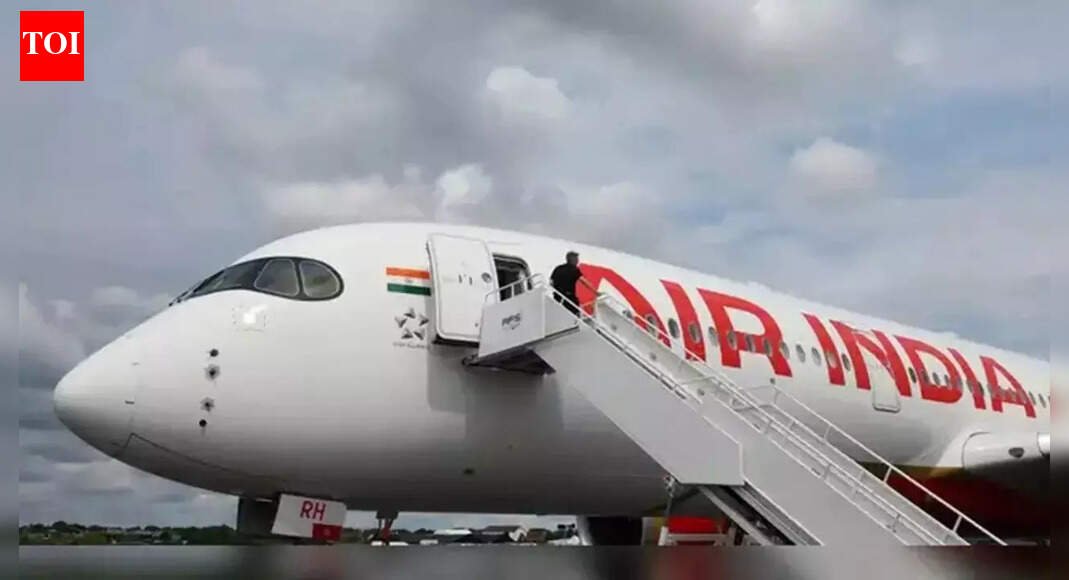
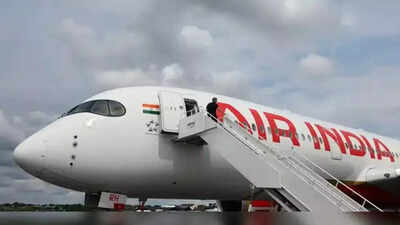
NEW DELHI: Air India on Thursday said it regretted the incident after one of its pilots on a Vancouver–Delhi flight on December 23 was found to be under the influence of alcohol by Canadian authorities.Flight AI186 was delayed at Vancouver airport after the cockpit crew member was offloaded ahead of departure. In a statement, an Air India spokesperson said Canadian authorities had flagged the issue, after which the pilot was taken for further inquiry.“In accordance with safety protocols, an alternate pilot was rostered to operate the flight, resulting in the delay. Air India regrets the inconvenience caused to its passengers and is fully cooperating with the local authorities,” the airline said.The spokesperson added that the pilot had been taken off flying duties during the enquiry and that strict action would follow if any violation was confirmed. “Pending the outcome of the investigation, any confirmed violation will attract strict disciplinary action in line with company policy,” the statement said.Air India reiterated that it follows a zero-tolerance policy on violations and said safety remains its highest priority.The incident came to light after Transport Canada informed Air India that the pilot had failed a breathalyser test before operating the flight. In a letter dated December 24, Transport Canada said the incident amounted to a violation of Canadian aviation regulations and conditions laid down in Air India’s foreign air operator certificate.It further asked Air India to conduct a detailed investigation under its safety management system and submit a report on corrective steps taken by January 26, 2026. It also said enforcement action could be pursued by Canadian authorities.The flight was operating a long-haul route that now includes a refuelling stop due to Pakistan airspace restrictions. AI186 was scheduled to fly from Vancouver to Vienna with one set of pilots, before another crew took over for the Vienna–Delhi leg.


Source link

Toll on under expansion 2-lane highways to be halved, partially opened e-ways to be on par with NHs | India News


Toll on under expansion 2-lane highways to be halved, partially opened e-ways to be on par with NHs

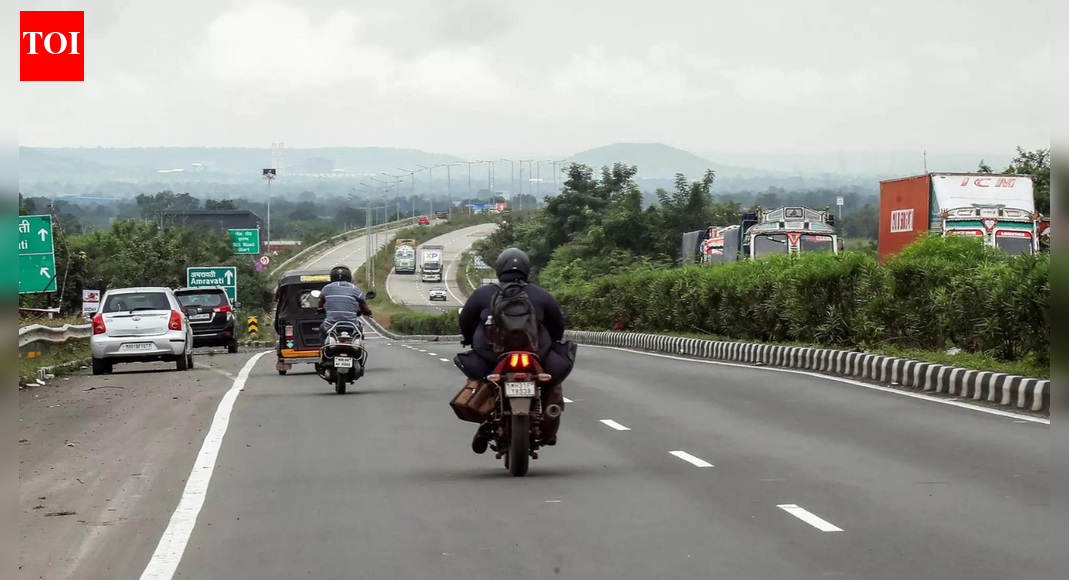
NEW DELHI: In a relief for highway commuters, toll on under expansion stretches — from two-lane to four-lane — will soon be halved during the construction period and the user fee on partially opened expressways such as Delhi-Mumbai and Amritsar-Jamnagar will be same as that of other NHs. At present, the toll on expressways is 1.25 times of other NH stretches.TOI has learnt that the finance ministry has given the green light to the two proposals from the road transport and highways ministry. The latter had proposed to halve toll during expansion of 10-metre-wide two-lane highways with paved shoulders to four-lane highways since commuters don’t get the desired service as the width of road gets reduced available while construction is underway.Currently, during expansion of a two-lane highway to four lanes, the toll charged is around 60% of the normal NH toll. With the concurrence of the finance ministry to the proposal, soon user fee will drop to 30% of normal toll during the construction phase. The finance ministry has asked the highways ministry to monitor and ensure strict enforcement of penalties on contractors for missing timeline in such widening projects.Officials said that while giving the go ahead for bringing toll rates on partially opened expressways on par with other NHs, the finance ministry said such relief should be for one year or till the expressway is fully operational, whichever is earlier. The highways ministry had submitted that vehicles, particularly heavy commercial vehicles, were not using expressways for higher toll rates.The finance ministry has said a decision on continuing this relaxation beyond one year may be taken based on actual uptake of traffic on such expressways. It has also asked the highways ministry to impose penalties on contractors for delay in completion of works.


Source link

‘Shah Rukh Khan is a traitor’: BJP targets KKR owner over picking Bangladeshi cricketer Mustafizur Rahman; Congress defends him | India News


'Shah Rukh Khan is a traitor': BJP targets KKR owner over picking Bangladeshi cricketer Mustafizur Rahman; Congress defends him
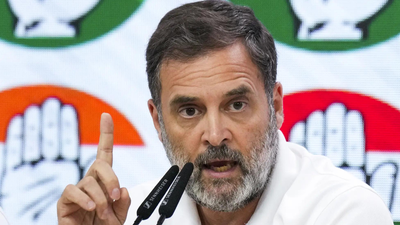
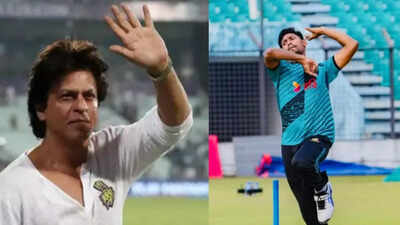
Shah Rukh Khan, Mustafizur Rahman

NEW DELHI: Hindu religious leaders and BJP figures have launched sharp attacks on Bollywood actor Shah Rukh Khan over his IPL team Kolkata Knight Riders (KKR) selecting Bangladeshi cricketer Mustafizur Rahman, while the Congress has stepped in to defend the actor, calling the remarks against him an attack on India’s pluralism.The first public criticism came from Hindu spiritual leader Devkinandan Thakur, who questioned KKR’s decision in the backdrop of reported violence against Hindu minorities in Bangladesh. Speaking to ANI, Thakur said the KKR management should remove the Bangladeshi player. He demanded that the money paid to the cricketer be given to families of Hindu victims as an apology.

BJP Leader Attacks Shah Rukh Khan Over KKR’s Bangladeshi Cricketer Amid Hindu Lynching in Bangladesh

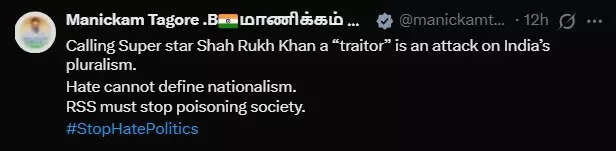
“The management of KKR, their boss, should remove that cricketer (Mustafizur Rahman). Rs 9.2 crore that they are giving to that cricketer, that money should be given as an apology to the relatives of the Hindu children if they are in India, so that at least they can know that their feelings are with the Hindus,” Thakur said.Spiritual leader Jagadguru Swami Rambhadracharya went on to questioned Khan’s character and called hhim a traitor.“He (Shah Rukh Khan) is not a hero. Shah Rukh Khan does not have a character. His actions have been those of a traitor,” Rambhadracharya said.Soon after, BJP leader Sangeet Som called Shah Rukh Khan a “traitor” and accused him of investing money in a player from a country he claimed was “working against India”. Som said Mustafizur Rahman would not be allowed to play in the IPL.“The way Hindus are being persecuted in Bangladesh, women and girls are being raped, their homes are being burned, and anti-India slogans are being chanted there. Despite all this, traitors like Shah Rukh Khan, I’m calling him a traitor because everything he has is given by India, given by the people of India, but where do they invest this money? They invest it in players from a country that is working against India. I want to tell people like Shah Rukh Khan that they will not succeed. At any cost, they will not be able to get Mustafizur Rahman to play here. Rahman won’t be able to step outside the airport,” Som told ANI.The response from Congress followed soon after. MP Manickam Tagore condemned the remarks against Khan, calling them an attack on India’s pluralism. In a post on X, Tagore said hatred could not define nationalism and criticised the RSS for spreading division.“Calling Superstar Shah Rukh Khan a ‘traitor’ is an attack on India’s pluralism. Hate cannot define nationalism. RSS must stop poisoning society.”

Screenshot 2026-01-02 085234

.

The attacks come amid a series of violent incidents targeting members of the Hindu community in Bangladesh. Last month, two Hindu youths were lynched in separate incidents. Dipu Chandra Das, a garment factory worker in Mymensingh district, was beaten to death over alleged blasphemy charges on December 18, after which his body was reportedly hanged and set on fire.


Source link

A life in defence of the unloved: Tale of India’s ‘Snake Man’ | India News


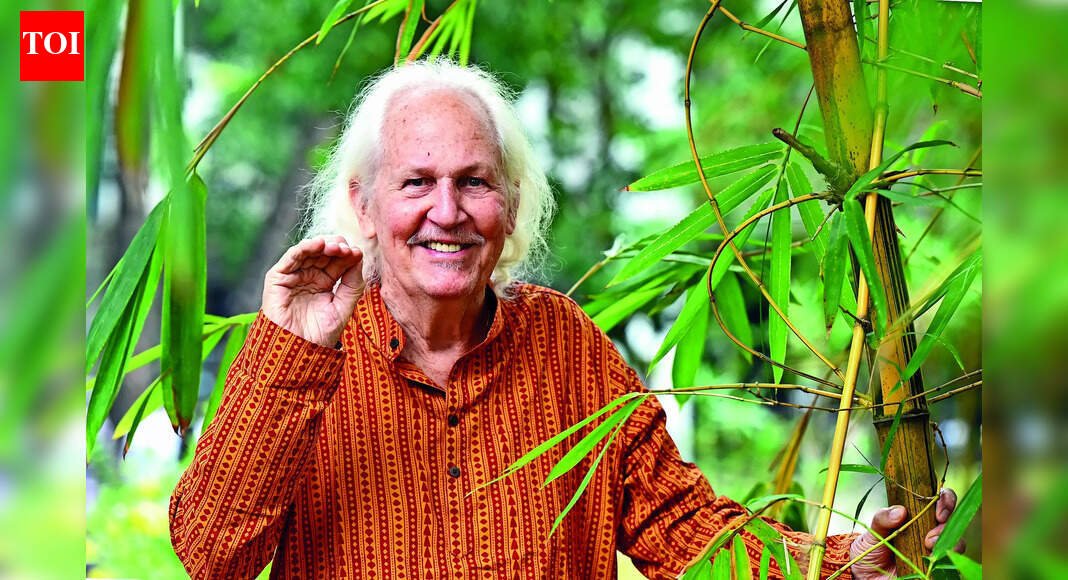
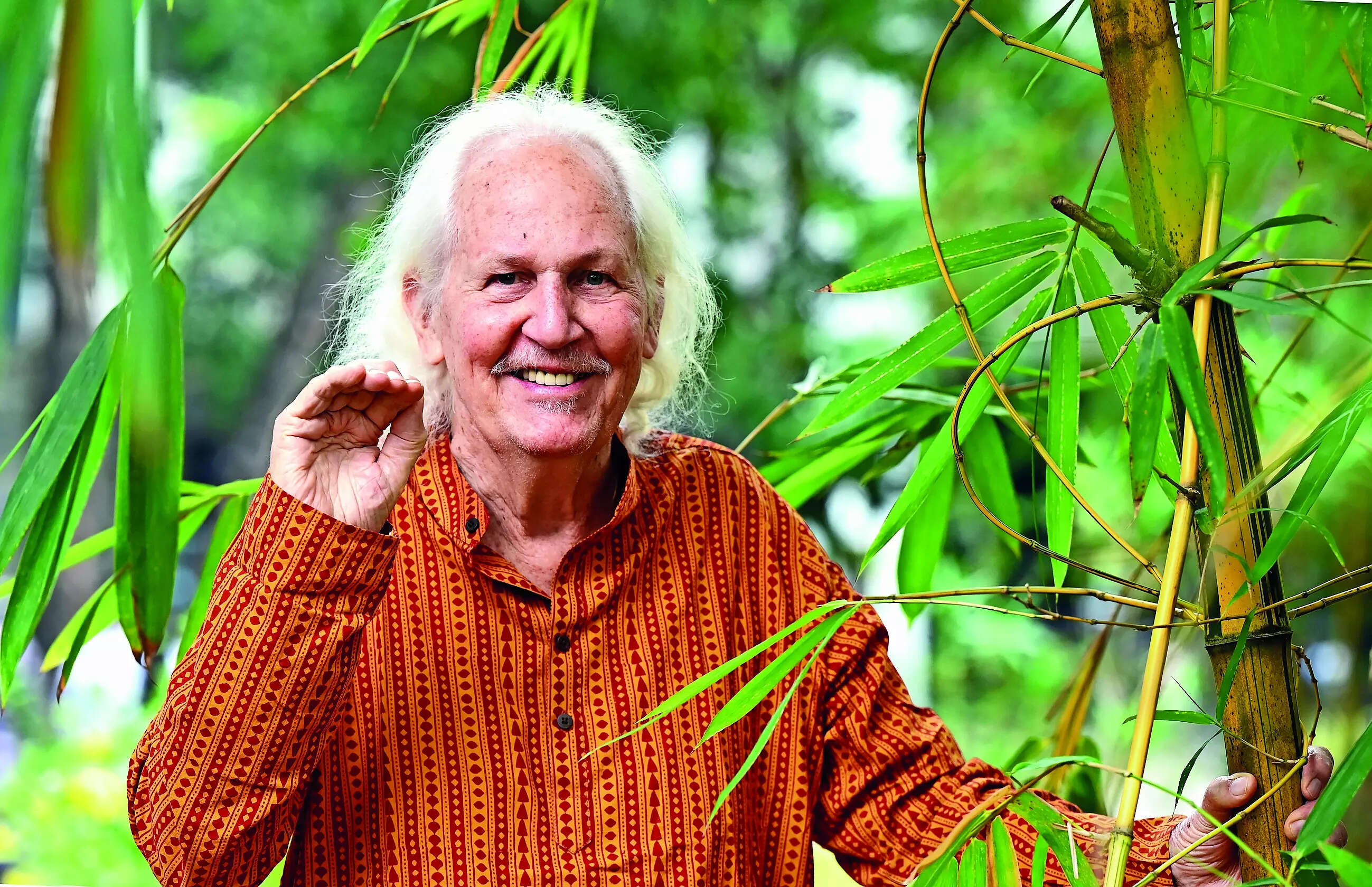
A tiger appeared without warning, gliding like a shadow along the forest edge as a boat drifted through the Periyar waters. For a 13-year-old boy visiting Kerala in 1957, the moment was electrifying. Wildlife then was not something confined to sanctuaries; it was visible, immediate, woven into everyday landscapes. That fleeting encounter stayed with Romulus Whitaker long before he became one of India’s most influential conservationists, shaping a life devoted to understanding-and defending-creatures most people feared. Whitaker’s first journey to Kerala was part of a family trip. His sister was graduating from high school, and the itinerary included Kochi, where they stayed at the Malabar Hotel, then considered the city’s finest. Boat rides through rivers like the Periyar were already popular, and wildlife sightings were common. “Gaurs and deer were easily spotted, and tigers still roamed freely at a time when hunting was legal. I never saw a king cobra on that trip, but the habit of looking closely had already taken root,” Whitaker recalls. That fascination had formed much earlier, far from India. Growing up in northern New York State, Whitaker once watched neighbourhood boys kill a snake out of fear. “I knew more about snakes than the other kids, and that made a difference,” he says. His mother encouraged his curiosity, buying him a book on snakes that helped replace fear with knowledge. When he later brought a live snake home, she admired it rather than panicking, calling it beautiful. An old aquarium with cracked glass became a makeshift enclosure. Without realizing it, Whitaker had taken his first step into a lifelong engagement with reptiles-a fascination that deepened after his family moved to India in the 1950s. Janaki Lenin, Whitaker’s partner and co-author of his autobiography “Snakes, Drugs and Rock ‘n’ Roll: My Early Years”, says writing the book gave her a deeper understanding of the extraordinary life he has lived. His schooling, she notes, was anything but conventional-camping in forests, fishing in lakes, and once even discovering a python under his bed. Boredom was never an option. If a classroom failed to hold his attention, he simply walked away to explore something more compelling outdoors. Comparing his life to her own, Lenin describes Whitaker as someone who has “lived six or seven lifetimes in one.” Formal education never quite suited him. After finishing school, Whitaker enrolled in college but soon realized classrooms could not compete with hands-on learning. His real education began at the Miami Serpentarium under Bill Haast, the legendary snake handler who pioneered venom extraction in the United States. Working alongside Haast, Whitaker learned to handle venomous snakes, maintain them in captivity, and extract venom for medical use. “Bill Haast was my guru,” he says. “He taught me respect for snakes, not just technique.” When Whitaker returned to India, he had a clear idea: The country needed a place where people could learn about snakes scientifically rather than fear them blindly. That idea took shape in 1969 with the opening of the Madras Snake Park. Visitors arrived sceptical-some expecting spectacle, others danger. Whitaker himself was often viewed as an eccentric outsider. But the park was never meant to entertain. It was an educational experiment. For the first time, ordinary people could see snakes up close, learn to identify species, and understand that most snakes were not out to harm them. Over the decades, the impact has been profound. India today has thousands of snake rescuers, a reality Whitaker views with cautious optimism. While rescue work has reduced routine killings, it has also become performative in some cases. Kerala, he notes, stands out for institutionalizing rescue work. By registering rescuers, issuing identity cards, and maintaining an online database, the state has created a system rooted in accountability and data. The model has since been adopted by Karnataka and is being replicated in Tamil Nadu. Snakebite, however, remains one of India’s most under-recognized public health crises. For decades, official statistics claimed around 1,400 deaths annually. A nationwide “Million Deaths Study” based on verbal autopsies revealed a far grimmer reality: Over 50,000 deaths every year, with nearly one million snakebite incidents. Many victims never reach hospitals, either dying en route or seeking traditional remedies instead of medical treatment. “The key word is prevention,” Whitaker says. Simple measures-using a torch at night, wearing footwear, being cautious near pump houses-could prevent a significant proportion of bites. Improved reporting, he adds, has made it seem as though cases are increasing, when in fact awareness and documentation have improved. Treating snakebite as a medical emergency rather than a cultural or mystical phenomenon remains the biggest challenge. Few initiatives illustrate Whitaker’s belief in practical, science-based solutions better than his long association with the Irula tribal community of Tamil Nadu. For generations, the Irulas survived by catching snakes for their skins. When the skin trade was banned, their livelihood vanished overnight. Working with the community, Whitaker helped develop a new model: Irula snake catchers would capture snakes, extract venom under controlled conditions, and release them back into the wild. The venom would then be supplied to pharmaceutical companies to manufacture antivenom. “They are saving lakhs of human lives,” Whitaker says. Today, around 350 Irula families supply venom that meets India’s entire antivenom requirement. For him, it remains the country’s only true example of sustainable wildlife use-one that benefits both people and animals without depleting wild populations. Human-animal conflict remains one of conservation’s most complex challenges. India’s tiger, leopard, and crocodile populations have all increased-a remarkable achievement by global standards. But many of these animals now live outside protected forests. Leopards, in particular, thrive in agricultural landscapes, raising cubs in sugarcane fields and feeding on small animals and stray dogs. “Leopards don’t need forests the way we think they do,” Whitaker explains. “They’ve adapted to living alongside people.” Problems arise when human panic leads to capture and relocation-an intervention that often worsens conflict. Whitaker’s own experience reinforced this lesson. Living on a small farm near Chennai, he once lost a dog to a leopard. His first instinct was to call the forest department. Then came the realisation: “We moved into his territory. He didn’t move into ours.” Simple precautions, like keeping dogs indoors at night, resolved the issue without endangering the cat. Lenin agrees that human-wildlife conflict is not new, but says its nature has changed. Earlier, communities managed interactions locally. “The law took away that freedom, but the state did not fulfil its responsibility of sorting out the issue,” she says. Many conflicts today, she argues, are effectively state-created-especially in the case of elephants, which require vast landscapes and abundant food. Habitat disruption leaves marginalized communities bearing the burden of coexistence, even though they are the least equipped to do so. Whitaker is critical of how crop-raiding wildlife is managed, particularly in Kerala, one of the few states where wild boars that devastate farmlands are legally permitted to be killed but must then be buried. Recalling ecologist Madhav Gadgil’s public criticism of the policy, Whitaker questions the logic of wasting what is a valuable protein source. “These animals can destroy paddy or peanut fields as much as an elephant does, but after killing them, you are told to bury the meat. People are always in need of protein, especially in rural areas. He recounts seeing electric fences in parts of north India where nilgai, jackals, and peacocks were killed indiscriminately and left to rot. For him, science-based preventive infrastructure works far better than reactionary measures. He regards Indira Gandhi as India’s most conservation-minded Prime Minister, instrumental in legislations such as the Wildlife Protection Act of 1972. “She had come to the Snake Park in Madras in 1972, and then we told her about the problems that were happening. When Rajiv became the prime minister, we spoke to him about the Andamans and the deforestation there, and they stopped it. These were the times when you could actually speak to a prime minister and the next day you might see some action; I would love to see that happening today. When Whitaker received the Padma Shri, he briefly met Prime Minister Narendra Modi but did not get the chance to speak at length. He later sent a draft message to the PM’s office, hoping for a mention of snakebite prevention during Mann Ki Baat. “If the PM spoke for even one minute about snakebite as a medical emergency, and about the importance of govt hospitals being equipped to handle it, thousands of lives could be saved,” he says. When he first documented India’s snakes, around 275 species were known. Today, more than 360 have been recorded. For young people entering herpetology, he sees unprecedented opportunities through universities and research institutions. “Go there, volunteer, and learn,” he advises. “Observe, respect, and don’t try to be a hero. Conservation is about patience and understanding, not spectacle.” Now in his eighties, Whitaker continues to focus on snakebite mitigation through films and awareness campaigns. From a child defending a snake to a man who has spent a lifetime persuading a nation to rethink its fears, his story is ultimately about understanding nature and choosing scientific knowledge over fear. (Romulus Whitaker was in Kochi with his partner, writer Janaki Lenin, for a climate literature festival at the Kerala University of Fisheries and Ocean Studies)


Source link

1st Vande Bharat sleeper to connect Guwahati to Howrah | India News


1st Vande Bharat sleeper to connect Guwahati to Howrah

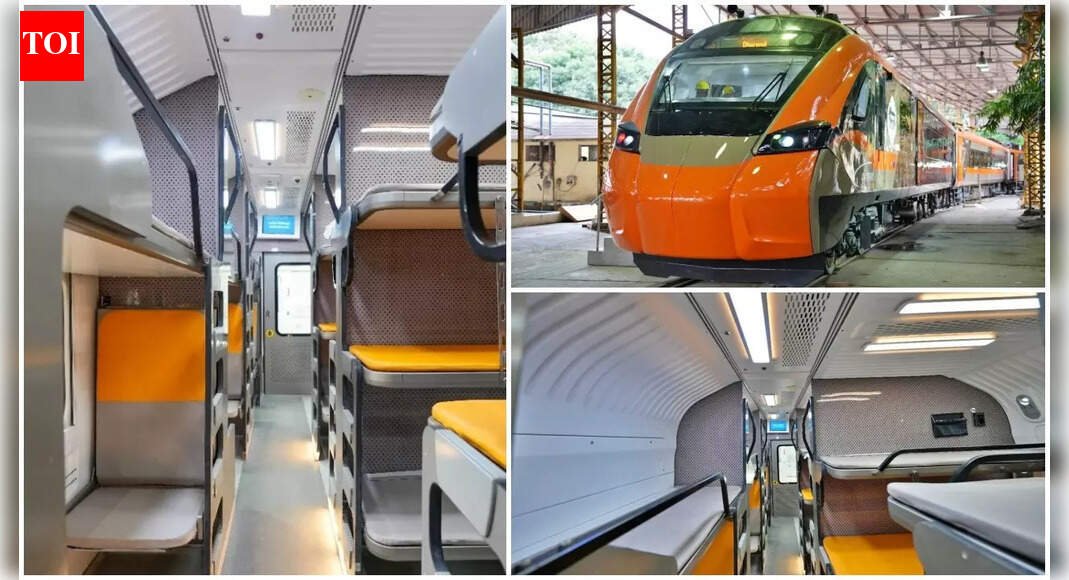
NEW DELHI: PM Narendra Modi will flag off the country’s first Vande Bharat Sleeper train between Guwahati and Howrah later this month, barely months before the assembly polls in Assam and West Bengal. The train, marking a major upgrade in overnight train travel running at 120-130 kmph, will also reduce the travel time between two eastern capitals by more than three hours. Railway minister Ashwini Vaishnaw announced the first route of the indigenously built modern train that has a design speed of 180 kmph. PM is likely to visit Assam and West Bengal in the third week of this month. Responding to a question on the reason for choosing the route connecting two poll-bound states, Vaishnaw said the decision is part of PM’s thrust on development in east and northeast India under the “purvodaya” scheme. The minister said that in the next six months eight more such trains catering to 1,200-1,500 km routes will be rolled out and by December this number will reach 12. “From next year onwards, production will be ramped up rapidly as the entire supply chain will be in place by then,” he added. Giving details of the first service, he said it will run six days a week and the one-way fare will be Rs 2,300 for 3AC, Rs 3,000 for 2AC and Rs 3,600 for 1AC travel. He added for the first time, the national transporter has decided to have a fixed rate of fare for each class of travel in these trains – Rs 2.4, Rs 3.1 and Rs 3.8 per km for third, second and first AC, meaning there will be no dynamic pricing. “You will see several reforms in railways in 2026. This is one of them,” Vaishnaw said. While passengers originating from Guwahati will be served Asamese cuisine, those starting from Kolkata will get Bengali food. On the special features of the train, Vaishnaw said the riding comfort can be compared with best trains across the globe and the AC system ensures there is adequate oxygen content in air to ensure passengers face no discomfort. Vaishnaw also gave details of progress made in fencing of tracks, upgradation of around 79% network and upgradation in the Over Head Equipment (OHE), the system of overhead cables, masts, and insulators that supplies high-voltage electricity to power electric trains, enabling trains to run at a higher speed. He added that with the expansion of railway infrastructure, they are hopeful of running more trains and they are hopeful of ending waitlisted tickets in some sectors in the next 2-3 years.


Source link

Gold stripped from Sabarimala through organised op: SIT | India News


Gold stripped from Sabarimala through organised op: SIT

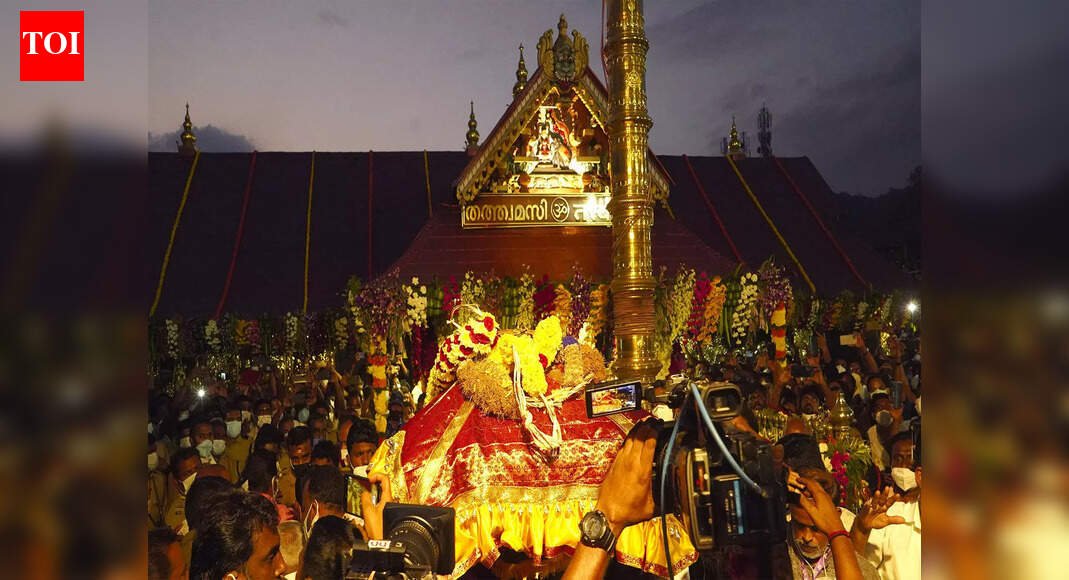
THIRUVANANTHAPURAM/THRISSUR: Gold embedded in sacred structures of Sabarimala temple in central Kerala was allegedly stripped, diverted and converted through a planned operation involving temple officials, intermediaries and private jewellers, a state-appointed SIT told a vigilance court. In a report seeking police custody of key accused, SIT said gold-plated copper sheets forming part of the sanctum sanctorum were removed in 2019 under the pretext of repairs, chemically stripped of gold at a private Chennai workshop and returned with fresh plating to conceal the loss. According to investigators, ornamental panels depicting 10 incarnations of Lord Vishnu, zodiac symbols, the sanctum door lintel and the prabhamandalam (an arch behind the idol) were falsely described as ordinary copper sheets to secure their removal, causing unlawful loss to Travancore Devaswom Board, which manages the temple. SIT alleged criminal breach of trust, saying extracted gold was neither reported to devaswom authorities nor returned to temple treasury but treated as personal property. Arrests have been made and accused remanded in judicial custody, with SIT telling court interrogation in custody was essential to trace remaining gold and establish full chain of responsibility. SIT named former TDB president A Padmakumar, devaswom commissioner N Vasu, Sabarimala executive officer Sudheesh Kumar, administrative officer Murari Babu and others, along with Chennai-based Smart Creations CEO Pankaj Bhandari and Ballari-based jeweller Roddam Pandu Rangaiah Naga Govardhan. Prime accused Unnikrishnan Potti was also produced before court.


Source link

‘Padmaavat’ protests: Court refuses to permit Gujarat govt to withdraw case against 19 Karni Sena activists | India News


'Padmaavat' protests: Court refuses to permit Gujarat govt to withdraw case against 19 Karni Sena activists
Gujarat govt’s plea rejected

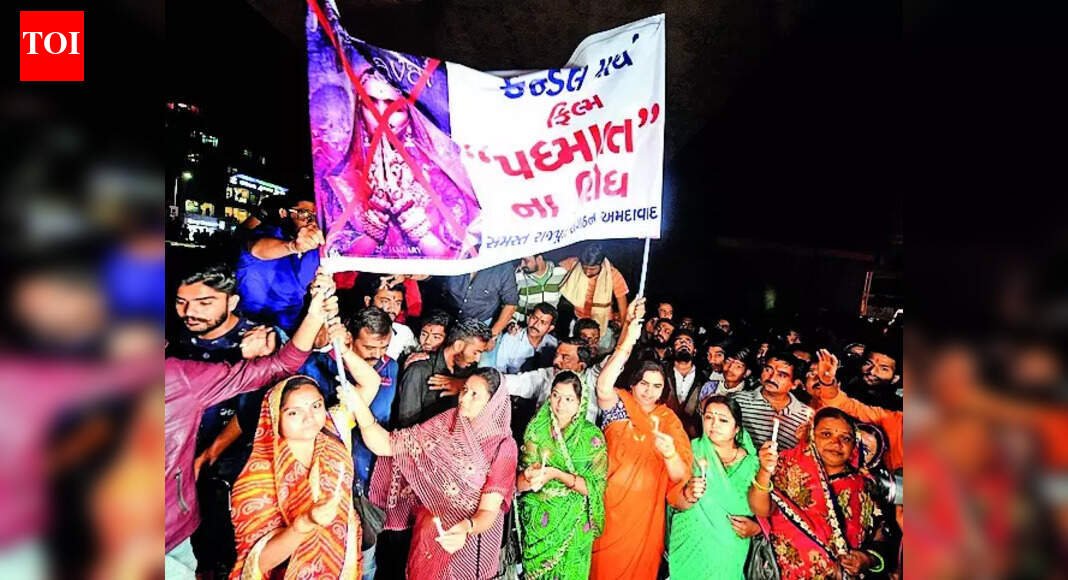
AHMEDABAD: A sessions court refused to permit Gujarat govt to withdraw a criminal case against 19 Karni Sena activists, who were booked for vandalising a mall, torching vehicles and damaging property during their protest against the release of the film ‘Padmavat’ in 2018. The court said the alleged offence was committed “to achieve personal interest and to maintain dominance of a particular community, ignoring the public interest”. It noted that the accused caused damage to the tune of Rs 16.4 lakh during the rioting. tnn Accused not criminals but youth high on emotions: Court Karni Sena’s candle march on Jan 23, 2018, in protest against the movie event took a violent turn, with 19 participants being booked for rioting, unlawful assembly, arson, and criminal conspiracy under provisions of IPC, section 3(1) of Damages to Public Property Act and section 135(1) of Gujarat Police Act. After investigation, police filed a chargesheet and the case has been pending in a sessions court since 2019. The state govt first requested a JMFC court to allow it to withdraw the case under CrPC section 321, but the request was refused in 2022. It then approached the Ahmedabad (rural) sessions court and submitted that the decision to withdraw prosecution was based only on the interest of the public at large, and would be helpful in the administration of justice. The accused are not criminals but younsters who acted in the heat of passion and were high on emotions, it argued. However, additional sessions judge Hardik Shah said court can’t permit withdrawal of prosecution merely because state govt issued an order to the public prosecutor. The court said the prosecutor did not apply his mind or express his opinion on the issue.


Source link